US–Russia tensions hit scientists

Political tensions between the US and Russia due to the ongoing Ukraine crisis have started to hit scientific exchanges between the two countries. The US Department of Energy (DOE) has already banned Russian scientists from working in its laboratories and delayed or withheld permission for US government scientists to attend meetings in Russia. The US government has also suspended almost all joint activities on space science. The moves follow Russia’s annexation of Crimea in March and its continued support for anti-government fighters in eastern Ukraine. Since then, the US and Europe have imposed sanctions on Russian individuals and companies.

Limitations on scientific exchanges with Russia have also been introduced, including a temporary end of an accord on nuclear issues. Signed last September by US energy secretary Ernest Moniz, who is a physicist, and his Russian counterpart Sergey Kirienko, the accord gave Russian scientists access to the Los Alamos National Laboratory – one of the three US nuclear labs – in return for similar access to Russian nuclear facilities. Now, the DOE has cancelled the visits and has also prohibited its US employees from travelling to Russia, except to deal with nuclear security, weapons of mass destruction and “top-level national interests”.

Strained ties

The clampdown has caused uncertainty among several prominent physicists, such as those planning to attend the International Atomic Energy Agency’s conference on fusion in St Petersburg in October. So far, no US attendee has been refused permission to travel to the meeting, but nor have any received permission to go. Siegfried Hecker, a former director of Los Alamos, warns against the deteriorating situation regarding nuclear issues. “Co-operation is needed to deal with some of the lingering nuclear safety and security issues in Russia and the rest of the world, with the threats of nuclear smuggling and nuclear terrorism, and to limit the spread of nuclear weapons,” he says.

The DOE has also banned Russian citizens indefinitely from visiting DOE labs, including non-nuclear weapons facilities such as the Brookhaven National Laboratory – although it has allowed exceptions for scientists already in the US or on their way. The policies have created an atmosphere of concern especially among Russian-born scientists working in the US. “Russian scientists feel that we are under suspicion – those working in the US are afraid to make moves that may be viewed as politically motivated,” says Ukraine-born Artem Oganov, director of the Centre for Materials by Design at Stony Brook University and president of the Russian-American Scientists Association.

Limiting knowledge?

Oganov told physicsworld.com that he is “very seriously” thinking about returning to Russia and that his association is “afraid” to take funds from Russia for its annual conference in November, for “fear of being accused of being part of the KGB as history knows examples of similarly ridiculous accusations at the time of the cold war”. “What is happening now in Ukraine is a human tragedy that also brings a huge loss to science,” he adds. “I feel that Western sanctions, limiting exchange of scientific knowledge with other countries, are counterproductive and immoral. We have no right to limit scientific knowledge.”

In a statement, a DOE spokesperson noted that the department reviews each area of co-operation internally before making a decision whether it can continue or should be postponed until a later date. The statement added that the DOE has continued “its critical bilateral nuclear non-proliferation activities in a number of key areas”, and that “co-operation with Russia remains an essential element in the global effort to address the threat posed by nuclear terrorism”.

The move by the DOE follows US president Barack Obama’s decision in April to restrict scientific exchanges in space science by suspending all government visits between NASA and Roscosmos, the Russian space agency.

The administration excluded only work on the International Space Station (ISS), where currently the US relies on Russia’s Soyuz rockets to take its astronauts to the station. Russia responded in May by after announcing a ban on exports of RD-180 engines that the US uses on its Atlas V rockets to launch satellites into space. Dmitry Rogozin, deputy prime minister and head of the Russian space agency, added that Russia will no longer permit NASA to use the ISS after 2020.

One bright spot, however, is the continuation of a programme run by the Massachusetts Institute of Technology that sends its students – mainly physical scientists and engineers – to work in companies, universities, and research institutions in Russia. “We decided last spring not to let high-level politics to get in the way of this important travel,” says Elizabeth Wood, co-director of the programme. “So far we’ve had no pushback from the governments.”
Turning a physics class into a video game

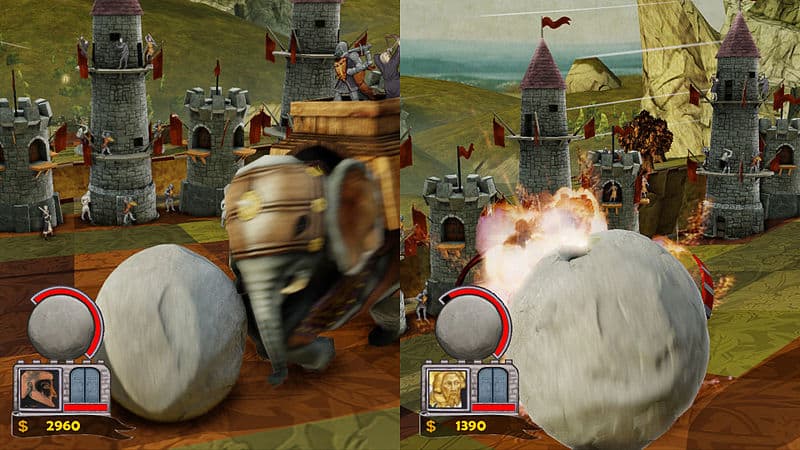
Screenshot from Rock of Ages computer game

By James Dacey in Córdoba, Argentina

“When was the last time you heard a student say they wanted a physics course that was long and difficult?”

That was a rhetorical question that physicist and education researcher Ian Beatty put to us today while delivering his keynote talk at the International Conference on Physics Education (ICPE) 2014 here in Argentina. Beatty’s point is that two of the worst things that people say about computer games is that they are too easy or that they end too quickly. Needless to say, he had never heard such protestations from his physics students!

Beatty, a physicist and educational researcher at the University of North Carolina at Greensboro in the US, believes that course creators could learn a trick or two from game designers. He has therefore spent the past three years trying to understand what it is about video games that makes them so appealing to gamers, and how to incorporate some of the underlying principles into a physics course.

(more…)

NASA’s Stardust mission snares first dust from beyond the solar system

Seven rare, microscopic dust particles, which could be of interstellar origin, have been found among samples collected by NASA’s Stardust mission, according to an international team of researchers. The tiny particles show features that are consistent with dust that would be found in an interstellar dust stream, suggesting that they date back to the beginnings of the solar system. If confirmed to be of interstellar origin, the discovery could improve our understanding of the origin and evolution of the solar system itself.

NASA’s Stardust Interstellar Dust Collector was launched in 1999 and collected thousands of dust particles from the coma (the nebulous envelope around the nucleus) of comet Wild 2, which it flew through in January 2004. Stardust headed back home in 2006, making it the first mission to return solid extraterrestrial material to Earth from beyond the Moon. But on the way, Stardust also sought to collect the first samples of interstellar dust – ancient matter that comes from beyond the solar system. Such interstellar matter had previously been identified only in primitive stony meteorites, such as carbonaceous chondrites, based on them having very different proportions of isotopes compared with typical material found in the solar system.

Cosmic-dust trap

To snare the cosmic dust, the Stardust spacecraft used a collector that was exposed to the interstellar dust stream on two occasions, in 2000 and 2002, for a total of 195 days. The collector, which consisted of a set of silica aerogel tiles held together with aluminium foil, succeeded in capturing a few dozen precious dust particles. Now, Andrew Westphal of the University of California, Berkeley, along with John Bridges of the University of Leicester in the UK and colleagues from a host of institutions worldwide, have studied the microscopic impacts that the particles made on the aerogel tiles and the foil.

Finding and identifying these minute tracks within the aerogel of the returned collector was not easy – individual grains are only microns in size and weigh just picogrammes. Mission scientists therefore set up Stardust@home – a citizen-science project in which members of the public identified possible individual grains by scanning through more than a million images. The volunteers identified all but two of the 71 tracks reported on the surfaces.

Interstellar tracks

The vast majority of these tracks were produced by spacecraft debris, but the researchers concluded that three tracks in the aerogel and four in the foil itself could have originated from interstellar space, because these seven tracks had very different elemental compositions and impact trajectories. “For instance, we were able to distinguish the composition of iron sulphide, nanophase iron and olivine, which are quite distinct from any spacecraft debris, and the direction of the tracks was consistent with this,” says Bridges, whose team at Leicester also measured some of the impact craters on the foil. “Remember that the grains had a closing velocity of up to about 15 km s–1 with the aerogel and foils,” he says. “The residue in the craters was analysed and this gave us a second way of identifying interstellar material.”

The team’s analysis found that the seven particles’ chemical composition and structure varied from that expected. The smaller particles differ greatly from the larger ones, which the researchers describe as having a fluffy structure, similar to a snowflake. The researchers caution that additional tests will need to be carried out before they can say for sure that these are pieces of debris from interstellar space. Three of these four particles retrieved in the foil were found to contain sulphur compounds, which some astronomers have argued do not occur in interstellar dust.

Optical microscope image of the dust particle Orion

The Stardust team now plans to continue analysing the other 95% of the foils to see if enough additional particles can be found to gain a better understanding of their inherent properties. Two particles, dubbed Orion and Hylabrook, will undergo further tests to determine their oxygen-isotope quantities, which could provide even stronger evidence for their extrasolar origins. Bridges explains that the early identifications of interstellar grains from chemical separates of carbonaceous-chondrite meteorites showed extreme isotopic anomalies. “That’s how we identified them in the first place,” he says. “But now we know that is a much broader range of compositions. We are getting a better view into the Stardust grains that were the seeds of our solar system.”

The research is published in the journal Science.

Nearby galaxy harbours rarest type of black hole

Astronomers in the US have used the flickering of X-rays to pin down the mass of a black hole in the nearby galaxy M82, finding the black hole to be about 400 times as massive as the Sun. This means it is of the rarest, mid-sized black-hole type, and raises the question of how these odd objects arise.

Mass is a fundamental property of any black hole, which has so much gravity that nothing can escape its grip. Black holes come in two main types: stellar-mass black holes that are roughly 10 times as massive as the Sun, such as Cygnus X-1, and supermassive black holes, which are typically millions or billions of times as massive as the Sun and inhabit the centres of large galaxies.

But there is a big gap between the two types. Intermediate-mass black holes “are much, much less studied compared with stellar and supermassive black holes,” says Dheeraj Pasham, an astronomer at the University of Maryland in College Park. That is because intermediate-mass black holes are rare, with only one firm example ever identified.

Now he says there is another confirmed candidate: the black hole M82 X-1. Previous mass estimates for this object ranged from just 20 solar masses to more than 1000, so astronomers did not know whether it was an ordinary stellar-mass black hole or a rare intermediate-mass black hole. Indeed, it was already suggested in 2006 that the black hole was an intermediate mass one, but this was yet to be confirmed. The black hole lies in M82, a “starburst” galaxy only 12 million light-years away, which spawns lots of new stars. M82 orbits M81, a giant spiral whose gravity stirs it up and triggers the starburst.

Stars are often caught by a black hole’s immense gravitational force and lose material to the objects. Before plunging into the black hole though, the trapped stellar material gets so hot it emits X-rays. The team analysed six years of X-ray observations and discovered two oscillations every 0.2 and 0.3 seconds. These periods indicate how long the hottest material takes to orbit the black hole, and far exceed the periods of similar oscillations seen around stellar-mass black holes. The longer period suggests a much greater mass, because the more massive a black hole, the larger it is and the longer material takes to revolve around it. Using two different methods, the researchers conclude that M82’s black hole is 428±105 and 415±63 times as massive as the Sun.

“They’ve done a great job,” says Chris Done, an astronomer at the University of Durham. “But I wouldn’t bet a house on it just yet.” She thinks the mass is more uncertain than they claim. Still, it probably falls into the intermediate range, because she says stellar-mass black holes, which arise from the explosion and collapse of a star, should not exceed 80 solar masses. “There’s no real way we know of to make a black hole this massive,” Done says. “To get to 400 solar masses is really pretty freaky!”

Supermassive black holes grow to millions or billions of times the Sun’s mass because they occupy galactic centres that attract stars and gas. But M82 X-1 is not at the centre of its galaxy. Astronomers have suggested that one way in which this black hole could have grown to such an abnormal size is thanks to a cluster of stars near its location, which could have fed the object, before a massive star’s approach ejected the black hole from the cluster.

The research is published in Nature.

Physics education under the microscope in Argentina

By James Dacey in Córdoba, Argentina

I’m writing this blog entry from the heart of Argentina, following a marathon 30-hour journey from my home in Bristol, UK. It was a trip that included two planes, a few buses, a couple of taxis and several long walks, but I’m finally here in Córdoba – Argentina’s second largest city – to attend this year’s International Conference on Physics Education (ICPE).

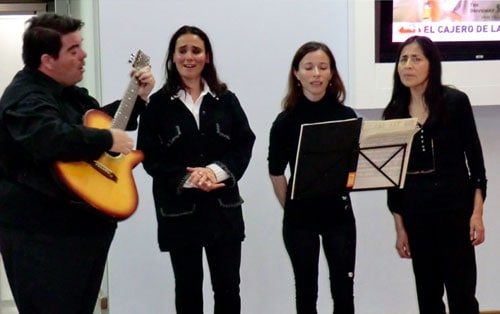
The meeting’s all about bringing together people to discuss the latest developments in education – including lecturers, teachers, trainers, students and educational researchers. It’s an event with a global outlook, accompanied by a satellite meeting where local high-school teachers will be discussing issues more focused on their day-to-day experiences. At the registration session, things already took a welcome Argentine twist as we were treated to a performance from some local musicians (see picture above).

(more…)

Hello Kitty in space, Lord of the Rings physics homework and more

This week, South Korea’s one and only astronaut, 36-year-old Yi So-yeon, has quit her job, thereby signalling the end of the country’s crewed space programme for the time being. In 2008 Yi became the first Korean to go into space, when for 11 days she travelled on board a Russian Soyuz spacecraft to the International Space Station, after being chosen through the government-run Korean Astronaut Program. Yi cited personal reasons for quitting, but has been studying for an MBA in the US since 2012. You can read more about her work and reasons for leaving in articles from Australia Network News and abc News.

(more…)

Making better solar cells with polychiral carbon nanotubes

A new solar cell made from carbon nanotubes (CNTs) that is twice as good at converting sunlight into power than the best previous such cells has been unveiled by a team of researchers in the US. The National Renewable Energy Laboratory (NREL) has already independently certified the performance of the device – a first for a CNT-based solar cell.

Thin-film photovoltaic materials are better than conventional solar-cell materials (such as silicon) because they are lighter, more flexible and cheaper to make. They work by absorbing photons from sunlight and converting these into electron–hole pairs (or excitons). To generate electric current, an electron and hole must be rapidly separated before the two particles have a chance to come back together and be reabsorbed into the material. In solar cells, the exciton must quickly travel to another layer in the device (where the charge separation will occur) for the best light-absorption efficiencies.

Single-walled carbon nanotubes (SWCNTs) are ideal as thin-film photovoltaics because they absorb light across a wide range of wavelengths from the visible to the near-infrared and possess charge carriers (electrons and holes) that move quickly. However, most thin-film cells containing SWCNTs have so far suffered from limited current and voltage, and therefore poor power-conversion efficiencies.

Broader solar spectrum

Now, a team led by Mark Hersam of Northwestern University and Shenqiang Ren of the University of Kansas, along with colleagues at the Massachusetts Institute of Technology, has designed a new type of solar cell containing polychiral SWCNTs and fullerenes that maximizes the amount of photocurrent produced by absorbing a broader range of solar-spectrum wavelengths. In particular, the cells significantly absorb in the near-infrared portion of the spectrum – a range that is currently inaccessible to many leading thin-film photovoltaic technologies, says Hersam.

A SWCNT is a sheet of carbon just one atom thick that has been rolled up into a tube with a diameter of about 1 nm. The atoms in the sheet are arranged in a hexagonal lattice and the relative orientation of the lattice to the axis of the tube is its chirality. “Previous CNT solar cells were mainly made from single-chirality CNTs, whereas our solar cells make use of tubes that are polychiral,” explains Hersam. “By using these multiple chiralities, our CNT solar cells absorb across a wider portion of the solar spectrum, which leads to higher currents and efficiencies.”

Record highs

The researchers say that they also maximized the photovoltage produced by their solar cells by controlling the interface between the active photovoltaic layer and the underlying hole-transport layer. This interface layer allows the generated electrons and holes to meet and efficiently recombine.

The devices could reignite interest in all-carbon solar cells, a research area that has been neglected in recent years. The fact that the new cells absorb across a broad range of wavelengths, including in the near-infrared, means that they could be especially useful as the active elements in tandem or multi-junction devices. As their name suggests, these devices contain two or more junctions, each of which absorbs light of different wavelengths from the Sun. For example, the junctions at the front of the cell can be made of a wider band-gap material that harvests high-energy photons, while more abundant lower-energy photons can be collected by a smaller-band-gap material situated at the back of the cell. These devices perform better than their single-junction counterparts, with power conversion efficiencies of about 42% compared with just over 30%.

The team says that it is now busy trying to further improve the power-conversion efficiency of its CNT-based solar cells. “We also intend to introduce additional materials apart from fullerenes into our future cell designs that complement the properties of CNTs,” says Hersam.

The research is published in Nano Letters.

Electrons in magnetic field reveal surprises

The best glimpse yet of electrons moving in a magnetic field has revealed that the particles’ behaviour differs strongly from what is predicted by classical physics but is consistent with quantum-mechanical theory. Instead of rotating uniformly at a particular frequency, an international team of researchers has found that electrons in a magnetic field are capable of rotating at three different frequencies, depending on their quantum properties.

Cyclonic movements

Little is known about the behaviour of electrons in a magnetic field and scientists are keen to improve our understanding of the physical processes that are involved. Free-electron Landau states are a form of quantized state adopted by electrons moving through a magnetic field. All charged particles interact with electromagnetic fields via the Lorentz force. This interaction causes electrons in a magnetic field to move in a corkscrew pattern. “Landau states can be envisaged as vortices occurring naturally in the presence of magnetic fields. The magnetic field plays the same role for electrons as the Earth’s rotation plays for the creation of cyclones, but on a much smaller scale,” says Peter Schattschneider of the Institute of Solid State Physics at the Vienna University of Technology, who is part of an international team that includes researchers from France, Japan and the US that has now devised a way to reconstruct these states.

According to classical physics, electrons should rotate about the magnetic-field direction with a single frequency, called the “cyclotron frequency”. But in their experiments, the researchers found that, contrary to what was predicted, they were able to induce a multitude of rotation frequencies in their moving electrons, namely the cyclotron frequency, zero frequency and the Larmor frequency (which is half the cyclotron frequency).

Vortex beams

The team did not observe the electrons’ Landau states directly. Rather, the researchers used a transmission electron microscope to create so-called electron vortex beams, which can be shaped so that their rotational behaviours closely resemble Landau states. “In an electron vortex beam, electrons are swirling around a common centre similar to air molecules in a tornado. Typically, this bunch of whirling electrons is also moving along its axis of rotation, thereby moving along a spiral path,” says Schattschneider.

The team used the microscope’s focusing lenses to reconfigure the electron vortex beams so that these matched the size of the Landau states. Schattschneider compares the task of determining the rotation of the electrons to figuring out how many times a thin wire is wound around a rod. “When looking at the wire directly, it is extremely difficult to count the number of windings. But when it is stretched along the direction of the rod, the wire takes the form of a well-spaced spiral, for which it is easy to count the revolutions,” he says. “This is precisely what we did with the Landau states: we ‘elongated’ them to vortex beams. That way we could measure [their frequencies] with very high accuracy.”

“This is a very exciting finding, and it will contribute to a better understanding of the fundamental quantum features of electrons in magnetic fields,” says Franco Nori of the RIKEN Centre for Emergent Matter Science in Japan, who led the research. In addition to showing that the rotational dynamics of the electrons are more complex and intriguing than was once believed, the new findings could have practical implications for technology, according to the researchers.

Jo Verbeeck of the University of Antwerpen in Belgium believes that the quantum effects of electrons revealed in the new study are “thought-provoking”. “What is interesting now is that the authors succeeded in taking these Landau states into free space, away from the material in which they normally manifest themselves, in order to better study the peculiarity of their motion,” says Verbeeck, who was not involved in the study.

“We hope that this will lead to new insights and a better understanding of the delicate interaction between magnetic fields and matter, which might one day give rise to new and better technologies such as sensors and memmory devices,” Schattschneider says.

The research is published in Nature Communications.

Discovering your inner scientist

Chad Orzel

Chad Orzel writes one of the most active and longest running science blogs on the net, having posted the first entry on his blog Uncertain Principles back in June 2002. A physicist at Union College in Schenectady, New York, he’s also written two popular-science books, based on the cute premise of trying to teaching first quantum physics and then relativity to his dog.

So, a couple of months back, when we noticed that Orzel was coming to the UK, we decided to invite him to give a talk as part of the Bristol Festival of Ideas. Orzel kindly accepted our offer and last night saw him speak here at the offices of IOP Publishing, which publishes Physics World. The talk was entitled Eureka! Discovering Your Inner Scientist, which just happens to be the title of Chad’s next book. (And what’s wrong with a spot of self-publicity?)

(more…)

Scientific booms and busts

Workers with skills in the so-called STEM disciplines – science, technology, engineering and mathematics – are in short supply. Countries like the US and the UK, which have traditionally led the world in these areas, are facing tough competition from emerging nations such as China and India, both of which are training large numbers of scientists and engineers. If the established countries do not up their game, they risk losing out in the globalized “knowledge economy” of the future.

Statements like these are ubiquitous in discussions of science policy. Sympathetic business leaders and politicians repeat variations of them regularly, and within the scientific community their truth is widely (though not universally) regarded as self-evident. But there is a problem with this consensus: according to the US demographer and veteran labour-market scholar Michael S Teitelbaum, it is not necessarily true.

In Falling Behind? Boom, Bust and the Global Race for Scientific Talent, Teitelbaum mounts a sustained attack on the idea that a STEM shortage exists at all, at least in the US. Based on a substantial (though sometimes frustratingly incomplete) body of economic and social data, he offers three conclusions. The first is that since the end of the Second World War, repeated alarms about looming shortfalls in the US supply of scientists and engineers have led to damaging cycles of “boom and bust” in the scientific job market. A second, more eyebrow-raising, conclusion is that increases in science funding are far from a panacea, and can even be destabilizing. Most controversially, though, Teitelbaum argues that current concerns about shortages of scientists and engineers in the US are “quite inconsistent with nearly all available evidence”.

The nuances of this final conclusion – and, in particular, whether it could apply to the UK – will be the focus of a separate Physics World article later this year. In this review, I will concentrate instead on the book’s first two points.

Falling Behind? begins by describing past cycles of boom and bust in the US scientific job market. The first such cycle began in 1957, when the launch of the Soviet Union’s Sputnik satellite triggered panic across America. The US government responded by increasing federal funding for science (channelled via the Department of Defense, the National Science Foundation and the newly created National Aeronautics and Space Administration, among others) and making sustained efforts to train more scientists and engineers. By doing so, they hope to fill the perceived gap between the country and its Cold War opponent.

By the late 1960s, however, the situation had changed. As Teitelbaum explains, the success of the Apollo space programme, coupled with increasing resistance to the Vietnam War, made big defence-related research budgets seem both less necessary and less appealing. As politicians’ interest faded, funding slowed. Thousands of highly qualified scientists – some of whom had been hearing about “shortages” in their chosen disciplines since they were teenagers – found that the jobs they had trained for no longer existed. In July 1971 a prominent US chemist, Wallace R Brode, lamented in Science that new science graduates “go out into the cold cruel world, only to find no jobs available, or else below the level of their training and ability”.

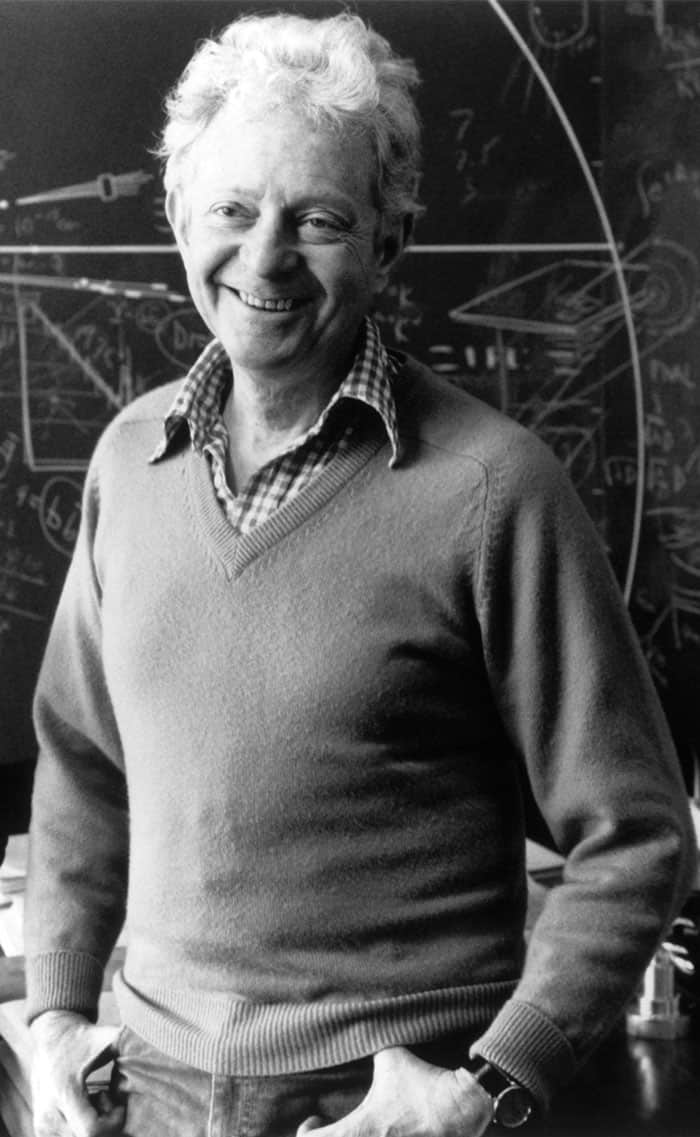
For US physicists, this first cycle of “alarm/boom/bust” was the most damaging. Subsequent busts at the end of the Cold War and during the dotcom crash of the early 2000s had their epicentres in other areas of science, while the ongoing crisis in the American biomedical sector has left the country’s physicists almost unscathed. Interestingly, though, Teitelbaum traces the current biomed bust to a 1991 report by the physicist and Nobel laureate Leon Lederman. In this report, Lederman – who was, at the time, president-elect of the American Association for the Advancement of Science – argued passionately for a repeated doubling of federal funding for scientific research, until it reached levels above and beyond those of the 1960s “golden age” in physics. While Lederman did not specify how this new funding should be distributed across disciplines, his ideas gained their greatest traction among advocates for the nascent biotechnology and genetics industries. Between 1998 and 2003, the budget for the biomedical-focused National Institutes of Health (NIH) was, accordingly, doubled.

What happened next was not the utopia that proponents had expected. The flood of new funding was more than absorbed by a flood of new PhD students, postdocs and grant applications. When the doubling stopped and normal service resumed (meaning budgets that were flat or falling in inflation-adjusted dollars) resumed, there wasn’t enough money to go around. By 2012, Teitelbaum observes, an applicant’s chances of winning a major NIH grant were significantly worse than they had been before the doubling started, and senior researchers were spending ever-larger fractions of their time chasing grants that they were increasingly unlikely to get. A brief return to inflation-busting annual budget increases brought temporary relief, but as Teitelbaum notes, “even members of Congress who were strong supporters of biomedical research did not seem responsive to pleas of a ‘funding crisis’ from a research sector that had doubled its budget so rapidly only a few years earlier”. Advocates for rapid increases in science funding should, he concludes, “be careful what they wish for”.

Photo of Leon Lederman standing in front of a blackboard

Readers with interests in science policy, careers or funding will find this book fascinating, although often disquieting. Teitelbaum’s analyses of historical alarm/boom/bust cycles and (in particular) the NIH budget-doubling brouhaha are illuminating, and he has a knack for anticipating potential criticisms. As I read Falling Behind?, I often found myself thinking “But what about x?” only to find, later on, that Teitelbaum had in fact addressed x, while also parrying counter-arguments y and z that had not occurred to me.

Perhaps the most important criticism of Teitelbaum’s argument concerns whether past claims about scientific “shortages” have any bearing on similar arguments being made today. After all, at the end of the fable about the “Boy Who Cried Wolf”, the wolf turns out to be real, with serious consequences for the unbelieving villagers. Teitelbaum’s response is to acknowledge that the past is an imperfect guide to the present. While many previous claims of a STEM shortage turned out to be overblown, he writes, this “should not lead to the conclusion that present concerns also can be predicted to prove unwarranted”.

Unfortunately, many data on STEM employment are patchy. As Teitelbaum observes, even apparently straightforward questions such as “how many postdocs are there in the US?” can be difficult to answer. Data also go out of date quickly. For example, in comparing the job prospects for scientists with those of other highly educated professionals, Teitelbaum states that between 2006 and 2008, lawyers earned, on average, around 50% more than PhD-level scientists. Today, however, this figure sounds implausibly high because the strong demand for lawyers (as evidenced by their earnings) in the mid-2000s soon produced a severe oversupply of law graduates. Indeed, PhD scientists are arguably having the last laugh, since they – unlike law students – at least get their tuition paid and living expenses subsidized during their training.

Teitelbaum’s book concludes with a handful of recommendations. Although he is cautious about suggesting major changes to a hugely successful system – the US is still a major powerhouse for scientific research – several of his ideas would be worth implementing regardless of whether the current alarm about STEM shortages is justified. Giving potential PhD students more and better information about their career prospects, for example, would help dampen the boom/bust pattern by coupling the supply of scientists more tightly with market demands for their services. Changes to funding mechanisms might also reduce what Teitelbaum calls the “tendency to expand beyond whatever funds are available – no matter how large”. And of course, better data on employment would be helpful. Until such data exist, though, readers should treat “shortage” rhetoric with a healthy degree of scepticism.

  • 2014 Princeton University Press £19.95/$29.95hb 280pp
Copyright © 2026 by IOP Publishing Ltd and individual contributors