New proton detectors could lead to better cancer treatment

A new detector that could improve the effectiveness of proton-beam cancer therapies has been developed by researchers in the UK and South Africa. The system tracks protons that have travelled through the body and gives medical physicists a detailed picture of how a therapeutic proton beam will interact with the treatment area. Having this information could lead to better cancer therapy and the team plans to build a prototype scanner that could eventually be commercialized.

Protons are ideal for some cancer treatments because when fired into living tissue, a beam of protons deposits most of its energy at a very specific depth that depends on its initial energy. As a result, protons can be used to destroy tumours while leaving surrounding healthy tissue relatively unharmed.

Before a patient can receive treatment, medical physicists must calculate the appropriate radiation dose distribution to be delivered by the proton beam. Normally this is done by doing a conventional X-ray computed-tomography (CT) scan of the treatment area and using this information to calculate how much energy will be absorbed from the proton beam – a quantity called the “stopping power”. However, uncertainties can arise in these calculations and therefore medical physicists are keen on developing better methods for determining the stopping power.

Researchers at the Proton Radiotherapy Verification and Dosimetry Applications (PRaVDA) consortium – funded by the Wellcome Trust – are designing and building the first proton transmission CT scanner based on silicon-based CMOS active pixel sensor (APS) technology. Such scanners work by exposing the treatment area to a beam of protons and then detecting the protons that have passed through the body. This information is used to build up a 3D image of the region to be treated, which provides an accurate measure of the stopping power. The benefit of using these APS detectors over existing calorimeter detectors is that they can track more than one proton at a time, which reduces the amount of time needed to perform a scan.

Localized interactions

In their latest work, the researchers have shown that their DynAMITe sensor can resolve individual protons passing through it. Developed by PRaVDA researchers in a previous project, the radiation-hard pixellated sensor has a 12.8 × 12.8 cm area and two wafer diode layers, one with 100 µm pixels and another with 50 µm pixels. The pixelated design allows proton-sensor interactions to be localized within the sensor area.

“This allows you to measure the passage of more than one proton in the device at once,” explains team member Gavin Poludniowski, a medical physicist at the University of Surrey. The capability is an advantage over calorimeter-based sensors that handle one proton at a time. “[For these] it has been a challenge to get the event rate high enough to take a scan in a practicable time,” explained Poludniowski.

Telescopic tracking

In the planned proton CT scanner, a stack of the CMOS sensors – essentially a “telescope” – will determine proton energy loss in the patient. Combined with other detectors that were not a subject of this study, data from the telescope will also determine the direction of protons exiting the patient. With this information, the path of the proton in the patient – that is a result of multiple coulomb scattering events – can be reconstructed, generating images with superior spatial resolution to those achievable by detectors that assume an unscattered, linear trajectory.

The researchers demonstrated the sensor’s proton counting ability by irradiating it with a 36 MeV beam produced by the MC40 cyclotron at the University of Birmingham in the UK and a therapeutic 200 Mev beam at the iThemba treatment facility in Somerset West in South Africa. Low beam currents and high frame rates of 1400 Hz – achieved by reading 10 of the 2520 rows on the sensor – maximized the ability of the sensor to resolve individual proton interactions.

Detected events increased linearly with beam current up to a nominal current of 0.1 nA, then fell off with further increases. The observation is consistent with pulse pile-up in the sensor pixels that, in turn, indicates the detection of individual protons. Experimental observations also agreed with Monte Carlo simulations of the same set-up, providing further evidence of proton counting by the sensor.

Stacks of DynAMITe

When two DynAMITe sensors were stacked together – double DynAMITe – event distributions in the two matched. Eliminating fluctuations in beam current as a confounding factor, the high correlation that the researchers observed (r = 0.854) indicated that the pair was detecting the same protons, confirming its tracking ability.

With proof-of-concept established, the researchers are redesigning the DynAMITe sensors for improved performance, with increased frame rates a major focus of their efforts. Estimating that the proton CT scans will require tens of millions of image frames, their goal is to achieve a 1000 Hz frame rate for the readout of the entire sensor area to limit scan duration to a few minutes.

“We are investigating various aspects of hardware design to get the frame rate that we need. Pixel size and bit-depth are factors,” says Poludniowski. “Substantial innovations are [also] being made in the read-out design and electronics.”

First scans in late 2015

Investigations into the effects of telescope geometry on performance and the radiation hardness of the sensor are also in progress. The consortium plans to build a device and perform the first scans by the end of 2015, and then commercialize the technology with an industrial partner.

The research is described in Physics in Medicine and Biology.

Portrait of a radio icon

This first short film paints a picture of Jodrell Bank, the famous observatory near Manchester in the UK. It is a story of contrasts. There is the juxtaposition of gentle surrounding countryside and the stark angular geometry of the iconic Lovell Telescope. There is the contrast between the relatively small size of the facility’s radio dishes compared with the vast swathes of the universe they are capable of exploring. And there is the contrast between today’s earnest pursuit of scientific discovery and the origins of the observatory following the Second World War.

“Portrait of a radio icon” tells the history of the observatory, which was founded by the British astronomer Bernard Lovell in 1945 using radar equipment left over from the war. Jodrell Bank’s associate director Tim O’Brien talks about these early years and the drama surrounding the construction of the facility’s most iconic instrument: the Lovell Telescope, which was formerly the world’s largest radio telescope. “Nobody had ever built anything like [it] before, so really they didn’t understand how much it would cost,” says O’Brien. “They’d overrun their budget massively. And so actually Lovell was in danger of being thrown into prison as a result.”

O’Brien also brings us up to the present day. The film features the Jodrell Bank Discovery Centre, which opened in 2011 and now attracts thousands of visitors every year. You also see footage of the observatory’s music/science festivals, which have been graced by high-profile bands such as Elbow, Sigur Rós and the Flaming Lips. For his role in the public-engagement and education programme at Jodrell Bank, O’Brien has this week been awarded the Kelvin medal by the Institute of Physics, which publishes Physics World.

To make the outreach centre as interactive as possible, Jodrell Bank employs a number of “science explainers”, who are on stand-by to answer visitors’ questions about the exhibits and astronomy in general. In this second short film, we had a bit of fun by putting some of these explainers to the test by asking them some tricky questions on astronomy, cosmology and science communication. We also asked them a selection of questions sent to us by readers via Physics World‘s Facebook page. Find out how they fared by watching the film below.


Mathematical bridges

Mathematicians from around the world will be converging on the Korean capital of Seoul next month to attend the largest international conference in the mathematical community. Held every four years, the International Congress of Mathematicians (ICM) attracts several thousand participants. One highlight is the announcement of the Fields medal, which is regarded as the highest award a mathematician can achieve and is dubbed (along with the Abel Prize) the “mathematician’s Nobel”.

But elsewhere in Seoul, another event will be unfolding at the same time, called Bridges: Mathematical Connections in Art, Music, and Science. Held annually, the Bridges conferences are much smaller than the ICM but are far more diverse, with participants crossing from maths into sculpture, painting, weaving, tiling, theatre, music and even dance. In a shrewd move to boost public attention, the ICM’s planners have invited the Bridges conference to be a satellite event to their own. Much of what mathematicians do is not usually that comprehensible to the public, and Bridges will provide good “eye candy” for the media.

Beyond the script

The driving force behind Bridges is Reza Sarhangi, a mathematics professor at Towson University in Maryland. Originally from Iran, he worked as a drama teacher, playwright and set designer in the 1980s while studying mathematics at Pars University in Tehran. During the 1990s, after Sarhangi became a mathematics professor at Southwestern College in Kansas, he attended small gatherings of people exploring connections between mathematics and art.

Bubbly, energetic and visionary, Sarhangi saw more potential in the gatherings than their initiators did. He therefore created a non-profit corporation to manage the conferences, gave them academic respectability by publishing printed proceedings, and established an active board of directors. In 1998 he staged the first of a series of larger and more ambitious meetings at Southwestern, and organized subsequent events at places of interest to mathematicians and artists, such as the University of Granada in Spain, the Banff Centre in Canada, London’s Institute of Education, and Leeuwarden in the Netherlands (the birthplace of M C Escher). The Bridges meetings are now the conferences on mathematics and art.

Sarhangi’s background in theatre is essential to the success of the Bridges conferences. “Theatre involves making connections with the audience that go beyond just the script,” he says. “So at Bridges, I – and the other three board members – want the conference attendees to get more than just the content of the papers, but to have an enjoyable experience that integrates art, dance, and other performances.” To encourage speakers to improvise their talks, he publishes the proceedings in advance of the conference.

This year’s Bridges conference is being held at the relatively new Gwacheon National Science Museum, the largest science museum in Asia. Special events include evenings devoted to music, theatre and film; a giant Zometool ball-and-stick construction; and dance and mime performances. George Hart – a colleague of mine at Stony Brook University – plans to stage one of his signature “barnraisings” – a large mathematical sculpture to be put together by a community of participants, at Seoul’s Mathlove Museum, one of the world’s few museums devoted to mathematics.

Featured speakers at Bridges, too, have crossover appeal. These include the US computer scientist Alan Kay, a Turing Award winner and a creator of the modern computer; the French mathematician Cédric Villani, a Fields medallist and director of the Henri Poincaré Institute, whose flamboyant dress and demeanour earned him the nickname “the Lady Gaga of mathematics”; the artist and mathematician Thomas Banchoff, whom Salvador Dalí once consulted about the fourth dimension; and Hinke Osinga and Bernd Krauskopf, a wife-and-husband team now in the Department of Mathematics at the University of Auckland, whose work includes a crochet version of Lorenz’s equations describing the behaviour of chaotic systems.

Other talks concern quilting, the physics of tops, 4D geometry, the architecture of mosques, the mathematics of juggling and torus-knot carbon nanotubes – structures made of beads that could also be made of carbon atoms. One speaker will also unveil the first ever sculpture whose symmetry is the same as that of a “quaternion group”.

The critical point

To me the Bridges events are fascinating. But why can physics not do something similar? After all, its bridges with artistic and other creative disciplines already exist. As Hart puts it, by creating bridges to painting, sculpture, poetry and dance, mathematicians can reach out to non-mathematicians who do not understand the creative and artistic side of the subject. In fact, the traffic on those bridges, he says, goes both ways. “Ideas from mathematics get visualized or inspire artists, while in the other direction the desire to create or engineer an art work brings up math problems.”

What is more, the Bridges conferences have given birth to their own community, mainly of people in mathematics departments with artistic interests who attend the conferences to see what others are working on. The Bridges community has also spawned a spin-off of smaller events that begin this autumn called MoSAIC: Mathematics of Science, Art, Industry, and Culture. A joint project with Berkeley’s Mathematical Sciences Research Institute, it consists of a series of mathematics–art festivals and will bring the Bridges spirit to a larger audience over the next academic year.

The first will be held at Berkeley in October, with subsequent festivals at Columbia University in New York, the University of Illinois at Urbana-Champaign, and at Portland, Boulder and Towson. An art exhibition will be shipped from each festival to the next, and involve local presenters and an audience that might not attend the annual Bridges conference. It is surely possible for physicists to follow the lead of the mathematicians – after all, it is only a question of seeing the value in widening and cementing the bridges between our field and art.

Physics in the fast lane

Most of us want everything in life right here, right now. From fast food to fast cars, none of us can be bothered to hang about any longer than absolutely necessary. Where’s your reply to my e-mail I sent five minutes ago? Why haven’t you responded to my Tweet? Do you really expect me to read that 500-page novel for fun?

It was perhaps as an antidote to the ever-faster pace of life that so much has been made of two physics experiments that recently produced new data for the first time in years. I’m talking, of course, about the “pitch-drop” experiments at Trinity College Dublin in Ireland and the University of Queensland, Australia, which both consist of a glass funnel of sticky tar-like substance. A drop from the Trinity experiment finally fell last July, with a video of the event quickly going viral, while the Queensland set-up dripped this April for the first time in 13 years. (For more on why both experiments proved so popular, check out our great feature by Shane D Bergin, Stefan Hutzler and Denis Weaire from Trinity.)

But if you can’t be bothered to hang around for 10 years or more, you’ll be pleased to hear that physicists at Queen Mary University of London – led by Kostya Trachenko – have now set up a new pitch-drop experiment to explore the difference between solid and liquids on the much shorter timescale of just a few months.

(more…)

Reborn carbon mission launches after five-year wait

NASA has successfully launched a mission to measure carbon-dioxide (CO2) levels in the Earth’s atmosphere in unprecedented detail. The $465m Orbiting Carbon Observatory (OCO-2) was launched today at 09:56 GMT on a Delta 2 rocket from Vandenberg Air Force Base in California. OCO-2 will now be put in an orbit around the Earth at an altitude of 705 km, where its instruments will be calibrated before being put into full use.

OCO-2 is a reincarnation of the $270m Orbiting Carbon Observatory (OCO), which crashed in the Pacific Ocean near Antarctica on 24 February 2009 shortly after take-off, following a rocket malfunction. In late 2009 the US government decided to build an identical mission, which was scheduled for launch in February 2013.

However, when the $424m Glory satellite, which would have studied how the Sun and aerosols in our atmosphere affect the Earth’s climate, also failed in a similar manner to OCO after launch on 4 March 2011, NASA officials delayed the launch of OCO-2. NASA also decided to launch OCO-2 using a bigger Delta 2 rocket – rather than the Taurus rocket that was used for OCO and Glory’s launch – which added to the cost of launching the new mission.

“The launch of OCO-2 will not only allow many of us who worked on the original OCO mission to complete unfinished business, but to take the next step in an important journey to understanding our home planet,” OCO-2 project manager Ralph Basilio from NASA’s Jet Propulsion Laboratory in California told physicsworld.com.

Joining the A-train

OCO-2, which weighs 454 kg, is NASA’s first spacecraft that is dedicated to making space-based observations of atmospheric carbon dioxide. OCO-2 carries a single instrument that it will use to produce “concentration maps” of carbon sources and sink throughout the world. As sunlight is reflected from the Earth’s surface, gases such as CO2 and oxygen absorb this light at specific wavelengths. OCO-2 contains three spectrometers tuned to detect changes in the intensity of this absorption.

“OCO-2 will deliver on the promises made on the original OCO mission – to obtain space-based measurements of carbon dioxide with the precision, resolution and coverage to improve our understanding of the carbon cycle and climate-change process,” says Basilio.

OCO-2 now joins the “A-train”, a set of six Earth-observing satellites that are already in orbit. These include the CALIPSO and Cloudsat satellites looking at the levels of aerosols in the Earth’s atmosphere and monitoring cloud formation, which were both launched in April 2006.

Deborah Jin bags Isaac Newton Medal

Photograph of Deborah Jin in her lab at JILA

The US physicist Deborah Jin has been awarded this year’s Isaac Newton Medal by the Institute of Physics for her ground-breaking work on ultracold atomic gases. Based at the JILA laboratory in Boulder, Colorado, Jin is honoured by the Institute – which publishes Physics World – for “pioneering the field of quantum-degenerate Fermi gases”. The Newton medal – the Institute’s most prestigious prize – has been awarded annually since 2008.

In 1999 Jin and her then PhD student Brian DeMarco were the first researchers to cool a gas of fermionic atoms so low that the effects of quantum degeneracy could be observed. This phenomenon underpins the properties of electrons in solid materials, and the ability to create and control ultracold “Fermi gases” has since provided important insights into superconductivity and other electronic effects in materials. Working with Cindy Regal and Markus Greiner at JILA, Jin later created the first fermionic condensate in 2003, by cooling a gas of potassium atoms to nanokelvin temperatures.

Outstanding, clever and creative

“Jin is an outstanding, clever, creative scientist,” says Ed Hinds of Imperial College London, who also works with ultracold atoms. “Her incredibly complex experiments have significantly advanced our understanding of the behaviour of electrons in materials.” Jin, 45, becomes the first woman to win the international award, which is given for “outstanding contributions to physics”. She joins John Pendry, Martin Rees, Leo Kadanoff, Edward Witten, Alan Guth and Anton Zeilinger, as the seventh winner of the £1000 prize.

Jin originally studied physics at Princeton University before doing experimental work on superconductors at the University of Chicago for her PhD. She joined JILA in 1995, where she has been a fellow since 2005. Jin, who has previously won a prestigious MacArthur Fellowship “genius grant”, wrote about her work on ultracold Fermi gases in an article in Physics World in April 2002 entitled “A Fermi gas of atoms”, which Institute members can access via MyIOP.

Gold awards

The Institute has also announced the winners of its 2014 Gold Medals. This year’s Dirac Medal goes to Tim Palmer, of the University of Oxford, for his development of weather and climate prediction systems. Giles Davies and Edmund Linfield, of the University of Leeds, share the Faraday Medal for their contributions to the physics of far-infrared and terahertz radiation, while the Glazebrook Medal goes to Gerhard Materlik, of University College London and the Diamond Light Source, for establishing Diamond and his work in X-ray diffraction physics. Finally, Michael Payne, of the University of Cambridge, has bagged the Swan Medal for “the development of computational techniques that have revolutionized materials design and facilitated the industrial application of quantum mechanical simulations”.

A full list of this year’s Institute of Physics award winners is available online.

The science of Shakespeare and his plays

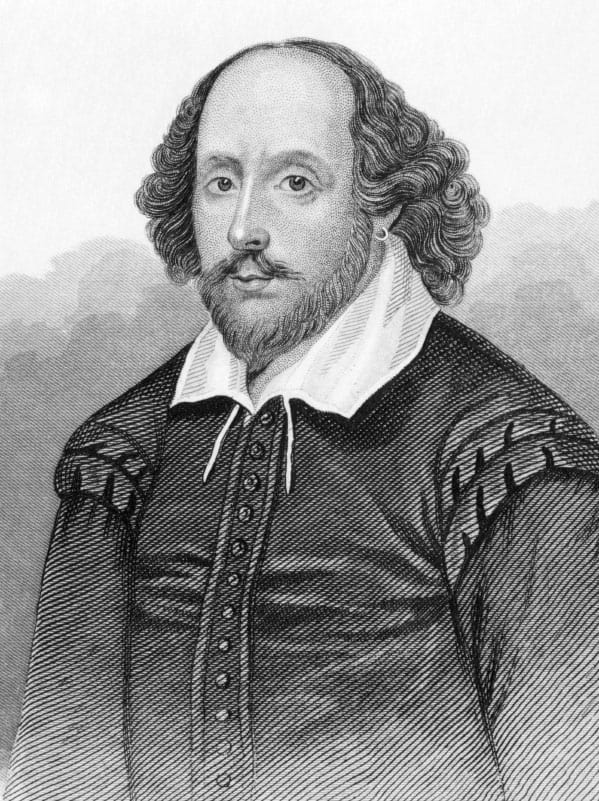
Engraving of William Shakespeare

Star-crossed science

The poet, playwright and actor William Shakespeare was a vigilant and keen observer of human nature, writing about love, war, politics and family dramas with nearly unparalleled insight. But at first glance, it seems that he was comparatively uninterested in science. Indeed, most accounts of the famed Bard suggest that he was uninspired by, or even ignorant of, the science that was flourishing at the peak of his career. In his book The Science of Shakespeare: a New Look at the Playwright’s Universe, author Dan Falk takes the opposite view, suggesting that Shakespeare may have been much more influenced by the discoveries taking place than other scholars have acknowledged. Certainly, the playwright lived in scientifically interesting times. Born in the same year as Galileo, 1564, he came of age in a world that was starting to pay attention to Copernicus’s paradigm-shifting book On the Revolutions of the Heavenly Spheres, which was printed in 1543. Amazingly, within his lifetime, he could have seen two supernovae with his naked eye; there have been no similarly bright ones since. But as Falk points out early in the book, although Shakespeare was a prolific writer, not much has survived in the form of personal diaries, letters or accounts to help us pin down what he believed in or found interesting – leaving us to infer his personal views from his fictional works as best we can. With that in mind, Falk examines the seemingly “scientific” references in Shakespeare’s writings, looking for clues in, for example, Helena’s speech on the retrograde motion of Mars in All’s Well That Ends Well and Anthony’s declaration that he would need a new heaven and a new Earth to measure his endless love for Cleopatra. Shakespeare fans will find such examples entertaining, and Falk’s book gives readers a clearer idea of what was considered as scientific “fact” in Shakespeare’s day, when the idea of such things was new and game-changing. Falk’s book suggests that Shakespeare’s works and the beginnings of science as we know it are irrefutably, if not distinctly, intertwined. If historical rhetoric does not appeal to you, you may find parts of the book tedious, but it should resonate with readers who have an interest in the history of science.

  • 2014 Thomas Dunne Books £16.65hb 364pp

The way the world ends

Of the many ways in which our current civilization could end, a super-pandemic might be the best we can hope for. Unlike a nuclear war, an asteroid strike or catastrophic climate change – all of which would devastate the environment as well as the human population – a virulent pandemic would leave the world’s resources and even much of our civilization’s infrastructure more or less intact. The small number of survivors would thus find themselves in a sort of post-apocalyptic Eden, with plenty of material around to help them build a new civilization out of the ruins of the old. But would they know how to do it? Lewis Dartnell doubts it, and to remedy this, the University of Leicester astrobiologist has written what amounts to a guidebook for the reconstruction. The Knowledge: How to Rebuild Our World From Scratch is essentially a collection of interesting bits of information about agriculture, chemistry, materials physics, medicine and engineering, cleverly packaged into a survival manual. It’s an effective gimmick: primed with thoughts of post-pandemic rebuilding, one pays rather more attention to explanations of, for example, wood pyrolysis and water purification than might otherwise be the case. The structure of The Knowledge does eventually get rather repetitive (“x is useful for y; you can make it by doing z”), so it is more a book for dipping into than reading straight through. But at its best, The Knowledge will give you a new appreciation for the building blocks of modern civilization – coupled with a better understanding of just how fragile they are.

  • 2014 Bodley Head/Penguin Press £20/$27.95hb 352pp

Powers of time

In their 1968 short film Powers of Ten, Ray and Charles Eames took viewers on a journey through space, travelling to the farthest reaches of the universe and focusing in on the tiniest of particles within the human body. The film, which was based on a book by the Dutch educator and pacifist Kees Boeke, is justly famous for its artistic vision and for the way that it illustrates the sheer scale of inner and outer space. But what if the Eameses had tried to illustrate the scale of time, rather than space? In their book Time in Powers of Ten, authors Gerard ’t Hooft and Stefan Vandoren set out to do just that. After discussing processes that happen on familiar timescales such as seconds, minutes and years, they progress through ever-longer chunks of time, in ever-increasing powers of 10, until they reach 1090 s – far longer than the universe has existed or is expected to exist in the future. At this point they loop back around to the smallest timescales, beginning with the Planck time of 5.44 × 10–44 s and moving up through the half-lives of fundamental particles (about 10–25 s) into the physically rich timescales of the femto-, pico- and nanosecond. This book lacks the design finesse of the Eameses, but the text is detailed and scientifically strong (as you would expect; ’t Hooft shared the 1999 Nobel Prize for Physics) and the English translation by ’t Hooft’s daughter, Saskia Eisberg-’t Hooft, is clear and natural.

  • 2014 World Scientific £16/$24pb 250pp

Laser shines a new light on isotope separation

A new method of separating nuclear isotopes that exploits the slight differences in their electronic energy levels has been developed by physicists in the US. The energy-efficient separator was used to create isotopically pure lithium-7, which is used in some nuclear reactors. The team is now developing the technology for a variety of isotopes used in science, engineering and medicine.

The only general method for separating isotopes is the calutron, which was invented during the Second World War to enrich uranium for the atomic bomb. A calutron is essentially a cyclotron that accelerates ions to extremely high energies while deflecting them using a magnetic field. Lighter isotopes of the same atom are deflected fractionally more than heavier isotopes, which allows them to be separated. However, the devices use an enormous amount of energy – up to a terajoule to produce a single gram of a pure isotope – making the process very expensive.

Specific processes have since been developed to isolate certain isotopes such as uranium, which is now enriched using gas centrifuges. The US closed its last large calutron in 1998, and for many isotopes the world now relies on devices in Russia that date back to the 1950s.

Shifting isotopes

In 2012 Mark Raizen and Bruce Klappauf at the University of Texas at Austin proposed an alternative to the calutron based on optical pumping, in which laser light changes the way an atom responds to a magnetic field (see “Isotope separation with a light touch”). Different isotopes of the same atom have slightly different electron energy levels: an effect called “isotope shift”. As a result, laser light of the right wavelength will cause an electronic transition in one specific isotope but not in the others. The final state of the isotope can be chosen so that the atom is deflected in a specific direction when it travels through a magnetic field, thus allowing the isotopes to be separated.

While the technique has already been demonstrated, the quantities produced were too small for industrial use. Now, the US-based team has built a machine that can produce large quantities of isotopes and has used it to isolate lithium-7, which is used by the nuclear industry. While naturally occurring lithium is mostly lithium-7, it also contains about 7.5% lithium-6. Lithium hydroxide is used as part of the anti-corrosion regimen in pressurized water nuclear reactors. There, it is exposed to neutrons, which encourage the lithium-6 to decay to a radioactive isotope of hydrogen that would be a serious hazard if it were to escape into the environment.

The separation technique begins with vaporizing lithium and then firing a 150 mW red laser at the vapour. This puts the lithium-6 atoms into an excited state – a process called “optical pumping” – while leaving the lithium-7 untouched. The vapour is then sent through a curved chamber lined on the outer edge with permanent magnets. The lithium-7 is repelled by the magnets and deflected out of the chamber where it is collected. Meanwhile, the lithium-6 is deflected onto the magnets and prevented from leaving the chamber.

Making medical isotopes

The result is 99.97% pure lithium-7 – which is good enough for use in a pressurized water reactor. Raizen believes that the energy cost of purifying a gram of lithium-7 would be “at least 250 times less than with the calutron and possibly as much as 1000 times less”. He has now started a non-profit foundation to develop industrial versions of the machine, mainly to produce medical isotopes.

Paolo de Natale of the European Laboratory for Non-linear Spectroscopy in Florence, Italy, says it is yet another example of how optical pumping, which was originally demonstrated in 1950, has shown itself to be useful for a real industrial process. He cautions that making the technique work for atoms other than lithium will not be a trivial task: for each new type of atom, researchers must find a suitable electronic transition and a suitable laser source. However, he adds that “Considering the tremendous progress in laser sources in recent years, it’s more or less always possible now to find the right laser sources with the right conditions.”

The research is published in Nature Physics.

Couple emerges from trio of supermassive black holes

A trio of closely orbiting supermassive black holes has been spotted in a galaxy nearly 4.2 billion light-years away. The discovery was made by an international team of astronomers, which points out that such triple systems are very rare because most galaxies have just one black hole at their centre. This system is particularly interesting to astronomers because two of the three black holes are very closely bound, forming a “tight” binary pair within the system.

Astronomers know that supermassive black holes – the largest type of black hole, which can be billions of solar masses – lie at the heart of most galaxies, including our own Milky Way. Most galaxies are believed to evolve via collisions and mergers between smaller galaxies, so some of the larger galaxies should contain multiple supermassive black holes. Having two or more such gravitational powerhouses in a galaxy would have profound effects on its structure and dynamics. As a pair of supermassive black holes orbit one another, for example, the binary system’s gravity would disrupt the gas and stars at the centre of the host galaxy. This, in turn, could lead to a burst of star formation or even the ejection of one of the black holes from the galaxy.

Heavyweight triplets

To date, only a few galaxies with two supermassive black holes have been found, and just four triple black-hole systems are currently known. The closest known spacing between black holes in a binary system is 2.4 kiloparsecs – about 1/10th the diameter of the main disc of the Milky Way. The new system, detected by Roger Deane of the University of Cape Town, South Africa, and colleagues, consists of two supermassive black holes separated by a mere 140 parsecs, while the third of the trio is 7 kiloparsecs from the close-knit pair. The two black holes in the pair are orbiting one another at high speed – more than 100,000 m s–1.

The team made its discovery while studying six galaxies that were thought to host binary supermassive black-hole systems based on near-infrared and optical observations. The researchers found that one of the black holes was actually two, and hence that particular system is a triple. Because the astronomers did not have to search through many candidates to find the system, they believe that tightly knit binaries and indeed triple systems of black holes could be more common than previously thought.

Giant radio telescope

The team employed a technique known as very long baseline interferometry (VLBI) to study the trio. VLBI creates a giant radio telescope spanning thousands of kilometres across the globe by combining the signals from large radio antennas that can be separated by up to 10,000 km. This allows astronomers to see detail 50 times finer than that possible with the Hubble Space Telescope. The current observations were done with the European VLBI Network (EVN) and the data were correlated at the Joint Institute for VLBI in Europe (JIVE) in the Netherlands.

Deane told physicsworld.com that the discovery demonstrates the power of VLBI to differentiate between multiple objects in systems that are huge distances from Earth. Before the latest discovery, a pair of supermassive black holes with the closest orbit (about 7 parsecs apart) was spotted in a galaxy some 750 million light-years from Earth. “Our system is 4.2 billion light-years away, which is much more distant than the closest known pair, demonstrating that the VLBI technique can be used to probe close black-hole pairs across a fair fraction of cosmic time,” he says.

Spinning jets

The presence of the bound pair was also revealed via a much more prominent feature – the large-scale radio jets emanating from the black holes. Such astrophysical jets are a common feature of supermassive black holes – accreted matter collecting around the event horizon of the black hole is ejected along its axis of rotation as it tries to fall into the hole. The triple system has three such jets, and Deane and colleagues found that the presence of the tight pair is imprinted onto the properties of the jets. Indeed, the orbital motion of the black holes in the pair twists the jets into a helical or corkscrew-like “S” shape. This provides astronomers with a “smoking gun” for a binary black-hole system that could be used in future searches.

Deane also points out that this extreme triple system could be creating gravitational waves – ripples in the very fabric of space–time. Future telescopes, such as the Square Kilometre Array, should be able to detect these ripples for black holes that are even closer together. “It fills me with great excitement as this is just scratching the surface of a long list of discoveries that will be made possible with the Square Kilometre Array,” Deane says.

The research is published in Nature.

How the banjo got its twang, love in the time of science, award-winning astro images and more

Five string banjo showing the position of the bridge on the head. (Courtesy: Wikipedia/CC BY-SA 3.0)

By Tushna Commissariat and Hamish Johnston

Folk and country music often blends the sharp twang of a banjo with the mellow and sustained tone of a guitar.  While the two instruments appear to be very similar – at least at first glance – they have very different sounds. This has long puzzled some physicists, including Nobel laureate David Politzer, who may have just solved this acoustical mystery.

(more…)

Copyright © 2026 by IOP Publishing Ltd and individual contributors