Electrons tunnel nicely through boron nitride

Ultrathin sheets of hexagonal boron nitride (h-BN) could make for the ideal dielectric layer in future electronic components, thanks to a high degree of uniformity in how electrons tunnel through the material. That is the claim of an international team of researchers that is studying how the material performs as a barrier layer that is sandwiched between two conducting layers. The team found that the tunnel current depends exponentially on the number of h-BN atomic layers – down to just a single-layer thickness. The result bodes well for using h-BN in electronic components such as tunnel devices and ultrafast field-effect transistors, say the researchers.

Like graphene, sheets of boron nitride (BN) just one atom thick can be created by the exfoliation of much thicker samples. BN is interesting from a technological point of view because very thin and uniform samples with few defects can be made and – unlike graphene – the material is an insulator.

“As transistors become ever smaller, h-BN is probably the best material to use as the dielectric layer in such miniature electronic components,” says team member Liam Britnell, who did the work at the University of Manchester in the UK along with Nobel-prize-winners Andre Geim and Konstantin Novoselov and others in the UK, the Netherlands, Singapore, Russia and the US. What is more, Britnell believes that a new class of extremely thin, multilayered structures could be made by combining graphene and h-BN. This is because the two materials have very similar lattice constants, but very different electronic properties.

Already ideal

Researchers have already shown that bulk BN could be ideal as a substrate for graphene electronics. BN can also be used as a barrier layer to stop electron tunnelling between two graphene layers and in graphene vertical-tunnelling transistors when it is more than six atomic layers thick. “Studying even thinner layers of BN is extremely interesting fundamentally because this material might find use in flexible-electronics applications, especially as the layer thickness can be controlled on the atomic scale,” says Britnell.

In this latest study, the team looked at the electronic properties of tunnel diodes in which h-BN acts as a barrier layer between different conducting materials such as graphene, graphite and gold. Current–voltage measurements through the devices made over a range of temperatures revealed that a single atomic layer of h-BN indeed acts as an effective tunnel barrier and that the current through the material decreases as its thickness increases.

Sandwich structures

The researchers made their measurements on several types of device that they had fabricated as the following sandwich structures: gold/BN/gold, graphene/BN/graphene and graphite/BN/graphite. The BN layer was of varying thickness, ranging from one to four atomic layers.

Britnell and colleagues say that they would now like to find a suitable semiconducting layered material to complement the electronic properties of both BN and graphene – the latter being a semimetal. “It would be wonderful to find such a material, and our group is really concentrating on taking graphene, h-BN and other layered materials and then combining them to perhaps create new 3D structures. The hope is that we can find interesting new physics and discover other, fresh ways of making electronic devices,” says Britnell

The work was reported in Nano Letters.

The perfect storm


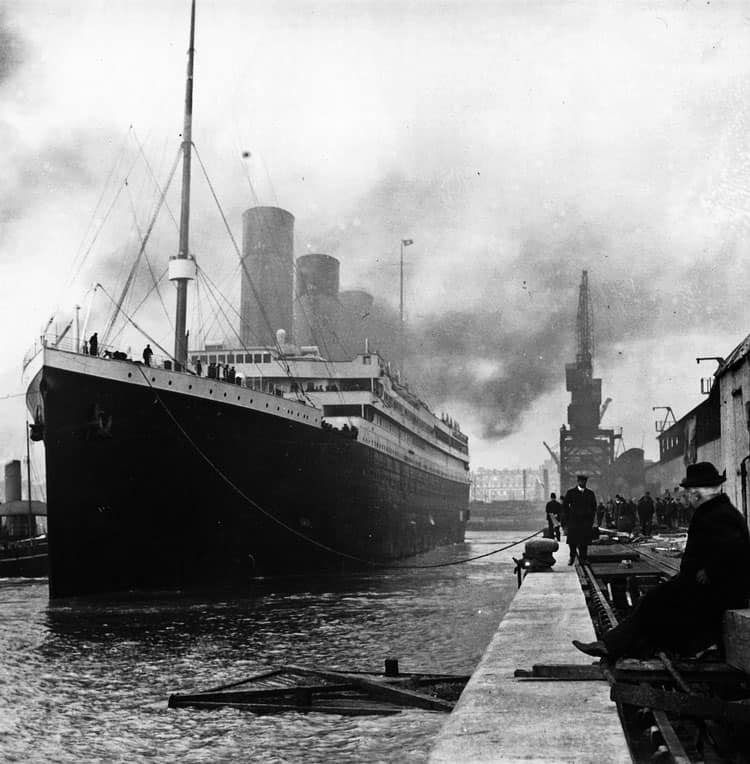
One hundred years ago this month, the world reverberated to the news that the largest ship in the world had met with destruction on her first ever outing.

At 11.40 p.m. on Sunday 14 April 1912, the Royal Mail Steamer Titanic, bound from Southampton to New York, collided with an iceberg and sank within three hours, with the loss of more than two-thirds of the 2224 passengers and crew.

The world was stunned, for the superlatives that had followed the launch of the Titanic from the Harland and Wolff shipyard in Belfast had been stupendous – some would say almost say hubris-inducing. Nature stepped up to the challenge and with almost contemptuous ease sent the Titanic to an icy grave 4 km deep at 41° 43′  N, 49° 56′  W off the Grand Banks of Newfoundland. The Titanic‘s last reported position was 41° 46′  N, 50° 14’  W, although this was later shown to be out by more than 20 km, an inaccuracy that greatly contributed to the difficulties encountered while trying to locate the wreck.

When people ask the question “What sank the Titanic?”, at first glance the answer is obvious: she hit an iceberg. But that simplistic answer masks deeper and more substantive questions: why did the Titanic hit the berg in the first place and why did she sink so quickly?

It is a mistake to regard the Titanic as somehow primitive. She was the most modern ship of her day in a world that relied on its steam trade to maintain communications between Europe and America in the same way that today we rely on aviation. The Titanic incorporated the latest technological innovations of the age to help ensure her safety. For example, she was one of the first ships to have sealable watertight bulkheads – transverse partitions that cross the ship at right angles to its long axis – with electrically operated doors that could be closed from the bridge at a moment’s notice. The hull, as was standard for the day, was made of mild steel (steel with a maximum content of 0.35% carbon, 0.7% manganese and 0.5% silicon) and was held together by three million steel and wrought-iron rivets. Although steel rivets are stronger than wrought iron, for technical reasons (as we shall see) they could only be used in the middle three-fifths of the ship’s length. She also carried the latest Marconi wireless equipment – the most powerful in use at the time with a 5000 W transmitter that gave a radio range of more than 500 km.

On the face of it, the human factors were stacked in the Titanic‘s favour too. For her maiden voyage she had the most experienced crew of the entire White Star Line (one of the premier British shipping lines of the day) on board and it in turn was commanded by Capt. Edward J Smith, the commodore of the line.

It is also worth noting that the North Atlantic shipping run was very far from being an unknown quantity in the Edwardian era. It was as busy as the air route between Europe and America is today, and the chances of seeing a fellow ship en route were as high as an air traveller seeing a fellow aircraft today.

But the simple truth is that against all odds and expectations, including those of the ship’s designers, Lord Pirrie of the Harland and Wolff shipyard and Thomas Andrews of the White Star Line itself, the Titanic sank as completely as a stone, less than three hours after she had hit the iceberg. If she had stayed afloat longer, then rescue ships could have got to her and the tragic loss of life mitigated or averted. This is the real question of the Titanic mystery: how could a 46,000 tonne ship sink so quickly? The answer is to be found within the science of the Titanic‘s construction and the events that occurred on that fateful voyage.

Details emerge

After the sinking of the iconic ship there was no shortage of theories as to why the pride of the White Star Line had foundered. Two inquiries in 1912 led by Senator William Alden Smith in the US and Lord Mersey in the UK both reached remarkably similar conclusions. The Titanic had been travelling too fast, Smith had paid too little heed to iceberg warnings and, of course, there had not been enough lifeboats on board to carry every passenger to safety. Although this last fact is inescapable, it is less well known that the Titanic carried more lifeboats than she was required by law to do. It seems that in 1912, in a way not dissimilar to our own box-ticking, responsibility-avoiding culture today, lack of effective oversight on the part of the authorities caused the consequences of the disaster to be much worse than they might have been.

As the inquiries unfolded, other details began to emerge. There had been a reshuffle of officers just before the ship had sailed and the second officer, David Blair, had left the ship – bumped from the roster by the more senior Charles Lightoller. Blair had taken with him the key to the locker that held the binoculars used by the lookouts in the crow’s nest. Also, the more senior of the two radio operators – Jack Philips – had not passed on the fifth and most specific ice warning of the day received from the SS Mesaba. Mesaba gave the precise location (42° to 41°, 25′  N; 49° to 50°, 30′  W) of an area of icebergs that, at the time, approximately 9.40 p.m., was only 50 miles dead ahead of the Titanic. Because the message – “Saw great number large icebergs also field ice. Weather clear.” – was not prefixed with “MSG” “Masters’ Service Gram”), which would have required a personal acknowledgement from the captain, Philips interpreted it as non-urgent and returned to sending passenger messages to the receiver on shore at Cape Race, Newfoundland, before it went out of range.

The physical facts

There is one aspect of the Titanic disaster that was known from the time the ship hit the iceberg: if more than four of the 16 watertight compartments into which the interior space of the Titanic was divided were flooded, the ship could not stay afloat. The Titanic‘s designer Thomas Andrews was on board and was asked by Capt. Smith to accompany him to assess the damage immediately after the collision. The impact had been on the for’ard starboard side below the water line and once Andrews had discovered the extent of the damage he warned Smith that since more than four compartments had been ruptured (six in fact had been breached) “it was a math- ematical certainty that the ship would sink”.

This, of course, the Titanic duly did.

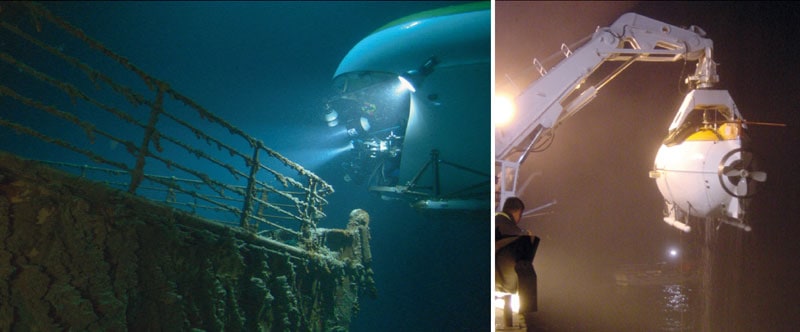
Yet the detailed science behind the sinking of the Titanic had to wait 90 years to be explored. Her wreck was discovered by the submersible Alvin during a joint French–American expedition in 1985 of which the archaeological oceanographer Robert Ballard was a prominent member. Ballard returned the next year to start analytical work on the wreck and since then there have been many expeditions to the site – mostly, it has to be said, for the purposes of sightseeing, with a handful of scientific expeditions thrown in.

Curiously enough, Ballard had not been driven to develop his new technology (the Argo-Jason system) specifically to find the Titanic‘s ancient wreck. As he told the US Academy of Achievement in an interview in 1991, he simply wanted to test his system in the deepest water he could easily get to. “If the Titanic had been in the Indian Ocean, I probably would have never found her,” Ballard said. “But the fact that she was in my backyard, I went, ‘Let’s go find the Titanic.’ ”

An early attempt to explain the cause of the Titanic‘s rapid sinking was related to physical tests on the steel comprising the ship’s plates. Early tests made by metallurgists in Canada suggested that the steel of her hull plates became brittle at about 32 °C, suggesting that it would have been prone to fracture at the temperatures the ship would have been operating at. This contrasts with modern steels where the ductile–brittle transition temperature is –27 °C. However, more sensitive tests that have since been carried out, which conform more closely to the characteristics of the Titanic‘s impact with the iceberg, suggest that the steel of the ship’s plating was adequate to bend with the impact rather than fracture.

In the mid-2000s two metallurgists, Tim Foecke at the US National Institute of Standards and Technology and Jennifer Hooper McCarty, then at Johns Hopkins University in the US, focused their attention on the composition of the Titanic‘s rivets. They combined their metallurgical analysis with a methodical sweep through the records of the Harland and Wolff shipyard in Belfast where the Titanic was built. Combining physical and historical analysis in this way proved to be a powerful trick.

Foecke and McCarty found that the rivets that held the mild-steel plates of the Titanic‘s hull together were not of uniform composition or quality and had not been inserted in a uniform fashion. Specifically, Foecke and McCarty found that the rivets at the front and rear fifths of the Titanic were made only of “best” quality iron, not “best-best”, and had been inserted by hand. The reason for this was that, at the time of the Titanic‘s construction, the hydraulic presses used to insert the rivets used in the middle three-fifths of the ship could not be operated where the curvature of the hull was too acute (i.e. at bow and stern).

But why did Harland and Wolff use “best” quality rivets rather than “best-best?” Foecke and McCarty speculate that it may simply have been a cost-saving exercise. “Best” rivets were cheaper than “best-best” but also had a higher concentration of impurities known as “slag”. This higher concentration of slag meant that the rivets were particularly vulnerable to shearing stresses – precisely the kind of impact they were subjected to that long-ago night in April 1912. Lab tests have shown that the heads of such rivets can pop off under extreme pressure, which on the Titanic would have allowed the steel plates on the hull to come apart, exposing her inner chambers to an onslaught of water.

Riveting stuff

James Cameron, director of the film Titanic (which is this month re-released in 3D), seems clear that it was the rivets that were at fault. If you look at the relevant section of his film, at about 100 minutes in, you will see the bulkheads being split asunder along the line of rivets, which pop like champagne corks into the interior of the vessel. This sequence is worth watching and rewatching because it is spot-on in terms of accuracy. Cameron, incidentally, began a degree in physics at Fullerton College in the US and is well known for his unstinting obsession with accuracy – an accuracy that is apparent in the detail of his Titanic.

For example, in the film, just prior to the iceberg impact you will notice that First Officer Murdoch telegraphs to the engine room for the engines to be put into reverse. Of the Titanic‘s three engines, the central engine (a Parson’s turbine with a screw mounted directly behind the rudder) could not be reversed and so only slowed to a standstill. The two reciprocating engines driving the port and starboard screws on either side of it could, however, be reversed, and Cameron faithfully records the central propeller as being stationary as the ship starts the dramatic evasive manoeuvre, even as he shows the outboard propellers beginning to reverse.

The configuration of the propellers and rudder that Cameron so faithfully renders also bears on the reasons for the ship’s sinking. On the one hand, it took time for the propellers to be stopped and then put into full reverse, plus, as we have seen, the steering propeller was stationary. On the other hand, because the rudder, which steers the ship, was most effective when controlling the laminar flow of water created by the steering propeller, the fact that the steering propellor was not rotating severely diminished the turning ability of the ship. It is one of the many bitter ironies of the Titanic tragedy that the ship might well have avoided the iceberg if Murdoch had not told the engine room to reduce and then reverse thrust.

Effects from afar

Finally, there is a new twist to the science of why the Titanic foundered. North Atlantic icebergs are calved on the western coast of Greenland, then circulate anticlockwise through the Labrador Sea before drifting into the North Atlantic off the Newfoundland coast. There they meet the Gulf Stream heading north-east on its long journey to bathe the shores of north-western Europe. There are significant temperature and density differences between these two currents and when they are most pronounced – for example when the Gulf Stream is warmer than usual – the icebergs tend to be corralled into an approximately straight line along the axis of the boundary interface. In other words, they make a barrier of ice.

Richard Norris of the Scripps Institution of Oceanography in San Diego, California, is leading an expedition of the Integrated Ocean Drilling Program to the area this summer. “The Titanic hit the iceberg right at the intersection of the Labrador Current and the Gulf Stream,” he says. “1912 had an unusually hot summer in the Caribbean and so the Gulf Stream was particularly intense that year. Oceanographically, the upshot of that was that icebergs, sea ice and growlers were concentrated in the very position where the collision happened.”

New research raises the possibility that celestial influences conspired to doom the Titanic from even further afield. Astronomers Donald Olson and Russell Doescher from Texas State University–San Marcos this month published their findings about an extraordinary event on 4 January 1912, three months before the disaster. On that day the Sun was aligned with the Moon in a way that enhanced its gravitational pull, causing a higher-than-usual “spring tide”. This is nothing exceptional in itself. More remarkable was that on the same day in 1912 the Moon made its closest approach to the Earth in more than 1400 years – in other words, its tide-raising forces were at a maximum. On top of that, the Earth had reached its closest position to the Sun – the “perihelion” – the day before.

At first glance it is hard to see how an unusually high tide might have affected the Titanic more than three months later. The North Atlantic shipping lanes were peppered with icebergs in April, but if the high tide had caused new icebergs to calve in Greenland in January, they would have had to travel unusually fast to get there by then. But the bergs may have come from a source nearer by. When icebergs pass through the Labrador Sea, they often become stuck in shallow waters and it can take several years for them to be dislodged and continue their journey southward. Writing in the April issue of Sky & Telescope magazine, Olson and Doescher suggest that the high tide in January 1912 could have given many trapped icebergs the buoyancy they needed to lift up away from the ground and continue their journey to the Titanic‘s future graveyard.

It seems therefore that the climate thousands of miles from where the Titanic sank, as well as the positions of the Sun and Moon astronomical distances away, may have been yet further links in the chain that led to the loss of the greatest ship in the world.

Event cascade

So what conclusions can we draw from the events of 14 April 1912, a century after the Titanic sank? First, there can be no doubt that at the very start of the ship’s construction there was a problem with the materials. The steel plates of the time may have been inadequate for the task in waters of those temperatures, and the rivets were of inferior quality. Second, mistakes were made by the crew once the vessel was under way: the absence of binoculars in the crow’s nest; Smith’s decision to maintain a high speed despite the abundance of iceberg warnings; the radio operators’ tardiness in getting crucial information to the officers and their emphasis on passenger messages rather than operational ones; and, of course, the almost cynical lack of lifeboats.

Then there are the maths and physics of the collision: six compartments flooded when, if it had only been four, the ship would not have sunk. And finally, there was the complex interplay of two surface-water currents, as well as the extraordinarily high spring tide three months earlier, that concentrated icebergs as if they were tank traps.

No one thing sent the Titanic to the bottom of the North Atlantic. Rather, the ship was ensnared by a perfect storm of circumstances that conspired her to doom. Such a chain is familiar to those who study disasters – it is called an “event cascade”. The best planning in the world cannot eliminate every factor that might negatively impact on the design and operation of a complicated machine such as a massive passenger ship. Eventually, and occasionally, enough of these individual factors combine and the “event cascade” becomes long enough and complicated enough that tragedy cannot be averted.

Poor Titanic.

Costa Concordia

It may have been 100 years since the Titanic went down, but recent events have shown that the sea remains as hazardous as ever if not treated with respect. On 13 January the Italian cruise liner Costa Concordia struck a rock just off the shore of Giglio Island on the west coast of Italy, tearing a 49 m gash in her hull. The ship, flooding and listing, grounded on the island, where it still lies on its side in shallow water, pending salvage. All but 32 of the total 4252 passengers and crew were saved.

It is too early to speculate on the causes of the crash but there have been reports that the alarm on the navigation computer – which is linked to GPS and has an accuracy of a few metres – may not have been functioning as it should.

If that is the case then the safety features of the Costa Concordia were reduced towards Titanic levels at a stroke. Yet the Costa Concordia still had radar and modern-day echo-sounding equipment, both technologies that were not available to the Titanic.

How these latter were overlooked is, of course, a matter for the board of inquiry, but there may be a cause for concern that modern-day computerized navigation systems have blunted the caution that should run in the veins of all those who “go down to the sea in ships”.


Between the lines

The joy of bubbles

Most of us spent several happy hours of our childhood blowing soap bubbles. Some of us, however, never grew out of it and, judging by his new book Fizzics: the Science of Bubbles, Droplets, and Foams, F Ronald Young is clearly one of them. A retired lecturer at London’s Watford College, Young has spent his career studying various bubble-related phenomena and he has previously written textbooks on cavitation and sonoluminescence. Fizzics, however, is an entirely different beast. Thanks to Young’s amiable prose, reading it is almost as relaxing as a bubble bath, and at just over 100 pages, it is almost as light and airy as its subject matter. The downside to such brevity, of course, is that each topic – from the cloud chambers used in early particle-physics experiments to the frothy head on a pint of beer – is only explored to the depth of a soap film.

  • 2011 Johns Hopkins University Press £13.00/$25.00pb 136pp

Quantum exiles

In May 1933, shortly after the Nazis came to power in Germany, the cathode-ray pioneer Philipp Lenard penned an article for the party newspaper Völkischer Beobachter. In it, Lenard – who had won the Nobel Prize for Physics in 1905, Einstein’s “miracle year” – lamented “the massive infiltration of the Jews into important posts in universities and academies”. Einstein, he added, was only “the most obvious example of this damaging influence”. Eight decades have not dulled the ugliness of Lenard’s antisemitism, but it is true that many of the leading lights of 20th-century physics were indeed Jewish. As Gordon Fraser‘s book Quantum Exodus: Jewish Fugitives, the Atomic Bomb, and the Holocaust shows, the list of Jewish or part-Jewish physicists in pre-war continental Europe was long and illustrious, with the likes of Bethe, Bohr, Frisch, Meitner, Pauli, Teller, Wigner and Von Neumann joining Einstein in the top flight. Fraser deals competently with these luminaries’ relatively familiar stories, while also incorporating the experiences of many lesser-known exiles. The latter group includes the likes of Gertrude Scharff, a PhD student who fled to London in 1935 after finishing her dissertation at the University of Munich; Franz (later Francis) Simon, a Berlin-based cryogenics expert who moved to Oxford in 1933; and the massive one-quarter of all German university physics teachers who left in 1933 alone. The mass departure of these ordinary physicists cut deep into Germany’s scientific establishment, and probably did more damage on aggregate than the absence of a few superstars. As Fraser points out, Germany’s loss would prove to be the Allies’ gain, since émigré physicists great and small went on to play vital roles in the US atomic-bomb programme. There is, however, a downside to packing the stories of so many different people into a single book. Parts of Quantum Exodus have a distinctly “laundry list” flavour, while frequent hops between the book’s component stories (and time periods) can be hard to follow. Still, the constituent parts of Fraser’s book make for fascinating reading, even if they never quite gel into a single cohesive narrative.

  • 2012 Oxford University Press £25.00/$45.00hb 280pp

Accelerator photography

Particle accelerators are amazing examples of human ingenuity. They are also rather beautiful. Both of these qualities are highlighted in Time Machines, a new book of black-and-white photographs by Stanley Greenberg, whose previous work includes photos of New York City’s water system. For this book, Greenberg has drawn his inspiration from accelerator and detector facilities around the world, capturing images of the Cockcroft–Walton accelerator at Japan’s KEK facility, dipole magnets at CERN’s Large Hadron Collider and calorimeters at DESY in Germany, among many others. Several of the photos have an intimate, behind-the-scenes feel, including a close-up view of a detector at the Sudbury Neutrino Observatory in Canada, which Greenberg obtained by strapping himself into a harness and being lowered into a 200 m cavity. A photo of the “horn” on Fermilab’s MiniBooNE neutrino experiment is also nicely composed, with the horn’s curvature and central void echoing illustrations of black holes. However, not every photo in the collection is so successful, and artistically minded readers might query Greenberg’s decision to use brooding monochrome to depict these often brightly coloured machines.

  • 2011 Hirmer £39.95/$59.95hb 176pp

Life under alien skies


In December 2011 the Kepler Space Telescope spotted a staggeringly exciting object. Kepler is a planet hunter and, since its launch in March 2009, it has been staring intently along the spiral arm of our Milky Way galaxy, looking for telltale winks of starlight. Each wink is potentially the result of a planetary companion of a distant sun passing between its parent star and Kepler’s sensitive light-gathering instruments. So far, Kepler has detected more than 2300 planetary candidates using this “transit” method; many of these are large worlds on close, hot orbits around their star. But on 5 December last year the Kepler science team announced the discovery of a very special kind of world: a roughly Earth-sized planet orbiting within the so-called habitable zone of its Sun-like star. This planet, Kepler-22b, is just over twice the radius of our home world, making it a smallish “super-Earth” in planetary terms. Its presence in the habitable zone means it could contain liquid water on its surface: warm seas and oceans, the perfect cradle for life.

The discovery of Kepler-22b stands out as a high point in the short history of astrobiology, the field of science concerned with the possibility of life beyond our Earth. This young discipline is blossoming thanks not just to Kepler, but also to the extensive evidence for a watery era on ancient Mars and Earthbound discoveries of “extremophile” life in incredibly hostile niches. With the Kepler data suggesting that there are more planets than stars in our galaxy, and that around 2% of Sun-like stars are expected to host Earth-like planets in their habitable zones, it seems likely that other life-bearing worlds exist. On some of these, it is possible that evolution has progressed beyond primitive micro-organisms to yield multicellular lifeforms: analogues of terrestrial animals and plants. The question is, what might these alien species look like?

Common ground

Hollywood films often give the impression that aliens will be curiously humanoid, resembling actors with bits of plasticine stuck to their foreheads or dressed up in gorilla suits. This trend is, of course, born out of convenience for the props department more than any scientific rationale, but there are good reasons to expect that some aspects of our biology may indeed be present in extraterrestrial life. We can actually be pretty confident that complex alien life forms, both plant and animal, on an Earth-like world will be broadly recognizable, and will share many features with their terrestrial analogues.

One reason for this similarity is that certain adaptations, such as eyes and wings, are so useful that evolution on Earth has hit upon them independently more than once. For example, avian, insect and mammalian species have all separately evolved powered flight, while the “camera lens” eye designs of vertebrates and cephalopods such as the octopus or squid are astoundingly similar (and, in some respects, superior to our own). The process of biological adaptation strives to find solutions to particular survival problems – a plant may need to collect sunlight more efficiently than its neighbours, for example, or a fish might not survive unless it can out-swim its predators – and the diversity of life on Earth is a testament to its inventiveness. However, there are some survival problems that may in fact only have a few good solutions. The result is that a similar design emerges time and time again, a phenomenon known as “convergent evolution” (see photo below). In addition to eyes and wings, a number of other attributes of terrestrial organisms have also arisen independently multiple times through convergence. As the biologist Jack Cohen so delightfully phrased it, “The four universal F’s of evolution are fur, photosynthesis, flight and…mating!”

There are also physics-based reasons for thinking that alien life will resemble that found on Earth. Life developing on worlds throughout the universe will be subject to exactly the same scientific laws and principles of good engineering as we are here on Earth. You would expect alien fish, for example, to have developed a streamlined shape and fins or a tail for propulsion. In fact, they may end up looking uncannily like salmon.

As for the plant life in the forests and jungles of an alien Earth, it may prove to be equally recognizable, given the same mix of biological and physical factors. The most immediately obvious feature of a land plant or tree is its overall shape (seen most easily on Earth in deciduous trees that have shed their leaves in autumn), and we have some reason to believe that alien plants will have similar shapes. As plant biologist Karl Niklas of Cornell University in the US explains, any land plant has to simultaneously satisfy four basic requirements for survival: it must maximize the amount of light it intercepts for photosynthesis; disperse its pollen or seeds as far as possible; ensure it does not grow unstable and topple over; and prevent itself from losing too much water through exposed surfaces such as leaves.

These four principles are sometimes in conflict with each other. For example, to optimize light collection, a plant might evolve into a shape featuring lots of leaves in a very wide flat canopy, like a parasol. However, this would make it vulnerable to uprooting in high winds. Evolution will attempt to find the optimum compromise between the four fundamental requirements, and so the fittest design for a plant depends on the prevailing conditions in its own local environment. Often, one of the requirements will outweigh the others. A plant growing in the extremely desiccating and sunlight-rich environment of a desert, for example, will end up looking very different from a tree with sufficient access to water but located at high latitudes where the Sun is forever low in the sky.

Black and blue

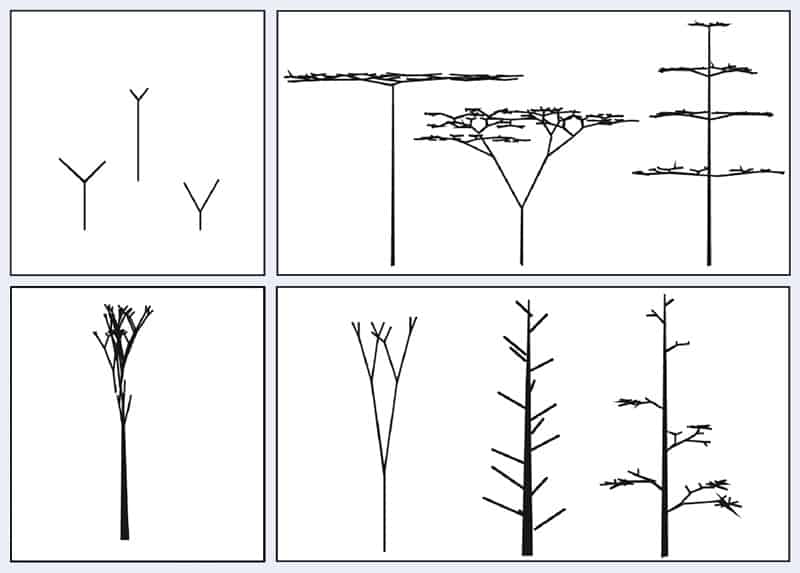
Niklas has been studying the interplay of these factors in the evolution of plant design by running computer models of the evolutionary process. When the parameters in his models are weighted towards one or more different requirements, the tree designs produced by Niklas’ artificial evolution are start-lingly similar to the species of tree and plant found in different environments on Earth (figure 1). Astrobiologists expect this likeness to also hold true for complex photosynthetic organisms evolving on other planets. A plant adapted to desert conditions on any world would need to be squat and unbranched, like a cactus, minimizing surface area and so limiting water loss. A tree that needed maximum stability would be structured much like a fir, and a tree growing in moist temperate soils would have large photosynthetic surfaces and a broad crown like an oak.

The shapes of trees in alien forests are likely to be pretty similar to earthly varieties, as long as they are growing in comparable environments. But what about other attributes, such as the colours of their leaves? On Earth, plants and trees look green because the pigment that drives photosynthesis, chlorophyll, absorbs blue light (which is most energetic) and red light (which is most plentiful) much more strongly than green light. But although plants reflect green light, their reflectance spectrum actually shows a much more intense feature at wavelengths just longer than the visible range – a feature known as the “red edge”. Indeed, if our eyes were sensitive to a slightly wider range of light wavelengths, plants would appear not a verdant green, but a lush near-infrared colour.

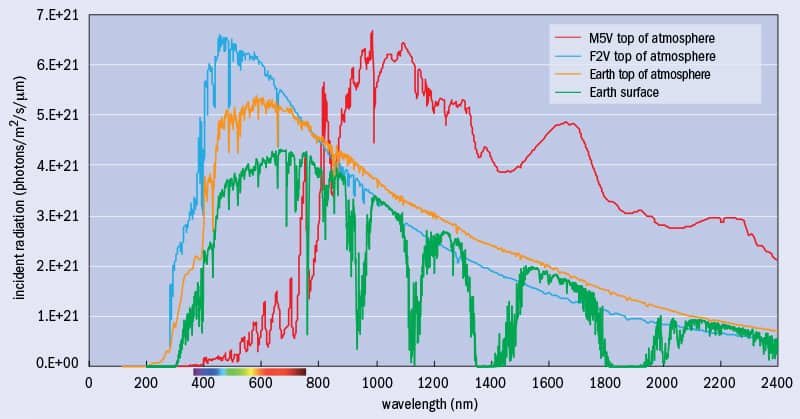
Terrestrial plants probably reflect these near-infrared wavelengths to avoid overheating in the Sun. More generally, on any planet, the most important factors influencing the complement of pigments used for photosynthesis will be the radiation spectrum of the alien sun and how this light is transmitted through the planet’s atmosphere (figure 2). Plants growing by the light of another sun will be spectrally tuned to make optimal use of this light, preferentially absorbing either the most common wavelengths of photons or those carrying the most energy. This will be true even if the plant’s homeworld is orbiting a star of a different colour, or spectral type, to our Sun. As Nancy Kiang of the NASA Goddard Institute for Space Studies points out, forests growing by the light of a star bluer or redder than our Sun would need photo-synthetic pigments tuned to this shifted spectrum.

Our Sun is a G2 star and the peak of its emission spectrum, the sunlight beaming upon the Earth, lies at around 550 nm. F-class stars, however, burn hotter and brighter than our Sun, and their spectrum is shifted towards blue. Surprisingly, though, this might not make a tremendous difference to the colour of plants on planets orbiting F-class stars, relative to terrestrial plants. Kiang explains that this is because F-class stars’ emission spectra still contain a lot of visible light, even though the overall spectrum is shifted to shorter wavelengths. Alien plants growing in such an environment might, however, face a problem with the intense flood of energetic blue light and so might need to develop protection mechanisms and reflect more of this blue light away. In other words, vegetation on a world orbiting an F-star might look blue to our eyes, but still have the distinctive red edge in its reflectance spectrum that goes with oxygen-producing photosynthesis.

The situation would be different for M-class dwarf stars, which are smaller and cooler than our Sun, and gleam with a fainter, redder light. Plants growing on a planet orbiting such a “red dwarf” star would need to absorb as much of this sunlight as possible to gather the energy to grow, and would probably therefore appear black to our eyes. (Of course, the eyes of any animals that evolved on the planet would also have been tuned to the cooler spectrum, and so they would see their plants as an intense infrared colour.) Plants in such black forests might also adapt to a long-wavelength, low-energy photon environment by developing photosynthetic systems capable of collecting several photons at a time, in order to harvest enough energy to crack water and liberate oxygen. One further complication is that many M-class red-dwarf stars appear to be quite active, with regular intense solar flares, so plants on any orbiting worlds may find aquatic habitats more conducive to life. Under water, plants would be shielded from the spasmodic floods of ultraviolet radiation triggered by flares, but still receive enough light for growth.

Really alien plants

Instead of striving up towards the sun like a towering column, why should these plants not simply float in the air?

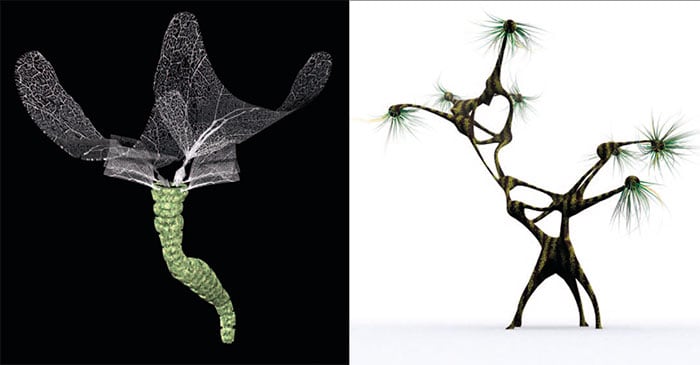
So far, we have assumed that plants growing under Earth-like conditions on other planets will find similar solutions to survival problems. But what if alien evolution develops completely novel adaptations? Are there other ways of satisfying the four survival constraints that do not exist in terrestrial biology?

Consider a super-Earth planet more massive than our own, such as the recently discovered Kepler-22b or even heavier planets discovered earlier. On such a world, the increased pull of gravity would stunt the growth of even the stoutest-trunked tree. Perhaps evolution playing out on such a world would stumble across a strikingly different answer to this survival challenge. Instead of striving up towards the sun like a towering column, why should these plants not simply float in the air?

All plants, algae and cyanobacteria on Earth grow by harvesting the energy of sunlight to crack apart molecules of water, a process called oxygenic photosynthesis. The hydrogen liberated in this process is used to reduce carbon dioxide and so produce carbohydrate food. The oxygen is simply released as waste gas. An alien plant, however, could instead release some of its hydrogen into an inflatable membrane and so float skyward, anchored to the ground with a vine-like tether. These “zeppelin plants” could also employ a very simple reproduction strategy, perhaps evolving some mechanism of detaching from their tethers to fly away on the winds and scatter seeds or spores across the terrain below.

There seems to be nothing in physics that would forbid such an organism from developing. Indeed, an analogous strategy is found in Earth’s oceans, where forests of kelp keep themselves buoyant in the sunlit surface waters of terrestrial seas by pumping carbon dioxide or oxygen into small flotation bladders. Perhaps the only reason that zeppelin plants have not emerged on Earth is that the environmental conditions do not favour such an adaptation, since the terrestrial gravity is not strong enough to discourage alternative solutions.

Plant life on a super-Earth would also face a challenge in hauling water from the roots up to the tallest leaves. The maximum height that water can be drawn up by capillary action is determined by the balance between the surface tension of water and the gravitational strength. On Earth, the theoretical maximum is just over 100 m high, and this is indeed the limit reached by the tallest trees on the planet. On a super-Earth, trees may not be able to rely on such a passive mechanism, so they might develop active systems for pumping water to their canopies. Alternatively, they might find a new solution altogether, such as evolving trumpet-like adaptations of their top leaves to collect rain and so distribute water down through their vascular transport system. So on a super-Earth, with different environmental challenges, you may well expect evolution to play out in surprising new directions.

Detecting life

Much of this article has been, in essence, a “thought experiment” on how biology might have responded to the laws of physics and engineering principles on another world. Soon, though, such speculative attempts to predict the form of extraterrestrial life will take on a new and crucial importance. Kepler and other exoplanet-hunting programmes are ca-pable of detecting a true twin of our homeworld in the next few years. The next step will be to characterize each of the planets on this “shopping list” of nearby Earth-like worlds by performing spectroscopy on the light isolated from the planet itself, excluding that from its parent star.

These measurements should make it possible for us to detect telltale signs of life, or biosignatures, on alien planets. An oxygen-rich atmosphere would, of course, be a very exciting biosignature, but it may also be possible to detect spectral features of alien vegetation, akin to the red edge of terrestrial plants. We have already learned, for example, that plant life on a planet orbiting a red-dwarf star might produce a big spectral feature at slightly longer wavelengths. Intriguingly, Giovanna Tinetti, an astrophysicist at University College London, has suggested that such a feature might be easier for our telescopes to detect than the red edge of terrestrial vegetation, since longer wavelengths of light are less likely to be obstructed by a planet’s clouds. The key step, as we have seen, lies in trying to calculate the wavelengths at which these spectral biosignatures might appear. Astrobiologists are currently grappling with such considerations as they research how to detect photosynthesis and other signs of advanced life in the spectra of alien Earth-like worlds.

Spokesperson for the OPERA collaboration resigns

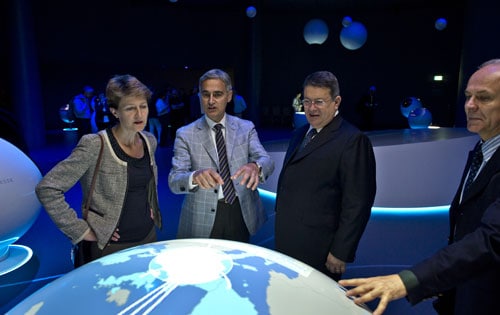
OPERA spokesperson Antonio Ereditato


Recently resigned OPERA spokesperson Antonio Ereditato (second from the left) at CERN in 2011. (Courtesy: Maximilien Brice/CERN)

By Tushna Commissariat

Late afternoon on a Friday is perhaps not the best time to break important news, but the OPERA collaboration in Italy has got newsrooms buzzing with the resignation of its spokesperson Antonio Ereditato of the University of Bern in Switzerland. Although Reuters was the first to break the story, details were scant, with no comments from OPERA and the National Institute of Nuclear Physics (INFN) in Italy saying only that it “took note” of his resignation. The OPERA collaboration, based at the Gran Sasso Laboratory in Italy, hit the headlines last September when it claimed that it had observed neutrinos travelling faster than the speed of light as they travelled the 730 km from CERN to the Italian lab. However, after having scrutinized all aspects of the experiment in a search of systematic errors, it was discovered that a faulty cable and one other potential source of error could explain the strange results.

When I attempted to reach the OPERA collaboration at the Gran Sasso lab, a lone student answered the phone and politely informed me that he was the only one there. A phone call to the CERN press office proved even more interesting, as the press officer who answered (she refused to give me her name) said that CERN had no comment to make about the resignation as the OPERA experiment is “not a CERN collaboration” and that it “only sends [the researchers] a beam of neutrinos”. This is quite a big change from last year, when CERN seemingly enjoyed the publicity of the headlines crediting it with the discovery.

A call to the INFN press office finally seemed to provide some answers, as a helpful press officer gave me a comment from Antonio Masiero, vice president at the INFN. “Acknowledging the resignation of Professor Antonio Ereditato, spokesperson of the Opera experiment, the INFN hopes that the collaboration will find its unity and new leadership again in pursuing its primary objective, that of observing [neutrino oscillations] starting with μ-type neutrinos coming from CERN. We would like to remind you, as reported in the meeting held at the INFN Gran Sasso laboratory last Wednesday, further and definitive measurements of the speed of neutrinos will be done at Gran Sasso with four experiments, including OPERA, when CERN will send a new neutrino bunched beam at the end of April,” he says.

My colleague James Dacey spoke to Luca Stanco, leader of the OPERA group at the University of Padovo, who gave us some insights into what really led to Ereditato’s resignation. According to Stanco, Ereditato resigned following a vote of no-confidence. Stanco told physicsworld.com that the vote took place last night, with 55% of the collaboration opting for a vote of no-confidence in their spokesperson. He said that while a formal motion of no-confidence required 67% of votes, it seems that Ereditato decided that resignation was the correct thing to do. The reason for the lack of confidence, Stanco says, was that many in the collaboration felt that Ereditato had failed to be sufficiently cautious when discussing the superluminal-neutrino results, having failed to make it clear that these were preliminary. “I was against the way things were communicated,” Stanco says. “In front of the media, we had a duty to be more careful with our language.” Stanco says that it will now take a few weeks to find a new spokesperson. “We have to carry on. We are physicists and we have a duty to continue working on this as OPERA represents a huge investment,” he says.

Undoubtedly, more news and official comments about the resignation will follow in the days to come, but for now it seems that the OPERA researchers are keen to move on, with the upcoming run in May hopefully allowing them to explain their superluminal results once and for all.

Fossilized raindrops dampen theory of ancient warming

A technique that uses fossilized raindrops to work out what the air pressure on Earth was billions of years ago has been used for the first time by scientists in the US. By analysing the shapes and sizes of raindrop imprints in volcanic ash, the team has shown that the atmospheric pressure in the Archaean eon was roughly the same as it is today. This is at odds with a popular theory of how the Earth stayed warm enough for life to exist at the time.

Billions of years ago, the Sun was about 20% dimmer than today because a star burns hydrogen more slowly earlier in its fusion cycle. There would therefore have been less radiation reaching the Earth and the surface should have been frozen. However, there is ample evidence of liquid water at the time as well as very primitive forms of life – a mystery known as the “Faint Young Sun” paradox.

Most scientists agree that the Earth must have been able to retain more heat in the past – but the reason why remains controversial. One explanation, proposed in 2009, is that atmospheric pressure was many times today’s figure, causing pressure-broadening, whereby carbon dioxide becomes a more efficient greenhouse gas at higher pressures.

Terminal velocity

To test this, astrobiologist Sanjoy Som and colleagues at the University of Washington in Seattle reached back into the history books. In 1851 the British geologist Charles Lyell, proposed that atmospheric pressures of the past could be estimated by analysing the marks made by raindrops that have fallen onto volcanic ash. Some of these marks can still been seen today and Lyell suggested that they would reveal the speed at which the raindrops struck the ground. Raindrops hit the ground at terminal velocity, which is reached when gravity equals air resistance. Because air resistance depends on atmospheric pressure, so does the terminal velocity of a raindrop of a given size.

In the subsequent 150 years, however, nobody has successfully implemented the idea – until now. “The reasons, I think, are that, first of all, raindrop imprints are extremely rare,” explains Som. “I guess it was a combination of having excellent field scientists in my colleagues Roger Buick and Jelte Harnmeijer and the strong foundation of fluid mechanics of myself and David Catling. Bringing those two worlds together is not common.”

A new use for hairspray

The researchers produced latex impressions of 2.7 billion year old raindrop impressions found in South Africa and produced detailed laser measurements of these. They compared these to water droplets dropped down a stairwell onto recent volcanic ash – some of it from the 2010 eruption of the Icelandic volcano Eyjafjallajökull – that they had hardened with hairspray. By comparing the size of the impressions produced, and assuming that the raindrops that caused the prehistoric impressions were of roughly typical size, they estimated that atmospheric pressure 2.7 billion years ago was 50–105% of the pressure today, which would rule out pressure-broadening as a solution to the Faint Young Sun paradox. Even if the raindrops happened to have been the size of the largest raindrops ever recorded (and such raindrops are extremely rare), it is still questionable whether pressure broadening would be possible.

“I think it’s a pretty sound study,” says earth and planetary scientist William Cassata of the University of California, Berkeley. “I think it’ll be interesting to see if, once other researchers go and look at similar deposits elsewhere in the geologic record, they can establish a coherent trend through time. That would help us to have more confidence, but as a singular constraint it looks very robust.”

Applications to astrobiology

If pressure-broadening is not the explanation for the paradox, most scientists believe the explanation is that Earth’s atmosphere in the eon contained large quantities of gases such as methane, which are potent greenhouse gases at any pressure. Som, who now works in the exobiology branch of NASA’s Ames Research Center in California, is interested in the potential of research in this area to aid astrobiology.

Astronomers have already found hundreds of planets orbiting other stars and he believes that the discovery of an Earth-like planet could happen soon. “The way we’re going to probe this extrasolar planet is by measuring the composition of the atmosphere, because life is a big controller of what the atmosphere of a planet can be”. These results could then be compared to what we know about Earth’s atmosphere today – and in the past when Earth was very a different planet than today, but very much alive with microbial life.

The research is published in Nature 10.1038/nature10890.

The April 2012 issue of Physics World is out now

By Matin Durrani

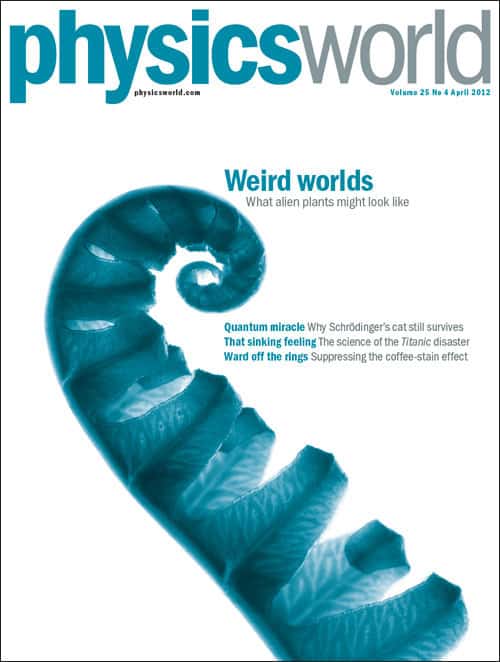
PWApr12cover-120.jpg

Alien plants, coffee stains and the sinking of the Titanic are three topics you probably wouldn’t expect to see back-to-back in any publication, let alone the April issue of Physics World. Strange as it may seem, however, there is a physics theme to them all. So for your delight, here’s a quick summary of what’s in the new issue – and there are details at the end of this blog about how to access the entire content of the magazine via our digital issue and apps. And remember, let me know what you think of any of the topics by e-mailing me at pwld@iop.org.

Taking on the climate – James Dacey interviews the US cosmologist Richard Muller, who has started two separate projects that both led to Nobel prizes and who is now tackling the nature and extent of global warming.

Putting Goonhilly back on the map – Michael Banks reveals how a derelict communications facility in Cornwall, UK, is being refashioned into a state-of-the-art astronomy facility that could one day join the UK’s leading array of radiotelescopes

Mending the broken pipe – Lesley Cohen from Imperial College London examines what can be done to encourage more women into physics.

The cat that never diesPhysics World columnist Robert P Crease wonders why the idea of Schrödinger’s cat is still so alive today, some 75 years after its birth.

The perfect storm – a century on from the Titanic tragedy, Richard Corfield says that the cascade of fateful events that led to her demise was partly caused by the science of the ship’s construction.

Life under alien skies – Lewis Dartnell from University College London describes some preliminary, but increasingly well founded, efforts to predict what alien plants and animals might look like.

Say goodbye to coffee stains – H Burak Eral, Dirk van den Ende and Frieder Mugele from the University of Twente explain how the stains that liquids leave behind, which can be a major annoyance in some biology techniques, can be altered for the better using a technique called electrowetting.

We are cosmic nomads – in this month’s Lateral Thoughts, Pangratios Papacosta from Columbia College in Chicago muses on our home in the universe.

Members of the Institute of Physics (IOP) can read the new issue online free right now through the digital version of the magazine by following this link or by downloading the Physics World app onto your iPhone or iPad or Android device, available from the App Store and Google Play, respectively. The digital version lets you read, share, save, archive and print articles – either fully laid out or in plain text view – and even have them translated or read out to you.

If you’re not yet a member, you can join the IOP as an imember for just £15, €20 or $25 a year via this link. Being an imember gives you a full year’s access to Physics World both online and through the apps.

How common is life in the Milky Way?

By James Dacey

As Captain Kirk and his crew explore the Milky Way (and far, far beyond) they regularly encountering alien life. Often these life forms resemble humans, and frequently they have developed into civilizations far more advanced than those seen on Earth.

hands smll.jpg

Star Trek – I hate to break it to you – is a work of fiction. But while screenwriters have been sending the Starship Enterprise on its voyages to the final frontier, astronomers here on Earth have also been searching for alien worlds. They have been using telescopes to hunt for exoplanets and for signs that life could exist on them, such as whether these planets resemble Earth and whether they orbit within a habitable distance away from their parent stars.

Yesterday, astronomers announced a discovery that could give second-Earth-hunters a reason to be optimistic. Results from the European Southern Observatory’s High Accuracy Radial velocity Planet Searcher (HARPS) instrument revealed that our galaxy could be awash with rocky super-Earths orbiting within the habitable zones around faint red stars. The international team of researchers claims that there may be tens of billions of such planets in the Milky Way alone, and probably about 100 in the Sun’s immediate neighbourhood.

So is this a sign that life more than likely does exist in our galaxy? Or should we interpret this new finding the other way? Despite this abundance of potentially habitable planets, we are yet to be visited by one of our alien neighbours. Does this suggest that there is indeed something unique about the conditions on Earth beyond the composition of our planet and its proximity to the Sun? Even if life did emerge on one of our galactic neighbours, is it likely to have evolved into intelligent organisms?

We want to know your thoughts on this issue, via this week’s Physics World Facebook poll.

How common is life in the Milky Way?

We are alone in the galaxy
The galaxy is teeming with primitive organisms
We are by no means the most intelligent civilization in the galaxy

Have your say by casting your vote on our Facebook page. As always, please feel free to explain your response by posting a comment.

In last week’s poll we asked you a question relating to a more terrestrial issue: how to respond to climate change. Specifically, we asked whether you think it’s a good idea to engineer the climate to counter the effect of global warming? And the results are now in.

It seems that few respondents want to take a gung-ho approach, as only 14% opted for the “let’s do it!” option. The most popular choice – 49% of responses – is that “we should prepare to do it as a ‘plan B’ if carbon emissions continue to rise”. 24% of respondents opted for “No way! The environmental risks are too high”. Just 12% chose “No, because it won’t work anyway”.

Along with the votes, the poll also attracted some interesting comments on the issue. For instance, Joseph S Loveless, in Virginia, US, who opted for the preparing to use geoengineering as a plan B, said “Man meddling with nature rarely seems to have positive outcomes. That being said, since we are ‘engineering’ the climate as a by-product of reckless behaviour anyway, perhaps counter-engineering is the better argument than proposing we play God with the planet.”

Thank you for your participation and we look forward to hearing from you in this week’s poll.

‘Nanorefrigerator’ is cooled using sunlight

Researchers in Belgium have drawn up plans for an electronic “nanorefrigerator” device that is driven by high-energy photons, and so could potentially be directly powered by the Sun. The device consists of two electrodes, one of which is cooled by replacing hot electrons with cool ones via photon absorption. While this is definitely not the first system that applies the “cooling by heating” concept, it is the first that can be applied for a nanosized device, with no moving parts or electrical input, allowing a lower temperature to be achieved at the nanoscale.

Cooling with heat is not a new idea – the simplest description of the concept would be “sweating” or more scientifically evaporative cooling. While physicists have been using coherent laser light to cool gasses since the 1980s, a theoretical method for cooling a quantum system with noncoherent light, by using an “optomechanical device”, was proposed only last year.

Cool Sun

What Bart Cleuren and colleagues at Hasselt University, Belgium, have proposed is a rather simple solid-state device that would potentially use solar energy directly to cool. While that might not sound immediately impressive – many houses that run on solar energy have a refridgerator – what is new about this device is that it does not first convert solar energy into electricity. Rather, the device bypasses the need to generate another form of energy – which usually results in some amount of energy loss.

The electrode to be cooled is electrically connected to another electrode that is much warmer. Between the two electrodes are two quantum dots that act as a highway for electrons to shuffle along from one electrode to another. Quantum dots are tiny semiconductor structures where electrons are confined in all three dimensions. They have electronic and optical properties that can be controlled by adjusting the shape and size of the structures and have been studied intensively over the last two decades. In this work, the adjoining quantum dots each have a lower and higher energy level, such that each dot could hold an electron at any given time in one of the levels.

Electron hop

The researchers then suggest using high-temperature photons – solar radiation is generally at a temperature of about 5800 K – to make cold electrons flow from the warm electrode to the cool one, and vice versa for the warm electrons in the opposite direction.

To create this flow, a cold electron from the warm electrode would hop into the lower energy level of the first dot, where it must absorb a photon for it to jump to the lower energy level of the second dot. From there, the cold electron can make its bid for freedom to the cold electrode, where it would further decrease the temperature of that electrode. Hot electrons would make a similar trip in the opposite direction, hopping across the higher energy level of the dots instead. This net circulation of electrons would allow one of the electrodes to be efficiently cooled.

The researchers say that one can imagine that the electrons are “evaporating” out of the cold object and “condensing” in the warm object, somewhat like an absorption refrigerator. While the net heat flow for the device as it is currently described will probably be quite small, an array of dots could be placed in between the hot and cold objects to increase the heat exchange. The researchers also state in the paper that maximum efficiency might be reached by fine-tuning specific heat – exchange parameters of their system.

The research is published in Physical Review Letters.

Quantum interference: the movie

The first real-time movie of large molecules creating an interference pattern after passing through two slits has been made by an international team of physicists. As well as being a beautiful example of the wave–particle duality of quantum mechanics, the technique could provide further insight into the boundaries between quantum and classical physics.

The build-up of an interference pattern as individual particles pass through two side-by-side slits in a screen is one of the most famous examples of how an entity such as an electron can behave both as a particle and a wave. This research has its roots in the famous double-slit experiment carried out by Thomas Young in the early 1800s. When Young shone light through his apparatus, he saw a pattern of bright and dark fringes that could only be explained by the interference of wavefronts. In the 1920s it was shown that the same occurred to electrons, establishing the concept of wave–particle duality. More recently, similar behavior has been seen using molecules containing as many as 400 atoms.

Physicists have also shown that individual particles create an interference pattern that builds up as they pass through the slits one by one and then arrive at a detector. This confirms that each individual particle does indeed behave like a wave as it passes through the slits. Observing this behaviour in large molecules is particularly interesting because it allows researchers to investigate whether there is a threshold at which particles stop behaving like waves and begin to obey the classical laws of physics.

Innovative interference

Now, physicists at institutes in Austria, Israel, Switzerland and Germany have watched in real time as interference patterns were created by 58-atom phthalocyanine molecules (C32H18N8) and 114-atom phthalocyanine derivatives (C48H26F24N8O8) – the latter being the largest ever molecule to be studied in this way. The molecules were produced using micro-evaporation, in which a laser was focused on a thin layer of the compound. This reduced the heat load to the sample, preventing the molecules from decomposing and providing the researchers with an intense and coherent beam of large organic molecules.

The team also created a silicon-nitride diffraction grating with a separation of 100 nm between slits. This ensured that the diffraction angle was large enough to be resolved after the molecules passed through the slits. Furthermore, the grating was just 10 nm thick – around 16 times thinner than previous gratings – in order to reduce interactions between the molecules and the grating material.

Another important innovation was the use of fluorescence microscopy to detect the molecules. This involved exciting the molecules with a laser, and their emitted light was imaged onto an electron-multiplying charge-coupled device (EMCCD) camera. This technique, which allowed each molecule’s position to be determined with an accuracy of 10 nm, was around 10,000 times more sensitive than previous detection methods.

A textbook pattern

The end product is a movie showing the gradual build-up of the quantum interference pattern over 90 min, with each molecule appearing as a fluorescent speck against the dark background.

“The arrival of each single radiating molecule is objectively unpredictable and yet the ensemble reveals the perfect deterministic interference pattern,” says team member Markus Arndt from the University of Vienna. “Previous experiments could see interference but they were not able to store the particles on a detector for future analysis. Fluorescence imaging visualizes the particle nature of the molecules much better than any of the earlier methods and it can do that for hours after the experiment.”

The team used these images to plot 1D diffraction curves, integrating the patterns over a section of the molecules’ velocity distribution. As expected, the curves show a strong central peak, surrounded by weaker secondary peaks – described by the researchers as a “textbook-like diffraction of plane waves at a grating”.

Quantum limits

“Studying quantum interference of large molecules is important because it is a way to explore how far the realm of quantum behaviour can be extended to macroscopic objects,” says Wieland Schöllkopf, a physicist at the Fritz-Haber-Institut der Max-Planck-Gesellschaft in Berlin who was not involved in the study. “I think with ever more ingenious experimental techniques like, for instance, the nanotechnologies used by the Vienna group, it will be possible to push the limits further and further.”

Arndt believes that their technologies can now be scaled up to higher molecular masses. “Quantum mechanics has never been tested for this parameter regime and it is the task of experimentalists to explore the unexplored,” says Arndt. “Whether our world is purely quantum or whether there is a factual transition to classical physics is open to future experiments.”

The research is described in Nature Nanotechnology.

A video of the movie can be viewed here.

Copyright © 2026 by IOP Publishing Ltd and individual contributors