Gamma rays hint at dark matter

Using a new statistical technique to analyse publicly available data from NASA’s Fermi Space Telescope, an astrophysicist in Germany says he may have spotted a tell-tale sign of exotic particles annihilating within the Milky Way. If proved to be real, this “gamma-ray line” would, he claims, be a “smoking-gun signature” of dark matter.

There is a wide body of indirect observational evidence that an invisible substance accounts for some 80% of the matter in the universe. Although physicists can measure the effects that this dark matter has on the visible universe, they have very little understanding of what this mysterious stuff actually is. As well as looking for direct evidence of dark matter by detecting it – or even producing it – here on Earth, researchers are also scouring the skies for signs of the particles that dark matter might produce when self-annihilating. An excess of high-energy positrons (anti-electrons) observed by the Italian-led PAMELA spacecraft in 2008, and confirmed by Fermi last year, might be such a signature. However, it is possible that these positrons are produced by processes unrelated to dark matter.

In contrast, say astrophysicists, a gamma-ray line would leave little room for alternative explanations. The dark-matter particles believed to exist in a halo surrounding our galaxy are slow moving because they have been slowed down as the universe has expanded. As a result, the total energy of the photons produced by the collision and annihilation of two such particles is, essentially, twice the rest mass of a dark-matter particle. Conservation of momentum requires that the energy of each photon equals the mass of one dark-matter particle – and would appear as a very narrow peak, or line, in gamma-ray spectra. This is unlike the radiation emitted by all standard astrophysical phenomena, which have much broader energy distributions.

Something at 130 GeV?

In the latest work, Christoph Weniger of the Max Planck Institute for Physics in Munich looked for such lines in about 3.5 years’ worth of gamma-ray observations carried out by the Fermi satellite’s Large Area Telescope (LAT). To increase his chances of success he only considered data from those regions of the Milky Way that should generate the highest ratios of dark-matter photons to photons from background sources – according to five different models for the distribution of dark matter within the halo. He also restricted the data to within the 20–300 GeV energy band.

In regions close to the centre of the galaxy, Weniger found that the gamma rays collected by Fermi showed evidence for a line, at about 130 GeV, with a statistical significance of 4.6σ. This dropped to 3.3σ after allowing for the fact that he searched for such a line across finite ranges of space and energy. Put another way, there should be only about a 1 in 1000 chance that the line is due to a statistical fluctuation.

Most dark-matter models predict that this line should be very faint because dark matter does not couple directly with electromagnetic radiation. Photons are instead produced by the annihilation of intermediate particle pairs such as electrons and positrons, but such secondary annihilation is generally considered improbable because the extremely high energies of the particles involved means that they would almost certainly fly apart before they have the chance to combine. There are a few models, however, in which such annihilation is enhanced – one such model, for example, allows for the creation of virtual pairs of particles and antiparticles that are unable to fly apart. “If this is a dark-matter signal it would imply a model where the line is surprisingly strong,” says Weniger. “This would allow us to reduce the number of possible models considerably.”

Weniger acknowledges that his gamma-ray line is provisional, pointing out that it consists of data points from only about 50 photons, and that reaching the roughly 5σ level needed to claim a discovery is likely to need several more years’ worth of data. He also points out that because his analysis is based only on publically available data he does not know all there is to know about possible instrumental errors.

Fake gamma-ray lines

In fact, according to Elliott Bloom of Stanford University in the US and Jan Conrad of Stockholm University in Sweden, both members of the Fermi LAT collaboration, instrumental biases associated with identifying photons against a background of charged particles and sifting those photons according to their energy has previously created fake gamma-ray lines, and overcoming these problems, they say, “still requires considerable additional work”.

If Weniger’s gamma-ray line is real but turns out to be significantly broadened, he believes it could be caused by a more conventional astrophysical process. One potential candidate, he says, which was only identified in 2010 using Fermi data, is a pair of enormous gamma-ray-emitting “bubbles” extending outwards from the plane of the Milky Way. Because the energy of the photons within the bubbles may have a sharp cut-off at around 130 GeV, he suggests that the mechanism responsible for the bubbles might also generate the line that he has identified. Conversely, he says, dark matter might cause the cut-off seen in these bubbles.

John Wefel, an astrophysicist at Louisiana State University in the US, points out another tantalizing possibility: that the peak at about 125 GeV seen in data from the Large Hadron Collider (LHC) at CERN last year, and which is reckoned to be a signature of the Higgs boson, may in fact be related to the line identified by Weniger. “Do we have a halo of Higgs bosons around the galactic centre, or is the LHC observing some new particle likely to be the dark matter particle, and not the Higgs at all?” he asks, playfully.

Weniger’s analysis is described in arXiv:1204.2797.

Asymmetry born out of symmetry

Chiral lattices


Two snub hexagonal tilings that were generated in a 2D simulation of point particles interacting via an isotropic potential. The patterns are chiral and are mirror images (plus a rotation) of each other. (Courtesy: APS)


By Hamish Johnston

The chirality – or handedness – of many biological molecules plays an important role in their function. The amino acids that make up proteins only exist in the left-handed form, for example, while the sugars found in DNA are exclusively right-handed.

Why nature seems to favour one handedness over another has long puzzled physicists – particularly because the relevant physical laws that govern the synthesis of such molecules are symmetric and should not be biased towards right- or left-handedness.

The emergence of molecules with a specific chirality in a chemical process is usually understood in terms of chiral-specific catalysis, which accelerates the production of molecules of one handedness over the other. However, it’s also possible that chirality can emerge in much simpler systems that don’t involve complicated chemical reactions.

In order to understand how chirality emerges from symmetrical interactions, Martin Nilsson Jacobi and colleagues at Chalmers University in Sweden have done computer simulations that reveal how point particles acting under a spherically symmetric force can form chiral patterns in 2D. According to the team, the system begins with “maximal a priori symmetry” and therefore the emergence of asymmetric chiral patterns is surprising.

The team began with what it describes as the simplest form of chiral lattice in 2D. This is made from identical scalene triangles – a triangle with no sides of equal length. Such a lattice can be made in two ways, each being a mirror image of the other. However, one lattice cannot be transformed into the other by rotation or translation.

Nilsson Jacobi and colleagues first calculated the Fourier transform of the lattice, which gives its reciprocal lattice. Then, using a technique introduced by the team last year, they were able calculate a potential energy between pairs of lattice points that would result in the creation of the desired chiral lattice. The amazing thing about this potential is that it is spherically symmetric – looking a bit like a 1/r potential with a number of wiggles in it.

To confirm that the potential would indeed result in a chiral structure, the team then used a Monte Carlo simulation to determine what lattice would form if point particles were subject to such a potential. The resulting lattice was indeed a chiral pattern of scalene triangles.

The team then set its sights on a more complicated – and visually appealing – 2D chiral lattice called “snub hexagonal tiling” (see images above). Again, the chiral pattern emerged from the simulation.

While the team has shown that in principle chiral patterns can emerge from simple symmetric systems, this could prove to be very difficult to achieve in a real system. The problem is that the required potentials would be very difficult to recreate in a real-life system and “are not likely to appear in the near future,” according to the physicists.

The simulations are described in this paper in Physical Review Letters.

Cosmic-ray theory gets the cold shoulder

One of the leading theories describing how the most energetic cosmic rays are produced may need a rethink in light of a new study by physicists at the IceCube Neutrino Observatory in Antarctica. The team had set out to detect the extremely energetic neutrinos that are expected to be produced alongside high-energy cosmic rays in the violent explosions that mark the deaths of massive stars – but after looking at hundreds of these explosions, no such neutrinos have been found.

High-energy cosmic rays are charged particles such as protons with kinetic energies in excess of 1018 eV – a million times more energetic than the particles collided by the Large Hadron Collider at the CERN particle-physics lab.

The mystery of where these cosmic rays originate has baffled astrophysicists for decades. Likely candidates include gamma-ray bursts (GRBs), which occur when a massive star explodes. In the tens of seconds that they usually last, a GRB can outshine everything else in the universe by releasing as much energy as the Sun will produce in its entire lifetime. Other possible sources of high-energy cosmic rays are the active galactic nuclei at the centre of galaxies.

However, it has proved very difficult to test these theories because tracing cosmic rays back to their source is not easy. This is because, as charged particles, they are deflected during their long journeys to Earth by the strong magnetic fields present in space.

Fireball theory

Out of a number of possible GRB scenarios, the fireball model is “the one most widely believed”, according to Nathan Whitehorn, a physicist at the University of Wisconsin in the US who was involved in the IceCube study.

This theory describes a series of internal shocks that accelerate protons through the burst as it expands. Protons collide with gamma rays and form pions, which spontaneously fall apart to give neutrinos with energies of about 1014 eV. Unlike cosmic rays, neutrinos are not affected by magnetic fields and therefore their trajectories should point straight back to the GRB.

IceCube comprises an array of thousands of photomultiplier-tube detectors buried under 1.5–2.5 km of ice. The detectors look for the tiny flashes of light that are produced when a neutrino interacts with the ice. The researchers scoured two years’ worth of IceCube data for evidence that a pulse of high-energy neutrinos arrives on Earth whenever a GRB was spotted by a network of about 100 satellites, each containing gamma-ray detectors. Instead of seeing high-energy neutrinos arriving with all the gamma rays, not even one neutrino was seen in coincidence with the 300 GRBs that were detected during the two years.

Surprising result

The null result is “really surprising”, according to Darren Grant, a physicist with the University of Alberta in Canada who works on the IceCube project. “[It] changes what was thought to be the best modelled understanding for these incredible astrophysical objects,” he says.

The lack of neutrinos suggests that either GRBs do not produce cosmic rays, or that current ideas about how the cosmic-ray and neutrino production mechanisms are related is flawed.

The researchers calculated that production of energetic neutrinos was a factor of at least 3.7 lower than any variation of the fireball models they tested. According to Whitehorn, this latest research “challenges, though does not rule out, the idea that GRBs may be the sole sources of the highest energy cosmic rays”.

GRBs not completely ruled out

Theoretical astrophysicist Kohta Murase of Ohio State University in the US agrees that it “demonstrates that neutrino observation has become an important tool to address the long-standing [cosmic ray] mystery”. However, Murase – who is not a member of the IceCube collaboration – cautions that GRB sources should not be ruled out just yet, pointing out that there are “theoretical issues” with some models.

“In some scenarios, it is also expected that high-energy cosmic rays are produced without many neutrinos,” he says. “Or they may be produced during the afterglow phase, where the neutrino flux is expected to be lower.”

The study is described in Nature.

Supercomputers provide new insight into charge–parity violation

An international team of scientists has, for the first time, simulated the decay process of a kaon into two pions with extreme precision, using some of the fastest supercomputers available today. This calculation could provide further insight into charge–parity (CP) violation and help to explain why there is more matter than antimatter in the universe.

The new work, published this month in Physical Review Letters, involved researchers from the Brookhaven National Laboratory, Columbia University, Washington University and the University of Connecticut in the US; the University of Edinburgh and the University of Southampton in the UK; and the Max-Planck Institute in Germany. The calculation took 54 million processor hours on the IBM BlueGene/P supercomputer at the Argonne National Laboratory in the US.

Violated theories

CP symmetry dictates that a process involving a particle and a process involving the mirror image of its antiparticle should be identical – particles and their antiparticles should decay at exactly the same rate. This is tested either by creating the particles and watching them decay or seeing the process naturally occurring as certain particles decay into their antiparticles.

The kaon decay process has been explored since the 1960s – in fact, it won physicists James Cronin and Val Fitch the 1980 Nobel Prize for Physics for a 1964 experiment where they had set out to prove CP symmetry but instead found the first “indirect” experimental evidence for CP violation as a kaon decayed into two mesons.

Today, the Standard Model of particle physics is the most successful theory that describing how three of the four fundamental forces – the strong, weak and electromagnetic forces, but not gravity – affect subatomic particles. But certain underlying fundamental questions remain unanswered. One way is to test the model at large-scale particle accelerators such as the Large Hadron Collider (LHC) at CERN, Geneva. The other is to look at what one of the team members, physicist Chris Sachrajda from the University of Southampton, calls “rare processes”, which very precisely test predictions of the Standard Model.

Super simulations

When kaons decay into pions, the constituent subparticles – quarks – are affected by the weak force, and as the quarks move apart, they exchange gluons. But one problem is the huge computing power that is required to simulate quark–gluon interactions. “It has taken several decades of theoretical developments and the arrival of very powerful supercomputers to enable physicists to control the interactions of quarks and gluons, the constituents of the elementary particles, with sufficient precision to explore the limits of the Standard Model and to test new theories,” explains Sachrajda. “But we now have the computing power and advanced algorithms that are required to simulate these rare processes.”

In the simulation, a technique known as lattice quantum chromodyamics (QCD) is used to carry out the computation. The parameters of the decay are input into a computer as a finite grid or lattice of space–time points. “Using lattice QCD was tricky, as the lattice box has a finite size and this means that the quarks cannot separate infinitely,” says Sachrajda. He goes on to explain that the process the researchers considered involved the kaon decaying into two mesons with isospin 2 (a quantum number related to the strong interaction). “This isospin has a real and imaginary part – the real part has been predicted and experimentally verified, and our value was in good agreement with that. The imaginary part, on the other hand, is not known from experiment. This is the first time it has been experimentally determined,” explains Sachrajda. He also explains that it was important to repeat this calculation using a second lattice spacing to eliminate any possible errors. The quantum fluctuations of the decay are calculated by a statistical approach called the “Monte Carlo” method, which outputs the most likely fluctuation.

Extreme scales

A novel feature of the computation is that the decay process was simulated over a vast scale. The researchers looked at the process from distances as minute as a 1000th of a femtometre, which allowed them to follow the decay of individual quarks and some other subatomic particles. They also looked at it from a few tenths of a femtometre, where the picture would be obscured by a sea of quark–antiquark pairs and a cloud of the gluons that holds them together. It is at this distance that the gluons begin to bind the quarks into the observed particles. So the actual kaon decay described by the calculation spans distance scales of nearly 18 orders of magnitude – this range is similar to a comparison of the size of a single bacterium and the size of our entire solar system. While the simulation reported here has determined the fundamental kaon decay process, it also marks the beginning of the next phase of the collaboration’s work, which involves improving the precision of the computations and extending the range of physical quantities for which the effects of the strong nuclear force can be quantified. The researchers believe that lattice QCD will continue to be an important technique in these studies and that even more computing power will be required.

“What we are trying to do now is ‘break’ the Standard Model,” explains Sachrajda “as that will be the only way to really understand the underlying physics.”

The Lancet highlights role of physics in medicine

By Tami Freeman, editor of medicalphysicsweb

Since the birth of medicine 5000 years ago, physics has played a fundamental role in the development of health technologies. Significant contributions to today’s medical methods range from the application of numerous imaging techniques to diagnosis and patient screening, to the wide variety of treatment techniques made possible by the discovery of radiation and radioactivity.

For their part, medical physicists have a particularly important role to play, both in the discovery of new diagnostic and treatment techniques, and in ensuring the safe and effective implementation of new physics-based medical applications.

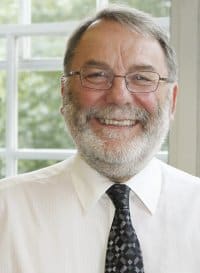
Peter Knight.jpg

In recognition of these facts, the medical journal The Lancet has just published its Physics and Medicine Series, a set of five articles and two comments that highlight the many ways in which physics has revolutionized medical practice. The series, published to coincide with the anniversary of Albert Einstein’s death, calls for medical physics to be promoted as a career choice and recognized as a vocational discipline.

Writing in one of the associated comment articles, Peter Knight (right), president of the Institute of Physics – which publishes physicsworld.com – discusses the “long and happy marriage between physics and medicine”, and puts forward two proposals to keep this relationship thriving in the future.

First is the continued need to support and invest in the physical sciences. Knight notes that most, if not all, of the physics-based techniques and technologies described in the series derive from the discoveries of basic physics research that was undertaken purely to investigate the nature of our world and expand the frontiers of knowledge.

For example, the understanding and manipulation of radiation was made possible by basic research into the structure and evolution of the universe and the building blocks of matter. Knight urges the UK government and other funders to recognize that continued support for that research will deliver corresponding advances in medical technologies in the years to come.

Second, for medical practitioners to fully exploit modern physics-based technologies, it would be hugely beneficial for them to have a sound understanding of the physics involved. As such, Knight suggests that medical schools should consider restoring the requirement for applicants to hold physics-oriented qualifications for entry into medicine.

Another recommendation arising from the series is for closer collaboration and integration between the physical and life sciences, via a new model in which multidisciplinary teams work closely in a shared research environment. Finally, there is a need for every school to aspire to provide high-quality physics education, to ensure a supply of talented scientists who can perform health-related physics research in the future.

The Lancet‘s Physics and Medicine Series clearly shows the potential to diagnose and treat increasing numbers of patients, with increasing effectiveness, using physics-based techniques,” Knight concluded. “Understanding the physics that underpins these techniques would be a real advantage to medical practitioners, and to their patients.”

‘Magnetic Josephson effect’ seen for the first time

A fundamental prediction of superconductivity theory has been demonstrated in the lab for the first time. An international team of physicists has observed coherent quantum phase slip, a phenomenon similar to the well-known Josephson effect in which magnetic flux takes the place of electric charge. Its discovery has fundamental implications for our understanding of macroscopic quantum systems and could also lead to intriguing applications, including a possible way to produce a qubit in a quantum computer.

In 1962 the British physicist Brian Josephson developed a theory of how superconducting electrons tunnel across a thin insulating layer between two superconductors – a structure now called a Josephson junction. This was quickly verified in the lab and Josephson was awarded the 1973 Nobel Prize for Physics. The Josephson junction has become an important technology in its own right. For example, superconducting quantum interference devices (SQUIDs) that, depending on their design, use either one or two Josephson junctions are among the most sensitive magnetometers to have been invented. The devices have also shown promise as possible quantum bits (qubits) in quantum computers.

Phase slips through a superconductor

In 2006 Hans Mooji and Yuli Nazarov at Delft University in the Netherlands did theoretical work on the quantum tunnelling of magnetic flux between two areas of free space through a thin layer of superconductor. This effect is called coherent quantum phase slip, and Mooji and Nazarov argued that it is an exact analogue of the Josephson effect. This is because, while free space shows no resistance to the flow of magnetic flux, one of the fundamental properties of a superconductor is the Meissner effect, whereby it expels any magnetic field from its interior. It therefore behaves as the magnetic equivalent of an insulator. However, in the subsequent six years, no-one successfully showed whether or not coherent quantum phase slip across a superconductor could actually occur.

Now, Oleg Astafiev and colleagues at the NEC Green Innovation Research Laboratories and the Institute for Physical and Chemical Research in Ibaraki, Japan, are claiming the first experimental observations of coherent quantum phase slip.

The experiment was done on a quantum-mechanical circuit called a Mooji–Harmans qubit – a ring of superconductor that narrows at one point into a very thin nanowire. If coherent quantum phase slip did not occur, magnetic flux inside the ring would be unable to get out, and magnetic flux outside would be unable to get in because of the impermeability of a superconductor to magnetic flux. However, Astafiev’s group observed clear evidence of magnetic interaction between the inside and the outside of the ring while the ring remained in the superconducting state – clear evidence that flux was crossing the nanowire by quantum tunnelling.

‘Two significant features’

Alexey Bezryadin, at the University of Illinois at Urbana-Champaign, believes that the work marks a significant achievement, both in terms of its progress in fundamental physics and its potential for application. “I would say there are two significant features to this work,” he says. “One is that the observation of these coherent quantum phase slips extends the applicability of quantum mechanics to more complex macroscopic systems. The applied aspect is that there are predictions that, if coherent quantum phase slips can exist (and this paper demonstrates that they do), you can use that to build certain useful devices.”

Astafiev agrees: “The phenomenon that we demonstrated is fundamental. As fundamental, I would imagine, as the Josephson effect. Josephson physics has proved very rich and there are many very useful devices based on the Josephson effect.” He believes it should be possible to exploit coherent quantum phase slip to build devices analogous to those based on the Josephson junction. In particular, Astafiev, who has a specific interest in quantum computing, hopes that qubits based on coherent quantum phase slip may not be prone to “charge noise” – a type of noise caused by the presence of an insulator that tends to cause quantum decoherence in Josephson qubits.

The research is published in Nature.

Explore a visual history of science

By James Dacey

From Darwin and his tree of life to Mendeleev and his conception of a periodic table of elements, images and visual metaphors have played a vital role throughout the history of science. Today, the Royal Society has launched a new online picture library to allow people to browse and search its vast collection of images online for the first time. The collection includes paintings, drawings and prints dating back to when the society was founded in the mid-17th century. Here is a selection of the images connected with physics and physicists.

orrery


Orrery demonstrating the transit of Venus


This is a mechanical device known as an orrery, designed to show the relative positions and motions of the planets and moons in the solar system. The British instrument maker Benjamin Cole (1695–1766) made this orrery, which is of particular interest this year because it depicts a transit of Venus – a phenomenon that will occur in June for the last time for more than 100 years.

Eyes and head of a grey drone-fly


Eyes and head of a grey drone-fly


Flies can be a bit of a nuisance when buzzing around your head, but when viewed under a microscope, these insects are nothing short of hideous. This sketch of the eyes and head of a grey drone-fly was produced by the natural philosopher Robert Hooke and it appeared in the Royal Society’s 1665 publication Micrographia.

Scrooby Mill


The waterwheel and conduit for Scrooby Mill


The Royal Society’s collection also contains a number of engineering and architectural plans, including this design for the waterwheel and conduit for Scrooby Mill in the English county of Nottinghamshire. It was sketched in 1782 by the British civil engineer John Smeaton.

flying fish


Engraving of a flying fish


Finally, we have this image of a flying fish, which, according to the Royal Society, holds an unlikely place in the history of modern physics. It is part of a set of engravings from a 1686 book Historia Piscium (a History of Fishes) by John Ray and Francis Willughby, for which the Royal Society held high hopes. But after the society had invested all of its available funds, the book went on to be a flop, meaning there was no money left to publish Newton’s Philosophiæ Naturalis Principia Mathematica (Mathematical Principles of Natural Philosophy), which had been “knocking around the office”.

The story goes that a young Edmund Halley – then clerk at the Royal Society – saw the promise in Newton’s work and managed to raise the funds to publish the Principia, providing much of the money from his own pocket. Newton’s book was finally published in 1687, and went on to revolutionize our understanding of the physical world.

First hint of Majorana fermions spotted in nanowires

Physicists in the Netherlands say that they have found the first evidence for the existence of “Majorana fermions” – particles that are their own antiparticles. The researchers claim to have spotted what they call “signatures” of these elusive particles, which were first predicted by the Italian physicist Ettore Majorana in 1937, at the interface between a tiny semiconductor wire and a superconducting electrode. The Majorana fermions spotted in the Netherlands are not, however, fundamental particles but quasiparticles – particle-like entities that emerge from the collective behaviour of electrons in a solid.

As well as backing Majorana’s original prediction, the discovery also agrees with more recent theoretical work that the particle could be lurking within solid-state devices. The latter could be important for the development of quantum computers because Majorana fermions – unlike more familiar “Dirac” fermions, such as electrons – obey “non-Abelian statistics” and so should be resistant to environmental noise. Majorana fermions could, therefore, be able to store and transmit quantum information without being perturbed by the outside world, which is the bane of anyone trying to build a practical quantum computer.

Half and half

The new evidence for Majorana fermions has been obtained by a team led by Leo Kouwenhoven at the Delft University of Technology and the Eindhoven University of Technology that has studied materials known as “topological superconductors”. These are materials that are superconducting in the bulk but are normal metals on their surface.

The team created their topological superconductor by connecting a nanowire of the semiconductor indium antimonide to an ordinary superconductor electrode (niobium antimonide nitride). This creates a topological superconductor in the region of the nanowire that is near to the ordinary superconductor. The other end of the nanowire is connected to a normal electrode made of gold. The device is cooled to temperatures of tens of millikelvin and a magnetic field is applied along the direction of the nanowire.

Persistent peaks

The team then measured the current flowing through the nanowire as a function of voltage – and, in particular, how the current changed in response to changes in voltage. At zero applied magnetic field, two small peaks were observed on either side of zero applied voltage. When the applied magnetic field was increased, the position of these peaks remained in the same position. This also occurred when an electric field was applied to the nanowire.

According to the team, this lack of response by the peaks to magnetic and electric fields can only be explained by the presence of pairs of Majorana fermions at one end of the nanowire. “What is magical about quantum mechanics is that a Majorana particle created in this way is similar to the ones that may be observed in a particle accelerator, although that is very difficult to comprehend,” says Kouwenhoven.

The team acknowledges that its measurements do not confirm the expected topological properties of the Majorana fermions that it has seen – something that would make the particles useful for quantum-computing applications. To do so, the team suggests a number of new experiments to measure other properties of the quasiparticles to establish their non-Abelian nature.

The research is described in Science.

What is your favourite quasiparticle?

By James Dacey

This week, an international group of researchers has hit the headlines by reporting the first-ever observation of a quasiparticle called the “orbiton”. First predicted a decade ago, the orbiton can be thought of as an electron in which the properties of spin and charge have been suppressed. Elsewhere in the news this week, a separate team has spotted a quasiparticle that resembles the elusive Majorana fermion predicted in the 1930s by Italian physicist Ettore Majorana.

Quasiparticles can be thought of as excitations in a solid that behave like tiny particles that obey quantum mechanics; a phonon, for example, is a quantized sound wave that propagates through a crystal.

However, the definition of a quasiparticle is not something that is universally accepted – indeed, some argue that a phonon is not a quasiparticle, by virtue of it being a boson rather than a fermion. Others ask whether these “particles” are in fact real physical entities or whether they are merely useful mathematical concepts for understanding the collective behaviour of real particles within bulk materials.

However you want to think about them, quasiparticles have proved themselves to be very useful. For instance, an entire fleet of electronic devices has been developed over the years thanks to our understanding of “holes”, which are quasiparticles representing the absence of an electron.

In this week’s Facebook poll, we want to know if you hold a particular affinity for any of these quasiparticles.

What is your favourite quasiparticle?

Phonon
Spinon
Hole
Exciton
Wrinklon

Have your say by casting your vote on our Facebook page. And feel free to post a comment to explain your choice or to nominate another quasiparticle not on our list.

In last week’s poll, we entered the realm of quantum mechanics, and we received a fantastic response to the question “What is the trickiest feature of quantum mechanics to get your head round?”. The results were as follows.

Entanglement, aka “spooky action at a distance” 65%
The Heisenberg uncertainty principle 13%
Wave–particle duality 11%
Superposition 6%
The Pauli exclusion principle 4%

hands smll.jpg

In addition to the votes, there was also a lively discussion on our Facebook page as people shared their experiences of grappling with the ideas of quantum mechanics. One user who goes by the name of Art Hobson wrote “A close look at wave–particle duality reveals that quantum physics is about fields, not particles. The so-called particles are simply excitations (waves) in these fields.”

Another Facebook user, Wendl Thomis, revealed that the feature of quantum mechanics he has most trouble with is the idea of virtual particles. “Virtual particles are postulated to come into and out of existence at every point of space at dizzying rates so that the energy there can fluctuate as quantum mechanics demands. A very non-intuitive idea,” he says.

Thank you for all your participation and we look forward to hearing from you in this week’s poll.

And if you want to learn more about the ideas of quantum mechanics, take a listen to the latest edition in the Physics World books podcast series, in which we discuss the enduring popularity of quantum mechanics in popular-science writing.

Return to Macondo

Monday 20 April 2010 is a day that will live long in the oil industry’s collective memory. For those of us who were working in the industry at the time, it is like the assassination of John F Kennedy, the Challenger space-shuttle disaster or 9/11: you remember where you were and what you were doing. For example, I was in Tunisia, stranded by the Icelandic ash cloud that had shut down much of European airspace, and just about to enter my last month of working for BP before taking up an academic post at Imperial College London. E-mail exchanges confirmed that all was well in the London office, and neither I nor my colleagues knew that it was about to become the blackest day in the company’s 107-year history.

Then BP’s Macondo oil well blew out, causing an explosion that killed 11 workers on the Deepwater Horizon rig and kicking off what would become 152 days of sheer hell for pretty much everyone involved. The images of the Macondo disaster will also live long in the memory. The burning inferno of the Deepwater Horizon before it sank. The flotilla of ships and rigs around the disaster site. The frantic clean-up activity on the beaches surrounding the Gulf of Mexico. But most of all, it is the haunting images of the gusher on the seabed – brought via live video feed to computer and television screens around the world – that will remain with us long after the dust, or rather the oil, has settled.

It may be several years before we fully understand the chain of events that led to the blow-out. In the meantime, though, anyone who wants an honest, uncluttered and considered account of the Macondo disaster should read A Hole at the Bottom of the Sea by Joel Achenbach, a veteran reporter who covered the story for the Washington Post. Pick up this book and you will uncover a heady mix of forensic science and real-life drama that played out in front of a global audience, complete with a handful of genuine heroes. People like Admiral Thad Allen of the US Coast Guard, who stepped up to the plate and gave their all when disaster struck. Engineers like Richard Lynch of BP, with a seemingly intractable problem to solve and the clock endlessly ticking. Achenbach gives readers a real feel for the stress these people were under at the time, as they tried to answer questions such as “How bad is this going to get?” and, even more importantly, “How do we stop it?”.

The tale of the oil industry’s biggest and most highly publicized disaster is told in the style of a classic thriller, with a beginning (the blowout), a middle (the search for the solutions) and an end (the sealing of the well after 152 days). It opens, crucially, with a testament to the 11 men who died, surely the real victims of the Macondo disaster. Throughout the narrative that follows, Achenbach’s riveting account looks beyond the politics and generally uninformed Internet comment and seeks to tell the story behind the cause, solution and aftermath of a modern technological catastrophe.

It quickly became clear that this event was not going to be a typical oil-spill tragedy played out on the beaches. Instead, all the action was taking place a mile below the surface of the Gulf of Mexico – an alien world where technology is king and the human players in surface-based installations must fight a daily battle to keep on top of engineering in extreme deep-water conditions. As Achenbach describes, this is a tough environment. He’s right. I’ve been there, I’ve got the T-shirt.

Achenbach paces his narrative well, interspersing interviews with the principal figures involved in the crisis (including both government and BP officials) and exhaustive research based on an analysis of almost 20,000 pages of unpublished US government e-mails. On reflection, though, some of this material may be slightly too exhaustive. For my taste, he includes a little too much of the politics (particularly at local level) and not really enough of the science behind deep-water drilling. Readers should not expect a major engineering treatise or an in-depth analysis of every last widget that might have failed. Achenbach also uses lots of technical terms and jargon that even I, with my industry background, had to look up. However, the most important concepts, such as “hot stab”, “top kill”, “junk shot” and so on, are described at a sufficient level of detail.

The book is written very much from a US perspective. This is understandable, as that is where the tragedy had the most impact. However, I was encouraged to find that despite its US origins, the book is not a BP-bashing exercise. Unlike much of the world’s media and the US administration at the time, Achenbach presents a remarkably well-balanced description of the events, from the perspective of someone who was reporting on the incident first-hand. The discomfort of BP executives hauled in to testify at House subcommittee hearings is countered by a narrative that describes an administration in crisis and all too eager to look for a “bad guy” to blame. Achenbach also deals effectively with the constructive tension between BP and US government scientists, who worked alongside each other at BP’s Houston offices. This “forced marriage” was often awkward and strained, but it nevertheless eventually delivered a solution.

In the book’s later chapters, Achenbach moves beyond a description of Macondo’s aftermath onto an analysis of its causes. As he astutely points out, there is seldom a single identifiable causal event for major technological disasters. Instead, it is typically a series of relatively insignificant, often unrelated events that come together to form the “perfect storm”. The author suggests 10 direct causes, including a blow-out preventer with maintenance issues and the absence of a cement-bond log test, but to be honest, it is difficult to know where to draw the line.

Perhaps more importantly, Achenbach also asks what lessons can be learned from such an event. He informs us that the oil industry experienced 33 near misses in the Gulf between the 1979 Ixtoc blow-out in Mexico and the 2010 Macondo explosion, and he is right to ask whether BP and others ventured into deep waters without fully understanding or being in control of the technology. But surely, much of human achievement has been won by working at the edge and taking calculated risks. Did we push too far in the search for these highly desirable and valued hydrocarbons?

One thing is certain: an incident like this must not be allowed to happen again. It is important that we all understand the events of 20 April 2010 and the consequences that ensued. For that reason, if you are involved in any way with the petroleum industry – or just someone seeking an honest and well-written account of its darkest day – I urge you to read this book. Perhaps more information about the cause of the blow-out and subsequent explosion will come to light in the future, but in the meantime, we can be satisfied with Achenbach’s tale. When you finish it, you will still have questions, but then, so does the author. In particular, the part played by the mysterious “bladder effect” seems pretty baffling – I certainly found it so. But I will let you read for yourselves to understand the significance of this effect and the central part it may have played in creating the “hole at the bottom of the sea”.

Copyright © 2026 by IOP Publishing Ltd and individual contributors