Condensed-matter physicists love quasiparticles, and now they have another entity to admire – the “orbiton”. First predicted a decade ago, the orbiton is a collective excitation of electrons in a 1D solid that behaves just like an electron – with orbital angular momentum but with no spin or electric charge. As well as completing the set of three electron-like quasiparticles predicted to exist in a 1D solid, the discovery, made by an international team of physicists, could offer new insights into the origin of high-temperature superconductivity.
Quasiparticles offer physicists a convenient quantum-mechanical description of the collective behaviour of electrons and atoms in solid materials. Perhaps the most famous example is the “hole”, which describes the absence of electrons in a semiconductor in terms of a positively charged electron-like particle.
Three for one
Sometimes a system can be described in terms of several different quasiparticles, each of which manifests a certain property of the constituent “real” particles. For example, an electron in a solid has intrinsic spin, charge and orbital angular momentum. In some special situations, a system of electrons could be described in terms of three quasiparticles, each having just one of these fundamental properties.
This was illustrated beautifully in the mid-1990s in experiments done on SrCuO2 and Sr2CuO3, in which electrons are confined to 1D along chains in a crystal lattice. The researchers used high-resolution photoemission spectroscopy to remove a single electron from the lattice. In the space left, the researchers observed the formation of quasiparticles representing spin and charge – spinons and holons, respectively – which were seen to travel freely through the crystal lattice.
Surprise sighting
Observing the third quasiparticle – the orbiton, or that representing the electron’s orbital degree of freedom – had been considered too difficult. Now, however, Thorsten Schmitt of the Paul Scherrer Institute at the Swiss Light Source in Villigen and an international group of colleagues have performed the feat using the latest resonant inelastic X-ray scattering technology. This technique provides sufficiently high intensity and resolution to single-out electrons in a 1D solid. “We were very surprised to be able to see it,” says Schmitt.
In their experiment, Schmitt and colleagues used the target material Sr2CuO3, which contains a 1D chain of copper-oxide groups. In these groups, the ground state of the outer electrons line up with alternating spins, but they can become excited to different states via the scattering of an X-ray photon. When an X-ray photon interacts with the sample, an electron switches spin orientations with its neighbour. This creates a domain wall where the alternating spin arrangement is discontinuous. The researchers observed two distinct excitation energies: one relating to this local disturbance of the spin arrangement – the spinon – and the other relating to a collective response of all the electrons in the copper-oxide chain, which is the orbiton.
“What really surprises me is that the [phenomenon] works just like the case of a spin–charge separation,” says Giniyat Khaliullin, a theorist at the Max-Planck Institute for Solid State Research in Stuttgart, Germany. “In fact, the orbital quantum number of an electron corresponds to [the electron’s] spatial shape, and it was widely believed that in real systems the orbitals strongly couple to the lattice and cannot therefore move coherently. It seems that they can, and that they do indeed behave like a real quasiparticle, an orbiton, that carries information about the spatial shape of electrons.”
Schmitt believes that a knowledge of orbiton quasiparticles may help physicists towards the goal of understanding high-temperature superconductivity, which arises mostly in materials that contain copper-oxide. “In high-temperature superconductivity, many of these interactions are very important,” he says. “It is very heavy stuff – for 25 years researchers have been trying to understand high-temperature superconductivity, and they haven’t cracked it. So any detail one finds, even in easier systems, is important to make progress.”
A simple source of single photons that is powered only by an electric current has been developed by an international team of researchers. The device, a modification of the traditional semiconductor p–n junction called a p–i–n junction, is made from diamond and is one of the first single-photon emitters to work at room temperature that does not need to be pumped with a laser – another research group working independently has demonstrated a similar device. In the short term, the device could help to make “unbreakable” quantum cryptography a more viable endeavour. In the longer term, the researchers hope the devices might open up new avenues for research in quantum computing and other research in quantum-information theory.
Quantum cryptography allows two individuals, conventionally called Alice and Bob, to send a coded message while tracking any interception by an eavesdropper, usually called Eve. Information is encoded into quantum states – say the polarization of photons – and if Eve tries to secretly measure these states as they pass from Alice to Bob, then the laws of quantum mechanics ensure that Eve’s actions are revealed to the correspondents.
While quantum-cryptography schemes have already been used commercially, they rely on the production of single photons – which has proved to be a difficult thing to achieve. One way of doing it is using an extremely weak pulsed laser (in the femtowatt range). However, achieving a stable power output at this level is difficult. Some of the pulses will contain no photons at all, while others pulses could contain two or more photons. The latter is particularly unhelpful because if a pulse contains two or more identical photons, Eve could in principle measure the state of one photon while leaving the other untouched – and Alice and Bob would be blissfully unaware they are being bugged.
Reliable single photons
For this reason, research groups all over the world are developing various schemes for producing reliable streams of single photons. Systems under investigation include those based on individual, self-assembled organic molecules or semiconductor quantum dots. Unfortunately, the most promising systems only work when cooled to cryogenic temperatures, which is not compatible with the commercial development of quantum-communication systems.
An alternative approach that works at room temperature involves a crystal defect in diamond, called a nitrogen vacancy (NV). This occurs when a nitrogen atom replaces a carbon atom in the diamond lattice and a nearest-neighbour carbon atom is missing (the vacancy). NVs can emit single photons if excited by a laser of the right wavelength – a property called photoluminescence. However, this scheme is also seen as impractical because of the need for a bulky and expensive laser.
Sandwiched NV centre
In this latest work, Norikazu Mizuochi and colleagues at the Japan Science and Technology Agency in Saitama, together with international collaborators, have shown how an NV centre can be made to emit single photons by the application of an electric voltage – a process called electroluminescence. They did this by creating a light-emitting diode (LED) structure using doped diamond as the semiconductor material. The device consists of an undoped or “intrinsic” region of super-high-purity diamond that is sandwiched between p- and n-doped diamond layers. The super-high-purity diamond contains the NV centre.
Mizuochi explains that, when electrons and holes are drawn into the intrinsic region by the applied voltage, they excite the nitrogen vacancy, thereby causing electroluminescence and the emission of single photons.
Jean-Francois Roch of the Quantum and Molecular Photonics Laboratory in Paris, who was part of an independent team that developed a similar device using different methods in 2011, told physicsworld.com that this latest work is impressive. “To be honest,” he says, “I must say that [Mizuochi’s] group has done a more thorough analysis than the one we have done.”
Physicists in the US have done calculations that suggest “Dirac cones” exist in thin films made of bismuth and antinomy. This is an unexpected result because until now such cones have only been seen in graphene and its cousin materials graphynes. Although the predictions have not been tested in the lab – and only apply at ultra-low temperatures – the researchers are hopeful that the films might find use in next-generation electronics devices.
Dirac cones are features in the electronic band structure of a 2D material where the conduction and valence bands meet in a single point at the Fermi level. The bands approach this point in a linear way, which means that the effective kinetic energies of the conduction electrons (and holes) are directly proportional to their momenta. This unusual relationship is normally only seen for photons, which are massless, because the energies of electrons and other particles of matter at non-relativistic velocities usually depend on the square of their momenta. The result is that the electrons in Dirac cones behave as though they are relativistic particles with no rest mass, travelling through the material at extremely high speeds – a property that could be exploited to make ultrafast transistors.
Better than graphene?
Until now, Dirac cones have only been seen in graphene (and more recently “graphynes”), which has two such (unequal) cones, but Shuang Tang and Mildred Dresselhaus at the Massachusetts Institute of Technology have created a mathematical model that suggests single Dirac cones can exist in 2D bismuth–antinomy films. “Not only that, but we expect that the single cone found in bismuth–antimony can do all the things that the graphene [Dirac cones] can do, and better!” says Tang. “For example, the Dirac cones in graphene are isotropic, so the variety of devices that can be made from this material is limited. However, Dirac cones with a wide range of anisotropies can be constructed in bismuth–antimony films, something that could increase the types of potential devices that might be fabricated.”
Bismuth–antimony films with Dirac cones conduct electricity extremely well while having low thermal conductivity, two properties that make them promising thermoelectric materials – substances that convert heat into useful electrical energy. Tang and Dresselhaus say that they could now make quasi-Dirac ones with different bandgaps, which would greatly increase the entropy carried per charge carrier (a measure of thermoelectric performance) in the material without destroying the electrical conductivity. “Basically, for thermoelectrics you need to have a temperature difference across a sample if you want to produce an electric current,” explains Tang. “In this respect, bismuth–antimony films could be especially interesting for applications in space stations and satellites where electricity could be generated by exploiting the difference between the spacecraft’s Sun-facing and shaded sides.”
Electronics applications
According to Tang, the films could also form the base material for next-generation electronic devices. “Electron speeds in devices made of bismuth–antimony would be hundreds of times greater than those in current silicon devices,” he says. “At the same time, the fact that different anisotropies of cones can be elaborated here means that different devices could be made out of the same class of material, which would greatly save on manufacturing costs.”
The MIT group’s calculations have been published in Nano Letters.
The unusual trajectories of the Pioneer 10 and 11 spacecraft as they leave the solar system are not caused by any exotic new physics but by mundane thermal emissions powered by radioactive decay. That is the verdict of researchers in the US and Canada, who have compared the results of an extremely detailed computer simulation of the thermal forces on one of the craft with the same forces calculated from the trajectory of the mission. The study also suggests that the observed reduction of the extra acceleration over time is the result of how electricity is generated on board the spacecraft and distributed to its scientific instruments.
Physicists have known for more than a decade that the Pioneer 10 and 11 probes are following trajectories that cannot be explained by conventional physics. Known as the “Pioneer anomaly”, both craft seem to be experiencing an extra acceleration towards the Sun as they exit the solar system that is 10 billion times weaker than the Earth’s gravitational pull. Many explanations have been proposed for the origins of this anomalous acceleration, involving everything from the gravitational attraction of dark matter and modifications of Einstein’s general theory of relativity to string theory and/or supersymmetry.
In 2011 a team led by Slava Turyshev of the Jet Propulsion Laboratory in California – and including Viktor Toth, Jordan Ellis and Craig Markwardt – showed that the magnitude of the acceleration is decreasing exponentially with time. Given that for both craft electricity is supplied by a radioisotope thermoelectric generator (RTGs) powered by the heat given off by the radioactive decay of plutonium – an energy source that decays exponentially with time – Turyshev and others suggested that the extra acceleration could be caused by thermal radiation being emitted from the craft in a preferred direction.
The problem with that explanation, however, is that the acceleration of the spacecraft is decaying exponentially with a half-life of about 27 years, whereas the half-life of plutonium-238 is 88 years. So to see if thermal emissions really are driving the anomaly, Turyshev, Toth and Ellis joined forces with three other researchers – Gary Kinsella, Siu-Chun Lee and Shing Lok – to create a detailed computer simulation of the thermal properties of the spacecraft and the directions in which key components emit thermal radiation.
Efficient acceleration
The simulation reveals that the two main sources of thermal emissions on the spacecraft are the RTG itself and the scientific instruments that it powers. These instruments, which are mostly mounted on the back of the spacecraft, face away from the Sun and, according to the simulations, their thermal emissions have a relatively high efficiency of accelerating the spacecraft towards the Sun. The RTG, in contrast, is mounted to one side of the main body of the spacecraft and emits thermal radiation much more evenly in all directions.
The research suggests that knowing the relative contributions of the RTG and the instruments to the anomalous acceleration is key to understanding why the observed decrease in the anomalous acceleration is faster than the decay of plutonium-238. According to Turyshev, the thermocouples at the heart of the RTGs become progressively less efficient at converting heat to electricity – and that this decay occurs with a half-life that is somewhat shorter than 88 years. As the thermocouples deteriorate, less electrical energy is supplied to the instruments, which means that the anomalous acceleration drops faster than expected from radioactive decay alone. Although more heat is dissipated by the RTG as time progresses, this has little effect on the motion of the spacecraft.
Notes and memories
According to Turyshev, the biggest challenge in developing the simulation was the “lack of precise and complete information on the spacecraft”, which was designed and built more than 40 years ago. As a result, the team interviewed engineers who had built the spacecraft and still had notes and memories on the design and materials used. Also crucial to the team’s success was the use of data that were beamed back to Earth during the mission. These included the temperature at several locations on the spacecraft, which allowed the team to evaluate the accuracy of its computer model and also to infer the thermal properties of some of the materials used in the satellite.
The team also performed an independent analysis of the trajectory of Pioneer 10 from which the researchers were also able to extract the relative contributions of the RTG and instruments to the anomalous acceleration. Both the thermal simulations and the trajectory analysis gave similar results, within experimental and computational errors.
It is this agreement between the thermal and trajectory studies that impresses Benny Rievers of the University of Bremen in Germany. With his colleague Claus Lämmerzahl, Rievers has also used computer modelling to show that directional thermal emissions are the likely cause of the Pioneer anomaly. “I think that we now completely understand what is going on with the spacecraft and that the anomaly is completely down to anisotropic heat radiation,” says Rievers.
The work is detailed in a paper on the arXiv preprint server.
An international team of astronomers has found a potential explanation of how red-giant stars loose the bulk of their mass towards the end of their lives – a process currently not fully understood. Using new observational techniques, the researchers looked at the dust shells surrounding these dying stars, which gave them information about what causes the powerful “superwind” of dust grains that leads stars to lose their mass. Much of this star dust comprises of silicates, which go on to form planets such as the Earth.
Celestial lifestyles
Towards the end of their lives, intermediate-mass stars – stars with masses ranging from 0.6–10 solar masses – eject the bulk of their outer envelope in a slow, dense wind. This “superwind” occurs over a period of 10,000 years, is a 100 million times stronger than the solar wind and removes almost half the mass of the star, leaving behind a fading stellar remnant.
The problem with this model, though, is explaining just how so much mass is lost in the “superwind”. This is because it is difficult to observe gas and dust that is very close to its parent star. Current theory suggests that the “superwinds” occur because of the acceleration of the minute dust grains in the shells surrounding the stars. These grains are said to absorb starlight, which transfers momentum to them and causes the dust to blow away from the star. The problem with this model is that at the grain size estimated, light from the star would cause the dust to sublimate before it could be pushed away.
Unmasking stellar dust
In the new work published in Nature, the team, led by Barnaby Norris from the University of Sydney, Australia, looked at three red-giant stars and their dust shells using the European Southern Observatory’s Very Large Telescope in Chile. The researchers used a technique known as “aperture-masking polarimetric interferometry” to look at the red giants plus other dust-free stars to verify their detection methods. Team member Albert Zijlstra, of Manchester University’s Jodrell Bank Observatory in the UK, explains that using an “aperture mask” inside an infrared instrument along with a polarimeter is a combination that had not been previously used for this purpose. “The aperture mask turns a single telescope into a collection of much smaller telescopes, which can then be used as an interferometer. This gives excellent, reproducible image quality at the cost of reduced sensitivity,” he explains. Using the observed data, the team developed a model to determine the dust-shell radius and the amount of light scattered by the shell at each wavelength.
The researchers found that the dust exists a lot closer to the stars than previously thought – less than two stellar radii. They also found that the grains are much larger in size than expected, being almost a micrometre across or about 300 nm in radius – this is quite large for stellar-wind particles. At these sizes, the grains are transparent to starlight, and so would not be sublimated by the intense radiation from the light. Although transparency suggests that the grains would again not be propelled away to form the wind, the researchers say that the acceleration occurs as a result of photon scattering rather than absorption. These large grains are driven out at speeds of 10 km s–1, creating a virtual “stellar sandstorm”.
Zijlstra says that the work provides new insights into “superwinds” and the process of stellar evolution. “The dust and sand in the superwind will survive the star and later become part of the clouds in space from which new stars form. The sand grains become the building blocks of planets. Our own planet was formed from star dust. We are now a big step forward in understanding this cycle of life and death,” he says.
Replacing roofs and pavements with more reflective versions could lower global temperatures by up to 0.07 °C, equivalent to a reduction in carbon-dioxide emissions of about 150 billion tonnes. That is according to researchers in Canada who used a global climate model to look at the effects of such albedo changes in urban areas.
“Scientists have been proposing novel ideas – mostly untested – for the geoengineering of global climate,” says Hashem Akbari of Concordia University. “But humans have had experience with white buildings and reflective pavements for thousands of years without any unknown negative side effects. Hence, cool urban surfaces should be our geoengineering 101.”
From Lyon to Dunedin
Akbari and colleagues from Concordia used the University of Victoria Earth System Climate Model to investigate the effect of albedo increases of 0.1 until 2300 over all land between latitudes of ±20° (i.e. roughly from Mexico City and Hanoi in the north to Bulawayo, Zimbabwe, in the south), and between ±45° (approximately from Lyon in France and Portland in the US to Dunedin in New Zealand). The team used both a business-as-usual emissions scenario and an aggressive mitigation scenario.
The albedo increase on all land between ±20° latitude would decrease temperature by roughly one degree over 20 years, while the 45° latitude case would double this decrease. After 200 years, the decreases would be 1.3–3 °C. The scientists estimated that urban areas make up roughly 1% of the total land area in these regions; increasing albedo by 0.1 only in urban areas would be equivalent to a global change in land-surface albedo of 0.001.
“Increasing albedo of urban areas by about 0.1 – increasing flat-roof albedo by 0.4, increasing sloped-roof albedo by 0.25 and pavement albedo by 0.15 – cools the globe equivalent to offsetting more than 100 billion tonnes of carbon-dioxide emissions,” says Akbari. “This is equivalent to offsetting the emissions for all the cars in the world for the next 20 to 30 years.”
In order to firm up their calculations, the researchers employed two estimates of urban area: one from the Global Rural and Urban Mapping Project (GRUMP), and another from an analysis based on MODIS satellite data. The GRUMP results suggest that global urban areas are more than five times larger than the MODIS data set indicates.
Urban-only cooling significant
The climate model revealed that increasing albedo by 0.1 only in GRUMP-designated urban areas would produce long-term cooling of 0.07 °C, equivalent to 130–150 billion tonnes of carbon. Using the MODIS data for urban areas, in contrast, would cool the Earth by 0.01 °C, equivalent to 25–30 billion tonnes of carbon.
According to Akbari, albedo increases could lead to air-conditioning savings of about 20% for space under roofs. “This is a saving of about $50bn per year and carbon-dioxide savings of about 0.4 billion tonnes per year; over the next 100 years; that is an emission reduction of 40 billion tonnes, “he says. “The direct cooling of the Earth by reflecting radiation back into space is an added bonus that actually counters global warming while putting dollars in our pocket.”
The researchers found that the effect of albedo change did not depend to a large extent on the carbon-dioxide emissions scenario. That said, aggressive mitigation appeared to produce a roughly 10% larger temperature decrease, which the team ascribed to stronger snow-albedo feedback.
“We should develop policies for no-regret, no-cost global-cooling measures,” says Akbari. “Cool cities will save all the people in the world equally and the value of the dollar saved is significantly higher in developing countries than the developed country (e.g. $1 saved in the US pays for 10 min of a labourer in the US; in the developing countries that pays for a day of labourer).”
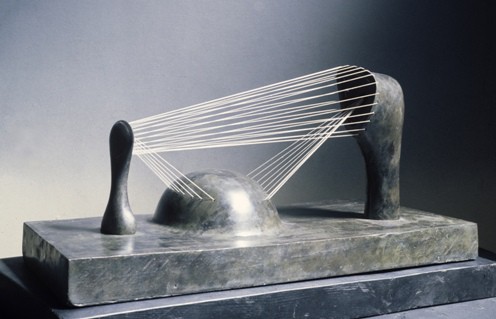
Stringed Relief, reproduced by permission of The Henry Moore Foundation
By James Dacey
My first experience of Henry Moore’s sculptures came from several visits to the Yorkshire Sculpture Park, located near where I grew up in the north of England. As a kid on a day trip with my parents, I was no art critic. But I was always fascinated by Moore’s looming bronze figures dotted across the rolling Yorkshire hillside. Within the works, I could see both the abstract body parts of a giant metal person, but also what appeared to be stark geometric shapes.
So, I was interested to hear the news that a new exhibition in London is celebrating Moore’s fascination with mathematics. The exhibition is being held jointly by the Royal Society and the Science Museum, and it showcases some of Moore’s lesser-known sculptures that were directly inspired by maths, including the work above, Stringed Relief. According to the exhibition catalogue, Moore (1898–1986) stated on several occasions that the use of string in his sculpture, which he started in 1937, was influenced by seeing models at the Science Museum in London.
I was fascinated by the mathematical models I saw there, which had been made to illustrate the difference of the form that is halfway between a square and a circle. One model had a square at one end with 20 holes along each side…Through these holes rings were threaded and lead to a circle with the same number of holes at the other end. A plane interposed through the middle shows the form that is halfway between a square and a circle…It wasn’t the scientific study of these models but the ability to look through the strings as with a bird cage and see one form within the other which excited me.
Moore is by no means the only artist to have drawn inspiration from the ideas of science. One high-profile contemporary example is the British artist Anthony Gormley, who has created several sculptures inspired by the theory of quantum mechanics. It has also been suggested that Picasso’s development of the Cubist style of painting was informed by a similar line of thinking to Einstein’s during the formulation of the theory of relativity.
Two teams developing rival designs for an international linear collider will continue with their own separate blueprints – even though both teams are joining forces at the organizational level. Barry Barish, head of the design effort for the International Linear Collider (ILC), told physicsworld.com that both the ILC and the rival Compact Linear Collider (CLIC) will remain distinct projects despite the recent creation of a Linear Collider Board that will govern the development of the two designs. But given the costs of building such a machine, which will be the successor to CERN’s Large Hadron Collider (LHC), only one such design is likely to be built and the new organizational structure will not result in one joint proposal.
Most of the R&D design for CLIC, which could measure precisely any of the new particles that the LHC might discover, is being carried out at CERN. Both it and the ILC will collide electrons with positrons, but while the ILC will use superconducting technology to collide particles with energies of about 500 GeV, CLIC will collide particles at 1 TeV or more using a novel “two beam” acceleration technique.
The ILC design is more mature than CLIC’s and is, in principle, ready for construction whereas some of CLIC’s concepts have not yet been proven and would need to be demonstrated over the coming 5 to 10 years. “The two groups already work together on mutual technical problems, but this will enable joint planning, including preparations for any comparisons in the future,” says Barish. “There can only be one possible linear collider in the world, preparations are expensive and need to be co-ordinated.”
Joint leadership
Under the new structure, the directorate of the two design teams will report into a linear collider director, a new position that has yet to be appointed. The director will then report into the Linear Collider Board, which will oversee the preparation of a collider proposal that will then report to the International Committee for Future Accelerators chaired by Fermilab boss Pier Oddone. The Linear Collider Board will consist of 16 members – a chair plus five representatives each from Europe, Asia and the Americas – who have not yet been chosen. “Clearly, joint leadership can help bring this all together as a global project best matched to the science,” says Barish.
“I think this is an excellent development, which I have been supporting for some time,” says theoretical physicist John Ellis from Kings College London, who is on the CLIC steering committee. “There are many technical issues in common between CLIC and the ILC such as civil engineering, beam delivery and detector design, that it makes great sense to work together”
Indeed, deciding which design to go for will depend on what physics the LHC discovers over the coming years. “If the ILC parameters match the science coming from CERN, it will be the obvious choice; but if it is crucial to go well beyond 1 TeV, then the ILC is impractical and CLIC represents a possible solution on a longer timescale to go as high as maybe 3 TeV,” says Barish.
The ILC team is expected to release its technical design report by the end of the year.
In the latest episode of the Physics World books podcast, released yesterday, we look at the enduring appeal of quantum mechanics in popular-science books. I presented the programme along with Physics World‘s editor Matin Durrani and the magazine’s reviews editor Margaret Harris, and we were joined by several authors of these books. In the podcast we explore the question of why it is that so many popular-science books have been written on the topic over the years, and why the public has such a strong fascination with the ideas of quantum physics. You can find more details and listen to the podcast here.
One of the aspects we discuss is the counterintuitive nature of the quantum world. On the one hand, this weirdness of quantum mechanics can be intriguing because it describes a world that is so different from our everyday experiences. But on the other hand, some of the concepts and the mathematics of quantum mechanics can be quite mind-boggling, and it can be difficult to explain these ideas in basic terms. I know from the experience of writing news articles about quantum mechanics that it can sometimes be very challenging to find everyday analogies to describe the quantum world while remaining faithful to the underlying physics.
But I want to know what you think about this, via this week’s Facebook poll question:
What is the trickiest feature of quantum mechanics to get your head round?
Wave–particle duality The Heisenberg uncertainty principle Entanglement, aka “spooky action at a distance” The Pauli exclusion principle Superposition
Have your say by casting your vote on our Facebook page. As always, please feel free to explain your response by posting a comment.
In last week’s poll we embraced Stephen Hawking-mania. The 70-year-old theoretical physicist appeared in an episode of the hit TV show The Big Bang Theory, which aired on CBS in the US last Thursday. Unfortunately, I haven’t been able to see the show yet here in the UK, but I have seen Hawking in some of his earlier cameos, including his several appearances in The Simpsons and his role in Star Trek: The Next Generation. We asked you “In which TV show should Stephen Hawking make his next cameo appearance?”.
The most popular choice by a country mile was Doctor Who, which picked up 70% of the votes. In second place with 18% of the vote was the slightly more leftfield choice that Hawking should appear in the US sitcom How I Met Your Mother. Just 7% of voters opted for the musical comedy-drama Glee, while only 4% opted for the cult UK sci-fi comedy Red Dwarf.
So, Stephen Hawking; producers of Doctor Who. Make this happen. For the sake of our Facebook fans, please.
Thank you for all your participation and we look forward to hearing from you in this week’s poll.
It was in 1935 that the Austrian physicist Erwin Schrödinger proposed his now-famous cat image to comment on what he thought was the irresponsible failure of his colleagues to think through quantum mechanics. He could hardly have imagined that the cat, which he introduced half-jokingly, would still be discussed almost 80 years later – nor that it would have become permanently ingrained in popular culture. So why does the image still seem as packed with creative force as ever?
One recent example crops up in Will Grayson, Will Grayson, a young-adult novel published by John Green and David Levithan in 2010. In the book, Will asks Jane – a girl for whom he has mixed and unexpressed feelings – about Schrödinger’s cat. Jane describes the physicist’s famous thought-experiment, before adding that Schrödinger “was not endorsing cat-killing or anything…just saying that it seemed a little improbable that a cat could be simultaneously alive and dead”.
Will ponders that for a moment. Thinking of his own mixed emotions – though attracted to Jane, he once declined her offer of a kiss – he doesn’t think it strange that something can be real and not real at the same time. “[A]ll the things we keep in sealed boxes are both alive and dead until we open the box,” he broods to himself. “[T]he unobserved is both there and not.”
A completely different Schrödinger’s cat image is found in Blueprints of the Afterlife, an apocalyptic science-fiction novel by Ryan Boudinot, published this year. It features a character named Abby Fogg, who shows up both dead and alive at the same time after being programmed to infiltrate another reality. In a morgue one day, she creepily stares at two naked and dead identical versions of herself. “[Y]our selfhood, Abby, has gone into superposition,” the forensics director tells her. “It’s as if you are both alive and dead simultaneously, and this simultaneity is a self-replicating system in which there are various ‘snapshots’ of your dead self. Which makes an autopsy pretty dang hard, let me tell you.”
Weird stuff
Quantum mechanics describes the world as the product of two ingredients. The first is an information function, the ψ-function described by Schrödinger’s equation, which is a classical wave that expands outwards and overlays, or “superimposes”, many possibilities. The second ingredient is something that befalls this function, causing it to disappear and one of its possibilities to appear. If this sounds odd to you, you are not alone: even the pioneers of quantum mechanics struggled to connect this strange picture with the familiar world.
Niels Bohr and Werner Heisenberg said the world is divided into two separate domains: quantum and classical. The quantum domain is governed by the unobservable ψ-field and when this encounters something in the classical domain, through measurement or other interactions, the encounter evaporates, or “collapses”, the function. One hitherto only probable state becomes “real” and all other possibilities are eliminated.
This idea was sufficiently weird that it sparked opposition. Einstein led the attacks, which culminated in the famous “EPR” paper of 1935 co-authored with Boris Podolsky and Nathan Rosen, entitled “Can quantum-mechanical description of physical reality be considered complete?”. Published in May of that year (Phys. Rev. 47 777), the paper’s answer to the rhetorical title question was a clear “no”. There must be elements independent of processes of measurement, the EPR trio argued. Our common-sense experience – and the very definition of reality – depends on elements the existence of which is independent of observation and measurement.
Schrödinger was thrilled, and wrote to his friend Einstein expressing his delight. “You have evidently caught dogmatic q.m. by the coat-tails,” he declared. By “dogmatic q.m.”, Schrödinger meant quantum mechanics as espoused by Bohr and Heisenberg that denied the reality of certain properties such as position and momentum apart from in measurement situations.
Einstein replied equally enthusiastically, and elaborated on his intuitions: physics describes reality, but not all descriptions are complete. He imagined having two boxes with lids you can open to peer inside, and there’s a ball in one. Before you “make an observation” by looking inside the first box, how do you describe the situation? We say, quite correctly, that the probability that the ball is in the first box is ½, or 50%. But is that a complete description? Of course not, Einstein answers. It characterizes only our knowledge of the situation, not reality itself. Really, the ball is in the first box or it isn’t. Yet according to “dogmatic q.m.”, it can in principle be a complete description to say the chance of it being in that box is 50%. So quantum mechanics seems to be saying that the ball is not in one or the other box, but first exists in a box only when you peer inside. In the Bohr–Heisenberg account, Einstein wrote incredulously, “The state before the box is opened is completely described by the number ½.”
The year of the cat
Two months later, Einstein sent Schrödinger another analogy. Suppose a pile of gunpowder has a probability of exploding in a year, he mused. Its ψ-function is therefore a superposition of exploded and unexploded gunpowder. In Einstein’s view, this was nonsense. He felt that quantum mechanics, thanks to its ψ-function, is an incomplete and inadequate description of reality. Einstein’s letters inspired Schrödinger to set down an informal account of his own views, which he published in October 1935 as “The present situation in quantum mechanics” (Naturwissenschaften 23 807). This was the first appearance of Schrödinger’s cat.
Schrödinger began the paper by saying that the classical world bequeathed us the idea that nature can be exactly described. Sure, experimental data may not – in practice – allow this to be carried out in complete detail, but they do let us model phenomena that we can compare with reality and modify when necessary. These models describe states, which are specified by what Schrödinger calls “determining parts” or variables. A small set of variables uniquely determines all others in a state, though different sets can be used.
Yet this is impossible in quantum mechanics, which says that not all variables can be “co-determined”. The obstacle is not any practical limitation but Heisenberg’s uncertainty principle; when you measure some variables, others become uncertain. What about those other variables? “Have they then no reality, perhaps (pardon the expression) a blurred reality; or are all of them always real and is it merely…that simultaneous knowledge of them is ruled out?” puzzles Schrödinger.
In philosophical language, Schrödinger is asking whether the probabilities affect the “ontology” of the variables – whether the quantities to which they refer exist or not – or merely their “epistemology”, that is, our ability to know what they are.
In thermodynamics, Schrödinger continues, probabilities affect only epistemology. Scientists model systems containing billions of billions of molecules by treating them as if they involve single states arbitrarily chosen from ensembles of many possible states. This is convenient but not strictly correct. In thermodynamics you don’t care how a system behaves exactly – indeed, you aren’t even interested – only how it behaves for the most part.
But in the quantum domain, some variables remain indeterminate or blurred when others are exact. Perhaps if we knew more about the underlying situation, Schrödinger said, we would find it more complex than we thought, and causality might reappear. Still, as long as the ψ-function is confined to the subatomic domain, the indeterminacy is harmless. “Inside the nucleus,” argued Schrödinger, “blurring doesn’t bother us [but] serious misgivings arise if one notices that the uncertainty affects macroscopically tangible and visible things, for which the term ‘blurring’ seems simply wrong.”
Schrödinger now conjures his famous image. In his words:
“One can even set up quite ridiculous cases. A cat is penned up in a steel chamber, along with a Geiger counter, which must be secured against direct interference by the cat. The Geiger counter contains a tiny bit of radioactive substance, so small that perhaps in the course of an hour one of the atoms decays, but also, with equal probability, perhaps none. If an atom does decay, the counter tube discharges and – through a relay – releases a hammer that shatters a small flask of hydrocyanic acid. But if no atom decays after an hour, the cat still lives. The ψ-function of the entire system would express this by having in it the living and dead cat (pardon the expression) mixed or smeared out in equal parts.”
Later in the article Schrödinger describes the implication – the nonseparability of previously interacting quantum states even after the interaction – with the now-famous neologism “entanglement”.
Border lines
Science historian Stephen Brush has remarked that the cat image “captures the spirit of Einstein’s critique better than the published EPR paper”. Yet when Schrödinger’s paper came out, the cat provoked little discussion. For Bohr, Heisenberg and company, cats are too complicated to have ψ-functions – they inhabit classical territory. For Einstein and Schrödinger, the image showed that, just as we are not content to accept a “blurred model” to represent reality in the macroworld, we should not in the microworld. Things are different on the other side of the boundary, but not that different. For both sides, the cat symbolized nonsense.
The boundary dispute, however, did not vanish. It got worse. To the consternation of Einstein and Schrödinger, no way was found to reformulate the rules of the quantum domain so that “determining parts” could all co-exist. Entanglement did not go away, and remained an ontological, not just epistemological, disturbance. Bohr and Heisenberg were disappointed that no way was found to pin down the classical–quantum boundary, which implied that entanglement reached into more territory than they imagined. The price of eliminating superposition collapse is alternate worlds, which does not eliminate but multiplies the cat.
By the time popular-science writing took off in the 1970s, the cat image had become an accessible and accurate illustration that vividly captured the weirdness of entanglement, superposition, the measurement problem and the ψ-function – the cat was the symbol of the challenge posed to conventional realism by quantum mechanics. In The Dancing Wu Li Masters (1979), an over-the-top book about alleged connections between quantum mechanics and Eastern mysticism, Gary Zukav declared that “Schrödinger’s cat has long illustrated to physics students the psychedelic aspects of quantum mechanics”. The cat appeared increasingly often, not only in science fiction, but also in fringe and mystical fiction, amateur philosophy and self-help literature. There is even a Wikipedia page about “Schrödinger’s cat in popular culture”.
The critical point
Physicists do not seem to care much about Schrödinger’s cat any more except as a label: “cat-states” is sometimes used to refer to large coherent quantum systems, though nothing near as complex as a cat.
The rest of the world, however, seems to care a lot, for different reasons. For teenagers such as Will and Jane, the “entanglement” issue surrounding the cat is a great metaphor to express the reality of their mixed feelings, conflicting identities and unexpressed passions. “[K]eeping the box closed doesn’t actually keep the cat alive-and-dead,” Jane tells Will later in Will Grayson, Will Grayson. “Even if you don’t observe the cat in whatever state it’s in, the air in the box does. So keeping the box closed just keeps you in the dark, not the universe.” Will gets that – and gets as well that they aren’t talking about physics, but about their relationship.
For science-fiction writers such as Boudinot, the cat story makes weird and otherwise magical plots plausible, however remotely. For science writers, it symbolizes what is wrong with common-sense realism. For philosophers (amateur and professional) who seek to understand how quantum mechanics connects with the everyday world, it captures the idea of an “intermediate level of reality” that Heisenberg said was the price we had to pay for quantum mechanics.
Technically speaking, the application of the image of Schrödinger’s cat outside the quantum domain is a “fail”, to use the slang of Will and Jane and their friends. But in the real world, its persistence demonstrates how a tool developed in one human domain can, in unpredictable ways, be meaningful and useful in others.