Sound absorption Incoming acoustic waves induce relative movements among the fibres, initiating the triboelectric effect within overlapping regions. The generated charges are dissipated through conductive elements and eventually transformed into heat. (Courtesy: Nat. Commun. 10.1038/s41467-024-53847-5)
Noise pollution is becoming increasingly common in society today, impacting both humans and wildlife. While loud noises can be an inconvenience, if it’s something that happens regularly, it can have an adverse effect on human health that goes beyond a mild irritation.
As such noise pollution gets worse, researchers are working to mitigate its impact through new sound absorption materials. A team headed up the Agency for Science, Technology and Research (A*STAR) in Singapore has now developed a new approach to tackling the problem by absorbing sound waves using the triboelectric effect.
The World Health Organization has defined noise pollution as noise levels as above 65 dB, with one in five Europeans being regularly exposed to levels considered harmful to their health. “The adverse impacts of airborne noise on human health are growing concern, including disturbing sleep, elevating stress hormone levels, inciting inflammation and even increasing the risk of cardiovascular diseases,” says Kui Yao, senior author on the study.
Passive provides the best route
Mitigating noise requires conversion of the mechanical energy in acoustic waves into another form. For this, passive sound absorbers are a better option than active versions because they require less maintenance and consume no power (so don’t require a lot of extra components to work).
Previous efforts from Yao’s research group have shown that the piezoelectric effect – the process of creating a current when a material undergoes mechanical stress – can convert mechanical energy into electricity and could be used for passive sound absorption. However, the researchers postulated that the triboelectric effect – the process of electrical charge transfer when two surfaces contact each other – could be more effective for absorbing low-frequency noise.
The triboelectric effect is more commonly applied for harvesting mechanical energy, including acoustic energy. But unlike when used for energy harvesting, the use of the triboelectric effect in noise mitigation applications is not limited by the electronics around the material, which can cause impedance mismatching and electrical leakage. For sound absorbers, therefore, there’s potential to create a device with close to 100% efficient triboelectric conversion of energy.
Exploiting the triboelectric effect
Yao and colleagues developed a fibrous polypropylene/polyethylene terephthalate (PP/PET) composite foam that uses the triboelectric effect and in situ electrical energy dissipation to absorb low-frequency sound waves. In this foam, sound is converted into electricity through embedded electrically conductive elements, and this electricity is then dissipated into heat and removed from the material.
The energy dissipation mechanism requires triboelectric pairing materials with a large difference in charge affinity (the tendency to gain or lose charge from/to the other material). The larger the difference between the two fibre materials in the foam, the better the acoustic absorption performance due to the larger triboelectric effect.
To understand the effectiveness of different foam compositions for absorbing and converting sound waves, the researchers designed an acoustic impedance model to analyse the underlying sound absorption mechanisms. “Our theoretical analysis and experimental results show superior sound absorption performance of triboelectric energy dissipator-enabled composite foams over common acoustic absorbing products,” explains Yao.
The researchers first tested the fibrous PP/PET composite foam theoretically and experimentally and found that it had a high noise reduction coefficient (NRC) of 0.66 (over a broad low-frequency range). This translates to a 24.5% improvement in sound absorption performance compared with sound absorption foams that don’t utilize the triboelectric effect.
On the back of this result, the researchers validated their process further by testing other material combinations. This included: a PP/polyvinylidene fluoride (PVDF) foam with an NRC of 0.67 and 22.6% improvement in sound absorption performance; a glass wool/PVDF foam with an NRC of 0.71 and 50.6% improvement in sound absorption performance; and a polyurethane/PVDF foam with an NRC of 0.79 and 43.6% improvement in sound absorption performance.
All the improvements are based on a comparison against their non-triboelectric counterparts – where the sound absorption performance varies from composition to composition, hence the non-linear relationship between percentage values and NRC values. The foams also showed a sound absorption performance of 0.8 NRC at 800 Hz and around 1.00 NRC with sound waves above 1.4 kHz, compared with commercially available counterpart absorber materials.
When asked about the future of the sound absorbers, Yao tells Physics World: “We are continuing to improve the performance properties and seeking collaborations for adoption in practical applications”.
For all of us concerned about climate change, 2023 was a grim year. According to the World Meteorological Organisation (WMO), it was the warmest year documented so far, with records broken – and in some cases smashed – for ocean heat, sea-level rise, Antarctic sea-ice loss and glacier retreat.
Capping off the warmest 10-year period on record, global average near-surface temperature hit 1.45 °C above pre-industrial levels. “Never have we been so close – albeit on a temporary basis at the moment – to the 1.5 °C lower limit of the Paris Agreement on climate change,” said WMO secretary-general Celeste Saulo in a statement earlier this year.
The heatwaves, floods, droughts and wildfires of 2023 are clear signs of the increasing dangers of the climate crisis. As we look to the future and wonder how much the world will warm, accurate climate models are vital.
For the physicists who build and run these models, one major challenge is figuring out how clouds are changing as the world warms, and how those changes will impact the climate system. According to the Intergovernmental Panel on Climate Change (IPCC), these feedbacks create the biggest uncertainties in predicting future climate change.
Cloud cover, high and low
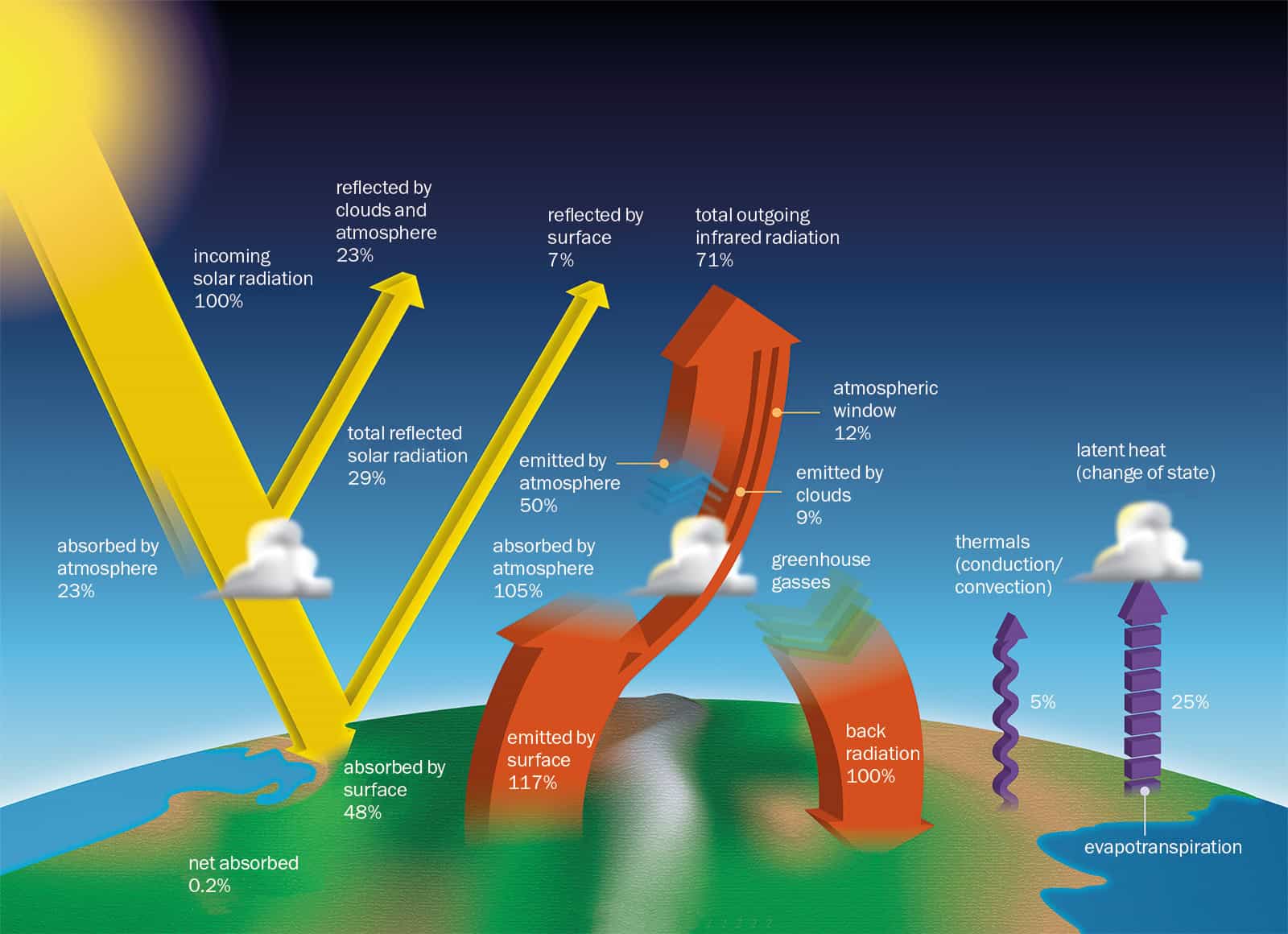
Clouds play a key role in the climate system, as they have a profound impact on the Earth’s radiation budget. That is the balance between the amount of energy coming in from solar radiation, and the amount of energy going back out to space, which is both the reflected (shortwave) and thermal (longwave) energy radiated from the Earth.
How energy flows into and away from the Earth. Based on data from multiple sources including NASA’s CERES satellite instrument, which measures reflected solar and emitted infrared radiation fluxes. All values are fluxes in watts per square metre and are average values based on 10 years of data. First published in 2014.
“Even a subtle change in global cloud properties could be enough to have a noticeable effect on the global energy budget and therefore the amount of warming,” explains climate scientist Paulo Ceppi of Imperial College London, who is an expert on the impact of clouds on global climate.
A key factor in this dynamic is “cloud fraction” – a measurement that climate scientists use to determine the percentage of the Earth covered by clouds at a given time. More specifically, it’s the portion of the Earth’s surface covered by cloud, relative to the portion that is uncovered. Cloud fraction is determined via satellite imagery and is the portion of each pixel (1-km-pixel resolution cloud mask) in an image that is covered by clouds (figure 2).
Apart from the amount of cover, what also matter are the altitude of clouds and their optical thickness. Higher, cooler clouds absorb more thermal energy originating from the Earth’s surface, and therefore have a greater greenhouse warming effect than low clouds. They also tend to be thinner, so they let more sunlight through and overall have a net warming effect. Low clouds, on the other hand, have a weak greenhouse effect, but tend to be thicker and reflect more solar radiation. They generally have a net cooling effect.
2 Cloud fraction
These maps show what fraction of an area was cloudy on average each month, according to measurements collected by the Moderate Resolution Imaging Spectroradiometer (MODIS) on NASA’s Terra satellite. MODIS collects information in gridded boxes, or pixels. Cloud fraction is the portion of each pixel that is covered by clouds. Colours range from blue (no clouds) to white (totally cloudy).
The band of persistent clouds around the equator is the Intertropical Convergence Zone – where the easterly trade winds in the Northern and Southern Hemispheres meet, pushing warm, moist air high into the atmosphere. The air expands and cools, and the water vapour condenses into clouds and rain. The cloud band shifts slightly north and south of the equator with the seasons. In tropical countries, this shifting of the zone is what causes rainy and dry seasons.
Video and data courtesy: NASA Earth Observations
As the climate warms, cloud properties are changing, altering the radiation budget and influencing the amount of warming. Indeed, there are two key changes: rising cloud tops and a reduction in low cloud amount.
The most understood effect, Ceppi explains, is that as global temperatures increase, clouds rise higher into the troposphere, which is the lowermost atmospheric layer. This is because as the troposphere warms it expands, increasing to greater altitudes. Over the last 40 years the top of the troposphere, known as the tropopause, has risen by about 50 metres per decade (Sci. Adv. 10.1126/sciadv.abi8065).
“You are left with clouds that rise higher up on average, so have a greater greenhouse warming effect,” Ceppi says. He adds that modelling data and satellite observations support the idea that cloud tops are rising.
Conversely, coverage of low clouds, which reflect sunlight and cool the Earth’s surface, is decreasing with warming. This reduction is mainly in marine low clouds over tropical and subtropical regions. “We are talking a few per cent, so not something that you would necessarily notice with your bare eyes, but it’s enough to have an effect of amplifying global warming,” he adds.
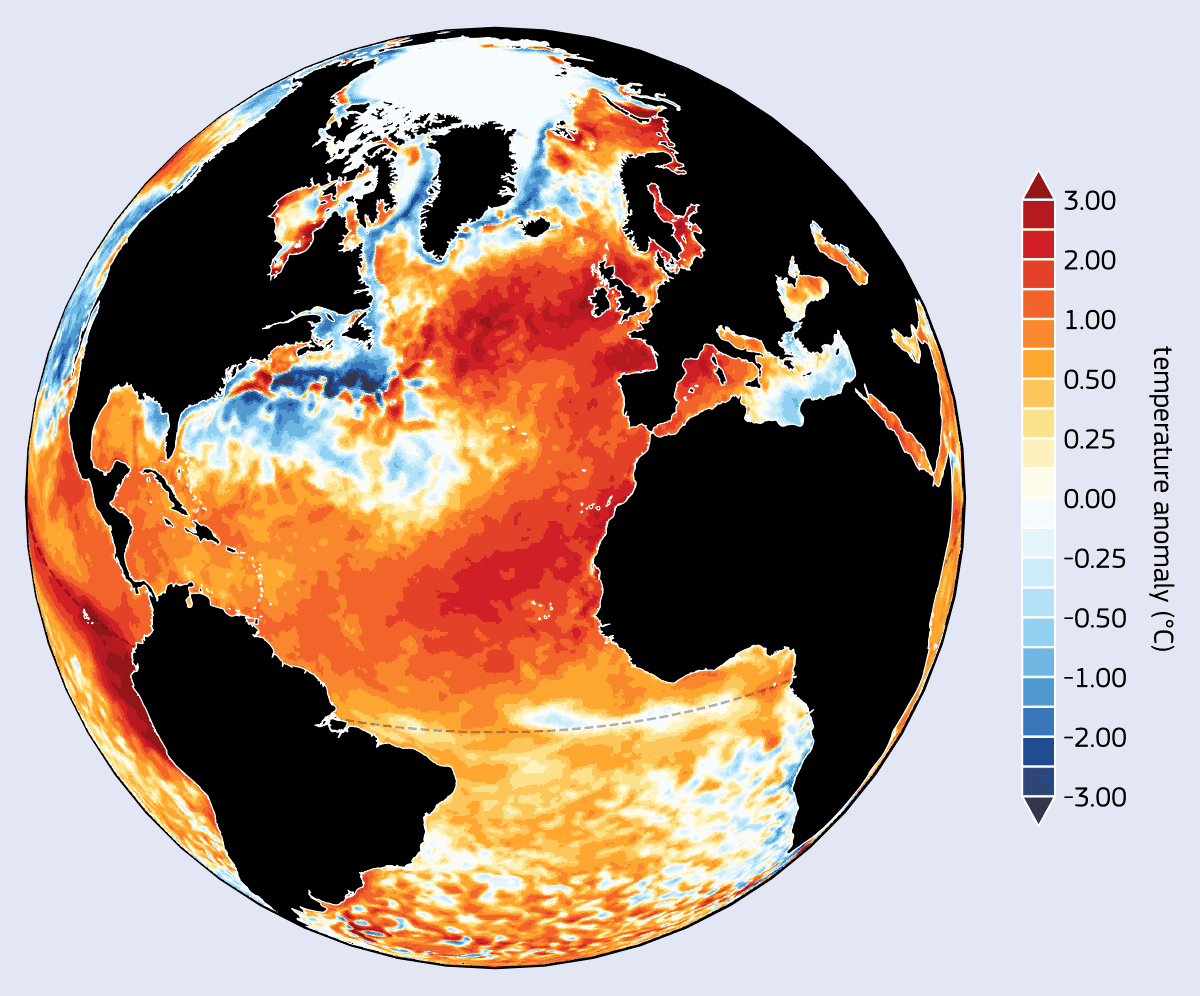
These changes in low clouds are partly responsible for some of the extreme ocean heatwaves seen in recent years (figure 3). While the mechanisms behind these events are complex, one known driver is this reduction in low cloud cover, which allows more solar radiation to hit the ocean (Science 325 460).
“It’s cloud feedback on a more local scale,” Ceppi says. “So, the ocean surface warms locally and that prompts low cloud dissipation, which leads to more solar radiation being absorbed at the surface, which prompts further warming and therefore amplifies and sustains those events.”
Sea surface temperature anomaly (°C) for the month of June 2023, relative to the 1991–2020 reference period. The global ocean experienced an average daily marine heatwave coverage of 32%, well above the previous record of 23% in 2016. At the end of 2023, most of the global ocean between 20° S and 20° N had been in heatwave conditions since early November.
Despite these insights, several questions remain unanswered. For example, Ceppi explains that while we know that low cloud changes will amplify warming, the strength of these effects needs further investigation, to reduce the uncertainty range.
Also, as high clouds move higher, there may be other important changes, such as shifts in optical thickness, which is a measure of how much light is scattered or absorbed by cloud droplets, instead of passing through the atmosphere. “We are a little less certain about what else happens to [high clouds],” says Ceppi.
Diurnal changes
It’s not just the spatial distribution of clouds that impacts climate. Recent research has found an increasing asymmetry in cloud-cover changes between day and night. Simply put, daytime clouds tend to cool Earth’s surface by reflecting solar radiation, while at night clouds trap thermal radiation and have a warming effect. This shift in diurnal distribution could create a feedback loop that amplifies global warming.
By analysing satellite observations and data from the sixth phase of the Coupled Model Intercomparison Project (CMIP6) – which incorporates historical data collected between 1970 and 2014 as well as projections up to the year 2100 – the researchers concluded that this diurnal asymmetry is largely due to rising concentrations of greenhouse gases that make the lower troposphere more stable, which in turn increases the overall heating.
Fewer clouds form during the day, thereby reducing the amount of shortwave radiation that is reflected away. Night-time clouds are more stable, which in turn increases the longwave greenhouse effect. “Our study shows that this asymmetry causes a positive feedback loop that amplifies global warming,” says Quaas. This growing asymmetry is mainly driven by a daytime increase in turbulence in the lower troposphere as the climate warms, meaning that clouds are less likely to form and remain stable during the day.
Mixed-phase clouds
Climate models are affected by more than just the distribution of clouds in space. What also matters is the distribution of liquid water and ice within clouds. In fact, researchers have found that the way in which models simulate this effect influences their predictions of warming in response to greenhouse gas emissions.
So-called “mixed-phase” clouds are those that contain water vapour, ice particles and supercooled liquid droplets, and exist in a three-phase colloidal system. Such clouds are ubiquitous in the troposphere. These clouds are found at all latitudes from the polar regions to the tropics and they play an important role in the climate system.
As the atmosphere warms, mixed-phase clouds tend to shift from ice to liquid water. This transition makes these clouds more reflective, enhancing their cooling effect on the Earth’s surface – a negative feedback that dampens global warming.
In 2016 Trude Storelvmo, an atmospheric scientist at the University of Oslo in Norway, and her colleagues made an important discovery: many climate models overestimate this negative feedback (Geophys. Res. Lett. 10.1029/2023GL105053). Indeed, the models often simulate clouds with too much ice and not enough liquid water. This error exaggerates the cooling effect from the phase transition. Essentially, the clouds in these simulations have too much ice to lose, causing the models to overestimate the increase in their reflectiveness as they warm.
One problem is that these models oversimplify cloud structure, failing to capture the true heterogeneity of mixed-phase clouds. Satellite, balloon and aircraft observations reveal that these clouds are not uniformly mixed, either vertically or horizontally. Instead, they contain pockets of ice and liquid water, leading to complex interactions that are inadequately represented in the simulations. As a result, they overestimate ice formation and underestimate liquid cloud development.
Storelvmo’s work also found that initially, increased cloud reflectivity has a strong effect that helps mitigate global warming. But as the atmosphere continues to warm, the increase in reflectiveness slows. This shift is intuitive: as the clouds become more liquid, they have less ice to lose. At some point they become predominantly liquid, eliminating the phase transition. The clouds cannot become anymore liquid – and thus reflective – and warming accelerates.
Liquid cloud tops
Earlier this year, Storelvmo and colleagues carried out a new study, using satellite data to study the vertical composition of mixed-phase clouds. The team discovered that globally, these clouds are more liquid at the top (Commun. Earth Environ.5 390).
Storelvmo explains that this top cloud layer is important as “it is the first part of the cloud that radiation interacts with”. When the researchers adjusted climate models to correctly capture this vertical composition, it had a significant impact, triggering an additional degree of warming in a “high-carbon emissions” scenario by the end of this century, compared with current climate projections.
“It is not inconceivable that we will reach temperatures where most of [the negative feedback from clouds] is lost, with current CO2 emissions,” says Storelvmo. The point at which this happens is unclear, but is something that scientists are actively working on.
The study also revealed that while changes to mixed-phased clouds in the northern mid-to-high latitudes mainly influence the climate in the northern hemisphere, changes to clouds in the same southern latitudes have global implications.
“When we modify clouds in the southern extratropic that’s communicated all the way to the Arctic – it’s actually influencing warming in the arctic,” says Storelvmo. The reasons for this are not fully understood, but Storelvmo says other studies have seen this effect too.
“It’s an open and active area of research, but it seems that the atmospheric circulation helps pass on perturbations from the Southern Ocean much more efficiently than northern perturbations,” she explains.
The aerosol problem
As well as generating the greenhouse gases that drive the climate crisis, fossil fuel burning also produces aerosols. The resulting aerosol pollution is a huge public health issue. The recent “State of Global Air Report 2024” from the Health Effects Institute found that globally eight million people died because of air pollution in 2021. Dirty air is also now the second-leading cause of death in children under five, after malnutrition.
To tackle these health implications, many countries and organizations have introduced air-quality clean-up policies. But cleaning up air pollution has an unfortunate side-effect: it exacerbates the climate crisis. Indeed, a recent study has even warned that aggressive aerosol mitigation policies will hinder our chances of keeping global warming below 2 °C (Earth’s Future 10.1029/2023EF004233).
Deadly conundrum According to some measures, Lahore in Pakistan is the city with the worst air pollution in the world. Air pollution is responsible for tens of millions of deaths every year. But improving air quality can actually exacerbate the climate crisis, as it decreases the small particles in clouds, which are key to reflecting radiation. (Courtesy: Shutterstock/A M Syed)
When you add small pollution particles to clouds, explains Haywood, it creates “clouds that are made up of a larger number of small cloud droplets and those clouds are more reflective”. The shrinking in cloud droplet size can also reduce precipitation – adding more liquid water in clouds. The clouds therefore last longer, cover a greater area and become more reflective.
But if atmospheric aerosol concentrations are reduced, so too are these reflective, planet-cooling effects. “This masking effect by the aerosols is taken out and we unveil more and more of the full greenhouse warming,” says Quaas.
A good example of this is recent policy aimed at cleaning up shipping fuels by lowering sulphur concentrations. At the start of 2020 the International Maritime Organisation introduced regulations that slashed the limit on sulphur content in fuels from 3.5% to 0.5%.
Haywood explains that this has reduced the additional reflectivity that this pollution created in clouds and caused a sharp increase in global warming rates. “We’ve done some simulations with climate models, and they seem to be suggestive of at least three to four years acceleration of global warming,” he adds.
Overall models suggest that if we remove all the world’s polluting aerosols, we can expect to see around 0.4 °C of additional warming, says Quaas. He acknowledges that we must improve air quality “because we cannot just accept people dying and ecosystems deteriorating”. By doing so, we must also be prepared for this additional warming. But more work is needed, “because the current uncertainty is too large”, he continues. Uncertainty in the figures is around 50%, according to Quaas, which means that slashing aerosol pollution could cause anywhere from 0.2 to 0.6 °C of additional warming.
Haywood says that while current models do a relatively good job of representing how aerosols reduce cloud droplet size and increase cloud brightness, they do a poor job of showing how aerosols effect cloud fraction.
Cloud manipulation
The fact that aerosols cool the planet by brightening clouds opens an obvious question: could we use aerosols to deliberately manipulate cloud properties to mitigate climate change?
“There are more recent proposals to combat the impacts, or the worst of the impacts of global warming, through either stratospheric aerosol injection or marine cloud brightening, but they are really in their infancy and need to be understood an awful lot better before any kind of deployment can even be considered,” says Haywood. “You need to know not just how the aerosols might interact with clouds, but also how the cloud then interacts with the climate system and the [atmospheric] teleconnections that changing cloud properties can induce.”
Haywood recently co-authored a position paper, together with a group of atmospheric scientists in the US and Europe, arguing that a programme of physical science research is needed to evaluate the viability and risks of marine cloud brightening (Sci. Adv. 10 eadi8594).
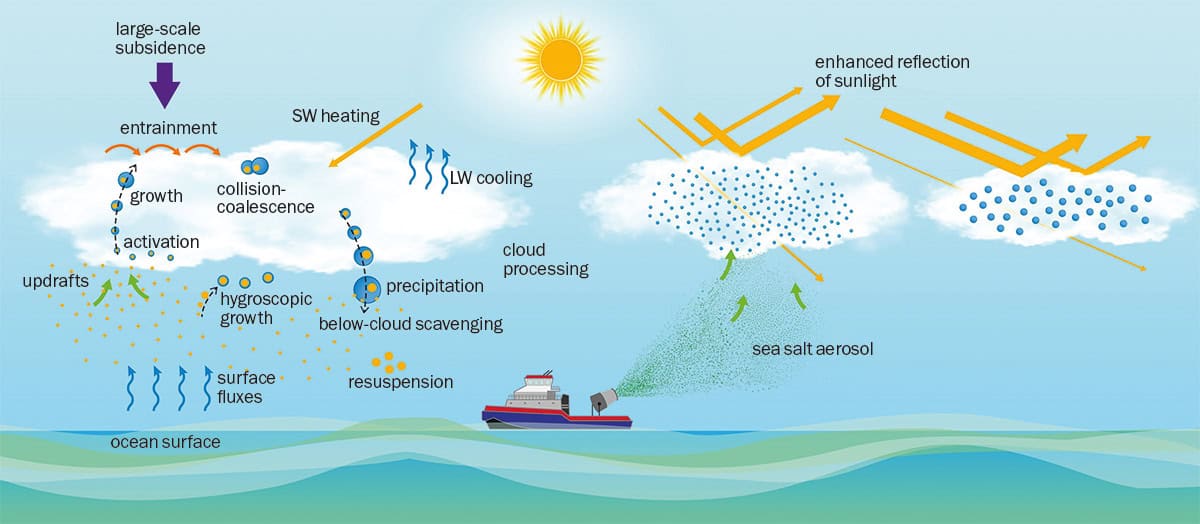
A proposed form of solar radiation management, known as marine cloud brightening, would involve injecting aerosol particles into low-level, liquid marine clouds – mainly those covering large areas of subtropical oceans – to increase their reflectiveness (figure 4).
Most marine cloud-brightening proposals suggest using saltwater spray as the aerosol. In theory, when sprayed into the air the saltwater would evaporate to produce fine haze particles, which would then be transported by air currents into cloud. Once in the clouds, these particles would increase the number of cloud droplets, and so increase cloud brightness.
In this proposal, ship-based generators would ingest seawater and produce fine aerosol haze droplets with an equivalent dry diameter of approximately 50 nm. In optimal conditions, many of these haze droplets would be lofted into the cloud by updrafts, where they would modify cloud microphysics processes, such as increasing droplet number concentrations, suppressing rain formation, and extending the coverage and lifetime of the clouds. At the cloud scale, the degree of cloud brightening and surface cooling would depend on how effectively the droplet number concentrations can be increased, droplet sizes reduced, and cloud amount and lifetime increased.
Feingold, an author on the position paper, says that a key challenge lies in predicting how additional particles will affect cloud properties. For instance, while more haze droplets might theoretically brighten clouds, it could also lead to unintended effects like increased evaporation or rain, which could even reduce cloud coverage.
Another difficult challenge is the inconstancy of cloud response to aerosols. “Ship traffic is really regular,” explains Feingold, “but if you look at satellite imagery on a daily basis in a certain area, sometimes you see really clear, beautiful ship tracks and other times you don’t – and the ship traffic hasn’t changed but the meteorology has.” This variability depends on cloud susceptibility to aerosols, which is influenced by meteorological conditions.
And even if cloud systems that respond well to marine cloud brightening are identified, it would not be sensible to repeatedly target them. “Seeding the same area persistently could have some really serious knock-on effects on regional temperature and rainfall,” says Feingold.
Essentially, aerosol injections into the same area day after day would create localized radiative cooling, which would impact regional climate patterns. This highlights the ethical concerns with cloud brightening, as such effects could benefit some regions while negatively impacting others.
Addressing many of these questions requires significant advances in current climate models, so that the entire process – from the effects of aerosols on cloud microphysics through to the larger impact on clouds and then global climate circulations – can be accurately simulated. Bridging these knowledge gaps will require controlled field experiments, such as aerosol releases from point sources in areas of interest, while taking observational data using tools like drones, aeroplanes and satellites. Such experiments would help scientists get a “handle on this connection between emitted particles and brightening”, says Feingold.
But physicists can only do so much. “We are not trying to push marine cloud brightening, we are trying to understand it,” says Feingold. He argues that a parallel effort to discuss the governance of marine cloud brightening is also needed.
In recent years, much progress has been made in determining the impact of clouds, when it comes to regulating our planet’s climate, and their importance in climate modelling. “While major advances in the understanding of cloud processes have increased the level of confidence and decreased the uncertainty range for the cloud feedback by about 50% compared to AR5 [IPCC report], clouds remain the largest contribution to overall uncertainty in climate feedbacks (high confidence),” states the IPCC’s latest Assessment Report (AR6), published in 2021. Physicists and atmospheric scientists will continue to study how cloud systems will respond to our ever-changing climate and planet, but ultimately, it is wider society that needs to decide the way forward.
Working principle Illustration of the single-crystal (a) and cascade-connected two-crystal (b) devices under X-ray irradiation. (c) Time-resolved photocurrent responses of the two devices. (Courtesy: CC BY 4.0/ACS Cent. Sci. 10.1021/acscentsci.4c01296)
X-ray imaging plays an indispensable role in diagnosing and staging disease. Nevertheless, exposure to high doses of X-rays has potential for harm, and much effort is focused towards reducing radiation exposure while maintaining diagnostic function. With this aim, researchers at the King Abdullah University of Science and Technology (KAUST) have shown how interconnecting single-crystal devices can create an X-ray detector with an ultralow detection threshold.
The team created devices using lab-grown single crystals of methylammonium lead bromide (MAPbBr3), a perovskite material that exhibits considerable stability, minimal ion migration and a high X-ray absorption cross-section – making it ideal for X-ray detection. To improve performance further, they used cascade engineering to connect two or more crystals together in series, reporting their findings in ACS Central Science.
X-rays incident upon a semiconductor crystal detector generate a photocurrent via the creation of electron–hole pairs. When exposed to the same X-ray dose, cascade-connected crystals should exhibit the same photocurrent as a single-crystal device (as they generate equal net concentrations of electron–hole pairs). The cascade configuration, however, has a higher resistivity and should thus have a much lower dark current, improving the signal-to-noise ratio and enhancing the detection performance of the cascade device.
To test this premise, senior author Omar Mohammed and colleagues grew single crystals of MAPbBr3. They first selected four identical crystals to evaluate (SC1, SC2, SC3 and SC4), each 3 x 3 mm in area and approximately 2 mm thick. Measuring various optical and electrical properties revealed high consistency across the four samples.
“The synthesis process allows for reproducible production of MAPbBr3 single crystals, underscoring their strong potential for commercial applications,” says Mohammed.
Optimizing detector performance
Mohammed and colleagues fabricated X-ray detectors containing a single MAPbBr3 perovskite crystal (SC1) and detectors with two, three and four crystals connected in series (SC1−2, SC1−3 and SC1−4). To compare the dark currents of the devices they irradiated each one with X-rays under a constant 2 V bias voltage. The cascade-connected SC1–2 exhibited a dark current of 7.04 nA, roughly half that generated by SC1 (13.4 nA). SC1–3 and SC1–4 reduced the dark current further, to 4 and 3 nA, respectively.
The researchers also measured the dark current for the four devices as the bias voltage changed from 0 to -10 V. They found that SC1 reached the highest dark current of 547 nA, while SC1–2, SC1–3 and SC1–4 showed progressively decreasing dark currents of 134, 90 and 50 nA, respectively. “These findings highlight the effectiveness of cascade engineering in reducing dark current levels,” Mohammed notes.
Next, the team assessed the current stability of the devices under continuous X-ray irradiation for 450 s. SC1–2 exhibited a stable current response, with a skewness value of just 0.09, while SC1, SC1–3 and SC1–4 had larger skewness values of 0.75, 0.45 and 0.76, respectively.
The researchers point out that while connecting more single crystals in series reduced the dark current, increasing the number of connections also lowered the stability of the device. The two-crystal SC1–2 represents the optimal balance.
Low-dose imaging
One key component required for low-dose X-ray imaging is a low detection threshold. The conventional single-crystal SC1 showed a detection limit of 590 nGy/s under a 2 V bias. SC1–2 decreased this limit to 100 nGy/s – the lowest of all four devices and surpassing the existing record achieved by MAPbBr3 perovskite devices under near-identical conditions.
Spatial resolution is another important consideration. To assess this, the researchers estimated the modulation transfer function (the level of original contrast maintained by the detector) for each of the four devices. They found that SC1–2 exhibited the best spatial resolution of 8.5 line pairs/mm, compared with 5.6, 5.4 and 4 line pairs/mm for SC1, SC1–3 and SC1–4, respectively.
Optimal imaging Actual and X-ray images of a key and a raspberry with a needle obtained by the SC1 to SC1–4 devices. (Courtesy: CC BY 4.0/ACS Cent. Sci. 10.1021/acscentsci.4c01296)
Finally, the researchers performed low-dose X-ray imaging experiments using the four devices, first imaging a key at a dose rate of 3.1 μGy/s. SC1 exhibited an unclear image due to the unstable current affecting its resolution. Devices SC1–2 to SC1–4 produced clearer images of the key, with SC1–2 showing the best image contrast.
They also imaged a USB port at a dose rate of 2.3 μGy/s, a metal needle piercing a raspberry at 1.9 μGy/s and an earring at 750 nGy/s. In all cases, SC1–2 exhibited the highest quality image.
The researchers conclude that the cascade-engineered configuration represents a significant shift in low-dose X-ray detection, with potential to advance applications that require minimal radiation exposure combined with excellent image quality. They also note that the approach works with different materials, demonstrating X-ray detection using cascaded cadmium telluride (CdTe) single crystals.
Mohammed says that the team is now investigating the application of the cascade structure in other perovskite single crystals, such as FAPbI3 and MAPbI3, with the goal of reducing their detection limits. “Moreover, efforts are underway to enhance the packaging of MAPbBr3 cascade single crystals to facilitate their use in dosimeter detection for real-world applications,” he tells Physics World.
In an e-mail to staff in September 2024, Christopher Day, the vice-chancellor of Newcastle University in the UK, announced a £35m shortfall in its finances for 2024. Unfortunately, Newcastle is not alone in facing financial difficulties. The problem is largely due to UK universities obtaining much of their funding by charging international students exorbitant tuition fees of tens of thousands of pounds per year. In 2022 international students made up 26% of the total student population. But with the number of international students coming to the UK recently falling and tuition fees for domestic students having increased by less than 6% over the last decade, the income from students is no longer enough to keep our universities afloat.
Both Day and Universities UK (UUK) – the advocacy organization for universities in the UK – pushed for the UK government to allow universities to increase fees for both international and domestic students. They suggested raising the cap on tuition fees for UK students to £13,000 per year, much more than the new cap that was set earlier this month at £9535. Increasing tuition fees further, however, would be a disaster for our education system.
The introduction of student fees was sold to universities in the late 1990s as a way to get more money, and sold to the wider public as a way to allow “market fairness” to improve the quality of education given by universities. In truth, it was never about either of these things.
Tuition fees were about making sure that the UK government would not have to worry about universities pressuring them to increase funding. Universities instead would have to rationalize higher fees with the students themselves. But it is far easier to argue that “we need more money from you, the government, to continue the social good we do” than it is to say “we need more money from you, the students, to keep giving you the same piece of paper”.
Degree-level education in the UK is now treated as a private commodity, to be sold by universities and bought by students, with domestic students taking out a loan from the government that they pay back once they earn above a certain threshold. But this implies that it is only students who profit from the education and that the only benefit for them of a degree is a high-paid job.
Education ends up reduced to an initial financial outlay for a potential future financial gain, with employers looking for job applicants with a degree regardless of what it is in. We might as well just sell students pieces of paper boasting about how much money they have “invested” in themselves.
Yet going to university brings so much more to students than just a boost to their future earnings. Just look, for example, at the high student satisfaction for arts and humanities degrees compared to business or engineering degrees. University education also brings huge social, cultural and economic benefits to the wider community at a local, regional and national level.
UUK estimates that for every £1 of public money invested in the higher-education sector across the UK, £14 is put back into the economy – totalling £265bn per year. Few other areas of government spending give such large economic returns for the UK. No wonder, then, that other countries continue to fund their universities centrally through taxes rather than fees. (Countries such as Germany that do levy fees charge only a nominal amount, as the UK once did.)
Some might say that the public should not pay for students to go to university. But that argument doesn’t stack up. We all pay for roads, schools and hospitals from general taxation whether we use those services or not, so the same should apply for university education. Students from Scotland who study in the country have their fees paid by the state, for example.
Up in arms
Thankfully, some subsidy still remains in the system, mainly for technical degrees such as the sciences and medicine. These courses on average cost more to run than humanities and social sciences courses due to the cost of practical work and equipment. However, as budgets tighten, even this is being threatened.
In 2004 Newcastle closed its physics degree programme due to its costs. While the university soon reversed the mistake, it lives long in the memories of those who today still talk about the incalculable damage this and similar cuts did to UK physics. Indeed, I worry whether this renewed focus on profitability, which over the last few years has led to many humanities programmes and departments closing at UK universities, could again lead to closures in the sciences. Without additional funding, it seems inevitable.
University leaders should have been up in arms when student fees were introduced in the early 2000s. Instead, most went along with them, and are now reaping what they sowed. University vice-chancellors shouldn’t be asking the government to allow universities to charge ever higher fees – they should be telling the government that we need more money to keep doing the good we do for this country. They should not view universities as private businesses and instead lobby the government to reinstate a no-fee system and to support universities again as being social institutions.
If this doesn’t happen, then the UK academic system will fall. Even if we do manage to somehow cut costs in the short term by around £35m per university, it will only prolong the inevitable. I hope vice chancellors and the UK government wake up to this fact before it is too late.
The effect of quantum entanglement on the emission time of photoelectrons has been calculated by physicists in China and Austria. Their result includes several counter-intuitive predictions that could be testable with improved free-electron lasers.
The photoelectric effect involves quantum particles of light (photons) interacting with electrons in atoms, molecules and solids. This can result in the emission of an electron (called a photoelectron), but only if the photon energy is greater than the binding energy of the electron.
“Typically when people calculate the photoelectric effect they assume it’s a very weak perturbation on an otherwise inert atom or solid surface and most of the time does not suffer anything from these other atoms or photons coming in,” explains Wei-Chao Jiang of Shenzhen University in China. In very intense radiation fields, however, the atom may simultaneously absorb multiple photons, and these can give rise to multiple emission pathways.
Jiang and colleagues have done a theoretical study of the ionization of a helium atom from its ground state by intense pulses of extreme ultraviolet (XUV) light. At sufficient photon intensities, there are two possible pathways by which a photoelectron can be produced. In the first, called direct single ionization, the photon in the ground state simply absorbs an electron and escapes the potential well. The second is a two-photon pathway called excitation ionization, in which both of the helium electrons absorb a photon from the same light pulse. One of them subsequently escapes, while the other remains in a higher energy level in the residual ion.
Distinct pathways
The two photoemission pathways are distinct, so making a measurement of the emitted electron reveals information about the state of the bound electron that was left behind. The light pulse therefore creates an entangled state in which the two electrons are described by the same quantum wavefunction. To better understand the system, the researchers modelled the emission time for an electron undergoing excitation ionization relative to an electron undergoing direct single ionization.
“The naïve expectation is that, if I have a process that takes two photons, that process will take longer than one where one photon does the whole thing,” says team member Joachim Burgdörfer of the Vienna University of Technology. What the researchers calculated, however, is that photoelectrons emitted by excitation ionization were most likely to be detected about 200 as earlier than photons detected by direct single ionization. This can be explained semi-classically by assuming that the photoionization event must precede the creation of the helium ion (He+) for the second excitation step to occur. Excitation ionization therefore requires earlier photoemission.
The researchers believe that, in principle, it should be possible to test their model using attosecond streaking or RABBITT (reconstruction of attosecond beating by interference of two-photon transitions). These are special types of pump-probe spectroscopy that can observe interactions at ultrashort timescales. “Naïve thinking would say that, using a 500 as pulse as a pump and a 10 fs pulse as a probe, there is no way you can get time resolution down to say, 10 as,” says Burgdörfer. “This is where recently developed techniques such as streaking or RABBITT come in. You no longer try to keep the pump and probe pulses apart, instead you want overlap between the pump and probe and you extract the time information from the phase information.”
Simulated streaking
The team also did numerical simulations of the expected streaking patterns at one energy and found that they were consistent with an analytical calculation based on their intuitive picture. “Within a theory paper, we can only check for mutual consistency,” says Burgdörfer.
The principal hurdle to actual experiments lies in generating the required XUV pulses. Pulses from high harmonic generation may not be sufficiently strong to excite the two-photon emission. Free electron laser pulses can be extremely high powered, but are prone to phase noise. However, the researchers note that entanglement between a photoelectron and an ion has been achieved recently at the FERMI free electron laser facility in Italy.
“Testing these predictions employing experimentally realizable pulse shapes should certainly be the next important step.” Burgdörfer says. Beyond this, the researchers intend to study entanglement in more complex systems such as multi-electron atoms or simple molecules.
Paul Corkum at Canada’s University of Ottawa is intrigued by the research. “If all we’re going to do with attosecond science is measure single electron processes, probably we understood them before, and it would be disappointing if we didn’t do something more,” he says. “It would be nice to learn about atoms, and this is beginning to go into an atom or at least its theory thereof.” He cautions, however, that “If you want to do an experiment this way, it is hard.”
While spaghetti might have a diameter of a couple of millimetres and capelli d’angelo (angel hair) is around 0.8 mm, the thinnest known pasta to date is thought to be su filindeu (threads of God), which is made by hand in Sardinia, Italy, and is about 0.4 mm in diameter.
About 200 times thinner than a human hair, the “nanopasta” is made using a technique called electrospinning, in which the threads of flour and liquid were pulled through the tip of a needle by an electric charge.
“To make spaghetti, you push a mixture of water and flour through metal holes,” notes Adam Clancy from University College London (UCL). “In our study, we did the same except we pulled our flour mixture through with an electrical charge. It’s literally spaghetti but much smaller.”
While each individual strand is too thin to see directly with the human eye or with a visible light microscope, the team used the threads to form a mat of nanofibres about two centimetres across, creating in effect a mini lasagne sheet.
The researchers are now investigating how the starch-based nanofibres could be used for medical purposes such as wound dressing, for scaffolds in tissue regrowth and even in drug delivery. “We want to know, for instance, how quickly it disintegrates, how it interacts with cells, and if you could produce it at scale,” says UCL materials scientist Gareth Williams.
But don’t expect to see nanopasta hitting the supermarket shelves anytime soon. “I don’t think it’s useful as pasta, sadly, as it would overcook in less than a second, before you could take it out of the pan,” adds Williams. And no-one likes rubbery pasta.
A research team headed up at Seoul National University has pioneered an innovative metasurface-based folded lens system, paving the way for a new generation of slimline cameras for use in smartphones and augmented/virtual reality devices.
Traditional lens modules, built from vertically stacked refractive lenses, have fundamental thickness limitations, mainly due to the need for space between lenses and the intrinsic volume of each individual lens. In an effort to overcome these restrictions, the researchers – also at Stanford University and the Korea Institute of Science and Technology – have developed a lens system using metasurface folded optics. The approach enables unprecedented manipulation of light with exceptional control of intensity, phase and polarization – all while maintaining thicknesses of less than a millimetre.
Folding the light path
As part of the research – detailed in Science Advances – the team placed metasurface optics horizontally on a glass wafer. These metasurfaces direct light through multiple folded diagonal paths within the substrate, optimizing space usage and demonstrating the feasibility of a 0.7 mm-thick lens module for ultrathin cameras.
“Most prior research has focused on understanding and developing single metasurface elements. I saw the next step as integrating and co-designing multiple metasurfaces to create entirely new optical systems, leveraging each metasurface’s unique capabilities. This was the main motivation for our paper,” says co-author Youngjin Kim, a PhD candidate in the Optical Engineering and Quantum Electronics Laboratory at Seoul National University.
According to Kim, creation of a metasurface folded lens system requires a wide range of interdisciplinary expertise, including a fundamental understanding of conventional imaging systems such as ray-optic-based lens module design, knowledge of point spread function and modulation transfer function analysis and imaging simulations – both used in imaging and optics to describe the performance of imaging systems – plus a deep awareness of the physical principles behind designing metasurfaces and the nano-fabrication techniques for constructing metasurface systems.
“In this work, we adapted traditional imaging system design techniques, using the commercial tool Zemax, for metasurface systems,” Kim adds. “We then used nanoscale simulations to design the metasurface nanostructures and, finally, we employed lithography-based nanofabrication to create a prototype sample.”
Smoothing the “camera bump”
The researchers evaluated their proposed lens system by illuminating it with an 852 nm laser, observing that it could achieve near-diffraction-limited imaging quality. The folding of the optical path length reduced the lens module thickness to half of the effective focal length (1.4 mm), overcoming inherent limitations of conventional optical systems.
“Potential applications include fully integrated, miniaturized, lightweight camera systems for augmented reality glasses, as well as solutions to the ‘camera bump’ issue in smartphones and miniaturized microscopes for in vivo imaging of live animals,” Kim explains.
Kim also highlights some more general advantages of using novel folded lens systems in devices like compact cameras, smartphones and augmented/virtual reality devices – especially when compared with existing approaches – including include the ultraslim and lightweight form factor, and the potential for mass production using standard semiconductor fabrication processes.
When it comes to further research and practical applications in this area over the next few years, Kim points out that metasurface folded optics “offer a powerful platform for light modulation” within an ultrathin form factor, particularly since the system’s thickness remains constant regardless of the number of metasurfaces used.
“Recently, there has been growing interest in co-designing hardware-based optical elements with software-based AI-based image processing for end-to-end optimization, which maximizes device functionality for specific applications,” he says. “Future research may focus on combining metasurface folded optics with end-to-end optimization to harness the strengths of both advanced hardware and AI.”
HAPP was co-founded in 2014 by Jo Ashbourn and James Dodd and since then the centre has run a series of one-day conferences as well as standalone lectures and seminars about big topics in physics and philosophy.
Based on these contributions, HAPP has now published a 10th anniversary commemorative volume in the open-access Journal of Physics: Conference Series, which is published by IOP Publishing.
The volume is structured around four themes: physicists across history; space and astronomy; philosophical perspectives; and concepts in physics.
In a preface to the volume, Ashbourn writes that HAPP was founded to provide “a forum in which the philosophy and methodologies that inform how current research in physics is undertaken would be included alongside the history of the discipline in an accessible way that could engage the general public as well as scientists, historians and philosophers,” adding that she is “looking forward” to HAPP’s second decade.
The HAPP Centre is now looking for financial support to allow it to continue its activities – donate here.
More than 80 papers from North America have been recognized with a Top Cited Paper award for 2024 from IOP Publishing, which publishes Physics World. The prize is given to corresponding authors who have papers published in both IOP Publishing and its partners’ journals from 2021 to 2023 that are in the top 1% of the most cited papers.
Among the awardees are astrophysicists Sarah Vigeland and Stephen Taylor who are co-authors of the winning article examining the gravitational-wave background using NANoGrav data. “This is an incredible validation of the hard work of the entire NANOGrav collaboration, who persisted over more than 15 years in the search for gravitational wave signals at wavelengths of lightyears,” says Vigeland and Taylor in a joint e-mail.
They add that the article has sparked and unexpected “interest and engagement” from the high-energy theory and cosmology communities and that the award is a “welcome surprise”.
While citations give broader visibility, the authors say that research is not impactful because of its citations alone, but rather it attracts citations because of its impact and importance.
“Nevertheless, a high citation count does signal to others that a paper is relevant and worth reading, which will attract broader audiences and new attention,” they explain, adding that factors that make a research paper highly citable is often because it is “an interesting problem” that intersects a variety of different disciplines. “Such work will attract a broad readership and make it more likely for researchers to cite a paper,” they say.
Aiming for impact
Another top-cited award winner from North America is bio-inspired engineer Carl White who is first author of the winning article about a tuna-inspired robot called Tunabot Flex. “In our paper, we designed and tested a research platform based on tuna to close the performance gap between robotic and biological systems,” says White. “Using this platform, termed Tunabot Flex, we demonstrated the role of body flexibility in high-performance swimming.”
White notes that the interdisciplinary nature of the work between engineers and biologists led to researchers from a variety of topics citing the work. “Our paper is just one example of the many studies benefitting from the rich cross-pollination of ideas to new contexts,” says White adding that the IOP Publishing award is a “great honour”.
White states that scientific knowledge grows in “irregular and interconnected” ways and tracing citations from one paper to another “provides transparency into the origins of ideas and their development”.
“My advice to researchers looking to maximize their work’s impact is to focus on a novel idea that addresses a significant need,” says White. “Innovative work fills gaps in existing literature, so you must identify a gap and then characterize its presence. Show how your work is groundbreaking by thoroughly placing it within the context of your field.”
For the full list of top-cited papers from North America for 2024, see here. To read the award-winning research click here and here.
For the full in-depth interviews with White, Vigeland and Taylor, see here.
In computing, quantum mechanics is a double-edged sword. While computers that use quantum bits, or qubits, can perform certain operations much faster than their classical counterparts, these qubits only maintain their quantum nature – their superpositions and entanglement – for a limited time. Beyond this so-called coherence time, interactions with the environment, or noise, lead to loss of information and errors. Worse, because quantum states cannot be copied – a consequence of quantum mechanics known as the no-cloning theorem – or directly observed without collapsing the state, correcting these errors requires more sophisticated strategies than the simple duplications used in classical computing.
One such strategy is known as an approximate quantum error correction (AQEC) code. Unlike exact QEC codes, which aim for perfect error correction, AQEC codes help quantum computers return to almost, though not exactly, their intended state. “When we can allow mild degrees of approximation, the code can be much more efficient,” explains Zi-Wen Liu, a theoretical physicist who studies quantum information and computation at China’s Tsinghua University. “This is a very worthwhile trade-off.”
The problem is that the performance and characteristics of AQEC codes are poorly understood. For instance, AQEC conventionally entails the expectation that errors will become negligible as system size increases. This can in fact be achieved simply by appending a series of redundant qubits to the logical state for random local noise; the likelihood of the logical information being affected would, in that case, be vanishingly small. However, this approach is ultimately unhelpful. This raises the questions: What separates good (that is, non-trivial) codes from bad ones? Is this dividing line universal?
Establishing a new boundary
So far, scientists have not found a general way of differentiating trivial and non-trivial AQEC codes. However, this blurry boundary motivated Liu, Daniel Gottesman of the University of Maryland, US; Jinmin Yi of Canada’s Perimeter Institute for Theoretical Physics; and Weicheng Ye at the University of British Columbia, Canada, to develop a framework for doing so.
To this end, the team established a crucial parameter called subsystem variance. This parameter describes the fluctuation of subsystems of states within the code space, and, as the team discovered, links the effectiveness of AQEC codes to a property known as quantum circuit complexity.
Circuit complexity, an important concept in both computer science and physics, represents the optimal cost of a computational process. This cost can be assessed in many ways, with the most intuitive metrics being the minimum time or the “size” of computation required to prepare a quantum state using local gate operations. For instance, how long does it take to link up the individual qubits to create the desired quantum states or transformations needed to complete a computational task?
The researchers found that if the subsystem variance falls below a certain threshold, any code within this regime is considered a nontrivial AQEC code and subject to a lower bound of circuit complexity. This finding is highly general and does not depend on the specific structures of the system. Hence, by establishing this boundary, the researchers gained a more unified framework for evaluating and using AQEC codes, allowing them to explore broader error correction schemes essential for building reliable quantum computers.
A quantum leap
But that wasn’t all. The researchers also discovered that their new AQEC theory carries implications beyond quantum computing. Notably, they found that the dividing line between trivial and non-trivial AQEC codes also arises as a universal “threshold” in other physical scenarios – suggesting that this boundary is not arbitrary but rooted in elementary laws of nature.
One such scenario is the study of topological order in condensed matter physics. Topologically ordered systems are described by entanglement conditions and their associated code properties. These conditions include long-range entanglement, which is a circuit complexity condition, and topological entanglement entropy, which quantifies the extent of long-range entanglement. The new framework clarifies the connection between these entanglement conditions and topological quantum order, allowing researchers to better understand these exotic phases of matter.
A more surprising connection, though, concerns one of the deepest questions in modern physics: how do we reconcile quantum mechanics with Einstein’s general theory of relativity? While quantum mechanics governs the behavior of particles at the smallest scales, general relativity accounts for gravity and space-time on a cosmic scale. These two pillars of modern physics have some incompatible intersections, creating challenges when applying quantum mechanics to strongly gravitational systems.
In the 1990s, a mathematical framework called the anti-de Sitter/conformal field theory correspondence (AdS/CFT) emerged as a way of using CFT to study quantum gravity even though it does not incorporate gravity. As it turns out, the way quantum information is encoded in CFT has conceptual ties to QEC. Indeed, these ties have driven recent advances in our understanding of quantum gravity.
By studying CFT systems at low energies and identifying connections between code properties and intrinsic CFT features, the researchers discovered that the CFT codes that pass their AQEC threshold might be useful for probing certain symmetries in quantum gravity. New insights from AQEC codes could even lead to new approaches to spacetime and gravity, helping to bridge the divide between quantum mechanics and general relativity.
Some big questions remain unanswered, though. One of these concerns the line between trivial and non-trivial codes. For instance, what happens to codes that live close to the boundary? The researchers plan to investigate scenarios where AQEC codes could outperform exact codes, and to explore ways to make the implications for quantum gravity more rigorous. They hope their study will inspire further explorations of AQEC’s applications to other interesting physical systems.