A sad end for the Superconducting Super Collider

ssc.jpg

By Hamish Johnston

Physicists are usually a law-abiding bunch, so I was shocked when a group at the APS March Meeting in Dallas, Texas announced that they were going to “break in” to the old Superconducting Super Collider (SSC) site just south of town.

Well, they did manage to get in and they have posted photographs on the web to prove it. There’s something very sad about the photos of the derelict site, especially when contrasted with pictures taken 20 years ago.

Conceived in 1983, the SSC was going to be the next big particle collider with a circumference of 87 km and a maximum collision energy of 40 TeV. That’s as big as Texas compared to the 27 km and 14 TeV of the Large Hadron Collider.

But 10 years later the project was cancelled, leaving a few buildings on the surface as well as tens of kilometres of tunnels deep underground. According to the clandestine team, the tunnels are well below the water table and therefore flooded long ago.

I was tempted to write a blog about the escapade as it played out last week – particularly when the team phoned the press room for directions – but I thought I’d better not tip off the sheriff and his buddies.

When you go down the SSC to have a little fun,
have your ten dollars ready when the policeman comes

They’ll find no Higgs boson,
cause Texas has them SSC blues

They’ll find no Higgs boson,
cause Texas has them SSC blues

Hmm, that’s one for next year’s APS sing-along (to the tune of Deep Elm blues of course)!

Heaviest ever antimatter discovered

Physicists at the Relativistic Heavy Ion Collider (RHIC) in New York say they have created nuclei of antihelium-4 for the first time – the heaviest antimatter particles ever seen on Earth.

Antimatter nuclei are built from antiprotons and antineutrons but of all the various two- and three-quark combinations that can arise in particle collisions, it is rare that multiple antiprotons and antineutrons appear near enough to one another that they bind into anti-nuclei. Although the first antiprotons and antineutrons were discovered in the 1950s, the construction of heavier nuclei has been extremely taxing as each additional anti-nucleon makes the anti-nucleus 1000 times less likely to appear in a particle collision. Up until now, the largest anti-nuclei observed were capped at three anti-nucleons.

But RHIC is an experiment that can generate the right conditions for the formation of antimatter by smashing gold ions together in an effort to simulate conditions shortly after the Big Bang. Two antihelium nuclei seemed to have turned up in this hot soup of particles in 2007, their signatures appearing in collisions recorded by RHIC’s STAR detector at an energy of 62 giga-electron-volts (GeV) per nucleon pair. However, as Peter Braun-Munzinger of the GSI Helmholtz Centre for Heavy Ion Research in Germany, who was not involved in this latest research, points out: “If you have something very rare, you would like to measure it twice.”

Last year, the STAR collaboration installed an advanced time-of-flight detector that can help to spot unconventional particles among all the debris. The STAR detector, sitting inside a solenoid magnet, enables researchers to determine the masses and charges of new particles by their speeds and deflections in the presence of the magnetic field. From a catalogue of about a billion of collisions at energies of 200 GeV and 62 GeV, a total of 18 revealed themselves as antihelium-4, with masses of 3.73 GeV. The researchers have published their findings on the arXiv preprint server but were unavailable to comment on the work.

250,000 times hotter than the Sun

The rate at which the antihelium-4 was produced at RHIC supports the view that there are two ways to think about how anti-nuclei form. On the system level, the mass of the nucleus is understood in terms of energy and its probability of showing up depends on the system’s temperature – in RHIC, that’s over 250,000 times the temperature of the Sun’s core. But, on the level of individual particles, the formation of antihelium-4 relies on the odds that the right nucleons are created in the collision, near enough to one another so that they clump together as a nucleus.

According to the STAR collaboration, the amount of energy needed to add extra nucleons makes it unlikely that larger stable anti-nuclei will be found in the foreseeable future. No known 5-nucleon particle is stable, so experiments will need to jump to something like antilithium-6 – nearly a million times less likely to turn up than antihelium-4.

The low rate at which antihelium-4 is produced at RHIC makes it unlikely that the Alpha Magnetic Spectrometer (AMS), scheduled for launch to the International Space Station next month, will detect them – at least from ordinary nuclear reactions.. The AMS will measure cosmic rays in space, before they can get torn apart in Earth’s atmosphere. From these interstellar and intergalactic particles, the AMS collaboration hopes to solve mysteries such as why antimatter appears to be largely missing in the universe. “If we find antihelium-4 in the cosmic rays, it is definitely coming from a fusion process inside an anti-star,” says AMS deputy spokesperson Roberto Battiston. Currently, anti-stars aren’t believed to exist.

Meanwhile, researchers at the ALICE experiment on CERN’s Large Hadron Collider have revealed that they also detected antihelium-4 in collisions of lead ions last November. Braun-Munzinger, a member of the ALICE team, says that these results should appear on arXiv in a week or so. He says that he has not relinquished hope of finding heavier antimatter but whatever happens he is looking forward to finding new exotic anti-nuclei, in which the anti-up and anti-down quarks of the antiprotons and antineutrons are replaced by rarer antiquarks.

Shedding more light on graphene

A new technique for manipulating the way light scatters in graphene has been proposed by researchers at the Lawrence Berkeley National Lab and the University of California in the US. They say the breakthrough could help to uncover more information about the structure of the “wonder material” and could lead to the development of nanodevices such as medical sensors.

The technique uses inelastic light scattering spectroscopy, which involves shining laser light onto a material to glean information about the interior from the quantum transitions therein. Photons hitting the sample first excite a set of intermediate electronic states that, in turn, generate phonons (vibrations of the crystal lattice) and so-called energy-shifted photons (those with a higher or lower energy than the incident photons). The intermediate electronic excitations therefore play an important role as quantum pathways in inelastic light scattering.

Feng Wang of Berkeley and colleagues have now observed quantum interference in Raman scattering of light – a form of inelastic light scattering – from graphene for the first time. The researchers have shown that light emission from graphene can be controlled by manipulating the interference pathways thanks to the unique electronic structure of the material. The pathways are electronic excitations that are optically stimulated by the incoming photons and the excitations can only occur if the initial electronic states are filled (by a particle such as an electron) and the final electronic states (which lie above the Fermi level) are empty.

“We were able to control the excitation pathways in graphene by electrostatically doping it – applying voltage to drive down the Fermi energy and eliminate selected states,” said Wang. “An amazing thing about graphene is that its Fermi energy can be shifted by orders of magnitude larger than conventional materials. This is ultimately due to graphene’s two-dimensionality and its unusual electronic bands.”

The team succeeded in lowering graphene’s Fermi energy by coating the material with a special ion gel that contains a strongly conducting liquid in a polymer matrix. The charge in the graphene was adjusted by applying a voltage to the gel.

“By cranking up the voltage we lowered graphene’s Fermi energy, sequentially getting rid of the higher energy electrons,” explained Wang. “Eliminating electrons, from the highest energies down, effectively eliminated the pathways that, when impinged upon by incoming photons, could absorb them and then emit Raman-scattered photons.”

Removing quantum pathways one by one in this manner changes the way that they interfere. These changes can be determined by measuring the Raman-scattered intensity emitted by the sample when it is illuminated with a beam of near-infrared laser light. In Wang and colleagues’ experiment, the intensity actually increases as excitation pathways are removed, contrary to what is expected from classical physics. Wang has dubbed this newly observed phenomenon “a canonical signature of destructive quantum interference”.

Put in simple terms, if lower- and higher-energy pathways interfere destructively in graphene then removing one of them increases the brightness of the light emission.

The team has also discovered something known as “hot electron luminescence”, which was 100 times stronger than the Raman scattering. This light emission comes about from excited electrons jumping up to unfilled bands in samples where graphene’s Fermi energy had been lowered. These hot electrons can only fall back to lower energy bands if they emit a photon of the right frequency.

Being able to control inelastic light scattering in this way could lead to optimized inelastic light scattering in nanomaterials for biological sensors and optoelectronic applications, say the researchers. It could also be a powerful tool for probing novel nanoscale physics in graphene, and indeed other materials. “Likewise the phenomenon of hot electron luminescence could become a valuable research tool too,” added Wang, “particularly for studying ultrafast electron dynamics, one of the chief unusual characteristics of graphene.”

This research is described in a paper in Nature.

Fukushima tops nuclear bill in Dallas

By Susan Curtis at the APS March Meeting in Dallas

Harold Macmillan, British Prime Minister from 1956 to 1963, once famously said that the biggest challenge facing politicians was “Events, dear boy, events”. Little did the American Physical Society (APS) know that those same words would apply to session H5, entitled “Drowning in carbon: the imperative of nuclear power”, when it was conceived some nine months ago.

Unsurprisingly, the events at the Fukushima Daiichi nuclear reactor in Japan reverberated through the entire session. Most telling was that Toshikazu Suzuki of Japan’s National Institute of Radiological Sciences, who had been due to speak on the country’s nuclear programme, was unable to attend because of his responsibilities in Japan.

Other speakers and commentators focused on the partial meltdown at Fukushima, as well as the impact that such a serious incident will have on nuclear-power programmes in other parts of the world. Ray Orbach, former under-secretary for science at the US Department of Energy and now director of the Energy Institute at the University of Texas at Austin, had originally planned to talk about the disposal of spent nuclear fuel, but instead gave a detailed commentary on the damage sustained by the Fukushima reactor and lessons for similar reactors in other parts of the world.

According to Orbach, the reactor shut down safely immediately after the earthquake, but it was the subsequent tsunami that caused the emergency power generators to fail – and with them the water-based cooling system used to store spent nuclear fuel rods. But he questioned why it took more than two days for the reactor’s operator, the Tokyo Electric Power Company (TEPCO), to start injecting seawater into the core to stop the fuel rods from overheating.

“Why did they wait so long?” he asked. “Well of course you ruin the reactor when you do it. It’s also a question of the power company not wanting to admit that all else has failed.”

TEPCO was also criticized for keeping a large inventory of spent fuel rods in cooling ponds on the reactor site. Fuel rods are normally water-cooled for a number of years before being transferred to dry concrete casks for off-site storage, but at Fukushima the number of spent fuel rods in the cooling ponds had accumulated because of delays in building an off-site reprocessing facility.

Despite these issues, Orbach offered some technical solutions to improve safety at similar reactors in other parts of the world. Top of the list is to introduce passive cooling for spent fuel storage ponds, which would be unaffected by any disruption to the power supply.

That theme was picked up by Robert Rosner of the University of Chicago, who was also director of the Argonne National Laboratory from 2005 to 2009. Rosner argued that the US has reached a pivotal time in its use of nuclear energy. There are currently 104 nuclear power plants operating in the US, but there have been no new starts since 1977 – largely because of public concern over safety.

“We need to choose whether to only focus on regulation – or even stop nuclear altogether – or to spend some money to identify and fix the safety problems,” he told the meeting. With US funding for energy research falling, and an even more suspicious public in the wake of Fukushima, could it be that the balance is tipping away from nuclear – at least in the US?

Quantum probe beats Heisenberg limit

A group of physicists in Spain has shown how to make a quantum measurement that overcomes a limit related to Werner Heisenberg’s uncertainty principle. The researchers confirmed a theoretical prediction of how to beat the Heisenberg limit by using interacting photons to measure atomic spin, and they say that their approach could lead to more sensitive searches for the ripples in space–time known as gravitational waves and perhaps also to improved brain imaging.

The standard limit on the precision with which a quantum measurement can be carried out is due to the statistical error associated with counting discrete particles rather than continuous quantities. So, for example, when measuring the phase difference between the waves sent down two arms of an interferometer, the error in this quantity will scale with the square root of the total number of photons measured, N. Since the signal scales with N, the signal-to-noise ratio also scales in the same way. Or, put another way, the sensitivity of the measurement, which is the minimum signal that can be measured with a given level of noise, will scale with 1/N1/2.

It is possible to improve on this scaling, however, by entangling the photons, because this correlates what would otherwise be independent sources of noise from the individual particles. Such entanglement allows measurements to approach the so-called Heisenberg limit, which means that sensitivity scales with 1/N. Until recently it was thought that this scaling represented an absolute limit on the sensitivity of quantum measurements.

Caught in a trap

However, in 2007 a group led by Carlton Caves at the University of New Mexico in the US predicted that the Heisenberg limit could be beaten by introducing nonlinear interactions between the measuring particles. That prediction has now been shown to be true, thanks to an experiment carried out by Morgan Mitchell and colleagues at the Institute of Photonic Sciences at Barcelona. Mitchell’s group fired laser pulses into a sample of ultracold rubidium atoms held in an optical trap and measured how the atoms’ spin angular momentum caused the polarization axis of the photons to rotate.

In a linear measurement, each photon would interact separately with the atoms, resulting in a relatively weak signal. But what the researchers did was to carry out nonlinear measurements, ramping up the intensity of the laser pulses enough so that each photon, as well as registering the magnetic state of an atom also altered the electronic structure of that atom. This in turn left its mark on the polarization of the next photon, so amplifying the signal. “We have a signal that is not dependent just on the thing we are aiming at, but also on what we send in,” explains team member Mario Napolitano.

According to Napolitano, it wasn’t clear that a signal could in practice be amplified in this way because it was reckoned that the nonlinearity would increase the noise as well as the signal. But his team was able to tailor the nonlinearity accordingly, by concentrating the interaction between atoms and photons to a very tiny region of space and by very precisely tuning the frequency of the laser so that it was very well matched to the atoms’ electronic structure. Then by measuring the rotation in the photons’ polarization using an interferometer, measuring the noise and measuring the number of photons, then repeating this process for different photon numbers, the researchers were able to show that the sensitivity scales with photon number better than the scaling of the Heisenberg limit. In fact, they achieved a sensitivity that scaled with 1/N3/2.

Clocks and brains could benefit

Napolitano is keen to point out that this result does not imply that the Heisenberg uncertainty principle is wrong, but rather it shows that we do not properly understand how to scale that principle up to multiple-particle systems. He also believes that the work could ultimately have significant practical applications, such as improving atomic clocks, given that such devices rely on interferometers. What’s more, several research groups are investigating the possibility of measuring electrical changes in the brain by using light to probe the magnetic properties of atoms placed close to the brain, and the lastest work could enhance this technique.

Jonathan Dowling, a theoretical physicist at Louisiana State University in the US, says that the latest work could also help in the search for gravitational waves. Researchers hope to register gravitational waves’ distortion of space time by measuring the difference in path length experienced by laser beams travelling in the two orthogonal pipes of an interferometer. Dowling says that if the American LIGO detector could operate with a sensitivity that scales as 1/N3/2 rather than as 1/N1/2 then either its sensitivity could be greatly increased or its laser power enormously reduced, which would avoid potential heating and deformation of the facilities’ optics. “This opens up a whole new ball game in nonlinear interferometry,” he adds.

However, Barry Sanders, a quantum physicist at the University of Calgary in Canada, urges caution. “The experiment demonstrates that the Heisenberg limit can be beaten in the real world,” he says. “But practical applications are not likely in the near future because of the technical challenges that need to be overcome, especially noise. We are still exploring the basic physics of using quantum resources for precise measurements.”

The research is published in Nature.

I've got a lock-in amplifier…

sing.JPG

By Hamish Johnston at the APS March Meeting in Dallas

I don’t know how I resisted for all these years now that I’ve experienced the physics sing-along here at the March Meeting.

Pictured above is Walter Smith of Haverford College who leads the sing-along every year since 2006

The event is actually a resurrection of an old tradition that goes back to the early 20th century.

My favourite has got to be “I’ve got a lock-in amplifier” with words by Marian McKenzie, who is married to Smith. It’s sung to the tune of “Brand new key” by Melanie – or “I’ve got a brand new combine harvester” to those who live in the West Country.

Choice lines include:

My electrometer is state of the art,
My AFM could warm the clammiest heart,
I saw your post-doc, he was ogling my racks,
I’m writing up some really killer abstracts, oh,

I’ve got a lock-in amplifier,
You’ve got a laser beam.

Other classics included “Bardeen, so keen” to the tune of the Beatles’ “Michelle” and “Energy Eigenstates” in the style of Stephen Sondheim’s “A comedy tonight”.

Walter has an archive of physics songs that goes back to 1947. You can search the archive and read about the songs sung by J J Thompson and others at the Cavendish Lab in Cambridge here.

The best party in town

reception.jpg

By Hamish Johnston at the APS March Meeting in Dallas

Everyone “in the know” knows that the IOP Publishing reception is the best party in town. The food was a fantastic mix of Tex-Mex and classic Italian and the wine was flowing. And where else can you chat about topics as diverse as thermoelectrics, information storage in DNA and the current state of theoretical physics in the UK?

This year there was one more reason to go to the reception: three lucky partygoers won annual IOPimembership from the Institute of Physics. This means that they will receive the new-and-improved digital version of Physics World for a year plus access to past issues, our video archive and more.

You can find out more about becoming an IOPimember here.

More photos from the reception and details of how IOP Publishing is celebrating the centenary of superconductivity can be found here.

And the winner is…

By Matin Durrani

For those of you wondering where we get all our ideas for news stories on physicsworld.com from, well obviously we have a bulging contacts book, we scour many of the leading journals, and we keep tabs on all of the key scientific experiments, facilities and space missions.

But, like all journalists, we do rely as well on press releases, including those supplied by the Alphagalileo service, which lists many of the latest releases from institutions in Europe, and those from a similar US-based service called EurekAlert! from the American Association for the Advancement of Science.

Now, EurekAlert! has revealed which press releases posted on its website were looked at most by journalists during 2010.

Nine of the top 10 were in biology and the biosciences, but the winner is one related to physics.

Curiously, it has nothing to do with anything that we at physicsworld.com would regard as all that significant – say the search for extrasolar planets or the hunt for the Higgs – and it certainly didn’t come anywhere near to making our list of the top 10 breakthroughs of 2010.

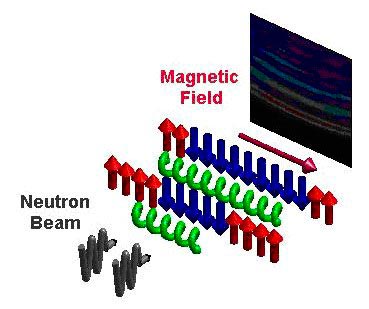
No, the top press released accessed by journalists on EurekAlert! was on a relatively obscure branch of physics. It concerned evidence, presented in the journal Science, that an unusual form of symmetry known as E8 – which a small number physicists believe underlies a theory of everything – may have been spotted in a solid material for the first time.

e1.jpg

We wrote about the paper at the time in January last year, which you can read here.

The paper may have proved so popular because it claimed to have shown that this 8D symmetry group describes the spectrum of spin configurations that emerge when a 1D chain of spins is chilled to near absolute zero and subjected to a specific magnetic field. The finding also suggested that the idea of a “golden mean” – previously only seen in mathematics and the arts – also exists in solid matter on the nanoscale.

But – and I’m guessing here – it may actually have been because journalists remember a controversial (and unrefereed) paper on E8, entitled “An exceptionally simple theory of everything” by an obscure, independent physicist called Garret Lisi, who is a keen surfer and does not follow a conventional academic life. Those traits – and some pretty pictures associated with E8 symmetry – led to a fair amount of press coverage, and far more than many string theorists felt, and still feel, it deserves.

In their view, this latest accolade from EurekAlert! will probably only make the situation worse.

A little bit of high-Tc history

paul.JPG

By Hamish Johnston

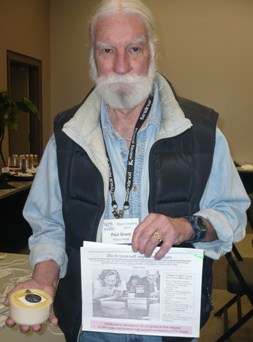
That’s Paul Grant (right) holding one of the high-temperature superconductor demonstration kits that he and his colleagues developed at IBM’s Almaden lab. The idea is that you fill the reservoir with liquid nitrogen and then place a magnet above the superconductor, where it will float.

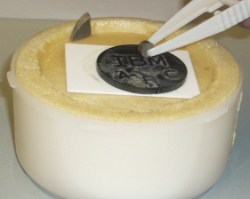
The kit that Paul is holding was made in 1987 for IBM board members – and if you look at the photograph below you can see “IBM” embossed on the disc of a YBCO superconductor.

But as a 1987 New Scientist article by Grant points out, it’s not that difficult to make your own high-Tc material.

The article describes how Grant’s daughter Heidi (pictured in the clipping held by Grant) and her high-school classmates were able to make their own YBCO superconductor – and then float a magnet over it.

Reading the article I had a strong sense of deja vu. I had just been in a press conference where Kostya Novoselov was asked why graphene research took off like a rocket after he and Andre Geim worked out a way of making stand-alone sheets of the material. His answer was that it was fairly straightforward to make large high-quality samples of graphene and study its many properties.

ybco.JPG

But that’s where the similarity ends. Although physicists don’t understand everything about graphene, many properties have proven to be exactly as predicted by theory.

The same can’t be said about high-Tc superconductors, which have surprised and confounded physicists for 25 years. That was the subject of a talk today by the University of California’s Bob Dynes. “I will be surprised if there are no more surprises,” said Dynes.

Message from the Physical Society of Japan

By Susan Curtis at the APS March Meting in Dallas, Texas

It was good to see representatives from the Physical Society of Japan at the APS March Meeting. Keizo Murata of Osaka City University, who is also editor of the Journal of the Physical Society of Japan (JPSJ), wanted us to pass this message on to anyone in the physics community who wishes to make a donation to the relief efforts following the earthquake and tsunami:

“We, the Physical Society of Japan and the JPSJ, deeply appreciate the encouragement we have received from our colleagues all over the world.

“We welcome your donations to the relief and recovery from Japan’s disaster in March 2011. To help this, as well as to avoid any problems with currency exchange, we recommend that you make your donations via authorized organizations in your own country, such as the American Red Cross.

“However, to share your warm sympathy with the worldwide physics community, we would like to recognize your donation. This will be sure to encourage members of the Physical Society of Japan and people around us.

“To achieve this:

1. Send an e-mail to save.japan3.11@jps.or.jp with the subject: “donation Japan disaster” and your name.

2. In the e-mail please note in this order:

• Your name
• Your email address
• Your institution/affiliation
• Your country
• Value of donation (optional)
• The organization that took your donation
• Date of donation
• Any message (optional)
• Permission to use your message with your name on our site (yes/no)

3. If you should make further donations, please send another e-mail to save.japan3.11@jps.or.jp but include “your name (nth time)” in the email.

“Thank you for your kind co-operation,

The Physical Society of Japan
The Journal of the Physical Society of Japan

Murata also told us that JPSJ is still offering online services as normal, although some publications may be rescheduled.

Copyright © 2026 by IOP Publishing Ltd and individual contributors