Licence to stun

For most of their history, police officers have had three options for using force when confronting violent criminals: truncheons, dogs or guns. The first of these can tip the outcome of an unexpected violent confrontation in the officer’s favour, but it is still an instrument of blunt trauma, reliant upon its handler’s strength and skill. Dogs have tremendous psychological impact, can often prevent violence from occurring in the first place and are particularly useful in tracking people down. However, their bites sometimes require extensive medical treatment and can become infected. And guns, while necessary in some situations, carry a high risk of death or serious injury. Ideally, the police should have access to other technologies that can stop people with minimum risk to both suspects and officers.

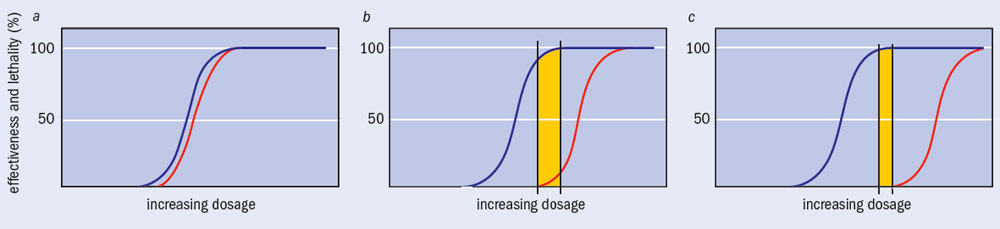
In recent years, police forces have sought to bridge this gap by equipping their officers with less-lethal weapons such as CS incapacitant spray and TASERs. The term “less lethal” is used advisedly, because the difference between less-lethal weapons and non-lethal ones is more than semantic. Despite decades of research, the Star Trek phenomenon of “phaser set to stun” – in which a target immediately slumps to the floor unconscious and recovers with no ill effects – is still the stuff of science fiction. People have been seriously injured and even killed in incidents involving some less-lethal weapons, and because no real-life technology is both completely harmless and completely efficient at stopping someone (figure 1), the use of force in dealing with violent situations is always going to be controversial.

Ultimately, though, all of the arguments for or against the use of less-lethal weapons boil down to the same two questions: are the weapons safe and are they effective? These questions can only really be addressed by science, and researchers around the world have been working on supplying some answers. Within the UK, this effort has been led by two organizations: the Home Office’s Centre for Applied Science and Technology (formerly known as the Scientific Development Branch, or HOSDB) and the Defence Science and Technology Laboratory (Dstl).

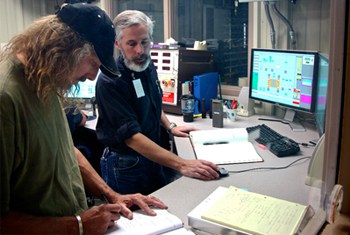
Physicists at both centres have been crucial members of the teams that sifted through hundreds of available weapons systems to find the safest and most effective. They have designed and carried out experiments that ranged from establishing the force with which various projectiles would hit the body to measuring the power outputs of electrical weapons. One team even created a digital mannequin of the human body that had the same electrical properties as human tissue, so that the paths of currents produced by electrical weapons could be modelled. Working with engineers, materials scientists, chemists and biomedical scientists, they gave medical analysts and experts on the policing environment the evidence they needed to decide which systems – if any – should be adopted by police forces in the UK.

The need for options

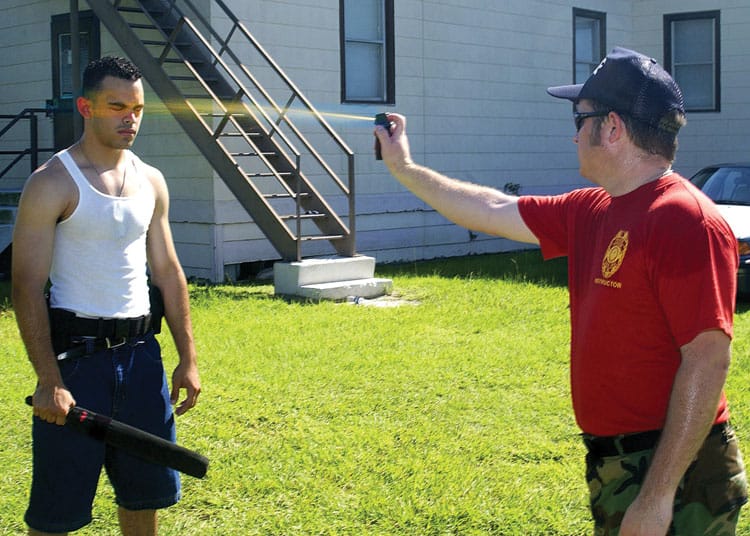
Although there are many different types of less-lethal weapon (see box), they only really work in one of two ways. One is “pain compliance”, which essentially means that the weapon causes targets enough pain that they no longer want to keep doing whatever they were doing. Some types of less-lethal weapons that use pain compliance include impact rounds – projectiles fired from a gun that are designed not to penetrate the skin – and PAVA spray, a form of synthetic pepper spray that causes pain and streaming in the eyes and nose.

The other method is “incapacitation”, where a weapon actually prevents the target from continuing their actions. CS spray and electrical weapons are usually classified in this category. In practice, there is often cross-over between the two methods: CS spray is painful, while impact rounds can incapacitate. Some weapons also have a very strong built-in deterrent effect. A good example is the TASER, an electrical weapon that incorporates a laser beam as a targeting device. Suspects who see its bright red spot on their chest will usually concede that the game is up without police needing to fire the weapon.
While all less-lethal weapons carry risks, one could be forgiven for thinking that those that have made it onto the market must be reasonably effective, safe and well made. The fact is that the majority are not, so we must test them carefully to find the best. In the US, where these weapons systems are often designed and are widely used, there are literally thousands of police forces, ranging from rural departments with a sheriff and a few deputies to metropolitan forces that employ tens of thousands of officers. Each force can purchase any weapons system it wants – all of them less lethal than the guns most officers already carry – and there are dozens of manufacturers willing to sell to them. Unfortunately, few forces have the expertise or resources required to evaluate the safety and effectiveness of multiple systems, so a less-lethal weapon’s success is often measured in the reduced cost of lawsuits taken out against the police for excessive use of force.

On the UK mainland, in contrast, most police officers are unarmed, so the public perceives any new weapons as an increase in force. Although CS spray was introduced in 1996, much of the drive to adopt less-lethal weapons stemmed from a report by the Independent Commission on Policing for Northern Ireland that was published in 1999 as a result of the Good Friday peace accord. The Patten Report included two recommendations that discussed finding a range of replacements and/or alternatives to the plastic baton round, a controversial less-lethal weapon that was then used by police in Northern Ireland. Other factors behind the adoption of less-lethal weapons included new human-rights legislation and public pressure following incidents in which people armed with knives or swords were shot by police.

Thanks to these various influences, an operational requirement (OR) for less-lethal alternatives was produced in 2000, and updated in 2001, at the behest of the Association of Chief Police Officers and the Northern Ireland Office. Written by a steering group composed of specialists from the police, Home Office, Ministry of Defence and the Northern Ireland Office, the OR set out 22 separate criteria (see box) for analysing the performance of all such weapons. Some criteria, such as minimized injury and lethality, were deemed more important than others, and it was accepted that no weapons system would perform well against all of them. The question, instead, was how each system performed overall, in comparison with others.

TASERs: a case study

One of the weapons that was approved for UK use was the TASER. This gun-shaped electrical device was invented by a physicist, John Cover, who named it “Thomas A Swift’s Electric Rifle” after a series of adventure books he read as a boy. TASERs have been used in the US since the mid-1970s. They work by firing two barbs that are attached to a base unit by 6.4 m-long wires. The darts are oriented at an 8° angle to each other, which gives the barbs the optimum spread at the recommended firing distance of 4 m. When they have attached to the subject, a series of electrical pulses passes between them. These pulses override those generated by nerves sending messages to the muscles, causing the muscles to contract and the subject to fall over.

The way the TASER was tested against the OR makes it a useful case study. A few criteria – notably cost, legal implications, acceptability and the authority required for use – were deemed beyond the scope of a scientific analysis. Others, including the ease of operation, mobility and flexibility, repeatability, need for specialist officers and training, were examined in a series of handling trials. A total of 97 police officers from 28 forces, plus five prison officers, were trained in the weapon’s use and then subjected to a variety of handling scenarios, such as firing around or over a riot shield or at a target moving towards them. The remaining criteria were evaluated either by reviewing existing data or performing new experiments.

One very important resource for the researchers was the large body of written reports and video footage from the many hundreds of thousands of times TASERs have been deployed in the US. Such footage included numerous examples of police officers volunteering to be tasered by colleagues at conferences, stepping up one after another to prove their bravery for the cameras. The overwhelming conclusion was that most people shot with a TASER topple over immediately. The same body of evidence also showed that targets generally recover as soon as the current is stopped.

However, the culture of unarmed policing in the UK means that the British public expect violent situations to be resolved with the minimum force necessary. Where weapons do have to be used, we expect their relative safety to have been quantified by a competent body – and, what is more, we expect that body to be independent from the weapons’ manufacturers. Much of the testing previously carried out had been financed by these same firms, which also maintain the largest database of incidents of TASER use. Although such data are not necessarily biased, for something so important, it was deemed necessary for evidence to be above accusations of financial interest.

The accuracy of the TASER was tested on a firing range operated by HOSDB. These tests showed that the weapon’s barbs tended to fall below the aim point towards the longer end of its 6.4 m range – a limit that was itself considered a drawback – but it was judged to be accurate enough for practical police use. Testing the speed of the barbs proved trickier. The electrical field generated by the TASER can interfere with sensitive electrical detectors, while the trailing wires rendered standard light-gate equipment – in which the projectile passes through two beams of light that are a known distance apart – useless. The solution was to calculate speed the old-fashioned way: a high-speed camera captured the time it took for the barbs to travel a distance marked out on a wall, and researchers simply divided distance by time.

Some of the most important and detailed tests investigated the effects of TASERs on the human body. Physicists at both HOSDB and Dstl carried out extensive analysis of the electrical signal that TASERs generate when applied to a range of resistances present in the human body (47–4700 Ω). When combined with the average placement of barbs found during accuracy testing, these measurements became the basis for analysing the TASER’s effect on the body. To aid the analysis, the Dstl group also developed a highly sophisticated computational model that turns all the internal structures of a 3D human male into a discrete matrix of cubes that are assigned appropriate electromagnetic properties. This model was used to track the path of the TASER’s electrical pulse through the body, allowing researchers to establish how much current would cross the heart.

One reason for performing such extensive medical modelling and testing was to gauge the likely effects of TASERs on vulnerable populations, such as people who wear pacemakers or use illegal drugs. A TASER’s electrical pulse can cause transient changes in heart rhythms; more specifically, it can increase the time lapse between two points (called Q and T) in a heart’s electrical waveform. If this Q–T interval becomes too large, the end of the electrical signal of one beat can interfere with the signal controlling the next beat, producing a potentially lethal heart arrhythmia known as torsades de pointes. Although this is unlikely to happen in healthy subjects, some medical conditions and prescription drugs (including statins and the common antibiotic erythromycin) are also known to increase the Q–T interval, so concerns were raised about possible cumulative effects. The effects of illegal drugs on Q–T intervals, in particular, were not well understood, and while researchers reasoned that people with pacemakers are unlikely to be involved in altercations with police, the opposite is true for drug users.

After extensive preliminary work using mathematical models, a range of illegal drugs were introduced to samples of heart tissue. When two of them, PCP and ecstasy, were found to induce Q–T lengthening, they were put forward for further study in experiments on guinea-pig hearts. Once the animals had been humanely killed, their hearts were put into a Langendorff preparation, which allows the heart to keep beating by supplying it with nutrients, oxygen and appropriate electrical stimulation. These hearts could then be exposed to TASER-like electrical waveforms (which had been calculated as part of the digital modelling) at the same time as they were exposed to the drugs of interest.

These tests showed that for the most powerful model of TASER, there was at least a 60-fold safety margin for inducing an anomalous heart rhythm known as ventricular ectopic beats, which can precede more serious conditions such as ventricular fibrillation. In other words, the TASER would have to be at least 60 times more powerful or a person’s heart would have to be 60 times more vulnerable than the average to produce this adverse effect. This would be very rare and would only be the result of many unlikely cumulative factors. The experiment was also unable to induce ventricular fibrillation directly. A separate review of literature on pacemakers found that although their function was slightly impaired while TASERs were being deployed, they went back to normal operation immediately after the weapon’s electrical current stopped.

Narrowing the field

Not all of the devices on the market were tested as extensively as the TASER. Indeed, some of the more outlandish devices were eliminated either out of hand or by reviewing independent work and the manufacturer’s own claims. One of the most dangerous technologies weeded out at the review stage was a foam gun that sought to immobilize suspects by covering them in a hot, sticky substance. Not only was decontamination difficult, if the foam entered the suspect’s mouth or nose, death by suffocation seemed inevitable. Other early rejections included the numerous Spider-Man-style nets and entanglement devices on the market. These have a limited range and their impact could potentially injure a suspect. They are also useless in cluttered and indoor environments.

Some devices were eliminated after testing showed that they either failed too many of the OR criteria, or failed some of the more significant ones – in particular safety, effectiveness or reliability. Although a vehicle-mounted water cannon passed scientific, operational and medical tests, and has been used in Northern Ireland, a hand-held version failed after researchers discovered that the weight of its associated backpack, combined with the recoil of the weapon itself, meant that users were likely to lose their balance. The hand-held cannon also had a limited range, as the force from the “slug” of water dissipated with distance.
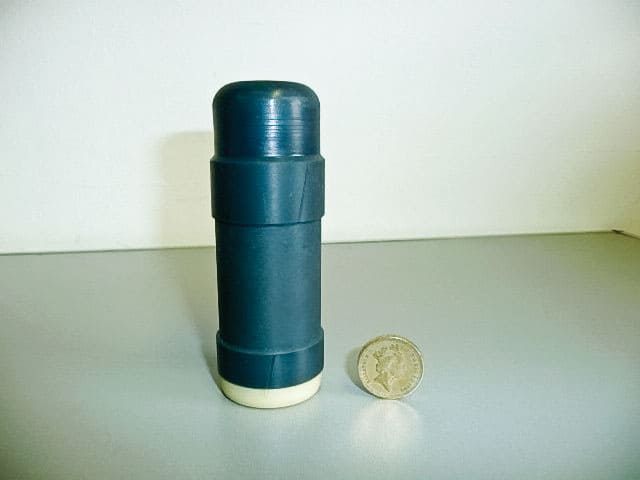
With impact-type weapons, accuracy is vital, because you can only make a realistic assessment of a projectile’s effects if you know where it will hit the body. Many such devices failed on this criterion alone. For example, there is a gun on the market that can fire tennis balls at roughly 380 km/h, but the balls rarely hit the target. Most “beanbag” rounds – fabric sacks containing lead shot – also have accuracy problems, but a more serious flaw is that they are too likely to break bones or enter the target’s body. These rounds are fired from a shotgun in a rolled-up configuration, but although they are supposed to flatten out in flight and hit their target with a flat surface, there is little in the way of aerodynamics that would actually lead them to do this. As a result, the stitched edges of the beanbag bear the brunt of the impact, meaning that the force is delivered over a much smaller area. In some cases, tests showed that the beanbags began to rotate in flight, which adds a shearing effect to the force of the impact, thus increasing the risk of skin penetration.

A variant of beanbag rounds called a drag-stabilized beanbag or “sock round” also proved disappointing. Although sock rounds lack stitched edges and have tails that are meant to stabilize their flight, some of the types tested had serious quality-control issues. Indeed, one brand was found to have been manufactured with party balloons inside.

Ultimately, the only impact-type weapon now being used by UK forces is the Attenuated Energy Projectile (AEP). This type of round consists of a deformable head above a solid plastic base and it is extraordinarily accurate, reducing the chance that it will accidentally strike a subject’s head and cause potentially life-threatening injuries. Furthermore, in the event that an AEP round does strike a bony area of the body such as the head, it is engineered to deform and thus dump its energy into the target over a longer period of time. This longer period of deceleration reduces the force of the impact in much the same way as the crumple zone in a car, lessening the chances of a bone fracture.

The chemical options considered as part of the review included chloroacetophenone (trade name Mace), natural and synthetic pepper sprays, and dibenz[B,F]-1,4-oxazepine (known as CR). The first was rejected because of its status as a known carcinogen, coupled with the narrow margin of safety between incapacitating and lethal doses. CR was also rejected – although it is more potent than the CS spray already used in the UK, there are other operational issues, the most significant of which is that it does not dissolve in water, making decontamination difficult. Natural pepper spray has been used in the US since the 1990s, but because it is derived from a natural product, its potency is not consistent from batch to batch and it also contains hundreds of ingredients that would have to be tested individually. The only new chemical option that received a green light was synthetic pepper spray or PAVA, which contains just a couple of active ingredients and has undergone extensive toxicology tests.
Future technologies

The use of force in dealing with violent situations is always going to be controversial, and governments, human rights groups and society at large rightly take a close interest in the tools we give police to carry out their duties. The majority of work has now been done to evaluate what was already on the market and UK police do now have several different options when faced with violent criminals. However, manufacturers will continue to refine their products, and they occasionally come up with new ideas; indeed, some other devices remain under development or are still being tested in the UK. Before any of them hit the streets, politicians, the police and the public will need to discuss their merits and drawbacks. It is important that these discussions are informed by rigorous, physical research and then maybe, one day, police officers will be setting their phasers to stun.

Box: Types of less-lethal weapon

  • Kinetic-energy devices are “impact weapons” that deliver a physical blow via a projectile such as a bean bag or baton round.
  • Electrical devices such as TASERs incapacitate a target by sending an electrical current through the body.
  • Directed-energy devices produce electromagnetic rays with effects that range from dazzling a target to causing pain by heating the skin.
  • Water cannons deliver water in either pulses of 5–15 litres or a continuous stream of 900 litres per minute to knock people over.
  • Chemical-delivery devices include both sprays and projectiles that contain CS powder (commonly known as “tear gas”) or newer chemicals such as PAVA (synthetic “pepper spray”).
  • Long-range hailing devices are directed-sound systems that project instructions or uncomfortably loud noises over a small area.
  • Pyrotechnic devices such as flash-bang stun grenades produce a very loud bang and bright flash designed to confuse and disorientate.

Box: Criteria for evaluating less-lethal weapons

  • Accurate over 1–25 m (ideally up to 50 m)
  • Training issues
  • Repeatability/speed of use
  • Easily operated
  • Specialist versus general officers
  • Immediately effective
  • Works on maximum subject population
  • Cost
  • Authority required for use
  • Legal implications
  • Minimized injury/lethality
  • After-effects
  • Acceptability – police and public
  • Mobile and flexible
  • Effect – neutralizing the threat
  • Durability
  • Visual effect (not like a firearm)
  • Safe and secure
  • Effective in all environments
  • Minimized judgement
  • Does not preclude other weapons
  • Audit trail

Leading by example

John H Marburger III experienced dramatic changes in science policy in his lifetime. For a quarter-century after the Second World War, science was largely protected from public scrutiny and government supervision, with scientists both the actors and judges of their own performances. By the 1980s researchers increasingly worked in an environment where this “fourth wall” – to use a theatre analogy – had disappeared. While researchers continued to receive government funding, they increasingly had to make their actions transparent to regulators and the public, and obey sometimes frustrating rules.

This state of affairs was messy, expensive and inefficient, but Marburger realized that science administrators had no choice but to embrace it. Indeed, he did so himself in his many high-profile appointments – a lesson for future administrators in how to cope.

The bigger story

Marburger was born in Staten Island, New York, in 1941. He graduated with a degree in physics from Princeton University in 1962 and completed a PhD in applied physics at Stanford University in 1967. Marburger joined the University of Southern California (USC), where he became chair of the department of physics in 1972.

Articulate, attentive and respected, Marburger was host of Frontiers in Electronics, a local (pre-recorded) educational TV programme on CBS that aired at 6 a.m. On the morning of 21 February 1973, a magnitude 5.3 earthquake struck California, awakening people throughout the San Fernando Valley. Their first instinct was to turn on the TV. There was Marburger, interviewing an information theorist, not on earthquakes, but about his field. “That episode had a huge audience!” he told me, proudly.

In 1976 Marburger became USC’s dean of arts and sciences. Facing a scandal involving preferential treatment for athletes, USC officials designated Marburger their media spokesperson. The experience taught him valuable lessons about being the public face of an institution. “Be calm, say what you want to say, don’t get complicated, don’t diss anybody,” he once said to me.

As president of Stony Brook University, a position he took up in 1980, Marburger had to co-ordinate advocates of different departments and offices, conjuring policies that inevitably disappointed many but were acceptable to all. His diplomatic skills were sharpened in 1983, when New York governor Mario Cuomo had him chair a fact-finding commission on the controversial Shoreham nuclear-power plant under construction on Long Island. Its diverse collection of members, Marburger knew, would never agree. Still, he managed meetings fairly and patiently, not adjudicating but painting, in his final report, a big picture of the controversy in which all sides could recognize themselves.

The Superconducting Super Collider (SSC), a particle accelerator partly built in Texas but terminated in 1993, was the first big accelerator project on which the government attempted to impose formal procurement and oversight processes. Marburger’s experience as chair of the SSC’s management – University Research Associates – alerted him to a still bigger story: that the government, too, was part of the community scientists had to serve, with its own evolving needs.

Marburger became the go-to person when storm clouds gathered. In 1997 a leak of slightly radioactive water from the spent-fuel pool of a reactor at the Brookhaven National Laboratory led to an uproar. The lab’s manager, Associated Universities Inc., was fired and anti-nuclear activists called for the lab’s closure. Marburger was tapped to be the lab’s new director, and his calm and attentive demeanour did much to resolve the conflict.

White House bound

In 2001 Marburger took the most controversial job of his career when he became science adviser to US President George W Bush. Many in the science community were outraged that he was joining an administration they saw as harmful to science. The psychologist Howard Gardner from Harvard University even labelled him a “prostitute”. “That doesn’t bother me much,” he told me at the time – and I was relieved to hear that final word, revealing him to be not infinitely unflappable, but human after all.

Marburger preferred to be productive rather than get fired, setting out to improve co-ordination between the various government agencies that approve and handle science, and emphasize the brighter side (see Physics World November 2008 pp16–17, print edition only). A genial analogy is that he was fixing an under-utilized office, preparing it for a more appreciative administration to come. A more extreme view is that he was in the morally ambiguous, but defendable, position of a collaborator, trying to do bits of good while working for a superior whose actions he could not alter.

Friends often asked Marburger how, in these roles, he could stand the vociferous criticism from those who failed to appreciate what he was doing. He once pondered that question in his diary. He wrote of building a harpsichord, restoring a vintage car and designing his home using an architectural computer program – all pursuits that juggled complex elements in ways he found soothing. He finally decided his most satisfying pursuit was physics. “Physics has been the main stabilizer of my life,” he wrote.

The critical point

Marburger constantly sought better ways for science administrators to cope with the absence of such a fourth wall. Frustrated at how much science policy is dominated by advocacy, he co-edited a book, The Science of Science Policy, that outlined a framework for this new discipline. He also authored a book about quantum mechanics, Constructing Reality, that is to appear this month, and started a book about his experiences as a science administrator.

In it he would have criticized those who dream of removing decisions about scientific facilities from the public arena. He would have warned that critics would then just turn their fire on that reinstated fourth wall. The only way, in a democracy, is to do what he did at Shoreham, Brookhaven and the White House: tell the story of what is happening in as big a context as possible. If you do so carefully, the wise decision becomes obvious.

World record pulsed magnetic field

Los Almos Magnetic pulse.jpg

By Tushna Commissariat

Last week saw researchers at the Los Alamos National Laboratory (LANL), US, set a new world record for the strongest magnetic field produced by a “non-destructive” magnet. The scientists achieved a field of 92.5 T (tesla) on 18 August, and then surpassed their own achievement the following day with an impressive 97.4 T field. This meant they beat the previous record that had been held by a team in Germany, who achieved 91.4 T on 22 June 2011.

While the total duration of the pulse was 2.5 seconds, the magnetic field was held to within 1% of the peak field (at both 97.4 T and 92.5 T) for approximately 1 millisecond. The 97.4 T achievement was met with jubilation as four main researchers certified with their signatures the data that would be sent to the Guinness Book of World Records.

This advance improves our ability to create non-destructive magnetic fields – higher-power magnets routinely rip themselves to pieces due to the large forces involved – that serve as tools to study the fundamental characterization of advanced materials such as graphene or high-temperature superconductors. They also confine electrons to nanometre-scale orbits, which reveal the fundamental quantum nature of a material.

LANL spokesperson James Rickman told physicsworld.com that “This is the largest non-destructive magnet ever created on Earth to our knowledge. Destructive magnets routinely generate higher fields for microseconds of duration – many thousands of times shorter. Destructive magnets are reported to have reached 2800 T and require the use of tens of kilos of high explosives.” For perspective, the Earth’s magnetic field is 0.0004 T, while a magnet used to move a large amount of metal (like a car in a junkyard) would be 1 T and a medical MRI scan would have a magnetic field of 3 T.

The researchers generated their field using a combination of two electrical pulsed power systems. A massive 1.4 GW generator is used to power the outer coils of the magnet system and a high performance capacitor bank is used to power the inner sections of the electromagnets. Both power systems are run in a “pulse” mode of operation. The image above shows researchers Yates Coulter (left) and Mike Gordon making their final preparations before successfully achieving the record.

With this achievement, the Pulsed Field Facility at LANL will routinely provide scientists with magnetic pulses of 95 T, attracting scientists from all over the globe for a chance to use this technology. The team are now looking to achieve a 100 T field – something that researchers from around the world, including Germany, China, France and Japan are trying to achieve.

X-rays control disorder in superconductor

It could be possible to make superconductor-based circuits simply by using a beam of X-rays to control the positions of dopant atoms within a suitable material. That is the prospect offered by new research carried out by physicists in Italy and the UK, which shows how tiny regions of a copper-oxide compound can be transformed into a superconductor by exposure to X-rays of a high enough intensity. With further development, the technique could be used to make circuits containing superconducting quantum interference devices (SQUIDs), which could find use in quantum computers.

Last year a team led by Antonio Bianconi of the University of Rome “La Sapienza” used X-rays to probe the structure of lanthanum copper oxide, which is a high-temperature superconductor. Some physicists believe that the copper-oxide compounds known as cuprates owe their superconducting properties to the way in which dopant oxygen ions are distributed in layers between the copper oxide. Indeed, Bianconi’s group found that when lanthanum copper oxide is superconducting, the oxygen ions display a fractal pattern. In other words, some of the ions arrange themselves into stripes, and while there are many small such ordered regions there are far fewer larger ones – a power law distribution that is the hallmark of fractals and which is also seen, for example, in protein structures within living cells.

Order from disorder

In the latest work Bianconi and colleagues used X-rays to study the time-evolution of lanthanum copper oxide. Working at the ELETTRA synchrotron in Trieste, the team first heated up a sample of the material to about 50 °C to create disorder in the oxygen ions. Then they brought the sample back to room temperature and exposed it to an X-ray beam from the facility while using a CCD detector to record the X-rays reflected from the surface of the sample.

When the intensity of the beam was relatively low, the ions remained disordered. More precisely, the team found many small regions of order but no larger ones, which meant that the material was not superconducting. But once the intensity crossed a certain threshold the researchers discovered that larger regions of order began to emerge and, as a result, the material became superconducting. They also found that the time taken to reach this superconducting state depended on the intensity of the beam. “The superconductivity is like a plant,” says Bianconi. “It needs a certain minimum intensity of light and then it grows over time.”

Carving out wires

The researchers then narrowed down the X-ray beam so that it was just a tenth of a millimetre across and found that the fractal-like regions occurred only where the beam struck the sample. In other words, they say, a directional, narrow X-ray beam could be used to carve out superconducting wires and components within an otherwise non-superconducting sample of lanthanum copper oxide. And they say that this process could be repeated many times over on a single piece of the material, just as a compact disc can be written to multiple times. Whereas the surface of a CD is wiped clean and then written to using laser beams, in this case the material surface was restored to its disordered state using a flash of warm air, although Bianconi says that lasers could also be used.

According to Bianconi, this technique could be used to make circuits containing SQUIDs, which might form the basis of qubits inside a quantum computer. He believes this would be easier to carry out than the lithography currently used to manufacture SQUIDs because it would require no photosensitive mask and no chemicals to wash away that mask. “You shine the X-rays directly onto the active material and then move the X-rays around like you would a pen,” he says.

Bianconi says that his group hopes to make SQUIDs in this way using the facilities of the London Centre for Nanotechnology, run jointly by University College London and Imperial College. He also believes it should be possible to extend the principle beyond superconductors, to use X-rays to etch out electronic circuits more generally. Further into the future, he even envisages computers using the technique to modify their own circuitry in order to solve ever more complex problems. “Using more complex materials than silicon gives you this greater flexibility,” he says.

Climate scientist cleared of research misconduct

Pennsylvania State University (Penn State) climate scientist Michael Mann has been cleared of research misconduct following an inquiry by the Office of the Inspector General (OIG) at the National Science Foundation (NSF). The OIG agreed with the conclusions of a previous investigation by the university last year that “cleared [Mann] of any wrongdoing” and has now closed the case.

The charges against Mann stem from information in e-mail messages that were allegedly hacked from a University of East Anglia server and released early in 2009. Sceptics of human-influenced climate change charged that the “Climategate” documents indicated falsification and destruction of data, misuse of privileged information, and serious deviation from accepted research practices by Mann and other climatologists. Mann is best known for the widely accepted “hockey-stick graph” showing the recent surge in temperatures caused by climate change.

In July 2010 a panel assigned by Penn State cleared Mann of research misconduct and, as a matter of routine, sent a copy of its report to the OIG, which then requested additional information from the university and Mann to “review the report for fairness and accuracy”. Each US federal agency has an OIG that provides independent oversight of the agency’s programmes and operations and Mann says the interview with the Inspector General’s office covered a range of issues related to “false allegations that had been made by climate-change deniers regarding the stolen e-mails.”

On 15 August the OIG released its findings, which exonerated Mann and agreed with the conclusion reached by the university panel. “Lacking any evidence of research misconduct, as defined under the NSF Research Misconduct Regulation, we are closing the investigation with no further action,” the OIG report says.

“I guess this is about the seventh investigation now that has confirmed that there is absolutely no evidence of impropriety either for me or any of my climate scientist colleagues,” Mann told physicsworld.com. “It should be the final nail in the coffin given the unimpeachability of the NSF Office of the Inspector General. But unfortunately, many of our detractors will simply conclude that the imagined conspiracy runs wider and deeper.”

Narrow questions

The decision, however, will likely not end more inquiries into the internal workings of the climate-change community. David Schnare, director of the Environmental Law Center at the American Tradition Institute (ATI) says that the NSF report “focused on a very narrow question and does not address a variety of questions about Mr Mann’s activities that remain unexamined not only by NSF but by the other bodies that have looked into these matters”.

The ATI, a conservative group that focuses on environmental issues, has called on the University of Virginia – where Mann worked from 1999 to 2005 – to release documents, including those not covered by the Freedom of Information act. “The policy debate associated with climate change requires more than a few pronouncements claiming to be based on science,” Schnare adds. “To understand the validity and strength of the science, we need to understand the potential biases of the scientific work.”

On 23 August the University of Virginia released 3800 pages of e-mails, yet Mann takes strong exception to efforts to release more documents. “I hope that the University of Virginia will respect the privacy issues of not just me but the 30-plus other scientists who are involved and fully defend the exemptions that exist in the law to protect scientists from fossil-fuel industry hired guns engaging in fishing expeditions intended to embarrass, smear and malign honest scientists,” he says.

How to board an aircraft in a hurry

By Hamish Johnston

Before the days of the budget airline free-for-all, most aeroplanes were boarded in row-number blocks – with passengers seated at the rear section of the plane going first.

While this method is widely believed to be more efficient than everyone piling on at once (apparently it isn’t) some folks had suspected that better schemes could be found.

There are two main ways in which passengers can interfere with each other and slow down the boarding process. In “aisle interference”, a passenger who is stowing a bag in an overhead locker prevents people from moving further into the plane. In “seat interference”, seated passengers move into the aisle to allow others to sit down, slowing down boarding.

In addition to block boarding, several other schemes have been proposed to minimize interference. These include “Wilma”, which begins with all window-seat passengers followed by all those seated in the middle and finally the aisle seats. Others, such as the method proposed in 2008 by Fermilab physicist Jason Steffen, take a more prescriptive approach, defining the precise order in which each passenger boards the plane.

In Steffen’s scheme, passengers are boarded back to front, but in such a way that adjacent passengers in the line are seated two rows apart (12A followed by 10A and 8A, for example). This is done to ensure that each person has enough room to stow their bags. Those in window seats are also boarded before middle and aisle seats.

Now Steffen, along with the television producer Jon Hotchkiss, has done a series of experiments to try to work out which boarding method is the quickest. The experiment was filmed for a television programme called This vs That and you can watch the trailer above.

The measurements were made using a mock fuselage of a Boeing 757 aircraft in Studio City, California, that is normally usually used for film production. The “passengers” ranged in age from about 5 to 65 and were given hand luggage to load into lockers. The plane had 12 rows of six seats with one aisle running up the middle.

Using the traditional block boarding method, it took nearly seven minutes for all passengers to take their seats – more than two minutes longer than when the passengers boarded at random. The Wilma technique clocked in at just over four minutes, whereas Steffen’s method was the quickest, taking about three and a half minutes to fill the plane.

However, the most surprising result occurred when the plane was boarded in back-to-front order. This started with the passenger in the rear right window seat, followed by the rear left window seat, the rear right middle seat and so on. This highly regimented method took over six minutes to fill the plane – showing that a free-for-all can be more efficient than a highly regimented plan.

You can read a preprint describing the experiment here.

Zigzag nanowire regulates Brownian motion

Physicists in the US have created a magnetic trap that can contain microscopic particles despite their Brownian motion. The trap, which is based on a magnetized, zigzag-shaped nanowire, could help researchers to perform chemical or biological experiments in a microfluidic environment, where fluids are geometrically constrained to a submillimetre scale.

Microfluidics is a nascent field that involves shifting picolitre quantities of liquids through micron-width channels. The ability to perform measurements on tiny quantities is useful to many researchers in chemistry, biology and medicine who have to work with materials that are expensive or difficult to synthesize, such as new drugs. Moreover, several microfluidic systems can be incorporated together, allowing the creation of “lab on a chip” platforms for the study of many chemical processes at once.

A key requirement of microfluidics and nanotechnology in general, however, is the ability to manipulate the path of objects in the 100 nm to 10 µm range, where random, thermally driven movements – so-called Brownian motion – play a big role. Different techniques have been put forward, but each has drawbacks. For instance, optical tweezers can trap particles with the electric field created by a focused laser beam, yet this process can cause local heating. Meanwhile, dielectric tweezers operate by imposing an electric field between electrodes, yet these too can affect the local environment.

Magnetic zigzagging joysticks

Now, Aaron Chen and colleagues at Ohio State University in Columbus, US, have come up with a particle trap that may present a way around these difficulties. The trap consists of a magnetic wire made of iron and cobalt that the researchers pattern in a zigzag shape on a silicon surface. The researchers first apply a strong magnetic field so that the wire’s magnetization points towards or away from each vertex, generating monopole-like fields that act as magnetic traps at the vertices. They then apply weaker magnetic fields, which tune the strength of the trap and thereby change the behaviour of the particles.

The particles Chen and his group used were iron oxide encapsulated in a polymer, with a total radius of 0.28 or 0.6 µm. This composition lent the particles a superparamagnetic character, so that they could be magnetized in the trap’s relatively weak fields without displaying any remnant magnetization themselves. Using a CCD camera, the researchers saw that the particles stayed in the trap to within 100 nm. In other words, the trap could regulate a particle’s Brownian motion without pinning it down entirely.

Pros and cons

Stephen Russek, a physicist at the National Institute of Standards and Technology in Colorado, US, calls the work a considerable advance. “In addition to being able to localize and trap a particle at a particular site, Chen et al. have shown they can control its Brownian motion, which is an important step in controlling the reaction dynamics of [any] attached biomolecules,” he says. But, he adds, “The physics is classical and the main breakthrough is a technological one as opposed to [an] elucidation of new physical phenomena. The control of Brownian motion is just one of [several] stochastic fluctuations that need to be controlled to allow precise control of biological processes in vitro or in vivo.”

Lars Egil Helseth, an expert in magnetic traps at the University of Bergen in Norway, agrees that there are still drawbacks to the Ohio State researchers’ technique. “Their microstructure is fixed, and cannot be moved around at will to capture beads as one could do with optical traps and movable magnetic domain walls,” he says, which is a problem for the many applications that require movable traps. He also points out that the authors use a micron-sized structure, which prohibits confinement and control in very small volumes. “Although parts of the [experiment] are nice, I believe other solutions are required to meet the demands of biophysics, for example,” he adds.

Still, Chen and colleagues now plan expand their technique by moving beyond control of just individual particles. “Investigating how multiple particles interact within a trap like this will be our next main goal,” he says.

The research was published in Physical Review Letters.

Now you see it, now you don't

MINOS


By Michael Banks

Blink and it’s gone.

No, it’s not the latest in the search for the Higgs boson at the Large Hadron Collider near Geneva, but instead a slight difference in the mass between neutrinos and their antimatter counterparts, antineutrinos.

Neutrinos come in three “flavours” – electron, muon and tau – that change or “oscillate” from one to another as they travel though space.

It is generally thought that neutrinos and antineutrinos should have the same mass. Last year, however, results from the MINOS experiment at Fermilab, near Chicago, showed a 40% difference between muon neutrinos and muon antineutrinos (converting into tau neutrinos and tau antineutrinos, respectively) as they travelled from the accelerator to the MINOS detector (shown above) some 735 km away in the Soudan mine, Minnesota.

The results were presented with a “confidence level” of around 90–95%, which in statistical terms is approximately “two sigma” (usually a “discovery” requires five sigma).

Although the two sigma significance was small, the result was backed up three days later by a three sigma effect at another detector in the Soudan Mine – MiniBooNe. They saw a difference when muon neutrinos oscillate into electron neutrinos compared with the related process for muon antineutrinos.

Physicists noted that if the result turned out to be true it would not come as a surprise, but as an “overwhelming shock”.

But now it seems as though those fears have at least been partially allayed. After gathering twice as much data, researchers at MINOS announced yesterday at the Lepton Photon 2011 meeting in Mumbai, India, that they found the difference had dropped from 40% to 16%.

So it seems that there is still a disparity, but more data will be needed before we can be sure whether there is any mass difference between neutrinos and antineutrinos.

Milky Way stars born from intergalactic gas

Astronomers using the Hubble Space Telescope may have solved the mystery of how the Milky Way continues to spawn new stars at a consistent rate despite its diminishing gas reserves. They say the galaxy is being supplied by clouds of gas originating from outside of the Milky Way, and that these findings could help refine our knowledge of galaxy evolution.

The Milky Way currently converts 0.6–1.45 solar masses’ worth of gas into new stars every year, depleting the galaxy’s gas reserves. Yet the star formation rate doesn’t seem to be dropping, which suggests that something must be replenishing the supply. Ionized High Velocity Clouds (iHVCs), fast-moving conglomerations that move with a haste that cannot be explained by the rotating disc of the galaxy, are a proposed culprit. One suggestion is that they could be remnants from the formation of the 30+ galaxies in the Local Group, drawn in by the Milky Way’s gravity. If they do originate beyond the galactic disc, and then fall onto it, they could be bolstering the amount of gas in the galaxy.

It is not clear how large these clouds are but they were first found when astronomers noted that some of the light from distant quasars was being absorbed by objects near the edge of the galaxy. However, the huge distances involved meant it was unclear whether the iHVCs were directly associated with the Milky Way’s halo – the diffuse sphere that surrounds the galaxy – or existed beyond it. In order to solve this problem, Nicholas Lehner and Jay Christopher Howk, of the University of Notre Dame, US, adapted the quasar technique.

“Instead of observing quasars, we observed stars within the Milky Way’s halo”, Lehner told physicsworld.com. The pair observed 28 halo stars with the Hubble Space Telescope, 14 of which showed similar absorption lines in their spectra to the original quasars observations – the presence of an iHVC was revealed. The distance to these stars is well known, and so gives the maximum possible distance of the iHVC that has now been incorporated into the galaxy.

Why doesn’t the galaxy run out of gas?

Knowing the distance is the first piece in a jigsaw. “The mass of the iHVC is proportional to the distance squared,” explains Lehner. Lehner and Howk then used the original quasar observations to model the likely distribution of these iHVCs across the sky. Knowing where they are, how much gas they contain and how fast they are moving allowed the pair to estimate how much gas should fall on the Milky Way per year. “We predict that between 0.8 and 1.4 solar masses of material from iHVCs falls onto the Milky Way annually,” says Lehner. Compare that to the 0.6–1.45 solar masses consumed in star formation every year, and there is a potential answer to why the galaxy doesn’t run out of gas: it is commandeering it from intergalactic space.

“They found the magic number,” Filippo Fraternali, who researches iHVCs at the University of Bologna, Italy, told physicsworld.com. “It is not 0.1 or 100 solar masses in-filling each year, but very close to one – this is an important result,” he adds. However, the result isn’t water-tight. “It is the right approach, but there are big assumptions that may change that final number quite a bit,” Fraternali explains. He would like to see a much bigger sample than the original 28. “It is hard to get good statistics on a sample of that size,” he says.

Now that they are confirmed halo objects, Lehner is planning just that. “We’re going to go back to the quasar database, which is much larger than our stellar sample,” he explains. “If we want to understand how galaxies evolve then we need to understand how this gas gets in and out of them,” he adds.

This research was published in Science.

The future of the James Webb Space Telescope

hands smll.jpg

By Tushna Commissariat

With scientists and politicians debating over the fate of the James Webb Space telescope, this week we are asking your thoughts on the subject. Following over-run costs, a US congressional committee has moved to cancel the $6.8bn James Webb Space Telescope, poised to be the successor to Hubble Space Telescope. Should funding be reinstated or should NASA focus on other projects?

Do feel free to explain your position by posting a comment on the poll. You can vote on this poll on our Facebook page.

Results just in

Last week we asked you what you thought was the main benefit of studying physics at university. Options ranged from “Learning how the physical world works” to “Developing strong problem-solving skills”, “The wide range of career opportunities it can bring” and “The chance to play with some cool hi-tech equipment”. Among the 229 people who voted, “Learning how the physical world works” was the most popular with a 137 votes followed by “Developing strong problem-solving skills” at 63 votes. Interestingly, our “other” option that encouraged people to let us know what reasons they had for studying physics that did not fall in any of the above categories had 16 votes, with a few people pointing out that they chose physics to have a career in military research labs or, in one case, to “make something go boom”.

For some, like reader Craig Levin it was more about the type of course one was subscribing to. “If you’re taking ‘Physics for Poets’, you get a whizz-bang tour of the universe and how it works. If you’re taking a lab course, you’re getting a more in-depth picture and picking up some problem-solving skills and a little bit of project management.” he sagely pointed out. A tongue-in-cheek comment from reader Russell Davies read “I abandoned physics at age 18, because it appeared fraught with problems of limited career opportunities, limited income potential and a distinct lack of babes.”

Thank you for taking part in the poll and for taking the time to provide your thoughts. And don’t forget to vote in this week’s poll on our Facebook page.

Copyright © 2026 by IOP Publishing Ltd and individual contributors