Researchers in Switzerland have created a mechanical qubit using an acoustic wave resonator, marking a significant step forward in quantum acoustodynamics. The qubit is not good enough for quantum logic operations, but researchers hope that further efforts could lead to applications in quantum sensing and quantum memories.
Contemporary quantum computing platforms such as trapped ions and superconducting qubits operate according to the principles of quantum electrodynamics. In such systems, quantum information is held in electromagnetic states and transmitted using photons. In quantum acoustodynamics, however, the quantum information is stored in the quantum states of mechanical resonators. These devices interact with their surroundings via quantized vibrations (phonons), which cannot propagate through a vacuum. As a result, isolated mechanical resonators can have much longer lifetimes that their electromagnetic counterparts. This could be particularly useful for creating quantum memories.
John Teufel of the US’s National Institute for Standards and Technology (NIST) and his team shared Physics World’s 2021 Breakthrough of the Year award for using light to achieve the quantum entanglement of two mechanical resonators. “If you entangle two drums, you know that their motion is correlated beyond vacuum fluctuations,” explains Teufel. “You can do very quantum things, but what you’d really want is for these things to be nonlinear at the single-photon level – that’s more like a bit, holding one and only one excitation – if you want to do things like quantum computing. In my work that’s not a regime we’re usually ever in.”
Hitherto impossible
Several groups such as Yiwen Chu’s at ETH Zurich have interfaced electromagnetic qubits with mechanical resonators and used qubits to induce quantized mechanical excitations. Actually producing a mechanical qubit had proved hitherto impossible, however. A good qubit must have two energy levels, akin to the 1 and 0 states of a classical bit. It can then be placed (or initialized) in one of those levels and remain in a coherent superposition of the two without other levels interfering.
This is possible if the system has unevenly spaced energy levels – which is true in an atom or ion, and can be engineered in a superconducting qubit. Driving a qubit using photons with the exact transition energy then excites Rabi oscillations, in which the population of the upper level rises and falls periodically. However, acoustic resonators are harmonic oscillators, and the energy levels of a harmonic oscillator are evenly spaced. “Every time we would prepare a phonon mode into a harmonic oscillator we would jump by one energy level,” says Igor Kladarić, who is a PhD student in Chu’s group.
In the new work, Kladarić and colleagues used a superconducting transmon qubit coupled to an acoustic resonator on a sapphire chip. The frequency of the superconducting qubit was slightly off-resonance with that of the mechanical resonator. Within being driven in any way, the superconducting qubit coupled to the mechanical resonator and created a shift in the frequencies of the ground state and first excited state of the resonator. This created the desired two-level system in the resonator.
Swapping excitations
The researchers then injected microwave signals at the frequency of the mechanical resonator, converting them into acoustic signals using piezoelectric aluminium nitride. “The way we did the measurement is the way we did it beforehand,” says Kladarić. “We would simply put our superconducting qubit on resonance with our mechanical qubit to swap an excitation back into the superconducting qubit and then simply read out the superconducting qubit itself.”
The researchers confirmed that the mechanical resonator undergoes Rabi oscillations between the first and second excited states, with less than 10% probability of leakage into the second excited state, and was therefore a true mechanical qubit.
The team is now working to improve the qubit to the point where it could be useful in quantum information processing. They are also interested in the possibility of using the qubit in quantum sensing. “These mechanical systems are very massive and so…they can couple to degrees of freedom that single atoms or superconducting qubits cannot, such as gravitational forces,” explains Kladarić.
Teufel is impressed by the Swiss team’s accomplishment, “There are a very short list of strong nonlinearities in nature that are also clean and not lossy…The hard thing for any technology is to make something that’s simultaneously super-nonlinear and super-long lived, and if you do that, you’ve made a very good qubit”. He adds, “This is really the first mechanical resonator that is nonlinear at the single quantum level…It’s not a spectacular qubit yet, but the heart of this work is demonstrating that this is yet another of a very small number of technologies that can behave like a qubit.”
Warwick Bowen of Australia’s University of Queensland told Physics World, “the creation of a mechanical qubit has been a dream in the quantum community for many decades – taking the most classical of systems – a macroscopic pendulum – and converting it to the most quantum of systems, effectively an atom.”
In this episode of the Physics World Weekly podcast I am in conversation with Joanne O’Meara, who has bagged a King Charles III Coronation Medal for her outstanding achievements in science education and outreach. Based at Canada’s University of Guelph, the medical physicist talks about her passion for science communication and her plans for a new science centre.
This episode also features a wide-ranging interview with Burcu Saner Okan, who is principal investigator at Sabanci University’s Sustainable Advanced Materials Research Group in Istanbul, Turkey. She explains how graphene is manufactured today and how the process can be made more sustainable – by using recycled materials as feedstocks, for example. Saner Okan also talks about her commercial endeavours including Euronova.
An engaging webinar where we explore how RadCalc supports advanced brachytherapy quality assurance, enabling accurate and efficient dose calculations. Brachytherapy plays a critical role in cancer treatment, with modalities like HDR, LDR, and permanent seed implants requiring precise dose verification to ensure optimal patient outcomes.
The increasing complexity of modern brachytherapy plans has heightened the demand for streamlined QA processes. Traditional methods, while effective, often involve time-consuming experimental workflows. With RadCalc’s 3D dose calculation system based on the TG-43 protocol, users can achieve fast and reliable QA, supported by seamless integration with treatment planning systems and automation through RadCalcAIR.
The webinar will showcase the implementation of independent RadCalc QA.
Don’t miss the opportunity to listen to two RadCalc clinical users!
Michal Poltorak, Oskar Sobotka, Lucy Wolfsberger, Carlos Bohorquez (left to right)
Michal Poltorak, MSc, is the head of the department of Medical Physics at the National Institute of Medicine, Ministry of the Interior and Administration, in Warsaw, Poland. With expertise in medical physics, he oversees research and clinical applications in radiation therapy and patient safety. His professional focus lies in integrating innovative technologies.
Oskar Sobotka, MSc.Eng, is a medical physicist at the Radiotherapy Center in Gorzów Wielkopolski, specializing in treatment planning and dosimetry. With a Master’s degree from Adam Mickiewicz University and experience in nuclear medicine and radiotherapy, he ensures precision and safety in patient care.
Lucy Wolfsberger, MS, LAP, is an application specialist for RadCalc at LifeLine Software Inc., a part of the LAP Group. She is dedicated to enhancing safety and accuracy in radiotherapy by supporting clinicians with a patient-centric, independent quality assurance platform. Lucy combines her expertise in medical physics and clinical workflows to help healthcare providers achieve efficient, reliable, and comprehensive QA.
Carlos Bohorquez, MS, DABR, is the product manager for RadCalc at LifeLine Software Inc., a part of the LAP Group. An experienced board-certified clinical physicist with a proven history of working in the clinic and medical device industry, Carlos’ passion for clinical quality assurance is demonstrated in the research and development of RadCalc into the future.
UHV suitcases address an important challenge facing people who use ultrahigh vacuum (UHV) systems: it can be extremely difficult to move samples from one UHV system to another without the risk of contamination. While some UHV experiments are self contained, it is often the case that research benefits from using cutting-edge analytical techniques that are only available at large facilities such as synchrotrons, free-electron lasers and neutron sources.
Normally, fabricating a UHV sample in one place and studying it in another involves breaking the vacuum and then removing and transporting the sample. This is unsatisfactory for two reasons. First, no matter how clean a handling system is, exposing a sample to air will change or even destroy its material properties – often irrevocably. The second problem is that an opened UHV chamber must be baked out before it can be used again – and a bakeout can take several days out of a busy research schedule.
These problems can be avoided by connecting a portable UHV system (called a UHV suitcase) to the main vacuum chamber and then transferring the sample between the two. This UHV suitcase can then be used to move the sample across a university campus – or indeed, halfway around the world – where it can be transferred to another UHV system.
Ultralight aluminium UHV suitcases
While commercial designs have improved significantly over the past two decades, today’s UHV suitcases can still be heavy, unwieldy and expensive. To address these shortcomings, US-based VolkVac Instruments has developed the ULSC ultralight aluminium suitcase, which weighs less than 10 kg, and an even lighter version – the ULSC-R – which weighs in at less than 7 kg.
Key to the success of VolkVac’s UHV suitcases is the use of lightweight aluminium to create the portable vacuum chamber. The metal is used instead of stainless steel, a more conventional material for UHV chambers. As well as being lighter, aluminium is also much easier to machine. This means that VolkVac’s UHV suitcases can be efficiently machined from a single piece of aluminium. The lightweight material is also non-magnetic. This is an important feature for VolkVac because it means the suitcases can be used to transport samples with delicate magnetic properties.
Based in Escondido, California, VolkVac was founded in 2020 by the PhD physicist Igor Pinchuk. He says that the idea of a UHV suitcase is not new – pointing out that researchers have been creating their own bespoke solutions for decades. The earliest were simply standard vacuum chambers that were disconnected from one UHV system and then quickly wheeled to another – without being pumped.
This has changed in recent years with the arrival of new materials, vacuum pumps, pump controllers and batteries. It is now possible to create a lightweight, portable UHV chamber with a combination of passive and battery-powered pumps. Pinchuk explains that having an integrated pump is crucial because it is the only way to maintain a true UHV environment during transport.
Including pumps, controllers and batteries means that the material used to create the chamber of a UHV suitcase must be as light as possible to keep the overall weight to a minimum.
Aluminium is the ideal material
While aluminium is the ideal material for making UHV suitcases, it has one shortcoming – it is a relatively soft metal. Access to UHV chambers is provided by conflat flanges which have sharp circular edges that are driven into a copper-ring gasket to create an exceptionally airtight seal. The problem is that aluminium is too soft to provide durable long-lasting sharp knife edges on flanges.
This is why VolkVac has looked to Atlas Technologies for its expertise in bi-metal fabrication. Atlas fabricate aluminium flanges with titanium or stainless steel knife-edges. Because VolkVac requires non-magnetic materials for its UHV suitcases, Atlas developed titanium–aluminium flanges for the company.
Atlas Technologies’ Jimmy Stewart coordinates the company’s collaboration with VolkVac. He says that the first components for Pinchuk’s newest UHV suitcase, a custom iteration of VolkVac’s ULSC, have already been machined. He explains that VolkVac continues to work very closely with Atlas’s lead machinist and lead engineer to bring Pinchuk’s vision to life in aluminium and titanium.
Close relationship between Atlas and VolkVac
Stewart explains that this close relationship is necessary because bi-metal materials have very special requirements when it comes to things like welding and stress relief.
Stewart adds that Atlas often works like this with its customers to produce equipment that is used across a wide range of sectors including semiconductor fabrication, quantum computing and space exploration.
Because of the historical use of stainless steel in UHV systems, Stewart says that some customers have not yet used bi-metal components. “They may have heard about the benefits of bi-metal,” says Stewart, “but they don’t have the expertise. And that’s why they come to us – for our 30 years of experience and in-depth knowledge of bi-metal and aluminium vacuum.” He adds, “Atlas invented the market and pioneered the use of bi-metal components.”
Pinchuk agrees, saying that he knows stainless steel UHV technology forwards and backwards, but now he is benefitting from Atlas’s expertise in aluminium and bi-metal technology for his product development.
Three-plus decades of bi-metal expertise
Atlas Technologies was founded in 1993 by father and son Richard and Jed Bothell. Based in Port Townsend, Washington, the company specializes in creating aluminium vacuum chambers with bi-metal flanges. Atlas also designs and manufactures standard and custom bi-metal fittings for use outside of UHV applications.
Binding metals to aluminium to create vacuum components is a tricky business. The weld must be UHV compatible in terms of maintaining low pressure and not being prone to structural failure during the heating and cooling cycles of bakeout – or when components are cooled to cryogenic temperatures.
Jed Bothell points out that Japanese companies had pioneered the development of aluminium vacuum chambers but had struggled to create good-quality flanges. In the early 1990s, he was selling explosion-welded couplings and had no vacuum experience. His father, however, was familiar with the vacuum industry and realized that there was a business opportunity in creating bi-metal components for vacuum systems and other uses.
Explosion welding is a solid-phase technique whereby two plates of different metals are placed on top of each other. The top plate is then covered with an explosive material that is detonated starting at an edge. The force of the explosion pushes the plates together, plasticizing both metals and causing them to stick together. The interface between the two materials is wavy, which increases the bonded surface area and strengthens the bond.
Strong bi-metal bond
What is more, the air at the interface between the two metals is ionized, creating a plasma that travels along the interface ahead of the weld, driving out impurities before the weld is made – which further strengthens the bond. The resulting bi-metal material is then machined to create UHV flanges and other components.
As well as bonding aluminium to stainless steel, explosive welding can be used to create bi-metal structures of titanium and aluminium – avoiding the poor UHV properties of stainless steel.
“Stainless steel is bad material for vacuum in a lot of ways,” Bothell explains, He describes the hydrogen outgassing problem as “serious headwind” against using stainless steel for UHV (see box “UHV and XHV: science and industry benefit from bi-metal fabrication”). That is why Atlas developed bi-metal technologies that allow aluminium to be used in UHV components – and Bothell adds that it also shows promise for extreme high vacuum (XHV).
UHV and XHV: science and industry benefit from bi-metal fabrication
Lightweight and easy to machine The custom aluminium vacuum chamber with titanium flanges used as part of VolkVac’s latest UHV suitcase. (Courtesy: VolkVac/Atlas Technologies)
Modern experiments in condensed matter physics, materials science and chemistry often involve the fabrication and characterization of atomic-scale structures on surfaces. Usually, such experiments cannot be done at atmospheric pressure because samples would be immediately contaminated by gas molecules. Instead, these studies must be done in either UHV or XHV chambers – which both operate in the near absence of air. UHV and XHV also have important industrial applications including the fabrication of semiconductor chips.
UHV systems operate at pressures in the range 10−6–10−9 pa and XHV systems work at pressures of 10−10 pa and lower. In comparison, atmospheric pressure is about 105 pa.
At UHV pressures, it takes several days for a single layer (monolayer) of contaminant gases to build up on a surface – whereas surfaces in XHV will remain pristine for hundreds of days. These low pressures also allow beams of charged particles such as electrons, protons and ions to travel unperturbed by collisions with gas molecules.
Crucial roles in science and industry
As a result UHV and XHV vacuum technologies play crucial roles in particle accelerators and support powerful analytical techniques including angle resolved photoemission spectroscopy (ARPES), Auger electron spectroscopy (AES), secondary ion mass spectrometry (SIMS) and X-ray photoelectron spectroscopy (XPS).
UHV and XHV also allow exciting new materials to be created by depositing atoms or molecules on surfaces with atomic-layer precision – using techniques such as molecular beam epitaxy. This is very important in the fabrication of advanced semiconductors and other materials.
Traditionally, UHV components are made from stainless steel, whereas XHV systems are increasingly made from titanium. The latter is expensive and a much more difficult material to machine than stainless steel. As a result, titanium tends to be reserved for more specialized applications such as the X-ray lithography of semiconductor devices, particle-physics experiments and cryogenic systems. Unlike stainless steel, titanium is non-magnetic so it is also used in experiments that must be done in very low magnetic fields.
An important shortcoming of stainless steel is that the process used to create the material leaves it full of hydrogen, which finds its way into UHV chambers via a process called outgassing. Much of this hydrogen can be driven out by heating the stainless steel while the chamber is being pumped down to UHV pressures – a process called bakeout. But some hydrogen will be reabsorbed when the chamber is opened to the atmosphere, and therefore time-consuming bakeouts must be repeated every time a chamber is open.
Less hydrogen and hydrocarbon contamination
Aluminium contains about ten million times less hydrogen than stainless steel and it absorbs much less gas from the atmosphere when a UHV chamber is opened. And because aluminium contains a low amount of carbon, it results in less hydrocarbon-based contamination of the vacuum
Good thermal properties are crucial for UHV materials and aluminium conducts heat ten times better than stainless steel. This means that the chamber can be heated and cooled down much more quickly – without the undesirable hot and cold spots that affect stainless steel. As a bonus, aluminium bakeout can be done at 150 °C, whereas stainless steel must be heated to 250 °C. Furthermore, aluminium vacuum chambers retain most of the gains from previous bakeouts making them ideal for industrial applications where process up-time is highly valued.
Magnetic fields can have detrimental effects on experiments done at UHV, so aluminium’s slow magnetic permeability is ideal. The material also has low residual radioactivity and greater resistance to corrosion than stainless steel – making it favourable for use in high neutron-flux environments. Aluminium is also better at dampening vibrations than stainless steel – making delicate measurements possible.
When it comes to designing and fabricating components, aluminium is much easier to machine than stainless steel. This means that a greater variety of component shapes can be quickly made at a lower cost.
Aluminium is not as strong as stainless steel, which means more material is required. But thanks to its low density, about one third that of stainless steel, aluminium components still weigh less than their stainless steel equivalents.
All of these properties make aluminium an ideal material for vacuum components – and Atlas Technologies’ ability to create bi-metal flanges for aluminium vacuum systems means that both researchers and industrial users can gain from the UHV and XHV benefits of aluminium.
MEND-mediated neuromodulation When exposed to a magnetic field, the magnetostrictive core of the nanodisc changes shape, inducing a strain in the outer layer and facilitating stimulation of the brain neuron. (Courtesy: CC BY 4.0/Nat. Nanotechnol. 10.1038/s41565-024-01798-9)
Scientists have been looking for ways to stimulate the brain for decades. Deep brain stimulation, for example, is an invasive technique that can be used to manage symptoms of neurological conditions including Parkinson’s disease and epilepsy. A non-invasive approach could benefit more people and possibly be deployed earlier in the course of a disease.
“For over a decade, our group has been working on magnetic approaches to control neuronal activity. However, typically these methods relied on specialized receptors – those sensing heat or tension or particular chemicals. But there’s one signal that all neurons can understand: voltage,” says corresponding author Polina Anikeeva, chair of MIT’s Department of Materials Science and Engineering and director of the K. Lisa Yang Brain-Body Center. “So, it was somewhat of a ‘holy grail’ for us to create a particle that would efficiently convert magnetic field into electrical potential.”
Ye Ji Kim, a PhD candidate and lead author on the paper, decided to tackle this problem. The result is a magnetic nanoparticle, called a magnetoelectric nanodisc (MEND), that could be injected into a specific location in the brain and stimulated with an electromagnet located outside of the body. “MENDs harness the signalling mechanisms naturally present in all neurons. This capability marks a significant advancement,” Kim explains.
MENDs, which are approximately 250 nm across, have two layers. One is a magnetostrictive core that changes shape when magnetized and induces a strain in the second layer, a piezoelectric shell. In response to this strain, the shell is electrically polarized, facilitating the delivery of electrical pulses to neurons in response to the external magnetic field.
Characterizing and testing the MENDs also required design work.
“In our simulations, we had to account for the evolution of the non-uniform magnetization and thus non-uniform strain,” says Noah Kent, a postdoctoral fellow at MIT involved in the research. “The comprehensive pipeline composed of Ye Ji’s innovative electrochemical measurements coupled with nanomagnetic simulation will be extremely valuable not only for biological applications of these materials, but more generally for the design of magnetoelectrics.”
Another scientist at MIT, Emmanuel Vargas Paniagua, facilitated tests involving mice. The scientists injected MENDs in solution into specific brain regions of mice and turned on a weak electromagnet in the vicinity to stimulate neurons. They found that MENDs could stimulate the ventral tegmental area – a deep brain region involved with feelings of reward – and the subthalamic nucleus – a brain region associated with motor control that’s typically stimulated in patients receiving deep brain stimulation for management of Parkinson’s disease. Additional results of their in vivo experiments are detailed inNature Nanotechnology.
Characterization experiments demonstrated that the magnetostrictive effect was amplified by approximately 1000 relative to that achieved with conventional spherical particles. Meanwhile, conversion of the magnetic effect into an electrical output was only four times greater, which the scientists say suggests areas for improvement. Their next steps include applying MENDs to basic research using animal models, and they have suggested possible designs for future human models.
“These particles are very interesting from a translational standpoint, as they do not require genetic modification,” Anikeeva says. “Additionally, the magnetic fields are weak, and the frequencies are low – making electronics safe, simple and potentially portable for human patients.”
NASA’s Jet Propulsion Laboratory (JPL) has announced another round of staff layoffs. The move, which began in mid-November, involves about 325 people, representing 5% of the lab’s employees. It follows layoffs in February of about 530 JPL staff and 140 of the lab’s outside contractors. According to JPL director Laurie Leshin, the second reduction in employees is occurring “across technical, business and support areas of the laboratory”.
JPL, which the California Institute of Technology runs for NASA, carries out many of the agency’s planetary exploration projects. These include the Europa Clipper mission, which launched in October, and the Perseverance and Curiosity Mars rovers.
The earlier layoff at JPL stemmed from uncertainty over its budget for 2024. Indeed, the Mars Sample Return (MSR) has impacted JPL’s financial flexibility. The mission has experienced a series of delays and other problems and in October 2023 a NASA review board noted that the craft’s original price tag of $4bn had risen to $5.3bn. By April 2024 the estimated price had soared to $8-11bn and the date of the samples’ arrival on Earth extended to 2040.
US Congress has not yet settled on NASA’s budget for financial year 2025, which began on 1 October, but projections of likely spending on specific NASA institutions and programmes convinced JPL’s leadership to downsize. “With lower budgets and based on the forecasted work ahead, we had to tighten our belts across the board,” Leshin wrote in a memo to employees.
Leshin notes that the number of layoffs is lower than that projected a few months ago “thanks in part to the hard work of so many people across JPL”. She points out that the election of Donald Trump to the US presidency earlier this month had no impact on the layoff decision. “[Even] though the coming leadership transition at NASA may introduce both new uncertainties and new opportunities, this action would be happening regardless of the recent election outcome,” she adds.
Leshin has reassured the lab’s staff that the current layoff should be the final one. “I believe this is the last cross-lab workforce action we will need to take in the foreseeable future,” she wrote. “After this action, we will be at about 5500 JPL regular employees. I believe this is a stable, supportable staffing level moving forward.”
In a groundbreaking study, scientists in the STAR Collaboration have unveiled a pioneering method for investigating the shapes of atomic nuclei by colliding them at near light-speed in particle accelerators like the Relativistic Heavy Ion Collider (RHIC) and the Large Hadron Collider (LHC). Their innovative approach offers unprecedented insight into nuclear structure and promises to deepen our understanding of strong nuclear forces and their role in the composition of neutron stars and the evolution of the early universe.
Understanding the properties of nuclei is daunting, largely due to the complexities of quantum chromodynamics (QCD), the fundamental theory governing the strong interaction. Calculations in QCD are notoriously difficult at low relative velocities, typical for nucleons within nuclei. Given these challenges, experimental methods in this area are even more crucial than usual.
Historically, scientists relied on two primary techniques to study nuclear shapes. The first involves exciting a nucleus to a higher energy state, often by colliding it with a fixed target. By measuring how long it takes the nucleus to return to its ground state, researchers can gather information about its shape. However, this relaxation process unfolds over much longer timescales than typical nuclear interactions, thus providing only an averaged image of the nucleus and missing finer details.
Another popular method is to bombard nuclei with high-energy electrons, analysing the scattering data to infer structural details. However, this technique only reveals localized properties of the nucleus, falling short in capturing the overall shape, which depends on the coordinated movement of nucleons across the entire nucleus.
Smashing nuclei
The STAR collaboration’s approach circumvents these limitations by smashing nuclei together at extremely high energies and analysing the collision products. Since these high-energy collisions occur on timescales much shorter than typical nuclear processes, the new method promises a more detailed snapshot of nuclear shape.
When two nuclei collide at near-light speeds, they annihilate, turning into an expanding ball of plasma made of quarks and gluons – which are the fundamental building blocks of nuclear matter. This plasma lasts only about 10−23 s before forming thousands of new composite particles, which are then caught by detectors. By studying the speeds and angles at which these particles are ejected, scientists can infer the shape of the colliding nuclei.
“You cannot image the same nuclei again and again because you destroy them in the collision,” explains Jiangyong Jia, a professor at Stony Brook University and one of lead authors of a paper describing the study. “But by looking at the whole collection of images from many different collisions, scientists can reconstruct the subtle properties of the 3D structure of the smashed nuclei.”
Verifying the results
To verify the reliability of this method, STAR researchers compared their findings with those obtained through established techniques on nuclei with well-known shapes. Specifically, they analysed two types of head-on collisions. These were gold–gold collisions, involving slightly oblate (flattened sphere) gold nuclei; and uranium–uranium collisions, featuring highly prolate (elongated sphere) uranium nuclei. The shapes of these nuclei are well-documented, providing benchmarks for assessing the accuracy of the high-energy approach.
The results from both types of collisions aligned remarkably well with established findings, validating the precision of this high-energy method.
Paul Garrett, who is at Canada’s University of Guelph and was not involved in the research, tells Physics World, “The fact that the high-energy collisions occur over an extraordinarily short time scale – effectively capturing the nucleus with the equivalent of an extremely high-speed camera – opens possibilities for us to see the effects of fluctuations in the nuclear shape that are very difficult to determine using low-energy probes”.
Future directions
The initial success of this new method paves the way for more extensive applications, especially with nuclei whose shapes are not as well understood. The high-energy approach holds potential for exploring finer details beyond the basic prolate or oblate characterizations. For example, it could reveal complex triaxial shapes or capture rapid, transient fluctuations in soft nuclei, offering unprecedented insights into the dynamic interactions among nucleons.
Moreover, this technique could enhance our understanding of the quark–gluon plasma, a state of matter not only produced in high-energy particle collisions but also found in the cores of neutron stars and in the universe’s earliest moments. During that primordial phase, temperatures were so extreme that protons and neutrons could not form, leaving all strongly interacting matter in a quark-gluon state.
“Indeed, I think this study is the tip of the iceberg of what the technique can do, and will ultimately be one of the groundbreaking studies in nuclear physics,” said Garrett. “Sitting on the border of traditional nuclear physics and high-energy physics, it will bring the communities together and clearly demonstrates that we have much to learn from each other.”
This video examines the unique measurement capabilities of the modular M81-SSM synchronous source measure system from Lake Shore Cryotronics. In this hands-on demonstration, Lake Shore looks at its components, including four types of amplifier modules that are combined with the M81-SSM instrument to enable low-level DC, AC and mixed AC/DC measurements.
The video discusses how all source and measure channels are simultaneously sampled at a very high rate and provide DC to 100 kHz operation – including lock-in operation – on up to three source and three measure channels at the same time to ensure time-correlated synchronous measurements.
Also demonstrated is how quickly and easily the M81-SSM can measure various values of resistance using very low DC and AC currents, illustrating the limitations of DC methods and the advantages of AC lock-in methods as the signal of interest becomes affected by thermal offsets and other parasitic effects.
Unique MeasureSync™ signal synchronization technology
The M81-SSM’s MeasureSync™ technology ensures inherently synchronized measurements from one to three source channels and from one to three measure channels per each half-rack instrument. Amplitude and frequency signals are transmitted to/from the remote amplifier modules using a proprietary real-time analogue method that minimizes noise and ground errors while ensuring tight time and phase synchronization between all modules. Because the M81-SSM sources and measures channels synchronously, multiple devices can be tested under identical conditions so users can easily obtain time-correlated data.
Connect up to three source modules and up to three measure modules at once
The M81-SSM provides DC to 100 kHz precision electrical source and measure capabilities with 375 kHz (2.67 μs) source/measure digitization rates across up to three source and three measurement front-end modules.
Users can choose from differential voltage measure (VM-10) and balanced current source (BCS-10) modules, and single-ended current measure (CM-10) and voltage source (VS-10) modules. All modules use 100% linear amplifiers and are powered by highly isolated linear power supplies for the lowest possible voltage/current noise performance — rivalling the most sensitive lock-in amplifiers and research lab-grade source and measure instruments.
On the VS-10 module, dual AC and DC range sourcing allows for precise full control of DC and AC amplitude signals with a single module and sample/device connection. And on the VM-10 module, seamless range change measuring significantly reduces or eliminates the typical range change-induced measurement offsets/discontinuities in signal sweeping applications that require numerous range changes.
Analysis of human breath can provide a non-invasive method for cancer screening or disease diagnosis. The level of isoprene in exhaled breath, for example, provides a biomarker that can indicate the presence of lung cancer. Now a research collaboration from China and Spain has used nanoflakes of indium oxide (In2O3)-based materials to create a gas sensor with the highest performance of any isoprene sensor reported to date.
For effective cancer screening or diagnosis, a gas sensor must be sensitive enough to detect the small amounts of isoprene present in breath (in the parts-per-billion (ppb) range) and able to differentiate isoprene from other exhaled compounds. The metal oxide semiconductor In2O3 is a promising candidate for isoprene sensing, but existing devices are limited by high operating temperatures and low detection limits.
Detecting lung cancer SEM micrograph of the Pt@InNiOx nanoflakes. (Courtesy: Adapted from ACS Sensors 2024, DOI: 10.1021/acssensors.4c01298)
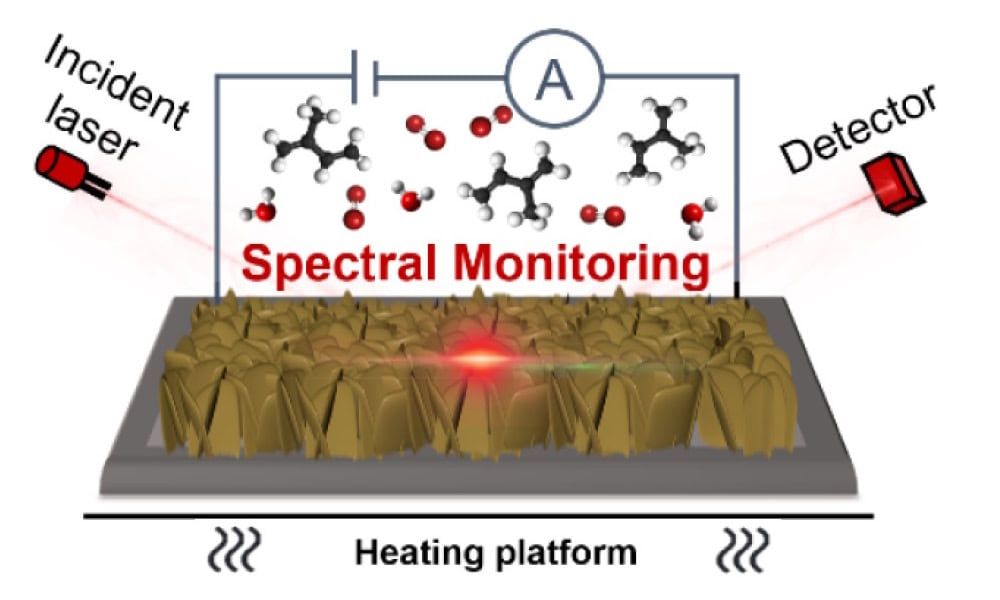
To optimize the sensing performance, the research team – led by Pingwei Liu from Zhejiang University and Qingyue Wang from Institute of Zhejiang University – developed a series of sensors made from nanoflakes of pure In2O3, nickel-doped (InNiOx) or platinum-loaded (Pt@InNiOx). The sensors comprise an insulating substrate with interdigitated gold/titanium electrodes, coated with a layer of roughly 10 nm-thick nanoflakes. When the sensor is exposed to isoprene, adsorption of isoprene onto the nanoflakes causes an increase in the detected electrical signal.
“The nanoflakes’ two-dimensional structure provides a relatively high surface area and pore volume compared with the bulk structure, thus promoting isoprene adsorption and enhancing electron interaction and electrical signals,” Wang explains. “This improves the sensitivity of the gas sensor.”
The researchers – also from Second Affiliated Hospital, Zhejiang University School of Medicine and Instituto de Catálisis y Petroleoquímica, CSIC – assessed the isoprene sensing performance of the various sensor chips. All three exhibited a linear response to isoprene concentrations ranging from 500 ppb to the limit-of-detection (LOD) at the operating temperature of 200 °C. Pt@InNiOx showed a response at least four times higher than InNiOx and In2O3, as well as an exceptionally low LOD of 2 ppb, greatly outperforming any previously reported sensors.
The Pt@InNiOxsensor also showed high selectivity, exhibiting 3–7 times higher response to isoprene than to other volatile organic compounds commonly found in breath. Pt@InNiOxalso exhibited good repeatability over nine cycles of 500 ppb isoprene sensing.
The team next examined how humidity affects the sensors – an important factor as exhaled breath usually has a relative humidity above 65%. The InNiOxand Pt@InNiOxsensors maintained a stable current baseline in the presence of water vapour. In contrast, the In2O3 sensor showed more than a 100% baseline increase. Similarly, the isoprene sensing performance of InNiOxand Pt@InNiOxwas unaffected by water vapor, while the In2O3 response decreased to less than 0.5% as relative humidity reached 80%.
The team also used simultaneous spectroscopic and electrical measurements to investigate the isoprene sensing mechanism. They found that nanoclusters of platinum in the nanoflakes play a pivotal role by catalysing the oxidation of isoprene C=C bonds, which releases electrons and triggers the isoprene-sensing process.
Clinical testing
As the performance tests indicated that Pt@InNiOx may provide an optimal sensing material for detecting ultralow levels of isoprene, the researchers integrated Pt@InNiOxnanoflakes into a portable breath sensing device. They collected exhaled breath from eight healthy individuals and five lung cancer patients, and then transferred the exhaled gases from the gas collection bags into the digital device, which displays the isoprene concentration on its screen.
The sensing device revealed that exhaled isoprene concentrations in lung cancer patients were consistently below 40 ppb, compared with more than 60 ppb in healthy individuals. As such, the device successfully distinguished individuals with lung cancer from healthy people.
“These findings underscore the effectiveness of the Pt@InNiOxsensor in real-world scenarios, validating its potential for rapid and cost-effective lung cancer diagnosis,” the researchers write. “Integrating this ultrasensitive sensing material into a portable device holds significant implications for at-home surveillance for lung cancer patients, enabling dynamic monitoring of their health status.”
Looking to future commercialization of this technology, the researchers note that this will require further research on the sensing materials and the relationship between breath isoprene levels and lung cancer. “By addressing these areas and finishing the rigorous clinical trials, breath isoprene gas sensing technology could become a transformative tool in the noninvasive detection of lung cancer, ultimately saving lives and improving healthcare,” they conclude.
“Currently, we’re cooperating with a local hospital for large-scale clinical testing and evaluating the potentials to be applied for other cancers such as prostate cancer,” Wang tells Physics World.
The researchers report their findings in ACS Sensors.
Ask the average person in the street to describe a physicist and they will probably outline an eccentric older man with grey wiry hair wearing a lab coat or tweed jacket with elbow patches and a pair of glasses. While some members of the physics community do look like that – and there’s nothing wrong with it if they do – it’s certainly not representative of the whole. Indeed, since the 1960s researchers have been regularly testing children’s perceptions of scientists with the “draw-a-scientist test”. This has seen a decrease in “masculine-coded” results from 99.4% in the 1970s to 73% in 2018. That figure is still high, but the drop is a welcome development that is likely due to an increase in female scientists being featured in both traditional and social media.
Despite such progress, however, physics still comes across as a cisgender-heterosexual-dominated subject. Some may claim that science doesn’t care about identity and, yes, in an ideal world this would be true – you would leave identity at the lab door and just get on with doing physics. Yet this is a classic example of inequity. While treating everybody the same sounds great in practice, a one-size-fits-all approach doesn’t create a conducive atmosphere for work and study. So how do we encourage the queer community into science and make them feel more comfortable?
To find out, we surveyed 160 students and staff at UK universities who identify as queer about their experiences and inspirations. When asked to rate how comfortable queer people feel in different scenarios between one (“completely uncomfortable) and 10 (“completely comfortable”), respondents’ average score was 7.96 when it came to how they felt among their peers but just 5.66 in an academic setting. This difference was even starker with people who identify as transgender, who reported a score of 8.0 with peers and as low as 4.96 within academia.
We also did follow-up interviews with respondents who left contact information to get a more detailed picture. From these interviews, the idea of “belonging” came up a lot. Participants stated that if they don’t see people like them at a job interview, they will think twice about accepting a position in that organization. Almost half of transgender respondents say they will have difficulty getting into a science-related career compared with just 8.9% of queer cisgender respondents.
The lack of role models in science is a critical factor. Over three-quarters of respondents generally disagreed with the statement “there are enough queer role models in STEM”, with some saying it is “severely lacking” while also acknowledging how complicated it can be for queer people to put themselves “out there”.
While teachers are an important inspiration for both transgender and cisgender people, fictional role models play a greater role for transgender people. On a scale from one (being no influence) to seven (most influence), transgender people were slightly more inclined towards fictional role models than cisgender people (at 4.25 versus 3.52). This is an important avenue for transgender people through the “queer coding” of traditionally cisgender heterosexual characters. One of the survey responses explained how as a child they interpreted The Doctor from TV’s Doctor Who as a queer role model.
Targeted schemes
Queer people clearly do not feel well represented in science, neither within their institutions nor in the media. The solutions to both issues are intertwined. The media will not see an increase in queer scientists until we have more queer scientists, and we won’t have more queer scientists until queer people can see science as a safe and welcoming career option. Time magazine’s top 100 influential people for 2020, for example, contained 17 scientists, but the Guardian’s list of LGBTQ+ influencers for 2024 contained no scientists at all.
There are things we can do to make science more accepting on a personal level such as displaying pronouns as standard in all communication, and signposting to queer networks within or beyond our organizations. One interviewee suggested queer people wear something like a Pride pin badge to create more visibility within the science community so that newly recruited queer people feel like they belong.
We also need targeted outreach to queer audiences in a similar way to how schemes have been created to increase women’s participation in science. Local Pride events or queer youth group meetings could be a good way to reach queer people without making them feel singled out and “othered”. The Institute of Physics, which publishes Physics World, regularly attends Pride events, for example, and this type of activity should be encouraged in other physics and science-based groups and industries to show they are actively seeking and welcoming connections and talent from the queer community.
As well as increasing access to real-life role models, fiction could be used to create accessible role models, especially for the transgender community. More scientific characters in films, books and TV series who identify as queer would help to give future queer scientists people they can relate to and help them feel they belong in science. By making these small but meaningful changes in institutions and supporting related cultural initiatives, we can show that science can indeed be for everybody and not just a select few.
This article is based on the results of a final year BSc project by Artemis Peck.