Zinc peels back graphene layers

Researchers in the US have succeeded in removing single layers of atoms from graphene for the first time. The technique will be crucial for fabricating high-performance electronic devices from the “wonder material”.

Graphene is a sheet of carbon just one atom thick and is a promising material for making extremely small electronic devices of the future. This is thanks to its unique electronic and mechanical properties that include extremely high electrical conductivity and exceptional strength. However, it is difficult to separate the individual layers of graphene from each other because they tend to stick together. Although ordinary sticky tape can be used to strip off several layers at a time, there is still no reliable way to peel off exactly one layer and certainly not in specific patterns for microelectronic device fabrication.

Now, James Tour and colleagues at Rice University may have overcome this problem by sputtering (or coating) selected areas of the top-most graphene layer in a sample with zinc and then applying hydrochloric acid to the surface as a wash. The technique removes the coated areas of graphene while leaving the uncoated areas and the layers below intact. The process can be repeated to produce multiple patterned layers, say the researchers, or even “chequerboard” structures by removing horizontal and vertical layers to create 3D patterns.

Highest precision lithography ever

“Being able to remove one layer at a time from graphene is the highest precision lithography that has ever been attained, or could ever be attained, for this – or indeed any other material – since it is made of single atoms layers,” Tour told physicsworld.com. The technique not only works for graphene, but also for graphene oxide.

The method can also be used on thick films of graphene to selectively thin them down and pattern them into device structures. For example, a device such as an inverter could be made by depositing a bilayer of graphene onto pre-defined electrodes made of a metal and then peeling away some areas so that only monolayers remain here (see figure). The researchers confirmed that they had indeed removed single layers of graphene by imaging the samples in a scanning electron microscope and measuring the thicknesses of the remaining layers by atomic force microscopy.

Although they are not sure of the exact mechanism by which graphene layers peel, the researchers reckon that the zinc seems to damage the layers it coats by creating defects in the graphene. These damaged layers are then more easily removed by the subsequent acid wash step. Indeed, Raman spectra of the sputter-coated samples are characteristic of amorphous carbon, which suggests that the original crystalline structure of the graphene has been severely disrupted.

Encouraged by these new results, the team would now like to optimize its technique and control horizontal patterning of graphene layers with the same precision that has been achieved in the vertical direction. It also hopes to be able to better remove contaminants introduced during the sputtering process.

The results are detailed in Science.
Four steps to success

By Louise Mayor

Today CERN announced on its Twitter feed that “the first 7 TeV LHC [proton] collisions of 2011 were recorded last night, round midnight, with low intensity beams”.

But how do particle physicists work out from the millions of detected collision events per day whether they are observing a new particle or phenomenon?

Tommaso Dorigo, a collaborator on the Compact Muon Solenoid collaboration at CERN and the Collider Detector at Fermilab, has described just what researchers are looking for and how they go about their search in a fabulous new article, “On the road to discovery”, in the March 2011 issue of Physics World. You can read it here.

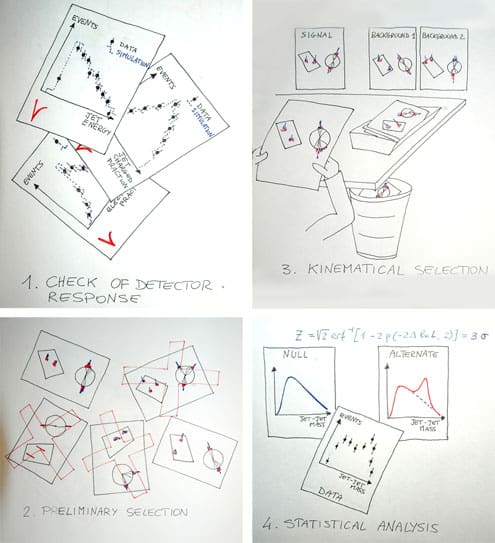
In his article Dorigo breaks down the search for new physics into four general steps and to make this clear he sent us these four charming hand-drawn sketches (below).

Blog-panel-sketches.jpg

In the sketches, Dorigo imagines looking for a particle that theory says will decay to a pair of particle jets which fly out back-to-back. But before even looking for new physics, the detector must first be checked – does it do everything we expect for particles and phenomena that we do know about already? That’s step 1.

Now we’re ready to take on the maelstrom of data – huge files where as much as possible about each collision has been recorded. To make a detailed analysis of every single file would take ridiculous amounts of computer power, so step 2 involves culling anything that’s obviously not what we’re looking for. Here we’re looking for two jets back-to-back, so anything else – no jets, three jets, or two jets not back-to-back – is scrapped.

In step 3, the remaining events are split into either “background” or “signal”, and the background events – those we already understand with the Standard Model – are discarded. These are in effect considered to be background noise, and the aim is to remove this so that any signal is easier to spot.

Events are classed as “background” if the particles produced are only at a small angle to the beam so have not undergone much momentum change – you can imagine these events to be like a truck that hits a stray goose and does not go far off course, as opposed to a head-on truck-on-truck crash where debris might fly off sideways.

In the fourth and final step, the mass of the jet pairs is plotted on a histogram along with all the other events analysed so far. The shape of this distribution is compared to the “null” hypothesis – the shape if the particle being searched for doesn’t exist – and the “alternate” hypothesis – the shape if the particle does exist. Statistics are used to say how confidently the data agrees with the new idea – usually converted into units of “standard deviations”.

You can read more about this in Dorigo’s feature article: On the road to discovery.

How old is the universe?

ussher.jpg

By Hamish Johnston

About 13.7 billion years is the best estimate for the age of the universe, but how did scientists reach this conclusion and what twists and turns were encountered along the way?

That was the question that the BBC’s Melvyn Bragg put to three astronomers this morning on his radio programme In Our Time. Bragg’s guests were Martin Rees – Britain’s Astronomer Royal – Carolin Crawford of the University of Cambridge and Carlos Frenk of the University of Durham.

Bragg begins with James Ussher’s pronouncement of 1654 that the Earth was formed at 6 p.m. on 22 October 4004 BC. Ussher (right) was Archbishop of Armagh and this date was the result of painstaking historical and biblical research.

This Old Testament view of creation endured until the 19th century, when geological evidence and the new theory of evolution suggested that the Earth was at least hundreds of millions of years old – a figure championed by none other than Charles Darwin.

At first, however, evidence from the heavens seemed to contradict earthbound data. Indeed Lord Kelvin calculated that the Sun was at most a few million years old. His argument – which assumed that our star is heated by gravitational energy – was so persuasive that it made Darwin doubt his geological and evolutionary observations.

The discovery of radioactive fission muddied the waters even more. On one hand it suggested that the Earth was as much as three billion years old, but it could not ascribe a similar longevity to the Sun. Eventually, estimates for the ages of the Earth, Sun and the universe fell into line thanks to the work of astronomers, astrophysicists and cosmologists.

To hear more details of the various theories about the age of the universe – including Newton’s rather elegant proof that the cosmos is at equilibrium and therefore ageless – listen to Bragg’s programme here.

Ultracold atoms simulate spin-orbit coupling

Spin-orbit coupling – a ubiquitous interaction in condensed-matter physics – has been simulated in ultracold neutral atoms for the first time by physicists in the US. Their experiment involves firing laser beams at rubidium atoms and allows the relative strength of the interaction to be adjusted by simply tweaking the intensity of the lasers. The discovery could allow ultracold atoms to be used as “quantum simulators” to investigate the role of spin-orbit coupling in a wide range of phenomena in solid semiconductors, superconductors and magnets.

For the past decade or so, physicists have been using lasers and magnetic fields to trap collections of atoms and cool them to near absolute zero. By carefully manipulating the laser light and magnetic fields, researchers can control the interactions between atoms. This allows scientists to simulate interactions that occur between electrons in solid materials in a cleaner, well controlled environment. But unlike electrons in solids, the strength of these interactions can be easily adjusted – allowing physicists to test theories of condensed-matter physics in these “quantum simulators”.

Spin-orbit coupling describes the interaction between the intrinsic spin of an electron in a solid and the magnetic field induced by the motion of electron relative to the surrounding ions. As it links the spin of the electron to its motion, spin-orbit coupling is a key parameter in the design of “spintronic” devices, which use the electron’s spin instead of its charge in circuits that could someday lead to faster and more energy efficient computers. What Ian Spielman and colleagues at the National Institute of Standards and Technology (NIST) in Maryland and the National Polytechnic Institute in Mexico City have now done is to simulate spin-orbit coupling using neutral rubidium atoms.

Rubidium clouds

The team began with a cloud of about 180,000 rubidium atoms chilled to below 100 nK to create a Bose–Einstein condensate (BEC). A BEC forms when identical atoms with integer spin are cooled until all the atoms are in the same quantum state. The team then fired two nearly identical lasers, X and Y, that intersect the BEC at a right-angles to one another. The laser light is set to resonate with a transition between two different spin states of the rubidium atom that are used to simulate the “spin-up” and “spin-down” states of the electron.

The resonance involves the atoms continuously absorbing and emitting photons. As these photons carry momentum, it means that if an atom absorbs a photon moving in the X-direction and then re-emits it in the same direction there is no change in the atom’s momentum. However, an atom absorbing a photon from the X beam can be stimulated by the Y beam to emit a photon in the Y-direction, thus changing the momentum of the atom. The result, according to Spielman, is a coupling of the spin and momentum of the atom: a spin-orbit interaction.

Tracking shadows

The team began its measurements with the lasers off and all the atoms in a spatial mixture of both spin states. The intensity of the lasers was then slowly increased, which causes transitions between the spin states and puts the BEC into a superposition of spin-up and spin-down states called a “dressed state”. Finally, the lasers and magnetic trap are switched off and the cloud of atoms is allowed to expand, with the momentum measured by shining light on the gas and tracking the resulting shadow.

The researchers then worked out the spin of the atoms by switching on a magnetic field gradient, which deflects spin-up and spin-down electrons in different directions – as in the famous Stern–Gerlach experiment. Although the atoms in the dressed state have zero net momentum, the measurements reveal that the component spin-up and spin-down states themselves have non-zero momenta. According to Spielman, this is in agreement with calculations that include spin-orbit coupling.

Surprise, surprise

The measurements also revealed two surprises. The first is that the dressed spin states are separated in space, with one spin moving to one side of the BEC and the other moving to the opposite side. Normally, it is energetically favourable for the two spins to mix in the BEC, but Spielman and colleagues believe that the lasers introduce an “exchange energy” that causes opposite spins to repel each other.

The other surprise for the team is that the spin-orbit interaction had important effects even when the laser intensity was relatively low. This means that it should be possible to simulate the interaction in an ultracold gas of fermionic atoms, which are more similar to electrons than the bosonic atoms used in this experiment. The reason, according to Spielman, is that the fermionic atoms that physicists have managed to cool (such as potassium-40) heat more rapidly when put into dressed states.

Indeed, Spielman says that his team is currently building a new experiment that uses fermions. If successful, the team should be able to induce “p-wave” coupling between fermions – an interaction that leads to superconductivity in superfluid helium-3 and some other materials. Spin-orbit coupling in fermions could also give rise to “Majorana fermions”. These are exotic particles that are identical to their antiparticles and that could be used in quantum computers.

The research is published in Nature 471 83.

Snapping the birthplace of the human eye

An interdisciplinary group of researchers is calling for the help of other scientists to help them to understand how some of the key features of human vision have evolved.

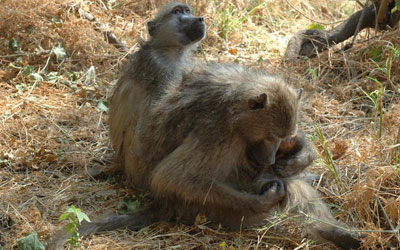
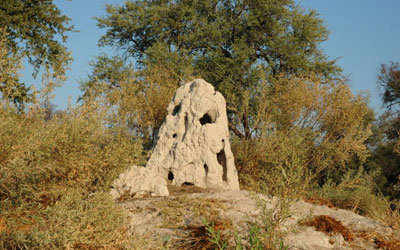
The team, led by Gasper Tkačik, a physicist at the University of Pennsylvania, has compiled a database of roughly 5000 images of the Okavango Delta region in Botswana. This tropical savannah habitat is believed to be similar to the conditions that existed in Africa around 20–30 million years ago, at the time of the origins of Old World monkeys, when the basic adaptations in our visual system are thought to have evolved.

The photos were taken by neuroscientist Lucia Seyfarth, one of Tkačik’s Pennsylvania colleagues, and they are meant to be similar to the views experienced by our remote ancestors as they went about their lives in this environment. Images include trees, the ground, bushes and they were taken, for instance, while she was following a baboon troop. Other images were designed to vary a range of parameters including the depth of shots and the time of day, and they have all been uploaded to a database hosted by the University of Pennsylvania.

A colourful mystery

Tkačik’s team is now encouraging researchers in related disciplines including physicists and neuroscientists to use the database as a resource for investigating different aspects of human vision. One of the key features of the human eye is its remarkable ability to distinguish between a vast array of colours thanks to cells at the back of the eye known as rod and cone photoreceptors. In terms of their function, rods are relatively well understood as being most effective in low lighting, providing us with a useful amount of night vision.

Cones, on the other hand, enable the eye to see the entire spectrum of colours under the full light of day. They come in three varieties called L, M and S, which detect the red, green and blue sections of the spectrum respectively. Scientists were initially puzzled by the distributions of cones as S cones account for just 10% and the ratio of L–M can vary dramatically between people. A study published last year, based on the Botswana database, suggests that these particular ratios are theoretically optimal for capturing as much colour information as possible from our visual environments.

“The database has been designed to enable scientists to investigate this and similar questions about the architecture of our retinas, and try to understand the particular anatomical findings as evolutionary adaptations to our environments,” Tkačik tells physicsworld.com. In addition to greyscale and raw RGB photos, the database also contains images that have been calibrated to show how incoming light hitting the camera sensor would have stimulated the different types of cone in the eye to varying extents.

“There are other image databases out there for this kind of research but ours is the first one to snap the region similar to where the humans evolved,” says Tkačik. “It is also novel because we are providing images not only in the raw units of light intensity, but also in the physiologically relevant units that measure how our cones respond to that incident light.”

Perfecting ‘machine vision’

In addition to aiding fundamental science, the database may also help computer scientists to develop more advanced artificial intelligence systems. Tkačik believes, for instance, that it could lead to more advanced “machine vision”. This is already used in photo and social networking websites to identify faces and certain objects within photos. He says it could also help to develop more realistic scenes and textures in computer simulations and video games where dynamic graphics need to be compressed while remaining faithful to what the eye sees in the real world.

To develop the project, the researchers hope to assemble similar collections of images acquired in different environments including cities and other urban settings. Comparing images from a range of different environments may help neuroscientists to investigate how information is both perceived and then processed by the visual cortex inside the brain. “In the city there are a lot of sharp lines to contend with but our visual systems seem to be able to deal with this just fine,” says Tkačik.

Tkačik, who is currently at Institute of Science and Technology Austria, would also like to start assembling a similar database containing video data, which could help neuroscientists to explain why the human visual system is well evolved to deal with changing scenes and processing motion.

This research was published on the arXiv preprint server.

Neutron star has superfluid core

Neutron stars should exhibit both superfluidity and superconductivity, according to two independent groups of scientists. The researchers studied the neutron star in the supernova remnant known as Cassiopeia A, and found that its core should exist in a superfluid state at up to around a billion degrees kelvin, in contrast to the near absolute-zero temperatures required for superfluidity on Earth.

Neutron stars are extremely dense objects that form when massive stars run out of nuclear fuel and collapse in on themselves. The enormous pressure within the star forces almost all of the protons and electrons together to form neutrons. Astrophysicists would like to know more about the properties of this ultra-dense matter, and one way to do this is to study exactly how neutron stars cool. The object at the heart of Cassiopeia A, which is about 11,000 light-years away, is ideally suited to such an exercise because, unusually, it has both a well established age – about 330 years – and a well known surface temperature – around 2 million kelvin.

Last year, Craig Heinke of the University of Alberta in Canada and Wynn Ho of the University of Southampton in the UK analysed 10 years’ worth of X-ray data from NASA’s Chandra satellite and found that the Cassiopeia A neutron star’s surface temperature has dropped more quickly than expected – by about 4% between 2000 and 2009.

Cooper pairs and neutrinos

In the current work, groups led by Dany Page of the National Autonomous University in Mexico and Peter Shternin of the Ioffe Institute in St Petersburg, Russia, say that this rapid cooling can be partly explained by invoking the zero-viscosity state of matter known as superfluidity. They argue that when the temperature of a neutron star falls below a certain critical value it becomes energetically favourable for neutrons inside the star to form Cooper pairs – the basic unit of the superfluid state – and that the energy released as a result could be easily removed from the star in the form of neutrinos.

But the two groups have found that this mechanism cannot account for all of the cooling, and they independently conclude that superconductivity must also play a role. They say that shortly after the creation of the neutron star, protons would combine to form Cooper pairs, so creating a superconducting state by virtue of their charge. Bound up in this way, the protons would not be able to take part in various neutrino-emitting reactions that occur in non-superfluid matter, reducing cooling early on in the life of the star and leading to a sharper drop in temperature later on.

However, there are alternatives to the superfluid/superconductor hypothesis, such as the idea that the rapid cooling was simply the natural consequence of the temporary heating created by an asteroid impact. Excluding this and other ideas will require further data from Chandra – with a subsequent rise in temperature suggesting that the star could in fact be experiencing asteroid impacts, while a continuation of the cooling would support the theory of the Page and Shternin groups.

Extremely high temperature superconductors

If this new model is correct then, as Wynn Ho, who is also a member of Shternin’s group, points out, neutron stars would probably contain the hottest superfluids and superconductors in the universe. Indeed, Shternin’s team has calculated that the Cassiopeia A neutron star should exhibit superfluidity when its temperature drops below about 800 million kelvin and that proton superconductivity could take place at up to 2–3 billion kelvin. Page and colleagues, meanwhile, calculate the superfluid transition temperature to be around 500 million kelvin.

These figures are in stark contrast to the 130 kelvin that is the highest temperature at which any material on Earth has been found to superconduct. But Ho cautions that we can’t draw any practical tips from neutron stars, pointing out that the huge densities of these objects mean that particles are extremely closely packed and so act via the strong nuclear force, whereas on Earth superfluidity and superconductivity are mediated by the fundamentally different, and much weaker, electromagnetic force.

Ho does, however, believe that the latest work could lead to a better understanding of the strong force itself. This view is shared by Fridolin Weber of San Diego State University in the US, who was not a member of either group and who maintains that the research is “indispensable in improving our knowledge of the poorly known properties of ultra-dense matter”. Marcello Baldo of the University of Catania in Italy, meanwhile, points to the novelty of being able to test the superfluid model against future observations. “This is a wonderful possibility,” he says, “which has never happened before in this field.”

The research is described in Phys. Rev. Lett. and on arXiv.

Discovery hints that meteorites seeded life on Earth

Researchers in the US say they have found strong evidence to support the theory that life on Earth could have been seeded by meteorites from outer space. Sandra Pizzarello of Arizona State University and colleagues in California say that a primitive meteorite discovered in Antarctica is rich in nitrogen – a vital element for life.

Scientists are still unsure about how life emerged on Earth. Biologists agree, however, that for meteorites to have seeded life, they would need to contain nitrogen, a precursor to complex biological molecules such as amino acids and DNA. One possibility is that organic building blocks were brought to our planet by meteorites containing organic molecules, so-called carbonaceous chondrites, which have been bombarding our planet since it formed more than four billion years ago.

Many such meteorites have been studied over the last decade and several have been found to contain organic molecules that were almost certainly produced in a cosmochemical environment. However, these asteroidal bodies contain many different types of organic molecule and it is difficult to put forward a convincing theory that explains how any of these molecules could have eventually led to life.

Preserved in Antarctic ice

In recent years, scientists have begun analysing several primitive meteorites found in Antarctica that belong to a new category of carbonaceous chondrites, the “Renazzo-type” (or “CR)”, and found that some do indeed contain nitrogen-based compounds. What is more, these compounds are water soluble, which is also essential because life as we know it always emerges in water.

Pizzarello’s team studied the CR2 Grave Nunataks (GRA) 95229 meteorite, discovered in 1995, and found that it released abundant amounts of ammonia when treated chemically, accounting for 60% of the nitrogen contained within the carbonaceous material. They go on to speculate that the release of ammonia gas could have populated the Earth’s emerging atmosphere with nitrogen, which could have led to the spark of life via a series of chemical processes.

“Any theory that tries to explain biogenesis has to account for an abundant supply of reduced (reactive) nitrogen”, Pizzarello told physicsworld.com. Direct delivery of relatively large amounts of ammonia via a meteorite is prebiotically very attractive, she said.

Handled with care

As the ammonia was mixed with other materials and is volatile in some conditions the researchers had to careful when studying their 4 g sample not to allow the gas to escape. So they employed a number of techniques including gas chromatography, mass spectrometry and solid-state nuclear magnetic resonance to analyse meteorite powder samples that had been boiled in water and dissolved in acids.

“This result is excellent and could have profound implications in astrobiology,” says Yi-Jehng Kuan of the National Taiwan Normal University. “However, large amounts of ammonia need to be found in other carbonaceous meteorites before we can back up the theory that ammonia in the atmosphere of the early Earth may have been supplied by these bodies and/or their parent asteroids.” Pizzarello’s team is now busy looking for ammonia in other such meteorites.

Antarctic meteorites were crucial for this study. “Carbonaceous meteorites are very similar to Earth rocks,” explained Pizzarello, and this means that they can be hard to spot. In contrast, meteorites in the Antarctic are covered by snow as they fall and can be preserved for long periods. They don’t usually surface until the ice, which constantly moves towards the sea, hits a mountain and churns over its content. Hundreds of these meteorites have been now been discovered and many new carbonaceous chondrite subgroups established.

The results were detailed in Proc. Natl. Acad. Sci.

The art of physics demonstrations

By James Dacey

Never underestimate the power of a good science demonstration. Some of the most celebrated science communicators like Richard Feynman and Carl Sagan, and more recently Brian Cox, are incredibly good at explaining academic research using simple, everyday concepts. But while a few lucky people seem to be naturally good at coming up with nifty demonstrations, most educators could always pick up some tips from the professionals.

I recently went along to the conference of the Association for Science Education to make a couple of short films about how practical demonstrations can breathe new life into physics education. The ASE is a UK-based organization that has been supporting teachers and science educators since 1900, and it now attracts around 3000 delegates to its annual conference, which was hosted this year by the University of Reading.

In the first video I present an overview of the conference, focusing on the best physics demonstrations delivered by a number of specialist educators. Some of the demos are very flashy, but they are all designed to be simple enough for teachers to recreate in their classrooms without forking out heaps of cash on specialist gear. My personal favourite was the helical flames that seemed to lick the classroom ceiling, drawing gasps from the audience.

In the second of these videos you can see me take part in a special workshop for teachers where we were taught how to make mini dragster cars and how we can use these vehicles to communicate physics principles like aerodynamics and friction. The session turned out to be a really good laugh and it was useful to brush up on my basic physics. Though, needless to say, I left most of the serious mechanics to the real experts – the teachers.

For me, the take-home message of the conference is summed up very eloquently by one of the demonstrators, Gary Williams, who is editor of the journal Physics Education. “It’s all very well doing theory, but until you’ve interfered with the universe, actually done something, stretched it, pulled it a little bit, then you don’t really know how it reacts. Practical is crucial to science.”

You can also see full versions of a selection of the physics demonstrations from the ASE conference on the Physics Education Youtube channel.

The art of physics demonstrations

Between the lines

A comic-book image of the first man in space

Charting the first man in space

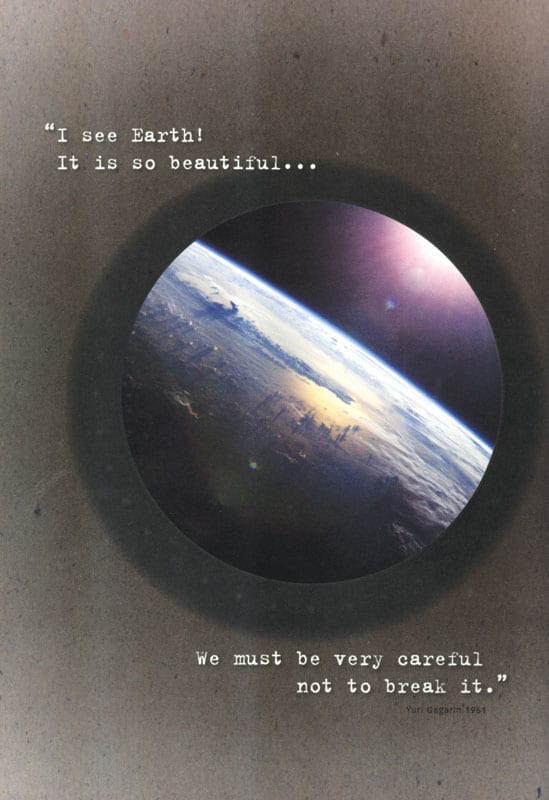
The too-short life of Yuri Gagarin was full of heroism and tragedy. Born in 1934 on a collective farm in western Russia, he became a child saboteur during the Second World War after the Nazis overran his village. After the war, he was selected for the Soviet Union’s first cosmonaut corps, and on 12 April 1961 he became the first man in space. Yuri’s Day: The Road to the Stars tells Gagarin’s story in an unusual format: as a “graphic novel”, or comic book. Together with the greyscale sketches of artist Andrew King, Piers Bizony’s text depicts events in Gagarin’s life in parallel with developments in the Soviet space programme. The contrasts with the better-publicized US effort are fascinating. For example, the Americans carried out experiments on weightlessness in cargo planes flown in parabolic curves – a trajectory that gave passengers a couple minutes of “zero g” at the top of each arc. The Soviets did the same in MiG training jets, but as the book explains, “their main solution [was] more drastic”: they dropped cosmonauts down the 28-storey Moscow State University lift-shaft in padded cages, cushioned with compressed air. Other episodes in the book are similarly infused with dark humour. After one early mission is aborted, a flight controller declares that although the craft has landed safely in Siberia, the canine cosmonaut inside is nevertheless doomed: “We already sent the ‘destruct’ signal. We can’t have foreign spies interrogating our dogs!” The ensuing farce ends happily for the dog, but other characters are less fortunate. Gagarin’s boss, Chief Designer Sergei Korolev, endured debilitating years as a political prisoner, and Gagarin himself was killed in a training flight less than seven years after his historic mission.

Tales from the grassy knoll

In the 47 years that have passed since the assassination of US President John F Kennedy, numerous scholars have debated the “official” conclusion that Kennedy was killed by a single gunman, Lee Harvey Oswald. In this crowded field, G Paul Chambers stands out. For one thing, he is a physicist with a background in military research. For another, the cover of his book Head Shot: The Science Behind the JFK Assassination boasts that his is “the first book to identify the second murder weapon, prove the locations of the assassins [and] demonstrate multiple shooters with scientific certainty”. It is an intriguing premise, but for the most part, Chambers’ book does not live up to it. Though the author excels at pointing out inconsistencies in the official account – particularly in the penultimate chapter, which contains a physics analysis of the shot that killed Kennedy – his own argument is hardly free of them. For example, Chambers discounts medical evidence from Kennedy’s autopsy that calls his theory into question, and disparages ballistics experiments performed by the late Nobel-prize-winning physicist Luis Alvarez, who used melons as a substitute for skulls, on the grounds that “melons are significantly different from human heads”. Elsewhere, however, he is quite happy to accept evidence based on shot-up bags of gelatine. Chambers also tries to smear Alvarez by noting that he failed to acknowledge government funding for his melon tests – implying (though he does not say so outright) that Alvarez had something to hide. While conspiracy theorists often claim that contradictory evidence is merely proof of a wider conspiracy, one expects better from an author such as Chambers, who repeatedly praises the scientific method.

  • 2010 Prometheus Books £21.95/$25.00hb 240pp

A glowing tribute

When the graphic artist and biographer Lauren Redniss travelled to Paris to interview Marie and Pierre Curie’s granddaughter, Hélène Joliot-Langevin, she received a warning. “There are two traps when writing a biography of the Curies,” said Joliot-Langevin, herself a nuclear physicist. “One: to turn their story into a fairy tale. Two: to forget Pierre.” In Radioactive: Marie and Pierre Curie, A Tale of Love and Fallout, Redniss has largely avoided both traps: Pierre plays a prominent role; and although the book is not a straightforward biography, it is not a fairy tale either. If anything, it is a work of art, packed with glowing collages and prints that owe a stylistic debt to both Picasso (off-kilter faces) and Matisse (bold-coloured cut-outs). Over the course of 200 richly illustrated pages, the reader learns about the Curies’ early years; their marriage and scientific collaboration; Pierre’s death and Marie’s subsequent affair; and the work of their daughter and son-in-law, Irene and Frederic Joliot-Curie. This biographical story is told well, with frequent quotations from the Curies’ own papers. However, some of the most interesting passages are actually detours, as the story floats freely from the lives of the Curies to the (half)-lives of the substances they discovered. The diverse voices represented in these interludes – a cancer patient, a survivor of the Hiroshima bombing, even an elderly couple receiving quack radon-gas treatments – help illuminate the Curies’ legacy, while also adding to the book’s somewhat dreamlike quality. Hard to describe, but easy to enjoy, this meditation on the life and legacy of Pierre and Marie Curie brings together art and science in a beautiful and thought-provoking way.

  • 2011 HarperEntertainment/2010 It Books £19.99/$29.99hb 208pp
Copyright © 2026 by IOP Publishing Ltd and individual contributors