Why 13 and 25 are magic numbers for physicists

If you think that adding ever more researchers to your group can only be a good thing, think again. Two physicists have, for the first time, quantified how the increasing size of research groups in physics affects the quality of the work it can produce. They conclude that the best group size for experimental physicists is around 25 researchers, while in theoretical physics the number is 13. Adding more researchers to the group over these sizes does not result in an increase in research quality.

Ralph Kenna from the University of Coventry and Bertrand Berche from the University of Nancy, France, used data collected for the UK’s 2008 Research Assessment Exercise (RAE). The RAE was designed to deduce the quality of research being performed at all UK universities based on researchers submitting detailed data about their research groups, including their size and the output of each individual.

Although this information is usually used to rank the quality of the groups’ research, which then dictates how much government funding they receive, what Kenna and Berche have done is to see what impact a group’s size has on the quality of its research. They plotted quality against quantity and fitted the data into a model that treats research groups as a complex system that takes interactions between researchers into account (Scientometrics 86 527).

Quality stays flat

The model indicates that research quality initially increases linearly with group size. However, above a certain limit – known as the upper critical mass – rather than continuing to increase, the dependency of quality on quantity stays flat. The upper critical mass is the maximum number of colleagues with whom a researcher can interact, so that when a group’s size increases beyond this level – 25 for experimental physicists and 13 for theorists – it starts to fragment. “If I was going to build a department from scratch, I would use this result to make sure research groups within it are of this size,” says Kenna.

The research also reveals a lower critical mass of seven for the theorists and 13 for experimental physicists.

In an analysis for Physics World, the researchers found that 69% of UK physics departments have groups that are above the upper critical mass, while 89% of researchers who work in UK physics departments are in such large groups. “According to our study, physics in the UK is in a healthy condition,” says Kenna. “This means that researchers have more than enough colleagues to interact with.”

The researchers most recent work is available at arXiv:1102.4914v2

If Einstein met Confucius

einsteinsml.jpg

By James Dacey

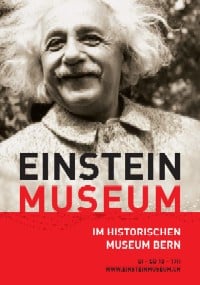
An exhibition about the life and work of Einstein will no longer appear in Shanghai following a fracas between Chinese and Swiss museums. The exhibition has been touring China as part of a celebration of 60 years of diplomatic relations between Switzerland and China.

According to the Associated Press, the show’s organizers from the Historical Museum of Bern were unhappy with plans of Shanghai’s Science and Technology Museum. The would-be hosts had apparently wanted to merge the Einstein show with a separate exhibit of comparable size about the great Chinese philosopher Confucius who lived more than 2000 years earlier.

With the Historical Museum of Bern yet to issue a public statement, the precise details of the disagreement remain somewhat hazy. But the developments have left me pondering what the great physicist himself would think about having an exhibition of his life’s achievements lined up alongside those of Confucius.

Indeed, Einstein was clearly far more than a great physicist. He was also a man deeply engaged in the social issues of his time, which was no doubt influenced by his own position – being a Jewish scientist living in Europe during the rise of Nazi Germany.

Although Einstein’s guiding principle seems to have been the wonder of science, it is hard not to think that he would have admired some of the ideas of Confucius. For instance, I’m sure that Einstein would have shared some of Confucius’ ethical concerns, especially his idea that individuals should strive towards moral perfection.

confucius.jpg

Einstein said as much in 1950 during a conversation with Reverend C. Greenaway, a minister in New York. “The most important human endeavour is the striving for morality in our actions. Our inner balance and even our very existence depend on it. Only morality in our actions can give beauty and dignity to life.”

Where the two men may have disagreed, however, is their view of humanity and collective human behaviour. Confucianism holds that through communal endeavour, humans are mouldable and perfectible. Einstein, on the other hand, appears to have taken a more hardened outlook, perhaps influenced by some of the events of his time.

“I don’t believe that humanity as such can change in essence, but I do believe it is possible and even necessary to put an end to anarchy in international relations,” he said in 1919 to Hedwig Born, the wife of Max Born, when talking about how individual states may have to give up their autonomy.

So I’m not saying that Einstein’s reflections on social philosophy and morality should overshadow his scientific achievements. But I just don’t think the idea that a Chinese museum would merge a showcase about his life with an exhibit about Confucius is such a weird idea. This is especially so given the influence Confucianism has had on political life in China.

New type of supernova outshines the rest

A new type of supernova that shines up to 10 times brighter than any previously recorded has been discovered by an international team of astronomers. However, the team has yet to explain the exact mechanism that drives this new type of exploding star, with existing models failing to reproduce the radiation emanating from this new class of violent events.

Supernovae – highly energetic events caused by the explosion of a star – can often shine brighter than an entire galaxy for a brief period of time. To date, three mechanisms have been used to explain the vast amount of associated radiation observed by astronomers during these events. However, a team led by Robert Quimby at the California Institute of Technology in the US has identified a batch of six supernovae with radiation properties that cannot be explained by any of the three mechanisms.

The first cause discounted by Quimby was radioactive decay. During the highly energetic explosion of a supernova the temperature skyrockets. This allows heavy elements, including 56Ni, to be synthesized. Their subsequent radioactive decay produces gamma-rays that slow down the rate at which the supernova fades away. Crucially, the explosions observed by Quimby were too short-lived. “These supernovae faded about three times as quickly as those driven by radioactive decay,” he explains.

Glowing hydrogen

A second possibility is that surrounding hydrogen-rich material is heated by the energy of the explosion, causing it to radiate light. This hydrogen could have been blown off the stars at an earlier time by stellar winds. However, Quimby could not find any evidence of hydrogen. “No traces were found when we analysed the spectral lines of these supernovae. This meant we were able to rule out an interaction with hydrogen-rich circumstellar material,” he says.

The elimination of hydrogen also discounted the third conventional mechanism. In this scenario the hydrogen in the atmosphere of the star is ionized as the explosion tears through it. This fog of ionized hydrogen is opaque to radiation. Over time the hydrogen recombines, the fog clears and the radiation streams outwards. But again, as no hydrogen was observed, this cannot easily explain Quimby’s pool of six supernovae.

Instead, this latest research puts forward two alternatives that could explain the sextet. The first is a similar process to the heating of hydrogen-rich material surrounding the star. “Some very massive stars, around 100 times more massive that the Sun, could throw off shells of carbon and oxygen instead,” Quimby explains. “If a supernova explodes within a shells, it would heat the shell up.” As the shells expand and cool, the supernova gradually fades away.

Rotating neutrons

Quimby’s second suggestion invokes magnetars. When a massive star dies in a supernova, it can leave behind a superdense, rapidly rotating bundle of neutrons – a neutron star. If this neutron star is highly magnetized, then it is called a magnetar. The interaction of the intense magnetic field with the surrounding ionized material could be behind the mystery supernovae. “The interaction acts as a brake, slowing down the spinning of the magnetar – a process that releases some of its rotational energy into the supernova ejecta,” Quimby says. “This could supply an additional source of energy that would make it brighter than a normal supernova.”

However, Quimby does not believe he has everything wrapped up just yet. “These ideas are brand new; they didn’t exist 10 years ago. We definitely need to do more work to figure this out,” he says. Rubina Kotak, a supernova expert at Queen’s University, Belfast, who was not involved in the research, also believes it is tricky. “It is really difficult to say what is powering these explosions as we’ve only seen a handful of them and we don’t have complete observations over the whole event,” she told physicsworld.com. “We are all waiting for the next one, which hopefully we can catch early enough to monitor all aspects of it.”

Meanwhile, Quimby is using the Hubble Space Telescope (HST) to probe the known supernovae further. “I am using the HST to look at their ultraviolet spectra,” he explains. “Hopefully, we can get a better idea of what materials are in the ejecta and place better constraints on how the events evolve over time. This could allow us to work out which of our models is applicable.”

The research is published in Nature 10.1038/nature10095.

Magnetic fields reduce blood viscosity

Researchers in the US claim that exposing a person to a magnetic field could reduce their risk of a heart attack by streamlining the flow of blood around their body. While the work currently remains just a proof-of-principle, the researchers believe that their technique could ultimately provide an alternative to drugs in treating a range of heart conditions.

Heart attacks and stokes can strike for a variety of reasons. But research suggests that all such vascular conditions are linked by one common symptom – high blood viscosity. Drugs such as aspirin are frequently prescribed to help lower blood viscosity, but these can have unwanted side effects often related to irritation of the stomach. Now, an alternative to drugs may be at hand following recent work by Rongjia Tao at Temple University and his colleague Ke Huang at the University of Michigan.

In their experiment, Tao and Huang showed that applying a 1.3 T magnetic pulse to a small sample of blood can significantly reduce it’s viscosity. About 8 ml of blood with a viscosity of 7 centipoises (cp) – above healthy limits – was contained at body temperature (37 °C) in a test tube. The tube formed part of a device called a capillary viscometer used to measure viscosities. The sample was then exposed to a magnetic field applied parallel to the direction of flow of blood via a coil around the edge of the test tube. After one minute of exposure to the field, the blood’s viscosity had been reduced by 33% to 4.75 cp. With no further exposure to the field, the viscosity had only risen slightly to 5.4 cp after 200 min, which is still within healthy limits.

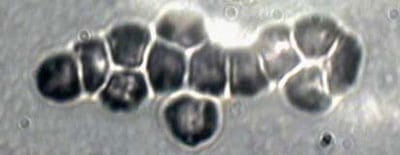
In a paper accepted for publication in Physical Review E, the researchers describe how the effect is probably caused by the response of red blood cells. These iron-rich cells are the most common type of blood cell and they play the leading role in transporting oxygen around the body. In the presence of a strong magnetic field, the red blood cells form chains that align themselves with the field lines where convoys of red blood cells line up behind a leading cell. This process could enable the cells to pass through the blood in a more streamlined fashion, thus reducing the blood’s viscosity.

Towards clinical trials

Tao says that patients can safely be exposed to magnetic fields of up to 3 T. He intends to develop the work further by testing blood flow under a magnetic field in capillary tubes that are similar in size to blood vessels. He also plans to apply for a research grant from the US National Institutes of Health to allow clinical trials to be carried out.

Kalvis Jansons, a mathematician at University College London, believes that the researchers may be onto something “very interesting”. “If the effect really does exist, it would appear to me that it would not be difficult to use it in a clinical setting,” he says. But he also believes that a lot of work would need to be done to show that the process is safe. “Could it lead to blood clots, for example?” he asks.

Giacinto Scoles, a materials scientist at Princeton University who develops medical applications, believes there is a “tremendous thirst” in the medical community for this kind of physics-based innovation. “I believe the work has raised a lot of interesting questions and that a new field of investigation has been opened up,” he says.

But the medical community will still need to be convinced about the need for the new technology and about its safety. Tammy Ustet, a medical doctor who carries out rheumatology research at the University of Chicago, believes that the main focus should remain tackling the causes of vascular conditions. “Treating symptoms is extremely important, but treating the root cause is the best way to relieve symptoms,” she says.

Name that element, part 2

By Michael Banks

Unobtanium, collossium and fibonaccium. Those were just some of your suggestions for the name of element 112 following its confirmation two years ago.

In the end researchers, led by Sigurd Hofmann and his group at the Centre for Heavy Ion Research (GSI) in Darmstadt, Germany, went for copernicium, which was finally approved by the International Union of Pure and Applied Chemistry (IUPAC in July 2009.

Now we want your suggestions for two new elements – 114 and 116 – after they were added to the periodic table following a three-year review by the IUPAC, which develops standards for naming new elements and compounds.

Currently element 114 is known as ununquadium with element 116 named ununhexium.

The elements were spotted by researchers at the Joint Institute for Nuclear Research (JINR) in Dubna, Russia, back in 2004, but only confirmed last year by scientists at the Lawrence Berkeley National Laboratory in California and the GSI lab.

Researchers at the JINR will now get the chance to name the new elements. They will submit their suggestions to the IUPAC who will then publish them on its website for six months giving scientists and the public time to scrutinize and comment on the new name.

So physicsworld.com readers what are your suggestions?

Future is bright for CERN antimatter physicists

Last month physicsworld.com reported that physicists from CERN’s ALPHA experiment had trapped 309 atoms of antihydrogen for 1000 s – smashing their previous record of 38 atoms trapped for one-fifth of a second. Now we can reveal that the team’s success has brought it extra funding that, in part, will allow two new antimatter experiments to be built, as well as a new source of antiprotons.

The study of antimatter such as antihydrogen is important in developing our understanding of the universe and in finding out why it contains so much more matter than antimatter. Speaking to physicsworld.com, ALPHA spokesperson Jeffrey Hangst explains that the team’s next task is to study the structure of antihydrogen – an antiproton bound to an antielectron – using microwaves. “We will use the microwave frequency to flip the spin of the antimatter atoms. Then we may be able to detect the resonant interaction and look at their structure. This would be a modest first step towards actually understanding antimatter,” says Hangst. Differences between the structures of hydrogen and antihydrogen are not predicted by the Standard Model of particles physics and could point towards new physics.

Hangst told physicsworld.com that the ALPHA team is in the process of building a new detector called ALPHA 2 that will be capable of spectral analysis. Unlike the current experiment, ALPHA 2 will include the lasers necessary to study the spectra of the anti-atoms. “We knowingly did not add lasers to the current ALPHA design as initially we wanted to just be able to create and hold the antimatter,” explains Hangst. The team wants the new device to be up and running by 2012, so that the researchers can gather data before CERN’s Large Hadron Collider shuts down for an upgrade in 2013 – which will also affect ALPHA 2.

A new source called ELENA

ALPHA’s recent success has also encouraged CERN to go ahead with a new antiproton source called Extra Low Energy Antiprotons or ELENA. ELENA was proposed several years ago but stalled because of a lack of funding. But now, jubilant CERN boss Rolf-Dieter Heuer told physicsworld.com that he has given the go-ahead for the ELENA source. The current source decelerates antiprotons to 5 MeV before supplying them to ALPHA and other experiments at CERN. ELENA will deliver antiprotons at about 100 keV, which will provide ALPHA with a larger number of usable antiprotons and will also increase efficiency.

With the new ELENA source in place, Hangst hopes that a further update could be made to the ALPHA experiment, dubbed ALPHA 3. This next-generation experiment would allow the team to further cool trapped samples of antiprotons and allow the researchers to study gravitational effects on antimatter. “Laser cooling for hydrogen is difficult but it can be done,” says Hangst, who believes that all these updates could occur during the next 10 years. “Just in time for me to retire!”

All in all, exciting times lie ahead for antimatter research in the coming years. “All the current news is good and encouraging. We know that our approach is the right one,” says Hangst.

Take a look at the video below – it is an interview conducted by Channel 4 News in the UK with CERN director-general Rolf-Dieter Heuer, where he talks about ALPHA’s recent advances. Listen out for a mention of Physics World towards the end, when Heuer recalls that we made ALPHA’s previous antimatter study our Breakthrough of the Year for 2010.

The two-body problem isn't funny

By Margaret Harris

Some time ago, University of Nebraska biochemist Steve Caplan received an e-mail from someone who wanted to work in his lab. The e-mail’s beginning (“Dear sir”) was not encouraging, and it was all downhill from there – a morass of meaningless buzzwords and and vague suggestions that the writer wanted to “gain an opportunity to experience a dynamic, rigorous and systemic training”.

The writers of such e-mails don’t get jobs, but they do get a starring role in Caplan’s essay “How not to get a lab job: what your approach says about you”, which is available on the LabLit website. Most of the essay’s examples are hilarious, and Caplan’s “translations” of them are great.

Except for the third example. It’s not so amusing. And to anyone with the “two-body problem” of looking for jobs as one-half of a scientific couple, Caplan’s “translation” won’t seem funny at all. Here’s the job request:

Hi Dr Caplan,
My name is Dr XXX. I am research associate (assistant professor) at the University of Anywhere in the Department of Radiation and Cellular Oncology. As my husband Dr YYY moved in Omaha, I am also looking for a research position at your institute. Here I have attached a cover letter and my CV for your consideration.

Now here is Caplan’s “translation” of Dr XXX’s e-mail:

“My husband’s job is the important one – he is the “real” scientist. I just need to find a job doing anything – doesn’t matter what – somewhere near my husband. I’m not necessarily interested in what you do, but saw your advertisement…”

For good measure, this translation is accompanied by a cartoon drawn by Caplan’s 12-year-old daughter, in which a frilly-dressed woman declares “It’s my husband’s job that’s important, I’m just holding onto his tail!” while tied on a long leash to a bespectacled male scientist. Niiiice.

(more…)

Erasing data could keep quantum computers cool

Erasure of data – the blanking of memory so that it can be used again – is a fundamental operation any computer must perform. In today’s computers, erasure generates heat, which not only wastes energy, but also causes problems for engineers trying to make smaller or more powerful computers, since the heat could damage the circuitry. But now theoretical physicists claim that, in the world of quantum computing, the act of erasing data might actually cool a computer.

A classical computer generates heat when erasing data because of entropy – a central concept in both thermodynamics and information theory that describes the amount of unknown information in a system. The entropy of the universe can never decrease; so if you reduce the entropy of a memory chip, then you inevitably increase the entropy of its surroundings, which causes them to heat up. In classical computing, data are stored as a long string of bits, which can read either one or zero. To erase these data, all the bits have to be set to zero, which means putting the memory into a zero-entropy state. Since this action normally means reducing the entropy, heat will be generated.

In information theory, however, the entropy of a particular set of data is conditional on how much the observer knows about the data. For an observer who has total knowledge of the data, the entropy is, by definition, zero. It is therefore theoretically possible for that observer to erase the data without decreasing the entropy and without generating any heat.

Breaking entanglement

The current research by Renato Renner and colleagues at ETH Zurich in Switzerland and the National University of Singapore extends this reasoning to quantum computation. Two qubits (quantum bits) can be in a single “entangled” quantum state in which, while nothing is known about either qubit individually, all information about the entangled state is known with certainty. If a computer-memory qubit is in an entangled state with a qubit of data to be erased, the conditional entropy of these data is in fact negative, since the computer knows all the information not only about the data but about itself. It is a bit like a husband gazing into his wife’s eyes and knowing exactly what is going on in her head as well as his own.

But if the entanglement is broken, the computer memory no longer knows any information about either. It can now erase the data, putting them into a zero-entropy state, and still have increased the overall entropy. This means that, in theory, when data are erased from a quantum computer, heat could actually be removed from the surroundings, although this could never be more than the heat generated by creating the data initially.

The research is simply intended to explore the thermodynamic implications of the concept of negative conditional entropy, not to provide a blueprint for a quantum computer. Nevertheless, given that keeping the system extremely cold is likely to prove central to preserving the fragile quantum states in any functional quantum computer, the researchers hope their work may prove helpful to more applied research. “The kind of control needed may be a few years away, but when we reach it, our approach could make computations more efficient,” says Lídia del Rio, a member of the ETH Zurich team.

Information theorist Charles H Bennett of IBM Research in New York, one of the original architects of zero-entropy erasure, is interested but sceptical. “The idea of conditional entropy was developed in the fields of cryptography and information transmission, while this work is trying to apply it to the thermodynamic cost of computation. It’s not clear how helpful it will be in that field but it’s a good scientific endeavour to try to apply it there.”

The research is published in Nature.

The ghost in the machine

In recent years, “big science” has featured prominently in the media, from the excitement surrounding the Large Hadron Collider’s much-awaited switch-on to the controversies over the evidence for global warming. While many scientists and non-scientists alike regarded the “Climategate” controversy as a storm in a teacup, the furore that surrounded the leaked e-mails from climate researchers did, at least, provide a rare example of the media spotlight being turned on the processes of science: the careful and meticulous checking of analysis methods; the strengths (and limitations) of statistics as a tool for assessing the significance of results; the sociology of large research collaborations and how they interact with their own communities, with governments and funding agencies, and with the wider public.

The sociological dimension of “big science” is also the theme of Gravity’s Ghost, the latest book by Cardiff University sociologist Harry Collins. For nearly 40 years Collins has studied at close quarters the nascent field of gravitational-wave research, gaining a unique first-hand perspective on the inner workings of the LIGO Scientific Collaboration as it has patiently worked towards the first direct detection of gravitational waves. These ripples in space–time are produced by some of the most violent events in the cosmos – exploding stars, colliding black holes, even the Big Bang itself – but by the time they reach Earth they are so feeble that their detection presents an enormous engineering and technological challenge, requiring the construction of a worldwide network of giant laser interferometers that can measure displacements smaller than the width of a proton. Yet despite this huge challenge, gravitational-wave scientists stand on the threshold of success. Indeed, the main narrative of Gravity’s Ghost concerns the possibility that a direct gravitational-wave detection may have already happened, offering the final confirmation of a key prediction of Einstein’s general theory of relativity.

Collins’ book tells the story of the “Equinox Event” – a candidate signal that was recorded on 21 September 2007. Was this a burst of gravitational waves from the cosmos or simply another “glitch” of noise in the detectors? Or was it an intriguing third possibility: a so-called hardware injection deliberately induced in the detectors’ output, unbeknown to all but one or two members of the collaboration, as a powerful way to field-test the efficacy of their data-analysis pipelines and procedures?

Collins weaves a fascinating tale that charts the 18 months between the recording of the Equinox Event and the collaboration meeting in March 2009, where its true nature was finally determined. Throughout this period LIGO scientists, working closely with their colleagues in the Virgo project (a French/Italian collaboration operating its own laser interferometer near Pisa), undertook hundreds of teleconferences and exchanged thousands of e-mails as they pored over the noisy detector data, seeking to understand whether they really had directly detected a gravitational wave. From his privileged position embedded within LIGO, Collins accompanied the collaboration every step of this 18-month journey.

The unique insider’s perspective that Collins brings to the narrative is a key strength of Gravity’s Ghost. The quest to characterize the Equinox Event is engrossing enough in itself, unfolding like scenes from a detective novel. However, skillfully interwoven into this detective story are the sociological insights and observations that are Collins’ main objectives, and the fruits of his 40-year close association with the field. To what extent are current gravitational-wave searches influenced by historical detection claims that were subsequently discredited – the “ghosts” of the past? Has the strategy of hardware injections changed the collaboration’s mindset, making it more psychologically predisposed to the possibility of a discovery? In a frontier science, just how certain does one have to be in order to claim a discovery anyway, and how can that level of certainty be meaningfully quantified? How can scientists maintain the integrity and objectivity of their analysis procedures, and insulate against the accusation of post hoc “fine tuning” and bias, while retaining the flexibility of a commonsense response to suddenly changing circumstances?

Collins nicely illustrates this final question through an extended discussion of the “Airplane Event”: the strong signal recorded in a 2004 LIGO science run that was subsequently found to be correlated with the passage of an aeroplane over the detector site. Was it legitimate to simply remove this signal from the data (thus yielding a more realistic upper limit on the strength of gravitational waves) when the possibility of low-flying aeroplanes giving rise to false signals had not been anticipated and properly incorporated into the data analysis protocols for that science run?

Collins recounts in detail the vigorous and often heated debates that the collaboration held about the Airplane Event, and in so doing provides the reader with a thoughtful and entertaining introduction to the often esoteric world of statistics – offering some excellent insights into the subtle differences between Bayesian and “frequentist” probability theory, which the Airplane Event debates illustrate. These parts of the book, together with his broader discussion of experimental uncertainty and detection significance, allow Collins to highlight an intriguing sociological conclusion. Despite the cutting-edge technology, objective measurements and deterministic science at the heart of gravitational-wave research, the question of deciding whether or not to publish a detection claim has a very human and subjective dimension: in the end, it comes down to a vote.

In exploring the sociology of the LIGO Scientific Collaboration, Collins uses the gravitational-wave field as a touchstone for the wider scientific community and indeed wider society as a whole. The book includes an interesting and thought-provoking coda that considers the methods and essential values of science, and in particular a frontier science like gravitational-wave research, as an objective lesson in how best to make critical judgements in our modern and complex world – where exact quantitative analysis and prediction is rarely possible and decisions ultimately rest on statistical hypotheses and physical assumptions.

And what of the denouement of Gravity’s Ghost, revealing the true nature of the Equinox Event? To find out the answer to that question, you will have to read the book!


Watch that doggy run!

USPS.jpg
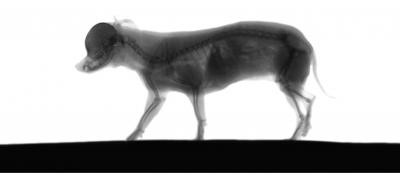
Chihuahua pacing, captured by X-ray video (Courtesy: Martin Fischer)

By James Dacey

They have been our best friends for a long time, so surely we know everything there is to know about dogs. Wrong!

According to researchers in Germany we still have a very patchy knowledge of how dogs move. Of course, we know they scamper along on four legs, occasionally balancing on their back two when they decide to press their muddied front paws against your freshly cleaned shirt. But apparently we are still thin on details when it comes to the precise sequence of movements within their locomotive system.

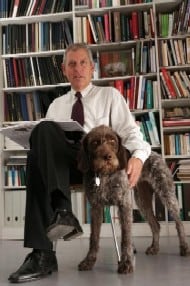
To redress this situation, zoologist Martin Fischer (see picture, right) and colleagues at the University of Jena in Germany have carried out what they claim is the most extensive survey to date of dog movement. They have studied in fine detail the motions of 327 dogs from 32 different breeds by deploying a variety of imaging technologies.

fischer.jpg

The dogs were filmed from the front and side using high-speed cameras as the animals walked using two different gaits. Following this, the dogs’ movements were captured in 3D by attaching reflecting markers to different parts their bodies before the researchers filmed them using infrared cameras. Then finally, to build a picture of the dogs’ skeletal movements, the researchers recorded the moving dogs using a high-speed X-ray video system.

One interesting discovery to emerge from the X-ray footage is that regardless of the total length a dog’s legs, its upper leg is always the same length – and this appears to be important in linking the movements of the shoulders with the lower legs. For this reason, the researchers conclude that dogs of all sizes run very similarly, whether they are a greyhound or a Schnauzer.

Another key finding relates to how different parts of a dog’s anatomy correlate with each other to enable the front and back legs to move in circular motions. Fischer and his team found that the shoulder blades and the thighs act as centres of rotation for the front and back legs, which contradicts earlier studies that had located these centres at the shoulder joint and hip.

Fischer’s group has compiled its findings and images in a newly published book, Dogs in Motion, which the researchers hope will also be of interest beyond the scientific community. “We explicitly want to reach all dog owners and people who love dogs in general,” says Fischer.

Meanwhile, in other dog-related news, a pair of researchers at Harvard University have used high-speed video combined with X-ray footage to study another aspect of canine motion – how dogs drink. Alfred Crompton and Catherine Musinsky have shown that dogs take the same approach as their arch rivals, cats, when lapping up liquids by allowing water to adhere to the tips of their tongues. Earlier work had suggested that dogs simply “scooped up” water with vigorous swipes of the tongue. Crompton and Musinsky describe their work in a paper recently published in the journal Biology Letters, and you can see the dog-drinking action in this related video.

Copyright © 2026 by IOP Publishing Ltd and individual contributors