

Researchers unveil the Einstein Telescope

Researchers have drawn up plans for the next-generation gravitational-wave observatory that will be 100 times more sensitive than current instruments. The Einstein Telescope, which is estimated to cost around €790m and be complete by 2025, will seek to directly detect gravitational waves and attempt to work out their origin and nature. It will differ from existing gravitational-wave detectors in being built underground.

Researchers will now begin carrying out a detailed technical design for the Einstein Telescope, which is expected to be complete by 2017, as well as selecting its location. The telescope is one of seven projects recommended by the Astroparticle European Research Area (ASPERA) network, funded by the European Commission, the CERN particle-physics lab and 17 countries including Germany, Russia and the UK.

Gravitational waves are ripples in the fabric of space–time that Einstein’s general theory of relativity predicts ought to pervade the universe. The Einstein Telescope – known as a third-generation gravitational-wave observatory – would be similar in design to existing labs such as the US-based LIGO gravitational-wave observatory in Hanford, Washington, and Livingston, Louisiana.

LIGO works by having two 4 km long interferometers at 90° to each other in which a laser beam is split and sent down each arm. The beams then bounce off test masses at the end of each arm and return to their starting point, where they interfere with one another. Any passing gravitational wave will make one arm slightly longer and the other slightly shorter, thereby changing the interference pattern in a measurable way.

Going underground

The Einstein Telescope will study the entire range of gravitational-wave frequencies – from 1 Hz to 10 kHz – from astronomical sources that can be measured on Earth. The observatory will be built underground at a depth of about 100–200 m and will consist of three underground detectors, each linked by two 10 km long interferometer arms.

One of the interferometers will detect low-frequency gravitational-wave signals from 2 to 40 Hz, while the other will detect the higher-frequency signals. “The fact that the Einstein Telescope will be underground allows us to extend the sensitive window down to lower frequencies, such as those below 10 Hz,” says Andreas Freise from the University of Birmingham in the UK, who leads the optical design of the telescope. “Many gravitational-wave signals from, for example, black holes crashing into each other, will have a significant signature in that range.”

LIGO is currently being upgraded to Advanced LIGO, which will make it 10 times more sensitive. According to Freise, physicists expect Advanced LIGO to make the first direct detection of gravitational waves, but as the Einstein Telescope will be a further 10 times more sensitive, it will be better placed to estimate the origins of gravitational waves and give information about the local gravitational environment around them.
Unbound planets could abound in the universe

Ten planets that appear to be drifting in interstellar space have been spotted by an international team of astronomers. The planets are so far from any host stars that they may not orbit a star at all, and could be drifting unbound through space. The team believes that such rogue planets could outnumber normal stars almost 2:1 and their existence could confirm computer simulations of solar-system formation.

More than 550 planets have so far been found beyond our solar system. The vast majority of these extrasolar planets – or exoplanets – have revealed themselves by their gravitational influence on their host star, or by the dip in brightness that they cause as they pass in front of their star. However, a clutch of 12 worlds had previously been found by gravitational micro-lensing.

This technique relies on the object of interest passing directly between the observer and a more distant background object. The mass of the foreground object acts like a lens and magnifies the light from the object beyond. If the foreground object is a star, then any orbiting planet leaves its own tell-tale fingerprint in the shape of the magnification. However, due to the need for an exact alignment, fewer than one in a million stars in the central part of the Milky Way are micro-lensed at any given time. This is why the number of exoplanets detected this way is low.

Sifting through 50 million stars

In an attempt to get around this problem the Microlensing Observations in Astrophysics (MOA) collaboration observes many stars at once. The new rogue planets were found in MOA observations of 50 million stars within the Milky Way between 2006 and 2007. “Over all the stars observed we are very confident that we witnessed 474 definite lensing events,” lead-author of the study Takahiro Sumi, of Osaka University, Japan, told physicsworld.com. Of these 474 events, 10 lasted for less than two days. Seven of these 10 events were later confirmed by data from the Optical Gravitational Lensing Experiment (OGLE) collaboration.

The more fleeting the duration of the event, the less massive the lensing object; a duration of less than two days implies the mass of the foreground object to be much less than that of a star. In fact, Sumi believes the culprits to be planets roughly the mass of Jupiter. What is more, no stars were observed within 10 astronomical units of the lensing objects – one astronomical unit is the distance between the Sun and the Earth and Saturn orbits at about 9 astronomical units. “There is a possibility that these planets do have a host star. However, direct imaging of exoplanets by other teams suggests that such distant planets are very rare,” Sumi explains. “This led us to conclude that the lensing objects are freely floating planets, unbound from any star,” he adds.

Because they are short-lived events, and the result of chance alignments, Sumi didn’t expect to uncover such a high yield of planet-lensing events with MOA. From statistical analysis of his data he was able to extrapolate a figure for how common these free-floating planets might be. “We found that unbound planets, with roughly the mass of Jupiter, should be 1.8 times more common than the stars we observed,” Sumi explains.

Scattered into space

The existence of rogue planets isn’t completely unexpected: they have been predicted from computer models of solar-system formation. “We think they are formed in the same way as other planets but get scattered from the system by gravitational interactions between them,” says Sumi. Joachim Wambsganss, of the University of Heidelberg, Germany, who was not involved in the work, says that this research quantifies this process for the first time. “We just didn’t know how often this happened,” he said. “This research gives us an idea,” he adds.

Wambsganss went on to describe the research as using a “clear and solid method”, however he thinks some people may not believe the claims of the rogue planets’ abundance. “They used a very extensive statistical analysis, using several different factors, but others may argue with the numbers they used,” he explains. One way of strengthening the research’s claims will be to use the next stage of data from the MOA experiments. “There are three more years of data for 2008–2010 that they can work through in the same way. They should find more of these events and this will provide an even stronger statistical basis for their claims,” he says.

The planets are described in Nature 473 349.

Mobile phones, but no jet packs

Have you ever wondered what happened to all the flying cars and personal ray guns we were promised? Anyone who has watched TV, gone to the cinema or read science fiction knows that by now we should inhabit a world full of amazing devices. And actually, we do: the problem is that when we look around, we see that the amazing devices we ended up with are mostly not the ones that science fiction predicted. So what happened? Why did we get mobile phones and the Internet instead of jet packs and teleporter systems?

James Kakalios’ book The Amazing Story of Quantum Mechanics starts out with various versions of this same question, and proceeds to make the case that quantum mechanics is responsible for most of the really cool devices we take for granted (and that a lack of breakthroughs in energy technology accounts for the missing jet packs and other gadgets). By exploring these unforeseen consequences of the quantum revolution, Kakalios sets out to accomplish two basic goals: explaining the theory of quantum mechanics to non-experts, and showing how this theory has given us cool stuff.

Given these goals, one thing that is particularly enjoyable about the book is that it is not yet another history of quantum mechanics. Explaining quantum mechanics for the non-specialist, without mathematics, is generally a daunting challenge, and a lot of writers seem to shy away from it by getting very philosophical or very historical very quickly. By basing his book on the science behind real devices, Kakalios is able to focus instead on the practical aspects of quantum theory.

Early in the book, Kakalios presents the reader with three “impossible ideas”. Briefly, they are: (1) light is composed of discrete packets; (2) matter exhibits wave properties; and (3) everything has intrinsic angular momentum. The expert will quickly recognize these ideas, and appreciate that they are not the standard starting point for presenting quantum mechanics in courses and textbooks. However, this is a good thing because these ideas have a closer connection with everyday experience and get directly to the issues relevant for technology. Too often, standard approaches focus initially on the wavefunction and its weirdness, but this does not readily lend itself to everyday analogies.

Another aspect of the book that makes it attractive to non-specialists is that essentially every quantum-mechanical idea is connected with a character or story from science fiction or superhero lore. Indeed, most chapters start with such stories, which provide unusual context for the topic at hand. For example, a section on wavefunctions begins with a story from the graphic novel Watchmen by Alan Moore, in which atomic physicist Jon Osterman is transformed into the superhero Dr Manhattan when experiments on the four fundamental forces of nature go spectacularly wrong. By asking why these experiments turned Osterman’s skin blue, or what it means for him to “gain control” over his quantum-mechanical wavefunction, Kakalios gets a unique starting point for addressing some rather abstract and challenging physics. And, of course, the real heroes of the development of quantum mechanics – the physicists and chemists who are in all the textbooks – also get their due.

Through this mixture of fiction and reality, the reader learns how the three impossible ideas of quantum mechanics were discovered, and what they really mean for the fundamental behaviour of matter. There is, however, one occasional drawback to starting each chapter with a fictional story.

For Kakalios, a physicist at the University of Minnesota who has previously written a book called The Physics of Superheroes, the distinction between science and science fiction is clear and obvious. However, readers who are less familiar with either the real history of science or the characters of science fiction may initially wonder whether the person being discussed is real or fictional. This is always made clear later in the chapter, but at first it can be disconcerting.

Another weakness of the book is that although Kakalios does a great job of handling the “impossible” ideas of quantum mechanics, he does seem to assume that the reader is already familiar with energy in the same way physicists are. Admittedly, the ideas of energy conservation are addressed to some degree, but a non-specialist could run into difficulties when their everyday views of energy fall short of the physics view of energy. In my experience of teaching physics to non-specialists, this difference between the common usages of the word “energy” and the specific physics concept is one of the biggest challenges students face. In everyday usage, energy is often viewed as an independent thing, such as an “energy field” or an “energy beam”. In physics (and in the applications in this book), energy is a property of things and it can come in many forms.

As we journey with Kakalios through the three impossible ideas of quantum mechanics, he provides the reader with a number of powerful analogies. Perhaps the most important analogy in the later chapters concerns the electron band structure in solids, which comes up because the devices that interest Kakalios are all grounded in solid-state physics. Explaining how they work therefore requires him to address the electronic behaviour of materials. To do this, he suggests we imagine the electrons in a theatre, complete with orchestra, balcony and mezzanine seating. As we explore the impact of filling or not filling the orchestra, and jumping between the different seating options, we learn how materials gain their all-important electronic properties and what this means for technology. The use of the theatre analogy is perhaps the strongest element in the book. Having used it to build a mental picture of the world of electrons, Amazing Story concludes with explanations of the inner workings of many modern devices, from transistors to LEDs and MRI.

Overall, the book accomplishes its goals. By focusing on concrete applications, real-world devices and the sometimes fantastical vision of science fiction, the abstract world of quantum mechanics is made accessible to the non-specialist. As a bonus, we learn how quantum mechanics actually did make possible some of the powers and devices envisioned in early- to mid-20th century science fiction – and, even more importantly, how it gave us a whole host of unforeseen wonders.

Between the lines: multiverse special

Multiverses on parade

A universe with infinite spatial extent will contain infinitely many mini-universes. An infinite number of these mini-universes will be exactly like our own. Welcome to the mind-blowing nature of infinity – and the sometimes equally mind-blowing nature of the multiverse, which is a common theme among the books in this month’s column. First up is Brian Greene’s The Hidden Reality, which explores nine variations on the multiverse theme. Of these, the type of multiverse that arises as a consequence of infinite space – Greene calls it the “quilted multiverse” because regions of space will repeat like patterns in a quilt – is actually one of the easiest to comprehend. From then on, things get both more complicated and more interesting, as Greene leads the reader through cosmic inflation, string theory and the “many worlds” interpretation of quantum mechanics. Greene’s tour of multiverses also takes in some even more exotic territory, as he considers the possibility that our distant descendents could one day create simulated universes – or that we are living in one such simulation (as in the film The Matrix). All of this is, of course, extremely speculative, and large swathes of it seem fated to remain that way forever. Yet those who believe – not unreasonably – that multiverse theories have more in common with religion or philosophy than they do with science should still give Greene’s book a chance. The chapter on “Science and the multiverse”, in particular, explores the many criticisms of multiverse theories in a sensitive and thoughtful way. Sceptical readers will find they can appreciate Greene’s logic and candour, even if they ultimately decide to disagree with him.

  • 2011 Allen Lane/Knopf £25.00/$29.95hb 384pp

Click here for physicsworld.com‘s interview with Brian Greene

Many universes, many quotations

In contrast to Greene’s book, which focuses on the most up-to-date views on multiverse theories, John Barrow’s The Book of Universes takes a more historical approach. By beginning with the universe according to Aristotle and other Greek philosophers, and continuing through Copernicus, Kant and Laplace into the modern era, Barrow makes an important point: our concept of the universe has expanded tremendously over the years, so it is unsurprising that scientists are now seeking to extend it still further. The downside of this leisurely tour, however, is that the book takes an awfully long time to get going. After 100 pages, we have only just reached Einstein and the 20th century. The pace does pick up later in the book, with a good chapter on “post-modern universes” that covers, among other things, Barrow’s own research on the possibility that the speed of light was not constant in the early universe. However, even here the narrative is repeatedly interrupted, because either the author or his publisher thought it was a good idea to chuck in at least one quotation every six paragraphs or so. We do not normally discourage witty comments from scientists, but The Book of Universes contains so many that they actually get in the way. Worse, for every quote that reveals a deeper truth – such as Chaim Weizmann’s comment that “Einstein explained his theory to me every day and on my arrival I was fully convinced that he understood it” – there seem to be at least two that have made it into the book simply because they are vaguely amusing. Whoever was responsible for filling the book with them should have heeded the words of crime novelist Dorothy L Sayers, who once wrote that “A facility for quotation covers the absence of original thought.”

  • 2011 Bodley Head £20.00 368pp

A sceptical overview

A little over a century ago, some British mathematicians and physicists thought they had uncovered the theory of everything. According to their theory, the fundamental particles of nature were actually composed of different types of vortices, swirling in a perfect, frictionless fluid. This theory was beautiful, elegant and coherent. As late as 1903, the American physicist Albert Michelson declared that it “ought to be true, even if it is not”. Vortex theory could also explain – in a way that traditional theories of solid atoms could not – the existence of lines in the spectra of chemical elements: clearly, the lines represented different modes of vibration in the vortex atom. Of course, no-one now believes in vortex atoms, but as Helge Kragh explains in Higher Speculations: Grand Theories and Failed Revolutions in Physics and Cosmology, the rise and fall of vortex theory makes a useful cautionary tale for modern theory-of-everything enthusiasts. Kragh, a historian of science, is interested in how such explanations arose, why they failed and whether any parallels can be drawn with modern theories – including those that incorporate some version of a multiverse. Much of the book’s second half is devoted to teasing out the links between theories of the multiverse, string theory and the anthropic principle; Kragh defines the latter as “an attempt to deduce non-trivial consequences about nature from the consideration that what we observe must be compatible with our existence”. These three concepts have quite separate historical origins, Kragh observes, yet since the mid-1980s some elements of them have merged. His scholarly book offers a sceptical but largely impartial overview of the multiverse and related speculation.

  • 2011 Oxford University Press £35.00/$63.00hb 408pp

Passing of a legend

goldhaber.jpg

By Matin Durrani

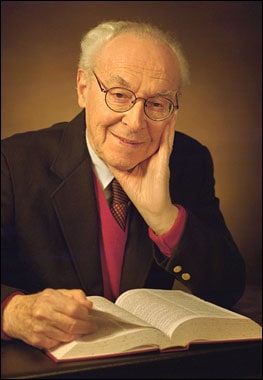
I recently received a copy of the 15 April issue of the Brookhaven Bulletin – the newsletter of the Brookhaven National Laboratory in the US – which described the forthcoming 100th birthday celebration of the physicist Maurice Goldhaber (right, image courtesy of Brookhaven National Laboratory).

The birthday bash took place on 18 April, as planned, so I was so sad to learn, as I did yesterday via the New York Times, that Goldhaber sadly died on 11 May.

Born in Austria on 18 April 1911, Goldhaber was one of the last survivors of the glittering pre-war era that saw so many revolutions in physics.

According to Brookhaven’s online tribute, Goldhaber had worked at the University of Cambridge in the UK with the Nobel-prize-winning physicist James Chadwick, where in 1934 Goldhaber became the first person to measure accurately the mass of the neutron.

After obtaining his PhD from Cambridge in 1936, Goldhaber moved to the US, joining the University of Illinois. He arrived at Brookhaven in 1950, going on to serve as lab director from 1961 to 1973.

In 1957 Goldhaber famously discovered that neutrinos have a left-handed helicity, which means that their intrinsic angular momentum, or “spin”, is in the opposite direction to their momentum. That experiment was cited by Brookhaven historian and Physics World columnist Robert P Crease in his collection of most beautiful experiments of all time

By all accounts, Goldhaber was one of those physicists who saw physics as not just a job but his life. Although he retired in 1985, Goldhaber continued to go in to Brookhaven most days until he was well into his 90s. He won numerous awards and prizes, sharing the Wolf Prize in 1991 with Valentine Telegdi for their “separate seminal contributions to nuclear and particle physics, particularly those concerning the weak interactions involving leptons”. He was also awarded a US National Medal of Science.

Goldhaber was not alone in his love for physics: he was part of a family of four generations of physicists, including his son Fred Goldhaber and brother Gerson.

The climate science rap

By Michael Banks

Well it had to come didn’t it? There have been quite a few science raps over the last few years touching on nuclear physics, the American astronomer Edwin Hubble and even the Large Hadron Collider at the CERN particle-physics lab, so it seems about right there is now one about climate change.

The rap video for I’m a climate scientist was produced by the Australian current affairs television programme Hungry Beast.

Featuring lines such as “climate change is caused by people, Earth unlike Alien has no sequel”, the video features a raft of climate scientists doing their best Beastie Boys impression.

I will let you decide whether using rap as a means of communicating climate science is a worthwhile endeavour.

Positive feedback boosts eye’s ability to see

Researchers in the US have discovered a new feedback mechanism that allows the human eye to be sensitive enough to see small details in a scene while also being able to detect the large contrast between bright and dark objects. The process involves boosting the output of certain light receptors in the retina while damping down others – and could help with the design of digital vision systems.

The retina of the human eye senses light using about 100 million photoreceptors and a host of neuronal tricks to convert light signals into a useful picture of the world. One of the most basic processes to occur in the eye is contrast enhancement, which allows the eye to resolve bright and dark objects. This is done directly in the retina by a negative feedback mechanism between neighbouring light-sensitive cells.

The first line of signal processing occurs in the star-shaped horizontal cells just below the surface of the retina. Each of these cells receives input from about 100 photoreceptors (rods and cones) on the retina. A photoreceptor responds to darkness with a burst of a neurotransmitter called glutamate. This chemical causes the horizontal cell to depolarize, and the resulting voltage change shuts off the signalling channels of other nearby photoreceptors, preventing them from emitting more glutamate. This has the result of isolating and sharpening the original signal within a circle of quiet – allowing the eye to see a dark object on a bright background and vice versa.

This process is called “lateral inhibition” and helps the eye to detect the edges of objects. The downside of this mechanism, however, is that it also reduces the maximum strength of the optical signal. This should theoretically cause a loss of dynamic range and limit the eye’s ability to pick out faint details – something that doesn’t happen in a real eye.

Positive feedback at work

Now Richard Kramer, Skyler Jackman at the University California at Berkeley and colleagues at the University of Nebraska and University of Massachusetts have discovered that the eye is able to pick out fine details using an unexpected positive feedback process. They found that cones exposed directly to glutamate, far from reducing their neurotransmitter production, increased their own production of glutamate four-fold.

Upon further investigation, the team discovered that while the glutamate-mediated change in horizontal cell voltage did have a negative feedback effect, glutamate exposure also caused an additional, more subtle change in the horizontal cells, increasing the number of calcium ions in nearby regions. It’s thought that this triggers an increase of calcium ions within the cones themselves, boosting the production of glutamate very locally: in just the initially firing photoreceptor and perhaps a few of its immediate neighbours. “This recoups the signal strength lost to negative feedback, while preserving edge detection and contrast enhancement,” explained Jackman.

The discovery of a secondary signalling system is particularly surprising because the retina has received a lot of attention from researchers. “The positive feedback circuit is very susceptible to damage, and disappears when the retina is studied using more traditional preparations, involving slices of the retina,” explains Jackman. “This may explain why positive feedback has not previously been observed in such a well studied circuit.”

Feedback circuits and other processing at a cellular level have several advantages for the central nervous system. First, it saves time because picking out important features helps the brain to interpret what it is seeing quickly, and make appropriate decisions. Second, there is an issue of information flow: 100 million photoreceptors are connected to a mere million nerve channels. This requires a slimming-down of data without losing anything important.

Emulating the eye

It is these virtues of the eye that researchers in digital vision want to copy. Neuroscience and visual prosthetics experts Stephen Hicks at the University of Oxford said, “This finding could well have a positive and relatively immediate effect in computer vision for intelligent systems.” He added, “In computer vision we perform a process similar to the eye’s lateral inhibition to identify and enhance the edges in a scene before putting them in context.” He believes that this work will give researchers “new ideas for implementing a fast approximation of the boundaries between objects in a video feed, which would improve everything from robot–human interactions to video surveillance”.

The work is described in PLoS Biology.

Exoplanet seems right for life…or does it?

A planet orbiting a star 20 light-years from Earth could have the right conditions for sustaining life. Simulations carried out by a team of scientists in France suggest that the planet, called Gliese 581d, could harbour liquid water, clouds and rainfall, as well as winds that distribute the heat it absorbs from its star. However, the researchers also admit that the simulations might be wrong and the planet could have little or no atmosphere – or even be cloaked in a thick layer of hydrogen and helium.

First observed in 2007, Gliese 581d is thought by some astronomers to be a rocky planet with a mass at least seven times that of Earth, making it a “super Earth”. It is one of more than 500 extrasolar planets (exoplanets) that astronomers have spotted orbiting stars other than the Sun. However, none of these exoplanets has been shown to be both Earth-like and to orbit within its star’s “habitable zone”, where conditions on the planet would be just right for life to emerge.

Now simulations of the climate on Gliese 581d, which have been carried out by Robin Wordsworth, François Forget and colleagues at the Laboratoire Météorologique Dynamique and the University of Bordeaux, suggest that the exoplanet might be able to harbour life. Indeed, the team describe Gliese 581d as “the first discovered terrestrial-mass exoplanet in the habitable zone”.

Gliese 581d is one of six exoplanets thought to orbit the red-dwarf star Gliese 581. It receives about a third of the energy that the Earth receives from the Sun and is also thought to have a hot side that always faces its star and a cold, dark side. The large temperature difference between the two hemispheres was expected to make it difficult for the planet to sustain the thick atmosphere needed for life.

Atmospheric models

Wordsworth and colleagues simulated conditions on Gliese 581d using a 3D model of the atmosphere that is similar to those used to study the Earth’s climate. These work on the basis that the planet has a climate dominated by the greenhouse effects of carbon dioxide and water, which the researchers think is a reasonable assumption given that the climates of Venus, Earth and Mars are defined by these gases. The resulting simulations suggest that Gliese 581d could have a thick atmosphere – and that it could be warm enough to have oceans, clouds (both water and carbon dioxide) and rainfall.

One key driver towards habitability, according to the researchers, is the red colour of the exoplanet’s parent star. Rayleigh scattering in a planet’s atmosphere usually tends to reflect incoming blue light back into space. However, Gliese 581 emits little blue light and therefore the exoplanet absorbs a greater percentage of its star’s light compared with the Earth and the Sun. Simulations of circulation within the atmosphere suggest that much of this heat could be transported to the dark side of the exoplanet, perhaps preventing the atmosphere there from condensing completely.

If the simulations are correct, conditions on Gliese 581d would be very different to those here on Earth. The dense atmosphere would let little light get to the surface, which would be in a perpetual murky red twilight – according to the researchers.

Or maybe it is not habitable

The team admits, however, that conditions on Gliese 581d could be very different to that described in the simulations. The exoplanet may have little or no atmosphere, thanks to a fierce stellar wind from Gliese 581 during its early years. Alternatively, Gliese 581d could have a thick layer of hydrogen and helium in its atmosphere, which would lead to a much less-hospitable climate.

To gain a better understanding of the exoplanet’s atmosphere, the team has come up with a wish list of spectroscopy measurements of the exoplanet’s atmosphere that it hopes will be performed by astronomers in the future. Although the researchers believe that the measurements are beyond the capability of current ground- and space-based telescopes, the exoplanet’s close proximity to Earth means that the next generation of instruments could shed more light on Gliese 581d.

The research is described in Astrophys. J. Lett. 733 L48.

Cosmic-ray detector blasts off on Space Shuttle

An instrument for detecting cosmic rays – and possibly even dark matter – has finally been lifted into orbit on board the Space Shuttle Endeavour. The Alpha Magnetic Spectrometer (AMS), which is the brainchild of the Nobel-prize-winning physicist Samuel Ting, will soon be installed on the International Space Station (ISS). Ting first came up with the idea for the AMS in the 1990s but a series of setbacks, including the Columbia shuttle disaster in 2003, has led to the mission being continually delayed.

The launch of the AMS also marks the end of an era in space exploration, as this is the final mission of NASA’s Space Shuttle programme – which began with the launch of Columbia in April 1981. The lift-off from Kennedy Space Center in Florida involved celebrations commemorating the 30-year Space Shuttle programme.

Costing $2bn and weighing seven tonnes, the AMS detector uses a 0.15 T cylindrical magnet 1 m in diameter and 1 m in height to sort incoming particles according to their momentum and charge. The direction of bend of the particle tracks through the magnet’s bore depends on whether the particles are matter or antimatter, while the gradient of the bend is determined by their speed. This will allow the detector to distinguish between vast numbers of different types of cosmic-ray particle.

Searching for dark matter

Physicists are particularly interested in high-energy positrons (anti-electrons), which could be produced by collisions of dark-matter particles in the Milky Way. However, the ability of the experiment to detect dark matter is controversial. The magnet inside the detector was supposed to be an 0.87 T superconducting device, which the project’s scientists had spent nearly a decade designing and building. But in 2010 the researchers suddenly decided to revert to the weaker permanent magnet that had been flown on a test flight aboard the Space Shuttle in 1998.

The change was made in response to the decision to extend the lifetime of the ISS to 2020 and perhaps beyond. The superconducting magnet would only have had a three-year supply of liquid-helium coolant, leaving the AMS inoperative for most of the ISS’s lifetime. In addition, tests of the AMS at CERN in early 2010 revealed that the detector heated up more than expected – which would have reduced the time that the helium held out.

Some critics claim that the new configuration will make the experiment less likely to make discoveries such as the detection of dark matter, while others insist that the changes made at such a late stage could make failure more likely.

Seeking strangelets

The AMS could also detect strangelets, which are ultra-dense clumps comprising large numbers of up, down and strange quarks. This new form of matter was first proposed in 1984 by Edward Witten, but has yet to be seen by a succession of experiments. Strangelets could be produced when high-energy cosmic rays strike Earth’s atmosphere. The particles are expected to have a very high mass-to-charge ratio, which means that they should take a nearly straight path through the AMS.

AMS uses a series of silicon sheets positioned one on top of the other across the magnet’s bore to sense the position of particles as they travel through the magnet. To optimize for the replacement magnet as much as possible, the AMS team has shifted two of these planes so that they now lie well outside the magnet’s bore. The AMS researchers claim that the momentum resolution of the new configuration will be within 10% of that possible with the superconducting device.

The team also says that the extended running time of the experiment will allow it to gather about six times more data and boosts its chances of seeing rare cosmic-ray events. In addition, the mission could extend over an entire solar cycle, allowing it to study the effect of the Sun on cosmic-ray fluxes.

Evidence that cosmic rays seed clouds

By firing a particle beam into a cloud chamber, physicists in Denmark and the UK have shown how cosmic rays could stimulate the formation of water droplets in the Earth’s atmosphere. The researchers say this is the best experimental evidence yet that the Sun influences the climate by altering the intensity of the cosmic-ray flux reaching the Earth’s surface.

The now conventional view on global warming, as stated by the Intergovernmental Panel on Climate Change, is that most of the warming recorded in the past 50 years has been caused by emissions of manmade greenhouse gases. But some scientists argue that the Sun might have a significant influence on changes to the Earth’s climate, pointing out that in centuries past there has been a close correlation between global temperatures and solar activity.

However, changes to the Sun’s brightness are believed to have altered temperatures on Earth by no more than a few hundredths of a degree in the last 150 years. Researchers have therefore been investigating ways that the Sun could indirectly modify the Earth’s climate, and one hypothesis, put forward by Henrik Svensmark of the National Space Institute in Copenhagen, posits a link between solar activity and cosmic-ray flux.

According to Svensmark, cosmic rays seed low-lying clouds that reflect some of the Sun’s radiation back into space, and the number of cosmic rays reaching the Earth is dependent on the strength of the solar magnetic field. When this magnetic field is stronger (as evidenced by larger numbers of sunspots), more of the rays are deflected, fewer clouds are formed and so the Earth heats up; whereas when the field is weaker, the Earth cools down.

Building clouds

The latest experiment provides evidence for a major component of this theory – how ionization enhances cloud formation. To be converted into droplets and form clouds, water vapour in the Earth’s atmosphere needs some kind of surface on which to condense, and this is usually provided by tiny solid or liquid particles already present in the atmosphere, including aircraft emissions. Svensmark’s theory suggests that cosmic rays can enhance this process by ionizing molecules in the atmosphere that then draw molecules of water vapour to them until the aggregate is large enough to act as a condensing surface.

To reproduce this process in the lab, Svensmark and his colleagues filled a 0.05 m3 stainless-steel vessel with a mixture of gases representing an idealized atmosphere – oxygen and nitrogen plus trace amounts of water vapour, sulphur dioxide and ozone. They then shone ultraviolet light into the vessel in order to generate the sulphuric-acid molecules around which water molecules could aggregate, and irradiated the mixture with a beam of 580 MeV electrons supplied by the University of Aarhus’s ASTRID storage ring.

By removing samples from the vessel and counting the number of gas clusters that measured at least 3 nm across, the researchers found that the beam led to a significant increase in the rate at which clusters were produced. They say that the electrons, like cosmic rays in the real atmosphere, are ionizing molecules in the air and so cause water molecules to stick together. Furthermore, the researchers found that this effect also took place when they used a radioactive sodium source, which produces gamma rays, and as such claim that similar measurements in the future will not require expensive accelerators.

Team member Jens Olaf Pepke Pedersen of the National Space Institute at the Danish Technical University explains that to prove the link between cosmic rays and cloud formation, the experiment will need to be carried out for longer in a bigger vessel. This would determine whether the clusters grow to about 100 nm, at which point they would be large enough to act as cloud-condensing nuclei. He says that the chamber being used in the CLOUD experiment at CERN, which has a volume of some 26 m3, might be large enough.

Clouded science

According to Pedersen, if it can be shown that the clusters reach the scale of micrometres, Svensmark’s hypothesis will have been proven. Then, he explains, it would be a question of finding out the significance of the effect. “There is so much that is not known about cloud formation, so it is possible that it could be an important component of global warming,” he says.

However, there are problems with the cosmic-ray hypothesis. One is that although there was a clear correlation between global temperatures and the intensity of cosmic rays reaching the Earth’s surface (as measured by neutron counters) prior to 1970, that correlation has broken down over the last 40 years. Another problem is that a claimed correlation between cosmic rays and global low cloud cover – as revealed in satellite observations – that was put forward by Svensmark to support his theory has been questioned by a number of researchers, who have found that the correlation only holds over specific regions of time and space.

Indeed, Chris Folland, a climate researcher at the UK’s Met Office, says it is not clear to what extent cosmic rays could really enhance cloud formation, given the vast numbers of naturally occurring particulates within the atmosphere that could act as cloud-condensing nuclei. He also says that even if there is a noticeable effect on cloudiness, this effect could be either positive or negative, arguing that cosmic rays might be expected to have a larger affect on higher-altitude clouds, which tend to warm the planet by preventing radiation from escaping into space. “Low-level clouds generally cool the surface climate, but it’s not clear why they should be preferentially affected by cosmic rays,” he adds, “given that there is some effect on overall cloudiness.”

The research has been published in Geophysical Research Letters.

Copyright © 2026 by IOP Publishing Ltd and individual contributors