A D:Ream reunion!

By James Dacey

He may be more famous as the University of Manchester particle physicist and the face of popular science through his role presenting the BBC series Wonders of the Solar System.

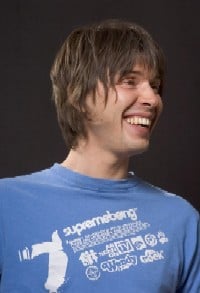
But in a previous life, professor Brian Cox was the keyboardist for D:Ream, the British pop group who had a number of hits in the early-to-mid 1990s. The band are perhaps best known for their number one hit “Things can only get better”, which became associated with the wave of euphoria that surrounded the rise of Tony Blair and New Labour as the party adopted the song for their 1997 election campaign.

After D:Ream went their separate ways in 1997, Cox was able to focus full time on his other love – physics. He received his doctorate from the University of Manchester the following year and has since gone on to work on the ATLAS experiment at the Large Hadron Collider (LHC) at CERN.
cox3.jpg

Alongside his research, however, Cox has continued to crave the stage making regular appearances on popular science programmes. His presenting career has really kicked off this year as he hosted Wonders of the Solar System, a five-part series in which he travels the globe explaining various phenomena in our solar system. He has also begun filming on the follow-up series, Wonders of the Universe, to be broadcast in the UK in early 2011.

But Cox is clearly a man who likes to keep busy, and this morning he revealed via Twitter that he is returning to the studio with his old group to record a couple of new tracks. The band reformed in 2008 with two of the band’s main members singer – Peter Cunnah and DJ Alan Mackenzie – and the pair are currently working on a new album, In Memory Of… scheduled for release in March 2011. It is not yet clear whether Cox will join the band for the tour that will accompany this release.

And it seems that Cox is far from alone in being a professional physicist with a passion for music. Cox’s colleagues at the ATLAS collaboration are planning to release a double album, covering a range of popular styles, under the scientists’ own record label, Neutralino Records. I’m just waiting for the day that D:Ream team up with Kate Mcalpine and her crew who made the headlines back in 2008 when they recorded the “Large Hadron Rap” to coincide with the switch-on of the LHC, which has now attracted more than six million hits on youtube.
Are you a highly skilled worker?

By Margaret Harris

UK government proposals to cap the numbers of skilled non-EU immigrants could seriously hurt the country’s science departments and hi-tech industries. That, at least, is the message in an editorial in this week’s Nature, which goes on discuss how such a cap could make it hard for UK institutions to recruit and retain the best overseas scientists.

But I think there’s an unexplored question here, which is this: how hard is it to qualify for a highly skilled worker visa to the UK under current rules? Would a typical postdoc make the cut? How about a more senior scientist? And, for that matter, how about you?

In the interests of finding out, I paid a visit to the UK Border Agency’s Points-Based-System calculator. The calculator allows you to see how many points you’d earn under the current system based on various attributes like income, age and qualifications.

(more…)

Reflections on a complete life in physics

By James Dacey

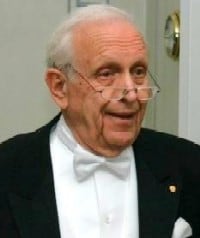
What is it that makes a dedicated scientist out of a kid with an everyday background? This is how Roy Glauber opens his autobiography on the Nobel Prize website, having shared the award in 2005 for his pioneering theoretical work on quantum optics. I recently caught up with Glauber to interview him for physicsworld.com to discover a bit more about his remarkable life in physics.

glaubface2.jpg

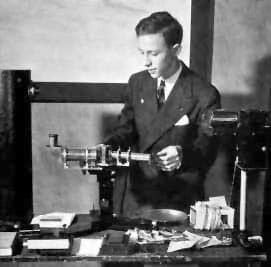
Glauber described how he developed an early interest in astronomy, which led him to build his own reflecting telescope before he went to high school. Once he started at the Bronx High School for Science, Glauber’s interest in mathematics was inspired by a teacher who encouraged the promising student to learn calculus by lending him an introductory textbook.

Having begun study at Harvard in the early 1940s, Glauber’s physics education was then rapidly accelerated when a stranger appeared in the physics department in 1943 asking if Glauber would like to join him to come and work on an interesting new project “out west”. That turned out to be the Manhattan Project where Glauber would join the likes of Hans Bethe and Richard Feynman in developing the fundamental science to create the atomic bomb.

Before accepting the post at Los Alamos, Glauber had not realized what the project was working towards. “It took some months to grow accustomed to the idea, and the wish to put an end to the long sequence of massive air raids first over Britain and then over Germany played an important role,” he says. In terms of his development as a physicist, however, Glauber was in awe of the project leaders and took a lot of inspiration from them. “Both Fermi and Bethe were extraordinarily effective in zeroing in on the essential points and wasting no time on affectation of any sort”.

You can read plenty more of Glauber’s fascinating reflections in my interview, which has just appeared on physicsworld.com.

Roy Glauber – from the Bronx to the Nobel


How did it feel to win the Nobel Prize for Physics and in what sense has it changed your life?

It was quite a surprise receiving the phone call that morning. It might have been less of a surprise some years earlier, but it was very gratifying nonetheless. Having received the prize does in one way or another consume a fair amount of one’s time. One becomes in a sense a proxy for a great many colleagues. If one takes up the responsibilities implicit in that role it could become very difficult to continue creative work. That is a kind of threat to the careers of younger recipients. There is something merciful in receiving the prize later in life.

There is something merciful in receiving the prize later in life.

Are you surprised by all of the research and applications that have sprung from your work on quantum optics?

It’s always impressive to see applications spring from one’s work. They frequently take off in directions one would never have anticipated. What has been most fascinating has been the development of sensitively controlled ways of generating special quantum states involving one or a few photons. The “entangled” states in particular show exciting promise as a basis for quantum computation.

What do you think are the most important unanswered questions in quantum mechanics?

Quantum mechanics doesn’t seem to contain many mysteries anymore, now that we have truly learned to answer its questions and to live with it. But I can’t believe we won’t have still deeper lessons to learn in the future when theory is unable to cope with the results of experiments. The most obvious place for that to happen is in the less explored areas of high-energy physics. To find such suggestions in low-energy physics will evidently require unprecedented accuracy.

Can you describe how you developed an early interest in science, particularly through your experiences at the Bronx High School for Science?

I had an early interest in astronomy, which led me to grind the mirror for a reflecting telescope and then to build a number of optical instruments before I went to high school. The New York high schools of that era had benefited from the depression years by being able to hire as teachers a whole generation of capable young people who seemed to have no future in other occupations after their own college educations.

Do you still remember your teachers?

My interest in mathematics was raised considerably by a teacher called Samuel Altwerger who encouraged me to learn calculus halfway through high school. He was convinced that the subject was far less formidable than it was reputed to be. He was right. Doing that saved me about two years of college math, and made it possible for me to skip the intermediate physics courses in college and proceed to the graduate courses directly. That’s how I was able to work at Los Alamos during the war before I had graduated.

How did you feel about being involved in the Manhattan Project at such a young age?

The organization of the Manhattan Project must have had a desperate time finding people not yet engaged in war work who were willing to relocate to the middle of New Mexico. Being 18 and having taken most of the graduate courses was a real advantage in those respects. It was a strange feeling being part of a mature theoretical division under Hans Bethe, but very few people on the project were as old as its leaders, who were almost all under 40.

Were you aware of the project’s goal when you signed up, and how did you feel when you found out?

The nuclear projects were kept as dark secrets during the war. The best evidence I had on what was being done was the absence of any open mention of fission after 1940. My guess, based on that and a couple of scattered hints, some of them incorrect, was that they were trying to get a chain reaction to work. In fact they had already accomplished that over a year earlier. I hadn’t guessed that Los Alamos was working to build a bomb, and I was quite taken aback to learn that when I arrived.

It took some months to grow accustomed to the idea, and the wish to put an end to the long sequence of massive air raids first over Britain and then over Germany played an important role. It seemed clear that the Germans could be developing their own bomb, and that too added to the motivation. I can’t remember hearing any talk at all of Japan as a threat in that connection.

I hadn’t guessed that Los Alamos was working to build a bomb, and I was quite taken aback to learn that when I arrived.

Of all the great physicists you have worked alongside, who was the most inspirational?

It’s awfully difficult to say who I admired most among the leaders. Both Fermi and Bethe were extraordinarily effective in zeroing in on the essential points and wasting no time on affectation of any sort. They seemed, as mature scientists, to have little patience with elegant ways of deriving their conclusions, and to regard those as a waste of effort. As an immature scientist, I’d have to admit to deriving joy from a particularly neat bit of mathematics or way of arriving at a result. Fermi had started out in life as a mathematician, and must have learned to resist that strong temptation.

You have had a lot of involvement with the Ig Nobel prizes – do you think it’s important for scientists to keep a sense of humour about their work?

The Ig Nobel ceremonies are an annual bit of fun and a pin prick to inflated personalities. Their awards are often clever and frequently funny, though those categories don’t always overlap. I do find that some features of the presentation have become a bit ritualistic over the years, particularly those that have least relation to what is going on in contemporary science.

Antihydrogen trapped at CERN

Physicists at CERN in Geneva are the first to capture and store atoms of antimatter for long enough to study its properties in detail. Working at the lab’s ALPHA experiment, the team managed to trap 38 anti-hydrogen atoms for about 170 ms. The next step for the researchers is to measure the energy spectrum of the atoms, which could provide important clues as to why there is much more matter than antimatter in the universe.

Antihydrogen is the antimatter version of the hydrogen atom and comprises a positron – or antielectron – and an antiproton. According to the Standard Model of particle physics, the energy levels of antihydrogen should be identical to those of hydrogen. Any deviations from this could help physicists identify new physics – and explain why there is much more matter than antimatter in the universe.

Although creating positrons and antiprotons is relatively easy, making antihydrogen is much harder. This form of antimatter was not isolated until 1995 – also in experiments at CERN. Making it stick around for long enough to study in detail is even more difficult. But in being able to trap antihydrogen atoms for 170 ms, the members of ALPHA, who come from 14 institutions in seven different nations, can now look forward to studying its atomic energy levels.

Colliding clouds

The experiment begins by making a cloud of positrons and a cloud of antiprotons. The antiprotons are created in an accelerator by smashing high-energy protons into a stationary target. The antiprotons are then slowed down and cooled in a series of steps involving a storage ring and electromagnetic traps. The positrons are produced by a radioactive source and then accumulated and cooled in a special trap.

The clouds are injected into a superconducting magnetic trap, where they mix for about 1 s to create antihydrogen. The charged positrons and antiprotons are then ejected from the trap, leaving behind neutral antihydrogen. While most of this antihydrogen is moving too quickly to be trapped, atoms with very little kinetic energy are held by a magnetic field gradient.

ALPHA researchers then detected the atoms by switching off the trap and setting the antihydrogen free to annihilate with surrounding matter. This created several charged particles including pions, which were spotted by a bank of detectors surrounding the trap. In total, the team has managed to see 38 annihilation events that are consistent with the release of antihydrogen that had been trapped for 170 ms.

Looking for CPT violation

The next step for the researchers is to use the antihydrogen to study a fundamental quantum transformation known as the charge-parity-time (CPT) operation. When the CPT transformation is applied to a physical system, three things happen: every particle is converted to its antiparticle; each spatial co-ordinate is reflected so that left becomes right, up becomes down and forward becomes backward; and time is reversed.

There is currently no experimental evidence that the CPT symmetry is violated, but it could show up as a slight difference in the frequency of certain atomic transitions in hydrogen and antihydrogen atoms. The discovery of such a violation could also help physicists understand why there is much more matter than antimatter in the universe.

“For reasons that no one yet understands, nature ruled out antimatter. It is thus very rewarding, and a bit overwhelming, to look at the ALPHA device and know that it contains stable, neutral atoms of antimatter,” said ALPHA spokesperson Jeffrey Hangst of Aarhus University in Denmark. “This inspires us to work that much harder to see if antimatter holds some secret.”

The work is described in Nature doi:10.1038/nature09610.

Optical transistor in silicon is a first

Researchers claim to have fabricated the first all-optical transistor on a silicon chip. This device allows the transmission of light emitted by one laser to be governed by the intensity of another.

This novel transistor was made by researchers at EPFL in Lausanne, Switzerland, and the Max Planck Institute for Quantum Optics in Garching, Germany. According to the team, the device promises to provide another building block for constructing all-optical integrated circuits. Such circuits could dramatically improve the efficiency of telecommunication networks because they would eliminate the need to convert optical information to electrical pulses – which can be processed easily – and then back to light.

The team employed standard nanofabrication methods to make the transistor, a taper consisting of a silicon dioxide disc with a rimmed edge sitting on a silicon pillar. The ability to make devices in silicon is important because the material is widely used in the electronics industry.

To operate the device, the frequency of one laser beam (the “probe”) is tuned to an optical resonance of the silicon dioxide structure. The result is that the structure behaves like an optical cavity, with the incident light bouncing endlessly around its rim. “No light is transmitted through the taper since all the light is lost in the optical mode of the cavity,” explains Tobias Kippenberg from EPFL.

The beat goes on

A second “control” beam at a different frequency is then directed at the taper. Interaction between the two beams results in a beat frequency that also resonates with the disc and creates a mechanical oscillation. Interference between these three light fields results in the cancellation of the probe beam within the cavity.

“The presence of the control beam allows the probe beam to be transmitted through the taper as if it was not coupled anymore to an optical cavity. This is the optomechanically induced transparency effect,” explains Kippenberg.

Cranking up the intensity of the control beam increases transmission of the light from the probe laser through the structure, but it is impossible to realize complete transmission – this would require an infinitely powerful control laser.

Kippenberg and his colleagues selected silicon dioxide for building their tapers, because this material combines very high transparency with very low optical losses.

“However, the optomechanically induced transparency effect can be realized in various optomechanical platforms that have been developed in recent years, based on many different materials such as silicon nitride and calcium fluoride.”

Quantum control could be next

Kippenberg believes that the optomechanically induced transparency effect might be able to control the quantum state of the transistor. “This would be a very important step towards the realization of quantum experiments on large-scale objects and tests of decoherence on unprecedentedly large systems.”

The next goal for the team is to cool the mechanical oscillator into its quantum ground state using the optomechanical interaction. Kippenberg says that this will be a first step towards the preparation and control of a mesoscopic object in various quantum states.

The team’s all-optical device joins a growing band of variants on the conventional electronic transistor, including one that converts an electrical input into an electrical and a laser output. Co-inventor of this “transistor laser”, Milton Feng from the University of Illinois Urbana Champaign, is not particularly impressed by the all-optical variant built by the European team: “It is science, but it will never make it in the real world of integrated circuits like the semiconductor transistor did.”

The research is reported at Science DOI: 10.1126/science.1195596.

Einstein makes Obama's top 13

SDC11489_2.JPG

Of Thee I Sing: A Letter to my Daughters Barack Obama (2010)

By James Dacey

To me, observing from the UK, American politics often seems to resemble a fairy tale in which heroes and villains battle it out to win the hearts of the American public, spurred on by a big zealous Fox and resting only for the occasional Tea Party.

So I wasn’t particularly surprised to hear the news yesterday that Barack Obama was embracing the strong narrative that surrounds his presidency by releasing a children’s book. Of Thee I Sing: A Letter to my Daughters, written before he came into office, is a 31-page illustrated work celebrating the lives of 13 great Americans, including, for instance, the patriotism of George Washington and the artistry of Georgia O’Keeffe.

I was slightly surprised, however, to see the inclusion of Albert Einstein: not because of his undoubted inspiration, but because the vast majority of his groundbreaking work was carried out before he took US citizenship in 1940. Einstein “turned pictures in his mind into giant advances in science, changing the world with energy and light,” writes Obama.

In fact Einstein’s relationship with the land of opportunity is a fascinating debate in itself, as documented through the great man’s razor-sharp one-liners. Before moving to the US, Einstein had a pretty negative view of American culture, as he explained after returning to Europe in 1932 in a letter to Austrian-born physicist, Paul Ehrenfest: “For the long term I would rather be in Holland rather than America… Besides having a handful of really fine scholars, it is a boring society that would soon make you tremble,” he wrote.

After taking citizenship, however, Einstein’s feelings began to change and he found a strong affinity with certain American values. “America is today the hope of all honourable men who respect the rights of their fellow men and who believe in the principles of freedom of justice,” he stated in “Message for Germany”, which was dictated over the telephone to a correspondent on 7 December 1941, the day that Pearl Harbor was bombed.

Until his death in 1955, it seems Einstein had a love-hate relationship with American society, which became particularly strained during the McCarthy era. This was apparent in a letter Einstein wrote in 1950 to Gertrud Warschauer, the widow of a Berlin rabbi. “I hardly ever felt as alienated from people as I do right now… The worst is that nowhere is there anything with which one can identify. Brutality and lies are everywhere,” he wrote.

I could go on, but Einstein said an awful lot of quotable things.

Tests begin on the body of Tycho Brahe


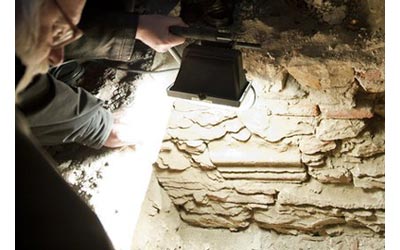
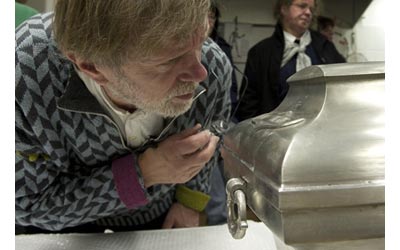
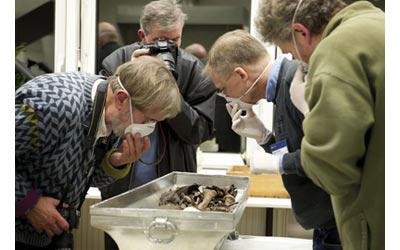
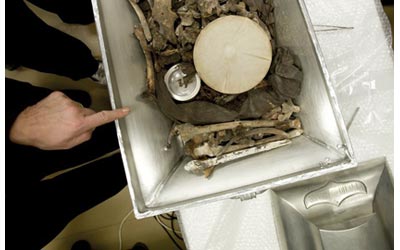
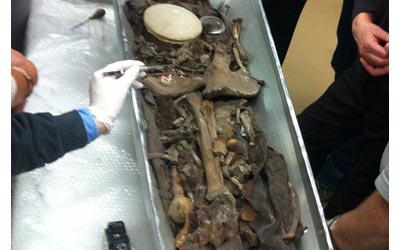
The clock is ticking for a team of scientists from Denmark who have until Friday to examine the remains of Tycho Brahe, before the famous astronomer is reburied at his crypt in Prague. Having exhumed the coffin yesterday, the researchers told physicsworld.com they have taken his body back to the project’s headquarters at Aarhus University where they will conduct a series of tests on the remaining bones and tissue.

“It’s research, research, research, and not much sleep,” says Svent Mogensen, the project’s head of communications. The need for urgency is because the Czech authorities have insisted that the remains are returned to Týn Church by Friday. “It has taken us 10 years to get permission for this study,” says Mogensen, comparing the process to The Trial by Franz Kafka.

Born in 1546, Brahe is considered to be the founder of modern observational astronomy. His meticulous observations of the night skies challenged the Ptolemaic view that the universe and its celestial bodies were unchangeable. But the details surrounding his sudden death in 1601 have remained shrouded in mystery.

A fiery character

Brahe was at the time based in Prague, where he had been appointed the official imperial astronomer. He had moved to the city in 1599 following a disagreement with the new Danish King and he quickly became a central scientific figure in the lands of Bohemia and Moravia. But within two years of his arrival in Prague, Brahe was dead – attributed to a bladder infection. One frequently quoted story links the ailment with Brahe’s refusal to break court etiquette by going to the toilet during an event.

However, tests carried out in the 1990s on samples of Brahe’s moustache and hair – obtained during a previous exhumation in 1901 – revealed unusually high levels of mercury, leading to theories of poisoning and even murder. In the 16th century, it was not uncommon to take mercury-based medicines for the treatment of pain. With this latest analysis, the Aarhus University researchers hope to shed more light on this affair and glean more information about Brahe’s general health and physical condition.

“No measurement data or photographical details exist from [the first exhumation], only physical descriptions of the skeletal remains. We can now supplement these with a number of analyses, so you could say that we are completing the investigation that was begun in 1901,” says medieval archaeologist Jens Vellev, leader of the project at Aarhus University.

Problems with the wife

Vellev and his team spent yesterday removing the coffin, made from tin and measuring 1.3 m in length, from its crypt at Týn Church in Prague. They discovered two jars in the coffin – one containing a sample of skull and the other containing what they believe is brain tissue, although the quality of the samples is not yet fully known. Vellev’s team also attempted to exhume the remains of Brahe’s wife, who was buried in the same crypt, but are experiencing difficulties as her wooden coffin collapsed during the operation.

Last night, the researchers transported the coffin to Aarhus University where they have begun to examine the remains through a series of tests including computed tomography (CT) scanning and DNA testing. They will also use particle-induced X-ray emission (PIXE), which involves firing protons at a sample and then measuring the X-rays emitted by specific elements excited within the material, with the energy of the X-rays identifying the elements in question.

The researchers intend to publish preliminary reports by Christmas, with a view to publishing a book by late 2011.

Space probe brings asteroid dust back to Earth

A Japanese spacecraft has successfully returned what are the first samples ever obtained from the surface of an asteroid. Using microscopic methods to study the grains, researchers have confirmed that the minerals could only have come from the asteroid and not from contamination of the probe when it landed back on Earth in June.

The Hayabusa mission, operated by the Japanese space agency JAXA, was launched in 2003 to land on the Itokawa asteroid – a 500 m long body that lies around 300 million kilometres away from Earth – and return a sample to Earth by 2007. The craft also had remote sensing instruments onboard, including an X-ray spectrometer, to study the composition of the asteroid before landing on it.

After a few technical glitches, including being hit by a solar flare, Hayabusa’s return home was delayed by three years. It eventually landed in late June in the Woomera Prohibited Area in Southern Australia, and the recovered probe – which was largely intact – was then sent back to Japan for examination.

Using a scanning electron microscope, scientists at JAXA announced today that around 1500 grains have been identified as extraterrestrial in origin in the Hayabusa samples. The recovered minerals include olivine, pyroxene, plagioclase and iron sulphide. Although these minerals are found on Earth, the abundance of iron and magnesium in the minerals is different on Earth to that on the asteroid.

The composition of the grains, which were around 10 µm in diameter, matched the measurements taken by the X-ray spectrometer onboard Hayabusa before the craft landed on Itokawa. This ruled out the possibility that the signal was contaminated by terrestrial materials as the probe crashed back to Earth.

“It is a world first and a remarkable accomplishment that [Hayabusa] brought home material from a celestial body other than the Moon,” Japan’s science and technology minister, Yoshiaki Takagi, told a news conference in Tokyo.

Space–time invisibility cloak could ‘edit history’

Physicists in the UK have proposed a “space–time” invisibility cloak that, if built, could be used to prevent signal interference or give the illusion of a Star Trek teleportation device.

The idea comes after four years of research by different groups that are creating devices to make objects invisible. In 2006 researchers at Duke University in the US created the first device that could cloak a small object in two dimensions in the microwave region of the electromagnetic spectrum. Last year groups at Cornell University and the University of California at Berkeley, US, independently created 2D cloaks that operated at optical wavelengths. Then, earlier this year, a team at the Karlsruhe Institute of Technology in Germany went one step further to produce a 3D optical cloak.

The latest development, by Martin McCall and colleagues of Imperial College, London, and the University of Salford, might see cloaks add yet another dimension to their capability: time. The idea is to create a tunnel through which an object could perform an action – move or change shape, for example – while appearing as though it is doing nothing at all.

A boon for thieves?

“It means that you can allow an object to do something for a short period of time in such a way that it can’t be detected,” McCall told physicsworld.com. “A good way to think about it is a small piece of an object’s history just being cut out, so you would see the object suddenly jump from one place to another.” In principle, says McCall, such a system would enable a thief to enter a room, steal the contents of a safe and leave the scene as it was before, while security personnel watching CCTV are none the wiser.

In practice, the device would need two transparent walls to act as the tunnel, or space–time cloak. As an object enters the cloak to perform its action, the rear wall would compress light waves passing through from a source behind. Once the object completes its action and leaves the cloak, however, the front wall would stretch the light waves passing through so that they would merge seamlessly with those outside, whose profile had not been altered.

An analogy, says McCall, is a chicken crossing a busy road. Once the chicken steps onto the road cars must stop to let it pass, but as soon as it leaves the other side the cars would accelerate to catch up with the traffic ahead. To an observer farther down the road, the stream of passing cars would display no evidence of having slowed down.

More savoury applications

Although McCall gives safecracking as a potential for the space–time cloak, his group does have ideas for more savoury applications. In the basic set-up it might appear as similar to a transporter from Star Trek, with a person entering the cloak on one side appearing at the other side moments later, apparently having skipped the journey. But the cloak could also find uses in signal processing: a detector placed inside the cloak would be able to “pause” a signal travelling through the wall while it first deals with a signal passing through the tunnel.

All of this, however, relies on someone being able to make the device – and in particular the walls that compress or stretch light waves. McCall admits a perfect implementation “is certainly beyond current technology”, but points to advances in so-called nonlinear systems: materials that change their refractive index – a property that governs light propagation speed – given illumination with strong lasers. One of the problems with this route is that changes in refractive index introduce reflections, which means the cloak, while hiding the object within, would nonetheless reveal its presence with a telling glow.

But, explains McCall, “Provided we’re prepared to throw away some aspects of the cloak, we can point towards more practical, proof-of-concept experiments that are currently accessible with current technology.”

The research is published today in the Journal of Optics.

Copyright © 2026 by IOP Publishing Ltd and individual contributors