Tracing nuclear dust

nuclear report3.JPG
Image courtesy: The American Physical Society

By James Dacey

Any human activity leaves behind dust, and, if we look closely at this dust, it will always provide a clue to the activity that produced it. This is the idea of nuclear forensic scientist, Klaus Lützenkirchen, who draws an analogy between crime scene investigation and the need to monitor global nuclear activities in a more scientific fashion. Lützenkirchen was speaking today at the annual conference of the American Association for the Advancement of Science (the “triple A-S”), which kicked-off today in San Diego, California.

Earlier in the day, Vice President Joe Biden had addressed this same issue during a speech at the White House, and the American Physical Society (APS) has just released a report, Technical Steps to Support Nuclear Downsizing.

Lützenkirchen, who is head of the nuclear safeguards and security unit at the European Commission Joint Research Centre (JRC), admits that his analogy does break down somewhat as nuclear fingerprints rarely tend to be unique. He proposes, therefore, building a profile of nuclear dust (actual, not figurative, dust), focused on the analysis of chemical, morphological and isotopic qualities. In this way, scientists can collect vital clues to the origins of intercepted nuclear material.

This discussion of international nuclear activities is strongly in keeping with the theme at this year’s AAAS meeting, “Bridging Science and Society”. I’m here in sunny San Diego (yeah, life’s cruel sometimes), so watch this space for more entries from the meeting in the coming days.

Ultracold magnetic atoms bode well for quantum studies

Physicists in the US have for the first time trapped ultracold atoms of dysprosium, the most magnetic element in the periodic table. The breakthrough could open the door to a greater understanding of superfluidity, highly sensitive probes of magnetic fields, and new ways to read and encode quantum information.

Researchers would like to trap as many of the periodic table’s elements as possible, because the unique properties of each allow for different simulations of condensed-matter systems. The typical method involves a magneto-optical trap (MOT), in which a laser causes atoms to temporarily absorb photons and jump into an excited state. These photons give the atoms a push that, combined with the right magnetic field, is directed towards the centre of the group and keeps the atoms cooled and trapped.

Yet some elements have proved easier to trap with MOTs than others. Dysprosium has long been considered to be a difficult candidate because it has so many metastable states close to its ground state. Every time an atom falls into one of these, it would need a separate laser of the correct wavelength to return it to the ground state where the original laser functions. Dysprosium has more than a hundred metastable states, which, researchers assumed, would mean more than a hundred different lasers.

Success with erbium

However, recent research has shown that metastable states do not preclude trapping altogether. In 2006 physicists Jabez McClelland and James Hanssen at the National Institute of Standards and Technology in the US discovered that they could use an MOT to trap erbium – another element with numerous metastable states. It worked because the magnetic field strongly coupled to the magnetic moments of the atoms, thereby keeping them trapped long enough for them to fall back into their ground state of their own accord.

No-one could have predicted before we did the experiment that this would work Benjamin Lev, University of Illinois

It is this work of McClelland and Hanssen that inspired Benjamin Lev and colleagues at the University of Illinois at Urbana-Champaign to try an MOT with dysprosium. “No-one could have predicted before we did the experiment that this would work – and work so well,” says Lev. “Theories of dysprosium structure – and data on its structure, like metastable lifetime – were just too poor to provide a predictor.”

In the Illinois group’s system, dysprosium is first heated to 1250 °C so that it expands through a pinhole, creating an atomic beam. Four lasers then slow the beam down until it is at near rest and glides into a high-vacuum chamber. Finally the application of six laser beams and a magnetic field forms the MOT and cools the atoms – of which there are almost a billion – to between 10 and 1000 microKelvin.

‘A clear breakthrough’

Peter van der Straten of Utrecht University in the Netherlands calls the system “a clear breakthrough in the world of laser cooling and trapping”. However, he is unsure of the additional benefits of dysprosium over erbium or chromium, which also have strong magnetic moments and which are therefore attractive for simulations of superfluid states. Indeed, chromium has even been cooled into a Bose–Einstein condensate (BEC), which is a prerequisite for such simulations. “It is to be expected that [Lev’s group] will try to go that way quickly, and, because they have a large number of atoms, they are very likely to succeed,” he adds. “However, the story of chromium has shown that the path to BEC is not simple due to the strong interactions, and that many hurdles have to be taken before victory is achieved.”

Still, Lev is not deterred. As well as creating a dysprosium BEC, his group is planning to use the system as a quantum-information processor, as a microscope for imaging magnetic materials with high resolution and sensitivity.

The work is described in Phys. Rev. Lett. 104 063001.

Fermi pins down a colossal accelerator

Matter ejected from a supermassive black hole travels several light years before being accelerated to nearly the speed of light. This is the surprising conclusion of an international team of astronomers who used the Fermi Gamma-ray Space Telescope to study radiation from a blazar – a supermassive black hole that fires an intense beam of radiation directly at Earth. The result is at odds with some theories that suggest the acceleration occurs much nearer to the black hole.

Up to a billion times heavier than the Sun, supermassive black holes are mind-boggling entities that dominate the centre of most large galaxies. Many are surrounded by a thin “accretion disc” of matter that swirls into the black hole like water going down a drain. Near the centre of the disc, the matter is so hot that atoms are stripped of electrons to create a rotating plasma that generates huge magnetic fields.

In some supermassive black holes the magnetic field lines pop out of either side of the disk like uncoiling springs, taking jets of matter with them (see figure). If one of the jets happens to point towards Earth, astronomers see a “blazar” – literally, a blaze of radiation at energies all the way up to the highest detectable gamma rays. The radiation is focused into a tight beam by a process called relativistic beaming, which means that it is created in a region of the jet that has been accelerated to about 95% of the speed of light.

Flaring blazar

But exactly what drives this acceleration to near light speed – and exactly where it occurs along the length of the jet – has long been a mystery. Now, however, the Fermi astronomers, and colleagues using several other ground- and space-based instruments, have an answer after studying a 20-day increase in the intensity of gamma rays emitted by blazar 3C 279. They also measured how the polarization of visible light changed during this flare – visible light is polarized because it is produced by electrons orbiting the magnetic field lines in the jets.

They spotted a big change in polarization, which they think occurs as a huge “blob” of ejected material encounters a bend in the jet located at least 10,000 black-hole-radii away – roughly 10 light-years – from the black hole itself. As this polarization rotation occurred exactly at the same time as the flare itself, they conclude that the flare must also be produced by the blob of ejected material. The blazar was therefore produced at a distance that is up to a thousand times further from the centre of the hole than had been predicted by some models.

Concerted coordination of telescopes

Andy Young, an astrophysicist at the University of Bristol in the UK says that the work in an example of what can achieved when astronomers make “a concerted effort to coordinate various observatories”. Young, who was not involved in the 3C 279 analysis, told physicsworld.com that Fermi is currently monitoring a number of different blazars so astronomers can combine observations from a number of flares.

One important goal of such studies is to gain a better understanding of how supermassive black holes grow by accreting matter. Not all black holes eject matter in jets, and understanding why jets occur could provide important insights into the evolution of galaxies and galaxy clusters. This is because the jets are so powerful that they can heat up the gas in vast areas of space, which appears to affect how galaxies grow.

The work is reported in Nature 463 919.

WISE opens its eyes on the sky

WISE image.jpg
Image of stars being born in a cloud of gas and dust. Inset shows the centre of the cloud taken by NASA’s Hubble Space Telescope (credit: NASA)

By Michael Banks

NASA has released the first images taken by its Wide-field Infrared Survey Explorer (WISE space telescope, which launched in mid December.

The seven awe-inspiring images include a star-forming cloud teeming with gas, dust and massive newborn stars (above), a detailed picture of the Andromeda galaxy — the closest large galaxy to the Milky Way — and a comet streaking across the sky.

Costing $320m, WISE is an infrared space telescope that will probe the coolest stars in the universe and the structure of galaxies at four wavelengths between 3 – 25 micrometres. As WISE is designed to detect infra-red radiation from cool objects, the telescope and detectors are chilled to 12 K with liquid helium.

WISE will circle the Earth’s poles at an altitude of 525 km scanning the entire sky one-and-a-half times in nine months where it will also measure the diameters of more than 100 000 asteroids.

Look out for more amazing images soon.

WISE image 2.jpg
Image of the Andromeda galaxy taken by NASA’s WISE craft (credit: NASA)

Gravity’s effect on time confirmed

Physicists in the US and Germany have used two fundamental tenets of quantum mechanics to perform a high-precision test of Einstein’s general theory of relativity. The researchers exploited wave-particle duality and superposition within an atom interferometer to prove that an effect known as gravitational redshift – the slowing down of time near a massive body – holds true to a precision of seven parts in a billion. The result is important in the search for a theory of quantum gravity and could have significant practical implications, such as improving the accuracy of global positioning systems.

Gravitational redshift follows on from the equivalence principle that underlies general relativity. The equivalence principle states that the local effects of gravity are the same as those of being in an accelerated frame of reference. So the downward force felt by someone in a lift could be equally due to an upward acceleration of the lift or to gravity. Pulses of light sent upwards from a clock on the lift floor will be Doppler shifted, or redshifted, when the lift is accelerating upwards, meaning that this clock will appear to tick more slowly when its flashes are compared at the ceiling of the lift to another clock. Because there is no way to tell gravity and acceleration apart, the same will hold true in a gravitational field; in other words the greater the gravitational pull experienced by a clock, or the closer it is to a massive body, the more slowly it will tick.

Confirmation of this effect supports the idea that gravity is a manifestation of space–time curvature because the flow of time is no longer constant throughout the universe but varies according to the distribution of massive bodies. Reinforcing the idea of space–time curvature is important when distinguishing between different theories of quantum gravity because there are some versions of string theory in which matter can respond to something other than the geometry of space–time.

Universality of freefall

Gravitational redshift, however, as a manifestation of local position invariance (the idea that the outcome of any non-gravitational experiment is independent of where and when in the universe it is carried out) is the least well confirmed of the three types of experiment that support the equivalence principle. The other two, the universality of freefall and local Lorentz invariance, have been verified with precisions of 10–13 or better, whereas gravitational redshift had previously been confirmed only to a precision of 7 × 10–5. This was achieved in 1976 by recording the difference in elapsed time as measured by two atomic clocks – one on the surface of the Earth and the other sent up to an altitude of 10,000 km in a rocket.

This kind of redshift measurement is limited by the degree of gravitational pull provided by the Earth’s mass. The new research, carried out by Holger Müller of the University of California Berkeley, Achim Peters of Humboldt University in Berlin and Steven Chu, previously at Berkeley but now US secretary of energy, is limited in the same way but manages to dramatically increase precision thanks to an ultrafine clock provided by quantum mechanics.

In 1997 Peters used laser trapping techniques developed by Chu to capture caesium atoms and cool them to a few millionths of a degree above absolute zero (in order to reduce their velocity as much as possible), and then used a vertical laser beam to impart an upward kick to the atoms in order to measure gravitational freefall.

Now, Chu and Müller have re-interpreted the results of that experiment to give a measurement of the gravitational redshift.

In the experiment each of the atoms was exposed to three laser pulses. The first pulse placed the atom into a superposition of two equally probable states – either leaving it alone to decelerate and then fall back down to Earth under gravity’s pull or giving it an extra kick so that it reached a greater height before descending. A second pulse was then applied at just the right moment so as to push the atom in the second state back faster toward Earth, causing the two superposition states to meet on the way down. At this point the third pulse measured the interference between these two states brought about by the atom’s existence as a wave, the idea being that any difference in gravitational redshift as experienced by the two states existing at difference heights above the Earth’s surface would be manifest as a change in the relative phase of the two states.

Enormous frequency

The virtue of this approach is the extremely high frequency of a caesium atom’s de Broglie wave – some 3 × 1025 Hz. Although during the 0.3 s of freefall the matter waves on the higher trajectory experienced an elapsed time of just 2 × 10–20 s more than the waves on the lower trajectory did, the enormous frequency of their oscillation, combined with the ability to measure amplitude differences of just one part in 1000, meant that the researchers were able to confirm gravitational redshift to a precision of 7 × 10–9.

As Müller puts it, “If the time of freefall was extended to the age of the universe – 14 billion years – the time difference between the upper and lower routes would be a mere one thousandth of a second, and the accuracy of the measurement would be 60 ps, the time it takes for light to travel about a centimetre.”

This extreme precision could become useful as global positioning systems become ever more accurate. As Müller points out, to determine the position of an object on the ground to millimetre accuracy the atomic clocks on GPS satellites would need to operate with a precision of 10–17, a figure in fact achieved recently by a clock developed at the National Institute of Standards and Technology in the US (see “New optical clock breaks accuracy record”). But at the satellites’ altitude of 20,000 km, such clocks will experience a speeding up of time of about one part in 1010 thanks to gravitational redshift. Recovering the precision of 10–17 would therefore require knowing the redshift effect to a precision of 10–7.

Müller hopes to further improve the precision of the redshift measurements by increasing the distance between the two superposition states of the caesium atoms. The distance achieved in the current research was a mere 0.1 mm, but, he says, by increasing this to 1 m it should be possible to detect gravitational waves, miniscule ripples in the fabric of space–time predicted by general relativity but never before observed.

The work is described in Nature 463 926.

Physicists watch chemistry in slow motion

Physicists in the US have observed chemical reactions taking place at such low temperatures that they are dominated by quantum effects, rather than thermal collisions. The researchers showed that diatomic molecules containing potassium and rubidium are much less likely to react with each other, when cooled to just 500 nK, if they are all prepared in the same quantum state. As well as providing important information about the quantum nature of chemical reactions, the technique could also be used to extend the lifetimes of ultracold gases by reducing the rates at which their constituent atoms and molecules react.

Although quantum mechanics lies at the heart of every chemical reaction, it is not easy to work out how the initial quantum states of the reactants affect the rate of reaction. This is because most of what we know about chemistry is based on observations at tens or hundreds of kelvin, where thermal fluctuations cause atoms and molecules to enter reactions in a wide range of initial quantum states.

One way of getting round this problem is to cool the atoms or molecules to near absolute zero to remove the effects of thermal fluctuations. In this case, the quantum states of the reactants can be fixed at the start of the experiment – and will endure until the reaction occurs. With common molecules such as ammonia, however, physicists have only managed to cool reactants to hundreds of millikelvin – which is not cold enough to fix the initial sates.

Cold enough

But by cooling potassium-rubidium (KrB) molecules to just a few hundred nanokelvin, Jun Ye, Deborah Jin and colleagues at the National Institute of Standards and Technology (NIST) in Colorado and Maryland have been able to observe the effects of specific initial states on how reactions proceed.

The team created the KrB molecules by exposing an ultracold mixture of potassium and rubidium atoms to a magnetic field gradient, which causes the atoms to bind together. The bond between the atoms is further strengthened by exposing the atoms to laser light. By adjusting the way the molecules are prepared, Ye and colleagues could either put all the molecules in the same low-energy quantum state or create a mixture of molecules in two different low-energy states.

When a collision occurs, the molecules can react to form Rb2 and K2 – and the energy released causes both to be ejected from the trap. The rate at which the KRb atoms react can therefore be determining by measuring the number of trapped molecules as a function of time. With the gas held at a chilly 500 nK, the KRb molecules were found to collide much more slowly than molecules in a typical chemical reaction.

Tunnelling molecules

KRb molecules are fermions – they have half-integer spin – which means that two molecules will avoid each other if they are both in the same quantum state. Indeed, two identical molecules only react if they first quantum-mechanically tunnel through this effective energy barrier. However, when the molecules are in two different states, this barrier does not exist and the reaction was seen to occur up to 100 times faster.

The researchers then took a closer look at reaction rates for molecules in the same quantum state. By repeating their measurements at several temperatures between 200 and 900 nK, they found that the rate increased as a function of temperature. This confirms that the limiting factor for the reaction is quantum mechanical tunnelling – once the molecules get beyond this barrier, the reaction proceeds rapidly.

New chemical reactions

“For the first time, we can explore how quantum-mechanical rules, as they are applied to the whole composite molecules, propel a chemical reaction,” explains Ye. He adds that the team’s findings could lead to the design of new chemical reactions and provide scientists with new ways of controlling chemical reactions.

A more immediate consequence of the experiment, according to Jeremy Hutson of Durham University in the UK, is that it could help physicists to reduce the rate of unwanted reactions in trapped ultracold gases. Such reactions place severe limits on the types of atoms and molecules that can be trapped – and overcoming these limits could allow simulate a wider range of quantum phenomena that is possible today.

Indeed, Ye told physicsworld.com that the team is now developing new approaches to suppress reactions. “We will use these precisely engineered molecular systems for quantum simulations of condensed matter systems, for example, and explore new phases of matter and quantum phase transitions,” says Ye.

The work is described in Science 327 853.

Promoting nuclear physics

By Michael Banks

If you asked the general public what comes to mind when you say “nuclear physics”, you might hear about “nuclear power” or “atomic bombs”. However, you might not get a reply saying how research into nuclear physics allows us to destroy cancer cells more effectively or improves security and safety by designing better methods to detect dirty bombs or radioactive waste.

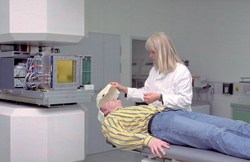
Behandlungsplatz.jpg

To help promote the benefits of research into nuclear physics and to shake off some of the old stereotypes the subject has, the Institute of Physics today launched a new report, Nuclear Physics and Technology – Inside the Atom, outlining how basic research into nuclear physics is being used in a variety of applications from medical physics to fusion research.

The report comes at a difficult time for the subject in the UK. Nuclear physicists were up in arms after deep budget cuts to the subject were handed out in late December as the UK’s Science and Technology Facilities Council (STFC announced the country would pull out of a number of nuclear physics projects, mostly at laboratories abroad, to help balance its budget for 2011.

Basic research into nuclear physics was firmly in the cross-hairs as the STFC announced the UK would pull out of the AGATA and PANDA experiments at the GSI heavy-ion lab in Darmstadt and also at ALICE at the Large Hadron Collider at CERN. The only experiment in nuclear physics that is still to be funded is NUSTAR at GSI.

Many nuclear physicists have lamented the state of the subject in the UK, which they say is now funded much less than in other countries such as Germany or Japan. Nuclear physicist Guenther Roser from the University of Glasgow called the UK’s spending on nuclear physics “appallingly low” and that “the balance is not right” compared with how much the UK spends on particle physics (mostly in subscriptions to CERN) or astronomy.

John Womersley, director of science programmes at the STFC, who spoke at the launch of the report noted that nuclear physics had been “severely affected” by the cuts but warned that physics as a whole will have to “make better arguments” in terms of its impact on society to get enough funding “just to stay still”.

I caught up with William Gelletly from the University of Surrey, who chaired the launch of the report, to ask him what could be done to reverse the trend of low funding for nuclear physics. He said that the community has to get the message across that nuclear physics underpins a lot of different areas, be it in helping to train nuclear physicists or helping medical physicist use the latest proton therapy machines.”You need nuclear physicists to teach the next batch of nuclear engineers,” says Gelletly. “At Surrey, we train over 100 MSc students in nuclear physics across four different courses, of which about half are UK students.”

So what can be done to reverse the decline? Gelletly says that making the government aware how important nuclear physics is would be a good start. He advises that a review of the subject – undertaken not by nuclear physicists but by “independent” experts – should be set up to show the government how important the subject is to the country.

The applications of nuclear physics were perhaps brought home most effectively by Gelletly’s Surrey colleague Jim Al-Khalili. In a wide-ranging talk on nuclear physics he also told the audience that his wife is currently undergoing a three week course of radiotherapy battling against breast cancer. He said that techniques in proton and carbon therapy – developed by nuclear physicists – have allowed for all the energy of the ion beam to be deposited in a very small area thus not damaging the remaining healthy tissue meaning it is more effective than chemotherapy.

Indeed, with the report mentioning that at least 1 in 6 of the UK population will require radiotherapy at some part of their lives, it is hard to think of a more powerful reason why the UK should do more to fund nuclear physics.

Crab Nebula or heart-building protein?

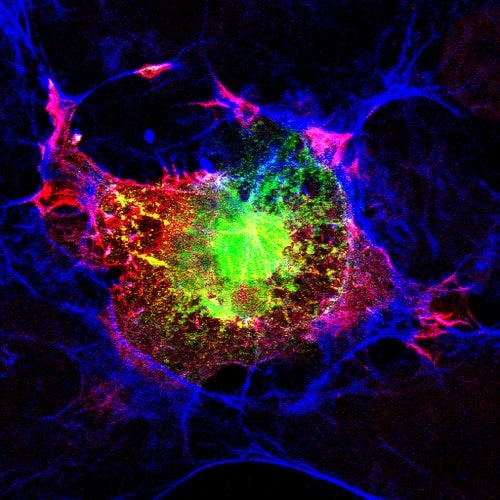
COS cell.jpg
Heart-builder COS cells plan the heart cell architecture

By James Dacey

Although this colourful image may strongly resemble the Crab Nebula, it is in fact a type of cell called a COS cell, found in the human heart where they regulate the structure of biological tissue. The image was produced in by Joseph Dwyer at King’s College London, who stained an isolated cell using fluorescent antibodies before capturing the image with a microscope. The image was one of seven short-listed for a competition ‘Reflections of Research’, which was held of the British Heart foundation. You can see the other impressive images here.

The mystery of the Two Little Boys

By Matin Durrani

One of the reasons why the BBC Radio show Desert Island Discs has been on air for almost 70 years now is that it’s such a simple format.

Guests choose their favourite eight records to take to a desert island while chatting about their life and work to the presenter, currently Kirsty Young.

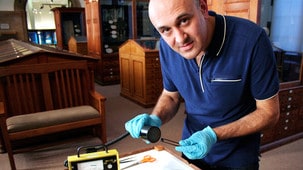
jimalkhalili.jpg
Jim Al-Khalili — enjoys listening to Rolf Harris

It’s also tempting to think what you might pick if you were on the show. You’d want to appear to have impeccably good taste of course, while not appearing too conventional or mainstream.

All of which left me wondering why the theoretical nuclear physicist Jim Al-Khalilli, who appears on this week’s show, decided to choose Rolf Harris’s Two Little Boys as one of his eight records.

The song, which was a surprise number one UK hit in 1969 for the Australian entertainer, describes the life of two boys who grew up to fight in the American Civil War. It’s a bit of a cheesy and mawkish song — no, actually, it’s awful — but there’s an interesting story behind why Al-Khalili picked it.

The Surrey University physicist grew up in Iraq, where his father had returned after meeting his English wife while studying engineering in Portsmouth. The family used to listen constantly to the BBC World Service radio broadcasts and his mother one day wrote in, asking for the Rolf hit to be played for Jim and his brother as a request.

It was, to their surprise, and Jim and his family’s name was read out on air.

The show’s, unfortunately, a bit light on physics. Al-Khalili, for example, begins an interesting discussion about nuclear fusion, which gets about as far as him calling it “the holy grail of energy” as it does not produce carbon dioxide or “horrible nuclear waste” before presenter Kirsty Young cuts him off with a shrill “Enough of the science!”

Jim also touches on science in the Islamic world — indeed, he is currently putting the finishing touches to a feature on the topic, which is to appear in the April issue of Physics World magazine.

His favourite book is the heavyweight The Road to Reality by Roger Penrose and his luxury is an acoustic guitar.

You can listen to the broadcast via this link

Premièring a premier event

By Dens Milne

vs1.jpg
Courtesy Daresbury Laboratory

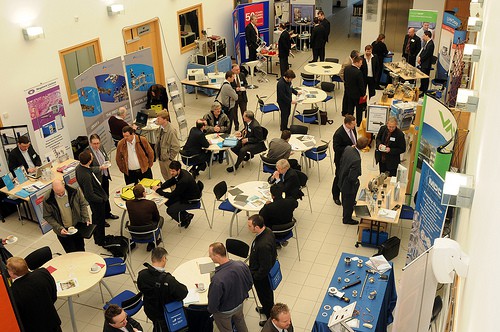
Yesterday I was at the Cockcroft Institute at the Daresbury Laboratory for the 1st Vacuum Symposium UK. This included a one-day technical programme covering a broad range of talks on vacuum science and technology. The event followed the 9th Residual Gas Analyser Users Meeting held the day before, which boasted its own day-long seminar programme organized by the RGA Users Group.

I joined more than100 delegates enjoying presentations on the many and varied applications of vacuum — covering everything from the challenges of pumping the enormous vacuum chamber at the Joint European Torus (JET) fusion experiment to the intricacies of applying coatings in the production of large-area glazing products (that’s windows to you and me).

The event (co-sponsored by the Institute of Physics’ Vacuum Group, the British Vacuum Council and the Science and Technology Facilities Council) was free to attend thanks to the support of the 26 hi-tech companies showing their wares at the associated trade exhibition. Attendees could also sign up for two training seminars taking place in parallel to the main talks or peruse the mini poster session at the back of the main auditorium highlighting research work taking place at the University of Liverpool, Nottingham University and Université de Provence. A further international feel was added by keynote speaker Dr Manfred Leisch of Graz University of Technology in Austria, who talked about his surface-science research on stainless steel, one of the most commonly used construction materials for vacuum chambers and components.

It is hoped that this will be just the first in a series of annual symposia. Judging by the reactions of both attendees and exhibitors, it looks set to become the premier event in the UK vacuum calendar.

Copyright © 2026 by IOP Publishing Ltd and individual contributors