Ionizing radiation – friend and foe

By Hamish Johnston

I know that times are tough in California, but I’m very surprised that the “Governator” is supplementing his income by doing voiceovers about ionizing radiation.

Kidding aside, the Swedish company KSU has put together a nice set of educational videos about ionizing radiation – you can watch the first one right here.

The videos are available in both Swedish and English – and the English narrator sounds a lot like Arnold Schwarzenegger.

UK physicists warn of brain drain over funding freeze

Physicists have written to the UK’s science minister, Lord Drayson, about the “dismal future” for researchers in the UK following cuts announced by a leading UK funding agency last month. They warn that unless the government takes action to reverse the situation the UK will be “perceived as an untrustworthy partner in global projects”, and that there will be a brain drain of the best UK scientists to positions overseas.

The cuts were made on 16 December by the Science and Technology Faculties Council (STFC), which announced that the UK will be forced to withdraw from over 25 leading international projects in astronomy, nuclear physics, particle physics and space science. The cuts – brought about by a £40m shortfall in STFC funding – would also lead to a 25% cut in the number of STFC studentships and fellowships over the next five years, as well as a 10% reduction in support for “future exploitation grants”.

Now, in an unprecedented step, the five chairs of the STFC’s advisory panels, which represent the members of the UK’s particle physics, nuclear physics, astronomy and space physics communities, have written to the science minister to express their concern about the STFC’s budget and the damage it could cause to the UK.

Throwing in the towel

“We are throwing in the towel with regard to investing in future forefront science projects without getting any return on this investment,” says Philip Burrows from the University of Oxford, who is chair of the STFC’s particle-physics advisory panel and project manager of the UK’s involvement in a next-generation linear collider. The other four authors are Michele Dougherty from Imperial College London (near-universe advisory panel), Martin Freer from the University of Birmingham (nuclear physics), Philip Mauskopf from Cardiff University (particle astrophysics) and Bob Nichol from the University of Portsmouth (far universe).

In the letter, the authors say that the STFC “cannot continue to stagger between financial crisis on an almost annual basis”, and warn that the funding council is “structurally incapable of managing both an internationally leading fundamental science programme and domestic facilities that are used primarily by scientists funded by other research councils.”

The cuts would end support for five astronomy projects including the Auger telescope in Argentina and the UK Infra-Red Telescope as well as nine projects in particle physics including some work preformed at the Boulby mine, the UK’s contribution to the CDF and D0 experiments at Fermilab, and plans for a UK neutrino factory.

Managed withdrawal

In nuclear physics, the STFC will phase out its support for the AGATA and PANDA experiments at the GSI heavy-ion laboratory in Darmstadt, and also ALICE at CERN, while the UK will pull out of five space missions – Cassini, Cluster, the Solar and Heliospheric Observatory, Venus Express and XMM-Newton – saving the STFC £42m over five years.

In addition to the “managed withdrawal” in programmes that currently have funding, the STFC has also zeroed out funding for research and development into new accelerator and detector technology that, for example, could affect the UK’s involvement in the International Linear Collider (ILC) – the next big particle physics experiment after the Large Hadron Collider at CERN.

Burrows and colleagues call on the government to take action against the budget cuts otherwise the UK’s international reputation will be harmed and the UK will find it hard to attract overseas researchers. They warn that as a consequence the quality of research performed at UK universities, which they say is essential for the UK’s economic future, will be heavily reduced.

We need a national laboratory

Indeed, the STFC has indicated it will be unable to participate in an upgrade to the LHCb detector at CERN, research into a Super B factory that will aim to produce copious amounts of B mesons, and an upgrade for the neutrino experiment at J-PARC in Japan. Burrows, who leads a team of five PhD students and two postdocs that carry out research into linear colliders, currently has funding until 2011 but will now have to start winding down the work they do. “As things stand we will have to look for opportunities in other areas,” he says.

The authors of the letter now call for the structural problems at the STFC to be addressed. This, says Burrows, could involve removing the exposure the STFC’s budget has to foreign-exchange fluctuations through its memberships of European projects such as CERN. Burrows also says that it could be possible for a separate funding council, or as he puts it a “national laboratory”, to be formed to support big facilities such as the Diamond synchrotron and the ISIS neutron scattering centre that are used by scientists across many disciplines.

Lord Drayson, the UK’s science minister, and Michael Sterling, chair of the STFC, will be looking to address the STFC’s structure when they meet later this month and an announcement is expected to be made by the end of February.


Supernovae put dark matter in the right place

It may account for more than 80% of the matter in the universe and provide the “gravitational glue” that keeps galaxies together, but dark matter remains a mystery – despite tantalizing hints obtained by researchers in the US late last year. The current best bet is that it consists of slow-moving (or “cold”) particles that do not interact with electromagnetic radiation. Indeed, this “cold dark matter” (CDM) is so abundant that astrophysicists can simply use it to predict the shape of some types of galaxies – completely ignoring the tiny effects of visible matter that makes up the stars.

However, this CDM-only approach has failed spectacularly when it comes to studying “dwarf” galaxies – bodies with less than 10% of the mass of the Milky Way. CDM-only simulations suggest that the central regions of these dwarf galaxies should contain a dark-matter core that gets rapidly denser towards the middle. However, observations reveal no such central cusp but a constant density of dark matter throughout the core. Even worse, CDM-only models also predict that the centres of dwarf galaxies should include a dense bulge of stars, which is not seen in real life either.

Although some astrophysicists see these discrepancies as proof that CDM does not exist, others had suspected that they are the result of ignoring star-formation processes involving visible matter. But confirming the latter has not been easy because it requires a vast amount of computing time. Now, however, a new simulation has been carried out by an international team of astrophysicists that suggests that supernovae – massive stellar explosions – play an important role in the formation of dwarf galaxies. CDM, it appears, is indeed the best way of describing the invisible matter that appears to permeate the universe.

The real thing

Carried out by Chris Brook of the University of Central Lancashire in the UK and colleagues in Switzerland, the US and Canada, the simulation is the first to model not only star formation throughout an entire dwarf galaxy but also the gravitational effects of CDM. It suggests that some of the energy given off by supernovae in the core of a dwarf galaxy causes a wind of visible matter to flow out of the core. This movement of mass is significant enough to pull dark matter away from the core, smoothing out the density and making the simulated galaxy look more like the real thing.

The simulation was carried out using about 250 processors running for about two months. The calculation was then repeated using different initial conditions – which yielded a similar result. According to Brook, supernovae have a significant effect on the evolution of dwarf galaxies – but not galaxies the size of the Milky Way – because the overall gravitational potential energy of a dwarf is small. To confirm this, however, the team would have to simulate larger galaxies to see if the effect went away. This would be a major undertaking because a larger galaxy would require at least ten times the computational resources.

Richard Bower, a cosmologist from the University of Durham in the UK, bills the research as “one of the best papers I have ever seen”. He adds that the key to the team’s success was its ability to simulate the different phases of hydrogen gas that make up much of the visible matter in a galaxy. “[The result] bodes very well for CDM,” says Bower. The work is reported in Nature 463 203.

Exoplanet’s atmosphere is laid bare

Astronomers in Canada and Germany have made the first direct measurement of the atmospheric spectrum of a planet outside our solar system. Using the European Southern Observatory (ESO) Very Large Telescope (VLT) in Chile the researchers studied the chemical composition of the planet’s atmosphere in isolation from the spectrum of its parent star. They say that this represents an important step forward in the search for life elsewhere in the universe.

Astronomers made the first discovery of a planet orbiting another star in 1992 and they have gone on to discover more than 400 extra-solar planets or exoplanets. A key aim of this research is to study the chemical composition of exoplanetary atmospheres because this provides information about a planet’s formation and evolution and it might also reveal the signatures of life. Extracting such spectroscopic data is extremely tricky, however, because the light emitted by an exoplanet is dwarfed by that of its host star.

Astronomers have previously made such measurements by using space telescopes to study an “exoplanetary eclipse”, when an exoplanet disappears behind its star. This allows the spectra of the planets to be extracted by comparing the starlight before and after the eclipse. This technique has revealed the existence of a number of atmospheric chemicals, such as water vapour and methane, but unfortunately it can only be used on those few exoplanets that happen to have just the right orbital inclination relative to the Earth’s line of sight.

Five-hour exposure

Now, Markus Janson of the University of Toronto and colleagues are the first to obtain an exoplanet spectrum directly, in other words studying the light that it gives off rather than monitoring changes in the spectrum of its host star. This requires imaging in the infrared, since a still-hot planet will radiate principally at these wavelengths, and to do this the researchers used the NACO infrared instrument mounted on the VLT. This involved more than five hours of exposure time and the use of a highly advanced adaptive optics system, which counteracts the effects of atmospheric turbulence by using actuators to make continuous tiny changes to the shape of the telescope’s mirror in response to distortions in the light from a reference star.

The exoplanet in question is called HR 8799c. It is the second of three planets known to orbit the star HR 8799, which is 130 light-years from Earth and has 1.5 times the mass of the Sun. Like its companions, HR 8799c is a giant gaseous planet, and is some 10 times more massive than Jupiter, has an orbital radius of 38 times the Sun–Earth distance and a temperature of about 1100 K.

As Janson explains, the chemical signature of HR 8799c is not that predicted by theory. “The current spectrum tells us that there is less methane than expected in the upper atmosphere, implying that the carbon is mostly locked up in carbon monoxide instead. This means that the planet may be enriched in heavy elements compared to its parent star, which would imply that the planet formed like the planets in our own solar system.”

Spying on the neighbours

The researchers’ next step is to measure the spectra of the two neighbouring planets to see whether these surprising features are common to all three or are particular to HR 8799c. There are then a handful of other exoplanets that could be studied in this way using NACO, while the SPHERE instrument, to be installed on the VLT in 2011, and the proposed 42 m European Extremely Large Telescope will expand this capability still further.

Carl Grillmair of the California Institute of Technology, who has obtained exoplanet spectra using the eclipse technique, believes that this latest work is “an important and logical next step for getting spectra of exoplanets”, adding that he is “extremely impressed” with the quality of the spectrum obtained by Janson’s group. But he points out that such ground-based observations only work well for very large, hot planets. “They most certainly won’t work for cooler, more Earth-like, and possibly life-bearing planets,” he says. “That will continue to remain the province of dedicated space-borne instrumentation”.

The work is described in a paper submitted to Astrophysical Journal Letters and a Preprint is available from the ESO.

Is the BBC objective when reporting science?

DACEY bbc.jpg
BBC logo

By James Dacey

The impartiality of the British Broadcasting Corporation (BBC)’s science coverage is set to be investigated by the BBC Trust. I caught up with a member of that trust who tells me the review comes as scientific issues are becoming increasingly controversial.

As well as being the largest broadcasting corporation in the world, the BBC is also a public service, funded principally by the licence fee paid by UK households. Given its cultural authority, people often refer to the corporation jokingly as “Auntie”, from the old-fashioned expression “Auntie knows best”. The British public expect high quality, objective broadcasts from the BBC that educate as well as entertain.

To help maintain standards, the BBC Trust was created to draw up company strategy as well as to guard the BBC from undue political or commercial pressure. In the case of certain controversial issues, the trust will carry out an independent review of coverage across its all its media outlets including the BBC World Service.

For this latest review, “science” is defined to include all the natural sciences, as well as those aspects of technology, medicine and the environment that entail scientific statements, research findings or other claims made by scientists.

It is not yet clear who will chair the review, but the process will involve consulatation with a range of stakeholders including members of the scientific community. “We are always open to feedback from working scientists, as it is vital that we get everything correct especially when it involves controversial issues like climate science,” says a spokesperson for the BBC Trust.

The spokesperson told physicsworld.com that the review is not a response to specific complaints but a realization that science is becoming increasingly intertwined with other issues that affect people’s everyday lives.

The Trust will reveal further details about the process of the review within the next couple of months and the findings will be published in 2011.

Previous areas of BBC coverage that have been reviewed by the BBC Trust include business coverage (2007) and the political coverage of the four nations in the UK – England, Wales, Scotland and Northern Ireland (2008).

Africa launches continent-wide physics society

Physicists in Africa have today launched a cross-continent society to support and represent physicists in the region. At a ceremony held in Dakar, Senegal, researchers from across Africa came together to celebrate the launch of the African Physical Society (AfPS) which is expected to have around 1000 individual members.

The AfPS will support the work of existing physical societies in Africa, such as the South African Institute of Physics, as well as helping physicists who are working or studying in an African country that does not have its own society. The AfPS will also help to bring together physicists in different countries in Africa to collaborate with each other.

Boosting training and research

Francis Allotey, a condensed-matter physicist from Ghana who is interim president of the AfPS, also hopes that the new society will spur more countries in Africa to set-up their own physical society. “As an advocate for physics across the continent, the AfPS will endeavour to increase the resource for physics training and research in Africa and the economic and social development [of the continent],” Allotey told physicsworld.com.

One of the reasons for setting up a continent-wide society, Allotey points out, is that no African country ranks in the top 20 as measured by the average number of citations that papers from Africa get. Yet each country that is in the top 20 has national and regional structures for supporting physics and astronomy.

The AfPS has also launched a society for students called the African Association of Physics Students (AAPS). All student members of the AfPS will immediately become members of the AAPS, which will help to establish relations between physics students from Africa and all over the world.

Lobbying for new projects

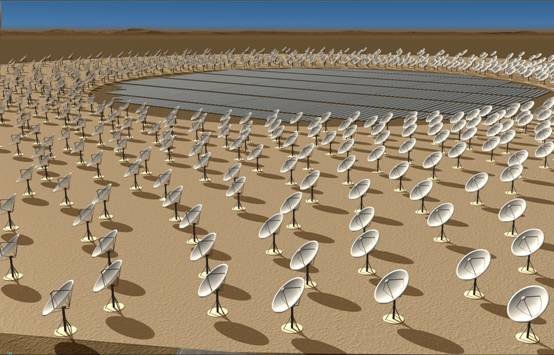
The AfPS will also play a lobbying and support role for new projects that could be hosted in Africa. The AfPS, for example, has already endorsed the $1.5 bn Square Kilometre Array to be built in South Africa. This is a set of radio antennas arranged over a square kilometre that will be 50 times more sensitive than any other radio telescope.

The AfPS replaces the Society of African Physicists and Mathematicians (SAPAM), which was founded in 1984. National physics societies across the continent will also be members of the AfPS just as countries in Europe are members of the European Physical Society.

The meeting in Dakar this week also lays the groundwork for establishing the African Astronomical Society (AAS) and the Optics and Photonics Society of Africa and a full-term president will be elected during the launch meeting.

Physicists put forward new vaccination strategy

If vaccine is in short supply then it should be given out at well-defined, regular intervals. That is the conclusion of a group of physicists in the US and Israel, who have borrowed from the ideas of quantum mechanics to show that a periodic release of vaccine could significantly reduce the time it takes to wipe out a disease. Their preliminary results suggest that vaccinating just a small portion of the population could cut this time by 40% or more, depending on the population size.

With an unlimited amount of vaccine an infectious disease can be eradicated with certainty. However, a vaccine can be in short supply if it is expensive to produce, difficult to store or short lived due to the disease being able to mutate quickly.

In this scenario of limited vaccine it is not possible to deal with a disease comprehensively. Indeed, at first glance it would appear that only a small fraction of the population could be protected and that the remainder would be vulnerable. However, Michael Khasin and Mark Dykman of Michigan State University and Baruch Meerson of the Hebrew University of Jerusalem have worked out that just a small amount of vaccine can have a major impact in halting the spread of a disease.

Natural extinction

The idea, says Dykman, is to speed up the natural extinction of a disease – adding that it is unlikely, but not impossible, that a disease can disappear spontaneously. This process could take place within the limited confines of, for example, a classroom in which some pupils are infected and some are not. If, say, all of the infected pupils happen to sit in the same corner of the room and there is good ventilation in that corner then it is possible that the disease might not reach the healthy pupils.

During an epidemic, the competing forces of recovery and infection mean that the number of sick and healthy individuals can oscillate before finally settling to some fairly fixed number. Dykman and colleagues found that the chances of extinguishing a disease can be increased dramatically by vaccinating people at just the right time, even if there is only a limited supply of vaccine. The trick is to vaccinate when the infected are close to recovery, to minimize the probability that an infected and non-protected person come into contact. If the infected were mostly a long way from recovery then there would be a greater chance that non-vaccinated individuals would cross their paths before they have recovered.

In practice this means administering vaccines at well-defined intervals. Dykman and his colleagues found that the time it takes to wipe out a disease can be minimized by achieving a resonance within the system – matching the frequency with which the vaccine is administered to the natural frequency of oscillation between the numbers of sick and healthy. In other words, the idea is to apply vaccine pulses at those points within the cycle when a substantial number of the infected are close to recovery.

Particle in a well

Dykman says that the mathematics used to carry out this analysis are essentially those used to describe a particle trapped in a potential well. In such a system thermal fluctuations provide a small, but non-zero, chance that the particle can acquire enough energy to escape from the well. Vaccinating a small but finite fraction of the population is equivalent to slightly lowering the sides of the well. For the quantum particle, this relatively small reduction in the height of the well wall multiplies the probability that the particle can escape. Here the resonance is between the frequency with which the potential barrier is raised and lowered and the frequency at which the particle vibrates.

Dykman and colleagues have yet to model their periodic vaccination scheme using real-world data. But calculations show that vaccinating just a few percent of the population could reduce the time it takes to eradicate a disease from, say, five months to between three and four. They have, however, already produced one result with a concrete implication – that a mistimed periodic vaccination might actually make things worse if the disease in question varies seasonally, such as the common cold. In this case, the researchers found, the phase, as well as the frequency, with which the vaccine is administered is crucial. For a non-seasonal disease, by contrast, the phase would not be important and in fact the phase of the system would follow the phase of the vaccinations rather than vice versa.

According to Dykman there is still much work to do before he and his colleagues properly understand this periodic vaccination. “This is the first in a series of papers,” he says. “We were surprised by the resonance and are continuing to work on this. We also want to get access to real statistics, so that we can find out about disease evolution in self-contained communities, such as school classrooms or military barracks.”

A preprint of the paper is available at arXiv:1001.0170.

International Year of Astronomy wraps up

By Hamish Johnston

Last Friday the International Year of Astronomy 2009 (IYA2009) came to an end in a ceremony in Padua, Italy.

Organized by the International Astronomy Union (IAU) and UNESCO, IYA2009 marked the 400th anniversary of “modern astronomy” — 1609 was year that Galileo first peered into the heavens using a telescope.

According to the IAU, the year was celebrated in 148 countries by millions of people who did everything from building country-sized models of the Solar System to having their own “Galileo moment” by peering through a telescope for the first time.

Here at physicsworld.com we did our bit by hosting the Cosmic Diary blog and boosting our coverage of all things astronomical. We also published a special astronomy issue of Physics World magazine in March, which you can download here

Speaking in Padua, IYA2009 chair Catherine Cesarsky said, “Over the past 12 months we have seen astronomy enter the public’s imagination and inspire people to ask the grandest questions. The International Year of Astronomy 2009 has been an unforgettable journey and I am pleased to see that many of the projects will continue.”

You can read more about the legacy of IYA2009 here.

Pulsar bursts move ‘faster than light’

Every physicist is taught that information cannot be transmitted faster than the speed of light. Yet laboratory experiments done over the last 30 years clearly show that some things appear to break this speed limit without upturning Einstein’s special theory of relativity. Now, astrophysicists in the US have seen such superluminal speeds in space – which could help us to gain a better understanding of the composition of the regions between stars.

Superluminal speeds are associated with a phenomenon known as anomalous dispersion, whereby the refractive index of a medium (such as an atomic gas) increases with the wavelength of transmitted light. When a light pulse – which is comprised of a group of light waves at a number of different wavelengths – passes through such a medium, its group velocity can be boosted to beyond the velocity of its constituent waves. However, the energy of the pulse still travels at the speed of light, which means that information is transferred in agreement with Einstein’s theory.

Now, astrophysicists claim to have witnessed this phenomenon in radio pulses that have travelled from a distant pulsar.

Modified pulses

The discovery has been made at the University of Texas at Brownsville, where Frederick Jenet and colleagues have been monitoring a pulsar – a rapidly spinning neutron star – more than 10,000 light years away. As pulsars spin, they emit a rotating beam of radiation that flashes past distant observers at regular intervals like a lighthouse. Because the pulses are modified as they travel through the interstellar medium, astrophysicists can use them to probe the nature of the cosmos.

Several factors are known to affect the pulses. Neutral hydrogen can absorb them, free electrons can scatter them and an additional magnetic field can rotate their polarization. Plasma in the interstellar medium also causes dispersion, which means pulses with longer wavelengths are affected by a smaller refractive index.

Timing is off

Jenet’s group thinks that anomalous dispersion should be added to this list. Using the Arecibo Observatory in Puerto Rico, they took radio data of the pulsar PSR B1937+21 at 1420.4 MHz with a 1.5 MHz bandwidth for three days. Oddly, those pulses close to the centre value arrived earlier than would be expected given the pulsar’s normal timing, and therefore appeared to have travelled faster than the speed of light.

The cause of the anomalous dispersion for these pulses, according to the Brownsville astrophysicists, is the resonance of neutral hydrogen, which lies at 1420.4 MHz. But like anomalous dispersion seen in the lab, the pulsar’s superluminal pulses do not violate causality or relativity because, technically, no information is carried in the pulse. Still, Jenet and colleagues believe that the phenomenon could be used to pick out the properties of clouds of neutral hydrogen in our galaxy.

‘Solid result’

“It seems to be very interesting indeed…a solid and rather nice result,” says Michael Kramer, an astrophysicist at the University of Manchester who was not involved with the study.

Andrew Lyne, a pulsar astrophysicist who is also based at Manchester, thinks it is an “interesting, if not unexpected result”. However, he has doubts that it could help in the understanding of neutral-hydrogen clouds because there are often several clouds in the same line of sight. “It is not clear from the paper quite what extra information will be obtained,” he adds.

The research will be published in the Astrophysical Journal. A preprint is available at arXiv:0909.2445v2.

Spotting fake paintings with stats

DACEY Bruegel.jpg
Winter Landscape with a Bird Trap Pieter Bruegel the Elder (1565)

By James Dacey

I wrote recently about a new technique for identifying the literary fingerprint of famous authors based on statistical patterns in their writing styles. Quantifying artistic style in painting, however, is a more difficult challenge as the constituent “words” are unknown, and whilst different artistic styles involve different brush strokes this variation is not enough to identify a well-produced fake. Now a trio of researchers in the US may have cracked the code by developing a model that can define the “spatial structure” of celebrated works of art.

Dan Rockmore of Dartmouth College, New Hampshire, and his colleagues have been inspired by vision science, which explores the way the human eye makes sense of the world. The human brain has evolved to recognize patterns in nature, but the researchers also realize that the world has been kind to us in possessing regular statistical patters – “neighbouring point tend to be correlated,” says Rockmore.

In their method, Rockmore’s team first take a painting, unaware if it is genuine or fake then apply random functions until they can successfully reconstruct a given section of that painting. Next, they apply the same set of functions or “filter” to both a genuine painting by the same artist and a known fake of this same picture. If the filter performs worse at reconstructing the genuine image, then they conclude that they have another fake on their hands.

The researchers apply their model to the works of Pieter Bruegel the Elder, the famous Dutch Renaissance painter, where they successfully distinguish authentic drawings from a set of well-known Bruegel imitations. “It turns out that such tests succeed the vast majority of the time, confirming that we have indeed chosen a ‘representation’ that picks out the visual elements that distinguish Bruegel from his imitators,” says Rockmore.

The Dartmouth researcher tells physicsworld.com that his team intend to develop their research by attempting to incorporate colour variations into their models. “We are planning to apply sparse coding to a number of other problems in art history,” he says. In particular, the team are keen to focus on the perennial challenge of differentiating works by Rembrant from those of his students.

This research is published in Proceedings of the National Academy of Sciences.

Copyright © 2026 by IOP Publishing Ltd and individual contributors