How does a Josephson junction, which is the basic component of a superconducting quantum bit (or qubit), release its energy into the environment? It is radiated as photons, according to new experiments by researchers at Aalto University Finland in collaboration with colleagues from Spain and the US who used a thermal radiation detector known as a bolometer to measure this radiation directly in the electrical circuits holding the qubits. The work will allow for a better understanding of the loss and decoherence mechanism in qubits that can disrupt and destroy quantum information, they say.
Quantum computers make use of qubits to store and process information. The most advanced quantum computers to date – including those being developed by IT giants Google and IBM – use qubits made from superconducting electronic circuits operating at very low temperatures. To further improve qubits, researchers need to better understand how they dissipate heat, says Bayan Karimi, who is the first author of a paper describing the new study. This heat transfer is a form of decoherence – a phenomenon by which the quantum states in qubits revert to behaving like classical 0s and 1s and lose the precious quantum information they contain.
“An understanding of dissipation in a single Josephson junction coupled to an environment remains strikingly incomplete, however,” she explains. “Today, a junction can be modelled and characterized without a detailed knowledge of, for instance, where energy is dissipated in a circuit. But improving design and performance will require a more complete picture.”
Physical environment is important
In the new work, Karimi and colleagues used a nano-bolometer to measure the very weak radiation emitted from a Josephson junction over a broad range of frequencies up to 100::GHz. The researchers identified several operation regimes depending on the junction bias, each with a dominant dissipation mechanism. “The whole frequency-dependent power and shape of the current-voltage characteristics can be attributed to the physical environment of the junction,” says Jukka Pekola, who led this new research effort.
The thermal detector works by converting radiation into heat and is composed of an absorber (made of copper), the temperature of which changes when it detects the radiation. The researchers measure this variation using a sensitive thermometer, comprising a tunnel junction between the copper absorber and a superconductor.
“Our work will help us better understand the nature of heat dissipation of qubits that can disrupt and destroy quantum information and how these coherence losses can be directly measured as thermal losses in the electrical circuit holding the qubits,” Karimi tells Physics World.
In the current study, which is detailed in Nature Nanotechnology, the researchers say they measured continuous energy release from a Josephson junction when it was biased by a voltage. They now aim to find out how their detector can sense single heat loss events when the Josephson junction or qubit releases energy. “At best, we will be able to count single photons,” says Pekola.
“Everesting” involves a cyclist riding up and down a given hill multiple times until the ascent totals the elevation of Mount Everest – or 8848 m.
The challenge became popular during the COVID-19 lockdowns and in 2021 the Irish cyclist Ronan McLaughlin was reported to have set a new “Everesting” record of 6:40:54. This was almost 20 minutes faster than the previous world record of 6:59:38 set by the US’s Sean Gardner in 2020.
Yet a debate soon ensued on social media concerning the significant tailwind that day of 5.5 meters per second, which they claimed would have helped McLaughlin to climb the hill multiple times.
“Cycling uses ‘rolling’, which is much smoother and faster, and more efficient [than running],” notes Bier. “All of the work is purely against gravity and friction.”
Bier calculated that a tailwind does help slightly when going uphill, but most of the work when doing so is generating enough power to overcome gravity rather than air resistance.
When coming downhill, however, any headwind becomes significant given that the force of air resistance increases with the square of the cyclist’s speed. The headwind can then have a huge effect, causing a significant reduction in speed.
So, while a tailwind going up is negligible the headwind coming down certainly won’t be. “There are no easy tricks,” Bier adds. “If you want to be a better Everester, you need to lose weight and generate more [power]. This is what matters — there’s no way around it.”
A device containing a pneumatic logic circuit made from 21 microfluidic valves could be used as a new type of air-powered computer that does not require any electronic components. The device could help make a wide range of important air-powered systems safer and less expensive, according to its developers at the University of California at Riverside.
Electronic computers rely on transistors to control the flow of electricity. But in the new air-powered computer, the researchers use tiny valves instead of transistors to control the flow of air rather than electricity. “These air-powered computers are an example of microfluidics, a decades-old field that studies the flow of fluids (usually liquids but sometimes gases) through tiny networks of channels and valves,” explains team leader William Grover, a bioengineer at UC Riverside.
By combining multiple microfluidic valves, the researchers were able to make air-powered versions of standard logic gates. For example, they combined two valves in a row to make a Boolean AND gate. This gate works because air will flow through the two valves only if both are open. Similarly, two valves connected in parallel make a Boolean OR gate. Here, air will flow if either one or the other of the valves is open.
Complex logic circuits
Combining an increasing number of microfluidic valves enables the creation of complex air-powered logic circuits. In the new study, detailed in Device, Grover and colleagues made a device that uses 21 microfluidic valves to perform a parity bit calculation – an important calculation employed by many electronic computers to detect errors and other problems.
The novel air-powered computer detects differences in air pressure flowing through the valves to count the number of bits. If there is an error, it outputs an error signal by blowing a whistle. As a proof-of-concept, the researchers used their device to detect anomalies in an intermittent pneumatic compression (IPC) device – a leg sleeve that fills with air and regularly squeezes a patient’s legs to increase blood flow, with the aim of preventing blood clots that could lead to strokes. Normally, these machines are monitored using electronic equipment.
“IPC devices can save lives, but they aren’t as widely employed as they could be,” says Grover. “In part, this is because they’re so expensive. We wanted to see if we could reduce their cost by replacing some of their electronic hardware with pneumatic logic.”
Air’s viscosity is important
Air-powered computers behave very similarly, but not quite identically to electronic computers, Grover adds. “For example, we can often take an existing electronic circuit and make an air-powered version of it and it’ll work just fine, but at other times the air-powered device will behave completely differently and we have to tweak the design to make it function.”
The variations between the two types of computers come down to one important physical difference between electricity and air, he explains: electricity does not have viscosity, but air does. “There are also lots of little design details that are of little consequence in electronic circuits but which become important in pneumatic circuits because of air’s viscosity. This makes our job a bit harder, but it also means we can do things with pneumatic logic that aren’t possible – or are much harder to do – with electronic logic.”
In this work, the researchers focused on biomedical applications for their air-powered computer, but they say that this is just the “tip of the iceberg” for this technology. Air-powered systems are ubiquitous, from the brakes on a train, to assembly-line robots and medical ventilators, to name but three. “By using air-powered computers to operate and monitor these systems, we could make these important systems more affordable, more reliable and safer,” says Grover.
“I have been developing air-powered logic for around 20 years now, and we’re always looking for new applications,” he tells Physics World. “What is more, there are areas in which they have advantages over conventional electronic computers.”
One specific application of interest is moving grain inside silos, he says. These enormous structures hold grain and other agricultural products and people often have to climb inside to spread out the grain – an extremely dangerous task because they can become trapped and suffocate.
“Robots could take the place of humans here, but conventional electronic robots could generate electronic sparks that could create flammable dust inside the silo,” Grover explains. “An air-powered robot, on the other hand, would work inside the silo without this risk. We are thus working on an air-powered ‘brain’ for such a robot to keep people out of harm’s way.”
Air-powered computers aren’t a new idea, he adds. Decades ago, there was a multitude of devices being designed that ran on water or air to perform calculations. Air-powered computers fell out of favour, however, when transistors and integrated circuits made electronic computers feasible. “We’ve therefore largely forgotten the history of computers that ran on things other than electricity. Hopefully, our new work will encourage more researchers to explore new applications for these devices.”
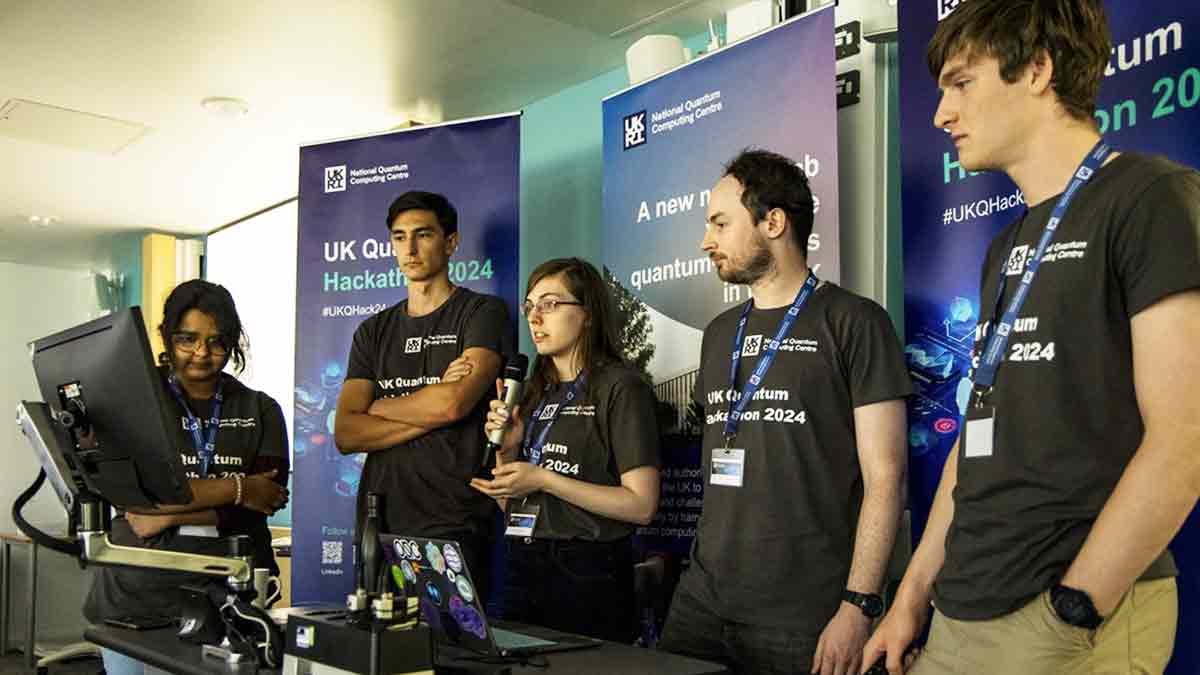
It is said that success breeds success, and that’s certainly true of the UK’s Quantum Hackathon – an annual event organized by the National Quantum Computing Centre (NQCC) that was held in July at the University of Warwick. Now in its third year, the 2024 hackathon attracted 50% more participants from across the quantum ecosystem, who tackled 13 use cases set by industry mentors from the private and public sectors. Compared to last year’s event, participants were given access to a greater range of technology platforms, including software control systems as well as quantum annealers and physical processors, and had an additional day to perfect and present their solutions.
The variety of industry-relevant problems and the ingenuity of the quantum-enabled solutions were clearly evident in the presentations on the final day of the event. An open competition for organizations to submit their problems yielded use cases from across the public and private spectrum, including car manufacturing, healthcare and energy supply. While some industry partners were returning enthusiasts, such as BT and Rolls Royce, newcomers to the hackathon included chemicals firm Johnson Matthey, Aioi R&D Lab (a joint venture between Oxford University spin-out Mind Foundry and the global insurance brand Aioi Nissay Dowa) and the North Wales Police.
“We have a number of problems that are beyond the scope of standard artificial intelligence (AI) or neural networks, and we wanted to see whether a quantum approach might offer a solution,” says Alastair Hughes, lead for analytics and AI at North Wales Police. “The results we have achieved within just two days have proved the feasibility of the approach, and we will now be looking at ways to further develop the model by taking account of some additional constraints.”
The specific use case set by Hughes was to optimize the allocation of response vehicles across North Wales, which has small urban areas where incidents tend to cluster and large swathes of countryside where the crime rate is low. “Our challenge is to minimize response times without leaving some of our communities unprotected,” he explains. “At the moment we use a statistical process that needs some manual intervention to refine the configuration, which across the whole region can take a couple of months to complete. Through the hackathon we have seen that a quantum neural network can deliver a viable solution.”
Problem solving Each team brought together a diverse range of skills, knowledge and experience to foster learning and accelerate the development process. (Courtesy: NQCC)
While Hughes had no prior experience with using quantum processors, some of the other industry mentors are already investigating the potential benefits of quantum computing for their businesses. At Rolls Royce, for example, quantum scientist Jarred Smalley is working with colleagues to investigate novel approaches for simulating complex physical processes, such as those inside a jet engine. Smalley has mentored a team at all three hackathons, setting use cases that he believes could unlock a key bottleneck in the simulation process.
The hackathon offers a way for us to break into the current state of the technology and to see what can be done with today’s quantum processors
“Some of our crazy problems are almost intractable on a supercomputer, and from that we extract a specific set of processes where a quantum algorithm could make a real impact,” he says. “At Rolls Royce our research tends to be focused on what we could do in the future with a fault-tolerant quantum computer, and the hackathon offers a way for us to break into the current state of the technology and to see what can be done with today’s quantum processors.”
Since the first hackathon in 2022, Smalley says that there has been an improvement in the size and capabilities of the hardware platforms. But perhaps the biggest advance has been in the software and algorithms available to help the hackers write, test and debug their quantum code. Reflecting that trend in this year’s event was the inclusion of software-based technology providers, such as Q-CTRL’s Fire Opal and Classiq, that provide tools for error suppression and optimizing quantum algorithms. “There are many more software resources for the hackers to dive into, including algorithms that can even analyse the problems themselves,” Smalley says.
Cathy White, a research manager at BT who has mentored a team at all three hackathons, agrees that rapid innovation in hardware and software is now making it possible for the hackers to address real-world problems – which in her case was to find the optimal way to position fault-detecting sensors in optical networks. “I wanted to set a problem for which we could honestly say that our classical algorithms can’t always provide a good approximation,” she explained. “We saw some promising results within the time allowed, and I’m feeling very positive that quantum computers are becoming useful.”
Both White and Smalley could see a significant benefit from the extended format, which gave hackers an extra day to explore the problem and consider different solution pathways. The range of technology providers involved in the event also enabled the teams to test their solutions on different platforms, and to adapt their approach if they ran into a problem. “With the extra time my team was able to use D-Wave’s quantum annealer as well as a gate-model approach, and it was impressive to see the diversity of algorithms and approaches that the students were able to come up with,” White comments. “They also had more scope to explore different aspects of the problem, and to consolidate their results before deciding what they wanted to present.”
One clear outcome from the extended format was more opportunity to benchmark the quantum solutions against their classical counterparts. “The students don’t claim quantum advantage without proper evidence,” adds White. “Every year we see remarkable progress in the technology, but they can help us to see where there are still challenges to be overcome.”
According to Stasja Stanisic from Phasecraft, one of the four-strong judging panel, a robust approach to benchmarking was one of the stand-out factors for the winning team. Mentored by Aioi R&D Lab, the team investigated a risk aggregation problem, which involved modelling dynamic relationships between data such as insurance losses, stock market data and the occurrence of natural disasters. “The winning team took time to really understand the problem, which allowed them to adapt their algorithm to match their use-case scenario,” Stanisic explains. “They also had a thorough and structured approach to benchmarking their results against other possible solutions, which is an important comparison to make.”
Learning points Presentations on the final day of the event enabled each team to share their results with other participants and a four-strong judging panel. (Courtesy: NQCC)
Teams were judged on various criteria, including the creativity of the solution, its success in addressing the use case, and investigation of scaling and feasibility. The social impact and ethical considerations of their solution was also assessed. Using the NQCC’s Quantum STATES principles for responsible and ethical quantum computing (REQC), which were developed and piloted at the NQCC, the teams, for example, considered the potential impact of their innovation on different stakeholders and the explainability of their solution. They also proposed practical recommendations to maximize societal benefit. While many of their findings were specific to their use cases, one common theme was the need for open and transparent development processes to build trust among the wider community.
“Quantum computing is an emerging technology, and we have the opportunity right at the beginning to create an environment where ethical considerations are discussed and respected,” says Stanisic. “Some of the teams showed some real depth of thought, which was exciting to see, while the diverse use cases from both the public and private sectors allowed them to explore these ethical considerations from different perspectives.”
Also vital for participants was the chance to link with and learn from their peers. “The hackathon is a place where we can build and maintain relationships, whether with the individual hackers or with the technology partners who are also here,” says Smalley. For Hughes, meanwhile, the ability to engage with quantum practitioners has been a game changer. “Being in a room with lots of clever people who are all sparking off each other has opened my eyes to the power of quantum neural networks,” he says. “It’s been phenomenal, and I’m excited to see how we can take this forward at North Wales Police.”
To take part in the 2025 Quantum Hackathon – whether as a hacker, an industry mentor or technology provider – please e-mail the NQCC team at nqcchackathon@stfc.ac.uk
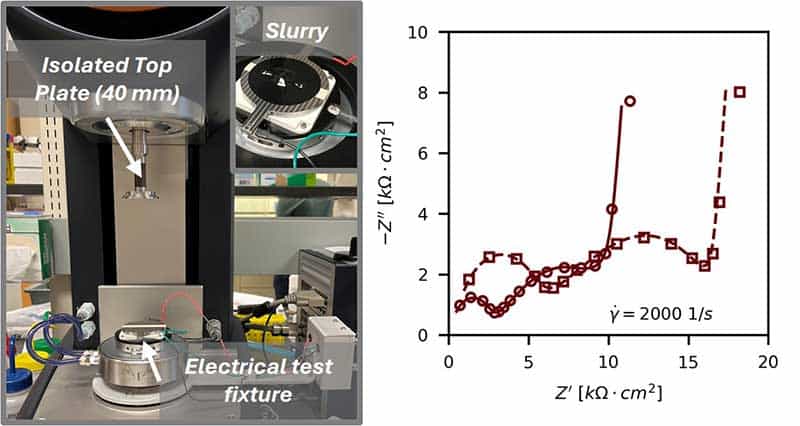
The market for lithium-ion batteries (LIBs) is expected to grow ~30x to almost 9 TWh produced annually in 2040 driven by demand from electric vehicles and grid scale storage. Production of these batteries requires high-yield coating processes using slurries of active material, conductive carbon, and polymer binder applied to metal foil current collectors. To better understand the connections between slurry formulation, coating conditions, and composite electrode performance we apply new Rheo-electric characterization tools to battery slurries. Rheo-electric measurements reveal the differences in carbon black structure in the slurry that go undetected by rheological measurements alone. Rheo-electric results are connected to characterization of coated electrodes in LIBs in order to develop methods to predict the performance of a battery system based on the formulation and coating conditions of the composite electrode slurries.
Jeffrey Richards is an assistant professor of chemical and biological engineering at Northwestern University. His research is focused on understanding the rheological and electrical properties of soft materials found in emergent energy technologies.
Jeffrey Lopez is an assistant professor of chemical and biological engineering at Northwestern University. His research is focused on using fundamental chemical engineering principles to study energy storage devices and design solutions to enable accelerated adoption of sustainable energy technologies.
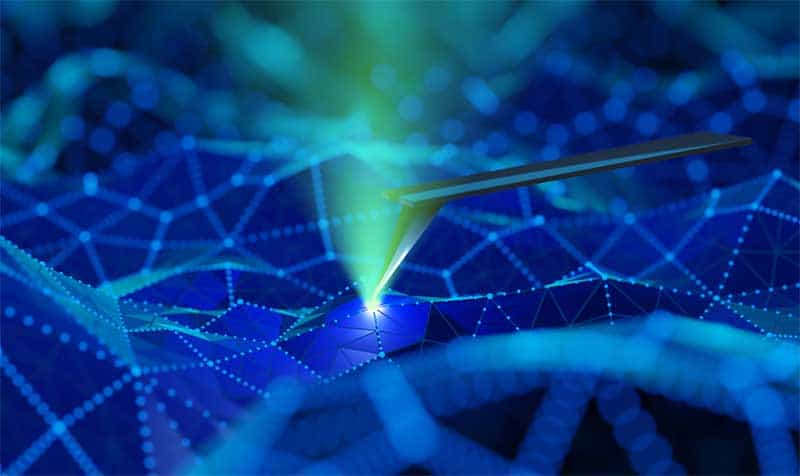
The combination of Atomic Force Microscopy (AFM) and Raman spectroscopy provides deep insights into the complex properties of various materials. While Raman spectroscopy facilitates the chemical characterization of compounds, interfaces and complex matrices, offering crucial insights into molecular structures and compositions, including microscale contaminants and trace materials. AFM provides essential data on topography and mechanical properties, such as surface texture, adhesion, roughness, and stiffness at the nanoscale.
Traditionally, users must rely on multiple instruments to gather such comprehensive analysis. HORIBA’s AFM-Raman system stands out as a uniquely multimodal tool, integrating an automated AFM with a Raman/photoluminescence spectrometer, providing precise pixel-to-pixel correlation between structural and chemical information in a single scan.
This colocalized approach is particularly valuable in applications such as polymer analysis, where both surface morphology and chemical composition are critical; in semiconductor manufacturing, for detecting defects and characterizing materials at the nanoscale; and in life sciences, for studying biological membranes, cells, and tissue samples. Additionally, it’s ideal for battery research, where understanding both the structural and chemical evolution of materials is key to improving performance.
João Lucas Rangel currently serves as the AFM & AFM-Raman global product manager at HORIBA and holds a PhD in biomedical engineering. Specializing in Raman, infrared, and fluorescence spectroscopies, his PhD research was focused on skin dermis biochemistry changes. At HORIBA Brazil, João started in 2012 as molecular spectroscopy consultant, transitioning into a full-time role as an application scientist/sales support across Latin America, expanding his responsibilities, overseeing the applicative sales support, and co-management of the business activities within the region. In 2022, João was invited to join HORIBA France as a correlative microscopy – Raman application specialist, being responsible to globally develop the correlative business, combing HORIBA’s existing technologies with other complementary technologies. More recently, in 2023, João was promoted to the esteemed position of AFM & AFM-Raman global product manager. In this role, João oversees strategic initiatives aiming at the company’s business sustainability and future development, ensuring its continued success and future growth.
This episode of the Physics World Weekly podcast features two medical physicists working at the heart of the UK’s National Health Service (NHS). They are Mark Knight, who is chief healthcare scientist at the NHS Kent and Medway Integrated Care Board, and Fiammetta Fedele, who is head of non-ionizing radiation at Guy’s and St Thomas NHS Foundation Trust in London.
They explain how medical physicists keep people safe during healthcare procedures – while innovating new technologies and treatments. They also discuss the role that artificial intelligence could play in medical physics and take a look forward to the future of healthcare.
This episode was created in collaboration with IPEM, the Institute of Physics and Engineering in Medicine. IPEM owns the journal Physics in Medicine & Biology.
GenesisCare is the largest private radiation oncology provider in Australia, operating across five states and treating around 30,000 cancer patients each year. At the heart of this organization, ensuring the safety and efficiency of all patient radiotherapy treatments, lies a single server running LAP’s RadCalc quality assurance (QA) software.
RadCalc is a 100% software-based platform designed to streamline daily patient QA. The latest release, version 7.3.2, incorporates advanced 3D algorithms for secondary verification of radiotherapy plans, EPID-based pre-treatment QA and in vivo dosimetry, as well as automated 3D calculation based on treatment log files.
For GenesisCare, RadCalc provides independent secondary verification for 100 to 130 new plans each day, from more than 43 radiation oncology facilities across the country. The use of a single QA platform for all satellite centres helps to ensure that every patient receives the same high standard of care. “With everyone using the same software, we’ve got a single work instruction and we’re all doing things the same way,” says Leon Dunn, chief medical physicist at GenesisCare in Victoria.
“While the individual states operate as individual business units, the physics team operates as one, and the planners operate as one team as well,” adds Peter Mc Loone, GenesisCare’s head of physics for Australia. “We are like one team nationally, so we try to do things the same way. Obviously, it makes sense to make sure everyone’s checking the plans in the same way as well.”
User approved
GenesisCare implemented RadCalc more than 10 years ago, selected in part due to the platform’s impressive reputation amongst its users in Australia. “At that time, RadCalc was well established in radiotherapy and widely used,” explains Dunn. “It didn’t have all the features that it has now, but its basic features met the requirements we needed and it had a pretty solid user base.”
Today, GenesisCare’s physicists employ RadCalc for plan verification of all types of treatment across a wide range of radiotherapy platforms – including Varian and Elekta linacs, Gamma Knife and the Unity MR-linac, as well as superficial treatments and high dose-rate brachytherapy. They also use RadCalc’s plan comparison tool to check that the output from the treatment planning system matches what was imported to the MOSAIQ electronic medical record system.
“Before we had the plan comparison feature, our radiation therapists had to manually check control points in the plan against what was on the machine,” says Mc Loone. “RadCalc checks a wide range of values within the plan. It’s a very quick check that has saved us a lot of time, but also increased the safety aspect. We have certainly picked up errors through its use.”
Keeping treatments safe
The new feature that’s helping to make a big difference, however, is GenesisCare’s recent implementation of RadCalc’s 3D independent recalculation tool. Dunn explains that RadCalc previously performed a 2D comparison between the dose to a single point in the treatment planning system and the calculated dose to that point.
The new module, on the other hand, employs RadCalc’s collapsed-cone convolution algorithm to reconstruct 3D dose on the patient’s entire CT data set. Enabled by the introduction of graphics processing units, the algorithm performs a completely independent 3D recalculation of the treatment plan on the patient’s data. “We’ve gone from a single point to tens of thousands of points,” notes Dunn.
Importantly, this 3D recalculation can discover any errors within a treatment plan before it gets to the point at which it needs to be measured. “Our priority is for every patient to have that second check done, thereby catching anything that is wrong with the treatment plan, hopefully before it is seen by the doctor. So we can fix things before they could become an issue,” Dunn says, pointing out that in the first couple of months of using this tool, it highlighted potentially suboptimal treatment plans to be improved.
Peter Mc Loone: “It’s a very quick check that has saved us a lot of time, but also increased the safety aspect.” (Courtesy: GenesisCare)
In contrast, previous measurement-based checks had to be performed at the end of the entire planning process, after everyone had approved the plan and it had been exported to the treatment system. “Finding an error at that point puts a lot of pressure on the team to redo the plan and have everything reapproved,” Mc Loone explains. “By removing that stress and allowing checks to happen earlier in the piece, it makes the overall process safer and more efficient.”
Dunn notes that if the second check shows a problem with the plan, the plan can still be sent for measurements if needed, to confirm the RadCalc findings.
Increasing efficiency
As well as improving safety, the ability to detect errors early on in the planning process speeds up the entire treatment pathway. Operational efficiency is additionally helped by RadCalc’s high level of automation.
Once a treatment plan is created, the planning staff need to export it to RadCalc, with a single click. RadCalc then takes care of everything else, importing the entire data set, sending it to the server for recalculation and then presenting the results. “We don’t have to touch any of the processes until we get the quality checklist out, and that’s a real game changer for us,” says Dunn.
“We have one RadCalc system, that can handle five different states and several different treatment planning systems [Varian’s Eclipse and Elekta’s Monaco and GammaPlan],” notes Mc Loone. “We can have 130 different plans coming in, and RadCalc will filter them correctly and apply the right beam models using that automation that LAP has built in.”
Because RadCalc performs 100% software-based checks, it doesn’t require access to the treatment machine to run the QA (which usually means waiting until the day’s clinical session has finished). “We’re no longer waiting around to perform measurements on the treatment machine,” Dunn explains. “It’s all happening while the patients are being treated during the normal course of the day. That automation process is an important time saver for us.”
This shift from measurement- to software-based QA also has a huge impact on the radiation therapists. As they were already using the machines to treat patients, the therapists were tasked with delivering most of the QA cases – at the end of the day or in between treatment sessions – and informing the physicists of any failures.
“Since we’ve introduced RadCalc, they essentially get all that time back and can focus on doing what they do best, treating patients and making sure it’s all done safely,” says Dunn. “Taking that burden away from them is a great additional bonus.”
Looking to the future, GenesisCare next plans to implement RadCalc’s log file analysis feature, which will enable the team to monitor and verify the performance of the radiotherapy machines. Essentially, the log files generated after each treatment are brought back into RadCalc, which then verifies that what the machine delivered matched the original treatment plan.
“Because we have so many plans going through, delivered by many different accelerators, we can start to build a picture of machine performance,” says Dunn. “In the future, I personally want to look at the data that we collect through RadCalc. Because everything’s coming through that one system, we’ve got a real opportunity to examine safety and quality at a system level, from treatment planning system through to patient treatment.”
Over the past decades, “big science” has become bigger than ever be it planning larger particle colliders, fusion tokamaks or space observatories. That development is reflected in the growth of the Big Science Business Forum (BSBF), which has been going from strength to strength following its first meeting in 2018 in Copenhagen.
This year, more than 1000 delegates from 500 organizations and 30 countries will descend on Trieste from 1 to 4 October for BSBF 2024. The meeting will see European businesses and organizations such as the European Southern Observatory, the CERN particle-physics laboratory and Fusion 4 Energy come together to discuss the latest developments and business trends in big science.
A key component of the event – as it was at the previous BSBF in Granada, Spain, in 2022 – is the Women in Big Science group, who will be giving a plenary session about initiatives to boost and help women in big science.
She explains why we need gender equality in big science and what measures must be taken to tackle the gender imbalance among staff and users of large research infrastructures.
One prime example of big science is particle physics. Some 70 years since the founding of CERN and a decade following the discovery of the Higgs boson at the lab’s Large Hadron Collider (LHC) in 2012, particle physics stands at a crossroads. While the consensus is that a “Higgs factory” should come next after the LHC, there is disagreement over what kind of machine it should be – a large circular collider some 91 km in circumference or a linear machine just a few kilometres long.
As the wrangling goes on, other proposals are also being mooted such as a muon collider. Despite needing new technologies, a muon collider has the advantage that it would only require a circular collider in a tunnel roughly the size of the LHC.
Another huge multinational project is the ITER fusion tokamak currently under construction in Cadarache, France. Hit by cost hikes and delays for decades, there was more bad news earlier this year when ITER said the tokamak will now not fire up until 2035. ”Full power” mode with deuterium and tritium won’t happen until 2039 some 50 years since the facility was first mooted.
Backers hope that ITER will lay the way towards fusion power plants delivering electricity to the grid, but huge technical challenges lie in store. After all, those reactors will have to breed their own tritium so they become fuel independent, as John Evans explains.
Big science also involves dedicated user facilities. In this briefing we talk to Gianluigi Botton from the Diamond Light Source in the UK and Mike Witherell from the Lawrence Berkeley National Laboratory on managing such large scale research infrastructures and their plans for the future.
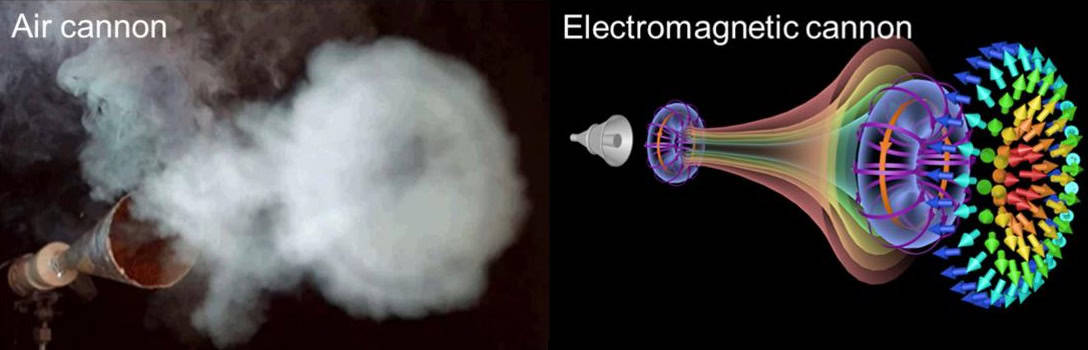
Toroidal pulses Air cannons produce visible vortex rings by generating rotating air pressure differences, while electromagnetic cannons emit electromagnetic vortex pulses using coaxial horn antennas. (Courtesy: Ren Wang; Pan-Yi Bao; Zhi-Qiang Hu; Shuai Shi; Bing-Zhong Wang; Nikolay I Zheludev; Yijie Shen)
Toroidal electromagnetic pulses can be generated using a device known as a horn microwave antenna. This electromagnetic “vortex cannon” produces skyrmion topological structures that might be employed for information encoding or for probing the dynamics of light–matter interactions, according to its developers in China, Singapore and the UK.
Examples of toroidal or doughnut-like topology abound in physics – in objects such as Mobius strips and Klein bottles, for example. It is also seen in simpler structures like smoke rings in air and vortex rings in water, as well as in nuclear currents. Until now, however, no one had succeeded in directly generating this topology in electromagnetic waves.
A rotating electromagnetic wave structure
In the new work, a team led by Ren Wang from the University of Electronic Science and Technology of China, Yijie Shen from Nanyang Technological University in Singapore and colleagues from the University of Southampton in the UK employed wideband, radially polarized, conical coaxial horn antennas with an operating frequency range of 1.3–10 GHz. They used these antennas to create a rotating electromagnetic wave structure with a frequency in the microwave range.
The antenna comprises inner and outer metal conductors, with 3D-printed conical and flat-shaped dielectric supports at the bottom and top of the coaxial horn, respectively
“When the antenna emits, it generates an instantaneous voltage difference that forms the vortex rings,” explains Shen. “These rings are stable over time – even in environments with lots of disturbances – and maintain their shape and energy over long distances.”
Complex features such as skyrmions
The conical coaxial horn antenna generates an electromagnetic field in free space that rotates around the propagation direction of the wave structure. The researchers experimentally mapped the toroidal electromagnetic pulses at propagation distances of 5, 50 and 100 cm from the horn aperture, using a planar microwave anechoic chamber (a shielded room covered with electromagnetic absorbers) to measure the spatial electromagnetic fields of the antenna, using a scanning frame to move the antenna to the desired measurement area. They then connected a vector network analyser to the transmitting and receiving antennas to obtain the magnitude and phase characteristics of the electromagnetic field at different positions.
The researchers found that the toroidal pulses contained complex features such as skyrmions. These are made up of numerous electric field vectors and can be thought of as two-dimensional whirls (or “spin textures”). The pulses also evolved over time to more closely resemble canonical Hellwarth–Nouchi toroidal pulses. These structures, first theoretically identified by the two physicists they are named after, represent a radically different, non-transverse type of electromagnetic pulse with a toroidal topology. These pulses, which are propagating counterparts of localized toroidal dipole excitations in matter, exhibit unique electromagnetic wave properties, explain Shen and colleagues.
A wide range of applications
The researchers say that they got the idea for their new work by observing how smoke rings are generated from an air cannon. They decided to undertake the study because toroidal pulses in the microwave range have applications in a wide range of areas, including cell phone technology, telecommunications and global positioning. “Understanding both the propagation dynamics and characterizing the topological structure of these pulses is crucial for developing these applications,” says Shen.
The main difficulty faced in these experiments was generating the pulses in the microwave part of the electromagnetic spectrum. The researchers attempted to do this by adapting existing optical metasurface methodologies, but failed because a large metasurface aperture of several metres was required, which was simply too impractical to fabricate. They overcame the problem by making use of a microwave horn emitter that’s more straightforward to create.
Looking forward, the researchers now plan to focus on two main areas. The first is to develop communication, sensing, detection and metrology systems based on toroidal pulses, aiming to overcome the limitations of existing wireless applications. Secondly, they hope to generate higher-order toroidal pulses, also known as supertoroidal pulses.
“These possess unique characteristics such as propagation invariance, longitudinal polarization, electromagnetic vortex streets (organized patterns of swirling vortices) and higher-order skyrmion topologies,” Shen tells Physics World. “The supertoroidal pulses have the potential to drive the development of ground-breaking applications across a range of fields, including defence systems or space exploration.”