

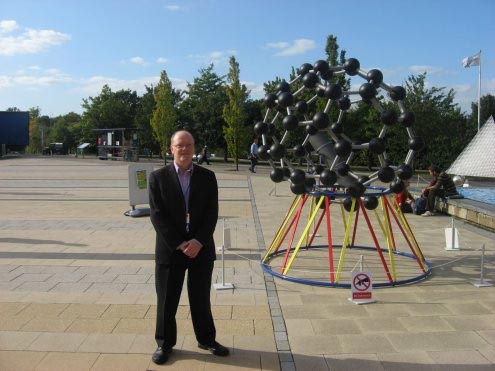
Prince of darkness


What is dark matter and why does physics need it?

Start with an easy one eh? OK, so first of all, if we look up at the stars and galaxies, and try to apply the laws of gravity that we know work well at the small scales of planet Earth, and even the solar system, they fail. For the laws of gravity to work when looking at things of the size of galaxies or larger, there needs to be much more matter “out there” than we can see. Because it must be quite heavy, and we can’t see it, we call it dark matter.

There’s a pretty good chance that we could discover dark matter in the next few months!

But is there any actual evidence that it exists?

Well there are many different types of measurement that all suggest exactly the same thing. For example, the speeds with which stars rotate about galaxies, or the way that the light that we see from very distant stars is distorted by this “something” in between.

So what do you think this dark matter is — what form would it take?

The answer looks like it comes from particle physics, and a general consensus is building that the answer lies in a framework called “supersymmetry”. This theory suggests that for every particle type we know about, there should be a heavier version – hence the name, supersymmetry. These particles would have been created in much the same way as normal matter at the time of the big bang, and the lightest ones should still be floating around today – this is what we call dark matter.

Why can’t we see it?

It’s because it doesn’t interact at all with light, and only very rarely interacts with anything else. This is the reason why the favoured candidate for dark matter is called “weakly interacting massive particles”, or WIMPs.
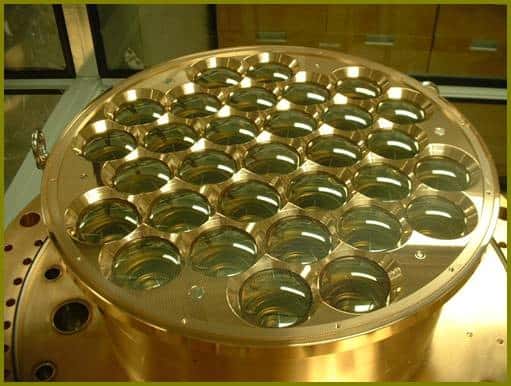
So ZEPLIN is looking for WIMPs?

Yes. The astronomy suggests that our galaxy is sitting in the middle of a region of dark matter. This isn’t unusual – since there’s roughly ten times as much mass in dark matter as there is in normal matter, the dark matter distribution is in fact what has determined where the galaxies have formed. The dark matter particles interact so weakly with anything that they can pass right through the Earth, but because there’s so many of them, a very sensitive detector in a place where nothing else can reach it, should be able to see a few of them.

And what does your machine do exactly – how does it work?

It’s really just a bucket of liquid with some very sensitive light detectors in it. But the liquid is xenon, which is one of the noble gas elements, like helium or argon. This has the nice property that if a particle passing through it scatters, as we expect WIMPs to do occasionally, it creates a small flash of light.

We’d also expect some of the xenon atoms to be broken up by such events, separating the xenon atom from some of its electrons. We put almost 20,000 volts across the liquid, which allows us to sweep up these released electrons, which we then use to generate a second flash of light in a layer of gaseous xenon. The combination of the first flash of light and the signal from the electrons tells us that there’s been an event in the detector.

We have focussed on keeping everything as clean and pure and getting the clarity of signal as high as possible

Why is ZEPLIN located deep underground in a salt mine?

Ahh, that’s because of cosmic rays. Inevitably, a detector that’s very sensitive to WIMPs is also very sensitive to many other things. Sitting here in a café we’re being bombarded all the time by cosmic rays coming from space. These are coming from the sun, from supernovae, and even a few from the cores of very distant galaxies. They cause things like the aurora, but for us they’re a pain. Cosmic rays are fast moving particles like electrons and muons, and these can go through quite a bit of material so it’s hard to shield against them. But going deep underground, in a mine, we’re able to get rid of about 99.9999% of them. That’s few enough so as not to be a problem.

But can you really be sure that you are seeing dark matter, not some other source of background noise?

Even down in the mine, there’s still natural radiation coming from the rock itself, from the detector components, from people, in fact everything has some level of radioactivity. We’ve placed ZEPLIN within a cocoon of very low radioactivity plastic and lead, and the device itself is made of very clean materials, but still there’s a few things flying around. Mostly these are gamma rays.

How does the upgrade make ZEPLIN better than other detectors in the world?

We have focussed on keeping everything as clean and pure and getting the clarity of signal as high as possible. I think we’re doing pretty well at that. We are now using newer photomultiplier tubes, those are the light collection devices, and these have much lower levels of intrinsic radiation than the ones we used before.
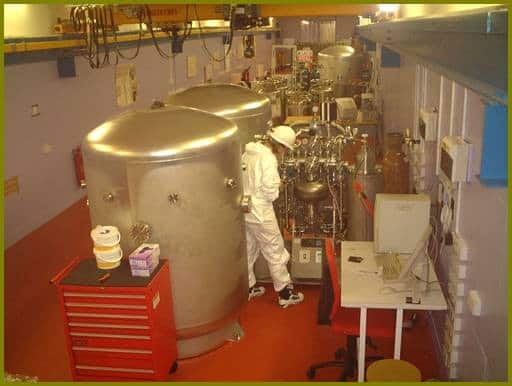
Also, we’ve built a completely new additional detector around the outside of ZEPLIN. The idea is that if we see an event that interacts in both this new detector, and in ZELPIN, then it can’t be a WIMP. WIMPs interact so rarely that there’s no chance whatsoever of them scattering in both detectors. Background neutrons could, so it’s an extra measure to be sure of what we are seeing.

So you’re looking forward to this latest run — what’s the timetable?

There’s a pretty good chance that we could discover dark matter in the next few months! There is nothing more exciting and more timely in UK physics at the moment…

We finished calibrating the detector in September and we hope to start running for dark matter data starting in December or even as early as November. The plan is to run it for a year without looking at data until end of the experiment. We do this “blind” so as to minimize the extent to which we could influence the experiment. History tells us that it’s very easy to unwittingly alter things so as to get the result you want and this is a standard technique to avoid that.

How do you handle the competitive element of the dark matter search – is there much international collaboration or is it all very secretive?

A lot of them are good friends, it’s just a rivalry…I mean…it’s a big prize…right?

Well, I guess it works as well as one could expect. I mean there are currently three groups in the world that are leading in terms of limits – there’s the Cryogenic Dark Matter Search in the US, there’s the Xenon100 team based in Italy, and then there’s us, and we all have similar limits at the moment. We don’t talk that much to each other because it’s all quite secret. All the time we’re thinking of clever ideas to tune the instruments and usually these are closely guarded secrets.

So there is a strong sense of rivalry?

Well, we’re not going to go around putting plutonium jabs into people to bump off the enemy players! A lot of them are good friends, it’s just a rivalry…I mean…it’s a big prize…right? But I think in general the rivalry and the difficulty of getting funding means that the science advances quicker than it would do otherwise.

Do you feel there are any areas of the science that could benefit from a more open approach?

We could definitely improve the way in which data is shared. Every group tends to present their results via a different style and this makes it more difficult than one would hope to compare results.

Can you tell me a little bit about your particular role?

I’m head of the Edinburgh contribution to the ZEPLIN III project. This means that probably 95 percent of the time behind a computer – updating spreadsheets, applying for money etc – that’s the bit I like the least… it’s always a last minute rush.
And which bits do you enjoy the most?

Well, it’s got to be the diversity – the way I do something different every day. The best bits of time are with PhD students guiding them with their projects. And, I do a fair bit of public understanding of science events. I’ve done a café scientifique in Moscow [informal science talks in café and bars], which was pretty scary, and run a few schools events, hopefully enthusing younger kids into science, showing them its not some kind of incredible magic, but that they can understand it and make a contribution. I also run a lot of talks back in Edinburgh.

Do you think the public can understand topics as difficult as dark energy?

Given the opportunity I think they can. The biggest problem is not in the conveying of ideas, it’s constraining the imagination of people listening not to go further. You can show them one little bit and they’re bright enough to start thinking about how the whole thing may fit together – but trying to answer some of those questions – that’s not an hour’s talk – that’s a lifetime’s talk!

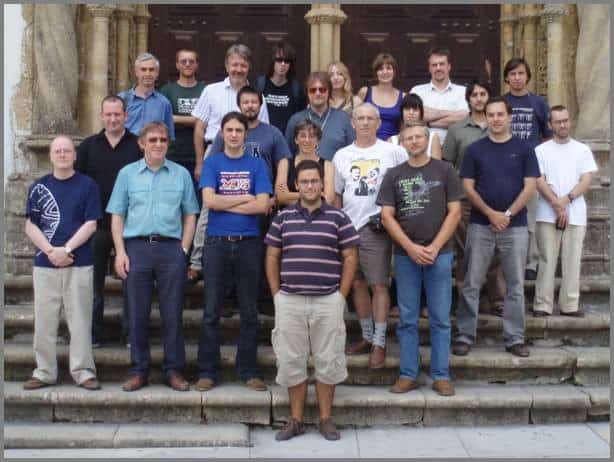
ZEPLIN-III is a joint project of the University of Edinburgh, Imperial College London, the Rutherford Appleton Laboratory, and international partners in Portugal and Russia. To learn more about the project please visit the ZEPLIN III homepage.

Nanopores sequence DNA

Researchers at the Delft University of Technology have developed a new technique that can measure both the charge and diameter of a single molecule for the first time. The method, which employs solid-state nanopores, can clearly distinguish between molecules of DNA that have a protein coating and those that do not – something that could be useful for DNA sequencing and detecting markers for genetically inherited diseases.

“Our technique will eventually allow us to rapidly differentiate spots along an individual molecule, for example, on multiple DNA-bound proteins,” team member Adam Hall said.

The scientists, led by Cees Dekker, began by attaching DNA molecules coated with RecA proteins on a microbead. Next, they placed the molecules near the opening of a solid-state nanopore in ionic solution. By then applying an appropriate voltage across the pore, a single molecule was pulled into the pore where it was statically held by the bead tether.

Changes in current

The presence of the molecule changes the current measured through the pore, which allows its size to be determined, explains Hall. And, varying the applied force across the pore produces a 1D force curve on the molecule that then provides information about the overall charge on it.

The net force measured is mainly the electrostatic force acting on the charged molecule due to the applied voltage. Since DNA filaments coated with protein have a greater net charge, they feel a larger force than bare DNA molecules for the same applied voltage.

By using the trapped bead as a “handle”, the researchers can also control the position of the molecule inside the nanopore. They can thus choose the position at which to perform force measurements and locate a region of interest.

Faster protein mapping

“Our study provides a possible route towards fast, direct mapping of the entire library of proteins that bind to genomic DNA,” said Hall. “This could have important implications for sequencing, as well as detecting markers for genetically inheritable diseases.”

The team will now look at sequence-dependent proteins rather than co-operatively binding proteins that coat the DNA entirely. “Such an approach will allow us to push the limits of our resolution and rapidly detect structures that are important in a wide range of disease, such as cancer.”

The work was published in Nano Letters.

Microwaves live on the edge

In the week that three pioneers of optical communications have been awarded with the ultimate prize in physics, new research outlines an experimental breakthrough that could lead to a new generation of highly efficient optical fibres.

Researchers in the US have unveiled a new version of a device known as a photonic crystal, which they claim can transport microwaves with significantly less loss due to scattering. If the device could be scaled down to operate at optical wavelengths it could improve the quality of optical communications.

In addition to its practical potential, the function of the device also represents an analogy of a well known quantum phenomenon – the quantum Hall effect.

Guiding light

“This is an exciting development! It potentially allows construction of channels, which allow photon modes to travel along winding paths with no back-reflection at bends,” said Duncan Haldane at Princeton University who predicted the effect last year but was not involved in this latest research.

Photonic crystals are structures that are designed to trap and guide light in a similar manner to the way electrons are manipulated inside a semiconductor. Where semiconductors contain electronic bands in which electrons of a specified energy range cannot reside, photonic crystals are also layered to prevent transmission of light at certain wavelengths – creating a “photonic band gap”.

These materials have found widespread application in the optics industry, with optical fibres being one particularly promising application. Because light can be trapped and guided along channels roughly the same width as the wavelength of light, it means that less energy is lost through scattering by the intrinsic roughness of the fibre.

Asymmetry is the key

Now, Zheng Wang and his colleagues at the Massachusetts Institute of Technology (MIT) may have discovered a way of reducing the scattering further still. Their new type of photonic crystal could make it possible to confine light to the outer edges of the material where it loses its “time reversal-symmetry”. In simple terms this means that photons only move in one direction and therefore cannot be back-scattered. This would mean that the only way light could be attenuated is from non-linear effects or absorption.

The key to achieving this effect was to make a photonic crystal containing iron-based rods. Wang and his team realized that applying a magnetic field perpendicular to the direction of electromagnetic radiation forces photons into so-called chiral edge states (CESs). This optical effect is analogous to the phenomenon experienced by a 2D electron gas when it is exposed to a strong magnetic field, known as the quantum Hall effect.

To demonstrate the effect, the physicists created a periodic structure that works at microwave frequencies. In principle, the same structure could now be scaled down to trigger the same effect at optical frequencies.

Referring to the realization of Haldane’s prediction, Wang told physicsworld.com, “We were inspired by his theory and found that CESs exist in a more general class of photonic crystals and performed numerical calculation to support that.” Adding, “Because of the generality of our theory, we were able to construct a design that is practically feasible and use off-the-shelf materials”.

This research appears in the latest edition of Nature .

Water-seeking rocket smashes into the Moon

NASA’s Lunar Crater Observation and Sensing Satellite (LCROSS) smashed into the Moon today as planned.

At 07:31 EDT, its 2200 kg Centaur rocket was first to collide, kicking debris high above the lunar surface. A few minutes later, a second “shepherding” spacecraft – that will be used to collect scientific data – also collided with the surface.

NASA’s mission control has confirmed the thermal signature of impact and predict that imaging and spectroscopic data will be returned to Earth within the next few hours.

The $80m unmanned mission is searching for water, salts, hydrocarbons and other signatures of habitable conditions in the lunar surface.

The impact site was a 98 km wide crater called Cabeus near the Moon’s south pole, chosen because scientists have predicted that large quantities of water-ice could exist in these lunar “shadow-lands”.

LCROSS is part of a dual mission launched on 19 June this year that aims to shed new light on the Moon. Its sister rocket, NASA’s Lunar Reconnaissance Orbiter (LRO), has been orbiting the Moon to produce maps of its surface with the highest resolution yet.

The missions are important precursors to NASA’s Constellation programme, which aims to send astronauts to the Moon and to create a lunar outpost as a stepping stone for a trip to Mars. As well as determining if water or other useful substances can be found on the Moon, the missions could help identify possible sites where a future manned mission could land.

Astronomy night at the White House

By Michael Banks

On Wednesday night US President Barack Obama hosted an astronomy night at the White House.

Obama, who today won the 2009 Nobel Prize for Peace, invited 150 school students, former astronauts Buzz Aldrin, Sally Ride, and Mae Jemison and NASA administrator Chalres Boldren and his deputy Lori Garver to the event on the South Lawn.

Astronomers spent all day setting up 20 telescopes in preparation for the party in the evening.

Obama was also joined by the first lady, Michelle Obama, and his science advisor, John Holdren.

Obama managed to get some education policy into his speech and talked about reinvigorating maths and science in schools.

“Galileo changed the world when he pointed his telescope to the sky,” Obama said to the youngsters, “and now it is your turn.”

Physicists pin down graphite’s magnetism

Physicists in the Netherlands have confirmed that graphite is a permanent magnet at room temperature and have pinpointed where the high-temperature ferromagnetism comes from for the first time. The result could be important for a variety of applications in nanotechnology and engineering, such as biosensors, detectors and in spintronics.

Graphite is made up of stacks of individual carbon sheets (graphene) and is the familiar form of carbon found in pencils. Although ferromagnetism in graphite has been observed before, it has been difficult to understand where the weak magnetic signals come from. Indeed, some scientists believe that it might originate from tiny amounts of iron-rich impurities in the material, rather than from the carbon itself.

Now, Kees Flipse and colleagues at Eindhoven University of Technology and colleagues at Radboud University Nijmegen have shown that the magnetism occurs in the defect regions between the carbon layers. They did so using magnetic force microscopy (MFM) and scanning tunnelling microscopy (STM), which allowed them to measure magnetic and electronic properties with nanometre (10-9 m) resolution.

Surface and bulk measurements

Magnetic microscopy scans a very sharp magnetic tip over a surface and measures the magnetic forces between sample and tip. This revealed ferromagnetism at defects on the graphite surface. For bulk measurements, Flipse’s team also employs a superconducting quantum interference device (SQUID) magnetometer – the most sensitive way to measure magnetic fields today.

Graphite consists of well ordered areas of carbon atoms separated by 2 nm wide boundaries of defects. The researchers found that the electrons in the defect regions behave differently to those in the ordered areas and instead resemble electrons in ferromagnetic materials, like iron and cobalt (see figure). They also discovered that the grain boundary regions in the individual carbon sheets are magnetically coupled and form 2D networks. This coupling explains why graphite is a permanent magnet.

“Pure, perfect single-crystal graphite is not a permanent magnet, but the situation changes when you create defects in the material,” Flipse told physicsworld.com. “Single defects in the graphite lattice behave as magnetic dipoles, similar to those in ferromagnetic atoms like iron.”

Biocompatible sensors

As well as being of fundamental interest, magnetic graphite will be important in engineering and nanotechnology. For example, it could be used to make biosensors, since carbon is biocompatible. It could also pave the way for carbon-based spintronics applications – devices that exploit the spin of an electron as well as its charge.

The Netherlands team will now study the role of defects in graphene to better understand the origins of the magnetism. “From a theoretical point of view, the next step would be to investigate the atomic and electronic structure of the grain boundaries in detail, and to develop a complete quantitative theory of the related magnetism,” said Flipse.

The results are reported in Nature Physics.

Science's answer to the Backstreet Boys

By Michael Banks

Outreach raps or songs about science are all the rage these days. Last year we had the Large Hadron Rap by Kate McAlpine and more recently she released a rare-isotope rap for the National Superconducting Cyclotron Laboratory.

Indeed, Steven Rush — aka Funky49 — recently released a rap about the Tevatron for Fermilab entitled Particle Business.

Not to be outdone, Australia’s national science agency — The Commonwealth Scientific and Industrial Research Organization — has teamed up with Sydney University’s Science Revue to release a song about seemingly every science topic.

Featuring “Chem”, “Bio”, “Psych”, “Phys” and “Maths”, they have done a take on the Backstreet Boys’ hit single: Everybody (Backstreet’s Back).

However, Instead of using “everybody” in the song, they have replaced it with climatology, oceanography, or indeed anything else that ends in -ography.

It is a well put together music video and they have upped the ante for science/geeky songs.

My favourite bit is when “Maths” appears wearing a chain around his neck with a rather large pi symbol attached to it singing the words “am I irrational”.

As they all seem to be students, I guess that “Maths” has had some help from “Chem” to make his rapper-like chain to appear to look like gold.

Climate science aboard HMS Beagle

hms beagle.jpg
HMS Beagle Still serving scientific endeavour Conrad Martens (1831-1836)

By James Dacey

No respectable landlubber believed them about the giant squids before they started to wash up on the shores. We needed physicists to create mathematical models of freak wave formation before we believed that this spectacular phenomenon could occur.

So surely, when it comes to collecting empirical data for the scientific analysis of climate, there’s no way that scientists would rely solely on the word of mariners.

Well, a new collaboration in the UK has more faith than this. Historical naval logbooks are about to be used for the first time in climate research courtesy of a partnership involving the Met Office Hadley Centre and the University of Sunderland.

The UK Colonial Registers and Royal Navy Logbooks (CORRAL) project has digitized nearly 300 ships’ logbooks dating back to the 1760s. Records include the logbooks of some famous voyages such as the Beagle, Cook’s HMS Discovery and Parry’s polar expedition in HMS Hecla.

According to the project’s leaders, the mariners aboard these ships kept surprisingly detailed notes of the daily, and sometimes hourly, climate conditions. “What happens in the oceans controls what happens in the atmosphere – so we absolutely need to comprehend the oceans to understand future weather conditions,” said the research team’s leader, Dennis Wheeler of the University of Sunderland.

International waters

It’s not just the British who have recognized the high seas as an under-explored resource for climate data. Another group, in Germany, have just developed a new mobile measuring station for observing the interactions between the oceans and the atmosphere.

OCEANET-Atmosphere can apparently register several atmospheric parameters every second, such as the amount of cloud water, the cloud type and the energy exchange between the ocean and the atmosphere. It also maps the atmospheric dust up to a height of 20 km using LiDAR, a technique which combines lasers with GPS.

Next week, four scientists will take a prototype of their machine aboard the vessel Polarstern before setting sail from Bremerhaven, Germany. They will sail south, via Punta Arenas in Southern Chile, to the Antarctic.

Chaos spotted in quantum ‘kicked top’

A butterfly flaps its wings on one side of the Earth and causes a tornado on the other – or so goes the popular illustration of chaos theory. But does chaos also exist in the tiny systems of the quantum world?

The answer is yes, according to researchers in the US and Canada who have now demonstrated quantum chaos in a system analogous to a disturbed spinning top, or a “kicked top”. The breakthrough could help in the understanding of the elusive transition between quantum and classical physics.

One of the hallmarks of classical chaos is that the eventual outcome of a system varies hugely depending on precise details of the initial conditions: perhaps, for example, if the butterfly flaps its left wing there is a tornado, whereas if it flaps its right wing there is none. This sensitivity can be seen in all kinds of scenarios, from planetary orbits to toys.

Quantum chaos quandary

In quantum mechanics, Heisenberg’s uncertainty principle says that these initial details – say, the position and momentum of a particle – cannot both be defined precisely. This inherent property has left past attempts to witness quantum chaos fruitless.

But now Poul Jessen of the University of Arizona in Tuscon, together with colleagues from there and Wilfred Laurier University in Waterloo, Ontario, have found a way to dodge this problem. They use laser pulses and magnetic fields to cause the angular momentum of an ensemble of caesium atoms to shear and rotate, like a kicked top. Classically, the angular momentum of some atoms would evolve in confined rings, yet for others – depending on initial values – it would go chaotic. But because atoms are quantum objects, it’s not possible to know the precise initial values.

Instead, Jessen’s group exploit a phenomenon known as dynamical tunnelling. Similar to normal quantum tunnelling, in which a particle can pass through a potential barrier without having the energy to hop over it, dynamical tunnelling allows the caesium atoms to skip between the confined angular-momentum rings. In this way, having performed numerous measurements, the researchers could trace the rings and thus map the transition between normal and chaotic behaviour.

‘Bit of a surprise’

Fritz Haake, a physicist at the University of Duisburg-Essen, Germany, told physicsworld.com: “Observing wave functions of the kicked top and therein seeing the difference between regular and chaotic behaviour is a significant experimental achievement.” He adds that it is a “bit of a surprise” that the researchers could see the effect deep in the quantum regime with such small angular momenta, rather than nearer the “semiclassical” limit.

The research is reported in Nature and, in a related article, Daniel Steck of the University of Oregon applauds the “beauty” in reconstructing the quantum state. “This is no easy task, involving the processing and combination of many measurements, and was not possible in previous studies of tunnelling,” he writes.

Visualizing the periodic table of the elements

periodic_table.jpg
circular vision

By Michael Banks

I can’t imagine a science laboratory that doesn’t have a periodic table hung somewhere on the wall.

I even have a periodic table application on my iPhone that gives you all you need to know about a chosen element (admittedly it is not one of my more frequently used apps).

Yet while generations of science students have learned the periodic table first developed by the Russian chemist Dmitri Mendeleev in 1869, Mohd Abubakr from Microsoft Research in Hyderabad, India, thinks he has found an alternative way of visualizing it.

Abubakr says the major disadvantage with the current table is, well, the shape itself and that it doesn’t help to describe the properties of the elements.

He suggests instead using a “circular form” of the periodic table. His ‘table’ has seven layers, which are each divided into 18 sectors. These sectors each represent the groups in the original table.

However, as with the original table, the lanthanides and actinides are somewhat isolated and are arcs around the main ring.

Although on a first instance it looks like a new way to represent the elements, I haven’t found anything that is fundamentally different from Mendeleev’s table.

Abubakr says that as the new model looks a bit like an atom, with hydrogen and helium near the nucleus, it is better than the current table when trying to teach students the table.

We will see whether the new table takes off, but I don’t expect any updates to my app just yet.

Copyright © 2026 by IOP Publishing Ltd and individual contributors