Geomagnetism, bizarre analogy, and plain muddle

geomag1.jpg
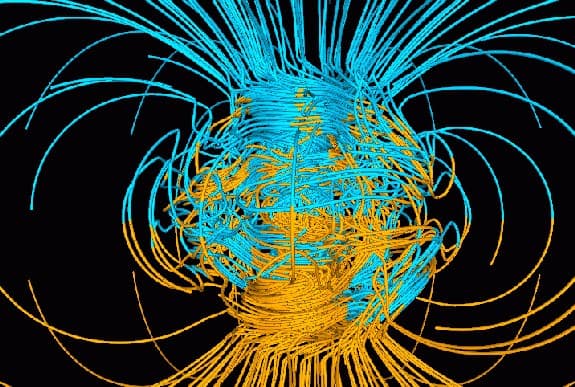
Messy business The Earth’s magnetic field found itself entangled in a controversial article

By James Dacey

Ben Goldacre is probably best known for his razor-sharp column Bad Science, through which he launches weekly attacks on shock reporting, big business, and basically anyone else who is deemed to misrepresent or skew science for their own unsavoury ends.

Now, it seems however that his column has committed one of the same indiscretions it purports to attack – sensationalism. Goldacre’s newspaper, The Guardian, has been forced to publish an apology for an article in which Goldacre drew an “unfair” parallel between the reporting of a fellow science journalist and the exploitative reporting of the survivors of the Dunblane school massacre.

Just to state my position early doors – I am a big fan of Goldacre and his column (as described here after I went along to one of his talks). In this instance, however, I think he got it wrong.

The article in question published in May and Goldacre was commenting on the way Jonathan Leeke of the Sunday Times had covered a new piece of geophysics research. Goldacre accused The Sunday Times of sensationalist reportage for making the findings appear to “turn the world on its head”. Very briefly, this was his qualm:

A physicist in the US had just published a paper in which he linked some of the variation in the Earth’s magnetic field with the world’s oceans: Salt in sea water conducts electricity… the tides swish the water around… a changing electric current creates a magnetic field.

What the physicist did not claim, however, is that the oceans could be responsible for generating the whole of the Earth’s field, which – as the geophysicists out there will know – would be a paradigm-shifting scientific idea as it is standard theory that the geomagnetic field is generated by the convection of molten iron deep within the Earth’s interior. In his article, however, Leake does indeed suggest that this latest research formally introduces this controversial alternative idea.

(more…)

Galactic-scale observatory planned

Physicists have drawn up ambitious plans to detect very low-frequency gravitational waves – ripples in the fabric of space–time that general relativity predicts ought to pervade the universe. But rather than looking for them using existing facilities like the LIGO detectors in the US, which are designed to detect tiny changes in the interference patterns of laser beams sent down pairs of kilometre-long pipes positioned at right angles to one another, the idea is instead to use radio telescopes on Earth. The telescopes would measure tiny variations in the output of pulsars spread thousands of light-years apart.

The galactic observatory, proposed by the North American Nanohertz Observatory for Gravitational Waves (NANOGrav), would rely on minute changes in the relative timing of emissions from different pulsars – rapidly rotating neutron stars that emit very regular pulses of radio waves. A gravitational wave passing between a pulsar and a radio telescope affects the time it takes for the emissions to arrive, and so an array of pulsars with different lines of sight to the Earth would reveal the presence of any wave as well as its direction of propagation and polarization.

This idea was first put forward in the late 1970s but requires such high-precision measurements that it has not been technically feasible until now. The NANOGrav team says that it should be possible to correlate the output of 40 pulsars, each with a timing precision better than 100 ns, within the next decade. This would allow astronomers to observe gravitational waves with wavelengths of several light-years coming from sources such as the black-hole binaries that form when galaxies merge, as well as early-universe phenomena such as cosmic strings or inflation.

The NANOGrav consortium says that this could be achieved by expanding the time currently devoted to pulsar observations on existing facilities such as the Arecibo Observatory in Puerto Rico and Green Bank Telescope in West Virginia, US, as well as developing advanced software to process the huge amounts of data involved. It estimates this would cost a few tens of millions of dollars over the next 10 years, in addition to the money spent by their European and Australian collaborators.

This is small fry compared with the hundreds of millions of dollars being spent on gravitational-wave interferometers. Indeed, NANOGrav member Fredrick Jenet of the University of Texas at Brownsville says it is possible that the pulsar network could detect gravitational waves before the interferometers, although he points out that having different approaches not only expands the astrophysics that can be studied, but also improves the chances of detecting gravitational waves in the first place.

Jim Hough, a gravitational-wave researcher at the University of Glasgow and a member of the GEO-600 gravitational-wave observatory based in Germany, says that pulsar timing “looks a very good way” to search for gravitational waves at extremely low frequencies. He believes that by observing 20 pulsars with a timing precision of better than 100 ns for five years, Jenet and colleagues “have a very good possibility of observing gravitational-wave signals”.

Is dark matter mostly ‘dark atoms’?

Physicists currently believe that most of the dark matter in the universe is made up of individual particles, and the challenge is to work out what kind of particles these are. New research, however, overturns this assumption and says that observational and experimental data are better explained if dark matter exists as composite particles – atoms of dark protons and dark electrons that are acted on by the dark-matter equivalent of the electromagnetic force.

Dark matter is thought to make up more than 80% of the matter in the universe. As its name suggests, dark matter does not reveal itself by emitting light because it does not interact via electromagnetism. Its existence is instead inferred through its gravitational effects on normal matter.

Physicists’ favourite candidate for dark matter is a broad class of so-called weakly interacting massive particles, or WIMPs, which interact via the weak nuclear force. WIMPs are in line with much of the observational evidence for dark matter, but two anomalies remain. One is the fact that WIMP models predict that dark matter ought to clump together gravitationally at all length scales, from galaxies down to much smaller sub-galactic structures. However, this is not what is observed – no dark-matter structures smaller than about 400 light-years across have been found by astronomers.

And then there’s DAMA

The other problem concerns the results of experiments on Earth designed to detect dark-matter particles directly via their collision with nuclei of ordinary matter. One such experimental collaboration, DAMA in the Gran Sasso laboratory in Italy, has generated controversy by claiming to have collected extremely strong evidence for dark matter inside its detector. Unfortunately, DAMA’s results cannot be interpreted as collisions of WIMPs without appearing to strongly contradict a number of other experiments around the world.

Now, David Kaplan and colleagues at Johns Hopkins University in the US say that these two problems could be overcome if dark matter consists not of individual fundamental particles but is instead largely made up of composite “atoms”. These atoms would be made up of the dark matter equivalent of protons and electrons bound together by the equivalent of the electromagnetic force, and would be accompanied by a certain fraction of ionized atoms – in other words, free electrons and protons.

The researchers point out that the existence of these charged particles would have altered the evolution of dark matter in the early universe. WIMPs, being uncharged, would have decoupled from normal radiation less than 1 second after the Big Bang, whereas atomic dark matter, with its ionized fraction, would have remained in thermal equilibrium with dark radiation for about the first 20 minutes. The universe would therefore have expanded to a certain size before gravitational clumping could have occurred, dictating the size of the smallest dark-matter structure that we see today.

Inelastic collisions

To explain the discrepancy between DAMA and other experiments, Kaplan and colleagues build on an idea put forward by Neal Weiner and David Tucker-Smith in 2001. Weiner and Tucker-Smith proposed that the collisions detected by DAMA are inelastic, that some kinetic energy is lost because on collision the dark-matter particles absorb energy to become slightly more massive and that these energy-sapping collisions are far more likely to occur with the relatively heavy sodium iodide in DAMA’s detector than with, say, the silicon and germanium of which CDMS detector in the US is made of. Kaplan’s group, on the other hand, says that this energy loss can be explained by the incoming dark-matter atoms jumping up an energy level when they collide, rather than being due to the creation of new particles that are postulated specifically for this process.

The researchers admit that there is a “tension” within their model because the explanation of missing structure in the universe requires a higher fraction of dark atoms to be ionized than does the mismatch of experimental results. But they say that this difference can be resolved if atomic and ionized dark matter assume different halo shapes within galaxies.

Kaplan’s colleague Christopher Wells admits that their proposal is speculative but that it does have the additional benefit of bringing dark matter more into line with the ordinary matter that we are familiar with. Indeed, they say that dark hydrogen atoms could bind to form hydrogen molecules and that the formation of these molecules could then lead to the creation of “dark stars” or other compact objects. They add that the interaction of dark photons with ordinary photons could lead to emission lines in the spectra of cosmic gamma rays.

Not really problems?

Daniel Hooper, an astrophysicist at Fermilab in the US, does not believe that the problems being addressed by the atomic dark-matter model are really problems at all – that the problem of structure formation is essentially solved while the DAMA results are “not very compelling”. “That being said,” he adds, “to those scientists who think these are issues that need solutions, the ‘atomic dark matter’ idea presented here does seem to resolve the problems fairly easily.”

Tricolour entanglement could connect qubits

Physicists in Brazil have added another capability to the quantum computing toolkit by being the first to show that light beams of three different wavelengths can be entangled. This achievement could provide a way to create three-way optical communication links between elements of a quantum computer.

Entanglement is a quantum effect that means that particles such as photons can have a much closer relationship than allowed by classical physics. For instance, two photons can be created experimentally such that if one is polarized in the vertical direction, then the other is always polarized horizontally. By measuring the polarization of one of the pair, we immediately know the state of the other, no matter how far apart they are.

A quantum computer exploits entanglement and the ability of quantum particles to be in “superposition” of two or more states at the same time. Such a device could, in principle, outperform a classical computer on some tasks. In practice, however, physicists have struggled to create even the simplest quantum computers because the fragile nature of entangled quantum bits – or qubits – makes them very difficult to transmit, store and process.

Photons are a popular choice for qubits because they can travel great distances through optical fibres or even air without losing their entanglement. However, in a quantum computer, such “flying qubits” must interact with “stationary qubits” such as trapped ions or quantum dots – and doing this without the destruction of quantum information is extremely tricky.

Quantum hardware

One could imagine having three different pieces of quantum hardware, for example, with qubits based on a quantum dot, an ion and superconducting flux, respectively. Exchanging quantum information among all of these devices at once requires a light source that can interact efficiently with each qubit, while at the same time produce light that is entangled.

One of the lead researchers – Paul Nussenzveig of the University of Sao Paulo – explains that that light beams could transfer information in such a quantum computing system by exploiting the fact that different types of qubits respond to light at different wavelengths.

But while entanglement of light at two different wavelengths had been achieved previously, increasing this to three – and ultimately four and more – is necessary if several different types of qubit are to be interconnected.

PhD students Antônio Coelho and Felippe Barbosa measured the entanglement produced when a green laser was shone at a system known as an optical parametric oscillator. When the light enters the crystal some of it is converted to two entangled beams at different infrared wavelengths – a phenomenon known as parametric down-conversion. As these beams oscillate within the system, some infrared light is “up-converted” back to green, resulting in entanglement between all three wavelengths.

Bad vibrations

To observe full entanglement between the three light beams they had to cool the system below –10 °C and restrict the pump laser to a narrow power range. Even with cooling, vibrations within the crystal caused minute variations in its refractive index, preventing the researchers from reaching the maximum level of entanglement that they predict could be achieved. That’s an important consideration for quantum computing, Nussenzveig told physicsworld.com. “The efficiency of the information exchange depends on the degree of entanglement,” he said.

Other leading figures performing research into quantum computation and quantum optics agree on the need for interconnections between qubits. “Research into providing seamless links between the physical systems that hold the promise of quantum computation is of significant importance,” commented Ping Koy Lam from the Australian National University. “This work is a step towards providing that ‘quantum’ link.”

Anton Zeilinger of the University of Vienna calls the kind of systems that the continuous variable entanglement demonstrated by the Brazilian team could produce “quantum switchboards”. He says that their work in producing three-colour entanglement is “a very elegant experiment”.

The research is described in Science.

Space nostalgia, Euro-style

1987 esa calendar small.jpg
Images from the European Orbiter on the 1987 ESA calendar. Credit: ESA

By Margaret Harris

The question of what to do with old calendars is (literally) a perennial one, but the European Space Agency has an interesting solution: post them on the web.

The agency has created an online gallery of calendars and posters depicting missions from the last 30 years. The images are drawn from archives at the European Space Operations Centre in Darmstadt, Germany, and from a retired employee’s private collection. They include both satellite photos like the one on this calendar — which would have made a great Christmas gift back in 1986 — and artists’ impressions of missions.

It’s not clear why ESOC has chosen to post these images now. There’s no information on the website about any special exhibition, for example, and the nominal 40th-anniversary tie-in seems a little odd, given that ESOC is now 42 years old.

But whatever the excuse, leafing through the various posters is both a nice reminder of the agency’s successes and an interesting glimpse of how it has advertised itself over the years. I particularly liked the city of Darmstadt’s poster, which used a picture of a rocket to promote a week of extended shop-openings back in the 1980s. Unlike the others, it’s not an official ESA image, but I can see why they like it — it neatly captures the public’s enthusiasm for space, and the eagerness to appropriate “cool” space imagery for utterly unrelated purposes. Space-age shopping hours — whatever will they think of next?

Another triumph for the 'quantum simulator'

stoner.jpg
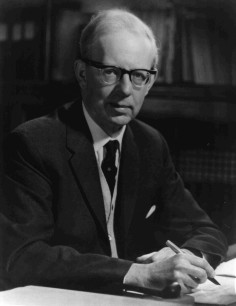
Edmund Stoner would be proud (Courtesy: University of Leeds)

By Hamish Johnston

There’s a nice paper in Science today about using a gas of ultracold atoms to gain a better understanding of the behaviour of electrons in solids — another triumph for the “quantum simulator”.

Physicists in the US and Canada have used a chilled gas of lithium-6 to gain important insights into why iron, nickel and other metals are magnetic.

Of course people have known that iron is magnetic for a very long time — but it turns out that the eponymous ferromagnet has some very tricky physics lurking within it.

Iron is called an “itinerant” ferromagnet because its magnetism arises from the spins of its conduction electrons. This means that its magnetic moments can move around the metal as well as flip between up and down — you can see it’s getting complicated already.

Many years ago physicists realized that electrons with overlapping wave functions experienced a repulsive “exchange” interaction. This repulsion is weaker when the electron spins point in the same direction, and therefore a gas of free electrons can minimize its energy by pointing all its spins in the same direction.

Sounds like a great explanation for iron, but calculations (and later experiments) suggest this should only occur at electron densities much lower than that found in iron. And to make matters worse, the conduction electrons in iron exist in very complicated d-bands so can’t really be thought of as truly free.

The first physicist to really make sense of all this was Edmund Stoner, who in 1933 expressed the exchange interaction felt by a single electron in terms of a field representing all the other electrons. Working at the University of Leeds, he found that if this field was strong enough, the spins would align. But actually calculating the field for a material like iron remains a formidable challenge.

Enter the “quantum simulator”, in which Stoner’s theory can be put through its paces using ultracold atoms instead of electrons.

The team, which included Nobel Laureate Wolfgang Ketterle of MIT, studied a cloud of atoms at about 150 micro Kelvin. The experiment began with half the atoms in one quantum state and the rest in another — which simulates the spin up and spin down states of the electron. Using the “magic” of the Feshbach resonances, the team were able to dial up a repulsive exchange-like interaction between atoms.

What did they see? Three signatures of a ferromagnetic transition as predicted by Stoner: fewer collisions between atoms of opposite “spin” and an increase in the kinetic energy of the atoms both suggested the formation of magnetic domains; along with a reduction in the pressure of the gas.

However, what they weren’t able to do is take images of the gas showing domains of spin up and spin down atoms — apparently the atoms started to form molecules before large domains were apparent.

Of course Stoner’s model is very simple, and much more work is needed to understand the magnetic states of matter — but the quantum simulator has again proven itself to be an important tool for the condensed matter physicist.

Opposites don’t always attract

Oppositely charged droplets of the same liquid should attract one another and ultimately coalesce into a single droplet – shouldn’t they? Not always, according to US scientists who have watched such droplets bounce off one another. The team, led by William Ristenpart at the University of California at Davis, has also developed a theory to explain this strange phenomenon, which could be used to develop better ways to remove water from crude oil.

“We only embarked on this line of experiments because of an accident,” says Ristenpart. He and his colleagues were using an oil and water system to study Taylor cones – conical deformations of droplets caused by an electric field.

“I accidentally applied too high an electric field strength, and the water cone extended all the way through the oil and touched the other electrode. Several kilovolts then passed through the water, shorting out the circuit and causing an explosion in the water.”

When Ristenpart turned down the voltage, he saw positively charged drops that were bouncing back and forth between the negative electrode and the surface of a larger, negatively charged droplet. “I thought that was fascinating and very confusing: why were the positively charged drops bouncing off the negatively charged surface?”

Explaining the bounce

Eager to get to the bottom of this mystery, Ristenpart and colleagues used a high-speed camera to investigate why some pairs of colliding droplets repel each other and others coalesce. The answer appears to lie in the shape of a bridge that forms between the drops as they come together, according to the team.

After studying a variety of fluids, including water droplets in silicone oil and brine drops in crude oil, the team found that droplets with a low charge deform, touch and coalesce with larger, oppositely charged droplets in external electric fields of low strength. But if the combination of field strength and charge exceeds a critical value, the smaller droplet bounces off.

Images produced with a high-speed camera capable of 100,000 frames per second revealed that all drops, irrespective of their charge, come into contact by forming a microscopic capillary bridge. This bridge causes an electrical short circuit between the droplets, and the destruction of any electrostatic forces.

The fate of this bridge depends on the geometry of the Taylor cones and the surface tension of the drops. If both droplets have a low charge, blunt, stable cones are formed that grow and suck the smaller droplet into the larger. But if the charge is higher, sharper, unstable cones can form and then break, causing the drops to bounce off one another. In this case, the bridge breaks in less than a millisecond.

Cheaper petrol?

Ristenpart has recently won funding from the American Chemical Society to study this bouncing effect in petroleum. “Electric fields are widely used to separate salt water from crude, and our hypothesis is that the non-coalescence phenomenon dramatically decreases the separation efficiency.”

Osman Basaran from Purdue University describes this work as a “fantastic” result, and is supportive of their theory for coalescence. “I feel that their explanation is a good hypothesis or possibly the sketch of a reasonable theory but one would need to do simulations to be certain.”

Basaran believes that Ristenpart’s work will have an impact in any field where emulsions are used or where there are populations of drops, such as in clouds. “[But] this work will have even a larger impact on researchers, scientists and engineers who try to predict theoretically how populations of charged drops will evolve in time.”

The work is described in Nature.

First light for Planck

planck.jpg
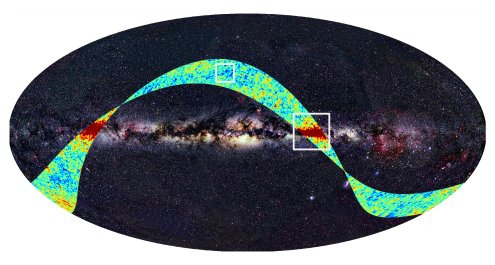
Credits: ESA, LFI & HFI Consortia. Background optical image: Axel Mellinger

By Hamish Johnston

In August the new Planck microwave observatory spent two weeks scanning the heavens — and today the European Space Agency has released the results of this first survey by the satellite instrument.

The image above shows the entire sky at optical wavelengths and the prominent horizontal band is the light shining from our own Milky Way. The superimposed strip shows the area of the sky mapped by Planck during the “first light” survey.

The colour scale shows the deviations of the temperature of the cosmic microwave background (CMB) from its average value (red is hotter and blue is colder). The discovery of these deviations won George Smoot the 2006 Nobel Prize and their study promises to tell us much about the early universe.

The large red strips trace radio emission from the Milky Way, whereas the small bright spots high above the Milky Way correspond to emission from the CMB itself.

Planck’s mission is to map out the CMB in the finest detail yet. The CMB was created 400,000 years after the Big Bang, when primordial protons, neutrons and electrons formed neutral atoms that allowed photons to finally move freely. The photons have continued to do so ever since, being stretched to microwave frequencies due to the expansion of the universe.

Planck will provide a glimpse of the very early universe. Cosmologists believe that the nascent universe underwent a period of extremely rapid growth called inflation — and Planck data should help physicists hone their models of how and why inflation occured.

The first all-sky map from Planck should be available in about six months.

Atlantic oscillation makes global warming a tougher sell

latif.jpg
Mojib Latif is concerned about the Atlantic multidecadal oscillation (Courtesy:University of Kiel).

By Hamish Johnston

Last week James Dacey blogged about the growing skepticism of the British public regarding the dangers of manmade global warming.

One reason could be that in Britain — and some other places bordering the North Atlantic — it doesn’t seem to have become warmer recently. The two places that I am familiar with (the west of England and eastern Canada) have recently had relatively cold winters and cool summers.

Anecdotal and unscientific I know, but I’m guessing that most people form opinions on global warming based on personal experience — which is why climate expert Mojib Latif of Kiel University in Germany is concerned about what he believes to be happening in the North Atlantic.

Despite relentless manmade climate change, Latif believes the North Atlantic is actually cooling thanks to something called the Atlantic multidecadal oscillation — which seems to occur with a period of about 60-80 years.

Speaking on BBC Radio 4 this morning, Latif said that this oscillation could be significant enough to make it cooler in the North Atlantic over the next ten years. In other words, people in the rich and carbon intensive countries that border the North Atlantic could be lulled into thinking that there is no problem. Until the oscillation turns and it gets hotter very quickly.

You can listen to the interview here.

CERN boss targets linear collider

The boss of CERN wants the next big experiment in particle physics after the Large Hadron Collider (LHC) to be built at the Geneva lab. Speaking in an interview with physicsworld.com, Rolf-Dieter Heuer said that CERN should host the experiment, which would collide electrons and positrons in a linear accelerator. Although a design for the machine has not been finalized by the international particle-physics community, Heuer is keen to bring the collider to CERN.

“I would be a bad director-general if I did not push for CERN at least bidding for the next global project,” Heuer told physicsworld.com. “CERN is a fantastic place. [It] has proven that it can host such a project and therefore I think CERN should do it.” However, Heuer is aware that it is far from certain that CERN will host the facility – Fermilab in the US is likely to be a contender – and the CERN chief is looking forward to bids from rival labs. “Competition is always welcome,” he says.

Heuer’s desire to host the linear collider is part of his plan to make CERN a much more global laboratory. Although CERN was set up in 1954 as a European facility, its convention does not prevent countries from outside Europe from becoming members. Several thousand physicists from the US have already helped to build the LHC and its detectors, and Heuer is keen for links with non-European nations to become more permanent.

“Why not involve some of the nations from the Americas or Asia as members [of CERN]?” he asks. “This would enable us to start the next global project as a global project from the very beginning – be it at CERN or elsewhere.” CERN is already developing a blue-print for a future linear collider, known as CLIC, while a rival design known as the International Linear Collider is being drawn up by a team led by Barry Barish of the California Institute of Technology. The precise energy at which such a collider should operate will depend in part on what the LHC discovers.

Switch-on schedule

In his interview, Heuer also confirmed the timetable for switching the LHC back on following the electrical fault that occurred on 19 September last year and led to 53 magnets having to be repaired or replaced. As CERN announced last month, beams will be injected into the 27 km long circular accelerator in mid-November with collisions taking place a few weeks later. “I am pretty confident that we will have the first collisions this year,” says the CERN boss.

CERN engineers will begin by colliding protons at an energy of 450 GeV per beam, before attempting collisions at 3.5 TeV per beam. “We will stay there for several months, depending on what experiments find and on running experience,” says Heuer. “Then in the course of the next year we will go up to 10 TeV in the centre of mass [i.e. 5 TeV per beam]”. The LHC will be kept going until the end of 2010 before it is shut down to prepare the way for collisions at a maximum energy of 14 TeV (i.e. 7 TeV per beam) at some point in 2011. “But if we find something interesting at 10 TeV, we will continue running at 10 TeV,” Heuer added.

Challenges and opportunities

Heuer, who replaced Robert Aymar as CERN’s director-general in January this year, admitted in his interview that one of his challenges as lab boss has been to motivate staff following last year’s accident. He revealed that his tactic has been to get staff involved in technical and scheduling decisions, which “brought the spirit up very quickly”, and to bring the LHC’s users – non-CERN staff from universities around the world – in contact with machine staff.

By the time he steps down as director-general at the end of 2013, Heuer hopes that the LHC will have been running at 14 TeV “for a long time” and that physicists will have been able to make their first discoveries. Although he is cautious not to reveal what those discoveries will be, they are likely to include the Higgs boson, which would be the icing on the cake for the Standard Model, and possibly, exotic new “sparticles” that would reveal a new symmetry of nature called supersymmetry and hint at physics beyond the Standard Model.

The discoveries made with the LHC – particularly the mass of the Higgs boson – will influence the nature of any future linear collider and the energy at which it operates. Although the linear collider will have a lower energy than the LHC, it will be able to make measurements more accurately because electron-positron collisions are “cleaner” than those between protons. “I would hope that I am able to shape the future of particle physics with the discoveries made at the LHC during my mandate,” says Heuer. “That’s at least Heuer’s wishful thinking.”

A question of hype

Meanwhile, in a separate interview with physicsworld.com, CERN’s head of communications James Gillies rejected suggestions that the laboratory was guilty of over-hyping the switch-on of the LHC last year, which saw some 340 journalists from over 100 nations attending the opening. “We didn’t over-hype it,” he says. “The hype was there and we lived with it.” Gillies puts the media interest in the LHC down to three factors: fears that the collider would create black holes; Dan Brown’s novel Angels and Demons, part of which is set at CERN; and the lab’s deliberate attempts to tell the world about the LHC.

But with the LHC soon to start running again and taking real data for the first time, Gillies reiterated that CERN wants to improve how it manages the flow of information from the lab to the wider world. In the past, CERN tended to hold onto sensitive information for too long and then was caught out by rumours spreading, particularly from blogs written by particle physicists. “Our whole approach to information is now to be quick [and] honest and to put it out as fast as we can.”

However, Gillies denied that rules imposed by particle-physics collaborations about what bloggers can and cannot say amount to censorship. “The guidelines are not very restraining at all,” he says. “All the guidelines say is follow your collaboration’s internal peer-review guidelines and make sure the information is of sufficient quality to be published before you start talking about it. That’s not over restraining in my opinion – it’s perfectly reasonable.”


Copyright © 2026 by IOP Publishing Ltd and individual contributors