US photographer Ryan Imperio has beaten thousands of amateur and professional photographers from around the world to win the 2024 Astronomy Photographer of the Year.
The image – Distorted Shadows of the Moon’s Surface Created by an Annular Eclipse – was taken during the 2023 annular eclipse.
It captures the progression of Baily’s beads, which are only visible when the Moon either enters or exits an eclipse. They are formed when sunlight shines through the valleys and craters of the Moon’s surface, breaking the eclipse’s well-known ring pattern.
“This is an impressive dissection of the fleeting few seconds during the visibility of the Baily’s beads,” noted meteorologist and competition judge Kerry-Ann Lecky Hepburn. “This image left me captivated and amazed. It’s exceptional work deserving of high recognition.”
As well as winning the £10,000 top prize, the image will go on display along with other selected pictures from the competition at an exhibition at the National Maritime Museum observatory that opens on 13 September.
The award – now in its 16th year – is run by the Royal Observatory Greenwich in association with insurer Liberty Specialty Markets and BBC Sky at Night Magazine.
The competition received over 3500 entries from 58 countries.
In this episode of the Physics World Weekly podcast we explore two related areas of physics, statistical physics and thermodynamics.
First up we have two leading lights in statistical physics who explain how researchers in the field are studying phenomena as diverse as active matter and artificial intelligence.
Cugliandolo is also chief scientific director of Journal of Statistical Mechanics, Theory, and Experiment (JSTAT) and Mézard has just stepped down from that role. They both talk about how the journal and statistical physics have evolved over the past two decades and what the future could bring.
The second segment of this episode explores how intense storms can affect your cup of tea. Our guests are the meteorologists Caleb Miller and Giles Harrison, who measured the boiling point of water as storm Ciarán passed through the University of Reading in 2023. They explain the thermodynamics of what they found, and how the storm could have affected the quality of the millions of cups of tea brewed that day.
The Journal of Statistical Mechanics, Theory, and Experiment is a multi-disciplinary, peer-reviewed international journal created by the International School for Advanced Studies (SISSA) and IOP Publishing, which also brings you Physics World.
A newly discovered carbon-based defect in the two-dimensional material hexagonal boron nitride (hBN) could be used as a quantum sensor to detect magnetic fields in any direction – a feat that is not possible with existing quantum sensing devices. Developed by a research team in Australia, the sensor can also detect temperature changes in a sample using the boron vacancy defect present in hBN. And thanks to its atomically thin structure, the sensor can conform to the shape of a sample, making it useful for probing structures that aren’t perfectly smooth.
The most sensitive magnetic field detectors available today exploit quantum effects to map the presence of extremely weak fields. To date, most of these have been made out of diamond and rely on the nitrogen vacancy (NV–) centres contained within. NV– centres are naturally occurring defects in the diamond lattice in which two carbon atoms are replaced with a single nitrogen atom, leaving one lattice site vacant. Together, the nitrogen atom and the vacancy can behave as a negatively charged entity with an intrinsic spin. NV– centres are isolated from their surroundings, which means that their quantum behaviour is robust and stable.
When a photon hits an NV– centre, it can excite an electron to a higher-energy state. As it then decays back to the ground state, it may emit a photon of a different wavelength. The NV– centre has three spin sublevels, and the excited state of each sublevel has a different probability of emitting a photon when it decays.
By exciting an individual NV– centre repeatedly and collecting the emitted photons, researchers can detect its spin state. And since the spin state can be influenced by external variables such as magnetic field, electric field, temperature, force and pressure, NV– centres can therefore be used as atomic-scale sensors. Indeed, they are routinely employed today to study a wide variety of biological and physical systems.
There is a problem though – NV– centres can only detect magnetic fields that are aligned in the same direction as the sensors. Devices must therefore contain many sensors placed at different alignment angles, which makes them difficult to use and limited to specific applications. What’s more, the fact that they are rigid (diamond being the hardest material known), means they cannot conform to the sample being studied.
A new carbon-based defect
Researchers recently discovered a new carbon-based defect in hBN, in addition to the boron vacancy that it is already known to contain. In this latest work, and thanks to a carefully calibrated Rabi experiment (a method for measuring nuclear spin), a team led by Jean-Philippe Tetienne of RMIT University and Igor Aharonovich of the University of Technology Sydney found that the carbon-based defect behaves as a spin-half system (S=1/2). In comparison, the spin in the boron defect is equal to one. And it’s this spin-half nature of the former that enables it to detect magnetic fields in any direction, say the researchers.
Research team Sam Scholten and Priya Singh working on their hBN quantum sensing system. (Courtesy: RMIT University)
“Having two different independently addressable spin species within the same material at room temperature is unique, not even diamond has this capability,” explains Priya Singh from RMIT University, one of the lead authors of this study. “This is exciting because each spin species has its advantages and limitations, and so with hBN we can combine the best of both worlds. This is important especially for quantum sensing, where the spin half enables omnidirectional magnetometry, with no blind spot, while the spin one provides directional information when needed and is also a good temperature sensor.”
Until now, the spin multiplicity of the carbon defect was under debate in the hBN community, adds co-first author Sam Scholten from the University of Melbourne. “We have been able to unambiguously prove its spin-half nature, or more likely a pair of weakly coupled spin-half electrons.”
The new S=1/2 sensor can be controlled using light in the same way as the boron vacancy-based sensor. What’s more, the two defects can be tuned to interact with each other and thus used together to detect both magnetic fields and temperature at the same time. Singh points out that the carbon-based defects were also naturally present in pretty much every hBN sample the team studied, from commercially sourced bulk crystals and powders to lab-made epitaxial films. “To create the boron vacancy defects in the same sample, we had to perform just one extra step, namely irradiating the samples with high-energy electrons, and that’s it,” she explains.
To create the hBN sensor, the researchers simply drop casted a hBN powder suspension onto the target object or transferred an epitaxial film or an exfoliated flake. “hBN is very versatile and easy to work with,” says Singh. “It is also low cost and easy to integrate with various other materials so we expect lots of applications will emerge in nanoscale sensing – especially thanks to the omnidirectional magnetometry capability, unique for solid-state quantum sensors.”
The researchers are now trying to determine the exact crystallographic structure of the S=1/2 carbon defects and how they can engineer them on-demand in a few layers of hBN. “We are also planning sensing experiments that leverage the omnidirectional magnetometry capability,” says Scholten. “For instance, we can now image the stray field from a van der Waals ferromagnet as a function of the azimuthal angle of the applied field. In this way, we can precisely determine the magnetic anisotropy, something that has been a challenge with other methods in the case of ultrathin materials.”
High school students and scientists in the US have used dance to illustrate the physics of topological insulators. The students followed carefully choreographed instructions developed by scientists in what was a fun outreach activity that explained topological phenomena. The exercise demonstrates an alternative analogue for topologically nontrivial systems, which could be potentially useful for research.
“We thought that the way all of these phenomena are explained is rather contrived, and we wanted to, in some sense, democratize the notions of topological phases of matter to a broader audience,” says Joel Yuen-Zhou who is a theoretical chemist at the University of California, San Diego (UCSD). Yuen-Zhou led the research, which was done in collaboration with students and staff at Orange Glen High School near San Diego.
Topological insulators are a type of topological material where the bulk is an electrical insulator but the surface or edges (depending on whether the system is 3D or 2D) conducts electricity. The conducting states arise due to a characteristic of the electronic band structure associated with the system as a whole, which means they persist despite defects or distortions in the system so long as the fundamental topology of the system is undisturbed. Topology can be understood in terms of a coffee mug being topologically equivalent to a ring doughnut, because they both have a hole all the way through. This is unlike a jam doughnut which does not have a hole and is therefore not topologically equivalent to a coffee mug.
Insulators without the conducting edge or surface states are “topologically trivial” and have insulating properties throughout. Yuen-Zhou explains that for topologically nontrivial properties to emerge, the system must be able to support wave phenomena and have something that fulfils the role of a magnetic field in condensed matter topological insulators. As such, analogues of topological insulators have been reported in systems ranging from oceanic and atmospheric fluids to enantiomeric molecules and active matter. Nonetheless, and despite the interest in topological properties for potential applications, they can still seem abstract and arcane.
Human analogue
Yuen-Zhou set about devising a human analogue of a topological insulator with then PhD student Matthew Du, who is now at the University of Chicago. The first step was to establish a Hamiltonian that defines how each site in a 2D lattice interacts with its neighbours and a magnetic field. They then formulated the Schrödinger equation of the system as an algorithm that updates after discrete steps in time and reproduces essential features of topological insulator behaviour. These are chiral propagation around the edges when initially excited at an edge; robustness to defects; propagation around the inside edge when the lattice has a hole in it; and an insulating bulk.
The USCD researchers then explored how this quantum behaviour could be translated into human behaviour. This was a challenge because quantum mechanics operates in the realm of complex numbers that have real and an imaginary components. Fortunately, they were able to identify initial conditions that lead to only real number values for the interactions at each time step of the algorithm. That way the humans, for whom imaginary interactions might be hard to simulate, could legitimately manifest only real numbers as they step through the algorithm. These real values were either one (choreographed as waving flags up), minus one (waving flags down) or zero (standing still).
“The structure isn’t actually specific just to the model that we focus on,” explains Du. “There’s actually a whole class of these kinds of models, and we demonstrate this for another example – actually a more famous model – the Haldane model, which has a honeycomb lattice.”
The researchers then created a grid on a floor at Orange Glen High School, with lines in blue or red joining neighbouring squares. They defined whether the interaction between those sites was parallel or antiparallel (that is, whether the occupants of the squares should wave the flags in the same or opposite direction to each other when prompted).
Commander and caller
A “commander” acts as the initial excitation that starts things off. This is prompted by someone who is not part of the 2D lattice, whom the researchers liken to a caller in line, square or contra dancing. The caller then prompts the commander to come to a standstill, at which point all those who have their flags waving determine if they have a “match”, that is, if they are dancing in kind or opposite to their neighbours as designated by the blue and red lines. Those with a match then stop moving, after which the “commander” or excitation moves to the one site where there is no such match.
Yuen-Zhou and Du taught the choreography to second and third year high school students. The result was that excitations propagated around the edge of the lattice, but bulk excitations fizzled out. There was also a resistance to “defects”.
“The main point about topological properties is that they are characterized by mathematics that are insensitive to many details,” says Yuen-Zhou. “While we choreograph the dance, even if there are imperfections and the students mess up, the dance remains and there is the flow of the dance along the edges of the group of people.”
The researchers were excited about showing that even a system as familiar as a group of people could provide an analogue of a topological material, since so far these properties have been “restricted to very highly engineered systems or very exotic materials,” as Yuen-Zhou points out.
“The mapping of a wave function to real numbers then to human movements clearly indicates the thought process of the researchers to make it more meaningful to students as an outreach activity,” says Shanti Pise, a principal technical officer at the Indian Institute of Science, Education and Research in Pune. She was not involved in this research project but specializes in using dance to teach mathematical ideas. “I think this unique integration of wave physics and dance would also give a direction to many researchers, teachers and the general audience to think, experiment and share their ideas!”
Some two-thirds of college students in the US who initially express an interest in studying physics drop out to pursue another degree. That is according to a five-year-long survey by the American Institute of Physics, which found that students often quit due to a lack of confidence in mathematics or having poor experiences within physics departments and instructors. Most students, however, ended up in another science, technology, engineering and mathematics (STEM) field.
Carried out by AIP Statistical Research, the survey initially followed almost 4000 students in their first year of high school or college who were doing an introductory physics course at four large, predominantly white universities.
Students highlighted “learning about the universe”, “applying their problem-solving and maths skills”, “succeeding in a challenging subject” and “pursuing a satisfying career” as reasons why they choose to study physics.
When they surveyed the students after five academic years, they found that only 106 of the 277 who responded, or 38%, had graduated with a physics degree.
Most of those that left physics did so during their first or second year. Under-represented groups, including women and African-Americans, were the most likely to avoid pursuing a physics degree.
Pull and push
While many who quit physics enjoyed their experience, they left due to “issues with poor teaching quality and large class sizes” as well as “negative perceptions that physics employment consists only of academic positions and desk jobs”. Self-appraisal played a role in the decision to leave too. “They may feel unable to succeed because they lack the necessary skills in physics,” Porter says. “That’s a reason for concern.”
Porter adds that intervention early in college is essential to retain physicists with introductory physics courses being “incredibly important”. Indeed, the survey comes at a time when the number of bachelor’s degrees in physics offered by US universities is growing more slowly than in other STEM fields.
Meanwhile, a separate report published by the National Academies of Science, Engineering, and Medicine has called on the US government to adopt a new strategy to recruit and retain talent in STEM subjects. In particular, the report urges Congress to smooth the path to permanent residency and US citizenship for foreign-born individuals working in STEM fields.
06/11/24 This article was corrected to state more clearly the percentage of students in the study that graduated with a physics degree.
Fast chill The “Maxwell’s demon cooling double trap” developed by the BASE collaboration can cool antiprotons very quickly to the extremely cold temperatures necessary for high-precision measurements. (Courtesy: BASE-Collaboration/Stefan Ulmer)
A novel particle trap invented at CERN could allow physicists to measure the magnetic moments of antiprotons with higher precision than ever before. The experiment, carried out by the international BASE collaboration, revealed that the magnetic moments of the antiparticles differ by a maximum of 10–9 from those of their matter counterparts.
One of the biggest mysteries in physics today is why the universe appears to be made up almost entirely of matter and contains only tiny amounts of antimatter. According to the Standard Model, our universe should be largely matter-less. This is because when the universe formed nearly 14 billion years ago, equal amounts of antimatter and matter were generated. When pairs of these antimatter and matter particles collided, they annihilated and produced a burst of energy. This energy created new antimatter and matter particles, which annihilated each other again, and so on.
Physicists have been trying to solve this enigma by looking for tiny differences between a particle (such as a proton) and its antiparticle. If successful, such differences (even if extremely small) would shed more light on antimatter–matter asymmetry and perhaps even reveal physics beyond the Standard Model.
The aim of the BASE (Baryon Antibaryon Symmetry Experiment) collaboration is to measure the magnetic moment of the antiproton to extremely high precision and compare it with the magnetic moment of the proton. To do this, the researchers are using Penning traps, which employ magnetic and electric fields to hold a negatively charged antiproton, and can store antiprotons for years.
Quicker cooling
Preparing individual antiprotons so that their spin quantum states can be measured, however, involves cooling them down to extremely cold temperatures of 200 mK. Previous techniques took 15 h to achieve this, but BASE has now shortened this cooling time to just eight minutes.
The BASE team achieved this feat by joining two Penning traps to make a so-called “Maxwell’s demon cooling double trap”. The first trap cools the antiprotons. The second (referred to as the analysis trap in this study) has the highest magnetic field gradient for a device of its kind, as well as improved noise-protection electronics, a cryogenic cyclotron motion detector and ultrafast transport between the two traps.
The new instrument allowed the researchers to prepare only the coldest antiprotons for measurement, while at the same time rejecting any that had a higher temperature. This means that they did not have to waste time cooling down these warmer particles.
“With our new trap we need a measurement time of around one month, compared with almost 10 years using the old technique, which would be impossible to realize experimentally,” explains BASE spokesperson Stefan Ulmer, an experimental physicist at Heinrich Heine University Düsseldorf and a researcher at CERN and RIKEN.
Ulmer says that he and his colleagues have already been able to measure that the magnetic moments of protons and antiprotons differ by a maximum of one billionth (10–9). They have also improved the error rate in identifying the antiproton’s spin by more than a factor of 1000. Reducing this error rate was one of the team’s main motivations for this project.
The new cooling device could be of benefit to the Penning trap community at large, since colder particles generally result in more precise measurements. For example, it could be used for phase sensitive detection methods or spin state analysis, says Barbara Maria Latacz, CERN team member and lead author of this study. “Our trap is particularly interesting because it is relatively simple and robust compared to laser cooling systems,” she tells Physics World. “Specifically, it allows us to cool a single proton or antiproton to temperatures below 200 mK in less than eight minutes, which is not achievable with other cooling methods.”
The new device will now be a key element of the BASE experimental set-up, she says.
Looking forward, the researchers hope to improve the detection accuracy of the antiproton magnetic moment to 10–10 in their next measurement campaign. They report their current work in Physical Review Letters.
Your research can’t happen without vacuum! If you’re pushing the boundaries of science or technology, you know that creating a near-perfect empty space is crucial. Whether you’re exploring the mysteries of subatomic particles, simulating the harsh conditions of outer space, or developing advanced materials, mastering ultra-high (UHV) and extreme-high vacuum (XHV) is necessary.
In this live webinar:
You will learn how vacuum enables physics research, from quantum computing, to fusion, to the fundamental nature of the universe.
You will discover why ultra-low-pressure environments directly impact the success of your experiments.
We will dive into the latest techniques and technologies for creating and maintaining UVH and XHV.
Join us to gain practical insights and stay ahead in your field – because in your research, vacuum isn’t just important; it’s critical.
John Screech graduated in 1986 with a BA in physics and has worked in analytical instrumentation ever since. His career has spanned general mass spectrometry, vacuum system development, and contraband detection. John joined Agilent in 2011 and currently leads training and education programmes for the Vacuum Products division. He also assists Agilent’s sales force and end-users with pre- and post-sales applications support. He is based near Toronto, Canada.
When the British physicist Edward Andrade wrote a review paper on the structure of the atom in the first volume of the journal Reports on Progress in Physics (ROPP) in 1934, he faced a problem familiar to anyone seeking to summarize the latest developments in a field. So much exciting research had happened in atomic physics that Andrade was finding it hard to cram everything in. “It is obvious, in view of the appalling number of papers that have appeared,” he wrote, “that only a small fraction can receive reference.”
Review articles are the ideal way to get up to speed with developments and offer a gateway into the scientific literature
Apologizing that “many elegant pieces of work have been deliberately omitted” due to a lack of space, Andrade pleaded that he had “honestly tried to maintain a just balance between the different schools [of thought]”. Nine decades on, Andrade’s struggles will be familiar to anyone has ever tried to write a review paper, especially of a fast-moving area of physics. Readers, however, appreciate the efforts authors put in because review articles are the ideal way to get up to speed with developments and offer a gateway into the scientific literature.
Writing review papers also benefits authors because such articles are usually widely read and cited by other scientists – much more in fact than a paper containing new research findings. As a result, most review journals have an extraordinarily high “impact factor”, which is the yearly mean number of citations received by articles published in the last two years in the journal. ROPP, for example, has an impact factor of 19.0. While there are flaws with using impact factor to judge the quality of a journal, it’s still a well-respected metric in many parts of the world. And who wouldn’t want to appear in a journal with that much influence?
New dawn for ROPP
Celebrating its 90th anniversary this year, ROPP is the flagship journal of IOP Publishing, which also publishes Physics World. As a learned-society publisher, IOP Publishing does not have shareholders, with any financial surplus ploughed back into the Institute of Physics (IOP) to support everyone from physics students to physics teachers. In contrast to journals owned by commercial publishers, therefore, ROPP has the international physics community at its heart.
Over the last nine decades, ROPP has published over 2500 review papers. There have been more than 20 articles by Nobel-prize-winning physicists, including famous figures from the past such as Hans Bethe (stellar evolution), Lawrence Bragg (protein crystallography) and Abdus Salam (field theory). More recently, ROPP has published papers by still-active Nobel laureates including Konstantin Novoselov (2D materials), Ferenc Krausz (attosecond physics) and Isamu Akasaki (blue LEDS) – see the box below for a full list.
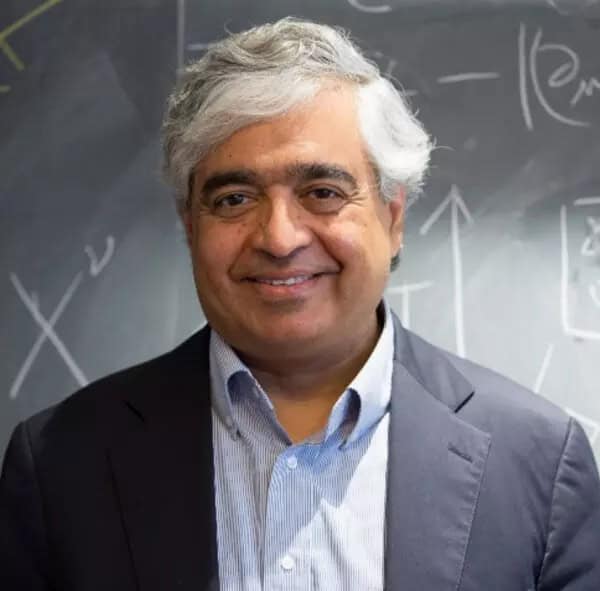
New directions Subir Sachdev from Harvard University in the US is the current editor-in-chief of Reports on Progress in Physics. (Courtesy: Subir Sachdev)
But the journal isn’t resting on its laurels. ROPP has recently started accepting articles containing new scientific findings for the first time, with the plan being to publish 150–200 very-high-quality primary-research papers each year. They will be in addition to the usual output of 50 or so review papers, most of which will still be commissioned by ROPP’s active editorial board. IOP Publishing hopes the move will cement the journal’s place at the pinnacle of its publishing portfolio.
“ROPP will continue as before,” says Subir Sachdev, a condensed-matter physicist from Harvard University, who has been editor-in-chief of the journal since 2022. “There’s no change to the review format, but what we’re doing is really more of an expansion. We’re adding a new section containing original research articles.” The journal is also offering an open-access option for the first time, thereby increasing the impact of the work. In addition, authors have the option to submit their papers for “double anonymous” and transparent peer review.
Maintaining high standards
Those two new initiatives – publishing primary research and offering an open-access option – are probably the biggest changes in the journal’s 90-year history. But Sachdev is confident the journal can cope. “Of course, we want to maintain our high standards,” he says. “ROPP has over the years acquired a strong reputation for very-high-quality articles. With the strong editorial board and the support we have from referees, we hope we will be able to maintain that.”
Early signs are promising. Among the first primary-research papers in ROPP are CERN’s measurement of the speed of sound in a quark–gluon plasma (87 077801), a study into flaws in the Earth’s gravitational field (87 078301), and an investigation into whether supersymmetry could be seen in 2D materials (10.1088/1361-6633/ad77f0). A further paper looks into creating an overarching equation of state for liquids based on phonon theory (87 098001).
The idea is to publish a relatively small number of papers but ensure they’re the best of what’s going on in physics and provide a really good cross section of what the physics community is doing
David Gevaux
David Gevaux, ROPP’s chief editor, who is in charge of the day-to-day running of the journal, is pleased with the quality and variety of primary research published so far. “The idea is to publish a relatively small number of papers – no more than 200 max – but ensure they’re the best of what’s going on in physics and provide a really good cross section of what the physics community is doing,” he says. “Our first papers have covered a broad range of physics, from condensed matter to astronomy.”
Another benefit of ROPP only publishing a select number of papers is that each article can have, as Gevaux explains, “a little bit more love” put into it. “Traditionally, publishers were all about printing journals and sending them around the world – it was all about distribution,” he says. “But with the Internet, everything’s immediately available and researchers almost have too many papers to trawl through. As a flagship journal, ROPP gives its published authors extra visibility, potentially through a press release or coverage in Physics World.”
Nobel laureates who have published in ROPP
Change of focus Home for the last 90 years to top-quality review articles, Reports on Progress in Physics now also accepts primary research papers for the first time. (Courtesy: IOP Publishing)
Since its launch in 1934, Reports on Progress in Physics has published papers by numerous top scientists, including more than 20 current or future Nobel-prize-winning physicists. A selection of those papers written or co-authored by Nobel laureates over the journal’s first 90 years is given chronologically below. For brevity, papers by multiple authors list only the contributing Nobel winner.
As another reminder of its place in the physics community, ROPP is hosting a two-day event at the IOP’s headquarters in London and online. Taking place on 9–10 October 2024, the hybrid event will present the latest cutting-edge condensed-matter research, from fundamental work to applications in superconductivity, topological insulators, superfluids, spintronics and beyond. Confirmed speakers at Progress in Physics 2024 include Piers Coleman (Rutgers University), Susannah Speller (University of Oxford), Nandini Trivedi (Ohio State University) and many more.
Keep up with the action The latest advances in superconductivity are among the hot topics to be discussed at a hybrid meeting on 9–10 October 2024 online and in London to mark the 90th anniversary of IOP Publishing’s flagship journal Reports on Progress in Physics. (Courtesy: iStock/koto_feja)
“We’re taking the journal out into the community,” says Gevaux. “IOP Publishing is very heavily associated with the IOP and of course the IOP has a large membership of physicists in the UK, Ireland and beyond. With the meeting, the idea is to bring that community and the journal together. This first meeting will focus on condensed-matter physics, with some of the ROPP board members giving plenary talks along with lectures from invited, external scientists and a poster session too.”
Longer-term, IOP Publishing plans to put ROPP at the top of a wider series of journals under the “Progress in” brand. The first of those journals is Progress in Energy, which was launched in 2019 and – like ROPP – has now also expanded its remit to included primary- research papers. Other, similar spin-off journals in different topic areas will be launched over the next few years, giving IOP Publishing what it hopes is a series of journals to match the best in the world.
For Sachdev, publishing with ROPP is all about having “the stamp of approval” from the academic community. “So if you think your field is now reached a point where a scholarly assessment of recent advances is called for, then please consider ROPP,” he says. “We have a very strong editorial board to help you produce a high-quality, impactful article, now with the option of open access and publishing really high-quality primary research papers too.”
The meteoric rise of quantum technologies from research curiosity to commercial reality is creating all the right conditions for a future skills shortage, while the ongoing pursuit of novel materials continues to drive demand for specialist scientists and engineers. Within the quantum sector alone, headline figures from McKinsey & Company suggest that less than half of available quantum jobs will be filled by 2025, with global demand being driven by the burgeoning start-up sector as well as enterprise firms that are assembling their own teams to explore the potential of quantum technologies for transforming their businesses.
While such topline numbers focus on the expertise that will be needed to design, build and operate quantum systems, a myriad of other skilled professionals will be needed to enable the quantum sector to grow and thrive. One case in point is the diverse workforce of systems engineers, measurement scientists, service engineers and maintenance technicians who will be tasked with building and installing the highly specialized equipment and instrumentation that is needed to operate and monitor quantum systems.
“Quantum is an incredibly exciting space right now, and we need to prepare for the time when it really takes off and explodes,” says Matt Martin, Managing Director of Oxford Instruments NanoScience, a UK-based company that manufactures high-performance cryogenics systems and superconducting magnets. “But for equipment makers like us the challenge is not just about quantum, since we are also seeing increased demand from both academia and industry for emerging applications in scientific measurement and condensed-matter physics.”
Martin points out that Oxford Instruments already works hard to identify and nurture new talent. Within the UK the company has for many years sponsored doctoral students to foster a deeper understanding of physics in the ultracold regime, and it also offers placements to undergraduates to spark an early interest in the technology space. The firm is also dialled into the country’s apprenticeship scheme, which offers an effective way to train young people in the engineering skills needed to manufacture and maintain complex scientific instruments.
Despite these initiatives, Martin acknowledges that NanoScience faces the same challenges as other organizations when it comes to recruiting high-calibre technical talent. In the past, he says, a skilled scientist would have been involved in all stages of the development process, but now the complexity of the systems and depth of focus required to drive innovation across multiple areas of science and engineering has led to the need for greater specialization. While collaboration with partners and sister companies can help, the onus remains on each business to develop a core multidisciplinary team.
Building ultracold and measurement expertise
The key challenge for companies like Oxford Nanoscience is finding physicists and engineers who can create the ultracold environments that are needed to study both quantum behaviour and the properties of novel materials. Compounding that issue is the growing trend towards providing the scientific community with more automated solutions, which has made it much easier for researchers to configure and conduct experiments at ultralow temperatures.
Quantum focus Harriet van der Vliet, the product manager for quantum technologies at Oxford Instruments NanoScience, with one of the company’s dilution refrigerators. (Courtesy: Oxford Instruments NanoScience)
“In the past PhD students might have spent a significant amount of time building their experiments and the hardware needed for their measurements,” explains Martin. “With today’s push-button solutions they can focus more on the science, but that changes their knowledge because there’s no need for them to understand what’s inside the box. Today’s measurement scientists are increasingly skilled in Python and integration, but perhaps less so in hardware.”
Developing such comprehensive solutions demands a broader range of technical specialists, such as software programmers and systems engineers, that are in short supply across all technology-focused industries. With many other enticing sectors vying for their attention, such as the green economy, energy and life sciences, and the rise of AI-enabled robotics, Martin understands the importance of inspiring young people to devote their energies to the technologies that underpin the quantum ecosystem. “We’ve got to be able to tell our story, to show why this new and emerging market is so exciting,” he says. “We want them to know that they could be part of something that will transform the future.”
To raise that awareness Oxford Instruments has been working to establish a series of applications centres in Japan, the US and the UK. One focus for the centres will be to provide training that helps users to get to the most out of the company’s instruments, particularly for those without direct experience of building and configuring an ultracold system. But another key objective is to expose university-level students to research-grade technology, which in turn should help to highlight future career options within the instrumentation sector.
To build on this initiative Oxford Instruments is now actively discussing opportunities to collaborate with other companies on skills development and training in the US. “We all want to provide some hands-on learning for students as they progress through their university education, and we all want to find ways to work with government programmes to stimulate this training,” says Martin. “It’s better for us to work together to deliver something more substantial rather than doing things in a piecemeal way.”
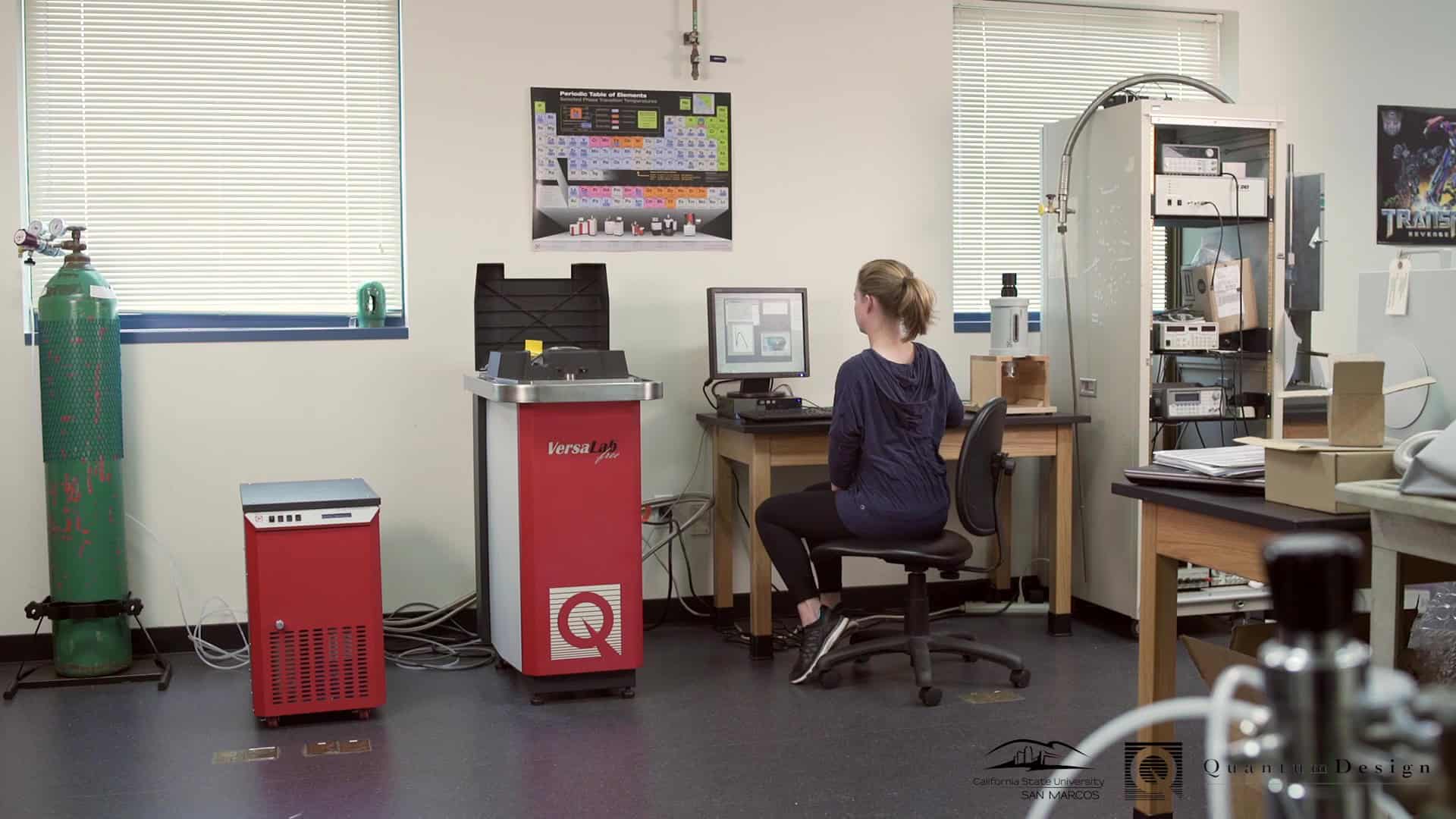
That collaboration is likely to centre around an initiative launched by US firm Quantum Design back in 2015. Under the scheme, now badged Discovery Teaching Labs, the company has donated one of its commercial systems for low-temperature material analysis, the PPMS VersaLab, to several university departments in the US. As part of the initiative the course professors are also asked to create experimental modules that enable undergraduate students to use this state-of-the-art technology to explore key concepts in condensed-matter physics.
“Our initial goal was to partner with universities to develop a teaching curriculum that uses hands-on learning to inspire students to become more interested in physics,” says Quantum Design’s Barak Green, who has been a passionate advocate for the scheme. “By enabling students to become confident with using these advanced scientific instruments, we have also found that we have equipped them with vital technical skills that can open up new career paths for them.”
One of the most successful partnerships has been with California State University San Marcos (CSUSM), a small college that mainly attracts students from communities with no prior tradition of pursuing a university education. “There is no way that the students at CSUSM would have been able to access to this type of equipment in their undergraduate training, but now they have a year-long experimental programme that enhances their scientific learning and makes them much more comfortable with using such an advanced system,” says Green. “Many of these students can’t afford to stay in school to study for a PhD, and this programme has given them the knowledge and experience they need to get a good job.”
Teaching and discovery To build knowledge and skills among physics students, Quantum Design has developed an initiative for donating research-grade equipment to undergraduate teaching labs. (Courtesy: Quantum Design)
Indeed, Quantum Design has already hired around 20 students from CSUSM and other local programmes. “We didn’t start the initiative with that in mind, but over the years we discovered that we had all these highly skilled people who could come and work for us,” Green continues. “Students who only do theory are often very nervous around these machines, but the CSUSM graduates bring a whole extra layer of experience and know-how. Not everyone needs to have a PhD in quantum physics, we also need people who can go into the workforce and build the systems that the scientists rely on.”
This overwhelming success has given greater impetus to the programme, with Quantum Design now seeking to bring in other partners to extend its reach and impact. LakeShore Cryotronics, a long-time collaborator that designs and builds low-temperature measurement systems that can be integrated into the VersaLab, was the first company to make the commitment. In 2023 the US-based firm donated one of its M91 FastHall measurement platforms to join the VersaLab already installed at CSUSM, and the two partners are now working together to establish an undergraduate teaching lab at Stony Brook University in New York.
“It’s an opportunity for like-minded scientific companies to give something back to the community, since most of our products are not affordable for undergraduate programmes,” says LakeShore’s Chuck Cimino, who has now joined the board of advisors for the Discovery Teaching Labs programme. “Putting world-class equipment into the hands of students can influence their decisions to continue in the field, and in the long term will help to build a future workforce of skilled scientists and engineers.”
Conversations with other equipment makers at the 2024 APS March Meeting also generated significant interest, potentially paving the way for Oxford Instruments to join the scheme. “It’s a great model to build on, and we are now working to see how we might be able to commit some of our instruments to those training centres,” says Martin, who points out that the company’s Proteox S platform offers the ideal entry-level system for teaching students how to manage a cold space for experiments with qubits and condensed-matter systems. “We’ve developed a lot of training on the hardware and the physicality of how the systems work, and in that spirit of sharing there’s lots of useful things we could do.”
While those discussions continue, Martin is also looking to a future when quantum-powered processors become a practical reality in compute-intensive settings such as data centres. “At that point there will be huge demand for ultracold systems that are capable of hosting and operating large-scale quantum computers, and we will suddenly need lots of people who can install and service those sorts of systems,” he says. “We are already thinking about ways to set up training centres to develop that future workforce, which will primarily be focused around service engineers and maintenance technicians.”
Martin believes that partnering with government labs could offer a solution, particularly in the US where various initiatives are already in place to teach technical skills to college-level students. “It’s about taking that forward view,” he says. “We have already built a product that can be used for training purposes, and we have started discussions with US government agencies to explore how we could work together to build the workforce that will be needed to support the big industrial players.”
Though she isn’t a physicist or an engineer, Margot Taylor has spent much of her career studying electrical circuits. As the director of functional neuroimaging at the Hospital for Sick Children in Toronto, Canada, Taylor has dedicated her research to the most complex electrochemical device on the planet – the human brain.
Taylor uses various brain imaging techniques including MRI to understand cognitive development in children. One of her current projects uses a novel quantum sensing technology to map electrical brain activity. Magnetoencephalography with optically pumped magnetometry (OPM-MEG) is a wearable technology that uses quantum spins to localize electrical impulses coming from different regions of the brain.
Physics World’s Hamish Johnston caught up with Taylor to discover why OPM-MEG could be a breakthrough for studying children, and how she’s using it to understand the differences between autistic and non-autistic people.
The OPM-MEG helmets Taylor uses in this research were developed by Cerca Magnetics, a company founded in 2020 as a spin-out from the University of Nottingham‘s Sir Peter Mansfield Imaging Centre in the UK. Johnston also spoke to Cerca’s chief executive David Woolger, who explained how the technology works and what other applications they are developing.
Margot Taylor: understanding the brain
What is magnetoencephalography, and how is it used in medicine?
Magnetoencephalography (MEG) is the most sensitive non-invasive means we have of assessing brain function. Specifically, the technique gives us information about electrical activity in the brain. It doesn’t give us any information about the structure of the brain, but the disorders that I’m interested in are disorders of brain function, rather than disorders of brain structure. There are some other techniques, but MEG gives us amazing temporal and spatial resolution, which makes it very valuable.
So you’re measuring electrical signals. Does that mean that the brain is essentially an electrical device?
Indeed, they are hugely complex, electrical devices. Technically it’s electrochemical, but we are measuring the electrical signals that are the product of the electrochemical reactions in the brain.
When you perform MEG, how do you know where that signal’s coming from?
We usually get a structural MRI as well, and then we have very good source localization approaches so that we can tell exactly where in the brain different signals are coming from. We can also get information about how the signals are connecting with each other, the interactions among different brain regions, and the timing of those interactions.
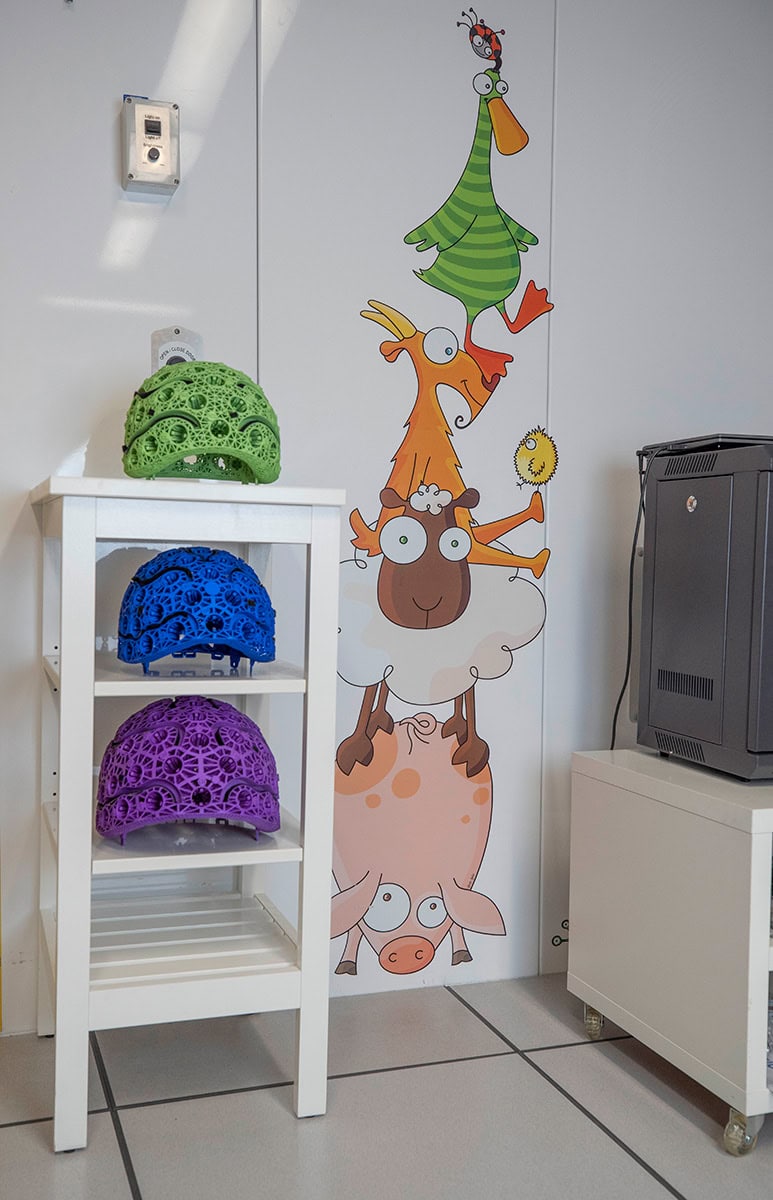
Good fit Margot Taylor and her team are working with quantum MEG helmets in various sizes, from large adult (purple) down to one-year-old (green). (Courtesy: Hospital for Sick Children)
Why does quantum MEG make it easier to do brain scans on children?
The quantum technology is called optically pumped magnetometry (OPM) and it’s a wearable system, where the sensors are placed in a helmet. This means there is allowed movement because the helmet moves with the child. We’re able to record brain signals in very young children because they can move or sit on their parents’ laps, they don’t have to be lying perfectly still.
Conventional MEG uses cryogenic technology and is typically one size fits all. It’s designed for an adult male head and if you put in a small child, their head is a long way from the sensors. With OPM, however, the helmet can be adapted for different sized heads. We have little tiny helmets up to bigger helmets. This is a game changer in terms of recording signals in little children.
Can you tell us more about the study you’re leading at the Hospital for Sick Children in Toronto using a quantum MEG system from the UK’s Cerca Magnetics?
We are looking at early brain function in autistic and non-autistic children. Autism is usually diagnosed by about three years of age, although sometimes it’s not diagnosed until they’re older. But if a child could be diagnosed with autism earlier, then interventions could start earlier. And so we’re looking at autistic and non-autistic children as well as children that have a high likelihood of being autistic to see if we can get brain signals that will predict whether they will go on to get a diagnosis or not.
How do the responses you measure using quantum MEG differ between autistic and non-autistic people, or those with a high likelihood of developing autism?
We don’t have that data yet because we’re looking at the children who have a high likelihood of being autistic, so we have to wait until they grow up and for another year or so to see if they get a diagnosis. For the children who do have a diagnosis of autism already, it seems like the responses are atypical, but we haven’t fully analysed that data. We think that there is a signal there that we’ll be able to report in the foreseeable future, but we have only tested 32 autistic children so far, and we’d like to get more data before we publish.
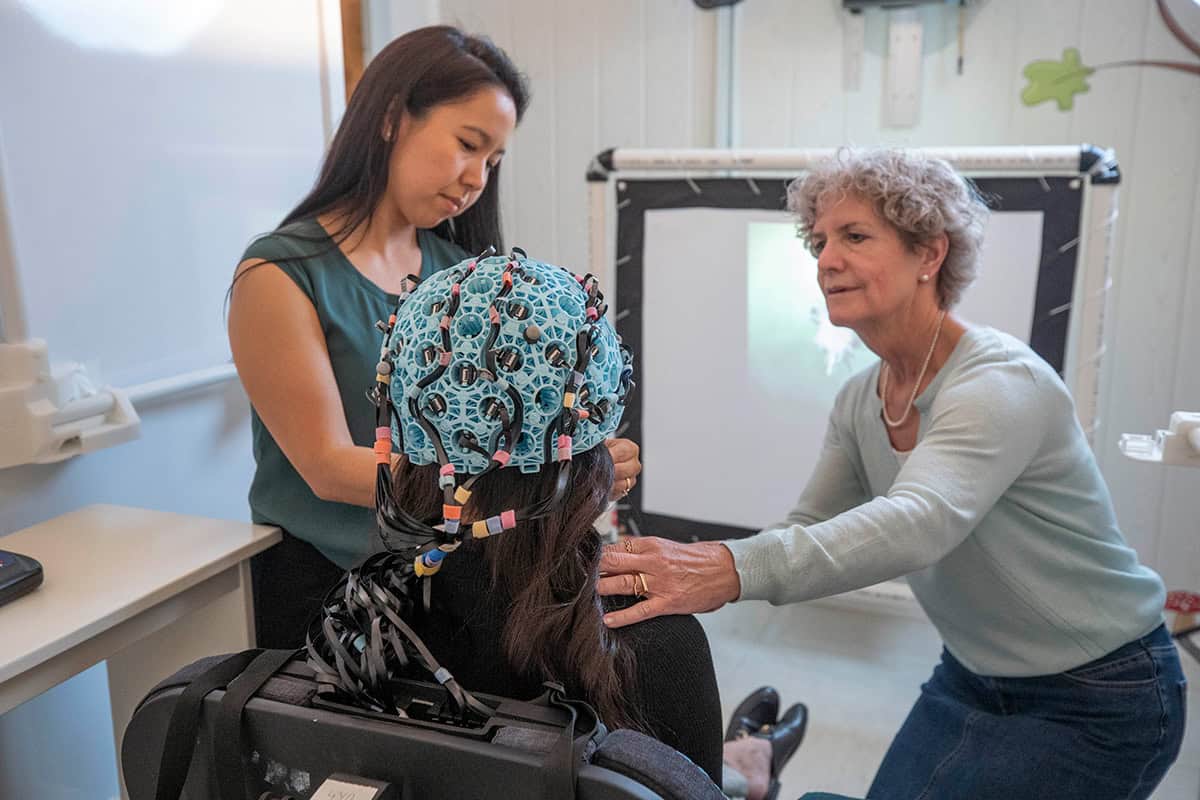
Testing times Margot Taylor (right) and her postdoctoral fellow Julie Sato (left) place a quantum MEG helmet on a research participant (postdoc Kristina Safar). (Courtesy: Hospital for Sick Children)
Do you have any preliminary results or published papers based on this data yet?
We’re still analysing data. We’re seeing beautiful, age-related changes in our cohort of non-autistic children. Because nobody has been able to do these studies before, we have to establish the foundational datasets with non-autistic children before we can compare it to autistic children or children who have a high likelihood of being autistic. And those will be published very shortly.
Are you using the quantum MEG system for anything else at the moment?
With the OPM system, we’re also setting up studies looking at children with epilepsy. We want to compare the OPM technology with the cryogenic MEG and other imaging technologies and we’re working with our colleagues to do that. We’re also looking at children who have a known genetic disorder to see if they have brain signals that predict whether they will also go on to experience a neurodevelopmental disorder. We’re also looking at children who are born to mothers with HIV to see if we can get an indication of what is happening in their brains that may affect their later development.
David Woolger: expanding applications
Can you give us a brief description of Cerca Magnetics’ technology and how it works?
When a neuron fires, you get an electrical current and a corresponding magnetic field. Our technology uses optically pumped magnetometers (OPMs), which are very sensitive to magnetic fields. Effectively, we’re sensing magnetic fields 500 million times lower than the Earth’s magnetic field.
To enable us to do that, as well as the quantum sensors, we need to shield against the Earth’s magnetic field, so we do this in a shielded environment with both active and passive shielding. We are then able to measure the magnetic fields from the brain, which we can use to understand functionally what’s going on in that area.
Are there any other applications for this technology beyond your work with Margot Taylor?
There’s a vast number of applications within the field of brain health. For example, we’re working with a team in Oxford at the moment, looking at dementia. So that’s at the other end of the life cycle, studying ways to identify the disease much earlier. If you can do that you can potentially start treatment with drugs or other interventions earlier.
Outside brain health, there are a number of groups who are using this quantum technology in other areas of medical science. One group in Arkansas is looking at foetal imaging during pregnancy, using it to see much more clearly than has previously been possible.
There’s another group in London looking at spinal imaging using OPM. Concussion is another potential application of these sensors, for sports or military injuries. There’s a vast range of medical-imaging applications that can be done with these sensors.
Have you looked at non-medical applications?
Cerca is very much a medical-imaging company, but I am aware of other applications of the technology. For example, applications with car batteries have potential to be a big market. When they make car batteries, there’s a lot of electrochemistry that goes into the cells. If you can image those processes during production, you can effectively optimize that production cycle, and therefore reduce the costs of the batteries. This has a real potential benefit for use in electric cars.
What’s next for Cerca Magnetics’ technology?
We are in a good position in that we’ve been able to deliver our initial systems to the research market and actually earn revenue. We have made a profit every year since we started trading. We have then reinvested that profit back into further development. For example, we are looking at scanning two people at once, looking at other techniques that will continue to develop the product, and most importantly, working on medical device approval. At the moment, our system is only sold to research institutes, but we believe that if the product were available in every hospital and every doctor’s surgery, it could have an incredible societal impact across the human lifespan.
Magnetoencephalography with optically pumped magnetometers
Seeing the light A schematic showing the working principle behind optically pumped magnetometry (OPM). (CC BY 4.0 Trends in Neurosciences45 621)
Like any electrical current, signals transmitted by neurons in the brain generate magnetic fields. Magnetoencephalography (MEG) is an imaging technique that detects these signals and locates them in the brain. MEG has been used to plan brain surgery to treat epilepsy. It is also being developed as a diagnostic tool for disorders including schizophrenia and Alzheimer’s disease.
MEG traditionally uses superconducting quantum interference devices (SQUIDs), which are sensitive to very small magnetic fields. However, SQUIDs must be cryogenically cooled, which makes the technology bulky and immobile. Magnetoencephalography with optically pumped magnetometers (OPM-MEG) is an alternative technology that operates at room temperature. Optically pumped magnetometers (OPMs) are small quantum devices that can be integrated into a helmet, which is an advantage for imaging children’s brains.
The key components of an OPM device are a cloud of alkali atoms (generally rubidium), a laser and a photodetector. Initially, the spins of the atoms point in random directions (top row in figure), but applying a polarized laser of the correct frequency aligns the spins along the direction of the light (middle row in figure). When the atoms are in this state, they are transparent to the laser so the signal reaching the photodetector is at a maximum.
However, in the presence of a magnetic field, such as that from a brain wave, the spins of the atoms are perturbed and they are no longer aligned with the laser (bottom row in figure). The atoms can now absorb some of the laser light, which reduces the signal reaching the photodetector.
In OPM-MEG, these devices are placed around the patient’s head and integrated into a helmet. By measuring the signal from the devices and combining this with structural images and computer modelling, it’s possible to work out where in the brain the signal came from. This can be used to understand how electrical activity in different brain regions is linked to development, brain disorders and neurodivergence.