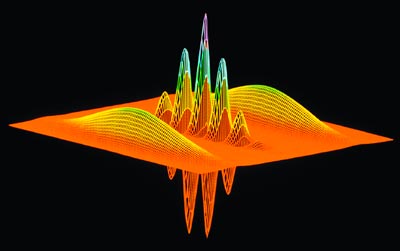
Single molecule switches light

Since the first lasers appeared nearly 50 years ago, scientists and engineers have dreamed about creating all-optical circuits in which electrons are replaced by photons. While information is easily transmitted via light using optical fibres, switching and processing the information still rely on converting photons to electrons and then back again — which is a slow and power hungry process.

Unfortunately we are still far from seeing all-optical — or “photonic” — circuits in desktop computers and other everyday applications because these circuits require light to be manipulated in nanometre-sized spaces, something that is very difficult to do. Moreover, the efficient all-optical switching of light beams, which allows energy from one beam to amplify another, usually requires large photonic crystals.

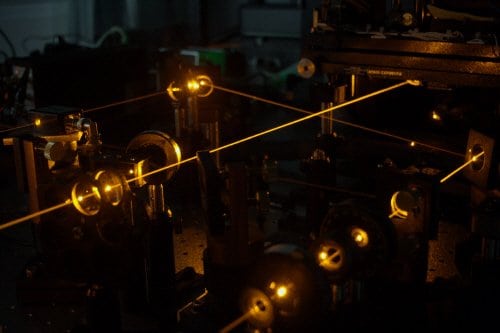
Now, Vahid Sandoghdar and colleagues at ETH Zurich have made what they say is the world’s smallest optical transistor ever — from a single dye molecule. The device, which works by weakening or amplifying a “source” laser beam depending on the power of a second “gating” beam, could bring all-optical circuits and optical computing a step closer.

‘Simple’ operation

“By controlling the degree of attenuation and amplification via the power in a second gating laser beam, we have demonstrated the smallest optical transistor to date,” Sandoghdar said.

The operating principle is simple, he says: when the molecule is placed in an excited state by the gate beam, it can emit a photon, therefore amplifying the source beam.

The key to making the new optical transistor is the tight focusing of light onto a single molecule at ultra-low temperatures. This focusing provides strong light-molecule coupling that allows the molecule to affect the laser light.

Although strong coupling has been achieved before, it had taken place in optical cavities, in which interactions can be enhanced. However, even the smallest optical cavities are larger than about a micron in size, which means that devices cannot be made any smaller than this.

High-density packaging

By contrast, the cavity-free ETH Zurich experiments could lead to high-density packaging of nanometre-sized all-optical transistors. Theoretical calculations by the team also show that it should be possible to build complex circuits where many single emitters are coupled to tiny waveguides that carry optical signals on a chip.

“And although our experiment was performed with conventional laser beams, the set-up also works for non-classical light beams at the single photon level,” explained Sandoghdar. “This means that quantum information processing will be possible.”

The work was reported in Nature .

Between chance and necessity

Stuart Kauffman argues that physics cannot explain biology, and he is right. However, I am willing to grant him this not because his book Reinventing the Sacred makes a clear case, but because I already agreed with its central premise, which is that the reductionist approach to science — the idea that physics explains chemistry, chemistry explains biology, and so forth — has its limits. The book nevertheless provides much food for thought; indeed, its chief merit is that it makes the reader ask fruitful questions. However, it falls short of making an argument that might overturn an entrenched position.

In addition to his central theme of reductionism and what might replace it, Kauffman — a complexity theorist and professor of both biology and physics at Calgary University in Canada — has two further aims for his book. One is to present to the non-expert some fascinating areas of science such as chemical-reaction networks, evolution and graph theory. The other is more ambitious: it aims to reassess in a positive way those areas of human life normally called sacred or spiritual, but from a point of view that does not accept supernatural theism.

Kauffman is at his best when writing about what he knows: complexity theory applied to theoretical biology, and some philosophy. Complexity theory deals with systems that typically involve feedback, non-linearity and structure at many scales; such systems turn out to share patterns of behaviour. Physics has made great strides in describing deterministic behaviour on the one hand and randomness on the other, but “critical behaviour” lies right on a fascinating borderline between these two regimes, and it deserves the widespread attention that Kauffman invites.

His introduction to Boolean networks is clear and stimulating, and their application to the cell’s genetic control machinery is both beautiful and striking. While reading this chapter, it suddenly became obvious to me why a mere gene count is a completely inadequate measure of the complexity of the associated organism. The fact that the human genome is shorter than some, such as the lungfish, should not have surprised anyone.

Kauffman’s treatment of the philosophy of mind is not as careful as a technical treatise would need to be. Still, it is sound and avoids the woefully inadequate statements that have sometimes appeared in connection with neuroscience in otherwise serious scientific journals — particularly claims that demonstrating a correlation between physical brain activity and particular thoughts resolves the mind–body problem or proves the absence or presence of God.

Another strength of the book is that Kauffman maintains reasonably clear lines of demarcation between speculation and knowledge. Within that proper constraint, the text makes some bold and useful speculations, such as the idea that quantum coherence could extend far enough from the surface of protein molecules in the cell to link one protein to another via aligned water molecules. Such speculations are useful because they are both testable and (just) feasible.

Because of these strengths, I would recommend Reinventing the Sacred as a healthy read for anyone who thinks that reductionism is the whole story of science. Reductionism is a good slave but a poor master; in other words, it is the right model for almost all the science we have discovered so far, but it is not necessarily the whole story. Cracks in the reductionist edifice include quantum entanglement, emergent phenomena, criticality and the oldest one of all: human free will, without which it is debatable whether any reasoning, and therefore any science, is possible.

On balance, this is a useful book. However, it also contains some glaring errors and omissions. The chapter on the quantum brain, for example, overinterprets the concept of decoherence, misapplies the word “acausal” and misses out entanglement altogether. The book is also repetitive, and sometimes unpersuasive or overblown. Take, for example, Gödel’s incompleteness theorem, which states that any large enough, finite system of axioms and rules of deduction must give rise to propositions the truth of which cannot be decided within the system. This theorem is relevant to Kauffman’s argument because it shows that not even formal logic can be reduced to a finite number of ideas; mathematics is a rich tapestry of concepts, not a pyramid. Kauffman briefly sketches Gödel’s theorem no less than four times, but he never describes it sufficiently well for a reader unfamiliar with it to follow the argument. On the other hand, if readers are already familiar with Gödel, they do not need repeated incomplete sketches.

Moreover, the central argument is unconvincing when the book implies that a case has been proven when it has not. Concerning the animal heart, for example, an early chapter promises “the organization of the heart arose largely by natural selection, which, as we will see, cannot be reduced to physics”, and in due course some relevant evidence is given. However, when later the text says things like “…as we have seen, this cannot be reduced to physics”, it leaves the reader feeling that something was missing in the middle. The evidence offered is that the emergent complexity of the biosphere may exceed the capacity of any compact description available beforehand to capture it. This and other arguments provide telling evidence for the case against reductionism, but it is, I think, premature to claim that we can prove the case sufficiently well to make reductionism clearly untenable.

The single greatest problem with this book is not in the science, however, but in the reasoning about the sacred. I am encouraged that Kauffman is willing to address questions of meaning and purpose, and his approach is surely preferable to pseudo-scientific statements along the lines of “the purpose of human life is to replicate genes”. His aim is valid and worthy: to draw people together around shared values. With a view to this, the book argues for a kind of pan-theism in which the word “god” is applied to the emergent creativity that exists in the universe.

Kauffman is welcome to promote this idea, but he should recognize that this type of thinking has a very long history and its shortcomings have been carefully thought through. For example, it does not adequately address our most basic hunches, such as the value of individual people above grand impersonal systems, and the need for justice or forgiveness. I would encourage him to explore instead those threads of religious thinking that are willing to seek answers beyond physicality, but that take physical evidence seriously.

Darwin’s legacy

Charles Darwin was no theoretical physicist, and I am no biologist. Yet, as a theoretical physicist, I have found much to think about in Darwin’s legacy — and in that of his fellow naturalist Alfred Russell Wallace. Darwin’s style of science is not usually thought of as theoretical and certainly not mathematical: he was a careful observer of nature, kept copious notes, contributed to zoological collections; and eventually from his vast repertoire of observation deduced the idea of natural selection as the origin of species. The value of theorizing is often dismissed in the biological sciences as less important than observation; and Darwin was the master observer.

I think that view misses something essential, namely the great formal beauty and almost mathematical inevitability of Darwin’s ideas. Like Einstein’s greatest ideas, the theory of evolution is based on a simple gedankenexperiment: start with a very simple reproducing organism, add Mendel’s laws of heredity and mutability, and follow the system as it inescapably branches out into a tree of life.

Darwin was not particularly interested in astronomy or physics, yet his impact on cosmology was enormous but in a way subconscious. In successfully explaining the origin of species, he eliminated superstition and set a new standard for what an explanation of nature should be like. As I wrote in my book The Black Hole War (Little Brown, 2008), Darwin’s masterstroke was to have “ejected God from the science of life”.

True, Darwin was not the first scientist to cast out supernatural beliefs. Two centuries earlier, Newton — another great Cambridge scientist — had done so more than anyone before his own time. Inertia (mass), acceleration and a universal law of gravitation replaced the hand of God, which was no longer needed to guide the planets. But as historians of 17th-century science never tire of reminding us, Newton was a Christian and a passionate religious believer at that. He spent more time, energy and ink on Christian theology than on physics.

For Newton and his peers, the existence of an intelligent creator must have been an intellectual necessity: how else could you explain the existence of man? Nothing in Newton’s vision of the world could explain the creation, from inanimate material, of so complex an object as a sentient human being. Newton had more than enough reason to believe in a divine origin.

But what Newton failed to do, two centuries later the ultimate (and unwilling) subversive Darwin succeeded at. Darwin’s idea of natural selection — combined with the subsequent discovery by James Watson and Francis Crick (also at Cambridge) of the double-helix structure of DNA — replaced the magic of creation with the laws of probability and chemistry.

In other words, before Darwin, even the greatest physicists had little alternative to a supernatural explanation of the origin of life, and therefore of nature itself. It was the success of Darwinism that forced the issue and set the standard for future theories of origins, whether it be it of life or of the universe. Explanations must be based on the laws of physics, mathematics and probability — and not on the hand of God.

Rejecting the watchmaker

Early in his life, Darwin was deeply impressed by the arguments of the Reverend William Paley (1743–1805), a cleric who had argued for what we would today call “intelligent design”. Paley imagined finding a pocket watch lying on the ground, perhaps while walking in the woods. He might have wondered how such a complex, fine-tuned object came into existence. One possible answer is that it might have been the result of a random accident; a large number of molecules of various types combining by good fortune to form the watch. Paley rightly said that this was too unlikely to be taken seriously. There must be another explanation. The only one that made sense was that the watch had been made for some particular purpose by a skilled craftsperson — the watchmaker.

Paley pursued the thought further. We find in nature certain incredibly complex mechanisms, called human beings, that are capable of far more complex operations than the pocket watch. By analogy Paley argued that accidental creation is too unlikely and that human beings must have been created by an intelligent creator for some purpose.

How and why Darwin came to reject Paley’s compelling argument is well known, but what is less noted is that physics and cosmology pose very similar questions, such as why the universe seems so incredibly fine-tuned for the existence of life. The only explanation, if we can call it an explanation, is that if it were less fine-tuned, intelligent observers like ourselves would have been impossible. I am, of course, referring to the cosmological constant, L. Theoretically, one would expect L to be unity in natural Planck units. But if it were anything bigger now than it is known to be — 10–123 — it would have prevented the evolution of galaxies, stars and us. Like Paley, we encounter what appears to be an extremely unlikely occurrence.

Most physicists reject a supernatural explanation — a cosmic watchmaker — to account for this fact of fine-tuning. But if not a watchmaker, then what? Until recently, most physicists would have said that it was accidental, a numerical coincidence. The ambition of theoretical physics was to discover a unique mathematical explanation, having nothing to do with our own existence, for all the constants of nature. It would be just a lucky accident that they happened to fall into the narrow range where intelligent life can exist. But as Paley might have complained, accidents involving 123 decimal places are too unlikely.

Enormity of the landscape

Over the last decade a new view has been taking shape, a view that in certain ways has common features with biological evolution. Darwin and Wallace emphasized mutability and natural selection as the main drivers of evolution, but there is something even more basic. Mutability and natural selection would have been powerless to create a human being if it were not for one central fact: the enormity of the landscape of biological designs.

Biological designs are encoded in DNA molecules, which contain two polynucleotide chains twisted around each other to which with four different based pairs (A, G, C and T) are attached. In a complex creature each of these DNA molecules can contain many millions of base pairs. The possible arrangements of those base pairs define the biological landscape, and the number of possibilities is tremendously large. One hundred million base pairs, for example, can be arranged in 4100 000 000 ways.

Suppose for a moment that there were only a thousand possible designs, or even a million. What would be the likelihood that any of them would make an intelligent life-form? Completely negligible. But even if such fortunate designs are extremely rare, given 4100 000 000 combinations there will be a very large number of them. The first principle of biological evolution — even more fundamental than natural selection — is the enormity of the landscape of biological designs.

The second principle is mutability: the fact that while reproducing, the instructions coded in DNA can discretely jump to new configurations. Natural selection is of course important, but without the mutable landscape nothing interesting would come of it.

The emerging paradigm for explaining the special properties of our universe is, in a sense, an attempt to live up to the standard set by Darwinian evolution: to provide a natural (as opposed to supernatural) non-accidental explanation for the apparently very unlikely specialness of the universe and its laws. Surprisingly, it involves the same two central principles: an enormous landscape of possibilities and random mutation. It even involves a mechanism similar to DNA.

Darwinian standards

Let us begin with the DNA of a universe. What is it and why do we believe such a thing makes sense? String theory is the key. It supposes that at extremely small distances space is a complicated higher-dimensional manifold with many — typically six — tiny “extra” dimensions in addition to the three we see in everyday life. If we could look at the universe through a super-powerful microscope, we would see that it is composed of “Tinkertoy” elements called fluxes, branes, moduli, orientifolds (and more) all arranged on a tiny knot of higher-dimensional space called a Calabi–Yau manifold. The Calabi–Yau manifold is like the basic spine of the DNA molecule, and the other elements can be arranged and rearranged in a huge variety of ways; perhaps as many ways as a real DNA molecule.

Just as the details of DNA determine the biological details of a living organism, so the details of the fluxes, branes and other elements determine the properties of the universe. Again, the numbers are so staggering that even if the world as we know it seems extremely unlikely, there will be many ways of arranging the elements to make the constants of nature consistent with life. In particular, there will be many configurations in which the cosmological constant will be fine-tuned to 123 decimal places.

What about reproduction and mutability? Here is where the inflationary theory of cosmology comes into play. There is much evidence that during the earliest epoch of the universe space itself expanded exponentially. Inflation was a process in which space grew like the surface of an inflating balloon, but instead of thinning out, as the rubber of the balloon would, new bits of space were created to fill the gaps.

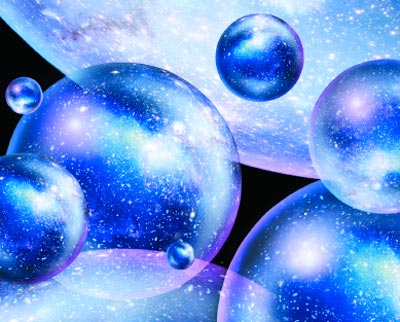
For the most part, the new bits of space had the same DNA as the regions surrounding them, but every so often a mutation occurred. A bit of space with new properties, new constants and a new value for the cosmological constant was created. According to standard general relativity, that tiny bubble grew and eventually became a new inflating universe, reproducing and mutating. This whole process is called eternal inflation and it produced a grand multiverse as rich and varied as the tree of life, each with its own laws of physics, constants of nature and elementary particles. Here and there a very rare branch was created that had the special properties that would allow complex life.

Whether string theory with its huge landscape, and eternal inflation with its reproducing pockets of space, will prove to be correct is for the future to decide. What is true is that as of the present time, they provide the only natural explanation of the universe that lives up to the standard set by Darwin.

How physics can inspire biology

In July 1997 Adrian Parsegian, a biophysicist at the National Institutes of Health in the US and a former president of the Biophysical Society, published an article in Physics Today in which he outlined his thoughts about the main obstacles to a happy marriage between physics and biology. Parsegian started his article with a joke about a physicist talking to his biology-trained friend.

Physicist: “I want to study the brain. Tell me something helpful.”
Biologist: “Well, first of all, the brain has two sides.”
Physicist: “Stop! You’ve told me too much!”

Parsegian went on to list a few areas in biology where input from physicists is particularly welcome. But his main conclusion was that physicists must really learn biology before trying to contribute to the field. He also warned that it may not even be enough for a physicist to have a biologist friend to act as an “interpreter” to translate a problem into the language of physics.

Despite being gentle and elegantly written, the article provoked a stormy reaction from Robert Austin, a physicist at Princeton University, who accused Parsegian of forbidding physicists from tackling the big questions in biology. My view lies somewhere between those of Parsegian and Austin, and, in my opinion, the relationship between physicists and biologists has improved on some fronts in the 12 years since Parsegian’s article first appeared. However, I believe that those relationships are still being poisoned by a number of misguided beliefs that are preventing physicists and biologists from working closer together.

More than beliefs?

Back in the early 1970s, when I was a first-year PhD student at the Frumkin Institute in Moscow, I used to attend theoretical seminars chaired by Benjamin Levich — a former pupil of Lev Landau — who was widely regarded as the founding father of physical-chemical hydrodynamics. Whenever an overly enthusiastic speaker would tell us with 100% confidence how, say, electrons and atoms behave in a solvent near an electrode, Levich would spice up the seminar by joking “How do you know? Have you been there?”

Almost four decades on, physicists now have plenty of experimental tools to “go there”. For example, modern X-ray synchrotron sources allow researchers to look at how crystals form, to discover how biological samples mutate and even to pinpoint where ions adsorb on DNA; while techniques such as the fluorescence imaging with nanometre accuracy (FIONA) allow the motion of proteins such as myosin or kinesin to be traced in real time. But although these techniques often produce fascinating results, they may not be enough without a deep theoretical analysis of what one is actually “seeing”. So, the first of these misconceptions is that “seeing is believing”. A pretty picture may have a beguiling charm, but on its own it is not enough.

The second belief hampering collaboration is that the formalism of a biological theory must be simple — it should not contain more than exponential functions and logarithms (no Bessel functions, please!). Otherwise, the job should be left for computers to do. This point of view was advocated by Rob Philips of the California Institute of Technology, who came to his new love — biology — from solid-state theory. I strongly disagree with that view, however, and I used to argue with him about it when we were both on sabbatical at the Kavli Institute for Theoretical Physics in Santa Barbara. As I used to point out, James Watson and Francis Crick could never have deciphered the structure of DNA from the X-ray scattering patterns obtained by Rosalind Franklin and Maurice Wilkins had they not had the mathematical tools developed by Crick, William Cochran and Vladimir Vand a year earlier (1952 Acta. Crystollograph. 5 581). Indeed, Bessel functions were at the heart of that analysis.

The third belief is that biologists will never read scientific papers containing mathematical formulas. As Don Roy Forsdyke, a biochemist at Queen’s University in Ontario, Canada, once told to me, “The biological literature is vast. Biologists have too many papers to read and too many experiments to make. They will leave aside any reading that looks difficult.” If this is true, and I think it is, physicists are in big trouble.

This brings us neatly to the next belief, which is that it is impossible for physicists to publish a serious theoretical paper in a biological journal. Theorists need mathematical derivations to validate their findings, but any paper containing derivations will be rejected. If you then publish the article in a physics journal, it will not be read by those to whom it is addressed. Actually, good papers of that kind are still sometimes published and read, but this remains a difficult issue.

DNA revolution

Physicists want to simplify and unify things, as much as possible, whereas biologists resist the reductionist approach and are happy with diversification and complexity. So, the biologists’ fifth belief is that physicists are too ignorant about diversity to offer them anything useful. Biologists admit that physicists can provide, say, a new spectroscopic technique or apparatus for measuring forces, but that is about it. In their view, biology should be left to the professionals.

The final belief is that biologists think physicists made one big breakthrough — elucidating the structure and function of DNA — but that a similar revolution is unlikely to ever happen again. However, the key to that discovery was the “chemistry” between Watson (a biologist) and Crick (a physicist), which helped them to find a common language and gave rise to the idea of DNA replication and the subsequent principles of molecular biology.

I believe that we can expect other breakthroughs of this sort because physics and mathematics have a long history of revolutionizing not only science but our lives too.

Meaningful collaborations

In spite of all this, my feeling is that physicists and biologists are getting on better. For example, last month, together with Parsegian and Wilma Olson of Rutgers University, who is another former president of the Biophysical Society, I organized a conference entitled “From DNA-Inspired Physics to Physics-Inspired Biology”. Attended by some 140 researchers, the meeting was held at the International Centre for Theoretical Physics (ICTP), in Trieste, Italy, and sponsored by the ICTP and co-sponsored by the Wellcome Trust. But the conference was not just for physicists interested in biology. It was also aimed at biologists who were interested in learning what new physical methods and existing knowledge could offer them, as well as pinpointing for physicists the subjects that biologists think could benefit from input from physics.

The conference included over 60 talks — demonstrating the interplay between physics and biology — on everything from DNA mechanics, structure, interactions and aggregation to DNA compaction in viruses, DNA-protein interaction and recognition, DNA in confinement (pores and vesicles) and smart DNA (robotics, nano-architectures, switches, sensors and DNA electronics). More details are available online.

Taking Rutherford’s famous saying that there is physics and everything else in science is stamp collecting, Paul Selvin, a physicist at the University of Illinois, recently said that if Rutherford were alive today, he would have said that “all science is either biology or tool-making for biology or not fundable”. Today, in general, the arrogance is rarely on the side of physicists. But to overcome the barrier of scepticism, physicists need to demonstrate (or, even better, inspire biologists to show) that insights from physics do not just apply in model systems in the lab but work equally well inside the real world of the cell.

Crick not only had a great mind and was very serious about biology but he was also lucky to meet the right collaborator in Watson. Many of us seeking to do important work in biology will not be able to do so alone unless we too find the right match. The future is far from hopeless — and meetings such as the one held in Trieste last month may well make the difference. As the Cambridge physicist Stephen Hawking once said, “The greatest discoveries of the 21st century will take place where we do not expect them.” Likewise, I am convinced that great surprises and discoveries in biology will come from physics.

In praise of Darwin

Charles Darwin, who was born 200 years ago, is rightly being celebrated as the founding father of modern biology with a series of events around the world this year. Just as Einstein revolutionized physics, so Darwin changed our understanding of life. He came to realize that “natural selection” could account for the huge diversity of life, with more-efficient groups — arising from random variation — always replacing less-efficient groups in a particular environment as a result of competition. After publishing his seminal book On the Origin of Species in 1859 — exactly 150 years ago — Darwin, like Einstein, became the most noted scientist of his time.

But Darwin was no physicist and Physics World is not the place for an in-depth analysis of his achievements. Indeed, he had no particular interest in physics — or astronomy for that matter. Darwin did, however, approach science in a way that will be familiar to many physicists. As a result of spending five years on board the HMS Beagle from 1831 to 1836, he painstakingly obtained a welter of information about animals — notably different finches — on the Galápagos Islands off the coast of Ecuador. Darwin’s resulting theory of evolution, although not in any way mathematical, was based squarely on firm scientific evidence and careful thought. And like any good physicist, Darwin acknowledged the theory’s limitations — he could not, for example, explain exactly why natural selection came about — and was in no doubt that future observations could overturn it. As it turns out, evolution has stood the test of time and is today a thriving field of study in biology.

But while Darwin himself had no formal links with physics, there have been many fruitful collaborations between physicists and biologists over the years — most famously in elucidating the structure of DNA and in developing techniques for medical imaging. Less successful has been physicists’ long-cherished hope that quantum mechanics could offer a new framework for understanding living systems. As Paul Davies reminds us in opening this special issue, Erwin Schrödinger published his famous book What is Life? as far back as 1944. But although no clear “quantum life principle” has yet emerged, there is, Davies argues, clear and accumulating evidence that quantum mechanics plays a key role in biology (see “The quantum life”). Elsewhere in this issue, Jochen Guck shows how physics is needed to explain, for example, how light passes through the “glial” cells on the way to the retina (see “Do cells care about physics?”), while Sam Wang looks at how physicists are helping to understand how the brain is wired and processes information (see “Postcards from the brain”).

Ironically for someone with little interest in physics, Darwin’s ideas of reproduction and natural selection actually crop up in some areas of modern physics. In particular, the theorist Lee Smolin has suggested that a collapsing black hole can give birth to another universe with slightly different fundamental constants, with the universe geared so that the production of black holes is maximized. Whether those Darwinian ideas play a role in cosmology or not, Darwin’s greatest legacy for physics is that in rejecting the need for a supernatural explanation for life and the universe, he — as Leonard Susskind concludes this issue (see “Darwin’s legacy”) — set the standard for what any explanation of nature should be like.

Once a physicist: Bruce McWilliams

Why did you choose to study physics?
When I was about 11, I got some electronics kits; I made radios and circuits, and read about how the transistor works. I wanted to understand why things worked, and I remember being so fascinated by the TV set that I took it apart. My mother didn’t like that! As a teenager, I had a very good high-school physics teacher who gave me lots of advanced books to read, including the Feynman Lectures. Back then, my favourite part was being able to estimate something or predict it.

How did you become interested in electronics?
During the summers when I was studying physics at Carnegie Mellon University, I programmed microprocessors with a small start-up company. These were the first microprocessors, back in 1976 or thereabouts, and there were no programmes written for them, so we could sell the software in hobby magazines. We actually made a lot of money, about $40,000, because everybody needed software. But my PhD (also at Carnegie Mellon) was actually on gauge theories of electroweak interactions and how to look for the Higgs particle. Gauge theories were the hot thing in the 1970s, and I was interested in fundamental theories, so that is what I studied.

What made you decide to switch from research to industry?
While I was doing my PhD, I sometimes picked up 20-year-old journals, and I realized that 99% of the stuff in them was already irrelevant. Another factor was that I finished my PhD at the depth of the great recession of the 1970s, when nobody was being hired. So instead, I went to work at the centre for computer engineering at the Mellon Institute on a salary of $26,000 a year, which seemed like an enormous amount of money to me at the time. Later, I worked for someone who did not like the fact that his firm’s competitors were reverse-engineering his products so they could copy them, and he wanted to print his entire product on a custom microchip to prevent them from taking it apart. So I got on a plane for Silicon Valley and started finding out how hard it was to put sensors on custom chips. One thing led to another, and I have been in California ever since.

How has your physics training affected your approach to business?
Business and physics are very similar in that if you can precisely define the problem, you have done 80% of the work in solving it. I have found that as a chief executive, you basically show up every day and find a new problem waiting for you. It might be an employee threatening to quit or a customer who is upset or a problem in manufacturing, but if you love solving problems, then you will like being a chief executive. Also, physics is the perfect training for working in technology, because the field moves very quickly; if you are grounded in the fundamentals, you can always understand what is going on. What physics does not, however, give you is people skills, so you have to develop those. Business in general is not best learned in the college classroom but by doing it — by being in the foxhole with bullets going over your head.

What do you think are the biggest challenges facing microelectronics?
Many of the products have become commodities, so the profit margins are not large. It is difficult to keep innovation going; with semiconductors, the capital investments required to move up to the next level are enormous, so that is a huge challenge for the industry. Fundamentally, the problem is that we are where cars were in the 1960s and 1970s. We still have lots of growth, but it is not an easy business; you do not really know where the consumer is going to go. Every decade has a theme; in the 1980s it was personal computers, in the 1990s it was networks and now it is the mobile phone. These things are what drive new innovation.

Do you still find the time to keep up with any physics?
I try to spend maybe an hour a day reading or thinking about it, and to facilitate that I endowed a centre for cosmology at Carnegie Mellon. I stay involved there, I talk with the physicists, go to some seminars, participate in hiring decisions — giving advice about how we are going to grow and find money for new projects.

What career advice would you give to physics students today?
Stay open and try to do as many different types of things as you can. Try to find what your passion is, because if you find your passion, you will do well. Also, think ahead — what do you want to be doing 10 years from now? Some people are suited to a research environment, some less so.

The call of the wild

Paul Wiggins yanks the mouse cord from his computer and stretches it between his fingers. “Here’s your chromosome, which is about 2 m long.” He twists the cord and squeezes it into a ball. “How”, he questions, “does it get inside a nucleus that’s 10–50 µm long?”

The animated, 32-year-old researcher at the Whitehead Institute of Biomedical Research in Cambridge, Massachusetts, confesses that we do not know the answer. “But we do know its genetic loci don’t end up randomly shuffled. Each ends up at a particular spot. Why?”

Wiggins thinks that tools used in physics can help answer these questions — but that to do so involves researchers jumping in at an uncharted interdisciplinary middle, to measure something that can be linked both to the molecular scale and to the cellular scale, or midway between physics and biology.

Beyond strings

As an undergraduate at Cornell University, Wiggins was entranced by astrophysics and cosmological theories — the grander and more abstract the better. In 2000 he moved to the California Institute of Technology as a graduate student and joined the collective of string-theory pioneer John Swartz, whose work seemed glamorous. “We felt that we were on the threshold of a revolution,” Wiggins recalls. But after 18 months the glamour wore off. “The research felt less like a revolution and more like a small perturbation. There were no predictions.”

Caltech requires first-year students to attend weekly lectures given by outsiders on their research, and Wiggins found the biophysics talks exciting. “Biophysics involved lots of experiments on incredibly interesting phenomena, and nobody had models,” he says. “That appealed to my theoretical instincts.” It also activated previously unsuspected experimental desires. Wiggins switched fields, and in 2005 finished a thesis on the statistical mechanics of biomolecules.

His research was so promising that he was named one of five fellows at Whitehead — a prestigious independent research institute that employs about a dozen permanent faculty members affiliated with the Massachusetts Institute of Technology. The institute’s fellows programme fast-tracks promising young researchers, putting them in charge of their own labs and bypassing the postdoc phase in which they would have had to labour in someone else’s group.

Island-hopping

At Whitehead, Wiggins was free to pursue what my Stony Brook colleague Fred Goldhaber calls “island-hopping” research. The analogy comes from the Second World War, when the Allies swept across the Pacific towards Japan. They advanced more rapidly not by conquering islands in sequence, but by skipping over several at a time, leaving them to be liberated afterwards. In a similar fashion, effective research programmes often do not proceed outward in safe steps from thoroughly understood terrain, but in ambitious leaps that skip terrain for other researchers to explore later.

Wiggins’ island-hopping has involved taking biological information about cellular structures and applying methods of physics to explore the mechanisms giving rise to these structures. He and some Caltech colleagues, for instance, did experiments to see if physics could shed light on the intricate shapes of the membranes surrounding the cellular subunits known as organelles. The team used optical tweezers to tweak such membranes in various ways, measuring the forces it took to drag membranes into different shapes (2008 Proc. Natl Acad. Sci. 105 19257). Wiggins admits that the researchers have so far made only limited progress. “But,” he says, “we have shown that, in a controlled environment at least, we can quantitatively compute the forces involved based on mechanics and structure.”

Wiggins’ latest research — which he was using his mouse cord to explain — involves studying the chromosomes of the bacterium E. coli. These chromosomes are circular, but two key sites are the “origin”, where replication begins, and the “terminus”, or the opposite point, where replication ends. To explain why E. coli always manages to locate genetic sequences in the right place, a physicist naturally thinks of two possible explanations, involving external and internal interactions. The genetic material may be bonding to some external scaffolding, or its position may be determined by internal interactions between the DNA strands themselves.

What Wiggins is doing is using conventional fluorescence-microscopic techniques to determine the precision by which the different sequences end up in their particular places. The width of this distribution — the precision — measures the strength of the coupling between sequence and location, which provides clues to the mechanism tethering it in place. Wiggins’ preliminary measurements suggest that external interactions prevail at the terminus, but that internal interactions prevail throughout the remainder of the chromosome. “We seem to know where the biological action is,” he says.

The critical point

Island-hopping faces well-known obstacles. As Wiggins points out, everyone likes the idea of interdisciplinary research, but it requires effort to make it work. “You spend a lot of time being an ambassador,” he says, “explaining to colleagues and potential collaborators why your problems are relevant and interesting, which takes you away from the lab bench.” Indeed, cultural differences are an obstacle even after a collaboration is formed. As Wiggins puts it, “Physicists always tend to think that they know how to do other people’s problems better, while biologists often place little value in mathematical models.” In his eyes, both physicists and biologists think that they know how to ask the interesting questions, and tend to treat members of the other culture as mere technicians.

Wiggins has largely been shielded from these problems at the small and biomedically oriented Whitehead Institute, but his five-year stint is drawing to a close. “Next year I have to look for a real job,” he says. And although Wiggins does not think that he can sell himself as a biologist yet, for him the move into biology has been worth the risk. “String theory lost its glamour for me when it didn’t have achievable targets. What turned me on to biophysics were the interesting measurements and predictions you can make, and the urgent need for models. It is a field that is wide open.”

The quantum life

To a physicist, life seems little short of miraculous — all those stupid atoms getting together to perform such clever tricks! For centuries, living organisms were regarded as some sort of magic matter. Today, we know that no special “life force” is at work in biology; there is just ordinary matter doing extraordinary things, all the while obeying the familiar laws of physics. What, then, is the secret of life’s remarkable properties?

In the late 1940s and 1950s it was fashionable to suppose that quantum mechanics — or perhaps some soon-to-be-formulated “post-quantum mechanics” — held the key to the mystery of life. Flushed with their success in explaining the properties of non-living matter, the founders of quantum mechanics hoped their theory was both weird enough and powerful enough to explain the peculiar living state of matter too. Niels Bohr, Werner Heisenberg and Eugene Wigner all offered speculations, while Erwin Schrödinger’s famous book What is Life?, published in 1944, paved the way for the birth of molecular biology in the 1950s.

Half a century later, the dream that quantum mechanics would somehow explain life “at a stroke” — as it had explained other states of matter so distinctively and comprehensively — has not been fulfilled. Undoubtedly, quantum mechanics is needed to explain the sizes and shapes of molecules and the details of their chemical bonding, but no clear-cut “life principle” has emerged from the quantum realm that would single out the living state as in any way special. Furthermore, classical ball-and-stick models seem adequate for most explanations in molecular biology.

In spite of this, there have been persistent claims that quantum mechanics can play a fundamental role in biology, for example through coherent superpositions and entanglement. These claims range from plausible ideas, like quantum-assisted protein folding, to more speculative suggestions, such as the one proposed by Roger Penrose of the University of Oxford and Stuart Hameroff of the University of Arizona that quantum mechanics explains consciousness by operating in the brain over macroscopic dimensions. Unfortunately, biological systems are so complex that it is hard to separate “pure” quantum effects from the shifting melee of essentially classical processes that are also present. There is thus plenty of scope for disagreement about the extent to which life utilizes non-trivial quantum processes.

But why should quantum mechanics be relevant to life, beyond explaining the basic structure and interaction of molecules? One general argument is that quantum effects can serve to facilitate processes that are either slow or impossible according to classical physics. Physicists are familiar with the fact that discreteness, quantum tunnelling, superposition and entanglement produce novel and unexpected phenomena. Life has had three and a half billion years to solve problems and optimize efficiency. If quantum mechanics can enhance its performance, or open up new possibilities, it is likely that life will have discovered the fact and exploited the opportunities. Given that the basic processes of biology take place at a molecular level, harnessing quantum effects does not seem a priori implausible.

Even if life does not actively exploit “quantum trickery”, we cannot ignore the impact of quantum mechanics on biology. Quantum uncertainty sets a fundamental bound on the fidelity of all molecular processes. A distinctive feature of biology is the exquisite choreography involved in its highly complex molecular self-organization and self-assembly. For the cell to perform properly, it is crucial that the right parts are in the right place at the right time. Quantum mechanics sets fundamental limits to the accuracy with which molecules can co-operate in a collective and organized way. We might expect some of life’s processes to evolve at least as far as the “quantum edge”, where a compromise is struck between speed and accuracy.

The 19th-century view of life as “magic matter”, exemplified by the use of the term “organic chemistry”, has been replaced by a model of the cell as a complex system of linked nanomachines operating under the control of digital software encoded in DNA. These Lilliputian components, made mostly from proteins, include pumps, rotors, ratchets, cables, levers, sensors and other mechanisms familiar to the physicist and engineer. Their exquisite design, honed by eons of evolution, exhibits extraordinary efficiency and versatility, and is an inspiration to nanotechnologists. Intuition gained from macroscopic and mesoscopic mechanisms can be misleading on a nano-scale, where quantum phenomena such as the Casimir effect could come into play and dramatically change the nature of the forces involved.

Early speculations

An early idea about quantum effects in biology was proposed by Herbert Fröhlich of the University of Liverpool, who in 1968 suggested that the modes of vibration of some membranes in the cell might exhibit the phenomenon of a Bose–Einstein condensate, in which many quanta settle into a single quantum state with long-range coherence. Bose–Einstein condensates are normally associated with very low temperatures, but Fröhlich proposed that non-linear coupling between a collection of dipole oscillators driven by a thermal environment could quite generally channel energy into a single coherent oscillator even at biological temperatures. Quite what advantage an organism would gain from this mode of energy storage is unclear, although it could perhaps be used for controlled chemical reactions.

Another early and recurring speculation is that some biological mutations come about as a result of quantum tunnelling. The genetic basis of life is written in the four-letter alphabet of the nucleotides A, G, C and T that pair up to make the rungs of the twisted-ladder structure of DNA. The normal assignment is that T pairs with A and that G pairs with C, with the pairs being held together by two or three hydrogen bonds, respectively. However, the nucleotide bases can also exist in alternative, chemically related forms, known as tautomers, according to the position of a proton. Quantum mechanics predicts that a proton can tunnel with a finite probability through the potential barrier separating these two states, leading to mispairing, for example, of T with G instead of A. Mutations are the driver of evolution, so in this limited sense, quantum mechanics is certainly a contributory factor to evolutionary change. The physicist Johnjoe McFadden of the University of Surrey has built on this process to suggest a quantum model of adaptive change, in which environmentally stressed bacteria seem able to select favourable mutations that boost their survivability.

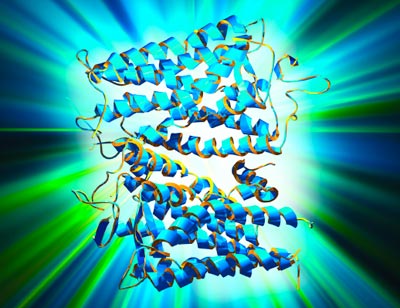
Another example of quantum tunnelling with biological relevance concerns the chemistry of proteins — large molecules that fold into complex 3D shapes. Some proteins contain active sites that bond to hydrogen, and to reach the sites, the hydrogen atom has to negotiate an elaborate and shifting potential-energy landscape. Quantum tunnelling can speed up this process. Studying just how important tunnelling might be is highly challenging, because many complicated interactions occur as the protein molecule jiggles around and changes shape as a result of thermal agitation. One approach taken by the chemist Judith Klinman of the University of California, Berkeley, is to work with deuterium instead of hydrogen. As the deuteron is roughly twice as heavy as the proton, using it makes a big difference to the tunnelling rate. Comparing the relative reaction rates of hydrogen and deuterium over a wide temperature range has therefore allowed experimentalists to separate out the relative importance of quantum effects. The results seem to confirm that quantum tunnelling is indeed significant, which raises the fascinating question of whether some proteins have actually evolved to take advantage of this, making them in effect “tunnelling enhancers”. In evolution, even a small advantage in speed or accuracy can bootstrap into overwhelming success, because natural selection exponentiates the relative proportion of the winners over many generations.

Photosynthesis and ornithology

Although the previous examples have been in the literature for many years, they have not led to a widespread acceptance that quantum physics is important for biology. However, the subject matter is sufficiently rich that I held an entire workshop on quantum biology at the BEYOND Center for Fundamental Concepts in Science at Arizona State University in December 2007, which was followed by another organized by physicists Vlatko Vedral and Elisabeth Rieper at the National University of Singapore in January 2009. This flurry of activity was spurred by two new and rather dramatic experimental developments.

The first involves a study of photosynthesis by Berkeley chemist Graham Fleming and his group. Photosynthesis is a highly complicated and sophisticated mechanism that harvests light energy to split water by using individual photons to create a cascade of reactions. The process is extraordinarily efficient, and represents a classic example of how evolution has fine-tuned the design of a physical system to attain near-optimal performance.

The primary receptor of the light energy is a complex of pigment molecules known as chromophores. These can become excited and pass on the energy of excitation in a multistage process to the final reaction centre where charge separation occurs. Because the wavelength of the photon is much larger than the molecular assemblage, a superposition state of many excited pigment molecules is initially created, and this proceeds to evolve over a timescale of some hundreds of femtoseconds. Fleming and his group used laser excitation and probe pulses to study the relaxation pathways of these light-harvesting complexes, and observed a type of “quantum beating” effect in which the maximum amplitude of the excitation visits and revisits different molecules in the system coherently. Fleming claims that, with appropriate timing, the system can “grab” the coherent excitation (which persists for a few hundred femtoseconds) with greater probability than if it was merely distributed according to classical statistical mechanics. He believes this could lead to a many-fold increase in the speed of the energy transfer. The results have recently been complemented by the work of Elisabetta Collini and Gregory Scholes at the University of Toronto, who demonstrated room-temperature coherence in electron-excitation transfer along polymer chains. An important feature of photosynthesis is that the molecular architecture involved is structured in a highly unusual and compact manner, which suggests that it has been “customized” to exploit long-range quantum effects. It could be that the particular configuration is efficient at preserving coherence for surprisingly long durations, thereby enabling the system to “explore” many pathways simultaneously and thus speed up a “solution” (i.e. delivering energy to the reaction centre).

The second recent development that suggests that quantum physics is relevant to biology concerns bird navigation. It is well known that some birds perform amazing feats of navigation using a variety of cues that including the local direction of the Earth’s magnetic field. The nature of this magnetic sensor has, however, remained something of a mystery and the problem is particularly acute because the magnetic field penetrates the entire organism. How, for example, is the angle of the field relative to the bird translated into neural information? A study by Thorsten Ritz at the University of California, Irvine, Christine Timmel’s group at Oxford University and Elisabeth Rieper at the National University of Singapore has made a plausible case, at least for the European robin, that the key lies with a class of proteins found in the bird’s retinas.

The mechanism currently under investigation appeals to the photo-activation above the thermal background of a 2D array of aligned proteins, producing radical ion pairs involving singlet two-electron states. The spins of these entangled electrons are linked, and in the presence of a uniform magnetic field they would precess in synchrony, maintaining the singlet configuration. However, if the ejected electron moves away somewhat, the two electrons may experience different magnetic environments. Although both electrons will be subjected to the same ambient field of the Earth, the electron tied to the ion in the protein will also be affected by the ion’s nuclear magnetic field, which produces hyperfine splitting. This difference in magnetic fields experienced by the entangled electrons causes the singlet state to oscillate with a triplet state, with a periodicity depending in part on the strength and orientation of the Earth’s field relative to the array of proteins. The system may then de-excite in stages and initiate a reaction that in effect acts as a chemical compass, because the relative proportion of the reaction products can depend on the singlet–triplet oscillation frequency.

There remain considerable uncertainties both about the mechanism and the precise identities of the molecules involved. Nevertheless, general evidence in favour of a quantum model of some sort comes from experiments conducted by Wolfgang and Roswitha Wiltschko of the University of Frankfurt, who studied the behaviour of robins in the presence of a small, oscillating magnetic field. They found that for frequencies near 1.315 MHz, the birds’ vaunted navigational prowess is seriously compromised. A possible interpretation of the experiments is that the perturbing field produces a “resonance” causing singlet–triplet transitions, thereby upsetting the chemical compass.

How to avoid decoherence

Although at least some of these examples add up to a prima facie case for quantum mechanics playing a role in biology, they all confront a serious and fundamental problem. Effects like coherence, entanglement and superposition can be maintained only if the quantum system avoids decoherence caused by interactions with its environment. In the presence of environmental noise, the delicate phase relationships that characterize quantum effects get scrambled, turning pure quantum states into mixtures and in effect marking a transition from quantum to classical behaviour. Only so long as decoherence can be kept at bay will explicitly quantum effects persist. The claims of quantum biology therefore stand or fall on the precise decoherence timescale. If a system decoheres too fast, then it will classicalize before anything of biochemical or biological interest happens.

In recent years, much attention has been given to decoherence, and its avoidance, by physicists working in the burgeoning field of quantum computation and quantum-information science. A quantum computer is a way to process information more efficiently than classical physics would allow by using quantum states that are allowed to perform logical operations through the coherent evolution of quantum superpositions. Decoherence represents a source of computational error, so physicists have been busy designing environments that are theoretically free of decoherence, or that minimize its impact. A key parameter is temperature: the higher it is, the stronger the decoherence. For this reason, most attempts at quantum computation employ ultra-low-temperature environments such as superconductors or cold-atom traps.

At first sight, the warm and wet interior of a living cell seems a very unpromising environment for low decoherence. Back-of-the-envelope calculations suggest decoherence times of less than 10–13 s for most biochemical processes at blood temperature. However, there are reasons why real biological systems might be less susceptible to decoherence than simplistic models predict. One is that biological organisms are highly non-linear, open, driven systems that operate away from thermodynamic equilibrium. The physics of such systems is not well understood and could conceal novel quantum properties that life has discovered before we have. Indeed, sophisticated calculations indicate that simple models generally greatly overestimate decoherence rates. For example, Jianming Cai Hans Briegel of the University of Innsbruck and Sandu Popescu of the University of Bristol have found that a two-spin quantum system dynamically driven away from equilibrium can exhibit ongoing coherence even when coupled to a hot and noisy environment that would rapidly decohere a static system. A calculation based on the so-called spin-boson model by Anthony Leggett of the University of Illinois at Urbana-Champaign also suggests dramatically extended decoherence times for low-frequency phonons. Leggett also points out that because the dominant mode of decoherence is via phonon coupling to the environment, an acoustical mismatch between the immediate and wider environment of the quantum system could prolong coherence at low frequencies. Furthermore, it is not necessary for all degrees of freedom to enjoy subdued decoherence: significant quantum biological effects might require only a small subset to be protected.

The origin of life

A century and a half after Charles Darwin published On The Origin of Species, the origin of life itself remains a stubborn mystery, and is deeply problematic. The simplest known living organism is already stupendously complex, and it is inconceivable that such an entity would arise spontaneously by chance self-assembly. Most researchers suppose that life began either with a set of self-replicating, digital-information-carrying molecules much simpler than DNA, or with a self-catalyzing chemical cycle that stored no precise genetic information but was capable of producing additional quantities of the same chemical mixture. Both these approaches focus on the reproduction of material substances, which is only natural because, after all, known life reproduces by copying genetic material. However, the key properties of life — replication with variation, and natural selection — does not logically require material structures themselves to be replicated. It is sufficient that information is replicated. This opens up the possibility that life may have started with some form of quantum replicator: Q-life, if you like.

It is well known that wavefunctions as such cannot be cloned, but discrete quantum information, for example spin direction or energy-well occupation, can be copied. The advantage of simply copying information at the quantum level, over building duplicate molecular structures, is speed. A copying event might proceed on a chemical or tunnelling timescale of femtoseconds. This should be compared with the 10 ms that it takes to replicate a DNA base pair. Q-life can therefore evolve many orders of magnitude faster than chemical life. Moreover, quantum fluctuations provide a natural mechanism for variation, while coherent superpositions enable Q-life to evolve rapidly by exploring an entire landscape of adaptive possibilities simultaneously. Of course, the environment of this hypothetical Q-life is unknown, but the surface of an interstellar grain or the interior of a comet in the Oort cloud offer low-temperature environments with rich physical and chemical potential.

How would Q-life evolve into familiar chemical life? A possible scenario is that organic molecules were commandeered by Q-life as more robust back-up information storage. A good analogy is a computer. The processor is incredibly small and fast, but delicate: switch off the computer and the data are lost. Hence computers use hard disks to back up and store the digital information. Hard disks are relatively enormous and extremely slow, but they are robust and reliable, and they retain their information under a wide range of environmental insults. Organic life could have started as the slow-but-reliable “hard-disk” of Q-life. Because of its greater versatility and toughness, it was eventually able to literally “take on a life of its own”, disconnect from its Q-life progenitor and spread to less-specialized and restrictive environments — such as Earth. Our planet accretes a continual rain of interstellar grains and cometary dust, so delivery is no problem. As to the fate of Q-life, it would unfortunately be completely destroyed by entry into the Earth’s atmosphere.

There is accumulating and tantalizing evidence that quantum mechanics plays a key role here and there in biology. What is lacking is any clear case for a general “quantum life principle” that might offer a new conceptual framework in which the remarkable properties of living systems can be understood, as Schrödinger and others hoped. However, the physics of complex far-from-equilibrium quantum systems with non-linear couplings is in its infancy, and further surprises undoubtedly lie in store. Meanwhile, researchers in quantum-information science intent on reducing decoherence might find the study of biological nanomachines surprisingly rewarding.


Web life: Foldit

So what is the site about?
Like the popular SETI@home program, which uses the downtime of home computers to sift radio-telescope data for evidence of alien life, Foldit draws on the idle hours of several thousand data-crunchers for help in solving scientific puzzles. But there is a twist. For a start, Foldit is all about biophysics. The project’s goal is to understand how proteins — the chains of amino acids that drive processes inside living cells — fold themselves into a myriad of different shapes. But the most striking difference is that Foldit’s protein-folding operators are actual human beings, and the datasets they are sifting are disguised as an amazingly addictive computer game.

Nice touch. What is it like to play?
The simple answer is that Foldit is a bit like Tetris, only infinitely more useful and without the annoying background music. On the screen, protein molecules appear as brightly coloured cartoon chains, with hydrophilic (water-loving) and hydrophobic (water-hating) sidechains dangling off them. A variety of tools allows you to poke, squeeze, tug and shake the proteins into more energetically favourable configurations. The more stable the protein becomes, the more your score increases. If your wiggles and tweaks succeed in improving the protein, then the game rewards you with encouraging little messages (“great hydrogen bonding!”); you also get the satisfaction of watching your solution creep up the scoreboard compared with other players’ efforts.

How do I get started?
Once you have downloaded the game from the website (it is free and available in Windows and Mac versions), the next step is to work through a series of tutorials that introduces you to the physics of protein-folding. For example, proteins tend to be surrounded by water, so hiding the hydrophobic sidechains away inside the rest of the molecule will reduce the amount of energy needed to maintain the protein’s shape. The tutorials also introduce advanced tools like “shake sidechains” that allow you to move several parts of the molecule simultaneously, and offer a few hints about techniques to try. Once you have solved the introductory puzzles, you can try more advanced ones, form groups to solve puzzles together, chat with other players, challenge them to duels and generally fold away to your heart’s content.

Are we really doing science here?
Well…sort of. Foldit grew out of Rosetta@home, a computerized protein-folding project led by David Baker of the University of Washington. Baker won the Sackler International Prize in Biophysics in November 2008 for his work, but by that time his team had already identified a problem: sometimes, Rosetta@home’s computers became bogged down in local minima, ignoring “obvious” lower-energy configurations nearby. Humans, in contrast, are famously good at spotting patterns, and many are inveterate puzzle-solvers. So Baker brought in some computer-scientist colleagues to develop a computer game around protein-folding, effectively outsourcing these puzzles to anyone with a computer and some free time. Eventually, the Foldit project members hope to get human players to tackle protein-folding problems that have no known solution. They are not there yet, however, and current research is focused instead on finding out what types of problems Foldit players can solve with ease, and which are better left to the machines.

Any new developments I should look out for?
New protein-folding problems appear on the site every few days, and in late May the Foldit team added an important new twist: a series of puzzles that allows players to design their own proteins, not just manipulate existing ones. Protein engineering is relatively uncharted territory for both humans and machines, and the team thinks that in this wide-open field, a casual gamer might be able to make a real contribution — perhaps even design a new protein-based drug. It may seem unlikely, but as an excuse for playing a computer game, finding a cure for HIV is tough to beat.

Tools for learning

The old joke is, “If it squirms, it’s a biology lab, if it stinks, it’s a chemistry lab and if it doesn’t work, it’s a physics lab”. My current job is to make a lie of the latter, by making physics apparatus that works for the students without needing a “resident expert” to maintain or explain it.

I work for TeachSpin, a small company that builds equipment that is used to teach students in advanced undergraduate physics labs. Some of the instruments are capable of making “research grade” measurements, and all are designed for open-ended investigations where the students can go beyond what is outlined in the manual. As TeachSpin’s senior scientist, I am in charge of designing new experiments, supervising their construction and testing them before they leave the workshop for new homes in labs around the world. The instruments the firm makes span a range of physics topics, from atomic physics and magnetic resonance to acoustics and optics; they can be as simple as magnetic-force apparatus or as complex as measuring the hyperfine splitting in the excited states of rubidium atoms using Doppler-free spectroscopy.

TeachSpin was founded in 1992 by Jonathan Reichert, who was then a physics professor at the University of Buffalo in the US. He was also my thesis advisor – proving once again that when it comes to careers, it is often who you know rather than what you know that counts. After I completed my PhD in solid-state physics in 1993, I worked at TeachSpin for several months, designing electronics for its first instrument — a pulsed nuclear magnetic resonance spectrometer. A few postdoc positions later, I found myself working as a staff scientist at the W M Keck Free Electron Laser at Vanderbilt University when the facility lost its funding for a year. As a recently married new father, I thought I should start looking for a job that did not depend on the three-year research-funding cycle. By that time, TeachSpin had grown and it was looking to hire a full-time physicist. It was a perfect fit for both of us.

From “care and feeding” to design

Part of my time is spent on what I call “care and feeding” of existing instruments. This can range from talking to potential customers about the apparatus, to helping existing users get their experiments up and running, and even to coaching students. Every once in a while, I get some good physics questions, but in the main, people want to know about set-up and specifications.

This part of my job also includes production-related work like answering questions from people in the workshop, finding replacement parts for something that is about to become obsolete or helping set up equipment for intermediate-level testing. My favourite part of production work is the final testing of the apparatus. First, I make sure all the mechanical parts and electronics are working. Then, I get to take the first pieces of data from this particular unit. Even though I have seen the same dips, bumps and/or wiggles of data hundreds of times before, it is still a bit of a thrill to see them in their latest incarnation. Once the data are recorded and a copy placed in the user manual, I wheel the instrument out to be packed up for shipping. At these times, I cannot help feeling a little like a proud father sending another of my “babies” out into the world, hoping the new owners will cherish it as much as I do. Note that “father” is a good analogy — it is the production people who do all the finicky assembly.

Most of my time, however, is devoted to designing new instruments. This could be in collaboration with an outside expert — the firm built both its diode-laser spectroscopy unit and its Fabry–Pérot cavity with Ken Libbrecht of the California Institute of Technology, for example — or entirely with in-house staff. My favourite part of the design process is starting on a new project. For example, my latest project is the study of “Johnson” and “shot” noise in electronic circuits; there are some beautiful correlation techniques using two identical amplifiers that can be used to remove the noise, but it looks like I will not be able to do this with a single instrument. As is often the case, I may at this point have to learn some new physics (a great excuse to go and buy some books) and, at this early stage, the sky is the limit. My colleagues and I always like to think about all the possible things the new piece of apparatus might do, and any crazy ideas can be explored.

Soon after this, reality sets in and we have to balance things like the costs and the time involved against the potential for increased sales. With a few more parts, for example, our optical-pumping apparatus could be made into a rubidium magnetometer or an atomic clock, but most students will still be struggling with the basics after several weeks of using the equipment. The challenge is to let the apparatus be used over as wide an experimental range as possible — giving the student lots of different knobs to turn (figuratively and literally) — yet keep the price low enough that physics departments can still afford to buy it. I sometimes feel like I am cheating the student by doing all the design work: I learn a great deal from all the mistakes I make, but the students do not get this opportunity. However, making mistakes takes time, and in undergraduate labs, this is often in short supply.

Making things work

A career in instrument building can involve knowledge from almost any area of science and technology. A list of what I use daily might start with practical topics like electronics, technical drawing and material properties, and continue on to entire fields like optics, atomic physics, electromagnetism or solid-state physics. One very useful trait for this job — common to many scientists and engineers — is a desire to understand how things work, and perhaps to make them work better or be produced more cheaply. Aside from this, I think one of my greatest assets is having the tenacity to stick with a problem until I understand it. A small glitch or wiggle in an experimental spectrum is not acceptable. Chasing down all the small noise sources that can crop up in a piece of equipment takes time, but the reward is a good instrument.

One of the drawbacks of working for a small firm is that there are few other physicists to help you bounce ideas around. E-mail helps, but it is not the same as standing at a whiteboard, drawing pictures and waving my hands. However, this changes for a few months each year when David Van Baak, a physicist from Calvin College, visits to collaborate on new projects. During this period, we have a marvellous time and the ideas just keep on coming — we brainstorm, argue, refine and continually think of more experiments to do with the apparatus we are designing until we finally have to stop and focus on getting it out the door.

As there is a large practical component to my work, my advice to anyone interested in a similar career is to get to know the technicians in your department or university workshop. If you are a graduate student designing equipment for an experiment, do not just submit a drawing to the technicians — take the time to talk to them about what you are doing. You may have to bribe them with pizza or other offerings, but this will be money and time well spent. You do not have to accept all of their suggestions, but they are bound to have some good ideas about how to make things work.

Obviously, a physics degree can be good preparation for this kind of work, but my first degree was actually in engineering, so I was not exposed to the classic advanced-physics labs. This naivety can be useful. First, I do not have preconceived notions of how the experiments should be done, so I may be able to think of a different way to show the desired effect. For example, you do not necessarily need to be able to sweep the frequency of your Fabry–Pérot cavity if you can tune the wavelength of your diode laser. And perhaps even more importantly, when I start a new project, I am approaching it much like the students: I am doing it for the first time.

Copyright © 2026 by IOP Publishing Ltd and individual contributors