A pale orange dot

The first planetary satellites (other than our own Moon) were discovered by Galileo Galilei in 1610. These were the four largest moons of Jupiter: Io, Europa, Ganymede and Callisto. Christiaan Huygens followed suit in 1655 by discovering Titan, Saturn’s largest satellite; a few years later, Giovanni Cassini was the first to observe several of Saturn’s smaller moons, as well as the main gap in its rings. It is Titan that stands out, however. Called at first “Luna saturni” and only given its modern name by John Herschel in 1848, Titan is the most massive satellite in the solar system. With a diameter of 5151 km, it dwarfs the other 60-odd moons of Saturn, and is even larger than the planet Mercury.

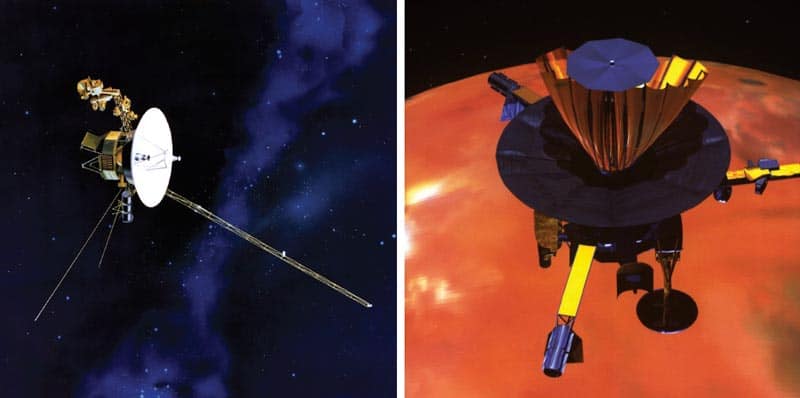
Modern studies of Titan began in 1944 with Gerard Kuiper’s discovery that it has a nitrogen and methane atmosphere. More recently, NASA’s Voyager 1 spacecraft flew within a few thousand kilometres of Titan in 1980 on its way out of the solar system. This fantastic journey captured scientists’ imagination and paved the way for the Cassini–Huygens mission. This joint venture between NASA and the European Space Agency was launched in 1997 to study the Saturnian system and Titan in particular. The results of this mission are the main subject of Titan Unveiled, by Ralph Lorenz and Jacqueline Mitton.

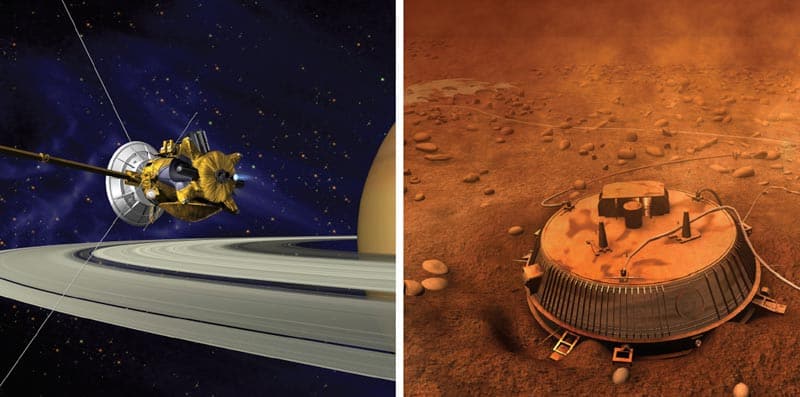
The orbiter component of the mission, Cassini, went into orbit around Saturn on 1 July 2004, and is equipped with a radar system capable of penetrating Titan’s thick atmosphere to map its surface in detail. The Huygens landing probe was designed to investigate Titan’s atmosphere during its two-hour descent to the moon’s surface. After landing on 25 December 2004, it analysed Titan’s surface for about two hours before succumbing to the harsh conditions there.

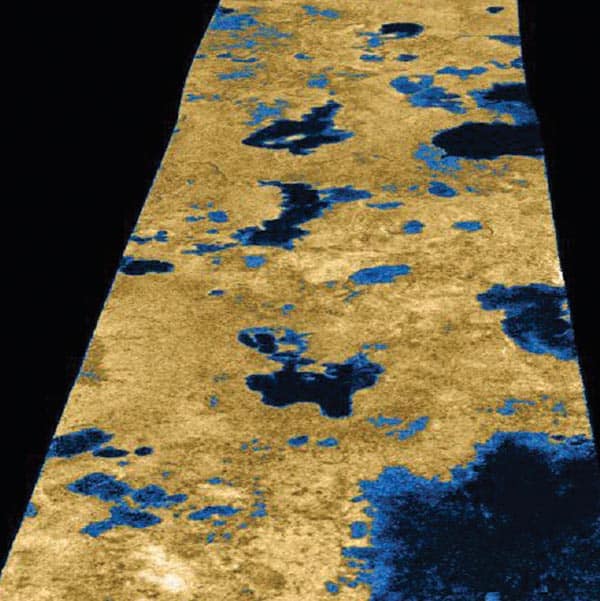
The orbiter mission is still ongoing, keeping hundreds of scientists and engineers from all over the world busy. Breathtaking data have been gathered by both the orbiter and the lander, showing that Titan is an active body with a young surface that mimics an array of terrestrial features. We can observe dunes, rivers and large lakes of liquid methane and ethane from orbit, while images of the landing site show large pebbles made of methane ice. In addition to an overall flat surface, methane clouds have been identified in the southern hemisphere beneath a thick global atmospheric haze. Carl Sagan famously referred to the Earth as a “pale blue dot”; by analogy, we can think of Titan as a “pale orange dot” in space.

Beyond the glamour of exploration, the importance of these scientific results lies in this hydrocarbon world being a laboratory for organic processes, similar to those that are known to have taken place in the early Earth as a prelude to the evolution of life itself. Titan thus opens up a window on our own past.

Titan Unveiled can be seen as a follow-up to another book by the same authors, Lifting Titan’s Veil, which was published in 2002 and focused on the Cassini–Huygens mission before its arrival at Saturn. Lorenz is one of the mission scientists, and his experiences in developing one of the lander experiments, working on both sides of the Atlantic, make him uniquely qualified to take us behind the scenes. Mitton is a full-time writer and media consultant specializing in astronomy.

Titan Unveiled starts with an account of the astronomical discoveries of Titan in the past (particularly in the decade preceding Cassini–Huygens), continues with the development of the mission and closes with a summary of its most relevant results. The mission is described in great detail, including its arrival at the Saturnian system, the descent through Titan’s atmosphere, the probe’s landing and the various orbiter fly-bys.

The atmosphere and surface processes are featured prominently in this exciting account. For example, we learn that Titan’s atmosphere, like that of Venus, contains a “super-rotation” mechanism: the bulk of the atmosphere rotates much faster than the solid moon spins on its axis, with a “quiet” (i.e. slower-rotating) layer about 70 km above the surface. The book also discusses some early theories about Titan that were subsequently proved incorrect, such as the expectation that its atmosphere would contain some noble gases like krypton and xenon, and looks at how we can explore Titan further in the future.

As an active participant in the mission, Lorenz provides an intimate account of this unique adventure. The text combines a lively narrative with a non-technical description of the mission and a summary of the main results, peppered with personal accounts throughout. The drawings and photographs are particularly outstanding.

Titan Unveiled is highly recommended to the intellectually curious general public, as well as to the most seasoned planetary scientists and engineers. In fact, anyone with an interest in science, astronomy, planetary science and exploration, engineering or the evolution of our own planet will find this book captivating and uplifting. Landing on Titan has been one of the greatest adventures of the current decade; in the words of the authors, “planetary exploration gives us a sense of perspective, a notion of who we are, where we came from and what our destiny might be”.

This new field of comparative planetology is at the forefront of human endeavour, and will help us unravel the mysteries of the solar system’s origin and evolution. Thanks to the mission described in this book, Titan can be viewed together with other large, rocky objects in our solar system — the Moon, Mars, Mercury, Venus and of course the Earth — as another completed piece of the planetary puzzle. It has finally revealed its well kept secrets.

Another giant leap for mankind

Three spacecraft are currently orbiting the Moon, Chang’e-1 from China, Kaguya from Japan and Chandrayaan-1 from India. The American Lunar Reconnaissance Orbiter will join them later this year. Russia is developing lunar rover hardware, for itself and for other countries. In Europe, both Germany and the UK are contemplating their own lunar missions, both outside the boundaries of the European Space Agency, to which they both belong. China and India are discussing the idea of sending manned missions to the Moon within the next decade or so. The Moon has once again risen to the top of the space agenda worldwide.

What is going on? Why has the Moon suddenly become the destination for spacefaring nations? After the Apollo programme ended in 1975, relatively little attention was paid to the Moon. Yet a small group of lunar scientists, enthusiasts and space visionaries have continued to think seriously about both the scientific questions the Moon poses as well as the opportunities it offers. We know a lot more about the Moon that we did only a couple of decades ago. And we now understand that the Moon has a key role to play in humanity’s exploration of the solar system.

Return to the Moon

Our spacecraft have reached the breadth of the solar system, probed the nature of the Sun, and examined our galaxy. For almost 50 years, we have tentatively explored the edges of the cosmos, examining the physics and history of our universe.

We have accomplished much with this model of space exploration but are limited in what we can send into space. Launch vehicles are costly and not always reliable. The high cost of spaceflight makes the fate of such programmes inevitably tied to political winds that may change at a moment’s notice. Failures occur, and when they do, it can take years to recover and obtain the information originally sought.

The current paradigm of space exploration has developed largely because we must lift everything we need for our study out of Earth’s deep gravity well. Because launch costs are so high, satellites must be built to last for long periods of time, thus making individual missions costly and rare. The logistical train to the various levels of Earth orbit where our space assets reside is long, tenuous and difficult to maintain.

The US’s new Vision for Space Exploration (VSE), proposed by President George Bush in 2004 and endorsed by Congress in 2005, outlines a different approach to the fundamentally limiting problem of spaceflight: what if we were no longer limited only to what we can lift from the Earth’s surface? Suppose that we were able to “live off the land” in space? What would the advent of this scenario mean for the future exploration of space?

The human part of the space programme has been trapped in low Earth orbit with no plans to go further, even though robotic space exploration passed that horizon years ago. The International Space Station (ISS) could have served as a test bed for farther destinations, but did not, largely as a result of conscious policy decision. The tragic loss of the Space Shuttle Columbia in 2003 only drew attention to the hollowness and lack of direction in space policy.

The VSE proposes that a new vehicle be designed and built for human spaceflight beyond the confines of low Earth orbit, one that can adapt to different kinds of missions going to varying destinations. We would conduct robotic exploration of the Moon in preparation for the resumption of human exploration of our satellite by the next decade. On the Moon, we would learn how to live and work productively on another world and use the knowledge and capabilities created from these activities to venture beyond it to the planets.

Water from outer space

One of the most interesting and unusual aspects of the VSE is the idea of using the abundant resources found at the Moon and elsewhere in space to create new capabilities. Although widely discussed in space-advocacy circles, the use of space resources has been dismissed by many in the spaceflight community, with development considered only likely in the far distant future. Yet, we have been using one cosmic resource since the very first flights into space — the conversion of abundant solar energy into electricity to power the spacecraft sent to various destinations.

Space resources consist not only of energy, but of materials as well. We know that the bodies closest to us in space offer usable resources that can be harvested — water (bound in minerals or as condensates in specialized environments) and the bound oxygen found in common rock-forming minerals. The Moon and near-Earth asteroids also contain metals and ceramics that can be used in the construction of new rockets and spacecraft.

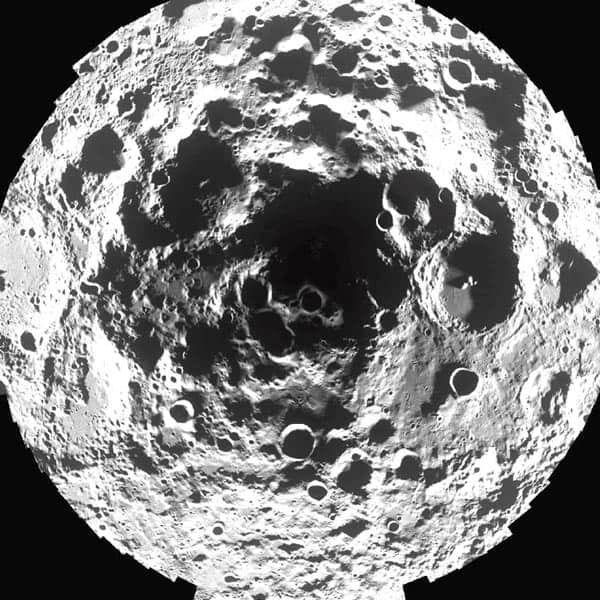
A supply of water on the Moon would make the establishment of a self-sustaining lunar presence come about sooner and easier. The samples returned by the Apollo missions revealed that the lunar interior is essentially devoid of water. However, the surface is regularly bombarded with water-rich objects such as comets, and scientists suspect that some of that water might have accumulated to usable quantities. Where would this water end up? Most of it would be split by sunlight into its constituent atoms of hydrogen and oxygen, and lost into space, but some would migrate by literally hopping along to places where it is very cold. As the Moon’s axis of rotation is nearly perpendicular to the plane of its orbit around the Sun, the Sun always appears close to the horizon at the poles of the Moon. If you are on a topographic high, you may be in permanent sunlight. If you are in a hole, you may be in both permanent darkness and in extreme cold, with temperatures as low as 40–50 K. Moreover, these “cold traps” have existed on the Moon for at least the last two to three billion years — plenty of time for water to accumulate from impacting comets.

Two NASA missions sent to the Moon in the 1990s looked for evidence of water at the poles. In 1994 Clementine thoroughly mapped the poles of the Moon, revealing areas of near-permanent sunlight and permanent darkness. Although the spacecraft did not carry instruments designed to look for lunar ice, during the mission an improvised experiment obtained information on some properties of the polar surface. Radio waves are reflected from planetary surfaces differently depending on the compositional make up of the surfaces. Specifically, radio waves are scattered in all directions when they are reflected from surfaces consisting of ground-up rock (as exists on most of the Moon, Mercury, Venus, Mars and the asteroids). However, radio waves are reflected more coherently from ice surfaces (the polar caps of Mercury and Mars, and the icy surfaces of Jupiter’s satellites Europa, Ganymede and Callisto). When radio waves encounter ice, they are partly absorbed and reflected multiple times by internal flaws in the ice then reflected back out into space. A consequence of multiple reflections is that some of the radio reflections come back in the same sense as they were transmitted (think of the reflection of light from two mirrors — reflection from a single mirror makes text unreadable, but double reflection makes the text “normal” again). Thus, ice reflects the radio waves back partly in the same sense as incident waves.

Analysis of the data returned from the radio-wave experiment on Clementine reveal that ice deposits might exist in permanently dark regions near the south pole of the Moon. Initial estimates suggest that a small ice lake (more than 109 m3 in volume) exists at the south pole. This amount of water would be equivalent to the fuel (hydrogen and oxygen) used for more than a 100,000 Space Shuttle launches.

The Lunar Prospector (LP), launched in 1998, orbited the Moon in a 100 km orbit for over 18 months. It carried a variety of instruments that, in many ways, complemented the instruments of the earlier Clementine mission. The LP’s neutron spectrometer detected high concentrations of hydrogen at both poles. In the form of water ice, results from the LP show an amount of hydrogen equivalent to about 10 m3 of ice, with the south pole having slightly more than the north pole. Moreover, the low-altitude (high-resolution) neutron data show that these high concentrations of hydrogen are correlated with the large areas of darkness seen in the Clementine images. This result almost certainly means that water ice exists in the dark areas, thus confirming Clementine’s earlier result.

The discovery of ice has enormous implications for a permanent human return to the Moon. Water ice is made up of hydrogen and oxygen, two elements vital to human life and space operations. Lunar ice could be mined and disassociated into hydrogen and oxygen by electric power provided by solar panels or a nuclear generator. Hydrogen and oxygen are prime rocket fuels, giving us the ability to refuel rockets at a lunar “filling station” and making transport to and from the Moon more economical by at least a factor of 10. Additionally, both the water from lunar polar ice and the oxygen generated from the ice could support a permanent outpost on the Moon. The extraction and use of this material, rare on the Moon but so vital to human life and operations in space, will make our expansion into the solar system easier and reaffirms the immense value of the Moon as a stepping stone to the wider universe.

New missions to the Moon

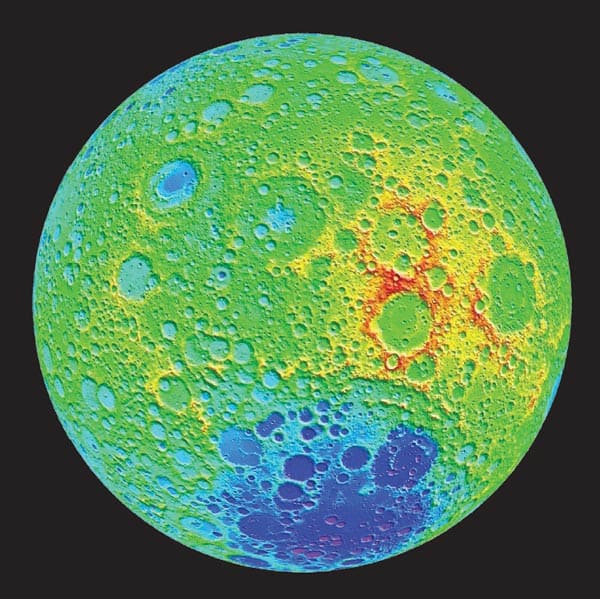
The initial steps in a return to the Moon involve robotic orbiters. Chang’e-1, Kaguya (SELENE) and Chandrayaan-1 are all currently in lunar orbit. These missions are making maps of the Moon at unprecedented levels of detail and quality. Soon we will know the global topography, composition and structure of the Moon to a degree never before attempted for any planet, including the Earth. The basic data acquired by these missions will let us select future landing sites for both scientific and resource purposes.

These missions should be followed by others, including both orbiters and landers. A series of small spacecraft in lunar orbit could create a communications and navigation infrastructure for the Moon, providing continuous communication with areas out of sight from the Earth (such as the far side and deep craters near the poles) and positional information for both orbital and surface navigation around the Moon (a lunar GPS). With landers, we can explore the surface using rovers, as shown by the recent experience with the Mars Exploration Rovers, and deliver robotic payloads to begin developing the surface infrastructure near a future outpost site. Rovers can access the dark floors of polar craters, gathering detailed chemical and physical information on the ice deposits — necessary precursor information for the extraction of water.

In parallel with this programme of robotic exploration, a new human spacecraft (the Crew Exploration Vehicle, a replacement for the Space Shuttle) will need to be developed and tested. Humans will return to the Moon using both the knowledge gained and equipment emplaced by the robotic precursors. Using the Moon’s resources will enable us to build a space-transportation infrastructure in “cislunar space” (between the Earth’s atmosphere and the Moon). Such a system — allowing routine access to the Moon and all points in between — is a fundamental step towards creating true spacefaring capability. A system that can routinely land on the Moon, refuel and return to Earth orbit, bringing with it fuel and consumables produced on the lunar surface, also gives us the ability to journey to the planets.

The ability to routinely access cislunar space would also bring about a new capability, one of surprising significance. All current satellite assets, commercial and strategic, reside in the volume of space between the Earth and the Moon. Currently, we have no way of accessing these satellites — if one breaks down or becomes obsolete, it is written off and must be replaced. If we had the ability to travel between the various energy levels of cislunar space, carrying out servicing and upgrading missions, we could maintain a more robust, more capable and more extensible set of satellite assets. Thus, cislunar space would become as accessible as low Earth orbit is today and we could use this lunar-based transport system for a variety of commercial missions as well as exploration.

The meaning behind the vision

Rather than being simply a “new human space programme” or a “manned Mars mission”, the entire solar system is the goal of this new vision. Existing launch vehicles, spacecraft, instrumentation and supporting infrastructure are too limited — in mass, power, bandwidth and computational ability. The goals of the VSE are nothing less than revolutionary: to exploit our existing capabilities by developing and using new technology, but also to create new capabilities by using space resources and building spacefaring infrastructure. Thus, the vision is not a zero-sum game, with some winners and some losers — the goal is for all to win through the creation of new capabilities.

It is important to emphasize that the VSE does not call for the use of space resources to lower the costs of the US space programme, although that is a long-term goal of such use. The real goals are to understand how difficult it is to use lunar and space resources, to develop the technologies needed to do so, and to experiment with different processes in a real space environment. It may turn out that using space resources is more trouble than it is worth; if so, we can then devote our efforts to a space programme that does not feature an extensive human presence. In other words, can we make what we need from what we find in space?

However, it is my view that a new scientific opportunities will become available through the presence of people on lunar and planetary surfaces. A key goal of the VSE is to break down the false dichotomy between human and robotic exploration. To maximize the return, both techniques are needed. We can use a return to the Moon to learn how to best explore planetary surfaces and to decide the optimum mix of human and robotic capability.

We face a clear choice in our future direction in space. We can continue on our existing path, limited in space by what we can launch from the Earth, or we can embrace a model that creates new capabilities by using the unlimited resources of space to build a transportation infrastructure that can routinely access cislunar space and beyond. We can generate new wealth by extracting these resources for the use in space and back on Earth. Using the combined power of people and machines, we can robustly explore planetary surfaces and build scientific instruments of extraordinary power and capability. The first step in this direction will represent another giant leap for mankind.

Brave new worlds

Are we alone? There is perhaps no more important single scientific question. People have pondered this issue from the very dawn of sentience, wondering if other, similar, beings inhabited a distant mountain range or the other side of an ocean. The history of humanity is largely one of exploration and expansion, and while at first this was limited to the Earth’s surface, in the last few decades only the power of our interplanetary rockets has kept us from exploring our wider environment. As the science-fiction author Ray Bradbury proclaimed when the Viking landers arrived on Mars in July 1976, “There is life on Mars, and it is us.”

Now we are poised to move far beyond our own planetary system — if not yet physically, then at least intellectually — as we learn how many other habitable worlds exist in our galaxy. The expectation of most astronomers is that Earth-like planets will be commonplace; in other words, Earth-size planets will be found orbiting at distances from their parent suns that would allow liquid water to exist on or near the planet’s surface. This prediction is not simply a conceit concocted by wild-eyed planet hunters, but is a logical outcome of what we have learned in the last decade about extrasolar planetary systems. All of the evidence points to the inescapable conclusion that rocky, terrestrial planets similar to the Earth should be orbiting unseen around many, if not most, of the myriad of stars that we see when we look up at the night sky.

This prediction of the likelihood, or frequency, of Earth-like planets orbiting Sun-like stars is about to be tested rigorously by the Kepler Space Telescope, which is designed specifically to determine the percentage of solar-type stars that harbour Earth-like worlds. Due for launch early this month, NASA’s latest telescope will search for extrasolar Earths using a method known as transit photometry. When an Earth-sized planet with a suitably inclined orbit passes between its star and the line of sight to the Earth, it blocks a tiny fraction — about one 10,000th — of the star’s light. Kepler is capable of measuring these tiny, periodic dimmings, and will monitor more than 100,000 stars for at least three and a half years. In the process it should discover dozens of Earth-like planets. In short, we are about to determine the value of a key factor in any estimate of the prevalence of life in the universe: the frequency of habitable worlds where life could originate and evolve.

Early exoplanetology

Until 1995 the only known planets outside our solar system were two scorched rocks in orbit around a very un-Sun-like pulsar, PSR B1257+12. This shortage of extrasolar planets was not due to a lack of effort in trying to find them. Since 1980 a Canadian research team led by Gordon Walker of the University of British Columbia had been searching a sample of nearly two dozen Sun-like stars for the telltale “Doppler wobble”, or periodic redshift and blueshift in the star’s spectrum, caused by the orbital motion of the host star around the system’s centre of mass. By 1992 the researchers had found no definitive evidence for even a single extrasolar planet comparable in size to Jupiter. They therefore stopped their search and wrote a paper describing the upper limits (of the order of one Jupiter mass) on the masses of any possible planets lurking undetected around the target stars. When this paper was published in the autumn of 1995, the field of extrasolar planetology seemed to have come to a premature dead end.

Two months later, Michel Mayor, an astronomer at the Geneva Observatory in Switzerland, made a startling announcement: he and his colleague Didier Queloz had found the first reproducible evidence of a Jupiter-mass planet orbiting a solar-mass star. Mayor had only begun his planet search in 1994, but his target list contained more than 100 stars — including, crucially, 51 Pegasi, located about 50 light-years away from Earth. The newly discovered planet, named 51 Pegasi b, has a mass at least half that of Jupiter and causes a periodic Doppler shift that the Canadian team could have detected — if 51 Pegasi had been one of their target stars.

Direct image of three faint bodies orbiting the star HR 8799

With an orbital period of just four days, 51 Pegasi b occupies an orbit 100 times closer to 51 Pegasi than Jupiter is to the Sun, making it the first example of the class of planets known as “hot Jupiters”: gas giants with surface temperatures of about 1500 K, which is closer to those of low-mass stars than of Jupiter (150 K). The existence of 51 Pegasi b was confirmed a week later by the astronomers Geoff Marcy and Paul Butler, then at San Francisco State University and the University of California at Berkeley, respectively, who had been searching for gas giants with Doppler spectroscopy since 1988. After Mayor’s announcement, they combed through their seven years of accumulated data on over 100 stars. They quickly found two more “Doppler planets”, 70 Virginis b and 47 Ursa Majoris b. This time, the gas-giant planets had more sensible orbital periods of about 0.33 and three years, making them warm and cool Jupiters, respectively.

The field of extrasolar planets grew enormously after the Swiss and US teams announced their discoveries in early 1996. To date, these two teams have found most of the more than 300 Doppler planets now known to astronomers. Such planets are surprisingly common, with over 10% of solar-type stars appearing to have gas-giant planets with orbital periods less than about five years, with even more planets orbiting at larger distances. Hot Jupiters like 51 Pegasi b occur around about 1% of solar-type stars: if the Canadian team had searched a sample of 100 stars, as the Swiss did, they might have found the first hot Jupiter.

On the theoretical side, the wave of new exoplanet data has left models of gas-giant planet formation in ferment, with two viable mechanisms that may explain the observed range in mass (roughly Saturn mass to 13 Jupiter masses) and relatively high frequency of gas-giant exoplanets. The first, “disk-instability”, mechanism would allow gas giants to form in even the shortest lived protoplanetary disks. Such disks occur in regions of massive star formation. There is good evidence that the solar system formed in such a commonplace area, implying the ubiquity of similar systems. The other possible mechanism relies on “core accretion”, where a roughly 10-Earth-mass core forms and then slowly accretes sufficient gas from the disk to become a gas giant. If the disk gas disappears faster than the cores form, the result is “failed cores’’ similar to the ice-giant planets Uranus and Neptune.

From hot Jupiters to super-Earths

Short-period planets like the hot Jupiters have a 10% chance of having their orbits inclined such that the planet passes in front of its host star as seen from Earth. By measuring the fractional change in the star’s brightness during these transits, we can calculate a planet’s size relative to the size of the star, which can in turn be estimated based on its stellar classification. Hence, transit measurements offer final proof that the Doppler-planet candidates actually are gas-giant planets similar to Jupiter and Saturn. The 10th hot Jupiter found using Doppler spectroscopy by Butler (by then at the Carnegie Institution) and his colleagues turned out to be the first transiting planet, HD 209458 b.

Transits also provide the opportunity to study a planet’s atmosphere as starlight passes through it during a primary eclipse (which occurs when the planet passes in front of its star), or as the planet’s thermal emission is blocked during a secondary eclipse (planet behind the star). Clever observations with the Hubble and Spitzer space telescopes have allowed astronomers to detect the presence of water, carbon dioxide, methane, sodium and hydrogen in the atmospheres of several known hot Jupiters. Transit surveys are also being used to discover new hot Jupiters, with over 50 such planets having been found so far using this method followed up with Doppler confirmations.

plot of known extrasolar planets according to their mass and distance

Continued improvements to Doppler spectrometers have allowed the Mayor, Marcy and Butler groups to discover not only Jupiter-type planets but also short-period planets with masses as little as four times that of the Earth. Most of these hot and warm “super- Earths” are known to be accompanied by gas-giant siblings at greater orbital distances. This configuration — reassuringly similar to that of the terrestrial and gas-giant planets in our solar system — suggests that these super-Earths formed closer to their parent stars than the gas giants did. Theoretical models of planet formation firmly predict that these planets must be at the high-mass end of the range of rocky extrasolar planets; hence, rocky planets with even smaller masses must exist as well.

Estimates of the frequency of hot and warm super- Earths based on Doppler surveys imply that perhaps a third of all solar- and lower-mass stars have such planets. Mayor’s team has even found one star, HD 40307, that has three orbiting super-Earths with masses of about four, seven and nine times that of the Earth (see “Super-Earth trio”). Several other multiplanet systems have also been found using Doppler spectroscopy. The 55 Cancri system, for example, contains at least five known planets, with the innermost planet being a hot super-Earth with an orbital period of 2.8 days.

Total eclipse of a star

In addition to the Doppler-wobble and transit methods, a third technique, known as microlensing, has also recently been used to discover planets. When a foreground star happens to pass directly in front of a distant background star, the background star’s light can be bent toward the Earth by the gravity of the foreground star. The result is a gradual brightening and dimming of the background star as the unseen foreground star passes in front of it. If the foreground star has a planet in orbit at a distance similar to the asteroid belt in our solar system, then observations will reveal an additional, sharper brightening and dimming of the background star that can only be caused by a third body. The critical distance is known as the Einstein radius, since Einstein predicted this effect in 1936. However, he assumed that it could never be observed in practice because the chance of having the two stars line up in exactly the right configuration when viewed from the Earth would be small, and the chance of observing it at the right time even smaller.

Acting independently, two teams of astronomers (led by Ian Bond from the Institute of Astronomy in Edinburgh, UK, and Andrzej Udalski of the Warsaw University Observatory in Poland) discovered the first microlensing planet in 2004. The new planet had a mass 2.6 times that of Jupiter, and was designated OGLE2003-BLG-235/MOA2003-BLG-53 b as its discovery involved observations by both Bond’s Microlensing Observations in Astrophysics (MOA) team and Udalski’s Optical Gravitational Lensing Experiment (OGLE) team.

This discovery was made possible by Udalski’s participation in the OGLE search for microlensing events, which involves monitoring hundreds of thousands of stars in our galactic bulge with a modest 1.3 m telescope at the Carnegie Institution’s Las Campanas Observatory in Chile. Einstein could not have foreseen such a dedicated effort to test his 1936 prediction.

Microlensing has detected eight planets to date: five gas giants and three cold super-Earths with masses in the range from about 3 to 13 Earth-masses, including one multiple system containing planets analogous to Jupiter and Saturn. The cold super-Earths discovered using microlensing appear to be similar to the solar system’s ice-giant planets, Uranus and Neptune, because of their similar masses and orbits at large distances where ices will be common. Combined with the Doppler discoveries of abundant gas giants, and hot and warm super-Earths, astronomers have identified extrasolar analogues for each of the three basic classes of solar-system planets.

Seeking (higher) resolution

One of the major goals of planet hunters is to take a spatially resolved image of a planet, so that the planet’s atmosphere can be more easily distinguished from that of the host star. Six claims for the first image of an extrasolar planet were advanced in 2008 alone.

Perhaps the most convincing of the six is the image of three possible planets in orbit around the star HR 8799 by Christian Marois and his colleagues at Canada’s Herzberg Institute of Astrophysics (see “Seeing new worlds” and Physics World January 2009 p5, print edition only). The masses of the planets are estimated to be in the range of 7 to 10 Jupiter masses, and they orbit HR 8799 at distances of about 24, 38, and 68 astronomical units (the mean distance of the Earth from the Sun), distances comparable to those of the ice giants and Kuiper belt in our solar system.

Photo of Kepler craft under construction

One of the main uncertainties in estimating their masses is in estimating their ages: given a theoretical model of how a newly formed planet cools with time, the age of the star is used as the age of the planet, allowing the planet’s mass to be guessed. Marois has estimated that HR 8799 is about 60 million years old, but if the star were considerably older than that, then the masses of the three orbiting bodies would be greater than about 13 Jupiter masses. This limit is important: once over it, such “planets” can burn deuterium and so are classed as brown dwarf stars rather than planets (see “An exoplanet encyclopaedia”).

Only further observational and theoretical work will decide which, if any, of these six candidate images is indeed that of a planetary system. These ambitious efforts presage the ultimate goal of obtaining direct images of nearby Earth-like planets and studying their atmospheres for evidence of molecules associated with habitable (carbon dioxide, water) and inhabited (oxygen, methane) worlds.

Given the discoveries of the last decade, we cannot argue that the solar system is a fluke of the universe. While the chaotic nature of the planet-formation process rules out finding an exact analogue, it is clear that planetary systems similar to our own must be a common feature of our galactic neighbourhood. Indeed, only last month astronomers using the CoRoT space telescope discovered the smallest sized transiting exoplanet to date: a fiery new world less than twice the radius of the the Earth that orbits its star every 20 hours.

The Kepler mission will determine how frequently Earths occur in our galaxy: do 1% of Sun-like stars have Earth-like companions? 10%? 100%? Given that there are billions of Sun-like stars in our galaxy alone, the number of Earth-like worlds must be similarly immense. Whatever the answer, by the time Kepler finishes its primary mission in 2013, we will know just how crowded the universe really is.

Cosmic visions

Catherine Cesarsky is president of the International Astronomical Union

The International Year of Astronomy (IYA2009) is a global celebration of astronomy and its contribution to scientific development and cultural enrichment. Now, 400 years after Galileo Galilei first glimpsed the heavens through a telescope, astronomy is in the midst of a golden age. Taking advantage of the fantastic progress of technology, astronomers are exploring a solar system whose inner workings Galileo and Kepler started to unravel in 1609. For us, the universe is now an open book that we can read using telescopes on the ground and robotic probes in space. Using our instruments as “time machines”, we can peer back across history and see galaxies as they were when the universe was less than 10% of its present age. We have also confirmed the existence of other solar systems in our galaxy.

It is this sense of discovery and awe that astronomers wish to share with our fellow citizens all over the world. We thus hope to stimulate a long-term increase in student enrolment in science and technology, and an appreciation for lifelong learning.

But despite the continued string of successes in astronomy, significant challenges remain. While we have been able to determine with unprecedented accuracy the parameters that define the geometry, dynamics, history and contents of the universe, we know almost nothing of what could make up 96% of it. We hide our ignorance behind the terms “dark matter” and “dark energy”, and indeed our skill at modelling the structure of the universe and its variation with time with “cold dark matter” makes us sometimes feel that we have conquered it. It is more difficult to get to grips with dark energy, which is causing the expansion of the universe to accelerate. All we know now can be made to fit using the cosmological constant that Einstein introduced; a satisfactory mathematical solution is then obtained, but the physics is not understood.

It is likely that dark matter and dark energy will open the door to new physics, leading to the discovery of new particles and fields and/or forcing us to modify our understanding of gravitation beyond Einstein’s general theory of relativity. We should gain new insights through more detailed observations of the fossil radiation from the Big Bang using the Planck satellite, developed by the European Space Agency (ESA), which is due to take off next month, and by studying the evolution of the universe’s structure with the next generation of satellites such as ESA’s proposed EUCLID project and NASA’s planned Joint Dark Energy Mission. We may need a new Einstein to make sense of all the new results and to come up with a convincing solution.

The other fascinating challenge of 21stcentury astronomy is finding life on another Earth. Over 330 planets orbiting other stars have already been found, some of them super-Earths about 3 to 10 times more massive than our planet; one of them, recently discovered by France’s CoRoT satellite, orbits a star similar to our own. Prospects for progress are excellent, with the Kepler satellite to be launched this month, the European Extremely Large Telescope (E-ELT) and numerous advanced space missions being planned. But I anticipate that, when the time comes, the “proof of life” will be elusive and controversial for quite some time.

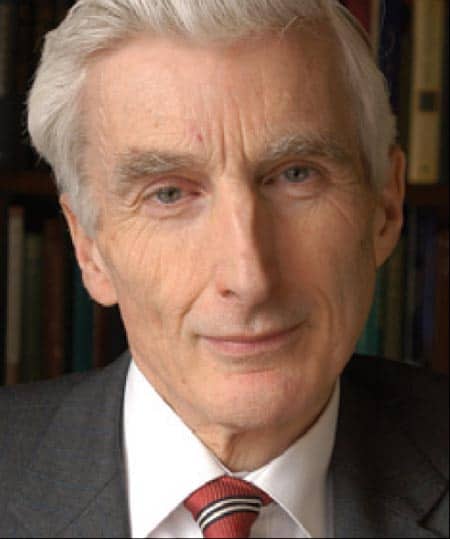
Martin Rees is at the University of Cambridge in the UK and holds the title of Astronomer Royal

A quarter of a century ago, plans for the Hubble Space Telescope and the Keck telescopes were well advanced, and both these instruments are still doing great science. If we look 25 years ahead, the projects that are now at the concept or planning stage will be the major instruments then. The timescale is very long — depressingly so. However, we can be optimistic that rapid advances in computer power will allow realistic modelling of how galaxies, stars and planets formed. Simulations in “virtual universes” will play an ever larger role in our subject.

I would highlight three main challenges for astronomy. The first concerns black holes. These are now recognized as the engines for active galactic nuclei. But we still do not know if they obey the “Kerr metric”, which describes the geometry of space–time around a massive rotating body, although I would be astonished if they did not, given the vindication of general relativity. I am hopeful for better probes (and simulations) of flow patterns and magnetic effects in the innermost regions of active galaxies, plus the direct detection of gravitational waves from coalescing black holes.

At the moment, direct observations of quasars and galaxies do not get us much beyond redshifts of six, corresponding to an era around a billion years after the Big Bang. But there are strong reasons to suspect that the “dark ages” ended and the first stars formed at a much higher redshift still — perhaps only 200 million years after the Big Bang. It is still uncertain, however, what the first stars are like, and how many of them were formed. Some of the answers must wait for the James Webb Space Telescope, which is set for launch in 2013, or the next generation of giant ground-based telescopes. If we are lucky, it may turn out that some of the earliest stars end their lives as ultra-luminous gamma-ray bursts, which could be detected with current instruments at redshifts well beyond 10.

If we cannot find discrete objects at these ultra-high redshifts, then the best hope of mapping how the primordial gas got heated and ionized may be to detect the emission of light with a wavelength of 21 cm from the neutral state of hydrogen. It is a very weak signal compared with other radio backgrounds, but because hydrogen emits a line not a continuum, one can do 3D mapping or “tomography” of this substance. Major instrument arrays, including the Square Kilometer Array (SKA), which will be built in either Australia or southern Africa, will advance this area of research. We also await theoretical progress to pin down the physics of the ultra-early universe in a similar way that the physics of the nucleosynthesis era was pinned down 40 years ago.

Much closer to home — within the local spiral arm of our own galaxy — lies an equally exciting challenge: to find and study planets orbiting nearby stars. In the coming decades, huge numbers of planets will surely be found. The Kepler spacecraft should give direct evidence of how many Earth-like planets there are. Perhaps some are “twins” of our Earths that harbour life far more interesting than even the optimists hope to find on Mars or Titan. Exobiology and the study of life’s origins on Earth will surge forward.

Tim de Zeeuw is director-general of the European Southern Observatory

As we celebrate the revolutionary impact of the invention of the telescope 400 years ago, we find ourselves poised to make another giant leap forward. Proposed by the European Southern Observatory (ESO), the E-ELT, with a 42 m diameter primary mirror consisting of nearly 1000 segments, would be the world’s biggest eye on the sky. By jumping beyond the current generation of 8 m telescopes, the E-ELT would, if built, be a leap as large as that made by Galileo when going from the naked eye to the first telescope.

Technological developments now make it possible to observe planets orbiting other stars, peer deeper than ever into the universe, use particles and gravitational waves to study celestial sources, and to carry out in situ exploration of objects in our solar system. This promises tremendous progress towards answering key astronomical questions such as the nature of dark matter and dark energy, the formation and evolution of galaxies from first light to the present day, and the direct observation of Earth-like planets. These are among the most fundamental questions in science and are of enormous interest to the general public.

Astronomers are already drawing up a whole range of next-generation facilities, including extremely large telescopes working at optical and infrared wavelengths, survey telescopes that would provide deep imaging of the sky every few nights, as well as experiments to detect particles and gravitational waves, and space missions devoted to characterizing extrasolar planets. Turning these proposed new facilities from a dream to reality will require substantial investments by national and international funding agencies, as well as, in some cases, private donors. The US has a long tradition of prioritizing such plans through the series of “decadal surveys” initiated in the 1960s, and more recently the European ASTRONET consortium has developed a long-term strategic plan for European astronomy that promotes the best use of existing and future facilities such as the Atacama Large Millimetre Array (ALMA), the E-ELT and later SKA.

Building the flagship astronomical facilities of the future will present substantial technological and organizational challenges. It will provide opportunities to showcase industry’s capabilities, but it also requires strong and effective management. The experience of the astronomical community in international co-operation has paved the way for global projects such as ALMA, which involves strong institutions from three continents with very different funding systems operating a single facility in a remote location in Chile. The endeavour is challenging, but success will bode well for future global facilities.

Notwithstanding the current economic climate, these new facilities will take so long to plan and build that we need to follow up our long-range plan for European astronomy and similar efforts elsewhere, including the ongoing US decadal survey. If we can make these marvellous facilities a reality, then we can take the next step in our understanding of the universe.

John Huchra is at the Harvard-Smithsonian Center for Astrophysics and is president of the American Astronomical Society

Astronomers have made some phenomenal discoveries over the last two decades, including detecting and imaging extrasolar planets, analysing extraterrestrial materials samples and realizing that the expansion of the universe is speeding up rather than slowing down. Yet there is still much we do not know or understand, and even, in the immortal words of former US Secretary of Defense Donald Rumsfeld, “unknown unknowns”. I think that the greatest challenges for astronomy are still the cosmological ones. What is dark energy? What is dark matter? And how do these really affect the formation and evolution of the universe and its contents?

We may find the answers, or at least vital clues, within days, weeks or months. Or it may take decades to directly detect and characterize the dark stuff that makes up 96% of the contents of the universe. We may also have the wrong cosmological model and have to start all over again when new evidence yet again transforms our world view. I have now lived through two such cosmological paradigm shifts — first when we were debating the Big Bang versus the steady-state model, and then when we had become thoroughly convinced it was completely filled with mostly cold dark matter — and I would not be surprised if I saw another.

Closer to home and perhaps closer to fruition are the challenges of finding and characterizing extrasolar Earth-like planets, detecting the gravitational waves predicted by Einstein’s general theory of relativity, and discovering the first stars formed after the Big Bang. These are all within the reach of astronomers in the next decade through the march of technology: large ground and space-based interferometers; the James Webb Space Telescope; and perhaps the LIGO and VIRGO gravitational-wave observatories.

We have also entered the era of time-domain astronomy, which allows us to look for ultrafast variable stars and other objects that until now have only been theorized about. X-ray and gamma-ray telescopes have been monitoring the sky for decades, but it is only recently that the sky has been surveyed repeatedly at optical wavelengths. Such “synoptic” surveys have been responsible for detecting gravitational microlenses, nearby supernovae, a horde of extrasolar planets, and a few of the killer rocks in space that could wipe out civilization if not detected and mitigated in time. The next decade promises to bring many additional surprises just from looking hard at the sky over and over again to watch for changes with time.

The final challenge for astronomers is not scientific but sociological. The age of the lone astronomer with his or her telescope or computer is being replaced by an era in which the remaining problems are so complex that they require teams of experts with different fortes using facilities that are so large and expensive that they require international co-operation on a grand scale. To paraphrase a colleague of mine — the astronomer Penny Sackett, who is now the chief scientist of Australia — we need to learn to succeed and not just to win. That is a hard challenge not only for astronomers but also for the whole human race.

Andrew Fabian is at the University of Cambridge in the UK and is president of the Royal Astronomical Society

The past decade has brought many exciting new discoveries that reveal much about our universe: from extrasolar planets to the dwarf planets of our own solar system; from the symbiosis of black holes and its host galaxy, to a cosmological driving force — dark energy — that inhabits the largest voids of space. But all new observations bring fresh challenges. For example, something as simple as the exact composition of the universe remains undetermined. We may have deduced the presence and relative importance of three major constituents — ordinary baryonic matter, dark matter and dark energy — but so far we only have a coherent understanding of the first of these.

What makes up dark matter and dark energy is still unknown. Dark matter can be detected only through its gravitational interaction, and dark energy is inferred from the accelerated expansion of space. There are plenty of speculative papers on the nature and origin of both, but little in the way of firm conclusions.

A major challenge for both theoretical and observational astronomy is to search for properties that can better characterize the behaviour of each dark component that will enable us to crack them open. Is all dark matter identical or does it come in different “flavours” like ordinary matter? How is the current era of accelerated expansion connected to the phase early in the life of the universe when it rapidly inflated from the microscopic to the astronomic in size? Can we find any fossil evidence for the first inflation phase, for example from the polarization of the cosmic microwave background? How much progress can we make in cosmology beyond the realm of the observational, without it becoming pure speculation?

Black holes — both the stellar-sized and the supermassive — are routinely monitored and modelled. Yet do we really know how they work? Is Kerr’s solution — based on general relativity — the correct description of spinning black holes? It seems clear that matter falling into black holes — the process of accretion — is responsible for their growth and provides many of the universe’s most energetic phenomena such as active galaxies, quasars and gamma-ray bursts. We probably have the basic “energetics” right but a lot of the details of how they work, such as how they make powerful relativistic outflows, remains unclear. We have discovered that a central massive black hole appears to control the final mass of its host galaxy, but how exactly does this mechanism work, given the very different scales on which the two operate? Much of the complexity seen within and between galaxies is due to gas processes and physics — the gastrophysics, if you like. Dissecting and simulating this in detail is, and will long remain, very challenging.

We now know of over 330 planets orbiting other stars in our galaxy, although nearly all of them are more than a hundred times more massive than the Earth and many are located much closer to their host sun. There is little doubt that finding objects of Earth mass, in habitable zones round other stars, is the next exciting goal. Both this and the current developments in the exploration of planets within our own solar system, such as Mars and Titan (Saturn’s largest moon), can inform the natural speculation about the occurrence and propensity of planets hosting extraterrestrial life. Is it common or rare? What spectral signatures could we search for in the atmosphere of the host planet? And what of multicellular life?

Astronomy presents many challenges beyond just those mentioned so far. There is no single experimental facility that can respond to all the new objects and processes that will continue to be discovered over the next decade. Thus the final challenge for astronomers will be to co-operate and secure the funding for the range of telescopes and instruments required.

Seok Jae Park is president of the Korea Astronomy and Space Science Institute

The greatest challenge for astronomy is international collaboration, because building big and expensive telescopes can no longer be accomplished by a single country alone. Such co-operation is particularly important for a country like South Korea, which is a relatively small player in astronomy, having invested very little in the field since the end of the Second World War. Indeed, until last year, the country had only a 1.8 m optical telescope and a 14 m radio telescope.

The Korea Astronomy and Space Science Institute (KASI) was set up in 1974 to not only analyse and understand the universe through observations but also to spread knowledge of astronomy nationwide. KASI has, for example, been working on the Korean VLBI Network (KVN) project (see Physics World January p9, print edition only), which consists of three 21 m radio telescopes that were just completed last year. While working on the project, it proved vital for Korean astronomers to co-operate with their colleagues in Japan as the KVN is similar to the four 21 m radio telescopes that make up the VLBI Exploration of Radio Astrometry (VERA) facility in Japan.

Collaboration is also crucial in optical astronomy. My institute has joined the Giant Magellan Telescope project, for which KASI has already managed to obtain the funding from the Korean government. The GMT is a next-generation 25 m extremely large telescope founded by six US and two Australian institutions. It is my hope that IYA2009 will enable astronomers from around the world to create a new tradition of co-operation in astronomy. I look forward to the many great achievements that this will bring.

Richard Ellis is at the California Institute of Technology and a former director of Caltech Optical Observatories

Astronomers face many challenges in the next decade including maintaining funds for young scientists and leading facilities during the economic downturn, inspiring activities in the developing world, and improving international cooperation even between well established communities. But, as far as science is concerned, understanding why the universe is accelerating is surely one of the most important puzzles. “Dark energy” — a new property of the vacuum invented to explain this result — may simply be an illusion. The equations used to derive cosmic expansion are based on Einstein’s laws of gravity and it is possible that these may have to be modified.

Regardless of the origin of dark energy, by making further investigations we stand to learn something physically fundamental about the universe. But because there is no agreed theory to test, it is hard to design the optimum experiment. More precise measures of distant supernovae, tracing the growth of dark matter clustering with time, and tracking features in the large-scale distribution of galaxies have been proposed as methods for exploring dark energy using ambitious telescopes dedicated to the task, such as ESA’s Euclid mission and the Joint Dark Energy Mission, co-sponsored by NASA and the US Department of Energy.

Because it is hard to be sure what these missions may find, some have questioned the logic of investing up to $1bn when there is no guaranteed outcome — or, as national funding agencies like to say, there is no clear “deliverable”. In my opinion, this is only a minor risk and one that we often have to accept when studying any worthwhile scientific frontier. With careful design, dark energy missions will generate unique ancillary data for studies of faint galaxies, and transient and moving objects of many kinds.

A further challenge is understanding how and when the very first galaxies emerged from the so-called “Dark Ages” — the period about 300,000 years after the Big Bang when the universe was cool enough for electrons and protons to bind together. Our largest ground-based telescopes have probed galaxies back to a time when the universe was only 5% of its present age, or 700 million years old, and have found that such systems are much smaller and less massive than the Milky Way. Yet most are forming young stars at a prodigious rate. This suggests that we are approaching the era when the first stellar systems formed from dark clouds of molecular hydrogen. Determining the demographics of this primordial population is important since this era was when present-day galaxies first assembled and completes our quest for a complete picture of galaxy formation and evolution.

How can we be sure when we have found a “first generation” stellar system? A clue would be to find stars containing no traces of the heavier elements produced by stellar nucleosynthesis, as only helium and a few other light elements were synthesized in the Big Bang. Characterizing the composition of an early galaxy will require securing its spectrum so that its constituent chemical elements can be identified. This will be a major challenge when one considers that the likely sources are fainter than those currently being imaged with the Hubble Space Telescope and 8–10 m ground-based telescopes. Depending on when this “cosmic dawn” occurred, and the distribution of luminosities and masses involved, we may see the first results from this exciting quest when the James Webb Space Telescope is launched in 2013, or when the next generation of 30 m class giant telescopes are completed a few years later.

Living life on ‘Mars’

It is 6 a.m. The sky is still dark outside. My doorbell rings. It is the taxi that will drive me to Santiago airport to catch the early plane to Antofagasta in northern Chile. After a flight up the spine of Chile lasting an hour and 40 minutes, the journey is not yet over. My destination is the Paranal Observatory in the Atacama Desert, which is still a two-hour bus ride away and literally in the middle of nowhere. The last hour of the drive crosses an endless, Mars-like landscape of brown-red hills scattered with massive rocks, detaching me from my usual world and dropping me into a somehow different dimension.

Operated by the European Southern Observatory (ESO), Paranal is among the biggest observatories in the world, with four 8 m telescopes. While I am working there, time seems to flow differently, and I soon forget which day of the week it is. As an astronomer, I work during the night, from sunset to sunrise. It is easy to work too hard, and I am away from my family and my usual life one or two weeks every month, amassing over 100 nights per year at the observatory.

It is simple to explain why astronomers build observatories in such remote places: the total absence of light pollution, lots of clear-sky nights, good “seeing” (image quality) and extremely low humidity, which is critical for observing in the near-infrared part of the spectrum. But why people end up working in such places is a little more complicated. Although astronomers are sometimes pictured as nerds with few social skills, keen to isolate themselves in the company of books and complicated formulas, in fact, places like Paranal exist because they are where astronomy can best be done. Most of the astronomers I meet are quite normal and most work in universities with a regular nineto- five routine, only travelling to remote places a handful of times each year to do their observations.

Although Paranal is an isolated place, it is also a little village where about 100 people live at any given time. Most of these “villagers” are not even astronomers, but engineers, technicians, administrators and people working on catering and services. They work (a lot!) during the day and relax during the evening in the gym, in the cinema room, at the pool table or in the sauna. It is a bizarre place that works hard to appear normal.

Beyond the ends of the Earth

When I applied for a fellowship at Paranal seven years ago, I was unaware of all these things. I just knew that Paranal existed, and I wanted to work there. Before that, I had earned a Master’s degree in astronomy at the University of Padova in Italy, where Galileo Galilei himself taught about 400 years ago. I then did a PhD in astrophysics at the University of Wyoming in the US, but even after that I had still not gained much experience actually doing observations. So, I decided to fill in this gap by applying for an ESO postdoc position at Paranal.

By the time I applied for a longer-term staff position in 2004, I was familiar with the place. I had become used to its dryness (my skin had not, though), and I had started liking and enjoying that Martian landscape so much that a hike across the desert is now a magical break from the working routine. I had even decided that I much preferred to observe at night and take care of an instrument than to teach (I actually said this at my job interview). So, here I am.

Within the constraint of needing to work 105 nights per year at Paranal in 7–14 night stretches, an individual’s schedule at ESO can be quite flexible, allowing us to participate in conferences, work at other observatories and get involved in collaborations. When I am not doing observations, I work on my scientific research at ESO’s offices in Vitacura, Santiago. I am interested in cataclysmic variable stars, which are interacting binary systems where a white dwarf (a dead star) accretes matter from a “cold sun”. Such systems display all kinds of variability phenomena, ranging from the small, rapid, random variations in brightness (“flickering”) that characterize the ongoing mass transfer to a sudden increase in luminosity (“outburst”). My time in Vitacura allows me to analyse my variability data and also go to seminars, journal clubs and coffee breaks where I can discuss results, progress or problems with other astronomers.

When I am at Paranal, however, I mostly forget about my research and focus on performing observations with one of the telescopes. Each telescope is equipped with three instruments. For example, one telescope hosts the near-infrared (NIR) instruments NaCo (a imager and spectrograph), SINFONI (an integral field unit spectrograph) and HAWK-I (a wide-field imager). NaCo and SINFONI are adaptive-optics-assisted instruments that can either use a real star or a laser-generated one to correct the wavefront. During a night of observing, we astronomers decide which of several programmes or projects we want to carry out and set up the relevant instrument to “stare” at the target object, recording almost every photon that hits the telescope. We then classify the results according to their quality with respect to certain requirements.

The technical side

Paranal is quite special in that most of the observations are done by staff astronomers, like me, working in “service mode”, which means that we perform observations for users (such as astronomers based at universities) without requiring them to do the work in person. This guarantees the best sky conditions to the work that needs them most; in a given night, we can execute several different programmes for different users, although we will not necessarily complete them in a single night. At smaller observatories, in contrast, the person who makes a proposal for telescope time must perform their own observations.

Occasionally during an observing night I feel like I am part of an assembly line. Sometimes the observations being carried out are interesting and/or challenging enough to get me excited. Other times, I just hope for long and boring observations that require little attention so that I can catch up on tasks like creating documentation for the instrument’s users or evaluating the technical feasibility of the proposed observations. Occasionally, a night shift is used to train newcomers, and this is both fun and a good test of expertise.

However, the most interesting nights are the technical ones, when my colleagues and I have to perform tests with the instrument that we are responsible for — either because it has experienced a major failure and needs to be fixed or recalibrated, or because it is a brand new instrument just arrived at the observatory and so needs to be properly characterized before offering it as an option to the user community. For example, we are currently commissioning a new instrument called X-shooter, which is a composite spectrograph that can deliver, within a single observation, a spectrum from the very blue to the near infrared (wavelengths from 300 to 2500 nm). An instrument with such a wide spectral coverage is bliss for all astronomers interested in the spectral-energy distribution and/or the redshift of targets like gamma-ray bursts, supernovae, close binary systems, white and brown dwarf stars, and many other sky objects.

Commissioning an instrument requires a dedicated team of 5–10 people at the observatory itself, not counting the many others who work on the instrument’s design or construction. This team takes care of aligning the instrument optics, defining the reference position of its various functions, digging into and debugging the software, testing it on the sky, and finally reducing and analysing the data to verify that the instrument is performing as expected. This can take every night of a full whole two-week shift, and typically two or three such shifts are needed to complete the commissioning.

Once my shift is over, I return to Santiago, usually arriving home at night after another half a day of travel. My sleep patterns are mixed up for the next few days, and I sometimes fall asleep at random times. I usually feel okay, but if I try to do some sport, for example, I discover that my body is not yet back to normal. At work, I might forget why I have given a file a particular name. It is at these times that I feel like my research is progressing two steps forward and one back, but this is probably part of the game. By taking it easy, I slowly get back to a regular life, and I am once again able to think about the science. Now, where was I with my paper about Nova Scorpii 2008?

Once a physicist: David Florence


Why did you study physics?

I did mathematical physics because it was just what I was best at. I enjoyed it at school, so I applied to do it at Nottingham University. I fell into it, to be quite honest. Once at university, I struggled at first, partly because I found it quite difficult to combine studying with competing and training in sport, which is pretty much full time as well. But by the end of my university career, I had learned to be organized, and to manage my time pretty effectively, so I enjoyed it a lot more.

What was your training schedule like?

I did not have a huge number of lectures while I was at university, maybe 10 or 15 hours’ worth a week, so the main problem was fitting in my training with the studying and some of the exams. I would be training about 12 times a week, for an hour each time — but it is not just an hour of training, because you also have to go down to the slalom courses beforehand to vet them, look at the white water and prepare for it, and then do video analysis afterwards. My schedule is fairly similar now that I am a full-time athlete, but it is obviously easier for me to go abroad to training camps.

How did you become interested in canoeing?

My uncle and father had done it when they were younger, and on one occasion my uncle brought some canoes to the beach on a family day out. I would have been about 14 then, which is pretty late to get into a sport — there cannot have been many other people at the Olympics who got started so late. I was really keen on it, though, and began training hard reasonably quickly.

Do you see any applications of physics in what you are doing now?

Not directly, but having an analytical mind can be a big help when you are training or racing. Being able to analyse a course carefully is essential, for example — you need to know exactly what you are going to do. So it is very helpful to have that kind of mindset that allows you to figure out for yourself how to get better, how to do things faster and how to learn better techniques.

What do you do when you are not training?

I tried to learn Chinese in the run-up to the Beijing games, at least to some standard, and I’m learning the guitar — I already play the bagpipes. I have not really kept up with physics, but I do still read the science section on the BBC website.

What do you plan to do next?

After the 2008 Olympics, I realized that if I retired, I did not have any idea what I wanted to do instead, so I thought I would use the next four years to figure that out. I applied to be an astronaut with the European Space Agency, figuring that with a degree in mathematical physics I might have some chance. I was not successful, but there was no harm in trying. Now, I am hoping to compete in the London 2012 Olympics, although you have to be selected, and that is a long way off. I am going to give the next four years my best shot, and now that I have an Olympic medal, I hope to get enough support from sponsors so that I can give it a really good effort in the London games.

• www.davidflorence.co.uk

The Galileo affair

In June 1609 Galileo Galilei heard about an optical instrument invented in Holland the year before, consisting of an arrangement of lenses that magnified images three to four times. Despite not having a prototype in his possession, he was soon able to duplicate the instrument, mostly by trial and error. He was also able to increase its magnifying power first to nine, then to 20, and, by the end of the year, to 30. Moreover, rather than merely exploiting the instrument for practical applications on Earth, he started using it to make systematic observations of the heavens to learn new truths about the universe.

Within three years Galileo had made several startling discoveries. He discovered that the Moon had a rough surface full of mountains and valleys. He saw that innumerable other stars existed in addition to those visible with the naked eye. He found that the Milky Way and the nebulae were dense collections of large numbers of individual stars. The planet Jupiter had four moons revolving around it at different distances and with different periods. The appearance of the planet Venus, in the course of its orbital revolution, changed regularly from a full disc, to half a disc, to crescent, and back to a half and a full disc, in a manner analogous to the phases of the Moon. And the surface of the Sun was dotted with dark spots that were generated and dissipated in a very irregular fashion and had highly irregular sizes and shapes, like the clouds above the Earth; while they lasted, these spots moved in such a way as to imply that the Sun rotated on its axis with a period of about one month.

Many of these discoveries were also made independently by others; for example, lunar mountains were also seen by Thomas Harriot in England, and sunspots by Christoph Scheiner in Germany. However, no-one understood their significance as well as Galileo. Methodologically, the telescope implied a revolution in astronomy, in so far as it was a new instrument for the gathering of new kinds of data, vastly transcending the previous reliance on naked-eye observation. Substantively, these discoveries provided a crucial, although not conclusive, confirmation of the Copernican hypothesis of the Earth’s motion. To understand the latter, some background is needed.

The Copernican revolution

In 1543 Copernicus had published a book elaborating a world system the key point of which was that the Earth rotates on its own axis daily and revolves around the Sun yearly. Copernicus’s accomplishment was to give a new argument supporting an old idea that had been almost universally rejected since the ancient Greeks. He demonstrated that the known facts about heavenly motions could be explained in quantitative detail if the universe is a heliocentric system where the Earth revolves around the Sun (the geokinetic hypothesis); and that this explanation was more coherent (and simpler and more elegant) than the geostatic account.

However, the Copernican revolution required much more than this argument. The geokinetic hypothesis had to be supported not only with new theoretical arguments, but also with new observational evidence. The telescope provided such novel evidence. For example, lunar mountains and sunspots showed that there were significant similarities between the Earth and the heavenly bodies. This refuted the traditional doctrine of the Earth–heaven dichotomy; and so it became possible for the Earth to be a planet, i.e. located in “heaven”. The satellites of Jupiter showed that it was physically possible for one body to revolve around another, while the latter revolved around a third; and hence it became possible for the Earth to revolve around the Sun while the Moon revolved around the Earth. And the phases of Venus proved the heliocentricity of its orbit, thus confirming this particular element of the Copernican system.

Moreover, the Earth’s motion had to be not only constructively supported with new arguments and evidence, but it also had to be critically defended from a host of powerful old and new objections. These objections were based on astronomical observation, Aristotelian physics, scriptural passages and traditional epistemology. For example, according to Aristotelian physics, the natural state of bodies was rest and a constant force was needed to keep a body in motion; thus, supposedly, bodies on a rotating Earth could not fall vertically, as they are seen to do. And according to the scriptural passage in Joshua 10:12–13, God miraculously stopped the diurnal motion of the Sun to prolong daylight, so that Joshua could lead the Israelites to victory before nightfall. Galileo answered the astronomical objections by showing that the observational consequences implied by Copernicanism were indeed visible with the telescope, although still invisible with the naked eye. He answered the physical objections by articulating a new physics centred on the principles of conservation and composition of motion. And he answered the biblical objections by arguing that Scripture is not a scientific authority, and so scriptural passages should not be used to invalidate astronomical claims that are proved or provable.

Finally, the defence of heliocentrism required not only the destructive refutation of these objections, but also the appreciative understanding of their strength. Galileo was keen on this, and so in his writings we find the anti-Copernican arguments stated more clearly and incisively than in the works of advocates of geocentrism.

However, Galileo also realized that his case in favour of Copernicanism was not absolutely conclusive or decisive. Some counter-evidence remained, since, for example, his telescope failed to reveal an annual parallax of the fixed stars.

In short, Galileo’s key contribution to the Copernican revolution was to elaborate a successful (although not definitive) defence of Copernicanism that stressed argumentation and observation judiciously guided by the ideals of critical-mindedness, open-mindedness and fair-mindedness.

Galileo’s trial

As is well known, however, Galileo’s efforts were hindered by the Catholic Church. In fact, the trial of Galileo can be interpreted as a series of ecclesiastic attempts to stop him from defending Copernicus. In 1616 the Church’s department of book censorship decreed that the geokinetic doctrine was contrary to Scripture, and this decree amounted to a general prohibition on defending Copernicanism from scriptural objections. Furthermore, Cardinal Robert Bellarmine warned Galileo to cease defending the Earth’s motion — a warning that amounted to a personal prohibition on defending Copernicus from an astronomical, scientific and philosophical point of view. In 1633, after a formal trial, the Inquisition condemned Galileo as a suspected heretic for defending the geokinetic hypothesis and denying the astronomical authority of Scripture. He had done these things implicitly, indirectly and probably in his Dialogue on the Two Chief World Systems, Ptolemaic and Copernican (1632), which was a critical discussion, examining the arguments on both sides, showing that the geokinetic arguments were stronger than the geostatic ones, implying that Copernicanism was probably true, and thus defending it in that sense.

The condemnation of Galileo in turn generated a more protracted, complex and polarized controversy that is still ongoing. However, I believe these complexities can be simplified, without oversimplification.

At first, various questions were raised about the physical reality of the Earth’s motion; but gradually, historians of science established incontrovertibly that Galileo was right on this issue. As this realization emerged, questions began to be raised about whether his supporting reasons, arguments and evidence had been correct; that is, whether he had been right for the wrong reasons. This is an instructive issue, but Galileo’s reasoning can be defended from this criticism. For some time, he was also criticized for his hermeneutical principle that Scripture was not a scientific authority; but history vindicated Galileo in this regard too, at least from the viewpoint of the official position of the modern Catholic Church, which was promulgated in 1893 by Pope Leo XIII in the encyclical Providentissimus Deus. However, before this theological vindication, the myth spread that Galileo had been condemned for being a bad theologian, namely for preaching and practising the use of Scripture to support astronomical claims (i.e. the opposite of what he actually did); it took the whole 19th century before this myth was dispelled. In any case, on the hermeneutical issue too, it is important to check the correctness of his argument to justify that Scripture is not a scientific authority; although this Galilean reasoning has been the target of many objections, I believe it can be defended from them.

As it became increasingly clear that Galileo could not be validly convicted of being a bad scientist, a bad theologian or a bad logician, he started being blamed for other reasons. Some authors began to stress the legal situation, charging that he was guilty of disobeying the Church’s 1616 admonition regarding Copernicanism. However, if this admonition is interpreted as a prohibition on mere discussion, the existence of such a special injunction is undermined by the record of the trial proceedings, first published in 1867–1878. These records include only one document stating that Galileo was forbidden to even discuss the topic, but this document is highly irregular in several respects, whereas there are several more reliable relevant documents that say nothing about such a strict prohibition, although they should have mentioned it if it had occurred. On the other hand, if the admonition is taken as a prohibition on defending Copernicanism, nobody denies its existence, but the issue reduces to whether such a prohibition was legitimate, and if it was, whether Galileo’s defence was scientifically and logically fair and valid.

Finally, there is the issue of whether Galileo should be credited or blamed for helping us understand that science and religion are in conflict or that they are in harmony, as the case may be. The resolution of this issue requires that we admit three crucial things. First, the original affair featured an historical conflict between those who affirmed and those who denied that Copernicanism contradicted Scripture; and the irony is that it was Galileo who denied the conflict and the Church officials who advocated it. Second, the original affair epitomized more the conflict between cultural conservation and innovation than the conflict between science and religion; this is the case because there were many clergymen who sided with Galileo and many scientists who sided with the Church, which means that there was an internal split within both the Church and science. Third, in the subsequent four centuries the original affair was usually perceived (rightly or wrongly) as epitomizing the conflict between science and religion; thus, the most essential feature of the subsequent controversy is indeed the science versus religion conflict.

The two cultures

The controversy shows no signs of abating to this date. This is obvious not only from the recent rehabilitation efforts by the Catholic Church, but also from the recent anti-Galilean critiques by left-leaning social critics.

For example, in 1942, the tricentennial of Galileo’s death, there was the first partial and informal rehabilitation. In the years that followed, this was done by several clergymen who held the top positions at the Pontifical Academy of Sciences, the Catholic University of Milan, the Pontifical Lateran University in Rome, and the Vatican Radio. They published accounts of Galileo as a Catholic hero who upheld the harmony between science and religion, who had the courage to advocate the truth in astronomy even against the Catholic authorities of his time, and who had the religious piety to retract his views outwardly when the 1633 trial proceedings made his obedience necessary.

In 1979 Pope John Paul II began a further informal rehabilitation of Galileo that was not concluded until 1992. In two speeches to the Pontifical Academy of Sciences, and in other statements and actions, the pope admitted that Galileo’s trial was not merely an error but also an injustice. The pope also declared that Galileo was theologically right about scriptural interpretation, as against his ecclesiastical opponents; that even pastorally speaking, his desire to disseminate novelties was as reasonable as his opponents’ inclination to resist them; and that he provides an instructive example of the harmony between science and religion.

At about the same time that Galileo was being rehabilitated by various Catholic officials and institutions, he became the target of unprecedented criticism on the part of various representatives of secular culture. It was an unexpected reversal of roles, with his erstwhile enemies turning into friends and his former friends becoming enemies. These critics elaborated what might be called social and cultural criticism of Galileo; that is, they tried to blame Galileo by holding him personally or emblematically responsible for such things as the abuses of the industrial revolution, the social irresponsibility of scientists, the atomic bomb, and the rift between the two cultures. They were mostly leftwing writers. Chief among them were the German playwright Bertolt Brecht, whose play Galileo, written in 1938, became a classic of 20th-century theatre; Arthur Koestler, who wrote the 1958 bestselling book The Sleepwalkers: A History of Man’s Changing Vision of the Universe; and Paul Feyerabend, the Austrian-born philosopher, who advanced his version of social criticism in a book entitled Against Method, first published in 1975.

These developments have not been properly assimilated yet. For example, the Catholic “rehabilitations” tend to be either unfairly criticized (even by Catholics) or uncritically accepted (even by non-Catholics). And the left-leaning social critiques tend to be summarily dismissed by practising scientists, whose professional identity is thereby threatened, or dogmatically advocated by self-styled progressives, who seem not to have learned much from Galileo and to want to turn the clock back to pre-Galilean days. I believe this controversy is likely to continue for the foreseeable future.

Nevertheless, I believe I have devised a framework that paves the way for coming to terms with the controversy and eventually resolving it. In my approach, one interprets the controversy in terms of arguments for and against the rightness of Galileo’s condemnation; one displays towards these arguments the same attitude that Galileo displayed towards the arguments for and against the Earth’s motion; and the key elements of this Galilean attitude (labelled critical-mindedness, open-mindedness and fair-mindedness) are to know and understand the arguments against one’s own view and appreciate their strength before refuting them. In short, my overarching thesis is that today, in the context of the Galileo affair and the controversies over science versus religion and over institutional authority versus individual freedom, the proper defence of Galileo should have the reasoned, critical, open-minded and fair-minded character that was also displayed by his own defence of Copernicus.

These are some of the cultural repercussions and lessons of the telescopic discoveries that Galileo began making in 1609. And such are, in part, the challenges and opportunities of the quatercentenary of their occurrence.

Up close and personal

In 1609, when he peered expectantly through his handmade telescope at the mountains of the Moon and the four large satellites of Jupiter, Galileo Galilei could have had no idea that nearly four centuries later these astronomical bodies would be orbited by “artificial satellites” hand-built by like-minded inquisitors of the solar system. That one of these spacecraft would be named after him would probably have been dismissed as idle fantasy. However, the spacecraft known as Galileo, launched in 1989 and de-orbited into Jupiter’s turbulent atmosphere in 2003, is just one of many interplanetary spacecraft dispatched to explore the solar system since the beginning of the space age in 1957.

Although he was spared the levels of particulate and light pollution we suffer today, Galileo must have noticed that the performance of his telescopes was limited by the atmosphere. Heat rising from buildings or the ground itself would have caused a familiar shimmering of the Moon’s image, while the longer atmospheric pathlength of light from stars observed near the horizon would have made them twinkle, just as it does today.

From the late 1940s, when sounding rockets began to be used for research on the upper atmosphere, it was clear to scientists that the Earth’s atmosphere absorbs extraterrestrial radiation at some wavelengths, and that the only way to conduct a complete investigation of the universe is to place instruments beyond it. The concept of the space telescope had already been discussed as early as 1929 by German rocket pioneer Hermann Oberth in his book Wege zur Raumschiffahrt (“Paths to Space Travel”), but it is a paper written in 1946 by the US astronomer Lyman Spitzer that is credited with introducing the advantages of a space-based telescope to the research community. The paper, entitled “Report to Project RAND: Astronomical Advantages of an Extra-Terrestrial Observatory”, pointed out that not only could a space-based telescope detect the infrared and ultraviolet wavelengths absorbed by the atmosphere, but also that its angular resolution would be limited only by diffraction (instead of atmosphere turbulence).

Once the technology had been developed to build and launch satellites, the notion of what is now known as “space astronomy” became a reality. Spitzer’s vision was rewarded by seeing NASA’s Orbiting Solar Observatory (OSO-1), the first astronomical observatory in space, launched in March 1962. The OSO series led to the Orbiting Astronomical Observatory (OAO) in the late 1960s – a telescope with which Spitzer was particularly associated – and eventually to the Hubble Space Telescope in 1990.

Being there

Orbiting observatories have proved crucial to the development of astronomy, astrophysics and cosmology because they provide data on distant stars and galaxies that ground-based observers cannot obtain. But the remote-sensing techniques of space astronomy have important limitations when it comes to the planets and the minor astronomical bodies. Even the Hubble Space Telescope can produce only low-resolution images of the surface of Mars or the cloud tops of Jupiter.

It was clear from the early days of the space age that the best way to conduct planetary astronomy was to transport the observing instruments to the vicinity of planets and satellites. In the 1950s, during the Cold War, politics rather than science was the driving force. After the first heat of the space race had been won by the Soviet Union with its Sputniks, a second heat began: the race to land a spacecraft on the surface of our nearest planetary body, the Moon (see “Sputnik’s legacy”).

Thus the US launched its first Moon probe, Pioneer 1, on 11 October 1958 and the USSR launched Luna 1 on 2 January 1959. The former got little more than quarter of the way to the Moon before succumbing to the Earth’s gravitational pull, while the latter missed its target by some 6000 km. But the fact that both nations were planning “Moon shots” less than a year after Sputnik 1 indicates the depth of their respective desires to be first in the various heats of the space race.

It is interesting to note that spacecraft were sent to both the Moon and Venus even before OSO 1 reached Earth orbit in 1962. The pragmatism of remote sensing was apparently outweighed by the desire to “get there” physically, but mainly, as with most aspects of space exploration at the time, by the political need to score points against the opposition.

From an engineering point of view, however, there are other more fundamental challenges, such as the need to provide accurate guidance and control, tracking and telemetry, thermal and radiation protection, and to launch the object in the first place. Indeed, the early history of space exploration is littered with examples of failed launches, fried electronics and “heat stroke”. For example, NASA’s unmanned lunar programme Ranger began badly when the first two spacecraft fell victim to upper-stage rocket failures. Then, Rangers 3 and 4, having been sterilized by heating to 125 °C for 24 hours (ostensibly to avoid possible contamination of the lunar surface), failed to complete their missions after their central computers and sequencers broke down. Ranger 3 missed its target by 37,000 km and Ranger 4 acquired the dubious honour of being the first spacecraft to crash on the far side of the Moon.

Now that planetary exploration is somewhat more routine, it tends to be pursued in phases – using fly-by, orbital and landing missions – that, by and large, represent increasing accuracy in guidance and control. For the exploration of Jupiter, for example, we saw the Pioneer and Voyager fly-bys of the 1970s followed by the Galileo orbiter of the 1990s; for Saturn, the Voyager fly-bys of the early 1980s and the Cassini orbiter of the present decade. There have so far been no “landing missions” in the Jupiter system, unless one counts the atmospheric entry probe from the Galileo mission that, in 1995, became the first spacecraft to enter Jupiter’s atmosphere, and then Galileo’s later dive into the Jovian cloudscape at the end of its mission. Furthermore, the Huygens probe, developed by the European Space Agency (ESA), made a spectacular landing on Saturn’s largest moon Titan in January 2005 and transmitted a wealth of data that could never have been gathered remotely (including details of atmospheric structure and composition, wind speed, surface chemistry and images of icy boulders) (see “Tuning it to Titan”).

Close-up observation has a number of technical advantages. “Spatial resolution is improved enormously and proximity to the planet also improves the signal-to-noise ratio for spectral measurements, enabling higher spectral resolution,” says Wendell Mendell, head of NASA’s Office for Lunar and Planetary Exploration. A spacecraft in orbit around a planet can observe temporal changes, such as atmospheric storms on the gas giants and volcanic eruptions on their satellites (such as those observed on Io by Voyager in 1979 and Galileo in 1996), mainly because it can conduct long-term global surveys, as opposed to taking snapshots. Also, adds Mendell, “phenomena such as X-ray or gamma-ray emission can often be detected only when close to the object”.

Marcello Coradini, ESA’s co-ordinator of solar system missions, goes as far as to quantify the benefits of space probes. “Between 90% to 95% of what we understand of the planets and their satellites”, he says, “is due to in situ space missions that have allowed us to reveal, both from orbit and on the surface, details, features and geological, geophysical and geochemical processes otherwise impossible to detect and study.”

The lure of Mars

Among the many discoveries made possible by spacecraft, Ian Crawford, a senior lecturer in planetary science at Birkbeck College in London, cites the volcanoes of Io, the methane lakes of Titan and “the probable subsurface ocean of Europa”. But it is one of our nearer planetary neighbours, Mars, that has perhaps excited space scientists the most in recent years. The history of its telescopic exploration is well known – most famously because of Percival Lowell’s mistaken identification of canals on its surface. The first successful attempt at a Mars fly-by mission was NASA’s Mariner 4, which made a close approach of some 9000 km in July 1965. It took just 22 photographs, covering only 1% of the planet’s surface, and their content was immediately disappointing to earthbound canal-spotters and anyone hoping for complex life forms, such as vegetation. Mars was apparently a dead planet.

Mariner 6 and Mariner 7 flew past Mars in July and August 1969, respectively, somewhat closer, at about 3500 km, and taking 200 images each, but the results were much the same. The Martian surface – apart from the polar caps that were visible from the Earth anyway – looked very much like the barren, cratered plains of the Moon. Considering that two men from Earth had landed on one of those plains in the same month that Mariner 6 made its fly-by, it is hardly surprising that its achievements failed to take the world by storm.

Mars did not become truly interesting to space scientists until Mariner 9 entered its orbit in November 1971. It mapped the whole surface of the planet in over 7000 photographs and gathered data on atmospheric composition, density and temperature, which effectively prepared the way for the first landing mission – Viking 1 – in July 1976. As Crawford points out, Mariner 9 revealed the volcanoes, canyons and river valleys of Mars, providing tantalizing “evidence of past habitable conditions on that planet”. Unfortunately, the two Viking missions failed to provide evidence of life on Mars – a failure that contributed to a 20-year hiatus in NASA’s Mars exploration programme that lasted until the mid-1990s. But as Carl Sagan once said, “absence of evidence is not evidence of absence”.

Down among the rocks

Put simply, if any form of life, however simple, can be found on another planet, then the chances that more intelligent life exists elsewhere in the universe are significantly improved. It is thought extremely unlikely that life would have developed independently on two planets in a given solar system and nowhere else.

It is this postulate that has driven most planetary-exploration programmes in recent times, not least the “follow the water” theme initiated by NASA in the late 1990s, following data from the Clementine spacecraft that indicated the presence of ice in a crater near the Moon’s south pole. As for Mars, it was clear from some of the Mariner 9 images that water, or at least some form of liquid, had shaped many of its geomorphological features. It was also clear, however, that these features were a relic of the planet’s past, because liquid water could not exist at the low atmospheric pressures detected on the planet.

Mars’ polar caps were formerly thought to consist mainly of frozen carbon dioxide, but observations from orbiting spacecraft, such as NASA’s Mars Global Surveyor and ESA’s Mars Express, in recent years have shown that the north cap is predominantly water ice and that the south cap also contains water. Since then, however, the emphasis has shifted to finding evidence of water beyond the polar caps. And the only way to do this conclusively is to get down among the rocks, preferably using a rover that can move easily on rocky terrain.

NASA’s first Mars rover was the tiny, 10 kg Sojourner, which was a passenger on the Mars Pathfinder lander (later named Carl Sagan Memorial Station) that was launched in December 1996. It touched down in the Chryse Planitia region of Mars on 4 July 1997. The mission was historic in being the first to deposit a rover on the surface of another planet, but also because it marked the first Mars landing since 1976.

Sojourner operated for a little less than three months, returning some 550 images and analysing rocks and soil in the vicinity of the lander. Among the many scientific highlights of the mission was what NASA called “the possible identification of…conglomerates that formed in running water, during a warmer past in which liquid water was stable”. Indisputable proof of water was, however, elusive.

It was the Mars Exploration Rovers (MERs), Spirit and Opportunity, that really proved the efficacy of the “up close and personal” approach to planetary exploration. Launched in 2003, the rovers survived their airbag-assisted landings in January 2004 and easily completed their primary three-month missions the following April. The fact that they were both still operational as of early 2009 is a testament to the engineering design of the two craft.

John Callas, MER project manager at NASA’s Jet Propulsion Laboratory (JPL), describes the rovers as “our robotic proxies on the surface of Mars”. “As field geologists,” he says, “the two rovers have found clues about the ancient environment, [discovering] extensive evidence of sustained, liquid surface water during the planet’s early history.”

Spirit’s discovery of silica-rich soil in the Gusev crater was described by Albert Yen, a geochemist at JPL, as “some of the best evidence Spirit has found for water”. The reasoning was that acid vapours produced by volcanic activity in the presence of water, or water in a hot-spring environment, could have produced the silica.

However, what NASA scientists felt sufficiently confident to describe as “proof” of the existence of water came only with the Phoenix Mars Lander, which dug a trench in June 2008 to uncover “crumbs” of a bright material thought to be water ice. Had they been composed of carbon dioxide or salt, they would not have vaporized, but four days later the crumbs had disappeared, proving that they contained water. Phoenix principal investigator Peter Smith, of the University of Arizona’s Lunar and Planetary Laboratory, said at the time that “with great pride and a lot of joy” they had “found proof that this hard material really is water ice and not some other substance”.

ESA’s Marcello Coradini sums up the importance of planetary spacecraft. “Without them,” he says, “we would not have discovered ice beneath the surface of Mars, we would not be able to discriminate between carbon dioxide and water layering in the polar caps, and we would never have detected methane in the lower layers of the Martian atmosphere.” These and a wealth of other discoveries can only reinvigorate the search for life on Mars.

But planetary science is still in its infancy and, in common with other disciplines, most missions produce more questions than answers. John Callas repeats a familiar litany: “Did Mars support life? Is there life there today? Can we find evidence of extant or extinct life? And, if Mars was once Earth-like, why did it change?” Future missions will have to answer these questions.

New paradigm

Analysing the history of solar-system exploration in terms of the three phases – fly-by, orbit and landing – shows that all of the planets have been subject to fly-by missions (except “former planet” Pluto, which should receive a visit from NASA’s New Horizons probe in 2015). Venus, Mars, Jupiter and Saturn have been targeted by orbiters, while Mercury is due to join the list in 2011 when NASA’s Messenger spacecraft arrives. So far, only the surface of Venus and Mars (and of course Saturn’s moon Titan) have been explored using landers, a fact that indicates the relative difficulty and expense of this method of research.

That said, the challenge of placing a spacecraft from Earth on the surface of a celestial body – including moons, asteroids and comets – has far-reaching pay-offs in terms of understanding our solar neighbourhood and the Earth itself. As Coradini puts it, “On-surface science will allow us to reveal fine geochemical and mineralogical differences that are at the basis of our understanding of the formation and evolution of the solar system.”

The difference between the planetary astronomy of the past and today’s in situ missions is akin to the difference between aerial archaeology and actually “digging the dirt”. In effect, the development of space technology has allowed astronomy to develop from a science of entirely remote observation to one of immersive experimentation, from sampling Titan’s atmosphere to digging for ice on Mars. The next level of understanding will come from samples returned to the Earth, where sophisticated analyses can be performed in laboratory settings that are impossible to implement on a spacecraft. Returned samples also remain available for the future, when technological advances in scientific instrumentation may allow observations that are not possible at the time of the mission.

Crawford goes even further with his view that the whole paradigm of planetary science changed once space technology made it possible to conduct in situ investigations of other planets. “In a real sense,” he says, “space exploration has removed the planets from ‘astronomy’ by making it possible to apply the expertise and techniques of geology and geophysics (and perhaps even biology) to other planets which formerly could only be applied to the Earth.” This “explosion of new knowledge”, adds Crawford, is epitomized by comparing a modern planetary-science textbook with one written prior to the space age, when the other planets were “little more than indistinct dancing images in telescopes”.

Astronomy has come a long way in the 400 years since Galileo Galilei, and most of the progress has been made in the 50-odd years of the space age. But the indisputable advantages of proximity observation with spacecraft provide a challenge for scientific and budgetary prioritization alike. No nation can afford even a fraction of the missions being proposed by the space-science community, which leaves many disappointed. While the thrill of planetary-science missions will never subside, the discovery of more than 330 extrasolar planets (so far!) may, unintentionally, add to this budgetary dilemma. “Ultimately,” predicts Crawford, “we are going to need space probes to explore these extrasolar planetary systems as well, which will be a real challenge for spacecraft designers.” One wonders what Galileo would have made of that.

Space milestones

2 January 1959
The Soviet Union launches its first lunar spacecraft, Luna 1 (also called Lunik 1 or Mechta, Russian for “dream”). It passes within 6000 km of the Moon two days after launch and becomes the first artificial object to escape Earth’s gravitational field.

11 March 1960
Pioneer 5 becomes the first true “deep space” probe by returning data when 36.2 million kilometres from Earth. It confirms the existence of the interplanetary magnetic field and provides warning of solar storms that could cause electromagnetic interference on Earth.

2 June 1966
Surveyor 1 is the first spacecraft to execute a controlled landing on a celestial body, the Moon. It transmits more than 11,000 photographs of the lunar surface.

20 July 1969
Apollo 11’s lunar module Eagle is the first manned spacecraft to land on the Moon (touchdown: 8.17 p.m. GMT). The first lunar extra-vehicular activity is conducted by Neil Armstrong (“boot down”: 2.56 a.m. GMT on 21 July 1969).

17 November 1970
Luna 17 delivers the first tele-operated rover to the Moon, Lunokhod 1. It and Lunokhod 2, launched three years later, are the only planetary rovers until Sojourner lands on Mars in 1997.

15 December 1970
Venera 7 makes the first radio transmission from the surface of another planet, Venus.

3 December 1973
The first spacecraft to have traversed the asteroid belt, Pioneer 10 flies past Jupiter. It becomes the first spacecraft to escape the solar system (by its former definition) when it passes the orbit of Pluto on 13 June 1983.

20 July 1976
Viking 1 is the first spacecraft to soft-land on Mars and is the first to conduct in situ analyses of the Martian environment.

13 March 1986
The European Space Agency’s Giotto Comet Halley interceptor makes the first close encounter of a comet, approaching to within 600 km.

7 December 1995
A probe from the first Jupiter orbiter Galileo enters the Jovian atmosphere. The craft itself is de-orbited in 2003 as a protective measure.

4 July 1997
Mars Pathfinder delivers the first tele-operated rover, Sojourner, to Mars. It remains operational until late September 1997.

4 January 2005
Launched in October 1997, the Cassini Saturn orbiter drops its Huygens Titan entry probe, which lands on Saturn’s largest moon. Cassini continues its tour of the Saturn system.

19 January 2006
NASA’s New Horizons probe is the first spacecraft launched towards the Pluto/Charon system, which it is expected to reach in July 2015 before continuing on to the Kuiper belt.


Web life: Cosmic Diary

What is it?

Cosmic Diary brings together a smorgasbord of blogging astronomers from around the world, with more than 50 contributors commenting on new discoveries and long-standing questions in astronomy — as well as offering insights into their ordinary working lives and outside interests. The site is sponsored by the International Astronomical Union and UNESCO, and it is one of 11 “cornerstone projects” of the International Year of Astronomy 2009 (IYA2009).

Who writes the blogs?

Contributing authors range from Aude Alapini, a Belgian/Beninese astrophysics PhD student at the University of Exeter in the UK, to Brother Guy Consolmagno, curator of meteorites at the Vatican City Observatory. They are a truly international bunch, with over 30 countries and five continents represented, and most are in the early or middle stages of their careers, with a median age of just under 40. Almost half are women, a statistic that reflects a key goal of IYA2009, which is to support and promote women in astronomy. There are a few familiar names, including Alan Hale, co-discoverer of the comet Hale–Bopp (and now head of the Earthrise Institute, which promotes the use of space and astronomy as a bridge between cultures). But most are relative unknowns outside their field.

What topics do the blogs cover?

Some bloggers have chosen to focus on their own research and outreach work, while others offer an inside look at the “glamorous” life of an itinerant observer as they travel between their home institutions, conferences and telescope sites. Several writers have used Cosmic Diary to post their favourite photos of stars and galaxies, and many contain posts on news stories, astronomy-related or otherwise, including the inauguration of US President Barack Obama. A few bloggers from the developing world — such as Rogel Sese of the Philippines — have written about the challenges of doing astronomy in their home countries.

Who is it aimed at?

The project’s guidelines call for writers to use “easy-to-understand language to translate the nuts and bolts of their scientific research into a popular-science article”. Hence, the biggest beneficiaries of this mega-blog are likely to be non-astronomers working both within science and outside it. However, if you are looking for more technical details, do not give up — over the course of the year, each blogger will also write a “feature” article explaining their research in greater depth. Given the blog’s international flavour, it is worth noting that all entries are written in English, although several authors have elected to translate entries into their native languages as well.

How often is the blog updated?

A fair number of those involved in Cosmic Diary are new to blogging, and several have taken to it with the zeal of converts, posting a dozen or more entries in January alone. At the other end of the scale, a few blogs still contained no entries over a month into IYA2009 — although one of the latecomers, Serbian astrophysicist Tijana Prodanovic, made up for lost time with a humorous post about how holidays in her country follow the older Julian calendar, and hence IYA2009 did not really begin until 14 January.

Any advice on navigating through all these blogs?

Excerpts from the five most recent posts occupy the top half of the site’s main page, so it is easy to see at a glance who has updated their blog on any given day. Meanwhile, a sidebar contains links to blogs by authors who work for big organizations like the European Southern Observatory and the Japanese Aerospace Exploration Agency. This might be useful for readers who want to keep track of particular projects via the blog. The division between these blogs and the remaining “unaffiliated” ones can make flipping between entries confusing, however.

• You can also read the latest posts from Cosmic Diary at physicsworld.com

Hail the academic intellectuals!

Woody_Allen_(2006).jpeg
Rooting theoretical physics in pop culture

By James Dacey

There are three breeds of academic who can inspire popular audiences. There are the academic luminaries whose brilliant insights have undoubtedly shaped their discipline – their mere existence is enough to inspire. There are those at or near the top of their chosen fields who take the time to “dumb down” their work for popular audiences – let’s call these the public engagers. Then there is a third kind – perhaps a dying breed in the 21st century – the academic intellectuals, who seem to exist on a different plane, up above the boundaries of traditional subject boundaries.

Having laid the foundations of their own fields, these academic intellectuals have a consciousness that enables them to look around and see how their work slots in with other pillars of academia. What’s more, they’ve also a strong grasp of how academia can appear to an “outsider”. Add to this, a great sense of humour and you may find an academic who has an audience hanging on every word.

Last night in his public lecture “Darwin and the Cosmic Landscape”, Leonard Susskind proved that he is firmly an academic of this third kind. As my colleague Matin Durrani described in the previous blog post, he was speaking as part of the University of Bristol’s centenary celebrations and the city’s Festival of Ideas. The central tenet of Susskind’s talk was that string theorists should look to Darwin because he “set the standard for what an explanation should be like”.

With his long white beard, “Noo Yawk” accent and hyper awareness of the “big questions” in physics, I saw Susskind as the perfect fusion of Charles Darwin and Woody Allen.

So often – and I have been guilty of this myself – physicists dismiss biology as “imprecise” or “stamp collecting”, but Susskind managed to illuminate the metascience of physics and biology to show they are both part of the same noble inquiry.

And hearing Susskind got me thinking about a frustrating fact of modern physics. That is: as physics becomes increasingly split into sub disciplines, the questions become increasingly broad, like “how can we unify gravity and quantum mechanics?” or “does life exist on other planets?” Given this, how can we possibly expect physicists to get a handle on the bigger pictures, let alone on “contemporary physics”?

So if we accept the difficulty facing physicists then intellectual academics like Susskind should be hailed and celebrated. Last night Susskind managed to firmly ground string theory and multi-verses in popular culture, illustrating his points with references to Bill Clinton’s adultery and Rube Goldberg the American cartoonist. In fact, it all reminded me of a particular favourite Woody Allen quote:

“What if everything is an illusion and nothing exists? In that case, I definitely overpaid for my carpet.”

Copyright © 2026 by IOP Publishing Ltd and individual contributors