Casimir effect goes negative

Since the 1950s physicists have been able to show that quantum fluctuations in a vacuum will cause two surfaces to attract one another, a phenomenon known as the Casimir effect. Now researchers in the US have demonstrated the opposite — that under certain conditions surfaces can also repel each other. Given the importance of the Casimir effect over separations of tens to hundreds of nanometres, the result could lead to new types of nanotechnology device with extremely low levels of friction.

The vacuum force was first predicted by Dutch physicist Hendrik Casimir in 1948. Casimir considered what would happen when two uncharged, perfectly conducting metal plates were placed opposite one another in a vacuum. According to quantum mechanics, the energy of an electromagnetic field in a vacuum is not zero but continuously fluctuates around a certain mean value (equal to half a photon at a temperature of absolute zero). Resonance means that only certain wavelengths will exist between two plates separated by a particular distance. What Casimir worked out was that the radiation pressure of the field outside the plates will tend to be slightly greater than that between the plates and therefore the plates will be attracted to one another.

Casimir’s prediction was generalized for real materials by Evgeny Lifshitz in 1956, whose work was further generalized to show that the vacuum can in fact be replaced by a material. Moreover, it was shown that if the plates and the material between them, generally a liquid, have particular dielectric permitivities the force between the plates will be negative.

It’s all in the permittivity

Dielectric permittivity reflects how easily the atoms and molecules in a material can be polarized. A fluctuating electromagnetic field will induce fluctuating electric dipoles whose strength is proportional to this polarizability, so the force between two materials will be proportional to the product of their permitivities. By making the permittivity of the liquid lower than that of one of the plates (the first plate) but higher than that of the other, it will be attracted to the first plate more than the two plates will be attracted to each other. This will allow it to come between the two plates and therefore in effect make them repel one another.

Now, Harvard University’s Federico Capasso and Jeremy Munday (now at Caltech), and Adrian Parsegian of the National Institutes of Health in Bethesda, Maryland, have demonstrated this effect using gold and silica separated by the liquid bromobenzene. The liquid was placed in a cell between a plate of silica and a 40 µm diameter polystyrene sphere that was coated with a 200 nm thick gold film and suspended from an atomic force microscope cantilever (in principle a sphere produces less accurate results than a second plate, but in practice it is more useful because two plates are so hard to align accurately). By bouncing a laser beam off the cantilever, any bending of the cantilever caused by interactions between the sphere and the plate led to a change in the reflected laser signal (Nature 457 170).

In building their experiment, Capasso and colleagues had to minimize potentially harmful electrostatic effects, such as charge build up on the silica plate. They also had to find a way of calibrating their experiment; in other words find a known force that they could use to convert their reflected laser signals into force measurements. For this they used a hydrodynamic force generated in the liquid, which is proportional to the speed with which sphere and plate are moved apart. “The calibration can be performed with large speeds and at large distances where the Casimir force is relatively small,” says Capasso. “Then the speed can be reduced and the sphere brought closer to the plate to measure only the Casimir force.”

Gold and silica repel

The researchers carried out measurements of the Casimir force using separations from 20 nm up to several hundred nanometres. They found that, as the gold sphere and silica were brought together, they clearly repelled one another. By contrast, they found a clear attraction between the gold sphere and a gold plate that they put in the place of the silica.

Steve Lamoreaux of Yale University, writing in a News and Views article to accompany the research paper, says that by mixing together two or more liquids it might be possible to tune the Casimir force so that it is attractive over large separations but repulsive over shorter distances. “This would provide the means for quantum levitation of an object in a fluid at a fixed distance above another object, and so could lead to the design of ultra-low friction devices,” he says. Lamoreaux also believes that the work could have implications for fundamental physics, pointing out that a Casimir-like force is predicted to be caused by density fluctuations in binary-liquid phase transitions.

Magnetic fields could reveal exoplanets

In the 400th year since Galileo pointed his first telescope heavenwards, a new way of looking at the skies — based on magnetism — could bring into focus significantly more small stars as well as planets orbiting stars other than the Sun (exoplanets).

The majority of astronomical objects are believed to possess magnetic fields. We know this because of synchrotron radiation emitted by particles trapped in them. Magnetic fields of Earth-like planets are relatively strong and are believed to originate from convection patterns in the planetary interiors. Solar magnetic fields, on the other hand — like the Sun’s — are relatively weak and thought to emerge from a layer of intense shear lying between the inner and outer sections of stars.

Now, a group of German theorists claims that this divide is too simplistic in the case of small stars and very large planets. They suggest that some planets and stars, less than a third as massive as the Sun, generate strong dipole fields like the Earth’s. If true, this would lead to very large emissions of synchrotron radiation which could be detected on earth.

This is a significant advance for it connects planetary dynamo theory to stellar dynamo theory Chris Jones, University of Leeds

Ulrich Christensen from the Max Plank Institute for Solar System Research in Northeim, Germany and his colleagues have successfully verified their model with known magnetic measurements for Jupiter, a group of young contracting stars, and a group of rapidly rotating brown dwarfs (Nature 457 167).

A matter of scale

In ‘standard’ solar dynamos, a magnetic field is generated inside the star at a region known as the ‘tachocline’; a zone dividing star interiors where conduction dominates heat transfer from the exterior where convection takes over. A sudden change in rotation rate at this layer creates high shear which intensifies a residual magnetic dynamo.

Unfortunately this model doesn’t work for certain classes of stars such as fast-rotating ones that have a mass that is less than a third of that of the Sun. Christensen and his colleagues suggest that in these cases dynamo-generating shear could originate from large-scale convection cells: regions of ionized gas rise and fall ‘rubbing shoulders’ as they pass.

This effect had been predicted previously but Christensen’s model goes much further because it also predicts the strength of field. “The key difference is our proposed scaling relationship: we directly link the energy field strength at the surface with the available energy flux from the interior,” Christensen told physicsworld.com.

Illuminate the heavens?

After correlating their model with existing observations from the T Tauri Stars and old M Dwarfs, Christensen noted that their model also requires stars and planets to be rapidly-rotating. The reason for this is yet to be fully understood.

Given these caveats, Christopher Johns-Krull of Rice University warns, “Although Christenson and colleagues’ work is an impressive step forward in our understanding of magnetic dynamo behaviour in celestial objects, it is far from a complete description of the process.”

Perhaps the most promising aspect is the radio waves stemming from strong magnetic fields. This year — the International Year of Astronomy — a new central European radio telescope array known as LOFAR will begin scanning the skies for low frequency radio waves. Christensen said, “I hope projects like LOFAR will take notice of our research and this may lead astronomers to detecting new stars and possibly extrasolar planets.”

It's noisy up there

By Hamish Johnston

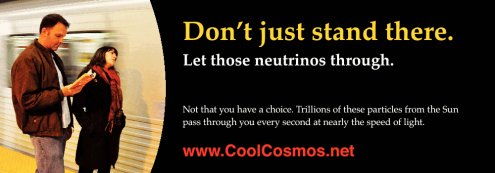
A few days ago I mentioned an ad campaign to make the public aware of how events in the far-off cosmos affect us here on Earth. One ad points out that the some of the snowy noise on the screen of a poorly-tuned television is actually “microwave afterglow from the origin of the universe”.

It seems, however, that the universe contains more static than expected — six times more “radio noise” according to a team of astrophysicists in the US.

NASA’s Alan Kogut and colleagues launched the balloon borne ARCADE radio telescope with the hope of detecting emissions from the first stars formed after the Big Bang. Instead they found a booming signal that they couldn’t pin down to early stars or other known radio sources — a genuine mystery.

The team announced their findings at the 213th Meeting of the American Astronomical Society, going on this week in California.

The study of other types of cosmic noise has led to major breakthroughs in our understanding of the universe…so watch this space.

Let those neutrinos through

iya.jpg

By Hamish Johnston

It’s the International Year of Astronomy and here at physicsworld.com we are travelling the world (from the comfort of our desks mostly) in search of weird and wonderful astronomy events.

First stop is my hometown (sort of), where buses, subway trains and trams are adorned with advertisements illustrating the mysteries of the cosmos. As well as neutrinos, the Toronto transit ads explain how you can watch evidence of the Big Bang on an old TV and why we are all star dust.

The ads are placed by the CoolCosmos programme at the University of Toronto’s Dunlap Institute for Astronomy and Astrophysics. Take a look at their website for the other ads.

Interpreting Newton: brilliant ideas wanted

newton.jpg
Home to a famous apple tree

By Hamish Johnston

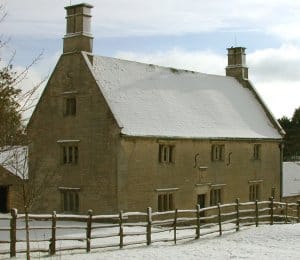
I was just speaking to Susan Haimes, who is property manager of Woolsthorpe Manor in Lincolnshire — the birthplace of Sir Isaac Newton. The Manor, which is now owned by the National Trust and open to the public, is also the place where that legendary apple fell and inspired Newton to think hard about the nature of gravity.

Susan has issued a call to physicists for help in revamping the Manor’s interactive science discovery centre, which opened in 2000 and “is in need of updating”. Work is underway to redesign it and the new centre will be opened in March 2010.

New exhibits will include interactive models that demonstrate planetary orbits, the movement of points, calculus, gravity, prisms (including lenses, refraction and the problem of chromatic aberration), forces and telescopes.

However, Haimes is also keen to hear from any physicists who may have “a brilliant idea for interpreting an aspect of Newton’s work in a way that just hadn’t occurred to us”.

Time is short, though, so if you’ve got a brilliant idea for demonstrating an aspect of Newton’s work to families, send your sketch or idea off to susan.haimes@nationaltrust.org.uk by Friday 16 January, with your contact details.

If your idea is chosen and used in the centre, you will be given a one-year visiting pass entitling you and your family to visit National Trust properties around the country.

Please contact Susan for more information.

And in case your wondering, the apple in question was of the variety “Flower of Kent” and according to Susan is a rather large fruit. Legend has it that the original tree died in 1820, but its roots produced a second tree that is still there today.

Graphene transistor speeds up

Scientists at IBM have made the fastest graphene transistor to date. The device operates at frequencies as high as 26 GHz and could find use in wireless communications equipment.

A transistor’s operation speed depends on the size of the device — smaller devices can run faster — and the speed at which electrons travel in it. This size dependence has been one of the major driving forces for making ever smaller silicon transistors. However, the challenges of making practical silicon transistors smaller than about 40 nm will ultimately put the brakes on future speed-ups.

Some researchers believe that the ‘wonder material’ graphene — which is a sheet of carbon just one atom thick — could offer a way forward. As well as being extremely thin and a semiconductor, electrons move through graphene at extremely high speeds. This is because they behave like relativistic particles that have no rest mass. Because of this, and other unusual physical properties, graphene is often touted to replace silicon as the electronic material of choice and might be used to make faster transistors than any that exist today.

Real progress since 2004

Yu-Ming Lin and colleagues at IBM’s T J Watson Research Center have now demonstrated graphene transistors exhibiting a cut-off frequency of 26 GHz, the highest frequency reported for graphene so far (arXiv 0812.1586). While this is about 10 times slower than the fastest silicon transistor, it is remarkable progress because graphene was only discovered in 2004, whereas the silicon transistor has been around for over 50 years and has benefited from decades of intense research and development.

The team also revealed for the first time that the operation frequency of these devices increases as gate length size decreases. The value of 26 GHz was found for transistors with a gate length of 150 nm. This result provides guidance for improving the performance of graphene devices, said Lin.

The team also found that the devices behave like conventional field-effect transistors — that is the measured current gain decreases with frequency, f, according to 1/f. This will be important for modelling graphene transitors and for designing circuits based on graphene devices, explained Lin.

Scaling the gate length down

Most graphene devices made previously were back-gated, using a 300 nm thick silicon dioxide layer as the gate dielectric. Lin and colleagues’ device is different because it employs a top-gate dielectric structure, made of aluminium oxide, which allows the transistor to operate at lower voltages. Scaling the gate length down to 150 nm, from tens of micrometres previously, also contributes to the high cut-off frequency of 26 GHz, Lin told physicsworld.com.

The IBM researchers now hope to optimize the gate dielectric materials to further improve the electrical properties of the final devices and make radio-frequency circuits from the structures. They even reckon that graphene transistors operating at terahertz frequencies could be made in devices that have a gate length of just 50 nm. “We also plan to demonstrate graphene transistors made by other approaches,” added Lin.

A fresh look at nuclear

As everyone must surely now acknowledge, the economy is heading for recession in many countries, and several industries are planning to cut back on their workforces. Physics and engineering graduates may have an advantage in this economic climate, however, because one major sector is definitely still hiring talented people from these disciplines: the nuclear industry.

Nuclear power is back on the political agenda for a number of reasons. These include the need to secure and sustain future power supplies, reduce carbon emissions and address the environmental problems associated with decommissioning aging power plants. But like other sectors, the nuclear industry has been affected by a shortage of science and technology graduates in recent years. Indeed, the average age of an employee in the industry in the UK is 50. Because the task of decommissioning some reactor sites — including the UK’s first, Sellafield in Cumbria — may take up to 150 years, it is crucial for organizations like the UK Nuclear Decommissioning Authority (NDA) to attract a new generation of workers with diverse skills.

One aspect of the NDA’s recruitment campaign is an industry-wide graduate scheme, called “nucleargraduates”. Launched last year, it has so far recruited 23 graduates. About a quarter of these have physics degrees, and applications from physicists have trebled since the first intake started.

Programme structure

The two-year-long nucleargraduates programme sends participants on four professional secondments in different organizations and diverse locations. Participants in the scheme can expect to do three of their six-month placements in UK locations, which range from the Plymouth-based construction company Atkins and the NDA’s headquarters in West Cumbria to the Dounreay Research Site on the northern tip of Scotland. They will then go on a four-month placement overseas, typically in France, North America or Japan.

More than 20 leading companies, regulators and government bodies are sponsoring the programme, making it the most comprehensive such scheme the industry has ever seen. Participants include global manufacturers like Rolls Royce and BAE Systems, engineering consultancy firms like Jacobs and Amec, government bodies such as the Environment Agency, and nuclear-site operators like Magnox North and Sellafield Limited. Participants in the scheme have, for example, worked at the high-level-waste plant at Sellafield and on the waste-transportation strategy at the UK Atomic Energy Agency site in Harwell, Oxfordshire.

Building community links

One important aspect of the scheme is a compulsory corporate social responsibility (CSR) programme called Footprints, which is designed to enable the participants to make small but lasting impacts in the areas and communities where the nuclear industry operates. As part of the programme, graduates spend 10% of their time working in local not-for-profit enterprises, schools and small businesses. By devoting such a significant amount of time to the endeavour, the NDA aims to make Footprints a real driver for change rather than a series of unconnected charitable gestures.

The projects need not involve nuclear issues directly. Some participants have, for example, gone into primary schools to excite young people about science, technology, engineering and maths. Others, meanwhile, have been working with the Connexions Cumbria organization and young people not in employment, education or training to help them shape local services to meet their needs and increase their aspirations.

One of the participants is Steve Mahay, a physics graduate from Birmingham University in the UK. His main role in his first placement at the Harwell site was to work on waste transportation. As part of his Footprints project, Mahay designed webpages for Didcot First, a local group that promotes the Oxfordshire town as a centre for science and technology. He also worked with Susan Elder, a chemistry graduate from Strathclyde University in the UK, to organize an event to promote science among young people. Mahay and Elder estimate that over 200 children came to see the demonstrations on magnets and how to save energy.

“I was pleasantly surprised by how interested I became in the corporate-social-responsibility segment of my work,” says Elder. “The CSR programme really helped me to consider the world outside the NDA, and allowed me to learn new skills while doing something useful for the local community.”

Looking to the future

The reason for including the Footprints work in the programme is that although the nuclear industry is currently hiring new people to work on decommissioning older reactors, the closure of these “legacy” facilities can also bring severe job losses to local communities and businesses that depend on the nuclear industry. For example, when the Dounreay reactor finally closes in 2025, nearby communities like Thurso will lose about 2000 jobs. To minimize the impact on the area, the nuclear industry is working in partnership with the Highlands and Islands Development Agency, Caithness Council, local communities and potential entrepreneurs within and outside the nuclear industry to support and create new businesses — for example in wind and tidal energy — to help sustain the local economy.

With such strategic goals in mind, the Footprints programme provides a way for the next generation of managers in the nuclear industry to look beyond the business to the wider socioeconomic context in which it operates. The end result of the Footprints scheme, the NDA hopes, will be that skills the participants gain within the industry including project management, communication and creative problem solving — are shared with the community.

Equally, strong links with local communities allow industry leaders to keep in touch with opinions and experiences from outside the nuclear business. This knowledge can then help inform decision-making about the future of the industry. In the past, inward-looking and “them and us” cultures led to gaps in understanding, and a lack of effective partnerships between the industry and the communities in which it operates. For example, the first generation of nuclear sites like Sellafield were created to make weapons, not generate power, and the associated Cold War paranoia meant that such sites were not built to be “future proof”. It is only now, after the sites have been shut down and the NDA began dealing with them in 2004 that we are realizing the extent of the challenge. The industry now recognizes the importance of working together to build sustainable communities, and Footprints is an important part of that goal.

Interested?

The 23 members of the 2008 nucleargraduates scheme all have good academic qualifications; the programme requires at least a 2.2 BSc degree and some participants have higher degrees. Although non-UK citizens are eligible, such applicants must have the right to work in the UK and may need to go through more extensive background checks. Beyond this, the programme’s organizers are also looking for graduates with the curiosity, creativity and determination to meet the considerable challenges facing the nuclear industry now and in the future.

Because of the “umbrella” nature of the scheme, participants are not guaranteed a job at the end of their placements. However, they will have gained enough experience within the industry to know what interests them most, and can then apply for a specific role at companies or organizations that appeal to them. As NDA graduate manager Carl Dawson emphasizes, it is not a “sausage machine” or one-size-fits all programme, and graduates are expected to explore many possibilities in the industry, particularly where skill shortages exist.

Atomic arias

The American composer John Adams uses opera to dramatize controversial current events. His 1987 work Nixon in China was about the landmark meeting in 1972 between US President Richard Nixon and Chairman Mao Zedong of China; The Death of Klinghoffer (1991) was a musical re-enactment of an incident in 1985 when Palestinian terrorists kidnapped and murdered a wheelchair-bound Jewish tourist on a cruise ship. Adams’s latest opera, Doctor Atomic, is also tied to a controversial event: the first atomic-bomb test in Alamogordo, New Mexico, on 16 June 1945. The opera premièred in San Francisco in 2005, had a highly publicized debut at the Metropolitan Opera in New York in 2008, and will have another debut on 25 February — with essentially the same cast — at the English National Opera in London.

Was there ever more operatic material? The Manhattan Project to build the bomb involved several powerful and charismatic individuals who worked amid all-out war to develop a weapon of mass destruction before the German enemy (that also had an excellent scientific-engineering establishment) could do the same. The weapon could potentially kill hundreds of thousands of civilians, but the cost of not developing it seemed greater. The project would have profound social, political and military consequences sure to reshape the world in unforeseen ways. If this is not the stuff of opera, the art form is dead.

Yet historical drama is itself contentious. If the subject is long ago and far away, it does not matter if facts are altered or characterizations changed. While a historian of 16th-century Spain might have trouble with Verdi’s history in Don Carlos, a modern operagoer does not. But when historical drama involves people whose words and deeds continue to affect the present, tampering with elements of history can make the drama collide with our experience of the world and our concerns about historical accuracy. This is what provokes discomfort with works like Oliver Stone’s biopic JFK and Michael Crichton’s novel State of Fear. The former feels like grave robbing, the latter like propaganda.

Doctor Atomic also invites judgement on the issue of historical accuracy, with its libretto announcing that it is “drawn from original sources”. This issue is especially acute for physicists, who may have different reactions to Adams’s opera as artistic expression and as historical depiction.

Musically, Adams’s style is partly minimalist: he relies on repetitive instrumental and rhythmic motifs for the music’s basic framework. At times the choral parts are chant-like and hypnotic. Moments of drama are heightened by changes in instrumentation, density, texture and dynamics. Much of the overall musical effect, in combination with the pageant-like staging, is static rather than forward-moving as in traditional opera. The atmosphere — the growing tension surrounding the imminent testing of the bomb — is highly charged, but everything feels like it is running to stand still.

The most notable exception occurs at the end of act 1, when Robert Oppenheimer is alone on stage looking up at the starkly lit, terrifying weapon of mass destruction suspended in mid-air. As he sings “Batter my heart”, a dirge-like aria set to a John Donne poem, a loud, rhythmic interlude suddenly disrupts the aria, rising in intensity and volume, contrasting sharply with its quiet lyricism. This haunting scene is more than a lament: it is Oppenheimer’s soul in turmoil, a turmoil he in fact never articulated. It is a powerful moment, opera at its finest, integrating music, lyrics and staging to disclose more than one could glean from the historical record.

More notable moments include the culmination of the first scene, when the Edward Teller character wonders “Could we have started the atomic age with clean hands?” And at the opera’s climax, the time until detonation arrives asymptotically in a provocative way: we hear the five-minute-warning rocket, seven minutes later the two-minute warning, and the clock continues to tick as time itself seems to run out.

Other arias feel overly long, with a melodic content that is divorced from what is going on orchestrally. Many characters are unevenly realized. When General Leslie Groves, the project’s commanding officer, sings “There is concern our high-strung director might have a breakdown”, this is news to the audience, who have witnessed nothing to make this assertion credible. The aria by Oppenheimer’s maid Pasqualita is overextended, and in combination with the appearance on stage of her costumed kin threatens to portray Native Americans, stereotypically and patronizingly, as innocent, peace-loving children of nature.

Those familiar with the Manhattan Project, the events of which galloped with a terrifying swiftness, may feel impatient with the opera’s slow-moving pace, and legitimately disturbed by the characterizations. When Oppenheimer says that the “nation’s fate should be left in the hands of the best men in Washington”, the words are indeed from an historical document, but an unreliable one — a book by Oppenheimer’s nemesis (and character assassin) Teller.

Teller, in fact, was unsympathetic to physicist Leo Szilard’s petition to withhold use of the bomb. Teller, who died in 2003, had no tolerance for ambiguous aspects of human behaviour, and would denounce as unpatriotic those who were less enthusiastic than he was about the development of nuclear weapons. In later years, he was also often dishonest about his views, particularly with respect to Oppenheimer. It is troubling, if not outrageous, to make Teller one of the principal voices of worry and caution.

Equally problematic is Adams’s portrayal of Oppenheimer’s wife Kitty, the sole female voice among the principal singers, as a tortured earth-goddess who possesses, as Adams put it in one interview, a “cosmic, superhuman awareness of what it all means”. The historical Kitty — a volatile alcoholic, rather than a reflective alcoholic, as she is portrayed here — was not cut out to play this part. Finally, the portrayal of Groves as a stereotypical, buffoon-like military wonk is unjust to the minister’s son who attended the Massachusetts Institute of Technology, graduated near the top of his class at the West Point military academy, and was a fine engineer and superb administrator.

Deviations from the historical record in an historical drama generally mean that the author is afraid to trust the inherent drama of the actual events. They also tend to reflect the presence of social prejudices and deep-seated cultural myths, which appear — so to speak — to wrest control of the artwork from the artist. Doctor Atomic has passages that are sonorously and visually seductive, and it offers a novel way to portray contemporary events using artistic means. But its historical deviations — which reflect prejudices and myths about Native Americans, patriotism, women and the military mind — are one reason that this ambitious project is not more gripping. The dramatic portrayal of perhaps the single most ethically controversial event of the 20th century should stir up a greater anxiety, and leave us with the feeling that humanity has dirtier hands than we ever imagined.

Breaking new ground

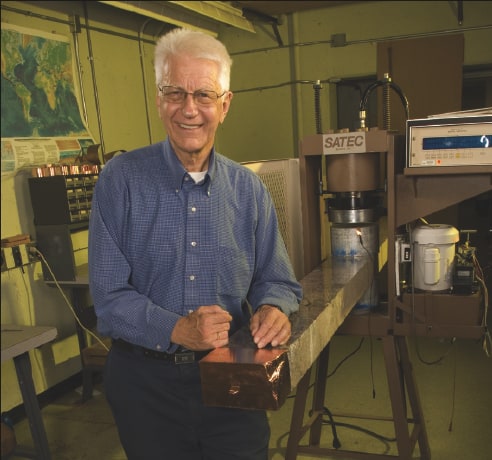
Down the road from his lab at NASA’s Ames Research Center just south of San Francisco Bay, California, Friedemann Freund is a regular visitor at the local memorial mason. Among the rows of ready-chiselled gravestones, he likes to browse the sundry stacks of raw, unfinished rock imported from as far afield as Norway and China. “Just by looking at a rock I can say, yes, this one looks good for us,” Freund explains. “The black ones are the best. They will tend to conduct the charge well.”

Electrical conductivity is not a property that is often associated with rocks, which are insulators under normal conditions. Freund, however, is interested in rocks under extraordinary conditions. His lab experiments involve studying what happens when high mechanical stresses are applied to igneous rocks — materials that solidified from magma and that are common deep in the Earth’s crust, where earthquakes form. The routine is straightforward: he puts big slabs of rock under two pistons and crushes them while probing for associated electromagnetic effects. “In the beginning, I was always breaking them,” Freund says. “Now we are much gentler, and a rock can last for weeks or months. We can do tens of experiments on a rock without ever breaking it.” He is hoping that one day his work will help save thousands of lives. Friedemann Freund wants to understand how earthquakes can be predicted.

Shaky understanding

Earthquakes are the only natural disasters that scientists are unable to predict with any reliability. Institutions like the US Geological Survey (USGS) monitor the strain in the Earth’s surface through movement sensors in the ground and, together with historical records of seismological activity, they can usually forecast the long-term prospects of earthquakes occurring in active regions, typically within a period of 30 years. Predictions, which need to specify the exact time, place and magnitude of an impending tremor, have proved hard to come by. Part of the problem is that seismologists do not have a clear picture of how the ground fractures. Although the study of plate tectonics has allowed researchers to isolate the most quake-prone regions, the current thinking is that each tiny fracture in the Earth’s crust spreads in a chaotic fashion. This means that it is difficult to say which cracks will stop short, and which will rupture into an Earth-shattering event. Most seismologists believe that impending earthquakes send no reliable warning signals.

Freund has a different opinion. Deep down in the crushing boundaries between the Earth’s tectonic plates — where earthquakes form — the conditions are far from normal. As the plates struggle to grind past each other, the stresses grow until the plates finally slip with a devastating release of energy. Freund thinks that this huge stress build-up prior to an earthquake can flood the surrounding rock with electric charge. Indeed, he believes that in the hours or days before an earthquake the ground could brim with so much charge that it generates a host of visible effects above the surface, such as infra-red emissions and vivid corona discharges. These electromagnetic phenomena could be earthquake precursors.

But despite living within walking distance of the infamous San Andreas Fault, Freund was not always involved in earthquake science. The interest spawned from his research in the early 1980s, when he was studying the properties of simple crystals like magnesium oxide (MgO). He found that MgO always absorbs infra-red light at the characteristic wavelengths of hydrogen molecules. The only way for hydrogen to be present, he thought, would be if water crept into the structure during crystallization as defect OH– groups among the Mg2+ and O2– ions. Then, pairs of the OH– groups could combine to form H2, leaving the remaining O– ions to bond into more stable O22– groups, known as peroxy links.

Peroxy links, according to Freund, are key in turning MgO and other insulators into conductors. With a little heat, the wavefunctions of a peroxy link’s constituent O– ions “loosen up” and spread over hundreds of neighbouring ions; increase the temperature further and the O– ions completely dissociate from each other. In this state, each of the O– ions is missing an electron that it would need in order to be stable. But the missing electron or positive “hole” — which Freund prefers to call a “phole” — is able to hop to a nearby, non-defect O2– ion. Indeed, the heated crystal acts like a pure semiconductor in which the pholes repel one another through the sea of O2– ions to form a blanket of positive charge on the surface.

By 1994 Freund had collected strong evidence for pholes through measurements of electrical conductivity and other properties, and was beginning to think of other ways to recreate the phenomenon. As he recalls, “The logic was, what does it take to break the peroxy bond? When you heat the crystal, you’re really just increasing the amplitude of vibration of the ions. It was then that I began to wonder whether dislocations that are produced by mechanical deformation could also do the job.”

Freund realized that MgO crystals are too brittle to sustain much deformation, so he turned his attention to stronger crystalline materials that could allow peroxy-link defects — rocks. For his initial experiments he took an unconventional approach: using a modified toy crossbow, he fired pea-sized steel pellets at 100 m s–1 into small rock cylinders. His hunch paid off. Not only did he measure a positive surface potential of about 400 mV spreading from the impact area across the rock, but he also recorded a concurrent burst in infra-red emission (2002 J. Geodynamics 33 543). Freund attributed the latter event to the pholes liberating their stored energy as they recombined into peroxy links at the surface. “It was what you call a serendipitous discovery,” he says.

Bad omens

Freund believes that his discovery can explain some of the bizarre events that are said to signal an imminent earthquake, such as eerie lights and strange animal behaviour. In 1966 in Matsushiro, Japan, ghostly lights were photographed during a string of tremors. Last year in the UK, following a moderately strong earthquake that rippled through the small Lincolnshire town of Market Rasen, The Times reported one frightened woman’s account of a “grapefruit-sized glowing sphere” that materialized in her bedroom and floated towards her, and others who claimed to have seen lightning flashes even though there were no storms.

In the winter of 1975 in Haicheng, China, there were widespread reports of peculiar animal behaviour: dogs growing very agitated; cattle running amok; and even snakes suddenly waking up from hibernation only to die because of the freezing conditions. Encouraged by seismologists who had also started registering an increase in low-amplitude seismic activity, the authorities decided to evacuate the region. A couple of days later, a quake with a magnitude of 7.3 struck the region, killing over 2000 people. That figure could have been 100 times higher had the population not been evacuated.

Seismologists, however, doubt the significance of these precursors. For over a hundred years they have tried in vain to correlate such events with seismic activity, and found them to be unreliable warning signals, especially since most were reported after the event. Successful predictions like that at Haicheng they deem to be flukes because there is no consistent pattern of accurate predictions.

Freud agrees that we still do not have a fully fledged prediction technique, but he thinks researchers are missing the big picture. He is confident that he has an underlying mechanism that will indicate where to look for precursors — so confident, in fact, that he has been backing his work with more than one million dollars of his own cash.

Freund’s idea is that, kilometres underground, the stress of an earthquake nucleation could produce a cloud of pholes that surges to the surface, creating electromagnetic disturbances such as earthquake lights. He has already seen related phenomena in the lab. By positioning pistons above and below a slab of rock to inflict concentrated loads, he has found that above a mass of few tonnes, a nearby, negatively biased metal sheet can draw a 10–25 nA current of positive ions across a 5 mm air gap. On the other hand, if the sheet is positively biased, it can cause electrons to shower onto the rock in a fleeting 100 nA current. This electrical breakdown also produces a flash of visible light, or what is known as a corona discharge.

Freund thinks most other supposed earthquake precursors, too, have their origin in the propagation of pholes. He points to past clinical tests indicating that positive ions can distress animals — among other things causing respiratory problems and a heightened sensitivity to pain — which might be why they are sometimes seen to behave oddly. He says positive ions could also attract or repel regions of the ionosphere, an effect that researchers apparently recorded in the majority of earthquakes that occurred around Taiwan between 1999 and 2002. And then there is the infra-red emission. Several satellites have recorded what are deemed “thermal anomalies” above the epicentres of major shocks, including some before the 6.2 magnitude quake that struck the county of Zhangbei, China, in 1998. Freund thinks these anomalies have the same source as the infra-red emission in his experiments, namely the recombination of pholes into peroxy links (Earth and Planetary Science Letters submitted).

All this may be a lot to take in, but that is the point. In the past almost all those trying to search for signs of earthquakes have only had the facilities to monitor a single type of precursor, whereas Freund claims that his mechanism could show them how the precursors are all related, and thus where to look. “There are people who analyse the ionosphere, for example, and if they see a bump in the data they claim that this is an indication of an impending earthquake,” he explains. “Then people rightly say that this is too much — you can’t draw a one-to-one correlation with just one parameter. My work could enable people to look at several parameters, each of which could be an indicator, to search for an early warning.”

Stressful work

One of the more common questions directed at Freund is whether there could be any other explanation for the rocks’ conductivity and the related electromagnetic phenomena. The most obvious would be piezoelectricity, in which certain materials — notably quartz — build up a charge imbalance when they are stressed. But while it is true that many of the rocks chosen by Freund, such as the “Sierra White” granite sourced from within California, contain a third or more quartz, those from further afield, such as the black gabbro from northern China, are quartz-free.

Another possibility is that the conductivity is caused by a phenomenon known as a streaming potential. This type of voltage is sometimes generated in machines when weakly conducting fluids such as fuel or transformer oil are pumped through pipes, though in rocks it can also occur if there is salt water present. The water seeps through pores in the rock, picking up ions of one charge while leaving aside ions of the opposite charge. Freund points out that the charge in his impact experiments flows at between 100 to 300 m s–1, which is too fast to be a streaming potential in rocks. Furthermore, when Freund later upgraded his crossbow to a canon at NASA’s Ames Research Center that is known unofficially as the “Big Gun” — a research tool typically used to study the formation of meteorite craters — the shock waves resulting from impacts at 1.5 km s–1 appeared to activate charges throughout the rock instantaneously.

But the flip side of water, according to Tony Fraser-Smith, a geophysicist at Stanford University, California, is that it might actually stem electrical current by “shorting out” any charges present. Freund admits that the pholes could react with water, although he thinks that the process would actually complete the circuit to keep the charges moving (Earth and Planetary Science Letters at press). “Fraser-Smith is right in saying that water may do something to the currents,” he says. “But it is not as destructive as he thinks.”

In any event, Freund is not the only researcher to have noticed the effect. Al Duba, a retired geophysicist who used to work at Lawrence Livermore National Laboratory, California, spent the better part of his career investigating anomalous conductivity in rocks. However, he concluded that the conductivity it is due to contamination, and he managed to destroy it by heating samples above 700 °C in a mixture of carbon dioxide and carbon monoxide. Freund argues that this process only serves to react away the crucial O– ions. “We used to have friendly discussions about it,” he says. “Duba thought that it must be junk, and that you should get rid of the junk. But I said, ‘No, you’re getting rid of the golden egg!’.”

Don’t mention the “p” word

Earthquake prediction is a pejorative term — at least among most seismologists, who make up the bulk of earthquake researchers. Although Freund prefers not to use the word prediction, saying it is “too strong a word”, his research inevitably falls under that banner because of his claims that it could lead to an early-warning system.

The trouble with prediction is that it has a long history of failure. For most of last century seismologists devoted themselves to finding statistically reliable precursors, but failed to find any that occurred consistently before major quakes. Now the nearest thing to a consensus is that prediction is an unlikely goal, at least in the short term, and that researchers first need to get a better understanding of how fractures nucleate and spread through the Earth’s crust.

But for some, prediction research should be outlawed altogether. Robert Geller, a seismologist from Tokyo University, dislikes the fact that certain countries, like Japan, give disproportionate funding to those trying to hone prediction methods, which he says will never work. “My stance is as follows,” he says. “Anyone who wants to do earthquake-prediction research should send his or her proposal to the normal funding system where it should get reviewed in competition with all other research in geophysics — that is, treated neither favourably nor unfavourably. All work that passes such a normal review should be funded.”

Freund sees nothing fair about the US funding system. He says that he has sent grant proposals to the USGS annually for the past five years only to have each rejected on what he insists are “unscientific” grounds. Although in the early days of his research NASA lent him modest support, he has since had to finance himself. “I have essentially been blacklisted by the seismology community,” he says.

Tom Heaton, a geophysicist from the California Institute of Technology, thinks the main problem is that the seismology community has been “betrayed” too often in the past by those who believed that their observations in the lab would scale up to the real world. This happened in the 1970s, when many seismologists became excited that rocks under stress in the lab appeared to swell as a result of numerous microfractures. However, subsequent attempts to exploit the effect to predict earthquakes failed. “Now when we monitor the stress at the beginning of a big earthquake and the beginning of a small earthquake, we don’t see a difference,” he explains. “So even if people could predict earthquakes, they might be making predictions for all the hundreds of small earthquakes as well as the big earthquakes. What would we do with a hundred or so predictions?”

But Freund insists that this does not rule out the possibility of useful precursors. “When seismologists talk about stress and strain, they mean putting meters into bore holes that are between 200 and 1000 m underground,” he says. “But most earthquakes nucleate in the 10 to 30 km range. The seismologists have to rely on extrapolation and linear models, which they know aren’t much good.”

Recently, though, the USGS appears to have had a change of heart: it has invited Freund to give a talk next month. However, for the man who has made such a huge personal and financial commitment to his work, entering what he calls “the lion’s den” is not a matter of pride but the sole opportunity to mend the perceived fault line separating his work from established science, and perhaps give stability to the many millions of people living on uncertain ground.


Let the global astronomy celebrations begin

Of the many achievements of Galileo Galilei, among the most famous is a series of astronomical observations that he started in 1609 and announced in March 1610 in a publication entitled Sidereus Nuncius (“Starry Messenger”). These included radical new views of the Moon and the stars, as well as the discovery of four satellites orbiting Jupiter. By removing a major doubt about the heliocentric model — namely that the Earth appeared at the centre of things because only it had a satellite — the observation of the Jovian moons led to a new view of the universe and in the process brought Galileo considerable fame.

What had made these observations possible was the telescope. Invented in the Netherlands in 1608 (although there have been claims that it was first built a few years earlier), the telescope was initially seen as a useful new aid to warfare. However, once news of the device spread south, Galileo was able to use his considerable skills as an instrument maker to multiply the magnifying power of the basic spyglass so that he could use it as an astronomical tool.

Now, staff at the Institute and Museum of the History of Science in Florence, Italy, together with the Arcetri Observatory, also in Florence, have built a replica of one of Galileo’s telescopes and are using it to generate the images that, to the best of their estimations, Galileo himself would have seen. The aim, explains museum curator Giorgio Strano, is to understand exactly what Galileo observed and how he made his observations. “We are trying to distinguish precisely between what Galileo was potentially able to see ‘objectively’ with the telescope and what was, instead, the product of physiological, psychological and cultural factors,” he says.

The Moon, Saturn and beyond

The telescope being built by the Florence team is not actually a replica of the one used by Galileo to make the observations he reported in Sidereus Nuncius. It is likely, instead, that these results were obtained using a telescope with a magnification of about 30. What the team is building is an exact replica of the device that Galileo gave to his patron the Grand Duke of Tuscany, Cosimo II, in about 1610. The 93 cm long instrument consists of two lenses — a converging one, the objective, and a diverging one, the eyepiece — that can magnify distant objects by up to a factor of about 20. Whereas this more modest instrument has survived intact, sadly the only part that remains of the more powerful device is the objective lens, making it impossible to remake.

Reproducing Cosimo II’s telescope has involved a painstaking investigation of the original lenses — with the National Institute of Applied Optics in Florence having measured their shape and refractive index, and the National Institute of Nuclear Physics in Florence using X-ray fluorescence to determine the composition of the glass. The Arcetri Observatory, on the other hand, built a mechanical structure to house the lenses and regulate the distance between them. This structure was then linked up to a charge coupled device of 2300 × 3400 pixels, which transforms incoming photons to electrical signals and thereby generates digital versions of the images that would form on the retina of a human eye placed behind the telescope. The plan is to make these images accessible online.

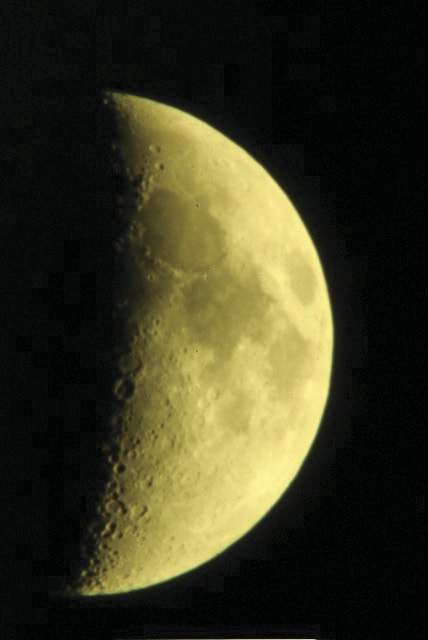
Astronomers at the Arcetri Observatory are now using this apparatus to image all the objects recorded in Sidereus Nuncius and in other works by Galileo. The Moon and Saturn have already been observed, and these observations have demonstrated the effects of chromatic aberration in Galileo’s instrument. The focal length of a lens depends on the wavelength of light passing through it, so in practice it is impossible to bring white light to a precise focus, and this defocusing can be seen in the images of Saturn and of the Moon.

Arcetri Observatory director Francesco Palla says that he and his colleagues are now obtaining images of Jupiter’s moons and the phases of Venus, which provided another crucial piece of evidence in favour of the heliocentric hypothesis (with the Ptolemaic alternative incorrectly maintaining that we would never see more than half of the surface of Venus illuminated by sunlight). The researchers are also observing the Pleiades and Orion star fields, which Galileo found had scores of stars in addition to the few already known at that time. Sunspots permitting, observations will also be made of the changing face of the Sun — a hammer blow against the idea of the immutability of the heavens when originally revealed by Galileo.

The Galilean eye

Michele Camerota, a historian of science at the University of Cagliari in Italy, believes that the observing project will provide a valuable source of new data on the performance of Galileo’s telescopes and that it will permit an “extremely faithful” reconstruction of what Galileo saw. However, performing these observations has proved tricky. Aside from having to work with a very limited field of view (Galileo’s combination of convex objective and concave eyepiece producing a field of view of about one quarter of a degree), the researchers in Florence have also struggled to find somewhere dark enough to observe Jupiter — Arcetri nowadays being swamped by light from the city.

Having eventually found a suitable location in the hills beyond the city, Palla and colleagues then had to introduce what he describes as an “inevitable trick” in order to observe the Jovian moons. Because the moons reflect so little sunlight, their imaging requires an exposure of several seconds, during which time they move appreciably across the sky. The telescope therefore needs to be placed on a rotating mount in order to track the moons — a problem that Galileo would not have encountered because the eye can make do with less light than a CCD needs.

However, even when all of the imaging has been completed, the project will not be over. That is because to work out what Galileo saw it is not enough to simply find out what kind of images his telescope created. The researchers also want to work out what Galileo’s eye would have done with those images. And for that, they need access to his body. “We know that Galileo died blind, so he must have had visual problems,” says Paolo Galluzzi, director of the Florence museum. “We want to look at his DNA to try and work out what these problems were.”

Galluzzi does not yet have permission to open Galileo’s tomb, which lies in the Basilica of the Holy Cross in Florence, because the basilica’s rector opposes such a move. But Galluzzi is determined to keep trying. “Building the replica telescope and acquiring the digital images are the first two parts of the project,” he says. “Understanding the physiology of Galileo’s eye is the third part. If we can achieve this, then we will be in a position to really understand how Galileo viewed the universe.”

IYA2009: a taste of things to come

January marks the start of the International Year of Astronomy (IYA2009) as designated by the United Nations, and endorsed by UNESCO — its body responsible for education, science and culture. IYA2009 is intended to mark the 400th anniversary of Galileo’s first use of the telescope for astronomical observations. The aim of the initiative is to generate interest in astronomy and science, especially in young people, under the central theme of “The universe, yours to discover”. IYA2009 is a global celebration of astronomy with more than 100 countries involved in preparing activities. The International Astronomical Union (IAU) and UNESCO are coordinating events throughout the year, which are happening regionally, nationally and internationally. National events can be found at the IYA2009 individual country websites. Although this list is not exhaustive, here is a sample of what is coming up around the world during the year. Meanwhile, Physics World will be publishing a special astronomy issue in March, and there will be additional astronomy coverage on physicsworld.com throughout 2009.

Cosmic diary

All year round, worldwide
www.iya2009.org
Professional astronomers around the world will be blogging about their day to day activities and what it is like to be an astronomer. Researchers from NASA, the European Space Agency and the European Southern Observatory will be blogging as part of this project

Portal to the universe

All year round, worldwide
www.portaltotheuniverse.org
A website built for IYA2009 will feature rolling news, new images taken by telescopes, blogs by astronomers, and videos, as well as links to other astronomy websites. It will also contain a directory of observatories, facilities and astronomical societies.

IYA2009 opening ceremony

15–16 January, UNESCO Headquarters, Paris
Hundreds of people are expected to attend the official launch, such as government ministers and Nobel-prize winners, including Robert Wilson, who shared one half of the 1978 prize with Arno Penzias for the discovery of the cosmic microwave background radiation. There will be exhibitions as well as talks by leading figures in astronomy.

Conference on the role of astronomy in society and culture

19–23 January, UNESCO Headquarters, Paris
Examining the relationship that astronomy has established with different cultures around the world. There will also be an accompanying art exhibition.

GLOBE at night

16–28 March, worldwide
This project lets students, teachers and parents take part in a global campaign to observe and record the magnitude of visible stars to measure light pollution in a given location. After the observations are collected, a map will be produced showing the levels of light pollution around the world.

100 hours of astronomy

2–5 April, worldwide
One of the cornerstone projects of IYA2009, this event will try to make as many people as possible use a telescope and look up the stars.

International Astronomy Day

2 May, worldwide
Local astronomical societies, planetariums, museums and observatories will be giving presentations and workshops to help increase public awareness about astronomy.

IAU general assembly

3–14 August, Rio de Janeiro, Brazil
Leading astronomers will head to Brazil for a two-week conference to discuss everything from dark matter and galaxy clusters to whether the fundamental constants change with time.

Kepler’s heritage in the space age

24–27 August, Prague, Czech Republic
Celebrating the 400th anniversary of the publication of Johannes Kepler’s 1609 book Astronomia Nova, in which he provided the formulation of the first two laws of planetary motion in the solar system. The conference at the National Technical Museum in Prague celebrates Kepler’s contribution to astronomy.

Astronomy and its instruments before and after Galileo

28 September – 3 October, Venice, Italy
The conference will examine at how astronomical instruments have changed with time and the differences between countries when exploring the universe.

Great worldwide star count

9–23 October, worldwide
This event encourages everyone to go outside, look skywards after dark, count the stars they see in certain constellations, and then report their findings online.

European Society for Astronomy in Culture (SEAC) conference

25–31 October, Alexandria, Egypt
The SEAC, which includes archaeologists, historians and astronomers as its members, will meet to discuss the practice, use and meaning of astronomy in culture.

Copyright © 2026 by IOP Publishing Ltd and individual contributors