LHC ready by June, says Aymar

Robert Aymar, the director-general of CERN, has said that the Large Hadron Collider (LHC) — the world’s biggest particle physics experiment — will be in “working order” by the end of June, according to the French news agency Agence France-Presse (AFP).

It is not clear what Aymar means by this, given that the last announcement from CERN was for a July start-up. It seems unlikely that LHC has raced ahead of schedule, so it might be that he thinks the cooling of the magnets will be complete by the end of June. However, the status report on the LHC website would indicate otherwise.

I spoke to a press officer at CERN, and she said that the AFP journalists quoted Aymar from a recent meeting they had at the European lab. She said that, as far as she is aware, the beam commissioning is still set to take place in July.

I have not yet spoken to James Gillies, the chief spokesperson for CERN, because he is tied up in meetings all day. When he gets back to me, I will give you an update.

UPDATE 3.15pm: I have just spoken to Gillies and he said that there is no change to the start-up schedule — the plan is still to begin injecting beams towards the end of July. Aymar was indeed referring to the cooling of the magnets, which should be complete by the end of June. Four of the eight sectors have already been cooled to their operating temperature of 1.9 K; the last (sector 4–5) began the cooling process today.

The reason for the gap between the cooling and beam-injection is that there must be a series of electrical tests, which will take around four weeks.

Upper troposphere is warming after all, research shows

Research performed in the US has helped lay to rest one of the lasting controversies surrounding climate models: whether or not the upper troposphere is warming.

Climate models have long predicted that the upper troposphere — a region of the Earth’s atmosphere that lies beneath the stratosphere at an altitude of 10–12 km — should be warming at least as fast as the surface. However, since the 1970s temperature measurements carried out by weather balloons have found the lower-troposphere temperature to be fairly constant. This conclusion was backed up in 1990, when researchers used data taken from satellites to measure temperature changes in the troposphere.

For a while climate scientists have known that weather-balloon instruments are affected by the warming effect of the Sun’s light. They have also struggled to interpret the extent to which the satellite data of the troposphere could be influenced by the stratosphere. But the awareness of these uncertainties has not made it any clearer as to what temperature changes, if any, are taking place in the upper troposphere.

Now, Robert Allen and Steven Sherwood of Yale University have used wind data taken from weather balloons as a proxy for direct temperature measurements to give the first conclusive evidence that the upper troposphere has been warming after all. Although they are an indirect measure of temperature, these wind records can be backed up by satellite and ground instruments, making them more reliable than existing direct temperature measurements (Nature Geoscience doi: 10.1038/ngeo208).

‘Put the controversy to rest’

Allen and Sherwood took wind data from 341 weather-balloon stations — 303 in the northern hemisphere and 38 in the southern hemisphere — covering a period from 1970 to 2005. To covert the data to temperature measurements, they employed a relationship known as the thermal-wind equation, which describes how vertical gradients in wind speed change with horizontally varying temperature. They found that the maximum warming has occurred in the upper troposphere above the tropics at 0.65 ± 0.47 °C per decade, a rate consistent with climate models.

“This research really does show the tropical troposphere has been warming over the past three decades,” says Benjamin Santer of Lawrence Livermore National Laboratory. “And it will, I hope, put this controversy of weather balloon and satellite data to rest.” Santer, who was one of the lead authors of the 1995 report by the Intergovernmental Panel on Climate Change, thinks the next step is to confirm Allen and Sherwood’s findings with direct temperature records. These, he explains, must be taken with advanced weather-balloon instruments that can be calibrated against older models to remove biases.

“The approach by Allen and Sherwood is a promising start,” says John Lanzante of Princeton University. “But more confidence can be established as other investigations further scrutinize the wind data and method used to translate winds into temperature-equivalent measures.”

Terahertz laser source shines at room temperature

Terahertz beams could be employed in many scientific and technological applications, such as biological imaging, security screening and materials science. Now these applications are a step closer, as researchers in the US and Switzerland have made the first room-temperature coherent terahertz source based on commercially available semiconductor nanotechnology.

Terahertz radiation lies between the microwave and far-infrared regions of the electromagnetic spectrum, at wavelengths from about 1 to 0.03 mm. Until now, the only compact semiconductor lasers to emit light at terahertz wavelengths were “quantum cascade” lasers (QCLs). These devices comprise many identical stages made of nanometre-thick quantum wells.

When a voltage is applied, electrons briefly hop into a quantum-well energy-level before dropping down into a lower one, emitting a photon in the process. The same electrons are then injected into a new stage where they emit another photon. In this way, as many photons as there are stages are emitted by a single electron “cascading” through the structure.

Until now, however, QCLs have only been able to emit terahertz radiation at cryogenic temperatures of less than 200 K. The new QCL device — made by Federico Capasso of the Harvard School of Engineering and Applied Sciences and colleagues from Texas A&M University and ETH Zurich — emits terahertz radiation with several-hundred nanowatts of power at room temperature (Appl. Phys. Lett. 92 201101). At commercially available thermoelectric cooler temperatures around 259 K this power is increased to microwatts. Moreover, the power can be further increased up to a few milliwatts by optimizing the semiconductor nanostructure layers of the laser’s active region and by improving the extraction efficiency of the terahertz radiation.

The team made their QCL from a material that exhibits “difference-frequency generation” (DFG). This means that when it is illuminated by two frequencies of light, the electrons re-emit photons at both of the individual frequencies as well as the frequency difference. When the two frequencies are in the mid-infrared, the QCL can produce a difference frequency of 5 THz.

Terahertz radiation sources based on DFG have been around for years, but they have required powerful pump lasers and large non-linear crystals to generate the required frequency difference. In contrast, the new device is electrically pumped. “Our device does everything in one small semiconductor crystal a few millimetres in size with no need for bulky external lasers,” explains Capasso. “This means the device is compact, portable and consumes little power.”

Since terahertz radiation can pass through most materials except metals, it could be used to detect concealed weapons or explosive chemicals, or to image biological samples. “Detecting material defects, such as cracks in foam, is also an important application,” adds Capasso.

The researchers will now work on increasing the output power of their coherent terahertz source at room temperature, as well as at thermoelectric cooler temperatures. They will do this by increasing the surface area used for light emission and by optimizing the design of the quantum wells.

“This is a very exciting and important result as it circumvents problems associated with normal terahertz semiconductor lasers, which only work at low temperatures,” says Christian Pflügl of Harvard University, who was not involved in the research. “This novel approach could lead to the realization of compact semiconductor light sources with output powers sufficient for many spectroscopic applications, such as studies of pharmaceutical products, drug detection and determination of disease in skin tissue.”

Phoenix reveals Martian permafrost

Polygons similar in appearance to surface patterns in Earth’s arctic regions are among the first features identified by NASA’s Phoenix mission, which touched down on Mars early yesterday morning at 0053 GMT.

The features imply that the landing area around Phoenix has permafrost, which is known to generate polygonal patterns on Earth by continual expansion and contraction. Although polygons had been spotted before from space, these ones seen at close range appear to be somewhat smaller — 1.5 to 2.5 m across — leading some NASA scientists to suggest that there is a hierarchy of “polygons within polygons”. As of yet, there have been no glimpses of surface ice.

Other images taken by Phoenix’s onboard cameras confirm that the spacecraft is in “good health”, having endured a nine-month, 679 million-mile journey and a tricky landing involving descent engines — the first time this type of landing has been performed successfully since 1976. NASA scientists are relieved that Phoenix did not suffer the fate of its two predecessors — the Mars Climate Orbiter and the Mars Polar Lander — which both failed in 1999.

Phoenix is now preparing to begin its three-month mission on Mars to investigate the origin of the ground ice, the operation of climate cycles and the possibility of microbial life.

• UPDATE 29/05/08: You can listen to a sound recording of Phoenix’s landing here.

New tests of the Copernican Principle proposed

Revolutions in science don’t come that often, but the book De revolutionibus orbium coelestium (On the revolutions of the heavenly spheres) published in 1543 certainly caused one. The work by Nicolas Copernicus overthrew the ‘geocentric’ model of the solar system where Earth is at the centre, and suggested an alternative view whereby Earth revolves around the Sun.

No-one disputes the fact that the sun is at the centre of our solar system, and no-one also seems to dispute the idea that we are not at the centre of the universe. Indeed, this is encapsulated in a principle known as the ‘Copernican Principle’ that states that the Earth is not in any specially favoured position and is taken as a fait accompli among researchers. But how can we test it? Two independent teams of physicists think they know how, and argue their cases in back-to-back papers in the journal Physical Review Letters.

In the first paper, Robert Caldwell from Dartmouth College and Albert Stebbins from Fermi National Laboratory in the US explain how the Cosmic Microwave Background (CMB) radiation spectrum — an all pervasive sea of microwave radiation originating just 380 000 years after the Big Bang — could be used to test whether the Copernican Principle stands (Phys. Rev. Lett. 100 191302).

Cosmic acceleration and dark energy

Cosmologists like Caldwell and Stebbins are interested in the Copernican Principle because it plays an important role in the interpretation of the observational evidence for cosmic acceleration and dark energy. If the Copernican Principle is invalid, then there may not be any need for exotic dark energy and in order to explain the observation for the acceleration of the universe, we would need to be living at the center of a ‘void’. This void would then leave a distortion in the CMB away from being a black body. “This is so fundamental that we need to test it”, explained Caldwell.

I would bet my house now that the results will come out null so the Copernican Principle is valid on the scales we observe Paul Steinhardt, Princeton University

To measure if this holds, the team propose to measure the black body nature of the CMB more precisely than before. The void would lead to large anisotropies of scattered light coming from the CMB giving a slight deviation in the CMB from being a black body. But if we see further evidence that the CMB is a black body then it will be evidence that the Copernican Principle holds.

However, it is already accepted that the CMB is a black body. Indeed, the Nobel Prize in Physics was awarded to John Mather and George Smoot in 2006 who showed the CMB is a black body and is also anisotropic. The Nobel Prize winning work came from data collected on NASA’s Cosmic Background Explorer (COBE), which housed the Far Infrared Absolute Spectrophotometer (FIRAS) which recorded the perfect black body spectrum.

Caldwell and Stebbins think the next NASA missions such as the Absolute Spectrum Polarimeter will be able to detect possible deviations from the black body behaviour of the CMB which COBE with FIRAS was not sensitive too. “We need to measure the CMB at different frequencies, which previous missions were not able to do” said Caldwell.

Another test

In a separate paper, Jean-Philippe Uzan from the Pierre and Marie Curie University in France along with Chris Clarkson and George Ellis from the University of Cape Town in South Africa suggest another way to test the Copernican Principle (Phys. Rev. Lett. 100 191303). Their scheme involves measuring the red-shift of galaxies — the shift in wavelength of light to longer wavelengths due to a speedup — very precisely over time to see if there are changes. The team argues that this red-shift data can be combined with measurements of the distance of the galaxies to infer if the universe is spatially homogeneous — which is a tenant of the Copernican Principle.

However, it seems one of the cornerstones of cosmology is not about to be quickly overturned. “I would bet my house now that the results will come out null so the Copernican Principle is valid on the scales we observe,” says Paul Steinhardt a cosmologist at Princeton University, “But I think the experiments should be done.”

Spin states endure in quantum dot

Some physicists believe that quantum computers of the future will be built from large numbers of quantum dots — tiny pieces of semiconductor, each containing an electron (or hole) in a certain quantum spin state. However, such quantum states are easily destroyed by interference from external noise, and physicists have yet to create quantum dots — or any other system — that are robust enough to be used in a practical quantum computer.

Now, physicists in the UK and Brazil have taken an important step towards the creation of quantum dots with sufficiently robust spin states (Phys. Rev. Lett. 100 197401). Andrew Ramsay of the University of Sheffield and colleagues have shown that they can control the “trion” state (two holes plus one electron) of a single quantum dot using ultrashort laser pulses. The technique allows for a large number (up to 105) of logic operations to be performed before the quantum state is destroyed.

Quantum computers will work on the principle that a quantum particle can be in two states at the same time — “spin up” or “spin down” in the case of an electron or hole (a hole is left behind when an electron is excited to higher energy levels within a material). The two spin states represent a logical “1” or a “0”, so N such particles — or quantum bits (qubits) — could be combined or “entangled” to represent 2N values simultaneously. This would lead to the parallel processing of information on a massive scale not possible with conventional computers.

Extremely long coherence times

Semiconductor quantum dots are nanoscale structures in which electrons or holes are confined in all three directions. The dots can contain just one electron or hole each and are promising for use as qubits since information can be stored in the spin state of a single electron or hole. The quantum dot spins also have the potential to be very stable — they could have extremely long “coherence” times of micro- to milliseconds. The challenge, however, is how to control and connect the quantum dots without reducing their stability.

The team’s quantum dot is a disk of the semiconductor indium-gallium-arsenide, measuring 20 nm in diameter and 3 nm thick and embedded in a photodiode structure. The team shone a laser on the device, which creates an electron-hole pair in the dot. An electric field is applied across the structure, which causes the electron to tunnel from the dot, which leaves the hole in a well-defined spin state. Later, the hole also tunnels from the dot and is detected as a photocurrent.

A circularly-polarized laser pulse then measures the spin state of the hole by trying to create a trion (by creating an additional electron hole pair). If the laser is right circularly polarized, a trion only forms if the initial hole is “spin-down”, for example. This is because the Pauli exclusion principle prevents the two holes from being in the same quantum state. The creation of a trion can be detected as a change in the photocurrent, which is proportional to a particular spin state of the hole, explained Ramsay.

Picosecond single qubit manipulations

“This is a new tool for studying the dynamics of a single spin on sub-nanosecond timescales,” he told physicsworld.com. “It will be essential for evaluating the performance of picosecond single qubit manipulations.”

In the short term, Ramsay believes that the technique will provide a “tool-box” for studying the optical control of a single spin, and to explore schemes for creating high-fidelity quantum logic gates for quantum computing. “Our next goal is to observe coherent spin precession of the hole spin in a magnetic field,” he revealed. “We then intend to pursue full coherent optical control of a single spin.”

Cold-fusion demonstration “a success”

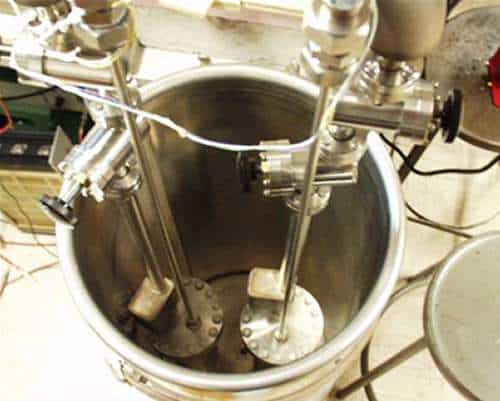
ColdFusion.jpg

On 23 March 1989 Martin Fleischmann of the University of Southampton, UK, and Stanley Pons of the University of Utah, US, announced that they had observed controlled nuclear fusion in a glass jar at room temperature, and — for around a month — the world was under the impression that the world’s energy woes had been remedied. But, even as other groups claimed to repeat the pair’s results, sceptical reports began trickle in. An editorial in Nature predicted cold fusion to be unfounded. And a US Department of Energy (DOE) report judged that the experiments did “not provide convincing evidence that useful sources of energy will result from cold fusion.”

This hasn’t prevented a handful of scientists persevering with cold-fusion research. They stand on the sidelines, diligently getting on with their experiments and, every so often, they wave their arms frantically when they think have made some progress.

Nobody notices, though. Why? These days the mainstream science media wouldn’t touch cold-fusion experiments with a barge pole. They have learnt their lesson from 1989, and now treat “cold fusion” as a byword for bad science. Most scientists* agree, and some even go so far as to brand cold fusion a “pathological science” — science that is plagued by falsehood but practiced nonetheless.

[*CORRECTION 29/05/08: It has been brought to my attention that part of this last sentence appears to be unsubstantiated. After searching through past articles I have to admit that, despite it being written frequently, I can find no factual basis that “most scientists” think cold fusion is bad science (although public scepticism is evidently rife). However, there have been surveys to suggest that scientific opinion is more likely divided. According to a 2004 report by the DOE, which you can read here, ten out of 18 scientists thought that the hitherto results of cold-fusion experiments warranted further investigation.]

There is a reasonable chance that the naysayers are (to some extent) right and that cold fusion experiments in their current form will not amount to anything. But it’s too easy to be drawn in by the crowd and overlook a genuine breakthrough, which is why I’d like to let you know that one of the handful of diligent cold-fusion practitioners has started waving his arms again. His name is Yoshiaki Arata, a retired (now emeritus) physics professor at Osaka University, Japan. Yesterday, Arata performed a demonstration at Osaka of one his cold-fusion experiments.

Although I couldn’t attend the demonstration (it was in Japanese, anyway), I know that it was based on reports published here and here. Essentially Arata, together with his co-researcher Yue-Chang Zhang, uses pressure to force deuterium (D) gas into an evacuated cell containing a sample of palladium dispersed in zirconium oxide (ZrO2–Pd). He claims the deuterium is absorbed by the sample in large amounts — producing what he calls dense or “pynco” deuterium — so that the deuterium nuclei become close enough together to fuse.

So, did this method work yesterday? Here’s an email I received from Akito Takahashi, a colleague of Arata’s, this morning:

“Arata’s demonstration…was successfully done. There came about 60 people from universities and companies in Japan and few foreign people. Six major newspapers and two TV [stations] (Asahi, Nikkei, Mainichi, NHK, et al.) were there…Demonstrated live data looked just similar to the data they reported in [the] papers…This showed the method highly reproducible. Arata’s lecture and Q&A were also attractive and active.”

I also received a detailed account from Jed Rothwell, who is editor of the US site LENR (Low Energy Nuclear Reactions) and who has long thought that cold-fusion research shows promise. He said that, after Arata had started the injection of gas, the temperature rose to about 70 °C, which according to Arata was due to both chemical and nuclear reactions. When the gas was shut off, the temperature in the centre of the cell remained significantly warmer than the cell wall for 50 hours. This, according to Arata, was due solely to nuclear fusion.

Rothwell also pointed out that Arata performed three other control experiments: hydrogen with the ZrO2–Pd sample (no lasting heat); deuterium with no ZrO2–Pd sample (no heating at all); and hydrogen with no ZrO2–Pd sample (again, no heating). Nevertheless, Rothwell added that Arata neglected to mention certain details, such as the method of calibration. “His lecture was very difficult to follow, even for native speakers, so I may have overlooked something,” he wrote.

It will be interesting to see what other scientists think of Arata’s demonstration. Last week I got in touch with Augustin McEvoy, a retired condensed-matter physicist who has studied Arata’s previous cold-fusion experiments in detail. He said that he has found “no conclusive evidence of excess heat” before, though he would like to know how this demonstration turned out.

I will update you if and when I get any more information about the demonstration (apparently there might be some videos circulating soon). For now, though, you can form your own opinions about the reliability of cold fusion.


Astronomers watch as star dies

A chance observation using NASA’s Swift satellite has provided the most detailed account yet of a star exploding into a supernova.

Alicia Soderberg of Princeton University, US, happened to be monitoring the aftermath of a month-old supernova with Swift’s X-ray telescope on 9 January this year when she spotted a burst of radiation in the same galaxy. “When I saw this exciting new source, I originally considered that it may be some other flavour of energetic cosmic explosion, unrelated to massive star death,” she told physicsworld.com.

The source, now identified as SN 2008D, marks the first time a star has been caught turning into a “type-Ib” supernova (Nature 453 469).

Several hundred supernovae are recorded every year in the nearer regions of the universe, although the light that typically signals the event to us is generated several days after initial explosion. The likelihood of two supernovae occurring in the same galaxy in a single month is one in 10,000, and there is an even smaller chance of someone watching it during the initial five-minute X-ray burst. “I certainly got lucky, but they say luck favours the prepared,” Soderberg says.

The trick is knowing where to look and when Alicia Soderberg, Princeton University

Shock wave

Only stars significantly more massive than our Sun turn into supernovae, and of these there are several classes. Type-Ib supernovae are thought to occur when the core of a “Wolf-Rayet” star, which is some 20 times the mass of the Sun, runs out of helium to fuel nuclear fusion, collapses and generates an intense shock wave.

As this shock wave expands outwards, it breaks out through the surface layers into the star’s “wind” of charged particles, whereupon it produces a burst of X-rays. When Soderberg glimpsed this event for SN 2008D on her computer screen, she and her colleague Edo Berger alerted eight other ground- and space-based telescopes to study it. “The trick is knowing where to look and when,” she says. “The X-rays that accompany the explosion are extremely bright but very short lived.”

Although the observations taken of the early shockwave-breakout of SN 2008D reveal little about the explosion mechanism of type-Ib supernovae, they do provide a better understanding of the star’s outer layers, its mass-loss rate and — roughly — its explosion energy, which was about 1051 erg (equivalent to 1027 one-megaton hydrogen bombs).

“We never observe the stars themselves at such a late point [before the explosion]; the time is too brief,” says Stan Woosley of the University of California at Santa Cruz. “Yet the star is doing very different things in its last few years — oxygen burning the last few months, silicon burning the last few days, and its mass structure could change a lot. Now we know it doesn’t.”

An all-sky X-ray telescope could pinpoint hundreds of supernovae as they explode Jens Hjorth, University of Copenhagen

Other events

Perhaps the most fruitful consequence of Soderberg and Berger’s observation is that it gives a precise time when the X-ray emission occurs. This will help physicists look for events related to astronomical explosions, such as gravitational waves and neutrino bursts. It will also allow other core-collapse supernovae to be spotted by looking for the particular X-ray signature.

“An all-sky X-ray telescope could pinpoint hundreds of supernovae as they explode,” says Jens Hjorth of the University of Copenhagen. “No doubt, such a wealth of information would be invaluable in elucidating the nature of supernovae, their progenitors and the detailed physics involved.”

The publication of the supernova X-ray observation by Soderberg and Berger comes just days after Swift — which is maybe better known for its data on gamma rays — was ranked as the highest priority orbiting mission in a review by NASA.

Gravity Probe B comes last in NASA review

A ‘senior review’ of NASA’s astrophysics missions has concluded that a satellite that is trying to measure gravitational effects predicted by Einstein’s theory of general relativity should receive no additional funding after this September.

The decision is quite surprising, as we believe we were making good progress in the data analysisBill Bencze, Stanford University

The 15 member panel report — obtained by physicsworld.com — was commissioned by NASA to analyse 10 of its astrophysics missions that are currently in orbit around Earth. Although the review concludes that 9 out of the 10 missions should be extended as long as “sufficient funding were available”. The panel noted that Gravity Probe B (GP-B), which was ranked bottom, “failed to reach its goals” and therefore should not receive anymore money.

Geodetic and frame-dragging effects

Initially conceived in the 1960s, the mission was launched in 2004 and has cost around $750m. The probe is a collaboration between NASA and Stanford University that aims to measure — by using four spherical quartz gyroscopes — two principles predicted by Einstein’s theory of general relativity: the ‘geodetic’ effect — the amount Earth warps the local space-time in which it resides and the more subtle ‘frame-dragging’ effect — the amount by which the rotating Earth drags its local space-time around with it.

The GP-B team led by Francis Everitt of Stanford University, last year reported only successful measurements of the geodetic effect, with no evidence for the frame dragging effect. However, not only had NASA’s Cassini mission also measured the geodetic effect, but the report concluded that “the GP-B experiment has been overtaken by events and now only occupies a diminished niche in the field.”

The report says that future missions such as LISA — that will search for gravitational waves as predicted by Einstein’s theory of general relativity — will be more powerful and therefore it is “difficult to determine whether GP-B can improve our understanding of gravity”.

Unexpected torques

However, Bill Bencze programme manager for GP-B who is also based at Stanford University says “the decision is quite surprising, as we believe we were making good progress in the data analysis.” Although noise due to solar flares interrupted the satellites observations in 2005, as well as unexpected torques on the gyroscopes that changed their orientation, Bencze is hopeful they can get good results and to find “firm evidence” of the frame dragging effect. This would be the first direct evidence of the effect rather than indirect evidence as provided by NASA’s LAGEOS satellite. However, the report disagrees that further data analysis will yield results “it will be difficult if not impossible to rule out overlooked systematics at the level they are trying to reach,” the report states.

Indeed, according to Bencze, the team of 10 or so people who are looking through the data will need funds of around $3m to complete the project. “This is trivial compared to other missions on the list,” says Bencze. It is estimated that the Chandra X-ray observatory, placed second in the list (see below), will cost around $50m to keep it operational.

The final ranking of the missions is:

  1. SWIFT
  2. Chandra
  3. GALEX
  4. Suzaku
  5. Warm Spitzer
  6. WMAP
  7. XMM-Newton
  8. INTEGRAL
  9. RXTE
  10. Gravity Probe B

Looking for ET’s neutrino beam

For several decades scientists have been using telescopes to scan the heavens for unnatural-looking radio or optical transmissions coming from intelligent alien life. With this search for extraterrestrial intelligence (SETI) having so far failed to pick up a single signal, however, researchers in the US now believe it is worth extending the search beyond electromagnetic waves and start paying attention to neutrinos.

John Learned of the University of Hawaii and colleagues have worked out that advanced alien civilizations could send messages within the Milky Way using neutrinos, and that these messages could be picked up using neutrino detectors currently under construction here on Earth (arXiv:0805.2429).

This may seem like an odd proposal because neutrinos are in fact extremely difficult to detect, since they interact very weakly with ordinary matter. This means that neutrino observatories are hard to build — requiring vast amounts of detecting material and located deep underground or under sea or ice — and even the most sophisticated detect very few particles.

Low-noise communications

But Learned and colleagues Sandip Pakvasa of the University of Hawaii and Tony Zee at the Kavli Institute for Theoretical Physics at the University of California, Santa Barbara believe that neutrino communications offer several advantages over electromagnetic waves. Radio or optical signals can be blocked by material within the galaxy, for example, and the radiation that does make it through is obscured by numerous sources of electromagnetic noise. Neutrinos, on the other hand, pass through the galaxy virtually unimpeded and, if highly energetic, are extremely rare and therefore do not suffer from background interference.

The US researchers assume that alien neutrino beams would be pulsed and directional, and that the messages would probably be sent in something akin to Morse code – with a varying time interval between pulses used to encode the information. They also believe that an advanced civilization would not use neutrinos with energies of less than about a million electron-volts, in order to avoid any interference from neutrinos produced by natural radioactive decay and solar processes. They suggest that SETI hunters should target a specific energy of 6.3 petaelectron-volts (PeV) , which is 6.3×10¹⁵ eV. This is the energy at which the “Glashow resonance” takes place, whereby an electron antineutrino interacts with an electron to create a W– particle.

Enormous amounts of energy

Learned and colleagues have put forward two ways of producing such neutrinos. The first of these involves colliding electrons and positrons at an energy equal to the mass of the Z0 particle, a relatively simple process in principle but one that would require enormous amounts of energy – about 3% of the Sun’s power output for neutrinos to be sent over a distance of 3000 light years.

The second approach instead involves firing protons at a target, accelerating the pions that emerge to around 30 PeV, and then separating out the pion decay products (muons and muon neutrinos). This process could in fact be carried out using the power output of proposed thermonuclear power plants, and would have the added advantage of being able to produce both neutrinos and antineutrinos (switching between the two would provide an additional way of encoding messages). Accelerating the pions to such high energies would be a huge challenge but “not wildly implausible for a future civilization”, according to Learned.

Next-generation neutrino telescopes

As to our ability to intercept such messages, the researchers believe that this will be possible soon using next-generation neutrino telescopes with a detector volume of around 1 km3. These include the IceCube telescope under construction at the South Pole and a possible successor to the ANTARES, NEMO and NESTOR observatories in the Mediterranean. This is a view shared by Francis Halzen, principal investigator of IceCube. Indeed, observations would be clear cut since there are no known natural mechanisms for making neutrinos at 6.3 PeV — detecting two or more of these particles would be a tell-tale sign that they had been artificially produced.

Learned and colleagues believe it is important to keep neutrino telescopes running for extended periods. They point out that extraterrestrial civilizations would have no way of knowing when to transmit, since their messages may take tens of thousand of years to reach their intended recipients (the Milky Way is thought to be some 100,000 light years across) and it would be impossible to predict exactly when a life-friendly planet would become industrialized. Any intelligent beings out there may therefore decide to send messages periodically, and we cannot predict what this period would be, Learned adds. “If there are signals there it will be obvious,” he says. “But we will have to keep looking.”

Copyright © 2026 by IOP Publishing Ltd and individual contributors