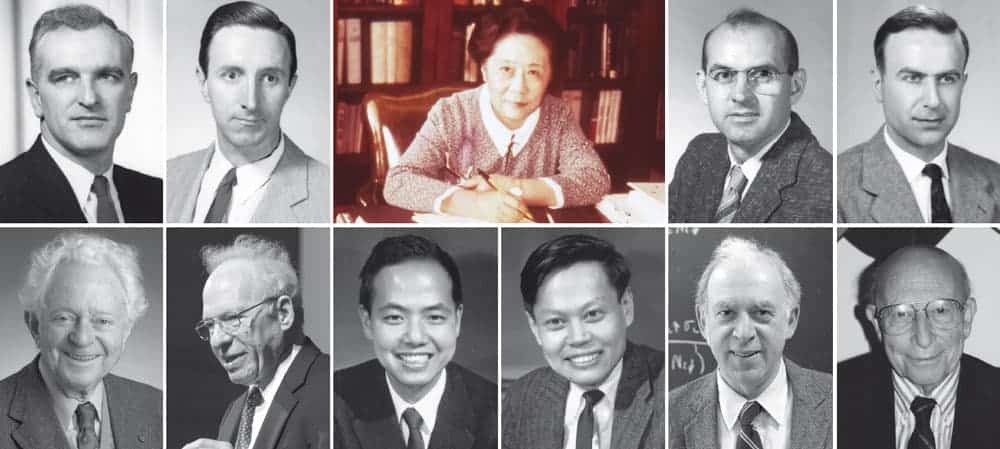
Tsung-Dao Lee: Nobel laureate famed for work on parity violation dies aged 97

The Chinese-American particle physicist Tsung-Dao Lee died on 4 August at the age of 97. Lee shared half of the 1957 Nobel Prize for Physics with Chen Ning Yang for their theoretical work that overturned the notion that parity is conserved in the weak force – one of the four fundamental forces of nature. Known as “parity violation”, it was proved experimentally by, among others, Chien-Shiung Wu.

Born on on 24 November 1926 in Shanghai, Lee began studying physics in 1943 at the National Chekiang University (now known as Zhejiang University) and, later, at National Southwest Associated University in Kunming. In 1946 Lee moved to the US to the Univeristy of Chicago on a Chinese government fellowship, doing a PhD under the guidance of Enrico Fermi, which he completed in 1950.

After his PhD, Lee worked at Yerkes Astronomical Observatory in Wisconsin, the University of California at Berkeley and the Institute for Advanced Study at Princeton before moving to Columbia University in 1953. Three years later, he became the youngest-ever full professor at Columbia, remaining at the university until retiring in 2011.

Looking in the mirror

It was at Columbia where Lee did his Nobel-prize-winning work on parity, which is a property of elementary particles that expresses their behaviour upon reflection in a mirror. If the parity of a particle does not change during reflection, parity is said to be conserved. But since the early 1950s, physicists had been puzzled by the decays of two subatomic particles, known as tau and theta.

These particles, also known as K-mesons, are identical except that the tau decays into three pions with a net parity of -1, while a theta particle decays into two pions with a net parity of +1. This puzzling observation meant that either the tau and theta are different particles or – controversially – that parity in the weak interaction is not conserved, with Lee and Yang proposing various ways to test their ideas (Phys. Rev. 104 254).

Wu, who was also working at Columbia, then suggested an experiment based on the radioactive decay of unstable cobalt-60 nuclei into nickel-60. In what became known as the “Wu experiment”, she and colleagues from the National Bureau of Standards used a magnetic field to align the cobalt nuclei with their spins parallel, before counting the number of electrons emitted in both an upward and downward direction.

Wu and her team found that far more electrons were being emitted downwards then upwards, which for parity to be conserved would be the same for both the normal state and in the mirror image. Yet when the field was reversed, as it would be in the mirror image, they found that more electrons were detected upwards, proving that parity is violated in the weak interaction.

For their work, Lee and Ning Yang shared the 1957 Nobel Prize for Physics. Then just 30, Lee was the second youngest Nobel-prize winning scientist after Lawrence Bragg, who was 25 when he shared the 1915 Nobel Prize for Physics with his father, William Henry Bragg. It has been argued that Wu should have shared the prize too for her experimental evidence of parity violation, although the story is complicated because two other groups were also working on similar experiments at the same time.

Influential physicist

Lee went on to publish several books including Particle Physics and Introduction to Field Theory in 1981 and Science and Art in 2000. As well as the Nobel prize, he was also awarded the Albert Einstein Award in 1957 and the Matteucci Medal in 1995.

In the 1980s, Lee initiated the China-US Physics Examination and Application (CUSPEA) programme, which has since helped to train hundreds of physicists. He also was instrumental in the development of China’s first high-energy accelerator, the Beijing Electron-Positron Collider, which switched on in 1989.

Robert Crease, a historian from Stony Brook University who interviewed Lee many times, said that Lee also had a significant influence on the Brookhaven National Laboratory in New York. “He did some of his Nobel work there in the summer of 1956,” says Crease. “Lee and Yang would make regular Friday-afternoon trips to the local Westhampton beach where they would draw equations in the sand. They’d also yell at each other so loudly that others could sometimes hear them down the hall.”

Later, in the 1990s, Lee also played a role in the transition of Brookhaven’s ISABELLE proton-proton collider into the Relativistic Heavy-Ion Collider. “He was a mentor to many people at Brookhaven,” Crease adds. “He was artistic too – he made many sculptures – and was funny. I was honoured when Lee asked me to sign a copy of my edited autobiography of the theorist Robert Serber, who had adored him.”

“His groundbreaking contributions to his field have left a lasting impact on both theoretical and experimental physics,” noted Columbia University President Minouche Shafik in a statement.  “He was a beloved teacher and colleague for whom generations of Columbians will always be grateful.”

At a reception in 2011 to mark Lee’s retirement, William Zajc, chair of Columbia’s physics department, noted that it was “impossible to overstate [Lee’s] influence on the department of physics, on Columbia and on the entire field of physics.”

Lee, on the other hand, noted that retirement is “like gardening”. “You may not be cultivating a new species, but you can still keep the old beautiful thing going on,” he added.

  • A memorial service in honour of Lee will be held at 9.00 a.m. (CST) on 25 August 2024 at the Tsung-Dao Lee Institute in Shanghai, Chaina, with an online stream in both English and Chinese. More information, including an invitation for colleagues to share condolences, photos or video tributes, is available on the Tsung-Dao Lee memorial website.
Introducing Python for electrochemistry research

Want to learn more on this subject?

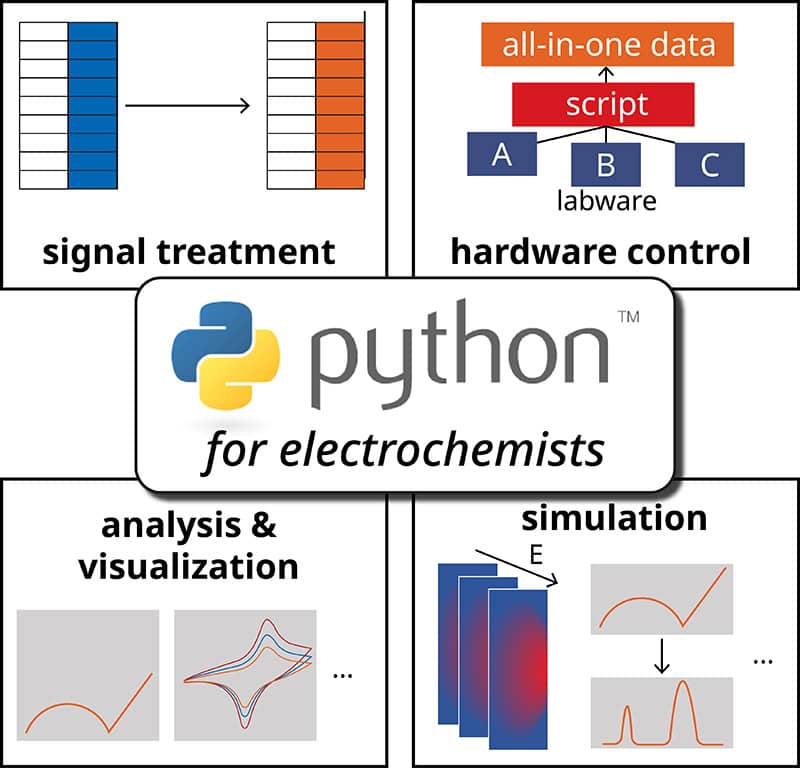
To understand electrochemical behaviour and reaction mechanisms, electrochemists must analyze the correlation between current, potential, and other parameters, such as in situ information. As the experimental dataset becomes larger and the analysis task gets more complex, one may spend days sorting data, fitting models, and repeating these routing procedures. Moreover, sharing the analyzing procedure and reproducing the results can be challenging as different commercial software, parameters, and steps can be involved. Therefore, an open-source, free, and all-in-one platform for electrochemistry research is needed.

Python is an interpreted programming language that has emerged as a transformative force within the scientific community. Its syntax prioritizes readability and simplicity, allowing easy reproducing and cross-platform sharing. Furthermore, its rich ecosystem of community-provided packages enables multiple electrochemical tasks, from data analysis and visualization to fitting and simulation.

This webinar presents a general introduction to using Python for electrochemists new to programming concepts. Starting with the basic concepts, Python’s capability in electrochemistry research is demonstrated with examples, from data handling, treatment, fitting, and visualization to electrochemical simulation. Suggestions and resources on learning Python are provided.

An interactive Q&A session follows the presentation.

Want to learn more on this subject?

Zheng Weiran

Weiran Zheng is an associate professor in chemistry at the Guangdong Technion-Israel Institute of Technology (GTIIT), China. His research focuses on understanding the activation and long-term deactivation mechanisms of electrocatalysts from an atomic scale using operando techniques such as spectroscopy and surface probe microscopy. He is particularly interested in water electrolysis, ammonia electrooxidation, and sensing. His research also involves a fundamental discussion of current experimental electrochemistry for better data accountability and reproducibility. Weiran Zheng received his BS (2009) and PhD (2015) from Wuhan University. Before joining GTIIT, he worked as a visiting researcher at the University of Oxford (2012–2014) and a research fellow at the Hong Kong Polytechnic University (2016–2021).

The Electrochemical Society


MR-guided radiotherapy: where are we now and what does the future hold?

Aurora-RT MR-linac

The past few decades have seen MR-guided radiotherapy evolve from an idea on the medical physicists’ wish list to a clinical reality. At the recent AAPM Annual Meeting, experts in the field took a look at three MR-linac systems, the clinical impact of this advanced treatment technology and the potential future trajectory of MR-guided radiotherapy.

Millimetres matter

Maria Bellon from Cedars-Sinai (speaking on behalf of James Dempsey and ViewRay Systems) began the symposium with an update on the MRIdian, an MR-guided radiotherapy system that combines a 6 MV linac with a 0.35 T MRI scanner. She explained that ViewRay Systems was formed in early 2024 to save the MRIdian technology following the demise of ViewRay Technologies.

Bellon described ViewRay’s quest to minimize treatment margins – the region that’s deliberately destroyed outside of the tumour. In radiotherapy, geometric margins are necessarily added to account for microscopic disease or uncertainties. “But millimetres matter when it comes to improving outcomes for cancer patients,” she said.

The MRIdian A3i, the company’s latest platform, is designed to minimize margins and maximize accuracy using three key features: auto-align, auto-adapt and auto-target. Auto-align works by aligning a very sharp beam to high-resolution images of the soft tissues to be targeted or spared. The auto-adapt workflow begins with the acquisition of a high-resolution 3D MRI for localization. Within 30 s, it automatically performs image registration, contour mapping, predicted dose calculation, IMRT plan re-optimization, best plan selection and plan QA.

Once treatment begins, auto-targeting is employed to deal with organ motion. The treatment beam is controlled by the MR images and only turned on when the tumour lies within defined margins. Organ motion can also cause interplay effects, in which the dose distribution contains gaps or areas of overlap that result in hot and cold spots. Larger margins can worsen this effect – another reason to keep them as small as possible.

The MRIdian MR-linac

Bellon shared some clinical studies demonstrating how margins matter. The MIRAGE trial, for example, showed that 2 mm margins and MR-guided radiotherapy resulted in significantly lower toxicity for prostate cancer patients than 4 mm margins and CT guidance. Elsewhere, the multicentre SMART trial treated pancreatic cancer with a 3 mm margin, which improved two-year overall survival with few to no higher-grade GI toxicities.

“This is actual evidence that reducing margins, making them real, controlling them, will improve outcomes for patients,” she noted.

Looking to the future, could sub-millimetre margins be achievable? Bellon described how a new head coil and submillimetre-resolution imaging can enable frameless MRI-guided stereotactic radiosurgery (SRS) on the A3i platform. To date, the team has investigated phantoms and healthy volunteers. “I think that it would be a really great advantage of the system to step into the SRS space,” she said.

“Innovation remains at the forefront for ViewRay Systems as they continue to strive to image faster, image in more directions and planes, and use more automation and innovation to control margins and make them smaller than ever,” said Bellon.

Mitigating motion

The second speaker, Bas Raaymakers from UMC Utrecht, discussed the Elekta Unity, a MR-linac envisaged back in 1999 by Raaymakers and his colleague Jan Lagendijk, and designed and built in collaboration with industrial partners Elekta and Philips.

Unity comprises a ring-gantry mounted linac integrated with a 1.5 T MRI. Raaymakers described some of the clinical opportunities conferred by such MR guidance. For starters, high-precision dose delivery with small margins enables use of a lower number of treatment fractions. For adrenal gland and prostate treatments, the Utrecht team has moved from 20 to five fractions, and is studying ultra-hypofractionation to just one or two.

Precise dose delivery also protects organs-at-risk and could enable delivery of higher doses to hard-to-treat cancers, such as pancreatic or renal cell cancer, where surrounding tissues are highly radiosensitive. “This is the future of MR-guided radiotherapy, this gives all kinds of opportunities that we do not have now,” Raaymakers said.

The Unity can track all types of motion – breathing motion, drifts or sudden movements – in real time and in 3D. The system’s comprehensive motion management (CMM) system performs two orthogonal cine MR scans and then uses these scans to perform gating and intrafraction drift correction (in which the treatment centre is changed to correct for drifts). Treatments with CMM began last year and analysis of the first seven patients showed that the gating works and improves conformality.

Raaymakers described how CMM combined with high soft-tissue contrast enables prostate cancer treatments in five fractions with 2 mm margins. To minimize intrafraction motion, a necessity for such small margins, the Utrecht team developed a regime in which a new plan is created halfway through the treatment. This replanning reduced the residual motion at the end of the treatment enough to enable 2 mm margins.

The team also investigated the use of drift correction halfway through the fraction and found that, dosimetrically, it was same as the replanning approach. “The whole effort of replanning can also be done with drift correction,” said Raaymakers. “Now we can do prostate treatment in 30 minutes, with 2 mm margins. This will be used, and we will explore how we can use drift correction for all types of treatment.”

The Elekta Unity MR-linac

The ultimate aim, Raaymakers said, is to reach the position where we don’t worry about patient motion at all. For example, is it possible to treat a beating heart? As an example, he described the MEGASTAR study of MR-guided stereotactic arrythmia radioablation, in which MRI is used to follow the beating heart and MLC tracking employed to accurately hit the target.

Raaymakers concluded with a look at the future impact of MR-guided radiotherapy. He noted that radiotherapy is a low-cost technology used to treat 50% of all cancer patients and that MR guidance can improve it further, via hypofractionation, smarter workflows, smaller margins and reduced toxicity.

“I think this is an option to shift from invasive treatments towards radiotherapy; we can postpone surgery for certain patients or omit surgery for others,” he said. “This is something we should strive for in MR-guided radiotherapy, to make this message clear to the rest of the oncology world.”

The practical MR-linac

The final speaker in the symposium was Gino Fallone from the Cross Cancer Institute (CCI), the University of Alberta and MagnetTx Oncology Solutions. Fallone introduced the Aurora-RT, a rotating MR-linac that combines a 6 MV linac with a 0.5 T biplanar MRI with a beam stop. The system was first prototyped in 2008 and is now FDA approved and CE Marked.

The unique feature of the Aurora-RT is that it can be used in two configurations: with horizontal magnets and the beam perpendicular to the magnetic field, or vertical magnets with the beam parallel to B0. Fallone noted that the parallel configuration is the clinical product as it significantly reduces dose perturbations and enables large 3D couch shifts

Fallone told the audience why MagnetTx chose to use 0.5 T MRI. Knowing that the system would require fast imaging techniques, such as bSSFP (balanced steady-state free precession), the team assessed the contrast-to-noise ratio for bSSFP at various field strengths, and found that it was greatest at 0.5 T. “While image quality is determined by the signal-to-noise ratio, which does go up with magnetic field, contrast-to-noise is also critical,” he explained.

The Aurora-RT has a wide bore of 110 x 60 cm, reducing patient claustrophobia and increasing throughput. This large opening also enables significant couch motion of ±23 cm in the vertical and lateral directions, allowing treatments to be performed in the same way as conventional radiotherapy and improving the clinical flow. “You can place the target at the planned location every time, you don’t have to do online replanning for every single patient,” said Fallone. “Such a large couch motion also allows isocentric treatment of peripheral targets.”

To track and treat moving organs, the CCI researchers developed a technique called NifteRT, or non-invasive intrafraction tumour tracked radiotherapy. The approach involves MR imaging at 4 frames/s, autocontouring, and tumour motion prediction for each patient. The predicted tumour position is then used to control the MLC to shape and position the beam to the target.

Fallone emphasized that the team employs a lot of AI and deep learning. “This allowed us to do faster imaging without creating distortions, it allowed us to do very accurate segmentation and it allowed us to do tumour tracking with prediction and irradiation,” he explained.

The Aurora-RT was designed with simplicity and cost reduction in mind. The system can be sited in any typically sized vault, installed through the vault door maze, and does not require a cryogen exhaust vent. Because the Aurora-RT has a beamstop, shielding is required only for scattered radiation, reducing site costs. Once installed, the system runs without needing liquid helium or any liquid cryogens, reducing operating costs. The magnet can be turned on or off in minutes, improving research and service operations. It also uses many existing radiotherapy techniques, for example, existing ion chambers, laser setup and table shifts.

Fallone concluded that the Aurora-RT offers increased throughput, decreased claustrophobia, no process changes, significantly reduced dose perturbations for safer delivery and improved MR guidance via use of the 0.5 T “sweet spot”. Simplified installation in any vault, without the need for an exhaust vent or shielding for the primary radiation beam, decreases installation and operating costs.

Prove its worth

Having discussed the advantages of and clinical evidence for MR-guided radiotherapy, the speakers were asked why MR-linacs still only comprise 2% of the market and why users appear slow to adopt this approach.

“Throughput is a constant conversation that we’re having, despite the fact that yearly throughput tends to be high because a lot of treatments can be hypofractionated,” said Bellon. “On-table adaptive is very intimidating for people, but I don’t know why it’s still considered a niche treatment.”

Raaymakers believes that the conservatism of the medical field is working against them. “Right now, it’s a lot of hassle and there’s no proof…We have to prove that it’s really worth it and hopefully then adoption will get faster.”

Fallone suggests that medical physicists are too scared of MR and that MR-linacs are still too expensive. “We know MRI is better than CT, now we have to convince the bosses,” he said. “If you get a better image you will treat better; there’s nothing to prove.”

Why NASA thinks you should forget about space-based solar power

The other day I was watching the hugely entertaining Amazon Prime documentary series Clarkson’s Farm, which depicts the broadcaster Jeremy Clarkson’s attempts to run a farm in Oxfordshire. In one episode, Clarkson is named the National Farming Union’s “farming champion for 2021” for highlighting the challenges farmers face in making a living from the land. Particularly difficult for him are the rules that let local planning officials stop him from doing stuff that he feels ought to be allowed.

Clarkson appealed against some of the decisions and eventually won his case. But his experience inspired me to look into the UK’s planning system to see how objections have slowed the progress of wind farms and solar farms to a snail’s pace. Despite it being government policy to deploy more of these renewable forms of energy, I soon discovered that the country’s thorough but overly bureaucratic planning process is being hijacked by the “not in my back yard” (NIMBY) brigade.

Space-based solar power is not a new idea of course, first being mooted in a 1941 science-fiction short story by Isaac Asimov

These are people who want all the benefits and upsides of renewable energy systems – so long as they’re installed somewhere else, well out of eyeshot. One comment I read even suggested that the best place for solar power farms would be in space. Having written about the favourable economics of photovoltaic panels and the unfavourable economics of  “solar concentrators”, I immediately wondered if “space-based solar power” could stack up financially let alone technically, especially in such an extreme and unforgiving environment.

Space-based solar power is not a new idea of course, first being mooted in a 1941 science-fiction short story by Isaac Asimov called Reason. It sounds simple in principle: all you have to do is place a solar array at a location in space where the Sun always shines. You then convert the electrical energy from the solar cells into microwaves and beam them to a ground station down on Earth, where they can be collected and turned into electricity for the grid.

Because the Sun’s always shining on the array, the electricity’s permanently on tap and there’s no need for storage. The upshot is that such an array – if it were ever built – would count as baseload generation like a coal, gas or nuclear plant. The UK government is certainly taking the idea seriously, having commissioned an independent report from Frazer-Nash Consultancy into space-based solar power back in 2021.

As Physics World discussed at the time in a news story and feature, the report examined two main concepts – the US-led SPS Alpha and the UK-led CASSIOPeiA. The report called for a thorough cost and economic analysis of both options, which surely is the whole point. The best way of doing this would be by using the “levelized cost of energy” (LCOE), which compares different energy-generation technologies taking all the various costs into account.

Given how many cool and fantastic technical ideas can be dashed on the rocks of reality by economics, I was intrigued to find that the UK government’s feasibility report had already crunched through the numbers. It said that space-based solar power has a 2050 projected LCOE of £50/MWh compared to £33/MWh for Earth-based solar farms (as of 2023 this sat at £41/MWh) and £96/MWh for large nuclear reactors.

Technical challenges

As far as the CASSIOPeiA project is concerned, it would consist of a 2000 tonne satellite roughly 1.7 km in diameter flying in a geosynchronous orbit about 35,800 km about the Earth. It would generate 3 GW of electricity that would be converted into microwaves with a frequency of 2.45 GHz, which can pass largely unhindered through the atmosphere and any clouds.

Getting 2000 tonnes of payload up into space wouldn’t be easy or cheap. The report estimates we’d need about 68 SpaceX Starship launches – an ambitious goal given that, at the time of writing, the company has never launched one of these rockets, let alone reused them. Although I am confident that SpaceX will succeed and that launch costs will fall, building a huge satellite of that kind isn’t the main hurdle.

CASSIOPeiA would also need a ground antenna receiver and grid interface in the form of an elliptical microwave receiver about 6.7 km by 13 km in size. Delivering 2 GW of power into the grid day and night, each receiver would be roughly equivalent to a single large nuclear power station. Overall, development costs are estimated to be an eye-watering £16.3bn and it would take 18 years to deploy. Still, assuming CASSIOPeiA is funded, and that all goes to plan, it could be powering your toaster and TV by 2042.

It should come as no surprise, though, that there are plenty of big technical challenges, with the UK report ranking 10 of the 13 crucial subsystems for the satellite of “high” or “very high” technical difficulty. As a high-level report, it naturally glosses over the practical details, but a more in-depth study has been carried out by Henri Barde, a retired engineer who used to work for the European Space Agency (ESA) in Noordwijk, the Netherlands.

Published by the IEEE in its proceedings of the European Space Power Conference 2023, Barde’s report looks at issues, such as how to cool solar cells and microwave systems that have gigawatts of power coursing through them. It also examines how to deal with temperature swings of about 300 oC a couple dozen times a year as the satellite passes suddenly across the Earth’s shadow (so, no, they’re not actually “on all the time”). Barde gives an overview of the huge, if not insurmountable, technical challenges in the June 2024 issue of IEEE Spectrum.

Further cold water was poured on space-based solar power by NASA, which earlier this year published a detailed report from its Office of Technology, Policy and Strategy

As for the ground-based microwave receiver, it would have a power density of about 29 W/m2 for the 2 GW produced and require about a third of the area of a conventional Earth-based solar-power plant. Given that the UK, where I am based, has an average solar power density of 10 W/m2, we could get the same output with only about three solar plants. What’s more, the solar cells in such plants could (unlike in a microwave antenna) be sensibly spread out over a large area. That sounds very appealing, especially as there is zero technical risk and we could have them now (or nearly now), planning permitting.

NASA weighs in

Further cold water was poured on space-based solar power by NASA, which earlier this year published a detailed 91-page report from its Office of Technology, Policy and Strategy. In worrying news for the technology’s supporters, it concludes that a 2 GW solar-space facility would, by 2050, be “more expensive than terrestrial alternatives and may have lifecycle costs per unit of electricity that are 12–80 times higher”. Even the cheapest system, NASA says, would cost hundreds of billions of dollars.

The NASA report also assesses the overall emissions, in terms of equivalent carbon-dioxide emissions per kilowatt-hour, and reckons that space-based solar power would be higher than terrestrial alternatives. Although NASA admits the costs could be improved with investment, it diplomatically concludes “cost competitiveness may be achieved through a favourable combination of cost and performance improvements related to launch and manufacturing beyond the advancements assumed in the baseline assessment”.

Which, to me, sounds like a polite way of saying “we’re right, but if you think you can do better, go knock yourself out!”.

Solar energy does, however, have lots of potential, with 87% of the world’s nations able to power themselves using less than 5% of their land. The UK is not one of those lucky countries: one-eighth of the whole nation would have to be blanketed with solar panels to power itself. That’s a huge area, given that 6% of the country is already built on, although efficiency improvements are on the way with perovskite solar cells, which will help a bit.

But the economics contained in the NASA report are surely the end of the debate for space-based solar power. If I were spending my own money, I would much rather invest it in lots of terrestrial solar farms. After all, there’s no risk involved and it’s much cheaper. And you don’t need to take my word for it: the benefits of solar power were fully laid out last year in Tesla Corporation’s influential Master Plan 3.

The only snag seems to be getting planning permission to build those solar plants right now from local planning officials. In fact, wouldn’t it be great if Clarkson had a go at deploying a couple of fields full of photovoltaic solar panels at his farm in future episodes. That would test the reality of the situation – and make entertaining TV too.

Sound waves move objects in liquid

Researchers in Switzerland have found a way of using sound waves to manipulate objects in disordered environments such as liquids. Instead of trapping the objects as conventional optical and acoustic tweezers do, the new method guides them using pressure waves, and its developers at the Swiss Federal Institute of Technology in Lausanne (EPFL) say it could be useful for biomedical applications such as targeted drug delivery.

Optical tweezers were invented by the American physicist Arthur Ashkin, who shared the 2018 Nobel Prize for Physics for his role in their development. In these devices, a highly focused laser beam generates optical forces that hold and move micron- or nano-sized objects near the beam’s focus, where the electric field gradient is highest. Their acoustic counterparts work in a similar way, using ultrasonic waves to trap and move objects by creating focalization spots and vortices.

Both techniques are powerful tools for biological research and quantum optics. However, for them to work at their best, the medium through which the object moves must be strictly controlled. The new method overcomes this restriction because it does not require focusing the acoustic waves in the same way, explains Romain Fleury, who heads the Laboratory of Wave Engineering in EPFL’s School of Engineering.

“Instead of forming a vortex to trap and manipulate objects, the idea we developed is to create a hot spot in the pressure field that iteratively pushes the element to the target location, as a hockey stick pushes its puck,” says Fleury. “We call this technique wave-momentum shaping.”

Varying amplitude and phase

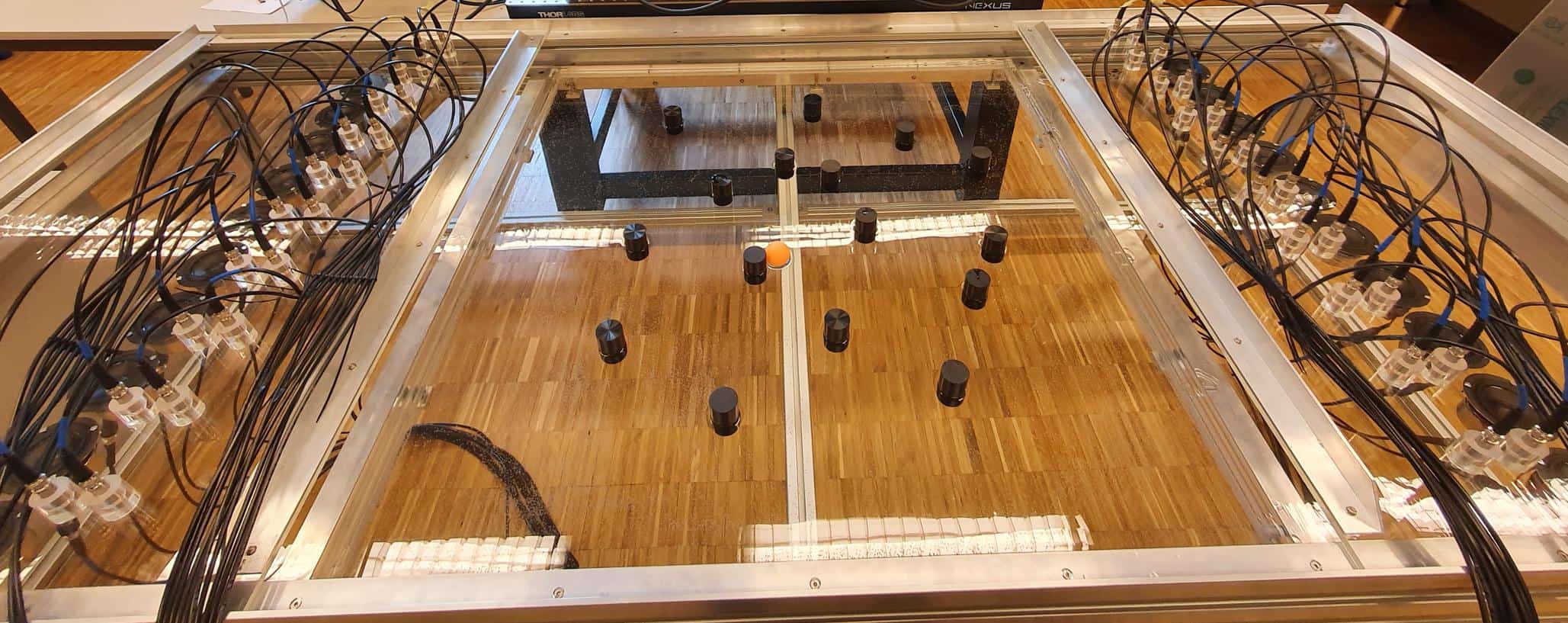
To implement their method, Fleury and colleagues generated sound waves at audible frequencies using an array of loudspeakers situated at either end of a tank filled with water. The target of these waves was a plastic ping-pong ball floating on the surface. By varying the amplitude and phase of the sound waves, the researchers were able to vary the wavefronts that reached the ball. These waves then interact with the medium and cause the ball to move.

Photo of the experimental setup

The researchers monitored the ball’s movement by using an array of microphones to detect the sound waves scattered off it. After sending out three random wavefronts and measuring the scattering matrix for slightly different configurations of the ping-pong ball, the researchers had enough information to deduce the optimal momentum of the acoustic wavefronts they needed to send to translate or rotate the ball however they wanted. They then repeated the procedure to move the ball across the tank, guiding it around obstacles on the way.

“We were very thrilled when the technique worked for the first time,” Fleury tells Physics World.

Promising for non-invasive biomedical applications

While the researchers demonstrated their method with water and a ping-pong ball, Fleury says it will also work for non-spherical objects in more complex, uncontrolled environments – including some found in the human body. This makes it particularly promising for non-invasive biomedical procedures such as delivering drugs to tumour cells or moving cells around using microrobots.

The researchers are considering possible applications in additive manufacturing, too. For example, it might be possible to use the new acoustic tweezer method to arrange microparticles in specific patterns before solidifying them into complex parts.

In this study, which is detailed in Nature Physics, Fleury and colleagues used audible sound waves to move a macroscopic floating object. Their next goal is to miniaturize the technique so that they can implement it in a microscope with micron-sized objects immersed in liquid. They have received funding from the Swiss National Science Foundation (SNSF) to do this, and to lay the foundations for future applications in micro-robotics and biology.

Rumours spread like nuclear fission, say physicists

It is no coincidence that “going viral” is used to describe how ideas spread on social media. Researchers have long used models of infectious disease to understand how information – and indeed misinformation – is rapidly disseminated.

But, according to the physicist Wenrong Zheng, these models can struggle to accurately describe how rumours spread.

“Infectious disease models mostly view the spread of rumours as a passive process of receiving infection, thus ignoring the behavioural and psychological changes of people in the real world, as well as the impact of external events on the spread of rumours,” explains Zheng, who is based at China’s Shandong Normal University.

To address this shortcoming, Zheng teamed up with Fengming Liu and Yingping Sun to create a model of how rumours spread that is inspired by the chain reaction of nuclear fission (atom splitting). This process begins with a uranium nuclei spontaneously splitting into two smaller nuclei and several neutrons. If these neutrons are absorbed by other uranium nuclei, it is more likely that those nuclei will split – thus setting off a chain reaction of fission.

The two most common isotopes of uranium are uranium-238 and uranium-235. The former must absorb multiple neutrons before it will split, whereas the latter will split after just one absorption.

Multiple reception

In the trio’s model, a neutron travelling through a piece of uranium is the rumour. A uranium-235 nucleus is a person who immediately disseminates the rumour upon receiving it. A uranium-238 nucleus is a person who must receive the rumour several times before disseminating it.

“When individuals encounter rumours, they are influenced by their personal interests and decide whether to spread or whether repeated exposure is needed before spreading,” explains Zheng. “Based on different considerations of uranium fission thresholds, individuals are divided into groups based on the influence of their own interest thresholds, fully considering individual behaviour and differences, which is more in line with the reality.”

The researchers conclude that their model is better than some infectious disease models at mimicking the real-life spreading of rumours. They also suggest that rumours often spread slowly at first, which could mean that the spread of misinformation could be countered.

Their model is described in AIP Advances.

Smashing heavier ions creates superheavy livermorium

Physicists have used a beam of titanium-50 to create the element livermorium. This is the first time that nuclei heavier than calcium-48 have been used to synthesize a superheavy element. The international team, led by Jacklyn Gates at Lawrence Berkeley National Laboratory (LBNL) in California, hopes that their approach could pave the way for the discovery of entirely new elements.

Superheavy elements are found at the bottom right of the periodic table and have atomic numbers greater than 103. Creating and studying these huge elements pushes our experimental and theoretical capabilities and provides new insights into the forces that hold nuclei together.

Techniques for synthesizing these elements have vastly improved over the decades, and usually involve the irradiation of actinide targets (elements with atomic numbers between 89–102) with beams of transition metal ions.

Earlier in this century, superheavy elements were created by bombarding actinides with beams of calcium-48. “Using this technique, scientists managed to create elements up to oganesson, with an atomic number of 118,” says Gates. Calcium-48 is especially suited for this task because of its highly stable configuration of protons and neutrons, which allows it to fuse effectively with target nuclei.

Short-lived and difficult

Despite these achievements, the discovery of new superheavy elements has stalled. “To create elements beyond oganesson, we would need to use targets made from einsteinium or fermium,” Gates explains. “Unfortunately, these elements are short-lived and difficult to produce in large enough quantities for experiments.”

To try to move forward, physicists have explored alternative approaches. Instead of using heavier and less stable actinide targets, researchers considered how lighter, more stable actinide targets such as plutonium (atomic number 94) would interact with beams of heavier transition metal isotopes.

Several theoretical studies have proposed that new superheavy elements could be produced using specific isotopes of transition metals, such as titanium, vanadium, and chromium. These studies largely agreed that titanium-50 has the highest reaction cross-section with actinide elements, giving it the best chance of producing elements heavier than oganesson.

However, there is significant uncertainty surrounding the nuclear mechanisms involved in these reactions, which have hindered experimental efforts so far.

Theoretical decrease

“Based on theoretical predictions, we expected the production rate of superheavy elements to decrease when beams beyond calcium-48 were used to bombard actinide targets,” Gates explains. “However, we were unsure about the extent of this decrease and what it would mean for producing elements beyond oganesson.”

To address this uncertainty, Gates’ team implemented a reaction that has been explored in several theoretical studies – by firing a titanium-50 beam at a target of plutonium-244. Based on the nuclear mechanisms involved, this reaction has been predicted to produce the superheavy element livermorium, which has an atomic number of 116.

To create the titanium-50 beam, the researchers used LBNL’s VENUS ion source. This uses a superconducting magnet to contain a plasma of highly ionized titanium-50. They then accelerated the ions using LBNL’s 88-Inch Cyclotron facility. After the reaction, the Berkeley Gas-filled Separator isolated livermorium nuclei from other reaction products. This allowed the team to measure the chain of products created as the nuclei decayed.

Altogether, the team detected two decay paths that could be attributed to livermorium-290. This is especially significant because the isotope is thought to lie tantalizingly close to and “island of stability” in the chart of the nuclides. This comprises a group of superheavy nuclei that physicists predict are highly resistant to decay through spontaneous fission. This gives these nuclei vastly longer half-lives compared with lighter isotopes of the same elements.

If the island is reached, it could be a crucial stepping stone for synthesizing new elements beyond oganesson. For now, Gates’ team is hopeful its result could pave the way for a new wave of experiments and plan to use their titanium-50 beam to bombard a heavier target of californium-249. If these experiments see similar levels of success, they could be a crucial next step toward discovering even heavier superheavy elements.

The research is described in a preprint on arXiv.

Vera C Rubin Observatory’s secondary mirror successfully installed

The secondary mirror belonging to the Simonyi Survey Telescope has been installed at the Vera C Rubin Observatory, which is based in Cerro Pachón in the Andes.

At 3.5 m in diameter, the secondary mirror is one of the largest convex mirrors ever made and is the first permanent component of the observatory’s optical system to be installed.

The glass mirror was made by Corning Advanced Optics and then polished by L3Harris Technologies, both based in New York.

The Vera C Rubin Observatory will conduct a decade-long survey of the southern hemisphere sky, which is known as the Legacy Survey of Space and Time (LSST). The main component is the LSST camera – a 3200 megapixel instrument – that has taken almost two decades to build.

Engineers will soon begin re-installing the Commissioning Camera, which is a smaller version of the LSST that will be used to test the optical systems including both primary and secondary mirrors.

The observatory’s 8.4 m primary mirror will be installed later this month before the LSST Camera is added before the end of the year.

Sandrine Thomas, deputy director for Rubin Observatory Construction, says that the installation of the secondary mirror feels like entering “the home stretch” towards completion. “Now we have glass on the telescope [it] brings us a thrilling step closer to revolutionary science with Rubin,” she says.

The observatory is expected to begin observing the universe next year.

Twisted carbon nanotubes store more energy than lithium-ion batteries

Mechanical watches and clockwork toys might seem like relics of a bygone age, but scientists in the US and Japan are bringing this old-fashioned form of energy storage into the modern era. By making single-walled carbon nanotubes (SWCNTs) into ropes and twisting them like the string on an overworked yo-yo, Katsumi Kaneko, Sanjeev Kumar Ujjain and colleagues showed that they can store twice as much energy per unit mass as the best commercial lithium-ion batteries. The nanotube ropes are also stable at a wide range of temperatures, and the team say they could be safer than batteries for powering devices such as medical sensors.

SWCNTs are made from sheets of pure carbon just one atom thick that have been rolled into a straw-like tube. They are impressively tough – five times stiffer and 100 times stronger than steel – and earlier theoretical studies by team member David Tománek and others suggested that twisting them could be a viable means of storing large amounts of energy in a compact, lightweight system.

Making and measuring nanotube ropes

To confirm this, the team needed to overcome two challenges. The first was finding the best way of making energy-storing ropes from commercially-available SWCNT materials. After testing various methods, the team settled on a yarn-like rope treated with thermoplastic polyurethane, which accelerates the elastic deformation of individual nanotubes and improves their ability to “share the load” with others.

The second challenge was to measure energy stored in ropes which, at only microns in diameter, are much thinner than a human hair. “This small size made it hard to handle and measure them accurately,” says Kumar Ujjain, an assistant research scientist at the University of Maryland-Baltimore County’s Center for Advanced Sensor Technology (UMBC-CAST) who began the project while working with Kaneko at Shinshu University.

The team’s solution was to develop an instrument that combines a motor for twisting the sample with a laser displacement gauge to measure how much torque the strained rope exerts. By adding a microscope and high-speed camera, the scientists could track how much force and twisting the ropes experienced in real time. “This precise measurement was crucial for determining how much energy the ropes could store,” Kumar Ujjain says.

To measure the stored energy, the scientists added a load to the twisted rope and monitored its rotation as the rope unwound. The maximum gravimetric energy density (that is, the energy available per unit mass) they measured was 2.1 MJ/kg (583 Wh/kg). While this is lower than the most advanced lithium-ion batteries, which last year hit a record of 700 Wh/kg, it is much higher than commercial versions, which top out at around 280 Wh/kg. The SWCNT ropes also maintained their performance over at least 450 twist-release cycles, and Kumar Ujjain says they have other advantages, too.

“Storing energy in mechanically twisted carbon nanotube ropes is generally safer than using chemical energy storage, such as in lithium-ion batteries, which can pose risks like fires or explosions,” he explains. “The energy in these twisted ropes is purely mechanical and doesn’t involve hazardous chemicals.”

Managing and exploiting stored energy

One possible application for a chemically safe, biocompatible energy-storage system would be in medical sensors. The UMBC-CAST team is developing a stretchable, porous CO2 sensor that can be applied directly to a patient’s skin, and Kumar Ujjain says that a micro-generator based on twisted nanotube ropes could be a good way of powering it. Getting to that point will, however, require additional research focused on scaling up the nanotube ropes, integrating them with existing devices, and above all, developing mechanisms for releasing the stored energy in a controlled, predictable way.

“There is a risk if the ropes are twisted too tightly,” Kumar Ujjain explains. “In such cases, the tension could suddenly release, like an over-tightened spring in a clockwork watch, potentially causing damage.” Proper handling and safety measures should, he says, make this risk manageable.

The study is described in Nature Nanotechnology.

Icy exoplanet found to be potentially habitable

A research team headed up at the University of Montreal has discovered that the temperate exoplanet LHS 1140 b may have an atmosphere, could be covered in ice, and may even have an ocean of liquid water. If confirmed, this would make it only the third known planet in its host star’s habitable zone to have an atmosphere, after Earth and Mars.

Profound implications

LHS 1140 b, discovered in 2017, is a highly studied exoplanet with observations obtained by several telescopes, including the Transiting Exoplanet Survey Satellite (TESS), the Hubble Space Telescope, the Spitzer Space Telescope and the ESPRESSO spectrograph on the ESO/Very Large Telescope.

Earlier this year, the Montreal-led team reanalysed existing observations to update and refine a range of parameters, including the planet’s radius and mass. The researchers found that its density is inconsistent with a purely Earth-like rocky interior, suggesting the presence of a hydrogen envelope or a water layer atop a rocky, metal-rich core.

They then embarked on a further study of the nature of the exoplanet with the NIRISS (near-infrared imager and slitless spectrograph) instrument on the James Webb Space Telescope (JWST), aiming to distinguish between the “mini-Neptune” or “water world” scenarios.

Presenting the results in The Astrophysical Journal Letters, the astronomers describe how they studied the atmosphere of LHS 1140 b using the transmission spectroscopy technique, which involves observing a planet as it transits in front of its host star.

“Our findings indicate that LHS 1140 b’s atmosphere is not dominated by hydrogen, with the most likely scenario being a nitrogen-rich atmosphere consistent with the water world hypothesis,” says lead author Charles Cadieux, a PhD student at the University of Montreal’s Trottier Institute for Research on Exoplanets, supervised by René Doyon.

Charles Cadieux

“By collecting this light at different wavelengths using a spectrograph – in this case, the NIRISS instrument on JWST – we can infer the atmospheric composition. Molecules such as H2O, CH4 [methane], CO, CO2 and NH3 [ammonia] all absorb light at specific wavelengths, allowing us to identify their presence, or absence,” Cadieux explains.

“Looking at the whole exoplanet population, no atmosphere on a rocky, terrestrial exoplanet has yet been detected to date, this is hard. Our tentative result of a nitrogen-rich atmosphere on LHS 1140 b, if firmly confirmed by additional observations, would be the first such detection,” he adds.

Cadieux notes that this discovery would place LHS 1140 b as only the third known planet with an atmosphere in the habitable zone of its host star, alongside Earth and Mars, confirming that the implications for future research are “profound” and “would provide a target for studying the habitability and the potential for life to exist on rocky, water-rich exoplanets around low-mass stars”.

Super-Earth

According to Cadieux, the next step is to repeat the observations with JWST to confirm the tentative detection of a nitrogen-rich atmosphere. While the current observations use the NIRISS instrument, the team also plans to use the NIRSpec (near infrared spectrograph) instrument on JWST, which extends further into the infrared and can probe the CO2 content of the atmosphere.

Understanding the CO2 content is crucial, as CO2’s greenhouse effect controls surface temperature and the potential size of a liquid water ocean on LHS 1140 b. Cadieux notes that clear detection of CO2 will require two to three years of observations with JWST and should provide definitive proof that LHS 1140 b is a super-Earth with a significant water reservoir.

One key challenge, besides securing JWST observation time, will be addressing stellar contamination in the transmission data. “Since LHS 1140 b orbits a smaller and cooler M-type star, stellar spots on the star’s surface can form molecules like water, which can be misinterpreted as a planetary signal,” Cadieux explains. “Even with additional data in the future, we must carefully correct for stellar contamination to ensure accurate results.”

Copyright © 2026 by IOP Publishing Ltd and individual contributors