

Artificial black hole created in lab

Everyone knows the score with black holes: even if light strays too close, the immense gravity will drag it inside, never to be seen again. They are thought to be created when large stars finally spend all their fuel and collapse. It might come as a surprise, therefore, to find that physicists in the UK have now managed to create an “artificial” black hole in the lab.

Originally, theorists studying black holes focused almost exclusively on applying Einstein’s theory of general relativity, which describes how the gravity of massive objects arises from the curvature of space–time. Then, in 1974, the Cambridge University physicist Stephen Hawking, building on the work of Jacob Bekenstein, showed that quantum mechanics should also be thrown into the mix.

Hawking suggested that the point of no return surrounding a black hole beyond which light cannot escape — the so-called event horizon — should itself emit particles such as neutrinos or photons. In quantum mechanics, Heisenberg’s uncertainty principle allows such particles to spring out of the empty vacuum in pairs all the time, although they usually annihilate shortly after. But if two particles were to crop up on either side of a black hole’s event horizon, the one on the inside would be trapped while the one on the outside could break free. To an observer, the black hole would look like a thermal body, and these particles would be the black hole’s “Hawking radiation”.

This is all very well in theory, but in practice Hawking radiation from a black hole would be too low to be detected above the noisy cosmic microwave background (CMB) left over from the Big Bang. Simply put, black holes are too cold. Even the smallest black holes, which according to Hawking should have the warmest characteristic temperature, would still be about eight orders of magnitude colder than the CMB.

Faced with the difficulty of observing Hawking radiation from astrophysical black holes, some physicists have attempted to make artificial ones in the lab that have a higher characteristic temperature. Clearly, generating huge amounts of gravity is both dangerous and next to impossible. But artificial black holes could be based on an analogous system in which the curved space–time of a gravitational field is enacted by another varying parameter that affects the propagation of a wave. “We cannot change the laws of gravity at our will,” Ulf Leonhardt at the University of St Andrews in the UK tells physicsworld.com. “But we can change analogous parameters in a condensed-matter system.” Leonhardt’s group at St Andrews is the first to create an artificial black-hole system in which Hawking radiation could be detected (Science 319 1367).

We cannot change the laws of gravity at our will Ulf Leonhardt, University of St Andrews

Fishy physics

The idea of using analogous systems to create black holes was first proposed by William Unruh of the University of British Columbia in 1981. He imagined fish trying to swim upstream away from a waterfall, which represents a black hole. Beyond a certain point close to the waterfall, the current becomes so strong — like an event horizon — that fish cannot swim fast enough to escape. In the same vein, Unruh then considered what would happen to waves flowing from the sea into a river mouth. Because the current gets stronger farther up a river, the waves can only progress so far upstream before being defeated. In this way, the river is a “white hole”: nothing can enter.

In the St Andrews experiment, which uses the refractive index of a fibre optic as the analogy for a gravitational field, there are actually both black and white holes. It relies on the fact that the speed of light of light in a medium is determined not only by the light’s wavelength, but also by the refractive index.

The group begins by sending a pulse of light through an optical fibre that, as a result of a phenomenon known as the Kerr effect, alters the local refractive index. A split-second later they send a “probe” beam of light, which has a wavelength long enough to travel faster through the fibre and catch up the pulse. But due to the altered refractive index around the pulse, the probe light is always slowed enough to prevent it from overtaking — so the pulse appears as a white hole. Likewise, if the group were to send the probe light from the opposite end of the fibre, it would reach the pulse but would not be able to go through to the other side — so the pulse would appear as a black hole.

What are the minimal properties required to induce Hawking radiation in a lab system the way we think it is induced by gravitational black holes? Renaud Parentani, University Paris-Sud

Over the event horizon

Leonhardt and his colleagues proved that these black- and white-hole event horizons exist by monitoring the group velocity of the probe light, which never exceeded that of the pulse. More importantly, they have calculated that it should be possible to detect Hawking-radiation particles produced at either of the event horizons by filtering out the rest of the light at the far end of the fibre.

The detection of Hawking radiation would help physicists bridge the gap between quantum mechanics and general relativity, two presently incompatible theories. It might also help physicists investigate the mystery surrounding the wavelength of photons emitted at an event horizon, which is thought to start at practically zero before being stretched almost infinitely via gravity.

However, Renaud Parentani of University Paris-Sud in France thinks that, although it may be possible to glimpse radiation from an event horizon in future versions of the group’s system, the radiation might not possess all the expected properties of Hawking radiation generated by astrophysical black holes. For instance, the fibre-optic system is limited by dispersion, which means that the wavelength of photons produced at the event horizon will not be stretched very far. “What are the minimal properties required to induce Hawking radiation in a lab system the way we think it is induced by gravitational black holes?” he asks. “The answer, even on the theoretical side, isn’t clear. But these experiments will encourage us to consider the question more deeply.”

Entangled memory is a first

Physicists in the US are the first to store two entangled quantum states in a memory device and then retrieve the states with their entanglement intact. Their demonstration, which involves “stopping” photons in an ultracold atomic gas, could be an important step towards the practical implementation of quantum computers.

The basic unit of information in a quantum computer is the qubit, which can take the value 0, 1 or—unlike a classical bit — a superposition of 0 and 1 together. A photon could be used as a qubit, for example, with its “up” and “down” polarization states representing 0 or 1.

If many of these qubits are combined or “entangled” together in a quantum computer, they could be processed simultaneously and allow the device to work exponentially faster than its classical counterpart for certain operations. Entanglement could also play an important role in the secure transmission of information because the act of interception would destroy entanglement and reveal the presence of an eavesdropper.

Fragile states

However, this fragile nature of entanglement has so far prevented physicists from making practical quantum information systems.

Now, a team of physicists at the California Institute of Technology led by Jeff Kimble has taken a step towards this goal by working out a way to store two entangled photon states in separate regions of an extremely cold gas of caesium atoms (Nature 452 67).

The entangled states are made by firing a single photon at a beam splitter, in which half the light is deflected left into one beam, and the other half deflected right to form a second beam. These two beams are parallel, separated by about 1 mm and contain a pair of entangled photon states—one state in the left beam and the other in the right.

Slow-moving hologram

Once inside the cloud, a hologram-like imprint of the two entangled photon states on the quantum states of the atoms can be created using an effect called electromagnetically-induced transparency (EIT). This imprint moves through the gas many orders or magnitude more slowly than the speed of light, effectively “stopping” the entangled states for as long as 8 µs.

EIT is initiated by a control laser that is shone through the gas to create the holograms. Then, the laser is switched off, which causes the photon states to vanish leaving the holograms. Then the control laser is switched back on, which recreates the entangled photon states from the holograms. The storage time can be changed by simply varying the time that the laser is off.

When the recreated entangled photon states leave the atomic gas, one of the states passes through a device that shifts its phase, while the other does not. The two states then recombine at a detector. If the states remain entangled, adjusting their relative phase would create a series of bright and dark quantum interference effects at the detector.

20% entangled

By repeating the experiment for a large number of single photons and measuring the interference intensity, the team concluded that about 20% of the entangled photon states were recovered from the atomic gas. While this might seem like a poor success rate, it is good by quantum-computing standards where entanglement efficiencies of 1-2% are common.

According to Lene Hau of Harvard University, who pioneered EIT, the Caltech technique could be improved by cooling the atomic gas below the current 125 mK to create a Bose-Einstein condensate in which all the atoms are in a single coherent quantum state.

Sharing secrets

Hau also believes that the Caltech memory device could be modified to store the entangled states in two different atomic gases. This, she says, would allow quantum keys to be shared securely between users of a quantum encryption system.

The storage and retrieval of individual photons in an atomic gas was first demonstrated in 2005 by two independent groups—one led by Hau and the other working at the Georgia Institute of Technology. The ability to store photons without destroying entanglement is crucial for the transport of single photons over large distances, where the memories would work as quantum repeater that would boost the optical signal without destroying the quantum nature of the signal.

Gravity-test constrains new forces

Physicists in the US have used a tabletop experiment to rule out the existence of strong, gravitational-like forces at short length scales. Such forces, which could hint at additional space–time dimensions or weird new particles, would cause Newton’s inverse square law of gravity to break down. By directly measuring the gravitational force on a micromechanical cantilever, however, Andrew Geraci and co-workers at Stanford University have found no evidence for such effects down to a distance of about 10 μm.

These are the most stringent constraints on non-Newtonian forces to date at this length scale Andrew Geraci

The result represents a small reduction in the amount of “wiggle-room” available in theories that attempt to incorporate gravity with the other three forces of nature, in particular string theory. “These are the most stringent constraints on non-Newtonian forces to date at this length scale,” says Geraci, who is currently based at the National Institute of Standards and Technology in Boulder.

Mysterious force

Gravity is the most mysterious of nature’s four known forces. Because it is so weak, researchers have only been able to test Newton’s inverse square law — which states that the gravitational force between two masses is inversely proportional to the square of their separation — down to distances of about 0.1 mm in the last few years. Compare this with electromagnetism, which is some 40 orders of magnitude stronger than gravity and has been tested at subatomic scales.

On the theoretical side, gravity poses even more of a challenge. Unlike electromagnetism and the strong and weak nuclear forces, which are described by quantum field theories, gravity is described by Einstein’s general relativity — a geometric theory which reduces to Newtonian gravity in everyday situations but which breaks down at the quantum scale. The lack of experimental constraints on gravity at distances less than a millimetre has given theorists broad scope to hypothesize how gravity relates to the other three forces. Testing gravity at short length scales therefore helps put these ideas on more solid ground.

Attonewton measurement

Geraci and co-workers have used an interferometer to measure how much a 0.25 mm-long silicon cantilever loaded with a 1.5 μg test mass is displaced by a source mass located 25 μm beneath it (arXiv:0802.2350; submitted to Phys Rev D). Keeping the apparatus at cryogenic temperatures to reduce thermal noise, this allowed the team to measure the attonewton (10–18 N) forces between two masses directly. This contrasts with the precision torsion-balance experiments that have tested Newtonian gravity at sub-millimetre scales by measuring torque, namely those performed by Eric Adelberger’s group at the University of Washington (see: Exclusion zone).

As is usual when testing for departures from the inverse square law, the team then looked for evidence of a corrected “Yukawa-type” potential: VN(1+α e–r/λ), where VN is the Newtonian gravitational potential, α describes the relative strength of the new force and λ is its range. Although the Stanford apparatus does not allow the Newtonian gravitational interaction between the test masses (i.e. corresponding to α ~1) to be measured, the experiment probes large forces in the regime where α = 104 – 108 at length scales of about 10 μm. It is here that some rather outlandish theories suggest powerful new forces will show up.

Extra dimensions

A decade ago, theorists suggested that all matter and the quantum fields of the strong, weak and electromagnetic interactions (i.e. our entire material universe) are confined to a 3D “brane” that floats around in a higher dimensional space where gravitons (the supposed mediators of gravity) roam wild. The apparent weakness of gravity would therefore be an illusion to inhabitants of the brane: gravity is merely diluted as it spreads out into additional dimensions that we cannot perceive.

In accordance with Gauss’s law, each extra dimension would increase the exponent in Newton’s law: if a single extra dimension turned up at a certain length scale, then the inverse square law would become an inverse cube law at that scale, for example. Provided the extra dimensions are large enough, they could also harbour new “gauge” particles that mediate forces many orders of magnitude stronger than gravity. Unlike gravity, the range of such forces (which are of the order of a fraction of a millimetre owing to the finite masses of the particles) might be independent of the number and size of the extra dimensions, and the forces can be repulsive rather than attractive.

We have taken out a sizeable chunk of the parameter space for moduli Andrew Geraci

Similar forces can arise in string theory, which is the inspiration behind such “braneworld” scenarios and the leading contender for a quantum theory of gravity. String theory demands six extra dimensions, and the exchange of certain “light moduli” particles that determine the way these dimensions are compactified at small scales could mediate forces at least 10,000 times as strong as Newtonian gravity. These forces may be present even if the dimensions are not large but curled up at the Planck length (about 10–33 cm), as most string theorists think is the case.

Moduli constraints

According to Geraci, it is these light moduli that the Stanford experiment has constrained most dramatically. “We have taken out a sizeable chunk of the parameter space for moduli,” he says. “Of course we can not rule out string theory, but we are able to place meaningful bounds on the mass [which determines the range, λ] and coupling strength of moduli [which determines α] that are quite generic.” This adds to constraints set in 2003 by researchers at the University of Colorado using a planar oscillator separated by a gap of 108 μm, which operates at length scales that are intermediate between the Stanford and Washington set-ups (see: Exclusion zone).

The results represent a four-fold improvement on previous experiments performed by the same team in 2003, but the researchers are currently working on a new “rotary” experiment that has a larger interaction area for the test and source masses. With this, the team expects to constrain parameter space in alpha by a further one to two orders of magnitude within a year or so, which would allow the “strange-modulus region” to be surveyed almost entirely (see: Exclusion zone).

“This is a pioneering experiment,” says Stanford theorist Savas Dimopoulos, who was one of the first to propose braneworld scenarios in 1998.

Squeezed electrons shed light on silicon

A long-standing controversy about why tiny silicon crystals emit light appears to have been settled by a clever experiment that pins down the movements of electrons in the material. The work was done by researchers in Europe and reveals that one of two distinct effects is involved in producing the light — depending on the structure of the nanocrystals. This information could help in the development of silicon-based optical devices, which have hitherto been very difficult to make.

Silicon’s wonderful electronic properties mean that just about every high-tech gadget contains devices made from the semiconductor material. However, silicon is notoriously bad when it comes to creating or processing light, which is why other semiconductors such as gallium arsenide are used in optical devices such as light-emitting diodes (LEDs) or switches for optical communications networks.

Indirect band gap

Silicon’s optical inadequacies are related to an “indirect” gap between its electron energy bands, which makes it very difficult for an electron to jump directly from the conduction band to the valence band by simply emitting one photon.

One glimmer of hope for those pursuing silicon-based optical devices is that nanometre-sized crystals of silicon are known to emit light in a process called photoluminescence — something that is not seen in larger bulk samples. But exactly how and why this process occurs in tiny bits of silicon had been a hotly contested issue since the effect was first seen in porous silicon in 1990.

Defects or confinement?

Experiments done by several groups suggest two distinct possibilities: structural defects and quantum confinement. Defects are thought to change the energy bands of the silicon, making it easier for electrons to move between energy levels by emitting light. Quantum confinement arises because the size of the nanocrystals is on par with the wavelength of the electrons — which also modifies the energy bands. Light from defects and light from quantum confinement normally looks very similar, which had made it difficult to work out which effect was responsible for photoluminescence.

Now, Manus Hayne of the University of Lancaster in the UK and colleagues in the Netherlands, Germany and Belgium have shown that when defects are present, they are responsible for nearly all of the light emission — but if there are no defects, the light is a result of quantum confinement Nature Nanotechnology doi:10.1038/nnano.2008.7).

Squeezing electrons

To do this the team made their photoluminescence measurements in a strong magnetic field. The field “squeezes” the electrons, which confines their motion to a “magnetic length”, which is dependent on the field strength

Confinement is also a feature of defects, from which conduction electrons stray no further than 1 nm. By contrast, quantum confinement occurs on length scales comparable to the size of the nanocrystal — about 3–5 nm in Hayne’s experiment.

If a field (about 50 T) with a magnetic length between 1 and 3 nm is applied to the nanocrystals, electrons associated with quantum confinement will be squeezed — causing a tiny shift in the wavelength of the light emitted — but electrons associated with defects are largely unaffected.

One or the other

When such a field was applied to nanocrystals that were known to have lots of defects, no shift in the light was seen — suggesting that the photoluminescence is associated with defects. The team then removed the defects by heating the nanocrystals in pure hydrogen and again applied the magnetic field. This time they saw a clear shift in the wavelength of the emitted light — proof that quantum confinement was responsible for the photoluminescence. Finally, the hydrogen was removed by heating the nanocrystals in vacuum — which brought back the defects. And sure enough, the wavelength shift vanished.

So does Hayne think that these experiments will put a stop to the controversy? “We think that using a magnetic field is a pretty definitive test, but the answer could vary from sample to sample,” he said.

According to Hayne, understanding the underlying mechanisms for light emission is crucial for researchers who are attempting to make efficient light-emitting devices from silicon. “Even from silicon nanocrystals the luminescence is not very bright, compared to nanostructures made from compound semiconductors, for example,” Hayne told optics.org. “It is very important to understand where the light is coming from if you want to improve the efficiency.”

Physicists roll out nanotube paper

Rolling a small steel cylinder across an array of carbon nanotubes (CNTs) is a quick and easy way of preparing “buckypaper” — a thin material that is an excellent conductor of both heat and electricity. Invented by physicists at Tsinghua University, China, the new technique could be used to make materials that boost the performance of high energy density supercapacitors or remove heat from computer chips.

The team’s production method really is as simple as it sounds. They begin with arrays of millions of CNTs that have been grown on a silicon substrate using a well-established technique. The arrays, which resemble a forest with all the CNTs aligned perpendicular to the silicon surface, are about 10 cm in diameter and the CNTs are about 100 µm tall.

Flattened forest

To make a piece of buckypaper, Changhong Liu and colleagues place a very thin microporous membrane on top of a CNT array and then push a steel cylinder slowly across the sample — which knocks all the CNTs over in the same direction and flattens them between the membrane and silicon substrate. Next, the membrane and buckypaper is peeled off the silicon substrate and the membrane is removed by washing the sample with ethanol — leaving just the buckypaper (Nanotechnology 19 075609).

The team claim that their method is a significant improvement over previous attempts at making buckypaper that involved filtering a liquid suspension of CNTs in a high magnetic field. Paper made in this way often has poor mechanical, thermal and electrical properties because it is difficult to ensure that the process results in a uniformly-thick material in which all the CNTs point in the same direction.

Swanning about

Liu and his colleagues report that their dry technique produces a strong and flexible film and demonstrate the claim by folding their CNT material into an origami swan.

The team also put their material to more practical use by using it to make supercapacitors — devices that can store up to 1000 times more electrical energy than standard capacitors and are often used when a large but brief surge of energy is required, such as driving the starter motor of a large engine. Supercapacitors are also being used in some prototype fuel-cell and hybrid cars to improve acceleration.

Superior supercapacitors

Buckypaper shows great promise for use as capacitor electrodes because it has a rough surface with a very large surface area — and the capacitance of a device is proportional to the surface area of its electrodes. “From our comparison measurements, our buckypaper-based supercapacitors were at least twice as good as the commercially purchased carbon fiber-based capacitors,” said Liu.

The team also found that the buckypaper was a very good conductor of heat, having a thermal conductivity of about 330 W/(m K). This is the highest value of any known CNT film and about the same as copper. “The material’s high in-plane thermal conductivity means that it can be used to transmit heat from confined areas,” said Liu. “For example, our tightly aligned buckypaper could be used to solve thermal management problems in microelectronic packaging.”

A brief history of Hawking

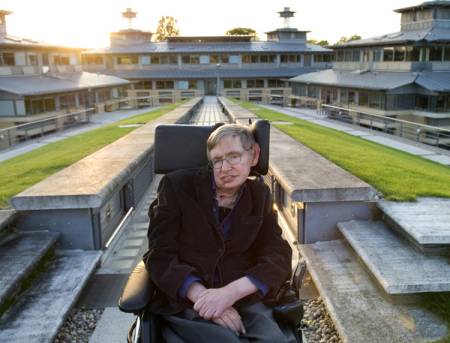
One could say that Stephen Hawking is the epitome of the general public’s view of a scientist — someone who dedicates their life to science with a blind determination to unravel the mysteries of the cosmos. Struck down by motor neurone disease in his early twenties while doing his PhD, Hawking is now almost totally paralysed and can only communicate via his synthesized voice box. Yet it is this oracle-like voice and his dogged determination to understand our universe that have helped him become one of the most recognisable physicists alive today — even if he is not the latter-day Newton or Einstein the media likes to suggest.

Hawking now can only communicate via a single cheek muscle, which he can flex in response to characters on a screen allowing him to type out sentences. Even though it takes him a minute to type three words, Hawking unbelievably still undertakes a full week of teaching and research. Indeed, he still has four PhD students. The two-part television series Stephen Hawking: Master of the Universe, which is to be broadcast on 3 and 10 March on the UK’s Channel 4, looks at the life and work of Hawking, from his two failed marriages to his work on black holes and the beginnings of the universe. The series, like Hawking himself, doesn’t shy away from getting stuck into the biggest topics in physics from string theory to colliding branes.

The first episode looks at Hawking’s early life, and his quest to unify quantum mechanics with general relativity through his work on black holes. It also delves into his first marriage to Jane Wilde — then a language student — and the eventual strains that occurred due to his work and the fame that was brought by his book A Brief History of Time, published in 1988.

The first instalment does a good job of explaining the concept of Hawking radiation, which is caused by the creation of negative and positive mass particles at the edge of black holes. “It is one of the greatest papers of the 20th century,” is how Andy Strominger from Harvard University describes Hawking’s 1975 paper on particle creation by black holes.

I felt somewhat uneasy with the constant reference to God

The mind of God

Hawking appears throughout the two programmes, but I felt somewhat uneasy with the constant reference to God running throughout the first part, which starts with Hawking’s famous the suggestion that he “wanted to know the mind of God” and continues with him questioning whether we need a god at all. As if to emphasize the link to God, heavenly-sounding choirs pipe-up whenever we see old footage of Hawking wheeling himself around Cambridge or giving seminars.

Both episodes feature cameo appearances from various physicists describing physical concepts. Media darling Michio Kaku from the City College of New York is wheeled in to describe difficult topics such as supersymmetry, quantum mechanics and string theory, all with the help of props from a local fairground. String theorist Lisa Randall from Harvard University also appears, describing the concepts of extra dimensions using, bizarrely, calorie-filled doughnuts in a coffee shop.

Stephen Hawking

The second part focuses more on current issues in physics and has less about Hawking’s own work. You start to get a sense that a new generation of physicists have taken over his mantel in the quest to unify the four fundamental forces. Indeed, the programme almost turns into an episode of Michael Green: Master of String Theory when it describes how Green — another theorist at Cambridge who, together with John Swartz, came up with the idea of superstring theory and how it is possibly the best way of describing gravity with quantum mechanics. The viewer is left not knowing whether Green and Hawking are competitors or collaborators. Hawking, however, gives a rather subdued response to string theory: “If string theory is correct,” he says, “help may be on hand from extra dimensions [to unify the four forces].”

If people haven’t had enough of trying to understand and visualize 11 dimensions (helped in part by Kaku and a fishpond), the final 20 minutes of the second instalment then goes into the world of colliding branes and spontaneous creation of universes which Hawking pioneered in his “no boundary condition” proposal for the start of the universe.

It gives a sense that time has run out for Hawking

Stubborn drive

With all the difficulties that Hawking has experienced, you may wonder what would have been possible if he was still fully able-bodied. But is that possibly the point — that his drive to understand the universe was brought on by his disability and his stubbornness to not let it get in the way? Yet even with his disability, he never gives the impression that he is frustrated with the cards life has dealt him.

Overall, the documentary explains Hawking’s theories well enough for the layperson to grasp. But it also gives a sense that time has now run out for Hawking and his quest to formulate a theory of everything. Even Hawking, who is now 66, hints at this: “I would have liked to have done more,” he concedes, “in particular to have found a complete theory of quantum gravity and the early universe.” Ever the jester, he points out wryly: “But that wouldn’t have left much for anyone else to do.”

A mind of her own

She is unlikely to be someone that many physicists will have heard of. But Alicia Boole Stott (1860–1940) was one of the first people to explore 4D geometrical figures and had a remarkable ability to conceive how such figures are put together, despite being essentially self-educated. Her path to a mathematics career, however, was full of sorrow, indirection and drama.

Stott’s life might have served as plot material for a Victorian novel. Her father, George Boole, was the son of a cobbler who could only meagrely provide for his family. Yet George managed to become a professor of mathematics at Queen’s College, Cork, win the Royal Society’s gold medal and create the field of mathematical logic — as in “Boolean algebra” — all without having a university degree. When George died in 1864, he was not yet 50, his third daughter Alicia was not yet four, and his wife Mary was pregnant with their fifth child Ethel.

Boole’s death left his wife Mary — the niece of Sir George Everest, after whom the famous mountain was named — and her five daughters Mary Ellen, Margaret, Alicia, Lucy, and Ethel in dire poverty. Mary sold the Royal Society’s gold medal and went to work as a matron at Queen’s College in London. With little time for her own children, she left the middle child, Alicia, with an uncle in Cork. Alicia spent a few lonely and unhappy years there before joining her mother.

Life of surprises

Adding to the family’s misfortunes, Mary was by then an invalid. Alicia and her four sisters had little or no schooling and shared a single, filthy bedroom. Their life became more burdened when their mother befriended an eccentric surgeon and author called James Hinton. According to the mathematician Harold “Donald” Coxeter, Alicia’s later collaborator, Hinton brought to the house “a continual stream of cranks”. These oddballs hung out in the single sitting room and “talked endlessly about subjects that Alice, Lucy and Ethel were too young to understand but not too young to brood over”.

When Alicia was about 16, she went back to Cork to work in a children’s hospital for a short time. When she returned to London, she met James Hinton’s son Charles “Howard” Hinton (1853–1907), a mathematician, teacher and science-fiction writer who was as eccentric as his father but more appealing. The younger Hinton was one of the first to be convinced of the real, rather than merely formal, existence of a fourth spatial dimension, and even emphasized its educational value. He coined words to name its features (such as “tesseract” for a 4D hypercube), composed exercises to develop the ability to imagine it, and recruited the three youngest Boole sisters to help him build models to represent 4D figures known as hypersolids.

Howard Hinton never lost his flair. He married the eldest Boole sister Mary Ellen, was arrested for bigamy (she was not his only wife), and spent a day in jail for the charge before fleeing with Mary Ellen to Japan. Later, he spent a few years at Princeton University, where his achievements included inventing a gunpowder-driven pitching machine for baseball practice, which caused several injuries to players. After he was expelled from Princeton, he moved to Minnesota and Washington, DC before his death in 1907.

Working in 4D

But three decades earlier, before leaving London, Hinton had sparked in Alicia, then at the end of her teenage years, a mathematical imagination. Entranced, she built models of “regular” hypersolids — i.e. those in which every face is the same. In three dimensions, as the ancient Greeks first pointed out, there are five regular polyhedra: tetrahedron, cube, octahedron, dodecahedron and icosahedron. In four dimensions, however, there are six. Just as each regular polyhedron has square, triangular or pentagonal faces, each of the 4D hypersolids has tetrahedra, cubes, octahedra or dodecahedra as its 3D “faces”. Alicia now invented a word of her own — polytope — to refer to a geometrical figure in n dimensions.

Alicia married an actuary, Walter Stott, in 1890. Then came another lucky coincidence. Walter noticed a paper, written by a Dutch mathematician called Pieter Schoute from the University of Groningen, about the same 4D figures. Alicia sent Schoute pictures of her models; the two met and began collaborating. They were “an ideal team”, Coxeter remarks, for “her power of geometric visualization supplemented Schoute’s more orthodox methods of using coordinates”.

Schoute helped Alicia to transform her amateur diversion into a professional pursuit by helping her to publish papers under her own name that outlined discoveries connected with 4D figures. These works, plus her models, strongly contributed to making four dimensions real rather than merely formal. Some 4D figures have even turned out to have physics applications: a recent paper (arXiv:physics/0601139v1) shows that the 24-cell and the 600-cell occur as minimum-energy configurations of charged particles on the 3-sphere.

Some of Alicia’s models are on display at Groningen and at the Faulkes Institute for Geometry at Cambridge University. In a recent article for the American Mathematical Society about Alicia’s 120-cell hypersolid, my colleague Anthony Phillips describes how he photocopied the templates in her article, then coloured and assembled the figures, each one a “face” of a 4D hypersolid.

The critical point

Alicia Boole Stott’s story is a time-honoured one, exemplifying the power of the human imagination to thrive under adverse conditions. She was fortunate to have enough prowess in mathematics to allow her to explore, understand and innovate in an area that did not require mastery of a body of mathematical theorems. She was also fortunate, after such a despondent childhood, in retaining the interest and energy to do so.

But her story is also disturbing in the extent to which these depended so much on luck and circumstance. One goal of any rational science education should be to make sure that fertile imaginations such as hers succeed not by sheer chance, but within a framework that nurtures and protects them.

Blog Life: Nanoscale Views

Blogger: Doug Natelson
URL: nanoscale.blogspot.com
First post: June 2005

Who is the blog written by?

Doug Natelson is a condensed-matter physicist at Rice University in the US. He is interested in understanding the physics of solid-state systems at the nanometre scale and has recently been investigating the problem of quantum decoherence using metal nanowires.

What topics does the blog cover?

The blog mainly looks at scientific developments in condensed-matter and nano-scale physics. Natelson gives simplified explanations of his own work, for instance, as well as regularly rounding up and describing other interesting condensed-matter research papers. The blog also covers science-related issues that crop up in his day-to-day work, such as writing research proposals, and Natelson sometimes draws attention to interesting or amusing physics-related articles in the media. Last November, for example, he highlighted an article in the UK’s Daily Telegraph newspaper that reported on a suggestion by physicist Lawrence Krauss of Case Western Reserve University in the US that our observations of dark energy may have shortened the universe’s life expectancy.

Who is it aimed at?

Unlike many other physics blogs, Nanoscale Views does not appear to be targeted primarily at the author’s colleagues. Natelson often goes to some length to explain scientific ideas at a level that is accessible to those not actively working in his area of physics; and when talking about the ins and outs of life as an academic, he seems well aware that many of his readers might come from different backgrounds. Judging by the comments, however, there are nonetheless plenty of condensed-matter researchers among his readership.

Why should I read it?

A good reason to read this blog is to learn more about cutting-edge condensed-matter research. It is a unique source of information because it explains the very latest results — most of which would not make it into the scientific news media — in a clear and relatively accessible way. Nanoscale Views also provides plenty of interesting insights into the behind-the-scenes life of an academic physicist for readers from outside this community. Recently, for example, Natelson has been helping sort abstracts for the American Physical Society’s March meeting, and his posts are extremely revealing about the amount of work that goes into organizing such a large scientific conference.

How often is it updated?

Usually once every five or six days, which is infrequent compared with many blogs, but Natelson’s posts are generally lengthy, and are usually written as standalone articles.

Can you give me a sample quote?

Writing equipment proposals these days feels like a complete throw of the dice. For those who don’t know, after your startup period, it can be challenging to get the resources needed to buy significant pieces of equipment (say $200K–$400K). You can’t just ask for that kind of equipment as part of a standard grant proposal, which is why they set up separate proposals just for gadgetry. I’m trying to get a piece of equipment that will be a major boost to all areas of my research program, and after the initial grant period I’m planning on adding it to Rice’s shared instrumentation pool so that it’s there to help the whole campus community. The big question is, with the current budget woes, what’s going to happen to this program? Is the proposal success rate going to be 10%? Lower?

Full steam ahead

Rolf-Dieter Heuer

When the Economist recently reported the news of Rolf-Dieter Heuer’s appointment as the next director-general of CERN, it depicted him sitting cross-legged in the middle of a circular track steering a model train around him — smiling. It was an apt cartoon for someone who is about to take charge of the world’s most powerful particle accelerator: the 27 km-circumference Large Hadron Collider (LHC), which is nearing completion at the European laboratory just outside Geneva. What the cartoonist did not known is that model railways are one of Heuer’s passions.

“I don’t ‘play’ with the trains,” the 59-year-old German particle physicist is quick to point out over the phone from his office at the DESY laboratory in Hamburg, where he is currently director of high-energy and astroparticle physics. “I like to build complex track arrangements — and not just circles!”

From January 2009 Heuer will have a somewhat more complicated toy at his disposal. The LHC, which is due to start tentatively smashing protons into one another beneath the Franco-Swiss border this summer after 23 years of planning and construction, is the largest scientific instrument ever built. When it reaches full throttle next year, the multibillion Swiss Franc accelerator will pack an energy of a few TeV (1012 eV) into a volume of about 10–45 m3. Such conditions have not existed since the first trillionth of a second after the Big Bang, which means that the LHC could open the door to particles and forces that have never been seen before. The timing of Heuer’s five-year directorship could hardly be better.

Is he nervous? “No. I am looking forward to the job, but with a certain respect. It carries much more responsibility than I’ve ever had,” he says. “The future of CERN and of particle physics depends on the outcome of the LHC.”

Management material

Heuer is certainly no stranger to CERN. In 1984, following a PhD and a postdoc at the University of Heidelberg, he joined the laboratory as a staff scientist with responsibility for part of the OPAL experiment — one of four large detectors positioned around the Large Electron Positron collider (LEP), the LHC’s predecessor. His skills, he says, were not so much in data analysis but in handling, talking to and driving people. By 1994 he had been appointed spokesperson for the 330-strong OPAL collaboration, although he never imagined he would one day become CERN boss.

Heuer took up his current position at DESY in 2004. One of his main tasks there has been to steer the closure of the lab’s electron—proton accelerator HERA, but he also had to decide on what the German lab should do next. “That was not very difficult,” he recalls. “It was absolutely clear that the future was in the LHC.” Although criticized at the time for choosing to spread finite resources between both ATLAS and CMS — the two largest of four giant particle detectors at the LHC — that decision has put him in good stead for his new role.

“It is simply great to have the chance to oversee this unprecedented era at the world’s biggest lab,” says Heuer with palpable excitement. “I didn’t make any active steps towards this position [as candidates for the role of director-general must be proposed by others], but I think people want a particle physicist in charge now.” The incumbent director-general, Robert Aymar, is a plasma physicist by training, although he was involved in the LHC long before he took up the position and also helped develop the superconducting-magnet technology that will guide protons around the machine.

Most particle physicists know what they would like to see most among the billion or so collisions that will take place each second in the LHC’s two main detectors. All eyes are on discovering the Higgs boson, which would prove that mass originated in a phase transition in the very early universe during which the electromagnetic and weak nuclear forces decoupled. This would be the icing on the cake for the Standard Model of particle physics, which is based on the unified electroweak theory and therefore deals with massless particles.

Exotic new “sparticles” are another target of the LHC, which if discovered would reveal another fundamental symmetry of nature called supersymmetry and hint at physics beyond the Standard Model. Miniature black-holes might even appear, and the wavefunctions of ordinary particles will be squeezed into such small spaces that they may disappear into a compact extra dimension. Then again, something unimaginable could happen when the LHC’s proton beams collide — perhaps even nothing at all, thereby forcing physicists to rewrite nearly four decades of research into high-energy physics.

Heuer takes a pragmatic view. “Something has to turn up at the TeV scale [otherwise there is something wrong with the whole edifice on which the Standard Model is built], so the best scenario for me is that that something will be easily detectable,” he says. “The worst-case scenario will be if something takes years to be resolved, because then we will have to defend the LHC to politicians looking for hard results.”

An open approach

The LHC has already received huge media exposure, and CERN will find itself under the spotlight even more when the data start to pour in next year. A major challenge of his job, Heuer predicts, will be to decide when a discovery should be announced. “A nightmare situation would be to announce a signal that later turns out to be a false alarm,” he says.

Heuer’s problem is that it could take several years before the cathedral-sized LHC detectors are well enough understood for the data to be trusted. Then he has to deal with the nuances of statistics. Unlike hunting for a needle in a haystack and then stopping when it turns up, physicists searching for particles like the Higgs will have to distinguish as many sightings as they can from a vast number of similar “background events” and phrase their findings in the language of probability.

The Large Hadron Collider

On top of all this, the new director-general will have to contend with the ambitions of the 2000 or so researchers working on each of ATLAS and CMS, and as many again working on the ALICE and LHCb experiments. With many physicists hoping to either launch or crown their careers with an important discovery at the LHC, it will be difficult to ensure that exciting new results are not announced via an individual’s host institution or “blog” before being properly scrutinized. Last year, CERN’s US counterpart Fermilab issued specific guidelines on this point after a member of the CDF collaboration posted an unapproved result on his blog. Although Heuer has enormous confidence in the physicists at CERN and thinks that the rivalry between ATLAS and CMS is healthy, he expects he will have to implement similar measures. He also says CERN should be prepared to announce bad news as well as good, ideally along with an indication of how any such situation would be resolved. This does not appear to have been the approach adopted by CERN in March last year, when Fermilab was left to communicate the impact of a magnet failure on the LHC schedule, even if it was the US lab that had designed and built the faulty magnet.

In Heuer’s opinion, the key to managing the information flow is to establish an open, yet confidential, relationship between the experiments and CERN management. He attributes poor communication as the cause of one of the more bitter moments in CERN’s recent history. This involved an unpopular decision by the laboratory management to press ahead with the planned closure of LEP at the end of 2000 in order to make way for the LHC, which was to be built in the same tunnel, just when the Higgs seemed to be peeking out from the data. Although Heuer says the decision to close LEP was probably the right one, he thinks some of the hostility could have been avoided if staff had been better informed of the thinking of the management.

Physics or bust

If everything goes to plan, the LHC will be upgraded in about 2015 to allow more proton collisions to take place. But Heuer expects to have to decide on the specifics of this upgrade, which will depend critically on what turns up at the LHC and on how well the accelerator itself performs, towards the middle of his term. Taking Aymar’s experience as a guide, he could be in for a few surprises. “From day one I was dealing with unforeseen problems that eventually cost us a year’s delay and a lot of money,” explains the incumbent director-general. “But this is inevitable with a project as complex and unique as the LHC, and overcoming such problems is one of the rewards of the job.”

Heuer says CERN cannot put all its cards on an LHC upgrade, but must also continue to invest in the Compact Linear Collider (CLIC) — CERN’s bid for a high-energy electron–positron collider that would allow the particles that appear at the LHC to be studied in more detail. He also thinks CERN should become more involved in the International Linear Collider (ILC), which would use existing technology to achieve the same goal but would be more limited in energy.

With several major labs winding down their programmes and recent funding cuts in the UK and US denting the ILC effort, CERN could be in danger of dominating the high-energy-physics landscape. “It is difficult to imagine an international project being realized in the US now, so CERN should capitalize on its reliability to ensure the future of the field,” says Heuer, who would also like more networking to take place between the big labs. As for the UK’s “strategic” decision to pull out of the ILC, Heuer finds it incomprehensible, given that the R&D necessary to determine the project’s viability is still being undertaken.

Passing the baton

Particle physicists the world over are in for an exciting decade. Having nursed the LHC to completion on a tight budget, Aymar is naturally disappointed to leave before the results arrive and says that he would have been happier to stay in the job for three more years. Meanwhile, Heuer is in the “collecting phase” during which he plans to find out how all levels of CERN staff and users view the laboratory and its standing. He will then come up with a management structure and propose people to fill it, as all incoming director-generals are free to do.

“Heuer knows CERN well, and is an ideal choice to lead the laboratory during this cycle of the scientific process where the baton will be passed from theory to experiment,” says LHC project manager Lyn Evans.

Many physicists have asked Heuer to remain as he is when faced with the reality of the role — something he thinks he has so far managed when becoming spokesman of OPAL and research director at DESY. “I think that what will help me most is that I have the ability to listen to people and to take everybody seriously,” he says. And will he be packing his model trains when he moves to Geneva in January? “Yes, but I don’t expect to have time to use them.”

In person

Born: Boll, Germany, 1948

Education: University of Stuttgart (Diploma thesis in nuclear physics), University Heidelberg (PhD in experimental particle physics)

Career: University of Heidelberg (1977–1983), CERN (1984–1998), University of Hamburg (1998–present), DESY Research Director (2004–present)

Other interests: ball sports, hiking, model railways

Family: married, no children

Once a physicist: Salvator Roberto Amendolia


Why did you originally choose to become a physicist?

When I was 13, I read a science book for young boys, and I remember being fascinated by the descriptions of particle physics, especially of parity violation (though the level was, of necessity, far from elementary). Peculiarly enough, the last particle-physics experiment I did dealt with charge–parity (CP) violation in B-mesons, which was exactly the topic discussed in the book. I went on to study physics at the Scuola Normale Superiore in Pisa, Italy, from where I obtained both my undergraduate physics degree in 1971, and the equivalent of a PhD in particle physics three years later [PhDs did not exist in Italy at that time].

How did your physics career progress after that?

After obtaining my doctorate, I did a postdoc at the University of Pisa, and I stayed there as a researcher until 1986. I then moved to the University of Sassari to become an associate professor and then a full professor. My research activities were conducted mostly abroad, however, mainly at places like CERN and Fermilab.

How did you end up in your current role?

During my last 15 years in academia I also carried out research into the applications of physics technologies such as electronics and computer science to different fields, mostly to the biomedical and energy sectors. This brought me in closer contact with the industrial world, and brought technology-transfer issues to my attention. I joined the Italian Embassy partly for personal reasons and also because I wanted to try something new. I had over 30 years of basic and applied research behind me, so I thought I could survive few years without a daily dose of physics.

What does your new job involve?

I mainly organize bilateral workshops on scientific subjects such as energy, medicine and nanotechnology, which cover themes politically relevant to both Italy and the UK. For example, in early 2006 I arranged a workshop on clean-coal technologies and climate change. These events are attended by representatives from governments, industries and academia. I also set up higher-education courses that bring together universities from the two countries, as well as organizing seminars of distinguished Italian scientists and acting as a link between the Italian Ministry of Universities and Research and the many Italian scientists working in the UK.

How does your physics background help the way that you work?

Physicists are good at framing problems in simple terms, and at approaching solutions in a pragmatic way. They also have strong mathematical skills and a good knowledge of basic natural processes. If, like me, you are lucky enough to have attended good universities and collaborated with smart people, then you gain “vision”, which is instrumental in tackling all sorts of different problems. It makes it easier to understand the basis of sciences other than physics, to learn from evidence, and to deal with aspects of science (like its application to industry) that are not normally taught in a university course. All this allows me to carry out the job of scientific attaché in a proactive way.

Do you still keep up to date with any physics?

I am still in touch with former physics colleagues. I read scientific literature whenever possible, and I try to attend conferences, though mostly on the application side rather than on blue-sky research.

Copyright © 2026 by IOP Publishing Ltd and individual contributors