Joseph Rotblat, who died in 2005 at the age of 96 (see “Joseph Rotblat dies”), was a rare combination of distinguished scientist and leading peace advocate. During the Second World War he was involved with the Manhattan Project — which created the world’s first atomic bombs — but then decided to resign on ethical grounds. This life-changing decision set the scene for the dual role that he would play for the rest of his life. On the one hand, Rotblat was a key figure in setting up and leading the Pugwash Conferences on Science and World Affairs, which bring together scientists and public figures concerned with reducing the danger of armed conflict and seeking co-operative solutions for global problems. On the other, he was an accomplished nuclear and medical physicist, eventually becoming president of the British Institute of Radiology.
Joseph Rotblat: Visionary for Peace is a stimulating collection of essays about Rotblat’s life and work that boasts an impressive list of contributors, demonstrating just how highly regarded he was. From the world of politics there are entries by Mikhail Gorbachev, the final president of the Soviet Union, and Kim Dae-Jung, former president of South Korea. Scientists who have contributed to the book include the current president of the Royal Society, Martin Rees, and the Nobel laureates Harry Kroto, John Polanyi and Jack Steinberger.
The essays cover nearly every aspect of Rotblat’s life, which was by no means ordinary. Born in 1908 in Warsaw, Poland, Rotblat and his family suffered severe hardship during and after the First World War, which resulted in the interruption of his education. Despite this, his intelligence and perseverance led him to gain a doctorate in nuclear physics from the University of Warsaw in 1938 and the next year he took up a post with James Chadwick (who had discovered the neutron in 1932) at Liverpool University in the UK. Unfortunately Rotblat’s wife, Tola, was unable to join him before the outbreak of the Second World War, and afterwards he discovered that tragically she had died in a Nazi concentration camp.
The 1930s was a decade of groundbreaking advances in physics — including the discovery of nuclear fission — and the book includes several essays about Rotblat’s critical role in this arena. He quickly realized that the research could lead to the production of an extraordinarily powerful weapon and, with the rise of Hitler, Rotblat began to fear the prospect of the Germans building an atomic bomb. Once war broke out, he thought that an Allied bomb could be justified if its sole purpose was to be “deterrence”, so when the Manhattan Project was set up at Los Alamos in the US in 1942, he decided — and was allowed by the British government — to join it.
Two years later, however, Rotblat experienced what he later described as a “disagreeable shock” when, over dinner one evening, General Leslie Groves, the military leader of the Manhattan Project, remarked that the real purpose in developing the bomb was to “subdue the Soviets”. Shortly afterwards, when it became clear that the Germans had abandoned their bomb project, Rotblat followed his conscience and resigned — the only scientist to do so.
He was horrified when the Allies dropped atomic bombs on Hiroshima and Nagasaki in Japan, and the nuclear arms race that followed prompted him to begin actively working on initiatives to confront the threat of nuclear war. He was instrumental — as discussed in the essays by Jack Harris and David Krieger — in producing the famous Russell–Einstein Manifesto in 1955, which was a moral appeal to scientists to take the lead in pressing for nuclear disarmament. Indeed, this document pointed out that, in the wake of the development of the hydrogen bomb, war could now wipe out the entire human species. The book includes the text of the manifesto — which, sadly, is still very relevant to the world of today.
Rotblat is best remembered, however, for initiating the Pugwash Conferences on Science and World Affairs, which still continue today. He served as secretary-general of the organization from its founding in 1957 until 1973 and as its president from 1988 to 1997. The conferences provide a unique opportunity for scientists from across the world to meet and talk freely. This is possible because of an insistence that each individual attends and speaks only in a personal capacity, not on behalf of any government or other organization. As Sandra Ionna Butcher’s essay explains, especially during the Cold War years, Pugwash discussions contributed to major arms control and disarmament agreements, such as the Partial Test Ban Treaty (1963) and the Anti-Ballistic Missile Treaty (1972). In 1995 Rotblat was awarded the Nobel Peace Prize, jointly with the Pugwash Conferences. This increased his public profile and he continued to actively campaign against nuclear weapons until his death in August 2005 at the age of 96.
In parallel with this work, Rotblat continued his day job as a nuclear physicist. He moved into medical physics in order to apply his skills directly to the preservation of human life, becoming a professor of physics at St Bartholomew’s Hospital Medical College at the University of London in 1950, where he remained until his retirement in 1976.
This book has gathered together an immense amount of material on Rotblat’s life, ranging from technical discussions about his scientific research and details of his ethical views, to personal anecdotes about his character. The collective impression is of a man with a formidable intellect and carefully reasoned convictions, but also with great warmth and generosity.
As such it is not surprising that the selection of Rotblat’s own writings is particularly engrossing. In one essay, first published in 1985, he tells the story of his involvement in the Manhattan Project. Interestingly, he is very critical of his original justification for joining the project — the nuclear-deterrence argument. He discusses the folly of such thinking, saying that “it would not have worked with a psychopath like Hitler”. Indeed, in other writings he argues that the whole concept of nuclear deterrence is fundamentally flawed, particularly because of the shaky assumption that national leaders will always act rationally in any conflict situation.
The book also clearly reveals Rotblat’s strong views on the social responsibility of scientists. He was highly critical of “ivory tower” scientists who argue that such ethical issues are not their concern — especially those who continue to work on nuclear weapons. He strongly supported the idea of a “Hippocratic oath” for scientists (see “Nobel Prize winner calls for ethics oath”), ethics courses as part of scientific training and a range of ethical safeguards to prevent the misuse of scientific knowledge and developments.
Rotblat was indeed a visionary. His efforts, not least in setting up Pugwash, made a key contribution to reducing the threat of nuclear war and promoting disarmament. He also championed social responsibility among scientists long before others. We still have a long way to go on both issues, but the path would be a lot more difficult without the contribution of Joseph Rotblat.
Steinn Sigurdsson is an Icelandic-born astrophysicist currently at Pennsylvania State University in the US. He is interested in the dynamics of compact objects, astrophysics and theory (hence the title of the blog).
What topics does the blog cover?
Physics and astronomy, as well as current news, politics and items from other physics blogs such as Uncertain Principles and The Quantum Pontiff. Iran’s much-debated nuclear capabilities have been a popular subject lately, as has a new geometric theory of everything proposed by US surfer-come-physicist Garret Lisi. Sigurdsson has even posted some lengthy explanations of the principles involved in and the issues surrounding this theory.
Who is it aimed at?
Many of Sigurdsson’s readers are fellow physicists, and this is reflected in the technical level of his discussion of physics-related topics. The rest of his posts, however, would interest anyone who likes to keep up to date with scientific news and current affairs.
Why should I read it?
What sets this blog apart is its distinctly international flavour. Sigurdsson reports on astronomy news from around the world, and over the Christmas period readers were treated to entertaining descriptions of traditional Icelandic customs, such as eating cured skate on 23 December to celebrate the feast day of Thorlac Thorhalli, the patron saint of Iceland.
How often is it updated?
Several times a day, with a mixture of short comments and lengthy essays. The reader gets the impression that whenever Sigurdsson comes across anything interesting during the course of the day, it makes it onto the blog not long after.
Can you give me a sample quote?
The UK Science and Technology Facilities Council, the heir to the old PPARC which succeeded ye olde SERC, announced they were quitting [the Gemini Telescope]. This kinda blindsided the partners. The UK is a 23% partner, with 30 million pound capital investment and 4 million pound annual operational contribution. That is real money, at the current exchange rate that is like eight gazillion dollars. The remaining partners are going to have some difficulty, to say the least, in coming up with that sort of money to keep going. Best bet would be seek out new partners (South Korea anyone?) if anyone is buying. I hear it is going to be a tough shopping season…
In Proposition 3 of On the Measurement of the Circle, Archimedes asserts, based on calculations involving regular polygons circumscribed around and inscribed in a circle, that “the ratio of the circumference of any circle to its diameter is less than 3 1/7 but greater than 3 10/71”. He thereby strongly reinforced, if he did not actually create, the tradition of considering that ratio, two millennia later referred to as π, to be fundamental.
Was Archimedes wrong?
When I was in elementary school, my teachers told me that π was the most important number in mathematics, which scared me into cramming as much of it as I could into my brain. I got to all of 35 places. This many places actually turned out to be harmful to my science career, for whenever I used all of them in calculations in high-school physics, I was penalized for something my teacher called “misplaced precision”.
But is π the most appropriate number? Are there not beauties and economies to be had by using the ratio of circumference to radius, rather than the ratio of circumference to diameter? After all, there are so many instances in science and mathematics where forests of 2π occur — from Maxwell’s equations to Fourier series formulae — that it would surely make life much simpler by defining a new constant — let’s call it ψ for the sake of argument — to be 2π, which is the number of radians around a unit circle. Would we lose any beauty and economy by using this new constant?
I posed this question to the Princeton University mathematician John Conway, one of the most creative mathematicians working today. Conway, it turned out, had strong feelings on the subject. “2π is obviously the correct constant!” he told me immediately — although he also told me of arguments, which he did not find persuasive, for a third option, π/2.
I mentioned Euler’s formula eiπ + 1 = 0, which readers of this magazine once voted as one of the greatest equations in science (see “The greatest equations ever”). Would not the beauty and economy of this equation — which contains five of the most fundamental concepts of mathematics and four operators each exactly once — be diminished if it had to become eiψ/2 + 1 = 0? Conway’s response was to mention another formula of which Euler’s is a special case: e2π/n = n√1. This formula, Conway maintained, is preferable and more economical than Euler’s because of its generality: it takes account of the two possible square roots of 1, namely +1 and –1.
In 2001 the Mathematical Intelligencer published an article entitled “π is wrong!” (23 3). Its author, the University of Utah mathematician Bob Palais, mentioned numerous formulae that use 2π, including Stirling’s approximation and Cauchy’s integral formula, to show how much easier they are with a redefined constant. He concluded by noting that our species has broadcast π via radio telescopes to possible extraterrestrials, and expressed alarm about “what the lifeforms who receive it will do after they stop laughing”. Evidently, not only the beauty and economy of our expressions, but our very reputation for science literacy in the universe is at stake here.
Practically speaking, shifting from π to ψ would involve going against more than taste but tradition, and would be as difficult as changing to the metric system. Still, if π is vulnerable to being changed, what other constants are safe?
Was Planck wrong?
In physics, an obvious candidate for renovation is Planck’s constant, h. Given the swarms of ℏ’s, ℏ = h/2π, that appear in equations, would it not have been simpler to have defined it that way in the first place? Are there situations that would make us prefer h to ℏ? Was Planck right or wrong?
I approached Fred Goldhaber — a colleague with a broad grasp of physics and a gift for explanation — with this question. “It depends on the problem you are addressing,” he said, with characteristic common sense. “I can think of at least two cases where it is simpler to use h than ℏ.” One is in phase-space diagrams where position, say, is on the x-axis and momentum on the y-axis. In classical mechanics, every point on the diagram is a possible position. In quantum mechanics, however, Planck’s constant is an irreducible unit. Possible positions on the diagram are not points but blocks, each of which has a total area equal to h.
The second case he mentioned was the Aharonov–Bohm effect. This involves shifts in the interference pattern when two particles pass on either side of a space, insulated from the particles, where a magnetic field is present. The significance of the effect is that classical particles are unaffected by the magnetic field, whereas quantum particles are affected. Goldhaber pointed out that the interference pattern shifts by one fringe every time the magnetic flux changes by one quantum of flux. The formula for the flux quantum is h/e, where e is the charge on the electron; if the unit were ℏ, it would be the less economical 2πℏ/e.
The critical point
Some constants seem destined to live forever. We can do little, I suppose, about G, the universal gravitational constant, or about the fine-structure constant α, a measure of the strength of the electromagnetic interaction — even though its value might be varying with time. Still, it might be possible to find other constants that might be changed for the purposes of beauty and economy.
I invite you to e-mail me with candidates for constants that are not expressed with maximum efficiency. I shall report on the results in a future issue.
Imagine taking part in a Space Shuttle flight — blasting off and enjoying a view of the Earth below while watching the International Space Station and the Hubble Telescope go past. In the real world, of course, such a journey would be impossible to all but a tiny band of astronauts. But in Second Life — a Web-based virtual world — anyone can take a ride into the cosmos by simply going to an area called the International Spaceflight Museum. However, there is much more to Second Life than taking rides into the cosmos, including an increasing number of activities related to science.
Second Life was launched in 2003 by the US firm Linden Lab. The concept is the brainchild of the company’s chief executive Philip Rosedale, who originally studied physics at the University of California in San Diego. His dream was to create a “virtual” country with its own economy and social laws. Four years on, Linden Lab has nearly 12 million registered users and a virtual economy in which $1m typically changes hands each day. The virtual currency, Linden dollars, is even exchangeable with real-world currency.
The company’s core business is selling virtual real estate to Second Life “Residents”. It claims to be barely profitable, but it is certainly amassing kudos. For example, it received an award for business innovation from Wired magazine in 2006, while Time magazine last year named Rosedale, 38, as one of the 100 most influential people in the world. One German woman, Ailin Graef, was even reported to have become a millionaire by developing land there and appeared on the cover of Business Week.
Acquiring Linden citizenship is free (although “premium” memberships that let you own land are not) and to enter Second Life you only have to download and install software from the website. Once inside this virtual world, any new Resident can start exploring, socializing and even buying and selling goods. Users, known as “avatars”, can take on any physical appearance they like — be it a version of themselves or an alien.
Using your computer keyboard, your avatar can be made to walk or fly through beautiful landscapes, doing as you please. The environment is akin to that of a computer game, but instead of killing aliens you can take on “real” lives, attend parties and go shopping. But it is the ability to live freely according to one’s imagination that is really the gist of this virtual dream.
Early days
The pioneering days of this brave new society are still times of experimentation. The buzz of the moment is, it appears, virtual sex and gambling, and psychologists are having a field day researching the dynamics of virtual user interaction. But there is much more to Second Life that has yet to be explored.
“A huge analogy can be drawn between the early days of the Internet and Second Life,” says Robert Knop, a former cosmologist who now works for Linden Lab as one of the people responsible for maintaining the servers and computer network that supports Second Life. “There are huge possibilities, but I don’t think that many people have really figured out what they are yet.”
But what is there for physicists? The International Spaceflight Museum (ISM) is part of a larger consortium called SciLands, which is an initiative that was started in April 2007 by a group of experts in science communication. It now includes official representations of institutions like NASA, Imperial College London, the UK’s National Physical Laboratory (NPL), the US National Oceanic and Atmospheric Administration (NOAA), and academic institutions such as the University of Denver. SciLands delivers much of the science content on Second Life, which ranges from seminars on nanotechnology to weekly live discussions of US National Public Radio’s Science Friday show.
One of the co-founders of SciLands is physicist Jeff Corbin, a research associate at Denver. Together with his colleague Robert Amme, an environmental physicist who is also at Denver, Corbin is now planning to build the first nuclear reactor in the metaverse. Their project is part of an effort to train the next generation of engineers in how to handle toxic waste and to inform the public about the potential of nuclear power.
“Students will come to our virtual laboratory and perform experiments that duplicate data acquired in reallife nuclear experiments, as part of a distance-learning programme,” says Corbin. “The advantage is that, as long as you have access to the Internet, you can have access to this programme and experience the networking environment of a classroom.” The project has already been given the green light with a $200,000 grant from the US Nuclear Regulatory Commission.
Doing science
Another aspect of science on Second Life is the possibility of taking part in virtual meetings. Last December, for example, NPL held a conference in Second Life to tie in with its proposal to launch a real-life satellite called TRUTHS. Short for Traceable Radiometry Underpinning Terrestrialand Helio- Studies, TRUTHS is designed to be a calibration laboratory for other Earth-observation satellites so that they can improve the accuracy of their measurements on climate change. NPL’s Second Life conference ran at the same time as the United Nations’ real-life climate-change conference in Bali.
“Avatars can explore and see an exhibit of the satellite in a way that certainly wouldn’t be possible in real life, and the audience is limitless,” says Nigel Fox, a physicist who specializes in optical radiometry at NPL and who developed the plans for TRUTHS. “In the future, we hope to make real data available on Second Life, which would give avatars the opportunity to manipulate and analyse that data in real time, using software tools inside the virtual environment. It’s certainly the natural environment in which that can happen.”
In fact, while most exhibits are limited by users having inadequate graphics power and poor bandwidth on their computers, there is a push to get real-life, constantly updated data into Second Life. Indeed, the NOAA has built a 3D weather map that allows avatars to walk in and visualize the weather in real time in all parts of the US, in which hot and cold areas, for example, are represented by different colours. NASA, meanwhile, is allowing Second Life Residents to help it build new space missions.
“Volunteers can help in the early-stage 3D design of spacecrafts and other structures,” explains Andrew Hoppin, co-founder of NASA CoLab, which is designed to forge links between NASA staff and outside experts. “But also, in the future, why not make it possible for families and other interested people to be in the same virtual physical space with astronauts in real time in, say, the International Space Station?”
New territory
The possibilities of Second Life may sound exciting but, as things currently stand, few physicists have gone there yet. “It’s surprising, but most of the scientists I talk to don’t have a clue what Second Life actually is”, says Joanna Scott, moderator of Second Nature, the Second Life outpost for Nature Network, an online networking community for scientists created by the journal Nature. “Scientists are still either ignorant about it, or hold the misconception that it’s just an online game.”
Indeed, Ted Castronova, a professor of telecommunications at the University of Indiana, has dubbed Second Life a “poor man’s virtual reality”. After all, users have to negotiate their way round this world using their own keyboard and mouse, while watching events unfold on their computer screen. However, virtual worlds like that offered in Second Life may soon be as mandatory to scientists as the Web is today.
“Scientists, and in particular, physicists, have always latched on to means to communicate better,” says Fox at NPL. “Second Life is not going to be an exception.”
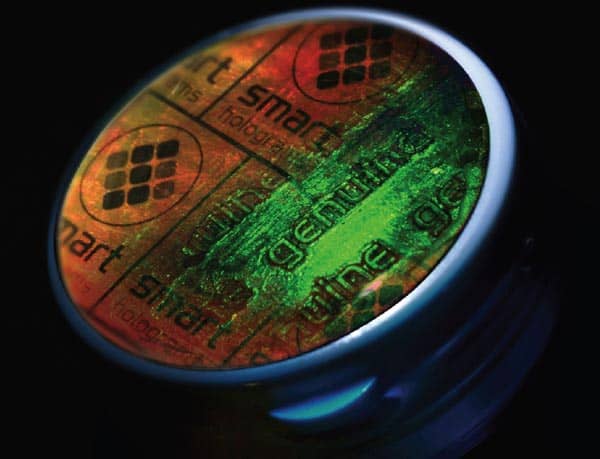
At least 6% of world trade, amounting to some $200bn per year, involves counterfeit goods. But this figure would be even higher were it not for the humble hologram. Invented 50 years ago, holograms provide authentication tags to deter copying, and can be found everywhere from credit cards, passports and banknotes to consumer goods, cosmetics and pharmaceuticals. Holography also underpins supermarket scanners and CD players; it can even be used to store optical data in 3D. Now, however, holograms are making their mark as powerful yet cheap diagnostic tools, which could in particular have many applications in biomedicine.
Until recently though, medical holograms were the stuff of science fiction. In the 1995 TV series Star Trek: Voyager, for example, the 24th-century crew tackles a band of Maquis rebels 70,000 light-years away, during which the ship’s doctor is killed and the crew has to rely on the “emergency medical hologram” for support. But science fiction is now turning into science fact, with several “smart” holograms for diagnostic and other applications about to hit the market.
Diagnostic tests are commonplace in the modern world — being used to assess everything from illnesses and food safety to security and bioterrorism. Currently, these tasks are carried out by measuring several chemical or biological parameters in readily accessible samples and then sending them to a central laboratory for analysis. Although such labs are often fully automated and do not even require the expertise of a scientist, it can still take several days before the results are returned — a delay that can hamper diagnosis.
There has been something of a revolution in medical diagnostics in recent years, with tests increasingly being brought to the patient. For example, tests conducted patient-side have reduced the time to analyse “cardiac markers” from days in a central laboratory to minutes, thereby hastening crucial medical decisions relating to heart attacks. Similar trends are apparent in water-quality monitoring, food and beverage assurance, and in environmental, military and anti-terrorism testing. Such “point-of-sampling” tests can also reduce the cost per test by more than a third, together with additional savings in manpower. However, since testing is often performed on the ground by lay staff and requires immediate interpretation, it is essential that the underlying technology is robust and accurate.
Sensors based on smart holograms, the optical properties of which change in response to external stimuli, are ideally suited for diagnostic testing. In addition to providing simple and reliable sensors with built-in read-out capabilities, such holograms are commercially viable because they can be made using established techniques from the microelectronics, printing and photographic industries. Indeed, the first such product — a sensor that can detect minute quantities of water in aviation fuel — is about to be launched by Smart Holograms, a firm spun-out from the Institute of Biotechnology at Cambridge University in the UK.
Unintuitive and baffling
The underlying theory for holography was developed in 1947 by the Hungarian-born physicist Dennis Gabor, for which he was awarded the 1971 Nobel Prize for Physics. Gabor’s discovery was serendipitous, made while trying to improve the resolution of electron microscopes, and at the time did not have any other known applications. Indeed, in September 1948 the New York Times described the hologram as “a futuristic tapestry that mysteriously recreates images out of thin air”, and until the late 1950s the technique was deemed “unintuitive and baffling”, of “dubious practicality” and even pronounced a “white elephant”! That view has since changed.
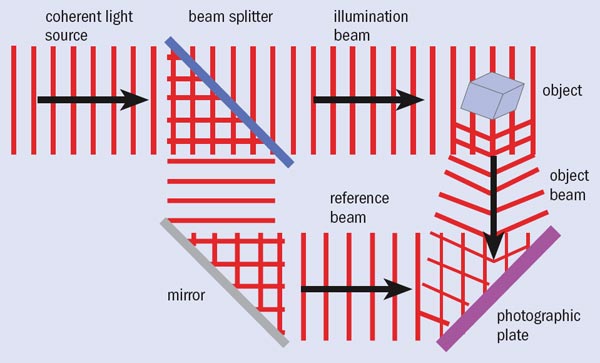
The basics of holography Holograms are created by making two coherent light beams – called the object and reference beams – overlap in a photosensitive material. The object beam propagates from an object and thus carries information about that object, while the reference beam is used to both record and read-out the hologram. The optical interference pattern is physically stored as a change in absorption, refractive index or thickness of the recording material – thus turning it into a series of interference fringes (i.e. a diffraction grating) that contain information about the amplitude and phase of the two original light beams. By illuminating the grating with a read-out beam, a weak copy of the original object beam – and thus the object – reappears.
A hologram is a recording of an optical interference pattern between light waves. To generate a hologram, two coherent light beams — called the object and reference beams — are made to overlap in a photosensitive material such as a photopolymer or silver-halide emulsion. The object beam propagates from the object and thus carries information about it, while the reference beam is used to record the hologram (see “The basics of holography” figure). The optical interference pattern is physically stored as a change in absorption, refractive index or thickness of the recording material — turning it into a diffraction grating that contains information about the amplitude and phase of the two original light beams. By illuminating the grating with the reference beam, a weak copy of the original object beam can be reconstructed.
Despite understanding how a hologram would work, researchers were unable to develop Gabor’s idea until the invention of the laser some 10 years later. Having such a coherent light source is vital for holography, since the information stored in a hologram depends sensitively on the phase and wavelength of light (unlike the information stored in a photograph, which depends only on the intensity of light).
The first holograms that could record 3D objects were fabricated in 1962 by the US researchers Emmett Leith and Juris Upatnieks at the University of Michigan. These were called transmission holograms, since to view them one had to pass a laser through the hologram and observe the reconstructed image from the opposite side to that of the source. A later refinement, the “rainbow transmission hologram”, allowed holograms to be viewed in colour using plain white light. These holograms — which usually consist of a pattern on the surface of a plastic film coated on a reflective aluminium foil — are those used as security features on credit cards and other products. (The foil allows the light to come from behind the hologram to reconstruct the image.)
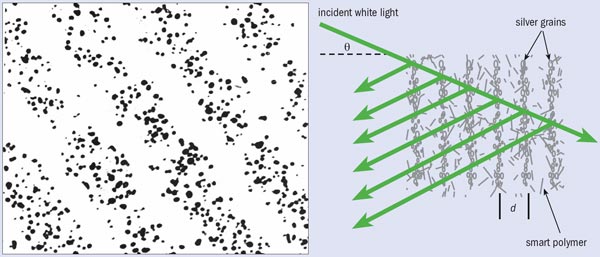
Smart holography In a “smart” hologram, the interference pattern is stored in a material the properties of which change in response to certain environmental conditions, thereby altering the properties of the interference pattern and thus the appearance of the hologram itself. An electron microscope image (left) shows a hologram of a plane mirror created in a silver-halide emulsion, where the interference fringes are made up of metallic silver particles (about 20 nm in diameter) distributed within the 5–10 μm thickness of the smart polymer. The fringes are approximately parallel to the hologram surface, much like the pages of a closed book, and together act as a Bragg diffraction grating, which under white-light illumination reflects a specific narrow band of wavelengths and recreates a monochromatic image of the original plane mirror (or any other object used during hologram recording). Constructive interference between partial reflections from each fringe plane gives a characteristic spectral peak with a wavelength approximately governed by Bragg’s law: mλ = 2ndsinθ, where m is the diffraction order, λ is the wavelength of light, n is the average refractive index of the thin-film system, d is the spacing between the fringes and θ is the glancing angle between the propagation direction of the incident light and the diffracting planes. Any physical, chemical or biological stimulus that changes d, n or the total number of the fringes contained within the film thickness will generate observable changes in the wavelength (colour) or intensity (brightness) of the reflection hologram.
In the same year, the Soviet physicist Yuri Denisyuk at the Ioffe Institute in St Petersburg developed another common type of hologram: the reflection or Denisyuk hologram, which can reproduce multiple colours using white-light illumination on the same side of the hologram as the viewer. Denisyuk holograms use photographic emulsions made up of a polymer, a light-sensitive silver salt (silver bromide) and a photosensitizing dye coated onto glass or plastic substrates, and are constructed by passing a laser through the emulsion and returning it via reflection off a planar mirror that serves as the object. The standing-wave pattern created when the incident and reflected beams meet is preserved in 3D via layers of ultra-fine grains of metallic silver, which means the hologram relies on diffractive reflection from the silver grains (see “Smart holography”). To ensure that reflections from different locations interfere constructively with one other, the silver fringes must be spaced periodically. (Similar periodic structures are the cause of the vibrant colours produced when light reflects from a CD-ROM or certain “iridescent” butterfly wings.)
In 1999 the present authors found that Denisyuk holograms that are recorded with a single 10 ns pulse from a neodymium-doped yttrium aluminium garnet (Nd:YAG) laser offer similar brightnesses under the same exposure and processing conditions to those from commercially available holographic recording materials such as the biological polymer gelatin. This method of fabrication allowed holograms to be recorded in almost any polymer matrix, thus offering the prospect of holograms with optical properties that change in response to desired physical, chemical or biological stimuli. This laid the basis for a spin-out company called Smart Holograms, which was founded in 2004 (see section “From bench to market: the origins of Smart Holograms”).
Smartening up
In a smart hologram, a suitable complementary receptor is attached to the polymer matrix of the photographic emulsion such that the polymer undergoes a physical or chemical change when a substance of interest (called the analyte) binds to it. Thus, in principle, any physical, chemical or biological stimulus that interacts with the smart polymer will generate observable changes in the wavelength (i.e. colour), intensity (brightness) or encoded image of the reflection hologram.
The active component in such a “smart” hologram is normally a 3D polymer network called a hydrogel, which is a material that is very good at absorbing water and can swell anywhere up to 1000% of its original volume. By incorporating a hologram throughout the volume of a hydrogel, holographic gratings can be fabricated that respond to, for example, humidity, water, solvents, dissolved gases, ions, metabolites, drugs, antibiotics, sugars or enzymes. In most cases, the binding of the target analyte to the receptor in the hydrogel generates either a change in charge status, a covalent or non-covalent “crosslink” between neighbouring polymer chains, or a change in secondary interactions involving hydrogen bonding or hydrophobicity. What this means is that relatively small perturbations in environmental conditions can cause macroscopic changes to the volume of the hydrogel by it absorbing different amounts of water.
The structure of the interference fringes therefore gives the hologram a built-in indicator of the extent to which the hydrogel has expanded, whereby changes in the wavelength or intensity of the diffracted light, for example, can easily be quantified by eye. (Other common types of hologram, such as those found on credit cards, do not behave like this because their fringe structure is perpendicular to the plane of the substrate surface, which makes them insensitive to changes in the thickness of the supporting polymer film). Furthermore, since the fringe structure of smart holograms is not permanently altered, the hydrogel can undergo many cycles of swelling and contraction before returning to the same peak wavelength and reflectivity. Combined with their rapid response times, smart holograms offer great potential for monitoring changes in analyte concentrations in real time.
One of the simplest applications of holographic sensors is to measure directly the water activity in immiscible liquids. Immersing gelatin-based holograms in “wet” solvents causes water from the bulk solution to move into the holographic phase. The resultant swelling and consequent increase (i.e. redshift) in the diffraction wavelength is directly proportional to the water content of the sample. Holographic sensors thus generate a visual colour change, which provides a semiquantitative read-out without the need for additional instrumentation (see “Holograms for health”). As such, they can serve as power-free sensors of water activity in the petrochemical, food, textile, electronics and pharmaceutical industries, where water contamination can cause physical or financial damage.
Applied holography
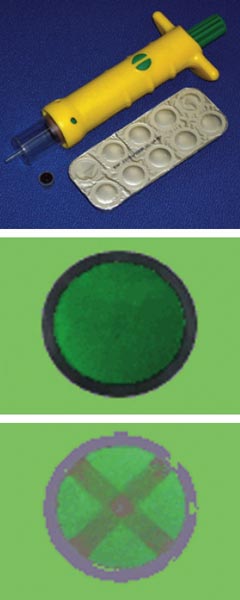
Clear result he green circle on a H2No sensor from Smart Holograms changes to a red cross if the water contamination in aircraft fuel is above a level of 30 ppm.
Smart Holograms’ first product — a moisture-sensitive sensor called H2No — has been developed in conjunction with the global fuel supplier Air BP. Approximately 80 billion litres of aviation fuel were used in the US alone in 2006 and 42 million tests were performed for water contamination, often in extreme weather conditions. Water contamination can cause the fuel to freeze at high altitude, which can block filters with potentially disastrous consequences. It is usually identified by performing a somewhat subjective “clear-and-bright” test, in which a hazy visual appearance indicates water contamination beyond the acceptable limit of 30 parts per million (ppm). On the other hand, Smart Holograms’ device — a hand-held syringe that contains a holographic sensor some 1 cm in diameter — instantly generates an easily discernible red cross if the water content of the fuel is above this limit (see “Clear result”).
The company is also working with architectural glazing firms to develop a moisture sensor that can detect whether water has crept in between panes due to defective or damaged seals. Some 370 million double-glazing units are produced worldwide each year, and such defects can incur significant financial losses as well as reduce the energy efficiency of buildings. Furthermore, we anticipate that smart polymers can be painted, coated or sprayed as micron-thin layers onto, or incorporated into, a range of different surfaces or materials used in the construction industry. This would give architectural features certain interesting optical characteristics, for example being able to change colour or brightness, or display alphanumeric messages or images in response to specific agents. More than mere aesthetic value, this could help make buildings safer by allowing toxic gases or volatile organic compounds to be monitored, or be more comfortable by sensing changes in temperature, humidity and exposure to ultraviolet light.
The ability to detect the presence of ions, metabolites and enzyme activity also makes holographic sensors ideal for medical diagnostics — in particular for monitoring disease-specific markers in the blood. In order to create pH-sensitive holograms, for instance, the gratings are recorded within hydrogels that contain acidic or basic monomers: ionization of the functional groups of the monomers causes the grating to swell or contract as a result of electrostatic and osmotic forces that draw or expel counter-ions and water into or out of the hydrogel phase. This movement changes the fringe separation of the hologram and causes longer or shorter wavelengths to be selected for reflection. As a result, the diffraction wavelength of the sensor hologram depends on the pH of the bulk medium.
Researchers at Cambridge have recently developed sensor holograms for potassium and sodium ions, with the aim of diagnosing kidney or adrenal disorders, diarrhoea and high blood pressure and also to monitor patients on kidney dialysis, diuretic or drip therapies. To this end, the hydrogel polymer was modified with specific receptors called crown ethers, which form strong reversible complexes with these metal ions in solution. In the case of one particular receptor, 18-crown-6, the wavelength of the holograms was found to be directly proportional to the concentration of potassium ions. In addition, the sensor was virtually unaffected by normal physiological variations in background sodium levels, thus highlighting its potential for use as a sensor for measuring potassium in the blood. Further work has shown that holograms can be used to detect other physiological ions, such as calcium (Ca2+) and magnesium (Mg2+).
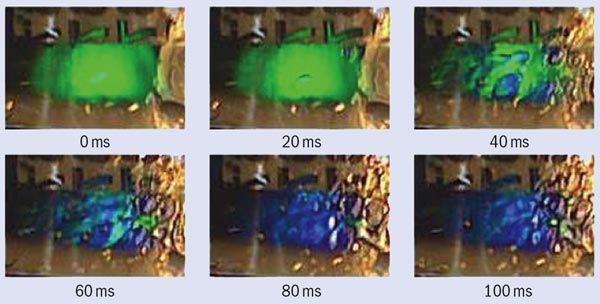
Holograms for health Smart holograms are recorded in polymers specifically designed to change in response to physical, chemical or biological stimuli thanks to the incorporation of functional or reactive groups. Thus, the hologram itself provides both the polymer matrix that responds to a particular stimulus or substance one is trying to measure, and also the means to visualize the response. For example, a green smart hologram sprayed with ethanol to simulate a Breathalyser test for alcohol on expired breath turns blue when the polymer contracts. The frames were obtained at 20 ms intervals.
Currently, Smart Holograms is developing a blood-glucose monitor to help diabetic patients monitor their glucose levels. Diabetes currently afflicts some 6% of the world’s population and cases are expected to double by 2025. Most patients currently measure their blood-glucose levels using a disposable enzymatic electrochemical device, but holograms made from hydrogel films containing a polymer matrix modified with a specific glucose receptor (phenylboronic acid) offer a cheaper alternative that can also monitor glucose levels continuously.
Early studies by the Cambridge researchers have shown that the wavelength of sensor holograms increases as a function of glucose concentration across the normal physiological glucose range. Smart Holograms is now assessing the performance of these sensor holograms in complex biological media, with the goal of producing a device that will allow patients to test their blood-glucose levels for themselves. Such a sensor might be incorporated into a suitable indwelling catheter with a fibre-optic sensor to detect the output, for example, or into a contact lens that could continuously monitor glucose levels in the tear fluid of the eye. Such approaches do not require regular calibration and the diagnostic is continuous, accurate and responds in real time (see “Holograms for health”).
Researchers have used similar holographic sensors to monitor the depletion of glucose during the growth of the spore-forming organism Bacillus subtilis — a close relative of Bacillus anthracis, which causes anthrax and is thus a potential biological weapon. In this case, holograms offer considerable advantages over conventional enzyme-based sensors that use straightforward biochemical reactions because they do not consume glucose and therefore do not reduce substrate levels in small-volume samples, which could give an inaccurate result. We are now assessing the potential of such a sensor as a rapid anthrax-identification system for use by the emergency services following a terrorist incident.
Smart and secure
In this article it has only been possible to summarize some of the most developed applications of holographic sensors, but the potential of smart holography is huge. For example, smart holograms could allow researchers who are looking for new drugs to rapidly screen large numbers of potential molecules. The technique could also help in process development. Sensor holograms have already been used to monitor the metabolic products of small (~300 nl) microbial fermentations, for example, by monitoring the spoilage of milk by Lactobacillus casei via the change in pH generated during the fermentation process. Indeed, such sensors could be used to alert consumers when milk has actually gone off without relying on a date stamp and so could thus become a quality standard in supermarkets.
Moreover, the fact that the visual images produced by smart holograms can be made to appear or disappear under appropriate chemical or biological stimuli — and so be used to display visual interpretations of the analyte concentrations — make them ideal for use in Breathalysers, monitoring heart conditions and for various security and “smart” packaging systems. Smart Holograms already offers a range of brand-protection products based on multiplexed high-definition images that are extremely difficult to copy. The firm is also developing new “particulate holograms” for use in cosmetics, paints, printing inks and coatings for leisure, toys and to monitor toxic environmental gases, where sensors covering large areas are required.
Sensor holograms are virtually impossible to reverse engineer or replicate, are “format-flexible” to meet individual requirements, do not require a power source, are scaleable to any dimension, can be read in parallel, and are fabricated by a manufacturing process that is readily integrated into existing supply chains. Thus, in the 21st century, unlike the 24th century, we do not have to embellish the storyline with colourful Star Trek characters to introduce yet new applications for holographic technology. That technology is here already.
From bench to market: the origins of Smart Holograms
Smart Holograms.
The technology on which Smart Holograms is developing its products originated in the late 1990s in the group of one of the present authors (CL) at the Institute of Biotechnology at Cambridge University in the UK. Along with physicist Roger Millington, CL conceived of the idea while investigating new inexpensive approaches to optical biosensors, and the concept was further elaborated by then PhD student Jan Groves, holographer Jeff Blyth and biochemist Andrew Mayes. This early work established most of the key underlying concepts of responsive holograms (which were covered by four patents), while a proof-of-concept grant for £25,000 from the university funded an initial study to assess the feasibility of establishing a new company.
Smart Holograms was established in 2004 on the basis of the granted and filed patent applications together with funds from the University of Cambridge Challenge Fund (£250,000), the Small Business Research Initiative operated by the Biological Biotechnology and Biological Sciences Research Council (£216,000), a contract from a leading pharmaceutical company (£400,000) and venture-capital funding (£5m). Today, the firm employs over 40 staff in Cambridge, has protected its intellectual property with some 40 filed/granted patents and seven filed trademarks, and signed co-development deals with blue-chip industry leaders. Its core technology is “smart” holograms that change in response to external stimuli, with applications in the brand-protection, verification and healthcare industries.
Smart Holograms’ first generation product (H2No) is designed to detect moisture in aviation fuel. Early work at Cambridge’s Institute of Biotechnology showed that kerosene contaminated with 100 parts per million (ppm) of water could change the colour of a gelatin hologram from green to red by partitioning the water into the holographic phase and thereby expanding the Bragg diffraction planes and redshifting the replay wavelength.
In 2005 Smart Holograms established a development programme with the support of the fuel company Air BP to create a point-of-sampling test for water contamination in aviation fuel. H2No is a disposable holographic sensor that generates a red “×” on a green background when the free water concentration is above 30 ppm. The system has patent protection, is trademarked and has undergone extensive laboratory and field trialling at several Air BP locations. A key factor in introducing the test to the market was to establish a manufacturing capability at Smart Hologram’s Cambridge facility that could produce the 42 million or so test units required per annum.
At a Glance: Smart holograms
Holograms, which are recordings of optical interference patterns, are widely used as authentication tags and in data storage
Most holograms are fixed in a photosensitive material, but recently researchers have created “smart” holograms by fabricating them in materials such as hydrogels that are sensitive to environmental conditions
As hydrogels can swell or contract in response to specific physical, chemical or biological agents, smart holograms can be used as diagnostic sensors, and often have a clear visual output
Smart Holograms — a firm that was spun-out from Cambridge University in 2004 — has already launched its first product: a sensor that can detect water in airline fuel
One of the biggest potential markets for sensor holograms is the field of medical diagnostics, such as providing diabetes sufferers with a simple and reliable blood-glucose monitor
More about: Smart Holograms
J Blyth et al. 1999 A diffusion method for making silver bromide based holographic recording material Imaging Sci. J.47 87–91
C R Lowe 1999 Chemoselective biosensors Curr. Opin. Chem. Biol.3 106–111
C R Lowe 2007 Holographic sensors Handbook of Biosensors and Biochips (ed) R S Marks et al. (Wiley, Chichester) pp587–596
G Saxby 1994 Practical Holography (Prentice Hall, Englewood Cliffs)
Smart Holograms Ltd: www.smartholograms.com
I was very interested in science and it was a toss up between physics and chemistry. In the end, somebody I used to compete with at school decided to do chemistry, so I chose to study physics at Oxford University.
How much did you enjoy it?
For a time I didn’t actually enjoy it as much as I hoped I would because I found some of it a bit dry (this was in the days before you could take mix and match degrees such as physics with astronomy). Thankfully my tutor organized some astronomy lectures from the wonderful Madge Adams. The mixture of physics and astronomy, and later natural history, was what I found really interesting.
What did you do after you graduated?
I did an MSc in radio astronomy at Jodrell Bank in Cheshire. I then went on to do a PhD at the Mullard Space Science Laboratory (MSSL) at University College London on the origin of the cosmic soft X-ray diffuse background, which was brilliant because at that point X-ray astronomy was in its infancy and virtually everything we did was a new discovery.
Where did you go from there?
Part of my PhD involved developing a new type of crystal spectrometer for observing solar flares. Thanks to this expertise, I spent the next six years working on a NASA space mission called the Solar Maximum Mission, which studied the active Sun. It was developed and operated as an international, multi-instrument observatory, and the experience taught me about the power of working in a multidisciplinary team. When that ended in 1981, I wanted to do something different. At the time, Earth observation was just coming to the fore and I thought it would be more useful to society to study the Earth rather than the cosmos, much as both are very interesting. The MSSL was looking for somebody to set up an Earth-observation group, so I went back there for the next 10 years.
How did you become interested in climate change?
At the MSSL we worked closely with the European Space Agency on their Earth-observation satellites, which got me interested in climate change. When I finally felt I had done enough of that, I applied for and got the job of directing the International Geosphere Biosphere Programme (IGBP), which coordinated the research efforts of 79 nations that were looking at how the Earth works and how it is responding to human influences. I ran the IGBP for four years, after which, in 1998, I was appointed director of the British Antarctic Survey (BAS).
Are there many roles for physicists within the BAS?
Yes. BAS science covers a whole range of fields in geology, biology, physics and chemistry so it has physicists working on everything from the magnetohydrodynamics of the Earth’s upper atmosphere to the physics of glaciers.
Why did you decide to move from there to your new role?
I’ve always been really interested in science communication. I think that it is a shame that nonscientists appreciate so little about what they don’t know — they’re missing out because science adds an amazing set of insights into the world. Also, after I had been at the BAS for 10 years, it had more or less achieved all the goals I had originally set. It seemed the right time to move on, and then the job at the Science Museum came up. I thought that I had the best job in science as director of the BAS, but now I’ve got an even better one. The Science Museum is an amazing institution that has more firsts in science and technology in its collection than any other similar organization [including the first MRI machine and the first jet engine].
What are your plans for the Science Museum?
It does a pretty brilliant job at present, but there are still things that it could do better. For example, it still tends to look backwards through its historic collections when we really want to emphasize contemporary science issues — especially climate change — and consider what the future might be like.
How are you going to achieve that?
For one thing, we’re planning a major new exhibit on climate change and decarbonizing the world’s energy supply. The idea is that a tailor-made narrative will be delivered to visitors as they navigate their way through the objects on display, rather than just having to read little cards stuck on the side of tables. We’re looking at ways that mobile phone or iPod technology might be able to help us with that. We also want to make it a wiki museum, so that as people go through they can leave their own comments or additional information about objects that they may know more about than we do.
Do you still keep up to date with any physics?
I always read Science, Nature and New Scientist — I still find contemporary science extremely fascinating and rewarding. I’m also seen as something of an expert in communicating the issues of climate change and so it’s very important for me to keep up with research in those areas, but I don’t restrict myself to just the physics.
It is almost five years since I started working for the Home Office Scientific Development Branch. If you are anything like me (and the many other people I have met in my time here) your first question will probably be “The Home Office what?”. You might also wonder why the Home Office — which is the UK government department responsible for protecting the public from terrorism, crime and antisocial behaviour — needs science. Many people are surprised by the answers.
The Home Office Scientific Development Branch (HOSDB) is a group of about 200 scientists and engineers who offer advice and technical support to the Home Office on all aspects of its work. Its main customer is the police service but it also works for many other government departments, including immigration, prisons and transport. These services have an enormous impact on society and they are all making increasing use of technology to achieve their aims. As a result, they need advice from experts to ensure that they make the best (and safest) use of new technologies.
A project generally starts with a customer explaining what they want. For example, the police may need a vest that helps prevent stabbing injuries. The first step usually involves translating that requirement into technical terms, so one needs to find out about the customer’s requirements for weight, sensitivity or any of the other factors that you need to consider when designing a piece of kit. Once HOSDB employees have a detailed idea of what is needed, they then advise on available equipment that may be suitable. One of our largest tasks to date has been evaluating the safety implications of equipping the UK’s police forces with TASERs — non-lethal weapons that incapacitate victims by giving them an electric shock. In some cases, however, no commercially available equipment fits the requirements, so we look at the latest research to see if what we need is possible and, if necessary, develop the equipment ourselves.
It is difficult to describe an average project at HOSDB because of the enormous diversity of its work. There are, for example, ongoing programmes in drug detection, explosive detection, and radiological and nuclear threat detection, as well as in surveillance, physical security, biometrics and road safety. This sort of work is vital in the current political climate and working in an area that has such an impact in the real world comes with a big feel-good factor.
HOSDB mostly employs science graduates early in their career, and the exact nature of their degree is less relevant than their ability to apply scientific methods and to communicate their findings clearly. I arrived at HOSDB with a PhD in astrophysics from Durham University, which is not, on the face of it, enormously relevant for the work, but my skills have always been put to good use. Indeed, whether it be determining new ways to look for radiological weapons (so-called dirty bombs that are designed to spread radioactive material) or calculating how strong a piece of body armour needs to be, almost every project requires some knowledge of physics.
Reality check
My move from academia to the civil service was not exactly planned. When I reached the end of my PhD — which I really enjoyed — I decided that I wanted to work somewhere that was a bit more “real”. During a visit to the university careers service, the advisor found an advert for HOSDB in a magazine, which sounded interesting. I applied, got the job and then swiftly found myself moving to Hertfordshire, where HOSDB has its main site. Its other site is in Sussex, thus sparing Home Office scientists from having to work in London.
I started out in the surveillance section, where I was investigating how to improve surveillance equipment and methods by examining the underlying theory of the area — generating new ideas was also part of the remit. Working with engineers was a new experience — unlike physicists, I found that they tend to build first and plan later — but it turned out to be a really productive relationship. Indeed, collaborating with scientists from many disciplines is one of the best things about working at HOSDB. As well as physicists, it employs chemists, forensic scientists, electronic engineers and others, which means that you get to see the world from a variety of viewpoints.
After a couple of years in surveillance, I moved to a temporary job in the communications department (mostly because I am a relatively chatty scientist). Moving from core physics to science communication was a bit of a shock. I found myself writing press releases and answering the public’s questions (which were mostly about speed cameras!). It was a great job and a superb opportunity to hone my writing skills, but — as I was only covering the role until someone was employed full time — my career as a science writer was brief.
People power
My current role is in operations management, which is a job that is much more about people than science. Not everyone who works at HOSDB chooses to move in this direction but it sounded like an exciting challenge. Day to day I look after several teams, including an engineering design and manufacturing group and a team that provides security for major events in the UK (you would be amazed how much work goes into a political party conference or foreign visit). My job is to make sure everyone is doing the right work and that they have the support that they need. Although I don’t do much physics anymore, I have to understand the technical issues that arise within these teams, which is why all the managers at HOSDB have a science background.
I find management very enjoyable, and I have been surprised by the similarities to doing theoretical physics. As with analysing data and coming up with new theories, managing people and designing work flows involves spotting patterns and making connections that are not immediately obvious. I may not be looking for black holes anymore but I am still analysing a very complex system, which means that in many ways I feel that I am using the skills from my PhD more than ever.
HOSDB is definitely a unique place to work. In many ways it feels somewhat like a university department — the social life certainly resembles one — but we work at the forefront of issues that affect the whole country. People here are interested not only in science, but also in how the country works. In the end, our work is about making the world a better place.
Despite the popularity of virtual worlds like Second Life, physics has always needed real laboratories — and probably always will. Yet it is easy to forget that purpose-built physics labs are a relatively new phenomenon. One of the first, and perhaps most famous, is the Cavendish Laboratory in Cambridge, which was founded in 1871. It may, however, have never seen the light of day were it not for the generous benefaction of William Cavendish, born 200 years ago (see “William Cavendish: the man behind the lab”). He stumped up some £7000 of his own cash to get the lab off the ground — a tiny sum in today’s money. But given the huge impact the lab has had on physics — with its roll-call of names like Rayleigh, Rutherford and Thomson — it was money well spent.
The last few months have not been a great time for physics. As we reported last month (see “The £80m black hole”), an £80m shortfall in funding for the UK’s Science and Technology Facilities Council has forced the country to pull out of plans for the International Linear Collider (ILC), withdraw from the Gemini telescopes in Chile and Hawaii, and axe funding for fields like solar–terrestrial physics. Meanwhile, high-energy and fusion physicists in the US are coming to terms with their own funding crisis, which has seen America slash support for the ILC (see “US physics suffers budget setbacks”).
At times like these, it would be tempting for physicists to take refuge in an alternative reality where none of these unpalatable problems actually exist. In fact, there is such a place, in the form of Second Life — an Internet-based 3D virtual world where users, known as “Residents”, can take part in many activities that occur in the real world, such as walking, talking, shopping, socializing and even buying and selling “land” and services. Residents, who can choose any appearance that they like, known as their avatar, can move at normal speed from one place to the next or zoom almost instantly between locations.
Second Life was set up in 2003 by Linden Labs — a US firm founded by its chief executive Philip Rosedale, who originally studied physics. Over the last year, this strange world has caught the attention of the mainstream media, but for those who have no idea what it is all about, our news story this month (“Doing physics in Second Life”)is a good place to start. At first sight, Second Life may seem trivial and pointless — why bother talking to a computer-generated person when there are real people all around us? — but there is more to it than meets the eye.
Some universities now have “virtual classrooms” in Second Life, the journal Nature has hosted a conference there, and there are even science museums. Residents can take a Shuttle flight or tour a nuclear reactor — things that few would have the opportunity to do for real. For better or worse, Second Life — and other virtual worlds like it — exist and they are fast becoming second nature for young people. If there is a way of exploiting Second Life to encourage such people into physics, then it would be unwise for physicists — notoriously conservative when it comes to exploiting social-networking technology — to dismiss the potential of these virtual worlds.
It’s any government’s nightmare: a terrorist drives into a busy part of a city, drops off a package containing a few kilos of dynamite imbedded with a radioactive isotope, and detonates it. The explosion from such a “dirty bomb” could not only kill many bystanders, but it would shower the surroundings with radiation — spreading panic throughout the country and possibly leaving the blast area inhospitable.
But according to researchers at Purdue University in the US, the public could be equipped to prevent dirty bombs or even nuclear bombs from ever entering a city. They propose fitting mobile phones with small radiation detectors that are sensitive enough to pick up low levels of gamma rays emitted by radioactive devices. The exact levels could be signalled to a central computer, which would then use the position of the phones to build up a map of radiation in a city.
Andrew Longman, a physicist who specializes in instrumentation and who is working under contract for Purdue, says the system could pinpoint the location of any dangerous radioactive device. “If every cell phone user in the country were participating, it would be very hard to move any kind of serious nuclear device into a city. Right now, it is effortlessly easy.”
If every cell phone user were participating, it would be very hard to move any serious nuclear device into a city Andrew Longman, contracting instrumentation scientist
Safety in numbers
A small number of detectors positioned throughout a city would stand little chance of detecting a radioactive device, unless one came in very close proximity. To be effective, the Purdue system would make use of a large number of detectors in the busiest areas. Although there would be a relatively large background noise of gamma rays from other sources, Longman says that his team has adapted a technique from gamma-ray astronomy to make the signal from a radioactive device more visible.
Longman told physicsworld.com that he was reluctant to divulge how this technique works in detail for fear that people might figure out a way to “defeat it”. Normally in gamma-ray astronomy the signal is improved either by limiting the detector to a certain energy band or by orienting it to exclude noisy sources. However, Tony Dean, an astrophysicist at the University of Southampton in the UK, suggests that focusing on one energy band would not work because dirty bombs could contain isotopes emitting gamma rays at many different energies. Moreover, mobile phones are always moving so could never be oriented in a set direction. This would imply that Purdue’s system relies on statistics to find a more radioactive, localized source in the map that is characteristic of a bomb.
Dean also thinks that silicon would be the most likely choice for the detector. Other materials, such as cadmium-zinc-telluride are unlikely to operate at the low voltages found in mobile phones, while germanium needs cryogenic cooling. “A silicon detector could be made quite small — say 5 mm2 — with all the circuitry ready on the back,” he adds.
Successful test
The team, which along with Longman includes Ephraim Fischbach and Jere Jenkins from Purdue, has already tested the system on the Purdue campus. The researchers found that it could spot a test radiation source much weaker than a dirty bomb that was being carried around by one them. They are now trying to commercialize the design.
Even if they are successful, however, it will be difficult to persuade mobile phone companies to integrate detectors within their products because it will add to both weight and cost. “They need encouragement to be good corporate citizens,” says Longman, who also thinks that “government moribundness” will be an issue. “[The US] spent less than $100m last year to solve the number one existential threat to the country. They need public pressure and interest to focus on things that could actually prevent nuclear terrorism at the level we did the Manhattan [atomic bomb] project in World War II.”