Nanotube radio goes large

The first practical transistor radio made entirely of carbon-nanotube based electronics has been unveiled by researchers in the US. Unlike previous nanotube radios, which produced very weak signals that needed further amplification, the team were able to listen to a local broadcast on headphones connected directly to a nanotube transistor.

To make the radio, John Rogers of the University of Illinois and colleagues worked out a way to align thousands of the nanometre-diameter tubes in sheets in order to create electronic devices that can handle sufficiently large currents to be of practical use (pnas.0709734105). The team claim that their technique is reliable and compatible with commercial electronics fabrication processes.

Carbon nanotubes can be thought of as single sheets of graphite that have been rolled up into a tiny tubes. They are also semiconductors and have been used to create different electronic devices including tiny transistors and even a nanometre-size radio receiver. Because of their tiny size and high electrical and thermal conductivity, they could in principle be used to create very small and extremely fast electronic circuits — however, it is still not clear how nanotubes could be used in practical devices.

Chemical vapour deposition

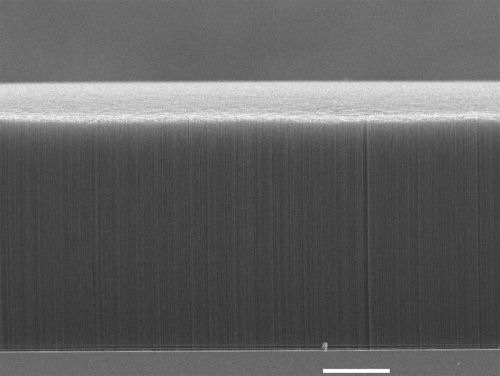
The Rogers team took up this challenge by coming up with a way to create horizontally aligned arrays of individual nanotubes in a single-step growth process across the entire surface of a quartz wafer. The growth process relies on chemical vapour deposition in which a gas like methane or ethanol is introduced into a furnace containing the wafer with some metal catalyst nanoparticles on its surface. Orientation dependent interactions between the growing tubes and the quartz lattice lead to alignment along a particular crystallographic axis of the wafer.
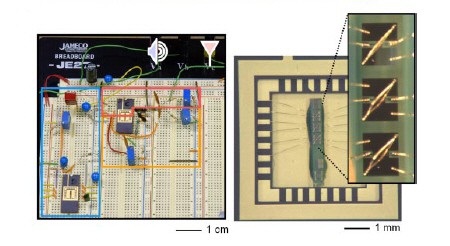
The researchers then incorporated the nanotube sheets into RF transistors and circuits. The nanotubes were almost perfectly linear and almost perfectly aligned and parallel to each other, which allowed the team to make a large number of transistors. “Each device in such an approach incorporates thousands of tubes, such that the statistical averaging effects lead to good device-to-device uniformity in electrical properties,” said Rogers.

Since individual nanotubes in each transistor device operate in parallel and independently, the devices can produce large current outputs. This means that they can have high levels of gain and amplification in both the RF and audio frequency ranges.

More importantly, many devices can be produced at once and integrated into circuits. Such features were absent from nanoradios and other electronic devices that incorporated only single nanotubes.

Unique array geometry

“Ours is a technology that enables all of the components (resonant antennas, RF amplifiers and mixers, and audio amplifiers) to be formed with nanotube devices,” added Rogers. “These capabilities derive from their unique array geometry.”

The team are now building medium-scale circuits containing up to 100 transistors and are also implementing advanced designs to improve the RF response. “Finally, we are working to advance certain aspects of the devices by using new materials for contacts to the tubes, and increasing the power efficiency of the systems.”
Chance structure makes carbon dating possible

The radioactive decay of carbon-14 may be invaluable for dating biological artefacts, but no one has ever been sure why it is so slow. Now, researchers in the US and Canada think it is because mesons — elementary particles that contribute indirectly to the decay — change their properties as they pass through a carbon-14 nucleus. The discovery might give physicists a better grip on the strong interaction, the most powerful of the four fundamental forces of nature.

Carbon has two stable isotopes, carbon-12 and carbon-13, and several radioactive ones, including carbon-14. Plants are mostly built around carbon-12 but, until they die, they also contain a certain amount of carbon-14, which they absorb in the form of carbon dioxide after it is produced by cosmic-ray impacts in the Earth’s atmosphere. This proportion of carbon-14 also finds its way into animals, which eat plants, and materials derived from plants, such as paper.

Over time, the unstable carbon-14 atoms turn into nitrogen-14 atoms as one of their neutrons decays into a proton with the emission of an electron and an antineutrino, a process known as beta decay. Scientists define how fast this decay occurs through carbon-14’s half life — the time it takes for an amount to half in quantity — which is about 5730 years. Therefore, by measuring the proportion of carbon-14 in a biological sample, they can tell how old it is.

But in spite of the usefulness of carbon-14, theorists have struggled to explain why its half-life is so long compared with those of carbon-11, oxygen-14, oxygen-15 and nitrogen-13, which are just a matter of minutes. “If carbon-14 behaved like its cousins, then we would not have this extremely useful scientific tool at our disposal,” says Jeremy Holt of Stony Brook University in New York.

If carbon-14 behaved like its cousins, then we would not have this extremely useful scientific tool at our disposal Jeremy Holt, Stony Brook University

‘Accident of nature’

Holt and colleagues think they have solved this mystery. Their work expands on an earlier theory put forward by Gerry Brown and Mannque Rho in 1991, which suggested that the masses of almost all light mesons scale-down uniformly as they travel though an atomic nucleus. Mesons are particles that contain a quark and an antiquark, and are bound — like protons, neutrons and other “hadrons” — by the strong interaction. However, so-called virtual mesons can also govern how the strong interaction stretches beyond individual protons and neutrons to keep them locked together inside a nucleus.

Holt’s team has shown that if the masses of the mesons are lowered as predicted by Brown-Rho scaling, they affect the size of this interaction, which in turn changes the structures of carbon-14 and nitrogen-14. Although Brown-Rho scaling also changes the structures of the other radioisotopes, these changes have very little effect on those particular decay processes (Phys. Rev. Lett. in press; preprint available at arXiv:0710.0310). “It is in some sense an accident of nature that the carbon-14 lifetime happens to be very sensitive to these changes” says Holt.

The discovery does not yet have any implications for carbon dating, although Holt told physicsworld.com that further work on it might reveal some in the future. “In my opinion this research helps to emphasize the remarkable and unexpected set of circumstances that conspire to make radio-carbon dating possible.”

As well as explaining carbon-14’s long half-life, Holt’s team hopes that the work could help motivate future experiments and theoretical studies of hadronic properties in dense nuclear systems. This could ultimately lead to a better understanding of the strong interaction, which is currently described by the theory of quantum chromodynamics, or QCD. The team, which includes scientists from TRIUMF in Vancouver and the University of Idaho, now plans to investigate other phenomena in nuclear structure that would be sensitive to the effects of Brown-Rho scaling. “Not all properties of nuclei will be strongly affected by these changes to the nuclear interaction,” added Holt.

Rising ocean temperatures boost hurricanes, says study

Researchers in the UK claim to have the first firm evidence that rising sea–surface temperatures have boosted the intensity and incidence of hurricanes that form in the tropical North Atlantic, Caribbean and Gulf of Mexico. Mark Saunders and Adam Lea of University College London (UCL) say that a 0.5° increase in the temperature of the ocean surface results in a 40% increase in hurricane activity.

Climate scientists have long suspected that warmer oceans mean more hurricanes. In the 1950s and 1960s, the sea–surface temperature (SST) in the tropical North Atlantic was relatively high and hurricanes were relatively common, while in the 1970s and 1980s, the temperature dipped by as much as 0.5 °C and the intensity and incidence of storms also dropped. Then in the 1990s, the temperature began to increase along with hurricane activity.

Notoriously complex

However, the Earth’s climate is a notoriously complex system and researchers have struggled to establish a direct relationship between SST and hurricanes. An important complicating factor is that changing wind patterns over the Atlantic play an important role in hurricane formation — and it had been tricky to determine the relative impact of wind and temperature.

Saunders and Lea have now got around this problem by doing a careful statistical analysis of storm, SST and wind data stretching back to 1965 (Nature 451 557). First, they showed that about 75–80% of the variation in hurricane activity was a direct result of changes in the SST and wind patterns. Then, they assumed that the temperature and wind patterns had independent effects on hurricane intensity and used an analysis technique called multiple linear regression to remove the influence of wind.

Accumulated cyclone energy

The researchers described the hurricane frequency and intensity in terms of the accumulated cyclone energy (ACE) index for the North Atlantic, which measures the total energy dissipated by hurricanes. ACE is considered the most meaningful measure of hurricane activity because it combines intensity and duration of all tropical storms in a given season.

They found that a 0.5 °C increase in SST boosted the ACE by about 40%. Furthermore, they say that much of the recent increase in the ACE since 1996 can be attributed to a rise in the SST.

While Saunders and Lea were able to link SST to hurricane activity, their work says nothing about why the SST has increased over the past 40 years. According to Saunders, this could be down to global warming or it could be part of the cyclical variation of SST called the Atlantic multidecadal oscillation, which seems to occur with a period of about 60–80 years.

Improved climate models

However, Saunders told physicsworld.com that the result should help researchers develop models that try to predict the outcomes of climate change, because in order to be correct, these models should reproduce the observed connection between increasing SST and hurricane activity.

According to Stefan Rahmstorf, a physicist at the Institute for Climate Impact Research at Potsdam University in Germany, this latest work backs up previous studies that suggest that the connection between SST and ACE is very strong indeed. “What is remarkable in this study (and similar previous studies) is how strong the effect of a very modest warming of half a degree is”, Rahmstorf told physicsworld.com “It makes you wonder what kind of hurricane activity you’d get after three degrees warming.”

Saunders, however, is more cautious about predicting what would happen if the SST rose by such an amount. It is possible, for example, that the SST is currently at a critical value for hurricane formation and small deviations cause large changes in hurricane activity. This might not be the case if climate change caused the SST to rise by several degrees.

Galaxy distortions shed light on cosmic acceleration

This time ten years ago, two independent teams of researchers in the US were deliberating over whether to go public with a discovery that would change our view of the universe forever. It concerned observations of distant supernovae that appeared to be moving away from each other faster than they should have been. A few weeks later the world found out that the expansion of the universe is accelerating, probably driven by some kind of gravitationally repulsive “dark energy” that makes up 75% of the universe.

Fast-forward a decade and physicists still have no idea what dark energy is. It may not even exist at all: the cosmic acceleration could instead signal that it is time to replace Einstein’s general theory of relativity with a new theory of gravity. Astronomers in Europe have now shown that small changes in the distribution of galaxies over time could help settle this issue, as well as constrain competing models of dark energy itself. It’s a small, but relatively simple, step towards solving a mammoth problem.

Galactic red-shifts

This opens up a new window on dark energy, and right now we can use all the views we can get! Eric Linder, University of California at Berkeley and Berkeley Lab

Researchers get a handle on cosmic dynamics by studying the rate at which galaxies fly apart, which comes down to measuring how much their light has been “red-shifted” to longer wavelengths. When Edwin Hubble showed in 1929 that the red-shift of distant galaxies is proportional to their distance from Earth, it proved that the universe was expanding. The same principle underpinned the 1998 discovery that the expansion is accelerating, only this time the measurements involved “standard candles” called Type-1a supernovae.

But these cosmic red-shifts are distorted by the motion of galaxies themselves, for example due to the gravitational attraction of nearby objects. The amount of distortion therefore provides a measure of how quickly structure formed at a certain time, which in turn depends on the energy content of the universe and also on whether general relativity is correct. Measuring galaxy distortions is not new in itself, but by doing so at different cosmic epochs researchers may be able to learn more about the cosmic acceleration. “A discrepancy between the amount of distortion at different times would be a smoking gun for a new theory of gravity,” says Luigi Guzzo of the Brera Astronomical Observatory in Italy.

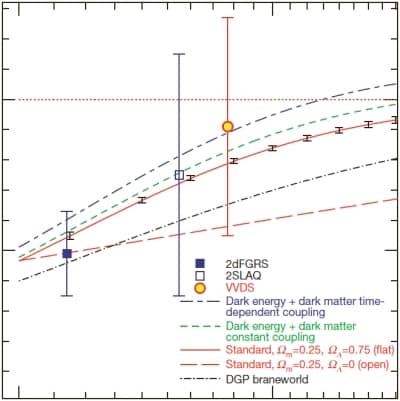
Using the Very Large Telescope in Chile, Guzzo and his 50-strong international team measured 13,000 spectra from galaxies that existed 7 billion years ago (Nature 451 541). The researchers then compared the amount of distortion present in these spectra with a separate survey of the local (that is, recent) universe in the same region of sky. The two measurements only agreed if the team invoked an unknown extra energy ingredient in the vacuum in line with the “cosmological constant”. This constant, which Einstein added to his equations in 1917 (and later withdrew) to make his theory fit with the then observation that the universe was static, is the simplest current explanation for dark energy.

However, the sample of galaxies studied so far is not large enough to distinguish a physical dark energy from alternative extended gravity theories, which include extra-dimensional “braneworld scenarios” as well as modifications to general relativity. “The error bars are too large to tell us anything new about dark energy yet,” says Robert Caldwell of Dartmouth College in the US.

Extensive surveys

Guzzo is currently trying to convince the European Organisation for Astronomical Research (ESO) to start a new survey of some 100,000 spectra at the same cosmic epoch, which would allow the team to start discriminating between some dark-energy models. “Our most ambitious plan, which was recently put to the European Space Agency, is an infrared satellite called SPACE that will perform a survey of more than 100 million galaxies over the whole sky,” he adds.

Dark energy is so weird that no single technique is capable of elucidating its origin, and a host of other approaches — which include further supernovae surveys, measurements of the cosmic microwave background and gravitational lensing studies — will be put to work in the next few years. In particular, having such complementary techniques will help researchers disentangle the effects of dark energy from those due to matter, which itself is mostly made up of an unknown type of non-luminous or “dark” matter.

“It is still early days for the galaxy red-shift distortion technique,” says Eric Linder at the University of California at Berkeley and Lawrence Berkeley National Laboratory, who points out that a similar analysis of an earlier cosmic epoch is currently being undertaken by the DEEP2 survey in the US. “But this work opens up a new window on the mystery of dark energy, and right now we can use all the views we can get!”

Two-species Fermi mixture is a first

Physicists in Germany have come up with a way to cool a mixture of two different atomic species of fermions to extremely cold temperatures, forming a “degenerate quantum gas”. To do this they invented a new method of cooling that involves adding a third species of atom — a boson — which was later removed. The team intend to use such mixtures to study exotic states of matter such as superconductivity and superfluidity.

Over the past decade physicists have learnt much about the quantum nature of liquids and solids by studying dilute atomic gases at very low temperatures. Early experiments were done with bosons — atoms with integer spin such as helium-4 — which collapse into a single quantum state called a Bose–Einstein condensate (BEC). Then, physicists turned their attention to fermions — atoms with non-integer spin such as helium-3 — which are forbidden by the Pauli exclusion principle from directly forming a BEC. Instead, interactions between fermions can be tuned using lasers and magnetic fields so that they pair-up to form bosons — which then form strange states of matter such as Fermi condensates and superfluids.

Pairing interactions

Physicists are interested in pairing interactions because they also occur in superconducting materials, where the electrons — which are also fermions — form pairs that can flow without resistance. Researchers are particularly keen to look at ultracold gases that contain more than one type of fermion because the interactions in such systems could be made to resemble those thought to be responsible for some poorly-understood high-temperature superconductors.

The first success in creating such Fermi–Fermi mixtures came in 2005, when Wolfgang Ketterle and colleagues at the Massachusetts Institute of Technology were able to create ultracold mixtures of the same atoms in two different spin states — effectively two different fermions.

Now, the study of Fermi–Fermi mixtures has been taken one step further by Matthias Taglieber and colleagues at the Ludwig-Maximilians University in Munich — who have developed a new technique for cooling a mixture of two different fermions, lithium-6 and potassium-40 atoms (Phys Rev Lett 100 010401 ).

Colliding bosons

The main challenge facing the team was how to cool a mixture of fermions to extremely low temperatures. Evaporative cooling, which works well on bosons, does not work on fermions because it relies on particle collisions — and the Pauli exclusion principle prevents identical fermions from getting close enough to collide.

This problem had already been solved for one fermionic gas by mixing it with a bosonic gas such as rubidium-87. Collisions between bosons and fermions cooled the mixture in a process called sympathetic cooling.

Catalytic cooling

While potassium-40 can be cooled efficiently by rubidium-87, the process is much less efficient for lithium-6 because the smaller lithium atoms are much less likely to collide with rubidium and lose kinetic energy. However, when Taglieber and colleagues tried to cool the mixture of three atomic gases they discovered that the lithium atoms were cooled by colliding with potassium atoms — which are less than half the mass of rubidium — in a process they have dubbed “catalytic cooling”.

Once the triple mixture has been cooled, the rubidium can be removed from the trap, leaving mixture lithium and potassium atoms at temperatures below one microKelvin.

While Taglieber and colleagues are the first to create a Fermi-Fermi degenerate quantum gas, two independent groups in Austria and the Netherlands have also made some progress in this direction. The race is now on to use a Fermi–Fermi system to gain insight into fundamental quantum interactions. Ketterle, who won a Nobel Prize for his work with ultracold atoms, described Taglieber’s achievement as an “important step towards studying heteronuclear pairs and possible forms of superfluidity”.

While he would not say exactly what the Munich group are now up to, Taglieber believes that ultracold Fermi–Fermi mixtures could be used to study a number of quantum systems including “heteronuclear” molecules comprising one lithium atom and one potassium atom. Such molecules would interact with each other via a dipole interaction similar to that responsible for some forms of magnetism.

Another possibility, according to Taglieber is the study how fermions pair-up in a superconductor and some superfluids. This pairing is believed to be mediated by other particles — phonons in the case of superconductivity. It could be possible to “tune” the interactions between atoms such that the lighter lithium atoms mediate the pairing interaction between the heavier atoms. Another possibility related to superconductivity is the study of what happens when the numbers of fermions are unbalanced such that not every particle can find a partner to pair up with — something that has already been done with identical atoms that are in different spin states.

Plastic converts raindrops to electricity

The pitter-patter of raindrops on a plastic panel could be a new source of electricity thanks to work done by researchers at France’s Atomic Energy Commission (CEA) in Grenoble.

While humans have harnessed the power of rain for thousands of years, energy is usually extracted from rainwater as it flows downhill in a river or stream. Now, Jean-Jacques Chaillout and colleagues have created a panel that converts the impact energy of falling raindrops directly into electricity.

Their device uses a plastic called polyvinylidene fluoride (PVDF) that vibrates when struck by raindrops. PVDF is a piezoelectric, which means that some vibrational energy is converted into electricity. Such devices could power remote sensors and other electronic devices, claim the researchers.

Impact energies

The team studied several different types of rainfall and found that drizzle produced millimeter-wide droplets with an impact energy of around 2 µJ, while a downpour involved drops that were about 5 mm across and produced an impact energy five hundred times greater.

Chaillout and colleagues then used computer simulations to estimate how much of this energy could be recovered as electricity when raindrops fall onto PVDF, which was chosen because it is easy to shape into sturdy panels and does not contain toxic materials (Smart Mater. Struct. 17 015038).

Although the physics of how a raindrop interacts with a surface is not fully understood, the simulations allowed the team to estimate which configurations of PVDF were best at harvesting energy from a wide range of raindrop sizes.

The team settled on a device based on a 10 cm strip of PVDF just 25 µm thick, which they then built and tested (Smart Mater. Struct. 17 015039). Electrodes were embedded in the strip to recover the electrical energy generated and the device was placed below a pipette that could be adjusted to create water droplets of different sizes and at realistic rainfall speeds.

Chaillout and colleagues discovered that slow falling raindrops generated the most electrical energy, because faster raindrops often lose some energy by splashing. Depending on the raindrop size, the harvesting system could generate between 1 µW of continuous power for the smallest up to 12 mW for larger downpour drops.

Although the output is tiny compared to other harvesting systems such as solar panels, which can deliver hundreds of watts, rain power could provide a good alternative in rainy outdoor environments where solar energy is difficult to exploit — and, of course, it works in the dark.

One intriguing use is to power remote sensors inside the cooling towers of conventional power stations. These would harvest their energy from falling droplets formed by condensing steam as it rises, and could track limescale build-up within the tower, improving the power station’s efficiency.

The team plans to create such a limescale sensor and are also working on ways of storing the electrical power generated, so that it can provide a steady current for practical use.

Light could trap and release bacteria

Sensors that use light to trap, analyse and then release tiny objects such as bacteria or DNA are one step closer thanks to new computer simulations done by researchers in the US.

The team modelled the optofluidic interactions that occur when a liquid flows through a tiny channel next to an optical waveguide. The work could lead to new “lab-on-a-chip” sensors that could be used in a wide range of areas including medicine and security.

In such optofluidics sensors, the tiny objects of interest would be mixed with a fluid that would flow through tiny channels next to solid waveguides. When light is passed through the waveguides, it would create a short-range evanescent electric field in the channel that would trap tiny particles. While being held the objects could be studied using analytical probes, before being released.

However, it has proved very difficult to predict exactly how objects will behave in practical optofluidic systems. Now, researchers at Cornell University have devised a “stability number” that describes the conditions under which it is possible to transport an object optofluidically (Nanotechnology 19 045704).

Swept away

“If the stability number is greater than one then the particle will be confined to the waveguide and can therefore be transported along it using optical forces,” said Cornell’s David Erickson. “If the stability number is less than one then the particle will diffuse or be swept away.”

The team’s numerical results consider two classes of optical waveguide — a silicon waveguide operating at 1550 nm and a polymer waveguide operating at 1064 nm — located at the bottom of a simple microfluidic channel.

“We believe that the silicon-based system, with its high refractive index contrast, is more suited to trapping nanoscale objects, such as DNA or quantum dots,” said Erickson. “The polymer-based system, as we have already demonstrated experimentally in another paper, is very appealing as a cheap platform for guiding micron-sized objects, such as biological cells.”

Stability maps

For both systems, the group has generated “stability maps” that cover particles measuring from 600 to 300 nm in diameter. The charts provide a range of flow velocities where particle-waveguide trapping is likely to be successful based on three-dimensional finite element simulations. Additionally, the data highlights critically unstable regions where the drag force on the particle is stronger than the calculated trapping force.

So far so good, but what about moving to smaller particle diameters? “As the particle approaches tens of nanometers in diameter, its relative surface area to volume ratio increases and surface-particle interactions, such as adhesion, will become stronger,” explained Erickson. “For small molecules, the approximation of a spherical continuous particle will not be valid and it may become necessary to account for non-uniformity in the particle structure and makeup.”

As Erickson mentioned, the group has already demonstrated the optofluidic trapping and transport of polystyrene beads using polymer waveguides. Now the team is planning to work with more advanced photonic devices, such as ring resonators, and will complement its research with additional simulations.

Solitons underpin new laser

Physicists in the UK and Germany have harnessed the curious properties of soliton waves to create a new type of semiconductor laser that can be switched on and off using light pulses.

The team believe that this “cavity soliton laser” could play an important role in “all-optical” telecoms systems, in which data are switched and routed without the need to convert light pulses into electrical signals and back again — processes that can slow-down communications and create large amounts of waste heat.

Based on commercial device

The device is based on a vertical-cavity surface-emitting laser (VCSEL), which is used in a wide range of applications including optical telecoms. The VCSEL was built by the German firm ULM Photonics and the final system was assembled and characterized by Thorsten Ackemann and colleagues at the University of Strathclyde in the UK (Phys Rev Lett 100 013907).

A VCSEL comprises an optical “cavity” of a solid semiconductor material such as indium gallium arsenide (InGaAs) that is sandwiched between two special “mirrors” that are made of multiple layers of other semiconductors. Normally, a current is injected into the optical cavity causing the semiconductor to emit light. The mirrors reflect the light back and forth across the cavity, which causes more light to be emitted, as in a conventional laser. Some of this laser light is allowed escape through one of the mirrors.

Instead of operating the laser in this way, the team put a smaller current through the device such that it did not emit laser light. The device is coupled to an external optical cavity containing a diffraction grating, which defines the frequency of the light reflected within the external cavity. This frequency is deliberately offset slightly from the frequency of light within the free-running VCSEL.

The team then fired a pulse from an external laser at a small spot (12 µm diameter) in the VCSEL cavity. This changes the index of refraction at that spot, causing the resonant frequency of the VCSEL in the region of the spot to become the same as a resonant frequency of the external cavity.

This causes a bright spot of light to form in that region of the VCSEL. The spot is called a soliton because it is a solitary wave that confines itself to the area where the laser struck and does not spread out into the rest of the cavity. This occurs because the soliton light continues to modify the local refractive index and the step-change in refractive index outside of the soliton region prevents light from moving into the rest of the material.

Ensemble of microlasers

The intensity of the light builds up rapidly because it is confined to a small area and a small laser forms at that location. The laser can then be switched off by firing a second laser pulse at the region, which further modifies the index of refraction and destroys the soliton. This procedure can be repeated at multiple locations within the VCSEL leading to an ensemble of “microlasers”.

The present device emits near-infrared light with a wavelength of 980 nm, whereas telecoms devices operate at wavelengths greater than about 1.2 µm. Ackemann told physicsworld.com that there is in principle no obstacle to the realization of similar cavity soliton lasers that operate at telecoms wavelengths and described this as a “challenge for the future”.

The team are now working on miniaturizing the device, which currently has an external cavity that is 50 cm in length. Ackemann is confident that this can be reduced to several centimetres without too much trouble it may be possible to create the entire laser on a single chip.

Delaying light

Last month, the Strathclyde group and European colleagues showed that a similar cavity soliton device can be used to delay the propagation of light pulses — another important function that could be used in telecoms devices (Appl Phys Lett 92 011101). Ackemann said that the team are also trying to build cavity soliton laser devices that can both switch and delay light.

Progress will rely not least on achieving high quality growth of the VCSEL structures. The devices were fabricated by molecular beam epitaxy — a technique that is used to make semiconductor lasers for commercial use. Ackemann described the process for advancing the cavity soliton lasers as “difficult but possible”.

Nanotubes are the new black

Researchers in the US claim to have made the world’s darkest material using arrays of carbon nanotubes.The new material reflects just 0.045% of light incident upon it, making it blacker than the previous record holder — a nickel and phosphorous alloy that reflected about 0.16% of incident light. The material could be used to boost the efficiency of solar panels.

A carbon nanotube can be considered as a single sheet of graphite that has been rolled up into a tube. The material — which was created by researchers at Rensselaer Polytechnic Institute and Rice University — is a thin coating comprised of low-density arrays of vertically-aligned carbon nanotubes.

“When we measured how dark the material was, the final numbers were more dramatic than we thought,” said Pulickel Ajayan of Rice University.

Extreme diluteness

The light absorption stems from a combination of the material’s structural properties. “First, the material is very porous and has a material filling fraction of 3–5%,” explained physicist Shawn-Yu Lin of Rensselaer. “This extreme diluteness makes it very non-reflective.”

Another factor is the random surface, which diffracts light and further reduces reflectance. “In addition, the material is made of extremely long carbon nanotubes, 8–10 nm in diameter and 500–1000 µm long,” said Lin. “The carbon material and the long structure enable a total absorption of the light that gets in.” The reflectance of the nanotube array is said to be two orders of magnitude lower than that of glassy carbon, despite both samples being made of the same element.

The material’s properties could be useful in applications such as solar panel manufacture. “Thermalphotovoltaic (TPV) conversion that requires a complete absorption of light from all angles, at both polarizations and for all wavelengths of interest, could be a possible application,” commented Lin.

As the nanotube array is very porous, it is not durable against mechanical force. “The material would need to be covered by some form of thin coating, but this would not limit the TPV application, for example,” observed Lin. “We have tested the material’s thermal stability by heating it up to 1500 K, and it maintained its structural integrity.”

The team now plans to carry out further experiments on the material. “We would like to extend our measurements from visible wavelengths to infrared and microwave regimes, to check the universality of the phenomenon,” said Lin. “We also want to develop a comprehensive theory to understand our discovery, and explore the absolute lower limit of reflectance possible using our approach.”

Cosmic radiation strings physicists along

“If you’re religious, it’s like seeing God.” So said George Smoot of Lawrence Berkeley National Laboratory in 1992 when he announced the discovery of tiny ripples in the radiation left over from the Big Bang. Smoot (who shared the 2006 Nobel Prize for Physics for the discovery) was referring to the possibility that fluctuations in the temperature of the cosmic microwave background as measured by the COBE satellite revealed the seeds of galaxies — and thus of stars, planets and ultimately life itself.

Since then, searching for patterns in this relic radiation has become a popular activity because it provides a snapshot of the universe when it was just 380,000 years old. Furthermore, COBE’s successor — the Wilkinson Microwave Anisotropy Probe (WMAP) — has increased the resolution of this snapshot enormously, opening a window onto the universe at even earlier times.

So far a mysterious cold spot some billion light-years across has turned up in the WMAP data, not to mention a series of hot and cold patches dubbed “an axis of evil” because it defies conventional explanation. But physicists in the UK and Switzerland now claim to have seen tentative signs of something slightly more tangible: “cosmic strings” that could be the relics of cosmic phase transitions that took place in the first trillionths of a second after the Big Bang.

Cosmological defects

The cosmic microwave background (CMB) is best understood via inflation, a period of rapid expansion that took place 10–35 seconds after the Big Bang. Inflation is thought to have blown up initial quantum fluctuations in space–time to cosmological scales, leading to the density perturbations and thus the hot and cold patches in the CMB seen today. Crucially, inflation also explains why the universe is so isotropic on the largest scales (the CMB is the same to 1 part in 105 in all directions). But the theory is somewhat ad hoc, and physicists would prefer to embed inflation in a more fundamental framework — such as grand unified theory (GUT), which unifies the electromagnetic, strong and weak forces, or superstring theory, which incorporates gravity as well as the other three forces.

Cosmic strings — massive 1D objects that can be billions of light-years long — arise naturally in such frameworks. They are predicted to form during phase transitions as the early universe expanded and cooled, and are analogous to crystal defects that form in ice when water is cooled below freezing. Such cosmic phase changes are associated with broken symmetries of nature, for example when the electroweak force (which is described by the Standard model of particle physics) separated out into the electromagnetic and weak forces that we experience today. Indeed, the breaking of such a symmetry, which would have formed a more complex cosmic defect called “texture”, has already been proposed to explain the giant cold spot in the WMAP data.

Detecting cosmic strings would therefore provide a direct link to the physics of the first few moments of the universe, bridging the ultimate gap between large and small. “A conclusive discovery would be momentous,” says Craig Hogan of the University of Washington.

String simulations

Neil Bevis and colleagues at the University of Sussex and Martin Kunz at the University of Geneva have now simulated the CMB on a computer using models with and without cosmic strings (Phys. Rev. Lett. 100 021301). Because cosmic strings would be present long after the initial quantum fluctuations, they would contribute an additional independent source of CMB perturbations to those from inflation. Comparing the models to the WMAP data, the team found that a model in which 11% of the contribution came from cosmic strings and the rest from inflation was preferred over one that contains no strings at all.

However, the agreement between the data and the model that contained strings (which were of the sort associated with GUTs rather than with superstring theory) corresponded to just two standard deviations. Roughly speaking, this means that if the researchers had datasets from 100 WMAP missions then they would find such “evidence” in about five of them purely due to random variations. “The authors have certainly not claimed a detection of cosmic strings,” says Tom Kibble of Imperial College in London, who pioneered the concept of cosmic strings in the late 1970s.

Limit on string tension

Pedro Ferreira of Oxford University says that although the statistical significance is small, it is still an interesting result because it provides an upper limit on the string tension. “In the context of GUTs, this tells you when unification might have happened or, more specifically, below which energy,” he says.

I would be delighted if there were a confirmed detection of cosmic strings. But we need a lot more evidence before getting too excited! Tom Kibble,Imperial College

However, Kibble also points out that because cosmic strings are expected to emit gravitational waves, such limits potentially conflict with more sensitive ones derived from pulsars because the very regular orbits of pulsars places an upper limit on the background intensity of gravitational waves. “I would be delighted if there were a confirmed detection of cosmic strings,” he says. “But we need a lot more evidence before getting too excited!”

Copyright © 2026 by IOP Publishing Ltd and individual contributors