Tiny rods steer themselves

Chemotaxis is the tendency of some biological organisms to move in response to a gradient in chemical concentration – either towards a chemical attractant or away from a repellent. In non-biological systems, chemotaxis could be useful for directing the motion of small particles in fluids or even assembling collections of particles into nanostructures – without the need for applying external electric or magnetic fields. Non-biological chemotaxis could also be used to seek out the presence of certain chemicals in environments that are hostile to living organisms.

However, chemotaxis in biological cells is extremely complex and this has made it very difficult to mimic the effect in non-biological systems. Now, Ayusman Sen and colleagues at the Pennsylvania State University have come up with a very simple way of doing so. The team made a large number of tiny metal rods that were 2 µm long. Each rod was gold along one half of its length and platinum along the other. The rods were placed in a dish containing pure water and a piece of gel that contained hydrogen peroxide. The hydrogen peroxide slowly leached from the gel into the water, creating a concentration gradient in the surrounding water.

After about 110 hours, the team noticed that more than 70% of the rods had accumulated next to the gel. According to the researchers, this movement occurred because hydrogen peroxide undergoes different chemical reactions at the gold and platinum ends of the rods. This they say, drives fluid along the rod causing it to move. The particles’ speed increases with the local concentration of hydrogen peroxide and so on average the rods are “attracted” to the gel – a simple realization of chemotaxis.

Sen told physicsworld.com that the experiment shows that, in principle, it is possible to “build nanomotors ‘from scratch’ that mimic biological motors by using catalytic reactions to create forces.” Sen and colleagues are now investigating the use of light to control photocatalytic reactions on the rods’ surfaces thereby mimicking “phototaxis” – whereby organisms move according to changing light levels. This could allow light to be used to create complex arrangements of particles.

Ramin Golestanian, a physicist at the University of Sheffield in the UK who has worked on similar nanopropulsion systems told physicsworld.com that the Penn State team has addressed a “fundamental issue” facing those designing tiny swimming machines – how to steer them. According to Golestanian, chemotaxis is nature’s solution to the steering problem and it is appropriate for nanotechnologists to “get [their] inspiration from biological mechanisms”.

Cosmic collision explained without dark matter

Lying over three billion light years away, the Bullet Cluster consists of a small subcluster ploughing through the centre of a larger one at speeds of six million miles per hour. During such a collision the stars pass each other by with little effect while the intervening hot gas is slowed down.

To see how mass is distributed in the Bullet Cluster, scientists examine how it behaves as a “gravitational lens” by bending the path of passing light. In 2006, astrophysicists noted that X-ray light emitted from very distant galaxies travelling through the Bullet Cluster to Earth was bent more by the small galaxies at the sides rather than the hot gas dominating the centre, which represents most of the normal matter. This implied that there is an extra mass component that is not associated with normal matter, leading many physicists to hail it as strong evidence for dark matter. Assuming conventional theories of gravity are true, dark matter is predicted to comprise about 95% of all gravitating mass in the universe.

Moffat and Brownstein, however, argue MOG can provide a more natural explanation by removing the need to invoke mysterious dark matter. Essentially MOG adds extra terms to Einstein’s theory of gravitation — general relativity — that allow the gravitational constant G to vary across space and time. The researchers modelled the hot gas distribution using their MOG theory, and found the gravitational force would be stronger as you move away from the centre of the Bullet Cluster, explaining the stronger lensing seen at the edges.

“Whenever dark matter is said to dominate a system, in MOG, the extra gravity exerts a strong and measurable influence based only on the observable [normal] matter,” explained Brownstein. The researchers have used MOG before to explain the dynamics of hundreds of galaxies and clusters. They also argue MOG could account for the apparent anomalous deceleration of the Pioneer space probes launched in the early 1970s, and even for dark energy — the strange energy responsible for the accelerated expansion of the universe.

Others are more sceptical. “I most definitely do not agree with their conclusions,” Doug Clowe at Ohio University, one of the researchers who took the original gravitational-lensing data from the Bullet Cluster, told physicsworld.com. “Their lensing reconstruction of the gas mass does not fit the lensing reconstruction of the cluster. Their claim is that the difference can be explained by the lensing from the cluster galaxies, but nowhere in the paper do they demonstrate this.”

Single spins controlled by an electric field

Spintronics is a growing area of research that exploits the spin as well as the charge of electrons. It is has already been used to increase the amount of data that can be stored on hard-disks and could someday form the basis of practical quantum computers that perform calculations by manipulating the spins of single electrons.

A key element of spintronics is the ability to flip the spin of an electron from a spin-up to a spin-down state. In the new work, a team led by Lieven Vandersypen at the Kavli Institute of Nanoscience at Delft University of Technology deposited metallic gold gates onto a gallium arsenide substrate, creating a small region where only a single electron can sit. The researchers were then able to use these so-called “quantum dots” to manipulate the spin of the electron in a controlled manner.

Although previously researchers have been able to flip the spins of electrons confined in these dots by applying a magnetic field, it is not easy to generate a magnetic field locally on a chip that is strong enough to rotate the spin. “To then manipulate an array of single spins is almost impossible,” says Vandersypen.

In their new experiments, the team used two quantum dots each separated by 0.2 µm. If the spins in the dots are both parallel, neither electron can hop from one dot to the other because of the Pauli exclusion principle. However, applying an electric field causes one of the spins to rotate.

Indeed, if the field is applied for long enough the electron’s spin can rotate until it is anti-parallel to the other electron, then it can jump across to the other dot and cause a current flow. Eventually, if the field is applied even longer, the spin goes back to being parallel again. Vandersypen’s PhD students Katja Nowack and Frank Koppens, who carried out the experiment, found that the current varies sinusoidally when plotted against the time over which the electric field is applied. Known as Rabi oscillations, this finding proved they were able to control the rotation of the spin.

The driving mechanism for an electric field to control the spin of an electron lies in the spin-orbit interaction. As the electron orbits around a nucleus it produces a magnetic field that changes its own magnetic moment so that, in the electron’s rest frame, an electric field appears as a magnetic field. The team calculated that the coupling from the gallium arsenide electric field to the single electron’s spin in the quantum dot is strong enough to be able to change the direction of its spin when an electric field is applied.

Having shown that it is possible to control single spins in quantum dots via localized electric fields, the researchers at Delft now plan to produce an array of quantum dots where each electron’s spin state can be manipulated. They plan to use these arrays to form controllably coupled spins, which could pave the way for producing entangled states between the electrons.

The “age of mastery” has begun

Michio Kaku’s day job is a string theorist at City College of New York, and he is well known as a popularizer of theoretical physics with books such as Hyperspace and Parallel Worlds. But in his new three-part series Visions of the Future, Kaku widens his remit to futurist, taking a whistle-stop tour around the scientific developments that he thinks will revolutionise our lives in the 21st century. Kaku certainly looks the part of a visionary, with his flowing white hair and beatnik all-black outfits. But is he really wise enough to see the future where others have ended up looking foolish?

The series is based on Kaku’s 1997 book Visions, for which he interviewed 150 scientists, including several Nobel laureates, in an attempt to find consensus about where science was going in the next 100 years. The thesis of both the book and the series is that the 20th century was the ‘age of discovery’, when humanity first understood the atom, the gene and the computer. By contrast, the 21st century will be the ‘age of mastery’, when we gain the ability to control matter, life and intelligence to our advantage.

In the first installment, “The Intelligence Revolution”, Kaku boldly predicts that “the exponential growth of computer power will profoundly reshape all of human civilization”, ignoring arguments that Moore’s Law can’t be maintained indefinitely. But perhaps that is not surprising when a frequently appearing talking head is that of ‘inventor and futurist’ Ray Kurzweil, who first transformed Moore’s Law from a specific prediction of transistor sizes to an observation about technology in general. Indeed, the series relies quite heavily on contributions from ‘technology forecasters’, authors and ‘virtual reality pioneers’, who seem prepared to stick their necks out further than the plain old scientists he interviews.

Kaku spends a lot of time talking about the online social networks and virtual worlds that have sprung up since his book was published. In one hilarious sequence an avatar of a younger Kaku, though still kitted out in black, flies through the virtual landscape of Second Life. But Kaku thinks the really profound changes will occur in the second half of the century, as we create machines that rival human intelligence while also learning to enhance our own cognitive powers. One of the most thought-provoking sequences in the series shows a clinically depressed patient’s face light up with a grin under the influence of ‘deep brain stimulation’ – a kind of pacemaker for the brain.

Part 2, “The Biotech Revolution”, sees Kaku explain how we will achieve mastery over life itself, with the rather familiar examples of genetic screening and the synthesis of artificial body parts. Kaku’s description of gaining the ability to control evolution as being “literally able to play God” would probably make Richard Dawkins squirm. But his fervent hope that we will be able to eliminate the Alzheimer’s disease that killed his father and now afflicts his mother is touching.

Then it’s on to “The Quantum Revolution”. I was expecting to hear about the potential of quantum information for computing and cryptography, recently dubbed ‘spookytechnology’ by Cambridge physicist Charles Tahan. But in fact, things only get spooky in the last few minutes of the show, when Kaku visits Anton Zeilinger’s Vienna lab to see photons teleporting (before confidently asserting that we will teleport a molecule in a few years and a virus within a decade). Instead, this show is a ragbag of hot physics topics from metamaterials to nanotubes; nuclear fusion to personal fabrication. University of Manchester particle physicist Brian Cox adds to his tally of media appearances, though he might find himself out of a job if Kaku’s statement that “atoms are the fundamental building blocks of everything we see” were true.

There is a strangely retro feel to many of Kaku’s visions, which is only added to by the use of clips from black and white sci-fi films. In Part 3 we get the space elevator, conceived in 1895 but revived with the promise of super-strong carbon nanotubes, the invisibility cloak, and even that futurist staple the flying car. Kaku is whole-heartedly a technological optimist, and though he gives air time to the ethical issues raised by new technology (with brain researcher Susan Greenfield often acting as the conscience of the series) he dismisses them soon after. Super-intelligent robots could take over the world? We’ll be able to choose their level of advancement to suit us. Nanobot weapon systems go out of control? Kaku thinks we’re smart enough to build safeguards, and that the benefits far outweigh the risks.

Indeed, Kaku believes that ultimately the ability of humanity to travel into space and see Earth from outside will vanquish all divides along religious, ethnic and national lines. I wish I could share his optimism, but in the end I found Visions of the Future unconvincing. In this gadget shop guide to the 21st century there are too many ‘wow’ moments and not enough attempts to explain the real science behind them.

Heavy atoms reduce nanoscale friction

Friction between two sliding objects involves the conversion of kinetic energy into heat, which is essentially the vibration of atoms that make up the materials. Robert Carpick of the University of Pennsylvania and colleagues have gained new insight into how this conversion occurs by sliding an atomic force microscope (AFM) tip along single-crystal diamond and silicon surfaces. They measured the force of friction between the tip and surfaces covered by either a single layer of hydrogen or deuterium atoms. Deuterium has the same chemical properties as hydrogen but is twice as heavy – allowing the team to study the effect of atomic mass on friction without having to worry about chemical effects.

The group, which includes researchers from the University of Wisconsin-Madison and the University of Houston, found that the larger the mass of terminating atoms at the surface (in this case deuterium), the lower the energy loss via friction. “The larger atomic mass of deuterium results in a lower natural vibration frequency of the atoms,” explains Carpick. “These atoms collide less frequently with the tip sliding over it and thus energy is dissipated away from the contact at a lower rate.”

Modelling studies performed by the team suggest that the lower frequency of the deuterium lowers the rate at which kinetic energy from the AFM tip is transformed into vibrations. The layer of atoms on the surface effectively acts an energy transfer medium and absorbs kinetic energy from the tip. The amount of energy absorbed depends on the natural vibration frequency of the surface atoms, with lighter atoms absorbing energy faster than heavier ones.

The results provide a better fundamental understanding of friction, which still lacks a comprehensive model. “We know how some properties — adhesion, roughness and material stiffness, for example — contribute to friction over several length scales, but this work reveals now truly atomic-scale phenomena can and do play a meaningful role,” adds team member Matthew Brukman, who is at the University of Pennsylvania.

New magnetic sensor could probe the brain

Although 70 fT is not as good as superconducting quantum interference device (SQUID) magnetometers, which can detect changes as small as 3 fT, the new sensor operates at room temperature. This is an advantage over SQUIDs, which must be cooled to near absolute zero to reach such sensitivity, making them power hungry and expensive.

The new prototype sensor has been built by John Kitching and colleagues at the National Institute of Standards and Technology (NIST) in Boulder, Colorado. It consists of a 6 mm3 cell filled with an alkali gas, such as rubidium atoms, which are very sensitive to small magnetic field changes.

When circularly polarized laser light is sent into the cells, almost all of the light is transmitted if the spins of the rubidium atoms are all pointing in the same direction. But if a sample is placed near the cell, its magnetic field forces the spins out of alignment with each other — and the atoms absorb some of the laser light. The amount of light absorbed depends on the strength of the magnetic field.

To be a truly portable system, however, the cell would have to be packaged with miniature optics and a light detector. But as it would not require cryogenic equipment like SQUID magnetometers, it could even be battery operated and can be deployed in remote areas, such as in airports, to detect the fields from metallic objects such as bombs.

The more immediate applications could involve non-invasively mapping out the electrical signals generated from the brain and even from the heart of unborn babies. Indeed the group at NIST has already used the prototype to detect magnetic signals from the heart of a mouse, and they hope to improve the sensitivity to 10 fT which could let it map brain function.

Blog life: Soft Machines

Blogger: Richard Jones
URL: www.softmachines.org/wordpress
First post: August 2004

Who is the blog written by?

Richard Jones is an experimental polymer physicist at Sheffield University in the UK as well as the senior strategic advisor for nanotechnology for the UK’s Engineering and Physical Sciences Research Council. His research is focused on the properties of polymers and biopolymers at surfaces and interfaces. He has also written a book entitled Soft Machines: Nanotechnology and Life, which attempts to explain nanotechnology to the layreader (see “The future of nanotechnology”).

What topics does the blog cover?

Part of its purpose is to support and publicize Jones’ book, so it mainly discusses nanotechnology issues that would interest the general public. Jones often picks up on nanotechnology stories in the wider media and gives his personal view on them; and in a series of longer posts he gives his thoughts on the future of nanotechnology and how it might be used in areas like medicine. A recent entry, for example, looked at a potential new way of sequencing genomes using nanoporous membranes.

Who is it aimed at?

Jones generally steers clear of including too much technical detail, thereby making the blog suitable for general readers and scientists in other disciplines. Even those working within nanotechnology will appreciate Jones’ thoroughness in trawling the media for nano-related stories and the light-hearted tone he then recounts them in.

Why should I read it?

As a keen popularizer of science, Jones writes with clarity and flair. His blog reads like a well-crafted magazine column and is both informative and entertaining. Overall it provides a good digest of the most interesting developments in nanotechnology around the world, with Jones throwing in plenty of his own thoughts and anecdotes to spice things up. For example, the article he wrote for Physics World in 2004 about the future of nanotechnology apparently received some criticism for its use of imaginative images. The posts that describe this incident are both entertaining and insightful, and generate an interesting discussion on how scientific concepts should be illustrated for the general public.

How often is it updated?

Every few days, but posts often run to several hundred words.

Can you give me a sample quote?

When I was in Norway a few months ago, I was talking to an official from their research council about the Norwegian national nanotechnology strategy. He explained how they were going to focus on a few application areas for nanotechnology, starting with nanotechnology for energy, nanotechnology for medicine, and nanotechnology for information technology. Thus far his list was very similar to lists being compiled by just about everybody else in the world. Then he went on to explain that the fourth area would be nanotechnology for fish, and I had to admit to myself that the latter focus probably would be nationally distinctive.

Blog lines

“In an age of blogs there are seemingly no secrets.” Those are not the words of some obscure young postdoc tapping away on their keyboard, but of Robert Aymar, the 71-year-old director general of the CERN particle-physics lab near Geneva. Aymar wrote the comments in his column in CERN’s internal newsletter last month after rumours surfaced on various blogs of a potential delay to the Large Hadron Collider (LHC) following problems with electrical connections between the accelerator’s magnets (see p8, print edition only).

Although CERN says that the problems, which were genuine, are being resolved and that the LHC will produce its first physics results next year as planned, Aymar’s comments highlight the impact of blogs on how scientific news emerges. Earlier this year, for example, a particle physicist from the CDF collaboration at Fermilab in the US got into hot water after he discussed on his blog possible evidence for the Higgs boson, before the data in question had been fully scrutinized and made public by the rest of the 600-strong team (see “The tale of the blogs’ boson”). The fact that Fermilab may have scooped CERN in the race for the Higgs made a great story that was enthusiastically reported in mainstream publications.

The incident illustrates the overlap between conventional journalism and blogging, which both seek to describe and discuss the latest scientific breakthroughs. But blogs and journalism are different. Blogs are usually aimed at a narrow, specialist group of readers, and there is no onus on bloggers to be balanced in what they say. Unlike professional journalists, bloggers are not expected to put their claims in context, report all sides of a controversy, or write in a way that is as clear or as understandable as possible. Moreover, it is not always possible to tell if bloggers have a hidden agenda.

On the other hand, as the CERN incident makes clear, science blog can sometimes be first with the news, even if their information is sparse, based on rumours or in the form of comments posted anonymously. Blogs are a welcome phenomenon on the scientific scene, particularly in giving non-scientists a direct insight into how science works. But by seeking to explain science to a broad readership in a balanced, clear and independent way, science journalism still has much to commend it.

Citizen science

Michael Marx with a portable cosmic-ray detector

Science so permeates modern life that it is surely desirable for all students, and not just those aiming to become scientists, to receive some training in its knowledge and skills. Yet science courses aimed at university students majoring in other subjects face a bind. On the one hand, they must incorporate a significant amount of mathematics and scientific knowledge if they are to be effective in teaching the science relevant to the modern world. On the other hand, they must appeal to students with little or no background in maths and science.

This clash usually dooms such courses. If they weaken the science and maths component, they become more about science than genuine science courses — versions of what is often pejoratively called “physics for poets”. If they do not weaken it, they risk being too intimidating and difficult for the target audience. Earlier this autumn I sat in on the first classes of two ambitious courses that seek to overcome this problem in different ways.

At the frontier

Columbia University’s “frontiers of science” course is compulsory for all first-year undergraduates. It is part of the core curriculum, which aims to give each student “a rigorous preparation for life as an intelligent citizen in today’s complex and changing world”.

“Frontiers of science” is Columbia’s largest single course. Once a week, students attend a one-and-a-half-hour lecture and a two-hour seminar. The lecture is given in the university’s theatre, where the 560 or so students fill the orchestra pit and spill onto the balcony. The seminars are smaller, consisting of groups of 20 students each, and taught by professors and postdocs selected following an international search.

At the first lecture this year, course director Don Hood — a research psychologist at Columbia — explained that the course is designed to illustrate how scientists think, to cultivate a scientific approach to the world, and to teach students the rudiments of four frontiers of science: brain and behaviour; astronomy; climate; and evolution. Hood lectures about the first, while three other professors lecture about the other frontiers.

The course seeks to interest students via charismatic teachers and well-organized lectures. From talking to students, I gather that it does this quite well. The danger, however, is that science students may often find it too elementary to be interesting. It seeks to get over this obstacle in three ways: by teaching students about frontiers of sciences other than the one that may interest them; by including material on the social importance of science; and by demonstrating by example how to speak clearly and appealingly about science to non-scientists. This last component is not often taught even in science classes, and is something at which the Columbia professors excel.

In the lab

Meanwhile, Stony Brook University runs an “introduction to experimental research” course that takes a different tack. It takes place in the Nuclear Structure Laboratory in the basement of Stony Brook’s Van de Graaff building among dozens of scintillation counters and the infrastructure for monitoring them that is associated with a project called Mariachi (Mixed Apparatus for Radar Investigation of Atmospheric Cosmic-Rays of High Ionization). The course has no formal lectures or seminars, but instead thrusts its dozen students almost immediately into selfdesigned research projects to detect and study cosmic rays.

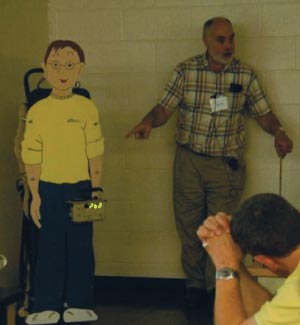
At the first class, physicist and course director Michael Marx gave a talk on cosmic rays, during which he explained how to make and test the efficiency of scintillation counters, and showed how to take and analyse data in online notebooks. He also began to prompt students to generate questions about cosmic rays that could be answered using the counters.

Each counter, consisting of a scintillator and photomultiplier, is housed in a padded but formidable-looking black case equipped with wheels and locks that was originally designed for high-powered rifles. “It’s the perfect rugged container for a light-sensitive detector,” says Marx. Thanks to a grant from the US National Science Foundation, Marx and his collaborators on Mariachi have been able to buy and install 100 counters at Stony Brook and a dozen nearby high schools.

The beauty of the course is that, while cosmic rays are scientifically interesting because they provide clues to the origin and structure of the universe, they allow important research can be carried out without using much maths. This allows Marx to get students and teachers with a range of backgrounds involved in a scientifically viable project with significant connections to wider scientific issues in cosmology. Even physics students like it because it is a lab course much less micromanaged than most; students develop their own projects rather than being told exactly what to do.

Students learn to generate questions, discover that some questions do not have answers, and find that many answers lead to new questions. They are even allowed to pursue blind alleys. In a previous year, students from the Young Women’s Leadership School in Harlem, a participating high school, discovered that cloud coverage does not reduce the number of cosmic rays reaching Earth, but they developed a clever instrumental design in order to reach that conclusion.

The critical point

The predicament of a science course designed for all students, both those who are and those who are not intending to become scientists, is somewhat like that of trying to give a tour of a city to a mixture of tourists and future inhabitants — the two groups have very different interests and they want very different information. The analogy is somewhat strained; all students, whether interested in science or not, will go on to live in a society that is permeated by scientific issues. Yet it reveals the basic dilemma of such courses. The courses at Columbia and Stony Brook universities seek to provide two clever models for seeking to face that dilemma without compromise, and provide worthy models that might be copied elsewhere.

Exploring the multiverse

Up until 80 years ago the astronomical community was embroiled in an argument about our place in the universe. On one side was the perennial idea that we were all there was — that our galaxy was a single lonely island in a vast empty cosmos that spanned out to infinity. Telescopes revealed distant smudges of light — so-called nebulae — but these were explained as merely ill-resolved clouds of gas in the Milky Way. Opposing this bleak, self-centred universe was the view that our galaxy was but one of many galaxies sprinkled throughout space. The nebulae were, in fact, our nearest neighbours, but were too far away for our telescopes to map out in sufficient detail.

Dubbed “the great debate”, this conflict lasted for over a century. The data were simply not good enough to decide between the two ideas, thus leaving a fertile ground for theorizing and speculation. Things came to a head in April 1920 in a historic confrontation between the astronomers Heber Curtis and Harlow Shapley at the Smithsonian Museum of Natural History in Washington, DC. The debate was finally settled in 1925, when Edwin Hubble measured the distance to the Andromeda Nebula and found that it was much too far away to belong to the Milky Way and so must be a galaxy in its own right. We now know that we live in a many-island universe, with the Milky Way being just one of a billion galaxies in our visible horizon.

Fast forward 80 years and things look a lot less straightforward. Galaxies are mere peanuts in the grand scheme of things: the great debate is now being played out on a larger scale as today’s cosmologists ask whether we live in a universe or a multiverse. In other words, is our universe — the thing we measure and model, prod and picture — all there is? Or is it just one element in an ensemble of many universes, each of which has different properties, histories and behaviours.

Universe or Multiverse? is a new collection of essays, edited by Bernard Carr of Queen Mary University of London, that attempts to address this question. Cambridge University Press has published several cleverly edited collections of essays on theoretical physics over the past few decades, a notable example of which is Three Hundred Years of Gravitation, edited by Stephen Hawking and Werner Israel, which celebrates Newton. It was published 20 years ago but I find it is still a wonderful collection of ideas and texts to dive into when I wish to immerse myself in gravity. Universe or Multiverse? is up there with the best of these compendia. It is probably the most comprehensive tome on the subject around at the moment and, like the others, I imagine it will have a long shelf-life.

Universe or Multiverse? consists of 28 essays neatly woven together to cover a wide range of physical and philosophical issues. It has a colourful cast of characters, with die-hard particle physicists discussing the testability of string and M-theory, cosmologists expounding the successes of “inflation” and rejoicing in the “golden age” of precision cosmology, and a plethora of essays on how we fit into all of this. The range of contributions is too wide for me to do real justice to it here, but I can highlight a couple of notable examples.

The anthropic principle crops up in many of the essays. This states that we see the universe that we see because we would not be around it to see it if it were any other way. Carr clearly explains how this point of view emerged in the 1970s through his work with Martin Rees at the University of Cambridge, in parallel with that of Brandon Carter, also then at Cambridge. Since then, the anthropic principle has generated a number of disciples among the supporters of inflationary cosmology.

The simplest model of inflation, as advocated in a contribution by Andrei Linde from Stanford University in the US, argues that we live in a patch of the universe that underwent a period of incredibly rapid expansion shortly after the Big Bang. What was originally a microscopic piece of space swelled up to cosmic scales within a tiny fraction of a second. But there should also be infinitely more patches that have undergone the same process, and each is causally separate, meaning that they can be considered different universes. This implies that our universe is surrounded by other universes — possibly with different features and laws of physics — but which all belong to a massive, frothing space–time: the multiverse. Glorious as this theory of the universe may be, however, it lacks one of the most fundamental requirepredictability. If we can never access these other universes, then we can never know whether any predictions we make about them are correct.

The multiverse theory also poses the thorny question of why we do not live in a different patch of space with different properties and laws of physics. It is here that the anthropic principle comes in to save the day. It allows us to, at least statistically, argue why the patch of the multiverse we live in looks the way it does. A clutch of essays — for example those by John Donoghue from the University of Massachusetts and Renata Kallosh from Stanford University — looks sympathetically at this point of view, but I would highlight Lee Smolin’s negative appraisal of this line of thinking. In a thoughtful piece of writing, Smolin, who is at the Perimeter Institute in Canada, unpicks the true operational meaning of the anthropic principle and shows that it is unfalsifiable, i.e. that it does not make testable predictions. He goes on to argue that it is misapplied in many cases and he proposes alternative, falsifiable ways to answer the question of why the universe we observe should be as it is. These alternatives are speculative, I must add, but are nevertheless worth thinking about in some detail.

Another ominous cloud on the horizon is the notion of “the landscape”. For decades it has been known that string theory has an inordinate amount of possible solutions and it is now argued that there are 10500 possible vacuum geometries in which we might reside, dubbed “the landscape” (see “Stringscape”). This jeopardizes the noble goal of ending up with one all-encompassing theory from which we may predict everything, from the shape of the cosmos to the mass of the electron. If there really are these many possibilities, should we just give up? As the particle theorist Steven Weinberg from the University of Texas at Austin writes in the conclusion to his essay, we may have to “resign ourselves to a retreat, just as Newton had to give up Kepler’s hope of a calculation of the relative sizes of planetary orbits from first principles”.

Universe or Multiverse? covers these frightening times in the most fundamental field in physics with a series of insightful essays. Short of actually conjuring up a new Edwin Hubble to take some data and resolve our place in the cosmos, this well-constructed collection of writings is the best we can possibly hope for in the era of this new great debate.


Copyright © 2026 by IOP Publishing Ltd and individual contributors