Citizen science

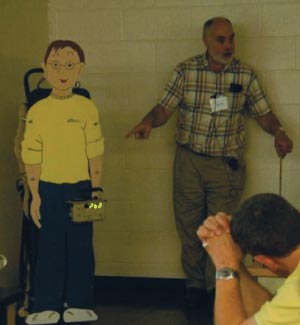
Michael Marx with a portable cosmic-ray detector

Science so permeates modern life that it is surely desirable for all students, and not just those aiming to become scientists, to receive some training in its knowledge and skills. Yet science courses aimed at university students majoring in other subjects face a bind. On the one hand, they must incorporate a significant amount of mathematics and scientific knowledge if they are to be effective in teaching the science relevant to the modern world. On the other hand, they must appeal to students with little or no background in maths and science.

This clash usually dooms such courses. If they weaken the science and maths component, they become more about science than genuine science courses — versions of what is often pejoratively called “physics for poets”. If they do not weaken it, they risk being too intimidating and difficult for the target audience. Earlier this autumn I sat in on the first classes of two ambitious courses that seek to overcome this problem in different ways.

At the frontier

Columbia University’s “frontiers of science” course is compulsory for all first-year undergraduates. It is part of the core curriculum, which aims to give each student “a rigorous preparation for life as an intelligent citizen in today’s complex and changing world”.

“Frontiers of science” is Columbia’s largest single course. Once a week, students attend a one-and-a-half-hour lecture and a two-hour seminar. The lecture is given in the university’s theatre, where the 560 or so students fill the orchestra pit and spill onto the balcony. The seminars are smaller, consisting of groups of 20 students each, and taught by professors and postdocs selected following an international search.

At the first lecture this year, course director Don Hood — a research psychologist at Columbia — explained that the course is designed to illustrate how scientists think, to cultivate a scientific approach to the world, and to teach students the rudiments of four frontiers of science: brain and behaviour; astronomy; climate; and evolution. Hood lectures about the first, while three other professors lecture about the other frontiers.

The course seeks to interest students via charismatic teachers and well-organized lectures. From talking to students, I gather that it does this quite well. The danger, however, is that science students may often find it too elementary to be interesting. It seeks to get over this obstacle in three ways: by teaching students about frontiers of sciences other than the one that may interest them; by including material on the social importance of science; and by demonstrating by example how to speak clearly and appealingly about science to non-scientists. This last component is not often taught even in science classes, and is something at which the Columbia professors excel.

In the lab

Meanwhile, Stony Brook University runs an “introduction to experimental research” course that takes a different tack. It takes place in the Nuclear Structure Laboratory in the basement of Stony Brook’s Van de Graaff building among dozens of scintillation counters and the infrastructure for monitoring them that is associated with a project called Mariachi (Mixed Apparatus for Radar Investigation of Atmospheric Cosmic-Rays of High Ionization). The course has no formal lectures or seminars, but instead thrusts its dozen students almost immediately into selfdesigned research projects to detect and study cosmic rays.

At the first class, physicist and course director Michael Marx gave a talk on cosmic rays, during which he explained how to make and test the efficiency of scintillation counters, and showed how to take and analyse data in online notebooks. He also began to prompt students to generate questions about cosmic rays that could be answered using the counters.

Each counter, consisting of a scintillator and photomultiplier, is housed in a padded but formidable-looking black case equipped with wheels and locks that was originally designed for high-powered rifles. “It’s the perfect rugged container for a light-sensitive detector,” says Marx. Thanks to a grant from the US National Science Foundation, Marx and his collaborators on Mariachi have been able to buy and install 100 counters at Stony Brook and a dozen nearby high schools.

The beauty of the course is that, while cosmic rays are scientifically interesting because they provide clues to the origin and structure of the universe, they allow important research can be carried out without using much maths. This allows Marx to get students and teachers with a range of backgrounds involved in a scientifically viable project with significant connections to wider scientific issues in cosmology. Even physics students like it because it is a lab course much less micromanaged than most; students develop their own projects rather than being told exactly what to do.

Students learn to generate questions, discover that some questions do not have answers, and find that many answers lead to new questions. They are even allowed to pursue blind alleys. In a previous year, students from the Young Women’s Leadership School in Harlem, a participating high school, discovered that cloud coverage does not reduce the number of cosmic rays reaching Earth, but they developed a clever instrumental design in order to reach that conclusion.

The critical point

The predicament of a science course designed for all students, both those who are and those who are not intending to become scientists, is somewhat like that of trying to give a tour of a city to a mixture of tourists and future inhabitants — the two groups have very different interests and they want very different information. The analogy is somewhat strained; all students, whether interested in science or not, will go on to live in a society that is permeated by scientific issues. Yet it reveals the basic dilemma of such courses. The courses at Columbia and Stony Brook universities seek to provide two clever models for seeking to face that dilemma without compromise, and provide worthy models that might be copied elsewhere.

Exploring the multiverse

Up until 80 years ago the astronomical community was embroiled in an argument about our place in the universe. On one side was the perennial idea that we were all there was — that our galaxy was a single lonely island in a vast empty cosmos that spanned out to infinity. Telescopes revealed distant smudges of light — so-called nebulae — but these were explained as merely ill-resolved clouds of gas in the Milky Way. Opposing this bleak, self-centred universe was the view that our galaxy was but one of many galaxies sprinkled throughout space. The nebulae were, in fact, our nearest neighbours, but were too far away for our telescopes to map out in sufficient detail.

Dubbed “the great debate”, this conflict lasted for over a century. The data were simply not good enough to decide between the two ideas, thus leaving a fertile ground for theorizing and speculation. Things came to a head in April 1920 in a historic confrontation between the astronomers Heber Curtis and Harlow Shapley at the Smithsonian Museum of Natural History in Washington, DC. The debate was finally settled in 1925, when Edwin Hubble measured the distance to the Andromeda Nebula and found that it was much too far away to belong to the Milky Way and so must be a galaxy in its own right. We now know that we live in a many-island universe, with the Milky Way being just one of a billion galaxies in our visible horizon.

Fast forward 80 years and things look a lot less straightforward. Galaxies are mere peanuts in the grand scheme of things: the great debate is now being played out on a larger scale as today’s cosmologists ask whether we live in a universe or a multiverse. In other words, is our universe — the thing we measure and model, prod and picture — all there is? Or is it just one element in an ensemble of many universes, each of which has different properties, histories and behaviours.

Universe or Multiverse? is a new collection of essays, edited by Bernard Carr of Queen Mary University of London, that attempts to address this question. Cambridge University Press has published several cleverly edited collections of essays on theoretical physics over the past few decades, a notable example of which is Three Hundred Years of Gravitation, edited by Stephen Hawking and Werner Israel, which celebrates Newton. It was published 20 years ago but I find it is still a wonderful collection of ideas and texts to dive into when I wish to immerse myself in gravity. Universe or Multiverse? is up there with the best of these compendia. It is probably the most comprehensive tome on the subject around at the moment and, like the others, I imagine it will have a long shelf-life.

Universe or Multiverse? consists of 28 essays neatly woven together to cover a wide range of physical and philosophical issues. It has a colourful cast of characters, with die-hard particle physicists discussing the testability of string and M-theory, cosmologists expounding the successes of “inflation” and rejoicing in the “golden age” of precision cosmology, and a plethora of essays on how we fit into all of this. The range of contributions is too wide for me to do real justice to it here, but I can highlight a couple of notable examples.

The anthropic principle crops up in many of the essays. This states that we see the universe that we see because we would not be around it to see it if it were any other way. Carr clearly explains how this point of view emerged in the 1970s through his work with Martin Rees at the University of Cambridge, in parallel with that of Brandon Carter, also then at Cambridge. Since then, the anthropic principle has generated a number of disciples among the supporters of inflationary cosmology.

The simplest model of inflation, as advocated in a contribution by Andrei Linde from Stanford University in the US, argues that we live in a patch of the universe that underwent a period of incredibly rapid expansion shortly after the Big Bang. What was originally a microscopic piece of space swelled up to cosmic scales within a tiny fraction of a second. But there should also be infinitely more patches that have undergone the same process, and each is causally separate, meaning that they can be considered different universes. This implies that our universe is surrounded by other universes — possibly with different features and laws of physics — but which all belong to a massive, frothing space–time: the multiverse. Glorious as this theory of the universe may be, however, it lacks one of the most fundamental requirepredictability. If we can never access these other universes, then we can never know whether any predictions we make about them are correct.

The multiverse theory also poses the thorny question of why we do not live in a different patch of space with different properties and laws of physics. It is here that the anthropic principle comes in to save the day. It allows us to, at least statistically, argue why the patch of the multiverse we live in looks the way it does. A clutch of essays — for example those by John Donoghue from the University of Massachusetts and Renata Kallosh from Stanford University — looks sympathetically at this point of view, but I would highlight Lee Smolin’s negative appraisal of this line of thinking. In a thoughtful piece of writing, Smolin, who is at the Perimeter Institute in Canada, unpicks the true operational meaning of the anthropic principle and shows that it is unfalsifiable, i.e. that it does not make testable predictions. He goes on to argue that it is misapplied in many cases and he proposes alternative, falsifiable ways to answer the question of why the universe we observe should be as it is. These alternatives are speculative, I must add, but are nevertheless worth thinking about in some detail.

Another ominous cloud on the horizon is the notion of “the landscape”. For decades it has been known that string theory has an inordinate amount of possible solutions and it is now argued that there are 10500 possible vacuum geometries in which we might reside, dubbed “the landscape” (see “Stringscape”). This jeopardizes the noble goal of ending up with one all-encompassing theory from which we may predict everything, from the shape of the cosmos to the mass of the electron. If there really are these many possibilities, should we just give up? As the particle theorist Steven Weinberg from the University of Texas at Austin writes in the conclusion to his essay, we may have to “resign ourselves to a retreat, just as Newton had to give up Kepler’s hope of a calculation of the relative sizes of planetary orbits from first principles”.

Universe or Multiverse? covers these frightening times in the most fundamental field in physics with a series of insightful essays. Short of actually conjuring up a new Edwin Hubble to take some data and resolve our place in the cosmos, this well-constructed collection of writings is the best we can possibly hope for in the era of this new great debate.

Once a physicist: Fred Kavli


Why did you originally choose to study physics?

While I was at school in Norway, physics was the subject I found most interesting and was the best at, which led me to want to study it further. I went on to get a degree in physics from the then Norwegian Institute of Technology in Trondheim.

How much did you enjoy the subject?

For me, physics is the most interesting and fascinating subject because it deals with the most fundamental questions and forms a foundation for most science. I enjoyed it because it deals with giving us an understanding of nature, the universe and the world in which we live.

What did you do after graduating?

When I completed my studies in 1955, I decided I wanted to move to California. My father had lived in San Francisco for 13 years before he came back to Norway and settled down to have a family, so I had heard a lot about the place. Also, at the time the best opportunities for someone with an education in physics were certainly in the US, and California had the best climate. They didn’t grant me a visa straight away so I spent a year in Canada before moving to Los Angeles.

How did you end up in the sensor industry?

When I arrived in Los Angeles, I got a job with a small company that was attempting to design and manufacture sensors for the Atlas missile, which was the US’s first successful intercontinental ballistic missile. I became the chief engineer just one year after I finished college. My background in physics was good for designing and developing sensors. Two years later I started my own business, the Kavlico Corporation, which eventually grew into one of the world’s biggest suppliers of sensors to the aeronautic, automotive and industrial industries.

Do you think your physics training was a significant factor in your success?

The education I got at the Norwegian Institute of Technology was very broad and gave me a good base for designing sensors that had to meet extreme environmental and reliability requirements.

How did you come to start the Kavli Foundation?

I had wanted to set up a philanthropic foundation for a long time, and after I sold my company in 2000 I realized that I wanted to use the fruits of a lifetime of hard work in an efficient way for the long-term benefit of humanity by supporting basic science. The foundation has set up 15 research institutes at leading academic and research institutions worldwide in the fields of astrophysics, nanoscience, neuroscience and theoretical physics, and it has also recently established $1m prizes for seminal advances in the first three of these fields.

Do you still keep up to date with any science?

Yes, when I have a chance. I like to read mostly about the three main areas that we are supporting.

What advice would you give to potential entrepreneurs?

I think what helped me the most in becoming a successful entrepreneur was the business experience that I gained when I was still at school. I started a small business with my older brother when I was 13, making and selling planks for furniture manufacturers, and making wooden briquettes for the gas generators that were used to run automobiles during the Second World War. This experience, together with the extracurricular activities that I participated in, such as being class president and president of the student union, gave me the confidence that I could start and run a successful and profitable business.
• The deadline for entries for next year’s Kavli prizes is 15 December 2007

The industry of life

To most physicists, the phrase “theory of everything” refers to a unified theory of nature’s fundamental interactions, the quest for which has kept researchers busy for the best part of a century. With talk of superstrings, multiverses and 11D space–time, theories of everything can seem very much the stuff of the 21st century, of the almost “anything goes” frontiers of mind-boggling mathematics and theoretical physics.

Yet there is a different kind of theory of everything that dates back to the middle of the 19th century. While superstring theory aims to tell us what everything is, this Victorian theory is more a theory of what everything does. And despite its age, the theory is now promising a 21st-century revolution in the way we understand the complex functions of life itself.

This theory of everything is otherwise known as thermodynamics: the theory of energy. Everything that happens in the universe — from boiling an egg to the rotation of galaxies — involves the transformation of energy. Ergo, a theory that explains how energy is transformed in order to change the state, arrangement or composition of matter is a theory of everything that happens.

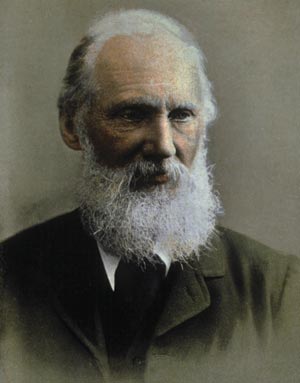
The beginnings of the science of energy date from the height of the Victorian age 150 years ago, and in particular to William Thomson (better known as Lord Kelvin). Kelvin, who died 100 years ago on 17 December 1907, became professor of natural philosophy at Glasgow University at the age of 22, and went on to become a quintessential grandee of Victorian science, ennobled peer and holder of a fistful of innovative patents (see “Kelvin: the man behind the title”). While he made major contributions to an astonishingly wide range of fields, Kelvin’s most significant role was the development, alongside figures such as Rudolf Clausius, Sadi Carnot and James Joule, of thermodynamics.

Although Newton had previously made great progress in understanding the concepts of forces and gravity, energy was almost entirely a mystery at the beginning of the 19th century. The laws of thermodynamics, which Kelvin and Clausius had developed to understand the nature of heat and the meaning of temperature, gave hard definition to energy and the rules by which it could be transformed. In fact, thermodynamics ended up being a scientific revolution every bit as significant as Newton’s laws or the rise of quantum physics in the first half of the 20th century.

But Kelvin’s thermodynamic revolution was only the beginning. Today, new research into the physics of living systems and nanotechnology is challenging the limitations of that 19th-century theory. A century after Kelvin’s death, researchers are creating a second revolution in how we understand the nature of energy.

Energy and industry

Newtonian mechanics changed the way we see the world by turning the concept of force into a precise mathematical framework. But this left unresolved the question of energy: the capacity of forces to actually do something, such as move, re-order or transform matter. In the early 1800s there was little grasp of the rules of energy, or of the nature of heat and temperature.

The Industrial Revolution provided the impetus for science to catch up with technology. Industry relied on engines: devices that transform energy to achieve work, whether it be a waterwheel powering a mill or a steam engine driving a pump in a mine. In the 1820s the French military engineer Sadi Carnot realized that while post-Napoleonic France could hardly compete with Britain on technological terms, the fundamental rules of the engine — for example those that governed its efficiency — remained unconquered.

Carnot realized that all engines transform energy from one form into another, and in his 1824 book Sur la puissance motrice du feu he showed that there were indeed universal rules that determined the maximum possible efficiency that an engine could achieve. Those rules depended not on the technology, be it steam power, water power or anything else, but on fundamental quantities such as heat and temperature.

Due in part to his untimely death from cholera in 1832, Carnot’s work fell on deaf ears. A decade later, however, his theme was taken up again by Kelvin, then a young professor at Glasgow, and by the German scientist Rudolf Clausius. Over the next decade Kelvin and Clausius, pointed in the right direction by the experiments of James Joule in Manchester, completed Carnot’s tentative definitions of heat and temperature, and so formulated the basis of thermodynamics.

Kelvin and Clausius came up with two laws or “rules of the engine”. The first states that energy cannot be destroyed or created but only transformed; while the second law expresses the fundamental limitations of what energy transformation can achieve in practical terms. Just as the first law was based around energy, the second law was based around a new concept called entropy. Roughly a measure of disorder, Clausius had so-named the quantity so as to partner it with “en-ergy” (“trope” comes from Greek for “change”). When expressed in such terms, the second law states that entropy cannot decrease during any spontaneous or natural process.

Given that the laws of thermodynamics describe how the transformation of energy affects changes in the state of any matter, Kelvin and Clausius had gone far beyond Carnot’s industrial motivation. This demonstrates spectacularly how research often gives you a lot more than you bargained for: a question about the efficiency of a steam engine had uncovered the roots of a theory of everything.

Engines of life

Thermodynamics à la Kelvin and Clausius was not yet, however, a full-blown theory of everything. Yes, the transformation of energy is key to everything that happens in the universe. But faced with almost complete ignorance about the nature of energy itself, Kelvin and Clausius had to start with a theory that only applied under a strictly limited set of conditions — namely near equilibrium processes in large systems that are isolated from their surroundings.

Over the past 20 years or so, however, advances in microscopy and micron-scale control have allowed physicists and other scientists to delve into the workings of the most complex function of matter: life. Like all processes in the universe, life is driven by the transformation of energy achieved by engines of one form or another. Crick and Watson’s discovery of the structure of DNA in 1953 may have been a major step forward in defining the base materials of life, but the real question is how do the engines of life actually work? In trying to answer this question, today’s researchers are having to stretch thermodynamics beyond its 19th-century limits.

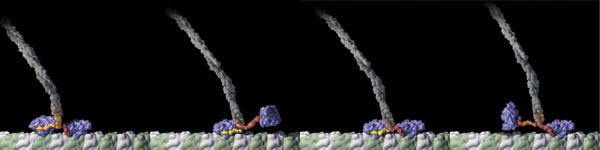
One example of a “life engine” is the protein kinesin, which is vital for transporting chemicals inside cells. Kinesin transforms chemical energy into motion by binding adenine triphosphate (ATP) — biology’s unique chemical storehouse — in such a way that the protein changes shape, thus enabling it to “walk” along the cell’s scaffolding or cytoskeleton. But cells rely on many other proteins too, from membrane pumps that control the flow of nutrients into the cell to polymerases that physically construct chains of RNA and DNA. All these molecules transform energy to move matter — in other words, all are engines.

Thanks to advances in laser trapping, scientists can now watch this microscopic engineering at work. For example, in 2000 a team led by Toshio Yanagida of the University of Osaka in Japan studied the motion of single kinesin molecules along lengths of cytoskeleton that were connected to beads that could be held in a laser trap. By attaching fluorescent markers to the kinesins to make them visible, the researchers observed individual proteins walking along cytoskeletal tracks. This research built on work carried out by Steven Block, now at Stanford University in the US, who along with co-workers in 1994 measured the tiny piconewton forces generated by a kinesin molecule.

By studying how these molecular engines transform energy into motion, researchers like Yanagida and Block are following in the footsteps of 19th-century scientists such as Kelvin and Clausius. But now the engines are microscopic molecules, rather than monsters of Victorian industry, and therein lies the challenge to established thermodynamics.

Downsizing the engine

The pioneers of thermodynamics developed their laws based on macroscopic systems that they could describe in terms of “average” quantities such as pressure and temperature. This is fine for a typical steam engine, which contains hundreds of litres of steam and is made up of a very large number of molecules. For instance, 22 litres of steam contains more than 1023 molecules, which makes average quantities perfectly acceptable since the vagaries of one or two individual molecules are irrelevant.

A typical protein, however, is a few nanometres in size and consists of just a few tens of thousands of atoms. Macroscopic rules thus fail to describe the function of protein engines, which are so small that the deviations and fluctuations of their motion and energy must be taken into account. These fluctuations are due to Brownian motion — resulting from the continual bombardment by surrounding molecules — which causes the energy of any piece of matter to fluctuate continually in units of kBT, where kB Boltzmann’s constant and T is the temperature. In Kelvin’s time, however, the importance of Brownian motion to the science of energy was still a mystery, and one that was not appreciated until Einstein’s great work in this field 50 years later (see “Einstein’s random walk”).

If a macroscopic engine, such as a car engine, were to suffer from such energy fluctuations, its pistons would jump randomly up and down inside the cylinders and degrade engine performance. But because the energy involved in one piston cycle of a combustion engine is about 100 J (equating to roughly 1022 kBT), natural ups and downs of one or two kBT are utterly insignificant. Compare this with the amount of energy used by a protein engine: a kinesin molecule uses about 12 kBT per “step”, which means that fluctuations of the order of kBT correspond to almost 10% of the energy of motion. As a result, the molecule often fails to take any steps at all due to random dips in energy.

The consequences of these energy fluctuations in protein engines are directly visible in experiments such as those by Yanagida, which reveal kinesins climbing the cytoskeletal track in a juddering motion made up of random hesitations, jumps and even backward steps. Similar results have been seen across a host of protein engines. The key question in modern thermodynamics is therefore how far do energy fluctuations push microscopic systems beyond the realm of 19th-century theory?

Stretching thermodynamics to the limit

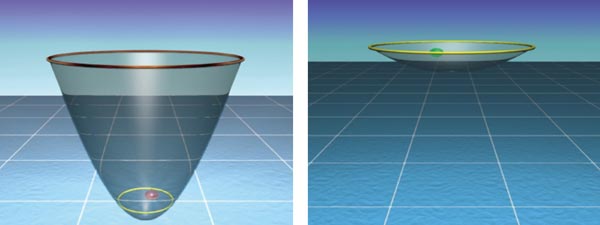
Just as Kelvin’s thermodynamics was grounded in careful experiments that allowed him to investigate the rules of energy at the macroscopic scale, modern researchers have developed microscopic “laboratories” to explore thermodynamics at small scales. Most involve driving a simplified microscopic system — i.e. one that is much less complex than a real protein engine — away from its equilibrium energy and then watching what happens as it returns to equilibrium. Since the driving energy is typically of a similar magnitude to the energy fluctuations, the route back to equilibrium will be subject to many fluctuation-driven diversions.

In 2002 Carlos Bustamante at the University of California and co-workers stretched a single RNA molecule by using a laser trap to tug at a tiny plastic bead attached to one end. As the molecule was stretched, its energy increased, so that by letting the bead go the researchers could study the effect of random energy fluctuations as the molecule contracted again. In the case of a long and flexible RNA molecule, these fluctuations are driven by the constant Brownian bombardment of billions of surrounding water molecules, which causes it to wiggle. Bustamante’s team stretched the RNA molecule many times with the same energy, and found that its “relaxation path” was different every time. At the macroscopic scale, it would be as if a stretched spring, after it has been let go, spontaneously stretched itself a little bit more for a short period by absorbing and emitting random bursts of energy.

An even simpler microscopic system where fluctuations dominate was explored by Denis Evans and colleagues at the Australian National University in Canberra in 2002. The researchers held a micron-sized plastic bead in a laser trap and studied the role of energy fluctuations from surrounding water molecules simply by shifting the laser trap away from the bead and watching what happened as the imbalance of light pressure tugged the bead back to its original position (which took about 2 s). Astonishingly, their results seemed at first to demolish the very foundations of thermodynamics: the second law.

Because the second law of thermodynamics disallows any spontaneous energy transformation that would cause the entropy of a system to decrease, it places a cast-iron limit on the capacity of that system to transform energy into useful work. Nevertheless, some of the bead trajectories in Evans’ experiment did involve a reduction in entropy, even though the bead was spontaneously tumbling back into the laser trap (i.e. which in a macroscopic system would lead to, at best, no net increase in entropy). In effect, the bead was drawing useful energy from the random Brownian bombardment of water molecules and transforming it to motion.

However, this only appears to break the second law if one assumes that Kelvin’s and Clausius’s macroscopic thermodynamics applies straightforwardly to microscopic systems. Evans’ results therefore demonstrate directly that the interpretation of the second law must be revised when you go beyond the limits of the19th-century theory. Indeed, by following the bead and averaging over increasingly longer trajectories — that is, approaching a macroscopic situation — Evans and co-workers were able to recover the usual second law. Over a macroscopic time period, the bead relaxation does only ever increase the total entropy of the system. Therefore the second law is not broken, it just becomes a few degrees more subtle and reflects the complex interplay between energy and matter in microscopic engines.

To be or not to be at equilibrium

Strictly speaking, 19th-century thermodynamics only applies to systems close to equilibrium: in other words, systems where there are no major variations in temperature, pressure or chemical composition and hence no major flows or forces. This is because everything happens smoothly and slowly near equilibrium, and is therefore amenable to a relatively simple theory. But since experiments such as Bustamante’s stretched RNA and Evans’s tugged microscopic beads are firmly rooted in a world torn by fluctuations, it almost seems to make more sense to discard Kelvin’s equilibrium thermodynamics altogether and start again from scratch. Yet by analysing such experiments more closely, some surprising similarities between the macroscopic and microscopic worlds are revealed.

Macroscopic equilibrium systems can be described simply by considering the overall energy change, which governs properties such as the rates of chemical reactions. A microscopic, non-equilibrium process that is subject to energy fluctuations, however, should not share much in common with equilibrium energy measures. Predicting the behaviour of a microscopic engine is therefore much more complicated, since one cannot just measure energy changes associated with one molecule and then assume that this applies to all similar engines. However, a decade ago Christopher Jarzynski of the University of Maryland in the US predicted that even profoundly non-equilibrium experiments on single molecules hide mysterious signs of equilibrium.

Imagining a microscopic single-molecule process, Jarzynski calculated not the simple average of the system’s energy as it was pulled away from equilibrium, but the average of the exponential of that energy. Remarkably, he showed that this exponential average had the same value as the equilibrium energy change applicable to an equivalent slow and smooth version of the process. To Jarzynski, this was a surprise because it meant that information about macroscopic equilibrium was somehow buried inside individual, randomly fluctuating microscopic systems far from equilibrium.

Bustamante’s experiments confirmed Jarzynski’s result. The RNA molecule in Bustamante’s original set-up was stretched very quickly, which meant that the system was way out of equilibrium because there was no time for energy and forces to spread evenly at each stage of the process. But Bustamante’s team also studied what happened when the molecule was stretched very slowly, thus mimicking the slow changes that can be analysed using standard equilibrium thermodynamics. Comparing this with Jarzynski’s exponential average of their non-equilibrium stretching process, they found agreement within half a unit of kBT.

In principle, this means that researchers can understand and engineer the chemical mechanisms of microscopic engines just by doing “rough and ready” non-equilibrium experiments on single molecules. But perhaps more significant is the question of why an apparently non-equilibrium, microscopic process such as quickly stretching a single RNA molecule should have buried within it the seeds of equilibrium? Answering this question may force us to refine the very concept of equilibrium.

In 2006 Dean Astumian of the University of Maine in the US suggested that in the case of microscopic engines, equilibrium means something rather more subtle than the definition that Kelvin and Clausius had in mind. Rather, Astumian argued, there are many flavours of equilibrium. For example, in a mechanical sense Bustamante’s stretched RNA is at equilibrium, since at any instant during the motion of the molecule the forces of fluid drag and random Brownian motion are as good as balanced (if they were not, the molecule would be accelerating, which is not the case even for fast stretching). So, in one way these experiments are still investigating equilibrium thermodynamics, and hence can give equilibrium measures.

However, in terms of energetics, rather than mechanics, these microscopic systems are not at equilibrium: Bustamante’s stretched RNA molecule is continually receiving and emitting bursts of heat energy due to the constant bombardment of surrounding water molecules. As a result, each stretching process involves a unique route from one energy state to another.

The same mix of mechanical equilibrium and energetic fluctuation applies for any microscopic engine — kinesin and other biological engines included. These engines have one foot in the equilibrium camp and another in the world of fluctuations and non-equilibrium. Perhaps the lesson here is that the new thermodynamics is not just an add-on to Victorian science: understanding microscopic systems calls for a thorough revision of even our most basic concepts.

The real theory of everything

Macroscopic thermodynamics turned an era of tinkering with steam engines into the advanced scientific designs that we enjoy today. Understanding the efficiency of engines has taken industry from steam engines (with at best 5% energy efficiency) to modern diesel engines that can reach 60% efficiency (although a typical car engine is more like 20% efficient).

Understanding the thermodynamics of microscopic engines could lead to similar advances on the microscale. For example, by demystifying the thermodynamics of biological engines such as kinesin, medicine could one day be transformed from a relatively haphazard chemical puzzle into an engineering discipline where bioengines such as proteins are repaired and even refined so as to function more reliably and efficiently. Indeed, perhaps the greatest scientific puzzle is how life based on these microscopic engines, with their sensitivity to energy fluctuations, ever got started in the first place.

The new thermodynamics is also vital for nanotechnology. Much of the original excitement about this field in the 1990s ignored the fact that nanoengines, like proteins, are powered by the energetics of the micro-scale. The science of nanoengines is therefore inseparable from the thermodynamics of microscopic engines. Yet even ignoring for a moment the subtle differences between the macro- and micro-scales, and between the definitions of equilibrium and non-equilibrium, there is one final limitation of 19th-century thermodynamics that is potentially even more significant.

Kelvin’s thermodynamics was based on that simplifying stalwart of the physicist: the isolated system. The laws of macroscopic thermodynamics therefore apply only to systems that are separated from their environment, such as a cylinder inside a steam engine that is immune to the temperature and pressure variations in the outside world.

Protein engines absolutely do not work in isolation. Experiments undertaken so far have studied single proteins that are plucked out of the cell and fed ATP molecules “by hand” to give them energy. In their natural setting, however, life’s engines are just parts of a complex functional web that keeps a cell alive. The next great challenge is therefore to put our understanding of isolated life engines back into the real world of the cell, which will require another step-change in the science of energy.

Kelvin’s thermodynamics was revolutionary because it recognized the universal importance of energy transformation. Its laws of energy and entropy gave scientists a way to describe the interplay of energy and matter. But the fact that it deals only with near-equilibrium states and macroscopic, isolated systems means that Kelvin’s thermodynamics is merely a first stab at a real theory of everything. Today, a century after Kelvin’s death, the thermodynamical frontier is set squarely in the realm of microscopic, non-equilibrium systems.

Scientists are still only feeling their way in the new world of the microscopic engine. But understanding how such engines work, and how they interact to power the nano- and bio-industries, will push Victorian thermodynamics significantly closer to a complete theory of energy and matter. And when we understand how energy is transformed in all processes — from powering a steam locomotive to powering a cell — then perhaps we will be close to a true theory of everything, and one that may be more profound even than an 11D space–time.

At a Glance: Kelvin and the new thermodynamics

  • William Thomson (later Lord Kelvin), who died 100 years ago on 17 December 1907, was one of the pioneers of the science of energy: thermodynamics
  • By describing how energy is converted into different forms in macroscopic systems, the laws of thermodynamics were key to the success of the Industrial Revolution
  • Physicists are now grappling with the non-equilibrium thermodynamics of the micro-scale, where random fluctuations due to Brownian motion rule
  • The most complex microscopic engines are the proteins and other biological molecules that power life itself
  • Advances in microscopy and laser trapping are allowing researchers to drive a second thermodynamical revolution couched in the language of biotechnology and nanotechnology rather than coal and steam

More about: Kelvin and the new thermodynamics

P Atkins 2007 Four Laws That Power the Universe (Oxford University Press)
V Balzani et al. 2004 Molecular devices and machines Physics World November pp39–42
P Coveney and R Highfield 1992 The Arrow of Time (Flamingo, London)
M Kurzynski 2005 The Thermodynamic Machinery of Life (Springer, Berlin)
D Lindley 2004 Degrees Kelvin (Henry Joseph, Washington, DC)
J F Marko and S Cocco 2003 The micromechanics of DNA Physics World March pp37–41
M McCartney 2002 William Thomson: king of Victorian physics Physics World December pp25–29


The route to engineering success

Engineering is a diverse profession that contributes to almost every aspect of modern life — from the design of the car you drive to the structure of the house you live in — so it is not surprising that many physics graduates end up working in this area. When you consider that (according to the Engineering Council UK) engineering is the highest earning profession after law and medicine, and that engineers are also apparently the happiest people around, it is by no means a bad career choice. Although most physicists will probably think that they have a fundamentally different world outlook to engineers, many who work in industry end up being employed as engineers (see “Engineering a better physicist”).

Paul Gosling, who works for Thales UK — part of the major French electronics and systems- development group — is a case in point. Gosling originally did a physics degree at the University of Warwick followed by a doctorate in nuclear magnetic resonance spectroscopy at the University of Oxford. He is now technical director of the Thales UK naval division, which develops new sonar systems to help guide the UK’s ships and submarines. “Physics is very highly regarded in our organization,” says Gosling, who also takes a keen interest in the training and development of the new graduates that the firm employs. “We tend to recruit physicists and mathematicians because they have the right sort of mental agility: in this industry, one day you’re dealing with a very specific problem in sonar and the next you’ll be dealing with a mechanical problem with a winch.”

According to Gosling, Thales UK is also keen to encourage staff to acquire professional qualifications such as chartered status (although, outside of the UK, the Thales Group tends to place more emphasis on peoples’ experience). Certainly in the UK, engineering is an area in which professional qualifications are taken seriously, both by companies and their customers. After a few years spent working as an engineer, most people reach the point where they want to become chartered to help their career progress.

Up to the job

In the UK a chartered engineer is one who is registered with the Engineering Council UK (ECUK). Having CEng status means that you have reached an appropriate level of competence and experience in your chosen field of engineering and, depending on the area you work in, this can significantly improve your career prospects. Owen Stevens, for example, is a physicist turned engineer who is now a director of Subsurface Consultants Ltd, a small environmental and geotechnical consultancy based in Preston in the UK that advises professional developers and local residents on utilizing former industrial sites. He obtained his CEng qualification earlier this year at the age of 35 and feels that it has benefited him significantly. “It’s important to have a professional qualification to demonstrate to your potential clients that you have that level of experience — if you’re not up to the job, you won’t get chartered,” he says.

Paul Jarvis, who graduated in physics in 1985 and is now manager of the radiological- safety support group at the Devenport Royal Dockyard Ltd (part of Babcock Marine), became a chartered engineer in 2002 at the age of 38. He agrees that getting CEng status was a significant turning point in his career. “Since becoming chartered I have been promoted from senior safety engineer, to safety-case project manager, and then to my current role where I manage a group of nine engineers,” he says. “The company is keen for its employees to become chartered in a relevant discipline.”

A matter of experience

To become a chartered engineer you first need to belong to a professional institute that is a licensed member of the ECUK. It is difficult for people with a physics background to get a CEng directly through the engineering institutes because these tend to only recognize BEng and MEng degrees. The Institute of Physics, however, offers its own route to chartered-engineer status for its members. The basic requirements are simply that you have a degree in physics or a related subject as well as about five years’ experience working in engineering, two of which have to be at a responsible level, i.e. your work involved managing a project. You also need to find two people to support your application, who themselves must already be chartered engineers.

The route to CEng through the Institute involves producing a technical report and a professional-review report. The purpose of the technical report is to demonstrate that you have compensated for the vocational engineering aspects of a BEng that are deficient in a physics degree, and that you have acquired a level of engineering skill equivalent to that which would be attained during an MEng course. In practice this means describing projects you have done at work, with particular emphasis on the engineering applications and design elements, as well as the business skills that you have used.

This report also needs to demonstrate your ability to undertake individual project work as well as to work in a group. The professional- review report, on the other hand, describes your career to date and details your future plans. “You have to show that you are using engineering principles and that you will maintain that specialist standing in the future,” explains Stevens. “The process is quite involved and the information that needs to be supplied can grow to about 10,000 words.” Finally, all candidates must attend an interview — usually at the Institute’s headquarters in London — with two Institute members who are also chartered engineers. Candidates will be asked questions based on the information they have submitted.

Whether or not an application is successful is decided by a panel of a further five Institute chartered engineers. They assess the information in the reports, the comments of the interviewers and the comments of the supporters and compare all of this with the requirements for CEng set down by the ECUK. While putting together the application itself might only take a few days, it can take several months to complete the whole process, and success is not guaranteed. Most physicists seem to think it is well worth the effort, however.

“I view having a CEng as a validation of my experience and other learning experiences within the engineering field and it also helps me to feel at home within a peer group comprised mainly of engineers,” says Adrian Gaylard, a physics graduate from Leicester Polytechnic who is now the aerodynamics technical specialist for Jaguar Land Rover. He recommends all physicists working in engineering to apply for CEng status. “Take the opportunity to have your experience within engineering documented and validated,” he says. “The people we work with move on and we lose touch with them; sometimes it’s even hard to recall the range of things we’ve worked on. The process of getting chartered captures this vulnerable data and provides recognition that you have developed a valuable new set of skills.”

Chartered engineers can also obtain the European Engineer (Eur Ing) title by registering with the Fédération Européene d’Associations Nationales d’Ingénieurs (FEANI). This qualification is recognized by most countries in Europe and can be helpful to engineers who wish to work on the continent. The application process is similar to that for a CEng, and must also be done through an organization such as the Institute.

Before you can become a chartered engineer, however, you need to obtain the necessary engineering experience, so it is important to choose your first job wisely. Whether you go along the chartered route or not, Gosling thinks that the first few years can make or break an engineering career. “You need to get into a challenging role in the early part of your career and you need to be working with experienced people who can be good mentors,” he says. “It’s very important to get that first step on the ladder right, so choose the employer and the nature of the work very carefully.

Fly me to the Moon

“This is not a film about science and technology, this is a film about people and emotions.” So claims David Sington, director of the documentary In the Shadow of the Moon, which charts NASA’s Apollo programme. Sington freely admits that this is not a new idea, with many other films and television programmes having covered the subject in the years since man first set foot on the Moon. What makes this new film different is that its narrative is solely the prerogative of those men who have walked on (or in a couple of cases orbited) our nearest satellite.

The film, which uses previously unseen footage cherry-picked from NASA’a vast archive of material from the missions interwoven with talking heads of the astronauts involved, is both visual striking and emotionally engaging. The director had been warned to “never work with children, animals, or astronauts”, with the concern that previous attempts to coax these men to convey the full impact of what they achieved having failed to live up to expectations. But perhaps because those concerned are now in their twilight years, their testimonials are as open and insightful as one could wish for.

Far from anonymous “action men in spacesuits”, the personalities of the individuals concerned shine through, and their reminiscences are at times disarmingly down to earth. Michael Collins of Apollo 11, who was dubbed “the loneliest man in the universe” as he orbited above Buzz Aldrin and Neil Armstrong as they became the first people to set foot on the Moon, reveals how he actually relished this unique position, with his view of billions of people on Earth, two people on the Moon, and then just he himself at the edge of the rest of the universe and “God knows what”.

The film includes contributions from many of the surviving 24 astronauts who visited the Moon, with one glaring omission: Neil Armstrong. Notoriously reclusive, Sington spent a long time pursuing Armstrong to try and persuade him to appear in the film, fearing that it would be obviously incomplete without him. It isn’t. Through the anecdotes of the other astronauts and the archive footage, Armstrong is still a presence, but one that remains forever in 1969 — an idealized foil to his obviously aging colleagues and our now perhaps jaded view of space exploration.

But the question we all want answered is whether going to the Moon changed these men, and what insights it has afforded them. Many of them say that the myriad of seemingly important issues that consume our everyday lives were somewhat diminished after their missions. Alan Bean of Apollo 12 claims that since he return to Earth he has never once complained about the weather — being so far from home that you can cover the whole of our planet with your thumb is clearly sobering.

There is a general feeling that going to the Moon, if not a religious experience, was for many a least a spiritual one. The word “fragile” crops up often when the astronauts describe their privileged view of the Earth from space. And this is the one area where they appear unable to rise above the problems facing humankind. Climate change and the damage we are doing to our planet appear in sharp relief to those who have seen it from a distance. With the benefit of hindsight, it is telling that one of the legacies of going to another, less-hospitable, world should be that we value our own “Garden of Eden”, as Bean puts it, even more.

Scanning tunnelling microscope runs faster

STMs have been around for 25 years and are routinely used to obtain atomic-scale images. STMs work by measuring the currents produced by electrons as they tunnel from a conducting sample to the sharp probe tip of the microscope. However, one major drawback of STMs is that they are limited in their temporal resolution, or bandwidth, to frequencies of about 10-100 kHz because of stray capacitances in the tunnel current readout circuits. These “parasitic” elements, which are introduced when amplifying the tiny current signals so they can be read, degrade the bandwidth by creating electrical short-circuits at high frequencies.

Now, Kamil Ekinci and colleagues at Boston University and Cornell University have now succeeded in increasing this bandwidth to 10 MHz — a 100-fold improvement. The researchers did this by incorporating a resonant inductor-capacitor circuit into the STM that essentially nulls out the parasitic elements allowing changes in the tunnelling current to be measured over much shorter timescales than before.

“The main advantage is that we have now have access to the ‘high-frequency signal components’ of the tunnel current,” Ekinci told physicsworld.com. “This means that if the current changes on fast time scales, we can detect it. Large bandwidth basically allows us to see these faster signals.”

The new technique permits two types of novel application: fast temperature and motion/position measurements at the nanometre scale. “Researchers may want to modify their existing STM set-ups using our technique, something that is quite straightforward to do,” suggests Ekinci. “The tool may be useful for people studying exotic materials like superconductors and they may be able to perform some new measurements not possible before. The technique might also come in handy for research on electron spin currents and may allow quantum-limited position measurements. The list goes on.”

Ekinci’s team is already building the next generation of RF STMs where they can better control the temperature and vacuum conditions in the microscope. “Once this is done, it will be a powerful tool that we can use for experiments,” he adds.

Negative-index material modulates light

The researchers, from Hewlett-Packard Laboratories in Palo Alto, and University of California, Berkeley, claim this is the first time that optical modulation has been seen in a NIM at near infrared wavelengths.

An optical modulator is a device that encodes information in a beam of light by changing the intensity of the light to create trains of pulses. The team based their modulator on a “fishnet” NIM, because this structure is known to have both a negative electrical permittivity and a negative magnetic permeability for infrared light a certain wavelengths. As well as being responsible for the negative refraction of light, this “double resonance” also affects how much light is transmitted by the NIM.

To make their modulator, the team sandwiched an 80-nm layer of silicon between two 25-nm layers of silver. The silver layers were perforated with tiny rectangular holes using nanoimprint lithography and electron-beam lithography to form an square array of criss-crossed wires. The wires were separated by 320 nm in both directions; the wire widths were 220 nm in one direction and 110 nm in the perpendicular direction.

“These are basically resonant structures,” explains Hewlett-Packard’s Shih-Yuan Wang, who led the work. The magnetic resonance is related to the sandwich structure, while the electric resonance is caused by the crosshatching of wires.

The device was then studied by shining two laser beams on it. One beam was a 1700-nm wavelength infrared laser that was shone through the device to see how much light it would transmit. The second beam was a 532-nm wavelength visible laser that was used to control the transmission of the infrared light.

The visible laser was able to control infrared transmission by creating electron—hole pairs in the silicon layer, the presence of which causes a slight shift in the wavelength at which resonances occur. The result is a doubling of the amount of infrared light transmitted by the device when the visible laser is on.

Such a change is already enough to make a useable modulator, says Wang, but he believes that a much higher contrast is possible with further refinement of the structure. What’s more, by repeating the experiment using very short laser pulses, the team found that the material could be switched in as little as 58 ps – a figure defined by the time it takes for the electrons and holes to respond to the laser light. This means that the modulator could be switched on and off very fast, at several tens of gigahertz in the current device and Wang believes that 100 GHz could be possible with device optimization. This is much faster than any commercial modulator available today.

Their modulator operates in the near infrared part of the spectrum, making it a good candidate for use in optical communications devices. “The closest competitor is the electro-absorption modulator,” says Wang. “But with that you are limited to the bandgap of the semiconductor you are using. With our structure we can design to any wavelength if we change the dimensions of the criss-cross pattern.”

There’s plenty of work to do, however. The modulator is optically pumped in its existing form; a useable device would require electrical activation.

Bullets bounce off nanotubes

Carbon nanotubes are strong, lightweight and thanks to their high elasticity are able to absorb huge amounts of kinetic energy. By modelling the impact behaviour of these nanomaterials, Kausala Mylvaganam and Liangchi Zhang of the University of Sydney have shown that nanotubes can withstand fast moving bullets by rebounding their force. The simulations also suggest that nanotubes are resistant to damage by repeated ballistic impacts, which is crucial if they are to be used in body armour.

The Australia engineers obtained their results by modelling the behaviour of single-walled carbon nanotubes fixed at both ends that were impacted with tiny “bullets” made of diamond. The bullets had speeds of between 1000 and 3500 m/s and were fired perpendicular to the nanotube axis. The researchers investigated the relationship between the nanotube’s radius, the position where the bullet strikes, its speed and the energy absorbed by the nanotube.

Mylvaganam and Zhang found that the nanotubes were resistant to bullet speeds of over 2000 m/s, even after multiple impacts. (For comparison, the speed of rifle bullets can reach 1500 m/s and most gun bullets have speeds of less than 1000 m/s). The centre of a nanotube appeared to be the most resilient.

The duo says that bullet-proof vests could be made by using “nanotube yarn”. Here, the carbon nanotubes would be spun into fibres, probably using a technique called electrospinning. The researchers have calculated that body armour just 600 microns thick made from six layers of 100 micron yarns could bounce off a bullet with a muzzle energy of 320 Joules – which is typical of a light firearm.

Such vests would be better than existing anti-ballistic clothing, which is usually made of multiple layers of Kevlar, Twaron and Dyneema fibres. Although they stop bullets from penetrating, they do this by dissipating force over an area larger than the bullet, which can still cause injuries known as blunt force trauma. These range from severe bruising to critical organ damage. The high level of elastic storage energy of carbon nanotubes means that such trauma could be avoided.

Although this research is theoretical, previous work by many groups around the world has shown that nanotubes can be effectively spun into yarns. So the next step would be for someone to actually make a prototype vest.

Did the early universe have “texture”?

The cosmic microwave background (CMB) was born when the universe was about 380,000 years old. Before this time, space was filled with hot plasma that did not allow light to travel very far without being scattered. But as the universe expanded, the plasma cooled enough to allow neutral atoms to form. This “decoupling” of matter and radiation suddenly enabled photons to travel across space largely unimpeded, their wavelengths being stretched over time to produce a faint glow of radiation in the microwave region that we can detect today.

While the CMB is remarkably uniform, it appears to contain a cold spot that is over a billion light years across. The spot was first seen in images taken by NASA’s WMAP satellite in 2004, as it mapped out the tiny fluctuations in the CMB’s temperature. Various possibilities have been suggested, such as instrumental effects, foreground contamination from the Milky Way, the effect of rotating universes and giant voids bereft of galaxies – but none of these are very convincing.

Now, Marcos Cruz, Patricio Vielva and Enrique Martínez-González at the Institute of Physics of Cantabria (IFCA), Spain, as well as Neil Turok and Michael Hobson at the University of Cambridge believe that a better explanation for the cold spot can be found in events that occurred in the very early universe.

The team suggests that as the universe expanded and cooled after the Big Bang, it underwent a series of phase transitions, similar to water freezing into ice. These transitions corresponded to the breaking of fundamental symmetries that occurred as the fundamental particles and forces of nature separated out from the single unified substance that was the very early universe. Importantly, just as misalignments that occur in the crystallization of water can lead to visible defects like cloudy spots in ice, misalignments in this symmetry breaking pattern could form cosmic defects.

“Depending on the nature of the symmetry being broken, different types of defect can form, such as cosmic strings,” explains Hobson. “Our work investigates the exciting possibility that the cold spot is due to the presence of a cosmic texture – a three-dimensional object like a knot of energy anything between a few millimetres and many light-years across.”

These knots are predicted to collapse and unravel, concentrating mass into a rapidly shrinking region and creating a strong gravitational field that attracts nearby matter. The gravitational field could also affect the energy of CMB photons passing through the texture, leading to a cold spot in the CMB.

If confirmed, a cosmic defect could provide invaluable information about how the fundamental forces and particles evolved in the very early universe. Moreover, it could allow cosmologists to study the physical processes that happened at the extremely high energies prevalent in the aftermath of the Big Bang, which are far beyond those accessible to any terrestrial particle-physics experiment.

According to the researchers have performed a statistical analysis ranking that suggest that their explanation is the most probable of those put forth so far, they are careful to say that more evidence is needed to support their conclusion. Further measurements required include determining the pattern of polarization of the CMB radiation from the cold spot, searching for additional textures and looking for gravitational lensing of background objects by the texture. Some of this could be done over the over the next decade.

“The texture hypothesis is the most convincing explanation for the cold spot, although it still remains far from compelling,” says Jason McEwen an astrophysicist at the University of Cambridge, who was not involved in the research. “One of the most promising aspects is that tests may be performed using future observations of CMB polarization. If the cold spot does indeed turn out to be a texture, this will be a revolutionary discovery, probing the highest energies yet studied by physicists and extending our knowledge of the very early Universe.”

Copyright © 2026 by IOP Publishing Ltd and individual contributors