World celebrates half a century in space

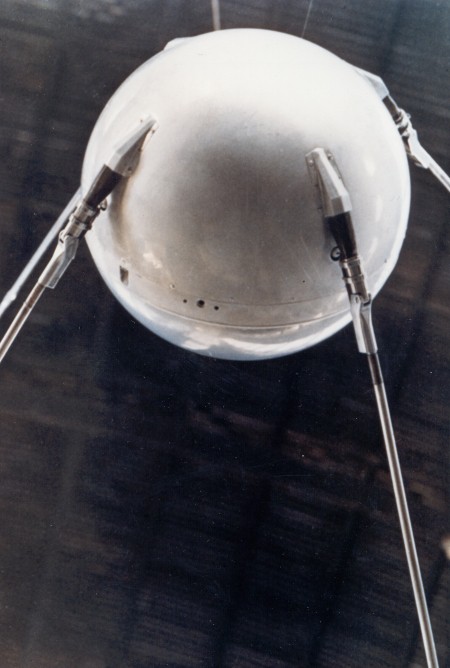
In Star City — the Russian cosmonaut training centre just outside of Moscow — former cosmonauts, military officials and engineers gathered earlier today to reminisce over events leading up to the launch. At the foot of the Kremlin walls, military officials laid flowers on the grave of Sergei Korolyov, the influential rocket scientist who led the Soviet satellite program. “Of course, speaking for just us scientists [the launch] sparked an unexpected furore around the world. No-one expected this, even including our engineers,” Viktor Frusmon, one of Korolyov’s colleagues, told Russian reporters.

Elsewhere in the world, celebrations for International Sputnik Day are more varied. In France, for instance, Franck Ancel — who organizes events to “raise questions about technology” — is presenting artists’ Sputnik-related images and recordings at the National Office of Aerospatial Studies and Research. Meanwhile, Igor Hax from Liverpool in the UK has created slow, “break-beat” music based on samples of Sputnik’s famous bleeping. More conventionally, the Toronto Aerospace Museum in Canada is hosting various presentations of the space era by scientists.

The anniversary was also marked yesterday, with Michael Griffin, administrator of NASA, and Antoly Perminov, head of the Russian Federal Space Agency, agreeing to work together to look for water on the Moon and Mars. They signed agreements at the US embassy in Moscow to use Russian instruments on both NASA’s Lunar Reconnaissance Orbiter, due to be launched in October 2008, and the Mars Science Laboratory, a robotic rover due to be launched in 2009.

The good cheer was tempered, however, by Russia’s military space commander Vladimir Popovkin, who cautioned about countries launching weapons systems into space. “We need to have strong rules about space to avoid its militarization, and if any country will place a weapon in space then our response will be the same,” he told the newspaper Trud. Popovkin added that weapons should not be deployed in space because no country has the right to control it.

• This month’s issue of Physics World has several feature-length articles devoted to Sputnik 1 and its legacy.

Josephson effect seen in atomic gas

Quantum mechanics allows all electrons the possibility of tunnelling through insulating barriers, but electrons in superconductors — which behave as one collective entity — can tunnel coherently. This means that a current can flow across a barrier without a driving voltage, a phenomenon known as the d.c. Josephson effect. Moreover, the a.c. Josephson effect says that if a voltage is applied across the barrier the current will oscillate in direction. This oscillation has been used in superconducting quantum interference devices (SQUIDs) to measure tiny magnetic fields, as well as being used to define the volt.

Although the a.c. Josephson effect has also been seen in superfluid helium as a mass-current oscillation of atoms when separated by a membrane, the d.c. Josephson effect had only been seen in superconductors. Now, however, Jeff Steinhauer and colleagues from the Israel Institute of Technology have seen both the a.c. and d.c. Josephson effects in a gas of rubidium atoms cooled to almost absolute zero. At this temperature the atoms all fall into the same ground state, what is known as a Bose-Einstein condensate (BEC).

The researchers trapped their BEC using magnetic fields and then divided it in two with a laser beam, which provides a potential barrier in the same way that an insulator does for electrons. They then shifted the beam through the BEC to drive the atoms on one side closer together against their mutual repulsion, increasing their chemical potential. By monitoring the density of each side of the BEC, Steinhauer and colleagues found that it wasn’t just the compacted atoms that tunnelled through, but that atoms from both sides tunnelled back and forth — the hallmark of the a.c. Josephson effect. To see the d.c. Josephson effect, they shifted the beam at less than 40 µm/s and found the atoms passed through unimpeded and with no oscillation.

Because the oscillations of the a.c. Josephson effect are strongly dependent on the difference of the chemical potential between the sides of the BEC, they are also dependent on the position of the beam. Steinhauer and colleagues therefore think that, analogous to how a SQUID detects magnetic fields, they could use the movement of the beam as a rotation sensor. And, like the superconducting Josephson effect, they think that their system could provide a standard chemical potential for calibration purposes. For example, if a laser were shone onto one side of the BEC, it would increase that side’s chemical potential and thus change the frequency of the oscillation proportionally to its beam energy.

Carbon-doped magnetic semiconductor is a first

Computer chips and other semiconductor devices use the charge of the electron to process and store information. The electron also has a spin — which can be either “up” or “down” — and many physicists believe that spin could be used along with its charge to create electronic devices that could someday be faster and more efficient than today’s computer chips. A major stumbling block on the road to spintronics is the current lack of suitable materials that have both magnetic and semiconductor properties at room temperature. Such materials could, in principle, be used to create circuits in which electrons are controlled according to their two possible spin states.

Physicists first tried to create such materials by doping semiconductors with small quantities of magnetic metals such as manganese. Unfortunately, the resulting DMSs were magnetic only well below room temperature. To make matters worse, the metals did not disperse evenly throughout the semiconductor and instead formed clumps. This left researchers wondering whether the magnetism was occurring in the doped semiconductor, or in clumps of magnetic metal.

More recently, researchers created a room-temperature DMS by doping zinc oxide and gallium nitride semiconductors with copper. This was a significant breakthrough because copper is non-magnetic and therefore the observed magnetism must arise in the doped semiconductor, not in unwanted metallic clumps.

Now, a team led by Yuan Ping Feng and Jun Ding at the National University of Singapore has created a brand new type of DMS by doping zinc oxide with carbon.

The materials were created by firing an intense laser pulse at a mixture of carbon and zinc-oxide powders. This caused some of the material to evaporate, coating a nearby sapphire substrate with films that were about 200 nm thick. By varying the amount of carbon powder in the target, the team was able to make zinc films with 0, 1 and 2.5% concentrations of carbon.

The team then measured the magnetic properties of the films using an extremely sensitive superconducting quantum interference device or SQUID. They found that both the 1% and 2.5% doped samples retained their magnetization to at least 400 K — about 100 degrees above room temperature.

According to Feng, the discovery of a carbon-doped DMS is significant because all other known DMS materials involve transition metals in which “d-shell” electrons are responsible for the magnetism. By contrast, magnetism in carbon arises from s and p-shell electrons, which makes it a completely new mechanism for physicists to explore.

“From an application point of view, it is hard to say which DMS will be more promising, but the discovery of room temperature ferromagnetism in carbon-doped ZnO opens a new direction in the search for new DMS”, said Ding. The team is now doing calculations to investigate magnetism in semiconductors doped with other light elements such as nitrogen.

Anton Zeilinger scoops first Isaac Newton medal

Zeilinger has pioneered the study of entanglement — a property of quantum theory that allows two or more particles to display much stronger correlations than are possible in classical physics. Entanglement is what, in principle, could allow quantum computers to outperform conventional computers at some tasks.

His achievements include the first demonstration of quantum communication based on the entanglement of photons in 1995, the first “quantum teleportation” in 1997 and the first quantum cryptography performed with entangled photons in 2000. Earlier this year he led a team that managed to transmit an entangled photon 144 km in free-space, opening the door to satellite-based quantum communication.

Zeilinger, 62, was born in Austria and is currently professor of experimental physics at the University of Vienna as well as scientific director of the Institute of Quantum Optics and Quantum Information of the Austrian Academy of Sciences.

The Isaac Newton Medal is one of ten new honours launched for 2008 by the Institute. Awarded for “outstanding contributions to physics”, the medal differs from the Institute’s other 23 awards in not being restricted to physicists working in the UK or Ireland, or to those with strong connections to the two countries.

Each award includes a £2000 prize and will be presented at a ceremony in London on 24 January 2008. A document listing all the 2008 prize-winners can be downloaded (60 kB) from the Institute’s website.

ILC names research director

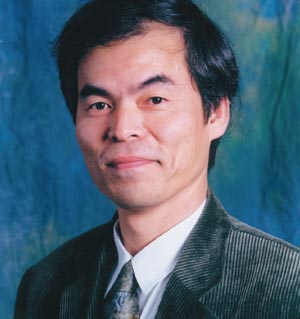
Yamada was appointed by the International Linear Collider Steering Committee (ILCSC), which is a group of particle physicists coordinating the global effort to design and build the ILC. A reference design for the ILC was released earlier this year and the project is now in the “engineering design” phase during which the details of how to build the facility will be ironed out. Yamada’s appointment is expected to last throughout this phase, which should end in 2010.

One of Yamada’s main responsibilities will be to implement procedures for deciding which two of four proposed detector designs will be used at the facility. He plans to appoint an International Detector Advisory Group to assist him in his new role.

Yamada had been director of the Institute of Particle and Nuclear Studies at Japan’s KEK national laboratory. He was involved with detector design for the Large Electron and Positron Collider (LEP) at CERN and worked on several experiments at the DESY particle physics lab in Germany.

The ILC is seen by particle physicists as the next big facility after the Large Hadron Collider at CERN, which is due to start taking data in May 2008. The ILC will be about 31 km long and will smash together electrons and positrons at energies of at least 500 GeV. A location for the ILC has not yet been selected and the facility is expected to cost as much as $15 bn to build.

Gravitation

In his 1728 book A Treatise of the System of the World, Isaac Newton described what would happen if one shot a stone horizontally from the peak of a mountain that poked above the atmosphere. The more forcefully the stone is shot, he reasoned, the further around the Earth it will travel. If shot with sufficient strength, however, the stone will return to the peak, and “retaining the same velocity, it will describe the same curve over and over, by the same law”.

Thus Newton illustrated the principle of an orbit, which not only accounts for the paths of objects in the solar system but also explains the trajectories of the thousands of satellites and spacecraft that have been launched since Sputnik 1 blasted off half a century ago this month (see “Sputnik’s legacy”). Underpinning this principle is, of course, Newton’s inverse-square law of gravitation.

Impact on science

Historians of science have closely traced the path to this law, which began in about 1600 when Johannes Kepler described a force — extending from the Sun to the planets — that weakened in proportion to distance. His idea was mocked by the French astronomer Ismael Boulliau, who in 1645 said that such a force would have to radiate in all directions like light and so would weaken with the square of the distance. Boulliau simply found it impossible to believe God would act this way. Others did think that an inverse-square law was likely, but saw it as the natural outcome of a tug of war between a centre-fleeing, centrifugal force and a centre-seeking force.

In January 1684, in a London coffee house, the architect and astronomer Christopher Wren challenged his comrades Edmund Halley and Robert Hooke to demonstrate — within two months — the validity of the inverse-square law for planetary motion. Neither could, but Halley approached Newton with the problem. By December 1684 Newton had realized that as a consequence of his third law of motion, the planets must pull back on the Sun — and on each other — and that they all revolve about a common centre of gravity.

This seminal insight of universal gravitation was to inaugurate one of the most profound transformations in Western science. Indeed, it led to Newton becoming the “gold standard” against which scholars in other sciences compared the superstars in their fields. James Clerk Maxwell, for example, hailed Ampère as the Newton of electricity, while Alfred R Wallace, Thomas Huxley and others called Darwin the Newton of biology.

Moreover, Newton’s law of gravitation was often cited as the kind of law that a science required. François Magendie, in his 1817 textbook entitled Elementary Sketch of Physiology, lamented the absence from his field of “an intellect of the first order to come and discover the laws of the vital force in the same way Newton made known the laws of attraction”.

Impact outside science

The influence of Newton’s law of gravitation extended well beyond science, however – to education, philosophy, theology and other areas of human culture. It also changed the very notion of “law”.

In modern times, the concept of a scientific law has a specific meaning. For example, in his book The Software of the Universe: An Introduction to the History and Philosophy of Laws of Nature, the philosopher Mauro Dorato from the University of Rome 3 calls a scientific law “a mathematical relationship between properties of physical systems”.

For the ancient Greeks, however, a law was an order that a ruler gave to subjects. Non-human nature was different. It was a kind of cosmic ecosystem containing many different levels of organization and underpinned by a complex network of overlapping causes, which could not be explained in a simple way.

Even as late as the 17th century, many scientists refused to apply the term law to regularities in nature, insisting that it was no more than a metaphorical extension of social language to the natural world. But the growing appreciation for the clockwork-like structure of the cosmos inclined others, such as Descartes, to describe creation as a juridical act by a supreme law-giver. Newton’s law of gravitation — universal in scope — gave an enormous boost to this inclination. The influence had now been reversed: natural language was extended to the social world.

Many political theorists even used Newtonian language — so much so that it actually influenced the modern conception of democracy, as the late historian I Bernard Cohen makes clear in his 1995 book Science and the Founding Fathers: Science in the Political Thought of Thomas Jefferson, Benjamin Franklin, John Adams, and James Madison.

Even the birth of socialism is tied up with Newton’s law. For the French political thinker Henri de Saint-Simon (1760–1825), who was one of the founders of socialism, Newton’s law showed the way to a scientific approach to social life, based on universal fraternity and collective organization. Saint- Simon had a vision in which God disclosed to him that Newton sat at his right hand and decreed that the world should be governed by a committee called the “council of Newton”. Its primary task — Saint-Simon is quoting God now — was to discover “a new law of gravitation applicable to social bodies”.

To be sure, Saint-Simon was a flamboyant character, and the kind of megalomaniac aristocrat — idealist, bad writer, idiot and eccentric — with which early 19th-century socialism was amply stocked. But he was not alone. Other political thinkers, including Pierre Cabanis, Charles Fourier and Giovanni Morelli, tried to apply the notion of gravitational attraction to human life in holding that free, subjective, conscious individuals were nonetheless compelled by universal, deterministic scientific law — a notion that also influenced Karl Marx.

The critical point

Newton’s law of gravitation did more than quantify the attraction between objects, be they pebbles or spacecraft. Among other things, the law inspired scholars in other fields to seek descriptive, mathematical and universal laws. In so doing, it not only altered our understanding of nature, but also our conception of science and of human life.

Let there be light

Gallium nitride (GaN) is probably the most important new semiconductor material since silicon. It owes this status to the development of bright blue, green and white GaN-based light emitting diodes (LEDs), and these in turn owe their invention to a young Japanese researcher named Shuji Nakamura. Brilliant! tells the story of how Nakamura — who was working in the poorly resourced Nichia Chemical industrial research laboratory in a remote part of Japan — overcame huge odds to develop the white LED. This revolutionary technology may eventually replace all the light bulbs and fluorescent tubes in the world, thus saving huge amounts of energy.

Lighting is one of the biggest underlying causes of greenhouse-gas emissions, causing some 1900 megatonnes of carbon dioxide (CO2) to be emitted by power stations each year. This is three times the total CO2 emissions from aircraft, and is comparable to the total amount of CO2 emitted by cars. It is almost certainly easier to reduce CO2 emissions by having more efficient lighting than by making cars and planes more efficient.

Gallium-nitride white LEDs provide an obvious route to this goal. They should eventually be 10 times more efficient than filament light bulbs, and more than twice as efficient as long fluorescent tubes and compact fluorescent lamps (CFLs). White LEDs also have considerably longer lifetimes than these other technologies, and — unlike fluorescent tubes and lamps — they do not contain toxic mercury.

Perhaps this explains why galliumnitride LEDs made it to market so rapidly. The first prototype bright blue LED was demonstrated by Nakamura in his small laboratory in November 1993. Last year galliumnitride LEDs worth over $4bn were sold worldwide. This is more than the total sales of gallium-arsenide (GaAs) devices in 2006, even though most mobile phones contain a GaAs chip.

Brilliant! is a superb and inspirational book that explains the history of this remarkable technology in four easily readable parts. The story starts with Nakamura’s humble origins in rural Japan and plots the path that led to the first GaN-based LEDs. Nakamura joined Nichia in 1979 and spent the next eight years developing various new products, all of which were commercial failures. In desperation, Nakamura went to the president of Nichia — then Nobuo Ogawa — to explain that he wanted to develop a bright blue LED, and that he needed ¥300m (equivalent to 2% of the company’s sales that year). To Nakamura’s astonishment, Ogawa agreed, and also paid for him to spend a year at the University of Florida learning the semiconductor growth technique of metal organic chemical vapour deposition (MOCVD).

While Nakamura was in the US, however, Nobuo Ogawa retired and his successor, Eiji Ogawa, ordered him to stop work on gallium nitride immediately. However, Nakamura disobeyed this instruction and when he returned to Nichia he continued his work in secret. Against all the odds he produced a prototype blue LED in 1993. White LEDs were realized a few years later with the addition of a yellow phosphor coating, which made the emitted light appear white. The second part of the book details some of the first applications of these LEDs. The seven-storey-high Nasdaq full-colour display in New York’s Times Square, for example, consists of 19 million LEDs and covers almost a quarter of an acre.

Nakamura’s story does not end there. In 1999 Eiji Ogawa established a centre for research on nitrides and appointed Nakamura as the manager, but gave him no staff. Realizing he was being sidelined for his earlier disobedience, Nakamura looked for work elsewhere, and in January 2000 he moved to the University of California at Santa Barbara.

Then, 10 months later, the US LED company Cree hired Nakamura as a part-time consultant. Nichia was furious and promptly sued Cree, citing Nakamura for leaking trade secrets. Nakamura responded by hiring a top lawyer and filed a claim in the Tokyo district court against Nichia in August 2001, asking for compensation of ¥2bn (about £8m) as his share of the sales of Nichia LEDs. In January 2004, the court awarded him a massive ¥20bn (£80m), by far the largest award of its kind ever made by a Japanese court. The book concludes with a section on the ongoing revolution in solid-state lighting.

The book’s author Bob Johnstone is an Australia-based science journalist who has a great talent for explaining physics in simple terms, and — apart from the occasional scientific slip-up — the book’s only major weakness is the explicit exclusion of Europe. As Johnstone writes on page 18: “Europeans should ask themselves why, despite the fact that several of the actors in this drama are European by birth, it is possible to write a book such as this essentially without mentioning Europe. Indeed, it is only a slight exaggeration to say that, from a technological and entrepreneurial point of view regarding LEDs, with the honourable exception of Germany’s Osram Opto, Europe hardly exists.”

I understand where Johnstone is coming from. European governments have totally failed to recognize the potential of gallium-nitride-based LEDs, while the US, China, Japan, Korea and Taiwan all have major national solid-state lighting initiatives that pump large sums of money into the research and development of gallium- nitride-based LEDs. Europe is not the hopeless case that Johnstone portrays, however. The German firm Aixtron is the largest manufacturer of gallium-nitride MOCVD equipment in the world. Europe also owns two of the “big five” LED companies in the world in the shape of Philips and Osram, while the UK has a number of thriving companies designing and manufacturing LED products. Various European and UK universities are performing world-leading research in gallium nitride. Reports of the death of gallium-nitride LEDs in the UK and the rest of Europe are greatly exaggerated and need to be countered.

Despite these criticisms, this is a beautifully written, informative and inspiring book. It is a must-read for all academics and industrialists working in the gallium-nitride field, and all physicists, including potential physicists in schools, would greatly benefit from reading it. It is an ideal book for passing the time on your next train or plane journey (when I read my copy). As a present it would be, how can I put it, brilliant!

Physics up above

Exponentially over budget, plagued by technical glitches and some seven years behind schedule, critics have always found the International Space Station (ISS) to be an easy target. Since NASA first began discussing the station’s forerunner some 25 years ago, many astrophysicists and planetary scientists have viewed the ISS as an orbiting “white elephant” siphoning funds from more scientifically adventurous space missions.

But that would be to ignore the importance of having a permanently manned space station. While the ISS’s interlocking modules, external trusses and solar arrays hardly resemble Arthur C Clarke’s majestic rotating wheel in 2001: A Space Odyssey, the station is a product of humankind’s quest for both a better life here on Earth and an innate sense of wanderlust. Born a quarter of a century after the Soviet Union launched Sputnik 1, the ISS grew out of an amalgam of designs from previously planned but unexecuted space stations. These include the US Space Station Freedom, Russia’s Mir-2 and the stand-alone Columbus research module of the European Space Agency (ESA).

Today, as a joint project of the US, Russian, European, Japanese and Canadian space agencies, the ISS orbits at an altitude of between 370–460 km in the same direction as Earth’s rotation. It provides a unique environment in which to study nature in low gravity — from the flow of fluids to the growth of crystal. Moreover, the ISS is proving to be a “research springboard” from which humankind can launch itself further out into the solar system. That is, if more down-to-earth factors such as money and international politics do not get in the way.

A political science

From the outset, critics of US space policy singled out the ISS as a foray into post-Cold War politics, rather than truly an international scientific undertaking. As planetary scientist Wendell Mendell at NASA’s Johnson Space Center in Houston explains, “The NASA space programme is a technically driven enterprise intended to explore the unknown. But because it is part of the US government, it is also a political entity. Except for the fact that NASA wanted to build one, in my mind the space station was not well thought out. It was a committee-consensus process, so over the years there were a lot of studies that ended up getting scrapped.”

Once the ISS reaches the “assembly complete” stage by 2010 — which was originally scheduled for 2003 — a permanent crew of six will enjoy a pressurized volume of 935 m3 during six-month-long stays. That is about four times larger than the Russian Mir space station, which was manned continuously for almost 10 years before being forced to crash into the atmosphere in 2001, and some five times the size of NASA’s 1970s-era Skylab. Unofficially, NASA’s expenditure on the ISS is $100bn and counting — spiking through its years of planning and construction. Even so, ISS funding is assured until 2016, and it is likely that the station will operate until at least 2020.

In late 1998 Russia delivered the first segment of the ISS to low Earth orbit, and for a while the assembly appeared to be running on schedule. But with the loss in 2003 of the Space Shuttle Columbia and its crew of seven, the US Congress argued that if astronauts were willing to risk their lives for spaceflight, then NASA needed to make sure that the risk was commensurate with the exploratory and scientific gain. While the ISS might have had a noble purpose, was it really pushing the bounds of exploration in the tradition of, say, the Apollo programme that took us to the Moon nearly 40 years ago?

Even though the aerospace industry seemed excited about the ISS, many manned-spaceflight enthusiasts — ranging from researchers within the space agencies themselves to space buffs among the general public — viewed it as a distraction from more scientifically daring missions. Thus, if the ISS itself was not really pushing the boundaries, then its international partners had two choices: either abandon it altogether; or persevere and use it as jumping-off point for research on how to achieve long-term manned lunar and interplanetary missions. Fortunately they chose the latter option.

High dining

The ISS can tell us a lot about manned-spaceflight operations but, as Mendell points out, the devil is in the details. “Nowadays there is a lot of talk about the problems of garbage and stowage because no-one had thought about those before,” he says. “The whole idea of how humans perform in isolated conditions in space for long durations is an important element of study in the ISS.”

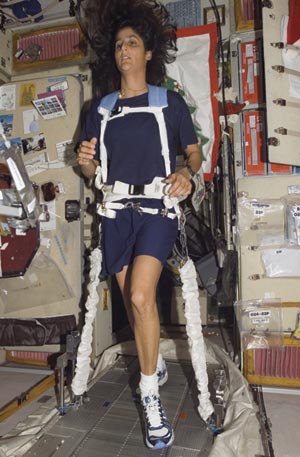
A case in point: after the ISS astronauts have dined on some of their favourite in-orbit offerings — which include shrimp cocktail, chicken fajitas and barbecue-beef brisket all washed down with lemonade — ground control requires that they spend at least 1.5 hours doing resistive exercise. As well as keeping the astronauts’ heart muscles functioning optimally, the workout counters the bone loss that humans suffer in microgravity conditions (i.e. a state where the force of gravity is almost undetectable and which is practically the same as weightlessness). In such a low-gravity environment, astronauts can lose up to 2% of their bone structure per month. No-one knows exactly why this happens, but it is thought that a lack of gravitational stress on the skeletal structure somehow slows production of bonebuilding osteoblast cells.

If manned trips to Mars are to be feasible, then space biologists are going to have to solve some very basic problems associated with long-term weightlessness. Thus, during their regular five days per week work schedule, crew members on the ISS spend much of their time helping ground-based investigators carry out hundreds of microgravity experiments.

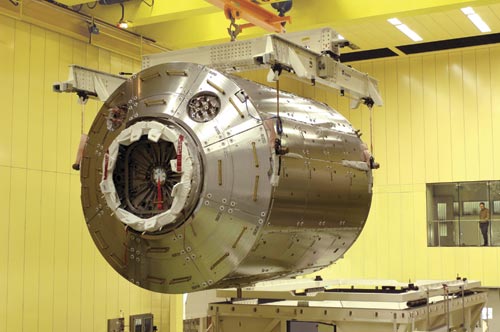
About 200 experiments have already been carried out on the space station or are still in progress, and at least 500 more are planned over the next five years. They range from Earth observations to proving the worth of technologies for industry, including many that study the effect of microgravity on animal, plant and human biology. Thus far, these experiments have been carried out in the Russian service modules and the US research lab Destiny. However, the Space Shuttle is scheduled to deploy ESA’s Columbus laboratory in December of this year and the Japanese Kibo research module in April 2008. Furthermore, the Russians hope to develop and deploy a research module perhaps as early as 2011.

Each ISS partner is responsible for choosing (and funding) its own experiments, which usually begins with some sort of peer-review process to weigh up the merits of individual scientific proposals. It can take anywhere from six months to eight years before these proposals are finally implemented in Earth orbit. While most of the experiments do not require much involvement from astronauts, the crew members often have to start and stop experiments as well as to document results using digital imagery and video for later ground-based analysis. But given that many of the astronauts already have PhDs in a science subject, they are usually very comfortable with the rigours of experimental investigation.

Fuelled by experiment

Recently, much of the focus of ISS experiments has been to refine technologies that will help humankind explore beyond the Moon to Mars, such as those that manage spacecraft fuels. “Right after Sputnik, it dawned on NASA that when gravity goes, liquid fuels are also going to do different things,” says Mark Weislogel, a mechanical engineer at Portland State University in Oregon. “The Apollo engineers implemented their designs without the benefit of long-duration microgravity tests. They made a series of good decisions, but they had a measure of luck on their side. With more low-gravity experience, however, we can improve the reliability of systems and reduce the overall mass of a given spacecraft.”

Understanding how fluids behave in the absence of gravity is vital when managing spacecraft fuel tanks. But it is also important for life-support systems, liquidwaste disposal, water processing, thermal cooling and potentially even space-based turbine-powered electrical generators. In 2004 Weislogel was the principal investigator on a series of capillary-flow experiments on the ISS, in which he and his co-workers investigated how capillary surface-tension forces drive fluids both in space and on the ground. To study capillary forces in space, ISS astronauts used digitized video to record the movements of silicone oil contained in six 2 kg test vessels. The data are currently being analysed by researchers back on Earth.

“Suppose you’ve just released one of your rocket’s upper stages and now you’re adrift in low gravity,” says Weislogel. “It’s time to fire the next rocket, but if the tank isn’t full, you’ve got to know where that liquid is. If the engine fires and the liquid isn’t over the exit, then you could have a problem.” In other words, if microgravity changes the location of fuel in the tank, which in some spacecraft designs has to be mixed in precise ratios from two separate fuel components, the engines may misfire and the fuel tanks could even be damaged. Such scenarios could cause a spacecraft to miss its target, with potentially disastrous consequences.

Fuel tanks tend to be spheroidal in order to make them as strong as possible. But even with the best current designs, low gravity can play havoc when it comes to positioning fuel within a tank. To get round the problem, designers frequently use complicated propellantmanagement devices or baffles to wick the fuel into its optimal position, which is usually near a fuel pump. However, if an Apollo-era device failed, the engine might be knocked out altogether — possibly interfering with the mission’s ability to manoeuvre back safely to Earth. Weislogel and co-workers’ capillary-flow experiments could reduce such risks. For instance, if the primary fuel system fails, better use of capillary forces could ensure that at least some of the spacecraft’s cooling or other systems might still function, even if at a reduced level.

If faulty fuel pumps do not end a mission altogether, there is always the ongoing threat to astronauts from solar flares made up of very energetic protons or of heavy-ion background radiation from galactic cosmic rays (GCRs). In particular, the highly ionizing nature of GCRs can cause proteins in human cells to fragment, which increases the chances of tissue damage and tumours. While the Earth’s magnetic field protects ISS crews from much of the Sun’s activity, this will not be the case for manned interplanetary missions.

Frank Cucinotta, a radiation biologist and chief scientist for NASA’s Radiation Research Program at the Johnson Space Center, says that we have come a long way in our understanding of radiation risks since the days of Yuri Gagarin, who in 1961 became the first man in space. “We now understand how radiation traverses through the materials [both of the spacecraft itself and the astronauts’ attire] and tissue,” he says. “By studying the damage mechanism, we should be able to develop biological countermeasures such as antioxidants, pharmaceuticals and gene therapy.”

The ISS experiment Matroshka-2 (MTR-2), which follows on from an earlier experiment called Matroshka-1, was designed to track radiation fluxes both inside and outside the space station. MTR-2 uses a simulated human torso to mimic human flesh and internal organs. This “phantom” is embedded with dosimeters to measure incoming radiation fluxes, which can then be compared with the latest space-radiation models to better estimate the real risk to humans.

MTR-2’s principal investigator Guenther Reitz, who heads the department of radiation biology at the German Aerospace Center in Cologne, says fluxes of cosmic-ray exposure outside the ISS have been “overestimated” in the past. He and his colleagues, who are currently working on a paper summarizing their findings for Nature, are encouraged by their initial results. While all humans have different sensitivities to radiation, Reitz says there may be ways, however futuristic, to capitalize on radiation-resistant genetic traits to help make astronauts less susceptible to ambient radiation in space. He says that cosmic rays are a high risk, but they will not stop humans from making interstellar trips beyond our solar system’s heliopause.

Breaking the second law

Although the ISS has been a boon for research into the biological impact of life in low Earth orbit, the microgravity conditions on board the station have also provided an important niche for fluids and materials research. One such experiment explores one of the most basic tenets of high-school physics: the second law of thermodynamics, which states that entropy (a measure of disorder) always increases when a system changes from one state to another.

When a crystal forms in microgravity, the individual particles in a system have more freedom to rattle about than they would on the ground. Thus, in space an ordered structure can, somewhat perversely, arise from a higher state of entropy. “Take colloids [microparticles suspended in liquid] into space,” says William Meyer, a staff scientist at the National Center for Fluids and Combustion at NASA’s Glenn Research Center in Cleveland, “and you automatically take away the sedimentation and jamming effect of gravity.”

This can have striking consequences. As principal investigator for the Express Physics of Colloids in Space experiment, in 2004 physicist David Weitz of Harvard University and his colleagues used colloidal engineering to study the microgravity dynamics of polymethyl methacrylate — a particle form of Plexiglass — suspended in an organic solvent. They found that more ordered and larger liquid-crystal-type structures can form on the ISS than on Earth because particles can remain suspended indefinitely in microgravity. This, in turn, leads to crystals that can diffract light more effectively, possibly leading to “perfect mirrors”.

An obvious Earth-bound application of a perfect mirror is in fibre-optic telecommunications. For example, if a perfect-mirror coating could be developed, it could prevent signal loss in fibre-optic cables, particularly when such signals (i.e. light) are forced to make sharp turns. Currently, fibre-optic switching is performed electronically by first converting light into electricity, processing the signal and then converting it back into photons again. But according to Meyer, such devices — for example based on a “photonic-band-gap mirror” — would allow the same amount of light to handle a lot more information, thus potentially making fibre-optic communications much more efficient.

A less hi-tech, but perhaps more surprising, application of Weitz and co-workers’ Plexiglass experiments might be found in detergent products. If detergent and even some food manufacturers had a better understanding of a given product’s shelf life (which is often governed by its rate of gravitational collapse), such knowledge could potentially save them millions of dollars. For example, Weitz says that at least one major US detergent manufacturer would like to make its current fabric-softener formulation more polymer-rich so that it makes clothes feel softer. But a higher polymer count can sometimes translate into a less stable product. Thus, one goal of Weitz’ ISS research is to simply determine how to avoid product instabilities, while extending a given product’s shelf life.

But Weitz is also interested in making materials that can survive long periods in low gravity — materials that will be needed to assure successful interplanetary missions. “We mixed these colloidal particles with some polymer and saw behaviour analogous to that of oil and water in salad dressing,” he says. “That helps us understand the stability of common everyday products and why things remain stable. If we’re serious about going to Mars, we had better understand if things that normally remain stable on Earth also remain stable in space.”

From detergents to Mars

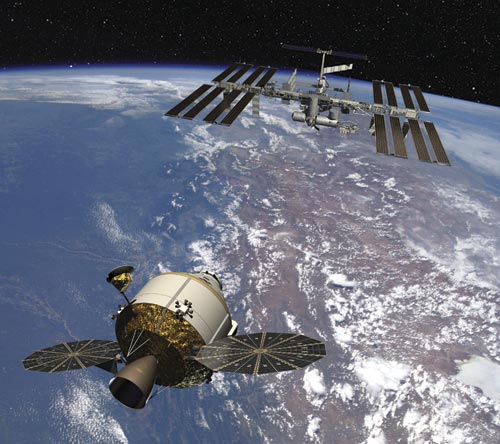
Ironically, the long journey from Earth orbit to Mars may finally begin when the Space Shuttle is retired in 2010. It is due to be replaced by NASA’s Crew Exploration Vehicle (CEV), which is now scheduled for a 2014 launch via NASA’s planned Ares I rocket. The CEV (see over) will be able to ferry a crew of six to the ISS and back. And both the CEV and ESA’s Automated Transfer Vehicle (ATV) will be used to autonomously replenish station cargoes. Currently, Russia’s unpiloted Progress spacecraft functions as an ISS resupply vehicle, while Japan is also planning a robotic resupply spacecraft — the H-II Transfer Vehicle (HTV) — for launch in 2009. Later, NASA also plans to use the CEV to take astronauts back to the Moon — a mission now projected for 2020 — with a mission to Mars within a few years.

NASA’s original Apollo schedule called for a lunar base by the mid- to late-1970s. Who would have predicted that 30 years hence, the US agency would be struggling to remount technology just to get back to the lunar surface? If the red planet remains NASA’s real goal, however, the ISS will continue to pay intangible dividends simply in terms of learning more about the vagaries of long-duration spaceflight.

For example, astronauts on their way to Mars will need to be more autonomous and resourceful because ground controllers will not be able to monitor and supervise them in real time. “It will be more like communications at the South Pole in the age of the Telex,” says Mendell. “The missions will still need back-room support, but we’ve got to figure out how to do it differently.” The ISS is already helping long-term planners tackle such practical issues, but it is doing so from Earth orbit.

Half a century after the launch of Sputnik 1, what can we say of the ISS and of the future human occupation of space? Arthur C Clarke’s iconic year 2001 has long since passed, without having delivered Stanley Kubrick’s grand cinematic vision of ambitious interplanetary missions and routine trips to the lunar surface. Yet even if humanity stands guilty of squandering its past glories due to a sometimes-indolent space policy, we can be thankful that at least new chapters in the history of manned spaceflight continue to be written. We are now using the ISS to plan our next steps out into the unknown. With the Moon as a way station, first stop will be Mars. And for its role in teaching us how to get there and back, the ISS is proving to be serendipity indeed.


An element of fear

Plutonium is a strong candidate for the weirdest, most fascinating and most frightening element in the periodic table. For it to be the subject of a book by the acclaimed physicist turned science writer Jeremy Bernstein promises a great deal. Plutonium does not disappoint, even for those who think they are already familiar with the evolution of nuclear science during the 20th century.

Bernstein’s interest in plutonium was stimulated by the publication of a book called Hitler’s Bomb in 2005. Its author, the German historian Rainer Karlsch, caused a stir by claiming that Germany had succeeded in creating a nuclear explosion in the spring of 1945 (see “New light on Hitler’s bomb”) — something that Bernstein thinks would not have been possible given the level of German nuclear technology at that time. Karlsch’s book also contained the surprising revelation that the late German physicist Carl Von Weizsäcker submitted a patent in 1941 for a plutonium bomb that utilized plutonium produced in a nuclear reactor. This prompted Bernstein to search for more information on plutonium — an endeavour that eventually resulted in this book.

In the October issue of Physics World, Jack Harris discovers that Plutonium is more than just a discussion of the properties and hazards of plutonium, but is also an exciting history of nuclear science in general.

To read the full version of this article — and the rest of the October issue of Physics World — please subscribe to our print edition.

Blog life: The Reference Frame

Blogger: Luboš Motl
URL: motls.blogspot.com
First post: September 2004

Who is the blog written by?

Luboš Motl is a string theorist who until recently was an assistant professor at Harvard University in the US. In July he announced that he would be leaving academia and returning to his native Czech Republic. He has not yet revealed what he will be doing next.

What topics does the blog cover?

String theory and responses to criticisms of it feature heavily; but as a self-described “conservative physicist”, Motl also has a lot to say about politics. He is a fervent critic of the idea that humans have caused climate change and attempts to back this up with frequent posts containing graphs and analysis. He was also one of few scientist bloggers to support former Harvard University president Lawrence Summers, who had controversially suggested that innate differences between the sexes might be one reason that fewer women succeed in science.

Who is it aimed at?

Motl’s posts on string theory are certainly not targeted at the general public or even at physicists outside the field, laden as they are with equations and jargon. However, his acerbic political rants are intended for a wider audience, often concluding with the sign-off “And that’s the memo” in the style of Fox News pundit Bill O’Reilly.

Why should I read it?

Love him or loathe him, Motl appears to fascinate the physics blogosphere. He makes frequent appearances in the posts and comments on other blogs, particularly those that deal with string theory. The animosity between Motl and anti-string-theory blogger Peter Woit is legendary, with Motl even blocking surfers accessing his site from Woit’s Not Even Wrong (see “Blog life: Not Even Wrong”).

How often is it updated?

Usually more than once a day and at some length, leading some to wonder how Motl finds the time.

Can you give me a sample quote?

“Just like in most cases, the discussions below Sean’s and Peter’s new articles [on string theory] are discussions among uninformed outsiders — who are convinced how terribly nice and smart they are, the kind of folks that Feynman used to call pompous fools. In these discussions, a third is composed of attacks against string theory, a third is made out of attacks against the rational thinking in general, and a third is represented by attacks against Luboš Motl who is quite clearly the only representative of all the evil from the previous two thirds.”

Copyright © 2026 by IOP Publishing Ltd and individual contributors