The rise and rise of citation analysis

Editor’s note: This article was corrected on 19 February 2025, removing claims that 90% of papers are never cited and that as many as 50% are never read by anyone other than their authors, referees and journal editors. The claims were introduced by Physics World editors during editing and were not originally included in the article by the author.

It is a sobering fact that many papers that have been published in academic journals are never cited. Indeed, many papers are never read by anyone other than their authors, referees and journal editors. We know this thanks to citation analysis, a branch of information science in which researchers study the way articles in a scholarly field are accessed and referenced by others.

Citation analysis is, however, about much more than producing shock statistics. Along with peer review, it has over the past three decades been increasingly used to judge and quantify the importance of scientists and scientific research. Citation analysis is also the machinery behind journal “impact factors” – figures of merit that researchers take note of when deciding which journal to submit their work to so that it is read as widely as possible. Indeed, the output from citation studies is often the only way that non-specialists in governments and funding bodies – or even those in different scientific disciplines – can judge the importance of a piece of scientific research.

The Web has had a huge impact on citation-analysis research. Since the turn of the century, dozens of databases such as Scopus and Google Scholar have appeared, which allow the citation patterns of academic papers to be studied with unprecedented speed and ease. This could mark the beginning of the end for the 40-year monopoly of citation analysis held by the US-based firm Thomson Scientific, formerly known as the Institute for Scientific Information (ISI).

The ISI’s citation databases have always been criticized by scientists on the basis that they index a limited number of journal titles, that they cover mainly English-language titles from North America and Western Europe, and that they do not cover citations from books and most conference proceedings. However, the myriad of Web-based sources now provides a much more comprehensive coverage of the world’s literature, helping to usher in a new era of citation analysis based on multiple sources. Furthermore, the Web has led to several new citation measures and methods that were previously impractical, including article-download counts, link analysis, Google’s PageRank, Web citations and the “h-index” recently developed by US physicist Jorge Hirsch.

At a glance: Citation analysis

  • Citation analysis, which involves counting how many times a paper or researcher is cited, assumes that influential scientists and important works are cited more often than others
  • Although the ISI Science Citation Index has long been the most common tool for measuring citations in physics, other Web-based services are now challenging its dominance
  • Each service produces slightly different results, revealing the importance of using several citation sources to judge the true impact of a scientist’s work
  • The Web is also leading to alternatives to the traditional “impact factor” of a journal or individual, including download counts and the h-index

Out with the old

Citation analysis essentially involves counting the number of times a scientific paper or scientist is cited, and it works on the assumption that influential scientists and important works will be cited more frequently than others. Many governments, funding agencies (in the US at least) and tenure and promotion committees even use citation data to evaluate the quality of a researcher’s work, partly because they prefer not to rely on peer review and publication output alone.

However, not everybody thinks citation analysis is the best way to judge the validity of a scientific claim. Critics point to basic citing errors such as “homographs”, i.e. failing to separate citations to two unrelated scientists who happen to share the same last name and first initial. Cronyism, whereby friends or colleagues reciprocally cite each other to mutually build their citation counts, is another drawback. Other problems include people deliberately citing themselves or journals they are involved with; ceremonial citations, in which an author cites an authority in the field without ever having consulted the relevant work itself; and negative citations pointing out incorrect results.

Proponents of citation analysis, on the other hand, claim that these problems are relatively insignificant. Most citations found in articles and books, they say, are useful – by paying homage to pioneers, identifying original publications, providing background reading and alerting readers to forthcoming works. Citations also substantiate claims, give credit to related works and provide leads to poorly disseminated, poorly indexed or uncited works. According to Michael Koenig in the Palmer School of Library and Information Science at Long Island University in the US, citations provide – despite their ambiguities – “an objective measure of what is variously termed productivity, significance, quality, utility, influence, effectiveness, or impact of scientists and their scholarly products”.

The ISI citation databases – which include the Arts and Humanities Citation Index (A&HCI), Science Citation Index (SCI) and Social Sciences Citation Index (SSCI) – have for decades been used as a starting point and often as the only tools for conducting citation analyses. Since their original publication in the 1960s and 1970s these databases have grown dramatically in size and influence, and today contain about 40 million records from more than 8700 of the world’s most prestigious research journals. The SCI, which was launched in 1964, quickly became popular with scientists and librarians, and is now one of the most important multidisciplinary databases in the world.

Young researchers might find it hard to comprehend, but until 1988 these indexes existed only in print form, although searching them online has been possible since the mid 1970s using third-party information-retrieval systems such as Dialog. In 1988 the ISI supplemented its indexes with CD-ROM editions, and in 1997 the databases finally migrated online with the launch of Web of Science. The move to an online interface, which can analyse thousands of records in a few seconds, has given the ISI’s databases an even greater stranglehold in the field of citation analysis. But at the same time the Web has produced new publication venues and competitors that challenge the wisdom of continuing to use Web of Science exclusively.

Another problem with Web of Science is that it ignores the fact that scientists increasingly publish or “post” their papers online via open-access journals, personal homepages, e-print servers or in institutional repositories so that others can freely access the material. At the same time, researchers have started to search and download research materials via services such as arXiv.org, Google Scholar or publishers’ websites, like Elsevier’s ScienceDirect. Many of the millions of documents accessible via these services, which are published instantly to give the wider scientific community time to use and ultimately cite them, are not indexed by Web of Science. Moreover, an increasing number of Web-based services are enabling explicit citation searching (see box “Web-based citation-analysis tools”).

Web-based citation-analysis tools

illustration of digital analysis tools

The Web has given birth to more than 100 new databases or tools that allow citation searching. These fall into three categories.

The first allows the user to search in the full-text field to determine whether certain items, authors or journals have been cited in a document. Examples of these databases or tools include the following.

Some of these tools, such as CiteSeer and Google Scholar, are based on autonomous citation indexing that allows automatic extraction and grouping of citations for online research documents.

The second category of databases or tools allows the user to search in the cited-references field to identify relevant citations. These tools first became available in the late 1990s when subject-specific databases began adding cited-references information to their own records. Examples include the following.

The third category is databases that work exactly like Web of Science. The main and perhaps only good example of this category is Scopus (scopus.com), which was launched in 2004 by Elsevier. Although it covers more refereed journals and conference proceedings than Web of Science (15,000 titles compared with 8700) Scopus provides citation searching only from 1996 onwards, whereas Web of Science goes as far back as 1900.

Multiple citation sources

The rise in the use of Web-based databases and tools to access scientific literature has revealed how vital it is to use multiple citation sources to make accurate assessments of the impact and quality of scientists’ work. Take the book Quantum Computation and Quantum Information by M Nielsen and I Chuang (2000 Cambridge University Press), for example. According to Web of Science, this book has been cited more than 2800 times. However, Scopus says it has been cited 3150 times, Google Scholar 4300 times, Physical Review Online Archive 150 times, ScienceDirect 375 times, the Institute of Physics Journal Archive 290 times, and arXiv.org 325 times. If only Web of Science is used, we would miss all of the citations found through Google Book Search and arXiv.org plus hundreds of the citations found through the other databases or tools.

A citation study carried out recently by the present author and Kiduk Yang at Indiana University in the US is one of many that have shown the need to use multiple citation sources. We compared results of citation coverage from Web of Science, Scopus and Google Scholar for a sample of 25 highly published researchers in our field of information science and found that Scopus and Google Scholar increase the citation counts of scholars by an average of 35% and 160%, respectively. Perhaps more importantly, this increase varies considerably from one research area to another, with researchers working in computer-mediated communication and human–computer interaction having their number of citations more than doubled, while those specializing in bibliometrics and citation analysis had their number of citations increase by less than 25%.

digital book abstract

Another major finding of our study is that the use of Scopus and Google Scholar has helped to establish a link between information-science research and cognitive science, computer science, education and engineering (as evidenced by the high number of citations from journal articles and conference papers in these fields). Such a finding about interdisciplinary trends in science could not have been uncovered by relying on Web of Science citations only. Indeed, multiple citation tools allow us to generate much more accurate maps or visualizations of scholarly communication networks in general, such as establishing links between authors, departments, disciplines, journals or countries that cite or influence each other.

While the emergence of comprehensive Web-based citation databases and tools – many of which have been around for only two years or so – has been received favourably by citation analysts, it has also made the job of searching and analysing citations more challenging. For instance, the new citation tools cover not only journal and conference papers, but also millions of unique items in various languages and forms, such as book chapters, dissertations, e-prints and research reports. This requires much more work than the relatively simple task of using Web of Science to compile and interpret citation searching and analyses based mainly on refereed journal articles.

For instance, we spent about 3000 hours collecting data from Google Scholar alone in order to carry out our recent study into the overlap and uniqueness between citation databases, compared with only 100 hours using Web of Science and 200 using Scopus for the same sample. Another consideration when performing citation analyses in the Web era is how to weigh up citations from journal versus non-journal sources and from refereed versus non-refereed sources. This is vital because citations from, say, the journal Nature Physics are of different quality and value than citations found in a master’s thesis that sits in a university repository.

The impact factor
illustration of stock market growth

When scientists seek research grants, file for tenure or promotion, or apply for staff or faculty positions, it has become customary to include both the impact-factor scores of the journals in which their papers were published and the number of citations received by these articles. As high-impact journals usually attract high-quality contributions from top scientists and have a large readership, publishing in these journals is a top priority for scientists who want to increase their visibility, prestige and influence among their peers; it also improves their chances of getting lucrative job offers and research grants.

The impact factor of a journal in a particular year is the number of citations received in the current year to articles published in the two preceding years divided by the number of articles published in the same two years. For example, Physical Review Letters has a 2005 impact factor of 7.489, which means that on average each of its 2003 and 2004 articles was cited 7.489 times in 2005.

The journal impact factor was launched by the Institute for Scientific Information (ISI) in 1975 and has been published annually since then. Initially, the impact factor was made available in microfiche format only, then ISI migrated it to CD-ROM in the late 1980s, before finally making a searchable version of it available on the Web in 1997. Currently, the ISI provides impact-factor data for over 5900 journals in science and technology and 1700 journals in the social sciences through the publication Journal Citation Reports. The impact factors always lag one year behind and are published each summer.

Quantifying your impact

The basic idea of using citation-based measures to assess the impact, importance or quality of a scientist’s overall work is to show how often and where he or she is cited. The two best known measures are citation counts and “impact factor” – the number of citations received in the current year to articles published in the two preceding years divided by the total number of articles published in the same two years (see box “The impact factor”). However, the fact that almost all scientific papers now exist online opens the door to other, possibly more accurate, citation-based measures.

The impact factor has several weaknesses. First, its scores can be significantly influenced by a few highly cited articles and/or too many uncited or low-cited articles. Second, authors and journals that frequently publish review articles tend to have their citation counts and impact exaggerated because these types of articles are usually highly cited. Third, citation counting and impact factors do not take into account articles that were used but did not get cited. Finally, the two-year “citation window” in the impact-factor formula fails to capture the “long-term value” or the real impact of many journals.

The Web has enabled a number of alternative citation-based measures to be devised to get round some of the limitations of the citation-counting and impact-factor methods. Of these, the most important are “download counts”, which became feasible only because of the migration to online publication, and the “h-index”, which exploits the rise of Web-based citation databases.

Using a download rather than citation count means that the impact of an article or a journal can be measured in real time, rather than having to wait several years after it has been published. According to Tim Brody and Steven Harnad in the School of Electronics and Computer Science at the University of Southampton in the UK, there is a strong, positive correlation between download counts and both citation counts and impact factors, although the degree of correlation varies from one research field to another. As downloads are instantly recorded and counted, Brody and Harnad suggest that the measure can be particularly useful for providing an early estimate of the probable citation impact of articles.

The h-index, meanwhile, was developed in 2005 by Jorge Hirsch, a condensed-matter physicist at the University of California in San Diego, to quantify the impact and quality of individual scientists’ research output (see box “How high is your h-index?”). The measure is simple: a scientist with an h-index of, say, 40 has published 40 articles that have each attracted at least 40 citations (papers with fewer than 40 citations therefore do not count). Hirsch estimates that after 20 years a “successful scientist” will have an h-index of 20, an “outstanding scientist” an h-index of 40, and a “truly unique” individual an h-index of 60. However, he points out that values of h will vary between different fields.

The h-index – which ranks Ed Witten of Princeton University top with an h value of 107 – immediately became popular among researchers because it captures the fact that scientists with very few high-impact articles or, alternatively, many low-impact articles will have a low h-index. The measure therefore helps distinguish between a “one-hit wonder” and an enduring performer who has numerous high-impact articles and hence a high h-index.

Moreover, a flurry of empirical studies conducted by librarians and others shows that the h-index correlates positively with citation counts, impact factors, publication counts and peer evaluation of research impact and quality. Finally, the h-index is very easy and quick to compute using databases or tools such as Web of Science, Scopus or Google Scholar. Indeed, almost an entire issue of the journal Scientometrics was recently devoted to the h-index, and the measure is now automatically calculated in the “citation report” function of Web of Science.

As with all citation-based measures, however, the h-index must be used with caution. This is because the index ignores, for example, why an item was cited in the first place; so negative citations to incorrect work are counted. Moreover, it is insensitive to highly cited works and disregards total citation counts. These last drawbacks have led to the development of two alternative indexes. The editor of Science Focus Jin Bihui has devised an “a-index”, which is defined as the average number of citations received by works in the number of h-index publications, while Leo Egghe from the Universiteit Hasselt in Belgium has devised a “g-index”, which is defined as the highest number, g, of papers that together received g2 or more citations. (A researcher with a g-index of, say, 10 has published 10 papers that together have been cited at least 100 times.)

Indeed, Hirsch seems to have encouraged other physicists to develop their own productivity measures, with terms such as the “h–b index” and “creativity index, Ca” having appeared in preprints on the arXiv server in recent months. The h–b index was devised by Michael Banks from the Max-Planck Institute for Solid-State Physics in Stuttgart, Germany, to judge the impact of a particular field, whereas the creativity index was developed by José Soler of the Universidad Autonoma de Madrid in Spain to create and transmit scientific knowledge based on the network of citations among research articles. The creativity index concluded that Princeton University Nobel laureate Philip Anderson is the most creative physicist in the world (Physics World September 2006 p9).

How high is your h-index?

In 2005 the US condensed-matter physicist Jorge Hirsch devised a simple metric with which to quantify the scientific output of an individual: a scientist has an h-index of 10, say, if he or she has published 10 papers that have received at least 10 citations each. To compute your own h-index you must first identify all the relevant records in a citation database (see box “Web-based citation-analysis tools”) in which you are an author and then automatically (or manually if you use Google Scholar) sort the records by the number of times they have been cited, with the most cited listed first. To calculate h all you then have to do is count down until the number of records equals or is no longer greater than the number of times cited. Although originally meant for quantifying the impact and quality of individual scientists’ research output, the h-index has been successfully applied to journals, research projects and entire research groups.

Harnessing the potential

The citation databases, tools and citation methods mentioned here are just a few of many new and powerful indicators of research output that have become possible with the Web. Indeed, a search for articles in Web of Science reveals that the number of citation-based research-evaluation studies has been growing steadily over the years. Meanwhile, the exponential increase in the number of databases and tools that allow citation searching shows just how widespread the use and popularity of citation analysis has become. Funding agencies, as well as hiring and promotion committees, are increasingly relying on these methods to evaluate research to supplement other quality indicators such as peer review and publication output.

The Web has brought many changes and challenges to the field of citation analysis. Researchers and administrators who want to evaluate research impact and quality accurately will from now on have to use not only multiple sources – Web of Science and Scopus being the main two, but also Google Scholar, arXiv.org and others – but also different methods (e.g. citation counts as well as the h-index, and so on) to corroborate their findings. Relying exclusively on Web of Science and a single citation measure will, in many cases, no longer be an option for making accurate impact assessments.

Scientists now need to make it their job to disseminate their work on as many platforms and in as many different ways as possible, such as publishing in open-access and high-impact journals, and posting their work in institutional repositories, personal homepages and e-print servers, if they want their peers to be aware of, use and ultimately cite their work. Publishing a journal article is now only the first step in disseminating or communicating one’s work; the Web provides a multitude of methods and tools to publicize its scholarly worth.

More about: Citation analysis

C L Borgman and J Furner 2002 Scholarly communication and bibliometrics Ann. Rev. Info. Sci. Technol. 36 3–72

T S Brody et al. 2006 Earlier web usage statistics as predictors of later citation impact J. Am. Soc. Info. Sci. Technol. 57 1060–1072

L Egghe 2006 An improvement of the h-index: the g-index ISSI Newsletter 2(1) 8–9

J E Hirsch 2005 An index to quantify an individual’s scientific research output Proc. Natl Acad. Sci. USA 102 (46) 16569–16572

S Lawrence et al. 1999 Digital libraries and autonomous citation indexing Computer 32 (6) 67–71

M H MacRoberts and B R MacRoberts 1996 Problems of citation analysis Scientometrics 36 435–444

L I Meho and K Yang 2006 A new era in citation and bibliometric analyses: Web of Science, Scopus, and Google Scholar J. Am. Soc. Info. Sci. Technol. at press

H F Moed 2005 Citation Analysis in Research Evaluation (Springer, Dordrecht)

P O Seglen 1998 Citation rates and journal impact factors are not suitable for evaluation of research Acta Orthopaedica Scandinavica 69 224–229

The lost art of the letter

Until quite recently, letters were the most common way – and often the only way – for scientists to communicate informally with each other. It is not surprising therefore that science historians have long relied on letters as invaluable sources of information.

A dramatic illustration concerns the now-famous meeting between Werner Heisenberg and Niels Bohr in Nazi-occupied Denmark in September 1941 during which the two physicists, talking in private, sought to eke out the other’s view on progress towards a nuclear bomb. At first, the principal account of the mysterious visit came from a letter that Heisenberg sent in 1955 to the German science writer Robert Jungk. But among Bohr’s papers were several drafts of letters that Bohr wrote but never sent to Heisenberg after reading the latter’s account of the meeting. In 2002, when the Bohr family made the drafts public, the letters served as a corrective to Heisenberg’s version, showing it to be deceitful and self-serving.

Roles of letters

Now that e-mail has replaced letter writing as the principal means of informal communication, one has to feel sorry for future science historians, who will be unable to use letters and telegrams to establish facts and gauge reactions to events. In addition to the Copenhagen episode, another example of the role of letters is Stillman Drake’s startling conclusion, based on a careful reading of Galileo’s correspondence, that the Leaning Tower event actually happened. And of all the reactions to the discovery of parity violation in 1957, the simplest and most direct expression of shock came from Robert Oppenheimer. After receiving a telegram from Chen Ning Yang with the news, Oppenheimer cabled back: “Walked through door.”

Letters are also useful to historians because the character of scientists can often be revealed more clearly in informal communications than in official documents. Catherine Westfall, who has composed histories of both the Fermilab and Argonne national laboratories, likes to point out that letters often reveal leadership styles in striking ways. “[Former Fermilab director] Robert R Wilson knew he was making history and was ironically self-conscious,” she once told me. “Leon Lederman [another Fermilab director] told jokes, [while former Argonne director] Hermann Grunder wrote letters that were really never-ending to-do lists.”

Historians also use letters to reconstruct thought processes. We could not hope to understand the development of quantum mechanics, for instance, without studying the vigorous exchanges of letters between the likes of Bohr, Dirac, Heisenberg, Pauli and others as they thrashed out the theory in the 1920s. Indeed, the historian David Cassidy decided to write his biography of Heisenberg only after accompanying the physicist’s widow to her attic and seeing her drag out a trunk of Heisenberg’s personal letters, adding that he could not have completed the biography without them. Cassidy also said that the way to understand Heisenberg’s behaviour during the Third Reich is to study his nearly weekly letters to his mother.

Internet impact

Historians at the American Institute of Physics (AIP), who are working on a project to document the history of physics in industry, have encountered hints of how the Internet and computers are transforming scientific communication.

E-mail is, of course, cheaper and encourages quicker thought, and it introduces a peculiar blend of the personal and professional. The AIP historians have also detected a decline in the use of lab notebooks, finding that data are often stored directly into computer files. Finally, they have noted the influence of PowerPoint, which can stultify scientific discussion and make it less free-wheeling; information also tends to be dumbed down when scientists submit PowerPoint presentations in place of formal reports.

Generally, though, these new communications techniques are good for scientists, encouraging rapid communication and stripping out hierarchies. But for historians, they are a mixed blessing. It is not just that searching through a hard disk or database is less romantic than poring over a dusty box of old letters in an archive. Nor is it that the information in e-mails differs in kind from that in letters. Far more worrying is the question of whether e-mail and other electronic data will be preserved at all.

One can lose letters, of course, a classic case being much of Planck’s correspondence thanks to an Allied bomb in the Second World War. But the challenges of electronic preservation are more extensive and immediate. As AIP historian Spencer Weart notes: “We have paper from 2000 BC, but we can’t read the first e-mail ever sent. We have the data, and the magnetic tape – but the format is lost.” Weart is fond of quoting RAND researcher Jeff Rothenberg’s remark that “it is only slightly facetious to say that digital information lasts forever – or five years, whichever comes first”, meaning that information lasts only if regularly migrated to another format.

This problem has inspired various programmes to foster the preservation of electronic documentation. One is the Persistent Archives Testbed Project – a collaboration between several US institutions to develop a tool to archive electronic data (slac.stanford.edu/history/projects.shtml). Another is the Dibner–Sloan History of Recent Science and Technology Project (authors.library.caltech.edu/5456) that seeks not only to digitally archive important documents, but also to enlist the scientists involved to put these in a historical context.

The critical point

Technology, from pencils to computers, has transformed not only the nature and content of communication, but also the practices that rely on it. Electronic communication is changing not only science, but also science history. Historians of the future will have to rely on other kinds of data than their precursors, and tell the story of science differently.

There is no going back, as is illustrated once again by the Bohr–Heisenberg episode. Had the Web existed when Bohr wrote his invaluable draft letters to Heisenberg, his correspondence may well have not been preserved. Yet when the Bohr family decided to make the drafts publicly available, where did they put the material? On the Web.

May the best man win

Every true sports fan will know how disappointing it is if your team fails to win the league. But the feeling is made even worse if it is an underdog that clinches the title at the end of the season. This unpredictability is epitomized by American Major League Baseball, where an astonishing 44% of games have been won by the supposedly weaker team over the past century.

Now, however, Eli Ben-Naim and Nick Hengartner from the Los Alamos National Laboratory suggest the method of determining the best team can have a significant impact on the result. The physicists decided to model the apparent “randomness” in sports games by creating their own set of N teams, each with a precisely known ability. They then assumed that there would always be a certain probability that the higher seeded team would win.

Through statistical analysis, the physicists found that in normal league play, in which each team plays every other team once, a total of N3 games would be required to guarantee that the best team ultimately wins. Applying this result to the 20-strong English Premier League, a whopping 8000 games would be needed to identify the genuine champions, rather than the 380 that the teams currently face.

However, the two physicists also discovered that the number of games needed can be dramatically reduced by introducing short preliminary rounds, in which many of the weakest teams are eliminated – a process they call “sequential elimination”. In the final round the remaining minority of teams play a large number of games to ensure that the best team ends up the winner. With one extra round the total number of league games required to find the best team would fall to N9/5, and in theory enough rounds could even let it be reduced to almost N itself.

Ben-Naim and Hengartner pointed out that their model could be validated against real sports leagues, using a team’s budget as a proxy for its ability. “Sports fans had a great deal of interest in earlier results where the [probabilities] were obtained from game data,” Ben-Naim said. “We believe that managers of sports leagues and associations can use more rigorous techniques, theory and numerical simulations to design better competitions.”

Dark-matter map points to galaxy formation

Dark matter is fundamentally different from normal “luminous” matter that makes up stars, planets and humans. It is invisible to modern telescopes, giving off no light or heat, and it seems to interact with normal matter only through gravity. Although dark matter has never been observed directly, most cosmologists believe dark matter plays a crucial role in how large structures such as galaxies emerged after the Big Bang.

The COSMOS team used the Hubble Space Telescope and several terrestrial instruments to chart the position of elusive dark matter in three dimensions. This was done by observing how light from distant galaxies is bent by the gravitational pull of dark matter in a process called gravitational lensing.

The map also reveals that regions of space containing large quantities of luminous matter almost always also contain large quantities of dark matter, which is exactly what physicists would expect to see if the gravitational collapse of dark matter was responsible for the structure in the Universe. “It’s reassuring how well our map confirms the standard theories for structure formation”, said lead researcher Richard Massey of the California Institute of Technology.

However, the survey also reveals areas with large quantities of dark matter with no corresponding luminous matter. In principle, this is also feasible because physicists believe that there is much more dark matter in the Universe than luminous matter.

While astronomers have already used gravitational lensing to map smaller regions surrounding individual galaxies, this is the first “wide-sky” survey that covers a region of the sky about the eight times the size of a full moon. The survey is also the first to look at dark matter in three dimensions – the third dimension being the distance (or time) travelled by the light after interacting with the dark matter. The distance was determined by combining observations made by Hubble and earthbound telescopes. This new ability to chart the evolution of dark matter through both space and time could also shed light on another elusive quantity – dark energy, which is believed to be accelerating the expansion of the Universe.

Lakes of methane spotted on Titan

Although Titan’s atmosphere is mostly composed of nitrogen, a small amount of methane (about 1.6%) is also present. But because this methane should have been destroyed long ago through exposure to the Sun, astrophysicists think that Titan must somehow be replenishing its stocks through another process. Given the lack of evidence for methane-rich deposits on the surface, the belief to date has been that the methane must come solely from underground.

Now, however, Ellen Stofan at University College London in the UK together with colleagues from the USA and Europe think otherwise. By performing a careful analysis of radar data taken from NASA’s Cassini-Huygens mission they have confirmed that numerous dark patches known to exist at high latitudes in Titan’s northern hemisphere are in fact lakes of methane. According to the researchers, some of these lakes could be fed by both rivers and rainfall, while others could be fed by a methane “groundwater table”. In other words, while underground deposits are still possible, there is definitely methane on the surface – and it is likely to be part of a continuous “methane cycle” that maintains the levels of atmospheric methane.

“We’re excited to demonstrate that Titan is the first solar system body besides Earth that has an ongoing, active exchange of fluids,” said Stofan. “Studying what is undoubtedly a complex system is going to help our understanding of climate dynamics.”

This is not the end of the debate about Titan, however, and it looks as though it will continue to surprise physicists as the Cassini probe continues on its mission. Christophe Sotin at the Université de Nantes in France, another expert on Titan, thinks there is much left to learn. “A big [question] is the nature of the component that seems to coat the dark [patches],” he told Physics Web.

Physicists make religion crystal clear

Physicists have a long history of applying statistical models to the study of human behaviour and have tackled problems as diverse as the performance of financial markets and the spread of languages. Now, Marcel Ausloos and Filippo Petroni at the University of Liege have turned their attention to the dynamics of religion by relating the emergence, growth and demise of religions to phase transitions that occur during crystallization and other physical processes.

Using methods borrowed from statistical physics, the researchers searched for patterns in data describing the numbers of adherents to major religions — including Christianity, Islam and Buddhism – over the past century. These patterns suggested that the changes in the numbers of religious adherents can be modelled using an “agent-based” approach. Agent-based models assume that the collective behaviour of a group of individuals arises from a set of simple rules that define how an individual interacts with others in the group. This approach has already been used to study a wide range of sociological and physical processes including crystallization.

The researchers then created a model of the time evolution of religions using the agent-based concept of “preferential attachment”, which was first formulated in 1999 to explain self-organizing networks such as the World Wide Web. Preferential attachment is the tendency of an individual to form relationships with popular individuals – which are defined as individuals who themselves have relationships with a large number of other individuals.

According to Ausloos, the number of adherents to a specific religion appears to follow a “growth-death law” that also describes how the size of crystalline regions grow and shrink in some materials. One striking similarity to crystallization is that religions can appear almost spontaneously in a process that is similar to the nucleation of crystals – with a popular leader often fulfilling the role of a nucleation point. A recent example of the spontaneous nucleation of a religion is the Church of Jesus Christ of Latter-day Saints (the Mormons), which was founded about 175 years ago in the US by Joseph Smith and now has nearly 13 million members worldwide.

The growth and demise of a religion can also be affected by phenomena such as mass conversions or genocide that affect entire groups — rather than the interactions between individuals. Ausloos describes these influences as “external fields”, in analogy to externally-applied electric fields or temperature gradients that can affect the crystallization process.

Blog life: Uncertain Principles

Blogger: Chad Orzel
URL: scienceblogs.com/principles
First post: June 2002

Who is the blog written by?

Chad Orzel is an assistant professor working on atomic, molecular and optical physics at Union College in Schenectady, New York. He uses lasers to cool atoms to 1–100 µK and studies the collisions between these ultracold atoms.

What does he write about?

The blog’s subtitle gives a good overview: “Physics, politics, pop culture”. The physics content mixes accessible mini-essays on topics such as Bose–Einstein condensation and quantum computing with anecdotes about Orzel’s lab. An amusing series of “True Lab Stories” includes the fact that Orzel has accidentally passed 800 V through his arm on four separate occasions. He also dispenses advice on making a career in science and talks about his own pursuit of university tenure. As for the pop culture, there are lots of book, film and music reviews, and Orzel is a big fan of basketball and American football. There is a personal note too, with frequent mentions of his wife Kate and dog Emmy.

Who is it aimed at?

Orzel makes a real effort to explain physics to a general audience, but that does not mean his posts are not interesting to physicists too. His depictions of the academic lifestyle will strike a chord with many readers.

Can you give me a sample quote?

“The worst part of swapping in new chips was cleaning up the mess from the fire. We had to scrub this disgusting, greasy silicon soot off the mount before putting in the new chips. That involved half an hour with a Brillo pad, and the smell would get in your nose so far that you’d taste burned semiconductor for a couple of days. I pushed that task onto the grad students as much as possible.”

How often is it updated?

Despite saying in his first-ever entry that he intended to post no more than once on each week day, Orzel is currently updating Uncertain Principles an impressive three or four times a day.

Why should I read it?

In contrast to many physics blogs dealing with abstract and theoretical concepts – string theory is particularly popular – Orzel relishes hands-on laboratory physics, and the stories of his triumphs and setbacks are always entertaining. His explanations of physics in the news and in his own lab are well written and clear. And if you are not interested in his in-depth analyses of American sports, there is sure to be a post on a different topic along soon.

All shook up

The earthquake that launched the career of the world’s most famous seismologist, Charles Richter, struck Long Beach near Los Angeles in 1933. With a magnitude of 6.4 on what would soon become known as the Richter scale, it killed 120 people and caused property damage estimated at $50m in depression-era dollars, including the collapse of several poorly constructed schools. Only the lateness of the hour – just before 6 p.m. – saved hundreds of schoolchildren from almost certain death.

One witness was Albert Einstein, then a visiting professor at the California Institute of Technology in Pasadena about 30 miles from Long Beach. Einstein was walking across the campus after a seminar, chatting about earthquakes with Caltech’s leading seismologist, fellow German-Jewish refugee Beno Gutenberg. Another professor approached them and asked what they thought of the earthquake. “What earthquake?” came the reply. Engrossed in their conversation, the two scientists had not noticed tree branches and power lines swaying around them. When Gutenberg reached the Seismological Laboratory soon afterwards, he told the story to his younger colleague Richter with considerable amusement. On returning home late that night, Richter’s wife told him that their cat had “spat on the floor because it wasn’t behaving properly”.

Susan Elizabeth Hough’s biography of Richter (1900–1985) is full of such engaging anecdotes. An experienced seismologist herself, based at the US Geological Survey (USGS) in Pasadena, Hough did not know her subject personally, but she has interviewed virtually everyone who did. More importantly, she had access to the extraordinarily frank papers that the intensely private Richter deposited in the archives at Caltech before his death – presumably in the expectation that one day someone would write his story.

The resulting book – the first biography of Richter – is a major achievement, albeit with some serious faults. It will intrigue anyone interested in earthquakes, and it also offers some penetrating insights into southern Californian academic life. There was, it turns out, much more to Richter than his earthquake magnitude scale and a classic seismology textbook – if not quite as much more as Hough claims.

Richter used the new scale to measure earthquakes from 1932, but he published it only in 1935 – the date usually given for its inception – in a long paper in the leading US seismological journal with himself as sole author. As with many breakthroughs, its paternity soon became controversial. At the time, Richter was working closely with Gutenberg, who suggested that the scale should be logarithmic. A second Caltech colleague, Harry Wood, proposed the term “magnitude” in order to distinguish the concept from the long-familiar measurement of earthquake “intensity” based on the amount of damage caused to surface structures near the epicentre. Meanwhile, a 1931 paper by Kiyoo Wadati in Japan indicated how to correct for the distance of a seismometer from the epicentre.

Richter freely acknowledged these contributions, but nevertheless he “felt a unique sense of ownership about his scale”, says Hough, given his enormous investment of effort in measuring earthquakes and calculating their magnitudes. She supports Richter’s claim, but discusses fully and fairly the views of many seismologists that the correct name should be the “Gutenberg–Richter scale”. The issue remains sensitive, with the Encyclopaedia Britannica attributing the “Richter” scale to both men.

Moreover, as the author clearly explains, Richter’s original scale is no longer used by seismologists because it was explicitly based on a certain type of seismometer (the Wood–Anderson). This design has now been superseded by seismometers that can respond to the very lowest tones generated by earthquakes, which are a particular feature of the largest events. That said, “every magnitude scale used today can trace its lineage directly to Charles Richter’s scale”. It would have been better, in Hough’s view, to have adopted the “modified Richter scale” as an umbrella term, and she reasonably forecasts that “Richter magnitude” will increasingly be replaced by just “magnitude” in the public reporting of earthquakes.

Earthquake prediction is the subject of an excellent chapter in the book. During the 1970s there was overweening confidence in scientific prediction, and Richter was reluctantly cajoled into commenting on the possibilities. Generally blunt in his assessments, he stated: “Only fools and charlatans predict earthquakes.” In a textbook published in 1958 he offers a vivid analogy for prediction: “One may compare it to the situation of a man who is bending a board across his knee and attempts to determine in advance just where and when the cracks will appear.” Hough admits that seismologists are no further forward with earthquake prediction now than in the 1970s, but adds that a successful method of prediction may be possible in the future.

The seismology in the book is handled with great assurance, though there is scarcely any attempt to provide the basic information that non-seismologists will require. But the personal aspects of the story are not so successful. Richter was a complex, neurotic loner: the product of a dysfunctional family who remembered only one meeting with his father and used his divorced mother’s surname; who possibly had an incestuous affair with his sister; and who certainly did not love his wife for long periods of their marriage. He was a keen nudist; a solitary mountain hiker; a gifted linguist who seldom left California; and, above all, an obsessive but unfocused writer, who slipped inadvertently into seismology from quantum physics while always feeling that his true vocation was poetry.

In some ways, Richter is a dream subject, provided that the biographer has the literary skill to mould order out of such messy inner conflict. Hough shows flashes of style, as when she writes of Richter as “a man whose brain, while extraordinarily nimble, was also extraordinarily wired”, but too much of her prose is poorly structured, leaden, repetitive and burdened with political correctness. With sympathetic but severe editing, Richter’s Scale could have been consistently enjoyable as well as deeply researched.

Talking physics in the social Web

Scientific publishing, like so many other aspects of human life, has been transformed by the Web. Almost all journals can now be read online and papers downloaded at the click of a mouse without ever having to visit a library. Indeed, the traditional commercial publishing model is being challenged by open-access preprint servers like arXiv.org, which – as a survey carried out for this special issue of Physics World reveals – is used by almost everyone in the physics community to access the latest research.

But while online access to papers is certainly convenient, and also makes scientific information more easily accessible to the developing world, it is little more than the digital equivalent of retrieving a paper from a traditional library. In other words, the information flow is still one way. Now, however, the Web is evolving. The next generation of the Web – a set of applications bundled under the loosely defined term “Web 2.0” – encourages people not just to use the Web as a reference source but also to interact with it.

Web 2.0 is all about making it easier for people to create and share content, ranging from digital photos of their cats to entries in user-edited encyclopedias. And it is undoubtedly big business, as demonstrated by News Corporation’s recent acquisition of the “social networking” site MySpace for $580m and by Google’s $1.6bn purchase of video-sharing site YouTube.

Given that the first incarnation of the Web was developed by researchers at CERN to aid their research, you might expect Web 2.0 to have a similarly revolutionary impact on the way physicists communicate and access information. For instance, some researchers are starting to use websites such as “blogs” and “wikis” in their professional lives. But as our survey reveals, rather than being the vanguard of these developments, this time round, physicists may be getting left behind.

Battles in the blogosphere

By far the most widespread manifestation of user-generated content on the Web is “blogging”. A blog (short for “web log”) is essentially an online diary, featuring regular entries, or “posts”, by one person or a small group. Anyone reading the blog can add a written comment on a post, creating lively debates between the denizens of the so-called blogosphere. Since the term was first coined in 1997, blogs have become an Internet phenomenon – 60 million are now listed in the blog directory Technorati. With so many people voicing their opinions, the content is often banal. But blogs have also been lauded as a new form of “citizen journalism”, for example providing us with eyewitness accounts of dramatic events such as 9/11.

Several science magazines and academic journals have set up blogs, featuring rolling reports from conferences or updates on the latest science news. In addition, many professional physicists have blogs of their own. Some discuss research at an academic level; some see their blog as a form of public outreach, providing plain English explanations of the latest physics stories; and others use blogs as a forum to debunk bad science reporting in the media. (A new column in Physics World looking at popular physics blogs begins this month (see “Blog life: Uncertain Principles”).

In the Quantum Diaries project, 33 physicists blogged about their life and work to celebrate World Year of Physics in 2005; and 40 more scientists run blogs as part of the popular ScienceBlogs portal. If it seems like too much of an effort to keep track of so many frequently updated webpages, the “aggregator” site Mixed States compiles the recent updates from all of the major physics blogs in one place.

While some may see them as vanity projects, physics blogs are starting to have a real impact on the way researchers communicate. For instance, several papers have already been published on arXiv.org that cite blog entries, demonstrating that blogs are becoming a bona fide channel for scientific communication. Meanwhile, a debate about string theory that began in the blogosphere has recently been thrust into the spotlight, being widely reported in science magazines and picked up by national newspapers.

The most outspoken critic of string theory, Columbia University mathematician Peter Woit, has used his blog Not Even Wrong to point out that string theory does not make predictions that can be tested by experiment, and that the status granted to the theory as the most promising approach to reconciling quantum physics with gravity diverts resources away from other alternatives.

His blog has sparked a fierce, and sometimes unexpectedly personal, debate, both in the comments posted on Not Even Wrong and on string theorists’ blogs such as Luboš Motl’s Reference Frame and Clifford Johnson’s Asymptotia. Such slanging matches may not be typical of the level of discussion in physics departments, and cause one to wonder how much of the debate depends on the easy anonymity that such online forums offer. But, for better or worse, blogs have opened up a new form of discourse in physics that can – as it is carried out in such a public fashion – be propelled into a broader context in a way that a discussion at a conference, say, would not have been.

In fact, the media attention generated by the “string wars” has already claimed one blogger as a casualty. Christine Dantas, a Brazilian physicist, regularly discussed the problem of quantum gravity in her blog Background Independence. Then in November she closed the blog down, explaining on an online forum that the media coverage of the string wars had made her uncomfortable, especially after her blog was mentioned in a Brazilian physics journal. “I am a quiet person, and wish to go back to my quiet life, to my quiet readings and studies,” she wrote.

In this case, however, has the very nature of blogging inflated obscure disagreements between small groups of physicists into something that looks like a “holy war”? The intricacies of quantum gravity have no impact on the work of the vast majority of physicists, but they occupy a disproportionate amount of the discussion in the physics blogosphere. Some have compared the blog community to an “echo chamber”, where people tend to write about things they have seen on other blogs. For instance, Sabine Hossenfelder, co-author of the blog Backreaction, says that viewing the string debate through the eyes of blogs is “like putting magnifying glasses on a spot on your nose and then getting obsessed about it”.

Taking a step back from such passionate debates, blogs are also influencing the careers of the physicists who write them, though it remains to be seen whether blogs are perceived as a positive example of outreach work or a waste of time that would be better spent on research. California Institute of Technology cosmologist Sean Carroll, who contributes to the most popular physics blog Cosmic Variance, has certainly raised his profile through blogging. He is now seen by the mainstream media as someone who they can rely on for accessible explanations of difficult science (see “Blogging for physics”).

But how many physicists actually read or contribute to blogs? While 16 of the 60 respondents to our survey said they do read physics blogs, all but three of these are the very same people who also write blogs of their own. The Mixed States site lists about 100 physics blogs, which is a drop in the ocean of a worldwide community of hundreds of thousands of physicists. Indeed, most of our survey respondents were either unaware of the existence of physics blogs or said that they do not trust the content of them. “I ignore blogs completely,” says theoretical particle physicist Frank Close from Oxford University. “I wouldn’t read what someone posts on a notice board outside my local newsagent and putting it on the Web doesn’t make it any more official.”

Wikifying the Web

Trust is a recurring issue in the online world. A few years ago the idea that one of the most-consulted sources of information in the world would be an online encyclopedia that can be modified by anyone who uses it would have seemed ridiculous. But that is exactly what has happened with Wikipedia, probably the most well known of the Web 2.0 sites. As it has turned out, the self-correction that is built in to the system has worked pretty well – barring occasional controversies, erroneous modifications are usually quickly corrected by another user. Indeed, a study carried out by Nature in 2005 suggested that, for science, Wikipedia is almost as accurate as the Encyclopaedia Britannica, with the average Wikipedia entry containing around four inaccuracies to Britannica‘s three.

From the Big Bang to quantum computing, there is a wealth of physics information on Wikipedia, though detail is sparse on more obscure topics. According to our survey, most physicists now seem happy to use Wikipedia as a quick reference; indeed, 75% of our respondents say they consult Wikipedia for physics information. The level of trust physicists have in the encyclopedia varies markedly, however, though all agree that anything crucial should be cross-checked with the original source. Harvard string theorist Motl thinks that the quality of articles in Wikipedia is high, “especially in sufficiently general topics that have been edited, verified and refined by a large number of editors”. But some remain unconvinced. “I wouldn’t dream of reading Wikipedia for physics,” says Nobel laureate Philip Anderson. “Nor would I trust it if I did.”

In fact, Wikipedia is the most successful example of the general concept of a user-editable webpage, or “wiki”, which is being put to use by physicists for other purposes. In a large collaboration, a wiki can be a great way to get round the problem of disseminating tacit knowledge and “tricks of the trade”, especially when collaborators are spread over the world and cannot take part in coffee-room discussions. Such wikis already exist in experimental-particle-physics collaborations like CDF at Fermilab and ATLAS at CERN, for example, and are gradually evolving into comprehensive repositories of information about these experiments.

“I can well imagine that blogs and wikis will become the framework for brainstorming and discussing ideas,” says Gordon Watts of the University of Washington in Seattle. “It may even end up in some cases that ideas are fully formed on blogs and never make it into a preprint, let alone peer review.” In fact, some have suggested that a framework based on blogs and wikis could be the basis of a new type of peer review. In this model, a paper under review would be posted on a public webpage where comments could be appended. The text of the paper itself might even become a wiki that could be edited.

A precursor of this idea was the decision by the administrators of arXiv.org to allow “trackbacks” to papers posted on its server. Trackbacks are a crucial feature of Web 2.0. While the original “hyperlinks” of the Web are one-way, simply pointing from one site to another, trackbacks are a means of notifying a webpage that another webpage has added a link to it. In the case of arXiv.org, if a physicist writes about a particular paper in their blog and sends a trackback request, that blog entry is then automatically included on the paper’s page.

Such a combination of arXiv preprints and blog comments has already proved fruitful. For example, physicists Robert Alicki, Daniel Lidar and Paolo Zanardi produced a revised version of their paper on quantum error correction (arXiv.org/abs/quant-ph/0506201) in the light of discussions on Dave Bacon’s blog The Quantum Pontiff. Bacon, who works on quantum computing at the University of Washington, was naturally delighted. “This is now my favourite comment on an arXiv paper,” he posted to his blog.

However, such a system is not without its problems. Discussions on physics blogs are often derailed by crackpots promoting their own off-the-wall theories or political opinions. In an attempt to keep such distracting elements out of arXiv‘s system, all trackbacks are moderated by its eight-member physics advisory board. But this raises its own questions, such as who should and should not be allowed to add a trackback. Last year, for example, Woit was told that he would be excluded from the system because he did not meet arXiv‘s definition of an “active researcher”. Hotly disputing what he saw as a slur on his reputation, Woit accused Jacques Distler, a string theorist who sits on the advisory board, of bearing a personal grudge against him. He remains excluded.

Socializing online

Despite being at the forefront of the development of the Web in the 1990s, physicists have been slow to embrace some of the innovations offered by Web 2.0 . “Social tagging”, for example, is a form of classification by users that is widely used in sites such as the photo-sharing forum flickr. Users choose “tags” to describe their photos – “me”, “London”, “red” and so on – and can then search on not only their own tags, but also those of millions of other users. This “bottom-up” form of classification can also be used for scientific information. Indeed, the sites Connotea and CiteULike were set up specifically to apply social tagging to scientific papers.

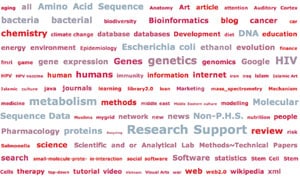
The idea is that when you find a useful paper online, you save it in your account and add tags describing the content of the paper. If this was just a way for individuals to manage their references, it would not be terribly exciting. The innovative aspect of sites like Connotea is the social side: you can see what other users are saving and search their tags to look for new papers on a topic of your choice. However, biologists seem to have adopted the concept much more eagerly than physicists – with “genetics” and “metabolism” being among the most popular tags on Connotea (see figure) – and only one of the respondents to our survey has so far used such sites.

In the wider world, there is no doubt about the most popular Web 2.0 destination. MySpace is a “social networking” site that allows each of its users – a staggering 120 million, mostly teenagers – to produce a personal homepage with photos and details of their likes and dislikes. The page also prominently displays how many “friends” the user has on the site, and friends can add comments to each other’s pages, creating something of an online popularity contest. This might seem an unlikely place to find a physicist, but that would be reckoning without string theorist Michio Kaku, author of popular-science books Hyperspace and Parallel Worlds. Kaku, who lists himself as married/straight/non-smoker/non-drinker, has accumulated an impressive 2725 friends on his page.

There could, however, be a more serious use of social networks for physicists. Jennifer Golbeck, a computer scientist at the University of Maryland, has found that a social network like MySpace contains useful information about who knows whom and how much people trust each of their contacts. Golbeck is working on algorithms to use this information to tell you how much you should trust someone you do not know, based on their position in your social network. This trust measure could then be used by scientists and collaborations. For example, you might allow access to an early version of a paper only to people whose trust rating is above a certain threshold.

It is clear that a brave new world of blogs and trackbacks, wiki peer review, social tagging and trust networks awaits physicists who dare to venture into Web 2.0. But while physicists are happy to publish and download papers online, there is a certain pining for print. “Undeniably, the Web offers several important advantages,” says 85-year-old Nobel laureate Jack Steinberger, “but it also has some unfortunate drawbacks, and I am nostalgic for the good old days when publishing something was a more serious event in our lives than putting something on the Web.” Perhaps Web 2.0 will not fully make its mark on physics until the MySpace generation hits the labs.

Linking up with the social Web

Blogs by professional physicists are becoming increasingly popular. Those mentioned in the article include the following.
• Asymptotia (asymptotia.com)
• Backreaction (backreaction.blogspot.com)
• Cosmic Variance (cosmicvariance.com)
• Not Even Wrong (www.math.columbia.edu/~woit/wordpress)
• The Quantum Pontiff (dabacon.org/pontiff)
• Reference Frame (motls.blogspot.com)

Many others can be found at the physics blog “aggregator” Mixed States (mixedstates.something similar.com), or at the ScienceBlogs portal (scienceblogs.com). Technorati is a comprehensive directory of all blogs (technorati.com). The sites CiteULike (citeulike.org) and Connotea (connotea.org) allow scientists to store and search for information about papers using “social tagging”. Jennifer Golbeck’s research on trust in social networks can be found at trust.mindswap.org and Michio Kaku’s MySpace page at www.myspace.com/mkaku.

The open-access debate

Rüdiger Voss extols the virtues of open access

The scientific community has welcomed the idea of open access to the research literature through the Internet with open arms. Various initiatives, statements and declarations in recent years have all recommended free access to scientific results through self-archiving, the creation of new open-access journals and the conversion of subscription journals into open-access publications. Increasing numbers of funding agencies even force their grant holders to make their papers freely available online.

Physicists have always been at the forefront of the open-access revolution, which seeks to disseminate research findings as widely as possible. They, after all, pioneered the preprint system, which involves making copies of papers available to one’s colleagues while the work is still being peer reviewed by a journal. With the advent of the Web, particle physicists in particular were quick to create electronic versions of the system through preprint servers such as arXiv.org or the SPIRES database. Indeed, more than 90% of the research literature in particle physics is now freely available on the Web, which has replaced traditional journals as the lifeblood of scientific communication.

However, publishing papers via open-access Internet databases – rather than in reputable open-access journals – has been a mixed blessing. If an advance copy of almost every journal paper in a particular field is freely available online, libraries are more likely to cancel subscriptions in these self-archiving fields than in those where the practice is not as prevalent. What this means is that an increasing number of researchers – some in prestigious universities – can no longer read important journals in particle physics and related fields. A rift is fast developing, in which fewer and fewer scientists have access to the final, peer-reviewed version of a paper, while the rest have to make do with a preprint that is rarely identical to the final published version.

If journal publishers continue to hike subscriptions well above the rate of inflation in the face of declining circulation, journals will eventually cost so much that only a small number of major libraries and institutions will be able to afford them. Obviously, this business model is not sustainable for publishers in the long term and there is a big risk that it could collapse. Nonetheless, researchers are still as keen to publish their work in established journals like Physical Review Letters as they were in the pre-Internet age – after all, refereed journals are vital for career progression in academia, given the status that peer review confers on a scientific publication.

But should the physics community pay for expensive journals that merely rubber-stamp definitive versions of research papers, which cannot be found in many libraries, and that have lost their original raison d’être, which is lively and active scientific communication? The answer is, quite simply, no. Open access to the final, peer-reviewed version of scientific literature is the only way out of the dilemma. It will give back to refereed journals the role that they played 20 years ago and let them live in peaceful co-existence – but on an equal footing – with institutional repositories.

However, high-quality open-access publishing comes at a price. If subscriptions are abolished, open-access journals will probably have to be supported by charging authors a fee to publish each paper or by some form of sponsorship that could go as far as research agencies funding entire journals. Critics of open access argue that these scenarios are risky for two reasons. First, they say, author fees encourage publishers to lower quality standards and acceptance thresholds in order to maximize revenue. Second, this funding model is unstable: why would a researcher pay to put their work in open-access journal X when they could just as well publish it for free in equally prestigious journal Y?

I do not believe that first concern is serious: the principal reason why the traditional publishing paradigm has served us so well in the past is that it has relied on independent editorial boards. In this respect, there is no difference between subscription and open-access journals. The second concern is more serious, but it can be overcome by a large-scale transition to open access, of the type that CERN is promoting, accompanied by a programme to help scientists realize the true cost of the publication process.

Open-access journals will benefit all sides involved in the publication process. Scientists will profit from barrier-free access to research results. Authors will profit from increased dissemination of their work. Funding agencies will profit from more transparent, competitive and cost-effective pricing; while publishers will profit from a source of income that is rooted directly in the scientific community concerned, and will be more reliable than the increasingly fragile system of a dwindling number of overpriced subscriptions.

In particle physics, many publishers have understood the potential benefits and have started giving readers free access to individual articles in a journal by charging those particular authors a fee. Such “hybrid” business models can be useful to initiate a smooth transition to open access, but full open access to entire journals must remain the ultimate goal. The transition to open access is not without risk; but if the risk is well managed and has the support of all parties concerned, then there are far fewer dangers than sticking with obsolete – and increasingly absurd – subscription schemes.

John Enderby advocates caution

Much is made by advocates of open-access publishing of the notion that our human rights include, in some sense, “the right to know”. However, in his recent book The Access Principle (2005 MIT Press), John Willinsky from the University of British Columbia makes the crucial distinction between “open” access and “free” access. Most moral philosophers would argue that there is a hierarchy of rights with perhaps clean water, food, clothing and shelter at the top. But none of these is free.

In many societies this apparent contradiction is resolved by forcing those who can pay for food and shelter to do so, while providing welfare payments to those who cannot pay. Once it is recognized that access to reliable information and the right to know likewise have a cost, the question arises as to who should pay for the necessary validation and dissemination.

It is at this point that the disagreements arise. In its purest form, open-access publishing would offer all material in its final, edited, formatted and paginated form freely available, with the publication costs being entirely borne by the authors of papers or the people who funded their work. The traditional “subscription” model, again its purest form, makes material accessible only to those who pay for it, with authors paying nothing towards publication. Between these two extremes is a continuum of business models.

I have great difficulty with open access in its purest form. Economic models in which the producer pays – but the consumer does not – are, to say the least, unusual. At the moment, if researchers do not like a particular journal, they can choose to publish elsewhere. But if all journals were open access, consumers would not be able to exercise any influence over the market. Instead, presumably, the funding agencies would have the upper hand, having to decide how much of their resources would go to publication costs.

And here we meet another difficulty. There is no universal figure for the cost of publishing research papers because it depends strongly on the proportion of papers that are rejected. Publishing research papers is unusual in the business sense because a lot of time, energy and money goes into dealing with papers that do not meet the quality threshold of the journal in question and so do not appear as a “product”. Most commentators now agree that the costs in the quality end of the market are about £1500–£2000 per published paper.

Some advocates of open access have talked about charging researchers a certain amount when they submit a paper and then making them pay an additional fee if their paper is published. However, this approach is bureaucratic and open to abuse. Imagine sending a paper and cash to a publisher and then having the paper rejected. Could you then ask your funding agency for more money so you can submit the paper again and, if so, for how long could this continue?

I am also worried about the implication for developing countries. If author charges became the norm, there may be pressure from aid agencies for scientists from these nations to publish their work in less prestigious, low-impact journals that charge less because their acceptance rates are high. At present, all authors can have their research reviewed free of charge in any journal of their choice. Open-access publishing could therefore lead to journals being dominated entirely by scientists from the richest nations.

And finally those countries with an active scientific workforce would be out of pocket in two ways. Researchers in the UK, for example, produce about 75,000 papers a year, which means they would have to pay about £100m in author fees if all journals were open access. This sum is far higher than the £90m they currently pay in library subscriptions.

Second, a lot of high-quality research in Europe is published in US-based journals. In other words, if all journals were open access, hard cash from research budgets would end up in the coffers of American publishers, although this would be partly offset by a saving on subscriptions. The loss of income from journal subscriptions overseas could also threaten learned societies like the Institute of Physics and the Royal Society.

I do, however, have some reservations about the subscription model in its purest from. As a trustee of the International Network for the Availability of Scientific Publications, which seeks to make papers available to developing nations, I am aware of the problems of making people pay for information. Thankfully, the open-access debate has forced publishers to tackle some of the disadvantages of the subscription model.

Many publishers now give readers free access to all articles either for a limited period following publication or once a certain time has elapsed. Others are experimenting with hybrid models in which authors can choose to pay a publication charge in exchange for open access. Most publishers also now allow authors to post the accepted versions of their papers online.

My view is that market forces will lead to variety of models. However, for us all to move to open-access publishing, which is a so far unproved business model, is not in the best interests of science until experimentation has revealed some of its unintended consequences. I am therefore uneasy about governments or anyone else imposing new rules on authors as these could lead to unforeseen distortions in the market. It must be for each scientific community to decide for itself how best to organize the publication of its research.

Copyright © 2026 by IOP Publishing Ltd and individual contributors