Blogging for physics

A story in the New York Times about dark matter and dark energy published last October referred to me as “a physicist and blogger at the California Institute of Technology”. This is a perfectly accurate description of course – as would have been “physicist and poker player” or “physicist and jazz buff”, although I doubt that newspapers would ever refer to me in that way. Why should my blogging be singled out?

For me, blogging is not part of my job. Although it is a hobby that takes up maybe half an hour on average each day, blogging is a public activity through which one’s words become part of a larger discourse. Once you start blogging, and people begin reading your blog, “blogger” is part of your identity.

I started blogging in 2003 via Preposterous Universe (preposterousuniverse.blogspot.com). It was a spur-of-the-moment decision, but on my first day I received about 100 visits, which was both surprising and thrilling. Then in 2005 I joined forces with four other theoretical physicists to launch a group blog, Cosmic Variance (cosmicvariance.com). Among blogs with some sort of physics focus, we are the largest on the Internet – and by various measures we are about the 1000th largest blog of any sort. On a typical day the site gets about 3000 visits, which is a tiny number compared to the 100,000 or more hits of the largest political and technology blogs but still much greater than the number of people who attend a public talk or read my cosmology papers in Phys. Rev. D.

So who reads my blog? Many readers are physicists themselves (every time I visit another university to give a talk, several people will mention the blog), while an even larger number are students who are interested in what it is like to be a working physicist. There are also journalists looking for feedback on their news stories from active researchers. But a sizable majority seem to be people who simply have a strong amateur fascination in cosmology, gravitation, particle physics and the other subjects we touch upon.

Blogs are an enormously flexible medium, as easily deployed in the service of technical disquisitions as for gossiping about Paris Hilton or posting the family’s holiday photos. Some science bloggers use their blogs as research tools, bringing together experts for high-level discussions. At Cosmic Variance we concentrate more on building bridges between the worlds of specialists and interested outsiders. Blogs offer both immediacy and unfettered access to the inner workings of mysterious vocations of all sorts, which is hard to get from more formal journalism.

But blogs enhance rather than replace traditional media, for instance when a discussion on our site about the representation of women in physics was quoted in the New York Times. We have been interviewed by journalists, invited to conferences and taken part in discussions on the radio – no doubt due to our natural charm, but the visibility provided by blogging certainly has not hurt. Best of all, blogs provide a novel mechanism for interacting with the media. We have also invited experts on some breaking news story to comment on our blog, or even to contribute guest-postings. We have blogged about articles that we have read in newspapers and magazines, and been pleased to have the authors of the original articles show up in our comment sections to amplify or defend their work.

Informal communication

Along with immediacy, blogs are characterized by informality. At Cosmic Variance we freely mix scientific pedagogy and news analysis with personal anecdotes, opinions about art and politics, and even paeans to our favourite cocktail recipes. We do not think of ourselves a “physics blog”, which would imply some specific statement of purpose. Rather, ours is a blog written by people who happen to be physicists.

The mixture of informality and expertise is one of the key strengths of blogging because it lowers the barriers between scientists and the public. But it also contributes to the suspicions of those who simply do not “get it”. Distracted by the tendency of many bloggers to post pictures of their cats or to indulge in occasional invective, some physicists think of blogs as little more than 21st-century personal diaries. They miss the greater potential for a uniquely interactive and cross- or even extra-disciplinary discussion.

There are plenty of things that scientists care deeply about yet would never write about in technical journals. At Cosmic Variance, we have undertaken intense discussions about the relationship between science and religion, the purported hegemony of string theory within fundamental physics, the nature of successful science journalism, and how to choose the best graduate school. Without blogs, these conversations would never have extended beyond our own lunch tables. My fellow physicists have expressed surprise when I explain to them how effectively blogs are used by academics in the humanities and social sciences. Within economics, for example, there are Nobel laureates with blogs (Gary Becker) and within law the entire University of Chicago Law School faculty shares a group blog. Meanwhile, physicists, who are quick to claim credit for inventing the Web, have been relatively slow to embrace its latest and most dynamic manifestation.

Perhaps it is not so hard to guess why. In contrast to other fields like politics, economics and law, our work relates only indirectly to the concerns of most non-experts. The expertise of a professor working in contemporary Middle Eastern politics, say, is of direct interest to a typical informed citizen in a way that the expertise of a theoretical cosmologist simply is not. So compared with our colleagues elsewhere on campus, scientists have been reluctant to embrace the close contact with a general audience that blogging provides. Even for those of us interested in public-outreach activities, the traditional formats of popular books and talks stick closely to the standard lecturer–audience dynamic: we talk, you listen. Blogs are different because the audience can talk back.

We all know people who long resisted using e-mail or mobile phones only to eventually become enthusiastic converts. Similarly, physicists will eventually become more comfortable with the blogosphere. Blogging is certainly not for everyone, and some people are happiest being left alone with their work. But physicists, I predict, will ultimately embrace blogs wholeheartedly, as an amazingly effective way to share our enthusiasm for science and to put our work in a wider context.

Brave new Web

Whenever physicists are asked what good they have done for society, they love to point out that it is they who “invented” the World Wide Web. Certainly the Web has had a profound impact on many aspects of modern life, not least scientific publishing. Long gone are the days when typewritten manuscripts would be posted to a publisher before being read months later in a printed journal in the library. Publishing is now almost entirely electronic and papers can be downloaded from a journal’s website in seconds.

But although the Web has made accessing papers much easier and faster – trips to the library are largely a thing of the past – the science-publishing model remains essentially unchanged. Sure, physicists like posting preprints of their papers on websites like arXiv.org, but they still want to have their research published in conventional journals as well. The reason is simple: there is a huge personal kudos to appearing in the likes of Physical Review Letters, Nature or Science. Not surprisingly, scientific publishing remains a lucrative enterprise, perhaps too much so.

The Web is, however, forcing commercial scientific publishers to think hard about how they operate, as this special issue of Physics World reports. So far the publishers’ biggest pressure is from advocates of “open access”, who want all papers to be made freely available online to everyone. Why, scientists argue, should they have to pay journal subscriptions to read papers they wrote in the first place? Publishers respond by pointing out that it costs them money to organize the peer-review process and to maintain and support a viable journal. One solution has been to charge authors a fee in return for making their papers free for anyone to read on the Web. But the author-pays model will be problematic if introduced across the board: physicists could find themselves under unwelcome pressure from their funding bodies to submit papers to cheap, low-quality journals. Of course, the entire physics community could somehow dispense with conventional journals en masse, but until, and unless, that happens, it would be a brave physicist who would want a CV consisting entirely of non-peer-reviewed preprints.

Passionate and important though the open-access debate is (see “The open-access debate”), it still considers scientific publishing in terms of conventional papers. A bigger unknown surrounds the increasing use of the Web as a social network, or what is loosely known as “Web 2.0”, through novel publishing tools like “wikis”, “mash-ups” and “social tagging”. These facilities allow any information – including scientific information – to be shared, commented upon and adapted online, which could lead to new ideas and forms of thinking, particularly in interdisciplinary research.

Unfortunately, physicists are slow to use these tools: a survey of 2695 physicists carried out by Institute of Physics Publishing, which publishes Physics World, reveals that the vast majority (84%) have no idea what social tagging is, while only 14% have ever contributed to a work-related wiki. That lack of awareness is broadly mirrored by Physics World‘s own informal survey (see “Talking physics in the social Web”). No doubt many physicists will look down their noses at the “social Web” as a gimmick that has nothing to do with serious research. There may be an element of truth in this, but as today’s young physicists grow up, working in an open and collaborative fashion on the Web will for them soon be second nature. Others would be wise not to miss out.

The best of 2006

1. January: Light and atoms get entangled
2. February: Great balls of lightning
3. March: Hurricane intensity linked to warmer oceans
4. April: Fermilab probes matter-antimatter transitions
5. May: Quantum gases in 3D
6. June: A fresh look at glass
7. July: New look for graphene
8. August: World’s most creative physicist revealed
9. September: BECs confound at higher temperatures
10. October: Invisibility cloak unveiled in the US
11. November: Spin measured without destruction
12. December: Water flows on Mars

1. January: Light and atoms get entangled

The year got off to a good start for quantum computation with two research groups reporting breakthroughs in the entanglement of atoms and light. Entanglement is a cornerstone of quantum information theory and could lead to quantum computers that outperform the machines of today. Unfortunately, entangled states tend to be much too fragile and short-lived to be of any practical use – but these results show that real progress has been made in 2006.

Light and atoms get entangled

Back to list

2. February: Great balls of lightning

Is ball lightning a spectacular natural phenomenon or pure folklore? Physicists in Israel addressed this pressing issue by using a modified microwave oven to simulate how conventional lightning strikes are believed to create ball lightning. They managed to generate glowing fireballs that were described as “hot jellyfish, quivering and buoyant in the air”.

Great balls of lightning

Back to list

3. March: Hurricane intensity linked to warmer oceans

The devastation wrought in 2005 by Katrina and other intense storms in the North-Atlantic basin focused the world’s attention on the possible link between increased hurricane intensity and global warming. In March leading climate physicists raised the warning that rising sea-surface temperatures are increasing the frequency of very intense hurricanes and tropical cyclones worldwide. Thanks to an el Niño event in the Pacific Ocean, 2006 was a relatively quiet storm season in the North Atlantic — but there could be worse to come if temperatures keep rising.

Hurricane intensity linked to warmer oceans

Back to list

4. April: Fermilab probes matter-antimatter transitions

There is much more matter than anti-matter in the Universe and cosmologists explain this asymmetry by invoking a phenomenon called charge-parity (CP) violation. In March, the international CDF collaboration at Fermilab made the most precise measurement to date of the extremely rapid transitions between matter and antimatter, providing a new system in which to study CP violation. In the experiment, certain B mesons were observed to spontaneously turn into their own antiparticle equivalents — anti-B mesons — and back again at a rate of three trillion times per second.

Fermilab probes matter-antimatter transitions

Back to list

5. May: Quantum gases in 3D

Optical lattices — which user laser beams to trap atoms in regular arrays — allow physicists to study quantum phenomena in “labs-on-a-chip” in which almost all aspects of the interactions between the atoms can be manipulated to great precision. In May two independent teams of physicists managed to trap bosons and fermions together in a 3D optical lattice for the first time. The breakthrough should provide a model system in which to study interactions in real-life solid materials – particularly interactions between electrons and phonons, which are fermions and bosons respectively.

Quantum gases in 3D

Back to list

6. June: A fresh look at glass

Glass is perhaps most enigmatic of all everyday materials and its seemingly contradictory physical properties defy simple material classifications like “liquid” or “solid”. In June researchers in the US reported that glass can return completely to its original state after being bombarded with high-energy electrons. This high level of thermodynamic stability was completely unexpected given the disordered atomic structure of glass. The result is good news for those charged with disposing of nuclear waste — who could soon be entombing radioactive materials in “self-healing” glass.

A fresh look at glass

Back to list

7. July: New look for graphene

If Physics Web gave awards for “Most popular material of the year”, the 2006 prize would go to graphene, which is a two-dimensional sheet of carbon that is just one atom thick. Graphene was first made in 2004 and since then physicists have scrambled to be the first to report on its many unique properties. Early incarnations of graphene were extremely fragile flakes that were difficult to manipulate, but in July researchers in the US unveiled a new technique for making graphene by embedding it in a sturdy polymer matrix. This could open the door to transistors and other circuits that exploit the two-dimensional properties of graphene’s conduction electrons.

New look for graphene

Back to list

8. August: World’s most creative physicist revealed

He’s an outspoken critic of particle physics, the scourge of string theorists and he’s won a Nobel Prize – now the condensed-matter theorist Philip Anderson has been declared the most creative physicist in the world. This was the conclusion of José Soler, a statistical physicist at the University of Madrid, who developed a “creativity index” based on the impact of scientific research papers. Particle theorist Steven Weinberg — another Nobel laureate — was the second most creative physicist, followed by in third place by string theorist Ed Witten. All three researchers have links to Princeton University and Physics Web can now declare New Jersey the most creative place for physics.

World’s most creative physicist revealed

Back to list

9. September: BECs confound at higher temperatures

Bose-Einstein condensation hit the headlines in October when two separate teams claimed to have produced Bose-Einstein condensates (BECs) at much higher temperatures than has previously been possible. BECs are systems in which large numbers of bosons collapse into the same ground state as their temperature drops to near absolute zero. Now, one team says they have created a BEC at 19 K, while the other claims to have witnessed the phenomenon at room temperature – but some are asking if these systems can really be classified as BECs.

BECs confound at higher temperatures

Back to list

10. October: Invisibility cloak unveiled in the US

The invisibility cloak passed from science fiction to science fact in October when researchers in the US unveiled a device that can make an object almost invisible to the microwave radiation used in some radar systems. The cloak is based on metamaterials designed by the physicist John Pendry of Imperial College and it bends microwave radiation around the object, like water flowing around a smooth stone. Metamaterials allow physicists to push Maxwell’s equations beyond the limits of conventional materials to create devices with novel – and potentially useful – electromagnetic properties such as negative indices of refraction.

Invisibility cloak unveiled in the US

Back to list

11. November: Spin measured without destruction

Physicists have long dreamed of building practical electronic circuits that can exploit the spin of the electron. This prospect is particularly tantalizing at the single-electron level, where the quantum nature of spin could be harnessed in quantum computers to achieve the parallel processing of information on a massive scale. However, success hinges on being able to read the spin state without destroying the state – something that is very difficult to do in the quantum world. Now, physicists in the US have used a laser to make the first such measurement – perhaps opening the door to systems that use the quantum properties of single electrons and photons to process and transmit information.

Spin measured without destruction

Back to list

12. December: Water flows on Mars

While it is unlikely to be raining on Mars at the moment, there is a good chance that water is flowing somewhere on the planet. This is the claim of US-based researchers who in December presented the first convincing evidence of recent alluvial activity on Mars. The researchers monitored images of the planet’s surface taken by NASA’s Mars Global Surveyor spacecraft and spotted telltale signs that liquid water had flowed in two different places in the last seven years. This is guaranteed to fuel speculation about the possibility of life existing on Mars

Water flows on Mars

The quantum nose

Most scientists believe that the shape of a molecule defines its odour, and that we smell using receptors in our noses that bind selectively to molecules of a specific shape. However, this theory cannot explain why very differently shaped molecules can smell the same, or why similarly shaped molecules with different masses have very different smells.

Some scientists have tried to explain these contradictions by pointing out that every molecule has a distinct set of vibrations – and these could also be detected by the receptors in our nose. However, this theory has suffered from the lack of a plausible mechanism for converting vibrations into a signal than could be sent to the brain.

Now, the UCL researchers have calculated that electron tunnelling could provide the link between smell and molecular vibrations. Their work builds on a theory first proposed in 1996 by Luca Turin, who was then at UCL. Turin suggested that a receptor acts like an electrical switch that allows a current to flow when bound to a molecule with specific vibration properties. He also suggested that the switching mechanism is electron tunnelling, which is a purely quantum effect that is known to be affected by vibrations in a process called phonon-assisted tunnelling.

Stoneham and colleagues have taken Turin’s idea a step further by calculating the rates of electron movement that would be expected in a hypothetical receptor. The calculations show that electron flow would increase significantly when an odour molecule with the correct vibrational frequency is bound to the receptor.

Stoneham and colleagues are now examining data from experiments on how receptors respond to different molecules and hope that their calculations will encourage other physicists to devise further experiments to test their theory. “We are also in contact with an experimental group working on determining the atomic structure of olfactory receptors,” adds Andrew Horsfield, who is one of the UCL group.

Stars meet a darker death

Astrophysicists believe that stars more than eight times heavier than our Sun end their lives in spectacular supernovae explosions before collapsing to form black holes.

Several solar masses worth of material are ejected into the interstellar medium during a supernova and this produces a fantastic display of light and colour.

A powerful pulse of gamma rays lasting two seconds or more is also emitted during this process and when astronomers detect such a gamma-ray burst (GRB), a number of space and Earth-based telescopes are immediately trained at the source to observe the light from the supernova.

But for two GRBs detected earlier this year, the light never came. One of the astronomers involved in the studies, Guido Chincarini of Italy’s University of Milano-Bicocca, believes that the most likely explanation for this apparent darkness is that the material usually ejected during a supernova had been sucked into a massive black hole formed by the dying star.

The two bursts were observed less than one month apart, which has led some astronomers to conclude that these events are not out of the ordinary. “This may be a more common type of explosion than we expected, possibly a new mechanism for star death,” said Pall Jakobsson of the University of Hertfordshire in the UK, who was also involved in studying the GRBs.

While GRBs have been observed without a corresponding supernova, they have always been much shorter and more energetic than supernovae bursts. This had led astronomers to classify GRBs as “long” supernovae bursts, which last more than two seconds, and “short” bursts – the latter are believed to be the result of the merger of two black holes or neutron stars. This clear distinction appears to have been shattered by the two new GRBs, which were 102 and four seconds long respectively.

Water pores reveal age of paper

Paper sheets are composed primarily of a web of cellulose fibres, which degrade over time by absorbing atmospheric moisture, which is then held in nanometre-sized pores within the fibres. Missori and colleagues have used SANS to study these pores and have shown that they increase in size as the paper ages and degrades – with 600 year-old paper having pores that are about 22% larger than paper that is about 50 years old.

The researchers used the SANS facility at the Institut Laue-Langevin in Grenoble, France to compare paper from the 15th and 20th centuries along with paper that had been artificially aged. SANS uses neutron diffraction to determine the structure of nanometre-sized objects and has already been used to investigate how the structure of the cellulose fibres changes with age.

The SANS measurements revealed that the mean radii of the water-filled pores varied from about 1.6 nm in modern paper to almost 2 nm in some 15th century samples (see figure: “Pore sizes”). The physicists say that the pore radii provide a quantitative indicator how degraded a paper sample is and could even be used to estimate the age of a sample.

Tiny dip could point to cosmic-ray origins

With energies of 1018-1020 electron volts (eV) UHECRs are the most energetic charged particles in the Universe. However, they are exceedingly rare and their origins remain a mystery – they could be produced at the far edges of the Universe or in nearby galaxies.

The most promising way of determining how far UHECRs have travelled to Earth involves understanding how they interact with the cosmic microwave background (CMB) radiation that they encounter along the way. At very high energies, UHECRs should lose energy by colliding with CMB photons to produce pions. If the cosmic rays have travelled great distances to reach Earth, successive collisions would lead to a rapid decline to zero in the number of UHECRs observed with energies above about 4×10¹⁹ eV – the so-called Greisen-Zatsepin-Kuzmin (GZK) cut off. On the other hand, if a UHECR is produced within a nearby galaxy, it could be observed at energies above the GZK cut off.

However, the precise nature of the GZK cut-off is highly dependant upon the theoretical assumptions made when calculating its position. This is further complicated by the existence of a nearby second cut off – the “acceleration limit”. This is the absolute upper limit on cosmic ray energies and could be confused with the GZK cut off.

But now Venya Berezinsky of Italy’s Gran Sasso Laboratory and colleagues in Belarus and Norway have postulated the existence of a unique structure in the UHECR spectrum, that if observed would provide conclusive evidence of a GZK cut off. The tiny dip is calculated to occur at about 6×10¹⁹ eV and its position is not highly-dependent upon theoretical assumptions. Berezinsky told Physics Web that it should allow physicists to separate unambiguously the effects of the acceleration limit from the GZK.

Unfortunately, the second dip is such a subtle effect that Berezinsky believes that it will probably not be seen in data from existing UHECR detectors including the Pierre Auger Observatory in Argentina. Instead, researchers may have to wait until the JEM-EUSO UHECR detector is up and running on the International Space Station, which should happen in 2008.

Cosmic structure explained without dark matter

Cosmologists have long puzzled over the origin of structure in the universe. In whichever direction of the sky you look, there is a hierarchy of stars, galaxies and galaxy clusters. Yet intuitively, the Big Bang should have created a uniform spread of matter and left the universe a rather uninteresting place.

The breakthrough came with the discovery of temperature fluctuations in the cosmic microwave background radiation, formed some 380 000 years after the Big Bang, which supported the idea that the early universe was a plasma filled with tiny fluctuations in density. The denser areas caused the matter to “clump” together, providing the seeds for the cosmic structure we see today.

Unfortunately, our theory of gravitation – Einstein’s theory of general relativity – cannot account for the extent of clumping without invoking the right amount of a mysterious substance called “dark matter”. Originally introduced in the 1930s to explain anomalous galaxy dynamics, dark matter (which cosmologists think could make up to 95% of matter in the universe) is gravitationally attractive yet does not couple to light. But crucially it can describe how the initial plasma fluctuations were sustained for long enough to allow large structures to form – on its own, general relativity attests that they simply petered out. Even though dark matter has never been observed, the majority of physicists now believe that general relativity combined with dark matter is the only satisfactory explanation for the universe’s large-scale structure.

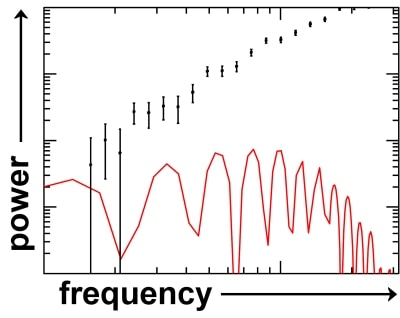
However, in recent years there has been growing support for alternative theories of gravitation to general relativity that do away with the need for dark matter altogether. One of these, devised by Jacob Bekenstein in 2004 at the Hebrew University of Jerusalem, uses vector and scalar fields in addition to the tensor used in relativity, hence the name “TeVeS” (Tensor Vector Scalar). TeVeS has already been shown to explain galaxy dynamics without the need for dark matter. But now, building upon the numerical studies by Pedro Ferreira and colleagues performed earlier this year, Scott Dodelson and Michele Liguori from Fermilab in the US have confirmed that TeVeS can also provide such sustained plasma fluctuations. (See figure: “Powering galaxy formation”.)

In particular, the pair found that it is TeVeS’s additional vector field that provides the “extra” gravitation on large mass scales, meaning that denser regions of the primordial plasma could have accreted matter much faster than general relativity alone (without dark matter) predicts.

“Their elegant calculation brings us closer to understanding why a modified theory of gravity may be a viable alternative to dark matter,” Ferreira told Physics Web. “The presence of the cosmic [vector] field – akin to an aether – drives the growth of the structure, making this theory compatible with observations of the cosmic microwave background and the distribution of galaxies.”

Sea-level rise could be greater than IPCC predictions, warns physicist

Rising seas could be the most devastating consequence of manmade global warming and the IPCC currently predicts that levels will rise 21-70 cm by 2100. While this is bad news for more than 50% of the world’s population who live in low-lying coastal regions, a rise of 1.4 m would be catastrophic and submerge many of the world’s largest cities.

The oceans have risen about 20 cm in the past century commensurate with a global warming of about 0.8 degrees. This is expected to continue as rising temperatures reduce the size of the Antarctic and Greenland ice sheets and cause the thermal expansion of the oceans. While scientists have tried to model how sea levels will respond to rising global temperatures, their understanding of the complex processes involved remains limited. Indeed, the state-of-the-art models used to produce the IPCC predictions appear to underestimate the effect of rising temperatures on sea level.

Instead of worrying about the physical processes behind sea-level rise, Rahmstorf looked for a purely mathematical relationship between sea levels and global temperatures in data covering the period 1880-2001. What he found is surprisingly simple – the rate at which the sea-level rose in given year was proportional to the difference between that year’s average temperature and a pre-industrial global average temperature. For example, if a year was 0.25 degrees warmer than average, the sea level would rise about 0.8 mm that year – and if it was 0.5 degrees warmer a 1.6 mm rise would occur.

Rahmstorf told Physics Web that rather than yielding deep insights into the physical processes of sea-level rise, his work provides a simple linear approximation to a very complicated phenomenon. While he believes that the relationship should hold until 2100, he identified several factors that could change this century. Mountain glaciers could all but disappear before 2100, ending their current contribution to sea level rise. And perhaps most importantly, the lubricating effects of increasing quantities of melt water under continental ice sheets could cause the ice to flow more rapidly towards the sea, releasing more water in a shorter time period.

Creating monoenergetic electron beams on a tabletop

High-energy particles are mostly produced in vast conventional accelerators such as the 6.3-km-circumference Tevatron in the US. But while these costly edifices have undoubtedly led to many discoveries, physicists would like to find smaller and cheaper ways to accelerate particles. That is why some researchers have been trying to construct accelerators based on “plasma wakefields” that could be compact enough to literally fit on a table.

Typically a short, intense laser pulse is fired at a jet of gas, producing a plasma of electrons and ions. As the pulse travels through the plasma, it drags nearby electrons away from their positive nucleons, thus creating a large electric field in its wake (hence the term “wakefield”). This wakefield has a huge accelerating potential of up to 270 GVm-1 – over 5000 times that of conventional accelerators.

In recent attempts to make compact accelerators, physicists have relied on the density of displaced electrons to increase so much that some of them fall back into the wakefield so that they are accelerated to high energies. However, these “self-injected” electron beams have proved notoriously hard to control.

Victor Malka and colleagues at the École Polytechnique in Palaiseau have solved this issue by introducing a second laser pulse to inject the electrons. When this laser pulse collides with the first in the plasma, the interference also creates a standing wave that pre-accelerates electrons before they enter the wakefield. Remarkably, this method of using “background” electrons produces an electron beam with energy up to 250 MeV in just over 2 mm, and its precise energy can be tuned by altering the point of the laser pulses’ collision in the gas jet.

Karl Krushelnick, an expert on plasma wakefield accelerators, heralds this as an important breakthrough: “Although there has been experimental work in the past, this is the first successful experiment,” he told Physics Web. “However, it will remain to be seen whether the two [pulses] will be necessary to get good control over all the electron beam parameters.”

Copyright © 2026 by IOP Publishing Ltd and individual contributors