Expedition to inner space

The largest scientific expedition ever mounted is preparing to set out. The team has gathered the best equipment it can muster, debated the challenges it will face, and drafted the most detailed maps it can of the terrain ahead. It aims to explore the “inner space” of matter, thousands of times smaller than a proton. Now, with the world’s most powerful particle accelerator nearing completion at CERN, near Geneva, two decades of planning are about to be put to the test.

The Large Hadron Collider (LHC) will tackle some of the biggest challenges in particle physics. It hopes to find the elusive Higgs boson, supposedly responsible for the masses of all other particles; it may see a “supersymmetric” world, where a myriad of new particles mirror our familiar matter; or it may even find a fifth dimension, curled up into a tiny loop at the heart of the atom. Perhaps most excitingly, it could find something that no-one has yet imagined, explaining at a stroke some of the long-standing questions that our current “Standard Model” of particle physics cannot answer.

To reveal the secrets that lie at the high-energy frontier we need an exceptional machine. Starting next year, protons will be smashed into one another at unprecedented energies of 14 TeV (14 × 1012 electron-volts) at four different points around a 27 km-long circular tunnel deep under the Swiss and French countryside. Some of the quarks and gluons within the protons will collide head on, releasing enough energy to create showers of new particles. And waiting to record the crucial debris from these collisions will be four massive detectors, together employing about 6000 scientists from all over the world.

Of these, it is the two giant all-purpose detectors – ATLAS and CMS – where the main hopes of discovering the Higgs boson lie. The detectors have been designed with that goal very much in mind, but this also puts them in a great position to see a range of brand new physical processes beyond the Standard Model.

A massive problem

The Standard Model of particle physics describes subatomic matter in terms of quarks and leptons, which interact with one another via the strong, weak and electromagnetic forces. These forces are carried by “gauge bosons”: the electromagnetic force by photons; the strong force by gluons; and the weak force by the W and Z bosons. Quarks are affected by the strong force, which binds them together to form “hadrons” such as protons and neutrons that are only 10–15 m across. Leptons, on the other hand, only feel the electromagnetic and weak forces, meaning that electrons, for example, can roam outside atomic nuclei in orbits 10–10 m across. At such tiny scales, there is really no such thing as solid matter: the Standard Model is a “quantum field theory” in which both the particles of matter and the forces between them are described as vibrations of fields in a vacuum.

The great triumph of the Standard Model is that it unites the weak and electromagnetic forces, which behave very differently in everyday “low energy” conditions, into a single electroweak force at high energies. The difference between the electromagnetic and weak forces arises because of their interactions with another quantum field – the Higgs field. These interactions cause the photons of the electromagnetic field to be massless, while the W and Z bosons associated with the weak force have a large mass. Within the Standard Model, the Higgs field is also responsible for giving quarks and leptons their masses, and it is a vibration in the Higgs field that appears as the famous Higgs boson.

Without the Higgs boson, the Standard Model simply does not work; but despite previous experiments confirming the predictions of electroweak unification with great precision, this particle has not yet been discovered. The Standard Model does, however, tell us roughly where we should look for it. By putting the measured masses of the W and Z bosons into the electroweak theory we can calculate that the mass of the Higgs must be less than about 1 TeV/c2.

As the energy of the proton–proton collisions at the LHC will be 14 TeV, it should be easy to produce a particle of this mass. You might imagine, therefore, that finding or ruling out the Higgs is a simple task – turn on the machine, see if a Higgs pops out, then go off to do something else. Unfortunately, life is not so simple.

Even if the Higgs field does exist, it seems to contain the seeds of its own destruction. This is because Higgs bosons must themselves move through the vacuum, interacting with all the fields there, including the Higgs field itself. Theoretical calculations taking into account all these interactions predict a Higgs mass comparable to the “Planck mass” of 1016 TeV/c2, 16 orders of magnitude higher than required by the Standard Model. This huge discrepancy is known as the hierarchy problem, and it leads theorists to conclude that either the Higgs boson does not exist and something else will be found at the TeV energy scale to replace it; or that there is some as-yet unseen effect that modifies the theory to allow the Higgs mass to fall into the TeV range.

Two main ideas have been put forward to solve the hierarchy problem, the most popular of which is supersymmetry (SUSY). In supersymmetric models, the interactions with normal matter that otherwise make the prediction of the Higgs mass comparable to the Planck mass are cancelled out by interactions with previously unseen supersymmetric particles or “sparticles”. SUSY predicts that there are sparticle partners for every type of normal particle, differing in the amount of spin that they carry. For example, electrons and quarks carry half a unit of spin, while their SUSY partners, dubbed selectrons and squarks, carry none. In order to keep the Higgs mass at the TeV scale, the sparticles must themselves have masses of about 1 TeV/c2, and so they too are prime targets for the LHC. Indeed, supersymmetry is regarded as the least surprising type of new physics that could be discovered at the LHC.

The second approach to solving the hierarchy problem is more recent and more outrageous. If the calculations dictate that the Higgs mass is indeed comparable to the Planck mass, then instead of modifying the calculation, why not move the Planck mass down to the TeV scale? The Planck mass is a combination of fundamental constants that effectively sets the strength of gravity, so it seems ridiculous to alter it. But in fact, experiments have only measured gravity over distances longer than about 100 µm. Theorists have thus suggested that there could be extra spatial dimensions below this scale, curled up into tiny loops. Gravity could then be much stronger than we have measured, but with most of it being absorbed into the “invisible” extra dimensions.

Stronger gravity corresponds to a smaller Planck mass, lowering the predicted Higgs mass and thus solving the hierarchy problem. If this radical idea turns out to be correct, the collisions at the LHC will be energetic enough to excite the gravitational field in the extra dimensions, creating observable particles or even tiny black holes.

Reconstructing events

With the Higgs boson, supersymmetric particles and maybe even extra dimensions all predicted to occur at the scale of a few TeV, it is clear why the collisions at the LHC are of such great interest. Currently, the world’s highest energy collisions take place at the Tevatron accelerator at Fermilab in the US, but with its proton–antiproton collisions having energies of 2 TeV, new physics has remained tantalizingly out of reach.

At the LHC, bunches of some 1011 protons at a time will be accelerated to 7 TeV. As the protons approach the detectors, they will be focused by electromagnetic fields to increase the chance of a collision. About 20 protons will collide each time the beams cross, most being glancing blows. But occasionally, two quarks in the incoming protons will meet head on, creating a “hard” collision in which the energy released can create new massive particles, including the Higgs boson and sparticles, if they exist.

The situation is complicated by the fact that we will never observe a Higgs boson or a sparticle directly because they are unstable and decay almost instantly into normal Standard Model particles. Instead, their fleeting existence must be inferred from the decay products that fly outwards from the collision and into the detector. Unfortunately, we do not have much time to do this. Travelling at close to the speed of light, particles pass through the entire ATLAS detector in about 30 ns, with the particles from the next set of collisions following just 25 ns behind. To make matters worse, the debris from each collision will contain 1000 or so particles, each of which must be tracked and measured to try to reconstruct what happened in the original collision, or “event”.
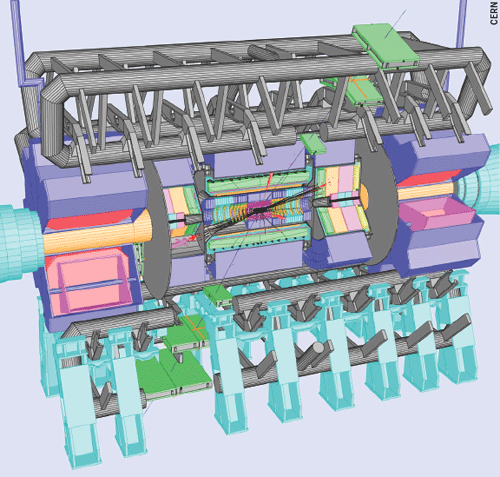
To this end, the huge ATLAS detector – weighing some 7000 tonnes and measuring over 26 m in length and 20 m in diameter – consists of a number of subdetectors, designed to identify and measure different types of particle (figure 1). Three main subsystems, are arranged in cylindrical layers around the vacuum pipe that carries the proton beams: the inner detector is devoted to measuring charged-particle tracks; the calorimeters measure the energy of particles; and the outermost subsystem is used to detect muons. Millions of electronic channels will read out the raw data from the detector systems – the first step in a chain that will allow physicists to deduce what happened in the collisions and hopefully to identify new physical processes.

Storing all the data read out from each of the billion or so collisions every second would be impossible, so the detectors themselves will be programmed to select only the most interesting events. Dedicated electronic “trigger” systems will inspect the data for high-energy deposits or interesting patterns of particles, accepting only about 0.25% of the events. Farms of powerful computers will be used to further process the surviving events, reducing the number passed onto waiting physicists for analysis to a more manageable 100 events per second.

Even after this massive filtering exercise, over a petabyte (1015 bytes, or a million CDs) of data will be recorded each year. Small teams of physicists will work together on their chosen topic, trying to pick out interesting “signal” events such as Higgs decays while removing “background” events that come from known Standard Model processes. In order to do this, we need to understand what the detectors should see from the Standard Model alone, and what the distinctive “signatures” of new particles will be. This is done using “Monte Carlo simulations”: computer programs that generate millions of random events obeying the underlying theoretical equations, starting from the hard collision and simulating the paths and decays of all the particles created by it.

These simulations also include a virtual model of the detector, which mimics the response of each detector element as the particles pass through it. The simulated data from this virtual detector are then fed into the same reconstruction program that physicists will use to inspect the real data, allowing them to compare the real data directly with the predictions of different theoretical scenarios. Such Monte Carlo studies have been carried out since 1984, when the case was first made to fund the LHC, and today the ATLAS database contains simulations of over 600 different scenarios.

Hunting the Higgs

Finding or eliminating the Higgs boson is so important for the LHC that the ATLAS detector was designed specifically with the Higgs search in mind. The first important factor to consider is how often Higgs bosons will be produced in the first place – given by multiplying the “production cross-section” of the Higgs and the “luminosity” of the LHC beams. The cross-section tells us how likely two colliding quarks are to produce a Higgs boson, while the luminosity tells us how many protons are in the LHC beams and how tightly they are focused. Using the design luminosity of the LHC and a Higgs mass of 250 GeV, we would expect to produce about 10 events containing Higgs bosons every minute. This is a promising start, especially as the detector is designed to run for up to 10 years.

But creating Higgs bosons in the first place is useless unless we can prove their existence by measuring their decay products in the detector. The Higgs boson can decay in many different ways, with the probability of a particular type of decay depending on the as-yet unknown mass of the Higgs. From previous experiments, we know that the Higgs mass must be above 114 GeV/c2 – otherwise we would already have seen it – while theory requires it to lie below 1 TeV/c2. If it has a “low” mass (about 120 GeV/c2), it will most often decay into a bottom quark and antiquark. Unfortunately, it is very hard to tell these apart from the quarks produced in collisions in which no Higgs is present. A low-mass Higgs can also decay into a pair of photons, but it does this much less often – only once in 1000 decays. However, this decay is much easier to pick out, and there are so many proton–proton collisions that there will still be thousands of these events produced.

If the Higgs has a higher mass (above 180 GeV/c2), then it is most likely to decay into pairs of W and Z bosons. The easiest signal to identify occurs when the Higgs decays into two Z bosons, which each decay in turn into a pair of electrons or muons. This signature of four leptons can be easily identified by the detector, and is not often produced by unknown Standard Model processes. Furthermore, by measuring the momentum of each of the leptons, it is possible to reconstruct the mass of the parent particle of each pair. Hence, particle physicists will home in on this type of decay by looking for two pairs of leptons in an event, the momenta of each of which “add up” to a value close to the known mass of the Z boson. Taking this idea further, the momenta of the two Z bosons can then be used to derive the Higgs mass.

In ATLAS, the precise momentum measurements required to do this are achieved using the inner detector, which is enclosed in a solenoidal magnet 2.4 m in diameter and 5.3 m long that provides a 2 T field. By measuring the path of a charged particle with sensors consisting of silicon wafers and gas-filled tubes, we can derive its momentum because the momentum determines the curvature of the path. The inner detector is designed to measure the positions of particle tracks with an impressive precision of about 10 µm. Importantly for the Higgs search, this also means that it can distinguish bottom quarks from other types of quarks, based on how far the hadrons they form travel before they decay.

After passing outwards through the inner detector, the particles next encounter the calorimeters, which will measure their energy by stopping them in an absorbing material: liquid argon in the case of ATLAS. Electrons lose energy easily and create dense clusters of secondary particles, while hadrons scatter off nuclei and form much larger clusters. Accurate energy measurements are vital, for example in the search for the Higgs decay to two photons (figure 2). Furthermore, because energy is conserved in the collisions, we can infer the presence of “invisible” particles such as neutrinos – which pass through the detector without being measured directly – by checking whether the energy measurements add up or if some energy is “missing”.
Muons, being relatively heavy, can pass through the calorimeter without losing much energy, and so they will be detected by the outermost subsystem. Detecting muons is vital to identify the important Higgs decay into two Z bosons, as either of them can subsequently decay into two muons. The muon system works by making a second momentum measurement of charged-particle tracks – eight massive superconducting magnets that surround the whole apparatus create a toroidal field in which the muons paths are bent, and 12,000 m2 of detectors are used to measure the curvature of the track. Muons are distinguished by tracks that have roughly the same momentum before and after passing through the calorimeter.

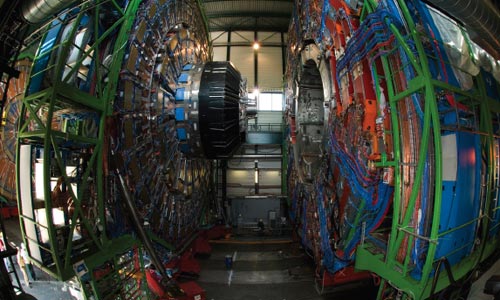
The components of the ATLAS and CMS detectors have been designed and built by teams around the world. ATLAS is now beginning to take shape in its underground pit (see box on page 30), and, when protons finally begin to collide next year, its electronic eyes will be fully equipped to observe all the principal decay types of the Higgs boson. CMS, meanwhile is being assembled on the surface (figure 3).

The road to discovery

The Higgs search is so challenging in itself that the ATLAS detector does not need any extra features to explore other interesting signals. For example, supersymmetric particles decay by emitting high-energy quarks, electrons and muons that can be measured by the detector; and invisible “neutralinos” that produce missing energy in the same way as neutrinos. In models with extra dimensions, we may be able to infer the existence of a “graviton” – the hypothetical carrier of the gravitational force – either through measurements of missing energy or from pairs of electrons and muons the masses of which add up to the graviton mass.

Indeed, there are so many theoretical possibilities that correctly interpreting the LHC data will therefore probably be more challenging than finding the signals themselves. The strategy will therefore be to look for deviations from the Standard Model predictions with as many different signatures as possible. To claim a discovery, we must be sure that our observation could not be merely a statistical fluctuation of the background processes (figure 4). If a significant discrepancy is found, it will be compared with the various theoretical models to see which type of new physics is the best match. However, we may end up in the position of announcing the discovery of physics beyond the Standard Model without being certain what that physics is!
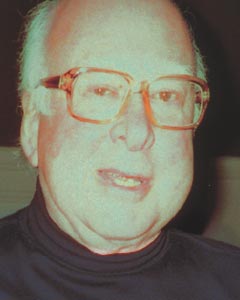
Even if the experiment sees a strong signal, the team will want to be entirely convinced of its validity before announcing its discovery. The first events will undoubtedly look very strange, since the detector will still need to be fully calibrated, removing badly functioning electronic channels, misalignments and so on. The performance of the system will need to be understood in the real, rather than virtual, Monte Carlo world. For example, the illusion of large amounts of missing energy can be created when particles escape undetected through the space where the read-out cables leave the detector. Effects like this cannot be modelled confidently in advance, and so must be measured in situ.

Once we feel confident that we understand the detector, good data should be obtained routinely. Hundreds of terabytes will pour out each week, to be reconstructed on a worldwide network of computers. Like reconnaissance patrols, small teams of staff and students will search for their favourite signals, reporting their results to the full collaboration, which will focus on the most exciting results. Sometime in 2008, the first dispatches will arrive from beyond the frontier. Then we will know which fabulous beasts inhabit the land, and which are as mythical as the unicorn.

At a Glance: ATLAS and CMS experiments

  • The collisions between protons at the Large Hadron Collider will take physicists into a completely uncharted energy regime
  • One of the main goals of the LHC is to discover the elusive Higgs boson, which is responsible for the masses of all other particles
  • The huge general-purpose ATLAS and CMS detectors have been designed to make the hunt for the Higgs boson as easy as possible
  • A variety of other types of “new physics” could be found at these detectors, including supersymmetry and extra dimensions
  • The discoveries made at the LHC should solve the “hierarchy problem” – one of the biggest challenges in particle physics

Life at the high-energy frontier

Nick Chohan is looking forward to Christmas. For the last three years the amiable CERN physicist and his team have been working around the clock in a large metal hangar that straddles the Franco-Swiss border, carefully testing the 1232 superconducting magnets that will soon guide protons at almost the speed of light around the world’s most powerful particle accelerator. This is no mean feat – it takes three people up to 12 hours just to connect one of the 15 m long, 35 tonne cylindrical dipoles to the test rig, and each one costs close to a nerve-wracking SwFr1m (over €600,000). But this month the last magnet is due to arrive at Chohan’s lab, and by the end of the year all of them will have been cleared for installation underground.

Particle physicists are used to thinking big, of course. In their quest to understand how nature behaves at the most fundamental level, they have been building machines that smash particles together at ever higher energies for the best part of a century. But the Large Hadron Collider (LHC), currently being built at the European particle-physics laboratory CERN, near Geneva, is rewriting the rules of the game.

“Few people fully appreciated the scale and complexity of the LHC at the beginning,” says CERN’s chief scientific officer Jos Engelen. “It has surprised many of us, myself included.” And with the 27 km-circumference machine scheduled to switch on next year after more than 20 years of preparation, the excitement among CERN physicists is palpable. Once the LHC reaches its full design performance, some time early in 2008, protons will smash into one another about one billion times per second at an energy of 14 TeV (14 × 1012 electron-volts), recreating conditions that existed shortly after the Big Bang and placing CERN at the forefront of high-energy physics for at least a decade.

A journey into the unknown

Nobody really knows what lies at the high-energy frontier, but the LHC is far from a stab in the dark. Since the 1970s our understanding of matter at the tiniest scales has been enshrined in the Standard Model of particle physics, which describes the world in terms of six quarks (which are bound in hadrons such as protons and neutrons) and six leptons (such as electrons) that interact via force-carrying particles called bosons. It is this theory, and its shortcomings, that points experimentalists to the energy regimes worth studying.

The Standard Model has been verified with impressive precision, its finest hour being the discovery of the W and Z bosons at CERN’s Super Proton Synchrotron (SPS) in 1983. The appearance of these particles at precisely the collision energy that theorists expected (about 0.1 TeV) proved that two of nature’s four fundamental forces – the electromagnetic and the weak nuclear forces – are simply low-energy facets of a more general “electroweak” interaction. The problem is that this electroweak symmetry, which would have existed when the universe was much younger, requires quarks and leptons – and therefore all matter – to be massless.

One of the biggest challenges in particle physics is to find the missing piece of the Standard Model jigsaw that enables nature to break this symmetry and so give rise to the medley of particle masses we observe. The favoured candidate for this is the Higgs mechanism, which requires the existence of a new massive particle called the Higgs boson. As Engelen puts it: “Verifying electroweak symmetry breaking is the defining motivation for the LHC. If we see nothing at the TeV scale then there is something deeply wrong with our understanding of particle physics.”
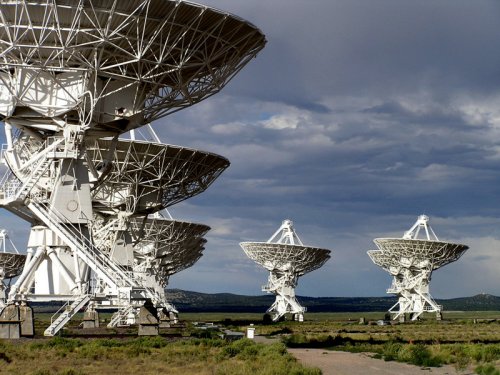
Another major goal of the LHC is to search for physics beyond the Standard Model, in particular for signs of supersymmetry or SUSY – an even more general symmetry of nature that treats matter and force particles as two sides of the same coin. SUSY would not just unify the electromagnetic and weak interactions, but would also bring the strong nuclear force and even gravity in a single framework. If it is real, there should be a host of weird new “sparticles” waiting to reveal themselves in the LHC collisions.

Boys and toys

Designing and building the LHC – for which the total cost is €6.3bn – is the responsibility of Lyn Evans. When asked to describe the extent to which the job is taking over his life as switch-on draws near, the 61-year-old Welshman looks as if he has not understood the question. “For the past 13 years the LHC has been my life,” he exclaims, adding that he is relieved to see the bright blue accelerator finally take shape in its tunnel. Evans has nursed the LHC through numerous difficulties, notably problems with the cryogenic system that delivers liquid helium to the superconducting magnets in order to keep them at a chilly 1.9° above absolute zero. But he is confident the machine is on track for a 2007 switch-on.

The main task now is to get all the magnets from Chohan’s test facility safely connected up inside the LHC tunnel. In addition to the 1232 dipoles, which will bend the protons around the ring in opposite directions, there are also thousands of quadrupole, sextupole, octupole and numerous other corrector magnets that will allow the beams to be focused and manipulated. Since it is far too risky to deliver the magnets directly to each point around the ring, they instead make a short journey from the test lab by lorry to a special shaft at the main CERN site via a traffic-light system that Evans can control to minimize the chances of an accident occurring. More than half of the dipoles are in place and, with a 65-strong installation team working 24 hours a day, the job should be finished by the end of March.

Then the real fun begins, if you are an accelerator physicist that is. “The plan is to have beams circulating with an energy of 0.45 TeV each by the end of November next year, with a short data run just before Christmas,” says Evans. “Then we’ll tell the four experiments to switch off so that we can ramp the energy up and get into the record books.” To do this, the LHC will need to produce a collision energy of 2 TeV (1 TeV per beam) in order to beat the current record held by the Tevatron proton–antiproton collider at Fermilab in the US. But in early 2008, after a short winter shutdown, the machine should be ramped to 14 TeV within a couple of months, leaving the Tevatron standing in the dust.

It is vital that you know what you are doing when playing around with such a high-energy beam. “The LHC is the first accelerator ever built that has the ability to self-destruct,” says Steve Myers, who his head of accelerators and beams at CERN. “The stored energy of each beam is equivalent to 100 kg of TNT going off, which could put the machine out of action for months if the protons veer off course.” He quickly adds, however, that the chances of that happening are extremely small thanks to the stringent safety measures that are in place. If things start to go really wrong, for instance, the beams will automatically be sent down two 600 m-long tangential tunnels into a huge graphite block surrounded by some 1000 tonnes of steel and concrete shielding.

“You wouldn’t want to be having your lunch down there when the beam is dumped,” jokes machine operator Roger Bailey, who adds on a more serious note that this area would then remain highly radioactive for many months. Bailey will be one of the people responsible, from the comfort of CERN’s brand new €5m control room, for carefully “threading” the beams around the magnetic fields of the LHC when the first protons are injected from the SPS next year. The downside of such rigorous safety standards, he points out, is that they will make it much harder to tinker with the beam to optimize the performance of the LHC. And anyone who actually attempts the potentially fatal act of eating their sandwiches in the LHC tunnel once the machine switches on will first have to get through security doors at the surface employing the latest iris-recognition technology.

Eyes on the ground

While the LHC steadily takes shape underground, a whole other world of activity is hotting up elsewhere around the CERN site. In fact, on the day Physics World arrived, Jim Virdee and his colleagues on the CMS experiment were about to throw a party. CMS is one of four enormous detectors that will be positioned around the LHC ring where the proton collisions will occur. Their task is to track and measure the hundreds and thousands of particles that will be produced when a quark from one proton strikes a quark from another proton travelling in the other direction, a tiny fraction of which may produce a Higgs or a SUSY particle in the process (see “Expedition to inner space”).

With the CMS project comprising some 2000 physicists from 180 institutes in 34 countries, inviting the collaboration to an impromptu party is no easy task. “The big celebrations will come in due course,” explains Virdee, who is deputy spokesperson for the experiment. “But later today a few of us are going to be marking three recent milestones: closing the detector for the first time; testing the magnet at full strength; and taking cosmic-ray data.” Witnessing the scale of the CMS detector, which is being built in a vast building in France about 10 km away from the main CERN site, it is easy to understand why its creators have something to shout about.

For example, the CMS magnet, which provides a bending field of 4 T in order to allow physicists to measure the momentum of particles, is quite simply the largest ever built. And as one cylindrical segment of the 12,500 tonne detector is slowly rolled back on its air-cushioned feet with a deafening screech, Virdee reels off the convoluted international history of the various pipes, wires and components that make up each concentric layer of the detector. About 80 m beneath the floor on which we are standing lies the huge cavern into which CMS will be lowered in pieces later this year. Here, things are much quieter, with nothing but the sound of tinny French radio echoing off the walls as a few technicians go about their business in the buckets of bright yellow cherry-pickers.

On the opposite side of the LHC ring, just off the main CERN site, the scene in the ATLAS cavern could not be more different. Unlike CMS, the 7000 tonne ATLAS experiment is being assembled directly underground. It already fills so much of the available volume in the cavern that the only way to get a sense of its scale is by watching the puppet-like figures in helmets and harnesses scramble over it from the gantries on the sides.

“It gives me a lot of pleasure to see the detector being built, and it is having a positive effect on the mood of the collaboration,” says ATLAS spokesperson Peter Jenni. “But there is still much to do, and a large part of my job now is devoted to changing the mindset of the collaboration as we move from the construction phase through commissioning to eventual operation.”

Flanking ATLAS are the two “smaller” LHC experiments LHCb and ALICE. Although these have more specific physics goals than CMS and ATLAS, they are by no means less important. LHCb, for example, will study the decay of B-mesons in order to tackle the problem of why matter and antimatter did not immediately annihilate with one another in the Big Bang to produce a universe comprising nothing but photons. ALICE, meanwhile, will allow detailed studies of the strong nuclear force, which will test the non-electroweak sector of the Standard Model, quantum chromodynamics.

It is the two general-purpose detectors CMS and ATLAS, however, that the world will be watching closest when the first proton beams are brought into collision next year. Hundreds of physics analyses in the form of complex computer programs are currently waiting to be let loose on the tens of thousands of gigabytes of data that will stream out of the detectors’ several million read-out channels each day. Many of these will look for specific experimental signatures of a Higgs or SUSY decay, while others are destined to study even more exotic possibilities such as extra dimensions and mini black holes. In order to cope with this data deluge, the LHC requires a completely new computing infrastructure – known as the Grid – which is proving a major challenge in itself.

The rush to analyse the LHC data will also make and break hundreds of scientific careers. While having two independent detectors based on very different technologies is vital to any claim of discovery, the competition between CMS and ATLAS to have their name associated with it could place CERN’s unique open environment under unbearable strain. Indeed, the hunt for the Higgs at the LHC has parallels with the feisty race between the UA1 and UA2 experiments at the SPS to find the W boson two decades ago. When Nobel prizes are at stake, physicists can be pretty cut-throat.

“It is natural that people identify with their experiment, and I think that pushes all of us to do a better job,” says Jenni. “Of course, both collaborations will do their best to be first, and it is clear that there are some personal ambitions, but in the end the credit will – and should – go to CERN. There will certainly not be just a single person associated with a discovery like the Higgs,” he says. But some of those who are closer to the actual analysis teams are less idealistic. “Forget the rivalry between ATLAS and CMS”, one CERN physicist told Physics World, “there will be enough trouble within the collaborations themselves, especially once data start to arrive.”

This is not something that has passed the CERN management by. Head of communications James Gillies is currently working on a strategy with which to deal with a possible Higgs discovery. “The last thing we want to have to do is issue an ‘anti-press-release’ that says CERN hasn’t found the Higgs after all,” he says. Although there are clear scientific procedures in place to deal with the first signs of the Higgs or other particles, Gillies is concerned that a particular institute or even individual might make premature claims of discovery. The trouble is that it could take years after the first signs of a new particle to amass enough data for CERN to make a definitive “five sigma” announcement.

Living the dream

The way the LHC is perceived in the public domain is absolutely crucial, not just for CERN but for the future of particle physics. Indeed, you could argue that the LHC is the biggest gamble that physicists have ever taken. “The LHC is an absolute necessity if we are to take the field further,” says CERN’s director general Robert Aymar. “If nothing new turns up below a [quark–quark] collision energy of 1 TeV, this would be very bad for particle physics, and for humanity.” As Engelen, who is also deputy director general of the lab, puts it: “Seeing nothing at all is what would make the theorists really speechless!”

Almost everybody agrees, however, that the most probable outcome is also the best for particle physics: that something, whatever it is, will turn up. This would make it more likely that the next big collider project currently under consideration – the International Linear Collider, which would enable precision measurements to be made of, say, the Higgs boson – will get the green light. As Aymar points out: “Politicians are not going to back a machine that costs twice as much as the LHC without some hard evidence to go on.”

But such thoughts are far from everyone’s mind at CERN right now. From senior management to summer students returning to their home institutes, the mood at the lab is one of quiet confidence and raw excitement. “The decision to go ahead and build the LHC was taken in 1996,” recalls Aymar. “But if we had to take that decision tomorrow, the outcome would be exactly the same. Without this machine, we might as well dream.”

At a Glance: The Large Hadron Collider

  • Switching on next year, the LHC will guide protons at almost the speed of light in opposite directions around a 27 km underground ring before smashing them into one another with an energy of 14 TeV at four separate points
  • Although 14 TeV is no more than the energy of 14 mosquitoes in flight, it is concentrated in such a tiny volume that the resulting energy density is the highest ever produced in a laboratory
  • The several thousand magnets required to guide and focus the proton beams are currently being connected in a tunnel that lies between 50 and 150 m beneath the Franco-Swiss border and that originally housed the Large Electron Positron collider
  • The protons start out on the main CERN site in “Linac2” before being gradually ramped up in energy by the Proton Synchrotron and then Super Proton Synchrotron (SPS), from where they will be injected into the LHC
  • The protons will then be electromagnetically whipped up to 7 TeV, whereupon hundreds of billions of them will circulate the ring 11,245 times every second
  • Waiting to catch the debris to fly out from the proton collisions will be four exceptionally large detectors: ATLAS, just across the road from the main CERN site; LHCb and ALICE on either side; and CMS some 10 km away
  • The future of high-energy particle physics rests heavily on what is and is not revealed in these detectors in the next few years

The LHC in their own words

“What is nice about CERN is that as a Masters or a PhD student you are listened to and treated as an equal. I feel I can knock on anyone’s door and ask them a question.”
Thijs Versloot
CERN summer student, LHCb

“The LHC is an interesting sociological experiment – you can see people in the collaborations jostling for power. I’d like to work on something less mainstream than the Higgs, to avoid being caught in a huge fight.”
Anne-Sylvie Giolo
CERN fellow, CMS

“I like the idea that I am working on something so huge that it requires many people from lots of different countries. The downside of big collaborations is that there are lots of people competing to work on the sexiest measurements with only a few doing the necessary nitty-gritty stuff.”
Jamie Boyd
CERN fellow, ATLAS

“It’s fantastic to finally see the detector come together and know it has been made possible by the efforts of so many people around the world. It energizes you and builds morale.”
Jim Virdee
Deputy spokesperson, CMS

“The unprecedented scale of the LHC experiments has meant that I’ve had to pick up management skills on the job. Sitting back and thinking about the physics is more of a hobby these days.”
Peter Jenni
Spokesperson, ATLAS

“I am lucky that my career has coincided with a machine like the LHC. Having worked on all of CERN’s major colliders, I should be retiring just after it has reached its design performance.”
Steve Myers
CERN head, accelerators and beams

“There is nothing about my job that I do not like. For me it’s all about strategy. No matter what you are working on you need to have a vision, and to realize that vision you need to find and implement a strategy.”
Robert Aymar
CERN director general

Champagne moments

Anyone who is not a particle physicist is likely to look on in envy at the massive sums being spent on the Large Hadron Collider (LHC) at CERN. It has cost €1.8bn to build the machine’s accelerator, which will whip protons in opposite directions around a 27 km-long underground ring before smashing them together at energies up to 14 TeV some billion times a second. The four giant detectors – including the two general-purpose experiments CMS and ATLAS – have swallowed up several more billion Euros. Then there is the new Grid computer system, which is meant to analyse the vast streams of data spewing out from thee detectors every second. The total bill? A cool €6.3bn, give or take the odd bottle of champagne.

With a little over a year to go before the LHC collides its first beams together, the excitement at the Geneva lab is rising, as this special issue of Physics World reports. Some CERN staff have already been popping open the bubbly to celebrate various milestones being reached. Quite rightly too, as particle physics has been less than thrilling for the last 20 years, the discovery of the top quark and neutrino mass excepted.

But will the LHC be money well spent? Certainly building the new facility has been a magnificent achievement and an outstanding example of international collaboration. It promises to capture the imagination of the public and has inspired industry to overcome many technological hurdles, notably building the huge superconducting magnets that will steer the protons around the ring. Nevertheless, the LHC is still a massive gamble.

Finding the Higgs boson – the particle that is thought to endow all others with mass – would rightly be trumpeted by CERN as a huge success and would almost certainly lead to a Nobel prize. But its discovery would do no more than confirm the Standard Model of particle physics. What particle physicists are really banking on, given the limitations of that model, is evidence of “new” physics.

In particular, many are hoping to see evidence for “supersymmetry” – a symmetry that treats matter and force particles as two sides of the same coin and that could help to unify nature’s four fundamental forces. Its existence would be betrayed by a host of weird new supersymmetric particles. Unfortunately, there is no guarantee of that happening.

But the nightmare scenario is that physicists find nothing that has not already been seen at lower energies. It would force physicists to completely rethink the Standard Model and would almost certainly scupper the plans for the International Linear Collider (ILC) – a proposed machine designed to make precision studies of the Higgs boson. It would also put a question mark over CERN’s own blueprint for the ILC, known as CLIC.

Even if the Higgs pops out nicely from the data, CERN needs a carefully thought out plan to ensure that claims for it are not leaked by one team as it tries to trump another. There is already fierce rivalry between different groups – even between those on the same experiment – to get there first, and the last thing that CERN needs is a dirty priority battle fought out in the media. Still, if the LHC does all that it promises, particle physicists could be in for some vintage times and will deserve to crack open the champagne. But they should not get the bottles out of the fridge just yet.

UK physics department faces closure

In a statement on its Internet site, the UK university said: “While it would be preferable that physics be part of the portfolio of disciplines at Reading, budgetary constraints mean that it is not practicable to strengthen the Department as much as would be necessary”. However, the university expects some aspects of physics teaching to continue in support of related disciplines such as meteorology, environmental science, soil science, systems engineering, archaeology, nano-science and physical chemistry.

The announcement came as a shock to Reading’s physicists because a review completed in March, 2006 concluded that the department should remain open and that three new academic members of staff should be appointed.

The call to close the 33-member department has come from the University’s Senior Management Board. The final decision will be made by University Council in November. Reading has already closed several other departments in order to cut costs.

The Institute of Physics (IOP), which promotes the interests of physics and physicists in the UK, has been critical of the closure plan. The IOP blames this and other closures on inadequate funding and the fact that incoming students are not choosing physics. “Funding follows student numbers and so the future of Britain’s science base rests on the university choices of sixth-formers” said the IOP’s science director, Peter Main.

IOP president Robert Kirby-Harris added, “Measures are in place to try to increase further student numbers and there is some evidence that they are starting to work – closing a department now would seem to be short-sighted and sends out the wrong messages”.

Physicist proves it’s location, location, location

Techniques originally developed to study magnetic systems are being used in Lyons, France to help merchants find suitable locations for their shops.

Pablo Jensen had been modelling nanostructures for 15 years before he grew tired of it, deciding instead to adapt his skills to town planning. “That was four years ago,” he said, having recently assumed a position at the Institute of Complex Systems in Lyons, France. “I was having dinner with a friend, and we began to discuss the way that towns are laid out. We noticed that, for example, all the furniture sellers are in the same neighbourhood, whereas all the bakeries tend to be homogenously distributed. I wanted to try to quantify it.”

This might seem like an unlikely motivation for a research study, especially for a physicist, but it has in fact borne some rather interesting conclusions. In his paper (Phys Rev E 74 035101) Jensen has set about creating links between all retail locations, and has then attributed them ratios based on how much they attract or repel each other — in other words, whether one type of retailer is more or less likely to have another type existing within a close radius. Jensen has chosen this radius to be 100 metres, the average distance a person is willing to walk from store to store when shopping.

“Actually, the results were not affected greatly by changing the radius from 50 to 150 metres,” explained Jensen. “Of course, putting the radius equal to one metre messes up the results, and the model would probably not work in the US, where people are more likely to drive between locations.”

Once these data were calculated, he could then submit them to an algorithm based on the “Potts model” — an unlikely choice considering its normal application of describing interacting spins in a magnet. It just so happens, however, that a magnet provides an excellent analogy because aligned spins (those that attract) naturally cluster into homogenous domains to minimize free energy. The algorithm encourages the retail outlets into the same structure, but instead of minimizing the free energy, it maximizes the “satisfaction” so that each store is in a group where they are all attracted.

From an input of 8000 locations divided into 55 types of retail outlet, the algorithm judged five groups as necessary for optimum overall satisfaction. An initial glance down the list reveals few surprises: group four, for instance, includes “jewellery”, “textiles”, and “clothing” — stores that would predictably be in the same area. However, a closer look unearths some more unusual combinations, such as “make-up/beauty treatment” and “power laundries” together in group one.

“The self-negative interaction is easy to understand,” said Jensen. “Bakeries next to each other would be unfavourable. On the other hand, second hand shops tend to aggregate together.”

Having quantified the retail locations in this way, Jensen could then extract a “Q value” which rates the surrounding environment on its potential for a new store. The Q values vary between different store types — a promising site for an opticians, for example, may not be so promising for a hat shop.

Jensen is currently working with the Lyons Chamber of Commerce to help aspiring businesses to find favourable locations. But applying the model to other towns will not be as simple. “The model could be used in other homogeneous towns like Lyons, such as London or Brussels. But smaller, inhomogeneous towns with longer distances, different geography, et cetera, are much more difficult to analyse.”

Quantum encryption sets long-distance record

The work was done by researchers in the US, based at the Los Alamos National Laboratory (LANL) in New Mexico and the National Institute of Standards and Technology (NIST) in Boulder, Colorado (New Journal of Physics 8 193). The previous record of 122 km was set by researchers at Toshiba’s Cambridge Research Laboratory in April last year.

Quantum key distribution (QKD) allows two users (often posited as ‘Alice’ and ‘Bob’) to share a random ‘key’, which they can then use to encrypt and transmit information securely. This information is sent in the form of photons and an eavesdropper (‘Eve’) is unable to spy on the communication without disturbing the transmission and revealing her actions. The technique offers a ‘holy grail’ of completely secure communications guaranteed by the laws of quantum physics.

“We have used ultra-low-noise transition-edge sensors to create a distributed key that is secure against standard attacks over 184.6 km,” Danna Rosenberg, one of the researchers at LANL told physicsweb.org. “Demonstrating longer distances is important in terms of the separation of base stations, which may be needed to boost signals and enable users who are far away to communicate securely with each other.”

According to the researchers, the key technology that enabled the researchers to break the record was NIST’s Transition-Edge Sensor (TES). The TES, also used in astrophysics to detect faint light from stars, detects 65% of received photons, compared to 20% achieved by conventional commercial photodiodes. This means the researchers could detect single photons at a high efficiency and with a zero dark count (signal that appears even when there is no light incident on detector). “When the TES detectors are used for quantum key distribution, it results in more secret bits at longer ranges than conventional detectors,” said Rosenberg.

However, in QKD distribution, success is not only measured by transmission distance, but also security. The LANL/NIST 184.6 km record was set at a higher average number of photons per pulse than the previous record of 122 km. This leads to an increased probability of a laser pulse containing more than one photon; when this happens an eavesdropper hypothetically has a better chance of intercepting a duplicate photon in a pulse without being detected. This is known as a photon-number-splitting (PNS) attack.

Nevertheless, the LANL/NIST team achieved 148.7 km at the same average photon number as the Cambridge group. In addition, the LANL/NIST team generated a key that is completely secure against such PNS attacks over 67.5 km, beating the previous record of 50.6 km.

The research group’s next target is to exploit the recent development of decoy state QKD, which involves varying the intensity of the transmitted photons to create ‘decoys’ that will reveal any attempt by Eve to intercept the transmission and protect the key from PNS attacks. “Our next series of experiments will explore decoy-level quantum key distribution and the increases in security and range enabled by the use of decoy levels combined with the transition-edge sensors,” added Rosenberg.

Nobel prize shared for cosmic microwave background studies

The work was carried out in the 1990s using data from NASA’s Cosmic Background Explorer (COBE) satellite. John Mather coordinated the entire process of analysing the COBE data and also had primary responsibility for the experiment that revealed the black-body form of microwave radiation. George Smoot was responsible for measuring the small variations in the temperature of the radiation.

Cosmologists believe that cosmic microwave background radiation was created about 13 billion years ago — immediately after the Big Bang. At this time the Universe was a very hot body (3000 K) that emitted radiation with a distinct temperature signature – called the black-body spectrum. This radiation still exists today as cosmic microwave background radiation.

Mather determined that this radiation still bore the black-body signature, albeit at a much lower temperature (2.7 K) due to the ongoing expansion of the Universe. He also observed that the black-body radiation was very nearly the same throughout the Universe (isotropic). These two observations offer the first clear insights into the origin of the Universe and confirm the Big Bang hypothesis.

When Smoot analysed the COBE data he discovered tantalizing irregularities — or anisotropy — in the background radiation that have shed light on one of the most intriguing mysteries of cosmology: how and why did structures such as galaxies and stars form out of the homogeneous Big Bang? Irregularities present just after the Big Bang could have evolved over time into the galaxies of today.

John Mather was born in 1946 and received his PhD in physics from the University of California in Berkeley, CA, USA. He took a postdoctoral position at the Goddard Institute for Space Studies in New York for two years, during which time he led the proposal efforts for the Cosmic Background Explorer. In 1976 he assumed the position of study scientist, later to become project scientist, at the Goddard Space Flight Centre, where he performed his groundbreaking work on microwave radiation. Since 1995 has has also been senior project scientist for the infrared James Webb Space Telescope, an observatory intended as an improvement to the Hubble telescope.

Born in 1945, George Smoot is Mather’s elder by just a matter of months. After completing his PhD in physics in 1970 at the Massachusetts Institute of Technology in Cambridge, MA, USA, he went on to become a researcher at the University of California, where he began to look for evidence of the big bang. He has worked there ever since, and is currently making the final touches to a next-generation experiment called the Planck Surveyor, which will try to determine the high-energy physics of the early universe when it is launched in 2007.

The Nobel Prize in Physics is awarded annually by the Royal Swedish Academy of Sciences.

Doughnuts cause stars to gain weight

To shed light on the mystery of how massive stellar bodies form, researchers used the Very Large Array (VLA) radio telescope in New Mexico to study a young star (G24 A1), twenty times more massive than the Sun and situated about 25 000 light years away (Nature 443, 427).

According to theory, once a forming star has reached ten times the mass of the Sun, the intense radiation from its core should block the addition of any further material. As a result, although we understand the processes leading to the formation of smaller stars relatively well, the same cannot be said of massive stars.

There is a mystery as to whether massive stars form in a similar way to low-mass stars or whether a radically different processes are taking place, such as the merging of mid-sized stars.

Now, Maria Beltrán at the University of Barcelona and colleagues in Italy and Hawaii have found clues suggesting that heavy stars form in a comparable way to low-mass stars. “We have observational confirmation that massive star formation could be a scaled-up version of the process leading to the formation of solar-type stars,” Maria Beltrán told physicsweb.org. “Non-spherical accretion is a plausible way for stars with more than 10 times the mass of the Sun to accumulate mass.”

Low-mass stars like our Sun, are thought to form due to the collapse of a rotating gas cloud. This leads to the emergence of an accretion disk through which material is channelled into a central protostar. Beltrán and colleagues’ observation of the young massive star suggests that it could form by the ‘non-spherical accretion’ of material from giant toroidal (doughnut-shaped) gas cloud encircling it.

“For the first time, we have detected simultaneously in the same massive object material inward, material outward and rotation around the central massive star,” said Beltrán. “Besides rotating, the surrounding material is also falling into the central star.”

The researchers studied the emission of ammonia gas, at a frequency of 23 GHz, around the star; by detecting a Doppler redshift the team concluded that the material was falling towards the protostar (in this case, toward the observer). The team also found a blue-shifted absorption signal, indicating some material is also flung outward along the toroid’s rotation axis. At the same time, stellar radiation is able escape in beams at the star’s poles.

However, according to the team, the in-falling material could still be deflected into the outflow instead of being accreted – and as such, a direct observation of accretion is a challenge for the future. “There is still much more to do before we can have a complete picture of what is happening during the formation process,” said Beltrán. “We will continue to study G24 A1, and similar objects with even higher masses, in order to improve our understanding.”

BECs confound at higher temperatures

On the surface, the definition of a Bose–Einstein condensate (BEC) appears resolutely clear: when a mass of bosons is cooled below a critical temperature, there is a phase transition wherein a significant portion of the bosons collapse into the first quantum state. Therefore it might come as a little surprise to find doubt surrounding the latest two papers to demonstrate it.

The first of two papers on BECs published in Nature this week describes experiments performed in France and Switzerland that created half-light, half-matter quasiparticles in a semiconductor using a focused laser (Nature 443 409). These so-called “polaritons” are bosons each made up of an electron-hole pair (itself called an “exciton”) and a coupled photon. By increasing the density of polaritons, the team were eventually able to observe the macroscopic polarization and spatial coherence that are the tell-tale quantum signs of a BEC.

The experimental work was done by Jacek Kasprzak and colleagues at the Université J. Fourier-Grenoble and Benoit Deveaud-Plédran and co-workers at Ecole Polytechnique Fédérale de Lausanne (EPFL).

“We were able to show in previous studies that a large number of polaritons could be accommodated in the same state, while still keeping their bosonic character,” recalls Deveaud-Plédran. “This was not at all obvious in the beginning. When you raise the density of composite bosons, they have a tendency to dissociate into the constituent particles.”

This study is a breakthrough because the BEC could be witnessed at the cryogenically-obtainable temperature of 19 K, made possible by the extremely small mass of polaritons. They are a billion times lighter than rubidium atoms, which were the first atoms to be cooled to a BEC in 1995. Moreover, the authors claim this is the first true example of a BEC in the solid state.

Unfortunately, two inescapable practicalities of using these quasiparticles will have left some overly-shrewd physicists fidgeting in their seats over the absolute definition of a BEC. First, they would say, the system was confined to two-dimensions, which means that fluctuations would push regions out of phase with each other. Second, the polaritons live for only the order of a picosecond, which reduces the likelihood of thermal equilibrium being reached.

But Deveaud-Plédran happily dismisses both assertions. “BEC is forbidden only in two dimensions for an infinite system without disorder. We have a finite system with disorder, so standard BEC is allowed. And despite the quasiparticle nature and very short lifetime, we have shown that we are able to get a thermal equilibrium.”

Room temperature BEC
In the other paper, a group led by the Institute for Applied Physics at the University of Münster in Germany has sparked interest by declaring the first room-temperature BEC (Nature 443 430).

“Usually, it is very difficult to create an equilibrium density of particles at high transition temperatures,” explains Sergej Demokritov of Münster. “So until now the main approach has been to decrease the temperature below the transition temperature. Instead, we increase the density of particles for several microseconds to increase the transition temperature dramatically.”

In this instance, the quasiparticles are “magnons” – the term used for packets of magnetic energy, in the same way “photons” are deemed packets of light energy. Demokritov and his team pumped magnons into solid films of the compound yttrium-iron-garnet using microwaves. When the pumping reached a critical rate, they could watch out for the formation of a BEC by monitoring the chemical potential of the magnons.

According to Demokritov, “unambiguous” proof of a BEC was found when the chemical potential reached that of the lowest magnon state. “If the lifetime of the particles is much longer than the time they need to scatter with each other, [thermal equilibrium] condensation is still possible. In our case, the ratio between the lifetime and the scattering time is at least above 30.”

The argument seems to fold into a question of relative timescales. If the quasiparticles interact with each other much more quickly than they decay, it is justifiable to predict the formation of a BEC. And both groups’ experiments easily satisfy this criterion. “It’s a bit like going from valves to transistors,” says Deveaud-Plédran. “The effect is the same, but the size, the temperature and the practicability differ a lot.”

Japan launches satellite to study the Sun

Solar flares are believed to occur when magnetic fields generated deep within the Sun become entangled and then break apart. This process releases huge amounts of radiation and charged particles, which can travel in the solar wind and reach the Earth in as little as 30 minutes. They are followed a few days later by vast quantities of high-energy particles from coronal mass ejections – explosions that occur on the surface of the Sun and are triggered by the solar flares themselves.

Solar flares and coronal mass ejections are dangerous because the particles they release can alter the properties of the Earth’s ionosphere, disrupting short-wave radio signals that are normally reflected back to earth from this region. X-rays from solar flares can also increase the drag on low-orbiting satellites and slow them down. Worst of all, coronal mass ejections can accelerate particles in the Earth’s magnetosphere, setting up strong electric currents, which can zap electronic devices on satellites and damage power supplies on the Earth’s surface.

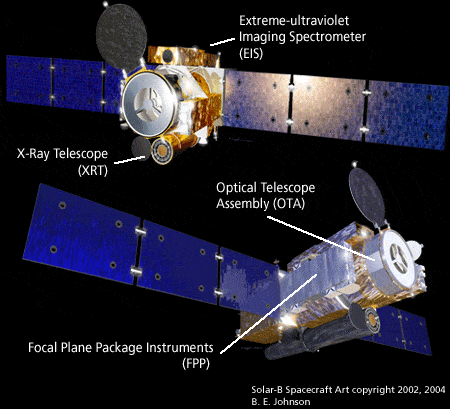
Solar-B is led by Japan’s space agency (JAXA), with additional support from NASA, the UK’s Particle Phyiscs and Astronomy Research Council, and the European Space Agency. It has three instruments, each designed to measure different aspects of the Sun’s behaviour. The first is a lightweight optical telescope, which can resolve features just 150 km across and can measure the Sun’s magnetic field in 3D. The second instrument is an ultraviolet spectrometer that will take images of the corona – the luminous plasma “atmosphere” of the Sun – helping scientists to relate the movement of hot gases to the underlying magnetic fields. The craft also contains an X-ray telescope, which will observe and record the emissions of the corona at different temperatures.

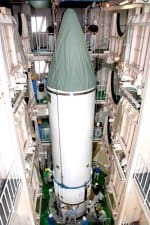
Data from the $210m craft will start arriving relatively quickly, with “first light” from the various pieces of equipment arriving between 33 and 37 days after launch. The “initial science phase”, when the first important data will be received, will take place some 50–60 days after launch. The satellite itself will circle the Earth in a special “polar orbit” that will let it take data for nine months every year over a planned mission lifetime of three years.

“Solar flares are fast and furious – they can cause communication black-outs at Earth within 30 minutes of a flare erupting on the Sun’s surface,” says Louise Harra, the UK Solar-B scientist based from the Mullard Space Science Laboratory at University College London. “It’s imperative that we understand what triggers these events with the aim of being able to predict them with greater accuracy.”

Copyright © 2026 by IOP Publishing Ltd and individual contributors