

Plasmas move into dentistry

Plasmas are ionised gases that are routinely used in materials processing and the semiconductor industry. Unfortunately, the temperatures in most plasmas are so high that they would immediately kill living cells, which has ruled them out for biological applications. Three years ago, however, physicists at the Eindhoven University of Technology in the Netherlands developed a plasma needle that works at room temperature.

Goree and colleagues have now used an almost identical device to kill a colony of S. mutans bacteria that were grown on a glass Petri dish. The device consists of a sharp tungsten needle 5 centimetres long and 0.3 millimetres across placed inside a glass tube through which helium gas is passing (figure 1). When a high, radio-frequency voltage is applied to the device, the electric field at the sharpest point of the needle is so high that it ionises the helium gas leaving the tube to produce a plasma. But because the plasma region is very small — less than 1 millimetre across — its temperature remains low enough to touch.
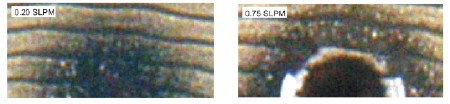
The needle produces a circular or ring-shaped “killing spot” roughly 5 mm in diameter, the precise shape of which depends on how fast the gas is flowing (figure 2). The researchers say that oxygen and hydroxide radicals in the plasma, which survive for less than a millisecond, are responsible for killing the bacteria. If left to grow unchecked, S. mutans can cover the surface of your teeth and eventually make holes in them.

“[Using a plasma needle would be] a significant advance over mouthwash, which uses long-lived bactericidal chemicals that linger in the mouth,” explains Goree. “Here, we generate short-lived radicals within a millimetre of the surface to be treated that kill the bacteria.” The team would now like to identify whether it is the oxygen or hydroxide radicals that are most responsible for destroying the bacteria.
COBE team wins cosmology prize

Launched in 1989, the COBE satellite was designed to measure minute variations in the cosmic microwave background (CMB) in different parts of the sky. The COBE team, led by George Smoot at the University of California at Berkeley and Chuck Bennett at NASA’s Goddard Space Flight Center, was the first to detect these variations in 1992.

Subsequent experiments like BOOMERANG, MAXIMA and NASA’s Wilkinson Microwave Anisotropy Probe (WMAP), which owe much to COBE, have since given cosmologists a new view of this temperature anisotropy. These measurements showed that the temperature variations were the “seeds” of the intricate large-scale structures, like stars and galaxies, which exist everywhere in the present-day universe.

The CMB was originally created when the universe was about 380,000 years old. Before this time, space was filled with a hot plasma of electrons and light nuclei, which meant that light could not travel very far without being scattered. But as the universe expanded, the plasma cooled enough to allow neutral atoms to form.

This “decoupling” of matter and radiation suddenly enabled photons to travel across space unimpeded, their wavelengths being stretched over time to produce a faint glow of radiation in the microwave region that we can detect today. The fact that the CMB has a perfect black-body spectrum with a temperature of around 2.73 Kelvin is one of the key pieces of evidence for the Big Bang

The Gruber prize is worth $250,000, half of which is awarded to project scientist John Mather, who was COBE’s project scientist, with the rest being divided between the other 18 team members. The Peter Gruber Foundation, which was founded in 1993, supports five international awards, in cosmology, justice, genetics, neuroscience, and women’s rights.

Galaxy survey fails to add up

Gamma-ray bursts (GRBs) are the most energetic explosions in the universe and happen when a massive star undergoes a supernova explosion. Quasars — bright sources of electromagnetic radiation — are thought to be powered by the accretion of material onto supermassive black holes in the centres of distant galaxies.

Prochaska and Prochter obtained their surprising result by simply counting the number of galaxies towards gamma-ray bursts and quasars. They did this by studying more than 50,000 spectra released by the Sloan Digital Sky Survey for galaxies in the direction of quasars and by using data from various ground-based telescopes for galaxies in the direction of GRBs. The data set for these galaxies was much smaller because only 15 GRBs were analysed.

The two astronomers found strong absorption signatures indicating the presence of galaxies along 14 out of the 15 GRB sightlines. When the data were “normalised” for the total number of GRBs and quasars searched, the team found that there were about four times as many galaxies in the direction of GRBs than towards quasars.

While the researchers admit that they don’t why this, they have already ruled out several possible explanations. These include: some quasars being hidden by galactic dust, which would skew the results; the absorption lines in the GRB spectra being from gas ejected by the bursts themselves and not from gas in intervening galaxies; and intervening galaxies possibly acting as “gravitational lenses”, so that galaxies towards GRBs look brighter than those towards quasars.

The result has also puzzled the wider astrophysics community. Charles Steidel of Caltech, for example, still suspects that it might have something to do with material that is shot out at very high velocity in the immediate vicinity of GRBs themselves.

Prochaska and Prochter would now like to increase the number of GRBs they have studied. Luckily, this will be possible with an ongoing NASA mission called Swift that is detecting about 100 GRBs a year, of which 10 to 20 will be useful for this study.

Atomic clocks feel the heat

Two teams of physicists in the US and Australia have now calculated the tiny shift in the atomic transition frequencies of a caesium atom, which is used to define the second, due to blackbody radiation. Although this shift has been worked out before, its value has varied by about 10% between different groups’ estimates, introducing a sizeable uncertainty in the output of atomic clocks.

The second is defined as 9 192 631 770 periods of the radiation corresponding to a transition between two hyperfine energy levels in a caesium-133 atom. The current generation of caesium clocks boast accuracies of one part in 1015 — equivalent to an error of less than one second in 30 million years. However, this accuracy could be improved by at least an order of magnitude if the tiny shift in the caesium levels due to thermal or black body radiation could be accurately determined. Although the shift could be completely removed by cooling the clock to absolute zero, this is impractical for most applications.

Kyle Beloy, Ulyana Safronova and Andrei Derevianko of the University of Nevada, and, independently, Elizabeth Angstmann, Vladimir Dzuba and Victor Flambaum at the University of New South Wales, have found that the discrepancies between previous estimates of the black-body shift are due to “intermediate continuum states” in the caesium atom, which were not taken into account.

Derevianko’s team combined first-principle methods for calculating atomic structure with high-accuracy experimental data to achieved a fractional uncertainty of 6×10-17 for the black body radiation coefficient (Phys. Rev. Lett. 97 040801). This value improves the accuracy of clocks operated at room temperature by an order of magnitude, making them as accurate as those operated at 0K. Meanwhile, Flambaum’s group reached similar conclusions using first-principle calculations alone, applying Planck’s radiation law and perturbation theory to calculate the energy shift of each component of the hyperfine structure in caesium (Phys. Rev. Lett. 97 040802).

Together, the results pave the way for making atomic clocks more accurate, and also for more precise studies of how the fundamental constants of nature vary with time.

Astrophysicist and space pioneer dies

Born on 7 September 1914, Van Allen graduated from the Iowa Wesleyan College in 1935 and then received a Masters and PhD from the University of Iowa. In April 1942, after a spell at the Carnegie Institution of Washington, he moved to the Applied Physics Laboratory at the Johns Hopkins University in Maryland, where he helped develop anti-aircraft technology for use on board ships. Later that year he was commissioned as an officer in the US Navy, field testing his anti-aircraft technology in the Pacific Ocean.

After the war Van Allen started work on high-altitude research, first at the Applied Physics Laboratory and, after 1950, at the University of Iowa. He and his graduate students used the university’s football field to launch rockets designed to carry out cosmic-ray experiments above the atmosphere, and in 1953 discovered electrons believed to be responsible for the northern and southern lights. Then in 1955 Van Allen and a number of other scientists developed plans to launch a scientific satellite during the International Geophysical Year in 1957–58. Following the success of the Soviet Union’s Sputnik 1 satellite, the Explorer spacecraft went into orbit on 31 January 1958.

Among Van Allen’s instruments was a Geiger counter that showed regions of intense radiation surrounding the Earth. These regions consist of high-energy charged particles that are trapped in the Earth’s magnetic field and follow roughly helical paths. The lower belt, which exists between about 1000km and 5000km above the equator, contains electrons and protons, while the upper belt, from 15000km-25000km above the equator, consists largely of electrons. This discovery marked the birth of magnetospheric physics, a field that would subsequently be studied by hundreds of scientists across the world.

Following the success of Explorer 1, Van Allen was involved in a number of major space projects. These included the first four Explorer spacecraft, the first Pioneer probes and several Mariner spacecraft. He remained at the University of Iowa until his retirement in 1985, having headed the university’s physics department since 1951. He continued with research following his retirement, continuing to monitor data from Pioneer 10 and working on the Galileo probe to Jupiter. He was a teacher and mentor to large number of doctoral, graduate and undergraduate students, and received many awards. These included the US National Medal of Science and the Royal Swedish Academy of Sciences’ Crafoord Prize.

Where did all the lithium go?

Lithium — together with hydrogen and helium — is one of very few elements to have been synthesised in the Big Bang. However, experimental observations have shown that the amount of lithium in the atmospheres of the universe’s very oldest stars is about one third of the value predicted by recent analyses of the fluctuations in the cosmic microwave background. Researchers have therefore not been sure what is wrong — theory or observation.

Korn and co-workers may now have an answer to this question. Using a spectrometer on the European Southern Observatory’s Very Large Telescope in Chile, they studied 18 stars in a distant globular cluster called NGC 6397, which formed roughly a few hundred million years after the Big Bang. Globular clusters are useful to study this problem because the stars are all the same age and had the same initial chemical composition, but are at different stages of evolution.

By comparing their observations with theoretical models of how nuclei behave in the atmospheres of stars, the researchers conclude that lithium diffuses into the interiors of stars over time, where it is burnt up at temperatures of over 2.5 million Kelvin. Calcium, iron and other “metallic” nuclei, in contrast, can survive the trip through the stellar interior.

The researchers estimate that these stars originally contained 78% more lithium as we observe today. In other words, the initial amount of lithium agrees with predictions from Big Bang nucleosynthesis. “This finding restores confidence in standard big-bang nucleosynthesis, quantitative spectroscopy and sophisticated stellar evolution models,” the authors say.

Although Korn is happy that the work resolves what he calls “one of the most distressing discrepancies we had in connection with the Big Bang theory”, he warns that researchers will have to be more careful when interpreting the spectra of old, unevolved stars “because the elemental abundances they show us are not eternal, but a function of time”. He also says that the onus is now on theorists to fully explain why the lithium behaves in this way.

Dirac medal for atomic physicist

Apart from his “seminal” work in proposing methods to use trapped ions for quantum computing, Zoller is also honoured by the ICTP for “describing how to realize the Bose-Hubbard model and associated phase transitions in ultracold gases”. The Bose–Hubbard model is commonly used to describe how bosons behave in an “optical lattice” — a regular, 3D crystal-like potential created by a web of interfering laser beams. Zoller has been a key figure in the burgeoning field of quantum information, having, for example, devised several protocols for quantum communication based on entangling two or more ultracold atoms.

The Dirac medal, worth $5000, has been awarded every year since 1985 by the ICTP, which is based in Trieste, Italy. Nobel laureates and winners of the Fields medal or Wolf prize are not eligible for the award. Dirac was a close friend of the ITCP form the centre’s early days in the early 1960s until his death in 1984.

It’s raining again

Meteorologists think that rains starts falling suddenly from cumulus clouds because they are formed when the air in the atmosphere is rising. These convection currents lead to small-scale turbulent motion that encourages microscopic water droplets to coalesce and form raindrops. Indeed, computer simulations have shown that the rate of collision can dramatically increase when the intensity of turbulence exceeds a certain threshold. Unfortunately, no-one has been able to explain why the rate of collision should suddenly rise so mysteriously in this way.

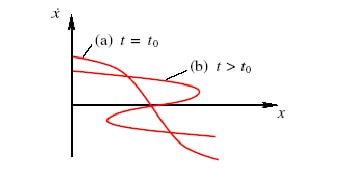
Now, however, Michael Wilkinson, Bernhard Mehlig and Vlad Bezuglyy from the Open University and Göteborg University think they have an answer. They have developed a simple analytical theory of the movement of particles in random flows. But because faster-moving droplets can overtake slower droplets, the theory predicts the formation of “fold caustics”, in which different droplets at the same position in space can end up moving at different velocities (see figure).


This relative motion encourages collisions, the researchers say. Indeed, the theory predicts a sudden increase in collision rate when the “Stokes number” — a dimensionless parameter that contains information about the turbulence in the cloud and the radius of the droplets — rises above a threshold value. “If a sufficiently large part of the rain cloud has a high enough turbulence intensity, then our theory explains why rainfall can start in a matter of minutes — as observed in everyday life,” says Mehlig.

Moon’s bulge linked to early orbit

The Moon’s orbit is fiendishly difficult to explain, moving as it does around a rotating Earth, which together form a “double-planet” system that orbits around the Sun. It is a classic example of a three-dimensional, gravitational three-body problem. The Moon’s peculiar bulge — to which the French mathematician Pierre-Simon Laplace first drew attention in 1799 — makes the problem even more complex.

Garrick-Bethell and colleagues now think that the strange bulge can be accounted for if the Moon moved along a very different orbit than it does now (see figure). Based on simple classical mechanics, rather than computer simulations, the MIT team suggest that when the Moon was just 100–200 million years old it was less than 30 Earth radii away, compared to about 60 Earth radii now.

As well as being much closer to Earth, they also believe the Moon had a much more elliptical orbit at that time. They calculate that its “eccentricity” — a measure of how much an ellipse differs from a circle — was 0.61, compared to just 0.05 today. (A circle, in contrast, has an eccentricity of zero.)

Moreover, they believe that the Moon may have been spinning much faster than it is today and behaved a bit like Mercury does today — rotating three times about its own axis for every two revolutions about the Sun (a so-called 3:2 resonance). Now, of course, the Moon spins just once for every revolution around the Earth, which is why we can never see its far side. The team also showed that the bulge can be explained by a 1:1 resonance with an eccentricity of 0.49 and semimajor axis of 22.9 Earth radii.

According to Garrick-Bethell’s team, the proximity of the Moon to the Earth, together with its elliptical orbit, were ideal conditions for the bulge — which was still forming as the Moon cooled — to “freeze” into its present form. This explanation also ties in with the most widely accepted theory of the Moon’s origins, which says it was created when a massive Mars-like object crashed into the Earth. In this theory, the Moon formed at about 4 Earth radii and it has been gradually moving away from us at a rate of about 3.8 cm a year ever since.

Superconductor reveals its true colours

Superconductivity is thought to be the result of electrons pairing up with one another to form bosons. The pairs then collapse into a single quantum state via a process called Bose-Einstein condensation and so allow electric current to flow without resistance. In conventional (low-temperature) superconductors, this pairing mechanism has been established using tunnelling spectroscopy, which reveals individual bosonic modes or phonons. But until now, no such boson-mediated electron pairing has ever been observed in high-temperature superconductors.

Seamus Davis of Cornell University in the US and co-workers in the US and Japan have now managed to perform such measurements in the high-temperature superconductor bismuth strontium calcium copper-oxide (BSCCO) for the first time (Nature 442 546). BSCCO becomes superconducting below a temperature of about 95 K. The researchers achieved their results by measuring the energy states in the superconductor on an atomic scale. They did this by placing the tiny metal tip of a scanning tunnelling microscope above the surface of BSCCO and looking at changes in the electrical current passing between the tip and sample as the tip’s voltage was changed.

Davis and colleagues found that the current changed across the sample as the tip was moved by just a few nanometres. The result indicates that the electron-pairing mechanism varies on these tiny scales and that, contrary to conventional wisdom, there is some sort of interplay between the paired up electrons and the crystal lattice, as in low-temperature superconductors (see figures). Researchers have previously suggested that electron-electron interactions or effects connected with magnetic atoms in the material are responsible for high-temperature superconductivity.

The next challenge is to understand what role, if any, this interaction plays in the pairing mechanism of high-temperature superconductivity.

Copyright © 2026 by IOP Publishing Ltd and individual contributors