

Sizing up nanotubes

Single-walled carbon nanotubes have enormous potential as the building blocks in high-speed nanoscale electronics. Nanotubes are essentially rolled up sheets of graphite, and they can be metallic or semiconducting depending on the direction in which the sheet has been rolled up. Metallic tubes can function as nanoscale leads, and semiconducting tubes as nanoscale transistors.

However, when single-walled carbon nanotubes are made, a mixture of both metallic and semiconducting nanotubes is produced. Moreover, the semiconducting tubes are produced in a variety of sizes, each of which have different electronic and optical properties. This is because a nanotube’s band gap, which controls its properties, is determined by the tube diameter. Although methods to separate metallic tubes from semiconducting ones have been developed, no such technique for sorting nanotubes by size was available until now.

Schimdt and colleagues’ method sorts semiconducting nanotubes according to their dielectric constant (a material’s ability to store electrostatic energy), which in turn depends on their diameter. The Rice team began by making a narrow electrified chamber by wiring an array of microelectrodes, which provide a strongly inhomogeneous electric field, to an AC power source and then pumped a solution containing the nanotube mixture into the chamber using a syringe. They researchers observed that the metallic tubes were attracted towards the microelectrode array while the semiconducting tubes remained in the solution. The two types of nanotubes move in different directions along the electric field gradient (which varies from top to bottom in the chamber) because the semiconducting nanotubes have a smaller dielectric constant than that of the solvent, while the metallic nanotubes have a larger constant.

In addition to this, the semiconducting nanotubes were found to float at different levels in the chamber depending on their diameter: smaller diameter tubes have smaller dielectric constants than larger ones and so floated higher in the chamber while the larger tubes moved lower. The researchers were able to spread out the different-sized nanotubes by simply using the flow gradient close to the electrode array surface. They could do this thanks to the general behaviour of fluids in narrow channels: nanotubes that are drawn close to the electrode array move very slowly in the flow while tubes that are pulled in less ride higher, and thus flow faster (figure 1).

“We expect this process will contribute to the application of single-walled nanotubes in next-generation electronic manufacturing, allowing for selected types of nanotubes to be assembled onto circuits directly from solution,” Schmidt told PhysicsWeb.

The Rice team now plans to perfect and scale up its technique. The scientists eventually hope to build an automated system that can run unattended.
LEDs target tumours

It is now thought that 1 in 10 women will develop breast cancer. Although highly efficient scanning techniques, such as mammography — which take X-rays of the breast — exist, these can be uncomfortable and not everyone has access to them. A portable device that both patients and doctors could use would overcome these problems while also providing women at high risk of contracting the disease with a way of regularly examining themselves.

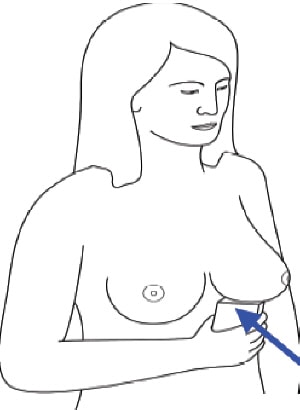
The device consists of a plastic box measuring about 10 cm by 10 cm with a circuit containing two light-emitting diodes (LEDs) and one diode, amplifiers and a microchip. The LEDs emit light in the near-infrared region of the spectrum between about 650 and 900 nanometres. Since water and fat do not absorb light at these wavelengths very much, the light is able to penetrate as deep as 5 cm into the tissue.

The device is then scanned over the breast and can detect a growing tumour by changes to the absorbed signal: when the scanner passes over the tumour, more light is absorbed because there are more blood vessels in growing tumours than in surrounding healthy tissue. So the idea is that the device monitors a fall in intensity in tumour regions. The scanner can also be connected to an audio device so that it emits a loud beeping noise when it reaches a tumour and a quieter one when it passes over healthy tissue. This information can be saved on the microchip for a doctor to analyse later.

The device has already performed well in a small pre-clinical trail on 100 women, correctly detecting cancer in 92% of the patients. This is comparable to MRI and better than mammograms says the researchers.

However, unlike mammography, and other such techniques that detect anatomical changes, the scanner detects physiological changes that occur in the earliest stages of breast cancer. Detecting breast cancer early on is crucial so that it can be treated before it has time to spread to other parts of the body. The device is also suitable for women under 40 who have denser tissue that is difficult to penetrate using conventional techniques. The team is now working on securing funding to develop a clinical prototype and hopes to commercialise the device within three years.

LHC due for 2007 start

The multi-billion Swiss Franc LHC will be the world’s largest particle accelerator, colliding protons at energies of 14 TeV (14×1012 eV) to generate what physicists hope will be a slew of new particles, such as the Higgs boson and so-called supersymmetric particles. An extremely complicated machine to design and build, CERN was caught out in 2001 when it emerged that the LHC was to cost 30% more than originally envisaged and was also running behind schedule. The committee that reviewed CERN’s operations in the light of these overruns recommended that the collider’s start date be put back from 2005 to 2007, and the lab will have been anxious to ensure that this date does not slip any further.

According to the schedule released today, the last of the LHC’s superconducting magnets — which will guide the protons around the 27km ring — will be installed in March 2007 and commissioning of the machine will then start in August of that year. Two months of collisions beginning in November 2007 will allow the accelerator and detector teams to test their equipment with a low-energy (0.9 TeV) beam. High-energy collisions, at 14 TeV, will then start in Spring 2008 and continue “until a pre-determined amount of data has been accumulated, allowing the experimental collaborations to announce their first results”, according to a press release issued by CERN.

Although CERN is upbeat about its progress, stating that “all of the industrial procurement projects are coming to a conclusion, and the main technical challenges have been met”, it nevertheless remains cautious about potential “logistical hurdles”. “With a project such as the LHC, there are bound to be challenges,” says CERN director general Robert Aymar.

New names for Pluto’s moons

First photographed by Hubble in May 2005, Hydra and Nix are about 5000 times fainter than Pluto and roughly two to three times further from the planet than its largest moon Charon, which was discovered in 1978. The more distant of the two new moons (P1) is now known as Hydra, while Nix is the new name for the inner satellite (P2).

Although the members of the team who discovered the moon wanted to call the inner satellite Nyx, that name was already bagged by asteroid 3908. The IAU therefore changed Nyx to its Egyptian equivalent, Nix.

In Greek mythology, Nyx was the goddess of darkness and night and so is a good name for a moon orbiting Pluto — the god of the underworld. Nyx was also the mother of Charon, the sulky old boatman who ferried the dead into Hades. This name therefore alludes to the theory that a giant impact created Pluto’s satellites and that Charon was created from the same material as Nix. Hydra, meanwhile, was a nine-headed serpent monster, loosely related to the fact that moon is orbiting Pluto, the ninth planet in the solar system.

There are further connections too. Just as Pluto’s name begins with the letters “P” and “l” to pay tribute to astronomer Percival Lowell, whose work led to the discovery of the planet in 1930, so Nix and Hydra honour the “New Horizons” mission because they start with the letters “N” and “H”. New Horizons, which was launched in January this year, is the first spacecraft to visit Pluto and its moons. If you can bear any more of this, note that the first letter of Hydra also honours the Hubble Space Telescope.

Chandra solves black hole mystery

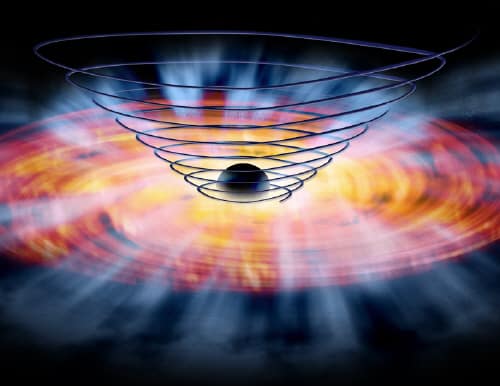
Black holes have such strong gravitational fields that they attract large amounts of neighbouring gas and dust. This material forms an “accretion disk” around the hole – rather like the rings of Saturn. As the disk is compressed, frictional forces encountered by the material make it heat up and emit X-rays, which can be detected by astronomers to provide observational evidence for the black hole.

However, astronomers have long known that gravity alone is not enough to make the gas fall into a black hole. Before it can spiral inwards, the gas must also lose some of its orbital angular momentum (or spin) otherwise it would simply remain in orbit around the black hole indefinitely.

Until now, it was not clear how this angular momentum was removed, but scientists suspected that it was due to magnetic turbulence in the disk. This turbulence generates friction in the disk and drives a wind from it. The wind can carry away the angular momentum and therefore allows matter to fall into the black hole.

Jon Miller of the University of Michigan and colleagues have now produced the first observational evidence that magnetic fields are indeed responsible for this effect. Using NASA’s Chandra X-ray Observatory, the team studied a stellar-mass black hole in the Milky Way called GRO J1655-40 As intergalactic distances go, GRO J1655-40 is relatively nearby at “just” 10,000 light years away. The X-ray spectrum of the black hole shows that the speed and density of the wind from J1655’s disk corresponds to theoretical simulations performed by the team for winds that are magnetically-driven.

According to Miller and co-workers, the new results could have implications for theories on how matter falls onto black holes, how black holes grow and how they affect their environment. The work could also be important for looking at the role of magnetic fields in accretion onto other compact objects, like neutron stars or white dwarfs.

Single-electron counter breaks new record

When it comes to detecting individual electrons, it is important to be able to measure electrons travelling in both the forward and backward directions because many electrons get “backscattered” in a device. Although scientists have recently been able to count single electrons travelling through an individual quantum dot — a nanostructure that confines electrons in 3D — these experiments have been unable to work out which direction the electrons are travelling in. By including two quantum dots, rather than one, the new device gets round this problem.

Built by Toshimasa Fujisawa of the NTT Basic Research Labs in Astugi and the Tokyo Institute of Technology, the new device is able to detect the backscattered electrons as well as those travelling in the forward direction. It consists of two quantum dots and a “point contact” in a semiconductor device (figure 1). A point contact is just a nanosized structure that detects a single electron in the two quantum dots.

Electrons quantum mechanically tunnel between the two quantum dots and, since like charges repel, the electrons are forced to tunnel one by one through the set-up. “Two quantum dots are required in order to identify the direction from which the electron has entered or to which it has escaped,” explain Fujisawa and colleagues.

The current through the point contact shows different values depending on which direction a single electron is travelling in the device — that is, forwards or backwards (figure 2). In this way, the researchers can precisely count single electrons in both directions. Moreover, they can obtain a value for the average current by counting the net electron flow — by subtracting the number of electrons travelling backwards from the number travelling forwards.

The Japan team demonstrated the performance of their device by connecting a single-electron transistor (SET) to the ammeter (figure 3). The current flowing through the SET shows up as peaks and is in the range of a few attoamperes to tens of attoamperes (10-18 amperes). This is the most sensitive measurement of current to date. Furthermore, the current “noise” is more than three orders of magnitude smaller than that in conventional current meters.

“The single-electron counter should be useful for detecting extremely small current in various applications,” say Fujisawa and colleagues. “It should be especially useful for studies on nanoelectronics (which seek to examine electron transport through nanostructures), single molecules, and biological cells.”

According to the team, combining the ammeter with a device that converts photons or electron-spins to electronic charges could also lead to the development of sensitive detectors for light or magnetic fields. Finally, statistical analyses of current noise measured with the device could even identify quantum entanglement, in which quantum information is shared between two separated electrons, the researchers say.

Repulsion binds atoms

To make two objects bind together, you normally need to make them attract one another. Now, however, Denschlag and colleagues have shown that this is not always necessary and that objects can stick together even when there is a repulsive force between them. This is counterintuitive because in free space repulsive pairs cannot exist: if you bring two repelling objects together they will just accelerate away from each other (figure 1).

Denschlag and colleagues have demonstrated that this problem can be overcome by placing the objects in a 3D optical lattice. This is an artificial “crystal” of light formed by the interference of multiple laser beams. The crystal contains potential wells or “dimples” in which atoms can be trapped (figure 2).

The Austrian team began by preparing a sample of ultracold rubidium-87 molecules from a Bose-Einstein condensate (BEC) of rubidium atoms. A BEC is a collection of particles that has been cooled to such low temperatures that all the particles collapse into the same quantum state.

Next, the physicists loaded the rubidium-87 molecules into the optical lattice. By then splitting the molecules in a very controlled way using an applied magnetic field (with the help of a so-called Fesbach resonance), they obtained pairs of atoms that strongly repelled each other. Each potential well contained either one repulsive pair of atoms or none at all.

Denschlag and co-workers observed that even though the pairs of rubidium atoms repelled each other, they still remained together in the potential wells. Moreover, when the researchers tuned the interactions between the atoms to zero (that is, made them non-interacting), the pairs quickly broke up. When the interaction was made repulsive again, this breaking up was suppressed so that the atoms came together once more.

According to the team, the bound configuration is stable because the total energy of the atoms is smaller when they are close together than when they are separate. Put another way, the kinetic energy of the atoms is restricted to certain ranges in the special environment of the optical lattice. In order for the atoms to separate, they would have to enter an energy state that is “forbidden” by quantum physics. This means that the atoms may move together in pairs from one well to the next, but cannot do so on their own (figure 3).

“Our findings are also relevant for current research on how to build a quantum computer, and especially in how to use atoms in optical lattices to model very complicated systems from solid-state physics,” says Daley, who is a theorist. “For example, atoms in an optical lattice can be made to behave like electrons in the lattice structure of solid-state materials.” In the future, these systems could be used as quantum simulators to model materials such as high temperature superconductors and other “exotic” systems.

Dry ice forms ultrahard glass

Carbon is unlike the other elements in group IV of the periodic table because it forms a gas — carbon dioxide — when reacted with oxygen at room temperature. The other group IV elements, in contrast, form solids when combined with oxygen. Silicon, for example, forms crystalline silica (the mineral quartz) as well as amorphous silica glass (one of the main constituents of ordinary window glass), in which the silicon and oxygen atoms form a disordered network.

Although carbon dioxide can be solidified to form “dry ice”, it only does so when squeezed under high pressure or cooled to low temperature. Moreover, dry ice is a molecular crystal, in which the crystal lattice consists of molecules of carbon dioxide rather than of individual carbon or oxygen atoms. A team led by Mario Santoro and Federico Gorelli of the University of Florence and the INFM has now been able to make amorphous carbon dioxide for the first time, in which the individual carbon and oxygen atoms for a continuous, disordered network structure, as in silica.

The researchers made the new a-carbonia by squeezing normal solid carbon dioxide to pressures of around 400,000 to 500,000 atmospheres (or 40 to 50 GPa). Infrared and laser Raman spectroscopy, along with X-ray diffraction, confirmed that the material was no longer made up of discrete molecules but had a disordered network structure.

The new material could have implications for planetary physics because the interiors of gas-giant planets, like Jupiter, contain carbon dioxide under pressures of more than 40GPa. “Another important implication is that mixtures of a-carbonia and a-silica could, in principle be used to make new amorphous glasses that would be very hard and stiff and likely stable at room temperature,” adds Santoro. “Small amounts of these new glasses could be of interest for technology applications like hard and resistant coatings for micro-electronics, for example.”

The team now plans to study a-carbonia at pressures higher than 80GPa to investigate whether or not it transforms into an amorphous material with a carbon coordination number greater than four, that is, each carbon is connected to more than four oxygen atoms. “This is known to happen for a-SiO2 and a-GeO2 and is crucial for providing insights into the fundamental thermodynamics of the whole class of network-forming systems to which a-carbonia belongs,” explains Santoro.

New look for nanocomposites


Silica is widely found in biological systems, where it supports and protects single-celled organisms, such as algae (diatoms). It also exists in the skeletons of some higher animals and even in plants. Spider silk, meanwhile, is a highly flexible material that has a high tensile strength. Moreover, it can self assemble to produce well-defined sheet-like structures.

In their new work, Kaplan and colleagues used genetic engineering to make a cloned spider silk protein that can form films and fibres. By mixing this material with biosilica — from the proteins of diatoms — in aqueous solution, the researchers were able to create a new composite nanomaterial with exceptional mechanical properties. The researchers found that the eliptically shaped silica particles attached themselves to the protein fibres, which as a result became “sticky”.

The silica particles were also found to form in a narrow range of sizes of between just 0.5 and 2 microns in diameter, unlike their natural counterparts, which vary over a broader range from 0.5 to 10 microns. According to Kaplan and co-workers, this ability to control the silica particle size could be used in industrial and biomedical applications, and to make new composites. An example is novel biomaterials for making artificial bone.

The researchers say that their technique might allow the production of other tough materials and composites that are difficult to fabricate using traditional industrial methods. The team will now try to better control the silica morphology to further improve its mechanical properties.

Theorists devise world’s smallest fridge

Van den Broeck and Kawai recently made a microscopic motor consisting of a single chiral, or asymmetrical, molecule. When placed between two reservoirs at different temperatures, this motor automatically moves in one direction to “rectify” the thermal fluctuations. In this way, it transfers heat from the high-temperature reservoir to the low-temperature one.

In their latest work, the researchers propose using an external force to drive the Brownian motor in the opposite direction so that it does the reverse — that is, cause heat to flow from the colder region to the warmer one and so act as a refrigerator. This is much the same way that a household heat pump cools a room.

The researchers’ theoretical model of the new fridge makes use of a chiral rod — which has flat paddles (like those on a paddle-wheel boat) at one end and wedge-shaped paddles at the other — piercing an insulating membrane. If the molecules surrounding the wedges have more kinetic energy than those surrounding the paddles the rod will spin, thereby moving heat from the warm side of the device to the cooler side. If a force is then applied to the rod, the motor runs “backwards” and moves heat in the opposite direction.

Such a fridge could, for example, be used to cool down semiconductor chips, channelling energy away from the centre of a chip to a cooling port by applying a torque to the molecules. It could also be used to cool down nanoscale machines. “Advances in nanotechnology will eventually bring machine sizes down to the limit where thermal fluctuations dominate,” states Kawai. “Our Brownian machine magically exploits this random motion of molecules rather than fighting against it.”

Copyright © 2026 by IOP Publishing Ltd and individual contributors