Theorists devise world’s smallest fridge

Van den Broeck and Kawai recently made a microscopic motor consisting of a single chiral, or asymmetrical, molecule. When placed between two reservoirs at different temperatures, this motor automatically moves in one direction to “rectify” the thermal fluctuations. In this way, it transfers heat from the high-temperature reservoir to the low-temperature one.

In their latest work, the researchers propose using an external force to drive the Brownian motor in the opposite direction so that it does the reverse — that is, cause heat to flow from the colder region to the warmer one and so act as a refrigerator. This is much the same way that a household heat pump cools a room.

The researchers’ theoretical model of the new fridge makes use of a chiral rod — which has flat paddles (like those on a paddle-wheel boat) at one end and wedge-shaped paddles at the other — piercing an insulating membrane. If the molecules surrounding the wedges have more kinetic energy than those surrounding the paddles the rod will spin, thereby moving heat from the warm side of the device to the cooler side. If a force is then applied to the rod, the motor runs “backwards” and moves heat in the opposite direction.

Such a fridge could, for example, be used to cool down semiconductor chips, channelling energy away from the centre of a chip to a cooling port by applying a torque to the molecules. It could also be used to cool down nanoscale machines. “Advances in nanotechnology will eventually bring machine sizes down to the limit where thermal fluctuations dominate,” states Kawai. “Our Brownian machine magically exploits this random motion of molecules rather than fighting against it.”

Shaking causes aftershocks

Earthquakes occur as a result of the pressure that builds up between continental plates moving relative to one another in the Earth’s crust. These primary quakes then generate large numbers of aftershocks — secondary shocks that can occur at some distance from the earthquake’s epicentre and also up to a day or two later. Until now, scientists believed that it was changes in the “static stress” brought about by an earthquake that was responsible for its aftershocks since it seemed that only this mechanism could generate aftershocks that take place significantly after the main quake. But Felzer and Brodsky have concluded this is not the case.

The researchers looked at data on the precise locations of thousands of magnitude 2 to 6 earthquakes that occurred in Southern California between 1984 and 2002. They found that the number of aftershocks drops off steeply with increasing distance from the main shock, up to a distance of 50km. More precisely, they found that the frequency of aftershocks decays with distance as a single inverse power law with an exponent of around -1.35. They say this smooth trend means a single triggering process operates over the entire range, and that because static stress is negligible at distances approaching 50 km “dynamic stress” must be the culprit. They also point out that seismic waves also decay quickly with distance following a power-law relation.

The results could also have implications for predicting where aftershocks will occur once an earthquake has started say the researchers: “One of the key predictions from our studies is that the probability of having an aftershock is proportional to the amplitude of the shaking,” explains Brodsky. “So if you know the amplitude of the seismic waves coming in you can, in a probabilistic sense, predict whether or not there’s going to be an aftershock at a given site.”

Milky Way arms pinned down

Although we know that the Milky Way is a spiral galaxy, its precise shape is difficult to determine because the Sun is imbedded in the galactic disk. This renders optical methods ineffective at distances larger than a few tens of thousands of light years due to the absorption of light by dust. Electromagnetic radiation at radio wavelengths, however, is not affected by this absorption and can therefore allow astronomers to “see” through the disk. Such radiation is emitted in the hyperfine atomic transitions of hydrogen atoms, which are distributed throughout the galaxy and therefore enable researchers to trace the Milky Way’s structure.

Levine and colleagues took previously obtained data from the hydrogen “21-cm emission lines” and applied a technique called unsharp masking to increase the contrast between high and low signal regions. They found that the spiral arms reach out as far as 25 kpc, or 80,000 light-years, away from the centre of the galaxy.

“We have been able to trace the spiral structure of the entire disk of gas beyond the orbit of the Sun around the Galactic Center to the edge of the disk,” explains Blitz. “This gives the clearest and most complete picture of the spiral structure of the disk so far, and shows that the spiral structure continues well beyond the radius at which we expect stars to be. This is not expected from theory, and will require a deeper understanding of the origin of spiral structure.”

The trio also found that the gas in the spiral arms is thinner than that outside the arms — something that had been expected but never actually observed. This important finding, says Levine, will have implications for spiral density wave theory, which explains how spiral arms change over time.

The sharpened map of the galaxy also raises new questions, such as how gravity affects the spiral structure in galaxies. The spiral pattern in the Milky Way is like most other “grand design” spirals in that it is approximately logarithmic, or shaped like a cyclone. Scientists believe that the spiral structure is driven by the gravity of the disk. “But we are seeing spiral structure even where gravity seems to be too weak to drive it. Why? How?” asks Blitz.

Neutrino pioneer dies

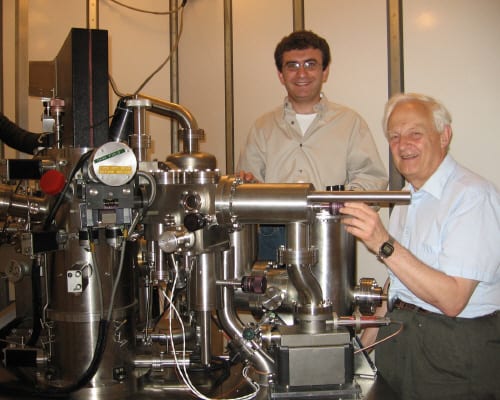
In 1968 Davis uncovered what became known as the solar neutrino problem, which was to occupy some of the best minds in physics for the following 30 years or more. In an audacious experiment, Davis set out to detect the neutrinos produced in the fusion reactions that were thought to power the Sun. Adopting techniques from radio-chemistry, he filled a giant tank with 600,000 litres of “cleaning fluid” and looked for the extremely rare occasions when a solar neutrino interacted with a chlorine atom to produce radioactive argon. But when he added these signals up, he found that the Sun was producing only about a third of the neutrinos it should have been based on the best solar models available.

These models were developed principally by the late John Bahcall of the Institute for Advanced Study in Princeton, who died in August last year. For decades, Davis consistently measured a deficit in Bahcall’s predicted neutrino flux despite strong suspicions that his experiment was at fault. But it turned out that both Davis and Bahcall were right: the neutrinos produced by the Sun, which are all “electron-type” neutrinos, were oscillating into muon- and tau-like neutrinos on their journey to Earth. Since Davis’ experiment was only sensitive to electron neutrinos, this explained why he was only seeing about a third of the total flux.

This result, which was verified in 1989 by the Kamiokande experiment in Japan and later by the SAGE and GALLEX experiments, gave birth to the field of neutrino oscillations and ultimately demonstrated that neutrinos must have a tiny mass. Davis’ persistence with an extremely challenging measurement and low-budget apparatus is regarded by many as a defining example of experimental physics.

Davis was born in Washington, D.C., on October 14, 1914. He graduated from the University of Maryland in 1938 with a degree in chemistry, and went on to complete a PhD in physical chemistry at Yale University in 1942. Following four years service in the US Army Air Force and two years at Monsanto Chemical Company, Davis joined Brookhaven Lab’s Chemistry Department in 1948 and became a senior chemist in 1964. He retired from Brookhaven in 1984 and joined the University of Pennsylvania, but remained a research collaborator in Brookhaven’s Chemistry Department.

Davis lived in the same house in Blue Point, New York, for 50 years and is survived by his wife Anna; his sons Andrew, Roger, and Alan; his daughters Martha Kumler and Nancy Klemm; and 11 grandchildren.

A fresh look at glass

Understanding the nature of the glassy state remains one of the last great unsolved mysteries in condensed-matter physics. Glasses are notoriously difficult to study because, like liquids, they lack long-range order. They are formed when a molten material is cooled so quickly that the atoms do not have time to arrange themselves into an ordered crystalline lattice that has a lower energy and is more stable.

Some glasses can last for thousands of years. This, and the fact that glass can effectively absorb radiation, has led scientists to believe that they could be used to store certain types of nuclear waste. However, silicate-based glass (the most common type of glass) can easily be damaged by ion, electron and ultraviolet beams. Moreover, this damage is thought to be irreversible.

To investigate this further, Andre Mkhoyan and colleagues at Cornell University studied the effects of high-energy electrons on thin films of an alumino-silicate glass containing calcium oxide. This glass comprises alumina (amorphous Al2O3) and silica (amorphous SiO2).

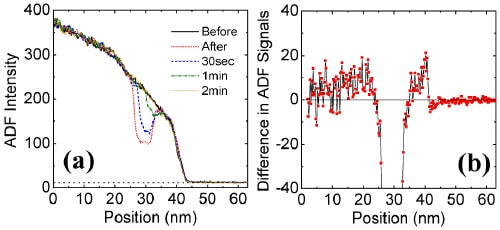
The researchers began by focusing a 100 KeV electron beam from a scanning transmission electron microscope for two minutes onto an area of the sample measuring about 6 square nanometres. Next, they monitored the damage caused, in real time, by looking at how the chemical composition of the glass changed using techniques called electron energy loss spectroscopy (EELS) and “annular dark field” (ADF) imaging. They then turned the beam off.

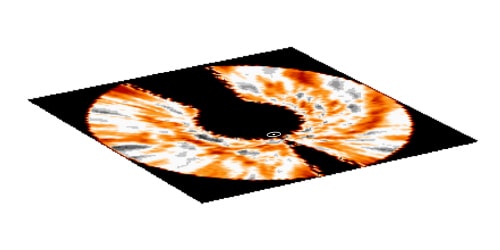
After about two minutes, Mkhoyan and co-workers retook EEL spectra and ADF images from the glass to determine its composition. They found that it was the same as at the beginning of the experiment, which shows that the glass had completely “recovered” (figures 1 & 2). According to the team, the results suggest that the glass is very stable thermodynamically, which was unexpected given its disordered atomic structure.

The researchers say that the stability of such glasses could have implications for storing radioactive materials. “Our experiments suggest that damage from beta-emitting nuclear waste sealed inside this material would ‘self heal'”, states Mkhoyan. “These investigations may even be highly relevant for the energy future of the US since the National Academy of Sciences recommended vitrification in 1994 as the preferred method for the long-term storage of plutonium.” However, he adds that more work still needs to be done to study the effects of other types of radiation in these materials.

The team now plans to study the limits of recovery in aluminosilicate glasses as a function of composition and search for new stable glass systems.

Antinuclear call to arms

On 18 April this year US President George Bush was asked whether America was considering using nuclear weapons to resolve the current dispute over Iran’s uranium-enrichment programme. Bush replied that “all options are on the table”. For Jorge Hirsch, this statement was a watershed moment. He believes that at that point the US “walked off a nuclear cliff” and that it has been “suspended over the abyss ever since”.

Hirsch, a physics professor at the University of California, San Diego, thinks it is almost certain that the US will launch a nuclear strike against Iran before the year is out. And he thinks that if this happens, it will lead to an escalation of nuclear proliferation that could finish off civilization. Having spent his career in academia, working on theories to explain the behaviour of superconductors, Hirsch has little experience of political activism. But he thinks that the current stand-off with Iran is potentially so grave that he is now working almost full time to try and prevent it becoming critical. “The situation we face now is more dangerous than the Cuban missile crisis,” he says, “because today there is no deterrent against the US using nuclear weapons.”

Hirsch’s analysis may strike some people as unduly pessimistic or perhaps alarmist. But there are many others who share his concerns. A petition started by Hirsch and a colleague at San Diego, Kim Griest, opposing the use of pre-emptive nuclear strikes against non-nuclear states has now garnered the names of over 1900 physicists. The same sentiment was also expressed by Hirsch and 12 other eminent physicists, a number of them Nobel laureates, in a recent letter to Bush.

For Hirsch, physicists have a special responsibility when it comes to nuclear weapons as it was they who invented the bomb 60 years ago. He believes physicists must do whatever they can to publicize the nuclear threat, be it by lobbying politicians or speaking to local newspapers. In particular, he thinks that it is vital that they clarify what he sees as the misleading term “weapon of mass destruction”. He thinks that lumping nuclear weapons together with the far less potent chemical and biological weapons blurs the sharp divide that has existed between nuclear and all other weapons, and makes the use of nuclear weapons all the more likely.

Looming danger

Hirsch, 54, was born and raised in Argentina but moved to the US to do a PhD in condensed-matter physics in 1976, following a military coup in his homeland. In 1988 he came up with a radical new theory to explain superconductivity based on the idea of charge asymmetry: that electrons and holes are not simply equal and opposite but are fundamentally different. Although initially shunned by many others in the field, Hirsch remains convinced that his theory is correct and hopes that it will be put to the test in the next few years.

Hirsch has also made a name for himself recently by devising a new way to measure the quality of a researcher’s output. This so-called h-index – which states simply that a researcher with an h-index of, say, 20 has published 20 papers that have each been cited at least 20 times – certainly seems to have caught the imagination of other scientists. “My h-index paper has received much more attention than my 80 superconductivity papers put together,” he says. “It just proves that you never know when you are going to make an impact.”

The same could perhaps be said about his stance on nuclear weapons. Until recently, Hirsch admits that he was not particularly concerned about American weapons policy. There was certainly some food for thought – the US “Nuclear Posture Review” of 2001 envisaged a “new mix” of nuclear and non-nuclear weapons against a “diverse set of potential adversaries”, and the “Doctrine for Joint Nuclear Operations” subsequently set out a number of scenarios under which the US may use nuclear weapons, including the use of “bunker busters” to destroy deeply buried military installations (which, if buried deeply enough, may be out of the reach of non-nuclear weapons).

But it was only in September last year that Hirsch came to believe that the US would actually put this policy into practice. That was when the member states of the International Atomic Energy Agency (IAEA) voted to refer the impasse over Iran’s nuclear activities to the United Nations in New York. He thinks the reason the US has been pushing hard for sanctions is not because these are likely to be approved by the security council – they are not, because China and Russia have said explicitly that they would veto such a move – but conversely because the failure of the UN route will then leave the US with a pretext for military intervention. “I woke up one day and everything fell into place in my mind,” he recalls. “I realized we are in an extremely dangerous situation and felt I needed to do whatever I could, out of sheer desperation.”

Hirsch believes that before November – when the Democrats may regain control of Congress in the mid-term elections – the US will launch a limited attack against select military targets in Iran, probably using non-nuclear weapons. A few days later, following the inevitable retaliation by Iran, the US, he says, will then launch a huge attack on the country, using a mixture of non-nuclear and nuclear bombs. As things stand, he estimates the chances of the US launching a nuclear strike before the end of the year to be about 95%.

“Everything that has happened since September has reinforced my belief that we are moving in this direction,” he says. “The point is that there is nothing stopping it, the President wants it and his advisers want it.”

A nuclear world

Some people think that Hirsch has grossly overestimated the threat, however. Michael Levi, a physicist at the Council on Foreign Relations in New York, thinks there is “essentially zero chance” that the US will launch a nuclear strike against Iran. He believes that policy documents such as the Nuclear Posture Review are “quite vague” and “do not have inevitable consequences”. He says that militarily there is no need to strike Iran using nuclear weapons, adding that the Isfahan uranium conversion facility, for example, is above ground and lightly defended.

But Hirsch is in no doubt about the intentions of the Bush Administration. He believes that the US has a deliberate long-term strategy to prevent other nations from acquiring nuclear weapons by threatening them with force. Iran, he thinks, provides American with the perfect opportunity to show that it can follow up its threats with action. This, he says, is a fatally flawed strategy. While he objects to the bellicose rhetoric of Iranian president Mahmoud Ahmadinejad, he believes the best way to ensure that Iran does not have nuclear weapons is to allow it to have a civilian nuclear programme under the watch of the IAEA.

He says that the moment the US drops a nuclear bomb on Iran, the Non-Proliferation Treaty – an international agreement by non-nuclear nations not to develop nuclear weapons as long as nuclear nations take steps to reduce their stockpiles – would become worthless. Many of the 182 non-nuclear weapons signatories of the treaty would start developing nuclear weapons of their own as the only effective means of self-defence. With many more nuclear weapons states and no longer a taboo against using the nuclear option, any regional conflict could then lead to all-out nuclear war.

The US attack on Iran, will not, he says, be a Hiroshima-scale bombing, but instead involve bunker-buster weapons that will probably kill a few hundred people each. The point for Hirsch, however, is not how powerful these bombs are but the fact that they are nuclear. By breaking the 60 year taboo on nuclear weapons use, he says, “you’re crossing a line that you cannot go back across”.

Action required

As a shorthand way of illustrating the scale of the threat, Hirsch uses his own h-index. He points out that the h-index of nuclear proliferation today is eight – in other words, there are eight countries that have at least eight nuclear weapons each. But he believes that if the US does drop a nuclear bomb, then this number will rise to perhaps 50 or maybe even 100 within a few years.

To have any chance of avoiding this situation he believes there has to be a focused effort by scientists on opposing the use of nuclear weapons against non-nuclear countries. Indeed, the American Physical Society recently made a formal statement expressing “deep concern” about such a policy.

Hirsch points out that he is not advocating the complete elimination of all nuclear weapons or the end to all wars. “I believe it is important to focus on what is achievable,” he says. “Every country that has nuclear weapons should renounce the use of those weapons against non-nuclear countries.” Expecting such renunciations may be wishful thinking. But Hirsch is in no doubt that physicists must at least try to bring them about. He believes that if nothing is done, the world could be on a one-way road to disaster.

In person

Born: Buenos Aires, Argentina, 1951
Education: University of Buenos Aires (degree in physics), University of Chicago (PhD in condensed-matter theory)
Career: Professor at the University of California, San Diego (1987-present)
Outside interests: Politics, jogging
Homepage: physics.ucsd.edu/~jorge/jh.html

Engineering a better physicist

Physicists have always seen themselves as being one (maybe two) steps removed from the mundane job of translating their work into practical benefits for the good of everybody, including themselves. That is the job of engineers, who are often viewed as technicians to be called upon when needed and shooed away when not.

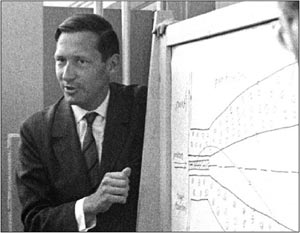
Surprisingly, though, some of the most beautiful results in physics have been obtained by engineers. Simon van der Meer, for example, shared the 1984 Nobel Prize for Physics with Carlo Rubbia for the discovery of the W± and Z0 particles at CERN thanks to his invention of “stochastic cooling”, which reduces the energy spread of a bunch of particles travelling in an accelerator ring. However, van der Meer does not see himself as a great scientist – just an engineer who likes to get on with inventing and building nice machines.

The point is that if physicists want to discover new horizons, they need engineers – those masters of practicality – to achieve new results. Even I have been guilty of ignoring engineering. As a PhD student it was almost a competition in our lab to see who could achieve results with the most Heath-Robinson-like equipment.

By focusing on function, rather than form, niggling problems cropped up as I gave too little thought to fastening, electrical contacts, the differential expansion of materials and so on. All these problems could have been solved overnight if only I had thought more like an engineer. Doing so would probably have let me produce more and better data in a shorter time.

Artificial divisions

One reason why physicists look down on engineers is that their two disciplines are often artificially divided. In most universities, for example, the physics and engineering departments are usually physically far apart, which is both odd and silly, as each discipline has complementary knowledge and skills. In fact, physicists suffer more than engineers from this estrangement.

Take IBM, which in the late 1970s embarked on a long and expensive project to create superconducting mainframe computers using “Josephson junctions”. Physicists in the company had argued that these junctions consumed significantly less power than the competing silicon technology of the time and, moreover, could be switched in less than 5 ns.

However, the project eventually ran into the buffers because it simply proved too difficult to reliably fabricate the necessary lead-lead-oxide junctions and too expensive to cool the machine to superconducting temperatures. Of course, the project also failed because of the ongoing improvement in silicon microelectronics.

Undaunted, in the 1980s the electronics industry turned to gallium arsenide as a possible replacement for silicon in certain applications. But standard silicon-based microelectronics has continued to get better and, two decades later, gallium arsenide has been edged out of contention even in these specialized areas.

This quite staggering improvement in performance has been brought about by engineers tweaking and tinkering with silicon on a daily basis over two decades. With Moore’s law still apparently alive and well, any new material will find it increasingly difficult to displace the incumbent silicon. Indeed, I fear that the latest pretenders to silicon’s crown – materials such as plastics, carbon nanotubes and buckyballs – will ultimately suffer the same fate.

Energy blues

Another field where engineers will win the day is energy. But in trying to solve the energy crisis what do physicists do? They think big and start a decades-long project that seeks to harness the power of the Sun in a big shed. But despite the billions of dollars so far spent, not a single joule of useful electricity has been produced from such experiments.

Engineers, meanwhile, have been doing more mundane – but much more useful – things. They have increased the efficiency of generators and transmission systems, and are now poised to exploit new sources of energy such as wind, tidal and photovoltaic. To be fair, physicists have often helped with this work, but it is largely driven by engineers.

More energy has probably been generated by wind turbines than by the combined man-made fusion reactions, and this will continue to be the case for a very long time. Even the €10bn International Thermonuclear Experimental Reactor (ITER), which is soon to be built in France, is only the next step on the road to a practical fusion reactor operating in 2050. Of course, as a means of stimulating international scientific collaboration and doing large-scale plasma physics, the project’s value is unquestionable. But in terms of providing a practical route to replacing coal and nuclear power stations, it is almost irrelevant. Physicists are going to have to realize that governments and the public may ultimately feel misled by the spin that physicists are giving to fusion.

More interaction needed

In both these examples, physicists underestimated and understated the sheer size of the task and the practicalities involved. In large part this has either led to outright failure or telescoping timescales, which is failure in disguise. The danger is that industry and government will see that physicists and physics-based solutions are unable to come up with the goods, while other people – mostly engineers – are getting on and solving the problem in less ambitious, but more productive, ways.

Physicists are doing themselves a disservice by not managing this process better. Ultimately, it is they who are compromised as the world not only stops believing what they say, but actually does not even bother to listen as physicists seem unable or unwilling to solve the problem at hand.

What we need is much more interaction between physics and engineering, and it is probably fair to say that physicists should make the effort. Secondly, there should be more emphasis on combining the two disciplines at an early stage; for example by making undergraduate physicists do a detailed term-long design project. Finally, physicists should begin to think like engineers and become more interested in the nuts and bolts of the problem.

Who knows, rather than being a burden, such knowledge may lead to a new level of sophistication in the way physics is done.

Engineers versus physicists

We have all heard the joke about the engineer and the physicist who are asked to build a chicken coop for a farmer. (The physicist begins with the line, “First assume a spherical chicken in a vacuum…”) But what really is the difference between physics and engineering?

Physics, by its very nature, is about probing the limits of material systems and trying to uncover new facts about the way things behave. Engineering, in contrast, is about taking elements that tend to be already known and reshaping them in some way — either to make improvements to existing systems or to create some new solution to a problem.

Maybe the difficulty for physicists is that when confronted with a problem, we are simply too keen to adopt a solution that is far too radical and has a greater tendency to fail. When those solutions do then fail, we justify having used them by saying that only a radical solution would have solved the perceived gap in performance.

Engineers, in contrast, prefer to improve processes in an incremental way. Over time, this can lead to staggering improvements, provided sufficient time and resources are available. Without doubt both approaches have their merits in different circumstances, but physicists would do well to appreciate how engineers think.

Gravity’s dark side

If you are an academic in a physics department, you are probably used to receiving letters from people who claim to have rewritten the laws of physics. Editors of science magazines are also familiar with such individuals, many of whom take gravity for their victim. Although we should not automatically dismiss these ideas – after all, Einstein was an unknown patent clerk when he rocked the world of physics in 1905 – most fall down because their proponents fail to put them in context with existing knowledge.

The same cannot be said of a growing number of professional physicists who think Einstein’s general theory of relativity is ripe for revision. General relativity is part of the bedrock of modern physics. It describes in elegant mathematical terms how matter causes space-time to curve, and therefore how objects move in a gravitational field. Since it was published in 1916, general relativity has passed every test asked of it with flying colours, and to many physicists the notion that it is wrong is sacrilege.

But the motivation for developing an alternative theory of gravity is compelling. Over the last few years cosmologists have arrived at a simple yet extraordinarily successful model of universe. The trouble is that it requires most of the cosmos to be filled with mysterious stuff that we cannot see. In particular, general relativity – or rather its non-relativistic limit otherwise known as Newtonian gravity – can only correctly describe the dynamics of galaxies if we invoke huge quantities of “dark matter”. Furthermore, an exotic entity called dark energy is necessary to account for the recent discovery that the expansion of the universe is accelerating. Indeed, in the standard model of cosmology, visible matter such as stars, planets and physics textbooks accounts for just 4% of the total universe.

Faced with a lack of direct evidence for dark matter, a small but growing band of physicists is proposing an alternative explanation: that our description of gravity is wrong. And if the discussions at a recent workshop on dark matter and alternative gravities held in April at the Royal Observatory in Edinburgh are anything to go by, they could be in for a bumpy ride.

Seeds of doubt

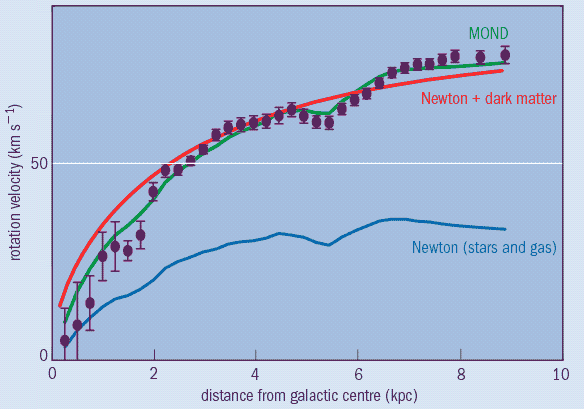
Dark matter was proposed in 1933 to explain why galaxies in certain clusters move faster than would be possible if they contained only the “baryonic” matter that we can see. A few decades later, similar behaviour was detected in individual galaxies, whereby the rotational velocity of the outermost stars was found not to “drop off” as a function of distance but instead remain flat (see figure). These observations directly contradicted Newtonian gravity, which should hold true in extragalactic regions just as it does on Earth and in the solar system. But by assuming there are “haloes” of invisible matter in and around galactic structures, Newton’s familiar inverse square law is restored.

Although firmly embedded in modern cosmology, dark matter is viewed by many physicists as a fudge factor. “Astronomers have no idea what dark matter is,” says HongSheng Zhao of St Andrews University. “It is whatever is needed to explain the data, rather than a fundamental prediction of particle physics as it was originally.” The situation is reminiscent of one facing astronomers in the 1840s, who in trying to explain anomalies in the orbit of Uranus postulated a new outer planet rather than scrap Newton’s law. The crucial difference, of course, is that Neptune was discovered shortly afterwards, while dark matter remains elusive despite years of dedicated searches.

In 1983, however, Mordehai Milgrom, now at the Weizmann Institute in Israel, claimed he could explain the anomalous rotation of galaxies without invoking dark matter. Instead, he modified Newton’s formula so that under certain circumstances the gravitational force between two bodies decays more gently than the inverse square of the distance between them. The key property of Milgrom’s theory – called modified Newtonian dynamics, or MOND – was that the modified behaviour kicks in below a certain acceleration, rather than distance, scale. Remarkably, Milgrom was able to set the value of this universal parameter such that MOND describes the dynamics of galaxies extremely well, while preserving Newtonian gravity elsewhere.

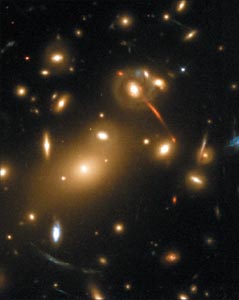
But any alternative theory of gravity worth its salt has to account for much more than just galaxy dynamics. In particular, it needs to be able to explain the way light is bent by massive objects – a central prediction of general relativity that was dramatically confirmed during the solar eclipse of 1919. The most striking manifestation of this effect is gravitational lensing, whereby galaxies or clusters of galaxies cause light from background objects to appear as if it has come from several different sources. As with the dynamics of galaxies, however, general relativity is unable to account for the strength of some gravitational lenses without adding appropriate distributions of dark matter “by hand”.

Being rooted in Newtonian mechanics, MOND had no hope of explaining the bending of light. Moreover, Milgrom’s simple formula violated several basic laws of physics, such as the conservation of momentum. This prompted theorists in the 1980s and 1990s, notably Milgrom, Robert Sanders of the University of Groningen in the Netherlands and Jacob Bekenstein at the Hebrew University of Jerusalem, to set about turning MOND into a fully-fledged theory. This culminated in 2004, when Bekenstein published a relativistic version of MOND called tensor vector scalar theory or TeVeS. It is this theory that has made many astronomers, astrophysicists and cosmologists begin to take alternative gravity theories more seriously.

Geometric gravity

To understand TeVeS – or any other alternative theory of gravity – we need to delve a little deeper into Einstein’s theory. General relativity is a geometric theory of gravity, which means the gravitational field arises from the geometry or curvature of space-time. Mathematically, the curvature is described by a symmetric tensor called the “metric”, which, in Einstein’s theory, is determined purely by the local matter. Although this is the simplest way to formulate a geometric theory of gravity, there is nothing to stop us adding terms to the “action” of the theory, which governs the dynamics of the metric and therefore the way objects move.

This is precisely what Bekenstein did, by introducing a second metric to TeVeS that stretches space-time more globally. In order to connect the two metrics to produce the physical metric experienced by real objects, Bekenstein added two extra terms into the TeVeS action. The first was a scalar field, which effectively alters the strength of gravity from place to place, and the second was a vector field that ensures light is affected by the metric too.

It may sound ad hoc, but the combined effect of replacing the Einstein action with a scalar, vector and tensor field means that TeVeS has all the desirable features of an alternative theory of gravity: it reduces to Einstein’s theory for high speeds and large accelerations (thereby accounting for gravitational lensing); to Newtonian gravity for low speeds and small accelerations (such as those on Earth); and to MOND when accelerations are smaller still (thereby predicting the observed galaxy-rotation curves). Being fully relativistic, TeVeS can also make predictions about the universe on the largest scales.

“There were other MOND-like theories before TeVeS that were relativistic, but all of them had some sort of problem such as violating cause and effect,” says Constantinos Skordis of the Perimeter Institute in Ontario, Canada, who attended the Edinburgh meeting. “TeVeS showed us that you could match cosmological observations without dark matter by replacing general relativity with an alternative gravitational theory.”

Cosmology is perhaps the toughest challenge for alternative gravity theories. In particular, a theory of gravity needs to explain how structures such as galaxies and galaxy clusters formed. And this means it has to correctly describe the cosmic microwave background – the ancient radiation that comes from a period called recombination that occurred about 380,000 years after the Big Bang.

Before recombination the universe was a hot, dense plasma in which photons were continuously being scattered by charged particles. But as soon as the universe cooled enough for neutral atoms to form, photons were able to travel unhindered though space, thereby carrying vital information about density irregularities in the primordial plasma. Today, these irregularities, which would have caused matter to clump together in some regions more than others, appear as hot and cold patches in the faint glow of microwave radiation that permeates the deep universe.

General relativity is very good at describing how cosmic structure evolved from these acoustic oscillations, but only if we assume the universe contained at least as much dark matter as it did baryonic matter during recombination. Without dark matter, which couples to matter but not to light, the density fluctuations would have been smoothed out by collisions with photons long before they had a chance to seed galaxies.

“People wrongly say that because modified gravity theories contain no dark matter, there is no driving force to sustain the fluctuations through recombination,” explains Pedro Ferreira of Oxford University, who has worked with Skordis to calculate the cosmological implications of TeVeS. “But the extra fields in TeVeS, for example, can produce the same effect as dark matter despite having an energy density that is many orders of magnitude lower.”

In order to see how TeVeS fared against real cosmological data, Skordis and Ferreira expanded the theory to linear order and then studied what happened when the scalar, vector and tensor fields were subject to small perturbations. This enabled them to correctly describe the distribution of temperature fluctuations in the cosmic microwave background as a function of angular scale, which consists of a series of decaying acoustic peaks. So far, TeVeS is the only alternative theory of gravity to have made such detailed predictions, but Ferreira urges anyone working on alternative gravity theories to move beyond galaxy-rotation curves and do the exercise for themselves.

One such person is John Moffat of the Perimeter Institute, who is collaborating with Joel Brownstein on a theory called scalar tensor vector gravity (STVG). Although like TeVeS, in that scalar fields and a vector field are introduced into general relativity, in STVG the vector field corresponds to a new physical entity that Moffat calls the “phion field”. By undergoing a process called Bose-Einstein condensation, the phion field can produce a superfluid that causes gravity to be strong in the centre of galaxies and at cosmological scales yet similar to standard Newtonian-Einstein gravity at intermediate scales.

In addition to fitting galaxy data very well, Moffat claims that his theory can also explain the wayward paths of the Pioneer probes. Launched in the 1970s these two spacecraft, which are now at the furthest reaches of the solar system, appear to be experiencing an anomalous acceleration towards the inner solar system. Although this may turn out to have a mundane technical explanation, it provides a classic test for alternative theories of gravity on solar-system scales.

Dark energy

While describing the universe without dark matter is the main goal of STVG and other alternative gravity theories, it would be nice if such theories could get rid of dark energy at the same time. General relativity has a chequered history in this regard. Einstein initially introduced a constant term to account for the then-observational fact that the universe was static, only to have to remove it again a few years later when Hubble discovered that the universe is expanding. Einstein called the cosmological constant his “biggest blunder”. But had he been around in 1997 to see supernova data that revealed that the expansion of the universe is actually accelerating, he would have had to put it back in again – only to be told that its value was out by some 120 orders of magnitude!

One theory that tackles the cosmic expansion head on is “conformal gravity”. Developed by Philip Mannheim of the University of Connecticut, it is perhaps the most radical of all the alternative gravity proposals. “Theories such as TeVeS or STVG are what I call ‘Einstein-plus’ theories,” says Mannheim. “They are designed to reduce to the Einstein equations on solar-system scales, while departing from them on galactic and larger distances. But while they avoid the need for any dark matter quite efficiently, none is able to address the cosmological-constant problem.”

Mannheim’s theory is still a geometric theory of gravity, but instead of tweaking general relativity he replaces the theory with one based on a fourth-order “Weyl tensor”. While the mathematics of conformal gravity is complex, the theory has the highly desirable property that gravity is attractive at local scales yet repulsive at cosmological scales. As such, Mannheim’s theory can account for both the accelerating-universe data and galaxy-rotation curves without dark matter, dark energy or any “fudging” of parameters. Like STVG, however, the full cosmological implications of conformal gravity still have to be worked out.

Paradigm shift

Anyone working on alternative theories of gravity has to justify their ideas to mainstream cosmologists, most of whom simply do not see why there should be alternatives to dark matter. “General relativity and dark matter are the standard paradigm, and until we see something inconsistent with that then there is no reason to look elsewhere,” insists Robert Caldwell of Dartmouth College in the US.

Some astronomers, such as John Peacock of the Royal Observatory, also remind us that standard Newtonian-Einstein gravity works very well from millimetre scales to the orbit of Pluto, so people should be cautious before writing it off “based on messy astrophysics such as galaxy formation”. Indeed, one astronomer at the Edinburgh meeting even said he only attended to see alternative gravity theories “shot to pieces”.

But many in the alternative-gravity camp think that the idea of dark matter and dark energy has become so embedded that people are no longer looking at the problem scientifically. According to Stacy McGaugh of the University of Maryland, who became sceptical about dark matter in the mid-1990s, the best way to face up to the problem is to actually work with the galaxy data. “If all the famous cosmologists who are currently defending the standard model had been deep frozen in the 1970s or 1980s and then you woke them up today and said [dark matter and dark energy] is the answer, not one of them would buy it,” he jokes.

But the alternative-gravity camp also has problems of its own. For example, while TeVeS is the most advanced theory on the table, some researchers – notably Moffat and Mannheim – point out that the theory contains preferred frames of reference that violate basic relativity principles. Then there is the issue of aesthetics. Is plucking terms from the air and putting them into the action of general relativity any more respectable than fitting the galaxy data with a polynomial or some other function? Finally, dark matter could turn up tomorrow in one of the many dedicated searches world wide.

As well as being a rich ground for theoretical physics, the alternative-gravity movement will doubtless prove equally fertile for sociologists of science. “This is a potential paradigm shift in physics,” says Moffat. “You will always face opposition when you attempt to modify a well accepted theory such as general relativity.”

It is still too early to tell whether we are indeed witnessing such a scientific revolution. But in the mean time, we should bear in mind that some of the fiercest resistance to alternative theories of gravity was once directed at Einstein and Newton themselves.


Shelf life: Michael Rowan-Robinson


What are the three best popular-science books?

I think I have to start with Galileo’s Starry Messenger (1610), the wonderful popular account he gave of his first weeks with the astronomical telescope. Almost on successive nights he discovered the moons of Jupiter, mountains on the Moon and that the Milky Way is made of unresolved stars. I found this a tremendous inspiration when I first read the book as a postgraduate.

There has been a wealth of excellent books on modern cosmology, starting with Edwin Hubble’s influential but dry The Realm of the Nebulae, but the one I choose is Steven Weinberg’s The First Three Minutes (1977), which gives a fascinating account of how the early universe has become the playground of the particle physicist.

Finally I’d like to mention Edward Harrison’s brilliant Darkness at Night (1987), with its superb account of the paradox of the darkness of the night sky and its resolution by Edgar Allan Poe.

What science books are you currently reading?

Nancy Greenspan’s biography of Max Born, End of the Certain World. Born’s crucial role in the development of quantum theory is sometimes overshadowed by the dominant figures of Bohr, Heisenberg and Schrödinger.

What else are you reading?

Pseudonymous Shakespeare by Penny McCarthy, which argues that during his twenties Shakespeare was part of the literary coterie that included Philip Sidney and Edmund Spenser, and that he wrote under a variety of pseudonyms. It’s wonderful detective work that, if correct, will revolutionize our understanding of Shakespeare’s development.

Which popular-science book have you never read, but feel you ought to have tackled, and why?

A book I keep meaning to read is Aristotle’s Meteorologia, which includes his (incorrect) theories of comets, shooting stars and the Milky Way.

Small returns for nanoscience?

What has the $18bn spent worldwide on publicly supported nanotechnology research done for us so far? According to some jaded observers, the main outcomes have been stain-resistant trousers and better sunscreen. The gulf between the promises of those who extol nanotechnology and what has been delivered in the marketplace is indeed large: dangerously large in a world where investment in science is predicated on unrealistic expectations of fast economic returns. The science underlying nanotechnology is fascinating, but much of the writing about its business potential is worryingly reminiscent of the dot-com bubble in its uncritical and self-serving optimism.

Steve Edwards, as a consultant and industry analyst, comes from the business end of the spectrum. The Nanotech Pioneers, though, is refreshingly free of the hype and press-release punditry that plagues too much writing about the potential applications of nanotechnology. Instead, Edwards displays both a real understanding of the science that underlies the hype and an appreciation of the all-important difference between what is possible in principle and what makes economic sense.

But who are the nanotech pioneers? Just as few people can agree on how to define nanotechnology, opinions differ as to who was responsible for starting the field. The iconic Richard Feynman is a popular choice, on the strength of his 1959 lecture “There’s plenty of room at the bottom”, but beyond that there is little consensus. Edwards gives plenty of space to the controversial figures of Eric Drexler, Ralph Merkle and Ray Kurzweil, whose visionary pronouncements have made their brand of nanotechnology a staple for science-fiction writers and futurists – to the dismay of many academic nanoscientists. Mike Roco, the Washington power-broker behind the well-funded National Nanotechnology Initiative, also gets his fair share of attention.

Moving back from politics to science, though, Edwards also credits as founding fathers of nanotechnology both the inventor of the scanning tunnelling microscope, Gerd Binnig, and the electron-microscope pioneer Ernst Ruska. While everyone agrees on the importance of scanning probe microscopes in the emergence of nanotechnology, the re-emphasis Edwards places on electron microscopy is welcome. Electron microscopes have been around for a long time, and this familiarity has perhaps lessened the impact of recent developments, such as aberration correction for sub-Ångstrom resolution.

Edwards identifies three important precursors of nanotechnology – lithography and patterning, biotechnology, and supramolecular chemistry – and three areas in which nanotechnology shows early signs of commercial promise. For fullerenes – the new forms of carbon discovered by Sir Harry Kroto and the late Richard Smalley more than 20 years ago – the road to applications has been slow, but some are now emerging in areas such as unconventional solar cells. There are interesting potential applications in drug delivery for dendrimers, a type of polymer molecule with a branched “star-burst” structure. And quantum dots – tiny semiconductor particles the emission and absorption spectra of which vary with size – can replace fluorescent dyes in applications such as the tagging of biological molecules in cell-biology experiments.

It is clear, however, that most of the potential uses for nanotechnology are still to find their way out of the laboratory. Biology is a potent inspiration, and Edwards cites some fascinating examples of biomimetic nanotechnology, such as synthetic analogues of the marvellously sticky gecko’s foot. The interface between biology and nanotechnology also leads to thoughts of medical applications. Here we can expect improved methods for delivering drugs and diagnosing diseases in the near term, and on a longer timescale perhaps artificial organs and direct interfaces between brain and machine. From nanophysics, Edwards is enthusiastic about the potential of spintronics and plastic electronics.

Looking forward, the author sets three grand challenges for nanotechnology. The importance of finding clean and renewable energy sources is surely uncontroversial, and potential contributions from nanotechnology in the shape of low-cost solar cells, improved fuel cells and economically viable hydrogen storage must be worth pursuing. I am personally less convinced about the importance of the space elevator – a cable linking a geostationary satellite to the Earth’s surface – but it is certainly an ambitious target for researchers to make a material strong, stiff and light enough for this purpose. Finally, Edwards is optimistic about the potential for semiconductor nanotechnology to permit an economically viable implementation of quantum computing.

There has been much discussion of what nanotechnology might mean for society at large, and what its downsides could be. These debates are comprehensively covered by Edwards, from the far-fetched but dramatically compelling eco-disaster of self-replicating nanobots to the much more likely problem that some nanoparticles might, by virtue of their size, prove to be more toxic than the materials from which they are derived. This discussion is coloured by an almost-caricatured North American viewpoint, in which Europeans are seen as technology-averse while Americans are universally visionary and forward-looking. Canada, meanwhile, is written off as “a European country that happens to be located in North America”.

But there is actually a strange passivity and pessimism on display here about the prospects for managing the technology’s inevitable downsides. On the question of potential toxicity and environmental problems from nanomaterials, Edward says, “Unfortunately, we will still most likely deal with nanotech environmental hazards in the way that we always have, by ignoring them until they have become disastrous in an obvious way.” Likewise the author washes his hands of responsibility for any broader societal issues: “Neither nanotechnologists nor the institutions that employ them bear any responsibility for the organisation of society.” I would like to think we can do better than that.

Even if the wilder promises of the economic impact of nanotechnology prove exaggerated, it is clear that the applications will go beyond stain-resistant trousers. I can recommend this book as a well-written and sane introduction to this confusing and contested field.

Copyright © 2026 by IOP Publishing Ltd and individual contributors