A new look for bifocals

As we get older, our eyes become less flexible and often lose their ability to shift focus from distant to near objects. This phenomenon, known as presbyopia, is thought to affect over 90% of the population. Bifocal lenses, which contain two different areas of glass, are a common solution. However, users still need to move their gaze between the upper and lower lenses as they switch from looking at distant to near objects. Moreover, looking downwards through the lens can make you dizzy and give you a headache.

Guoqiang Li and colleagues of the University of Arizona and co-workers at the Georgia Institute of Technology have now developed a lens that overcomes these problems. It consists of a flat, 5-micron thick layer of liquid crystal sandwiched between two layers of glass that are coated with concentric rings of tiny, transparent indium-tin-oxide electrodes.

When the lenses are “off” and no field is applied, the lens can be used to look at distant objects. But applying a voltage of less than 2V to the electrodes changes the orientation of the liquid-crystal molecules, which in turn alters the refractive index of the crystal. This allows the lens to switch its focusing power, and become less magnifying, so that a near object can be viewed almost immediately (figure 2). When the voltage is removed, the lens reverts to its original non-focusing configuration, which also means that it is safe to use for far-vision activities — such as driving — should the power source fail.

Li and colleagues have found that their lens performs well for both near- and distant-vision tasks by testing prototype glasses. At present, the applied voltage needs to be switched on and off for the lens to change focus but ultimately the device will work automatically, “like an auto-focusing camera” say the researchers. This is because the device will contain a “range finder” like in a camera. And although the glasses are not exactly the height of fashion, the researchers hope that industry will design better looking adjustable-focus lenses for the future.

Solitons show up in uranium

Solitons are stable localized waves that propagate through a medium without spreading. They were first observed by the Scottish scientist John Scott Russell in 1834, who was watching horses drag a barge along a canal. When the boat suddenly stopped, a wave of water continued along the canal without changing shape or slowing down.

Michael Manley of the Los Alamos National Laboratory and colleagues in the US and Germany have now observed solitons in crystals of uranium. The team obtained its results by firing beams of neutrons and X-rays into the material, which create or absorb vibrational energy from the crystal. They were then able to determine the frequency and wavelength of the crystal’s vibrations, or phonons, by measuring the properties of the scattered beam.

When the crystal was heated to 450K, Manley and co-workers found a new type of long-lasting phonon that does not spread throughout the crystal. The team found that the vibrations, which have a wavelength as small as the spacing between two atoms in the crystal, form randomly throughout the material. “The vibration was not allowed by the long range crystal symmetry, indicating that there was a local break in the symmetry, which told us that it was localized”, Manley told PhysicsWeb.

Solitons have broad implications from everything from devices that make use of localized energy waves to new bond breaking mechanisms in biological processes. “However, my interest at the moment is trying to understand how solitons change the mechanical properties of materials,” says Manley. “Our understanding of mechanical deformation is based on the movement of crystal defects. These localized vibrations are, in effect, a new kind of defect and they seem to play a role in determining the deformability of uranium.”

Galaxy simulation breaks new ground

According to the “hierarchical” model, galaxies are formed via a bottom-up process that starts with the formation of small clumps of gas and stars that then merge into bigger systems. Mori and Umemura simulated this process using a powerful 3D hydrodynamic code combined with a “spectral synthesis” code for an astrophysical plasma in order to take into account the dynamical and chemical evolution of a primordial galaxy. The Earth-Simulator simulation was performed with an ultra-high resolution based on 1024 “grid points”, making it one of the biggest calculations ever performed in astrophysics.

Mori and Masayuki set up the initial conditions in their simulation based on a cold dark matter universe, the parameters of which are determined by measurements of the cosmic microwave background. These observations, first made in 2003, show that we are living in a flat universe comprising just 4% ordinary matter, 22% dark matter and 74% dark energy — in agreement with the standard model of cosmology. The researchers then directly compared their numerical results with observations of primitive galaxies called Lyman-alpha emitters and “Lyman break” galaxies, which astronomers find in the most distant and therefore oldest parts of the universe.

The results show that the primordial bubbles of gas that formed in the early universe just 300 millions years after the Big Bang do indeed look like Lyman-alpha emitters. After about 1 billion years, the simulations show that these galaxies mutate into Lyman break galaxies. Finally, after 10 billion years of evolution, the structures resemble present-day elliptical galaxies.

The simulation also predicts the mixture of chemical elements in the galaxy at each stage of its evolution, and suggests that our Milky Way has roughly the same composition today as it did when it was just 1 billion years old. Until now, galaxies were thought to have evolved gradually and become enriched in heavier elements beyond hydrogen and helium over a period of 10 billion years by repeated star formation and supernova explosions.

“Our finding shows that galaxy formation proceeded much faster and that a large amount of heavy elements were produced in galaxies in just 1 billion years,” says Mori.

Nanoscale boost for superwires

Superconductors are materials that lose their electrical resistance when cooled below a certain temperature. Most superconductors have transition temperatures of just a few Kelvin, but in 1986 a new class of high-temperature superconductors with transition temperatures of up to 100K was discovered. These high-temperature “cuprate” superconductors consist of layers of copper oxide, separated by metal atoms such as yttrium and barium, and the supercurrent is thought to flow through the copper oxide layers.

Turning these compounds into commercially useful wires, however, has proved difficult. For example, it is hard to grow wires thick enough to carry sufficient current, and the superconducting behaviour can be destroyed when the wires are exposed to the very strong magnetic fields generated in motors and power-transmission cables. Goyal’s team have made progress on both these fronts using a technique called pulsed laser ablation to deposit a 3-micron-thick film of yttrium barium copper oxide (YBCO) onto a flexible metal substrate.

According to Goyal, there was no single trick to getting the technique right to make thicker wires, but the researchers adopted a new approach to making the wires immune to magnetic fields by adding a barium zirconate (BZO) nanopowder to the YBCO starting material. During wire growth, the BZO arranges itself into columns of self-aligned nanodots within the superconductor. These columns of nanodots act as extended defects that effectively pin down the magnetic flux entering the wire, allowing large currents to flow through the superconductor even when a high magnetic field is applied.

“Our work demonstrates that it is indeed possible to fabricate superconducting wires with the performance levels needed for a whole range of large-scale applications,” says Goyal. “If successfully made in long lengths, wires with such nanoscale defect structures could revolutionize the electric power industry.” The wires might also find use in the military, medicine, high-speed transportation and high-energy physics. The team now hopes to achieve similar nanoscale defects in thicker films and so obtain even better performance.

Shelf life: Luciano Maiani


What are the three best popular-science books?

I do not currently read much popular science, although I did when I was at high school. In those days, I read popular-science books to get a glimpse of what I wanted to learn but had no time to study properly. This may explain why the book I am most attached to is the rather old – but to me unsurpassed – Evolution of Physics by Albert Einstein and Leopold Infeld.

My next choice is Carl Sagan’s Intelligent Life in the Universe, which for me opened new vistas and stimulated further thinking.

Finally, I choose The Character of the Physical Law by Richard Feynman, which had a similar effect on me as the Einstein-Infeld book. I am not really sure, however, if the Feynman book can be classified as popular science: although it contains lectures given to non-physicists, the content is at a rather sophisticated level. But it is really illuminating and deep, and I have had many occasions to go back to it.

If I can nominate a fourth book, it would be Steven Weinberg’s The First Three Minutes, which is a real classic of cosmology.

What science books are you currently reading?

Despite what I said about not reading much popular science, I am, in fact, reading Gino Segrè’s popular work Einstein’s Refrigerator.

What else are you reading?

I am really enjoying Incidents of Travel in Yucatan by John L Stephens, an entrepreneur who was president of the Panama Railway Company. The book is an account of a journey that Stephens and his companion Frederick Catherwood made in about 1840 to Yucatan in modern-day Mexico. On this trip they discovered and described for the first time several Mayan sites like Uxmal. Stephens argues against the prevailing prejudice of the day, which was that these towns could not have been built by the ancestors of the indolent Indians.

It is a beautiful, candid travel story, in which the authors express astonishment at such impressive ruins and pieces of art emerging from the jungle. I visited the region some time ago and was equally fascinated by the beauty of Mayan sculptures and buildings.

Which popular-science book have you never read, but feel you ought to have tackled, and why?

There are several popular-science books that I started to read but got discouraged and gave up before finishing them. But I see no need to name them and do not think I should have finished them.

A future for nuclear power

Exactly 20 years ago this month, on 21 April 1986, workers at the Chernobyl nuclear plant in the former Soviet Union carried out an experiment at very low power with one of the facility’s two “RBMK” reactors. They were, however, unaware that their actions would make the reactor dangerously unstable. Its power rapidly increased, leading to the destruction of the core and a massive chemical explosion. The World Health Organisation estimates that between 40 and 50 staff and emergency workers died as a result of radiation released during the accident. It also resulted in widespread contamination and radiation exposure.

The Chernobyl disaster was a significant moment in the development of nuclear power, particularly in terms of the public’s attitude to this form of energy. It also highlighted how the Soviet nuclear industry was badly regulated, suffered from lax operation and training, and tolerated weak reactor designs. Surprisingly, one power station in Lithuania and three in Russia are still using RBMK reactors after design deficiencies related to Chernobyl were corrected, although the former is due to close in 2009 following appeals by the European Union on safety grounds.

Now, however, it appears that the tide is turning back in favour of nuclear power as countries contemplate the problems of climate change, rising energy prices and the fact that many nuclear plants are reaching the end of their lives. In the UK, for example, five of the nine “first-generation” Magnox power stations, most of which were built in the 1960s, have already closed after operating safely beyond their expected lives. The rest of the country’s 12 nuclear stations, which use mainly “second-generation” advanced gas-cooled reactors (AGRs), will all have closed by 2023. No new nuclear plants have opened since the UK’s single pressurized water reactor (PWR), Sizewell B, came online in 1990 (see “The physics of nuclear reactors”).

Given that the UK’s nuclear power stations together generate 20% of the country’s electricity’s needs, what will happen when these facilities shut? Can the UK reduce its emissions of carbon dioxide and have a diverse supply of electricity without nuclear power? Is it a problem that the country will be importing about 75% of its primary energy by 2020? To find answers to these questions, the UK government has recently launched a review of the country’s energy needs (see “Nuclear questions” Physics World January 2006 p14).

The review contains a consultation document entitled “Our energy challenge” that sets out four goals: to cut carbon-dioxide emissions; to ensure reliable supplies of energy; to achieve sustainable economic growth; and to ensure that every home is adequately and affordably heated. The review is also examining whether recent increases in energy prices have changed the assessment in the government’s energy White Paper of 2003, which was that new nuclear power stations might one day be needed to meet carbon-emission targets but that “new build” should be a future option only. The consultation ends on 14 April, with the review team reporting to Tony Blair in the summer.

New designs

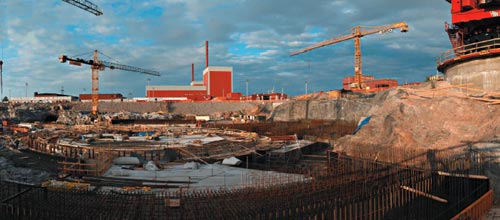
While the UK hesitates, several other countries are already taking action. Finland has commissioned a new European pressurised water (EPR) reactor at Olkiluoto, which is currently being built by the French state-owned firm Areva and Siemens of Germany. It is set to open in 2009. Three companies in the US have said they intend to apply for permits to build two “advanced passive” AP-1000 power stations each, while France, Taiwan and China are either planning or building new stations.

One advantage of third-generation power stations like the AP-1000 and the EPR is that they include more “passive” safety features than first- and second-generation plants – that is, systems relying more on natural forces such as gravity, natural circulation and compressed nitrogen gas rather than relying on a multiplicity of pumps and valves. This makes these plants also far simpler than a conventional PWR.

In my view, the most likely candidates for new nuclear power stations in the UK – assuming they are approved – will be either Areva’s EPR or the AP-1000, which is designed by Westinghouse. Both are based on existing PWR technology, with which UK regulators are familiar. In terms of electrical output, the EPR generates 1.6 GW, while the AP-1000 generates 1.15 GW, which is close to the output of Sizewell B. Another option is the advanced CANDU reactor (ACR), which already operates in Canada and several other countries, but it is an unfamiliar system in Europe and is unlikely to be chosen.

As part of a study of the regulatory health and safety aspects of all future energy sources, the UK government has asked the Health and Safety Executive (HSE) – through the Nuclear Installations Inspectorate – to consider the concept of “pre-licensing” designs, as happens in the US. The HSE will report by June this year. If pre-licensing is approved, the views of the regulator might be available before an operator decides which type of plant to build and a public enquiry begins. This could make it more straightforward for a firm wanting to build a nuclear plant.

The next generation

Looking further into the future, the prospects are even more exciting. In 2000 the US Department of Energy launched an international initiative known as Generation IV, which seeks to carry out research into new nuclear power stations that could be ready to build by 2030. The initiative now includes nine countries – Argentina, Brazil, Canada, France, Japan, North Korea, South Korea, South Africa and Switzerland – plus the UK, which joined last year. (The European Union’s Euratom programme is also a member on behalf of other European countries.)

The long-term focus of Generation IV research is to build reactors that are economically competitive, safe and environmentally sound. The aim is also to make the reactors proliferation resistant, for example by allowing both plutonium and long-lived waste to be recycled together so that both can be destroyed through further exposure in the reactors. However, none of these targets are specific at this stage – indeed, particular reactor concepts may have distinct roles.

The Generation IV initiative has so far produced a “technology roadmap” that identifies six reactor concepts showing the most promise. Of these six, the UK government and industry has decided to focus on just three – the very high temperature reactor (VHTR) led by France; the gas-cooled fast reactor (GFR) led by the US; and the sodium-cooled fast reactor (SFR) led by Japan. In the UK, the Department of Trade and Industry will begin funding research on Generation IV concepts from this month to the tune of £5m a year over two years.

Each concept has its own advantages (see “Generation IV: the UK’s chosen designs”), but the most promising at this stage appears to be the various forms of high-temperature reactor cooled by helium and containing a graphite core. Indeed, demonstration plants based on this design are to be built in South Africa and the US, while experimental reactors already exist in Japan (HTTR) and China (HTR-10). Ironically, the prototype for all these reactors was the “Dragon” reactor experiment, which operated at Winfrith in the UK between 1964 and 1973.

Causes for concern

But does the UK have the industrial strength to build new nuclear power stations? It still runs a dozen nuclear stations and builds nuclear-powered submarines using PWRs, but it is more than 15 years since Sizewell B opened. New stations would require the country to use the expertise of overseas firms such as Areva or Westinghouse, which BNFL sold to Toshiba earlier this year. Some major components – such as the steel pressure vessel, the large steam turbine and the steam generators – would have to be built abroad.

Nevertheless, much of the construction would be civil engineering, at which the UK excels. Indeed, the Nuclear Industry Association (NIA) has estimated that its member companies could build at least 50% of any new nuclear power station. This proportion could rise to about 80% if a series of power stations is commissioned, because companies would then be more likely to invest in greater industrial capacity.

Maintaining the UK skills base is crucial, which is why the research councils’ Keeping the Nuclear Option Open (KNOO) programme is so essential. Led by Imperial College, with support from the universities of Bristol, Cardiff, Leeds, Manchester and Sheffield, it funds research into new reactors and provides training for postdocs and PhD students. The project includes exciting research into Generation IV systems, as well as research into advanced PWRs, materials and waste.

If new nuclear power stations are built, the UK government’s consultation document quite rightly highlights waste management as an issue that must be re-examined. The Nuclear Decommissioning Authority is currently responsible for dealing with existing radioactive waste from military and civil nuclear programmes, while in 2003 the government appointed the Committee on Radioactive Waste Management (CoRWM) to consult on what to do with nuclear waste over the very long term.

As the energy-review consultation document points out, the CoRWM has confirmed that waste from new nuclear reactors could be accommodated by the options for waste repositories being considered. I agree with the Royal Society, which earlier this year called on the CoRWM to work more closely with scientists before it makes a final recommendation to government in July on what form of waste repositories should be built.

I hope that the UK’s energy review will call for new nuclear stations to be built. They are, I believe, essential if we want a safe, secure and environmentally friendly mix of electricity supply. But nothing will happen unless the public supports new stations and unless business can raise the capital sums in what is a privatized and deregulated energy market. Turning words into action will be far from easy.

• See “The nuclear alternative” on pp42-43; print version only

The physics of nuclear reactors

Most existing nuclear power plants are pressurized water reactors, in which water is used both to carry heat away from the reactor core and as the “moderator” to allow the chain reaction to take place. The water is prevented from boiling by a pressurizer that maintains the pressure somewhat above saturation so that the water remains liquid. The core, enclosed in a steel pressure vessel, consists of low-enrichment uranium-oxide pellets made up into rods clad in zirconium alloy, which in turn are grouped into fuel assemblies.

Connected to the vessel are several “loops”, each of which takes the primary hot water to a generator, in which steam is produced by boiling secondary water. The loop then returns the primary water to the pressure vessel. A reactor building, known as the “nuclear island”, encloses the vessel and its surrounding pipe work and safety systems. Equipment outside the island, such as steam turbine-generators, is largely the same as for any fossil-fuelled station.

The above description is of a “thermal” reactor, so-called because the moderator allows neutrons to slow to thermal energies to cause fission. However, in “fast” reactors, like the gas-cooled fast reactor (GFR) and the sodium-cooled fast reactor (SFR), the neutrons are not slowed and so could destroy long-lived waste mixed in fuel through the process of transmutation. Fast reactors also generate energy from a larger proportion of the uranium than thermal reactors.

Generation IV: the UK’s chosen designs

Generation IV is an international research programme into new forms of nuclear reactor that might come on-line by 2030-2040. The UK is currently involved in three of the six main designs that are being studied, with the aim being to retain the country’s skills in nuclear-reactor design.

  • Led by France, the very high temperature thermal reactor (VHTR) will be very safe and could produce both electricity and high-temperature-process heat to make hydrogen. The benefits for the UK are that it already has extensive experience of the operation, technology and licensing of gas-cooled graphite-moderated systems.
  • The gas-cooled fast reactor (GFR) is being led by the US. The advantages of this design are that it can recycle actinide waste and could provide a long-term energy supply through extending the use of uranium reserves. The UK already has extensive design and development experience, including participation in European research programmes in the field.
  • The sodium-cooled fast reactor (SFR), led by Japan, has three main benefits: the technical feasibility of one variant has already been proved; the reactor could recycle actinide waste; and it has potential as a long-term energy supply. The UK has considerable experience in this concept, through the prototype fast reactor programme at Dounreay and the European fast reactor programme.


Blue-sky thinking

Blue sky

Who’s for some blue-sky thinking? The origin of the management cliché may be obscure, but it suggests the emptiness of the skies – in blue-sky thinking there should be no preconceptions. But when Peter Pesic indulges in some blue-sky thinking of his own in Sky in a Bottle, he finds that preconceptions have coloured thought on the sky’s blueness in more ways than one over the years.

Pesic begins back with the ancient Greek and Chinese philosophers, none of whom speculated on the sky’s colour because they considered it so detached from our normal world that it could not be considered in such everyday terms. The Greeks also had an attitude to colour that was very different to our own. Pesic points out that words like glaukos and kyanos that come closest to our words for the colour blue seem to have had more to do with brightness and darkness than a literal shade of blue. For the Greeks, colour was more a reflection of the spirit than an objective measure of wavelength.

Even so, it seems that Aristotle, or one of his students, was the first to ask why the sky appears as it does. Pesic quotes from On Colours in which the philosopher commented, “Air seen close at hand appears to have no colour, for it is so rare that it yields and gives passage to the denser rays of light, which thus shine through it; but when seen in a deep mass it looks practically dark blue.” It is remarkable that Aristotle recognized that “why is the sky blue?” is a question worth considering.

Pesic then goes on to categorize the different attempts to explain the sky’s colour into three broad groups. Some considered it to be a function of the air itself, others of particles suspended in the air, while the third group – typified by Aristotle’s early attempt – thought the colour to be an interaction between the air and something else, perhaps the darkness of space beyond.

By the time the baton of scientific curiosity had passed from the Greeks to the Arab world, there was more inclination to the second of Pesic’s categories. The 9th-century natural philosopher Al-Kindi believed that it was only possible for solid, tangible materials to have a colour. As air was not solid, any colour it exhibited had to be produced not by the air itself, but by some solid floating in it – perhaps a suspension of dust that reflected sunlight with the blue tint that we ascribe to the sky.

As Pesic guides us along the procession of natural philosophers and scientists that have taken on the sky, all the way through to Rayleigh and Einstein, he also brings in the artists. As realism crept into medieval painting, it was no longer possible to portray the sky as merely bright; it also had to have colour, and Sky in a Bottle follows the development of artistic thought on sky colours from Giotto through to Ruskin.

However, the most significant observations that Pesic makes remain in the scientific sphere. The gradual understanding of the link between the blue sky and scattering by air molecules uncovers a surprising amount of information. Pesic calls the colour of the sky “the most beautiful proof of atomic theory”, and who could argue?

Perhaps the most original and entertaining part of Sky in a Bottle is the section of experiments at the end. Here the reader is encouraged to copy historical attempts to reproduce the colouring of the sky, from Ristoro and Da Vinci’s dubious assertion that it is possible to generate blue from layers of white and black pigments, to Tyndall’s bottled sky blue, which used tiny precipitated particles from a chemical reaction to produce scattering. Even though few may take the trouble to try out these experiments, they help break down the boundary between writer and reader.

The narrative would have benefited from a few more “I didn’t know that!” moments. When describing Newton’s octave of colours in the visual spectrum, for example, it would have been worth mentioning that the colour orange did not get its name until the 17th century, taking it from the fruit. And the account of Maxwell’s early colour photography could have been spiced up by relating how his colour plate only worked by accident. His emulsion proved not to be sensitive to red, but it happened that the object being photographed, a piece of tartan, gave off significant ultraviolet from the red dye, and it was this, not the redness, that Maxwell’s plate picked up.

A more significant omission is the author’s decision to limit the science to the pre-quantum era. Quantum electrodynamics might not be the easiest subject to describe, but it would have been well worth extending the description of the scattering process to include a post-Victorian view of the interaction of light and matter.

Even so, Sky in a Bottle has a clever premise that enables a rare blend of science and art. There is something particularly appealing about answering such a basic question as why the sky is blue. Any child with that mild excess of curiosity that might one day lead to a scientific career is likely to ask it. Yet beneath the simplicity lies not only some intriguing physics, but also a challenge that owes as much to philosophy as it does to science. And that is what makes Pesic’s book a small delight.

Does hot water freeze first?

It sounds like the kind of question you would be dismayed to hear schoolchildren getting wrong: which takes less time to freeze, cold or hot water? Common sense and the laws of thermodynamics appear to insist that cold water must freeze first. For example, Newton’s law of cooling states that the rate at which a body cools is proportional to the temperature difference between the object and its surroundings. But, in fact, it does seem as though hot water sometimes “overtakes” cold as it cools.

Indeed, Aristotle, Francis Bacon and René Descartes all claimed that hot water does freeze more quickly. Erasto Mpemba, a secondary-school student in Tanzania, may have been unaware of their claims, but it was something he also observed in 1963. To make ice cream for a school project, he was told to boil milk and then let it cool before putting it in the refrigerator. But, fearful of losing his place, Mpemba put his mixture in the fridge while it was still hot. He found that it froze before the other, cooled mixtures.

Others have since claimed to have observed this “Mpemba effect” in their own experiments. Nevertheless, many scientists find it hard to accept such a seemingly counterintuitive phenomenon. The problem is that the effect is frustratingly hard to reproduce – sometimes it appears, and sometimes not. In fact, no-one has agreed exactly how the experiments should be conducted in the first place. And even if the Mpemba effect is real – if hot water can sometimes freeze more quickly than cold – it is not clear whether the explanation would be trivial or illuminating.

Against the grain

Condensed-matter physicist Monwhea Jeng of Southern Illinois University in the US, who has researched the history of the Mpemba effect, believes that scientists are much more likely to react with disbelief than laypeople when they first hear about the phenomenon. That is because scientists know why it “cannot” be right, he says. Indeed, when Mpemba learned about Newton’s law of cooling a few years after making his discovery and asked his teacher how this could be reconciled with his observations, his teacher replied, “All I can say is that is Mpemba’s physics and not the universal physics.”

Fortunately, Mpemba was not deterred by this cruel put-down, and he went on to carry out further experiments of his own. When local physics professor Denis Osborne of University College in Dar es Salaam visited the school, Mpemba seized the chance to ask for an explanation for his findings. Osborne had none, but he was less sceptical than Mpemba’s teacher and wisely concluded that “it is dangerous to pass judgement on what can and cannot be”. Osborne then asked a technician at his university to repeat the experiments, and the results seemed to show that Mpemba was right. In 1969 Osborne wrote about the work with Mpemba (then at the College of African Wildlife Management in Moshi) and published it in the journal Physics Education. Coincidentally, a physicist named George Kell at the National Research Council of Canada in Ottawa reported the same phenomenon that year in the American Journal of Physics.

These reports revealed that the Mpemba effect was already familiar in folk wisdom. Kell, hailing from a country with ample experience of freezing water, stated that “some say that a car should not be washed with hot water because the water will freeze on it more quickly than cold water will, or that a skating rink should be flooded with hot water because it will freeze more quickly”. Mpemba, meanwhile, pointed out that Tanzanian ice-cream makers routinely froze their mixtures while they were hot, because that was a faster method. And when Mpemba’s work was described in an article in New Scientist in 1969, it prompted a rush of anecdotes about food-freezing practices and hot-water pipes freezing while cold ones did not.

Those making such claims are in good company. In his Meteorologica from about 350 BC, Aristotle wrote that “if water has been previously heated, this contributes to the rapidity with which it freezes, for it cools more quickly”. The idea was questioned by the great medieval champion of experimentation Roger Bacon, but his namesake Francis asserted in the 17th century that “water a little warmed is more easily frozen than that which is quite cold”. Francis Bacon was deeply interested in freezing and refrigeration – he is said to have caught a fatal chill while conducting an experiment on preserving a chicken by stuffing it with snow. Around the same time, Descartes made careful observations of the freezing of water that enabled him to identify the liquid’s unusual density maximum at 4 °C. These studies convinced him that “water which has been kept hot for a long time freezes faster than any other sort”.

But were all these reports just the result of bad experimental technique? Surely it should be a simple matter to settle the issue once and for all by carrying out experiments? That turns out to be surprisingly difficult, not least because the statement “hot water freezes faster than cold” is ill-defined. In a recent paper, Jeng suggests a more precise wording (arXiv.org/abs/physics/0512262v1): “There exists a set of initial parameters, and a pair of temperatures, such that given two bodies of water identical in these parameters, and differing only in their temperatures, the hot one will freeze sooner.”

There are many such parameters that could affect the rate of freezing, the most obvious including the volume and type of water used, the size and shape of the containers, and the temperature of the fridge. This presents a significant challenge for the experimentalist, who in principle would have to set up a vast multidimensional array of experiments involving containers with different sizes and shapes, while independently varying the masses and gas content of the water and the refrigeration method used, in order to test for the effect.

There is also the key problem of how to define the time of freezing. Does this refer to the moment when the first ice crystals appear or to the time when the entire body of liquid is frozen? “Both of these times can be very hard to observe, perhaps especially in a refrigerator,” says ice specialist Charles Knight of the National Center for Atmospheric Research in Boulder, Colorado, US.

Looking for clarity

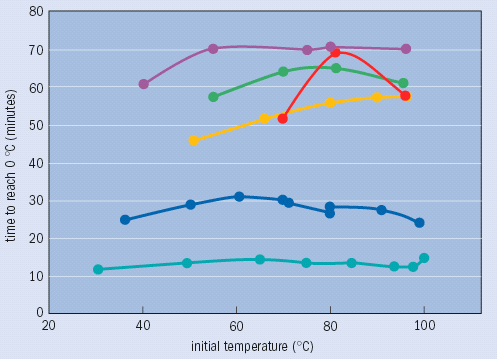
These complexities perhaps explain why the Mpemba effect remains a puzzle to this day. A number of scientists have investigated Mpemba’s claim, but their results remain inconclusive. In 1977, for example, Jearl Walker reported in Scientific American that he had observed the time it took a beaker of water to cool to 0 °C from different initial temperatures under various conditions. These tests provided some clarification of the effect (see figure). But although Walker reported that he could reproduce most of his results, he still obtained large deviations in some of them. “I have not been able to resolve the controversy,” he said.

However, despite the continuing uncertainties surrounding the effect, Pablo Debenedetti, a physicist at Princeton University and a specialist in phase transitions of water, is happy to believe Mpemba’s account. “I do not see any reason to doubt observations showing that under some circumstances hot water can freeze faster than cold water,” he says.

But what causes the effect? Both Debenedetti and Knight point out that there could be at least one obvious explanation for it. If the containers are left open, the hot water will evaporate more quickly and its volume will decline compared with that of the cold water. With a smaller volume, the cooling of the hot water could then overtake that of the cold. That should be easy to test, according to Debenedetti, because the evaporation rate is proportional to the area of the liquid surface. “This can be systematically controlled in experiments conducted in pairs of containers with different geometry,” he says.

Another possibility is that the freezing process could be affected by dissolved gas. Hot water generally holds less dissolved gas than cold, which means that two samples that differ only in their initial temperature would not contain “identical” substances. Debenedetti points out that tiny bubbles of gas can provide nucleation sites where ice crystals start to form. In principle, this might be expected to make ice formation easier in cold water, contrary to the Mpemba effect. But Debenedetti says that the solubility of nonpolar gases such as nitrogen or methane do not necessarily vary smoothly with temperature, so there could be temperature ranges within which the hotter water contains more dissolved gas.

Experiments to pinpoint these influences would require the water to be thoroughly degassed. The effects of other dissolved impurities could be even harder to probe: for example, one could divide the water up into tiny droplets in an oil-water emulsion so that most of them are too small to contain any impurity particles.

Then there is the role of chance, since the nucleation of ice in freezing water depends on enough water molecules coming together to form the core of an ice crystal that can then grow indefinitely. The further the water is below freezing point, the more likely this is to happen. But because it can take some time for ice crystals to nucleate, water can often be “supercooled” such that it remains liquid well below freezing. Random impurities in the liquid, such as specks of dust, can, however, increase the rate of nucleation and suppress supercooling. “Keeping everything constant from experiment to experiment may not be possible without resorting to purposeful nucleation, and that might destroy the effect one is looking for,” says Knight.

Knight adds that he was reminded of the part played by chance while conducting some recent experiments on ice formation. “I had to sit in a cold room at -15 °C and watch water freezing in ice-cube trays on a table top. This exercise emphasized that everything is variable. Some compartments started freezing in about 15 minutes, but many did not for an hour or more.”

Further testing required

In 1995 German physicist David Auerbach at the Max Planck Institute for Fluid Dynamics in Göttingen looked at the role of supercooling in the Mpemba effect. But what he found only made things more complicated. He observed that hot water froze at a higher temperature than cold and therefore in a sense froze “first”. However, the cold water took less time to reach its supercooled state and so seemed to freeze “faster”. To add to the confusion, earlier researchers had reported the opposite: that initially hot water could be supercooled to lower temperatures than cold water. In 1948 Noah Dorsey of the US National Bureau of Standards argued that this is because heating expels impurity particles that acted as nucleation sites for ice. It has been claimed that this effect leads to hot-water pipes bursting more readily than cold, since deeper supercooling leads to ice fingers that advance right across the pipe and block the flow, while freezing nearer to 0 °C just produces a sheath of ice on the pipe surfaces with an open channel in the centre.

Such contradictions continue to make the Mpemba effect as puzzling as ever. Knight is happy to leave it that way, because he thinks that attempts to clarify it would demand too much effort for little return. But Jeng is more positive. He says that despite the complexity of the effect, the experiments needed to study it can be carried out by undergraduates and high-school students – so long as they are planned carefully. As well as thinking about exactly how to heat the water and the kind of thermometer that should be used, experimenters should also consider precise details of the environment surrounding the container. “It can make a difference whether the water is in the middle of an empty freezer, or jammed between a frozen pizza and a frost-covered tub of ice cream,” he says.

Though it is not perhaps the most hi-tech type of experiment, it is one that could help resolve a puzzle that has intrigued scientists for over two millennia. Any takers?

The Mpemba effect

Which takes less time to freeze: hot or cold water? The obvious answer from thermodynamics would be that cold water freezes first. But like other straightforward questions in physics, this one is far more complex than first meets the eye (see “Does hot water freeze first” Physics World April 2006 p19). Hot water, it seems, can freeze first, although not always. It all depends on what you mean by “freezing”, how hot the liquids initially are, how much gas is dissolved in the water, what shape the containers are and so on. While some may view these as tedious complications to a trivial problem, it is one that has been mused over by no less than Aristotle, Francis Bacon and René Descartes, and is now known as the “Mpemba effect” after a Tanzanian schoolboy. Noticing that an ice-cream mixture cooled faster when initially heated, Mpemba failed to get a satisfactory explanation from his teachers, and a full understanding of the effect still eludes us. The story illustrates that while it is right to be sceptical of unusual results, we should neither mock the simple question nor dismiss the unexpected answer out of hand.

Two decades on

While the world looked on in horror at the events unfolding at the Chernobyl nuclear-power plant in the Soviet Union 20 years ago this month (see “A future for nuclear power” Physics World April 2006 p16), another significant – but far less reported – development in the world of physics had just taken place. On 17 April 1986 a short paper by Georg Bednorz and Alexander Müller arrived at the offices of Zeitschrift für Physik in Heidelberg, Germany. The two physicists, based at IBM’s Zurich Research Laboratory in Switzerland, announced they had made a material from barium, lanthanum, copper and oxygen that could conduct electricity without resistance when cooled below a transition temperature, Tc, of about 30 K. It was the world’s first “high-temperature” superconductor. Driven by the dream of materials that can superconduct at room temperature, experimentalists scurried back to their labs. Within a year, a Tc of 90 K in another material had been reported and by October 1987 Bednorz and Müller had been crowned with a Nobel prize.

While papers on high-temperature superconductivity have continued to stream out since those heady days, progress has been slower than expected. Applications like levitating trains and resistance-free power cables are only now starting to come to market. Scientists have been unable to make superconducting wires that work much above 130 K, while a reliable theory of high-temperature superconductivity remains elusive.

Even if we had such a theory, it is not clear that it would predict which materials might superconduct at room temperature. After all, the Bardeen-Cooper-Schrieffer theory, which explains the behaviour of low-temperature superconductors with admirable success, said nothing about the superconducting properties of Bednorz and Müller’s copper-oxide ceramics. What successes there have been over the last 20 years – such as the recent discoveries that iron, single crystals of carbon-60, magnesium diboride (see image) and even DNA can superconduct – have largely been experimental. For future triumphs, we must once again look to the laboratory.

Copyright © 2026 by IOP Publishing Ltd and individual contributors