Quantum gravity for real

Naked singularities are one of the most exotic predictions of Einstein’s theory of relativity. They are ultra-dense fireballs that are thought to form from when a massive dying star more than four to five times heavier than the Sun exhausts its nuclear fuel and collapses under its own weight. The singularities are called naked because they could, in principle, be seen by astronomers.

However, in the final stages of a star’s collapse, the curvature of space-time becomes so large that classical general relativity theory no longer holds and quantum-gravity effects should take over. Indeed, physicists expect that quantum gravity would modify Einstein’s theory near the singularity so that it is not formed at all. Pankaj Joshi and Rituparno Goswami of the Tata Institute of Fundamental Research in Mumbai and Parampreet Singh, now at Penn State University in the US, have now confirmed this hypothesis.

By applying the techniques of loop quantum gravity — a leading candidate for a quantum theory of gravity — Joshi and co-workers calculated that a dying star does not form a naked singularity but has all its mass thrown away in a flash instead. This burst has a characteristic signature: the star dims briefly before it rapidly radiates away to produce extreme energy gamma rays, cosmic rays and neutrinos. If this fingerprint were observed by astronomers, it might provide the first true observational test for quantum gravity.

“Our work shows that the fundamental physics of loop quantum gravity may lead to observable phenomena in astrophysics,” Joshi told PhysicsWeb. “It opens a new frontier to link the theory of quantum gravity with empirical physics and astronomical observations.” The Indian team says that upcoming experiments like the Extreme Universe Space Observatory (EUSO), expected to start running in 2010, could help provide a test for the prediction.

Carlo Rovelli of the Université de la Mediterranée in France thinks the new result might be important. “If it worked, it would be a major step ahead,” he says. “In addition, it is another example in a growing number of suggestions that quantum gravity observations are do-able — contrary to what was believed only a few years ago.”

Giovanni Amelino-Camelia from the University of Rome La Sapienza says that the new proposal is exciting but should be treated carefully. “The picture the authors advocate makes a lot of sense and the results are definitely encouraging. However, it will take time to fully establish the result within the rich formalism of loop quantum gravity.”

And then there were ten?

UB313 was discovered by Mike Brown and colleagues of the California Institute of Technology in January 2005. It is one of a vast band of small, icy bodies lying in the “Kuiper belt” beyond Neptune. Lying almost twice as far from the Sun as the most distant point of Pluto’s orbit, it is the most distant known object in the solar system.

Astronomers initially suspected that UB313 was bigger than Pluto based on measurements of the fraction of visible sunlight that it reflects into space. The fraction is known as the “albedo” of the object. But these measurements were tricky because UB313 is so far from Earth. They also assumed that the body reflects light at optical wavelengths, like Pluto does.

Bertoldi and colleagues have instead measured the thermal emission of the object. Using a telescope operated by the Institute for Millimetre Radio Astronomy in the Sierra Nevada mountains in southern Spain, they measured the amount of heat radiated by UB313 at a wavelength of 1.2 mm, where the light reflected from the Sun is negligible.

The results, combined with optical measurements, reveal that UB313 is about 3000 kilometres across. This is bigger than Pluto by 700 km and also makes it the biggest solar system object to be found since Neptune was discovered in 1846. “Since UB313 is decidedly larger than Pluto, it is now increasingly hard to justify calling Pluto a planet if UB313 is not also given this status,” says Bertoldi.

“The discovery of a solar system object larger than Pluto is very exciting,” says team member Wilhelm Altenhoff of the Max Planck Institute for Radio Astronomy, also in Bonn. “It tells us that Pluto, which should properly also be counted to the Kuiper Belt, is not such an unusual object.”

The results also suggest that other “transneptunian planets” may be lurking undiscovered in the far reaches of the Solar System. But whether astronomers will accept UB313 as a planet is far from clear.

Curing anosognosia

Last September I wrote about the tendency of contemporary historians, novelists and philosophers to ignore the impact of science on human life. I called this condition “anosognosia”, from the Greek for “without knowledge”.

To illustrate the condition, I cited Howard Zinn’s influential book A People’s History of the United States. A supposedly progressive history, it almost totally ignores the effects of science and technology on American life. I asked Physics World readers to submit further examples of science being cast aside. I received many, but was also sent some interesting counterexamples to my claims.

Short shrift

John Wesson, a theoretical physicist based in the UK, cited Simon Schama’s 1500-page History of Britain, which all but fails to mention the massive contributions of UK scientists and engineers in transforming the world. Wesson noted that the Cambridge Biographical Encyclopedia devotes less space to Michael Faraday – whom he dubs “the most outstanding experimental scientist the world has known and a great benefactor of mankind” – than to James Curley, a mayor of Boston.

Robert Frenkel, of the National Measurement Institute of Australia, devised a crude numerical measure of anosognosia. Frenkel took the bestselling A Short History of the World by the Australian historian Geoffrey Blainey, counted the number of proper names in the index (160) and found 46 scientists (though not Einstein). He defined the “anosognostic ratio”, or AR, of Blainey’s book to be 46/160, or about 30%. Frenkel then wondered about the minimally acceptable AR value for a book on general history.

Other respondents mentioned novel and movie plots. Damien Conroy, an Irish graphic designer working in Sweden, cited the “inexplicably popular” 2002 movie Grabben i graven bredvid (or The Guy in the Grave Next Door). Although its action unfolds in the present, nobody uses mobile phones and the plot would collapse if they did.

“At the end of the film,” says Conroy, “the lovers can’t find each other and drive around town missing each other like headless chickens.” Where, Conroy asked, are the text-messaging and GPS-equipped phones that would surely have enabled the characters to avoid this situation? “Lack of knowledge as a plot device”, he observes, “is becoming a thing of the past.” But not quite yet.

Mark Sugrue, a PhD physicist at Royal Holloway, University of London, cited the often-overlooked role of improved technology in the development of popular music. On 1940s valve-radio technology, he claims, albums like Radiohead’s OK Computer are indistinguishable from static.

Several people mentioned the summer 2005 issue of The American Scholar – one of the US’s leading forums on intellectual and cultural affairs. This issue was unusual in that it contained several articles about science. Editor Robert Wilson seemed nonplussed that his journal had positive articles about science, and that the political right was attacking science over issues like intelligent design.

“The attack on science has always been our game,” Wilson wrote, meaning, it appears, the duty of the humanities. “There’s nothing wrong with science, of course,” he continued, “except that it can’t answer any of the important questions.” But when he concluded that “science matters, friends, although it pains me to say so”, he left readers to puzzle out why a profession that answers unimportant questions matters, and why it pained him so much.

Several respondents objected to my claim that most modern thinkers ignore science. David Brandon, a materials engineer at Technion, the Israel Institute of Technology, cited Sinclair Lewis’s novel Arrowsmith as displaying “a remarkable understanding of the nature of scientific motivation and the passion that drives so many of us”.

Marshall Spector – a philosopher and colleague of mine – also pointed out that histories of man’s influence on the environment take science and technology very seriously. He showed me a passage from Clive Ponting’s book A Green History of the World, which bypassed a period of several thousand years – starting in Mesopotamia and Egypt in about 3000 BC – when technological advances made the pattern of human life essentially stable. Ponting thus saw no need to pick up the story of human history until major technological developments altered it again. In a breathtakingly audacious phrase – “various states and empires rose and fell” – Ponting dismissed thousands of years of social, political and military movements that usually comprise the entire stuff of world history.

Sean Hartnoll, a research fellow at the University of Cambridge, warned against “humanities bashing”. While some scholars may be ignorant of key scientific facts, he wrote, at least they try to address such questions as who controls knowledge, how it is implemented, and who benefits from it. These extra-scientific issues, he continued, are what interests historians like Zinn.

The critical point

Few people took me up on my request to identify the causes of anosognosia. I count three.

The first is drama. Technological change tends to lack the exciting settings of other historical turning points. It is not generally heralded by bloody battlefields or by clashes of titanic personalities, and it unfolds in a way that is difficult to dramatize. A second is the hope that we can reinvent ourselves and remake the world, Marxian-style, achieving liberation at a revolutionary stroke. To admit that we depend on science and technology dampens such hopes.

Wilson’s editorial in The American Scholar illustrates the third reason. Scholars in the humanities often see themselves as having a critical function – they ask the “important questions” that help humanity navigate the world’s dangers. But if our fate is linked as much to science and technology as it is to ideologies, then this leading role is blunted, or at least shared with scientists.

All these causes can be overcome if we admit that a truer picture of humanity may be less dramatic than we hope. But we also need to curb our fascination with short-cuts to liberation, and accept that humanity’s important questions are addressed by a variety of disciplines – including science.

Fraud alert

It will have been easy for physicists to look on smugly at the recent shenanigans in the biosciences that have seen Woo Suk Hwang and his group at the Seoul National University in Korea charged with scientific misconduct. Hwang wrote two fraudulent papers that appeared in Science. In the first, from 2004, he claimed to have cloned human embryos by taking the genetic material from a woman’s normal cells and combining it with her eggs; he said the embryos were then used to grow stem cells (303 1669). Then, last year, Hwang claimed to have created stem cells using cells and eggs from different donors (308 1777). Science last month retracted the latter paper, the other having already been withdrawn by its authors. Days later it was then reported that Jon Sudbø, a cancer researcher from the Norwegian Radium Hospital, had published fake results in The Lancet (366 1359).

But physicists should not forget that misconduct can occur on their patch too: in 2002 Jan Hendrik Schön was charged with misconduct and sacked by Bell Labs for fabricating and falsifying data in a series of high-profile papers in condensed-matter physics. Falsifying research results appears all too tempting, and it would be unwise to think that a case like that of Hwang or Schön could never happen again.

Shelf life: David Deutsch

What are the three best popular-science books?

My three favourites are Longitude by Dava Sobel, The Labyrinth of Time: Introducing the Universe by Michael Lockwood and The Neptune File: Planet Detectives and the Discovery of Worlds Unseen by Tom Standage.

One problem is that physicists are, on the whole, bad philosophers of physics. This spills over into their popular-science books, so there are many books in which otherwise excellent explanations of physics are set in bad philosophical contexts (such as positivism, instrumentalism or various kinds of wackiness). That’s why none of my three choices are books by physicists or astronomers describing their own work. Another problem is that there are quite a lot of recent books that I believe to be good, but that I haven’t got round to reading yet (see below).

What science books are you currently reading?

The Enigma of Easter Island by Paul Bahn. This is a fascinating book that avoids political sermons and morality tales by sticking to the scientific evidence and theories about the amazing history of the island.

What else are you reading?

After several years of intending to do so, I have finally got round to reading the novels of Ian McEwan, and they are even better than I had been led to believe. In addition to being great novels, these are also philosophical works. I am particularly impressed with the subtlety of his investigations of the role that reason (both scientific and philosophical), and the lack of it, plays in informing his characters’ deeply personal decisions, and how they try to make sense of the world and themselves.

Which popular-science book have you never read, but feel you ought to have tackled, and why?

Martin Rees’ books such as Just Six Numbers. Rees is probably the finest all-round physics mind of the present day. I have no idea why I haven’t read his books yet; I keep meaning to.

The mystery of the skipping stone

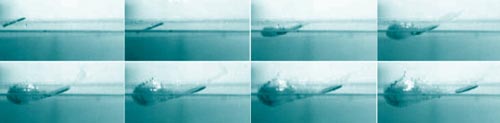
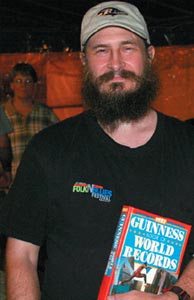
In 2002 an American called Kurt Steiner set a new world record when he threw a stone across a river in Pennsylvania and made it bounce 40 times. Readers of Physics World may not have been quite as successful as Steiner, but many will be familiar with the principle of stone skipping – to throw a flattish stone across the surface of a body of water so that it bounces as many times as possible (figure 1). Although the phenomenon is well known, it does raise a number of questions, such as why does a stone skip at all, how many skips can it perform, and how can the number of skips be maximized?

Stone skipping is just one of many other everyday but intriguing phenomena that can be understood using a number of tools and concepts from physics, such as hydrodynamics, elasticity and capillarity. Solving the mysteries of these phenomena lies in bringing these separate ingredients together correctly, a process that can sometimes involve extraordinary complexity. Much of the basic physics of stone skipping has now been cracked, thanks in part to the use of specially designed laboratory equipment to skip stones and record their motion.

Balancing forces

The origin of the force that causes a skipping stone to bounce is easy to identify. The conservation of momentum dictates that as the stone enters the water and pushes some of it downwards, the stone is, in turn, forced upwards. This force is equal to the hydrodynamic pressure on the stone multiplied by its area, which, using dimensional analysis, can be shown to scales as ρU2S, where ρ is the density of the water, U is the stone’s velocity and S is its cross-sectional area. Assuming that this force is balanced against the weight of the stone Mg, where M is its mass and g is the acceleration due to gravity, there exists a minimum velocity – of the order of a few kilometres per hour – above which the stone will bounce.

A series of high-speed photos of water

These basic assumptions have been supported by experimental results gathered by us and our colleagues (2005 J. Fluid Mech. 543 137). To carry out our experiments, we have developed a catapult device that can throw aluminium disks at fixed translational and rotational velocities, and can then record the “splashes” using high-speed video recording (figures 1 and 2). Our results show that a stone does indeed need to have a minimum velocity in order to bounce. If its velocity is less than this value, the stone “surfs” on the water for a short distance and then sinks.

Eight stills from a video of a stone hitting water

However, the measured threshold velocity is actually much higher than that predicted by the naïve argument above. This is because the assumptions made thus far do not account for the inertia of the stone, i.e. its resistance to changes in its motion. Purely in terms of dimensions, inertia is equal to mass × length × time-2, and in the case of a stone is estimated to be MR/τ2, where R is the radius of the stone and τ is the time over which the collision with the water takes place. Balancing this against the lift force, ρU2S, leads to the following formula for the collision time: τ = (MR/ρS)-1/2/U.

Kurt Steiner

We have verified this simple formula experimentally by varying the velocity of the stone and using stones with different mass, radius and thickness, and we have been able to do so even though our photographs show that the collision involves highly complex hydrodynamical processes. Indeed, a slightly more detailed version of the same equation can accurately predict all of our experimental results, even when the stone is thrown with a range of velocities and in a variety of different directions.

Our experiments have also shown that a bouncing stone must spin with a certain minimum rotational velocity if it is to be stable, i.e. if the angle between the plane of the stone and the water surface is to remain constant (as is the case in figure 2). This stabilization is known as the “gyroscopic effect”, which is used in many applications from spinning tops to the gyroscopes found on spacecraft. To remain stable, a stone typically needs to rotate at least once during its collision time, which means that it must have a minimum spin velocity roughly equal to the inverse of the collision time. If this rotation does not take place, the stone’s collision becomes quite complex and a second bounce becomes much less likely. This is something that stone skippers realize intuitively, rotating the stone with a flick from the finger.

The need for speed

Given these minimum requirements, how can skippers then maximize the number of bounces? Unsurprisingly, the answer is to throw the stone faster. We have found experimentally that the number of skips is more or less proportional to the throwing speed, given the minimum velocity discussed above. However, throwing the stone at high speeds while controlling the velocity and direction of the throw can quickly become a technical challenge. Our catapult was able to throw a 15 g stone up to 10 m s-1, resulting in 20 skips, but could not throw any faster. This was some way short of the 20 m s-1 that would have been needed to break Steiner’s world record. Too bad.

To demonstrate this result mathematically we need to assess what causes the stone to eventually stop skipping. Surprisingly, the stone does not slow down (as can be observed in figure 1, where the stone travels equal distances between successive snapshots, which are equally spaced in time). Instead, the stone’s trajectory “flattens” with time – in other words the vertical component of its velocity decreases while its horizontal one stays constant. This is because the angle with which the stone moves relative to the surface of the water dictates that the stone displaces more water when it moves down than when it rises (as revealed by the shape of the impact cavity in figure 2); this results in a smaller transfer of momentum in the latter stage of each skip and therefore in reduced lift. With successive skips, the stone’s vertical velocity continually decreases and its energy diminishes. When the stone no longer has the energy to jump, it simply surfs over the water before finally sinking. Translating this reasoning into mathematics provides an excellent prediction for the number of skips as a function of velocity.

The number of skips is also determined by the type of stone used and the angle at which it is thrown. We have not investigated these factors experimentally, but we estimate that the optimum angle between the plane of the stone and the surface of the water is about 10-20 °. And as all stone skippers know, the flatter the stone, the better. This is because, for a given mass, flat stones are able to displace more water than rounder stones.

A fruitful pastime

The physics of stone skipping does have its applications, such as the famous bouncing bomb designed by Barnes Wallis and used by the “Dambusters” in the Second World War. More recently, groups at Tohoku University and the Tokyo Institute of Technology in Japan have used our experimental results as a benchmark in order to model the impact of solid objects on a liquid surface. Such research could, for example, be used to improve the design of certain torpedoes that spend part of the time above water in order to reduce their journey times.

However, any such applications are in a sense accidental. The main reason for investigating stone skipping is simply to satisfy one’s curiosity.

• A video of Kurt Steiner’s record-breaking stone-skipping throw can be found at pastoneskipping.com/steiner.htm

The rise of the bloggers

In what today sounds like an impossibly quaint procedure – but one that was commonplace until quite recently – scientists who wanted a copy of a paper from a colleague at another institution used to send a request by postcard. It was a ridiculously slow process, which now takes seconds by e-mail or via the Web. But a new breed of physicists is starting to do much more with the Internet by writing their own Web logs, or blogs (see “Blogs add a new dimension to physics”). Part diary, part discussion board, part auto-rant, most physics blogs are fun, going under witty names like The Quantum Pontiff and the Three-Toed Sloth.

It would be easy to dismiss blogs as glorified diaries written by egocentric self-publicists, but they often provide surprisingly in-depth discussions of anything from complexity to quantum mechanics. Anyone can respond to entries, which does wonders for the free and open discussion of science. But as with anything that you find on the Web, there is no guarantee that blogs are a reliable source of information.

Blogs can also have a more serious side. For example, a blog set up by a computer scientist at the Los Alamos National Laboratory in the US exposed a litany of complaints about conditions at the lab that may have contributed to the eventual resignation last year of its director Peter Nanos.

Not surprisingly, commercial publishers are eyeing up their potential. Seed magazine in the US, for example, has set up a blogging website that it claims is “the Web’s largest conversation about science”. Other publishers are likely to get in on the act, extending their own magazine and journal websites into broader discussion forums known as “community websites”. Although peer-reviewed papers should remain the principal way that scientists communicate their results to one another, blogs can serve as a useful way of expanding that communication. Get blogging!

The visionary who sparkled

John Desmond Bernal (1901-71) was a tireless utopian visionary, Communist idealist, peace campaigner and womanizer. He was also a prolific writer, gifted crystallographer, molecular physicist and social scientist. Such a crowded life was colourful and influential, but sometimes enigmatic. Previous biographies of Bernal have been judged either controversial or incomplete, but Andrew Brown has tried hard here to be objective. Clearly, the dust generated by such an ebullient figure takes time to settle.

Bernal’s brilliance dazzled intellectuals, impressed statesmen and intrigued women. His wild shock of hair gave him the appearance of being permanently electrocuted, and emphasized an arrogance that could antagonize those already irritated by his extreme views and unorthodox lifestyle. Able to discourse knowledgeably and coherently about almost any subject, “Sage”, as he was known to friends and colleagues, was a pioneer of X-ray crystallography in the 1920s and helped to create the new science of molecular biology.

Many of those who worked with him went on to become major players in these fields. Imaginative and free with his ideas, Bernal’s mind blazed like a firework, and he probably gave away much scientific credit that was his due. With his attention continually pulled in many directions, he lacked the dedication to see vital scientific problems through to their conclusion.

In his impressionable youth, major events shaped Bernal’s world – the First World War, the Russian revolution and the struggle for Irish independence. (Bernal was Irish, although he lived most of his life in England.) After an early conversion to Communism along with other Cambridge intellectuals, he remained stubbornly committed to this cause for the rest of his life.

Bernal also became legendary for his promiscuity. Almost every woman he met was seen as a sex object, with his partners participating in and/or tolerating peripheral but torrid relationships. While these numerous women must have suffered, his career seemed to have been fuelled, rather than hindered, by such a rampant libido, which bizarrely contrasted with an otherwise ascetic lifestyle.

Beginning at the Royal Institution, London, in 1923 under W H Bragg, Bernal brought a new rigour to X-ray crystal analysis, which continued when he moved several years later to the Cavendish Laboratory, Cambridge. Probably his contributions there would have gained more recognition had it not been for a clash of attitudes with the omnipotent Ernest Rutherford.

One of Bernal’s Cambridge research assistants was Dorothy Crowfoot (later Hodgkin), who almost inevitably became a Bernal sex partner. Less inevitably, she went on to win the 1964 Nobel Prize for Chemistry. Others who came under Bernal’s influence also went on to achieve Nobel status: in 1962 John Kendrew wrote to Bernal “You’ve fathered five Nobel prizes this year alone”. (In light of Bernal’s promiscuity, “fathered” may or may not have been chosen deliberately.) More Nobels came later to other of Bernal’s colleagues.

In 1937 Bernal left Cambridge for Birkbeck College London, where he inherited the chair left vacant following Patrick Blackett’s move to Manchester University. In what was a chain reaction of professorial movements, Blackett took over from Lawrence Bragg, who replaced Rutherford at the Cavendish following the latter’s death. All this led to Cambridge losing its pre-eminence in nuclear physics and resetting its sights on X-ray crystallography and molecular biology. However, its later successes in these fields, which rivalled Rutherford’s earlier achievements in nuclear physics, built on the firm foundation that Bernal had left.

The 1930s also saw Bernal becoming an active Communist. While he knew Guy Burgess, Anthony Blunt and presumably whoever else was working covertly at the time, he does not appear to have become involved in such espionage. Brown points out that Bernal – a prestigious Irish scientist with a US mother – could easily have emigrated to the US at the outbreak of the Second World War. Instead, he preferred to stay in Britain and became fully involved in applying science to the war effort, where he was trusted by Lord Mountbatten, who was then head of Combined Operations. These exciting exploits, with Bernal frequently and literally in the front line, are vividly described.

While Britain and the Soviet Union were allies, Bernal’s allegiances were not questioned. It was only with the outbreak of the Cold War that his unconventional politics stood out. Some of Bernal’s wartime colleagues later thought that his personal accounts of this era had been exaggerated, adding to the controversy surrounding an already enigmatic figure. These claims and counter claims are well documented in Brown’s book.

After the war, Bernal rebuilt the research effort at Birkbeck, despite lamentable funding. It went on to play a major role in UK and world science, attracting among others Rosalind Franklin and Aaron Klug. Intriguingly, a wall at the college was adorned with a mural drawn by visiting peace activist Picasso in 1950.

Meanwhile, Bernal’s love affair with Communism continued. He was a staunch supporter of the fraudulent geneticist Trofim Lysenko, Stalin’s emperor of Soviet science. In 1953 Bernal wrote a grotesque eulogy “Stalin as a scientist” that embarrassed his colleagues, although it led to him being awarded the prestigious Stalin Peace Prize later that year. Bernal was a reliable apologist for Stalin and for Soviet decisions, including the 1956 invasion of Hungary.

In the 1930s Bernal had written several influential books on the impact of science on society. He resumed this effort in the 1950s, producing his monumental Science in History, which went through several editions to keep pace with scientific and political developments. He also wrote the popular The Origin of Life.

Bernal was an impressive and fascinating figure, often for conflicting reasons. Brown’s biography is a vivid and balanced account of this full and colourful life and its times. The book makes compelling reading, whether one is interested in molecular biology or not. The chapter entitled “The physical basis of life” alone provides a good overview of the development of molecular biology, in which Bernal played a vital pioneering role. One pity is that the index is incomplete, which is unfortunate for a book that provides such valuable material on the history of science in the 20th century.

Tuning in to Titan

On 14 January last year a small probe called Huygens was ejected from its mother ship Cassini and began descending, slowed by parachutes, through the thick haze surrounding Titan – Saturn’s largest moon. During its two and a half hour journey before landing on Titan’s surface, the probe began collecting data that were immediately beamed back to Earth.

Planetary scientists eagerly began studying this information, which has now revealed to us an extraordinary world. Titan, it turns out, has many similarities to Earth; in particular, on Titan methane plays the role of water on our planet. Our exploration of this mysterious moon may therefore provide clues to the chemical and meteorological processes occurring here on Earth.

The outstanding success of the Cassini-Huygens mission has been the culmination of 25 years of effort by a successful international partnership between space scientists from Europe and the US. The mission was first proposed in the early 1980s, shortly after NASA’s Voyager probe beamed back the first observations of Titan. At first, those images were quite frustrating because they showed an almost featureless globe, obscured by a thick organic haze that veiled the moon’s surface.

But Voyager’s measurements of the infrared light reflected from Titan later revealed that a rich and complex organic chemistry is, in fact, at work in Titan’s atmosphere. Researchers then postulated that chemical reactions might be taking place on Titan that are similar to those that occurred on Earth before the development of life. To find out, the idea began to emerge of sending a spacecraft (Cassini) that could explore Saturn and then drop a probe (Huygens) to study Titan’s atmosphere in situ.

The design of the Cassini-Huygens mission started in 1982 and the craft was launched 15 years later in October 1997. After a seven-year journey across the solar system, it successfully entered into orbit around Saturn in July 2004, before Cassini released the Huygens probe on 25 December 2004. Three weeks later, the probe entered Titan’s atmosphere and began descending towards the moon’s surface. It was the most distant landing ever of a man-made craft on a moon of the outer solar system.

Huygens continued to operate on the surface for several hours, which was a pleasant surprise to all those involved in the mission. The data obtained by the probe – as it entered the atmosphere, descended and then sat on the surface – have provided us with a rich harvest of scientific information about Titan. After months of hard work, the hundred or so scientists working on the Huygens mission have now published a series of seven co-ordinated papers (Nature 438 758-802). The detailed in situ Huygens data beautifully complement the impressive data acquired by Cassini while flying past Titan on several occasions since the summer of 2004.

Titan’s surface mysteries unveiled

Larger than the planet Mercury, Titan is a world massive enough and cold enough to have an atmosphere that is mostly nitrogen and 10 times denser than that of the Earth. As the Voyager mission discovered, the temperature on the surface is a chilly -179 °C, a value that was confirmed by the Huygens Atmospheric Structure Instrument (HASI) built by Marcello Fulchignoni from the Observatoire de Paris and colleagues. The water on the surface of Titan is therefore frozen and cannot provide any oxygen for the atmosphere.

Hydrogen-rich conditions have existed on Titan for billions of years, and – in contrast to Earth – the dominant carbon-carrying gas is not carbon dioxide (CO2) but methane (CH4). In this atmosphere, the methane is destroyed by chemical reactions that create a series of complex carbon-containing organic molecules. These form thick layers of organic “haze” that pervade the whole atmosphere right down to the surface of Titan, where the material accumulates.

This haze is what initially prevented Voyager’s camera from viewing the surface at visible wavelengths all those years ago. But when the Huygens probe was first designed in the mid-1980s, no-one knew what the surface of Titan was actually like. Huygens was therefore equipped with an array of sensors to allow planetary scientists to carry out a unique in situ exploration of the structure, dynamics and composition of the atmosphere using various different techniques.

The composition of the particles in the haze has now been measured using two different instruments – the Aerosol Collector and Pyrolyser (ACP) built by a group of scientists led by Guy Israel from the CNRS Service d’Astronomie at Verrieres-le-Buisson near Paris, and the Gas Chromatograph and Mass Spectrometer (GCMS) built by Hasso Niemann’s group at NASA’s Goddard Space Flight Center in Maryland. Meanwhile, the physical and optical properties of the particles have been recorded by Huygens’ Descent Image Spectral Radiometer (DISR), which was built by Martin Tomasko from the University of Arizona and colleagues.

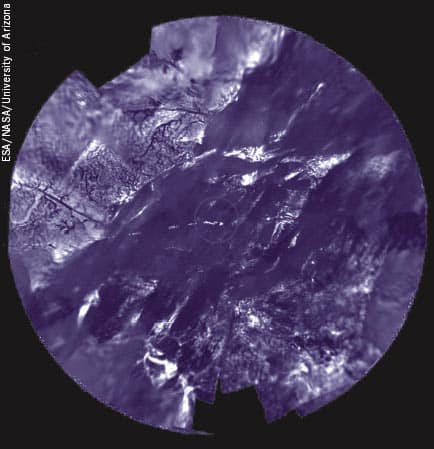
Although Huygens could only observe clear views of the surface when it had descended to within 50 km of touchdown, the images taken by the DISR have revealed river networks cut into an icy landscape. In the past, these rivers were filled with methane, which exists as a liquid in the cold conditions on Titan’s surface, although on the day of Huygens’ arrival, none was found. We can see that the rivers converge at a coastline and flow into what seems to be a further, large river-bed or lake-bed of water-ice material washed away by rain, and organic matter that falls from the sky.

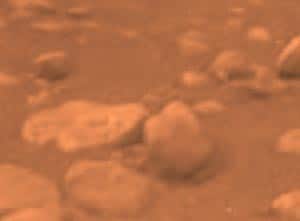
Indeed, Huygens actually landed on a bed of such matter, which appears to have the consistency of wet sand. Moreover, shortly after touchdown, Niemann’s GCMS instrument found signs of methane evaporating from the surface, which indicates that this compound exists in Titan’s soil. Images taken after landing revealed a field of ice cobbles and pebbles.

An instrument on board the Cassini mother craft, known as the Imaging Science Subsystem (ISS), was designed to take pictures of Titan with a resolution in theory of 10 m as it occasionally flies past the moon at a distance of 1000 km from the surface. Although the ISS obtained some extraordinary images, the haze that shrouds Titan limited the actual resolutions to 1 km – roughly the same as that of the two other imaging instruments on board Cassini, the Visual and Mapping Infrared Spectrometer (VIMS) and the Radio Detection and Ranging (RADAR) instrument.

In contrast, the DISR instrument on board Huygens has been able to obtain images with a resolution of just 1 m at an altitude of 10 km and to better than 1 cm after landing. Unfortunately, researchers have not yet had time to compare in detail the images taken by Huygens with those from Cassini at different spatial resolutions and wavelengths. This process will take a few more months, but, when completed, will provide a unique understanding of Titan’s surface around the Huygens landing site and of the properties of the atmospheric haze. In fact, we will have to wait until spring 2008 before the RADAR instrument on board Cassini delivers its sharpest images of the Huygens landing site – and even then they will only have a resolution of about 300 m.

Up in the atmosphere

The Huygens probe has also enabled us to learn more about Titan’s upper atmosphere. Fulchignoni’s HASI instrument made a unique series of measurements of how the friction between Huygens and the air in the atmosphere slowed the probe as it descended from 1400 km above the surface to just 155 km. From this information, we calculated that the temperature in different parts of the atmosphere can vary by as much as 20 K within the space of just a few tens of kilometres. This indicates that Titan’s atmosphere is highly layered. Layering was also observed by Cassini’s ISS instrument.

Three instruments – the DISR, HASI and the Doppler Wind Experiment built by Michael Bird from the University of Bonn, Germany – have provided information about the basic physical properties of the atmosphere below about 155 km, at which point Huygens’ parachutes were deployed to slow its descent before landing on the surface. The temperature and pressure profiles obtained by HASI match pretty well (within about 1 K) with those obtained by Voyager.

However, Huygens revealed some startling information about Titan’s winds. At altitudes above 120 km, the winds move at speeds of 450 km h-1, but Bird’s instrument discovered there is also a “low wind” layer at an altitude of about 70-100 km. This layer had not been predicted following the Voyager mission, which suggests that Titan’s wind pattern is far more complex than we ever thought. The HASI device also found an unexpected region above and below the low-wind layer that generates a shear force. Titan’s meteorologists can not yet explain this mystery.

Fulchignoni’s instrument also confirmed that Titan’s atmosphere has a highly conducting layer at an altitude of about 60 km, where the gases are ionized by cosmic rays. Another interesting finding is that although Titan’s winds blow from west to east (i.e. in the same direction as the planet rotates, as predicted by circulation models), they travel in the opposite direction in the first 7 km above the surface. Both instruments found that these surface winds move at speeds of about 1 m s-1. Could these winds, which are moving at relatively low altitudes by Earth standards, be responsible for the wind-induced features on Titan?

More surprises

Since the days of Voyager, we have known that nitrogen gas (N2) is the most abundant component of Titan’s atmosphere. This fact has now been confirmed by Niemann’s GCMS instrument. It has also been able to measure how nitrogen and methane – the next most common constituent – vary with height in the atmosphere. It turns out that the proportion of methane increases from about 1.5% in the stratosphere to about 5% near the surface.

But where does the nitrogen come from? Nitrogen has two isotopes – N-14 and N-15 – and we would normally expect to see them in a ratio of about 97:3. However, measurements reveal an unusually low proportion of nitrogen-14 atoms in Titan’s atmosphere, which indicates that this isotope has been continually escaping from Titan’s grip over its entire history. The nitrogen probably came from ammonia (NH3) trapped in primordial ice that existed before Saturn was born.

In contrast, carbon – mostly present in the form of methane – does not show a strongly anomalous isotopic ratio. The methane, which is continuously destroyed by photochemical reactions, must therefore be regularly or episodically replenished in the atmosphere. Where this methane comes from remains a mystery. One theory is that it exists somewhere below ground and is brought to the surface by some form of volcano. This suggestion is bolstered by the fact that Huygens has detected argon-40 gas, which can only be produced when potassium in Titan’s rocky interior undergoes radioactive decay.

Meanwhile, the ACP instrument has successfully captured two samples of aerosols as the probe descended towards Titan’s surface. The samples were heated in an oven to a temperature of 600 °C and the products of the reaction were monitored both by the ACP itself and by the GCMS. A preliminary analysis of the spectra – complemented by lab tests carried out by Francois Raulin at the Université Paris-12 – indicates the presence of nitrogen-containing organic compounds in the core of the aerosol particles. Although further lab experiments will still be needed to determine the complexity of the compounds, these initial findings should let us predict the composition of organic matter on Titan’s surface as the aerosols in the atmosphere fall as “rain” to the surface.

Huygens is also equipped with a penetrometer – part of the Surface Science Package built by John Zarnecki of the Open University in the UK. It is essentially a spring-loaded stick pointing out from the bottom of the probe that can poke into the surface and measure the resistance it meets. This instrument clearly indicated that Huygens landed on some form of soft material with roughly the consistency of wet sand – probably a mixture of ice grains, organic matter and liquid. Measurements by Niemann’s spectrometer suggest that the liquid is, in fact, condensed methane.

Meanwhile, as Huygens approached Titan, the DISR instrument measured how light from an onboard lamp reflected from the surface. It confirmed that the concentration of methane is about 5% and showed that the surface consists of water ice, various known organic molecules such as tholins, as well as an additional, unknown component. Bernard Schmitt and colleagues at the Université Joseph Fourier in Grenoble, France, are currently carrying out experiments to identify this mysterious substance, which seems unlike any other we have ever seen in the solar system.

The work goes on

Huygens measurements, which are far from being fully analysed, so far confirm that Titan is indeed a unique body in the solar system. But this is just the start. Further analysis of the data – together with computer simulations, lab experiments and data from Cassini – should tell use even more about Saturn’s mysterious moon. Cassini-Huygens has turned out to be a wonderful mission and a massively successful story of international collaboration. Hopefully, it will be a model for further missions to Titan and to other parts of the solar system as well.


Blogs add a new dimension to physics

In July 2004 security and safety fears led to the temporary closure of the Los Alamos National Laboratory (LANL), the original home of the atomic bomb. Months passed and parts of the lab remained shut. Some staff members opted to leave, while others grumbled to friends and family but essentially endured the situation. Concerned at the lack of public debate, Doug Roberts – a computer scientist at the lab – decided to start an online discussion forum to allow staff to air their views.

But Roberts’ Web log (or “blog”), LANL: The Real Story (lanl-the-real-story.blogspot.com), has been more than just a place for people to moan. It has also been credited with contributing to the resignation, in May 2005, of Peter Nanos, the director of the Los Alamos lab. Indeed, the blog spawned numerous reports in the national and international press, and has so far been visited by about half a million people.

Running the blog is no easy feat for Roberts. At the height of its popularity, maintaining the site took about five or six hours a day. Even though he no longer works at Los Alamos, Roberts still spends two or three hours every day reviewing and posting contributions to the site. “This isn’t for the weak of heart,” he says. “If you create a forum where issues that are not complimentary to your place of work are discussed, you are not going to be very popular with the management.”

Chatting in cyberspace

Creating a blog need not exact such a heavy toll, however. Blogs generally involve one or more regular contributors posting their thoughts about a chosen topic on a website. Anyone reading the blog can then upload their responses to these comments. For physicists, these forums provide a space for intellectual debate as well as social chitchat.

Quantum Diaries (interactions.org/quantumdiaries), for example, is a kind of public-relations exercise for particle physics. Set up as part of the 2005 International Year of Physics, the blog gives a flavour of what working for a large-scale collaboration is like. One contributor – or “blogger” – to Quantum Diaries is Nick Brook, who describes his life as an experimental particle physicist at the CERN laboratory in Geneva. His account may not have made front-page news, but it has led to Brook receiving several e-mails from would-be physicists wanting to enter the field.

Brook has deliberately avoided controversy with his postings, and shied away from commenting on political topics. “I have had to bite my tongue at times,” he says. “If I came back from a particular meeting where something had wound me up, I deliberately didn’t put it on the Web.”

Sean Carroll, a physicist at the University of Chicago and an avid blogger, admits to exercising a degree of self-censorship in his postings too. As one of five contributors to Cosmic Variance (cosmicvariance.com), he is more than happy to share his views on politics, arts and current physics theories, but he has chosen not to comment on his search for a permanent faculty position.

Carroll’s decision to start blogging came shortly after discovering – and enjoying – Web logs from other academics whose work he respected. “Then I realized that the software to do this was free, and if it didn’t work, I could simply stop doing it. So why not?” says Carroll.

Cosmic Variance has a daily readership of about 2000 and growing. Keeping such a large audience interested is far easier with a collective of regular bloggers, he says. The blog’s authority may also be raised if it is more than a sounding box for just one person.

Carroll believes that the informality and immediacy of blogs provide a valuable means of communication, either between experts and non-experts, or among geographically disparate researchers. For instance, when a Cosmic Variance posting triggered interest in an experiment that had allegedly violated Einstein’s theory of relativity, Carroll e-mailed the lead researcher and asked him to comment. The resulting guest blog quickly clarified the situation and prevented rumour from escalating into speculation.

Good for science

Blogging actually fulfils the utopian ideal of shared problem solving that can be absent from real-life scientific research, says Paul Cook, owner of PP Cook’s Tangent Space (ppcook.blogspot.com). When Cook started a PhD in theoretical physics at King’s College London, he was disappointed to find little opportunity for informal discussion about other students’ projects, or wider fields of study. “In reality it turned out that everyone was focused on their area of expertise and not too interested in learning about others,” he says.

Keeping a blog can also provide a sense of community for scientists working alone or with a small team in their particular institution, says Dave Bacon, originator of The Quantum Pontiff (dabacon.org/pontiff). In addition, a blog that is focused on an emerging research field may help attract more interest from the broader physics community, he says.

In The Quantum Pontiff, Bacon writes about his own field of quantum computing and other loosely related areas of physics. Although he describes his blog as nothing more than a “recreational endeavour”, he now receives 400 to 500 visits each day. He acknowledges that blogging may be regarded as self-publicity, but says that writing a popular-science book or submitting a paper to a peer-reviewed journal could also fall into this category.

“It often becomes necessary, in a world where there is so much garbage floating around, to advertise your work,” says Bacon. “Blogging, to me, is no worse than giving a talk at a conference.”

A selection of physics blogs

LANL: The Real Story (lanl-the-real-story.blogspot.com)
Quantum Diaries (interactions.org/quantumdiaries)
Cosmic Variance (cosmicvariance.com)
The Quantum Pontiff (http://dabacon.org/pontiff)
PP Cook’s Tangent Space (ppcook.blogspot.com)
The String Coffee Table (golem.ph.utexas.edu/string/index.shtml)
Lubo_ Motl’s Reference Frame (motls.blogspot.com)
Not Even Wrong (www.math.columbia.edu/~woit/blog)
Leaves on the Line (astro.imperial.ac.uk/~jaffe/blog)
atdotde (atdotde.blogspot.com)
Uncertain Principles (www.steelypips.org/principles)
Three-Toed Sloth (www.cscs.umich.edu/~crshalizi/weblog)

Copyright © 2026 by IOP Publishing Ltd and individual contributors