Live cells jetted with electric fields

Most people use ink-jet printers to print documents and pictures — a technique that involves squeezing tiny droplets of coloured ink from a nozzle. However, the technology is increasingly being used to create small volumes of liquid for a range of applications in electronics and medicine. For example, it has been used to create 2D and 3D patterns of living cells by squeezing a solution containing the cells from a needle using piezoelectric crystals. However, the method is limited by the diameter of the needle, which controls the size of the cell droplet. As a result, it cannot produce droplets smaller than about 100 microns, which means that “small” biological structures with fine features are difficult to make.

The new technique developed by the London researchers overcomes this problem. Known as “electrohydrodynamic jetting”, it involves passing a liquid suspension of live human cells through a stainless-steel needle with a diameter of 500 microns at a controlled flow rate. A voltage of up to 30kV is applied between the needle and an electrode, which charges the liquid. After leaving the needle, the external electric field turns the liquid into a jet that becomes unstable and disperses into a myriad of droplets.

The advantage of this method compared to conventional ink-jet technology is that it can create droplets as small as just a few microns across from needles with diameters as large as hundreds of microns. Until now, however, researchers were unsure if the high voltages required for this technique would damage living cells. Jayasinghe and co-workers have demonstrated that cells can be processed at electric fields as high as 30 kilovolts without being harmed.

The technique may have huge potential for patterning predetermined 2D and 3D biological architectures, such as tissues and organs, at the micron and nanometre scales says Jayasinghe — a feat currently impossible using other jet-based methods.

New look for nanodetection

Until now it has only been possible to detect single nanoparticles with indirect techniques, such as labelling them with a fluorescent molecule or by immobilising the particles on a surface and then analysing them. Real-time detection is therefore impossible with these methods. Moreover, conventional optical techniques for detecting micron-sized particles, which involve measuring the intensity of light scattered from them, do not work for nano-metre sized particles. The new technique developed by Ignatovich and Novotny has now overcome these problems.

The Rochester researchers first illuminate single particles with a focused laser beam. Next, they collect the light scattered by a particle using the focusing objective of a lens and combine this light with a reference laser beam on the surface of a “quadrant detector”. The scattered light and the reference light create an interferometric pattern that the two physicists then measure — using a device known as a split detector — to extract the scattered light’s amplitude. This amplitude is subsequently used to calculate the size of the particle.

The advantage of the technique is that it measures the amplitude — rather than the intensity — of the scattered light. The amplitude only decreases with the cube of the particle size, whereas the intensity of the scattered light decreases six-fold with particle size. This is why conventional optical techniques, which involve measuing the intensity of the scattered light, cannot detect nanoscale particles.

Another advantage of the technique is that there is no signal in the absence of a particle thanks to the split detector, which means the measurement is free from background noise. Ignatovich and Novotny have already used their technique to measure gold particles as small as 5 nanometres across in just milliseconds. The duo has also shown that the method can detect influenza virions — the term used for viruses before they enter a host cell — and distinguish them from polystyrene beads.

“We are now working on detecting viruses, which are usually too small to be detected by other methods individually and in real time,” says Ignatovich. “By improving the sensitivity of our method further we even hope to distinguish different virus strains.” The physicists are working closely with David Topham, also at the University of Rochester, and Tuli Mukhopadhyay at Indiana University for this work.

The team says its technique could be used to detect pathogens and in sensors that provide early warning of biological threats. It could also be used to monitor nanoparticle contamination when fabricating silicon chips.

A medium-sized black hole?

The gravity of black holes is so strong that nothing — not even light — can escape, which makes them difficult to study. However, black holes attract large amounts of gas and dust from nearby stars and gas clouds that form an accretion disk around the hole before succumbing to its force of gravity. The friction encountered by the material in the accretion disk heats it up and makes it emit X-rays that can be detected and measured.

In recent years, astronomers have found evidence for a new class of black holes that are larger than those produced by the collapse of a single star but smaller than the supermassive black holes that are millions of times heavier than the Sun. These intermediate black holes have masses between 100 and 10,000 times that of our Sun. New data taken by Kaaret and co-workers using the Rossi X-ray Timing Explorer suggest they have now found such a hole.

The team came to this conclusion by measuring the X-rays emitted from the black hole region in M82. The radiation became repeatedly brighter and dimmer every 62 days, which implies that a companion star is orbiting the black hole in this time. The length of the orbital period also suggests that the black hole is pulling gas from the outer layers of the star. Moreover, the star must be a giant or supergiant – a phase at the end of a star’s life when it expands and become very big. This is because only a star this size could provide enough fuel to make the black hole region shine with the high brightness observed by the researchers.

The results could help explain how mid-mass black holes form and evolve. According to the Iowa physicists, the black hole in M82 was formed in a “super” star cluster containing million of stars packed into a region of space just 100 light years across. Theory predicts that collisions between stars in such a crowded cluster will create a short-lived giant star that collapses into a medium-sized black hole with a mass of about 1000 Suns. The black hole then captured a companion star. “We now see it [the black hole] as an extremely luminous X-ray source because the companion star has expanded and is feeding the black hole,” says Kaaret.

Cosmic magnetism revealed

Scientists are still unsure about where the substantial magnetic fields in the present-day universe came from. These fields are estimated to be about a micro-Gauss (roughly one millionth of the Earth’s magnetic field). Current models can only explain the origin of these fields on small cosmological scales, such as in stars or in supernova explosions, and run into difficulty when faced with larger scales like those found in galaxies and galaxy clusters.

In the early universe, ordinary matter consisted of a hot plasma containing protons, electrons and photons, in which the density of photons fluctuated in space. According to Ichiki and colleagues, this caused a “wind” of photons to blow from high- to low-density regions. These photons “pushed” the electrons, but not the protons, which are much heavier. This process set up rotating electric currents that in turn generated “seed” magnetic fields. The team thinks that this phenomenon occurred before the universe cooled down enough for the protons and electrons to recombine and form the first atoms.

The Japanese reserachers calculated how the density of photons, electrons and protons fluctuated during this period and evaluated the size of the induced electric currents. They found that the magnetic fields subsequently produced were 10-16.8 Gauss at megaparsec scales (about 3.3 x 10⁶ light years) and 10-12.8 Gauss at kiloparsec scales (around 3.2 x 10⁴ light years). These fields, which may have amplified over time to achieve the values observed today, might have been large enough to affect how the first stars formed.

The physicists say that cosmologically generated magnetic fields could now be used as a new tool to investigate the early universe. Moreover, the team predicts that the magnetic fields should exist even in vacant regions of space that do not contain stars or galaxies. “We are very interested in testing our theory by directly observing magnetic fields in such regions,” says Ichiki.

Closing in on Charon

The technique used to study Charon’s atmosphere is known as “stellar occultation” and can be used whenever a body passes between the Earth and a distant star. It is a powerful tool for measuring the properties of the occulting body. In the latest research, the two teams of astronomers used telescopes in Chile and Argentina to study how the 15-magnitude star UCAC2 26257135 was occulted by Charon on 11 July 2005 (Nature 439 48 & 52).

The results indicate that Charon has virtually no gaseous mantle. Moreover, the two teams measured Charon’s radius to be between around 603 and 606 kilometres plus or minus between 5 and 8 kilometres . These results allowed the astronomers to calculate that Charon’s density is 1.71 that of water, suggesting that it is an icy-rocky body.

The findings could help scientists understand how Pluto and Charon formed. Many astronomers believe that Charon, which was discovered in 1978, is a satellite of Pluto. But because Charon is relatively big — about half the size of Pluto — others argue that two bodies form a double-planet system that was created at the same time. The debate is made all the more tricky because astronomers are currently considering whether to redefine the term “planet” following the discovery of several objects that are similar in size to Pluto.

Meanwhile, astronomers from the Harvard-Smithsonian Center for Astrophysics in the US have determined that Pluto has a surface temperature of about 40 Kelvin, which is 10 Kelvin colder than previously thought. The temperature at Charon’s surface is about 60 Kelvin.

From electronics to anyonics

Textbooks on quantum mechanics traditionally divide elementary particles into two types: fermions and bosons. Fermions such as electrons have antisymmetric wavefunctions, which means that a minus sign (i.e. a phase of π) is introduced into a system when two fermions in that system are interchanged. Bosons such as photons, on the other hand, have symmetric wavefunctions that do not change when two bosons are exchanged. Fermions and bosons also have different intrinsic angular momentum or spin: fermions have half-integer spins in quantum units, while bosons have integer spins.

But in 1977 a small band of theoretical physicists spearheaded by Jon Leinaas and Jan Myrheim at Oslo University in Norway realized that for particles living in two, rather than three, dimensions there are many other mathematical possibilities. Among these are particles that introduce any phase when they are interchanged, not just 0 or π.

In the early 1980s I named the hypothetical new particles “anyons”, the idea being that anything goes – but I did not lose much sleep anticipating their discovery. Very soon afterwards, however, Bert Halperin at Harvard University found the concept of anyons useful in understanding certain aspects of the fractional quantum Hall effect, which describes the modifications that take place in electronics at low temperatures in strong magnetic fields. In 1985 Dan Arovas, Bob Schrieffer and I, all of us then at the Kavli Institute for Theoretical Physics in Santa Barbara, proved that a successful theory of the fractional quantum Hall effect does indeed require particles that are neither bosons nor fermions. These developments spawned a vast literature, featuring beautiful and elaborate mathematics.

Until very recently, however, the subject of anyons had still been almost entirely theoretical. Suddenly, over the last few months, that has changed with the appearance of serious – though not entirely uncontroversial – claims that anyons have been observed directly. Meanwhile, several groups have proposed a new generation of experiments that will be more decisive in proving that anyons exist.

Fractional fluids

Strange things happen in semiconductors that are very pure, very cold and subject to strong magnetic fields. In particular, a phase of matter called a fractional quantum Hall effect fluid appears. In this state, electrons as we know them decompose so that electric charge is no longer transported in discreet lumps of charge e, but in fractions of that unit (see “Fractional quantum Hall effects”)

The fact that these fractional electrons are anyons could lead to a new kind of semiconductor technology that goes beyond electronics. An “anyonic” circuit would operate in ways that are impossible for conventional electronic circuits, and it is precisely this behaviour that physicists are ultimately hoping to exploit. Indeed, conceptual designs for anyonic quantum computers are already on the drawing board, such as those of Parsa Bonderson and co-workers at the California Institute of Technology (arXiv.org/abs/cond-mat/0508616).

To understand how these applications arise, we first need to introduce the idea of quantum statistics. In everyday life, we think of sameness as a limiting case of similarity: there are subtle distinctions between “identical” twins, for example. In quantum mechanics, however, objects can be truly identical. This profound identity is the basis of quantum statistics, and the reason behind the distinction between fermions and bosons.

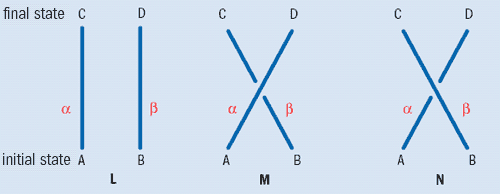
For instance, suppose that we want to calculate the probability that two identical particles α and β, which are originally at points A and B, will arrive at points C and D a certain time later. According to the rules of quantum mechanics, we can get this probability by adding the so-called amplitudes of every possible route that the particles can take to get from the initial to the final state, and then take the square of that sum.

If α and β are truly identical, then each of these possible routes leads to the same final state. For example, one route will leave α at position D and β at C, while another will leave β at C and α at D. Although the final state is the same, there is a clear distinction between the two ways of getting there: one is a direct process and the other is an exchange process (see Quantum statistics). We therefore need to supply a rule for how to properly combine the amplitudes of these topologically distinct processes. The simplest rule is to add them, and that rule defines bosons; the next simplest rule is to subtract them, and that defines fermions.

For many years, physicists thought that these two rules were the only consistent ones. In the case of particles moving in three (or more) dimensions, that is certainly the case. For particles confined to two dimensions, however, things are different. The reason is that there is no way to continuously deform the “over” process in which the path of particle α loops over particle β (path M in figure) – to the “under” process N without the paths of the two particles crossing one another. (Note that the rules of the game require these paths – which represent the world-line of the particle – to ascend through time without looping back, and that their end-points are fixed.)

Similarly, in 2D it is no longer true that doubling process M renders it trivial. Even though a and b will not have been interchanged, the doubled loop is even more entangled. This change opens up possibilities beyond the simple minus sign we had for fermions, and these possibilities essentially define anyons.

Anyons in reality

Talk of particles confined to two dimensions might seem more than a little academic, but 2D systems such as thin layers of semiconductors on insulating substrates are ubiquitous in microelectronics. The key insight is that quantum mechanics can suppress degrees of freedom. For instance, because atomic energy levels are discrete, the highest levels will not be accessible if a system is studied at sufficiently low energies and temperatures. As a result, certain kinds of motion cannot occur. If a semiconductor happens to be layered in such a way that the motion of electrons in the third dimension is quantized, then it can be rigorously considered as 2D.

Even to those of use who had been musing about the hypothetical possibility of anyons, their emergence as concrete physical realities in the theory of the quantum Hall effect in the mid-1980s came as something of a shock.

Although observable consequences of anyon behaviour are simple to sketch out, they are difficult to achieve experimentally. The latest experimental developments in the anyon story are all based on the same theme: a circuit consisting of a drop of fractional quantum Hall effect fluid with an island in the middle. An electric current can flow from one side of the drop to the other via two different paths, but if there are anyons on the island they will affect the way we add the contributions of these paths together. By studying the net current in the circuit, such a device is therefore sensitive to the presence of different numbers of anyons on the island. Last year Fernando Camino and co-workers at Stony Brook University were able to control the overall size of such an island using an applied voltage, which enabled them to create a “quasiparticle interferometer” (2005 Phys. Rev. B 72 075342). With it, the researchers detected the fringes that arise when particles with different fractional statistics interfere with one another, although the team did not attempt to introduce or resolve individual anyons.

That vital next step will be addressed by a new generation of experiments, such as those proposed by Sankar Das Sarma at the University of Maryland and colleagues (2005 Phys. Rev. Lett. 94 166802), Eun-Ah Kim and co-workers at the University of Illinois at Urbana-Champaign (2005 Phys. Rev. Lett. 95 176402) and Nick Bonesteel and co-workers at Florida State University (2005 Phys. Rev. Lett. 95 140503). The circuits in these experiments will contain several islands, allowing more intricate situations in which paths go over one island and under another. We can then imagine connecting islands together and moving anyons around, thus opening up the vast potential of anyonics.

Entering Hilbert space

Suppose that we are presented with a configuration of anyons and asked to predict how they will behave. In order to apply the rules of quantum mechanics, including the sorts of path-dependent factors described earlier, we have to know not only where the anyons are but also the likelihood that they arrived there in different ways. More precisely, what we need is the quantum-mechanical amplitude for each possibility. Achieving this would become a tricky proposition indeed if we had to keep track of their entire histories to find out how the particles’ world-lines got tangled up.

Alternatively, we can cast the problem in a different, more abstract space that includes a new variable – let’s call it “knottiness” – to describe the distinct classes of tangles. In this language, we need to know the amplitude for each value of knottiness. If we have a reasonably large number of particles, then their world-lines can get entangled in a very large number of different ways. Thus if we can access physical behaviour for systems of anyons that depends on their knottiness, we will have gained entry into a vast new space. We will, in fact, be wading into the oceans of quantum-mechanical Hilbert space.

Unfortunately, this knot-dependent information is difficult to maintain, measure and manipulate. Physicists are now just wetting their toes: learning to swim will be challenging indeed, and a quantum computer is a distant dream. Such a device would operate by moving anyons around, thus creating a highly structured knottiness that could be read-out by observing the behaviour of subsequent “probe” anyons. The vastness of Hilbert space offers enormous potential for increased storage space and bandwidth, and taming it is an inspiring goal for 21st-century physics. Anyonics might just provide the means to get us there.

More about: anyons

Parsa Bonderson et al. Detecting Non-Abelian Statistics in the μ=5/2 Fractional Quantum Hall State arxiv.org/abs/cond-mat/0508616

F. E. Camino et al. Realization of a Laughlin quasiparticle interferometer: Observation of fractional statistics Phys. Rev. B 72 075342

Sankar Das Sarma et al. Topologically Protected Qubits from a Possible Non-Abelian Fractional Quantum Hall State Phys. Rev. Lett. 94 166802

Eun-Ah Kim et al. Signatures of Fractional Statistics in Noise Experiments in Quantum Hall Fluids Phys. Rev. Lett. 95 176402

N. E. Bonesteel et al. Braid Topologies for Quantum Computation Phys. Rev. Lett. 95 140503

In search of fun

Physics is fun, or so the science popularizers like to claim. Anyone who is up all night writing a PhD thesis is likely to disagree, as will final-year undergraduates with exams on quantum mechanics looming on the horizon. But a new page in Physics World – entitled Quanta – is our attempt to root out the lighter side of physics. It consists of amusing, noteworthy or memorable things people have recently said, as well as short items about physics that are entertaining or just quirky.

Some physicists certainly know how to have fun, as our article about Ernest Rutherford and his Cambridge colleagues in the 1920s makes clear (see p48; print version only). Known as the Trinity Circus, the group would meet up on Sundays on the Gog Magog golf course near Cambridge, where – by all accounts – they played terrible golf, talked non-stop and laughed. Of course, there was less pressure on physicists in those bygone days, but even today physics ought to be fun, at least sometimes.

Ink-jet technology moves beyond paper


At a Glance: Ink-jet printing

  • Ink-jet printers have helped to drive the IT revolution and can now be bought on the high street for as little as $100
  • The printers mostly work by ejecting tiny droplets of coloured ink from nozzles using pressure or heat
  • Although tens of millions of printers are sold each year, the physics of ink-jet technology remains something of a black art: questions include how the droplets split when leaving the nozzle and how they bounce off a substrate
  • Companies are now trying to extend ink-jet technology to other markets, such as pharmaceuticals, electronics and renewable energy

Every time you buy a new computer, you know that within months it will be superseded by a machine that is faster, cheaper and boasts even more memory. However, it is easy to forget that a similar revolution has quietly been taking place in the world of printing. Desktop printers, which now cost as little as $100, are marvels of scientific and technological achievement.

From lowly beginnings just 30 years ago, ink-jet printers have developed at a staggering rate and have consigned the humble dot-matrix printer to the technological dustbin (see “A brief history of ink-jet printing”). More than 100 million ink-jet printers are manufactured each year – cleverly marketed so that the printers themselves are priced cheaply but the ink that they use sells for up to $1500 a litre.

Given that ink-jet printing is such a profitable business, you might think that the underlying technology is now fully understood. But despite the billions of dollars that have been spent on research into ink-jet technology – about 10 ink-jet patents are registered every day around the world – there is still a frustrating sense of alchemy and magic to the ink-jet process.

For instance, a printer that works well with ink A may simply not print ink B, even though both inks appear to share the same characteristics. Similarly, an ink that prints perfectly onto substrate X will smudge and blur on substrate Y. Determining why is rarely easy. It can also be hard to measure key parameters such as the amount of ink discharged by a printer’s nozzle or where a particular droplet will land.

But ink-jet technology has done more than just underpin the “direct-writing” revolution, which has enabled us all to print extremely high-quality text, images and photos on paper under computer control. It can also, for example, create patterns on textiles or make furniture or floor tiles look like wood, stone or ceramics at a fraction of the cost of the real thing.

Most interestingly of all for physicists, ink-jet technology is a great way of depositing tiny quantities of “smart” materials in the form of minute liquid droplets. Researchers are therefore using it to develop new ways of making everything from solar cells and medical sensors to electronic circuits and pharmaceuticals. Some of the applications may sound far-fetched, but they are entirely within the bounds of reason.

Creating images with ink-jet printers

All ink-jet printers work by ejecting a series of droplets of ink from nozzles in a printhead onto a substrate. These droplets are deposited line by line under computer control, forming the dots that together make up an image. The number of dots that are deposited at any one time depends on the total number of nozzles in the printhead.

Most desktop ink-jet printers have several hundred nozzles, each of which is 20-30 μm in diameter. However, the speed of printing does not necessarily increase in direct proportion to the number of nozzles. After all, if you have four times as many nozzles, there will be four times as many electrical control lines to monitor and manage.

In the case of colour printing, every dot in the image is formed from several different droplets, each with a different colour. When viewed from a distance, these droplets appear as a single colour to the eye. Most printed colour images are built up from just four separate colours – cyan, magenta, yellow and black – that are deposited in different amounts to simulate most colours that the eye can discern.

The tone and hue of each dot (i.e. each pixel) depend on the exact volume and position of each coloured droplet. However, it can be hard to mimic human flesh tones with just four colours. Spurred on by a desire to make printed images as realistic as possible, many ink-jet printers now use five, six and sometimes even eight colours.

To create top-quality images, the printed dots need to be about 50 μm in diameter and vary in size by no more than ±2%. They need to be placed with an accuracy of better than 20 μm, while the volume of each droplet of ink is as little as 3 picolitres (3 × 10-12l) and will weigh only about 10 nanograms, depending on the constituents of individual inks. If the droplets are the wrong size or are placed inaccurately, the eye can notice unwanted patterns, such as “Moiré images” – alternating bands of lighter and darker fuzzy stripes that are most noticeable when looking at blocks of solid colour. Most printers use various electronic and software tricks to fool the eye into overlooking these defects, although cheaper devices omit them to save money.

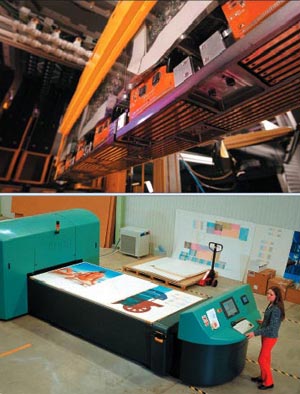
If used continuously, most desktop printers would run for about 24 hours before the printhead’s nozzles break or get blocked and blur the printed image. This is equivalent to printing several thousand sheets of paper, which is fine for home users but would be totally unacceptable for industrial printers – those used to print, say, posters for billboards (figure 1). These machines have more than one printhead and can contain as many as 30,000 nozzles in total, with each nozzle capable of firing up to 40,000 droplets of ink per second.

The number and size of the colour droplets determines the resolution and clarity of the image. But as ink droplets have become smaller, we can now print images with resolutions that are so high that they exceed the ability of the human eye to resolve them. In other words, pictures can now be printed with more actual detail than we can possibly see at a normal viewing distance!

But beware advertisements claiming resolutions of many thousands of dots per inch. If a printer has six coloured inks and can print 2400 dots per inch, the actual resolution is only 400 pixels per inch because each coloured dot has six differently coloured “sub-pixels”. In any case, a resolution of 400-600 pixels per inch is more than satisfactory when printing documents. Going beyond this simply adds unnecessary detail, although it can assist in removing some of the banding artefacts mentioned earlier.

The basics of ink-jet printing

There are two types of ink-jet technology: “continuous” and “drop-on-demand”. In continuous ink-jet printing, a mechanical pump forces ink at high pressure through a nozzle on a printhead, while adding an electrostatic charge to each droplet (figure 2). This process creates a steady stream of charged ink particles that are ejected in a forward direction.

Each droplet can be steered to where it is needed on a substrate by applying a variable voltage to horizontal and vertical electrodes. Where no ink is required, the voltage is applied so as to direct the continuous flow of ink downwards into a “gutter”, where it is collected, recirculated and reused. This technology is widely used to stamp date-codes onto drinks cans, but is limited to printing low-viscosity and relatively volatile inks.

Drop-on-demand printing includes both “bubble-jet” and “piezoelectric” printers, which are widely used in homes and offices. Both consist of an array of chambers, each of which is linked to an individual nozzle. An electrical signal sent to an actuator then generates a pressure pulse that ejects a droplet of ink onto the substrate. (These devices should not be confused with “laser” printers, which do not even use lasers but are based on light-emitting diodes and are a different technology altogether.)

In the case of bubble-jet printers, tiny resistive heaters are used to create small bubbles of steam inside the ink, which is usually water based. As these bubbles expand, they produce the pressure pulse that is needed to eject the ink droplet. The bubble then collapses, the pressure falls, and fresh ink is sucked in from a reservoir. This mechanism is ideal for simple, small devices, which is why bubble-jet printers are so cheap. Manufactures recoup their investment costs by charging customers high prices for the replacement ink cartridges, even though ink is relatively cheap. (Note that the new cartridge may also include a replacement ink-jet printhead as well.)

Piezoelectric ink-jet printers, in contrast, use a class of ceramics based on lead zirconium titanate. These materials can be processed so that they change shape slightly if subjected to an electric field. When incorporated into an ink chamber, the ceramics apply a pressure to the fluid, which causes the ink to be expelled. Piezoelectric printer mechanisms cost more to make than bubble-jet systems, but they can use a wider range of inks and can eject far more drops before they fail.

The main reason for this is that the ink in a piezoelectric-based printer does not heat up, which means that no steam or other vapour is created that might disrupt the chemistry of the ink. The ink can therefore include highly volatile solvents, which allows companies to try different inks for novel applications. Of particular interest are smart, or “functional” inks, which consist of a core substance that will perform some electrical, chemical, optical or mechanical function when deposited onto a substrate. By dissolving this substance in the appropriate solvent, the fluid can then be passed through an ink-jet printer.

For example, many companies are using electrically conducting inks to make electronic circuits. These inks typically consist of nano-sized flakes or particles of silver, carbon or other conducting materials dissolved in a suitable solvent. This results in a low-viscosity fluid that can be “jetted” from a printhead to form the conducting strips of an electrical circuit. As a result, this process is cheaper and much better for the environment than conventional manufacturing techniques because it only prints material where needed and does not require toxic chemicals to etch away unwanted metal regions.

Unfortunately, functional inks are often chemically aggressive and can rot the materials in the printhead. The mixture of a core functional material dissolved in a solvent can also create unwanted lumps of material that block the printhead’s nozzles and create gaps in the pattern of the printed material. While a clogged nozzle in a desktop printer is not critical, a missing dot in an electrical circuit could make it fail. Solving such problems is critical if ink-jet printing is to enter new market areas, and it will require sustained research into the physics of the inks in the ink-jet process.

Technical challenges

The goal of all ink-jet researchers is to create a controlled and consistent flow of ink from the printhead onto the substrate – be it paper, plastic or another material – and to prevent the printhead’s nozzles from becoming clogged. Of particular interest to physicists is the question of how the droplets of ink leave a nozzle, during which the drops are subject to a shear force that is so large that it cannot be measured using any existing techniques. This force can literally tear apart the complex ink molecules as they pass through the nozzle, which can totally destroy the functional part of the droplets.

Another problem is how to accurately predict the trajectory of the droplets, which are becoming ever lighter and smaller as manufacturers seek to make printers with ever higher resolutions. Controlling the placement of such droplets, which have a volume of just a few picolitres, is far from easy. The slightest perturbation – even an air current between the printhead and the substrate – can make the droplet veer off course and land in the wrong place.

Moreover, when a droplet leaves a nozzle, it usually consists of one main drop and a series of smaller “satellite” drops (figure 3). These drops are formed when the nozzle sucks back the last part of the droplet while drawing new ink in from the reservoir. It is essential that these satellite droplets coalesce with the main droplet before it lands on the substrate, otherwise you end up with a series of smaller dots around the main dot and hence a blurred image. This can be achieved by tweaking the electrical signal that creates the droplets in the printhead. Industrial ink-jet printers are also fitted with high-speed video cameras to verify that the droplets have successfully coalesced.

But the problems do not stop at the printhead. When a droplet lands on a surface, it may bounce and can even fragment. This must be minimized to ensure a sharp image. Furthermore, if the droplet lands on a rough surface, such as “untreated” paper, it may spread unevenly as it dries – particularly if there are fibres or other microscopic structures that “wick” the ink in different directions. Indeed, the goal of paper science is to make paper with “filled-in” surfaces so that ink can dry evenly on it with minimal spread.

Taking ink-jet printing beyond paper

Printing colour images is fairly simple because the human eye is very tolerant of error. But in applications where the goal is to place functional fluids very accurately, rather than to please the eye, printing errors can be catastrophic. This is a particular problem for companies trying to create electrical circuits by ink-jetting functional fluids onto plastic substrates, rather than conventional fibreglass, which is nice and rigid.

The problem is that a sheet of plastic lying on a surface – even if stationary and subject to no external force – will wobble slightly. If an array of dots is printed on this surface, the actual position of each dot will move over time. Although this movement is small – typically less than 5 μm – it can be disastrous in an electronic component made from a sequence of inks that need to be applied in precisely aligned layers. Researchers therefore have to monitor the position of the substrate in real time and compensate for any slight movement.

Ink-jet technology may also have applications in the displays industry, where it could be used to create the transparent electrodes that criss-cross the front and rear surfaces of computer displays. The substrates for most displays are currently sputter-coated with tin-doped indium oxide (ITO) and patterned using photolithography. However, this requires several manufacturing steps and unpleasant chemicals. It is also wasteful of indium, which costs about $1000 a kilogram and is becoming increasingly difficult to obtain.

An alternative material is antinomy-doped tin oxide, or ATO, which has similar optical and conductive properties to ITO but is cheaper and much more abundant. Unfortunately, it has never been widely used in the electronics industry to make transparent conductive tracks because it is hard to etch into high-resolution patterns. Now, however, Steve Lipiec from Keeling and Walker, together with researchers from Nottingham Trent University and Patterning Technologies, have joined forces under the ELJET project of the UK’s Department of Trade and Industry (DTI) to develop ATO inks made from nanopowders for ink-jet printing. The partners are currently seeking to optimize the conductivity of the inks while ensuring they remain optically transparent.

There are also moves to develop transparent conducting polymers as an alternative to metal oxides. For example, scientists at Merck, TWI and the universities of Cambridge and Manchester are developing conducting polymers that can be processed in solution and hence be ink-jet printed. These materials have a much higher resistivity than metals because the electrons can move freely along the molecules of each polymer chain when a voltage is applied but have to jump between chains to progress further in space.

Ink-jet technology could even be used to make solar cells, which convert sunlight into electricity. At the moment, these devices have to be made in steps using different pieces of equipment; ink-jet technology would allow all parts of the device to be created at once, which would be cheaper. The ink-jet process could also be used to lay down the materials that harden to form the walls of fuel cells, which generate electricity by reacting hydrogen with oxygen. These walls have to be mechanically sound because fuel cells store such a large amount of energy in a small volume.

Such power sources could be integrated into a variety of electronic display systems, such as road signs, hand-held equipment, advertising posters or e-books, where the underlying electronics, the wiring and the display itself are all ink-jet printed onto a suitable substrate. These devices would be “energy neutral”, generating the energy that they need to run.

Moving into medicine and biology

Ink-jet technology is also starting to find applications in the biological sciences. For example, Brian Derby from Manchester University, Tim Claypole at Swansea University and co-workers are using it to make sensors that can test for, say, pregnancy or diabetes. The sensors consist of a strip of paper or plastic onto which droplets of one or more enzymes have been ink-jet printed. The enzymes, which are surrounded by a suitable buffer material so that they are not exposed to airborne contaminants, can monitor the properties of saliva, urine or other liquids. The advantage over conventional pregnancy test kits is that an electrical circuit could be ink-jet printed onto the sensor, which could be used to give the user a clear yes or no on a bulb or small display. If this technology takes off, such sensors could become so cheap that patients could print their own strips at home using dedicated ink-jet machines.

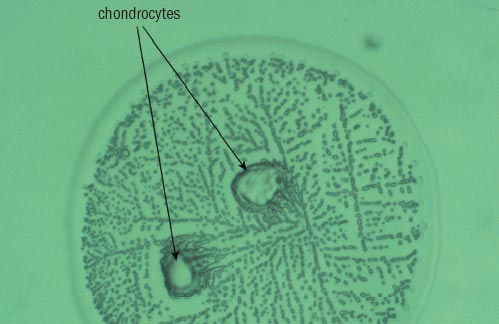
Amazingly, Derby’s team has also shown that it is possible to pass live animal cells through an ink-jet printer – and that the cells remain alive when they reach the substrate (figure 4). Based on this finding, work has begun to build materials consisting of live skin cells within “scaffolds” of bio-compatible fibres. Nutrients are then jetted into the structure to allow the cells’ DNA to control the process of cell multiplication and joining. Once the required material is ready, the scaffold fibres are dissolved, leaving a patch of “skin” that can be applied to burns or ulcers. As this skin would be realistic, the chance of the body rejecting it is greatly reduced.

Claypole and Derby are also investigating whether ink-jet technology can be used to make drugs. It may sound like science fiction, but one day you could take your prescription to your local pharmacist, who would dial up the required formulation into an ink-jet printer that will print your pills on the spot. This process would involve ink-jetting micrograms of chemicals into picolitres of fluid to create the active drug. This drug would then be injected into the body of the pill in a series of layers. If you take medication that needs to be released into your body over a certain period of time or that must target specific areas of the body, then these active components could be built into soluble capsules within the main pill to give the required release characteristics.

Such techniques would let companies make small to medium quantities of a product at a relatively low price because of minimal set-up and tooling costs. Furthermore, they would not have to store pills that are never used, which would help to lower the cost of the medication still further. However, this technology is at a very early stage and will take at least another five years or more before it reaches the market. Unfortunately, few details of this work can be released to the public for commercial reasons.

Another commercially sensitive area of research involves using ink-jet technology to bring together tiny quantities of liquids to carry out the combinatorial tests that are used, for example, in DNA testing. This would involve printing a series of columns of tiny droplets onto a substrate, with each column consisting of a different reagent. A second set of chemicals could then be printed in rows so that each point in the 2D array represents a unique combination of reagents. The results of the reaction could then be analysed optically, for instance by measuring the light emitted by the reaction. As each droplet would only need to have a volume of a few picolitres, the reactions would be quick and efficient.

The future

The colour-printing industry is estimated to be worth over $300bn worldwide, and ink-jet technology is likely to continue to eat into this market by taking over from traditional, analogue printing techniques. It is also showing great promise as a way of enabling tiny quantities of smart materials to be deposited on surfaces, thereby making possible a range of products and devices – from solar cells to pharmaceutical pills – that are not available using any other means.

Given the success of desktop ink-jet printers, ink-jet devices could one day be as commonplace in other applications, notably in the electronics industry. However, we need to be realistic and remember that the best ink-jet printers can currently achieve a maximum resolution of 25 μm, whereas the components on electronic circuits need to be less than 10 μm in size.

In spite of these tough challenges, ink-jet printing remains commercially attractive because it is environmentally friendly, uses relatively cheap components, and does not require expensive manufacturing facilities. Provided we have an ongoing programme of research into the physics of why and how this technology works, every walk of life will one day be affected by this technology – limited only by the imagination of scientists and engineers.

A brief history of ink-jet printing

1867
William Thomson (later Lord Kelvin) is granted a patent for his proposal to use electrostatic forces to control the release of ink drops onto paper. Without computers, however, he has no way of controlling the pattern of the droplets.
1951
Siemens produces the first commercial “continuous” ink-jet printers. These are mainly utilized in the food and packaging industries, where they are used to print sell-by dates and bar codes on products.
1973
The desktop printer is born with the invention by Cambridge Consultants of the “drop-on-demand” ink-jet process. It allows the production of droplets to be controlled, which is vital for printing documents.
1979
Hewlet-Packard and Canon independently invent their own variations of this initial bubble-jet printing phenomenon.
1987
Cambridge Consultants patent an alternative form of drop-on-demand printing using piezoelectric crystals.
1993
Epson enters the market with the first commercial piezoelectric desktop printers.
1994
Epson, Canon and HP introduce colour ink-jet printers.
c.2000
Ink-jet printing displaces conventional “screen printing”, in which coloured images are laboriously created by squeezing individual coloured inks through a series of carefully patterned masks onto a substrate, usually paper.

More about: Ink-jet printing

Inca Digital: www.incadigital.com

UK Displays Network: www.ukdisplay.net

Xaar: www.xaar.co.uk

Nuclear questions

Freezing weather on both sides of the Atlantic and last month’s climate-change talks in Montreal have helped to put energy and the future of nuclear power right back on the political agenda. The issue is particularly pressing for those countries where existing nuclear stations are reaching the end of their lives.

In the UK, prime minister Tony Blair has commissioned a review of energy, with a view to deciding later this year whether to build new nuclear power plants. The review comes just four years after the Labour government published a White Paper on energy that said the country should keep the nuclear option open but did not follow this up with any concrete action. In Germany, new chancellor and former physicist Angela Merkel is a fan of nuclear energy and had said she would extend the lifetime of its nuclear plants beyond 2020, when they are due to close. However, that commitment has had to be abandoned, at least for the time being, following negotiations with her left-wing coalition partners.

The arguments in favour of nuclear power will be familiar to all physicists – it emits almost no carbon dioxide and can play a vital role in maintaining a diverse energy supply. To over-rely on imported supplies of oil and gas can leave a nation hostage to fortune. The arguments against are equally easy to list – the public is scared of nuclear power, it generates dangerous waste with potentially huge clean-up costs, and it is not necessarily cheap. Nuclear plants could also be a target for terrorist attacks.

Given political will, many of these problems can be resolved, or at least tackled. China certainly sees the benefits of nuclear power, as does Finland, which is building a new 1600 MW station – the world’s most powerful – that is set to open in 2009. Physicists, of course, are essential to such developments. They play a vital role in ensuring the safety of such plants and developing new types of nuclear reactor that are safer and cleaner than some of the dinosaurs of the 1960s. Reducing energy consumption and making more use of renewable sources of energy can only go so far. New nuclear stations are good for everyone, and for physicists in particular.

Pythagoras

Pythagoras’s theorem changed the life of the British philosopher Thomas Hobbes (1588- 1679). Until he was 40, Hobbes was a talented scholar exhibiting modest originality. Versed in the humanities, he was dissatisfied with his erudition, and had little exposure to the exciting new breakthroughs achieved by Galileo, Kepler and other scientists who were then revolutionizing the scholarly world.

One day, in a library, Hobbes saw a display copy of Euclid’s Elements opened to Book I Proposition 47, Pythagoras’s theorem. He was so astounded by what he read that he used a profanity that his first biographer, John Aubrey, refused to spell out: ” ‘By G__’ Hobbes swore, ‘this is impossible!’.” He read on, intrigued. The demonstration referred him to other propositions, and he was soon convinced that the startling theorem was true.

Hobbes was transformed. He began obsessively drawing figures and writing calculations on bed sheets and even on his thigh. His approach to scholarship changed. He began to chastise philosophers of the day for their lack of rigour and for being unduly impressed by their forebearers. Hobbes compared other philosophers unfavourably with mathematicians, who proceeded slowly but surely from “low and humble principles” that everyone understood.

In books such as Leviathan, Hobbes reconstructed political philosophy by establishing clear definitions of terms, then working out implications in an orderly fashion. Pythagoras’s theorem had taught him a new way to reason and to present persuasively its fruits.

Before Pythagoras

Pythagoras’s theorem is important for its content as well as for its proof. But the fact that lines of specific lengths (3, 4 and 5 units, say) create a right-angled triangle was empirically discovered in different lands long before Pythagoras. Another empirical discovery was the rule for calculating the length of the long side of a right triangle (c) knowing the lengths of the others (a and b), namely c2 = a2 + b2.

Indeed, a Babylonian tablet from about 1800 BC shows that this rule was known in ancient Iraq more than 1000 years before Pythagoras, who lived in the sixth century BC. Ancient Indian texts accompanying the Sutras, from between 100 and 500 BC but clearly passing on information of much earlier times, also show a knowledge of this rule. An early Chinese work suggests that scholars there used the calculation at about the same time as Pythagoras, if not before.

But what we do not find in these works are proofs – demonstrations of the general validity of a result based on first principles and without regard for practical application. Proof was itself a concept that had to be discovered. In Euclid’s Elements we find the first attempt to present a more or less complete body of knowledge explicitly via proofs.

Euclid does not mention Pythagoras, who lived some 200 years previously, in connection with Proposition 47. We credit it to Pythagoras on the authority of several Greek and Latin authors, including Plutarch and Cicero, who wrote half a millennium after Pythagoras. These authors seem to be relying, in turn, on a single source – a certain Apollodorus – about whom next to nothing is known. Apollodorus does not even show how Pythagoras originally proved the theorem.

Pythagoras’s theorem is unique for the peculiar way in which it has become a challenge to devise new proofs for it. These proofs are not necessarily any better; most rely on the same axioms but follow different paths to the result. Leonardo da Vinci, Christiaan Huygens and Gottfried Leibniz contributed new proofs. So did US Congressman James Garfield in 1876, before he became the 20th US president.

Indeed, more than a dozen collections of proofs of Pythagoras’s theorem have appeared. In 1894 the American Mathematical Monthly began publishing proofs, but stopped after about 100. That did not prevent one reader – a teacher from Ohio called Elisha S Loomis – from publishing a book with 230 proofs in 1927; its second edition in 1940 contained 370. The Guinness Book of World Records website, under “Most proofs of Pythagoras’s theorem”, names someone who, it is claimed, has discovered 520 proofs.

The appeal of the theorem

One may wonder what there is to gain by proving a theorem over and over again in different ways. The answer lies in our desire not merely to discover, but to view a discovery from as many angles as possible. But what is it that is so fascinating about Pythagoras’s theorem in particular? First, the theorem is important. It helps to describe the space around us and is essential not only in construction but – suitably adapted – in equations of thermodynamics and general relativity. Second, it is simple. The Hindu mathematician Bhaskara was so enamoured of the visual simplicity of one proof that he redid it as a simple diagram – and instead of an explanation wrote a single word of instruction: “See”.

Third, it makes the visceral thrill of discovery easily accessible. In an autobiographical essay, Einstein wrote of the “wonder” and “indescribable impression” left by his first encounter with Euclidean plane geometry as a child, when he proved Pythagoras’s theorem for himself based on the similarity of triangles. “[F]or anyone who experiences [these feelings] for the first time,” Einstein wrote, “it is marvellous enough that man is capable at all to reach such a degree of certainty and purity in pure thinking.”

The critical point

Small wonder that Pythagoras’s theorem became a model of what a proof is and does. In Plato’s dialogue Meno, for instance, Socrates coaxes a slave boy (ignorant of geometry) to prove a simplified version of the theorem: that the area of the square formed on the diagonal connecting the corners of another square is twice the area of the first square. Socrates leads the boy to see the inadequacy of the obvious answers, provoking bewilderment and curiosity. Then he helps the boy to recast the problem within a larger, richer context where the path to the solution is clear. Socrates does this exercise not to educate the slave boy, but to illustrate to his owner what learning is all about.

For Hobbes and countless others, Pythagoras’s theorem was far more than a means to compute the length of hypotenuses. It shows something more, the idea of proof itself. It provides what philosophers call categorical intuition; it reveals more than a bare content but a structure of reasoning itself. It is a proof that demonstrates Proof.

Copyright © 2026 by IOP Publishing Ltd and individual contributors