AWE is no ordinary physics-based business. With a specialist workforce of around 7000 employees, AWE supports the UK government’s nuclear defence strategy and Continuous At-Sea-Deterrent (nuclear-armed submarines), whilst also providing innovative technologies and know-how to support international initiatives in counter-terrorism and nuclear-threat reduction. Tracy Hart, physics business operations manager at AWE, talked to Physics World about the opportunities for theoretical and experimental physicists within the company’s core production, science, engineering and technology divisions.
Why should a talented physics graduate consider AWE as a long-term career choice?
AWE provides the focal point for research, development and support of the UK’s nuclear-weapons stockpile. Our teams work at the cutting edge of science, technology and engineering across the lifecycle of the warhead – from initial concept and design to final decommissioning and disposal. The goal: to deter the most extreme threats our nation might face, now and in the future. Within that context, we offer unique professional opportunities across a range of technical and leadership roles suitable for bright, dynamic and innovative graduates in physics, mathematics, engineering and high-performance computing.
What can early-career scientists at AWE expect in terms of training and development?
For starters, the early-career training programme is accredited by 10 professional bodies, including the Institute of Physics (IOP) and the Institute of Mathematics and its Applications (IMA). That’s because we want AWE scientists and engineers to be the best of the best, with heads of profession within the management team prioritizing development of their technical staff on an individualized basis. There are lots of opportunities for self-guided learning along the way, with our technical training modules covering an extensive programme of courses in areas like machine learning, advanced programming (e.g. Python, Java, C++) and Monte Carlo modelling.
More specifically, our physicists have their IOP membership paid for by AWE, while a structured mentoring programme provides guidance along the path to CPhys chartership (a highly regarded professional validation scheme overseen by the IOP). We also prioritize external collaboration and work closely with the UK academic community – notably, the University of Oxford and Imperial College London – sponsoring PhD studentships and establishing centres of excellence for joint research.
How about long-term career progression?
There’s a can-do culture at AWE, with a lot of talented scientists and engineers more than ready – and willing – to take on additional responsibility after just a few months in situ. Fast-track development pathways are supported through fluid grading and a promotion process that enables staff to advance by developing their technical knowledge in a given specialism and/or their leadership competencies in wider management roles. It’s all about opportunity: we take a lot of time – and care – recruiting talented people, so it’s important to ensure they can access diverse career pathways across the business.
What research and technical infrastructures are available to scientists at AWE?
Our experts work with advanced experimental and modelling capabilities to keep the nation safe and secure. A case in point is the Orion Laser Facility, a critical component of AWE’s working partnerships with academia (with around 15% of its usage ring-fenced for such collaborations).
The size of a football stadium, Orion enables our teams to replicate the conditions found at the heart of a nuclear explosion – ensuring the safety, reliability and performance of warheads throughout their lifecycle. This high-energy-density plasma physics capability underpins not only our weapons research, but also yields fundamental scientific insights for astrophysicists studying star formation and researchers working on nuclear fusion.
There is also AWE’s high-performance computing (HPC) programme and a unique scientific computing platform on a scale that only a few companies across the UK can match. Our latest Damson supercomputer, for example, is one of the most advanced of its kind and performs 4.3 trillion calculations every second – essential for 3D modelling and simulation capabilities to support our research into the performance and reliability of nuclear warheads.
Does AWE work on nuclear non-proliferation activities?
We are home to the Comprehensive Test Ban Treaty Organization (CTBTO) National Data Centre for Seismology and Infrasound. Through the collection and analysis of data from monitoring systems all over the world, the centre works with the UK Ministry of Defence (MOD) to identify potential nuclear explosions conducted by other countries. Further, the team supports the MOD and international partners in underpinning the CTBT, providing expertise on arms control verification, development of forensic monitoring techniques, as well as the capability to analyse and advise on nuclear tests.
How important is cross-disciplinary collaboration to AWE’s mission?
The multidisciplinary nature of our programme means there’s a place for domain experts – technical leaders in their specialist niche – as well as “big-picture” scientists, engineers and managers who might be equally at ease when working across a range of scientific disciplines. Ultimately, collaboration informs everything we do. A case study in this regard is The Hub, a new purpose-built facility that will, when completed, consolidate many ageing laboratories and workshops into a central campus that integrates engineering, science, learning and administrative functions.
What sorts of projects do physicists get to work on at AWE?
The physics department at AWE recruits a broad range of skillsets spanning systems assessment, design physics, radiation science and detection, material physics and enabling technologies. Among our priorities right now is to scale the talent pipeline for ongoing studies in the criticality safety group. Roles in this area are multidisciplinary, combining strong technical understanding of the nuclear physics of criticality alongside the operational know-how of writing safety assessments.
Put simply, nuclear physics domain knowledge is applied to derive safe working limits and restrictions for a wide variety of operations that use fissile material across the nuclear material and facility lifecycles. These derivations regularly involve the use of nuclear data from real-world experiments and Monte Carlo computer codes. What’s more, the production of safety assessments requires an understanding of hazard identification methods and various fault analysis techniques to determine how a criticality could occur and what safety systems are required to manage that risk.
What about other recruitment priorities at AWE?
Current areas of emphasis for the HR team include the HPC programme – where we’re looking for systems administrators and applied computational scientists – and design physics – where we need candidates with a really strong physics and mathematics background plus the versatility to put that knowledge to work versus our unique requirements. Our design physics team uses state-of-the-art multiphysics codes to model hydrodynamics, radiation transport and nuclear processes plus a range of experimental data to benchmark their predictions. Operationally, that means understanding the complex physical processes associated with nuclear-weapons function, while applying those insights to current systems as well as next-generation weapons design.
The key take-away: if you’re looking for a role with excitement, intrigue and something that really makes a difference, then now is the time to join AWE.
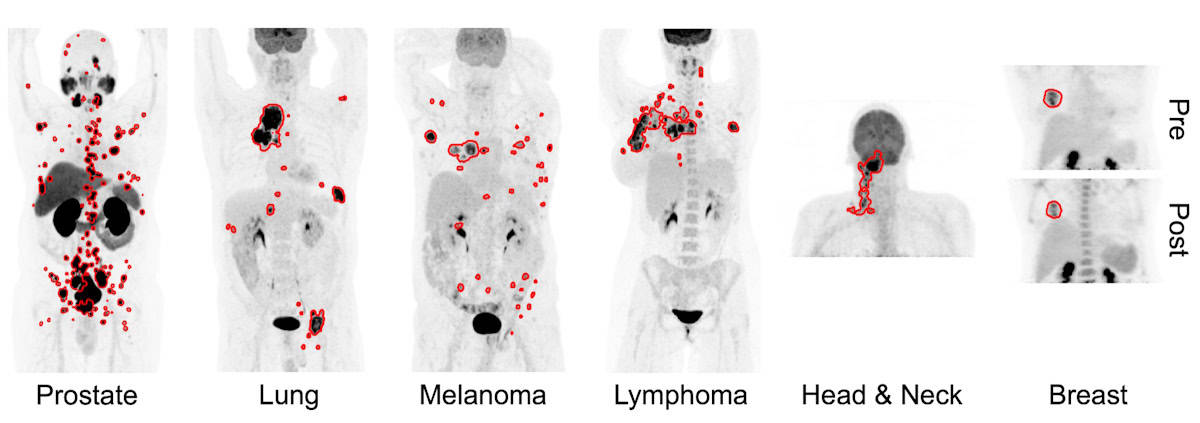
Six in one Example tumour segmentations predicted by the deep transfer learning approach, for prostate cancer, lung cancer, melanoma, lymphoma, head-and-neck cancer and breast cancer (showing pre- and post-therapy scans). (Courtesy: K H Leung et al. Johns Hopkins University, Baltimore, MD)
Whole-body positron emission tomography/computed tomography (PET/CT) is a diagnostic imaging technique that can detect the spread of cancer or monitor a tumour’s response to treatment. But manual delineation of the multiple lesions often observed in whole-body images is a time-consuming task that’s subject to inter-reader variability. For clinical use, what’s really needed is an efficient, fully automated method for detection and characterization of cancer from PET/CT images, enabling rapid diagnosis and treatment.
Deep learning can be used to automatically extract key features from image data, but the models need to be trained on large annotated datasets, which may not be readily available. To remove this reliance on labelled data, a team headed up by Kevin Leung from Johns Hopkins University School of Medicine is using deep transfer learning – a technique that employs knowledge from a pre-existing model to address a new task – to detect six different types of cancer, imaged with two different radiotracers, on whole-body PET/CT scans.
“Deep learning models are also often developed for specific radiotracers,” explained Leung, who presented the findings at this week’s 2024 SNMMI Annual Meeting in Toronto. “And given the wide range of radiotracers available for nuclear medicine, there’s a need to develop generalizable approaches for automated PET/CT tumour quantification in order to optimize early detection and treatment.”
The new approach uses deep transfer learning to jointly optimize a 3D nnU-Net backbone (a deep learning-based segmentation method) across two PET/CT datasets, in order to learn to generalize the tumour segmentation task. The model then automatically extracts radiomic features and quantitative imaging measures from the predicted segmentations, and uses these extracted features to assess patient risk, estimate survival and predict treatment response.
“In addition to performing cancer prognosis, the approach provides a framework that will help improve patient outcomes and survival by identifying robust predictive biomarkers, characterizing tumour subtypes, and enabling the early detection and treatment of cancer,” says Leung in a press statement.
For their study, Leung and colleagues examined data from a total of 1019 patients. For training and cross validation, they used PET scans (with limited tumour annotation) from 270 patients with prostate cancer imaged with the PSMA-based tracer 18F-DCFPyL, as well as scans (with complete annotations) from 501 patients with lung cancer, melanoma or lymphoma imaged with the metabolic tracer 18F-FDG.
For external testing, they used PSMA PET scans of 138 patients with prostate cancer and FDG PET scans from 74 patients with head-and-neck cancer and 36 with breast cancer (none containing annotations). The automated segmentation approach yielded median true positive rates ranging from 0.75 to 0.87, and median Dice similarity coefficients ranging from 0.73 to 0.83, indicating fairly accurate segmentation performance.
Leung shared the findings of the three prognostic models that the researchers developed. For risk stratification of prostate cancer, they used whole-body imaging measures extracted from the tumour predictions to build a model that predict patients as low to high risk. Comparison with classifications based on initial prostate-specific antigen (PSA) levels showed that the risk model had an overall accuracy of 0.83.
“Patients predicted as being high risk also had significantly higher follow-up PSA levels and shorter PSA doubling times compared to low- and intermediate-risk patients, indicating further disease progression for those patients,” Leung explained.
In a similar manner, the researchers used imaging measures from FDG PET scans of patients with head-and-neck cancer to calculate risk scores. They found that the risk score was significantly associated with overall survival, with patients assigned a higher risk score having the shortest median overall survival.
Lastly, the team created models to predict the response of patients with breast cancer to neoadjuvant chemotherapy, using imaging measures extracted from pre- and post-therapy FDG PET scans. A classifier using only pre-therapy imaging measures predicted pathological complete response with an accuracy of 0.72, while models using both pre- and post-therapy measures exhibited an accuracy of 0.84, highlighting the feasibility of using the model for response prediction.
“The approach may be able to help reduce physician workload by providing automated whole-body tumour segmentations, as well as automatically quantifying prognostic biomarkers,” Leung concluded, noting that the AI tool could also play a role in tracking changes in tumour volume in response to therapy.
An investigation into battery thermal runaway initiation and propagation
Abuse testing and failure recreation of thermal runaway in lithium-ion battery packs within Exponent’s London laboratory has shown how battery fires can initiate and propagate. This webinar discusses how even small amounts of moisture ingress into a battery pack can lead to thermal runaway of the cells within the pack. Specific conditions and behaviours of saltwater ingress-driven circuit board faults were investigated, and localized temperature increases of greater than 400 °C even at relatively low voltages and fault currents were demonstrated, showing the potential for saltwater induced circuit board faults to lead to cell thermal runaway events. The extent and severity of e-mobility battery fires resulting from a single cell thermal runaway failure was explored. Various suppression techniques a user may attempt to implement if they experience a battery fire in a household environment were evaluated. Tests were run of water flows typical of a household garden hose as well as different fire blankets deployed both before the forced thermal runaway event, and after initiation. In addition, various design approaches, such as added thermal insulation between cells, were shown to help prevent cell-to-cell propagation and reduce the severity of a battery pack failure.
An interactive Q&A session follows the presentation.
Samuel Lawton is an expert in batteries and energy storage with extensive experience in failure analysis, pack design, quality evaluation, factory auditing, and thermal testing and cell testing. He holds a Ph.D. in Chemistry and is currently a senior scientist at Exponent, where he leads complex projects focused on battery performance and safety.
In his role, Samuel specializes in root cause failure analysis, thermal event investigations, and product validation. He is proficient in X-ray computed tomography, non-destructive and destructive cell testing, and bespoke abuse testing. His previous work at OXIS Energy Ltd included developing novel anode protections and unique cathode materials for advanced battery systems.
Exoplanet researchers David Charbonneau from Harvard University and Sara Seager from the Massachusetts Institute of Technology have won the 2024 Kavli Prize in Astrophysics. The laureates, who will share the $1m prize, have been recognized by the Kavli Foundation and the Norwegian Academy of Science and Letters for their work characterizing the atmospheres of exoplanets. The foundation was set up by the Norwegian-American physicist and philanthropist Fred Kavli in 2000.
Since the first planet around other stars was spotted in the 1990s, new techniques and telescopes have helped discover more than 5000 exoplanets to date. Spectroscopic measurements of the chemical compositions in the atmospheres of some exoplanets have also been made, revealing whether they are suitable for life. Such methods can detect atomic and molecular species in planetary atmospheres around both giant and rocky planets.
The characterization of exoplanet atmospheres is still a developing field but it is one that both Charbonneau and Seager have pioneered. In 1999, Charbonneau led the team that used the transit method – a technique that measures the tiny amount of light blocked by such a planet as it passes in front of its host star – to discover a giant exoplanet HD 209458b.
In the early 2000s, he then pioneered the use of space-based observatories, such as the Hubble Space Telescope, to perform the first studies of the atmosphere of giant extrasolar planets. This involved taking molecular spectra using both filtered starlight and infrared emission from the planets themselves.
Seager, meanwhile, pioneered the theoretical study of planetary atmospheres and predicted the presence of atomic and molecular species that should be detectable by transit spectroscopy, notably the alkali gases. She improved our knowledge of planets with masses below Neptune while finding that higher-mass variants are dominated by hydrogen and helium. Seager also provided new concepts for our understanding of the habitable zone, where liquid water can exist, and thus established the importance of a variety of biomarkers such as oxygen, ozone and carbon dioxide.
Exciting opportunities ahead
Seager told Physics World she is “absolutely thrilled” to receive the prize with Charbonneau. “It’s a significant milestone that exoplanets are recognized with this award for the first time,” she says. “With the James Webb Space Telescope operational and continuous discoveries about exoplanet atmospheres, our field is thriving. I am most looking forward to the future when we can identify a true Earth twin, an Earth-like planet orbiting a Sun-like star.”
Charbonneau, meanwhile, told Physics World that receiving the news was “wonderful” not just for him but the “entire community of exoplanet explorers”. “Research in exoplanets has been such an adventure,” he says. “We are constantly finding new worlds and developing new tools to learn about these worlds.”
He adds that the next “exciting opportunity” in the field is to study terrestrial worlds. “Recently some very nearby examples have been discovered orbiting small stars, which makes them accessible to our current telescopes,” he notes. “So the question is, are these indeed Earth-like, with atmospheres and oceans and even a moon, or not? And we can hope to learn the answers in only a few years.”
A new mathematical model indicates that the Sun’s magnetic field originates just 20,000 miles below its surface, contradicting previous theories that point to much deeper origins. The model, developed by researchers at Northwestern University in the US and the University of Edinburgh, UK, could help explain the origins of the magnetic field, and might lead to more accurate forecasts for solar storms, which can damage electronics in space and even on the ground if they are powerful enough.
The physical processes that generate the Sun’s magnetic field – the magnetic dynamo – follow a very specific pattern. Every 11 years, a propagating region of sunspots appears at a solar latitude of around 30°, and vanishes near the equator. Around the same time, longitudinal flows of gas and plasma within the Sun, known as torsional oscillations, closely follow the motion of the sunspots.
These two phenomena might be related – they might, in other words, be different manifestations of the same underlying physical process – but researchers still do not know where they come from. Recent helioseismology measurements point to a relatively shallow origin, limited to the near-surface “shear layer” located in the outer 5–10% of the star. However, that contradicts previous theoretical explanations that rely on effects arising more than 130,000 miles below the Sun’s surface.
Magnetorotational instability at the surface
Researchers led by Geoffrey Vasil at Edinburgh may have found a resolution to this conflict. According to their model, the Sun’s magnetic field does indeed stem from a near-surface effect: a unstable fluid-dynamic process known as a magnetorotational instability.
This is promising, Vasil notes, because such instabilities also occur in astrophysical systems such as black holes and young planetary systems, and we have understood them in that context since the 1950s thanks to pioneering work by the Nobel Prize-winning physicist Subrahmanyan Chandrasekhar. More exciting still, he tells Physics World, is that the new model better matches observations of the Sun, successfully reproducing physical properties seen in sub-surface torsional oscillations and magnetic field amplitudes. A final advantage is that unlike theories that invoke deeper effects, the new model describes how sunspots follow the Sun’s magnetic activity.
Several difficulties with current theories
Vasil says he first stumbled across the idea that near-surface instability could be responsible while he was a PhD student at the University of Colorado in the US. “I remember the ‘huh, that’s funny’ insight while flipping through an astrophysics textbook,” he recalls. The previous leading hypothesis, he explains, held that the Sun’s magnetic field originated at the bottom of a 130,000-mile-deep “ocean”. Two things happen down in this so-called tachocline region: “The first is that the rolling, overturning turbulence of gas and plasma stops and gives way to a calmer interior,” he says. “There is also a jump in the solar windspeed that can ‘stretch’ magnetic fields.”
While these ideas hold some appeal, they suffer from several difficulties, he adds. For one, even if the magnetic field did originate deep inside the Sun, it would still have to get to the surface. Calculations show that this would not be easy.
“Overall, it makes a lot of sense if things happen near the surface and don’t have to go anywhere,” he says. “While that’s not the only reason supporting our surface-origin hypothesis, it is a big part of it.”
A better understanding of sunspot formation
If magnetic fields do originate right below the surface, they ought to be easy to measure. Such measurements could, in turn, lead to a better understanding of sunspot formation and improved warnings of sunspot eruptions – which would help us protect sensitive electronics.
The researchers need much more data to continue with their investigations. “Our current work mostly concerns the shallow region near the Sun’s equator, but we know for sure that the polar regions are also extremely important, including deeper down from the poles,” says Vasil. “The difference is that we don’t have any specific physical hypotheses of what might be happening in these zones.
“We hope to obtain such data from planned satellite missions (from both NASA and the European Space Agency, ESA) to observe the solar poles in much more detail. Unfortunately, these projects have recently been put on hold, but I hope that our work will encourage others to pursue these again.”
For now, the researchers plan to concentrate on building open-source tools to help analyse the wealth of data they already have. Their present study is detailed in Nature.
The manufacturing industry is one of the largest emitters of carbon dioxide and other greenhouse gases worldwide. Manufacturing inherently consumes large amounts of energy and raw materials, and while the sector still relies mainly on fossil fuels, it generates emissions that directly contribute to climate change and environmental pollution. To combat global warming and its potentially devastating impact upon our planet, there’s an urgent need for the manufacturing industry to move towards net zero operation.
Cranfield University, a specialist postgraduate university in the UK, is working to help the industry achieve this task. Teams at the university’s science, technology and engineering centres are devising ways to accelerate the journey towards more sustainable manufacturing – whether by introducing manufacturing processes that use less energy and raw materials; investigating renewable and low-carbon energy sources; creating new materials with enhanced recyclability; or implementing smart functions that extend the life of existing assets.
Greener manufacturing
One way to lower the carbon footprint of manufacturing is to move to 3D printing, an additive fabrication technique that inherently reduces waste.
“The machining techniques used in conventional manufacturing require a lot of power and a lot of raw material, which itself requires energy to create,” explains Muhammad Khan, acting head of Cranfield’s Centre for Life-cycle Engineering and Management and reader in damage mechanics. “In 3D printing, however, the amount of power required to generate the same complex part is far less, which impacts the overall carbon footprint.”
Materials used for 3D printing, particularly polymeric or other organic materials, are generally recyclable and easier to reuse, further reducing emissions. “Within our centre, we are working on polymeric materials to replace existing metallic materials in areas such as aerospace and automotive applications,” says Khan.
3D printing also enables manufacturers to rapidly tailor the design and properties of a product to meet changing requirements.
David Ayre “It’s important that everyone makes a move towards net zero, because we’re not going to make any impact unless the whole world is on board.” (Courtesy: Cranfield University)
“We’ve seen this a lot in Formula One,” says David Ayre, a senior lecturer in composites and polymers in Cranfield University’s Composites and Advanced Materials Centre. “They’ll 3D print prototyping materials to quickly push out the structures they need on their cars. Twenty years ago, the resins used for this were brittle and only suitable for prototyping. But now we have developed more robust resins that can actually be used on working structures.”
Another benefit of 3D printing is that it can be performed on a smaller scale, enabling manufacturing sites to be installed locally. This could be next to the resource that the printer will use or next to the consumers that are going to use it; in either case, reducing transportation costs. While the cost implications of this “end of the street” model haven’t yet won through, the pressure to reduce CO2 emissions “might be the driver that starts to change the way we look at manufacturing”, Ayre notes.
Recycling opportunities
The introduction of novel advanced materials can also help increase sustainability. Thermal barrier coatings developed at Cranfield, for example, enable jet engines to work at higher temperatures, increasing efficiency and reducing fuel consumption. “There’s a huge role for engineers to play,” says Ayre.
Designing materials that can be recycled and reused is another important task for Ayre’s team. Producing raw material requires vast amounts of energy, a step that can be eliminated by recycling. Aluminium, for instance, is easy to process, highly recyclable and used to create a vast spectrum of products. But there are still some challenges to address, says Ayre.
“The aerospace industry likes to machine parts. They’ll take a one tonne billet of aluminium and end up with a 100 kg part,” he explains. “I worked with a student last year looking at how to recycle the swarf that comes from that machining. Unfortunately, aluminium is quite reactive and the swarf oxidizes back to the ore state, where it’s not really easy to recycle. These are the sorts of issues that we need to get around.”
The centre also focuses on composite materials, such as those used to manufacture wind turbine blades. Ayre notes that turbine blades built in the 1970s are now reaching the end of their usable life – and the composites they’re made from are difficult to recycle. The team is working to find ways to recycle these materials, though Ayre points out that it was such composites that enabled growth in the wind turbine market and the resulting source of renewable energy.
Alongside, the researchers are developing recyclable composite materials, such as bioresins and fibres produced from natural products, although work is still at an early stage. “These materials don’t have the same properties as petroleum-derived resins and ceramic, carbon and glass fibres,” Ayre says. “I don’t think we’re close yet to being able to replace our super-lightweight, super-stiff carbon fibre composite structures that motorsport and aerospace are utilizing.”
Smart materials
Meanwhile, Khan’s team at Cranfield is developing materials with smart functionalities, such as self-healing, self-cleaning or integrated sensing. One project involves replacing domestic pipelines used for wastewater distribution with 3D-printed self-cleaning structures. This will reduce water requirements compared with conventional pipelines, reducing the overall carbon footprint.
Muhammad Khan “If you can extend device life by utilizing smart mechanisms…This can positively contribute to the net zero agenda.” (Courtesy: Cranfield University)
With a focus on maintaining existing assets, rather than creating new ones, the researchers are also developing self-healing structures that can repair themselves after any damage. “If you can extend device life twice or thrice by utilizing these smart mechanisms, you can reduce the amount of raw material used and the emissions generated during manufacturing of replacement parts,” says Khan. “This can positively contribute to the net zero agenda.”
Another project involves developing structures with integrated sensing functionality. Such devices, which monitor their own health by providing information such as displacement or vibration responses, eliminate the need to employ external sensors that require energy to construct and operate. The diagnostic data could provide users with an early warning of signs of damage or help determine the remaining useful life of a structure.
“Life estimation is challenging, but is something we are looking to incorporate in the future – how we can utilize the raw data from embedded sensing elements to model the remaining useful life,” says Khan. “That prediction could allow users to plan maintenance and replacement routines, and save a system from catastrophic failure.”
Building for the future
Cranfield University also aims to embed this sense of sustainability in its students – the engineers of the future – with a focus on net zero integral to all its engineering and related courses.
“The majority of our manufacturing and materials students will go on to an engineering career and need to appreciate their role in sourcing sustainable materials for any parts they’re designing and investigating manufacturing routes with low CO2 footprint,” Ayre explains. Students also learn about asset management – choosing the right product in the initial stages to minimize maintenance costs and extend a component’s life.
Elsewhere, Khan is working to ensure that standards agencies keep sustainability in mind. His centre is part of a consortium aiming to bring the goal of achieving net zero into standards. The team recently demonstrated how the existing asset management standard – ISO 15,000 – can be modified to incorporate net zero elements. The next step is to convince ISO and other agencies to accept these concepts, allowing people to manage their assets in a more environmentally friendly way without compromising availability or performance.
Ultimately, says Ayre, alongside “trying to encourage humanity not to want more and more and more”, lowering global emissions could rely on engineers getting creative and finding innovative ways to produce products that people want, but at reduced cost to the environment. It’s also vital that customers take on these ideas. “There’s no point us coming up with new-fangled manufacturing process and new materials if nobody has the experience or the confidence to take it anywhere,” he points out.
“It’s important that everyone makes a move towards net zero, because we’re not going to make any impact unless the whole world is on board,” says Ayre.
Climbers on Mars’ equatorial volcanoes would wake up to frost-covered peaks, but aspiring Martian scuba divers would find no liquid water beneath the planet’s polar ice caps – contradicting previous reports. These findings, from two independent teams, tell us more about where water does and doesn’t exist on the red planet, with important implications for its climate.
While the temperature and pressure on Mars are too low for liquid water to exist on its surface, scientists have long suspected that the planet could harbour an ocean beneath its ice caps. In 2018 researchers in Italy found strong evidence for such an ocean in data from ESA’s Mars Express spacecraft. The smoking gun (or should that be “flowing gun”?) in this case was a strong radar echo picked up by the Mars Advanced Radar for Subsurface and Ionosphere Sounding instrument (MARSIS) instrument during a survey of the planet’s south pole. The presence of this echo indicates an abrupt change in the dielectric permittivity of material beneath the planet’s surface – and on Earth, this kind of change typically occurs at the interface between solid and liquid water.
Mars is not Earth, however, and other scientists have since proposed alternative explanations. The latest of these alternatives is described in Science Advances and comes from Daniel Lalich and colleagues at Cornell University in the US. Using radar reflectivity simulations, the Cornell scientists showed that the MARSIS echo could be due to constructive interference generated as a radar pulse passes through tightly-packed layers of dusty ice. While they cannot definitively rule out the presence of liquid water, Lalich says, “we’re showing that there are much simpler ways to get the same observation without having to stretch that far, using mechanisms and materials that we already know exist” on Mars.
An ice surprise
As for frost on Martian mountains, the evidence for this comes from a study that compared high-resolution colour images taken by another ESA spacecraft, the Trace Gas Orbiter, at different times of day and in different seasons. During colder seasons, images taken in the morning show bluish deposits atop the four volcanoes in the Tharsis group near the planet’s equator: Olympus Mons, Arsia Mons, Ascraeus Mons and Ceraunius Tholus. Images taken in the afternoon, however, show no such deposits, leading an international team of planetary scientists to conclude that the deposits must be frost.
For Earthbound observers, the idea that frost might appear on high ground overnight, only to melt by the afternoon, might not sound so remarkable. But again, Mars is not Earth, and in a Nature Geosciencepaper on the study, the team notes that “the presence of frost at the tropics…was not expected because of higher average surface temperatures and lower humidity”. The scientists speculate that hollow depressions known as calderas at the volcanoes’ summits create unique microclimates, allowing thin patches of frost to form overnight even at low latitudes. They also conclude that the source of the frost is more likely to be atmospheric than volcanic due to its strongly seasonal pattern.
You’re best known for the boson that bears your name, but do you still feel uncomfortable, as you’ve expressed in the past, in having your name attached to it?
Well, I feel more comfortable with my name attached to the boson than having my name attached to anything else in that theory – simply because, of the half-dozen people who were involved in the theory at the time, around 1964, I was the only one who drew attention to its existence. I mean it wasn’t that I in any way invented it [the Higgs boson] as part of the theory, but I pointed out it was there as a result of having had the first version of my paper rejected.
It went to Physics Letters – the editor in Geneva apparently passed it along the corridor for somebody to referee, and they didn’t see what the point was. So it got sent back to me and I was annoyed and thought “Well, I’d better extend it in some way to give some indication of the consequences of theorising in this way.” And that’s when I drew attention to its existence. [Higgs’ paper “Broken symmetries and the masses of gauge bosons” eventually appeared in the 19 October 1964 edition of Physical Review Letters (13 508) – see “Spontaneous symmetry breaking explained” box.]
Who else, apart from you, deserves credit for that idea?
If you’re talking about the whole theoretical structure, it certainly involves six people, who shared the Sakurai prize in 2010. That’s [Robert] Brout, [François] Englert, myself, [Gerald] Guralnik, [Carl] Hagen and [Tom] Kibble. But there were other people involved earlier to some extent – and the person who I think is still slightly aggrieved about it is Phil Anderson, the condensed-matter theorist, who said he knew it all already [laughs].
When you suggested that spontaneous symmetry breaking could be how particle mass is generated, did you have any inkling of how significant that work was going to be?
Well, I felt the result was important, but I want to just make a small correction. The person who first showed how to generate mass from spontaneous symmetry breaking was [Yoichiro] Nambu four years earlier (1960 Phys. Rev.117 648). He wrote down models inspired by superconductivity theory, in which fermions acquired mass from a Lagrangian field theory in which they appeared to be massless at the beginning. Since matter is built from fermions, he’s the man who was really responsible for this way of giving mass to the fundamental fermions of matter.
Of course, he didn’t know about quarks at the time, so he wrote a model in which a proton and neutron were elementary, which isn’t right. But the idea was basically there and what Brout, Englert, I and others did was to fill in the gap in Nambu’s theory – the gap being the lack of a “gauge field”. Nambu hadn’t put it into his models and, as a consequence, he had predicted massless spin-0 particle – the so-called Goldstone bosons – and the six of us [showed] how you change a massless spin-1 particle into a massive spin-1 particle as in the electroweak theory, which was the successful application of it.
Was your work on symmetry breaking and mass generation the most important thing you’ve done in your career – or has there been other work that you’ve been equally proud of?
I don’t think I’ve ever done anything that has been of that much importance, no. I mean that was quite a surprise to me that I did it.
Spontaneous symmetry breaking explained
(Courtesy: Shutterstock/Africa Studio)
Imagine holding a ruler at either end and bending it until it buckles either to the left or right, writes Claire Malone. This is an example of “spontaneous symmetry breaking”. In 1962 Jeffrey Goldstone, a theoretical physicist who was then at the University of Cambridge in the UK, predicted that the symmetry of a system being spontaneously broken in this way would lead to the existence of massless, force-carrying particles, now known as Goldstone bosons.
At the time, no suitable candidates for these massless particles had been observed. Then, in 1964 Peter Higgs published a paper in Physics Letters(12 132) proposing a novel idea – that Goldstone bosons don’t necessarily occur when a symmetry is spontaneously broken. Instead, they could be reinterpreted as an additional quantum (polarization) state of a force-carrying particle. The leftover terms in the equations would represent a massive particle, later known as the Higgs boson, avoiding the need for a massless unobserved particle.
Higgs further developed these ideas in a subsequent paper, which outlined what would eventually be recognized as “the Higgs model”. This paper was initially rejected by Physics Letters, judged to have no obvious relevance to physics. Upon receiving this news, Higgs revised the paper, referring to the work of the theorist Philip Anderson, who had been researching a similar mechanism occurring in semiconductors.
In the updated paper, which Higgs sent to Physical Review Letters, Higgs extended Anderson’s theoretical framework to take relativity theory into account. He also highlighted the possibility of a massive spin-zero boson that had been alluded to in an article by Francois Englert and Robert Brout (Phys. Rev. Lett.13 321). It was published on 31 August 1964 – the same day that Higgs’ paper was received. With this addition, the paper was accepted and published on 19 October 1964 (Phys. Rev. Lett.13 508).
Higgs’ 1964 work set the stage for the formulation of the Standard Model, by providing a mechanism by which particles in such a model can have the masses we observe.
Claire Malone, who has a PhD in high-energy physics from the University of Cambridge, is a science journalist based in London and a contributing columnist for Physics World, www.drclairemalone.com
There’s been a lot of awareness in the media of work at CERN. Do you think that’s helped in bringing physics to a wider audience?
It certainly has. I commented yesterday after visiting Cotham School, where I was a pupil in Bristol in wartime, that there would have been no such reaction to some experimental results in particle physics back in those days. The popular awareness of what’s going in that field recently has increased tremendously and I think the CERN publicity machine in particular has been responsible for that.
I’ve been a little bit unhappy about the way they’ve done it, in the sense that I think they’ve placed too much emphasis on this one particle [the Higgs boson]. The risk has been that if and when they’ve convinced themselves they’ve got it, some people will say “Well, now we can shut the machine down. It’s expensive and we don’t need it anymore.” I don’t think [CERN] have done as much as they should to give the wider context of what they’re doing. Maybe they’re putting that right now.
With the spotlight on the Large Hadron Collider (LHC), do you find that other parts of physics have been unfairly overlooked by the focus on particle physics?
There’s always a danger of that happening, I suppose. Yesterday I was taken to meet a sixth-form class at Cotham and the teacher asked me [whether] I would encourage people to go into physics after school. And I said “Well, yes.” But I don’t mean just my own kind of physics – it’s a training which equips you to do all sorts of different things, some of which you may not think of as being physics at all [but] which are equally important.
Looking beyond particle physics, what other areas of physics are you personally interested in?
Well at the beginning, before I went into particle physics, my PhD at King’s College London was in what was called molecular physics because I was a physics graduate. It would have been called theoretical chemistry if I had been a chemistry graduate. So I’ve had a residual interest in that – [in fact] that was where I learned a lot about symmetry and the mathematics of symmetry in relation to the behaviour of symmetric molecules of various sorts.
You still sound pretty interested and excited about developments in physics?
Yes, after my work in the 1960s, I got involved again later in supersymmetry. That was the development I found exciting at the sort of basic theoretical level [but] I gave that up at the time because I was too old. The people who really understood the mathematical background and could produce results quickly where probably 30 years younger than me, and I couldn’t keep up.
Another thing which I found very interesting in later years – I suppose starting from around the late 1980s – was the development of quantum cryptography and quantum computing. And I got interested to the extent of supervising final-year student projects in this area. It was connected with the interest I’d had previously in the verification of the Einstein–Podolsky–Rosen business as a result of advances in the development of reliable photon counting in [Alain] Aspect’s experiments.
If the boson that bears your name is found, what’s the next big challenge in physics after that?
Well, of course there are remaining challenges in particle physics because supersymmetry is still just a nice idea. Sticking to that field, which I know best, it’s very hard to see [how] further unification can be done including gravity without going along that route. I’m not sure whether super strings are necessary.
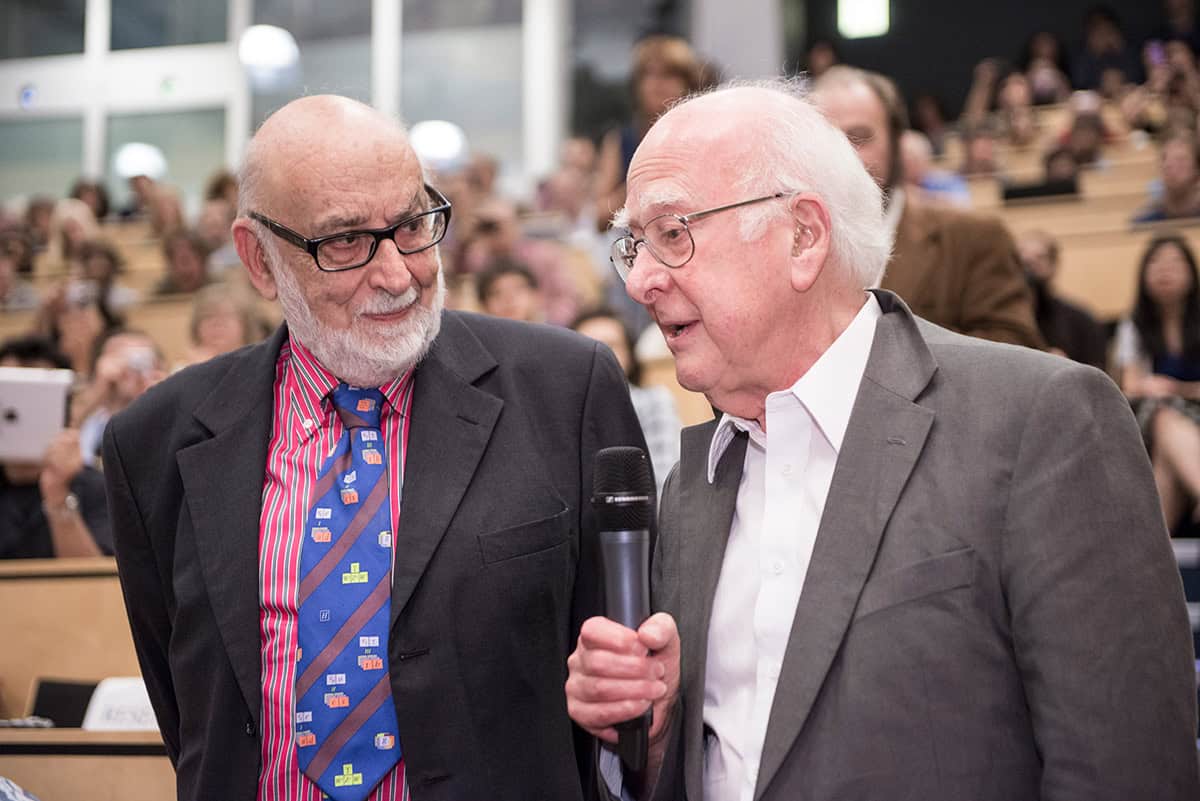
Spirit of collaboration Shown here in the CERN auditorium with François Englert on 4 July 2012 when the discovery of the Higgs boson was announced, Peter Higgs (right) was always at pains to stress the contributions of others to particle theory. (Courtesy: CERN/Maximilien Brice)
Today’s particle physics is dominated by huge international collaborations. Do you think that’s destroying originality and initiative of individual physicists?
I don’t know whether it is. All I can say is that I find it hard to imagine surviving in a big team like that. I find it hard to know quite how talent is recognized when it’s such a big collaborative effort. But somehow it still happens I think.
The Higgs boson is sometimes dubbed “the God particle”. Do you think it deserves that name?
I was really rather annoyed about that book [Leon Lederman’s The God Particle, published in 1993] and I think I’m not the only one. I mean it was one of Lederman’s little jokes and I think it’s rather backfired. I’m sure you know the story, which I think he tells in his second edition, which is that he wanted to title his book That Goddam Particle because it was so hard to discover. His editor didn’t like it, so he said “Oh alright, The God Particle” and his editor accepted it.
But a lot of people, I think, don’t find that funny. And when it’s taken too seriously by people who don’t really understand the context of the joke, it does cease to be funny. You know, I’ve seen comments from theologians about it, which really shouldn’t happen.
If you were a student again today, would you still study physics or would something else attract you in another discipline?
It’s hard to know. I mean looking back, one of the features of my education at Cotham School was that science meant mathematics, physics and chemistry. There was no biology on offer. At that stage I thought of biology as a horribly complicated problem, which was really too ill-defined to go into.
But then, as a student at King’s College, I worked – at least as a postgraduate – along the corridor from Maurice Wilkins and Rosalind Franklin and I began to understand that biology was opening up because of the applications of the techniques of physics. And now it’s a very different story. I don’t know how I would choose, if I got the choice again with that sort of knowledge of how biology works at a very fundamental level. [But] I might go for quite a different way.
We talked about the God particle earlier on: do you have any particular religious views?
I don’t, no.
You are agnostic or atheist?
Yes. I mean I don’t believe anyway. I’m a sceptic.
Going back to the boson that bears your name, do you know how exactly that name came about or who’s responsible for it?
Oh, the Higgs boson? Well, the really embarrassing thing was what happened at the 1972 International Conference on High Energy Physics at Fermilab. A colleague of mine, Ken Peach, came back from that and he ran into me in the [Edinburgh] university staff club and said: “Peter, you’re famous!”
And when I discovered what had happened, I was quite embarrassed. I’d met [the Korean-born theorist] Ben Lee – then a theorist at Fermilab – years before at a conference in Rochester organized by Robert Marshak. He’d been interested in what I and others had done and been co-author of a short paper in Physical Review Letters, which preceded mine in 1964 when the debate was going on about whether there was a way out of this Goldstone theorem.
So he was interested in this area and he got hold of me at a sort of party, where I was standing with a plate of food in one hand and a glass of wine in the other and interrogated me about what I had done. I was not really prepared with all my references to other people’s work. So he got my side of the story. [In his role] as a rapporteur at the conference, he should have done a bit more work to find out about the other work at the time. But all the other people were just relegated to a footnote.
He talked about “the Higgs mechanism” and “the Higgs boson” – well, he said “the Higgs meson” at the time because in 1972, the nomenclature hadn’t been clearly defined about what was a meson and what was just another kind of boson. And he had pinned my name on everything to the exclusion of other people, and particularly Brout and Englert were upset about it – understandably.
It took some time to clear up. Well, I don’t know whether it’s ever been cleared up that the situation was much more complicated. Later I acknowledged that maybe my name might be attached to the boson because I was the only one of the six people who’d actually drawn attention to the thing. So that’s more reason for my name than the others perhaps. But everything else was definitely, you know, something which had been shared among as many as six or more people.
It settled down to being called the Higgs boson when the experimentalists were alerted to the need to look for it. That happened in 1975/76 at the time LEP [the Large Electron–Positron collider] was being planned [at CERN] and the paper [Nuc. Phys. B106 292] by John Ellis and two others [Mary Gaillard and Dimitri Nanopoulos] came out. That was the phenomenology of the Higgs boson. And of course that was a very tentative paper, which said “We can’t tell you much about it, but keep your eyes open for it when you’re doing other things.”
So by about the mid-1970s, the Higgs mechanism and the Higgs field were in common use as terms?
They were in common use. But you know, I would only accept sole responsibility for drawing attention to the particle. The Higgs field was already in papers of Nambu and [the theorist Jeffrey] Goldstone. Most of the stuff was already done by other people.
What’s the best analogy that you’ve ever heard for the Higgs boson?
Well, the one that’s used a lot, which I object to least, is the one used by [the University College London physicist] David Miller, which won him his bottle of champagne from William Waldegrave (see “Peter Higgs’ favourite analogy for the Higgs boson” box).
I object to that least because moving through a crowded room, well – unless it’s extremely crowded – I don’t lose energy much. I zigzag. So my mean velocity in the forward direction is reduced, but that’s all. It’s not a dissipative process. But I do object when people draw an analogy with dragging something through treacle. That’s misleading. That’s a dissipative process and this isn’t.
Peter Higgs’ favourite analogy for the Higgs boson
(Courtesy: iStock/baona)
In 1993, amid concerns over the rising cost of Britain’s membership of CERN, the UK’s then science minister William Waldegrave, who was a historian by training, invited people to explain the Higgs boson to him on just an A4 sheet of paper. Waldegrave issued his challenge at that year’s annual congress of the Institute of Physics in Brighton, offering a bottle of vintage champagne at his own expense to the best entry (Physics World May 1993 p8). He told participants that University of Bristol theorist Michael Berry, who lived in his parliamentary constituency, would help judge entries.
“Waldegrave’s declaration came as a complete surprise to me – and slightly embarrassing because sitting next to me was Tom Kibble, who knew vastly more than me,” Berry recalls. “I received about 100 entries, selected five, and sent them to Waldegrave, who replied that he couldn’t assess them. Whether he was too busy or unable, I don’t remember but he said he would give a bottle of champagne to each of them.” The champagne was presented to the winners at the 1993 Keele meeting of the British Association for the Advancement of Science, at which Berry was physics president.
The mostly widely known entry – and the one Peter Higgs favoured – came from David Miller, a physicist at University College London (Physics World September 1993 p27). He envisaged the Higgs field as a crowd of political party workers at a cocktail party. When an ex-prime minister crosses the room, the workers cluster excitedly around her, giving her greater mass than normal, which is the Higgs mechanism. If a rumour enters the room, the workers gather together to hear the gossip, which then travels across the room, with the clustering being the Higgs boson. Miller received a bottle of Veuve Cliquot 1985 champagne for his efforts. It was drunk long ago.
Electronic devices that seamlessly interface with living tissues hold potential to revolutionize disease diagnosis and treatment. But integrating electronics with the human body is a tricky task, due to mechanical incompatibilities between rigid metallic materials and soft biological tissues.
To address this challenge, Bozhi Tian and colleagues at the University of Chicago have created “living bioelectronics” designed to capture physiological signals and deliver targeted treatments. The team’s ABLE (active biointegrated living electronics) platform combines thin, flexible sensor circuitry with an ultrasoft, tissue-mimicking hydrogel made from tapioca starch and gelatin. The final ingredient is the addition of living cells into the gel, in this case Staphylococcus epidermidis, a bacterium that naturally lives on human skin and secretes compounds that regulate inflammation.
Described in Science, the ABLE platform combines three key functionalities: bioelectronics – electrical sensing to gather information from the skin and electrical stimulation to manage safety; biomechanical compatibility – a hydrogel that provides stable, conformal adherence to biological tissues, with comparable mechanical and structural properties; and the biogenic component – the bacteria themselves and biogenic polymers that enhance bacterial viability.
“By incorporating living entities into bioelectronic devices we can introduce biological functions into the electronics, such as cell-based therapeutic functions,” Tian tells Physics World. “This integration allows for more complex and responsive interactions with biological systems, enhancing the device’s capabilities and therapeutic potential.”
Detect and treat
To investigate the ABLE platform’s capabilities, Tian and colleagues, working with Simiao Niu and his team at Rutgers University, created a series of devices. First, they integrated the living hydrogel with a 15-channel mesh electronics array for surface electromyography (sEMG) intensity mapping. They attached the ABLE device to a rat’s leg and recorded the EMG signals evoked by sciatic nerve stimulation.
The device adhered conformally to the skin and recorded EMG signals with an average signal-to-noise ratio (SNR) of 26.76 dB – an improved performance compared with a gold biointerface without the hydrogel. The ABLE device could map sEMG spatial intensity over a 16 x 12.8 mm area and proved stable over 4 h, recording EMG signals without significant SNR loss.
Next, the researchers constructed an ABLE device for monitoring and treatment of psoriasis, a chronic inflammatory skin disease with no effective cure. They fabricated a mesh electronics device with a living hydrogel interface for recording heart rhythm via a six-lead surface electrocardiogram (ECG). When attached to the chest of healthy mice, the device recorded the ECG with an average SNR of 18.97 dB. In mice with psoriasis however, it recorded a significantly lower SNR of 7.96 dB, due to the thicker psoriatic skin.
When the device was applied to the animal’s skin for four days, the SNR of the recorded ECG increased. These findings demonstrate that changes in ECG signals can be used to detect skin diseases and that the living components within the ABLE system can improve psoriasis symptoms in mouse skin.
Wireless operation
To enable real-time monitoring and therapy and active circuit control, the team built a battery-free, flexible printed circuit board (FPCB) to perform wireless energy harvesting and data transfer. The resulting FPCB-based ABLE incorporates an electrical impedance circuit, and temperature and humidity sensors for real-time monitoring of disease progress, as well as delivering drug-free treatment of skin disease.
The researchers applied the FPCB-based ABLE to the skin of mice with psoriasis for four days. During this time, the device recorded a constant decrease in skin impedance, which mirrored the observed decrease in the skin’s psoriasis severity index. Humidity and temperature data provided information on the changing skin environment during this recovery process. The team note that the lightweight device did not hinder the animals’ mobility.
One challenge of employing a living hydrogel is the possibility that S. epidermidis may proliferate and lead to infections. Another issue is the safe disposal of the bacteria-laden device after use. To address these biohazard risks, the team included two disinfection electrodes in the FPCB that, upon treatment completion, deliver direct current to the living hydrogel interface for 30 min. This process effectively disinfects the bacteria within the device.
Tian notes that S. epidermidis does not cause any risks during treatment as it is a commensal, or “friendly”, bacterium that occurs naturally on skin. “As long as the concentration in the hydrogel is low, the bacteria are safe to use,” he explains. “We disinfect them at the end, given they will be trashed and leave the skin contact.”
In future work, the researchers hope to create a closed-loop system, as well as to incorporate engineered bacteria into the ABLE platform. “Our future directions also include developing implantable living bioelectronics to enhance the range and effectiveness of therapeutic applications,” says Tian.
The United Nations (UN) has officially declared 2025 to be the International Year of Quantum Science and Technology (IYQ). Agreed by its general assembly, the year-long worldwide celebration will highlight the impact and contribution of quantum science. It also aims to ensure that all nations have equal access to quantum education and opportunities. An opening ceremony is expected to take place on 14 January in Berlin.
In May 2023 the executive board of the United Nations Educational, Scientific, and Cultural Organization (UNESCO) endorsed a resolution encouraging an official UN quantum year. That was followed by an endorsement at the UNESCO general conference last November. In May, Ghana submitted a draft resolution for the official proclamation of the IYQ in 2025 to the UN General Assembly. It was supported by more than 70 countries and the resolution was approved by the general assembly on 7 June.
“Through this proclamation, we will bring quantum [science] education and research to young people in Africa and developing countries around the world with the hope of inspiring the next generation of scientists,” notes Riche-Mike Wellington, chief programme specialist at the Ghana Commission for UNESCO and the Ghanaian representative for IYQ. The IYQ consortium will now organize regional, national and international outreach events and activities throughout 2025 to celebrate and develop quantum science.
“Inventions such as magnetic resonance imaging in hospitals, lasers, solar cells and the smallest chips as the basic building blocks of computers all owe their existence to quantum mechanics,” says DPG president Klaus Richter, a condensed-matter physicist from the University of Regensburg. “These and other quantum technologies give new impetus to our economic development and influence numerous areas of everyday life. Quantum mechanics is a prime example of the practical impact that an abstract physical theory can have.”