Cluster makes turbulent breakthrough

The Earth’s magnetosphere is the region around our planet where phenomena are dominated by the Earth’s magnetic field (figure 1). Outside the magnetosphere, the influence of the solar wind — a supersonic plasma of charged particles from the Sun — becomes dominant.

Scientists have long believed that turbulent plasmas, like those in the magnetosphere, should create vortices. However, these structures had not been observed unambiguously until David Sundkvist of the Swedish Institute of Space Physics and colleagues in France and Germany analysed data from Cluster, a fleet of four identical spacecraft that was launched in 2000.

Sundkvist and co-workers analyzed data from all four satellites to determine how the magnetic field in the magnetosphere varies with position. “Using more than one measurement point is the only way get information about spatial phenomena and distinguish them from temporal phenomena, without making assumptions,” Sundkvist told PhysicsWeb. “The observations were compared with theory and simulations, and showed striking agreement.”

Vortices can transport mass and energy across natural boundaries set up by magnetic fields, says Sundkvist. An example of such a barrier is the “magnetopause” that exists between the magnetosphere and the solar wind. Other examples are found in laboratory experiments with fusion plasmas. “Vortices are believed to cause the ‘anomalous transport’ of plasma across the magnetic field that confines the plasma, which is a problem in fusion research,” says Sundkvist. “Our findings could help us better understand turbulent plasma phenomena and these anomalous transport effects,”

The scientists now hope to discover how the vortices are created and how much energy and mass they transport. They would also like to find out if the vortices are stable, or if they collapse into smaller structures or coalesce into larger ones.

Going for gold

Gold and gold alloys are widely used in technical applications because they offer high thermal conductivity, high electrical conductivity and are resistant to corrosion. For jewellery the important qualities are colour, the ability to be moulded and the fact that gold does not tarnish. However, pure gold and high-carat alloys are crystalline, which makes them soft and easily scratched or dented.

In recent years researchers have tried to make amorphous gold alloys that do not suffer from this problem. An ideal gold alloy needs to have a glass transition temperature of at least 370 Kelvin and to be stable at room temperature. It also needs to have a high gold content, a high hardness and a “casting thickness” that is large enough to make jewellery. Moreover, the alloy should have a large supercooled liquid region — the region of temperature in which the amorphous phase first relaxes into a highly viscous liquid before eventually crystallizing — because this allows the material to be handled like a plastic.

Schroers and colleagues have now shown that alloys containing gold, copper and silicon, with smaller amounts of silver and palladium, have much better properties than existing alloys. Although the new alloys are only 50% gold by number of atoms, they are 75% gold — which is equivalent to 18-carat — by weight because gold atoms are much heavier than copper and silicon atoms.

The best alloy, which has the chemical formula Au49Ag5.5Pd2.3Cu26.9Si16.3, has a glass transition temperature of 401 Kelvin, a supercooled liquid region of 58 Kelvin, and a casting thickness that exceeds 5 millimetres. Furthermore, it has a Vickers hardness that is twice that of conventional 18-carat gold alloys.

“If headed into the supercooled liquid region our alloy can be formed into complicated shapes at around 150°C compared to the processing temperature of conventional gold alloys of about 1000°C,” says Schroers. “The alloy is very interesting for the jewellery industry and we anticipate it being used shortly because of its processing advantage and high hardness at room temperature. It will improve current jewellery and might even allow for new designs.” The team now plans to vary the colour of the alloy while keeping the other properties constant.

Dirac Medal goes to condensed matter physicists

Edwards’ work in condensed matter physics began in 1958 when he showed that disordered systems like glasses and gels could be described by quantum field theory, and he revolutionised polymer physics in the 1960s with the introduction of the Edwards Hamiltonian and, later, the concept of polymer entanglement. The replica formalism, which provided the first solution to the “spin glass” problem in magnetism, followed in the 1970s. Edwards, who was knighted in 1975, is presently emeritus Cavendish professor of physics at Cambridge University.

Lee’s research has focussed on strongly correlated electronic systems — materials where the interactions between electrons play a crucial role and lead to novel phenomena that cannot be explained by the established Fermi-Landau liquid theory. One of Lee’s major contributions in this area was the introduction of the concept of universal conductance fluctuations to describe mesoscopic devices. Lee, who is William and Emma Rogers professor of physics at MIT, is currently studying high-temperature superconductors.

The Dirac Medal is awarded to scientists who have made significant contributions to theoretical physics and mathematics. It is always awarded each year on Paul Dirac’s birthday — August 8 — and is worth $5000.

Hydrogen result causes controversy

Hydrogen is the simplest of all the atoms, containing just an electron and a proton. It normally takes 13.6 eV of energy to separate the electron and proton when the atom is in the ground state. Similarly, if an electron and proton combine to form a hydrogen atom in the ground state, 13.6 eV of energy is released in the process. However, if there is a new energy state below the ground state it could be possible to release even more energy.

The ground state of hydrogen is stable in the sense that it cannot emit photons. However, Mills argues that it can undergo a non-radiative transition to a lower state with the help of a catalyst, releasing the additional energy in the process. “In layman’s terms, a catalytic process causes the latent energy stored in the hydrogen atom to be released by allowing the electron that is otherwise in a stable orbit to move closer to the nucleus to generate power as heat, light and the formation of a plasma,” Mills told PhysicsWeb. Similar non-radiative transitions occur in fluorescent lights and in the formation of chemical bonds in cases where the excess energy is carried away by a third particle.

Mills, who has a medical degree from Harvard, started working on the electronic structure of hydrogen in the late 1980s and has published more than 60 papers on the hydrino state since then. “This research represents a new primary energy source and a new field of hydrogen chemistry,” he says. “It may also explain or lead to explanations to many important scientific questions such as the identity of dark matter and a physical rather than mathematical theory of atomic physics.”

Earlier this year, however, Andreas Rathke of the European Space Agency published a paper in which he argued that the theory for the hydrino state put forward by Mills was “the result of a mathematical mistake” (New J. Phys. 7 127).

Now another theorist has joined the debate with a different point of view. Jan Naudts of the University of Antwerp in Belgium argues that the Klein-Gordon equation of relativistic quantum mechanics does indeed permit the existence of a low-lying hydrino state, although he stops short of claiming that hydrino states really exist (physics/0507193). “In physics the experiment decides,” says Naudts. “Either the hydrino exists, in which case we have to accept a small correction to the textbooks on quantum mechanics, or it does not exist, in which case we have to find better arguments to explain why it does not exist.” Naudts says that results of Mills and co-workers have recently been confirmed by a group at the Technical University of Eindhoven. “Nothing is decided yet, but I think it is time to fill the holes in our theoretical understanding of the hydrogen atom.”

However, Rathke remains sceptical, claiming that the solution found by Naudts “is known in the literature and had previously been discarded as unphysical.” He also says that Naudts has found evidence for just one new state, whereas Mills claims to have found 137, and that the binding energy calculated by Naudts does not correspond to any of these states.

Mills, not surprisingly, welcomes the results of Naudts: “It is a very good sign that he has initiated the work in the quantum physics community to reconcile quantum theory with the enormous amount of data that confirms the existence of new states of hydrogen.”

Just add salt

In 2000, Shouheng Sun and colleagues at IBM created iron-platinum particles that were just 4 nm across. This was a breakthrough because the face-centred tetragonal (fct) form of iron-platinum has excellent magnetic properties, such as a high coercivity — the magnetic field needed to reduce the magnetization of the material to zero. However, the particles produced by the IBM team had a face-centred cubic (fcc) structure, which is not so useful for applications. Although it is possible to convert the fcc phase into the fct phase by heating it, this also causes the particles to sinter and form larger particles, which renders the material useless for applications.

Liu and co-workers have now overcome this problem by adding a small amount of finely ground salt (sodium chloride) to the iron-platinum particles before they are heated (J. Phys. D38 2306). The salt keeps the iron-platinum nanoparticles apart so that they can undergo the phase transformation to the fct structure without sticking together and sintering. The team have produced particles with diameters of between 4 and 15 nm that have coercivities in excess of 3 Tesla. “For such small particles this is quite a remarkable result,” says Kevin O’Grady of York University.

“Sodium chloride is an ideal medium since it is chemically stable up to the annealing temperatures and can be easily removed completely just by washing the particles in water,” Liu told PhysicsWeb. “Moreover, production of the fct particles with this method can be easily scaled up and is very economic — we tested with salt from a supermarket and it worked well.”

When physicists reigned supreme

It is seductively easy for physicists to think that physics has always been the most important science. But the subject only achieved this primacy just a little over 100 years ago. Physics laboratories and physics research only became commonplace in the late 19th century, when many of today’s fundamental concepts in thermodynamics, electricity and radiation became accepted parts of the subject. It was only then that the “physicist” became a recognizable figure in the world of science, with systems of specialized training, career development and professional recognition. Physics also became recognized as the key not just to the secrets of nature, but to the products of industrial and military innovation too.

But 19th-century physics was also remarkably different from its modern incarnation. It concerned itself with a mysterious, all-pervading and (as Michelson and Morley found out) impossible-to-detect ether, through which forces, radiation and matter manifested themselves. Many of its practitioners were concerned not with abstract truth or fundamental knowledge, but with understanding nature in metaphysical or theological terms. Others were devising spectacular demonstrations of “natural” effects to earn a living. Still others had interests in spiritualism and psychical research. Physicists were also public intellectual figures, engaging in political and economic debate.

Over the last 20 years our understanding of the history of physics has been transformed. Historians no longer regard physics as a self-evidently progressive enterprise directed towards our current understanding of nature. Instead, they have come to see physics as the outcome of a complex process of “cultural persuasion”, in which physicists work hard to persuade the public that they have useful expertise and that physics counts for something. Many detailed studies document how physics slowly and painstakingly came to achieve its cultural and intellectual authority – from Michael Faraday’s public lectures at the Royal Institution in London to the role of the Cavendish Laboratory in creating international electrical standards.

Drawing on the very best of this work, Iwan Rhys Morus from the University of Wales, Aberystwyth, charts the transformation of natural philosophy into physics and its rise to international scientific pre-eminence by the end of the 19th century. In a beautifully written and engaging synthesis, Morus sheds new light on familiar topics and people like Faraday, William Thomson (later Lord Kelvin) and James Clerk Maxwell. He focuses on trust and credibility as the keys to understanding how and why physics acquired its intellectual authority. The result is by far the best history of 19th-century physics that is now available.

Beginning with the use of Newtonian science by Laplace and others in France in the early 19th-century, Morus charts the relationships between natural philosophy, mathematical physics and politics. He explores how analytical ideas that had been developed in France were imported into Cambridge mathematics by Charles Babbage and others. He also examines the emergence of research institutes in German universities, which saw physics divided between experiment and theory in a way that continues to today.

Another important strand in early 19th-century physical science was romanticism, which developed as a reaction to mechanistic Newtonian science. People like Friedrich Schelling, Humphrey Davy and his friend the poet Samuel Taylor Coleridge thought there might be an underlying unity in what they saw as an animate organic nature. Such ideas motivated attempts to link physical forces such as electricity and magnetism – culminating, of course, with Faraday’s work at the Royal Institution in the 1820s and 1830s. It was from these ideas that the new concepts of “energy” and “work” – as well as thermodynamics – emerged.

Emphasizing the links between science, the state, and economic and cultural development, Morus neatly shows how thermodynamics was intimately related to the new technology of steam power. Thermodynamics allowed a new breed of physicists like William Thomson to understand, control and gain intellectual credibility in their industrial society. But with its implications for geology, evolution and theology – as well as its catastrophic prediction of the “heat death” of the universe – it also provided a cosmological model for understanding the history and future of the Earth, thereby giving physics a place in fundamental scientific and cultural debates.

Other physicists, meanwhile, were transforming electricity from a source of spectacle and wonder into a practical, working technology – from electroplating and telegraphy to electric light and power. This put physicists and electrical engineers at the centre of the action. Yet electricity was still a source of mystery, and it was experiments on gas discharges that led some physicists – Oliver Lodge among them – to wonder if the nebulous glow of the discharge represented a new state of matter and a possible link with the world of spirits. Ironically, it was such experiments that led to the discovery of X-rays and the electron, which underpinned the development of micro-physics in the 20th century.

What this book shows is that 19th-century physics was a much more diverse and interesting enterprise than is usually thought. Through the division of labour, the factory-style organization of institutions, and the shared moral and economic values of work and efficiency, Morus argues, physics as we now understand it was very much a product of the 19th-century industrial culture. Material and cultural resources – money, equipment, labs, training, professional bodies and good public relations – were needed by physicists to do their work and make it scientifically and culturally credible.

In emphasizing professional credibility and trust, Morus’s argument perhaps offers lessons for physicists today, when the hard-won achievements and authority of physics are breaking down and the “king of sciences” is being dethroned.

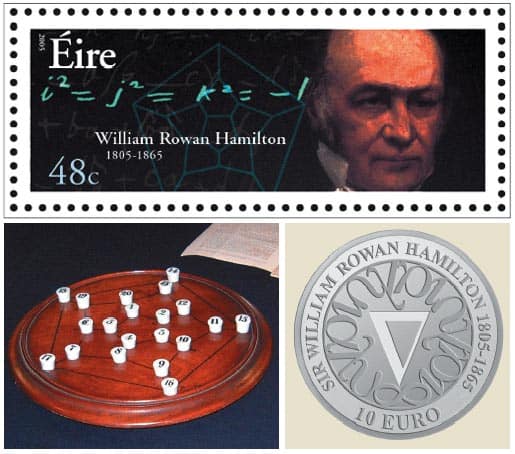
William Rowan Hamilton: mathematical genius

William Rowan Hamilton was born in Dublin at midnight between the 3rd and 4th of August 1805. His father, Archibald Hamilton, was a solicitor, and his mother, Sarah (née Hutton), came from a well-known family of coachbuilders in Dublin. Before his third birthday, William was sent to live with his uncle, James Hamilton, who was a clergyman of the Church of Ireland and curate of Trim, County Meath. Being in charge of the diocesan school there, James was responsible for his young nephew’s education.

William showed an astonishing aptitude for languages, and by the age of five was already making good progress in Latin, Greek and Hebrew. Before he turned 12, he had broadened his studies to include French, Italian, Arabic, Syriac, Persian and Sanskrit. Of particular interest to him were Semitic languages such as Hebrew, Syriac and Arabic because of the many early biblical texts written in those languages. Religion was always important in the lives of Hamilton and his family, although William himself never had any desire to take holy orders.

As a boy, Hamilton also spent some time studying Indian languages because his family thought that there might be a career opening for him with the East India Company. But as he grew older, his uncle ensured that Hamilton concentrated his attention on the classical languages, Latin and Greek, which formed a major portion of the curriculum at Trinity College, Dublin.

While Hamilton was being prepared for entry to Trinity College, where he was expected to excel, fellows and professors of the college were setting out to modernize the teaching of mathematics there by introducing French textbooks into the curriculum, translating some of these into English, and writing their own material. When Hamilton was 16, his uncle – obviously realizing that William would need to excel in both mathematics and classics at college – gave him a copy of a textbook written by Bartholomew Lloyd, professor of mathematics at Trinity.

This book awakened Hamilton’s interest in mathematics, and he immediately set about studying contemporary French textbooks and monographs on the subject, including major works by Lagrange and Laplace. Indeed, he found an error in one of Laplace’s proofs, which he rectified with a proof of his own. He also began to undertake his own mathematical research. The fruits of his investigations were brought to the attention of John Brinkley, then Royal Astronomer of Ireland, who encouraged Hamilton in his studies and gave him a standing invitation to breakfast at the Observatory of Trinity College, at Dunsink, whenever he chose.

Optical investigations

Hamilton achieved first place in the entrance examination for Trinity College and began his studies there in 1823. His academic progress as an undergraduate was exceptional. No other student beat him in any examination. He received an “optime” (a distinction that was very rarely awarded) in Greek in his first year. Two years later, he received another optime, this time in mathematical physics. Nevertheless, he found the intensive study required to achieve such distinctions increasingly irksome because it gave him less time to pursue his growing interests in science and mathematics.

At the time, Hamilton was carrying out an intensive study of Newton’s Principia, and was undertaking highly original and sophisticated mathematical investigations in optics. He was employing to the full the methods of calculus and of differential geometry that had been developed in France over the previous 50 years. Hamilton initially thought that he was the first mathematician to apply such methods to the study of optical problems. But one day his college tutor took Hamilton into the college library and showed him a paper on optics by the French mathematician Etienne-Louis Malus. Dating from 1807, it turned out that Malus had already discovered these results.

In 1824, aged just 19, Hamilton submitted a paper on optics to the Royal Irish Academy, for publication in its Transactions. Although the paper was not accepted as it stood, Hamilton was encouraged to develop and expand on his ideas and methods. This he did, submitting a substantial paper to the academy entitled “Theory of systems of rays”. The first part of this paper was published in 1828, the year after Hamilton graduated.

Hamilton’s obvious mathematical ability encouraged the college to appoint him to the post of Andrews’ Professor of Astronomy in 1827, which carried with it the title of Royal Astronomer of Ireland. Hamilton’s home thereafter was at the observatory at Dunsink, which lies about five miles from the centre of Dublin. Unsuccessful candidates for the post included George Biddell Airy, later to be appointed Astronomer Royal, and a number of experienced fellows of the college. Unfortunately, no astronomical work of any particular significance was undertaken at the observatory in Hamilton’s time due to antiquated instruments and an inappropriate observing programme – devised decades earlier – that the Royal Astronomer was legally required to carry out.

Instead, Hamilton focused his talents on his mathematical investigations. In his 1828 paper he had made a detailed study of the foci and images that are produced by the reflection of light off curved mirrors. He studied the aberrations in images produced by reflection, and – using analytical methods that he had learnt from his study of Laplace – conducted a thorough investigation into the relative intensity of light along the “caustic” surfaces of brightness that are created when light reflects off a curved mirror.

Hamilton published three supplements to his original paper. In the first two, he applied his methods to treat the refraction of light at the boundaries between isotropic media. In his celebrated “third supplement”, these methods were generalized for anisotropic media, in which the speed of light depends on the direction in which it is travelling in the medium. In particular, he showed that any optical system could be described by a certain “characteristic function”. In the wave theory of light, this function measures the time that light takes to travel from one point to another and depends on the co-ordinates of those two points. Hamilton showed that if the form of this characteristic function was known, all significant optical properties of the system could be expressed in terms of the function and its partial derivatives.

Conical refraction

When Hamilton presented his third supplement to the Royal Irish Academy in October 1832, he made a surprising prediction concerning the way in which certain crystals affect the path of light. Most physical scientists in the early 19th century favoured Isaac Newton’s theory of light as streams of “corpuscles” travelling in accordance with dynamical laws. They did not accept the rival wave theory of light, which had originally been advocated by a number of scientists in the 17th century, notably Christiaan Huygens. He had used the wave theory to explain why a ray of unpolarized light entering or leaving a “uniaxial” crystal, for example an Iceland spar, is refracted as two rays, each of which is linearly polarized.

The wave theory was largely neglected throughout the 18th century because it did not appear to explain phenomena such as polarization. The problem was that it supposed that light waves – like sound waves – are purely longitudinal. However, support for the theory was revived at the start of the 19th century by Thomas Young, who realized that polarization phenomena could be best explained if light has both a transverse and a longitudinal component. This inspired a young French scientist and engineer, Augustin Fresnel, to develop an extensive theory of light propagation in terms of purely transverse vibrations of tiny ether particles within each wavefront.

This theory was found to explain the properties of not only uniaxial crystals but also “biaxial” crystals, such as aragonite, the optical properties of which had been discovered by David Brewster a few years earlier. These crystals have two “optic axes”, whereas uniaxial crystals have only one. (Light travelling down an optic axis may be linearly polarized with the magnetic field pointing in any direction perpendicular to the ray; for light travelling in any other direction, the magnetic field can only point in one of two determined directions, which are at right angles to each other and to the ray.)

In the autumn of 1832 Hamilton undertook a mathematical analysis of the wave surface that describes the propagation of light in a biaxial crystal according to Fresnel’s theory. This surface represents the position of the light that has propagated out from a point source within the crystal in a fixed period of time. On the basis of the elegant and general theory of light that he had developed in his third supplement, Hamilton predicted that the geometrical properties of the surface should have two surprising physical consequences. First, unpolarized light incident on a biaxial crystal at certain angles would be refracted to form a hollow cone of rays; this light would then emerge from the crystal in the form of a hollow cylinder. Second, rays of light travelling in certain directions within the crystal would be refracted on emergence to form a hollow cone of rays. The two phenomena are known as “internal” and “external” conical refraction, respectively.

Hamilton asked his colleague Humphrey Lloyd, then professor of natural philosophy at Trinity, to verify this prediction experimentally. Lloyd initially had some difficulty in obtaining a crystal of sufficient size and purity, but within two months he had shown that conical refraction was a real effect. This work aroused considerable interest within the scientific community because it was the first time that a physical phenomenon had been predicted through mathematical analysis and then subsequently verified by experiment. A 20th-century analogue would be the discovery of the positron, which had been predicted by Paul Dirac based on his relativistic wave equation for the electron. The discovery of conical refraction did much to lend support to the wave theory of light, since the prediction was made on the basis of Fresnel’s theory.

Dynamics and quaternions

In 1834 and 1835 Hamilton published two major papers on dynamics in the Philosophical Transactions of the Royal Society. The first took methods that he had developed in his optical research and adapted them to the study of dynamical systems, utilizing a characteristic function analogous to the one he had introduced for the study of optical systems. The second paper presented his methods in a much more elegant and refined form and initiated a revolution in the mathematical study of dynamics.

Hamilton examined the evolution of a “conservative” dynamical system – one, like the solar system, that satisfies the conservation of energy – and found that it is determined by an associated “principal function”. This function depends on the time taken for the system to evolve from one configuration to another, and on variables, such as lengths and angles, that determine the initial and final configurations. If the precise form of this principal function is known, then one can write down equations that determine the evolution of the system without having to solve any differential equations.

In this paper, Hamilton also presented the equations of motion of a conservative dynamical system in an extremely elegant form. As mathematics has developed, it has been found that many systems of differential equations may be presented in this same “Hamiltonian” form and studied using methods developed by Hamilton and his successors.

Hamilton’s other great interest was in the close relationship between the algebra of complex numbers and geometry, which was explored by Jean-Robert Argand and a number of other mathematicians at the beginning of the 19th century. As all physicists know, a complex number of the form z = x + yi, where i = √-1, can be represented by the point (x, y) on a Cartesian plane. Conversely, any point on the plane can be represented by a complex number, while any combination of successive translations, rotations and enlargements of the plane may be represented by a function that sends any complex number z to (az + b), where a and b are complex numbers that are constants independent of z.

Inspired by the link between complex numbers and plane geometry, Hamilton and others tried to seek an algebra of complex numbers that bears the same relationship with 3D geometry. It seemed natural to suppose that the elements of such an algebra would be represented by triplets of the form (x, y, z). For over 13 years Hamilton attempted to construct a satisfactory triplet algebra related to 3D geometry. His search ended in an unexpected fashion on 16 October 1843, while walking with his wife Helen along the towpath of the Royal Canal, near Dublin on his way to attend a meeting of the council of the Royal Irish Academy.

In a flash, Hamilton realized that the appropriate algebra was not a triplet algebra but a 4D algebra of what he called “quaternions”. He immediately jotted down in a pocket-book the basic formulae for multiplying quaternions, and later claimed that, in the excitement of discovery, he had also carved these basic formulae on one of the bridges over the canal. A stone plaque commemorating the location can still be seen today.

A quaternion is a 4D complex number that is of the form q = w + xi + yj + zk, where i, j and k are all different square roots of -1. The quaternion can be regarded as an object composed of a scalar part, w, which is a real number, and a vector part, xi + yj + zk. Moreover, the vector part may be represented, in magnitude and direction, by a line joining two points in 3D space. Many mathematical terms in common use today – including scalar and vector – were introduced by Hamilton, as he developed the theory of quaternions.

Legacy of a genius

Most of Hamilton’s subsequent research was devoted to developing the theory of quaternions. He wrote many papers and two long books on the subject, investigating the algebraic properties of quaternions and related systems, and applying quaternions to various problems in geometry and physics. Interestingly, Peter Guthrie Tait and James Clerk Maxwell applied the theory to problems involving heat propagation and electromagnetism. Indeed, Maxwell presented the basic equations of electromagnetism using quaternion notation in his famous Treatise on Electricity and Magnetism published in 1873.

When modern vector algebra was developed by the physicists Josiah Willard Gibbs and Oliver Heaviside in the late 19th century, they sought to construct a formalism that, to them, seemed more simple and intuitive than that of Hamilton. Nevertheless, many of the fundamental concepts and results of vector algebra in common use today originated in Hamilton’s quaternion algebra. Moreover, quaternions have been regularly employed in mathematics up to the present day, with geometric objects such as “hyperkähler manifolds” being defined using quaternionic structures.

From a computational point of view, quaternion algebra also yields more efficient algorithms than matrix algebra for computing the combined effect of successive rotations. As a result, quaternions are regularly employed in applications as diverse as spaceship navigation and computer games.

As for Hamilton’s papers in optics, they are characterized by great elegance and generality. Unfortunately they adopted a very abstract approach and contained very few applications of his general method to concrete optical problems. As a result, they had little or no impact on the practice of optics during Hamilton’s life. However, they were rediscovered later in the 19th century by optical scientists and are today regularly employed to design optical instruments.

By contrast, Hamilton’s major papers on dynamics were noticed immediately by the Prussian mathematician Carl Jacobi, who developed them into an extensive theory that today underpins the fields of dynamical systems and “symplectic geometry” in mathematics. The development of quantum mechanics by Erwin Schrödinger and others in the 1920s was also shaped by Hamilton’s approach to dynamics. Indeed, there is a close relationship between the Hamilton-Jacobi equation (the fundamental equation of Hamiltonian dynamics) and Schrödinger’s wave equation, which is attested by the use of the term “Hamiltonian” to refer to the time-evolution operator in quantum mechanics.

Final years

Hamilton married Helen in 1833, and the couple had two sons and a daughter. Unfortunately Helen suffered from lengthy episodes of ill-health and depression. Hamilton was knighted during a meeting of the British Association for the Advancement of Science in Dublin in 1835, and received many honours and distinctions in the course of his lifetime. Hamilton’s involvement in public life increased as a result of his election as president of the Royal Irish Academy in 1837.

He resigned from this position in 1846 to concentrate on his mathematical research, and was succeeded by his friend and colleague Humphrey Lloyd. Hamilton spent most of his time working at the observatory at Dunsink, spending long hours on his books and papers, and developing his mathematical ideas in voluminous correspondence with other mathematicians. He would come into Dublin to give short courses of lectures at Trinity College, and to attend meetings of the Royal Irish Academy. Every few years he would travel to Britain to participate in meetings of the British Association for the Advancement of Science, taking the opportunity to make visits to friends such as William Wordsworth and his family.

Hamilton laboured incessantly on his mathematical investigations, working inordinately long hours. However, as he entered middle age, the strain he was placing himself under was only too apparent, and was the cause of much concern to his friends. Moreover, an unfortunate incident when Hamilton had too much to drink at a scientific dinner set tongues wagging, and has led to many inaccurate and exaggerated rumours regarding his sobriety in his later years.

Hamilton’s expended a great deal of effort in his final years in writing his second book, Elements of Quaternions. This book was initially intended to be of moderate length. However, as work progressed, new ideas for further research occurred to Hamilton, which he would develop at length, even when the funds granted by Trinity College towards the cost of publication had long since been exhausted. The length of the resulting book was enough to deter the casual reader, and few attempted to read it in its entirety – even those who were most enthusiastic about quaternions and eager to promote Hamilton’s ideas and methods.

The family consequently sunk into financial difficulties, which were exacerbated by the failure of Hamilton’s sons to find lasting employment. Hamilton’s efforts to complete the book were finally thwarted by serious illness and he died on 2 September 1865 at the age of 60.

But two centuries after his birth, the extent to which terms such as “Hamiltonian” and “Hamiltonian system” have entered the everyday language of mathematicians and physicists testifies to the continuing impact of the scientific work of William Rowan Hamilton. It is fitting therefore that Ireland should this year be celebrating the bicentenary of one of its most famous scientific sons.

Further reading

R P Graves 1882-91 Life of Sir William Rowan Hamilton (Dublin, Hodges, Figgis & Co.)
T L Hankins 1980 Sir William Rowan Hamilton (Baltimore, Johns Hopkins University Press)


Complex future for US weapons

During the 2000 American presidential election campaign, there was little doubt that George W Bush planned to take US nuclear weapons and arms-control policy in a new direction. As president, he has not disappointed. Soon after taking office, his administration explored the possibility of removing the US signature from the Comprehensive Test Ban Treaty (CTBT) – a pact it signed in 1996 that would, if it came into force, forever ban explosive nuclear testing. Although the signature was eventually left in place, the administration made no secret that the treaty would not be ratified on its watch.

Then, in early 2002, leaked excerpts from the US government’s classified Nuclear Posture Review revealed an interest in pursuing new nuclear weapons. These ranged from high-power bombs for attacking deeply buried targets – so-called bunker busters – to lower-power weapons for incinerating chemical and biological arms. Subsequent budget requests have attempted to push at least parts of this vision forward. In the background have been steady murmurings about an increasingly less reliable nuclear arsenal, implying a possible need to return to nuclear testing. Arms-control advocates and nuclear-weapons sceptics have had reason to be worried.

Yet something strange has happened in the last four years. The Bush administration has proven less enthusiastic than its critics expected, and it has been unusually unsuccessful in driving its agenda ahead. None of the key first-term issues will disappear soon, but the eventual outcomes from these ongoing battles are far from known.

New nuclear weapons

After the Nuclear Posture Review outlined a broad vision for new nuclear weapons, Congress followed quickly by appropriating funds for a Robust Nuclear Earth Penetrator (RNEP) and for an Advanced Concepts Initiative (ACI). The RNEP programme was designed to explore ways to crush deeply buried bunkers, in which enemy leaders might hide. ACI was expected to examine, among other things, “agent-defeat bombs” that would target enemy stockpiles of chemical and biological arms. Yet in the past two years, continued funding has been repeatedly curtailed or denied. Sceptics in the House of Representatives, led by Republican congressman David Hobson, have questioned the need for the new weapons and their effect on US efforts to stem proliferation around the world.

Indeed, even before the Nuclear Posture Review was leaked, details of the administration’s intentions began to become public, causing critics in the scientific community to strike back. Writing in the Federation of American Scientists’ Public Interest Report (January/February 2001), Princeton physicist Robert Nelson contended that even a small nuclear weapon – five kilotonnes in his example – would kill tens, if not hundreds, of thousands of people if detonated underground in a densely populated area.

Critical to his assessment was a claim that no weapon could dive deep enough underground to contain the radioactive fallout generated by a nuclear bomb; penetration would increase the destructive power of any particular weapon but would not stop the fallout from being dispersed. This analysis became a central talking point for sceptics of the new weapons, and in the years since, its essence has never been successfully challenged. It was further reinforced earlier this year, when a study from the National Academy of Sciences came to the same conclusion. Supporters of the RNEP have been reduced to arguing the merits of attacking targets slightly deeper underground, and of reducing – but never coming close to eliminating – fallout.

Agent-defeat weapons have not yet received such a definitive scientific treatment, but scientists have still reacted sceptically to them. The logic behind these weapons is simple. By attacking enemy stocks of chemical or biological agents, the US might disperse those agents, causing very large numbers of deaths in any surrounding population. A nuclear weapon – by virtue of its heat and radiation output – might, in theory, neutralize those agents, thus, paradoxically, saving lives. Yet both academic and government studies have concluded that the effectiveness of these weapons would depend sensitively on the precise features of any target, and on how close to any given target the weapon could strike. Given the poor state of current intelligence on enemy weapons of mass destruction – especially biological arms – decision-makers have good reason to be sceptical.

Compounding these concerns, non-nuclear alternatives to both classes of weapons appear to have considerable potential, a point I argued at length in a working paper Fire in the Hole (2002 Carnegie Endowment for International Peace). Indeed, in early 2005 Congress moved to transfer funds originally earmarked for new nuclear weapons into a broader programme that would support the development of non-nuclear alternatives. Barring a sharp, ideological turn in Congress, the future of new nuclear weapons, for the next few years, is likely to be determined by how they fare in competition against non-nuclear arms.

Stockpile stewardship

New weapons are not the only item on the nuclear agenda in the US. Since President George Bush senior declared a moratorium on nuclear testing in 1992, debate has raged in the US over whether the country can maintain a safe and reliable nuclear stockpile. The Clinton administration attempted to reassure observers by initiating the Stockpile Stewardship Management Program, which was designed to certify the continuing viability of existing weapons.

This has involved non-nuclear experiments on weapons components and assemblies, such as the implosion of inert materials with high explosives, together with computer simulations and hydrodynamics tests of nuclear components and phenomena that occur during nuclear detonations. Each year for the past decade, America’s nuclear-weapons laboratories have been able to certify that the country’s arsenal is safe and reliable, and there has thus been no apparent reason to return to nuclear testing. Despite these assurances, doubters remain.

In the past year, two new issues have complicated the debate over the legacy stockpile. The first concerns the W76 warhead, which makes up roughly 30% of the US strategic nuclear force. According to a story published on the front page of the New York Times in April, some weapons scientists say that the warheads have “a fundamental design flaw that could cause them to explode with far less force than intended”. Yet that claim appears to be weak.

The scientists interviewed for the article attacked the weapon on theoretical grounds – the most vocal contended that a critical component of the weapon “would probably fail”. But in a series of full-scale tests, conducted before the test moratorium began in 1992, the weapon performed consistently and reliably. The experimental evidence makes a mockery of the “probable” failure that the theorists have predicted – were their predictions correct, the tests would have failed too. Indeed, Everett Beckner, who directs the US nuclear-weapons programmes, has asserted that he has “high confidence that this [W76] nuclear weapon is a good design, was built properly and will function if required”. In short, the W76 debate is unlikely to return the US to nuclear testing.

A more intriguing set of questions surrounds the Reliable Replacement Warhead Program (RRWP), which was approved by Congress last autumn using funds originally approved for more controversial new nuclear weapons. The idea behind the programme is simple. The weapons in the current US arsenal were optimized for a variety of attributes – weight, size, explosive power and so on – but they were not optimized for longevity. In an era without nuclear testing, weapons that sacrifice performance in these areas, yet are extremely reliable over long periods without any need for nuclear testing, may be attractive; the RRWP is designed to explore such possibilities.

The programme confounds the standard reaction to “new” nuclear-weapons designs, since it appears to bolster the ability of the US to comply with an indefinite ban on nuclear testing – that is, with the CTBT. For that reason, many arms controllers have warmly welcomed it. Yet those observers are not without suspicions. Many think that any new warhead designed through the RRWP will still have to be tested with a real nuclear explosion – or at least they expect such testing to be demanded. At a more subtle level, some opponents worry that by exploring the need for a special “reliable” warhead, the US is conceding that its current stockpile is unreliable – and that this will inadvertently bolster arguments in favour of testing. For now, however, bipartisan backing for the RRWP appears to be strong.

The Comprehensive Test Ban Treaty

In 2001 the Bush administration began exploring the possibility of removing the American signature from the CTBT, which had already been rejected by the US senate in 1998. Since then, many observers have become suspicious that any action that might bring the US closer to nuclear testing is aimed at bringing the treaty down. Thus, for example, some claim that the RNEP is not really about destroying deeply buried targets, but about forcing a return to testing and destroying the CTBT; ditto for agent-defeat arms, the W76 controversy and the RRWP.

But this almost certainly misreads the situation. For most opponents of the CTBT, the treaty died in 1998 – they are not particularly interested in destroying the treaty through new weapons programmes because, in their minds, there is nothing left to destroy. The Bush administration does not want to be part of the treaty because it is sceptical of the value of multilateral treaties and does not want to exclude testing forever. Ultimately, then, programmes for new nuclear weapons should be considered on their own merits, not as stalking horses for plans to undermine any treaty. That said, there is nothing inappropriate about being concerned that new weapons could require new testing and thus undermine the non-proliferation regime.

Unless the Bush administration makes a push to return to nuclear testing – something that would surprise most observers – its main actions affecting the CTBT will be directed at the International Monitoring System (IMS), the network of detectors and laboratories established to monitor the Earth for evidence of clandestine nuclear tests. The administration has not, as some suspected it would, withdrawn all support from the IMS. However, it has been less engaged than it might otherwise be. In its current budget, the Bush administration has proposed paying 40% less than its full share of the costs to the group that administers the system, roughly $10m. This is a paltry sum in the US budget, and, despite denials, is certainly a discretionary reduction. Yet it accounts for is nearly a tenth of the IMS budget. It is a clear signal that, while the US values the IMS as a technical network, it opposes the broader political structure – the CTBT – within which it sits.

Those who see a strong push from within the Bush administration for a sharp departure from the nuclear status quo are not suffering from illusions – there is indeed such an aggressive strain to be found. But these most vocal nuclear enthusiasts cannot advance policy without broader support. Unfortunately for them, many elements of the US government, in Congress and in the military, are sceptical of the value of a revolution in nuclear affairs. There will be contentious debates in the coming three years, but their outcomes may not be what the Bush administration desires.

Weapons around the world

The US possesses just over 10,000 nuclear weapons but plans to reduce this number by about 50% by 2012. The last of America’s 1030 nuclear tests took place on 23 September 1992. The US government has plans to study advanced nuclear-weapon designs, although no such weapons are currently in production. The US has signed, but not ratified, the Comprehensive Nuclear Test Ban Treaty (CTBT). The vast majority of its nuclear weapons are deployed on Trident submarines. The rest are deployed on intercontinental ballistic missiles or long-range B-52 and B-2 bombers.

Russia possesses as many as 16,000 intact nuclear weapons. The former Soviet Union conducted 715 nuclear-weapons tests between 1949 and 1990. Russia maintains a massive nuclear complex, including 10 formerly secret nuclear cities housing hundreds of tonnes of inadequately secured nuclear materials. Russia is dramatically reducing the size of its nuclear arsenal and many older systems are nearing the end of their service lives. It has also signed and ratified the CTBT. Russia continues to develop new nuclear re-entry vehicles – the top part of long-range missiles that deliver nuclear weapons to their targets – and is thought to be pursuing new weapon designs. These new re-entry vehicles are being designed to manoeuvre in the final phases of flight and thwart US efforts to develop effective defences against ballistic missiles.

China has about 400 nuclear weapons and various delivery platforms – mostly short- and medium-range missiles – and is pursuing a slow, but consistent modernization effort. It conducted 45 nuclear-weapons tests between 1964 and 1996. China has signed but not yet ratified the CTBT. It continued to develop more reliable longer-range missiles and is thought to be pursuing systems less vulnerable to destruction by a first strike by another nuclear power. There is no hard evidence that China is working on new types of weapon, but there are no known restrictions to stop its scientists from doing so.

France deploys about 350 nuclear weapons on 84 nuclear-capable aircraft and four nuclear submarines. Three of the subs can carry 16 missiles each. It also has up to 60 aircraft-based nuclear weapons. France conducted 210 nuclear-weapons tests between 1960 and 1996. France produced about 1110 nuclear weapons between 1960 and 1992. It has signed and ratified the CTBT. France is planning to replace its current arsenal of submarine-based ballistic missiles with a more advanced, capable missile-delivery system, but would arm these new missiles with existing nuclear weapons. No new nuclear-weapons development is known to be under way in France.

The UK currently maintains four nuclear-powered ballistic-missile submarines. Each vessel can be armed with up to 16 Trident II missiles and with a total of 48 weapons. Between 1952 and 1992, the country produced approximately 834 nuclear weapons. It has conducted 44 nuclear-weapons tests, the first on 30 October 1952 and the last on 26 November 1991. It has signed and ratified the CTBT. The UK is dependent on US nuclear test facilities and would be unable to test or certify deployment of any new weapons unless the US resumed testing its own weapons.

Israel is thought to possess enough nuclear material for 100-170 nuclear weapons. Israel has not acknowledged that it has nuclear weapons, but is indisputably regarded as a de facto nuclear-weapon state. The exact number of weapons is unknown but is more likely on the lower end of the possible range. In all, Israel may have produced 530-684 kg of weapons-grade plutonium since work at its Dimona research reactor began in 1964. Plutonium separated from the reactor’s fuel rods allowed Israel to build its first nuclear device by late 1966 or 1967, becoming the sixth nation to do so. It can deliver nuclear weapons by aircraft, ballistic missiles, and ship- and submarine-launched cruise missiles. Israeli scientists are probably pursuing advanced designs for nuclear weapons, but details are sketchy.

India has components to deploy a small number of nuclear weapons within a few days or weeks, with fighter-bomber aircraft being the most likely delivery vehicle. India may have enough weapons-grade plutonium to produce 75-110 nuclear weapons, although how many it has produced is unknown. It tested a “peaceful” nuclear device in 1974 and carried out five further “Shakti” [strength] tests in May 1998. Since then, the pace of India’s weapons programme has been moderate. It continues to produce nuclear materials for use in weapons, but has not officially stated how many weapons it has or plans to produce. India is not a member of the Non-Proliferation Treaty (NPT) and has not signed the CTBT. Indian scientists are probably pursuing more advanced weapon designs and could test such weapons quickly if given permission.

Pakistan possesses the components to deploy a small number of nuclear weapons within a few days or weeks. By the end of 2005, Pakistan may have enough weapons-grade uranium to produce 50-110 nuclear weapons. Its nuclear weapons are reportedly stored in component parts, with the fissile core separated from the non-nuclear explosives, although exactly where is not publicly known. Like India, Pakistan has refused to sign the NPT. It has, however, signed but not ratified the CTBT. Pakistani scientists are likely pursuing more advanced designs and could test such weapons quickly if given permission.

North Korea has an active nuclear-weapons programme and may already possess enough separated plutonium to produce as many as nine nuclear weapons. It is unclear how many, if any, weapons North Korea has built. US intelligence agencies have stated that “in the mid-1990s North Korea had produced one possibly two, nuclear weapons”, but this estimate may be based on assumptions about the country’s intentions and capabilities rather than direct evidence. Very little is known about North Korean weapons work, but its weapons are most likely of simple, first-generation designs. North Korea’s ability to develop more advanced designs is unknown, although it is very likely working on such advancements.

• Source: J Cirincione, J B Wolfsthal and M Rajkumar 2005 Deadly Arsenals: Nuclear, Chemical and Biological Threats (Carnegie Endowment for International Peace)

Beyond nuclear weapons

This issue of Physics World explores some of the debates surrounding nuclear weapons – debates that are taking place in a world that is very different to the one that existed in 1939, when Einstein signed his famous letter to President Roosevelt (see p14; print version only). We should be grateful that an atomic bomb has not been used in anger since Nagasaki, but it is also profoundly disappointing that so little progress has been made in ridding the world of nuclear weapons.

The original nuclear superpowers – the former Soviet Union and the US – stopped nuclear tests in the early 1990s and are reducing the numbers of weapons in their stockpiles. However, they still have thousands of warheads and seem intent on designing new weapons as well. More alarmingly, the number of countries that possess nuclear weapons is also increasing, and the original five – China, France, Russia, the UK and the US – have now been joined by India, Israel, Pakistan, North Korea and, possibly, Iran (see “Weapons around the world”).

In “Complex future for US weapons” Michael Levi summarizes the situation in the US, where the Bush administration has, surprisingly, encountered opposition to it plans to develop a Robust Nuclear Earth Penetrator (aka the “bunker buster”). However, there has been widespread support in the US for a programme to design weapons that are optimized for longevity as opposed to, say, weight or explosive power. The US, it is obvious, has no intention of giving up its nuclear weapons.

The same is true in the UK, where the Labour government has said that it is “committed to retaining the independent nuclear deterrent” and that it will “continue to work, both bilaterally and through the UN, to urge states not yet party to non-proliferation treaties, notably the Nuclear Non-Proliferation Treaty, to join”. As Malcolm Chalmers explains in “Long live Trident?” (see p20; print version only), the Labour government will have to tackle the issue of how to replace the Vanguard submarines and Trident missiles that carry the UK’s nuclear warheads during the current parliamentary term (i.e. before 2010 at the latest).

Elsewhere in the issue we describe how France and the US are building giant laser facilities to ensure that their nuclear weapons explode when they are supposed to, and do not explode when they are not meant to (see p8; print version only), and explore the ethical responses to Hiroshima and Nagasaki by some of those who built the bombs that were dropped on Japan (see p15; print version only). We also look at what originally motivated the Manhattan scientists – a fear that Hitler could be building an atomic bomb (see “New twists on Germany’s bomb”).

In a world where millions still live in poverty and die from diseases that can easily be prevented, and where climate change has the potential to cause untold damage across the globe, it is obscene to waste resources and scientific brainpower on the development of new nuclear weapons, or on new ways to maintain existing nuclear stockpiles. The spectre of nuclear weapons has also been a massive obstacle in efforts to develop nuclear power – both fission and inertial-fusion energy. Nor are nuclear weapons any defence against attacks like those of 9/11 or Bali, Madrid and London. Nuclear weapons are the dinosaurs of the 21st century. The UK has a chance to take a lead when the Trident decision is made. Renouncing its nuclear deterrent would be a massive step forward.

Copyright © 2026 by IOP Publishing Ltd and individual contributors