Molecular surprise in one dimension

In three dimensions atoms only bind together to form molecules when the scattering length that describes the interactions between them is positive. Now, Tilman Esslinger and colleagues at ETH Zurich in Switzerland have found that if the atoms are confined to move in just one dimension, then weakly bound molecules can be created for both positive and negative scattering lengths.

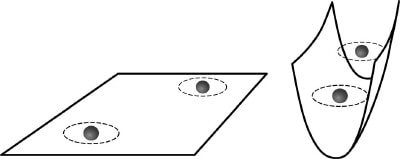
The ETH team began by loading an ultracold gas of potassium-40 atoms into an optical lattice made from crossed laser beams. The pattern created by the interfering laser beams resembles an array of “tubes” in which the particles can only move back and forth along the axis of the tube (figure 1). The gas was so cold that the potassium atoms – which have to obey the Pauli exclusion principle because they are fermions – occupied all the available low-lying quantum states to create a degenerate Fermi gas.

Next, Esslinger and colleagues used a magnetic field to change the scattering length by exploiting a Feshbach resonance. As first predicted by Maxim Olshanii of Harvard University in 1998, the atoms form molecules for both positive and negative scattering lengths because they are unable to pass each other freely in the tube (figure 2). The ETH team confirmed that the binding energy of the molecules agreed with theoretical predictions by using a radio-frequency field to split them apart.

“Our experiment provides an excellent testing ground for quantum many-body theories,” says Michael Köhl. “For example, exact theories are available for the cross-over between a superfluid BCS state in which the atoms form pairs (the same as in a superconductor) and a Bose-Einstein condensate of molecules. .”

In addition to possibly shedding new light on the electron-pairing mechanism in high-temperature superconductivity, the one-dimensional atomic gas created by the ETH team could also be used to explore the properties of Luttinger liquids – one-dimensional systems in which the interactions between particles are much more important than in three dimensions.

Propane powers fuel cells

The relatively low power densities of most batteries mean that they do not have a long enough life time for many applications. One alternative to the battery is a fuel cell that runs on lightweight hydrocarbons such as methanol. However, these cells have previously been too big for portable applications.

Now Sossina Haile of the California Institute of Technology and co-workers at the University of Southern California and Northwestern University have overcome these problems by making a micro fuel cell that runs on propane. This material has a high energy density and can successfully be stored in miniature devices because it can be easily compressed into a liquid.

The new device belongs to family of fuel cells known as solid-oxide fuel cells that work using a mixture of fuel and oxygen. It is simple and compact because it contains just one inlet for the oxygen and fuel, and just one outlet for the exhaust gases. The fuel and oxygen mixture is partially oxidised in an exothermic reaction that heats the fuel cell up to between 500 and 600°C.

One of the most important breakthroughs in the new work is that the cell is able to keep itself hot, which is a prerequisite for producing power. The Caltech team achieved this by using novel catalysts that release enough heat to maintain the temperature of the cell, and by adding the fuel slowly so that only a small amount is consumed at any one time. This strategy also eliminates the need for bulky insulation to keep the cell warm, which can add to the size of the device. Finally, a heat exchanger ensures that the hot gases exiting from the fuel cell transfer their heat to the incoming cold gases.

The scientists obtained a power output of 350 mW from a surface area of 1.42 centimetres squared, which is among the highest values ever achieved in a micro fuel cell. The teams says that if such a cell could be commercialised it would be able to drive a small device like an MP3 player for much longer than the best lithium batteries available today.

US bubble set to burst

Bubbles are formed in markets when large numbers of investors – often taking their lead from traders – start to buy more and more stocks and shares, forcing prices to artificially high levels. Such bubbles can also form in the housing market. And like real bubbles, these financial bubbles often burst.

After the “new economy” bubble burst in 2000, the US Federal Reserve decided to cut interest rates to just 1% in an effort to kick-start the economy. However, such low rates have historically been associated with an increased demand for houses. Two years ago, Didier Sornette and Wei-Xing Zhou at the University of California at Los Angeles (UCLA) analysed the US housing market. They concluded that although house prices were increasing rapidly, there was no evidence for the faster-than-exponential growth that often leads to the growth of a bubble.

Now, Sornette and Zhou have revisited their calculations, taking into account the latest data on house prices. The physicists analysed quarterly average prices for the US as a whole as well as in the Northeast, mid-West, South and West, and also in all 50 states and the District of Columbia (DC). They then formulated models to fit the data and identified clear-cut signatures of fast growing bubbles in 22 states. Moreover, the models were able to predict the critical turning point at which these bubbles might burst – after which time the high prices may slowly start to come back down to more realistic levels or stabilise at their current levels.

The scientists performed a similar analysis for the UK in 2003. “In that paper we identified an unsustainable bubble in the UK housing market and predicted that the critical time might be around the end of 2003 or mid-2004,” Sornette told PhysicsWeb. “The UK house price index has experienced a drop since July of 2004.”

The UCLA physicists say they will now continue monitoring other housing markets around the world for potential signs of bubbles. “Our work may have broad economic consequences because the real-estate market has played such a major role in the US economy’s recovery,” says Sornette. “For instance, the total real-estate debt for private home owners in the US is now higher than the federal debt, which is about 8.5 trillion dollars!”

Software challenges and solutions

It is hard to imagine the world before the Web. Initially invented at CERN to help particle physicists analyse the data from their experiments, the Web has become part of the fabric of both scientific and everyday life. But the Web was only the beginning, and researchers are now busy building its successor – the Grid. Whereas the Web allows users to share information and data, the Grid will enable a new type of science called e-Science by allowing them to also share processing power (p8). Physicists and astronomers are leading the way in the development of the Grid (p9), which is also opening up career opportunities for physics graduates in many different areas (p12). Much of this work is being done in collaboration with leading IT companies, and once Grid technology becomes established it should have applications in many areas of business and industry. Of course users will still need applications on their desktop, and elsewhere in this supplement we describe packages for data acquisition and analysis (p11), optical design (p5) and visualization (p15), and also the open-source software movement (p6).

Helping astronomers to see the light
Optical design software can greatly improve the performance of telescopes and other instruments. Gary L Peterson reports

Service promotes an open approach
Open-source software is often overlooked in IT strategies. Randy Metcalfe explains what it has to offer

Welcome to e-Science and the Grid
The large volumes of data being produced in scientific research mean that a new approach is needed, as Neil Geddes explains

The Grid in action
Scientists and engineers are setting up Grid projects to tackle challenges in many different areas. Judy Redfearn reports

Software simplifies surface analysis
Good software is needed to get the most out of experiments, as Andrew Jardine of The Mathworks explains

Grid boosts job opportunities for physicists in software development
The rise of e-Science and Grid computing offers new career possibilities for physics graduates, as Robert Mann describes

Toolkit aids visualization techniques
Visualization packages are getting ready for the Grid, as Jeremy Walton of NAG and colleagues outline

Oxygen loses its magnetism under pressure

Solid oxygen is the only elementary molecular magnet known. At atmospheric pressure (about 10-4 gigapascals) it is an anti-ferromagnetic insulator but becomes a superconductor and metal at about 96 gigapascals. Theory predicts that oxygen should lose its magnetic properties before it transforms into a superconductor, but this non-magnetic state has never been seen directly in an experiment before. Now Goncharenko has observed this magnetic “collapse” for the first time in experiments at the LLB.

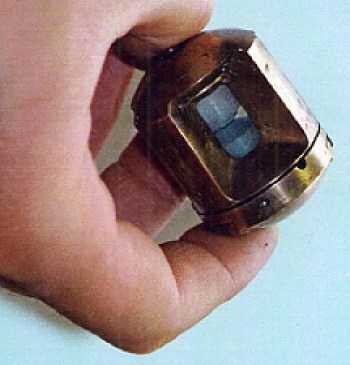
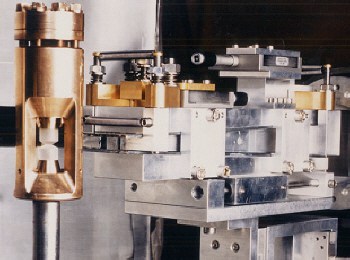
The experiment involved scattering neutrons from a tiny polycrystalline sample of solid oxygen just 0.5 cubic millimetres in size. The sample could be compressed to high pressures using two tiny anvils. By monitoring how the neutrons scattered from the sample as the pressure increased, Goncharenko found that the long-range magnetic order completely disappears at about 8 gigapascals, which is far below the insulator-metal or superconductor transition.

“The study will help us to understand how the insulating elementary solids, such as oxygen, nitrogen and hydrogen, transform into metals and, in some cases, superconductors under high pressures, and can be used to test theoretical models,” says Goncharenko. He now plans to extend his study to single crystals of solid oxygen, which will allow him to obtain precise information on the positions of oxygen atoms in the crystal structure. He will then be able to test a recent theoretical model — proposed by physicists at Rutgers University and Cornell in 2002 — that predicts the formation of “herringbone” type nonmagnetic chains in solid oxygen under pressure.

Oxygen loses its magnetism under pressure

Solid oxygen is the only elementary molecular magnet known. At atmospheric pressure (about 10-4 gigapascals) it is an anti-ferromagnetic insulator but becomes a superconductor and metal at about 96 gigapascals. Theory predicts that oxygen should lose its magnetic properties before it transforms into a superconductor, but this non-magnetic state has never been seen directly in an experiment before. Now Goncharenko has observed this magnetic “collapse” for the first time in experiments at the LLB.

The experiment involved scattering neutrons from a tiny polycrystalline sample of solid oxygen just 0.5 cubic millimetres in size. The sample could be compressed to high pressures using two tiny anvils. By monitoring how the neutrons scattered from the sample as the pressure increased, Goncharenko found that the long-range magnetic order completely disappears at about 8 gigapascals, which is far below the insulator-metal or superconductor transition.

“The study will help us to understand how the insulating elementary solids, such as oxygen, nitrogen and hydrogen, transform into metals and, in some cases, superconductors under high pressures, and can be used to test theoretical models,” says Goncharenko. He now plans to extend his study to single crystals of solid oxygen, which will allow him to obtain precise information on the positions of oxygen atoms in the crystal structure. He will then be able to test a recent theoretical model — proposed by physicists at Rutgers University and Cornell in 2002 — that predicts the formation of “herringbone” type nonmagnetic chains in solid oxygen under pressure.

New light on early stars

One of the biggest challenges in astronomy is identifying the first stars in the universe — those that were born from a primordial gas of hydrogen and helium. These “first-generation” stars should contain very few heavier elements, which are known collectively in astrophysics as “metals”. There was therefore much interest when two teams of astronomers (the second of which included Nomoto) found two stars, one in 2002 and the other this year, in which the ratio of iron to hydrogen is about a hundred thousand times less than in our Sun.

Now, however, Nomoto and colleagues argue that these “hyper-metal-poor” stars are in fact “second-generation” stars. They have very unusual chemical abundances, including a ratio of carbon to iron that is ten thousand times as much the Sun. The Japanese team believes that the stars were formed from gases that were chemically contaminated by a first-generation star that had died and formed a black hole in a supernova explosion.

According to their model, most of the iron synthesized in the first supernovae “fell back” onto the black holes that were formed, which meant that only a tiny fraction of iron was ejected into interstellar space. The Tokyo group tested its predictions by comparing the observed chemical abundances of the two stars with those obtained in computer calculations.

The result means that the nature of the first stars could now be predicted more quantitatively. “Our study shows that stars 20 to 130 times heavier than the Sun that underwent supernovae explosions and formed black holes played an important role in the earliest chemical enrichment of the universe,” says Nomoto.

How animals find things

Bénichou and colleagues created the model by assuming that foraging animals exhibit two distinct phases of behaviour. In the first phase they move quickly on a single trajectory from one location to another. Then in the second phase they search the new location by moving around more slowly and randomly — akin to molecules undergoing diffusion. They carry on this two-phase process until they find the object. Pet owners routinely see this type of behaviour in their dog, for example, when it looks for an object in the garden (see figure).

The physicists varied the time spent in each phase over a range of different search scenarios. They found that in order to minimize the search period, the time spent in the first phase is equal to the time spent in the second raised to a certain power. This relationship is also seen in actual animal behaviour.

Bénichou told PhysicsWeb that the results could be extended to human activities, such as searching for a lost object or perhaps even a victim in an avalanche. Doing so would require spending the appropriate amount of time carrying out each phase of the search.

Liquid universe hints at strings

For the last five years, physicists at the Relativistic Heavy Ion Collider (RHIC) at the Brookhaven National Laboratory in the US have been producing the highest temperatures on Earth by colliding gold nuclei together at enormous energies. Their aim has been to recreate the extreme conditions that are thought to have existed during the first 10 microseconds of the universe, just before it cooled enough for the quarks and gluons created in the Big Bang to combine and form the protons and neutrons that make up the world around us.

The possibility of creating such a “quark-gluon plasma” has tantalized researchers since circumstantial evidence for such a state was seen at CERN in 2000. But those results were inconclusive because the plasma existed only fleetingly. It was assumed that the higher energies available at RHIC would allow the quark-gluon plasma to be studied in detail, and two years ago physicists at the collider said that they had come closer than ever before to creating the exotic new state of matter (see “The RHIC gold rush” Physics World June 2003 pp31-35).

Now, RHIC’s four experimental collaborations – STAR, PHENIX, PHOBOS and BRAHMS – have found the most convincing evidence to date that a quark-gluon plasma has been created. But instead of behaving like a gas of free quarks, antiquarks and gluons as expected, the hot droplet of matter behaves more like a liquid. In fact, the RHIC results suggest that it could be the most perfect liquid ever created (www.bnl.gov/bnlweb/pubaf/pr/docs/Hunting-the-QGP.pdf; Nucl. Phys. A at press ).

But the really intriguing aspect of the result – presented at the April meeting of the American Physical Society in Tampa, Florida – is that string theory has been mentioned for the first time in the announcement of a major experiment.

Perfect liquid

The quark-gluon plasma is predicted to exist by quantum chromodynamics (QCD), the theory of the strong interaction. In QCD, protons and neutrons are treated as bound states of quarks, which are held together by the exchange of gluons. At distances much shorter than the size of a proton or neutron (about 10-15 m), the quarks and gluons behave as free particles. However, as the distance between two quarks increases the force between them becomes very strong.

At low energies or temperatures quarks and gluons prefer to bind together in clusters that contain three quarks (such as the proton and neutron), or a quark and an antiquark (such as a pion or kaon). However, at energies corresponding to temperatures above about 1013 K the average distance between these particles becomes so small that matter behaves like an ideal gas of free quarks and gluons.

Even before RHIC was turned on, most of us anticipated that it would be difficult to pinpoint a decisive signal for the formation of a quark-gluon plasma. Although the collision energy at RHIC (200 GeV per nucleon) is about 10 times higher than it was at CERN, most of this energy ends up in the various remnants of the gold nuclei, leaving only a small fraction to do the useful job of creating the new state. Furthermore, because the plasma takes time to expand, most of the particles that are actually detected come from the later stages of the collision, when the plasma has cooled substantially. However, by measuring the total number of particles produced, and also their energies, it is possible to indirectly study the state initially created by the gold collisions.

As many measurements at RHIC indicate, this system is not a simple, weakly interacting gas of quarks and gluons. Instead, the super-hot state appears to be strongly coupled, which complicates things considerably. Since very few reliable calculations can be made in the strong-coupling regime, researchers cannot be absolutely sure that a quark-gluon plasma has been created.

What does seem certain, however, is that the new RHIC state behaves as if it were a droplet of a perfect liquid – i.e. a fluid with almost zero viscosity. A weakly coupled quark-gluon system, on the other hand, would have a high viscosity. This conclusion was reached by studying events in which the gold nuclei undergo glancing rather than head-on collisions, which result in an initial hot region that is almond shaped rather than round. A perfect liquid that initially fills such a region will expand mostly along the shorter dimension of the almond, since the pressure changes fastest in this direction. A gas of free particles, in contrast, would expand uniformly in all directions.

In the perfect-liquid scenario the typical momentum of the outgoing particles therefore depends strongly on their direction, while it is independent of direction in the gas scenario. In between these two states is a non-perfect fluid (i.e. with a non-zero viscosity, such as water). Using hydrodynamic models, theorists have been able to reproduce the asymmetry of the observed spectrum, which is technically called the elliptic flow, assuming the fluid has zero or very small viscosity.

String connection

So, what does all this have to do with string theory? Unlike QCD and other quantum field theories, string theory treats all particles as tiny vibrating strings. It also provides an appealing framework for unifying all four forces in nature, including gravity, although one possible drawback of string theory is that it requires six or more extra spatial dimensions in addition to the three that we know.

In 1997 Juan Maldacena, then at Harvard University, revolutionized our understanding of strongly coupled quantum field theory by proposing a concrete example of two seemingly unrelated theories that could, in fact, describe the same system. One of these theories lives in the familiar four dimensions of space-time and is similar to QCD; the other theory is a type of string theory that lives in a curved 10D space. The relationship between the two theories stems from the fact that the QCD-like theory lives on a “membrane” that is immersed in the higher-dimensional space.

Remarkably, when the particles in the 4D theory interact strongly with one another, such as the interactions between quarks at long distances, the equivalent string theory becomes simple and can be solved exactly. Maldacena’s conjecture thus allows us to calculate observables in the strong-coupling regime where no previous method works. The caveat of the new approach is that it can only be applied for a small class of theories that are strongly coupled at all distances. And this class unfortunately does not include QCD, which is weakly coupled at short distances.

In this narrow class of theories, the hot plasma in the 4D theory corresponds to a black hole in the 10D equivalent description, which matches very well with Stephen Hawking’s prediction that black holes have temperature. Moreover, there is a direct relationship between vibrations in the plasma, such as sound waves, and vibrations of the black-hole horizon. For example, when an object is dropped into the black hole in 10D, the equivalent picture in 4D is a hot, expanding region that dissolves into a plasma. Using this equivalence, various theorists, including the present author, have deduced that if such plasmas were real, they would be almost perfect liquids.

Since Maldacena’s conjecture does not apply to QCD, however, the viscosity of the real quark-gluon plasma cannot be computed via string theory. This makes the RHIC announcement that the viscosity of its plasma is comparable to the values one finds from string-theory calculations even more surprising. If this is true, the quark-gluon plasma created at RHIC could be the most perfect fluid in nature. This in itself is an interesting fact, but it could also indicate that string theory has some relation to real QCD. However, we first need more quantitative evidence from RHIC, such as an upper bound on the viscosity.

Coincidentally, researchers are currently homing in on the strong-coupling regime in a completely different field of physics: ultracold atomic gases. The strong coupling between the atoms in these systems can be achieved by fine-tuning an external magnetic field. By watching the oscillations of the gases in the trap, researchers have found that the oscillations live longer when the coupling is larger, indicating that the viscosity of such gases is small in the strong-coupling regime. In the search for the most perfect fluid, it seems that heavy-ion physicists will face strong competition.


Shadowed by a sociologist

I took up gravity-wave research in 1973 thinking that I would spend a couple of years discovering Einstein’s waves and then move onto something else. Little did I imagine that I was locking myself into a lifetime quest. Gravity-wave discovery has always been a few years away, and remains so today. Yet it is impossible not to believe that we are now really getting close. With huge observatories working well, there is a real sense of excitement.

Gravitational-wave detection was started in the late 1960s by one of the most creative, driven and eccentric physicists I have ever known: Joseph Weber. From its humble but controversial beginning – Weber’s claims of detection were never substantiated – gravity-wave detection has now grown to be truly big science. It supports hundreds of physicists, several research institutes and many specialized conferences every year (see “The search for gravitational waves” by Jim Hough and Sheila Rowan Physics World January 2005 pp37-41 print edition only).

For many years a familiar participant at gravitational-wave research conferences has been the British sociologist Harry Collins, who has befriended many in the community. With his ever-present mini-disc recorder, he is always to be found in conference sessions, meetings and on the all-important excursions to pubs, bars and restaurants (see “Drama, tragedy and gravitational waves” Physics World December 2004 pp10-11).

Collins’ goal has been to study the process of discovery. He wants to record the sociology of what will be one of the most momentous discoveries in modern physics: the detection of Einstein’s gravitational waves. We have all become used to Collins’ cheeky grin and his friendly interest – so much so that some of us, myself included, have some regrets about the things we allowed him to record. It was easy to forget that his mini-disc was running and easy for Collins to read more into comments than people might have meant. I am not, therefore, surprised by the love/hate response of gravity-wave researchers to this book.

Over the last few decades, our research community has provided Collins with a rich diet of tasty morsels to chew on, analyse and regurgitate. Looking back at the history of our field, it certainly makes a colourful story. Weber created the field, but then alienated almost everyone else in it. He identified their failure to reproduce his results as a conspiracy aimed at not detecting gravitational waves – and thereby denying him a Nobel prize. Response to Weber was “bi-modal”. One group felt it necessary to publicly point out his errors; the other felt it better to ignore him. Collins quotes a moving letter to Weber written by the theorist Freeman Dyson at the height of the controversy. “A great man”, writes Dyson, “is not afraid to admit publicly that he has made a mistake…you are strong enough to admit that you are wrong. If you do this your enemies will rejoice but your friends will rejoice even more. You will save yourself as a scientist.” Sadly, Weber never took this advice.

Over the years, physicists developed two main types of instruments to detect gravitational waves. First there were sensitive metal bars similar to those that Weber used, but cryogenically cooled and far more sensitive. More recently, several huge, kilometre-long laser interferometers have been built, including the LIGO detectors in the US, Virgo and GEO-600 in Europe, and TAMA in Japan. Australia is also planning a facility called AIGO.

One controversy that Collins examines took place in 2002 when a team of researchers, led by Eugenio Coccia, published intriguing coincidences between measurements made by two identical aluminium bar detectors – one at CERN and the other at the Frascati National Laboratories near Rome. It was the classic signature for gravitational waves, so the team followed the proper process. They wrote a paper and submitted it to the journal Classical and Quantum Gravity, where it was refereed, accepted and published (2002 19 5449). A diligent science reporter thought it sounded interesting and contacted leading gravity-wave physicists. Again the response of the community was bi-modal.

One group’s advice to the journalist was to ignore the paper. However, that advice simply made sure that the other group was heard. This group, which included me, was quite happy that speculative results should be published and discussed. A story in New Scientist published on 9 November 2002, “Gravity waves detected at last?”, was picked up by media around the world. The story was certainly not ignored.

The article in New Scientist, in which I was quoted, triggered an intense debate in the gravity-wave community about the correct way to announce significant results. Is the normal publication process appropriate? Or should there be other safeguards against the publication of incorrect results? At least there was one useful lesson from this episode: if you want journalists to ignore something, don’t tell them to ignore it, but give a very long and boring explanation instead!

Also covered in the book is the genesis of the US LIGO project, which was designed to create detectors that would detect known sources of gravitational waves. As a very expensive project led by two top US universities – Caltech and the Massachusetts Institute of Technology – there was certain to be tension, and the long teething problems of this project provided further tasty morsels for Collins. It took particle-accelerator physicists who were used to big science to turn the LIGO project into what has now become a spectacular model for large-scale international collaborative science – and one that we in Australia are pleased to be part of. But it was a long and difficult process.

Am I making Collins sound like a tabloid journalist? It is true that he focuses on the sensational and the controversial, but what he is trying to do is understand the response of the community. How is consensus reached? How is truth finally determined? And how does the machine of science operate? I cannot say I agree with some of his interpretations.

To present his evidence, Collins tells the story of gravity waves in fine detail. It is certainly not tabloid journalism, yet for me it was astonishing to find things I had said in a bar or restaurant revealed here word for word, laughs and frowns included. There is even an appendix about my views on doing physics in the isolation of Western Australia.

However, the book is so long and so detailed that I cannot encourage everyone to read it. Perhaps because I was a participant in many of the events reported, it has been a struggle to get through its 800 pages of solid text. Despite reporting many colourful events, I found the book lacking in spark. It is nevertheless a superb reference text on the history of one branch of physics and it will long be seen as a definitive study. I can imagine it being a very useful resource for novelists and dramatists who want a moderately accurate portrayal of real scientists and the issues and disagreements that are part of scientific progress.

Gravity’s Shadow is up to date, with even a stop-press from 2004. Unfortunately, it is still unable to report the direct detection of gravitational waves, although this could happen at any time in the next few years. I guess it is not intended to capture the excitement of the field, but rather to present the processes. However, by focusing mostly on the times when physicists get together – and much less on the times when they are beavering away in their labs – it is only a partial snapshot of the true sociology of physics.

Collins gets most of his facts right, but there are a few minor errors. One that is close to home for me is his description of the University of Western Australia as being made of concrete, which gives a totally wrong impression of the beautiful sandstone Spanish-style architecture. More importantly, there is a subtle spicing-up of the truth. Energetic meetings become “heated”; annoyance turns to “anger”. Meanwhile, “back on good terms” implies a falling-out that never really happened. It is true that the scepticism that is essential to scientific progress can get personal, but when I read about my role in events it seems more exciting than I remember.

Despite these quibbles, the more I delve into this book the more I like it. I think it is a work that will go down in history. It will be a significant book for historians and philosophers of science. It is also an interesting book for gravity-wave physicists to dabble in. It should be in university libraries, and for the average physicist it is definitely worth a browse. If the next edition records the discovery of gravitational waves, it will be even better, although the sociological conclusions will probably remain unchanged. I imagine that the book is a landmark in the sociology of science, but physicists will not necessarily want to go out and buy it.

Copyright © 2026 by IOP Publishing Ltd and individual contributors