Stephanie Brock and colleagues at Wayne State University in Detroit made the aerogels from metal chalcogenides — compounds that contain a metal and a group VI element such as sulphur or selenium (J Mohanan et al. 2005 Science307 397). “We have opened up a new class of aerogels,” says Brock. “Previously, aerogels were limited to metal oxides and carbon.” The useful properties of aerogels are a result of their combination of high surface area, quantum confinement effects and photoluminescence.
To prepare the aerogels, Brock and colleagues first made nanoparticles of various metal chalcogenides capped with molecules known as thiolates, which they then oxidized, causing the nanoparticles to form a gel. Next, they dried the gel with supercritical carbon dioxide to maintain the pore architecture.
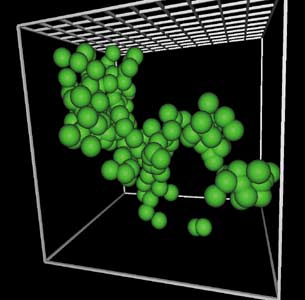
The resulting structures contained pores between 2 and 50 nanometres in diameter. This means that the materials have surface areas as high as 250 square metres per gram. Moreover, the cadmium sulphide aerogel had a bulk density of 0.07 grams per cubic centimetre, which is just 1.4% of the density of a single crystal of cadmium sulphide. The Wayne State team also used the technique to make aerogels with cadmium selenide, zinc sulphide and lead sulphide.
“Finding ways to assemble nanoparticles into actual functional devices — without losing the characteristic nanoscale properties — is one of the current challenges for nanotechnology,” says Brock. “This ‘sol-gel’ route provides a simple, versatile method to do this, and should be amenable for the creation of more complex composite materials too.”
The cochlea is a small spiral-shaped organ in the inner part of the ear where sound vibrations are converted into nerve impulses, which are then sent to the brain as electrical signals. The human cochlea occupies a volume of about 1 cubic centimetre and operates at frequencies between 20 hertz and 20 kilohertz. It can detect sounds over a range of 120 decibels.
White and Grosh employed a micromachining technique known as “deep reactive ion etching”, which is an extension of the techniques that are used to make integrated circuits, to fabricate the device (figure 1). “Micromachining allows us to define very small features and produce devices economically in large batches,” Grosh told PhysicsWeb.
The cochlea consists of ducts filled with water-like fluids. The cochlea can be thought of as being divided into two channels by a flexible basilar membrane. When a sound wave enters the cochlea, it creates a wave in the fluid that travels along the basilar membrane. This movement is then detected by sensory hair cells on the membrane (figure 2). Our ears can distinguish between different tones or frequencies because the waves created by high frequencies have a maximum near the base of the cochlea, while lower frequencies travel further towards the apex. The mechanical cochlea works in the same way.
White and Grosh now plan to add sensing elements and electronics to the device so that they can increase both its sensitivity and the range of sounds that it can hear.
Quantum structures are semiconductor structures that confine electrons in one, two or three directions. Structures in which the electrons are confined in all three directions are known as quantum dots. In addition to being of fundamental interest, quantum structures could also have applications in semiconductor lasers, data storage devices and quantum computers.
An atomic force microscope (AFM) works by measuring how the force between the sample and a tiny “tip” on an oscillating cantilever changes as the microscope is moved over the surface of the sample. AFMs have been used to probe single electron events before, but it has always been necessary to attach electrical leads to the system under study, which is not a trivial task for nanosized structures.
Peter Grütter and co-workers at McGill University in Montreal and the National Research Council of Canada in Ottawa exploited the interaction between the electrostatic interaction between the quantum dot and the microscope tip. Grütter compared this system to a capacitor: “If the quantum dot is one plate of the capacitor and the AFM tip the other, changing the charging state of the quantum dot will lead to a change in the Coulomb interaction between the capacitor plates. This can be detected as a change in resonant frequency of the AFM cantilever.”
The quantum dots studied by the Canadian team were made of indium arsenide and were formed by self-assembly on the surface of a 20 nanometre thick layer of indium phosphide, below which was a 10 nanometre thick layer of indium gallium arsenide. This layer of indium gallium arsenide acted as a quantum well, confining a two-dimensional electron gas (2DEG), which acted as the “back electrode” in the system (figure 1). The experiment had to be carried out at a temperature of 4.5 Kelvin.
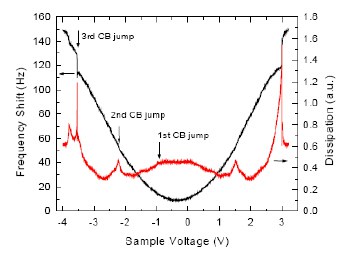
Grütter and co-workers placed the AFM tip between 5 and 20 nanometres above the quantum dot and measured how the resonance frequency of the cantilever changed as the voltage between the tip and the back electrode was increased. They observed several distinct jumps in the electrostatic force spectra that they attributed to single electrons tunnelling between the dot and quantum well (figure 2).
Kleppner, who is 72, received his PhD from Harvard University in 1959 and first moved to MIT, where he has spent most of his career, in 1962. In 1960 he developed the hydrogen maser with the future Nobel laureate Norman Ramsey, and pioneered the study of Rydberg atoms – atoms with one electron in a highly excited, almost classical state – in the 1970s.
In the 1970s Kleppner and a colleague, Thomas Greytak, also embarked on a research programme to achieve Bose-Einstein condensation (BEC) in a hydrogen gas. They finally succeeded in 1998 – three years after Carl Wieman, who had conducted undergraduate research under Kleppner, had demonstrated BEC in an alkali gas for the first time. Wieman, his colleague Eric Cornell and Wolfgang Ketterle shared the Nobel prize for this work in 2001, while another former PhD student of Kleppner’s – Bill Phillips – shared the prize in 1997.
The Wolf prize in mathematics has been shared by Gregory Margulis of Yale University for his contributions to algebra, and by Sergei Novikov of the University of Maryland in the US and the Landau Institute for Theoretical Physics in Moscow for his contributions to algebraic and differential topology and to mathematical physics.
The prizes, which are both worth $100000, will be presented in Jerusalem in May, by the president of Israel, Moshe Katsav.
From studies on animals scientists know that specific nerve cells become active just before the animal makes a certain movement. By processing the electric signals from these cells it is possible to predict the movement before it is actually made. The same information could also be used to make an artificial limb perform the same movement.
Moran and colleagues measure the neuronal signals by placing a grid of electrodes directly on the surface of the brain (figure 1). This method, which is known as electrocorticography (ECoG), is routinely used to monitor and control seizures in patients with epilepsy. It provides much better signals than electroencephalography, in which the electrodes are placed on the scalp, and is much less traumatic than procedures in which the electrodes actually penetrate the brain.
Leuthardt, Moran and co-workers asked four volunteers — who were already wearing the electrodes — to perform certain movements that included opening and closing their hands and sticking out their tongue. During this time, the scientists identified which brain signals were associated with each of the different movements.
Next, the patients were asked to attempt to control a cursor on a computer screen by imagining to make these movements. This part of the research relied on a computer program called BCI2000 that had been developed by team member Gerwin Schalk at the Wadsworth Center in New York. After just a few minutes of training, the patients were able to control the cursor using their thoughts with an accuracy of over 70%.
“The ability to operate a prosthetic device using the electric signal of the brain is rapidly leaving the realm of science fiction and becoming a realistic goal of the scientific community,” Leuthardt told PhysicsWeb. “Our research could ultimately be used as a tool for people with severe motor disability. It could allow them to better interact with the world through devices that are controlled by thought alone and do not require the use of peripheral nerves or muscles.”
Most of us probably remember hearing about Brownian motion in high school, when we are taught that pollen grains jiggle around randomly in water due the impacts of millions of invisible molecules. But how many people know about Einstein’s work on Brownian motion, which allowed Jean Perrin and others to prove the physical reality of molecules and atoms?
Einstein’s analysis was presented in a series of publications, including his doctoral thesis, that started in 1905 with a paper in the journal Annalen der Physik. Einstein’s theory demonstrated how Brownian motion offered experimentalists the possibility to prove that molecules existed, despite the fact that molecules themselves were too small to be seen directly.
Brownian motion was one of three fundamental advances that Einstein made in 1905, the others being special relativity and the idea of light quanta. Of these three great works, Einstein’s analysis of Brownian motion remains the least well known. But this part of Einstein’s scientific legacy was the key to a revolution that is at least as important as relativity or quantum physics. One century later, Brownian motion continues to be of immeasurable importance in modern science, from physics through biology to the latest wonders of nanotechnology. Indeed, this is reflected in citation statistics, which show that Einstein’s papers on Brownian motion have been cited many more times than his publications on special relativity or the photoelectric effect.
The story of Brownian motion spans almost two centuries, its unlikely roots lying in a scientific craze that swept western Europe at the beginning of the 1800s. And it starts, surprisingly enough, not with a physicist but with a botanist.
Brown’s botany
In the early 19th-century Europeans became fascinated by botany. In Britain this interest was fuelled by explorations to the corners of the growing empire, particularly Australia or “New Holland” as it was known at that time. One of the first people to get their botanical teeth into New Holland was Robert Brown, who had grown up botanizing in the Scottish hills.
After completing a medical degree at Edinburgh University and a brief period in the army, during which he spent most of his time specimen-hunting around Ireland, Brown secured a place as ship’s botanist on a surveying mission to Australia in 1801. Risking attack from Napoleon’s fleets, Brown spent four years exploring the Australian and Tasmanian coasts before returning to London laden with thousands of specimens of new species, his reputation as one of Europe’s leading botanists already secure.
1 Random walks
But Brown was interested in more than collecting and cataloguing different species – he was also a pioneer of botany as a scientific investigation. Indeed, he is credited with the first clear description of the cell nucleus, and it was Brown that Charles Darwin came to for advice before setting out in the Beagle in 1831. In fact, the botanical craze in which Brown had played a major part laid the vital groundwork for Darwin’s theory of evolution.
Brown is, of course, better known among physicists for the phenomenon of Brownian motion. In the summer of 1827 he began to make microscopic observations of suspensions of grains released from pollen sacks taken from a type of evening primrose called Clarkia pulchella. What Brown saw surprised him: the tiny grains, which were suspended in water, appeared to be in constant motion, carrying out a tireless and chaotic dance. This motion never appeared to slow or stop. Moreover, as Brown verified, it was not caused by external influences such as light or temperature. He also quickly ruled out his first idea – that the grains were somehow alive – by examining grains from inorganic minerals. So, Brown had shown that whatever it was, this incessant dance was not biology after all: it was physics.
Curiosity and paradox: Brownian motion and kinetic theory
For decades the significance of Brown’s observations went almost entirely unappreciated. A few scientists returned now and then to the phenomenon, but it was seen as little more than a curiosity. In hindsight this is rather unfortunate, since Brownian motion provided a way to reconcile the paradox between two of the greatest contributions to physics at that time: thermodynamics and the kinetic theory of gases.
The laws of thermodynamics were one of the crowning achievements of physics by the middle of the 19th century. Through them a vast range of material behaviour could be understood, irrespective of particular theories of matter, simply in terms of the concepts of energy and entropy. But many scientists were not satisfied with this simple picture, and sought not just a statement but an explanation of the laws.
Chief among these were James Clerk Maxwell and Ludwig Boltzmann, who built on the 18th-century idea that matter, such as a volume of gas, is composed of many tiny particles. They showed that many of the experimental results of thermodynamics could be explained by calculating the average or statistical behaviour of such a collection of particles, in what became known as kinetic theory.
But Maxwell and Boltzmann’s theory only brought into sharper focus the paradox between thermodynamics and Newtonian mechanics. Key to kinetic theory was the idea that the motion of individual particles obeyed perfectly reversible Newtonian mechanics. In other words there was no preferred direction of time. But the second law of thermodynamics expressly demanded that many processes be irreversible. Or, as Tom Stoppard puts it in his 1993 play Arcadia, you cannot “unstir” the jam from your rice pudding simply by stirring it in the opposite direction. So, if matter was made up of particles obeying perfectly reversible Newtonian equations, where did the irreversibility come from?
This violation of the second law on the scale of single particles in kinetic theory was perfectly apparent to Maxwell, but he missed the subtle link to Brownian motion that might have immediately allowed the paradox to be investigated experimentally. One clue lay in the fact that Brownian motion also apparently violated the second law, since the dance of a Brownian particle seemed to continue forever, never slowing down and never tiring. It therefore ought to be possible to extract endless work from such a particle. But such perfect conversion of heat into work was forbidden by the second law, which states that some energy must always be irreversibly lost as heat whenever work is done. And if some energy is always irretrievably lost, how can the Brownian motion continue forever?
It was not until near the end of the 19th century that scientists such as Louis Georges Gouy suggested that Brownian motion might offer a “natural laboratory” in which to directly examine how kinetic theory and thermodynamics could be reconciled. In other words they decided to turn the problem around and use Brownian motion to throw light on the great paradox of the second law.
There was, however, one problem with this natural laboratory: it was not clear which quantities needed to be measured. This was where, a few years into the 20th century, a young patent clerk called Albert Einstein came to the fore.
Atoms: philosophy, analogy or reality?
Einstein was not the kind of scientist to simply pick a problem and solve it out of idle curiosity, and this is as true of Brownian motion as it is of relativity. He had another motive for wanting to find a theory of Brownian motion, but to understand what this was we first have to consider another controversy that stemmed from kinetic theory.
Ludwig Boltzmann had championed a way out of the reversibility paradox via the statistical interpretation. He suggested that any single molecule would behave entirely in accord with reversible mechanics, but that when you put a large collection of particles together, the statistics implied irreversibility and led unavoidably to the second law. Despite its mathematical success, Boltzmann’s “statistical mechanics” met with criticism. Why swap the solid ground of the laws of thermodynamics – the product of a century of careful experimental verification – for the ephemeral world of statistics and chance?
2 The reality of atoms
It seemed like a return to the chaos of the middle ages, before the time of Galileo and Newton, and it would take compelling evidence to convince people to throw this hard-won determinism away. In fact, it would take direct evidence that Boltzmann was counting something physical and real: a proof that the particles of kinetic theory really existed.
Today we take atoms for granted, but even as recently as the turn of the 20th century not everyone accepted this “discontinuous” description of matter. Even Boltzmann and Maxwell tended to sit on the fence. Boltzmann described kinetic theory as a mechanical analogy, and Maxwell never expected that his illustrative mechanisms – the pictures that helped him build mathematical theories – would be taken literally.
The so-called energeticists, such as Ernst Mach and Wilhelm Ostwald, went even further. They insisted that kinetic theory was no more than a convenient picture that should not be taken literally – certainly not, the latter argued, until you had direct evidence for the existence of atoms. Ostwald’s caution was partly justified. It could be dangerous for the credibility of science to base a complete theory of matter on some hypothetical object that had never been seen – especially at a time when science was under strident philosophical attack from intellectuals, who despaired at its apparently inhumane reductionism.
But Einstein took a different view. He was one of a new generation of physicists who had grown up on a diet of Maxwell and kinetic theory, and therefore saw little reason to doubt the physical reality of atoms. Indeed, by analysing Brownian motion, Einstein set out to obtain a quantitative measure of the size of the atom so that even the most cautious sceptics would be convinced of its existence.
As the great year 1905 dawned, Einstein was still an unknown physicist working in obscurity at the Bern patent office. But that year he would take the decisive theoretical step towards proving that liquids really are made of atoms. He joined the thermodynamics of liquids with statistical mechanics to obtain the first testable theory of Brownian motion, and the first chance of a direct glimpse inside the atomic world.
Quantitative predictions: Einstein and Brownian motion
In his quest for the literal truth of atoms Einstein had to accept that individual atoms could not be seen. By anyone’s estimate they were simply too small and too fast. But Einstein recognized that if the predictions of statistical mechanics were correct, then any particle immersed in a “bath” of atoms must basically behave like a very large atom because it would be in thermodynamic equilibrium with the atoms in the bath. Furthermore, the equipartition of energy theorem predicted exactly how the particle’s kinetic energy would depend on temperature: for each degree of freedom the average kinetic energy is kBT/2, where kB is Boltzmann’s constant and T is the temperature of the bath.
3 Brownian motion in action
Einstein realized that a particle with a diameter of, say, 1 μm – large enough, in other words, to be visible using a microscope – would provide a “magnifying glass” into the world of the atom. It would be like an atom you could see, and the behaviour of which you could compare directly against kinetic theory to decide once and for all whether Boltzmann’s ideas agreed with reality.
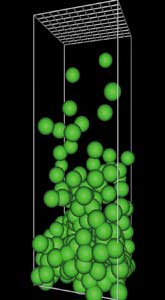
Einstein predicted that, just like a molecule in solution, such a Brownian particle would diffuse according to a simple equation: D = √[(kBT/6πηR)t], where D is the displacement (technically the root mean square displacement) of the particle, T is the temperature, η is the viscosity of the liquid, R is the size of the particle and t is time. This equation implied that large particles would diffuse more gradually than molecules, making them even easier to measure. Moreover, unlike a ballistic particle such as a billiard ball, the displacement of a Brownian particle would not increase linearly with time but with the square root of time (figure 1).
Attempts had already been made to measure the velocity of Brownian particles, but they gave a nonsensical result: the shorter the measurement time, the higher the apparent velocity. This suggested that if you could measure the velocity in an extremely short (infinitesimal) instant, you would obtain a velocity approaching infinity. But if Einstein’s derivations were correct, the mystery was explained because you cannot measure the velocity of a Brownian particle simply by dividing a distance by a time. The experimenters had been measuring the wrong quantity! Thanks to Einstein’s pioneering analysis, the mathematical stage was now set, and it was time for someone to get down to some serious experimenting.
The man who proved atoms are real
Jean Perrin, a physical chemist working at the Sorbonne in Paris, belonged to the same atom-believing tradition as Einstein. And it was Perrin’s microscope studies of Brownian particles that confirmed Einstein’s theory and sealed the reality of the discontinuous, atomic nature of matter.
These studies began in 1908, when Perrin and his team of research students embarked on an exhaustive set of experiments. Tragically, many of Perrin’s team would lose their lives only a few years later in the First World War.
Their first task was to obtain a suspension of Brownian particles that were each as close as possible to being the same size, since the rate of diffusion depended on particle size, and whose size was precisely measurable. This was no mean feat for particles with a diameter of a thousandth of a millimetre. Starting with kilograms of suspended “gamboge” – a gum extract that forms spherical particles when it is dissolved in water – Perrin’s team eventually managed to produce just a few grams of usable particles.
Using a microscope, Perrin showed that when these particles were dispersed in water, they formed a kind of atmosphere under gravity, since the concentration of particles decreased exponentially with height in the same way that the density of gas molecules in the Earth’s atmosphere decreases. This meant that, as Einstein had predicted, the Brownian particles obeyed Boltzmann’s equipartition of energy theorem just like gas molecules did (figure 2).
Perrin’s group went on to measure the diffusion of the particles, confirming the square root of time law and validating Einstein’s kinetic-theory approach. In further experiments over the following five years, Perrin produced a wealth of measurements that could not be contested. Soon enough even Ostwald – the arch sceptic – conceded that Einstein’s theory, combined with Perrin’s experiments, proved the case. It was official: atoms were real.
A fluctuating future
Science developed fast in those first decades of the 20th century. Armed with Perrin’s experimental validation of statistical mechanics, there was little to stop the statistical revolution spreading into every field. Moreover, Einstein and Perrin had unknowingly paved the way for the acceptance of the inherently probabilistic quantum mechanics.
Ironically, Einstein himself never accepted the statistical interpretation of quantum mechanics. Statistics in a liquid of atoms was fine because you knew that you were counting real, physical atoms. But what did it mean to speak of the statistics of a single electron? What was “hidden” behind the electron that caused it to behave statistically? This was a question that Niels Bohr’s “complementarity” simply barred you from asking, and Einstein was never satisfied with that (see p47, print version only).
The quantum revolution gained so much attention through the first half of the 20th century that it obscured the success of classical statistical mechanics. Only in recent decades has the importance of Einstein and Perrin’s classical work become clearer. As physics increasingly overlaps with biology, nanotechnology and the statistics of complex phenomena, we can begin to see how understanding Brownian fluctuations is vital to everything from cell function to traffic flow, and from models of ecologies to game theory and the stock market (figure 3).
Einstein did not live long enough to appreciate the true significance of Brownian motion. In his later years, immersed in the search for a “theory of everything” through his general theory of relativity, Einstein himself dismissed his work on Brownian motion as unimportant. He was a philosopher as much as a physicist, and to him the philosophical implications of Brownian motion seemed minimal compared with those of relativity.
But if he were alive today, then perhaps he would change his mind. Since Robert Brown’s first observations of Clarkia pulchella 180 years ago, scientists across many disciplines are realizing that random fluctuations are fundamentally important in many, if not most, of the phenomena around us. Without them, there would be no phase behaviour, no protein folding, no cell-membrane function and no evolution of species. And we are only beginning to realize an even deeper subtlety from the latest work on complex systems, such as molecular motors and cell membranes.
These functional biosystems must satisfy almost contradictory requirements: they must be robust to a complicated and ever-fluctuating environment, yet at the same time they must also be able to exploit the fluctuations to carry out complicated biological functions, such as the transport of vital molecules in and out of cells. Almost two centuries after Brown, this trade-off at the heart of nature is gradually becoming clearer: there is an extraordinary balance between function and fluctuation, between hard physical rules and the subtle effects of randomness.
Einstein’s role in demystifying Brownian motion was pivotal in this ongoing revolution. In developing the first testable theory that linked statistical mechanics – with its invisible “atoms” and mechanical analogies – to observable reality, Einstein acted as a gateway. Through this gateway, years of confused observations could be turned into the solid results of Perrin, and from these could grow a new, proven world view with statistics at its heart.
From our more distant perspective, it is clear that the Brownian-motion papers of 1905 had just as much influence on science as did relativity or light quanta. Brownian motion was just a slower, subtler revolution: not a headlong charge, but more of a random walk into a vast and unsuspected future.
Further reading
S Brush 1968 A history of random processes: Brownian movement from Brown to Perrin Arch. Hist. Exact Sci.5 1-36
A Einstein 1949 Autobiographical notes Albert Einstein: Philosopher Scientist reprinted as a separate volume in 1979 (Open Court, Chicago)
M Haw 2002 Colloidal suspensions, Brownian motion, molecular reality: a short historyJ. Phys.: Condens. Matter14 7769-7779
M Nye 1972 Molecular Reality (Elsevier, New York)
A Pais 1982 Subtle is the Lord: the Science and Life of Albert Einstein (Clarendon Press, Oxford) pp79-107
The triple-alpha reaction involves two helium-4 nuclei fusing together to form highly unstable beryllium-8 at a very fast rate. The beryllium-8 then reacts with a third helium-4 nucleus to produce carbon-12 in an excited state. The rate at which the triple-alpha process occurs is critically important for determining the abundances of elements throughout the universe. These elements are ejected when stars explode as supernovae at the ends of their lives.
Hans Fynbo and colleagues at the University of Aarhus in Denmark, along with co-workers in Switzerland, Spain, the Netherlands, the UK, Finland and Sweden, actually studied the reverse of the triple-alpha reaction. Working at the ISOLDE facility at CERN and the JYFL Accelerator Lab at Jyväskylä University, the physicists first produced short-lived radioisotopes of boron-12 and nitrogen-12. They then quickly extracted these isotopes as low-energy beams and stopped them in a thin foil, where they decayed into carbon-12. The foil was surrounded by detectors that could detect all three alpha particles emitted by the carbon-12 with high precision.
Fynbo and co-workers calculated that, for temperatures below about 5 x 10⁷ K, the triple-alpha reaction rate was significantly higher than the standard rate — as published by NACRE (Nuclear Astrophysics Compilation of Reaction rates). The result suggests that the critical amounts of carbon that catalysed hydrogen burning in the first stars might have been produced twice as fast as previously believed. This means that the stars could have evolved twice as quickly.
At temperatures above 109 K, on the other hand, the reaction rate was much lower than NACRE’s. This could be important for models of nucleosynthesis — the process that forges all heavier elements — in supernovae.
“The triple-alpha rate depends heavily on temperature so when you go from 107 K to 1010 K it changes by 80 orders of magnitude,” says Fynbo.
The cosmic microwave background (CMB) has a perfect black-body spectrum with a temperature of 2.73 Kelvin. However, this temperature varies very slightly at different points in the sky, corresponding to the slight variations in the distribution of matter that existed some 380 000 years after the big bang.
When the power spectrum of the CMB is plotted as a function of angle it contains a series of peaks that can be explained in terms of sound waves travelling back and forth across the early universe. Two teams of astrophysicists — the Sloan Digital Sky Survey (SDSS) and the 2dF Galaxy Redshift Survey (2dFGRS) — have now shown that these fluctuations in the CMB grew under the influence of gravity to produce the pattern of galaxies and clusters of galaxy that we see today. Both teams have detected a feature known as the “baryon acoustic peak”.
The SDSS team, which uses the 2.5 m Sloan telescope in New Mexico, mapped more than 46 000 galaxies over a volume of space around five million light years in diameter. The SDSS team says that the results agree perfectly with the standard model of cosmology in which 5% of the universe is made of ordinary baryonic matter, with 25% dark matter and 70% dark energy. However, the nature of dark matter and dark energy remains a mystery.
The 2dFGRS team have come to the same conclusion based on a smaller survey with the 3.8 m Anglo-Australian telescope. “It is impressive verification of the standard cosmological model that two groups with independent data have both made significant detections of the baryon-induced features in large-scale galaxy clustering,” says Shaun Cole of Durham University in the UK, who is the first author of the 2dFGRS paper (submitted to the Monthly Notices of the Royal Astronomical Society).
“These baryon features are the genetic fingerprint of our universe,” says Carlos Frenk, also of Durham. “They establish a direct evolutionary link to the big bang. Finding them is a milestone in our understanding of how the cosmos was formed.”
The SDSS team has submitted its results to the Astrophysical Journal.
Stalactites form when water containing carbon dioxide and limestone (calcium carbonate) drips into an underground cave through cracks in the ground. Since the partial pressure of carbon dioxide inside the cave is lower than that in the rock, the carbon dioxide escapes from the water droplets. As a result, the limestone comes out of solution and is deposited on the ceiling of the cave. This process ultimately creates a stalactite that continues to grow over a period of hundreds of years.
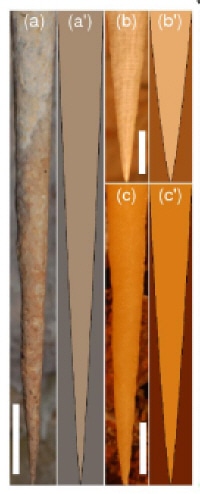
In the model developed by Goldstein and co-workers the rate at which calcium carbonate leaves the solution is proportional to the thickness of the water film flowing down the surface of the stalactite. The rate at which the surface grows is also a function of the local radius and the slope of the stalactite surface.
To test their model Goldstein and co-workers “grew” artificial stalactites on a computer, and found that the final shape of the stalactite was independent of the starting shape. Moreover, the shape created by the model is the same as that observed in real stalactites (figure 2).
“Our work lays the foundation for understanding the formation of a whole range of structures found in limestone caves,” said Goldstein. “These structures, in turn, have historical records of climate variation locked in them. It also advances our general understanding of the physics and chemistry of precipitation, which underlies many other natural formations, such as hydrothermal vents.”
The Arizona group is now working on more exotic shapes found in caves, including “draperies” and “crenulations”.
Supermassive black holes contain billions of solar masses compressed into a volume the size of our solar system. Their gravity of a black hole is so strong that nothing, not even light, can escape. Black holes attract large amounts of gas and dust, which form an accretion disk around the hole before succumbing to the force of gravity. The friction encountered by the material in the accretion disk heats it up and makes it emit X-rays.
Jane Turner and Ian George from NASA and the University of Maryland Baltimore County (UMBC), James Reeves from NASA and Lance Miller from Oxford University studied the Markarian 766 galaxy, which contains a black hole that is several million times as massive as the Sun, using the EPIC cameras onboard the European Space Agency’s XMM-Newton satellite.
Turner and colleagues observed the flares that erupt on the black hole’s accretion disk for periods as long as 27 hours. They calculated the speed of the flares and the length of time they took to orbit the black hole by measuring their Doppler shift. “With a measured velocity and orbital period [of the flares], we could determine the black hole mass using relatively simple Newtonian physics,” said Miller.
“If the black hole in question were placed in our solar system, it would be as wide as Mercury’s orbit, with the three clumps of matter detected orbiting as far out as Jupiter,” he added. “They orbit the black hole in a lightning-quick 27 hours, compared to the 12 years it takes Jupiter to orbit the Sun.”