Petroleum under pressure

Methane is the most abundant hydrocarbon found in the Earth’s crust and is also the main component of natural gas. Reserves of natural gas are often accompanied by petrol, usually only a few kilometres below the Earth’s surface. The possibility that hydrocarbons might exist deeper in the Earth’s mantle, or could be formed from non-biological matter, has been the subject of debate among geologists in recent years.

To explore these questions further Henry Scott of Indiana University in South Bend and colleagues at the Carnegie Institution in Washington, Harvard University and the Lawrence Livermore National Lab subjected materials commonly found in the Earth’s crust to temperatures of up to 1500°C and pressures as high as 11 gigapascals (Proc. Natl. Acad. Sci. to be published). These conditions are similar to those found in the Earth’s upper mantle.

Scott and co-workers squeezed together iron oxide, calcium carbonate and water between two diamonds with flattened tips while heating up the device. The advantage of the “diamond anvil cell” technique is that the sample can be analysed in situ — through the diamonds — using a variety of spectroscopic techniques. The US scientists found that methane was most readily produced at relatively low temperatures of 500°C and pressures of 7 gigapascals or below.

In 2002 J F Kenney of Gas Resources Corporation in Texas and co-workers in Moscow found methane and other hydrocarbons in similar experiments. However, their apparatus did not allow them to follow the formation process in situ (Proc. Natl. Acad. Sci. 99 10976).

Freeman Dyson of the Institute for Advanced Study in Princeton believes the results are important because they could help answer the question of whether natural gas and petroleum could be created inorganically. “If the answer turns out to be inorganic, this has huge implications for the ecology and economy of our planet,” says Dyson.

However, Scott is more cautious about his team’s results. “Although I believe the Earth’s mantle could contain a significant quantity of even heavier hydrocarbons, I cannot constrain how much of this reaches the Earth’s surface, or the extent to which it may augment resources that we exploit commercially,” he told PhysicsWeb. “I do not want to suggest in any way that these hydrocarbons are likely to represent an untapped energy reserve.”
Have we seen an exoplanet?

Chauvin and colleagues made the discovery in April with the 8.2-metre Yepun telescope, which is part of ESO’s Very Large Telescope array at the Paranal Observatory in Chile. By exploiting “adaptive optics” to correct for atmospheric blurring, the team was able to obtain extremely sharp near-infrared images of a faint object lying close to a brown dwarf known as 2M1207. A brown dwarf is a failed star that is too small to generate energy using nuclear processes.

According to the team, measurements of the infrared spectrum of the companion object confirm that it has a mass of just five times that of Jupiter and lies about 55 Earth-Sun distances from its host. 2M1207 itself is 25 times heavier than Jupiter or, equivalently, about 42 times less massive than the Sun.

The system is part of the TW Hydrae Association, which is believed to be only around eight million years old. It is therefore young enough to study how planetary systems form and evolve. In contrast, our solar system is 4.6 billion years old.

Chauvin’s team now plan to make more detailed observations to confirm whether the object is indeed a planet in orbit around 2M1207. “Our discovery represents a first step towards opening a new field in astrophysics: the imaging and spectroscopic study of planetary systems,” says team member Anne-Marie Lagrange from the Grenoble Observatory in France. “Such studies will enable astronomers to characterise the physical structure and chemical composition of giant and, eventually, terrestrial-like planets.”

Tiny writing heats up

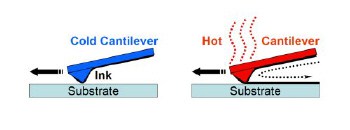
“You might want to use the AFM like a phonograph stylus to feel the bumps on a surface, but if you couldn’t turn the ink off you’d be leaving a trace of ink as you moved the tip across the surface,” said Paul Sheehan of the Naval Research Laboratory. “With the ability to turn the ink on and off, you can feel the surface without depositing material and then turn the heat on and put material down only where you want it.”

To perform the tDPN technique, the team employed a silicon cantilever that contained a resistive heater and had a radius of curvature at its tip of about 100 nanometres. As the ink they used octadecylphosphonic acid (OPA), a material that has a melting point of 99 °C and self-assembles into monolayers on mica, stainless steel, aluminium and oxides such as titania and alumina. Sheehan and colleagues coated the cantilever with OPA before heating it to 122 °C to melt the ink. Scanning the tip across a mica substrate laid down 98 nanometre-wide lines of OPA.

The scientists were able to stop depositing molecules from the cantilever by turning off the current supply to the resistive heater. That said, it took around two minutes for the deposition process to stop, perhaps because of the low thermal conductivity of the mica substrate.

The team believes that optimising the technique, for example by decreasing the radius of curvature of the cantilever tip, should enable it to deposit features around 10 nanometres in size. Therefore, tDPN could find applications in producing features too small to be formed by photolithography, as a nanoscale soldering iron for repairing circuits on semiconductor chips, or for making bioanalytical arrays.

“This technique extends DPN into new sets of materials and provides a higher degree of control,” said Lloyd Whitman of the Naval Research Laboratory. “We also believe it will extend DPN into new environments, such as the vacuum environments that would be more compatible with conventional semiconductor device fabrication.”

Taking a close look at turbulence

Turbulence is common in nature — it is found in weather patterns, river flows and many astrophysical environments — and is also important for many industrial processes. However, the way in which turbulence arises and then sustains itself is still not understood, despite being a subject of research for more than a century.

Stability theory predicts that the flow of a fluid through a straight pipe should remain smooth or “laminar” regardless of how fast the fluid is flowing. However, in practice it can become turbulent even at moderate speeds. Recently, theorists predicted that travelling waves moving through the fluid at different speeds might be responsible for the onset and sustenance of turbulence, although there was no experimental evidence for this at the time.

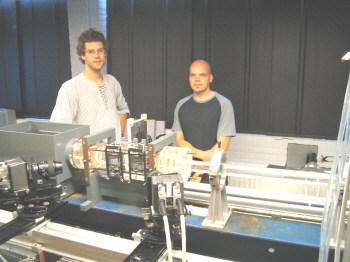
The Delft team and co-workers in Germany, the UK and the US, began by pumping water into the 26-metre pipe facility in Delft, which is one of the longest recirculation pipes in the world (figure 1). Long pipes are necessary for such experiments because they allow laminar flow to fully develop at large flow rates.

To investigate the transition from laminar to turbulent flow, Hof and co-workers injected a water jet into the pipe through a hole in the wall of the pipe. They then inspected the region of turbulent flow that was produced further down the pipe using a particle image velocimeter. This device uses high-speed cameras and pulsed lasers to measure the whole velocity field across the flow at very high repetition rates.

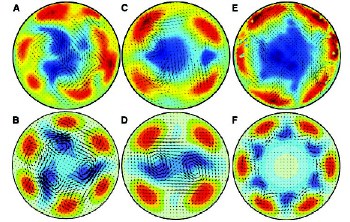
The team observed clear signatures of unstable travelling wave modes in the pipe. These included local anomalies called “streaks” produced by vortices that transfer fast-moving fluid from the centre of the pipe to the walls, and vice versa (figure 2). Moreover, it found that turbulent flow seemed to be dominated by only a relatively small number of these unstable modes.

“Our main contribution to the problem of turbulence is that we could show that principles from nonlinear systems theory appear to apply to this type of turbulent flow,” Hof told PhysicsWeb. “Unstable solutions to the equations of motion might form the skeleton of a so-called turbulent ‘attractor’ — an attracting region in phase space that sustains disordered turbulent flow indefinitely. These concepts will prove very relevant for our understanding of turbulence in the future.”

The group now plans to determine the lifetimes of the travelling waves and to explore their dynamical behaviour. “It might be possible to use these new insights to control and ‘relaminarise’ turbulent flows, which would be of great interest in many industrial processes,” adds Hof.

Nanoparticles target tumours

James Hainfeld and Daniel Slatkin of Nanoprobes Inc. and Henry Smilowitz of the University of Connecticut Health Center began by injecting cancer cells into the mice, followed by a salt solution containing gold nanoparticles. Two minutes later, the mice were irradiated with high-energy (250 kilovolts) X-rays.

The team found that the combination of nanoparticles followed by X-ray treatment reduced the size of the tumours, or completely eradicated them, whereas tumours that had received only X-ray therapy continued to grow. The gold nanoparticles had no therapeutic effect on their own. Hainfeld and co-workers also found that the one-year survival rate for the combined treatment was 86%, compared with 20% for X-ray therapy alone, and zero for nanoparticles without X-rays (figure 1).

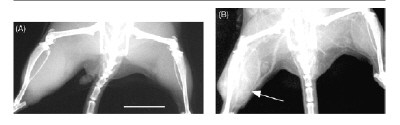
The technique works because gold, which strongly absorbs X-rays, selectively accumulates in tumours (figure 2). This increases the amount of energy that is deposited in the tumour compared with nearby normal tissue. The team now plans to improve targeting of the nanoparticles to tumours and to work towards applications for humans.

“Since the gold also shows up on CT and planar X-rays, it can be useful for early imaging and detection of tumours,” Hainfeld told PhysicsWeb. “A major X-ray manufacturer is considering a modification that would optimise our gold nanoparticle radiotherapy for patients.”

Magic clusters double up

Bimetallic nanoclusters are used in applications as diverse as catalysis and optics, and their properties depend on both their size and chemical composition. Clusters that contain a magic number of atoms have advantages for many applications because they are more stable than other clusters.

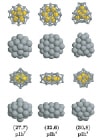
Physicists recently discovered a new type of silver-nickel nanocluster that comprised a well-defined silver shell with a nickel core. Now, Riccardo Ferrando and colleagues in Genova, Milan, Ghezzano, Trieste and Marseille have shown theoretically that there is a whole new family of core-shell polyicosahedra clusters. The polyicosahedra are built by packing together icosahedra that contain 13 atoms as shown in figure 1.

Ferrando and colleagues used a “genetic algorithm” to look for the structures with the lowest energy, and therefore the most stability, among selected magic sizes of clusters. They physicists began with polyicosahedra (pIh) that contained N1 silver atoms, N2 copper or nickel atoms, and m interpenetrating icosahedra. This structure is referred to as (N1, N2) pIhm. They found that for a total of 38 atoms the most stable clusters were (30, 8)pIh8, (31, 7)pIh7 and (32, 6)pIh6. For a cluster with 34 atoms the most stable structure was (27, 7)pIh7 (figure 2).

According to the team, the stability of these clusters arises from the different sizes of the atoms (the silver atoms are much bigger), and the fact that metals like to form short bonds with external atoms and long bonds with internal atoms. The tendency of the silver atoms to segregate at the surface is also important. Ferrando and colleagues now plan to look for similar clusters made from other elements and to investigate their catalytic, optical and magnetic properties.

Floating femtodroplets

Magnetic levitation occurs when the force on a diamagnetic object — an object that is slightly repelled by a magnet — is strong enough to balance the weight of the object. In the past, physicists have levitated a wide range of diamagnetic objects, including frogs, with powerful magnets. Lyuksyutov and colleagues have now extended this approach to much smaller objects by developing micron-sized magnetic traps.

The new device consists of two permanent magnets, 250 microns high and 10 millimetres across, separated from each other by about 80 microns and mounted on a steel plate (figure 1). The device creates a region of low magnetic field (the trap) surrounded by a region of high magnetic field. Since the energy of a diamagnetic object is proportional to the magnetic field energy density, it is energetically more favourable for the object to stay in the low field region. The force on the object is proportional to the gradient of the energy density, which is high because the energy density changes over very short distances.

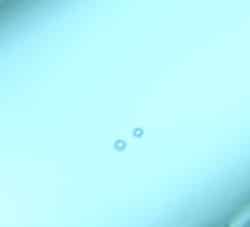
Liquid droplets are injected into the device from an atomiser and observed with an optical microscope. The Texas physicists found they could move, rotate or even merge droplets by applying electric or magnetic fields, and that they were able to control the potential energy of a droplet on the sub-zeptojoule (10-21 J) scale. Moreover, the force could be controlled with sub-femtonewton (10-15 N) resolution, which is about two orders of magnitude better than can be achieved with optical tweezers. The floating particles can also be positioned to within an accuracy of 300 nanometres (figure 2).

The apparatus could be used to levitate droplets of almost any non-paramagnetic substance and provides a completely new path to making labs-on-a-chip, says Lyuksyutov. “Femtolitre-sized droplets could be used as ‘beakers’ located on a magnetic ‘bench’ in the potential energy minimum,” he told PhysicsWeb. “These beakers could be moved by pulses of magnetic or electric fields.”

The team has already incorporated its chip into a levitation-based microfluidic processor that is capable of manipulating droplets up to a billion times smaller than in conventional microfluidic devices. The processor could be used to analyse droplets containing a variety of fluids, including biological cells, bacteria and viruses. Other applications include new types of micro- and nano-electromechanical systems, and experiments with aerosols and colloids.

NIST unveils smallest atomic clock

“The real power of our technique is that we are able to run the clock on so little electrical power that it could be battery operated and that it is small enough to be easily incorporated into a cell phone or some other kind of handheld device,” says John Kitching of NIST. “And nothing else like it even comes close as far as being mass producible.”

For more than 50 years, atomic clocks have set the gold standard for time and frequency measurement but their applications have been limited by their complexity, size and expense. The scale and ease with which the NIST design could be made potentially opens the door to low-cost mass-production of miniature atomic clocks that can easily be integrated with electronics.

The chip-scale clock contains a vertical-cavity surface-emitting laser (VCSEL), a lens, an optical attenuator, a polarizing waveplate, a cell containing cesium vapour and a photodiode. The VCSEL emits two light signals that are separated by just a few gigahertz. These are focused onto the cesium atoms and tuned until they exactly match the hyperfine D2 transition in cesium. This gives an incredibly precise measure of frequency and thus time.

The clock is stable to one part in 10 billion, equivalent to 1 second in 300 years — a long-term stability which is several orders of magnitude better than competing portable units such as temperature-compensated quartz crystal oscillators. However, this precision is still a long way from that achieved by large atomic clocks. For example, NIST’s F1 clock boasts a stability of 1 part in 1015, which is equivalent to 1 second in 30 million years.

Evidence for supersolid is firmed up

Liquid helium-4 becomes superfluid when it is cooled to temperatures below 2.176 Kelvin. However, theory predicts that it should also be possible to observe superfluid behaviour in solid helium-4 under certain conditions.

One way to observe superfluidity in solid helium is to measure the resonant period of a sample of the material in a piece of apparatus called a torsional oscillator. This period depends on the moment of inertia of the sample, and this moment changes when helium enters the superfluid state.

Kim and Chan measured a total of 17 samples of solid helium-4 at pressures between 26 and 66 bars and found that they all became superfluid at temperatures below 230 millikelvin. “Our experiment shows that the superfluid-like behaviour is a general and intrinsic property of solid helium,” they write, “and not the result of confinement in any particular medium.”

However, many of the details of the experiment are not yet understood. In an accompanying article Tony Leggett of the University of Illinois in Urbana writes that the experiment “will force theorists to revise dramatically the generally accepted picture of crystalline solid helium-4.”

CERN: 50 and counting

Fifty years is a long time in particle physics – and not just because most subatomic particles only exist for tiny fractions of a second. In 1954, the year that CERN was established, the leading high-energy laboratories in the US, and indeed the world, were at Berkeley in California and Brookhaven in New York. Today these two labs – with nine Nobel prizes for discoveries in particle physics between them – have been replaced by Stanford (established in 1962) and Fermilab (1967) as the focal points of high-energy physics in the US.


Berkeley and Brookhaven are now broader-based labs with activities in many areas outside physics, although they still have substantial particle-physics programmes. The same cannot be said of the short-lived Superconducting Super Collider in Texas, which was cancelled while still in its construction phase in 1993. Staying in business as a particle-physics lab for 50 years – as CERN has done – is therefore quite an achievement. Next in line to celebrate such a feat will be the DESY lab in Germany, which was founded in 1959, although the KEK lab in Japan can trace its roots back to 1955.

However, CERN did not reach its current position of strength overnight. In the early years it struggled as US labs dominated the field and beat Europe’s new lab to the big discoveries. The tide turned with the detection of weak neutral currents in 1973, and the discovery of the W and Z bosons 10 years later showed that CERN was capable of making truly massive discoveries. As Robert Crease explains in the first article of this special issue “CERN: 50 years and counting”, the Geneva lab’s success in the competition to find the W and the Z was an essential forerunner to an era of true collaboration between particle physicists in Europe and the US (see “CERN, the US and the W”).

Today, completing the Large Hadron Collider (LHC) and its four detectors on schedule and within budget, and then ensuring that they run reliably from 2007 onwards, are CERN’s top priorities (see “To the LHC and beyond”). The LHC is set to dominate particle physics for at least a decade. However, non-LHC research has been scaled back in recent years and the lab needs to broaden its programme and build on its strengths in nuclear physics, neutrinos and anti-atoms.

Returning to the LHC, in “The LHC detector challenge” Tejinder Virdee describes the monumental challenges involved in designing and building the ATLAS and CMS detectors for the project. The huge volumes of data generated in the proton-proton collisions at the LHC – and the associated radiation – will place enormous strains on both the detectors themselves and the computational “Grid” used to analyse the data. (For more details on the LHC itself see “Particle accelerators: to the LHC and beyond”).

First on the agenda for ATLAS and CMS will be finding the Higgs boson and, it is hoped, supersymmetric particles or some other new physics beyond the Standard Model. Although this model has been able to explain the results of all accelerator experiments so far, physicists know that it cannot be the full story, as Luciano Maiani explains (see “CERN: the next 50 years”). Of course, high-energy physics is about people as well as particles, and Tiziano Camporesi outlines the many career options available to the graduates of the student “factories” at labs like CERN.

So what does the future hold besides the LHC? The particle-physics community is keen to build a linear electron-positron collider and has just selected superconducting technology developed at DESY for this project. However, CERN has started to question this consensus by throwing its CLIC approach – which could reach higher energies but has still to prove its feasibility – into the mix. Other labs are unlikely to allow any future linear collider to be built at CERN without a fight. The next 10 years are set to be as interesting as the last 50.

Copyright © 2026 by IOP Publishing Ltd and individual contributors