The best physics humour ever

Three months ago I asked readers of Physics World to contribute samples of new physics jokes, fresh forms of physics wit, or cases of “found humour” in physics (see “So you think physics is funny?”). I received about 200 replies, including jokes in several languages, stories, Photoshop creations, video clips and links to science cartoon databases.

I was also contacted by a representative of BBC Radio Five Live, who claimed to be interested in having me talk about physics humour late one night. My subsequent negative experience – I hope nobody was awake to hear it – illustrates an important lesson about science humour.

Outsiders don’t get it

When I was first hooked up, the show’s host Dotun Adebayo was finishing a segment on dirty bombs, treating the expert being interviewed with deference and respect. When that concluded, he said something like: “And now for something completely different!” That should have alerted me that I was being set up.

Adebayo retold some jokes from my column in Physics World – accompanied by a conspicuously too-loud laugh track – then asked me to explain the jokes. Stupidly, I complied. Too late, it dawned on me that while some aspects of science, such as safety and health, are sacred to outsiders, other parts are simply targets for ridicule. Professional humour is one. The point of the programme was to laugh, not at jokes, but at physicists for their supposedly mechanical and cerebral wit.

The lesson was that I should have resisted. Being jousted, I should have jousted back – perhaps with the aid of a simple jest. “I can’t explain these jokes to you, Dotun, they’re only for smart people!” I should have said. “But try this one: did you hear about the restaurant NASA is starting on the Moon? Great food, no atmosphere! Still with me, Dotun? Shall I slow down?” (Thanks to Larry Bays from the Los Alamos National Laboratory for that joke.)

My Five Live experience reminded me of two other cases of comedians appropriating professional humour. One is a recent New Yorker article in which Woody Allen couches everyday anxiety-provoking experiences (being late for work, trying to seduce someone) in language borrowed from physics. A typical sentence runs: “I could feel my coupling constant invade her weak field as I pressed my lips to her wet neutrinos.” Allen lumbers across a whole page in this meant-to-be-cute vein. Don’t abandon that film career, Woody.

The other comedian to have tackled professional humour is Steve Martin, who tells his audience that he has worked up a joke about wrenches because a convention of plumbers is in town that night. The punchline, when it eventually comes, is: “It says sprocket, not socket!” When the supposedly expected guffaws fail to materialize, Martin feigns puzzlement. “Were those plumbers supposed to be here this show?” he asks. Now that brings laughs.

These episodes illustrate a mixture of ways in which outsiders can appropriate the technical vocabulary of a profession for humorous purposes. Allen uses the poetic suggestiveness of technical terms (coupling, weak field and so on) for good-natured fun; his sentences do not make sense if you are an insider and go only by the words. Martin makes fun out of our not being insiders and not understanding the words. Radio Five Live made fun of the insiders themselves: the fact that they do understand the words. Humour, anthropologists tell us, is a flexible tool for managing the social environment. It can be used to draw people in by sharing, to keep people away by intimidating, to build charisma, to impress, to entertain, to relieve tension, to test and challenge oneself and others. But it is an especially useful tool in science, and particularly physics, precisely because it engages, fosters and celebrates the same values that the field itself depends on – namely cleverness, play and imagination. These qualities were abundantly in evidence in the submissions I received. I have the space to retell only a few, and even those I will have to abbreviate.

Many of the jokes were jests, which take us unexpectedly into another dimension of meaning where the actual content and logic of the transition is of no interest.

Puns – references to getting Bohr’d, fission chips and the like – are an example of this kind of humour, as are the quirky names that physicists often given things. Joy Hathaway of Fermilab, for example, recalled a softball team called the Unified Fielders from her postgraduate days, as well as a sextet of roommates called the Six-Fold Degenerates.

Sometimes this kind of play involves symbols. Bobby Morris, an undergraduate at Leicester University, explained to me that he found the elements of magnetic flux hard to understand because they dφ common-sense.

On other occasions the play takes more conventional forms, such as when two atoms bump into each other:
“I think I’ve lost an electron!” says one.
“Are you sure?” replies the other.
“I’m positive!”

Jests are silly, and some of the silliest are shaggy-dog stories. One, which Warwick undergraduate Philip Ryder claims was “the worst joke in the entire history of the universe”, involves a quantum-mechanical observable who wanders into an auction preview. As he cannot speak the language well, he is assisted by translators from exotic countries, including one called Hermitia. His attention is attracted by a particular item, but various commitments make it impossible for him to attend the auction itself. En route we are treated to crude puns, including someone saying “Eigenvalue this for you!”. If told in full, the story would go on for pages, detailing various complex arrangements for him to bid via telephone. I will spare you the entire joke, even though the power of the final release – “I must be represented by a Hermitian operator!” – arises from enduring the details, which you will have to reinvent when retelling this.

The humour of all such jests depends on the way the language thrusts us unexpectedly into a different dimension of meaning than the one we assumed we were in. Amitabha Chakrabarti, a theorist at the Ecole Polytechnique in Palaiseau, France, told a story that makes explicit this unexpected transition. “Do you know that Hausdorff published poems?” a colleague asked him.
“Oh,” Chakrabarti replied, “he had another dimension!”

Witnessing two nearby colleagues bent over with laughter at this straight line, Chakrabarti realized that the humour arose from the fact that “through decades they have associated two words – Hausdorff dimension – only in a special context”, and that this remark provided an unexpected new dimension for “dimension”.

But the winner in the jest category – for sheer absurdity, economy, and unexpectedness – was submitted by David Herzog of the University of Illinois at Urbana-Champaign:
“What’s new?”
“E over h.”

In jokes proper, where the quality of humour is not silly but comic, the content plays a more important role in the transition to the unexpected dimension. An entire genre of jokes, for instance, involves the uncertainty principle. A dozen people sent me versions of a joke in which Heisenberg is pulled over for speeding:
“Do you know how fast you were going?” the police officer asks, incredulously.
“No,” replies Heisenberg, “but I know exactly where I am!”

In other jokes the content is more about physicists than physics; their supposed unworldliness, for example. Another dozen people submitted versions of the story in which a physicist is recruited to improve the performance of a racehorse, the milk capacity of a cow, or the egg productivity of a chicken. The punchline is always some variant of: “Assume a spherical animal in a vacuum…”

Other jokes centre around physicists’ obsessive love for their work. The basic version of one runs as follows. A physicist, who has spent the evening out, is caught by his wife trying to sneak into his house early the next morning. Saying that he has something to confess, he tells of meeting a woman in a bar, drinking too much and winding up going home with her. “You shit,” his wife screams, “you’ve been working late in the lab again!”

Ruth Hamilton of The Yorkhill NHS Trust told an amusing variant in which a lawyer, an accountant and a physicist are discussing, over a beer, whether life is better with a wife or with a girlfriend.
“A wife is better,” declares the lawyer, “because of the family support and the help she’ll be to your career.”
“Nonsense,” says the accountant. “A girlfriend is better: you can keep your independence and go out with your friends more.”
They turn to the physicist, who says, “It’s better to have both. That way, the wife thinks you’re with the girlfriend, the girlfriend thinks you’re with the wife, and meanwhile you can be down at the lab!”

And four postgraduate students from Bristol and Oxford – David Leigh, Gavin Morley, Denzil Rodrigues and Jamie Walker – evidently had a surplus of time and imagination during last year’s QUIPROCONE quantum-computing conference in Dublin. One evening they challenged each other to come up with jokes that begin with “So Alice and Bob walk into this bar…”, referring to the two familiar characters whose entanglements are used to illustrate various points in quantum cryptography.

Of the dozens they sent me, the one that made me laugh the hardest had Alice and Bob flirting, then getting more and more intimate, before finally – and as this is evidently a family magazine I was censored and you’ll have to supply the explicit content yourself – seeming to perform two incompatible sexual acts simultaneously. This puzzles the barman, who cannot make out exactly what they are doing.
“What’s going on?” he says to the house drunk. “I can’t quite see it – it looks brilliant but it doesn’t make any sense.”
“Yeah,” the drunk sighs wistfully, “it’s a super position.”

Found humour

But my favourite category of physics humour is found humour. The phrase is analogous to “found art”, in that it refers to humour that is not produced intentionally but stumbled on unexpectedly. This type of humour can be ambivalent or subtle, as illustrated by the following examples.

One, proposed by Chakrabarti, illustrates a subgenre of found humour that consists of serious remarks by would-be science interpreters. The French philosopher and urbanist Paul Virilio once described a quantum-mechanical representation as “a sum of observables that are flickering back and forth” – though, to be fair, his English translators appear to be co-conspirators in this amusing sentence. Chakrabarti noted that while the conjured-up image of frantic suburban commuters dashing from one destination to another is comic – to a physicist it involves a sudden and unexpected shift into another meaning dimension – the lack of understanding involved is “no longer funny, not at all”.

The other example of found humour, proposed by US presidential science advisor John Marburger, is the cosmological constant. The term was introduced by Einstein in his equations of general relativity to express the rate at which the universe expands. The admittedly refined humour lies not in the constant itself, Marburger explained, but in the absurdly large discrepancy – some 50-100 orders of magnitude – between its measured value and its value as estimated by the best and most comprehensive theories. “It’s as if nature were thumbing its nose at science – like suddenly depositing a mermaid or the Loch Ness monster in a biology lab.”

The critical point

What surprised me, though, was how guilty many of the respondents felt about telling and enjoying these jokes, calling them “trivial”, “dumb” or designed to make the joke-teller feel “intellectually superior”. It was as if those who enjoyed these jokes were afraid of having to endure the Five Live treatment by others, or by their own super egos.

But in a field that uses imagination and play to disclose new truths about nature, the trivial and the true, the fanciful and the factual can be momentarily indistinguishable, frequently giving its practitioners the experience of unexpectedly winding up in new dimensions of meaning. The ability to practise both physics and humour are thus intimately connected – “entangled”, you might say – inseparably bound up together in a common and deep-lying origin.

Certain outsiders may resent or be disturbed by the thought that a group of people make a living essentially by playing, and be inclined to make fun of it. But thriving humour in physics – in all its various forms and range of purposes – testifies, not to its narrow-mindedness or superficiality, but rather to its vitality and depth. Only misguided simple pictures of science as a purely logical process relegate humour to the exterior of the scientific enterprise.

Don’t be defensive. Laugh loudly and proudly. With respect to the rest of your work, it’s not completely different.
The promise of hypersonic flight

Orville Wright’s history-making flight carried him a little over 36 metres in the 12 seconds that he spent in the air above the sands of Kitty Hawk. As we mark the centenary of that flight – which coincides with the demise of the world’s only supersonic passenger jet, Concorde – numerous efforts around the world are under way to develop aircraft that could travel a thousand times faster than the Wright Flyer. Such hypersonic vehicles could provide reliable, low-cost access to space and would also have potential military applications. However, the ultimate hypersonic promise is high-speed commercial transportation between any two locations on the planet, or even beyond.

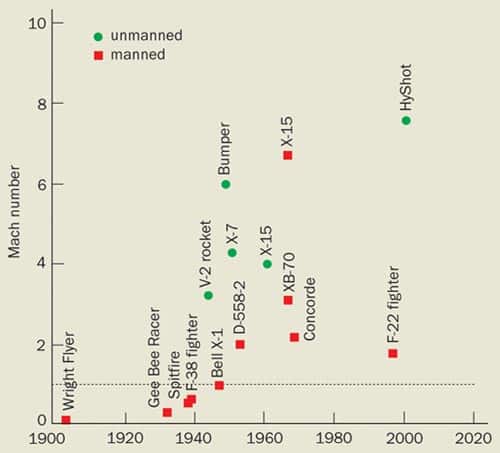
Hypersonic flight is not new. The first man-made object to reach hypersonic speeds was the two-stage US “Bumper” rocket, which was assembled from a captured German V-2 rocket in 1949 – one year after Orville Wright’s death. Indeed, humans have been flying hypersonically for over four decades. Astronauts and cosmonauts have all reached hypersonic speeds while passing through the atmosphere on their way to or from orbit.

What distinguishes current research, however, is the focus on sustained hypersonic flight within the atmosphere. The Space Shuttle punches through the atmosphere as quickly as possible on its way into orbit, but a hypersonic craft would remain well within the Earth’s atmosphere throughout most of its ascent. Whereas the Shuttle uses the thrust of its engines to fight the force of gravity, a hypersonic vehicle would use the aerodynamic lifting force generated on its wings and fuselage. This vision of sustained hypersonic flight requires air-breathing engines, which have a high efficiency because they scoop oxygen from the atmosphere rather than from an onboard tank.

Air-breathing to orbit

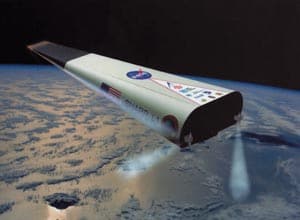
There is a staggering list of technical challenges that must be overcome before hypersonic vehicles will fly. These range from designing high-speed air-breathing engines to developing materials and cooling systems that can handle the intense heat generated by the friction between the aircraft and the surrounding air. Aerospace engineers around the world have been studying these issues for over half a century, with a few notable successes amid some well publicized failures. The list of failures is a veritable graveyard of vehicles that were never built, either due to unsolvable technical challenges, insufficient funding or both. These include the US X-20 space plane from the 1960s, the UK shuttle proposal “HOTOL”, and the more recent X-30 and X-33 vehicles. Successes include the X-15 rocket plane in the 1960s and the HyShot engine that had a recent test flight in Australia (figure 1).

So why is there such renewed interest in hypersonics today? In part, persistent efforts have led to a number of hypersonic milestones, including successful ground experiments and flight tests. Moreover, there is a sense of optimism among those working in the field that the political climate is right for the continued support of hypersonic research. In the US at least, hypersonics is being backed by high-ranking individuals in the Department of Defense, while NASA has also expressed strong interest. And, of course, the tragic loss of Space Shuttle Columbia has focused attention on the need for improved access to space. Hypersonic air-breathing vehicles may offer a very attractive and potentially safer alternative to traditional rockets, making the flight into orbit more like a routine plane flight and less like the expensive, manpower-intensive launch process that it is today.

The motivation for air-breathing flight is very simple: why carry oxygen inside the aircraft if it is readily available in the surrounding environment? Most of the weight of a rocket, such as the Space Shuttle, is due to the oxygen it carries. An air-breather could eliminate this weight and that of the associated tanks. Flying like a plane should also be inherently safer than a rocket because planes can turn round and land, whereas a rocket is generally committed once its engines ignite.

Rocket engineers seek to improve a launcher’s performance by either reducing the weight of the rocket or improving the engine. NASA’s X-33 programme, for example, attempted to demonstrate such technologies with a novel “aerospike” engine and fuel tanks made from advanced non-metallic composite materials. But engineers were ultimately unable to build lightweight tanks that could hold extremely cold liquid fuel, and the programme was cancelled in 2001.

In contrast, hypersonic engineers seek to improve launch vehicles by greatly increasing engine performance, albeit at the expense of added weight. For a given rate of fuel consumption, an air-breathing engine can deliver four times as much thrust as a rocket engine, simply because it does not carry the oxidizer along with its fuel. Such engine performance could lead to dramatic reductions in the cost of sending people or objects into orbit, and may one day enable craft to reach orbit with a single fuel stage.

Hypersonics and the Mach scale

Aerodynamicists characterize flight speed in terms of Mach number, which is the actual speed of the vehicle divided by the speed at which sound moves through air. An aircraft travelling exactly at the speed of sound is therefore flying at Mach 1, while supersonic speed is anything greater than Mach 1. There is no set definition of the term “hypersonic” but it is generally applied to flight speeds that are in excess of five times the speed of sound – more than twice as fast as Concorde. Most commercial airliners fly at the relatively modest speed of Mach 0.85, and even high-performance jet fighters rarely exceed Mach 1.5.

An aircraft flying at Mach 10 could travel between any two locations on the globe in under two hours, and at Mach 24 – the holy grail of hypersonic flight – an aircraft would have the same speed as an object in orbit round the Earth, about 7.5 km s-1. With just a small push out of the atmosphere, which would require rocket engines, the aircraft could reach the altitude of the Space Shuttle or rendezvous with the International Space Station.

The use of Mach number to characterize flight speed is rooted in the basic physics of fluid flow. The speed of sound is the speed at which pressure disturbances can be transmitted in a fluid such as air. It is also an indication of the average speed of molecules in that fluid. As an aircraft flies through the atmosphere, air is displaced and this creates pressure disturbances and local changes in velocity. In subsonic flight these disturbances move faster than the vehicle itself. Each portion of the flow is therefore affected by both the presence of the vehicle and the disturbances that it creates in the surrounding fluid (figure 2).

In supersonic flight, however, the vehicle travels faster than the pressure disturbances it creates. As a result, an aircraft creates a sudden discontinuity in pressure and temperature called a shock wave as it breaks the sound barrier. This shock wave separates the undisturbed region in front of it (upstream) from the perturbed flow behind it (downstream). The presence of shock waves round a supersonic aircraft changes the basic aerodynamics of flight and therefore demands a different set of analytical tools from those of subsonic flight.

One important consequence of supersonic shock waves is an increase in drag, or resistance, to motion through the air. All aircraft (and fast-moving cars and trains) must fight drag forces. The drag of a subsonic plane is primarily due to friction with the air, as well as the pressure difference between the front and trailing surfaces. At supersonic speeds, drag is increased by the formation of shock waves that dissipate energy. The blunter the leading edges of the aircraft, the stronger the shock waves will be and the greater the drag.

Unlike the transition from subsonic to supersonic flight – which is marked by distinct changes in the basic physics of fluid behaviour – the transition from supersonic to hypersonic speeds is less clearly defined. For instance, shock waves are pressed very close to the surface of an aircraft in hypersonic flight, which means that the air round a hypersonic vehicle will become very hot due to friction. Indeed, the temperature can get so high that chemical reactions may occur that change both the composition and behaviour of the surrounding flow.

Chemical reactions can alter the pattern of flow round the vehicle, and can change how hot the surface becomes. At extreme hypersonic speeds, air molecules can even become ionized, which leads to the familiar “blackout” phase that hinders radio communication with returning spacecraft. The exact speed at which these phenomena take place depends on the specific geometry of the vehicle, which is why the definition of “hypersonic” is so imprecise.

Learning not to burn

The designer of an efficient supersonic aircraft must take shock waves into account, and will generally select a slender, sharp geometry, such as that of Concorde, which keeps the shock waves as weak as possible. At hypersonic speeds it is even more important to control the strength of shock waves, and this leads to an entirely different design philosophy for hypersonic aircraft compared with their more conventional cousins.

Behind a hypersonic shock wave the temperature at the leading edge of a hypersonic craft scales inversely with the square root of its radius of curvature. In other words, the sharper the leading edge of the vehicle, the hotter it will get. This is why spacecraft are designed with rounded noses and very blunt wings – characteristics that also increase the drag force. Air-breathing hypersonic vehicles are not able to tolerate this added drag, and so they will be built with sharp leading edges instead.

When a Space Shuttle returns from low-Earth orbit, the atmosphere begins to have a noticeable effect while the craft is still travelling at Mach 24. The blunt leading edges of the Shuttle offer poor aerodynamic performance but generate relatively low temperatures of 1400 °C. This is a modest temperature by hypersonic standards, but still hot enough to melt the structure of the vehicle if the heat-protective tiles are breached, as they were on Columbia.

The Apollo missions entered the Earth’s atmosphere at an even sportier Mach 36 when they returned from the Moon. The craft survived the journey – during which they reached peak temperatures of 2700 °C – with a rounded, blunt heat shield covered with ablative material, which evaporated away to dissipate heat. Indeed, blunt space probes have flown even faster than this – up to Mach 65 for the unmanned probe that the Galileo spacecraft dropped into the atmosphere of Jupiter in 1995. Note that the rest of the Galileo spacecraft was completely destroyed when it recently (and deliberately) crashed into Jupiter’s atmosphere because it lacked a heat shield.

In contrast to these ungainly flyers, the next generation of hypersonic craft will be designed to accelerate and to fly through the atmosphere with minimum drag. These vehicles will have slender shapes that can slice through the atmosphere. They will need very thin leading edges at the front and wing surfaces that can withstand temperatures far in excess of those experienced by the Space Shuttle.

Riding the hypersonic wave

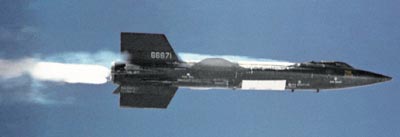
An accelerating hypersonic vehicle with thin wings has already been built and flown – NASA’s X-15 rocket plane (figure 3). Three of these remarkable craft made a total of 199 flights between 1959 and 1968, including one in 1967 that reached Mach 6.7. The wings and body of the X-15 were made of high-temperature metal alloys, but they still had to be coated with special ablative coatings to survive the highest speeds. The leading-edge temperatures on the next generation of hypersonic craft will push material performance to the limit of our technology, and in some cases the leading edges will require complex active-cooling systems. But there is reason to be optimistic.

At the NASA Ames Research Center in California, materials engineer Daniel Rasky heads a team that has successfully flight-tested advanced ceramic materials on sharp hypersonic leading edges. This work has resurrected decades-old research into advanced materials that had been abandoned by the US Air Force, and has already shed new light into the physics of sharp hypersonic leading edges. Ted Paquette and colleagues at Refractory Composites Inc – a small company in Maryland – have also carried out pioneering work in high-temperature materials and cooling technologies with advanced ceramic materials. Among these are carbon-fibre-reinforced silicon carbide that can handle temperatures up to 1500 °C, and hafnium-based materials for use up to 1750 °C. These materials also have superior mechanical properties compared with Shuttle-era technology and they do not break down when exposed to oxygen.

Various companies and universities in Japan and Europe, including Snecma in France and Wacker Ceramics in Germany, are also pushing back the manufacturing, fabrication and performance limits of high-temperature materials for hypersonic flight. Researchers at Snecma, for example, are specifically developing high-temperature parts for the inside of a hypersonic engine.

Incorporating the sharp aerodynamic configurations of hypersonic flight into an aircraft means adopting a whole new design paradigm. Instead of fighting the shock wave, we need to use it to our best advantage. One very promising design is the so-called waverider airfoil, which actually rides on top of its own shock wave for highly efficient flight. Like most things hypersonic, waveriders are not a new idea – they were first proposed by Terry Nonweiler at Glasgow University in 1957. Waverider geometries are derived using an “inverse” process: first the shock wave is identified, then the vehicle that has that shock is calculated. This is very different to most aerodynamic designs, which start with the vehicle and then determine the airflow.

At the University of Maryland we have designed waverider wing and body combinations that have very high lift, low drag and offer plenty of volume for holding payloads and fuel. Moreover, the shapes are well integrated with the engine system. These sleek designs – which range from missiles to space launchers – have been tested in wind tunnels and in computer simulations. The Accurate Automation Corp in Tennessee has even flown some small-scale radio-controlled waveriders at low speeds, which demonstrate that hypersonic vehicles can also take off and land. Another US company called Astrox Corp has developed a detailed computer tool that can be used to design a complete hypersonic vehicle. It uses advanced waverider shapes of another promising form – the so-called inward-turning concept – which resembles a rocket nozzle flying backwards.

A match in a hurricane

Perhaps the most significant challenge in hypersonic flight, however, is the high-speed air-breathing engine. At speeds up to about Mach 3 an aircraft can fly with a conventional turbojet engine, which has five basic parts: an inlet through which air enters; a compressor that sucks the air in and raises its pressure; a combustor where fuel is injected and burned; a turbine where the hot air rushes past small airfoils that power the compressor; and a nozzle through which the exhaust expands to provide thrust. It turns out that the compressor is not really needed at supersonic speeds because air enters the engine fast enough on its own. And without a compressor, a turbine is not required. An engine without a compressor or a turbine comprises an inlet, a combustor and a nozzle, and is called a ramjet.

Ramjets only work at low supersonic speeds. As the Mach number increases, the temperature rise inside the engine that results from the deceleration of the air flow reduces the combustion efficiency and therefore the thrust. An especially promising engine for high-speed flight is the supersonic combustion ramjet, or scramjet, which is so named because flow enters the engine at supersonic speeds and remains supersonic throughout the combustion process. This is in contrast to the conventional ramjet engine in which the flow decelerates after it enters the engine in order to simplify the combustion process. The problem with running a scramjet is that air passes through the entire engine in a few thousandths of a second, so that burning fuel becomes analogous to lighting a match inside a hurricane.

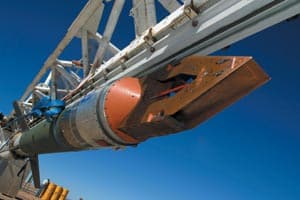
Hundreds of hours of wind-tunnel tests have been performed on scramjets at NASA’s Langley Research Center in Virginia. Furthermore, the US Navy HyFly programme and the US Air Force Hytech are close to producing scramjets that could be placed in real flight vehicles. A major scramjet milestone was passed in August 2002 when a group led by Allan Paull from the University of Queensland in Australia flew a scramjet engine on the front of a sounding rocket, and demonstrated supersonic combustion for the first time in actual hypersonic flight (figure 4).

Scramjets are currently being designed and tested in Japan, Europe and across the US, supported by both defence-related and civilian space agencies. Much of this work is sensitive because of the obvious military applications and for commercial reasons. As such, a lot of the progress in this field cannot be reported in the popular press. Indeed, apart from a few cases, such as UK and US support for the Australian HyShot flights, the exchange of information between institutes is severely restricted.

Of particular note among the test programmes is NASA’s X-43 program, originally called Hyper-X, which is aimed at testing a small-scale hypersonic vehicle with an integrated scramjet engine that can produce positive thrust. The craft is dropped from a B-52 bomber – as was the X-15 – and accelerated to flight speed on the nose of a winged Pegasus rocket booster. The first flight of the X-43a failed in the summer of 2001 because the booster lost a fin shortly after launch, but plans are still on track to launch a series of X-43 craft that will probe the hypersonic regime. Aerospace engineers always dream of flying higher and faster, and hypersonic flight has some truly exciting applications. Imagine crossing the Atlantic in about half an hour, or hopping on a spacecraft at Heathrow airport in London and flying to the International Space Station with the same ease and reliability as boarding a 747 bound for New York. Overnight package delivery could be reduced to two hours anywhere in the world.

The first application of hypersonic flight is likely to be military because the required speeds are modest compared with those required for spaceflight. Missiles that are able to penetrate enemy territory within minutes would travel at unstoppable speeds and impact with so much energy that an explosive warhead might not be necessary. In decades to come, hypersonic vehicles may become the primary means for reaching space. But it will require substantial financial investment – of the order of several tens of billions of dollars – to accomplish air-breathing flight into orbit.

The dream of hypersonic flight is being driven by a few visionary leaders. Chief among them is Ron Sega, a former NASA astronaut and academic who currently serves as the Director of Defense Research and Engineering in the US. Sega has embraced a programme of hypersonic research under the umbrella of his National Aerospace Initiative. This ambitious activity seeks to reinvigorate the entire aerospace field with a series of key challenges, including a logical, stepwise climb up the Mach scale with a series of ground tests and flight vehicles stretching into the next decade. The National Aerospace Initiative will co-ordinate activities at NASA and the US Department of Defense, including the programmes such as X-43 and Falcon, which will develop hypersonic entry vehicles, cruisers and low-cost launchers.

In a sense, hypersonic launchers would be a return to the future as it was envisioned half a century ago. Aviation historian Richard Hallion, formerly chief historian of the US Air Force in Washington, DC, has pointed out that it was the rush to space in the climate of the Cold War that drove early space flight towards the use of simple, parachute-recovered capsules. Earlier concepts for spaceflight had naturally assumed that launchers would evolve from plane flight. Under the guidance of people such as Ron Sega, that long-ago vision might finally be realized.

Can physics explain miracles?

“Zsa Zsa Gabor once famously said, ‘Husbands are like fires: they go out if unattended’. So what kept the burning bush burning?”. This is one of many entertaining asides with which Colin Humphreys introduces his investigation of the miracles of the book of Exodus in the Old Testament. The light-hearted style and pace make the book an easy and enjoyable read, but I have to confess that these traits did nothing to dispel my initial prejudice against taking it too seriously. A further consideration was the fact that Humphreys is a physicist by profession rather than a biblical scholar.

Even if one assumes that a professor at Cambridge University must be among the brightest people on the planet, it was difficult for me to believe that he could make an original contribution to this highly specialized field. However, by the end of the book I had revised my views somewhat. Humphreys provides a convincing challenge to some cherished standard interpretations of Exodus. In doing so he has performed a valuable service that also demonstrates the value of a training in physics, even in very different disciplines.

Humphreys approaches his investigation as “a scientist who tests and weighs the evidence”. His starting point is the following hypothesis: Old Testament writings about the Exodus of the Israelites from slavery in Egypt reveal a great deal of factual information, providing that one can interpret the texts correctly after a period of over 3000 years. Most of the events described are natural ones (people, journeys, places, environments and so on) and Humphreys proposes that the miracles in Exodus invariably have natural causes.

To use an Aristotelian distinction, this means that when a miracle is reported in the Exodus, the “efficient cause” is a natural agent, even though the “final cause” may be interpreted as the will of God, and that the miracle is revealed by the extraordinary timing of these events. He further suggests that the ancient Israelites were aware of this distinction.

A famous example is the way that Exodus explicitly mentions a strong wind in connection with the parting of the waters of the Red Sea: “The LORD drove the sea back with a strong east wind all night” (Exodus 14:21). Elsewhere in the Bible we read that “Your path led through the sea, your way through the mighty waters, though your footprints were not seen” (Psalm 77). Humphreys’ aim, therefore, is to find a single coherent interpretation within which all the data – all the places, events and times – can be reconciled and understood.

The challenge is that biblical scholarship since the 19th century has so far failed to achieve this goal. There have been some successes: for example, a natural mechanism is known in the case of the cessation of the flow of the River Jordan (Joshua 3:15-16), an event repeated during an earthquake as recently as 1927. Furthermore, at least some of the plagues inflicted on Egypt fit into a coherent natural sequence, and most scholars would today concur with Humphreys in placing the Exodus within the 13th century BC (the reign of Ramesses II). However, no satisfactory Exodus route has ever been reconstructed, and the maps of many modern bibles typically show two possible routes with many question marks. The failure of these models has led some scholars to reduce all or part of the Exodus story to the level of a fiction invented for theological purposes.

Taking a fresh approach, Humphreys suggests that the Exodus routes fail because the conventional locations of the two most important places are wrong. First, for many decades the name Red Sea has been held to be a mistranslation of yam suph, the original name in the Hebrew scriptures, and that what the Israelites actually crossed was an inland lake: indeed, yam suph literally means Sea of Reeds. However, he points out that there are other references in the Old Testament that do identify yam suph with the Red Sea: for example, King Solomon is reported as building his ships there (1 Kings 9:26).

Having validated the modern Red Sea as a possibility, Humphreys then asks why the Israelites might have called it the Sea of Reeds since reeds do not grow in salt water. In a vivid demonstration of the value of empiricism, he went to the head of the Gulf of Aqaba to check and found that reeds still grow there today due to the presence of freshwater springs. (I have stood in exactly the same place in Eilat and recall the reeds, although the significance was lost on me at the time.)

The second and more important revision that Humphreys proposes concerns the location of Mount Sinai, the mountain of fire and thunder where Moses received the Ten Commandments. The site of Mount Sinai has been a long-standing mystery, and he identifies it with what we now call Mount Bedr in Saudi Arabia, rather than the traditional candidate in the southern Sinai desert. A good deal of his argument rests on whether or not the accounts of fire and thunder were literal and due, perhaps, to a volcano. However, I was struck by the way that Humphreys’ hypothesis suggests solutions to several outstanding puzzles: how a large number of people and cattle could have survived for long around the arid site; why the Israelites would have remained geographically close to their former masters in Egypt; and how Mount Sinai is already referred to as a holy mountain in Exodus before the Israelites arrive.

If Humphreys is right, Mount Sinai was located on a table mountain surrounded by the fertile green basin of al-Gaw, distant from Egypt and perhaps also already regarded as a holy place. The Mount Sinai/Mount Bedr proposal is not altogether new, but it is surprising that it is not been investigated more seriously. Having reviewed some of the major biblical commentaries in the light of Humphreys’s proposal, I have not found any convincing evidence that would rule out this hypothesis.

What impressed me in this book was the respect given to the information contained in the Exodus text, the author’s enthusiasm and willingness to challenge cherished academic theories, and his determination to check primary data sources wherever possible. It is impossible to say how future scholars will judge his solution: I find it hard to raise any serious objection to his proposals, but the history of biblical scholarship is unfortunately littered with ingenious but conflicting theories.

The book also demonstrates the value of a training in physics, even when applied to very different disciplines. Physicists are generally better at asking questions about quantities and spatial and temporal relations, and at its best their rigorous empiricism can often cast fresh light on fields of investigation often considered closed or moribund. I therefore recommend this book as an entertaining account of an investigation into one of the great mysteries of history. And if you want to find out more about the burning bush, or how Moses parted the Red Sea, you will just have to read it yourself!

Solar activity reaches new high

Sunspots are produced by magnetic activity inside the Sun. The more active the Sun is, the more spots are produced. Observations of sunspots began in 1610 – soon after the telescope was invented – and no other directly obtained data exists from before this time.

Now, Usoskin and co-workers have used the concentration of beryllium-10 in polar ice as a proxy for historic levels of solar activity. Beryllium-10 is produced when cosmic rays interact with particles in the Earth’s atmosphere. The radioisotope then falls to the ground where it is stored in layers of ice. The Sun’s magnetic field can deflect cosmic rays away from the Earth, so a stronger field should lead to less beryllium-10 being produced, and vice versa.

Using modelling techniques, the Finnish team was able to extend data on solar activity back to 850 AD. The researchers found that there has been a sharp increase in the number of sunspots since the beginning of the 20th century. They calculated that the average number was about 30 per year between 850 and 1900, and then increased to 60 between 1900 and 1944, and is now at its highest ever value of 76.

“We need to understand this unprecedented level of activity,” Usoskin told PhysicsWeb. “Is it is a rare event that happens once a millennium – which means that the Sun will return to normal – or is it a new dynamic state that will keep solar activity levels high?” The Finnish-German team also speculates that increased solar activity may be having an effect on the Earth’s climate, but more work is needed to clarify this.

Scientists bring light to sharpest focus

Many optical techniques, such as lithography, confocal microscopy and optical data storage, make use of sharply-focused light beams. As a tightly focused beam produces an intense electromagnetic field, this approach could also to probe or manipulate atoms.

The key to producing the record-breaking spot is the use of a radially polarized beam. To generate this, the researchers collimated a linearly-polarized, single-mode helium-neon beam and sent it through a pinhole followed by a polarization converter containing four half-wave plates. The resulting beam had a doughnut-shaped intensity pattern – a “hole” with zero intensity at the centre and the most intense light round the edges.

The team used an annular aperture to focus the beam. This caused the doughnut-hole to shrink and the majority of the electric field to cancel itself out, leaving an intense spot with an electric field pointing along the direction of the beam.

According to the authors, the minimum spot size for a radially polarized beam focused by an annular aperture is 0.16 square angstroms. This is considerably smaller than the theoretical spot size for a linearly polarized beam, which is 0.26 square angstroms and 0.22 square angstroms for circularly polarized light.

New look for the Doppler effect

In the familiar Doppler effect the frequency of a wave increases as the source approaches the observer, and decreases as the source moves away. Although the inverse Doppler effect – in which the frequency reduces as the source comes closer, and vice versa – was first predicted in 1943, it has never been seen in an experiment until now.

Seddon and Bearpark made a transmission line that contained magnetic induction coils and capacitors. The group and phase velocities of waves in the line pointed in opposite directions, a phenomenon known as “anomalous dispersion”. In most materials the two velocities are parallel to each other.

The BAE team then fired an electrical pulse through the transmission line. This had two effects: the pulse produced a moving barrier by creating a non-magnetic region as it moved along the line; it also generated a radio-frequency wave that travelled in the opposite direction to the pulse and at a greater speed.

This radio-frequency wave travelled back to the start of the transmission line, where it was reflected. The reflected pulse then caught up with the original pulse and was reflected from it in turn. However, it was not reflected with a lower frequency, as would be expected from the standard Doppler effect, but with a higher frequency.

Seddon and Bearpark say that these waves can travel at up to one-tenth the speed of light, and that the reflection of such waves from moving boundaries could be used to produce tuneable radiation sources that can be controlled over a large range of frequencies.

Plasma physicists move into medicine

Plasmas are ionized gases that are routinely used in materials processing and the semiconductor industry. However, the temperatures in most plasmas are so high that they would immediately kill living cells. Eva Stoffels and colleagues at the Eindhoven University of Technology have now found a way to overcome this problem.

Stoffels and co-workers made their device by applying a high frequency voltage to a sharp tungsten needle 5 centimetres long and 0.3 millimetres across. At the sharpest point of the needle, the electric field is high enough to locally ionize the gas but, because the plasma region is very small – less than 1 millimetre across – the temperature remains low. Moreover, the small size of the plasma means that researchers can precisely address local areas of the sample.

The Eindhoven team then placed the needle about 2 millimetres above the surface of a culture of pre-prepared cells for about 30 seconds. At low power levels they found that the cells did not die, but only temporarily detached themselves from one another. This allowed the researchers to remove the cells completely or to move them in the sample.

“As well as simple cell removal, the technique could also be used to accelerate wound healing by transferring cells into the injured area,” Stoffels told PhysicsWeb. “Furthermore, the plasma source can selectively kill bacteria without damaging body cells and could thus be used to combat infection.”

The group now hopes to improve the precision of its device by developing a scanning probe to include in the needle. It also plans to equip the instrument with a “smart sensor” capable of detecting surface irregularities in real tissue. “This is only a beginning,” said Stoffels. “However, our results give us confidence that plasma will become ‘the surgery of the future’.”

EU backs France as ITER site

ITER will be the next step in the quest to prove that fusion – the process that powers the Sun – can be a viable energy source. A fusion reactor would generate electricity by confining a high-temperature plasma of deuterium and tritium. Energy is released when deuterium and tritium nuclei undergo nuclear fusion to produce alpha particles and neutrons. The plasma is confined by magnetic field in a doughnut-shaped device known as a tokamak.

The ITER project is an international collaboration between Canada, China, the EU, Japan, Korea, Russia and the US. The Cadarache laboratory, which is run by the French atomic energy commission (CEA), is home to the Tore Supra tokamak. Like Tore Supra, the ITER machine will also use superconducting coils to produce the magnetic fields that confine the plasma. Most existing tokamaks rely on conventional coils.

Cadarache was chosen ahead of a site at Vandellos near Barcelona in Spain despite a last minute offer by the Spanish government to double its contribution to the project from 450 to 900 million euros. Some 80% of the costs of ITER will be paid for by “in kind” contributions from the project’s partners.

DNA self-assembles nanotube transistor

Last year, Erez Braun and colleagues developed a “sequence-specific molecular lithography” technique. The researchers harnessed a basic biological process – homologous recombination that mixes genes in cells – to manipulate DNA. This enabled them to create sequence-specific DNA junctions and networks, to coat DNA with metal in a sequence-specific manner and to localize molecular objects on any address on a DNA molecule.

Now, the scientists have built on this work to assemble a carbon nanotube field-effect transistor. They used a three-strand homologous recombination reaction between a long double-stranded DNA molecule and a short auxiliary single-stranded DNA. These DNA molecules encode the information to guide the assembly process: the short molecule has a sequence identical to the long one at the desired location of the transistor.

First, the team polymerized RecA – a major protein responsible for genetic recombination in bacteria – onto the short molecules to form nucleoprotein filaments. These nucleoprotein filaments then bound to the long molecules at the designated location, according to the sequence matching between both molecules.

Next, the scientists functionalized single-walled carbon nanotubes with the protein streptavidin, which served to locate the nanotube at the correct address. The team stretched the DNA/nanotube assembly on a passivated oxidized silicon wafer prior to a metallization process, which coated the DNA molecules with gold. The RecA doubled as a sequence-specific resist, so that the active area of the transistor remained uncoated. Moreover, because the nanotube was longer than the gap caused by the RecA, gold covered the ends of the nanotube and created contacts to the transistor.

Braun and colleagues made 45 devices in total. Fourteen acted as field-effect transistors with partial or full gating, and ten conducted but could not be gated – probably because they contained metallic rather than semiconducting nanotubes.

“Carbon nanotubes will be one of the major future building blocks of molecular electronics due to their small dimensions and excellent electronic properties,” said Braun. “However, you cannot self-assemble a circuit directly with nanotubes because they lack recognition. Our research demonstrates that you can harness biology to self-assemble nanoelectronics.”

Although it is too early to predict applications, the researchers now plan to construct a device on a DNA junction. This will allow for more complex logic circuits.

Optical vortices show their true colours

The phenomenon of dark light is closely associated with regions of space known as phase dislocations or singularities: these are regions where the phase of the light is not defined and can have any value between zero and 2π. If the phase singularity is a line that runs parallel to the axis of the beam it is known as an “optical vortex”.

In 2002, Michael Berry of Bristol University in the UK predicted that it should be possible to see various colour patterns in the vicinity of such a vortex (New J. Phys. 4 74; New J. Phys. 4 66). Jonathan Leach and Miles Padgett have now observed these effects in experiments at Glasgow.

Leach and Padgett produced a white-light vortex by shining light from a 200-watt tungsten halogen bulb through a “spatial light modulator” – a holographic diffraction grating made from liquid crystal. This modulator allowed them to produce a beam in which all the photons had the same orbital angular momentum, even though the beam contained many different wavelengths.

The researchers then passed the beam containing the vortex through a standard CCD-based colour camera that contained a red-blue-green colour response similar to that of the eye. Because the vortices are regions of zero light intensity, the chromatic effects predicted by theory are extremely subtle. Leach and Padgett magnified these effects by applying a special colour correction – or “chromascope” – to the image (see figure).

“The resulting image we detected was exactly that predicted by Berry,” Leach told PhysicsWeb. “We observed that the vortex position was marked by a distinct chromatic pattern with a red and blue transition across the vortex separated by a narrow area of purple with no green colour.”

The Glasgow team says that although the light vortex itself has limited practical applications, light with orbital angular momentum could find use in quantum communications. It can also be used to trap and rotate microscopic objects in “optical tweezers”.

Copyright © 2026 by IOP Publishing Ltd and individual contributors