Physicist shares Nobel prize for medicine

In magnetic resonance a sample is placed in a magnetic field and then subjected to radio waves. The nuclei in the sample absorb the radio waves and then re-emit them at a frequency that depends on the magnetic moment of the nucleus and the strength of the magnetic field. By measuring these waves it is possible to learn more about the chemical structure of the sample.

In 1973 Lauterbur, then at the State University of New York at Stony Brook, discovered that it was possible to make two-dimensional images of the sample by adding a gradient to the magnetic field. Mansfield then showed how the so-called echo-planar technique could be used to greatly increase the image acquisition rate, making medical applications practical. Most medical applications of MRI rely on imaging the hydrogen atoms in water molecules.

Mansfield was born in 1933 and received his BSc from Queen Mary College in London in 1959, followed by a PhD in 1962. After two years at the University of Illinois he moved to the physics department at Nottingham, where he has been based ever since. Mansfield is a fellow of the Royal Society and an honorary fellow of the Institute of Physics, and was knighted in 1993.

Lauterbur as born in Sidney, Ohio, in 1929 and graduated in chemistry from the Case Institute of Technology in Cleveland in 1951. He received his PhD from the University of Pittsburgh, and moved from Stony Brook to Illinois in 1985.

The magnetic properties of nuclei – the basis of MRI – were first measured by Isidor Rabi in the 1930s, while Felix Bloch and Edward Purcell independently discovered nuclear magnetic resonance in 1946. All three received the Nobel Prize for Physics for their discoveries: Rabi in 1944 and Bloch and Purcell in 1952.

Have physicists seen magnetic monopoles?

The lack of symmetry between electric and magnetic fields is one of the oldest puzzles in physics. Why is it possible to isolate positive and negative electric charges, but not north and south magnetic poles? Dirac linked the existence of magnetic monopoles with the quantization of electric charge – another puzzle that is still not fully understood – but they have never been detected in an experiment.

Magnetic monopoles are also predicted by some theories that seek to unify the electroweak and strong interactions. However, the monopole masses that are predicted by these so-called grand unified theories are much too large – about 1016 giga-electronvolts – to be detected in experiments.

Instead of searching for magnetic monopoles in real space, Yoshinori Tokura of the National Institute of Advanced Industrial Science and Technology (AIST) in Tsukuba and co-workers turned to momentum space – the mathematical space in which condensed matter physicists construct Fermi surfaces, Brillouin zones and so on. The team was motivated by recent theoretical work which suggested that the behaviour of magnetic monopoles in momentum space is closely related to the anomalous Hall effect.

Tokura and co-workers placed a high-quality crystal made of strontium, ruthenium and oxygen in a magnetic field that pointed in the z direction, and then measured the transverse resistivity – the resistivity in the y direction – as a current flowed in the x direction. They found that the resistivity did not change linearly with temperature, as expected, but varied non-monotonously and even changed sign (figure 1).

The researchers also measured the transverse optical conductivity of a thin film of the crystal using a technique known as high-resolution Kerr microscopy and found a sharp peak at low energies. According to Tokura and co-workers, this peak can only be explained by the presence of monopoles in the band structure of the crystal.

The Japan-China-Switzerland team believe that both of these anomalous effects are “fingerprints” for the existence of magnetic monopoles. The team now plans to study materials that show even larger anomalous effects. “The laws of electromagnetism are the starting point for every area of physics,” says team member Kei Takahashi of the University of Geneva. “From this view point, we have proved that we can investigate most physics subjects – including particle physics and cosmology – in experiments on solid crystals.”

Magnetic logic devices move closer

The new approach is based on magnetic random access memory (MRAM) elements that contain two magnetic layers separated by a spacer. If the magnetic moments of the two layers are parallel, the electrical resistance of the element is low and this is taken to represent a ‘1’; the antiparallel, high-resistance state is taken to represent a ‘0’. The magnetic moments of the layers can be flipped by passing an electric current through an input line to produce a magnetic field.

The device proposed by Ney and co-workers is based on a single element that has two independent input lines (called A and B: see figure 1). This means that four initial states are possible altogether. These are ‘00’, ‘01’, ‘10’ and ‘11’, where ‘00’ represents a negative current passing through both input lines, ‘01’ is a negative current through A and a positive current through B, and so on. Ney and colleagues show that this set-up is enough to provide storage and the AND and OR operations. And by adding a third input line, they can also reproduce the NAND and NOR operations.

The researchers say that their device has many advantages over transistor-based logic and that it could lead to programmable magneto-logic circuits in the near future. “Since our concept is quite straightforward and is based on existing technology, the fabrication of a reprogrammable magneto-logic circuit is foreseeable in the near future,” said Ney. “Our work is still only a concept, but we intend to make a practical, working device using these ideas.”

Building the next IT revolution


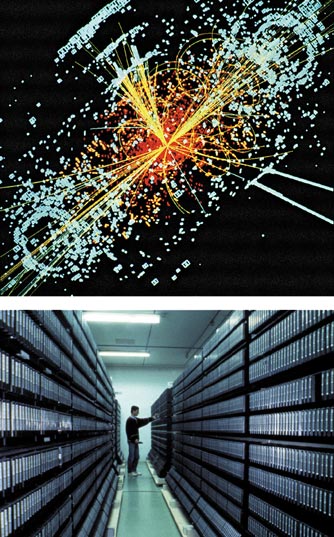
The giant experimental detectors at the LHC will generate more than 10 million gigabytes of data each year – which is equivalent to the storage capacity of about 20 million CDs – and would require more than 70 000 of today’s fastest PC processors to analyse it all. The goal of the LCG project is to integrate the computing resources of the several hundred participating institutes into a worldwide computational “Grid”.

Computer power

The Grid gets its name from its analogy with the electrical power grid, which provides electricity via a standard plug-and-socket interface throughout an entire country. The “power stations” in the Grid are clusters, or farms, of computers and the “power lines” are the fibre optics of the internet. The first grids in the late 1990s used several supercomputers in the US as a single resource to run applications that were too large or too complex for a singe supercomputer. Today’s grids, in contrast, are being constructed from large numbers of off-the-shelf PCs and disks. In addition to being relatively cheap and easy to integrate, the use of standard hardware enables the Grid to be made gradually bigger and more complex. Whereas a PC using the Web provides information or access to services, such as banking or shopping, a PC on the Grid offers its computing power and storage.

Distributed computing has been around for many years. The SETI@home project, for example, allows home computers to analyse datasets in a search for extraterrestrial intelligence. What distinguishes today’s grids, however, is the development of special software called middleware. Previously a scientist wishing to run analysis programs over large datasets might have computer accounts in several international institutions. Researchers submitted jobs to a particular site, initiated file transfers manually between the sites and basically kept track of everything themselves.

In principle, the Grid middleware allows you to submit a job to the entire Grid. This software – which includes “resource brokers”, “replica managers” and information services that run on some of the Grid computers – determines where best to run the job. It then automatically copies or moves the data files as necessary, before returning the results without the user knowing or caring where they came from. To the user, the Grid therefore looks like a very large distributed PC with the middleware acting as its operating system. Security is paramount in such a system, and users are authenticated by a single public-key digital certificate that acts like a passport. Users can also have different levels of authorization, which is administered through membership of “virtual organizations”, like having visas in a passport.

The prototype grids that are currently being established use middleware from the US, such as the Globus Toolkit and Condor, and from new developments in Europe through the European DataGrid project and others. The challenge is whether these grids can be scaled from a small number of computers to the huge numbers required

in the future. This is precisely what projects such as the LCG will test. There are also sociological challenges to be overcome, such as how to balance local ownership of resources while making them available to the larger community and how to overcome local security worries about giving access to “anonymous” non-local users.

Enter e-science

In addition to solving the computational demands of particle physicists, grids and grid technology are being developed in almost every branch of science, along with many industries and businesses. In the UK, the use of large widely distributed computing systems such as grids for scientific research by large collaborations has become known as “e-science”.

Several grid projects were showcased at the e-science “All Hands Meeting” this September, which was held in Nottingham in the UK. Astronomers, for example, are building virtual observatories that federate data from many sources and wavelengths. Instead of looking at all objects in the infrared at one centre and then all visible objects at another, for example, the Grid would allow users to look at an object at all wavelengths simultaneously.

In healthcare there are several projects designed to allow remote sharing of data, such as mammography images between consultants and radiographers. Chemists are using grids to simulate and visualize molecular structures. Meanwhile, projects like NASA’s Information Power Grid initiative, which integrates computers, databases and instruments across its facilities in the US, is enabling large industries to integrate resources between sites. Even in banking, a typical risk calculation that currently takes a few hours on a single PC could be performed in a few minutes using the Grid. This would allow traders to make informed decisions on the spot about whether to buy or sell.

There is not yet, however, a “killer application” for the Grid, and it could be a long time before the public use the Grid as they use the Web. But any application such as gaming or video-streaming that needs much larger amounts of computer power or disk storage than that available on a single PC could benefit. We will have to wait to see if the Grid really is the next IT revolution. But for today’s physicists and engineers it appears to be the only cost-effective solution for future computing demands.

Science and society


Of course, the scientific community never wanted to increase interest in science for the sake of it – the real agenda was to increase the number of students studying science at school and university (which has not happened), and to encourage governments to invest more

in research (which many have). It was also felt that more public understanding would lead to more informed debates about science-based issues, although again it is difficult to tell if this has been the case.

What certainly has occurred in the past few years has been an explosion of initiatives and activities in the field of public engagement – the less-patronizing term that has generally replaced public understanding – and in the next few pages we describe some of the projects in which physicists and astronomers have been involved. Pressures on space means that we cannot cover all of these activities, or the vast literature that has been published on science and society in recent years (see below).

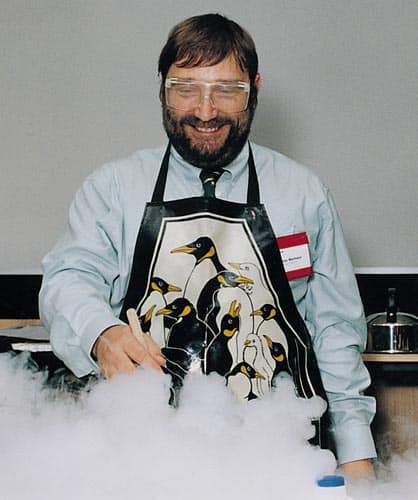
The physicists we spoke to have adopted a wide variety of approaches to engaging the public. Peter Barham, for instance, talks about penguins and cooking to gently introduce diverse audiences to a range of physics topics, and, like a small number of other physicists, he manages to combine 50 or so public talks per year with his teaching and research commitments (see page 14, print version only). Recent years have also seen a significant increase in the number of physicists who have full-time careers in public engagement, and Alex Williams describes what her job as the physics educator for the @Bristol science centre involves (see page 15, print version only).

And then there are the media. We find out how ESA and NASA make sure that their space missions always seem to be in the public eye, and Robert Crease describes why the press is a foreign country to scientists (see pages 16 and 18, print version only). Not all attempts to engage with the press or the public will be successful, but with the number of science students in decline, it is more important than ever to keep trying.

The death of a nuclear legend

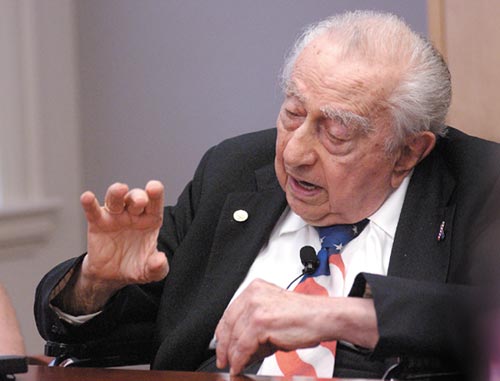
The physicist widely known as the father of the H-bomb, Edward Teller, died on 9 September. Deeply involved for more than six decades in the most significant nuclear-weapons issues of his time, including the Oppenheimer security hearing and “star wars”, Teller was probably the most controversial American scientist of the post-war era.

To some, mostly liberals and radicals, he was Dr Strangelove. To others, usually conservatives and neo-conservatives, he was a vigilant patriot and a valiant defender of national security.

In 1973 the Nobel-prize winner Isidor Rabi, a friend in the 1920s, contended that the world would have been a better place without Edward Teller. In contrast, George W Bush extolled Teller for his service as “a strong advocate for nuclear defense and the cause of human freedom” when presenting him with the Presidential Medal of Freedom in July of this year.

From Budapest to the bomb

Born on 15 January 1908 into a secularized Jewish family in Budapest, Edward Teller was the brilliant, much-indulged son of a local attorney. In his first 12 years, however, he also witnessed the outbreak of the First World War, the destruction of the Austro-Hungarian empire, the brief triumph of a communist government in Hungary, and then the victory of a strongly anti-semitic, right-wing regime. His early political world was a perilous place, and later events would add to his sense of danger and dread.

Abandoning Hungary in the mid-1920s for a better education in Germany, Teller received his PhD at the University of Leipzig in 1930 under Werner Heisenberg, and also worked with Niels Bohr in Copenhagen. In 1933, however, anti-semitism forced him to leave Germany and after a year at London City College, he accepted a full professorship at George Washington University in the US and speedily became an American citizen. By this time, 1935, the 27-year-old Teller was already an internationally recognized theoretical physicist and would go on to leave a legacy that included the Gamow-Teller and Jahn-Teller effects.

Teller first became involved in the world of nuclear weapons in 1939, shortly after the discovery of fission, when he drove his friend Leo Szilard to Einstein’s summer home. At the time, Szilard was pushing Einstein to send what became his famous August 1939 letter to President Roosevelt, which ultimately led to the secret Manhattan project at Los Alamos to build the first atomic bombs.

Teller worked in the theoretical division at Los Alamos, which was headed by his long-time friend and fellow émigré Hans Bethe. However, Teller resented the fact that J Robert Oppenheimer, director of the project, had not appointed him to lead the theoretical effort and, greatly to Oppenheimer’s annoyance, spent much of his time working on a possible hydrogen bomb – a fusion device – rather than the fission-based atomic bomb that was top priority at Los Alamos. These wartime differences between Teller and Oppenheimer would spill over and fester in the post-war years, ultimately damaging both men.

When not annoying Oppenheimer, Teller also enjoyed playing the piano at Los Alamos and often did so late at night. It has been said that he could awaken almost a dozen present or future Nobel-prize winners with his musical prowess.

Life after Los Alamos

In early July 1945, five weeks before the Hiroshima bombing, Szilard urged Teller to sign a petition against the combat use of the atomic bomb on Japan. Teller refused, replying in a letter that “actual combat use might even be the best thing”. But for many years after Hiroshima, until his letter to Szilard was found by historians in the archives, Teller always insisted that he had actually opposed the use of the bomb and had instead wanted a non-combat demonstration over Japan. After his July 1945 letter was found in the 1970s, he sometimes – but not always – backed away from his earlier claims about his pre-Hiroshima beliefs.

After the Second World War, Teller moved to the University of Chicago and became an even more vigorous advocate of the H-bomb or “superbomb”. In late 1949, after the Soviet Union had broken the US nuclear monopoly, he stepped up his campaign among scientists and government officials for the thermonuclear weapon. Aided greatly by Nobel-prize winner Ernest Lawrence, and supported by powerful congressional allies and the Department of Defense, Teller triumphed in January 1950 when President Truman endorsed his position. In overcoming the opposition of Oppenheimer, Rabi and a number of other luminaries in American physics, Teller also began making significant enemies.

In 1951 Teller discovered how to make a H-bomb with the help of the Polish mathematician Stanislaw Ulam. However, many of his critics have long contended that Teller greatly understated Ulam’s contributions and the subject remains controversial. The hydrogen bomb itself was successfully detonated in a test at Eniwetok in the Marshall Islands on 1 November 1952.

In 1952 Teller overcame opposition from Oppenheimer and Rabi again to persuade the government to build a second nuclear-weapons lab at Livermore in California, and he soon had a dual role as professor at the University of California at Berkeley and associate director of the Livermore lab. He became director in 1958, but administration was not one of his strong points and he stepped down in 1960 to concentrate on conceiving bold ideas, pushing for new nuclear weapons and inspiring young scientists.

The fallout from the first H-bomb was not restricted to Eniwetok. In 1954 Teller notoriously gave evidence against Oppenheimer at a closed hearing that ultimately resulted in the latter losing his security clearance. Asked whether he considered Oppenheimer a security risk, Teller in 24 fateful words answered: “I feel that I would like to see the vital interests of this country in hands which I understand better, and therefore trust more.” Many pro-Oppenheimer scientists, including Rabi, never forgave Teller, and he was deeply hurt by this.

Star wars

In the 1980s Teller rose to prominence again when he successfully proposed to President Ronald Reagan that the US should build a space-based system to protect against nuclear missiles. Opponents of the Strategic Defense Initiative – also known as SDI or “star wars” – accused Teller of having overstated the progress that had been made on the technology needed for the system, and thus of having “hyped” the project. Charges of exaggerating the level of technological knowledge and the likelihood of weapons breakthroughs had long bedevilled Teller, who was normally very optimistic about technology and seldom wary of likely pitfalls.

Publicly a proponent of opening long-secret archives and greatly cutting back secrecy, because it seemed often unnecessary and frequently impaired research, Teller did not practise what he preached and routinely denied requests for access to papers about his own work. Perhaps his death will help roll back this blanket of secrecy, and allow a more rounded interpretation of Teller, replacing the frequently polarized views of him as a saviour or a Svengali.

However, Teller’s own Memoirs, written with the help of an assistant, are of limited help to historians (see Physics World June 2002 p19). The book does reveal hidden aspects of the man – his deep fear of the dark, and traumas as a young person – but the memoir, even more than most, is self-serving and not infrequently deceptive. That said, both friend and foe would acknowledge Teller’s rich capacity for puckishness, with playful verse and occasional self-mocking tales about brilliant émigré scientists. He

was especially fond of being called with his four Hungarian émigré friends – Szilard, Theodore von Karman, Eugene Wigner and John von Neumann – one of the “Martians”. They were a strange breed, Teller happily suggested, of near-unworldly intelligence and of remarkable originality.

In 1975, at the age of 68, Teller retired from Livermore and the University of California, although he remained an influential consultant at the weapons lab, and was appointed a senior research fellow at the right-wing Hoover Institution at Stanford University. He remained there until his death – a symbol to many of nuclear faith and staunch patriotism, and to others of an excessive desire for nuclear weapons and of ill-conceived anti-communism. On the day he died, Teller was due to open the Edward Teller Education Centre at Livermore, an initiative which has been set up to try and improve science education in California schools.

To many who knew Teller, he will be remembered as inspiring, fiercely honest and sometimes troubled, but loyal to true friends while frequently intellectually and personally demanding. To others, most often his critics, he will be recalled as often prickly, frequently Olympian and disdainful, less than candid on some important matters, and sometimes inclined even to wanton misrepresentations.

Well after Edward Teller’s death, the controversy will continue on the value and significance of his efforts in nuclear weapons-research and policy. Controversy will also continue in seeking to understand his deep passions – the peculiar combination of exuberance and fear – that shaped much of his personal and political life.

Utopia theory

“It may be”, said US sociologist George Lundberg in 1939, “that the next great developments in the social sciences will come not from professed social scientists, but from people trained in other fields.” Take a look at any issue of a physical-sciences journal in the past five years and you will see one such field staking its claim vigorously. Physics is muscling its way into social science. Not content with explaining the behaviour of atoms and electrons, semiconductors, sand and space-time, physicists are now setting out to understand the behaviour of people.

Lundberg would have approved. He was part of a tradition that sought to establish a scientific grounding for sociology that would make it every bit as quantitative and deterministic as the natural sciences. The title of Lundberg’s 1947 book – Can Science Save Us? – says it all. This positivistic approach to social science can be traced to the French philosopher Auguste Comte (1798-1857), who called for a “social physics” that could claim its place alongside celestial, terrestrial, mechanical and chemical physics. But the impulse to identify natural laws of society is, in fact, much older. Plato may have been the first to hint at it, and the Roman writer Cicero in the second century BC believed in laws that transcended the customs and particularities of individual nations and which would apply to societies everywhere at all times.

Social statistics

The physicists today who seek rules that govern traffic or market economies have inherited this tradition – whether they know it or not. Implicit in their models and equations is the assumption that despite the quirks and caprice of individual human nature, there are emergent universal properties and laws that describe these complex systems.

It is no coincidence that this echoes the notion of universality in statistical physics. Phenomena that appear at first to be unconnected, such as magnetism and the phase changes of liquids and gases, share some identical features. This universal behaviour pays no heed to whether, say, the fluid is argon or carbon dioxide. All that matters are broad-brush characteristics such as whether the system is one-, two- or three-dimensional and whether its component elements interact via long- or short-range forces (see Physics World August 2003 pp23-27). Universality says that sometimes the details do not matter.

Physicists believe this is true of many social phenomena too. It is irrelevant whether traffic is driving down the A36 to Salisbury or the A5 autobahn to Basle because the same flow phases will appear for similar traffic densities. Such invariant properties are statistical: the peculiarities of individual drivers are subsumed within the average behaviour. That is precisely why the fashion for applying physics to social science has arisen largely within the community of statistical physicists, who have developed sophisticated tools for studying the behaviour of systems with a large number of components.

Attempts to understand systems like this are often ushered under the umbrella of complexity theory, which holds that simple rules often underlie complex behaviour. But this is not a new idea. The English philosopher John Stuart Mill said as much about society in the 19th century: “The complexity does not arise from the number of the laws themselves, which is not remarkably great, but from the extraordinary number and variety of the data or elements – of the agents which, in obedience to that small number of laws, co-operate towards the effect.”

On the other hand, a multitude of simultaneous interactions does not necessarily generate complexity. Indeed, statistical physicists often find quite the reverse. While the behaviours of the individual components are too numerous and complicated to follow in detail, the emergent effects are remarkably simple. No two water molecules, for example, are doing the same thing, but a large number of them reliably conspire to produce a freezing transition at 0 °C. The real surprise that emerges from the physics of society is that social behaviour is sometimes extremely simple and, moreover, governed by mathematical laws.

Yet physics might not seem the most obvious discipline from which to build a true science of society. Sociobiologists have long argued that this privilege belongs to evolutionary biology. They say that only by understanding the evolutionary origins of human motivations can we hope to deduce how cultures acquire their shape and form. There is undoubtedly some truth in this assertion. However, sociobiologists sometimes make the dangerous assumption that social behaviour is a straightforward extrapolation of individual behaviour.

The key element that sociobiologists neglect, and which social, economic and political scientists have also tended to overlook, is interaction. “Society”, said the German sociologist Georg Simmel in 1908, “is merely the name for a number of individuals, connected by interaction.” This is why statistical physics has such a central role to play. In its earliest days – in the kinetic theory of gases devised by James Clerk Maxwell and Ludwig Boltzmann – interactions between particles were neglected. But once they were added by Johann Diderik van der Waals in the late 19th century, out came all the characteristic motifs of condensed-matter physics: phase transitions, critical points, fluctuations, scaling laws and universality. All of these things are now appearing in studies of social phenomena too.

People as particles

The basic idea is simple: we replace the atoms of conventional statistical mechanics by people. Of course, while atoms interact via well defined forces of attraction and repulsion, people are seldom so straightforward. But in some situations human interactions do not amount to very much more than this basic concept. For example, by avoiding collisions and not encroaching on one another’s “personal space”, we act just as though there was a repulsive force between us.

Add to this some directional motion towards a goal, rather than the random Brownian drift of atoms, and you have a model of pedestrian behaviour like that developed in the mid-1990s by German physicist Dirk Helbing and co-workers. Helbing, who is now at the Technical University of Dresden, has shown that this model can be used to predict how people move in busy corridors and intersections, and how they create spontaneous trails over open spaces (see Helbing, Keltsch and Molnar in further reading).

If we include a degree of neighbour-following – a cohesive, attractive force – you find the “flocking” behaviour explored by physicist Tamás Vicsek and colleagues at Eötvös Loránd University in Budapest, which mimics the motion of animal swarms. In 1999 Vicsek, Helbing and co-worker Illés Farkas demonstrated how neighbour-following can lead to hazardous herding effects when a crowd becomes seized by panic in conditions of poor visibility, such as a smoke-filled room (see Helbing, Farkas and Vicsek in further reading).

The rules that govern the interaction between people (or “agents”) can be as simple or as complex as the situation demands. Between economic traders, for example, the interactions consist of buying and selling, as well as responding to the perceived market sentiments of their neighbours. Voters, on the other hand, seek to persuade nearby agents to adopt their views – just like magnetic atoms tending to align their magnetic moments.

These physics-inspired “interacting agent” models – which are typically studied using computer simulations – have been used to explore everything from the growth of businesses to the dynamics of boat trips in the Grand Canyon. One of the most complex examples is the virtual world of “Sugarscape” devised by Robert Axtell and Joshua Epstein of the Brookings Institution – a political-science think-tank in Washington DC. In this model, agents are free to move, breed, trade, fight and exchange cultural values according to simple rules. Their key objective is to acquire food (“sugar”), which is distributed patchily across the gridded landscape. They can obtain sugar by force if necessary, although some versions of the model permit civilized trading by introducing a second commodity, spice.

Interacting-agent models enjoy an increasing respectability in social sciences, but their complexity can mean that the connection with real physics becomes tenuous. Even in models as complex as Sugarscape, however, some of the properties that emerge can be interpreted and rationalized by drawing on the experience that statistical physics has with simpler systems. For example, these models often show statistical behaviour such as non-Gaussian fluctuations and power-law probability distributions, which are familiar in physics. Both of these features are generally signatures of non-equilibrium systems that are governed by strong correlations between the individual components. Such correlations typically mean that the system’s behaviour, while hard to predict in detail, is not simply random (that is, characterized by Gaussian fluctuations). Thus even in very complex systems there may be universal statistical features that remain aloof to the fine details.

Despite all of this, social scientists (and others) may feel uncomfortable with the notion that you can represent a human being by a particle – however complicated its interaction laws. Does it not imply that people are mere automata that jerk like puppets in response to the push and pull of external forces? In the face of such a mechanical view of society – which was pioneered by Comte along with French mathematician Pierre-Simon Laplace and others – the Russian novelist Fyodor Dostoevsky asserted that men will strive to exert their free will, even to the extent of making themselves act irrationally or insanely.

Free will

Yet modern physical models of social phenomena are not really imposing some deterministic tyranny on human actions. Rather, they are simply acknowledging that in reality our choices are often extremely limited. However much we treasure a belief in free will, social norms and conventions exist partly to reduce the need to make choices in the first place. People within a culture dress similarly, eat the same kinds of food and use the same words. We do not question whether drivers have free will simply because they predictably follow one another down the motorway at more or less the same speed. And in an election we do not exercise our free will by voting for our grandmother – we vote for one of the handful of names on the ballot sheet. Statistical physics does not prescribe which way our mental “compass needle” points. It merely asserts that the choice of orientations is limited, and that this choice is typically influenced by our neighbours.

The idea that mass decisions may have predictable yet counterintuitive consequences was pioneered by Harvard economist Thomas Schelling in his 1978 book Micromotives and Macrobehavior. Schelling was really writing about social physics, although he did not know it.

His book alludes to the way that social systems, like physical systems, may find equilibrium states by minimizing some global quantity. It is full of physics-based phenomena for which Schelling did not know the words, such as phase transitions and critical points. He talks about abrupt social changes that take place when a critical mass is reached, such as mass protests and “white flight” from US urban centres. The American writer Malcolm Gladwell has also dealt with these phenomena in his recent book The Tipping Point. These “tipping points” are generally equivalent, in Schelling’s models, to the nucleation of first-order phase transitions, like the appearance of a tiny ice crystal that seeds the freezing of a glass of water.

One of Schelling’s most celebrated examples concerns demographic segregation, which is most notable in the US in the way that neighbourhoods often tend to segregate by race. Schelling presented a lattice model that was populated by two kinds of agent, say, purple and blue. Agents, chosen randomly, will move to a free space if the number of near neighbours of a different colour exceeds some threshold. Schelling’s agents were not necessarily highly prejudiced; indeed, they might even be content in a slight minority and move only if the imbalance becomes too great. After only a few such moves, however, the population became highly segregated into purple and blue areas.

Schelling had to do all his simulations by hand, but the effect is more evident in the larger lattices that computers now handle with ease (figure 1). This segregation is entirely analogous to the process of phase separation of two liquid polymers, or two metals in a molten alloy. We can even see how the empty (white) spaces tend to migrate to the interfaces of purple and blue domains, like gas bubbles lowering the surface free-energy of these boundaries. Schelling’s point was that a highly segregated society is not necessarily an intolerant one: his agents do not move as soon as they have one or two neighbours of a different colour, but the society that results looks as though everyone seeks to be almost exclusively among their own kind.

Physics and marriage

In the same spirit as Schelling’s work is a model of marriage behaviour that was devised three years ago by economists Paul Ormerod and Michael Campbell of Volterra Consulting in London. What, one might wonder, could be more capricious and less susceptible to quantitative modelling than a decision to marry? Indeed, when marriage first became a subject for statistical surveys in the 19th century, the periodical Household Words, edited by Charles Dickens, carried the sceptical comment that “the savants are superseding the astrologers of old days, and the gipsies and wise women of modern ones, by finding out and revealing the hitherto hidden laws which rule that charming mystery of mysteries – that lode star of young maidens and gay bachelors – matrimony”.

But Ormerod and Campbell are convinced that there is more to marriage than love. There is, for example, surely a social element too. When unmarried cohabitation was frowned upon, the social pressure to tie the knot was almost irresistible. Arguably the pendulum has now swung the other way: marriage is seen not only as optional but as rather unfashionable. For the purposes of devising a model, it does not matter exactly which social climate you think prevails; all we need admit is that social pressures play a role in marriage, at any time encouraging it to a greater or lesser degree.

One way in which governments can, and do, try to engineer more marriage – a return, they might argue, to “family values” – is to provide financial incentives such as tax breaks. Ormerod and Campbell studied how changes in these two factors – social pressures and economic incentives – altered the proportion of married people.

In their model the population is divided into three groups: single, married and divorced. Singlehood, according to their definition, is rather like virginity: once you have left it, there is no going back. But one can switch at will between marriage and divorce (see Ormerod and Campbell in further reading).

If the strength of social attitudes is weak, the model predicts that the proportion of married people simply increases as the economic inventive to be married increases. But if social attitudes are stronger, the outcome is different (figure 2). Now two branches appear: a high-marriage and a low-marriage state of the population. In other words, the same set of social conditions can produce different proportions of married people, depending on whether we reached that situation from a starting point on the upper or the lower branch. A particular government policy could have two different outcomes, depending on the history. The two branches of the marriage curve are entirely analogous to the two fluid states – liquid and gas – in van der Waals’ theory, which are connected by a phase transition. What is more, the model even shows a vanishing of the “loop” that joins the two branches, which is equivalent to a critical point.

Business and war

A similar physics analogy appears in a model of alliance formation that was devised in the 1990s by political scientist Robert Axelrod of the University of Michigan. Axelrod and co-workers considered how companies join together to form a consortium. Rivals often aggregate into different consortia, such as the formation of the computer-manufacturing alliances Unix International Incorporated (UII) and the Open Software Foundation (OSF) in 1988. UII and OSF both hoped to establish the dominant standard format for the Unix operating system, and between them these alliances contained nine companies. Was there any way of predicting how they would apportion themselves into the two groups?

The researchers treated each firm like a particle that has different attractions and repulsions to all the others, with the magnitude of these forces being proportional to the size of the firms. Each pairwise interaction also depends on the relationship between two firms’ business interests: the repulsion is greater if the companies have strongly overlapping product profiles. Under such influences, the companies aggregate into two clusters – like tiny “droplets” containing just a few “particles” each (see Axelrod et al. in further reading).

Predicting which companies end up in each cluster then becomes a question of finding those configurations with the lowest “energy”, which is a typical minimization problem. Physicists would normally solve this kind of problem through computer simulation, but the numbers were small enough for the Michigan researchers to do it all by hand. The team calculated the complete “energy landscape” for all 256 configurations and selected the most stable of them. Clearly, the model is crude – there is no obvious way, for example, of fixing the magnitude of the forces of attraction and repulsion – but all the same, it mislocated only one company (IBM) relative to the actual alliances that formed (figure 3).

Axelrod and colleagues put their “landscape model” to an even more stringent test by applying it to the formation of national alliances just before the onset of the Second World War. They used a more complex set of criteria to estimate the relative amicability or animosity of the 17 nations that were involved, and found that two stable configurations emerged (figure 4). One corresponded closely to the historical division into Axis and Allied powers, with only Portugal and Poland misplaced (both of which had clear political reasons for ambiguity of allegiance). But the other “energy minimum” was a curious alliance of most of Europe against the former Soviet Union. Historically speaking, this is not an utterly implausible possibility: such a grouping does arguably reflect the tensions of the late 1930s, when Britain and France feared Stalin as much as Hitler.

This anti-Soviet alliance is a metastable solution – that is, a local but not global energy minimum. And while this solution appears when the “forces” between nations are estimated according to their size and characteristics in 1936, it disappears under the circumstances of 1938. This disappearance of a metastable state is precisely what happens at a “spinodal point” in equilibrium statistical physics. In van der Waals’ theory, the spinodals are the turning points in the loops of the phase diagram where a metastable liquid or gas becomes unstable. By making this connection it becomes possible to understand, and to some extent quantify, the entire historical landscape (figure 4). Counterfactual history – the history of might-have-beens – then becomes much more than an exercise in subjective speculation.

Towards utopia

I have chosen these examples of “social physics” precisely because they come from social scientists rather than physicists. This might seem perverse, given the contention that physics has something to contribute to social sciences. But there are several motives for doing so. First, the social-science models that have been initiated by physicists – such as the study of networks, economics and traffic flow – have been well advertised before (see Physics World July 2001 pp33-38, September 1999 pp19-20, August 1999 pp25-30). Second, the present examples show that the physics in social phenomena is not simply being put in by physicists, but it emerges uncalled for, and sometimes partly unnoticed. And lastly, it helps to force the question: why are we doing this?

To many physicists, the social sciences are a treasure trove of complex systems, for which there often exists mountains of data and next to no theory. They regard society as a fabulous experiment (although economists sometimes complain that the things that “econophysicists” want to do are simply not interesting). The aim of social sciences, however, has never really been just to understand, but to improve. Social science is often regarded as an adjunct and guide to policy-making. From Thomas Hobbes to Karl Marx, moral and political philosophers have used their ideas about the way society works to argue for ways of making it better. The trouble is, of course, that they seldom agree.

Physicists are wary of making such interpretations – and with some justification, for attempts to construct a “rational” or “scientific” society have often produced ignominious results (witness Hobbes and Marx). “What has always made the state a hell on earth”, says German philosopher and poet Friedrich Hölderlin, “has been precisely that man has tried to make it his heaven.” So interpreting physical models of society in terms of social implications or policy recommendations is fraught with danger. Take Schelling’s segregation model. Does it tell us that we should shrug our shoulders and accept segregation as inevitable? Such a conclusion would certainly suit those like US Senator Daniel Patrick Moynihan, who notoriously advised Richard Nixon in the early 1970s that race relations should be treated with “benign neglect”. But it might be more useful to ask how we might want to respond to the consequences of such segregation in the first place.

It seems entirely possible that a separation of cultures will promote an increasing ignorance of, and thus fear of and hostility to, other ways of living. Mild preferences might then become transformed into strong prejudices. So it could be profitable to focus not on trying to suppress segregation but on fostering close interactions between the distinct communities. We might benefit from knowing that the introduction of choice and freedom of movement into social environments (such as schools) that have previously had cultural mixing imposed on them is likely to lead to rapid and extreme segregation. In other words, this kind of modelling may force us to think more carefully about what kind of society we consider desirable, and help us to identify realistic, as opposed to idealistic or simply naive, means of achieving it.

A physics of society cannot tell us how things should be, but it can hopefully elucidate the consequences of particular choices and policies. Physicists would be right to be wary of constructing a “utopia theory”, but historian Richard Olson explains the role social physics could serve: “One way of expressing the relationship between physical and moral laws… is to say that social systems are ‘softly’ deterministic. Left alone, they will inevitably develop along certain lines; but the possibility of changing those lines by conscious and intentional intervention does exist. The whole point of a ‘social science’, then, is to explore the opportunities for and likely consequences of intentional moral action. Without the science, morality is blind; but without the morality, science is useless, pointless, and paralytic.”

In comparison with the moral questions, the physics seems to be the easy part. As economics Nobel laureate Herbert Simon puts it: “We know that going to the Moon was a simple task indeed, compared with some others we have set for ourselves, such as creating a humane society or a peaceful world.”


Your most beautiful experiments

Robert Crease’s book is a bargain: you get two good things for the price of one. First, you have a stimulating series of essays about the history of science, each of which describes a landmark scientific experiment in its proper context. Second, the book provides a captivating analysis of a neglected and interesting issue – that of beauty in science.

All scientists like certain experiments more than others. A few experiments can even stir strong feelings in us. Crease explains why this is, or at least makes a reasonable effort to do so. The results are provocative, challenging and never boring. Once you have started the book, it is difficult to put down.

Unfortunately, my love affair with this work got off to a bad start when I read the subtitle, which I utterly dislike. “The ten most beautiful experiments in science” reminds me of one of those cheap CDs advertising “the 50 most beautiful love songs of all time” or of a tacky contest for “the most beautiful legs”. All things considered, “10 beautiful experiments in science” would have been more tasteful.

Happily, the commercially oriented subtitle is quickly forgotten when one gets to the core of the beauty issue. What, the author wants to know, makes an experiment “beautiful”? Crease proposes three criteria: depth, efficiency and definitiveness. A beautiful experiment should “show something deep about the world in a way that transforms our understanding of it”, be “efficiently arranged” and “reveal its results without need for further generalization or inferences”. One may not completely agree with these criteria, but at least they provide a starting point for analysis.

Crease applies them to 10 historic experiments, each of which is discussed in pairs of chapters. The first chapter in each pair gives a lively description of the work and its scientific background, while the second elaborates on the beauty issue. The 10 experiments were democratically selected by the readers of this magazine in a poll that Crease carried out last year (Physics World May 2002 p17 and September 2002 pp19-20). This was a risky procedure – a bit like entrusting the choice of one’s spouse to the Mr Universe or Miss World juries. The results, however, are not bad.

I certainly agree that there is beauty in Eratosthenes’ measurement of the Earth’s circumference, in Galileo’s experiments on masses rolling down inclined planes, and in Newton’s prism and Cavendish’s torque balance. There is also beauty in Thomas Young’s interference fringes and Rutherford’s scattering experiments. I have a few small doubts about the beauty of the double-slit interference experiment with single electrons, which topped the Physics World poll.

However, I disagree with two of the 10 choices. I certainly cannot find beauty in Jean-Bernard-Léon Foucault’s insufferably pompous pendulum or in Robert Millikan’s messy experiment with oil drops. I find there is much more beauty in some of the experiments that were runners-up in Crease’s poll. Other favourite experiments of mine include the discovery of the electron, the early measurements of the speed of light, Heinrich Hertz’s work on electromagnetic waves, Cavendish’s discovery of the law that is usually attributed to Coulomb, and recent work on quantum entanglement.

But when an experiment is truly beautiful, Crease treats it in a sublime way. The human aspects that he portrays are captivating – from Cavendish’s near-insane fastidiousness to the jolly and likeable Rutherford struggling like Sherlock Holmes to unveil the surprising structure of atoms, with Hans Geiger and Ernest Marsden playing Dr Watson. The reader truly feels like Newton beavering away in a semi-dark room with pinholes, prisms and colours, or like Thomas Young putting together sound, water waves and light to develop a wonderfully simple test of interference. Discovering many of the historical insights was an enchanting and enriching experience for me.

So does Crease make a convincing case for beauty in experimental science? I believe that he does, thanks to his simple and effective strategy of first bringing each experiment to life with attention-grabbing details and then arguing why the experiment is “beautiful”. His argument for beauty gradually builds until, in the end, it is compelling.

There are, of course, some weak spots, which would have been almost impossible to avoid in a book of such a subjective nature. In particular, I find the two chapters on the beauty of Millikan’s oil-drop experiment entertaining but not convincing. I do not agree with Crease that Millikan demonstrated the charge on an electron has one unique value. J J Thomson had already shown that the electron has a constant charge-to-mass ratio and it would have been bizarre if charge and mass could freely change while maintaining the same proportion.

Crease also claims that Millikan did not misbehave when he furtively eliminated 82 out of 140 datasets and then failed to include key colleagues as co-authors on his papers. Defending Millikan like this is not credible – even if there is beauty in the oil drops. It is a bit like saying that the artist Gauguin’s paintings are beautiful because he was an honourable family man, even though he abandoned his wife for the South Pacific.

I also have some mixed feelings about Crease’s description of one of the “runner-up” experiments – namely the work on “mesotron” particles that was carried out at the University of Rome by Oreste Piccioni and Marcello Conversi, who was one of my teachers. First, Crease forgets to mention that Ettore Pancini also collaborated on this work. Second, Crease’s description of their lab as a “basement in the ruined city” wrongly suggests that Rome was like Stalingrad. Although the 1943 bombing did have many victims – my mother and grandparents were among the survivors – Rome was largely untouched and life continued relatively normally compared with the rest of Italy. The beautiful Conversi-Pancini-Piccioni experiment, which was performed under difficult circumstances, does not need melodrama to be appreciated.

Such minor weaknesses notwithstanding, this is undoubtedly a great book that will be enjoyed by scientists and non-scientists alike. It eliminates the dust from landmark experiments and brings them back to life, proving that beauty does indeed belong to science.

But does the book meet its own criteria of depth, efficiency and definitiveness? I carried out my own experiment to find out and concluded that the book does. It is “deep” because it reveals an important and non-trivial aspect of experimental science; it is “efficient” because it proves a difficult hypothesis in only 200-odd pages of entertaining text; and it is “definite” in proving its case. I am therefore compelled to call it “beautiful”.

Hidden graphite atoms revealed

An STM consists of an oscillating metallic tip that scans the surface of a sample while hovering about 1 nanometre above it. Electrons quantum mechanically tunnel across this tiny gap and the size of the current depends on the size of the gap. Researchers measure this current to build up a picture of the surface. In many materials, all the atoms in the surface contribute to the current, so they can all be imaged. However, graphite contains two kinds of atom in the surface plane: beta atoms which have mobile electrons that contribute to the tunnelling current, and alpha atoms which do not. This means that only the beta atoms can be seen by the STM (figure 1A).

In atomic force microscopy (AFM) the attractive force between the tip and sample is measured, but this method cannot reveal the hidden graphite atoms either because the origins of the tunnelling current in STM and the attractive force in AFM are directly related. However, if the distance between the tip and sample is reduced, these forces become repulsive. Moreover, the electrons belonging to the alpha atoms contribute to these repulsive forces, which allows the alpha atoms to be seen (figure 1B).

Hembacher and co-workers developed an AFM technique with enhanced sensitivity to these short-range forces by reducing the oscillation of the tip and operating the microscope at a temperature of 5K to reduce thermal and electrical noise. They also combined their new technique with an STM in a single instrument so that both tunnelling currents and repulsive forces could be probed at the same time.

“It is nice to see that the theories about the electronic structure of graphite are correct,” Franz Giessibl of Augsburg told PhysicsWeb. “More importantly we can now image matter and see where all the atoms are and where the conductive states are localized.” The team says that the microscope allows them to probe matter in a “gentle fashion”, and could thus be used to study organic and biological materials that are difficult to analyze with traditional imaging techniques.

Electronic paper reaches video speeds

Electronic paper combines the advantageous viewing characteristics of conventional paper with the ability to electronically manipulate the information displayed on the paper. Researchers have made electronic paper before but it has always been expensive and slow to switch from one colour to another.

Hayes and Feenstra started by coating a white polymer foil substrate with a patterned electrode layer and a hydrophobic fluoropolymer insulator. The electrode layer was made of indium tin oxide and was just 15 nanometres thick. Then they made small ‘walls’ to define the pixels and added a layer of coloured oil – about 10 microns thick – followed by a layer of water (figure 1a).

In the absence of any applied voltage the coloured oil forms a flat film between the water and fluoropolymer, which results in a coloured pixel. When the researchers apply a voltage of about -20 volts between the electrode and water, the interfacial tension between the water and the fluoropolymer changes. This means that the system is no longer stable and the water causes the oil to move to one side, thus exposing the white surface beneath (figure 1b).

Switching between white and coloured reflections takes less than 10 milliseconds, which is fast enough for video displays. Moreover, the researchers found that if they added a second layer of oil, they could further improve the reflectivity – to four times that of an LCD.

“Achieving high reflectivity and video-speed capability are needed for reflective displays to be successful,” Hayes told PhysicsWeb. “Our new display technology is an important step in both these directions.” The pair say that as well electronic paper, their technique will be useful to make displays for mobile and outdoor applications. “We now hope to industrialize this new technology and make larger, active-matrix displays,” said Hayes.

Copyright © 2026 by IOP Publishing Ltd and individual contributors