Implantable and biocompatible battery powered by the body’s own oxygen

When a medical device such as a pacemaker or neurostimulator is implanted within a person’s body, the immediate question is how long its battery will function before requiring surgical removal and replacement.

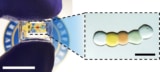
Researchers in China have developed an implantable Na–O2 battery with an open cathode structure that runs on oxygen circulating in the body, potentially removing the limit on battery life. In tests on laboratory rats, the team showed that the proof-of-concept design delivers stable power and has excellent biocompatibility.

Metal–O2 batteries have been previously tested for potential implantable use, but have encountered challenges. Their design requires an open cathode architecture to absorb oxygen from body fluids, and any discharge products created must be easily metabolized by the body during battery cycling. In addition, all components must be biocompatible and the battery must be flexible enough to enable stable contact with soft tissues.

The novel battery consists of a nanoporous gold catalytic cathode, an ion-selective membrane that acts as the separator and an anode made from a sodium-based alloy (NaGaSn). Nanoporous gold, which demonstrates excellent biocompatibility, has previously been used as a cathode in metal–air batteries to provide the oxygen reduction reaction. In the Na–O2 battery, oxygen continuously supplied from body fluids is reduced through the catalysis of the nanoporous gold during discharging.

The ion-selective membrane prevents body fluids from reaching the anode, though the team note that the NaGaSn alloy electrode possesses high safety and stability in water. The entire battery is encased within a soft and flexible porous polymer film.

Principal co-designers Yang Lv, Xizheng Liu and Jiucong Liu, of Tianjin University of Technology, initially conducted in vitro experiments, after which they implanted the battery under the skin on the backs of laboratory rats. After 24 h, they observed an unstable discharge voltage plateau. However, after two weeks of implantation, the battery was able to produce stable voltages of between 1.3 and 1.4 V, with a maximum power density of 2.6 µW/cm2.

“We were puzzled by the unstable electricity output right after implantation,” explains Xizheng Liu in a press statement. “It turned out that we had to give the wound time to heal, for blood vessels to regenerate around the battery and supply oxygen, before the battery could provide stable electricity. This is a surprising and interesting finding because it means that the battery can help monitor wound healing.”

The rats healed well after battery implantation, with the hair on their backs completely regrown after four weeks. Importantly, blood vessels regenerated well around the cathode, providing a continuous source of oxygen. Quantitative analysis confirmed that the number of capillaries around the battery was the same in rats with implanted batteries and control animals without batteries. In fact, the number of capillaries gradually increased with prolonged implantation time.

The researchers assessed the biocompatibility of the implanted battery through biochemical and immunohistochemical analyses. None of the rats developed inflammation around the batteries. Byproducts created by the chemical reactions of the battery, including sodium ions, hydroxide ions and low levels of hydrogen peroxide, were easily metabolized in the kidneys and liver. Upon completion of the study four weeks later, the rats did not experience any negative physiological effects, suggesting that the implanted battery has potential for practical applications.

While the energy generated by the proof-of-concept battery is not sufficient to power medical devices for human use, the results demonstrate that harnessing oxygen in the body for energy is possible. Xizheng Liu advises that the team’s next plan is to improve the battery’s energy delivery by exploring more efficient electrode materials and optimizing the battery structure and design. “We think that the battery will be easy to scale up in production, and choosing cost-effective materials will further lower the cost to produce.”

The researchers note that, in addition to having a novel architecture with the ability to generate extremely high energy densities, the battery’s oxygen concentration can be controlled precisely. This capability may expand its use to therapeutic applications, such as starving cancerous tumours of oxygen or converting the battery energy to heat to destroy cancer cells. Future research initiatives will include evaluating other uses for this promising implantable battery.

The research is reported in Chem.

A career in physics: a universe of possibilities

Demand for physics skills and knowledge is growing. New opportunities can be found in emerging fields such as data science and AI. At the same time, physics graduates are increasingly sought after in established sectors like construction, business and innovation. Learn how to navigate the current jobs market with Physics World Careers 2024, a free-to-read guide packed with tips, interviews and case studies.

Synthetic diamonds grow in liquid metal at ambient pressure

The usual way of manufacturing synthetic diamonds involves applying huge pressures to carbon at high temperatures. Now, however, researchers at the Institute for Basic Science (IBS) in Korea have shown that while high temperatures are still a prerequisite, it is possible to make polycrystalline diamond film at standard pressures. The new technique could revolutionize diamond manufacturing, they say.

Natural diamonds form over billions of years in the Earth’s upper mantle at temperatures of between 900 and 1400 °C and pressures of 5–6 gigapascals (GPa). For the most part, the manufacturing processes used to make most synthetic diamonds mimic these conditions. In the 1950s, for example, scientists at General Electric in the US developed a way to synthesize diamonds in the laboratory using molten iron sulphide at around 7 GPa and 1600 °C. Although other researchers have since refined this technique (and developed an alternative known as chemical vapour deposition for making high-quality diamonds), diamond manufacturing largely still depends on liquid metals at high pressures and temperatures (HPHT).

A team led by Rodney Ruoff has now turned this convention on its head by making a polycrystalline diamond film using liquid metal at just 1 atmosphere of pressure and 1025 °C. When Ruoff and colleagues exposed a liquid alloy of gallium, iron, silicon and nickel to a mix of methane and hydrogen, they observed diamond growing in the subsurface of the liquid metal. The team attribute this effect to the catalytic activation of methane and the diffusion of carbons atoms in the subsurface region.

No seed particles

Unusually, the first diamond crystals in the IBS experiment began to form (or nucleate) without seed particles, which are prerequisites for conventional HPHT and chemical vapour deposition techniques. The individual crystals later merged into a film that is easy to detach and transfer to other substrates.

To investigate the nucleation process further, the team used high-resolution transmission electron microscopy (TEM) to capture cross-sections of the diamond film. These TEM images showed that carbon builds up in the liquid metal subsurface until it reaches supersaturated levels. This, according to the researchers, is likely what leads to the nucleation and growth of the diamonds.

Separately, synchrotron X-ray diffraction measurements revealed that although the diamond formed via this method was highly pure, it contained some silicon atoms situated between two unoccupied sites in the diamond lattice of carbon atoms. The researchers say that these silicon-vacancy colour centres, as they are known, could have applications in magnetic sensing and quantum computing, where similar defects known as nitrogen-vacancy centres are already an active topic of research. The presence of silicon also appears to play an important role in stabilizing the tetravalently-bonded carbon clusters responsible for nucleation, they add.

Scaling up

The researchers, who report their work in Nature, are now trying to pin down when the nucleation of the diamond begins. They also plan “temperature drop” experiments in which they will first supersaturate the liquid metal with carbon and then rapidly lower the temperature in the experimental chamber to trigger diamond nucleation.

Another future research direction might involve studying alternative metal liquid alloy compositions. “Our optimized growth was achieved using the gallium/nickel/iron/silicon liquid alloy,” explains team member Da Luo. “However, we also found that high-quality diamond can be grown by substituting nickel with cobalt or by replacing gallium with a gallium-indium mixture.”

Ruoff adds that the team might also try carbon precursors other than methane, noting that various gases and solid carbons could yield different results. Overall, the discovery of diamond nucleation and growth in this liquid is “fascinating”, he says, and it offers many exciting opportunities for basic science and for scaling up the growth of synthetic diamonds in new ways. “New designs and methods for introducing carbon atoms and/or small carbon clusters into liquid metals for diamond growth will surely be important,” he concludes.

Grounds for celebration as ‘hub of all things coffee’ opens at University of California, Davis

Physicists are well-known for their interest in coffee, not only drinking it but also studying the fascinating science behind an espresso.

Now researchers at the University of California, Davis (UC Davis), have taken it a whole new level by forming a research institute dedicated to the science of the perfect brew.

The Coffee Center will be used by more than 50 researchers and includes labs dedicated to brewing, “sensory and cupping” and the chemical analysis of coffee.

The centre has its origins in a 2013 course on “the design of coffee” by UC Davis chemical engineers William Ristenpart and Tonya Kuhl.

Two years later and a coffee lab at the university was established and in 2022 construction began on the Coffee Center, which was funded with $6m from private donors.

The official opening on 3 May was attended by over 200 people, who were treated to bean roasting and espresso brewing demonstrations.

“Think of this center as a hub of all things coffee,” noted UC Davies chancellor Gary May at the opening. “Together, we bring rigorous coffee science and cutting-edge technology to the world stage.”

Better latte than never.

The future of 2D materials: grand challenges and opportunities

Want to learn more on this subject?

Graphene, the first 2D material, was isolated by Prof. Andre Geim and Prof. Konstantin Novoselov in 2004. Since then, a variety of 2D materials have been discovered, including transition metal dichalcogenides, phosphorene and mxene. 2D materials have remarkable characteristics and are making significant contributions towards quantum technologies, electronics, medicine, and renewable energy generation and storage to name but a few fields. However, we are still exploring the full potential of 2D materials, and many challenges must be overcome.

Join us for this panel discussion, hosted by 2D Materials, where leading experts will share their insights and perspectives on the current status, challenges and future directions of 2D materials research. You will have the opportunity to ask questions during the Q&A session.

Have a question for the panel?

We welcome questions in advance of the webinar, so please fill in this form.

Want to learn more on this subject?

Chair
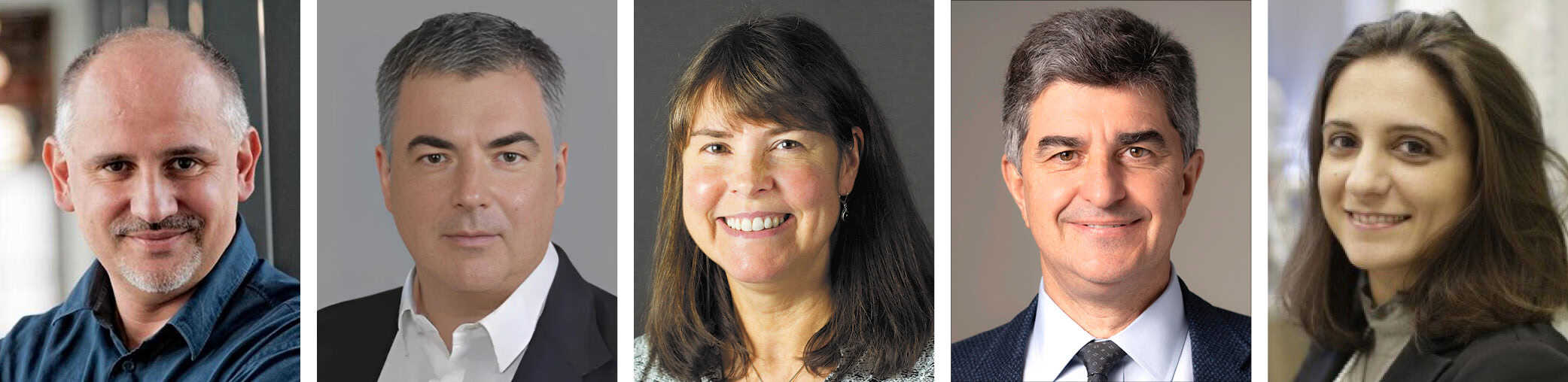
Prof. Stephan Roche has been ICREA Research Professor and head of the Theoretical & Computational Nanoscience Group at the Catalan Institute of Nanoscience and Nanotechnology (ICN2). He is a theoretician expert in the study of quantum transport theory in condensed matter, spin transport physics and devices simulation.

Speakers
Prof. Konstantin Novoselov is the Langworthy Professor of Physics and Royal Society Research Professor at The University of Manchester. In 2004, he isolated graphene alongside Andre Geim and was awarded the Nobel Prize in Physics in 2010 for his achievements.

Prof. Joan Redwing is a Distinguished Professor of Materials Science and Engineering at Penn State University where she holds an adjunct appointment in the Department of Electrical and Computer Engineering. Her research focuses on crystal growth and epitaxy of electronic materials, with an emphasis on thin film and nanomaterial synthesis by metalorganic chemical vapour deposition.

Prof. Yury Gogotsi is a Distinguished University Professor and Charles T and Ruth M Bach Endowed Chair in the Department of Materials Science and Engineering at Drexel University. He is the founding director of the A.J. Drexel Nanomaterials Institute.

Prof. Cecilia Mattevi is a Professor of Materials Science in the Department of Materials at Imperial College London. Cecilia’s expertise centres on science and engineering of novel 2D atomically thin materials to enable applications in energy conversion and energy storage.

About this journal

2D Materials is a multidisciplinary, electronic-only journal devoted to publishing fundamental and applied research of the highest quality and impact covering all aspects of graphene and related two-dimensional materials.

Editor-in-chief: Wencai Ren Shenyang National Laboratory for Materials Science, Chinese Academy of Sciences, China.

Data science CDT puts industry collaboration at its heart

Physics is a constantly evolving field – how do we make sure the next generation of physicists receive training that keeps pace with new developments and continues to support the cutting edge of research?

According to Carsten P Welsch, a distinguished accelerator scientist at the University of Liverpool, in the age of machine learning and AI, PhD students in different physics disciplines have more in common than they might think.

“Research is increasingly data-intensive, so while a particle physicist and a medical physicist might spend their days thinking about very different concepts, the approaches, the algorithms, even the tools that people use, are often either the same or very similar,” says Professor Welsch.

Data science is extremely important for any type of research and will probably outlive any particular research field

Professor Welsch

Welsch is the director of the Liverpool Centre for Doctoral Training (CDT) for Innovation in Data Intensive Science (LIV.INNO). Founded in 2022, the CDT is currently recruiting its third cohort of PhD students. Current students are undertaking research that spans medical, environmental, particle and nuclear physics, but their projects are all underpinned by data science. According to Professor Welsch, “Data science is extremely important for any type of research and will probably outlive any particular research field.”

Next-generation PhD training

Carsten Welsch has a keen interest in improving postgraduate education, he was chair of STFC’s Education Training and Careers Committee and a member of the UKRI Skills Advisory Group. When it comes to the future of doctoral training he says “The big question is ‘where do we want UK researchers to be in a few years, across all of the different research areas?’”

He believes that LIV.INNO holds the solution. The CDT aims to give students with data-intensive PhD projects the skills that will enable them to succeed not only in their research but throughout their careers.

Lauryn Eley is a PhD student in the first LIV.INNO cohort who is researching medical imaging. She became interested in this topic during her undergraduate studies because it applied what she had learned in university to real-world situations. “It’s important that I can see the benefits of my work translated into everyday experiences, which I think medical imaging does quite nicely,” she says.

Miss Eley’s project is partnered with medical technology company Adaptix. The company has developed a mobile X-ray device which, it hopes, will enable doctors to produce a high-quality 3D X-ray image more cheaply and easily than with a traditional CT scanner.

Her task is to build a computational model of the X-ray device and investigate how to optimize the images it produces. To generate high-quality results she must simulate millions of X-rays. She says that the data science training she received at the start of the PhD has been invaluable.

From their first year, students attend lectures on data science topics which cover Monte Carlo simulation, high-performance computing, machine learning and AI, and data analysis. Lauryn Eley has an experimental background, and she says that the lectures enabled her to get to grips with the C++ she needed for her research.

Boosting careers with industry placements

Professor Welsch says that from the start, industry partnership has been at the centre of the LIV.INNO CDT. Students spend six months of their PhD on an industrial placement, and Lauryn Eley says that her work with Adaptix has been eye-opening, enabling her to experience first-hand the fast-paced, goal-driven world of industry, which she found very different to academic research.

While the CDT may particularly appeal to those keen on pursuing a career in industry, Professor Welsch emphazises the importance of students delivering high-quality research. Indeed, he believes that LIV.INNO’s approach provides students with the best chance of success in their academic endeavours. Students are taught to use project management skills to plan and deliver their projects, which he says puts them “in the driving seat” as researchers. They are also empowered to take initiative, working in partnership with their supervisors rather than waiting for external guidance.

LIV.INNO builds on a previous programme called the Liverpool Big Data Science Centre for Doctoral Training, which ran between 2017 and 2024. Professor Welsch was also the director of that CDT, and he has noticed that when it comes to partnering with student projects, industry attitudes have undergone a shift.

“When we approached the companies for the first time, you could definitely see that there was a lot of scepticism,” he says. “However, with the case studies from the first CDT, they found it much easier to attract industry partners to LIV.INNO.” Professor Welsch thinks that this demonstrates the benefits that industry-academia partnerships bring to both students and companies.

The first cohort from LIV.INNO are only in their second year, but many of the students from the previous CDT secured full-time jobs from the company where they did their placement. But whatever career path students eventually go down, Carsten Welsch is convinced that the cross-sector experience students get with LIV.INNO sets them up for success, saying “They can make a much better informed decision about where they would like to continue their careers.”

LIVINNO CDT logo

GMT or TMT? Fate of next-generation telescope falls to expert panel set up by US National Science Foundation

The US National Science Foundation (NSF) is to assemble a panel to help it decide whether to fund the Giant Magellan Telescope (GMT) or the Thirty Meter Telescope (TMT). The agency expects the panel, whose membership has yet to be determined, to report by 30 September, the end of the US government’s financial year.

The NSF first announced in February that it would support the construction of only one of the two next-generation ground-based telescopes due to rising costs. The GMT, priced at $2.54bn, will be located in Chile, while the TMT, which is expected to cost at least $3bn, is set to be built in Hawaii.

A decision on which telescope to fund was initially slated for May. But at a meeting of the National Science Board (NSB) last week, NSF boss Sethuraman Panchanathan revealed the panel would provide further advice to the agency. The decision to look to outsiders followed discussions with the US government and the NSB, which oversees the NSF.

The panel, which will include scientists and engineers, will assess “the readiness of the project from all perspectives” and consider how supporting each telescope would affect the NSF’s overall budget.

It will examine progress made to date, the level of partnerships and resources, and risk management. Complementarity to the European Extremely Large Telescope, opportunities for early-career scientists, and public engagement will be looked at too.

“I want to be very clear that this is not a decision to construct any telescopes,” Panchanathan, who originally trained as a physicist, told the NSB. “This is simply part of a process of gathering critical information to inform my decision-making on advancing either project to the final design stage.”

US DIII-D National Fusion Facility resumes operations following series of upgrades

The DIII-D National Fusion Facility in San Diego has completed eight months of upgrades that will allow researchers to better control and study fusion plasmas.

DIII-D is the largest magnetic-fusion facility in the US and is used by more than 700 researchers at 100 institutions worldwide. The DIII-D tokamak is a donut-shaped vacuum chamber that is surrounded by electromagnets that confine a plasma at a temperatures exceeding 10 times that of the Sun, enough to fuse hydrogen to produce energy.

Since July 2023, engineers and technicians have installed new systems to better control the fusion plasma. This includes a range of new diagnostic instruments as well as enhancements to the way that the plasma is heated.

Another change is to the tokamak’s divertor system, which removes exhaust heat and impurities from the tokamak. Engineers have installed a new configuration called a “shape and volume rise” divertor, which consists of a series of modular divertor configurations that the DIII-D will now test when experiments start up later this month.

The new divertor will allow plasma shapes to be studied that are expected to produce high fusion power performance but were not possible with DIII-D’s previous divertor geometry.

Work on the upgraded facility is also expected to support experiments that will be performed at the ITER experimental fusion reactor, which is currently being built in Cadarache, France.

“The upgrades provide us with exciting new capabilities and key enhancements,” notes DIII-D director Richard Buttery. “Our scientists will be able to use our upgraded systems and diagnostics to answer key questions on commercial industry–relevant technology, materials, and operations”.

‘My career has not been a straight line’: Craig Jantzen on switching from nuclear science to diplomacy

Craig Jantzen

When Craig Jantzen was a PhD student at the University of Manchester in the UK, he used to go to politics and economics lectures alongside his research into nuclear materials. Jantzen is fascinated by all things nuclear, but he also saw the PhD as an opportunity to broaden his horizons beyond science. “You’re not drained from doing a nine-to-five job every day, and you’re around people that want to learn constantly,” he recalls.

Jantzen’s PhD, which he finished in 2017, involved investigating materials for next-generation nuclear reactors. It has been proposed that molten chloride salts, which are excellent heat conductors, could be used instead of water as reactor coolants, but these salts are incredibly corrosive to metals. Jantzen was testing the corrosion of different metal alloys in molten chloride salts in order to identify optimal materials for these reactors. But he is now a diplomat working on science collaboration and policy for the UK government. Given his interest in politics, Jantzen’s job might not seem surprising, but he emphasizes that his career has “not been a straight line”.

Having worked in finance, energy and environmental policy as well as the UK government’s COVID-19 response, Jantzen is currently based in Stockholm as the first secretary and regional manager for the UK’s Science Innovation Network where he covers the Nordic and Baltic regions. The network aims to build collaboration, promote UK research and provide expertise to the government. He leads a team of trained scientists, many of whom have PhDs, using their research experience to address policy issues like AI and climate change.

Embracing change

Jantzen’s first experience of what it would be like to work as a diplomat was sparked by a chance encounter at a conference during his PhD. He attended a talk by a speaker who had worked at the International Atomic Energy Agency (IAEA), which promotes the safe use of nuclear technologies. Jantzen was particularly intrigued to hear the speaker talk about nuclear safeguards, and in his second year, he did a six-month internship at the IAEA in Vienna, working in the same team that had responded to the Fukushima Daiichi nuclear accident in 2011.

I realized I like talking about science a lot more than I enjoy doing science

After his PhD, Jantzen considered staying in academia, but decided that his skills would be of better use elsewhere: “I realized I like talking about science a lot more than I enjoy doing science”. As it turned out, Jantzen’s first job after his PhD was as a financial consultant for Capco in London. “I knew that I would learn a lot in that environment and that they give you a lot of responsibility”, he says, “and I felt that was a good compliment to academic research”. Indeed, he credits this experience with getting him over some of the imposter syndrome he had from his PhD. With an emphasis on meeting deadlines, he had to let go of perfectionism and admit when he didn’t know something, eventually realizing that this allowed him to learn much faster.

But after 18 months in finance, it was time for another change. Wanting to do something he’d find more fulfilling, Jantzen started applying for jobs in the UK government. However, his career in the civil service got off to a slightly bumpy start.

He had been offered a role working for the Department for Business, Energy & Industrial Strategy on the proposed Wylfa Newydd nuclear power station in north Wales. However, in January 2019 – less than a week before he was supposed to start – the project was suspended. Instead, Jantzen joined the Energy Strategy team in the same department where he worked on the UK’s plan to reach net-zero emissions by 2050. His research experience had given him “a nuclear energy lens”, but working with modellers and policy teams across technologies like carbon capture and offshore wind gave him a valuable crash-course in the wider energy landscape.

Far-flung ambition

Having previously enjoyed his stint overseas with the IAEA, Jantzen soon started looking for more international-facing roles. With the UK hosting the 2021 United Nations Climate Change Conference (COP26), he knew that international environmental affairs was something he wanted to be part of. In November 2019 Jantzen moved to the Government Office for Science where he worked on the development of the UK’s COP26 science strategy. He also volunteered for the Scientific Advisory Group for Emergencies (SAGE) secretariat during the COVID-19 pandemic, where he co-led the epidemiology policy team and prepared advice that was given to the government.

A science background…helps you do your job more effectively because you understand the technology, you’re not intimidated by it

As it happened, when the opportunity came to move overseas, it was to return to the IAEA on a secondment funded by the UK government. In this role, he advised the IAEA on climate change during COP26 and COP27 – which was held in Egypt in 2022. This gave him the experience he needed to apply for full-time jobs overseas, which is how he ended up in his current position.

Now Jantzen’s day could involve negotiating bilateral agreements, hosting an embassy reception, or running technology workshops. Jantzen believes his science background has been valuable to his career, saying “It helps you do your job more effectively because you understand the technology, you’re not intimidated by it”. As well as technical knowledge, scientists bring a diversity of thought that is valuable to a team, he believes.

Jantzen thinks his school and university-age self would be surprised at where his early interest in nuclear science has taken him: “I never imagined being a diplomat or working internationally.” He had to gradually build up experience before making the jump to a diplomatic role overseas, and his advice to others who are interested in switching from science to diplomacy is not to be deterred if it takes time, saying “I definitely saw stepping stones. I didn’t know exactly what opportunity was going to come up, but when I did, I was just ready for it.”

Magnetic islands stabilize fusion plasma, simulations suggest

By combining two different approaches to plasma stabilization, physicists in the US and Germany have developed a new technique for suppressing instabilities in tokamak fusion reactors. The team, led by Qiming Hu at Princeton Plasma Physics Laboratory, hopes its computer-modelling results could be an important step towards making nuclear fusion a viable source of energy.

Tokamak fusion reactors use intense magnetic fields to confine and heat hydrogen plasma within their doughnut-shaped interiors. At suitably high temperatures, the hydrogen nuclei will gain enough energy to overcome their mutual repulsion and fuse together to form helium nuclei, releasing energy in the process.

If more energy is released in the reaction than is fed into the tokamak, it would provide an abundant source of clean energy. This has been a goal of researchers since fusion was first created in the laboratory in the 1930s.

Stubborn roadblock

One of the most stubborn roadblocks to achieving sustained fusion is the emergence of periodic plasma instabilities called edge-localized modes (ELMs). These originate in the outer regions of the plasma and result in energy leaking into the tokamak’s walls. If left unchecked, this will cause the fusion reaction to fizzle out, and it can even damage the tokamak.

One of the most promising approaches for suppressing ELMs is the use of resonant magnetic perturbations (RMPs). These are controlled ripples in the confining magnetic field that create closed loops of magnetic fields to form inside the plasma.

Dubbed magnetic islands, these loops do not always have a desirable influence. If they are too large, they risk destabilizing the plasma even further. But by carefully engineering RMPs to generate islands with just the right size, it should be possible to redistribute the pressure inside the plasma, suppressing the growth of ELMs.

In their study, Hu’s team introduced an extra step to this process, which would enable them to better control the parameters of RMPs to generate magnetic islands of just the right size.

Spiralling electrons

This involved injecting the plasma with high-frequency microwaves in a method called edge-localized electron cyclotron current drive (ECCD). Inside the plasma, these waves cause energetic electrons to spiral along the direction of the confining magnetic field lines, generating local currents which run parallel to the field lines.

In previous experiments, ECCD microwaves were most often injected into the core of the plasma. But in their simulations, the Hu and colleagues instead directed them to the edge.

“Usually, people think applying localized ECCD at the plasma edge is risky because the microwaves may damage in-vessel components,” Hu explains. “We’ve shown that it’s doable, and we’ve demonstrated the flexibility of the approach.”

Tight control

In simulated tokamak reactors, the team found that their new approach can lower the amount of current necessary to generate RMPs, while also providing tight control over the sizes of magnetic islands as they formed in the plasma.

“Our simulation refines our understanding of the interactions in play,” Hu continues. “When the ECCD was added in the same direction as the current in the plasma, the width of the island decreased, and the pedestal pressure increased.”

The pedestal pressure refers to the region close to the edge of the plasma where the pressure peaks, before dropping off steeply towards the plasma boundary. “Applying the ECCD in the opposite direction produced opposite results, with island width increasing and pedestal pressure dropping or facilitating island opening,” explains Hu.

These simulation results could provide important guidance for physicists running tokamaks – including ITER experiment, which should begin operation in late 2025. If the same results can be replicated in real plasma it could bring the long-awaited goal of sustained nuclear fusion a step closer.

The research is described in Nuclear Fusion.

Copyright © 2026 by IOP Publishing Ltd and individual contributors