

The many roads to leadership

“There are many ways to lead,” writes former New York City mayor Rudy Giuliani in his new book Leadership. Giuliani mentions the diverse styles of Franklin Roosevelt, Joe DiMaggio, Winston Churchill and Ronald Reagan, who led – so he claims – by stirring speeches, example, brave oratory and character, respectively.

Is it too far-fetched to hope to find some hints for understanding scientific leadership from Giuliani? Today’s scientific communities, after all, are city-like enterprises, full of potentially conflicting “ethnicities”. These include research scientists of various disciplines, as well as engineers, technicians, administrators, inspectors and other assorted support personnel.

The directors of large projects and labs have to manage hundreds or thousands of staff and need to handle budgets worth hundreds of millions of dollars. Some scientific leaders – at CERN, the European Space Agency and the ITER fusion project, for example – even have to carry along governments of many different nations.

Until recently, however, the leaders who have attracted most attention have either been the glamorous ones – famous for their own discoveries – or frontier leaders who have overseen the construction of new facilities. But as a set of recent articles by historians about leadership reveals, there is no single key to science leadership, just as there is none for political leadership.

Frontier leaders

J Robert Oppenheimer ranks on any list of great scientific leaders. Under him, the scientists and engineers at the Los Alamos laboratory succeeded at their seemingly impossible wartime mission – of constructing the first deployable atomic bomb – in an astounding 20 month period.

But that was a unique community. After the war, Oppenheimer was less successful as director of the Institute for Advanced Study in Princeton, where he inherited a community with pre-existing tensions and a less focused goal. He was deeply disappointed by his inability to bring disciplines together – he could not even get the mathematicians and historians to join each other’s tables for lunch.

In an article from his recently reissued book The Advancement of Science and its Burdens (1998 Harvard University Press), the historian Gerald Holton astutely observes that “the various fragments of Oppenheimer’s soul” required “a magnetic field that would line them up”. The urgency of the bomb project in all-out war provided such a field, while the institute environment did not.

Meanwhile, in a recent article in Historical Studies in the Physical Sciences (2002 32 369-407), Catherine Westfall discusses a different kind of leadership. This was the model established by Ernest Lawrence, who founded the Berkeley laboratory. It was carried on in successive generations by Robert Wilson – Fermilab’s first director – and by Hermann Grunder, founding director of the Jefferson Laboratory.

These “Lawrence-like leaders” were “energetic, driven, charismatic, and domineering”. They usually met challenges by shunning the reasonable and ratcheting up their ambitions. As Wilson said: “I learned from Lawrence to define what you want and then, damn, make it come out that way.”

Scientists who worked for Lawrence-like leaders were driven hard and were often anxious of the huge gambles that were being taken. Still, they were handsomely rewarded. As one of Grunder’s aides wrote: “All our plans could go down in flames, but I kept thinking: how often in life do you have the opportunity to get this kind of excitement?”

Symbolic and pragmatic leaders

Another recent article looks at symbolic leadership, where prestige matters as much as ability (2002 Hist. Stud. Phys. Sci. 32 57-69). In the article, John Krige studies Felix Bloch and Philip Morse, who were the first directors of CERN and the Brookhaven National Laboratory respectively. The founders of both institutions fully appreciated the dangers of creating a laboratory from scratch, and, says Krige, urgently sought an eminent person – in the form of Bloch and Morse – whose symbolic capital would provide instant credibility for the lab.

Other articles published in the same issue of Historical Studies in the Physical Sciences discuss the leadership style of Reimar Lüst, who was the first director of the Max Planck Institute for Extraterrestrial Physics, and leadership issues in the now-defunct Superconducting Super Collider project. Meanwhile, in the next issue of Physics in Perspective and elsewhere, the historians Lillian Hoddeson and Adrienne Kolb address yet another leadership situation – that of the second leader of a new institution. That role is exemplified by Leon Lederman, who succeeded Wilson as Fermilab’s director, and by Norris Bradbury, who followed Oppenheimer as director of Los Alamos. The second leaders faced a significantly different leadership challenge. They had to reformulate the mission of these labs, transforming them into lasting institutions with”a more stable scientific, cultural and funding environment”.

The critical point

Leadership is most conspicuous by its absence. When present, it is all but transparent, allowing groups of people to keep their energies kindled and their attention focused, reducing rivalries and conflicts generated from within, and minimizing distractions and impositions generated from without. But because most of the attention goes to glamour and frontier leaders, it is an understudied field.

In The Visible Hand – a book, cited by Hoddeson and Kolb, about modern business structures – management guru Alfred Chandler laments the attention lavished on entrepreneurs and financiers. He also bemoans the lack of attention given to those managers who “concern themselves with integration, co-ordination, efficient administration, and reorganization to create stability for the long term”. A good way of rectifying the same deficit in science leadership would be to heed those historians who have shown how different communities, circumstances and tasks call for different temperaments and skills.

These might even provide important lessons for big-city mayors.
CERN – the W and the LHC

Two further experiments will probe the differences between matter and antimatter, and the properties of quark–gluon plasmas produced in even more energetic collisions between nuclei. Due to come online in 2007, the LHC will become the focus of attention for the international particle-physics community for the best part of a decade.

Since 1991, when the lab’s council first agreed that the LHC was “the right machine for the future of CERN”, the project has been presided over by three particle physicists turned director generals — Carlo Rubbia, Chris Llewellyn Smith and Luciano Maiani. Next January, however, the baton will pass to Robert Aymar, the plasma physicist who is currently leader of the ITER fusion project.

Some will express surprise that the biggest job in particle physics has gone to a non-particle physicist. However, CERN already has plenty of particle physicists and what the lab needs now is someone with experience of managing and delivering large complex projects on schedule and within budget. And if Aymar can successfully conclude his time at ITER by persuading the project’s members to build the $4bn tokamak reactor, the fusion community in turn will need someone else with the same skills.

Moreover, Aymar is no stranger to the Geneva laboratory. In 1993, for instance, he chaired an external review committee that examined the technical feasibility of the LHC and concluded that the project should be approved. And when budget problems emerged on the project in 2001, Aymar was called in to head another external review committee. Putting his own recommendations into practice will therefore be a top priority for the new director general.

This month is also the 20th anniversary of CERN’s finest moment. In a famous seminar at the Geneva laboratory in January 1983, Carlo Rubbia of the UA1 collaboration presented evidence for the production of W bosons in collisions between protons and antiprotons. The discovery of the Z boson quickly followed and a year later Rubbia and Simon van der Meer shared the Nobel prize for their roles in the discoveries. In addition to leading the UA1 experiment, Rubbia had also been a driving force behind the construction of a proton–antiproton collider — a concept that he had proposed with two colleagues, David Cline and Peter McIntyre — while van der Meer had made it possible to produce a sufficiently strong beam of antiprotons for the experiments.

Today we take the W and Z bosons for granted as part of the Standard Model, but back in the early 1980s they were still just theoretical predictions. Their detection was a seminal moment in the history of particle physics, and also the first time that CERN — which had a reputation for losing out on big discoveries to less conservative labs — had beaten its US rivals to a major discovery. This time the race for the prize was between two experiments at CERN — UA1 and UA2. On page 23 of this month’s magazine, science writer Gary Taubes describes how UA1 was first past the post. The article is based on a chapter of Nobel Dreams, a book that Taubes wrote in 1986; sadly this engrossing read is currently out of print. And on page 29 Peter Renton explains how the latest results on the W boson from CERN and FermiLab in the US are pushing the Standard Model to the limit.

Building the LHC will also push CERN and its new director general to the limit, but the light at the end of the tunnel — the Higgs, supersymmetry and who knows what else — will be worth it.

Los Alamos director resigns

The Los Alamos lab was originally set up in 1943 to build the first atomic bomb and is now one of the biggest research centres in the world. Recently, however, the laboratory has been involved in several high-profile controversies, including credit card misuse by employees, the disappearance of millions of dollars worth of computer and other equipment, and a failed attempt to prosecute Los Alamos physicist Wen Ho Lee for allegedly giving weapons secrets to China.

“As Laboratory director, I accept personal accountability for everything that happens here, both good and bad,” said Browne in his official resignation statement.

Browne joined Los Alamos in 1979 as a group leader in the physics division and became director in 1997. The principal deputy director, Joseph Salgado, has also resigned. The laboratory will now be led, on a temporary basis, by George Nanos, a retired Navy admiral.

European best-sellers in 2002

These lists of the best-selling physics books for the year to the end of October at Amazon, the on-line bookstore, seem to confirm that rule. While the two Stephens -Hawking and Wolfram – are among the top sellers in France and Germany, few readers in Britain will probably have ever bought Devenez Sorciers Devenez Savants, which is the top seller in France. In the book Henri Broche and the Nobel-prize winning physicist Georges Charpak explain the truth behind people who claim they can walk on hot coals or snuff light-bulbs out at a distance.

Also apparent from the list at amazon.fr is the French love of fine cuisine. Second and fourth are two books by the physical chemist Hervé This. Casseroles et Éprouvettes (Casseroles and Test-tubes) sees This answer the old chestnut of whether a soufflé rises better if the egg white is beaten to — but not beyond — the firm white stage. Meanwhile, Traité Élémentaire de Cuisine examines, among other things, the molecular changes that take place when roasting a joint of meat.

Hawking snaps up the top three slots among German-speaking readers, with a translation of The Universe in a Nutshell at number one. Fourth in the list is another foreign-language book – an edited collection of answers to scientific conundrums that have appeared in New Scientist magazine. Known in the UK by the column of the same name, the German version of The Last Word goes under the strangely titled Why Sleeping Birds Don’t Fall from Trees.

Top five titles for 2002 in the UK at amazon.co.uk

1 The Universe in a Nutshell
Stephen Hawking (Bantam)

2 Conceptual Physics Package
Paul Hewitt(Addison Wesley)

3 The Universe Next Door
Marcus Chown (Headline Paperbacks)

4 Our Cosmic Habitat
Martin Rees (Weidenfeld and Nicholson)

5 The Field: The Quest for the Secret Force of the Universe
Lynne McTaggart (HarperCollins)

Top five titles for 2002 in Germany at amazon.de

1 Das Universum in der Nussschale
Stephen Hawking (Hoffmann & Campe)

2 Die Illustrierte Kurze Geschichte der Zeit
Stephen Hawking (Rowohlt)

3 Eine Kurze Geschichte der Zeit
Stephen Hawking (DTV)

4 Warum Fallen Schlafende Vögel Nicht vom Baum?
Mick O’Hare (Piper)

5 Die Aandere Bildung: Was Man von den Naturwissenschaften Wissen Sollte
Ernst Peter Fischer (Ullstein)

Top five titles for 2002 in France at amazon.fr

1 Devenez Sorciers Devenez Savants
Georges Charpak and Henri Broch (Odile Jacob)

2 Casseroles et Éprouvettes
Hervé This (Belin)

3 A New Kind of Science
Wolfram, Stephen (I B S Books)

4 Traité Élémentaire de Cuisine
Hervé This (Belin)

5 Une Brève Histoire du Temps: Du Big Bang Aux Trous Noirs
Stephen Hawking (J’ai lu)

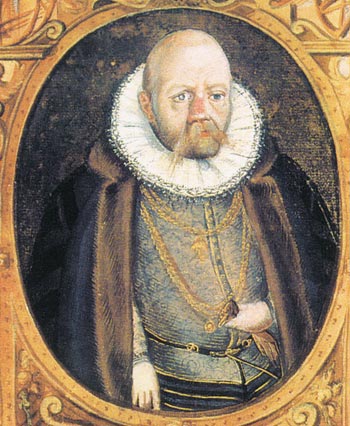
Kepler and Tycho Brahe: the odd couple

Kitty Ferguson presents a double biography with a single theme: the founding of modern astronomy. Johannes Kepler is rightly acclaimed as the father of modern astronomy, but he could not have achieved this distinction without Tycho Brahe’s observational data, which are unanimously considered the most accurate and comprehensive in pre-telescopic astronomy.

Science needs imaginative, daring theorists who can soar high in the world of the almost impossible; Kepler belonged to this tribe. Science also needs accurate observational data to keep this search bound to the ground; Tycho’s data did just this. But this merging of theory and experiment was by no means straightforward or easy.

The Nobleman and His Housedog recounts the strange and intricate way in which this unusual collaboration came about. The story begins with Tycho Brahe – the Danish nobleman of the book’s title – who was 25 years older than Kepler. Breaking with the established traditions of his society, which frowned upon any nobleman engaging in a scientific career, Tycho had been interested in astronomical observations since his youth.

It was from his home observatory at Herrevad that he observed the well known nova of 1572, which challenged the Aristotelian doctrine of the immutability of the celestial world. Later he found lavish favour with King Frederick II of Denmark, who went all out to help him set up an extravagant state-of-the-art observatory at Uraniborg and the subterranean observatory of Stjerneborg on the island of Hven.

However, Tycho fell badly out of grace with King Christian IV – Frederick’s successor – and was forced to leave Denmark in disgrace in 1597. Soon Emperor Rudolph II of the Holy Roman Empire welcomed him in Prague and extended generous support to set up an observatory at nearby Benatky. Unfortunately, Tycho’s life and activities at Benatky were cut short by his rather untimely death in 1601, although he left a priceless legacy in the form of the most accurate astronomical observations – the fruit of 38 years of tireless, ingenious labour.


Tycho had been unhappy with the old Ptolemaic system; the new Copernican theory also failed to satisfy him. He in turn proposed a different system, popularly known as the Tychonic system, in which all the planets (except the Earth) went round the Sun, and the Sun orbited round the Earth. This system, he claimed, steered clear of the mathematical absurdity of Ptolemy and the physical absurdity of Copernicus.

Kepler, meanwhile, was following a very different path. Born in Weil der Stadt near Stuttgart in 1571, he could hardly claim any noble lineage. Deeply religious and fired by a powerful desire to become a Lutheran minister, he went to study theology at the University of Tübingen. There he came under the influence of the crypto-Copernican astronomer Michael Möstlin, and became a Copernican himself. Soon he had to interrupt his theological studies to become a mathematics teacher and district mathematician in Graz in present-day Austria.

Kepler first came to the notice of the scholarly world when he published Mysterium Cosmographicum in 1596. The book detailed his “polyhedral theory”, which explained the arrangement of the different planets in terms of the five regular solids. Although a theorist, Kepler longed impatiently to consult Tycho’s data to confirm his theory.

A very strange confluence of circumstances offered Kepler the opportunity to fulfil his desire. Religious persecution and poverty drove Kepler out of Graz. While his polyhedral theory turned out to be a phantasm, its ingenuity and originality revealed a brilliant and highly creative genius in the making. He quickly received a shower of encomiums from many scholars including Tycho, who extended an open and warm-sounding invitation to join him at Benatky.

Rarely can one find two personalities so poles apart as Tycho and Kepler. Flamboyant and extravagant, the Dane wallowed in pomp and luxury, even though his lifestyle meant emptying the royal coffers and squeezing the sweat out of his impoverished Danish tenants. For Kepler, however, the wayward life of his mercenary father, the sporadic, witch-like behaviour of his mother and the chronic poverty of his family had always prevented him from claiming a place in high society.

Tycho was arrogant and merciless towards his opponents – he went after Nicolas Ursus’s blood (even after the latter’s ignominious death) because he believed that Ursus had plagiarized his astronomical system. Kepler, on the other hand, was self-effacing and self-disparaging – he referred to himself as a “housedog” and a “worm”. The Dane was a genius at observations and devising observational instruments. The German – with his highly creative mind and imaginative insights – was a grand master at theorizing. Tycho was self-centred and overprotective of his observational data, persistently refusing to share his scientific treasure with Kepler. Kepler for the most part was generous and ready to share his knowledge with other scholars.

No wonder the so-called collaboration was strange and stormy. During the first months of their time together, the pair pouted at each other, argued constantly, quarrelled frequently and finally – in a fit of anger and disappointment – Kepler walked out. But Tycho had the good sense and magnanimity to relent, and finally the differences were patched up. Kepler was given the formidable task of studying the erratic movement of Mars, which neither Tycho nor any of even his best assistants could tackle. This was providential since the path of Mars deviated most from the circular path, and Tycho’s accurate data were able to render this deviation perceptible.

Tycho’s untimely death in 1601 also turned out to be a blessing in disguise for Kepler since this led him to become the prestigious Imperial Mathematician in Prague, and gave him relatively free access to Tycho’s data. Although he struggled with the Martian orbit for several years, he was finally rewarded with the discovery of the first two laws of planetary motion that now bear his name. He discovered the third law several years later while working on musical harmony applied to the motion of planets.

Ferguson succeeds in bringing out the complex lives of these two giants and the enormity of the challenges that lay before them. She also beautifully locates them in the social, religious and political milieu ­ thereby affirming that scientists and the science that they help to create cannot be divorced from the people they are and the world they live in. The book also provides a good feeling for the Europe of the period, especially of Denmark. The style is lucid and smooth, avoiding all unnecessary technical complexities. Indeed, the entire text reads almost like a historical novel.

However, the sections dealing with Kepler’s long and arduous struggle with Mars are somewhat weak. In her legitimate concern for simplification, Ferguson falls into the trap of all simplifiers: underplaying the role of non-empirical factors in Kepler’s discovery. The crucial role that philosophical and religious principles played cannot be overlooked, particularly the immense struggle Kepler had to undergo to extricate himself from astronomers’ millennia-long attachment to the circular orbit.

Still, the author has made a laudable contribution in casting Tycho in a far better light than others have achieved. Particularly touching is her description of how he broke with tradition to marry a commoner – Kirsten Jørgensdatter – at considerable personal cost all through his life.

Some readers, however, may feel uneasy with the metaphorical reference to Kepler as Tycho’s “housedog”. This self-description is quoted at least three times, and referred to many more. A man with a poor self-image, Kepler was embarrassingly self-effacing. Psychologists tell us that statements from such people about themselves should not be given too much weight. In any case, if Kepler was the “housedog”, this was the rarest case in which the housedog outlived and outsmarted his master.

These comments aside, Ferguson’s work renders valuable and timely service to the Kepler–Tycho scholarship. Non-specialists will learn much about the world of modern science in its infancy. Specialists, meanwhile, will find its many details and insights stimulating for further study and reflection.

Doughnuts reveal life’s secrets

Even the great Isaac Newton – taking a break from celestial matters by sipping a cup of coffee under his favourite apple tree – might have been stymied by one mundane question. How, he may have wondered, do you dunk a doughnut to achieve nirvana – that is perfect softness and flavour – without losing part of the doughnut in the coffee? Along with boiling an egg, turning a wrench and adding up a shopping bill, this is surely one of those little moments in life that might be improved by applying some of our cosmic scientific understanding right here on Earth.

As the physicist Len Fisher points out in How to Dunk a Doughnut, the heavy weaponry that the physical sciences have developed to attack complex questions can be aimed at smaller targets as well. Here he uses basic ideas in physics, chemistry and mathematics to clear up several of life’s little enigmas. I am fairly sure, however, that not all of the everyday events that Fisher tackles have kept millions awake at night. Although I enjoy dipping those rock-hard Italian biscotti into my cappuccino, I have never thought about how to keep part of the biscuit from plopping into the coffee – merely accepting it as one of life’s mini tragedies.

But Fisher, apparently, is made of sterner scientific stuff and analyses what happens as liquid infuses baked goods. After applying the theory of diffusion, and carrying out some experiments, he comes up with a recommendation that makes scientific and intuitive sense – dip your doughnut horizontally, not vertically. The coffee then enters only from the bottom rather than from two sides at once, giving quadruple the time before cohesion is lost and a piece falls into the drink.

Other subjects tackled by Fisher include applying the fine art of mathematical approximation to shopping lists, soap foam, cooking the perfect roast, tossing a boomerang and the “physics of sex”.

Brightness boost for organic LEDs

The advantages of organic LEDs are that they can be easily processed and can be combined with the excellent light-emitting properties of inorganic nanocrystals to produce real devices. Their output can also be tuned, which means that organic LEDs can be used to build full-colour displays of red-green-blue emitters.

For an LED to be efficient electrons and holes must be brought together in a small region so that they can recombine and emit photons without escaping or dissipating. The ideal LED contains three layers: a thin light-emitting layer that is held between a hole-transport layer and an electron-transport layer. The emissive layer should be thin to allow the electrons and holes from the transport layers to meet and recombine.

Coe and colleagues at MIT made a quantum-dot LED in which the light-emitting layer is only a few nanometres thick and contains nanocrystals of cadmium selenide – each about 3nm in diameter – that are equally distributed in the layer. The nanocrystals act as quantum dots.

The MIT team suggest that the electrons and holes in the structure are captured in the discrete energy levels in the quantum dots and then emit light by recombination. The bandwidth of the emission spectrum has a Gaussian profile that is determined by the uniformity of the size of the quantum dots — which can be controlled during processing. This is important because the luminescent spectrum could be ‘tuned’ to particular wavelengths by varying the size of the quantum dots.

Another advantage of this type of LED, say the team, is that every electron-hole recombination can produce a photon — leading to a possible 100% quantum efficiency at any visible wavelength. In many materials quantum statistics limit the efficiency to 25%.

Sand-dune science creeps ahead

Crescent-shaped dunes known as barchans can grow up to 100 metres in length, but researchers have never found one shorter than ten metres. This minimum length is thought to arise from an interaction between the wind and the grains of sand.

The wind that blows across a desert carries sand, and when this wind meets the inclined plane of a dune, it speeds up slightly. This allows the wind to pick up more sand from the dune until the wind is ’saturated’ again. At this point, the wind is collecting and depositing equal amounts of sand, so the size of the dune is stable.

But if the dune is less than ten metres long, the wind does not have time to reach saturation: instead, it collects more sand than it deposits and the dune gets blown away. This means that studies of small sand piles in wind tunnels cannot be scaled up to explain the behaviour of real wind-blown dunes.

Hersen and co-workers wanted to recreate this critical length on a smaller scale, and they suspected that it was linked to the viscosity of the air. To mimic the sand, the team filled a tray with micrometer-sized glass beads, and immersed it in water to simulate the air. Using a motor, the researchers repeatedly jerked the tray in one direction and slowly moved it back, to create the effect of intermittent wind on sand. After a few minutes, the team found that centimetre-sized barchans – a thousand times smaller than the real thing – formed from the beads.

The team compared the size, shape and motion of their miniature dunes with similar data from natural barchans, and found that they matched almost perfectly. Hersen and colleagues point out that the glass beads in their study move differently to the sand grains in a real dune. But they say that their simulations are accurate anyway – and this is the most important point for scientists struggling to predict how large sand dunes behave.

Noise threatens Moore’s Law

In 1965 Gordon Moore, the co-founder of Intel, predicted that the number of transistors per square inch on integrated circuits would double every year and this came to be known as “Moore’s Law”. The silicon industry has followed this law and transistors have exponentially decreased in size since the 1970s. At present they measure around 100nm.

Kish believes that any further increase in the density of computer chips means that they will reach a physical limit — due to thermal noise — relatively soon. This limit is expected to come into effect around 40nm and below – and could cause problems as early as in six years time.

These problems arise from a fundamental thermodynamical process — the increasing thermal or “Johnson-Nyquist” noise voltage. Although Kish does not set any physical limits on transistor sizes he argues that the logical threshold voltage — the supply voltage — cannot be reduced below a certain limit. Thermal noise can induce “false bit-flips” that occur randomly — making them difficult to identify and control. False bit-flips can only be avoided, says Kish, by halting any further increase in integration density.

It is possible, Kish suggests, that these effects may already be having a detrimental impact on the most advanced integrated circuits.

Plasma physicist to head CERN

Throughout his career Robert Aymar has carried out research in plasma physics, both at a fundamental level and in its application to nuclear fusion. Born in 1936, Aymar studied physics at the Ecole Polytechnique in Paris. In 1959 he was seconded to the CEA, the French atomic energy commission, before being appointed head of the Tore Supra superconducting tokamak in 1977. He directed Tore Supra, based in Cadarache in the south of France, throughout its construction and the production of its first plasma in 1988.

In 1990, Aymar was appointed head of the Sciences of Matter directorate at the CEA. In this position he directed a wide range of experimental and theoretical research programmes, including astro, particle and condensed matter physics, as well as paleo-climatology and fusion research. Then, in 1994, he was appointed director of ITER – the international project that is intended to test the feasibility of producing electricity using magnetic fusion.

Despite being a plasma physicist, Aymar is familiar with CERN, and with the LHC in particular. He was appointed chairman of the committee that was charged with evaluating the LHC project in 2001, after it emerged that the proton collider would cost about 30% more than originally envisaged. This review led to the seven-year “Baseline plan”, which was also approved by CERN’s council today, and which aims to commission the LHC in April 2007.

Aymar says he was surprised, but honoured, by his appointment. He says it is vital that CERN focuses its resources on completing the LHC, and acknowledges that this will unfortunately mean cut backs in other parts of the laboratory’s programme. But he believes that CERN does now have its house in order. “I am very happy with what the present director general is doing,” he says. “I will try to follow the same track.”

Copyright © 2026 by IOP Publishing Ltd and individual contributors