The Casimir effect: a force from nothing

What happens if you take two mirrors and arrange them so that they are facing each other in empty space? Your first reaction might be “nothing at all”. In fact, both mirrors are mutually attracted to each other by the simple presence of the vacuum. This startling phenomenon was first predicted in 1948 by the Dutch theoretical physicist Hendrik Casimir while he was working at Philips Research Laboratories in Eindhoven on – of all things – colloidal solutions (see box). The phenomenon is now dubbed the Casimir effect, while the force between the mirrors is known as the Casimir force.

For many years the Casimir effect was little more than a theoretical curiosity. But interest in the phenomenon has blossomed in recent years. Experimental physicists have realized that the Casimir force affects the workings of micromachined devices, while advances in instrumentation have enabled the force to be measured with ever-greater accuracy.

The new enthusiasm has also been fired by fundamental physics. Many theorists have predicted the existence of “large” extra dimensions in 10- and 11-dimensional unified field theories of the fundamental forces. These dimensions, they say, could modify classical Newtonian gravitation at sub-millimetre distances. Measuring the Casimir effect could therefore help physicists to test the validity of such radical ideas.

Casimir and colloids

The fact that an attractive force exists between two conducting metal plates was first predicted in 1948 by Hendrik Casimir of Philips Research Laboratories in the Netherlands. At the time, however, Casimir was studying the properties of “colloidal solutions”. These are viscous materials, such as paint and mayonnaise, that contain micron-sized particles in a liquid matrix. The properties of such solutions are determined by van der Waals forces – long-range, attractive forces that exist between neutral atoms and molecules.

One of Casimir’s colleagues, Theo Overbeek, realized that the theory that was used at the time to explain van der Waals forces, which had been developed by Fritz London in 1932, did not properly explain the experimental measurements on colloids. Overbeek therefore asked Casimir to investigate the problem. Working with Dirk Polder, Casimir discovered that the interaction between two neutral molecules could be correctly described only if the fact that light travels at a finite speed was taken into account.

Soon afterwards, Casimir noticed that this result could be interpreted in terms of vacuum fluctuations. He then asked himself what would happen if there were two mirrors – rather than two molecules – facing each other in a vacuum. It was this work that led to his famous prediction of an attractive force between reflecting plates.

Understanding the Casimir force

Although the Casimir force seems completely counterintuitive, it is actually well understood. In the old days of classical mechanics the idea of a vacuum was simple. The vacuum was what remained if you emptied a container of all its particles and lowered the temperature down to absolute zero. The arrival of quantum mechanics, however, completely changed our notion of a vacuum. All fields – in particular electromagnetic fields – have fluctuations. In other words at any given moment their actual value varies around a constant, mean value. Even a perfect vacuum at absolute zero has fluctuating fields known as “vacuum fluctuations”, the mean energy of which corresponds to half the energy of a photon.

However, vacuum fluctuations are not some abstraction of a physicist’s mind. They have observable consequences that can be directly visualized in experiments on a microscopic scale. For example, an atom in an excited state will not remain there infinitely long, but will return to its ground state by spontaneously emitting a photon. This phenomenon is a consequence of vacuum fluctuations. Imagine trying to hold a pencil upright on the end of your finger. It will stay there if your hand is perfectly stable and nothing perturbs the equilibrium. But the slightest perturbation will make the pencil fall into a more stable equilibrium position. Similarly, vacuum fluctuations cause an excited atom to fall into its ground state.
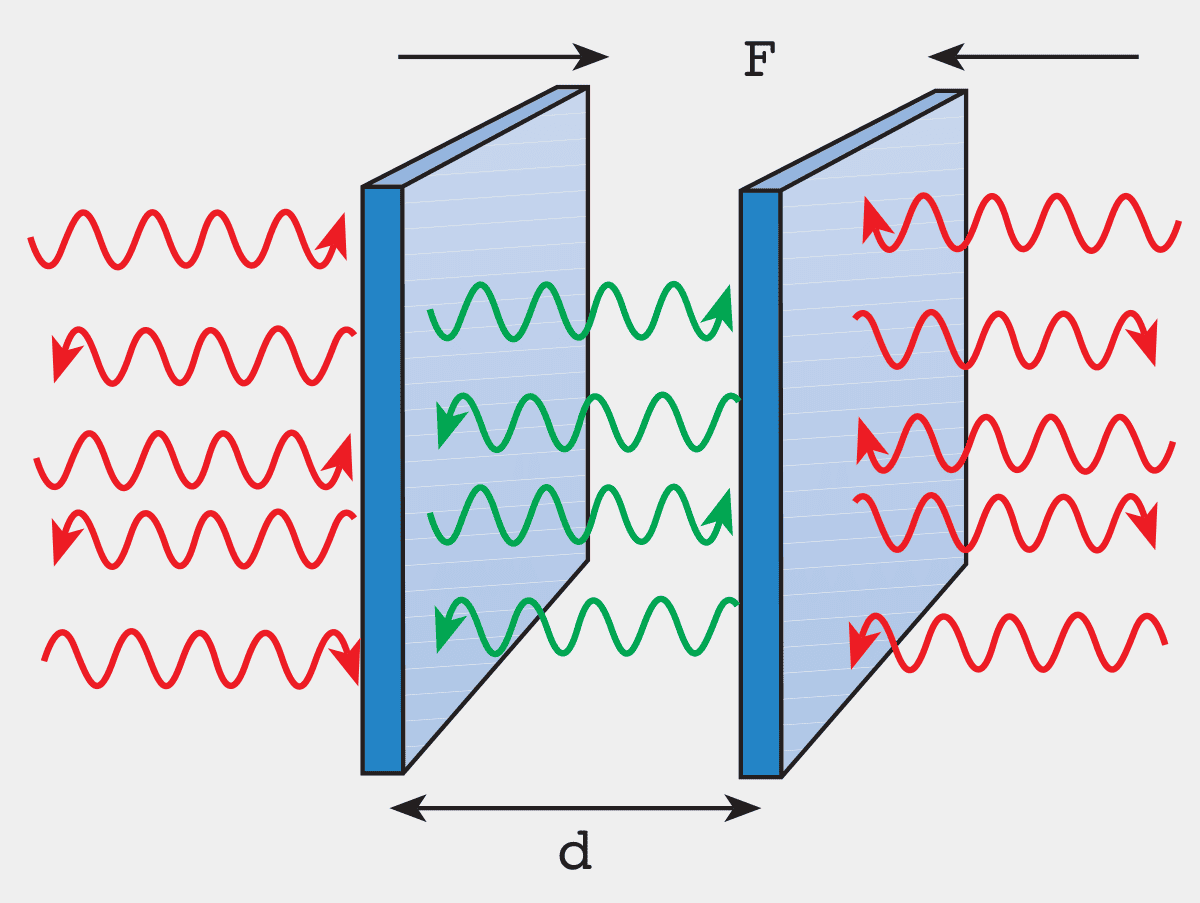
Illustration of the Casimir force

The Casimir force is the most famous mechanical effect of vacuum fluctuations. Consider the gap between two plane mirrors as a cavity (figure 1). All electromagnetic fields have a characteristic “spectrum” containing many different frequencies. In a free vacuum all of the frequencies are of equal importance. But inside a cavity, where the field is reflected back and forth between the mirrors, the situation is different. The field is amplified if integer multiples of half a wavelength can fit exactly inside the cavity. This wavelength corresponds to a “cavity resonance”. At other wavelengths, in contrast, the field is suppressed. Vacuum fluctuations are suppressed or enhanced depending on whether their frequency corresponds to a cavity resonance or not.

An important physical quantity when discussing the Casimir force is the “field radiation pressure”. Every field – even the vacuum field – carries energy. As all electromagnetic fields can propagate in space they also exert pressure on surfaces, just as a flowing river pushes on a floodgate. This radiation pressure increases with the energy – and hence the frequency – of the electromagnetic field. At a cavity-resonance frequency the radiation pressure inside the cavity is stronger than outside and the mirrors are therefore pushed apart. Out of resonance, in contrast, the radiation pressure inside the cavity is smaller than outside and the mirrors are drawn towards each other.
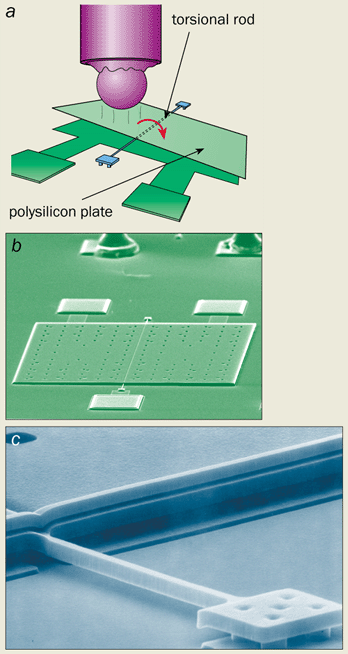
The Casimir force in microdevices

It turns out that, on balance, the attractive components have a slightly stronger impact than the repulsive ones. For two perfect, plane, parallel mirrors the Casimir force is therefore attractive and the mirrors are pulled together. The force, F, is proportional to the cross-sectional area, A, of the mirrors and increases 16-fold every time the distance, d, between the mirrors is halved: F ~ A/d4. Apart from these geometrical quantities the force depends only on fundamental values – Planck’s constant and the speed of light.

While the Casimir force is too small to be observed for mirrors that are several metres apart, it can be measured if the mirrors are within microns of each other. For example, two mirrors with an area of 1 cm2 separated by a distance of 1 µm have an attractive Casimir force of about 10-7 N – roughly the weight of a water droplet that is half a millimetre in diameter. Although this force might appear small, at distances below a micrometre the Casimir force becomes the strongest force between two neutral objects. Indeed at separations of 10 nm – about a hundred times the typical size of an atom – the Casimir effect produces the equivalent of 1 atmosphere of pressure.

Although we do not deal directly with such small distances in our everyday lives, they are important in nanoscale structures and microelectromechanical systems (MEMS). These are “intelligent” micron-sized devices in which mechanical elements and moving parts, such as tiny sensors and actuators, are carved into a silicon substrate. Electronic components are then wired on to the device to process information that it senses or to drive the movement of its mechanical parts. MEMS have many possible applications in science and engineering, and are already used as car air-bag pressure sensors.

As MEMS devices are fabricated on the micron and submicron scale, the Casimir force can cause the tiny elements in a device to stick together – as reported recently by Michael Roukes and co-workers at the California Institute of Technology (2001 Phys. Rev. B 63 033402). But the Casimir force can also be put to good use. Last year Federico Capasso and his group at Lucent Technologies showed how the force can be used to control the mechanical motion of a MEMS device (2001 Science 291 1941). The researchers suspended a polysilicon plate from a torsional rod – a twisting horizontal bar just a few microns in diameter (figure 2). When they brought a metallized sphere close up to the plate, the attractive Casimir force between the two objects made the plate rotate. They also studied the dynamical behaviour of the MEMS device by making the plate oscillate. The Casimir force reduced the rate of oscillation and led to nonlinear phenomena, such as hysteresis and bistability in the frequency response of the oscillator. According to the team, the system’s behaviour agreed well with theoretical calculations.

Measuring the Casimir effect

When the Casimir effect was first predicted in 1948 it was very difficult to measure using the equipment of the time. One of the first experiments was carried out in 1958 by Marcus Spaarnay at Philips in Eindhoven, who investigated the Casimir force between two flat, metallic mirrors made from either aluminium, chromium or steel. Spaarnay measured the force using a spring balance, the extension of which was determined by the capacitance of the two plates.
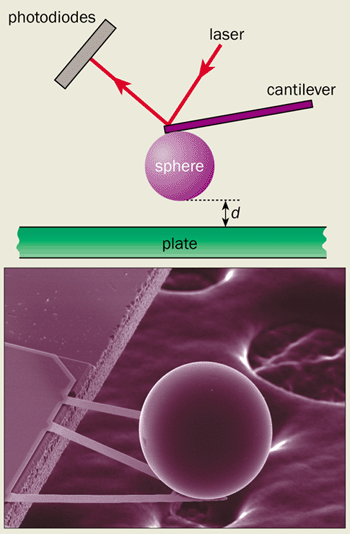
Casimir force diagram

To prevent the Casimir force from being swamped by the electrostatic force, the mirrors had to be kept neutral by first touching them together before each measurement was made. Spaarnay also had to ensure that the plane mirrors were exactly parallel to each other, as the Casimir force is very sensitive to changes in distance. Spaarnay managed to overcome these difficulties and concluded that his results “did not contradict Casimir’s theoretical prediction”.

Since those early days, however, sophisticated equipment has made it much easier to study the Casimir effect. A new generation of measurements began in 1997. Steve Lamoreaux, who was then at the University of Washington in Seattle, measured the Casimir force between a 4 cm diameter spherical lens and an optical quartz plate about 2.5 cm across, both of which were coated with copper and gold. The lens and plate were connected to a torsion pendulum – a twisting horizontal bar suspended by a tungsten wire – placed in a cylindrical vessel under vacuum. When Lamoreaux brought the lens and plate together to within several microns of each other, the Casimir force pulled the two objects together and caused the pendulum to twist. He found that his experimental measurements agreed with theory to an accuracy of 5%.

Inspired by Lamoreaux’s breakthrough, many other researchers tried new Casimir measurements. Umar Mohideen and co-workers at the University of California at Riverside, for example, attached a polystyrene sphere 200 µm in diameter to the tip of atomic force microscope (figure 3). In a series of experiments they brought the sphere, which was coated with either aluminium or gold, to within 0.1 µm of a flat disk, which was also coated with these metals. The resulting attraction between the sphere and the disk was monitored by the deviation of a laser beam. The researchers were able to measure the Casimir force to within 1% of the expected theoretical value.
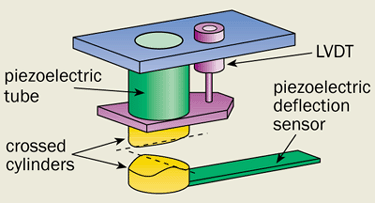
This experiment measures the Casimir force between two gold-coated cylinders

Thomas Ederth at the Royal Institute of Technology in Stockholm, Sweden, has also used an atomic force microscope to study the Casimir effect. He measured the force between two gold-coated cylinders that were arranged at 90° to each other and that were as little as 20 nm apart. His results agreed to within 1% of theory (figure 4).

However, very few recent experiments have measured the Casimir force using the original configuration of two plane, parallel mirrors. The reason is that the mirrors have to be kept perfectly parallel during the experiment, which is difficult. It is much easier to bring a sphere close up to a mirror because the separation between the two objects is simply the distance of closest approach. The only drawback of using a sphere and a plane mirror is that the calculations of the Casimir force are not as accurate as those between two plane mirrors. In particular it has to be assumed that the contributions to the force between the sphere and plate are completely independent at each point. This is true only if the radius of the sphere is much larger than the distance between it and the plate.

The only recent experiment to replicate Casimir’s original set-up of two plane, parallel mirrors was carried out by Gianni Carugno, Roberto Onofrio and co-workers at the University of Padova in Italy. They measured the force between a rigid chromium-coated plate and the flat surface of a cantilever made from the same material that were separated by distances ranging from 0.5-3 µm (G Bressi et al. 2002 Phys. Rev. Lett. 88 041804). The researchers found that the measured Casimir force agreed to within 15% of the expected theoretical value. This relatively poor fit reflected the technical difficulties involved in the experiment.

Improved calculations

The problem with studying the Casimir effect is that real mirrors are not like the perfectly smooth plane mirrors that Hendrik Casimir originally considered. In particular, real mirrors do not reflect all frequencies perfectly. They reflect some frequencies well – or even nearly perfectly – while others are reflected badly. In addition, all mirrors become transparent at very high frequencies. When calculating the Casimir force the frequency-dependent reflection coefficients of the mirrors have to be taken into account – a problem first tackled by Evgeny Lifshitz in the mid-1950s, and then by Julian Schwinger and many others.

It turns out that the measured Casimir force between real metallic mirrors that are 0.1 µm apart is only half the theoretical value predicted for perfect mirrors. If this discrepancy is not taken into account when comparing experimental data with theory, then an experimental measurement could erroneously be interpreted as a new force. My colleague Serge Reynaud and I have taken into account the real behaviour of mirrors in our calculations using the physical properties of the metals themselves. We found that the simple solid-state models of the mirror match the real behaviour only above 0.5 µm.

Another problem with calculating the expected Casimir force for a real system is the fact that experiments are never carried out at absolute zero – as originally envisaged in Casimir’s calculations – but at room temperature. This causes thermal – as well as vacuum – fluctuations to come into play. These thermal fluctuations can produce their own radiation pressure and create a bigger Casimir force than expected. For example, the Casimir force between two plane mirrors 7 µm apart is twice as large at room temperature than at absolute zero. Fortunately, thermal fluctuations at room temperature are only important at distances above 1 µm, below which the wavelength of the fluctuations is too big to fit inside the cavity.

Although the temperature dependence of the Casimir force has not yet been studied in detail experimentally, it must be included in calculations of the force at separations above 1 µm. Many researchers have tackled this problem for perfectly reflecting mirrors, including Lifshitz and Schwinger back in the 1950s. It has also been examined more recently by Michael Bordag at Leipzig University, Bo Sernelius at Linköping University in Sweden, Galina Klimchitskaya and Vladimir Mostepanenko at the University of Paraiba in Brazil, and by our group in Paris. Indeed the temperature dependence of the Casimir force was for some time a matter of hot debate in the community. The various contradictions, however, now seem to have been resolved, and this has given an additional motivation to an experimental observation of the influence of temperature on the Casimir force.

A third and final problem in calculating the Casimir force is that real mirrors are not perfectly smooth. Most mirrors are made by coating a substrate with a thin metal film using the technique of “sputtering”. However, this produces films with a roughness of about 50 nm. While such roughness is invisible to the naked eye, it does affect measurements of the Casimir force, which is very sensitive to small changes in distance.

Mohideen and his group in California have recently used surface deformations to show that two surfaces can also have a lateral Casimir force that acts in a parallel – rather than a perpendicular – direction to the surface of the mirrors. In the experiments they prepared specially corrugated mirrors the surfaces of which were sinusoidally curved. They then moved the mirrors parallel to one another so that a peak of one mirror passed successively over the peaks and troughs of the other mirror. The researchers found that the lateral Casimir force varied sinusoidally with the phase difference between the two corrugations. The size of the force was about ten times smaller than the ordinary Casimir force between two mirrors the same distance apart. The lateral force is also due to vacuum fluctuations.

Mehran Kadar and co-workers at the Massachusetts Institute of Technology have calculated a theoretical value for the force between two perfectly reflecting corrugated mirrors, while Mohideen and colleagues evaluated the lateral force for metallic mirrors and found good agreement with experiment. The lateral Casimir force may have yet another consequence for micromachines.

New physics?

The Casimir effect could also play a role in accurate force measurements between the nanometre and micrometre scales. Newton’s inverse-square law of gravitation has been tested many times at macroscopic distances by observing the motion of planets. But no-one has so far managed to verify the law at micron length scales with any great precision. Such tests are important because many theoretical models that attempt to unify the four fundamental forces of nature predict the existence of previously undiscovered forces that would act at such scales. Any deviation between experiment and theory could hint at the existence of new forces. But all is not lost even if both values agree: the measurements would then put new limits on existing theories.

Jens Gundlach and colleagues at Washington, for example, have used a torsion pendulum to determine the gravitational force between two test masses separated by distances from 10 mm down to 220 µm. Their measurements confirmed that Newtonian gravitation operates in this regime but that the Casimir force dominates at shorter distances. Meanwhile Joshua Long, John Price and colleagues at the University of Colorado – together with Ephraim Fischbach and co-workers from Purdue University – are trying to eliminate the Casimir effect altogether from sub-millimetre tests of gravitation by carefully selecting the materials used in the experiment.

This article only gives a flavour of the many experimental and theoretical studies of the Casimir effect. There are many other exciting developments as well. Many groups are, for example, looking at what would happen if the interaction between two mirrors is mediated not by an electromagnetic field – which is made up of massless bosons – but by fields made of massive fermions, such as quarks or neutrinos. Other research teams, meanwhile, are studying the Casimir effect with different topologies, such as Möbius strips and doughnut-shaped objects.

But despite the intensive efforts of researchers in the field, many unsolved problems about the Casimir effect remain. In particular the seemingly innocent question of the Casimir force within a single hollow sphere is still a matter of lively debate. People are not even sure if the force is attractive or repulsive. Hendrik Casimir himself thought about this problem as early as 1953 while looking for a stable model for the electron. Half a century on, the mysteries of the Casimir force are likely to keep us entertained for many years to come.

The life and times of a popular scientist

According to his website, Paul Davies currently averages several television and radio appearances per week in various countries around the world. However, when he meets Physics World at 11.00 a.m. on a Thursday in early August he has already completed three radio interviews that morning and has more lined up for the afternoon. And over the next few days he will be quoted by newspapers as diverse as The Times and the Sun.

The reason why Davies is so in demand by the media, even by his own standards, is that he has published a paper in Nature that morning and is giving a public lecture about Paul Dirac in Bristol that afternoon. In what is perhaps a cosmic coincidence, the Nature paper is about the possibility that the speed of light has changed over the history of the universe, while his lecture will cover Dirac’s ideas about big numbers and the related idea – due to Robert Dicke – that “now” might actually be a special time in the history of the universe. The real coincidence is that the Nature paper is appearing 100 years to the day since Dirac was born in Bristol.

When Davies was a bright young theoretical physicist – he was appointed professor of theoretical physics by the University of Newcastle-upon-Tyne at the age of 34 – one of his ambitions was to explain why the fine-structure constant, α, has a value of 1/137. The constant – which is defined as α = e2/h-bar c, where e is the charge on the electron, h-bar is Planck’s constant divided by 2(pi) and c is the speed of light in vacuum – is a dimensionless number that determines the strength of interactions between light and matter.

“When I was a PhD student I was always fascinated by the value of α and thought that physics should be able to explain this value,” says Davies. “I thought my life ambition would be to write a paper that could explain this. But in the 1970s and 1980s it became clear that α was not fundamental – rather it was a low-energy limit of a more complicated state of affairs, so it probably would not come out of a simple theory. Now if it turns out that α is varying with time, it is doubly mysterious.”

A lot has happened to Davies since his first interactions with α. In addition to publishing over 100 research papers, he has authored more than 25 books, written over 1000 newspaper articles and given countless public lectures on physics and cosmology. Most recently he moved from Adelaide to Sydney – having emigrated from England to Australia in 1990 – to join the Australian Centre for Astrobiology at Macquarie University on a part-time basis.

Cosmic background

So how did Davies – who was born in London in 1946 – become interested in physics and eventually astrobiology? “When I was growing up in the 1950s, suburban London was actually pretty dull,” he recalls. “There wasn’t a lot of excitement, but I found that I could go into the garden and look up at the stars and it was a wonderland.” It was, he says, a form of escapism. “I was captivated by notions of subatomic particles, problems about whether space was finite or infinite, and what the stars were made of. From the age of six or seven I can remember asking these questions.”

By the age of 12 he was developing photographs and at 14 he built his own telescope. It was then that he had his first encounter with Margaret Thatcher – then his local MP and later the notoriously anti-university prime minister who was partly responsible for Davies emigrating. Thatcher presented the young Davies with a signed atlas of the stars at a school-prize day. Over 30 years later Davies got Thatcher to re-sign the atlas when she was part of the jury that awarded him the lucrative Templeton Prize for progress in religion in 1995.

Davies did a degree in physics at University College London and stayed on to do a PhD. Fred Hoyle was the external examiner for his thesis and invited Davies to work at the Institute of Astronomy in Cambridge where, at the time, “Stephen Hawking was just the guy in the wheelchair and Martin Rees was just a postdoc down the corridor”.

Davies then spent eight years as a lecturer in mathematics at Kings College London before moving to Newcastle, where he established a large research group working on quantum gravity, cosmology and quantum field theory in curved space-times. Newcastle also had a very strong geophysics research programme and Davies says that he can trace his current interests in astrobiology and the origins of life to his time there. His own group flourished for a number of years but it became “a victim of the Thatcher cuts” and Davies decided to move to Australia to become professor of mathematical physics at the University of Adelaide.

The university subsequently created the special position of professor of natural philosophy for Davies, but in 1996 he decided to resign for various personal and professional reasons. He retained visiting professorships at Imperial College in London and the University of Queensland, and recently accepted his current non-teaching post – again as professor of natural philosophy – at Macquarie.

Books books books

Despite his prodigious output, Davies says that he was not a natural writer or communicator when he was young and that he scraped through English O-level. However, he wrote up some of his PhD research for Physics Bulletin – the forerunner of Physics World – and it was read by a publisher who asked him to write a book. “It was something I hadn’t considered before but I decided to give it a go.” And so it was that his first book, The Physics of Time Asymmetry, was published in 1974.

Davies was then approached by Cambridge University Press to write a student textbook – Space and Time in the Modern Universe – and then by a trade publisher to write a book for the general public. “After The Runaway Universe was published in 1978 I just kept doing it,” recalls Davies. “But it was a lonely experience in the early days because a lot of my colleagues thought that a self-respecting academic should not be writing popular books because it would be damaging to one’s career. Writing journal articles was fine; writing textbooks was okay but was best left to later in your career; and writing a popular book was a thoroughly dreadful thing to do.” Davies recalls that “writing was like a guilty secret – I used to slope off home and write popular books and hope that no-one would notice”.

But that all changed in the 1980s and Davies found his colleagues in Newcastle more accommodating: “They felt it was no bad thing to have a few books to make physics seem exciting to young people”. And then Stephen Hawking published A Brief History of Time and the rest is, well, history. “People thought ‘If it’s okay for Hawking, it is okay for me’ “, he recalls. “And now it’s not only okay to write popular books – it is almost an obligation.” Indeed formal recognition for Davies’ work has recently arrived in the form of the Kelvin Prize from the Institute of Physics and the Michael Faraday Award from the Royal Society.

Mars

Davies does not know which of his books have sold the most copies but says that the two with God in the title – The Mind Of God and God and the New Physics – seem to be the most popular. However, he has very different views on them. “I wrote God and the New Physics in 1983 and never regarded it as a terribly credible attempt at bridging the divide between science and religion – but it is still selling now 20 years on – somewhat to my embarrassment.” Davies believes that The Mind Of God, which he wrote in 1992, is a much more serious attempt to tackle the interfaces between science and religion.

His other personal favourites are About Time and The Fifth Miracle, which marked his first serious foray into the search for the origins of life and his new subject of astrobiology. They also involved learning a lot of chemistry and biology. “Although it involved a steep learning curve, I feel that I made a contribution to the subject,” says Davies. He is particularly proud that he stuck his neck out in The Fifth Miracle in two ways – one was to say that life “kind of hopped from Mars to Earth, or vice versa”, and the other was “some deeper stuff about what it takes for life to get started in the first place”. At first, says Davies, everybody thought his idea that Earth and Mars are not biologically isolated was crazy but now it is “almost the party line”.

Religion and science

So how did Davies become interested in religion? “I am not a conventionally religious person,” he says, “but I did find in my scientific work that I was looking at age-old questions about existence that for years have been the province of philosophy and theology – the origin of the universe, the nature of consciousness, the nature of time, the end of the universe and so on. Inevitably I started to reflect on such questions as where do the laws of physics come from, why are they the way they are, why do they seem so successful and ingenious, and how is it that they are consistent with the emergence of conscious beings who reflect upon them?”

Although Davies does not believe in miracles, he does believe that there is some reason for life and the universe “My own theological position, if I can put it like that, is that I don’t want miracles. Rather I think that science gives us the best account we have of the physical world, and through science we can come to understand that the physical world is extraordinarily ingenious,” he explains. “However, I don’t believe that the underlying laws of physics that we know and love are just a bunch of marvels that come from nowhere for no reason – I think there are reasons for why the world is as it is. I would even go so far as to think that these reasons include the existence of conscious beings – i.e. life and mind, but not necessarily humans and DNA.”

Davies is keen to know if “multiverse” explanations of these “anthropic” coincidences are credible. Indeed can we even quantify the credibility of them? In the multiverse explanation there is a vast multiplicity of parallel worlds in which all possible laws of physics exist – in some worlds the laws are same but the fundamental constants are slightly different, in others the laws themselves are different, and in some worlds there are completely different mathematical structures. And in a tiny subset of these worlds the laws and conditions are just right for life to emerge.

“The organisms in this universe might then look at these apparently contrived instances of the laws and think that it has all been designed with them in mind,” says Davies, “but of course they’re just the winners in a cosmic lottery.” But is there any real difference, Davies asks, “between an explanation that invokes an infinite number of universes in order to conclude something about this one universe and an old-fashioned theistic explanation that there’s an infinite unseen god who just plucks a judicious universe from a infinite set of alternatives?”. His hunch is that they are the same, but he is keen to start a research programme that uses algorithmic information theory to address these questions.

A life in the day

So what is it like being Paul Davies? “There is no typical day, week or month,” he says. “My life is a mixture of academic research, writing, and media activities and travelling.” Davies makes three or four long trips per year and usually works “on the run”.

Although Davies says that he has “reinvented himself as an astrobiologist”, his Nature paper marks a return to his physics roots. Recent astronomical observations have suggested that the fine-structure constant, α, is increasing, which means that the charge on the electron is also increasing or that the speed of light is decreasing (see Physics World October 2001 pp26-27). By looking at the thermodynamics of black holes Davies and two colleagues – Tamara Davis and Charles Lineweaver – find that the charge on the electron cannot be increasing, otherwise the entropy of black holes would decrease and violate the second law of thermodynamics (2002 Nature 418 602).

Initially Davies did not want to believe that α was changing: “I was very dubious at first because it seems very ugly from the point of view of theoretical physics.” To begin with, the observations were at the limits of detectability, he says, but the data have improved dramatically and the idea now has to be taken seriously. However, it is too early to say what this will mean for the whole structure of physics: “Whether this is a paradigm shift or whether we will just have to tinker with the existing structure of theoretical physics, it is too soon to say. Even if we have to allow the speed of light to vary, it doesn’t mean that we will have to completely abandon the theory of relativity – it would mean that it would be good under almost all circumstances and we could embed it in some theory that is not too different from what we understand.”

The use of the second law of thermodynamics in cosmological situations has long been a hallmark of Davies’ research. “For most of my career I have tangled with cases where it looked like the second law was being threatened,” he explains. “People often ask what is the big deal about the second law? I think that really it transcends physics – it says that you cannot get something for nothing. It is also a very good way of testing physical theories – if they look as if they are going to clash with the second law it is usually a sign that something has gone wrong.”

And what ambitions does Davies have left? “Much of my frustrated ambition is not to do with popularizing science but with doing science. I really would like to understand the origins of life – how does non-life becomes life? What is the physics underlying this?” Davies says that life is all about information, and he has a hunch that quantum information processes play a role – but he admits that it is a “slightly crazy hunch”.

Davies’ other ambition is to make a major television series. “Physics needs and deserves a major high-profile TV series,” he says. “I would like to do for physics what David Attenborough has done for biology – something that has gravitas, not something that is jokey and light-hearted. I would like to make a Life on Earth for physics.” Like the young schoolboy looking at the night-sky over London, his motto might be watch this space.

The double-slit experiment

Single-electron interference at Bologna

What is the most beautiful experiment in physics? This is the question that Robert Crease asked Physics World readers in May – and more than 200 replied with suggestions as diverse as Schrödinger’s cat and the Trinity nuclear test in 1945. The top five included classic experiments by Galileo, Millikan, Newton and Thomas Young. But uniquely among the top 10, the most beautiful experiment in physics – Young’s double-slit experiment applied to the interference of single electrons – does not have a name associated with it.

Most discussions of double-slit experiments with particles refer to Feynman’s quote in his lectures: “We choose to examine a phenomenon which is impossible, absolutely impossible, to explain in any classical way, and which has in it the heart of quantum mechanics. In reality, it contains the only mystery.” Feynman went on to add: “We should say right away that you should not try to set up this experiment. This experiment has never been done in just this way. The trouble is that the apparatus would have to be made on an impossibly small scale to show the effects we are interested in. We are doing a “thought experiment”, which we have chosen because it is easy to think about. We know the results that would be obtained because there are many experiments that have been done, in which the scale and the proportions have been chosen to show the effects we shall describe”.

It is not clear that Feynman was aware that the first double-slit experiment with electrons had been carried out in 1961, the year he started his lectures (which were published in 1963). More surprisingly, perhaps, Feynman did not stress that an interference pattern would build up even if there was just one electron in the apparatus at a time. (This lack of emphasis was unusual because in the same lecture Feynman describes the electron experiment – and other double-slit experiments with water waves and bullets – in considerable detail).

So who actually carried out the first double-slit experiment with single electrons? Not surprisingly many thought or gedanken experiments are named after theorists – such as the Aharonov-Bohm effect, Bell’s inequality, the Casimir force, the Einstein-Podolsky-Rosen paradox, Schrödinger’s cat and so on – and these names rightly remain even when the experiment has been performed by others in the laboratory. However, it seems remarkable that no name whatsoever is attached to the double-slit experiment with electrons. Standard reference books are silent on this question but a study of the literature reveals several unsung experimental heroes.

Back to Young

Young carried out his original double-slit experiment with light some time in the first decade of the 1800s, showing that the waves of light from the two slits interfered to produce a characteristic fringe pattern on a screen. In 1909 Geoffrey Ingram (G I) Taylor conducted an experiment in which he showed that even the feeblest light source – equivalent to “a candle burning at a distance slightly exceeding a mile” – could lead to interference fringes. This led to Dirac’s famous statement that “each photon then interferes only with itself”.

In 1927 Clinton Davisson and Lester Germer observed the diffraction of electron beams from a nickel crystal – demonstrating the wave-like properties of particles for the first time – and George (G P) Thompson did the same with thin films of celluloid and other materials shortly afterwards. Davisson and Thomson shared the 1937 Nobel prize for “discovery of the interference phenomena arising when crystals are exposed to electronic beams”, but neither performed a double-slit experiment with electrons.

In the early 1950s Ladislaus Laszlo Marton of the US National Bureau of Standards (now NIST) in Washington, DC demonstrated electron interference but this was in a Mach-Zehnder rather than a double-slit geometry. These were the early days of the electron microscope and physicists were keen to exploit the very short de Broglie wavelength of electrons to study objects that were too small to be studied with visible light. Doing gedanken or thought experiments in the laboratory was further down their list of priorities.

A few years later Gottfried Möllenstedt and Heinrich Düker of the University of Tübingen in Germany used an electron biprism – essentially a very thin conducting wire at right angles to the beam – to split an electron beam into two components and observe interference between them. (Möllenstedt made the wires by coating fibres from spiders’ webs with gold – indeed, it is said that he kept spiders in the laboratory for this purpose). The electron biprism was to become widely used in the development of electron holography and also in other experiments, including the first measurement of the Aharonov-Bohm effect by Bob Chambers at Bristol University in the UK in 1960.

But in 1961 Claus Jönsson of Tübingen, who had been one of Möllenstedt’s students, finally performed an actual double-slit experiment with electrons for the first time (Zeitschrift für Physik 161 454). Indeed, he demonstrated interference with up to five slits. The next milestone – an experiment in which there was just one electron in the apparatus at any one time – was reached by Akira Tonomura and co-workers at Hitachi in 1989 when they observed the build up of the fringe pattern with a very weak electron source and an electron biprism (American Journal of Physics 57 117-120). Whereas Jönsson’s experiment was analogous to Young’s original experiment, Tonomura’s was similar to G I Taylor’s. (Note added on 7 May: Pier Giorgio Merli, Giulio Pozzi and GianFranco Missiroli carried out double-slit interference experiments with single electrons in Bologna in the 1970s; see Merli et al. in Further reading and the letters from Steeds, Merli et al., and Tonomura at the end of this article.)

Since then particle interference has been demonstrated with neutrons, atoms and molecules as large as carbon-60 and carbon-70. And earlier this year another famous experiment in optics – the Hanbury Brown and Twiss experiment – was performed with electrons for the first time (again at Tübingen!). However, the results are profoundly different this time because electrons are fermions – and therefore obey the Pauli exclusion principle – whereas photons are bosons and do not.

Credit where it’s due

So why are Jönsson, Tonomura and the other pioneers of the double-slit experiment not well known? One obvious reason is that Jönsson’s results were first published in German in a German journal. Another reason might be that there was little incentive to perform the ultimate thought experiment in the lab, and little recognition for doing so. When Jönsson’s paper was translated into English 13 years later and published in the American Journal of Physics in 1974 (volume 42, pp4-11), the journal’s editors, Anthony (A P) French and Edwin Taylor, described it as a “great experiment”, but added that there are “few professional rewards” for performing what they describe as “real, pedagogically clean fundamental experiments.”

It is worth noting that the first double-slit experiment with single electrons by Tonomura and co-workers was also published in the American Journal of Physics, which publishes articles on the educational and cultural aspects of physics, rather than being a research journal. Indeed, the journal’s information for contributors states: “We particularly encourage manuscripts on already published contemporary research that can be used directly or indirectly in the classroom. We specifically do not publish articles announcing new theories or experimental results.”

French and Taylor’s editorial also confirms how little known Jönsson’s experiment was at the time: “For decades two-slit electron interference has been presented as a thought experiment whose predicted results are justified by their remote and somewhat obscure relation to real experiments in which electrons are diffracted by crystals. Few such recent presentations acknowledge that the two-slit electron interference experiment has now been done and that the results agree with the expectation of quantum physics in all detail.”

However, it should be noted that the history of physics is complicated and that events are rarely as clear-cut as we might like. For instance, it is widely claimed that Young performed his double-slit experiment in 1801 but he did not publish any account of it until his Lectures on Natural Philosophy in 1807. It also appears as if Davisson and a young collaborator called Charles Kunsman observed electron diffraction in 1923 – four years before Davisson and Germer – without realising it.

Final thoughts

Gedanken or thought experiments have played an important role in the history of quantum physics. It is unlikely that the whole area of quantum information would be as lively as it is today – both theoretically and experimentally – if a small band of physicists had not persevered and actually demonstrated quantum phenomena with individual particles.

At one time the Casimir force, which has yet to be measured with an accuracy of better than 15% in the geometry first proposed by Hendrik Casimir in 1948, might also have been viewed as purely a pedagogical experiment – a gedanken experiment with little relevance to real experimental physics. However, it is now clear that applications as varied as nanotechnology and experimental tests of theories of “large” extra dimensions require a detailed knowledge of the Casimir force.

The need for “real, pedagogically clean fundamental experiments” is clearly as great as ever.

This is a longer version of the article “The double-slit experiment” that appeared in the print version of the September issue of Physics World, on page 15. Three letters that appeared in the May 2003 issue of the magazine have been added to the end of this version of the article.

General

T Young 1802 On the theory of light and colours (The 1801 Bakerian Lecture) Philosophical Transactions of the Royal Society of London 92 12-48

T Young 1804 Experiments and calculations relative to physical optics (The 1803 Bakerian Lecture) Philosophical Transactions of the Royal Society of London 94 1-16

T Young 1807 A Course of Lectures on Natural Philosophy and the Mechanical Arts (J Johnson, London)

G I Taylor 1909 Interference fringes with feeble light Proceedings of the Cambridge Philosophical Society 15 114-115

P A M Dirac 1958 The Principles of Quantum Mechanics (Oxford University Press) 4th edn p9

R P Feynman, R B Leighton and M Sands 1963 The Feynman Lecture on Physics (Addison-Wesley) vol 3 ch 37 (Quantum behaviour)

A Howie and J E Fowcs Williams (eds) 2002 Interference: 200 years after Thomas Young’s discoveries Philosophical Transactions of the Royal Society of London 360 803-1069

R P Crease 2002 The most beautiful experiment Physics World September pp19-20. This article contains the results of Crease’s survey for Physics World; the first article about the survey appeared on page 17 of the May 2002 issue.

Electron interference experiments

Visit www.nobel.se/physics/laureates/1937/index.html for details of the Nobel prize awarded to Clinton Davisson and George Thomson

L Marton 1952 Electron interferometer Physical Review 85 1057-1058

L Marton, J Arol Simpson and J A Suddeth 1953 Electron beam interferometer Physical Review 90 490-491

L Marton, J Arol Simpson and J A Suddeth 1954 An electron interferometer Reviews of Scientific Instruments 25 1099-1104

G Möllenstedt and H Düker 1955 Naturwissenschaften 42 41

G Möllenstedt and H Düker 1956 Zeitschrift für Physik 145 377-397

G Möllenstedt and C Jönsson 1959 Zeitschrift für Physik 155 472-474

R G Chambers 1960 Shift of an electron interference pattern by enclosed magnetic flux Physical Review Letters 5 3-5

C Jönsson 1961 Zeitschrift für Physik 161 454-474

C Jönsson 1974 Electron diffraction at multiple slits American Journal of Physics 42 4-11

A P French and E F Taylor 1974 The pedagogically clean, fundamental experiment American Journal of Physics 42 3

P G Merli, G F Missiroli and G Pozzi 1976 On the statistical aspect of electron interference phenomena American Journal of Physics 44 306-7

A Tonomura, J Endo, T Matsuda, T Kawasaki and H Ezawa 1989 Demonstration of single-electron build-up of an interference pattern American Journal of Physics 57 117-120

H Kiesel, A Renz and F Hasselbach 2002 Observation of Hanbury Brown-Twiss anticorrelations for free electrons Nature 418 392-394

Atoms and molecules

O Carnal and J Mlynek 1991 Young’s double-slit experiment with atoms: a simple atom interferometer Physical Review Letters 66 2689-2692

D W Keith, C R Ekstrom, Q A Turchette and D E Pritchard 1991 An interferometer for atoms Physical Review Letters 66 2693-2696

M W Noel and C R Stroud Jr 1995 Young’s double-slit interferometry within an atom Physical Review Letters 75 1252-1255

M Arndt, O Nairz, J Vos-Andreae, C Keller, G van der Zouw and A Zeilinger 1999 Wave-particle duality of C60 molecules Nature 401 680-682

B Brezger, L Hackermüller, S Uttenthaler, J Petschinka, M Arndt and A Zeilinger 2002 Matter-wave interferometer for large molecules Physical Review Letters 88 100404

Review articles and books

G F Missiroli, G Pozzi and U Valdrè 1981 Electron interferometry and interference electron microscopy Journal of Physics E 14 649-671. This review covers early work on electron interferometry by groups in Bologna, Toulouse, Tübingen and elsewhere.

A Zeilinger, R Gähler, C G Shull, W Treimer and W Mampe 1988 Single- and double-slit diffraction of neutrons Reviews of Modern Physics 60 1067-1073

A Tonomura 1993 Electron Holography (Springer-Verlag, Berlin/New York)

H Rauch and S A Werner 2000 Neutron Interferometry: Lessons in Experimental Quantum Mechanics (Oxford Science Publications)

The double-slit experiment with single electrons

The article “A brief history of the double-slit experiment” (September 2002 p15; correction October p17) describes how Claus Jönsson of the University of Tübingen performed the first double-slit interference experiment with electrons in 1961. It then goes on to say: “The next milestone – an experiment in which there was just one electron in the apparatus at any one time – was reached by Akira Tonomura and co-workers at Hitachi in 1989 when they observed the build up of the fringe pattern with a very weak electron source and an electron biprism (Am. J. Phys. 57 117-120)”.

In fact, I believe that “the first double-slit experiment with single electrons” was performed by Pier Giorgio Merli, GianFranco Missiroli and Giulio Pozzi in Bologna in 1974 – some 15 years before the Hitachi experiment. Moreover, the Bologna experiment was performed under very difficult experimental conditions: the intrinsic coherence of the thermionic electron source used by the Bologna group was considerably lower than that of the field-emission source used in the Hitachi experiment.

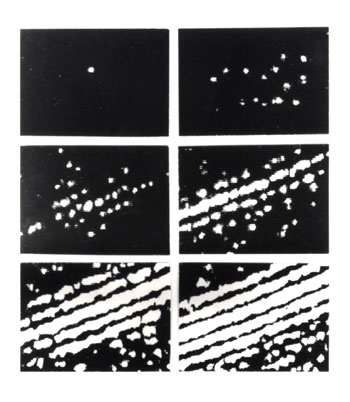
The Bologna experiment is reported in a film called “Electron Interference” that received the award in the physics category at the International Festival on Scientific Cinematography in Brussels in 1976. A selection of six frames from the film (see figure) was also used for a short paper, “On the statistical aspect of electron interference phenomena”, that was submitted for publication in May 1974 and published two years later (P G Merli, G F Missiroli and G Pozzi 1976 Am. J. Phys. 44 306-7).

John Steeds
Department of Physics, University of Bristol
j.w.steeds@bristol.ac.uk

The history of science is not restricted to the achievements of big scientists or big scientific institutions. Contributions can also be made by researchers with the necessary background, curiosity and enthusiasm. In the period 1973-1974 we were investigating practical applications of electron interferometry with a Siemens Elmiskop 101 electron microscope that had been carefully calibrated at the CNR-LAMEL laboratory in Bologna, where one of us (PGM) was based (J. Phys. E7 729-32).

These experiments followed earlier work at the Istituto di Fisica in 1972-73 in which the electron biprism was inserted in a Siemens Elmiskop IA and then used both for didactic (Am. J. Phys. 41 639-644) and research experiments (J. Microscopie 18 103-108). We used the Elmiskop 101 for many experiments including, for instance, the observation of the electrostatic field associated with p-n junctions (J. Microscopie 21 11-20).

During this period we learnt that Professors Angelo and Aurelio Bairati in the Institute of Anatomy at the University of Milan had bought an image intensifier that could be used with the Elmiskop 101. Out of curiosity, and also realizing the conceptual importance of interference experiments with single photons or electrons, we asked if we could attempt to perform an interference experiment with single electrons in the Milan laboratory. Our results formed the basis of the film “Electron interference” and were also published in 1976 (Am. J. Phys. 44 306-7).

Following the publication of the paper by Tonomura and co-workers in 1989, which did not refer to our 1976 paper (although it did contain an incorrect reference to our film), the American Journal of Physics published a letter from Greyson Gilson of Submicron Structures Inc. The letter stated: “Tonomura et al. seem to believe that they were the first to perform a successful two-slit interference experiment using electrons and also that they were the first to observe the cumulative build-up of the resulting electron interference pattern. Although their demonstration is very admirable, reports of similar work have appeared in this Journal for about 30 years (see, for examples, Refs. 2-7.) It seems inappropriate to permit the widespread misconception that such experiments have not been performed and perhaps cannot be performed to continue.” (G Gilson 1989 Am. J. Phys. 57 680). Three of the seven papers that Gilson refers to were from our group in Bologna.

The main subject of our 1976 paper and the 1989 paper from the Hitachi group are the same: the single-electron build-up of the interference pattern and the statistical aspect of the phenomena. Obviously the electron-detection system used by the Hitachi group in 1989 was more sophisticated than the one we used in 1974. However, the sentence on page 118 of the paper by Tonomura et al., which states that in our film we “showed the electron arrival in each frame without recording the cumulative arrivals”, is not correct: this can be seen by watching the film and looking at figure 1 of our 1976 paper (a version of which is shown here).

Finally, it is also worth noting that the first double-slit experiment with single electrons was actually a by-product of research into the practical applications of electron interferometry.

Pier Giorgio Merli
LAMEL, CNR Bologna, Italy
merli@lotto.lamel.bo.cnr.it
Giulio Pozzi
Department of Physics, University of Bologna
giulio.pozzi@bo.infm.it
GianFranco Missiroli
Department of Physics, University of Bologna
f.missiroli@tin.it

The Bologna group photographed the monitor of a sensitive TV camera as they changed the intensity of an electron beam. They observed that a few light flashes of electrons appeared at low intensities, and that interference fringes were formed at high intensities. They also mentioned that they were able to increase the storage time up to “values of minutes”. Historically, they are the first to report such experiments concerning the formation of interference patterns as far as I know.

Later, similar experiments were conducted by Hannes Lichte, then at Tübingen and now at Dresden. Important experiments on electron interference were also carried out by Valentin Fabrikant and co-workers at the Moscow Institute for Energetics in 1949 and later by Takeo Ichinokawa of Waseda University in Tokyo.

Our experiments at Hitachi (A Tonomura, J Endo, T Matsuda, T Kawasaki and H Ezawa 1989 Demonstration of single-electron buildup of an interference pattern Am. J. Phys. 57 117–120) differed from these experiments in the following respects:

(a) Our experiments were carried out from beginning to end with constant and extremely low electron intensities – fewer than 1000 electrons per second – so there was no chance of finding two or more electrons in the apparatus at the same time. This removed any possibility that the fringes might be due to interactions between the electrons, as had been suspected by some physicists, such as Sin-Itiro Tomonaga.

(b) We developed a position-sensitive electron-counting system that was modified from the photon-counting image acquisition system produced by Hamamatsu Photonics. In this system, the formation of fringes could be observed as a time series; the electrons were accumulated over time to gradually form an interference pattern on the monitor (similar to a long exposure with a photographic film). The electrons arrived at random positions on the detector only once in a while and it took more than 20 minutes for the interference pattern to form (see figure). To film the build-up process, the electron source, the electron biprism and the rest of the experiment therefore had to be extremely stable: if the interference pattern had drifted by a fraction of fringe spacing over the exposure time, the whole fringe pattern would have disappeared.

Single-electron interference at Hitachi

(c) The electrons arriving at the detector were detected with almost 100% efficiency. Counting losses and noise in conventional TV cameras mean that it is difficult to know if each flash of the screen really corresponds to an individual electron. Therefore, the detection error in our experiment was limited to less than 1%.

We believe that we carried out the first experiment in which the build-up process of an interference pattern from single-electron events could be seen in real time as in Feynman’s famous double-slit Gedanken experiment under the condition, we emphasize, that there was no chance of finding two or more electrons in the apparatus.

Akira Tonomura
Hitachi Advanced Research Laboratory, Saitama, Japan
tonomura@harl.hitachi.co.jp

Geckos’ feet get sticky from static

Geckos are well known for their ability to walk on smooth walls and ceilings, and biologists have long proposed that this ‘stickiness’ arises from capillary forces between these surfaces and the hairs on their toes. But this theory could not explain how geckos walk easily across both hydrophilic – or water-attracting – and hydrophobic – water-repelling – surfaces.

So Autumn’s team set out to establish whether an alternative theory – based on Van der Waals forces – could account for this ability. Van der Waals forces are weak electrostatic attractions between adjacent atoms or molecules that arise from fluctuations in the positions of their electrons. If these forces act over a relatively large area, they can build up a significant attractive force.

The researchers placed the toes of live Tokay geckos onto various hydrophilic and hydrophobic semiconductor wafers, with both high and low dielectric constants. As they gently pulled the geckos down the wafers – which were vertical – the researchers measured the shear forces exerted on the wafers by the geckos’ toes.

The geckos’ toes stuck equally well to both the hydrophobic and hydrophilic surfaces, but the researchers found that they slipped on surfaces with very low dielectric constants. If the geckos had used capillary action to stick to surfaces, they would have slipped on the hydrophobic wafers. But they slipped on surfaces with low dielectric constants, which showed that electrostatic forces were at work.

The team believed that the geometry of the hairs on the geckos’ toes made the contact area between the toes and the surfaces large enough for the Van der Waals attraction to become significant. To back up their findings, they made accurate models of geckos’ toes from two different materials, and showed that both sets of toes had similar adhesive qualities. This confirmed that the geometry of the hairs on the toes is more important than any chemical reactions that might take place between them and the surface.

According to the researchers, a new generation of dry adhesives – which would in a wide range of conditions – based on Van der Waals forces could now be developed.

Martin Deutsch 1917 – 2002

Born in 1917 in Vienna, Austria, Deutsch emigrated to the US in 1935 and obtained his degree and PhD in physics at Massachusetts Institute of Technology. In 1943, he was recruited onto the Manhattan project at Los Alamos but later joined the Association of Atomic Scientists, an organization that campaigned for the abolition of nuclear weapons.

Deutsch returned to MIT in 1946 as a researcher and lecturer, and he spotted the tell-tale tracks of the decay of a positronium in 1951 when he was studying sub-atomic particles. A positronium ‘atom’ is a hydrogen-like entity that consists of a positron – that is, an anti-electron – and an electron. The existence of positronium was predicted in 1941, nine years after the discovery of the positron and 13 years after Paul Dirac’s original prediction of the existence of anti-matter.

In 1973, Deutsch became head of the laboratory for nuclear science at MIT, a post he held until 1979. Although Deutsch failed to win the 1956 Nobel Prize for which he was nominated for his work with positronium, he remained philosophical, stating that teaching was his main vocation. He taught at the university until 1987, and died earlier this month.

Opening the book of revelations

Science is a uniquely public form of knowledge. What distinguishes it from other forms of knowledge is that scientific hypotheses can be checked by anyone with the will and resources to do so. In principle, race, gender and nationality form no impediment to doing science, although the reality is sometimes different. Nor need the practice of science be confined to people. Tool-using animals, aliens and suitably programmed computers might all generate and test hypotheses, reject the bad ones and put the good ones to use.

The practice of science is, however, a social activity that differs greatly from culture to culture and from era to era. Today’s scientific world, in which research is by and large funded by universities, corporate labs and government, is very different to the one inhabited by either Newton or Darwin. The vast majority of scientists now publish articles in peer-reviewed journals – although one might be tempted to say that peer review, like democracy, is the worst method to make progress, until one examines the alternatives.

The current explosion in scientific inquiry began 400 years ago when a mechanistic paradigm for scientific investigation was first adopted. The analogy between physical systems and machines received a powerful boost from the discovery of the laws of classical mechanics and the development of calculus. The mechanization of industry, starting in the 18th century, provided further encouragement to the mechanistic paradigm, which eventually led to the development of thermodynamics in the 19th century.

Indeed so strong was the mechanistic paradigm that Maxwell felt obliged to provide a model of electrodynamics in terms of gears and pulleys – a model that was so much more complicated than Maxwell’s equations themselves that it soon fell into disuse. One can argue that the exponential growth of science and technology over the last few centuries has stemmed from a simple positive-feedback loop. Machines inspire ideas; ideas inspire machines.

Over the last 50 years, science has revolved around two exceptional machines – the cell and the computer. Biology has made huge advances by elucidating the chemical mechanisms that underlie life, while the computer has transformed how we do science and has generated entirely new fields of research. The computer is, however, completely unlike the machines contemplated by Newton and Carnot: it generates lots of heat, but it performs no work. It also processes information to an extent that has vastly exceeded expectations.

John von Neumann once claimed that the US would never need more than a handful of computers, because there would be no demand for them. To paraphrase Bob Dylan, von Neumann may know what we need, but Intel knows what we want.

Enter Wolfram

Just as those in the 17th century saw the world in terms of clockwork, so we in the 21st century are ready to see the world in terms of computation. That is the view presented by Stephen Wolfram – the physicist who developed Mathematica software – in his long-awaited book A New Kind of Science. The type of computer that Wolfram urges us to consider is the “cellular automaton” – an array of information-containing cells that update themselves in parallel using the same automatic updating rule for each.

The simplest 1D cellular automaton consists of a line of squares that can each be either black or white, like a chessboard. Each time the rule is applied the computer creates a new line of squares. The line is usually displayed underneath the previous line so that the evolution of the system can be tracked. Many different rules and initial states can be considered, and the patterns that emerge as the calculations unfold can then be correlated with observed patterns in nature.

Cellular automata, which have been used for information processing since the 1950s, can be thought of as discrete analogues of partial differential equations. They are therefore particularly useful in physics, for example to simulate the behaviour of particles moving on a lattice. It turns out that cellular automata can also exhibit self-reproducing structures analogous to living systems.

A New Kind of Science argues that a wide variety of problems in complex systems – from biology and economics to gravity and turbulence – should be approached in terms of information processing in general and cellular automata in particular. This is the “new” science of the book’s title.

Wolfram has spent more than ten years writing the book, working largely in isolation from the scientific community – apart from the help of hired research assistants. Throughout this time he has balanced his writing duties with his responsibilities as chief executive of Wolfram Research, the company that he founded in 1986 to develop Mathematica. Ironically A New Kind of Science represents a very 19th-century kind of science in which the wealthy entrepreneur retires from society and uses his fortune to produce a big, self-published book.

For make no mistake, this is a very big book – with more than 1200 pages, 350 of which are “notes” in small print. Unlike the most important scientific discoveries of the 20th century, which were published as papers in journals, Wolfram is making a bid once again to report scientific advances in the form of a popular book. Whether the book has the scientific influence it aspires to – Wolfram likens it to Darwin’s Origin of Species – will have to await the judgement of the scientists who choose to work on the topics it presents.

Revelations without references

A New Kind of Science is a curious fusion of popular exposition, original scientific work, history and prophecy. The book provides an accessible introduction to cellular automata, and includes hundreds of pictures and many examples. It also presents new scientific work, notably the proof that a simple cellular automaton is computationally universal; a proof – one discovers deep on page 1115 – that was actually discovered by Wolfram’s assistant Matthew Cook in the mid-1990s.

The 350 pages of notes contain a mine of information on the history of computation, physics and mathematics. The book also offers a large number of what can best be described as “conjectures” on the role of information processing in economics, life, perception, fundamental physics and a host of other fields. These conjectures do not represent fully worked out scientific results – they are also not presented in a form that allows them to be verified by others. Instead they are prophecies concerning many problems of complex systems and fundamental physics that Wolfram predicts we will eventually be able to understand in terms of information processing.

The book is also notable for what it lacks. There are almost no references to the thousands of previously published articles or books on the subjects covered, with the exception of some of Wolfram’s own papers. The main text studiously avoids mentioning the origins of many of the ideas presented. Rather these ideas are said to have arisen from an ongoing series of scientific revelations experienced by Wolfram. The tone of these pages is elevated, almost ecstatic.

This approach is likely to appeal to the general reader who is hungry for inspiration. But those who are familiar with the field will find it alarming to see page after page of results – bearing a striking similarity to previously published work – represented as Wolfram’s personal scientific revelation. For example, Wolfram repeatedly insists that he was the first to discover that simple computational systems can give rise to arbitrarily complex behaviour. But only a legalistically narrow definition of the word “simple” can make this statement true.

More than half a century ago Alan Turing, Alonzo Church and Kurt Gödel discovered simple computational systems that can give rise to arbitrary complexity. What Wolfram has done is to provide a computationally universal cellular automaton that requires a smaller number of states than von Neumann’s computationally universal cellular automaton. (In addition Wolfram’s computationally universal cellular automaton, though simple in its dynamics, requires a complicated initial condition to perform universal computation.)

Time and again, Wolfram takes credit for results that closely resemble the work of others. Of course, if egotism excluded one from doing science, then there would be few scientists left. Wolfram is at least aware of his lack of modesty, and claims to have avoided giving credit to make the book as readable as possible. This excuse may ring hollow for the hundreds of other scientists who have contributed to the field.

Conjectures and prophecies

The 350 pages of notes do rectify some of these omissions. Here Wolfram goes into considerable detail about the history of various ideas, and takes lawyerly pains to differentiate his approach from that of others. This detailed exposition naturally puts Wolfram’s ideas into a more balanced perspective. In many ways the notes are the most interesting part of the book. But readers who refuse to plough through them – unfortunately that will include most people – will fail to grasp the true impact of A New Kind of Science.

Three key points emerge from the notes.

* A large part of the book is devoted to a popular exposition of cellular automata. This part is well written and accessible, and is illustrated by copious pictures of cellular automata in action.

* The book does contain a number of new scientific results that could be verified by others. These include the proof that simple cellular automata can be computationally universal, and the definitions for a variety of computational structures. These results are confined to a relatively narrow field of computer science, but are likely to be of interest to some computer scientists. The actual verifiable scientific results make up a relatively small part of the book, roughly equivalent to a few papers in Wolfram’s journal Complex Systems.

* Much space has been devoted to prophecies – conjectures on the way that ideas such as computational universality are likely to affect economics, biology, quantum gravity and so on. These prophecies are the most fascinating parts of the book. They are not scientific results per se, being in too preliminary a form to be directly verified, rather they are predictions of the future direction of science. Wolfram is candid about the prophetic nature of his work, and he states repeatedly that it will be years before scientists appreciate the true impact of his book. Given the uncertainty associated with foreseeing the future, many or most of these prophecies are likely to prove false. But if any of them do prove to be true, then that would be interesting indeed.

Some of Wolfram’s prophecies are more likely to be correct than others. These include the idea that computational universality is related to the generation of complexity in the universe. This idea was published by others before Wolfram, but the author is a convincing and passionate advocate for the importance of computational ability in the universe.

Wolfram’s prediction that many physical systems are non-ergodic – and so do not obey the second law of thermodynamics – seems less likely to be true. The mere existence of non-ergodic reversible cellular automata is not enough to falsify the second law. Similarly his prediction that classical computational structures may be able to reproduce quantum structures in space-time also seems somewhat unlikely given the nature of quantum correlations. (On the other hand, as I and others have suggested, quantum cellular automata might be able to reproduce these structures.) The answers to these and other questions must await the scientific development of Wolfram’s ideas.

A New Kind of Science deserves to be popular. Whether or not computers are the paradigm for all future scientific advances, learning how to perceive the world in terms of information processing is fun. The book’s grandiose vision has generated considerable controversy. Readers’ reviews posted at the on-line bookstore Amazon.com were running four to one against at the time of writing, although when I first checked the site a practitioner of the new kind of science had hacked in and replaced all the reviews with the single phrase “I don’t like it”.

But many parts of the book are rewarding. The ideas are good, the predictions are entertaining, and the accurate notes provide some inoculation against the presentation of science as a series of Wolfram’s revelations. However, the lack of references is a serious hindrance to young scientists wishing to use the book as a starting point for research on complex systems. By failing to tell us where the ideas in his book come from, Wolfram has done himself a disservice. He detracts from the truly new ideas that he presents.

Wolfram has plans for an on-line bibliography for the books – although not the papers – that he consulted in writing his book. In my view Wolfram should write a few, good old-fashioned peer-reviewed papers – with references – presenting his results in a way that put them in the context of existing work and allows others to reproduce them. Now that might really start a new kind of science.

Buy the book
A New Kind of Science: Amazon UK/Amazon US

Climate prediction gets a boost

Our climate and weather are strongly influenced by the flow of infrared radiation into and out of the Earth’s atmosphere. GERB will be the first instrument to track this flow from a geostationary orbit – that is, from the same position relative to the Earth – and this will enable it to provide a continuous picture of radiation flow in the Western hemisphere.

The data gathered by the highly sensitive radiation detectors on GERB will be sent back to Earth every fifteen minutes, allowing meteorologists to track short-lived weather systems and to obtain a clearer picture of how long-term effects emerge.

In its final position, the satellite will be nearly 36 000 km above the Earth’s surface at zero degrees longitude – that is, the Greenwich meridian – just off the West coast of equatorial Africa. GERB will be switched on in November, and is expected to send its first images back to Earth a few days later.

The Meteosat Second Generation satellite is a joint project of the European Space Agency and Eumetsat, an organisation based in Germany. GERB cost around £9 million, and was funded mainly by the UK, Italy and Belgium.

‘Climate change is an issue of vital concern for today’s society,’ says Jacqui Russell, science co-ordinator for the GERB project. ‘Human activities, such as the burning of fossil fuels, are altering the composition of the Earth’s atmosphere and affecting the radiation balance that drives our climate. We will learn much more about how our complex climate system behaves, and increase our ability to predict climate change by using GERB.’

Waves and the sounds of science

Bubbles in the upper ocean that are tens or hundreds of seconds old are fairly well understood, but few measurements have been made on bubbles in the few seconds after they have been formed by breaking waves. Deane and Stokes measured the size distributions of these bubbles by studying video and photographic images of breaking waves in a tank full of sea water in their laboratory, which is part of the University of California at San Diego. They found that for bubbles with a radius smaller than one millimetre, the number of bubbles per unit volume was proportional to the bubble radius raised to the power of -3/2. However, the number of larger bubbles was proportional to the radius raised to the power of -10/3.

The researchers say that this cut-off point exists because of the way that bubbles break up. They argue that bubbles fragment when the pressure exerted on them by turbulence is greater than their own surface tension. Therefore, in a turbulent flow of a given strength, bubbles smaller than the cut-off point will be stable, whereas larger bubbles will tend to break up.

Deane and Stokes believe bubbles larger than one millimetre in radius are formed when waves curl over on themselves and the resulting air cavity collapses. They also think that smaller bubbles are caused by the splash of the wave’s tip hitting the surface of the sea.

Understanding how such waves are formed will improve scientists’ understanding of a number of physical, chemical and biological processes that occur at the interface between the sea and the air. For example, since bubbles carry carbon dioxide into the sea, they affect the rate at which algae grows and therefore partly determine how well the ocean can absorb this gas from the atmosphere.

In addition, when bubbles float to the surface of the sea they burst and throw tiny droplets into the atmosphere, which ultimately influences the formation of clouds and hurricanes. Bubbles also transport organic material and bacteria up to the ocean surface, and both create and scatter underwater sound.

Innovations boost disabled literacy

A number of systems already exist that enable disabled people to write electronic documents by using cameras to interpret eye movements. But these tend to rely on users picking out letters by staring at the buttons of an on-screen keyboard. This is a tiring, laborious process.

In contrast, the system developed by David Ward and David MacKay at the Cavendish Laboratory in Cambridge — known as Dasher – divides the screen into boxes and allocates a certain letter to each box. The size of each box depends on the likelihood of the user choosing that particular letter, given the letters they have already chosen in the word they are writing. Since the system displays not only the boxes relating to the letter currently being chosen but also boxes containing the subsequent letters most likely to appear, the user can write words by navigating their way across the screen.

Ward and MacKay found that after an hour of practice, users of Dasher could write up to 25 words per minute, whereas people using on-screen keyboards were restricted to 15 words per minute. They also concluded that Dasher users were far less likely to make mistakes and were less stressed when using the system.

“Our system is well matched to the eye’s natural talent for search and navigation,” they say in their paper. “The eye did not evolve to push buttons.”

According to the Cambridge researchers, Dasher works in most languages and can also be operated using other pointing devices, such as a touchpad or rollerball. “Dasher is potentially an efficient, accurate and fun writing system not only for disabled computer users but also for users of mobile computers,” they say.

In a separate development, John Gardner, a blind physicist at the Oregon State University in the US, has created an extension of Braille known as Dots Plus. Gardner’s system represents complex mathematical symbols like integral signs simply by raising them in relief on the page rather than using Braille dots. Blind people can then print out these embossed symbols using a special printer, in the same way that sighted readers use a standard printer.

“I believe that information should be created and transmitted in a form that is as display-independent as possible,” says Gardner. “A very good Dots Plus user can probably read a scientific paper in about the same time as a sighted person.”

Hope fades for comet mission

The $159m CONTOUR spacecraft was due to encounter comet Encke in November 2003, taking high-resolution images of the comet and analysing its chemical make up. It was then supposed to visit comet Schwassmann-Wachmann 3 in June 2006, a potentially rich scientific rendezvous since this comet recently broke up into several pieces, exposing fresh material from its interior. However, it now looks likely that the CONTOUR mission will fail.

In order to place itself on the correct trajectory to meet up with its targets, CONTOUR fired its rocket last Thursday, 15 August. NASA’s Deep Space Network should have picked up a signal from the spacecraft some 45 minutes after the rocket firing, but no signal was received. Instead, since Friday mission operators at the Johns Hopkins University Applied Physics Laboratory (APL) and navigators at NASA’s Jet Propulsion Laboratory have received images from several observatories showing two objects travelling along CONTOUR’s predicted path. They believe that CONTOUR — currently more than 2 million kilometres from Earth — must have broken apart when it fired its rocket.

There is, however, a slim chance that CONTOUR survived its split largely intact because mission operators have been unable to discern the size of the spacecraft chunks from the telescope images. Such a hope would be vindicated by a signal the spacecraft was programmed to send 96 hours after it received its last command. That time has now elapsed, but operators will continue to listen for the rest of the week because the putative signal would last for 60 hours, being transmitted in ten hour chunks from antennas on different sides of the spacecraft.

“It may be difficult to hear anything because, depending on the spacecraft’s position and condition, the antennas might not have a direct line of sight toward Earth,” says CONTOUR mission operations manager Mark Holdridge. “But we’ll be listening.”

Mission director Robert Farquhar of APL says that if controllers receive no signals from the spacecraft this week, they will listen out again in December when the antennas are oriented more favourably.

Copyright © 2026 by IOP Publishing Ltd and individual contributors