If you think science is a smooth progression towards objective truth then a dispute in the normally cordial world of optics research might make you think again. The disagreement concerns one of the most fundamental and best-known phenomena in optics – refraction. One set of researchers believes that a certain class of materials can refract light rays “negatively” and that these materials could be used to make “perfect lenses”. But others think that negative refraction defies fundamental physical laws. Although it is unclear which view is correct, one thing is certain: neither side is going to give in without a fight.
Negative refraction was first predicted by Soviet physicist Victor Veselago in the 1960s. He calculated that a material that had a negative permittivity and a negative permeability would also have a negative refractive index. He showed that light rays entering such a material – known as a “negative-index medium” – would not be bent towards the normal, as happens in conventional materials, but past the normal.
However, Veselago’s prediction remained untested for many years because materials with a negative permeability do not occur naturally, although those with a negative permittivity do. Then, in 1999, John Pendry of Imperial College in London and co-researchers from Marconi suggested how materials with negative permeability could be created artificially. Furthermore Pendry published a paper the following year in which he calculated that a negative-index medium could be used to make a perfect lens that would focus an image with a resolution not restricted by the wavelength of light (Electromagnetic materials enter the negative age, see summary) or Physics World September 2001 pp47-51, print version).
In 2000 David Smith of the University of California at San Diego and colleagues constructed the first negative-index medium. Their material did not resemble the typical glass block used to demonstrate refraction in physics classrooms – it was actually a grid of thin copper wires and split copper rings mounted on a circuit board (see figure). By subsequently sending microwaves through a sample of this material and measuring the angle at which they were transmitted, Smith’s group claimed that it had observed negative refraction.
If correct this claim would not only rewrite the laws of optics but might also lead to applications including ultra-high-capacity DVDs and smaller, faster computer chips. However, research published earlier this year in the journal Physical Review Letters has put the whole matter in doubt. Prashant Valanju and colleagues at the University of Texas in Austin worked out that negative refraction would violate the fundamental limit of the speed of light (Phys. Rev. Lett. 2002 88 187401). In addition Nicolas Garcia and Manuel Nieto-Vesperinas of the Consejo Superior de Investigaciones Cientificas in Madrid calculated that a perfect lens would require an infinite amount of energy to operate (Phys. Rev. Lett. 2002 88 207403).
Beyond the normal
In their paper Valanju and colleagues imagine a parallel beam of light travelling from a material with a positive index of refraction to one with a negative index. They point out that if the beam is travelling at an angle to the interface between the two materials then different points on the beam’s wavefront – which is at right angles to beam direction – will arrive at the interface at different times. But, they say, if the beam is to be refracted past the normal then when any one point arrives at the interface any other point still in the positive-index material will have to travel with infinite velocity to keep the wavefront perpendicular to the beam.
The Texas researchers point out that this argument would not apply to a light beam consisting of just one frequency. But they maintain that in a negative medium it is not possible to approximate a real beam – which will have a finite spread of frequencies and a “group” velocity – with the idealized case of a single frequency that can be described by a “phase” velocity.
“Physicists often use monochromatic waves in their calculations because they approximate to real waves in positive media,” says Valanju. “But this is simply not the case for refraction between positive- and negative-index media.”
In a comment submitted to Physical Review Letters in response to the paper from Valanju and colleagues, Pendry counters that when a beam passes between positive- and negative-index media the group velocity is negatively refracted. He says that the Texas group wrongly identifies group velocity with the interference front between separate frequency components. Valanju says he is reluctant to discuss the issue while the comment is still under review, but he states that identifying group velocity with the motion of the interference pattern is not only correct, but is, in fact, the very definition of group velocity.
Valanju’s group maintains that the flaws in Pendry’s calculations invalidate the outcome of Smith’s experiment; though they say the experimental results themselves are fine. In addition Garcia, Nieto-Vesperinas and colleagues in Madrid say they have observed results similar to that of Smith’s group but in a sample of material known to have a positive refractive index. They argue that the apparent negative refraction is caused by the way in which the sample – which is wedged shaped – absorbs the incoming waves.
Smith, however, believes the Spanish group has miscalculated the energy losses in the thin copper wires used in the experiment, and points out that Claudio Parazzoli at Boeing has since carried out a more sensitive version of the same experiment and observed very similar results.
Focusing debate
It is not just negative refraction itself that is in dispute, however. Garcia and Nieto-Vesperinas also believe that Pendry’s perfect-lens paper is wrong. In any object atomic dipoles emitting visible light generate electric fields that surround the object with “evanescent” waves. These waves would reveal features that are smaller than the wavelength of light but they cannot propagate away from the object because they lack a magnetic component; consequently they decay very sharply. Pendry, however, has calculated that evanescent waves can be amplified by a slab of negative-index material. He says that if they are amplified by just the right amount, these waves can be brought to a focus at the same position as an object’s radiative field, thereby producing an image that has sub-wavelength detail.
However, Garcia and Nieto-Vesperinas argue that even in an idealized negative-index medium evanescent waves would only undergo partial amplification. But, in any case, they say that in a real material absorption would destroy amplification. Pendry maintains that absorption would only partially impair the lensing effect. In reply Garcia and Nieto-Vesperinas say that Pendry has not properly considered absorption, and that if it is factored in properly it makes perfect lensing impossible.
Divergent views
Not only do both sides of the argument think that the other side is wrong but they also say that everyone else they have spoken to agrees with them. Pendry says that he has recently attended two conferences on negative refraction and that he did not hear any dissenting voices. “There was hardly a murmur when I presented my results,” he says. “It has become obvious which way the wind is blowing.” He estimates that there are now about 100 groups around the world working on negative refraction, many of which, he says, are producing calculations, computer simulations and experimental results that support his point of view. “Valanju and his colleagues made a rather elementary mistake,” he adds. “In our minds the issue is resolved.”
Duncan Haldane, a condensed-matter theorist at Princeton University, has taken an interest in the subject and has come out on the side of Pendry. “There is no basic problem with negative refraction and I see no objection to the principles underlying a ‘perfect lens’,” he says. “As first presented Pendry’s proposal has a ‘too good to be true’ feel about it – like a perpetual motion machine – which I think is what has upset the critics.”
On the other hand, Marlan Scully, a laser physicist and quantum optician at Texas A&M University, and, like Haldane, an outsider to the debate, supports Valanju and colleagues. “They are very good people and I agree with their perspective,” he says.
Rodger Walser, one of Valanju’s colleagues, is keen that the debate is resolved through rigorous peer review and says he does not view the discussion as a dispute. But to an outsider that is how it appears, with neither side prepared to concede any ground. With everyone convinced that they are right, it seems that this episode has a way to run yet.
Quantum processing is a fascinating new approach to computing that has attracted great attention in recent years. Much of this interest has stemmed from the discovery of non-classical quantum algorithms that could allow otherwise intractable problems – such as factoring very large numbers – to be solved.
In quantum computing the straightforward sequences of binary digits or “bits” that have served computing well for over half a century are abandoned. A working quantum computer uses a physical system that can be in either of two quantum states – representing “0” and “1” – known as quantum bits or “qubits”. But quantum mechanics also allows these qubits to be placed in a superposition of the two states. In principle, therefore, a superposition of the states of a large collection of qubits can contain an enormous amount of information.
Quantum computing directs the evolution of the superposition towards a final state that contains a result that depends on all of the original information, such as a number to be factored. Unwanted interactions (other than those between the qubits) interrupt the planned evolution of the wavefunctions and are known as “decoherence”.
A powerful quantum computer that could realize the remarkable potential of quantum computing would need at least many thousands of qubits. So how would we build such a device? The obvious solution is to turn to solid-state technology, which is a well-established method for making large numbers of complex small devices. Many researchers are already following this path and are carrying out work on solid-state qubits that has – as a bonus – opened up many new areas of physics. In particular, experiments aimed at creating qubits have helped us to understand the interface between quantum mechanics and the macroscopic world.
Although this research is to be encouraged, I believe that the obstacles in the path to achieving a large quantum computer have been too hastily dismissed. The 40-year history of electronic technology for computers suggests that it will be hard to make a large number of devices that are sufficiently alike to meet the rigorous demands of quantum computing. The problem is that nominally identical solid-state qubits are likely to be physically different. While some physicists have recognized this difficulty, I think that many others have not fully appreciated that these differences may limit – or even prevent altogether – a collection of qubits from working as a quantum computer.
All quantum-computing experiments to date have used qubits made from atomic nuclei, which are relatively isolated from their environment and therefore have some protection against decoherence. The most advanced quantum computer built so far was constructed last year by Isaac Chuang and his colleagues at Stanford University and IBM’s Almaden Research Center in California. Chuang and his co-workers managed to factor the number 15 using a solution of specially synthesized molecules containing seven spin-half nuclei (see Quantum computers get real (summary) by Jonathan Jones Physics World April pp21-22, print version).
The seven nuclei served as qubits when a magnetic field was applied to the molecules to create two distinguishable states. The nuclei interacted with one another through their contact with the electronic wavefunction of the molecule, while the orientations of the nuclei were manipulated using the well-established technique of nuclear magnetic resonance (NMR) spectroscopy.
By exposing the molecules to a sequence of accurately timed pulses of radio waves at carefully chosen frequencies, Chuang’s team was able to prepare some of the molecules – each of which served as a quantum computer – into a desired initial state. Further sequences of pulses served as quantum logic gates that caused the nuclei to interact to produce a logical result, in this case the factors of the number 15.
These computations with molecules in solution were a real tour de force that relied on the extraordinary precision of NMR technology. Frequencies of hundreds of megahertz were selected with a resolution of just a few hertz, while the magnetic field had to be homogeneous to within one part in a billion. The timing of the interactions and the pulse shapes of the high-frequency radiation also had to be rigorously controlled.
From solutions to solids
Scientists believe, however, that computation using atomic nuclei in molecules will be limited to very few qubits – perhaps ten at most. The problem is that extending quantum computation from atomic nuclei in molecules to atomic nuclei in solids will not be easy. Ever since the integrated circuit was invented in the 1950s, the electronics industry has developed increasingly sophisticated methods for fabricating small, complex structures. Materials are heat treated, exposed to reactants and deposited on substrates. However, it is difficult to make accurately reproducible structures with these techniques. Tiny variations in the temperature across a substrate, for example, can lead to differences between nominally identical devices on the substrate. Differences between the thermal expansion of materials that have been bonded together can strain the substrate and change the characteristics of the devices.
A real solid that has been processed for an electronic application is, in other words, quite different from the ideal crystal of solid-state theory. Its properties will differ from one device to another and it will possess characteristics that are known only to within certain finite limits. Solid-state devices will not be able to duplicate the high-precision calculations that have been possible with molecules and NMR.
These problems do not, of course, affect conventional digital logic, which can cope with the imperfections of material objects. A hole in a punched card, for example, is not rendered unreadable by wear that increases its size. A relay contact is either open or closed and its conductivity does not need to be accurately known. The silicon transistors of modern electronic devices make connections to potentials the values of which represent zero and one throughout a system. The transistor acts as a switch and needs no fine-tuning.
Despite the challenges posed by solid-state qubits there has been no shortage of ideas about how to make them. Many proposals based on silicon have been put forward. Some use the spin of nuclei in a magnetic field, while others use the spin of electrons. Solid-state qubits using superconducting devices based on quantum effects first predicted by Brian Josephson in 1962 are also being explored.
All of these qubits contain elements used in integrated electronics, such as thin films, metal electrodes and different kinds of materials. Their behaviour is controlled by voltages applied to the electrodes, with the size and placement of the electrodes – and the underlying material structure – affecting the performance of the qubits. The uncertainty in the properties of these physical elements means that responses to the signals applied are also uncertain.
The unpredictable variability in the properties of qubits makes them difficult to use in a system with a continuum of choices. The signals required to control the qubits and their interactions will vary from device to device and from place to place on a substrate. The NMR computing experiments succeeded only because they relied on precisely timed pulses of high-frequency radiation. There is little hope of achieving the same accuracy with solid-state devices the parameters of which may be known to only within a few per cent.
Tackling the problems
Although these differences between nominally identical solid-state devices are known in the quantum-computing community they are regarded more as a minor irritant than a major limitation on the performance of hardware. Some researchers have suggested that the variability of solid-state hardware could be overcome by fine-tuning each device’s properties using appropriate voltages. However, these “biases” delivered through other solid-state devices will be imperfect and differences between devices intended to be identical will remain.
Conventional silicon electronics encounters the limits of devices with imperfectly known properties when it attempts to represent information in other than strict binary form. A bit in memory is represented by the presence or absence of charge on a capacitor. Engineers have long sought to store more than one bit on the capacitor. In theory this could be achieved by measuring the charge and expressing the amount as a sequence of binary digits. For example, if 16 levels of charge could be distinguished then four bits of information could be stored.
The quest has long been unsuccessful because the circuits that place charge on the memory capacitor and analyse the removed charge are not perfect. The charge leaks away with time and storing more than one bit has proved impossible. The development of non-volatile RAM – so-called flash memory – has recently led to the successful storage of two bits, or four levels of charge, on a single capacitor. The question of how much information can be contained in superpositions of states of randomly different qubits can contain also demands attention.
Decoherence is justly recognized as a serious threat to quantum processing. The currently accepted solution is to use more than one qubit to represent one bit of information (see “Decoherence: the obstacle to quantum computation” by David DiVincenzo and Barbara Terhal Physics World March 1998 pp53-57, print version only). Encoding each bit in several qubits would, however, require much more hardware. Much more processing for the comparisons that detect and correct errors would also have to be carried out. Unless processing is almost error-free then the process will not converge. Estimates of the permissible probability of error vary from 10-6 to 10-4. Can solid-state devices meet this challenging target?
Since only a few single solid-state qubits have so far been realized no experiments have examined the interactions of qubits. The duration of an interaction must change the affected qubit by just the right amount. Accurate timing and shaping of the pulses that controlled the interactions of qubits were difficult parts of the NMR computations. Uncertainty in the properties of solid-state qubits will make proper timing of the interactions between them much harder.
Quantum futures
Quantum computing is, in principle, possible. But how can we build a system with tens of thousands or more of qubits? Solid-state devices are the most promising answer, but the devil is in the detail. Making many solid-state qubits all perform a prescribed function with high accuracy is thwarted by one device never having exactly the same characteristics as the next. Dealing with devices with imperfectly known characteristics poses questions that remain unanswered and sometimes even unasked.
The fundamental question is how much information can be contained in a superposition of the wavefunctions of qubits when the properties of those qubits are known with limited precision? In spite of much literature that ignores the question, it cannot be infinite. How will a limit on the amount of information contained affect the power of a quantum computer?
The result of an interaction between qubits depends on the length of time that the interaction evolves. Will the result of errors in timing caused by deficient knowledge of qubit properties mimic decoherence? Can devices perform with a low enough raw error rate to permit correction with redundancy?
These questions must be addressed soon because the answers will determine the role that the solid state can realistically be expected to play in quantum computation.
In 1933 the Nobel prizes seemed of little importance compared with the global economic depression and the rise to power of the Nazis, but many physicists still kept a watchful eye on Stockholm. Their bewilderment and chagrin over the most recent decisions by the Royal Swedish Academy of Sciences had fuelled anticipation. No prize had been awarded in physics since 1930, yet recent theoretical and experimental achievements had led to a revolutionary new quantum-mechanical depiction of the atom. Would the Academy finally acknowledge these accomplishments?
When the Academy eventually announced its decision in November, the results pleased some, angered others and puzzled many. The prize reserved from 1932 went to Werner Heisenberg alone for “the creation of quantum mechanics, the application of which has, inter alia, led to the discovery of allotropic forms of hydrogen”. Meanwhile, the 1933 prize was shared by Erwin Schrödinger and Paul Dirac for “the discovery of new productive forms of atomic theory”.
Going for gold Dirac (left), Heisenberg (centre) and Schrödinger (right) arriving in Stockholm in 1933 to receive their Nobel prizes. (Picture credit: Max Planck Institute fur Physik/AIP Emilio Segrè Visual Archives)
The prizes for quantum mechanics have long been the subject of speculation and gossip. Why were these men the only ones to be rewarded, why were the prizes divided so awkwardly, and why was the official rationale for the awards so odd? More generally, the 1933 decisions point to the broader question that peppers both popular and scholarly histories of modern physics: why were so few Nobel prizes awarded for theoretical contributions? Was this the result of Alfred Nobel’s testament, which specifies that the prize is awarded for “discovery or invention in the field of physics”? Is it inherently more difficult to define a theoretical breakthrough as a discovery?
I have studied the Nobel archives, and the correspondence of former committee members, in an effort to clarify the reasons for the traditional neglect of theory, as well as to make sense of the 1933 prizes (see Friedman in further reading). These activities have provided an insight into the committee’s treatment of theoretical accomplishments prior to 1933, which helps us to understand the significance of the awards that year, including the last-minute inclusion of Paul Dirac among the winners.
Academy rewards
The Nobel prizes may well be international in scope but from the start the Royal Swedish Academy of Sciences based its decisions on the recommendations of the five members of the Nobel committees for physics and chemistry. The Swedish committee members’ own judgement, their understanding of science and their interests have been critical to the outcome. Those scientists invited to submit nominations rarely provided the committees with a clear consensus. And even when a single strong candidate did emerge – such as Albert Einstein for relativity theory or Henri Poincaré for various contributions to mathematical physics – the committees often ignored the mandate. A simple change in the composition of the committee could, on occasion, decide the fate of a candidate.
Although the five committee members evaluated the candidates and proposed who should receive a prize, their recommendation still had to be approved by the ten members of the Academy’s Physics Section, and then by the 100 members of the full Academy. Usually the committee’s authority prevailed, but not always. Sometimes the Academy of Sciences rebelled against its committees. In the cases of Gustaf Dalén (1912) and Jean Perrin (1926), members of the Academy successfully rallied their colleagues to overturn the committee’s declaration that these candidates did not merit prizes.
Although formal statutes govern all aspects of the Nobel system, they by no means provide unambiguous guidelines for the committees to go about their business. Such crucial phrases as “most significant discovery or invention in the field of physics” or “recent” or “benefit on mankind” are not defined. Interpretive traditions have arisen and changed over time. But even when everyone involved has tried to rise above pettiness and partiality, the task of selecting winners has always been – and remains – exceedingly difficult. Occasionally committee members have confessed privately that, at times, there have been several equally deserving candidates.
Experimental bias
In the early 1900s some committee members tried to back candidates whose work reflected their own scientific tendencies. Most of the committee belonged to a school of experimental physics at Uppsala University that placed precision measurement as the highest goal for their discipline. For example, Bernhard Hasselberg – a committee member from 1901 to 1922 – considered Albert Michelson to be a model physicist and shared his quest to push the limits of precision to further decimal points of exactitude.
Michelson was by no means an inevitable winner. Yet in spite of receiving only a few nominations, he began emerging as a significant candidate in 1904 through Hasselberg’s advocacy. The Swedish physicist prized Michelson’s use of his interferometer in metrology and, in particular, for determining experimentally the length of the international metre. By 1907 Hasselberg confided privately that he was prepared “to do all in my power to procure the prize for him [Michelson]”. However, Hasselberg had to overcome the fact that Michelson was not a popular candidate and that his work did not fulfil the statutory requirement of having made a “discovery”.
In his report to the committee, Hasselberg declared that Michelson’s investigations merited acclaim even though they had not led to a major discovery. Precision measurement in itself, he asserted, constituted a precondition for discovery. A committee seeking to interpret the statutes strictly might well have discounted this rhetorical manoeuvre, but Hasselberg hardly risked losing face. He knew that the majority of the committee, including the chairman Knut Ångström, shared his belief in precision measurement as the foremost means for progress in physics. The 1907 Nobel Prize for Physics therefore went to Michelson for his “optical precision instruments and the spectroscopic and metrological investigations carried out with their aid”. His well-known ether-drag experiment scarcely received a mention.
Awarding a prize to Michelson enabled Hasselberg and his like-minded Uppsala colleagues to argue that precision measurement “is the very root, the essential condition, of our penetration deeper into the laws of physics – our only way to new discoveries”. Here was an opportunity to celebrate and assert this conception of physics – and themselves.
Just as an experimental bias in the committee benefited Michelson, it also worked to the detriment of candidates who were nominated for theoretical achievements. In 1911 Vilhelm Carlheim-Gyllensköld, a newly elected committee member from Stockholm University, wrote a note of protest to the Academy in which he contrasted the high standing of mathematical and theoretical physics in the scientific world at large with the minimal representation it received through the Nobel prizes.
Apart from Hendrik Lorentz’s share of the 1902 prize for explaining the Zeeman effect and, to some extent, the prize awarded to J J Thomson in 1906 for the conduction of electricity in gases, Carlheim-Gyllensköld complained that “the Nobel prizes have up to now been restricted to experimental physicists”. He stressed that the neglect of mathematical and theoretical physics was not due to a lack of nominations. Among the prominent theorists who had been proposed were Ludwig Boltzmann, Oliver Heaviside, William Thomson (Lord Kelvin), Max Planck, Poincaré, John Poynting and Wilhelm Wien. In most cases they were nominated by physicists with impeccable experimental credentials, including Henri Becquerel, Philipp Lenard, Wilhelm Röntgen and Pieter Zeeman, all themselves Nobel laureates. “These numerous votes”, Carlheim-Gyllensköld implored, “merit attention.”
But successive committees continued to ignore the growing number of nominations for Planck and other theoretical physicists. The problem was that few, if any, of the members could follow the developments in quantum theory and relativity. Indeed, the eventual award of a prize to Planck – the reserved 1918 prize that was awarded in 1919 – represents more a desire to acknowledge the leader of German science at a time of national tragedy than an acceptance of quantum theory. In fact, experimentalists on the committee wanted to give the reserved 1918 prize to the atomic physicist Johannes Stark followed by the 1919 prize to Planck in order to underline the greater importance of precision experiment over theoretical speculation. Of course, the chronology of their respective achievements dictated otherwise.
Defining moment for theoretical physics
The case of Einstein marked a turning point. Following the November 1919 eclipse expedition, which confirmed that light from distant stars is bent by the Sun’s gravity, Einstein began receiving an increasing number of nominations for his theoretical work on relativity. However, the Academy announced the winner of the 1920 prize to be Charles-Edouard Guillaume – who had been nominated solely by the Genevan physicist Charles Guye – for having discovered a nickel-steel alloy that remained relatively unaffected by changes in its environment. Although “invar” enabled a variety of instruments to make precision measurements with greater accuracy, observers abroad – even those who disliked Einstein’s work – found Guillaume a bizarre choice.
What was going on at the Academy? Simple: few, if any, committee members had been sufficiently convinced by the 1919 solar eclipse to change their negative attitude toward Einstein. Moreover, it was one of Hasselberg’s last requests, after two decades of service on the committee, to see that his precision-measurement colleague Guillaume was rewarded.
Man of influence Carl Wilhelm Oseen, professor of mechanics and mathematical physics at Uppsala University, dominated the Nobel committee from 1922 to 1944.
In 1921 nominators depicted Einstein as a giant in the world of physics, the likes of which had not been seen since Newton. In 1921 Allvar Gullstrand, professor of physical and physiological optics at Uppsala University and one of the most distinguished members of the Academy, took it upon himself to report on Einstein’s contributions to relativity and gravitational theory. Gullstrand simply did not understand Einstein’s work. Nevertheless, he resolved that Einstein must not receive the prize.
While preparing his special report for the committee, Gullstrand turned to his Uppsala colleague and friend Carl Wilhelm Oseen, who was professor of mechanics and mathematical physics. He presented bits and pieces of his critique to Oseen, who in turn revealed Gullstrand’s erroneous understanding. Oseen himself harboured strong doubts about the validity of the relativity theories, but he was willing to give Einstein a fair hearing. Privately he confessed that it was a disaster for the committee to have Gullstrand, the representative for theoretical physics, evaluate things he did not understand.
Gullstrand had no trouble blocking Einstein in the committee. No member approved of relativity theory. As Hasselberg wrote from his sick bed in 1921: “It is highly improbable that [Alfred] Nobel considered speculations such as these to be the object of his prizes.” Most committee members simply could not accept such work as being true physics. Einstein’s manner of revising fundamental assumptions and of seeking unifying theories seemed to them to be the work of a metaphysician rather than a member of their scientific tribe.
If the issue was simply Gullstrand’s faulty evaluation, then in principle the Academy was free to act once this was brought to light. But most members of the Academy had little inclination to give Einstein a Nobel prize, and no desire to slight its own esteemed member. Swedish “expertise” had spoken; the Academy guarded its own authority and its own right to assess and judge. As the clock approached midnight on 12 November 1921, the Academy voted not to award a Nobel prize in physics that year.
Carl Wilhem Oseen’s Nobel debut
Oseen joined the committee in 1922. He wanted a prize for Einstein, but not for the work on relativity. He also very much wanted to see Niels Bohr receive a prize. Bringing his superior command of physics and sharp analytic talents to the task, Oseen found an ingenious way to reward both of them. He himself successfully nominated Einstein for the discovery of the law of the photoelectric effect. He specified that regardless of the theoretical methods Einstein had used – which included too much quantum theory to be accepted by the Academy – the law itself had been empirically verified. And having declared that the law of the photoelectric effect was a fundamental truth of nature, Oseen could argue for Bohr’s quantum model of the atom. Previously the committee had dismissed this work as being in conflict with physical reality. Now Oseen asserted that Bohr’s atom rested on a solid foundation – Einstein’s law – and rallied the committee and Academy to back his proposals.
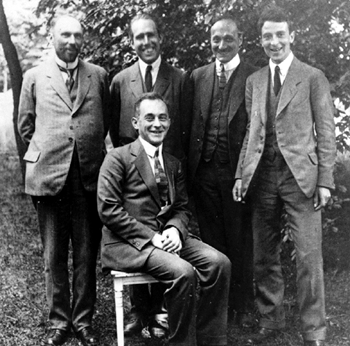
Atomic smitten (left to right) Carl Wilhelm Oseen, Niels Bohr, James Franck and Oskar Klein with Max Born (seated) at a celebration of Bohr’s work in Göttingen in 1922. At the time, Oseen considered Niels Bohr’s early quantum model of the atom to be “the most beautiful” of all the wonderful new developments in theoretical physics. Oseen convinced the Nobel committee to give Bohr a prize that year. (Picture credit: AIP Emilio Segrè Visual Archives)
Oseen’s debut on the committee in 1922 brought with it expertise in theoretical physics for the first time, but this did not make it any easier for theoretical achievements to gain approval. Oseen combined great intellectual rigour with arrogance, and these are not necessarily the best qualities for a Nobel-committee member. He often played prosecuting attorney, judge and hangman when evaluating candidates to a far greater degree than his colleagues. When others disagreed with his views, he retaliated with scathing counter-arguments, as well as personal offence.
Oseen left deep marks in the Nobel competition long after his time in power ended in 1944. He led the movement to narrow the scope of “physics” that was eligible for the prize, reversing the earlier practice of including fields such as astrophysics and geophysics. But most importantly, although his own work entailed hydrodynamics and the physics of crystal lattices, he sat in judgement of all theoretical physics, in particular atomic physics.
Oseen was not happy with the way physics was developing; his own demand for clear logical consistency drove him to despair in the 1920s over partial and temporary solutions to the deep crises of atomic physics. He longed for a giant to enter who might sweep away all the inconsistencies and culturally alarming implications, and make physics right. He saw little reason in celebrating half solutions, temporary scaffolding, and piecemeal steps towards an unknown future.
Rather than finding, as Oseen had hoped, a way of reconciling the chaotic findings of quantum physics with the classical foundations of the subject, researchers were proposing ever-more outlandish theories. In the mid-1920s Heisenberg proposed that the traditional goal of visualizing atomic processes should be relinquished. Sophisticated mathematical equations capable of generating numerical solutions that agreed with observed data would be the way forward. This was not to Oseen’s liking. And then came claims that on the atomic level, probability rather than determinism reigned supreme.
Oseen agonized over these developments but he increasingly withdrew from active participation. Yet he showed no desire to relinquish the Nobel tiller. The paucity of awards for theoretical achievement during Oseen’s reign on the committee reflects his sensibilities, rather than formal obstacles or scarcity of candidates.
Resisting quantum mechanics
From the mid-1920s Werner Heisenberg and Erwin Schrödinger began to lay new foundations for interpreting atomic phenomena. A trickle of nominations for their differing approaches began in 1928, and then grew more convincing in numbers and rationale by the end of the decade.
Some nominators preferred Schrödinger’s more visual depiction of electron orbits as a form of wave mechanics. Older theoretical physicists, such as Einstein, Planck and Max von Laue, preferred this approach to Heisenberg’s more drastic step of non-representational models of atomic processes. Moreover, implications arising from Heisenberg’s work seemed to overturn physicists’ traditional belief in causality. A number of physicists working closely with Heisenberg – including Bohr, Wolfgang Pauli and Max Born – were opening the door to a sub-atomic world that differed radically from the physics of larger-scale phenomena. Still, the theories seemed to be working and they began drawing nominations from leading physicists.
Oseen did what he could to avoid recognizing Schrödinger and Heisenberg. He might have favoured Schrödinger’s approach but he agreed with the majority of nominators that – if any prize were to be given for quantum mechanics – the two should be rewarded together. Regardless, Oseen created hurdles for their candidacy. These hurdles were rooted in his own intellectual temperament and practical expediency.
In response to the nominations in 1929, Oseen claimed that Schrödinger and Heisenberg’s theories had not sufficiently matured “from a logical point of view” to permit a systematic depiction of the atom. Moreover, he could not declare them eligible for a prize as their theories had not resulted in any discovery of fundamental importance. In other words, Oseen tried to block the pair formally with the statutes.
Support for the two theorists continued in 1930. Again some nominators preferred Schrödinger, others Heisenberg, or a division between Heisenberg and Born, who helped to create the theory. But Nobel laureates as varied as Planck and Perrin endorsed the prevailing thrust to reward Schrödinger and Heisenberg.
To counter Oseen’s intransigence, The Svedberg, an Academy member and physical chemist, nominated Heisenberg and underlined that the theory had predicted and then led to an important discovery – a new form of hydrogen molecule. Oseen responded sarcastically that perhaps Heisenberg should be considered for a Nobel prize in chemistry! Although he conceded that awarding a physics prize for theoretical work that resulted in a chemical discovery was not unthinkable, he again refused to endorse either of the two physicists for a prize.
Perhaps the problem was, as several nominators suggested, that it would be unjust to divide a prize between them. Why should two intellectual giants be forced to a share prize when others might later receive full prizes for lesser accomplishments? Oseen and the rest of the committee found a convenient detour round the entire problem. The Indian experimental physicist Chandrasekhara Raman suddenly emerged as a popular candidate for his discovery of a new process by which molecules scatter light; he received the 1930 prize.
In 1931 the number of nominations for the pioneers of quantum mechanics dropped, possibly because nominators did not want to waste their votes on candidates whom the committee seem to oppose so adamantly. Again, the world of physics was small; many nominators understood who was sitting in judgement and what biases they held. The highly critical, but brilliant, theorist Wolfgang Pauli commented at the time that there were no theoretical physicists in Sweden; he scornfully dismissed Oseen. Some nominators were no doubt puzzled and withheld their proposals.
But without any deeper reflection, Oseen simply claimed that the fall in the number of nominations for Heisenberg and Schrödinger was a sign that enthusiasm for their work was “cooling off”. He attributed this lack of support to the fact that quantum theories did not include the relativistic effects of electron motion: “This problem lies so deep that a completely new thought is necessary for its resolution.” No one could tell how this new and, as yet, inconceivable breakthrough would impact on quantum-mechanical theories. He therefore urged the committee that Heisenberg and Schrödinger must wait; the 1931 prize was reserved to the following year.
Standing firm
Once again, Oseen’s impossibly high standards prompted him to demand a complete theory. Either a theory was fully capable of explaining all relevant phenomena or it was not worth recognition. Nobody denied the need to include relativistic effects, but this did not diminish the esteem in which many physicists held Heisenberg and Schrödinger. Perhaps, as some speculated, Oseen and the committee were trying to buy time so that Heisenberg and Schrödinger could each receive a full prize the following year.
Mathematically minded When he entered physics, Dirac (left) devoted his creativity and energy to understanding the theories developed by Heisenberg (right). (Picture credit: AIP Emilio Segrè Visual Archives)
Still, in 1932 nominators began registering impatience. Some even questioned the committee’s willingness and ability to evaluate the work of Heisenberg and Schrödinger. Pauli nominated Heisenberg alone. He wondered whether the committee perhaps could not decide between the two approaches. In such a case, he claimed that Heisenberg’s contribution was more original since Schrödinger derived his from Louis de Broglie. Pauli’s curt voice became almost audible in a letter of nomination seething with annoyance. He thundered that Heisenberg had easily fulfilled the conditions stipulated by the statutes and by Alfred Nobel’s intentions. Give him a prize!
Even Einstein, who only occasionally made nominations, decided to take time to send a proposal for the two. He remarked that he personally preferred Schrödinger’s formulation, but conceded that he might be mistaken as to which party was more deserving. As both theorists were of such importance, he would prefer the prize not to be split between them. Einstein wanted to see Schrödinger awarded first, if only one of them could be rewarded.
Bohr also proposed both pioneers of quantum mechanics. He clearly understood the limitations of the theories and accepted that they were not the end point but an important start. Bohr maintained that Heisenberg and Schrödinger’s contributions had unexpectedly provided a satisfactory perspective on known atomic phenomena and had also led to a series of new predictions. He proposed using the two available prizes to award them both.
The committee allowed a relatively new member, the experimental atomic physicist Eric Hulthén, to prepare a special report on the relation between quantum mechanics and experimental atomic research. Hulthén analysed the reciprocal relation between theory and experiment; the theories of Heisenberg and Schrödinger had made sense of crucial data and had stimulated significant experimental and theoretical investigations. While agreeing that further breakthroughs would be necessary to apply quantum mechanics to the innermost electrons nearest the atomic nucleus, the theories’ startling successes within a restricted domain had to be appreciated as an epoch-making chapter in atomic physics. But Oseen balked again.
Oseen strained all he could to find arguments for withholding the prizes. He again appealed to a strict interpretation of “discovery”. Interestingly, a few years earlier he had called for the interpretation to be liberalized, but that was to enable his Uppsala colleague Manne Siegbahn to be eligible for a prize for having greatly improved the precision of X-ray spectroscopy. On one hand, Oseen demanded that a significant discovery arise from the theories. Yet on the other hand, he maintained that the meaning of the word “discovery” in the statutes was the same as the general public’s understanding – “significant progress in knowledge of actual reality” – and therefore the statute had not been fulfilled.
Why did Oseen, in his report to the committee, feel obliged to underline the phrase actual reality? It would appear that he could not accept some of the broader implications of quantum mechanics. Just as Einstein recoiled at the probabilistic interpretation of sub-atomic reality because it did not follow the conventional notion of causality, Oseen pondered the cultural and theological ramifications of the theories. But although Einstein might not have approved, he still acknowledged Heisenberg’s contribution as an ingenious stopgap measure. Both Einstein and Oseen may have longed for a future remedy, but Oseen seemed bent on sulking until that day arrived.
A saviour on the horizon
Among the nominators who called for a prize for quantum mechanics sooner rather than later were two new professors of theoretical physics in Stockholm. Although they were not committee members, Oskar Klein and David Enskog argued persuasively in their letters of nomination. Klein enjoyed a solid international reputation as a significant contributor to the new atomic physics. Having worked at Bohr’s institute for many years, he was “in the loop” of informal communications among atomic physicists. He admitted the weaknesses of quantum mechanics, but claimed the challenges that remained did not detract from Heisenberg and Schrödinger’s tremendous accomplishments.
Wave mechanic Many physicists found the theory of wave mechanics developed by Schrödinger more intuitive than Heisenberg’s matrix approach to quantum mechanics. (Picture credit: Lotte Meitner-Graf/AIP Emilio Segrè Visual Archives)
Enskog also proposed Heisenberg and Schrödinger in a lengthy letter of nomination. In some respects Enskog’s voice should have reminded Oseen that even he could be mistaken in evaluating physics. A decade earlier, Oseen had given Enskog a marginal grade for his dissertation and seemingly ended his academic career. However, Enskog’s work was later discovered abroad and declared to be a brilliant contribution to the theory of gas diffusion. Enskog was resurrected. Still, Oseen was determined to remain the sole judge in Sweden of theoretical physics. He disregarded their opinions.
Oseen again repeated that a satisfactory theory of atomic physics must account for the effects of relativity, hence Heisenberg and Schrödinger simply did not make the grade. He urged the committee to place the 1931 prize money into its special fund and to reserve the 1932 prize until 1933. The majority of the committee voted with Oseen; Hulthén dissented by advocating a division between Heisenberg and Schrödinger. When the full Academy voted on the committee’s proposal, many members appreciated that Oseen was not the only expert in Sweden. In the protocol papers belonging to the Academy’s permanent secretary, the vote – which is normally never recorded – was jotted down, revealing a considerable split: 40 members voted to withhold the award while 23 members wanted to reward Heisenberg and Schrödinger.
Finally, in 1933, Oseen accepted that the time had come. A saviour loomed on the horizon. Oseen learned through his gifted student Ivar Waller that noteworthy advances towards a relativistic theory of quantum mechanics had been achieved. Unlike Oseen, Waller regularly attended international conferences and visited important centres of physics research. He sent news from Cambridge and Copenhagen of Paul Dirac’s theoretical masterpieces, beginning with the 1928 article “The quantum theory of the electron”, as well as the experimental findings that provided support. Indeed, Waller and Dirac had been in close contact; the former’s intense commentaries on Dirac’s earliest papers may even have helped to pave the way towards the famous hole theory that led to the prediction of antimatter. Of course, Oseen remained cautious about Dirac’s conclusions.
Overwhelmingly, the nominators still indicated their desire to reward Heisenberg and Schrödinger with the 1933 prize before considering any other worker in the field, be it Dirac, Pauli or Born. Only two nominators – William Lawrence Bragg and Czeslaw Bialobrzeski – added Dirac to their list of candidates. At its pre-summer meeting to discuss the prizes, the committee voted tentatively to award the reserved 1932 prize to Heisenberg and the 1933 prize to Schrödinger.
Dirac breaks the deadlock
Oseen’s initial evaluation of Dirac was revealing. He asked whether this brilliant British theorist could be compared to Planck, Einstein and Bohr – who suddenly seemed to have set the standard for a Nobel prize. Oseen ruled negatively. But he wondered whether bad timing rather than native ability forced this assessment: on entering physics Dirac had to confront Heisenberg and had devoted his creativity and energy to resolving contradictions in the German physicist’s theory. Noting that most of Dirac’s important work had only just been published, Oseen felt sure that this new star in the firmament of physics would achieve something truly great sometime in the future.
By September Oseen had undergone a change of heart. He now suddenly urged dealing Dirac into the Nobel spoils. Dirac’s odd prediction of the existence of a positively charged electron had been confirmed by two independent experiments. To Oseen’s satisfaction, here was a significant “actual fact” that had been discovered as a result of quantum mechanics – a discovery that “has transformed one of the most difficult reservations against the new atomic theory to a support for this theory”.
For the committee meeting in early September, Oseen included Dirac in the same special report as Heisenberg and Schrödinger. He now linked the three candidates as standing head and shoulders above others. Oseen called for Heisenberg to be the sole recipient of the 1932 prize, emphasizing the discovery of allotropic hydrogen – rather than the uncertainty principle. However, he did allow the citation to describe Heisenberg as the creator of quantum mechanics. Meanwhile, Schrödinger and Dirac shared the 1933 prize for the rather subdued rationale of having made important contributions to atomic physics.
Oseen ensured that both Pauli and Born – both of whom played critical roles in the development of quantum mechanics – would miss out on a prize, at least for as long as he lived. Pauli, according to Oseen, was already past his prime. And although Waller tried to convince him that maybe Pauli’s slower frequency of publication at the time had more to do with the relative difficulty of the problems he chose to tackle than his alleged intellectual exhaustion, Oseen decided that Pauli should not share in a prize.
As late as 1944 – the year of his death – Oseen continued to dismiss Pauli’s contributions to quantum mechanics as metaphysics. The following year Waller joined the committee and helped to ensure a prize for Pauli in 1945. Born waited even longer – until 1954. Although Heisenberg wrote to Born in 1933 to express his regret that they were not sharing the prize, he did nothing to remedy the gaff. He did not, for instance, nominate Born, who had become a refugee from Nazi anti-Semitism. Dirac, Schrödinger and Heisenberg certainly merited prizes, but the manner of distributing prizes to the pioneers of quantum mechanics was perhaps less than fair.
Enduring frustration
As this episode reveals, to understand the “whys and wherefores” of the Nobel prizes, insight into the committee and its Swedish context are essential. The history of awarding the prize during the first 50 years – for which the official archives are accessible – shows that some committee members brought strong agendas and preferences with them; others simply could not fathom achievements that were beyond their intellectual horizons.
Even in more recent times, of course, grumbling and questioning still arise. Dirac, among others, expressed dismay over the difficulties in rewarding achievements in theoretical particle physics in the late 1960s and 1970s. He learned that some members of the committee simply did not want to reward theory; others differed over what degree of empirical confirmation should be expected before allowing a prize for theory. Just as in 1933, Dirac experienced that the Nobel prize – for better or for worse – is a golden medallion etched with human frailties.
The recent scandals in high-profile physics research have done nothing to improve the image of science
There is a joke about an accountant and a physicist arriving in heaven at the same time. The physicist is given a bicycle and the key to a basic house in a distant, unfashionable part of heaven. As he cycles off he looks over his shoulder and sees the accountant being led to a chauffeur-driven limousine that will take him to the finest accommodation that heaven has to offer. The physicist then cycles back to the gates of heaven to ask Saint Peter why the accountant is being treated so well. “Well”, says Saint Peter, “we’ve had lots of physicists in heaven before – but he is the first accountant.”
Once upon a time the joke was funny, and recent events at Enron and WorldCom have done nothing to change that. But physics has faced its own series of investigations and scandals over the past few months, and the joke is not funny anymore. In June we reported that Bell Labs, one of the most famous physics establishments in the world, had set up a panel to investigate suspicions of data fabrication by one of its employees (see Molecular electronics claims called into question and Physics World June p5 and p15, print version).
Now an equally prestigious laboratory, the Lawrence Berkeley National Laboratory in California, has fired one of its staff after an internal investigation found that data purporting to show the discovery of a new element with an atomic number of 118 had been fabricated (see Element 118 disappears two years after it was discovered and page 7 of print version). The Berkeley lab announced last year that it was withdrawing its claim to have discovered element 118, but news of the firing only became public when the official retraction was published last month.
What both these episodes have in common – beyond the reputations of the labs involved – is that the research in question had an extremely high profile. The Berkeley group had reported the creation of what would have been the heaviest element ever, while the physicist at Bell Labs was making a seemingly endless series of breakthroughs with organic materials. In both cases the doubts only came to light when other groups were unable to reproduce the results.
As experiments that do not make headlines are less likely to be repeated, it is impossible to say whether fabrication is extremely rare – although one example is one too many – or if it is more widespread. The physics community has tended to be complacent about scientific misconduct. However, it only took a few widely reported examples of misconduct in the life sciences for physicists to think that it was not their problem. The news from Berkeley confirms that this is no longer the case.
Meanwhile a good old-fashioned argument is developing in the world of optics about materials with unusual electromagnetic properties (see Doubt cast on ‘left-handed’ materials and pages 8-9, print version). There is no suggestion of any misconduct whatsoever, but the two sides certainly do not see eye to eye. Researchers in San Diego and at Imperial College believe that they have created a material with a negative refractive index and that such a material could, in theory, be used to make a “perfect lens”. Physicists in Madrid and at the University of Texas disagree: both the theory and the interpretation of the experiment are wrong, they argue. A flurry of critical comments and electronic preprints has ensued. Both sides cannot be right – although both could be wrong – but the argument, however unseemly, is preferable to the sorry tale of element 118.
Letter to the editor: Debate is seemly
The editorial in the August 2002 issue of Physics World described the on-going debate about materials with negative refractive indices and perfect lenses. Under the headline “Reputations at risk” the article describes how a group of scientists, which includes myself, is embroiled in “an unseemly argument”. This comment appears under several paragraphs describing the scandalous misconduct at Lucent. The Web version of the article also contains the following standfirst: “The recent scandals in high-profile physics research have done nothing to improve the image of science.” Recent work by my colleagues at the University of California at San Diego and myself has attracted a great deal of attention and stimulated many papers, the bulk of which agree with our work. At the last count some 80 papers were published on this subject in the year 2002. There have been two critical papers in Physical Review Letters, and we have responded to both of these with Comments. I would describe this as a professional debate between scientists, and the published record of debate has been serious and considered. Disagreement is the stuff of scientific life and is a thoroughly respectable activity. It must be conducted in a seemly way and, so far as I am concerned, it has been. John Pendry Imperial College, London
Editor’s note The article “Reputations at risk” described an ongoing debate about materials with unusual electromagnetic properties as “unseemly”. The use of the word unseemly in an article that also discussed scientific misconduct was unfortunate and is regretted. The published debate has indeed been conducted in a seemly manner and, as the article made clear, there was “no suggestion of any misconduct whatsoever in this debate.”
If anyone deserves more than one biography then surely that honour should go to Andrei Sakharov (1921-1989), the physicist who produced the most powerful explosion in the history of the world and 14 years later was awarded the 1975 Nobel Peace Prize for his support of human rights. It is for this reason that I was delighted to review this new biography of Sakharov by the American writer Richard Lourie.
But how essential to Sakharov’s life story is the fact that he was a physicist? Lourie does not seem to think that it was important at all. After all, Sakharov’s most glorious accomplishments were humanitarian. However, I think that Sakharov’s physics background was relevant to his humanitarian activities. In 1989 – by which point he had become an accredited political figure as an elected member of the Soviet Congress and a leader of its democratic faction – Sakharov gave a talk entitled “Science and freedom”. In that speech, Sakharov made it clear how deep his love for physics went.
For Sakharov, science and freedom were one and the same thing. Physics was the major – if not the only – arena in which one could feel freedom in the Soviet Union. It is unfortunate therefore that Lourie seems to have relied on the opinion of a historian who sees no real difference in the degrees of autonomy that were given to Soviet physicists and to biologists. The difference was, in fact, huge. Soviet biology was devastated, while physics survived – brilliantly so, under the circumstances.
There was no equivalent in physics of Lysenko – the self-taught biologist whose home-grown theories were supported by Stalin and wrecked the hopes of generations of Soviet bioscientists. Indeed, physicists in the Soviet Union even managed to provide shelter for some biologists. The reason for the pre-eminence of physics is clear: Stalin wanted the bomb. And Lavrentii Beria – the Communist head of the Soviet bomb project – wanted it even more. His life literally depended on the successful creation of a bomb and he knew that physicists – and physicists alone – could deliver it.
The fact that his life was at stake explains why Beria helped physicists to defend Einstein and his theory of relativity against Marxist demagoguery and ignorance. And it is also why Sakharov and other physicists were able to exercise freedom, honesty and personal responsibility, and to act in a democratic fashion. True, those freedoms extended only to their science but that meant a lot for people who had devoted their lives to the scientific cause.
Sakharov eventually realized that life outside the confines of physics was effectively a grand social experiment, in which total control over information was essential. Soviet propaganda was, for a while, able to brainwash even the brightest and best people. The turning point for Sakharov came in the spring of 1968, when he wrote an essay entitled “On progress, peaceful coexistence, and intellectual freedom”. Initially circulated covertly by hand from one person to the next, it eventually appeared in the New York Times. Sakharov – the top-secret nuclear expert – was suddenly transformed into a public figure and an advocate of human rights.
Lourie sees no specific reason for the unusual transformation in Sakharov’s profile that took place at this time. He believes, instead, that it was a long, drawn-out process. He seems to place too much faith in Sakharov’s Memoirs (1990 Knopf), where no particular explanation for the change was put forward. In fact, the trigger was Sakharov’s encounter in 1967 with the Soviet government over anti-ballistic-missile defence. Sakharov had written a detailed secret letter to the Soviet leadership arguing for a moratorium on strategic anti-ballistic-missile systems. He felt that an arms race based on this new technology would increase the chances of all-out global nuclear war.
The Soviet leaders, however, ignored the problem, which told Sakharov a lot about the regime. The question of nuclear arms was, after all, well within his professional competence. He had not based his proposal on wishy-washy humanitarianism but on the real threat of geopolitical instability. He felt that he had to go public, and his famous 1968 essay pointed to an anti-ballistic arms race as being a major contributor to the threat of nuclear war.
Sakharov never mentioned his 1967 letter, thereby fulfilling his commitment never to divulge secret information. Although the letter was declassified a few years after Sakharov’s death, Lourie has somehow failed to appreciate the significance of this crucial document and other information declassified in the post-Soviet era. This material would have helped fill in the blanks in Sakharov’s Memoirs. It would also have shed new light on the most troublesome issues of Sakharov’s life, such as the H-bomb espionage and his seemingly discreditable involvement in the 50 megatonne Czar-bomb of 1961, which later evolved into the super-torpedo that Sakharov dubbed “cannibal”.
Basically what Lourie has done is to retell Sakharov’s Memoirs, which he himself translated into English 12 years ago. Lourie is, however, an excellent writer and tells the story in a much slicker fashion than Sakharov did. But I feel that the interplay between Sakharov’s physics and humanitarian thinking is too important to be ignored. It was hardly a coincidence that Sakharov’s two best ideas in pure physics – his explanation of baryon asymmetry in the universe and the idea of induced gravity – emerged shortly before his 1968 revolt. Sakharov perceived these ideas as an extraordinary gift of fate – after a two-decade hiatus, he realized that his creativity in physics was still alive. It re-established his self-confidence in science, and far beyond as it turned out.
Lourie also tends to stereotype Sakharov as the clichéd, absent-minded theorist who wore mismatched shoes and donned galoshes even in good weather. But if he was so unreasonable, why should we have trusted his advice on arms control? Why should the gadgets he devised in his parallel vocation as an engineer and inventor have worked?
I also searched in vain for this American author to comment on Sakharov’s conflicts with his US colleagues. In particular, in the late 1950s Sakharov disagreed with Edward Teller on the question of nuclear testing in the atmosphere. He also opposed Teller’s stance on America’s Star Wars plan in the 1980s. However, Sakharov did believe that American physicists had been “unfair and even ignoble” in their attitude toward Teller following his clash with Robert Oppenheimer. In Sakharov’s view, both men deserved equal respect since each had acted according to his own understanding of what was morally right.
Was Sakharov naively wrong or was his dissent – based on his first-hand experiences with Soviet leaders and strategic weapons – reasonable? Lourie’s biography does not address this difficult question. But I am not too sorry because I have quite a few intriguing questions left to answer in the forthcoming English version of my book on Sakharov.
Recent observations of the microwave radiation emitted shortly after the Big Bang reveal that the face of the universe has a familiar pattern. The observations were made using two arrays of radio telescopes – the Cosmic Background Interferometer (CBI) in Chile and the Very Small Array (VSA) in Tenerife. The experiments have produced the sharpest measurements ever of the temperature variations in the cosmic microwave background. These variations trace the fluctuations in the distribution of primordial matter that seeded the formation of large-scale structure in the universe. The latest observations show that the angular distribution of the fluctuations agrees perfectly with previous data. More importantly, the results extend previous measurements to allow further detailed tests in cosmology (T Pearson et al. 2002 arXiv.org/abs/astro-ph/0205388 and A Taylor et al. 2002 arXiv.org/abs/astro-ph/0205381).
Conditions in the early universe
According to the standard model of cosmology the universe started with a Big Bang some 15 billion years ago followed by a brief period of very rapid expansion known as inflation. During inflation the primordial quantum fluctuations that existed at the time of the Big Bang were amplified into macroscopic fluctuations in the density of the universe – fluctuations that eventually formed the large-scale structure of galaxies that we observe today.
After inflation the universe continued to expand, albeit more slowly, and also to cool. During this time the light created at the Big Bang was constantly being scattered by the free electrons in a plasma of primordial hydrogen and helium ions. About 300 000 years after the Big Bang the universe cooled sufficiently for electrons and protons to form atoms, and the scattering stopped. Today these photons form a black-body spectrum with a temperature of about 3 K.
However, this cosmic microwave background is not completely uniform and has slight variations in temperature. These variations – known as the anisotropies of the cosmic background – reflect the slight differences in the density of the universe that existed at the time of “last scattering”. At this time the size or horizon of the universe was about 100 megaparsecs (about 300 million light-years). The surface of last scattering is now about 5000 megaparsecs away from us, which means that the horizon subtends an angle of approximately 1 degree.
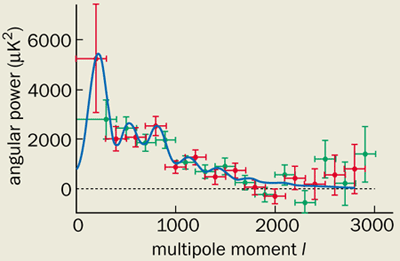
Measurements of the anisotropy of the cosmic background are generally plotted as the amplitude of the temperature fluctuation against the angular scale, θ, or spherical harmonic, l, where l = 180/θ. The aim is to measure the temperature as accurately as possible and with the best possible angular resolution – that is with the smallest θ or the largest l.
In the early 1990s the COBE satellite measured the temperature with an accuracy of 1 part in 100 000 and an angular resolution of 7 degrees – results that strongly supported the theory of inflationary cosmology. Less than 10 years later, cosmologists were basking in the glory of higher-resolution measurements from three other microwave background experiments – the balloon-based BOOMERANG and MAXIMA telescopes, and the DASI interferometer located at the South Pole. These observations enabled astronomers to make fundamental tests of the nature of the fluctuations, which are enhanced by the astrophysics of the early universe.
The primordial fluctuations drove pressure variations through the fluid of matter and radiation that filled the early universe. These pressure variations are observable at the moment of last scattering. The largest detectable oscillations peaked for the first time at the horizon when the universe was 300 000 years old, but smaller fluctuations have undergone more oscillations and so peaked more frequently. The smaller the fluctuations, the less effective they are at trapping radiation. As radiation diffused out of the small-scale fluctuations the oscillations became progressively weaker. The net result is a series of decreasing peaks in the temperature fluctuations at angles that correspond to a half, a third and a quarter of the angle subtended by the horizon. The BOOMERANG, MAXIMA and DASI experiments provided evidence for the presence of up to three peaks. The latest results from the CBI and VSA experiments have confirmed this picture and, in the case of CBI, hinted at the existence of a fourth oscillation exactly as predicted by theory.
Peak viewing
The two latest experiments comprise an array of small telescopes that simulate a large dish but have a resolution that is determined by the size of the individual antennas. The VSA team – led by astronomers at Cambridge University in the UK – has made observations with an array of 14 antennas sited at an altitude of 2400 m in Tenerife. Each antenna is just 14 cm across. Meanwhile the CBI team – led by astronomers at the California Institute of Technology – operates an array of 13 antennas located some 5000 m above sea level in Chile’s Atacama desert. With a larger antenna diameter of 90 cm, the CBI can achieve a substantially higher angular resolution than the VSA.
Both sites in Tenerife and Chile are ideal for microwave astronomy because the atmospheric background is low at such high altitudes. This low background has enabled the experiments to match the exquisite temperature sensitivity of COBE over a small area of sky up to 100 square degrees across but with much higher angular resolution. Indeed the latest results from the CBI measure the temperature fluctuations to 1 part in 100 000 and harmonics to l = 3500.
Much of the detailed physics associated with the recombination of protons and electrons is expected to be visible in the cosmic microwave background. Astronomers can deduce a wide range of cosmological parameters from the location and strength of the peaks in the angular-power spectrum. For example, the locations of the peaks depend on the curvature of the universe and on the total density of matter and energy. If the universe is negatively curved, then the peaks would shift to smaller values of l. Meanwhile if the universe contains a smaller density of matter than predicted, then the peaks would be smaller.
The latest data from the VSA and the CBI, like previous observations, confirm that the geometry of the universe is Euclidean or flat and that the density of matter and energy is within 5% of the critical value predicted by Einstein’s general theory of relativity for a flat universe (see Boomerang backs flat universePhysics World June 2000 pp23-24). If the matter density were less than this value then it would expand forever.
Meanwhile the amount of normal or baryonic matter – that is all the matter made from protons and neutrons – that exists in the universe controls the relative strengths of the odd and even peaks, which are produced by compressions and rarefactions of the pressure waves. The reason is that baryons control the restoring force against the pressure waves. The results from the VSA and the CBI indicate that baryonic matter accounts for 5% of the critical density – precisely the value inferred from the synthesis of helium, deuterium and lithium in the first minutes of the Big Bang.
Cosmologists have known for decades that the motion of stars in the outermost parts of galaxies is due to the gravitational effect of non-luminous or “dark” matter. Since this dark matter does not couple to radiation it did not experience the pressure force or undergo oscillations. Yet dark matter does control the strength of the peaks in the power spectrum.
Astronomers can derive the matter density – that is the sum of the baryonic and dark-matter densities – from the absolute strength of the first peak. The latest experiments indicate that the matter density is 30 ± 20% of the critical density. This suggests that the missing two-thirds of the critical density might consist of an exotic form of “dark energy” that is quite distinct from dark matter in that it does not cluster under the influence of an attractive gravitational force.
Meanwhile the decline in the strength of the peaks observed by the CBI confirms a fundamental prediction of the standard cosmological theory, namely that we are witnessing the trace of acoustic fluctuations imprinted on the cosmic microwave background. It is these fluctuations that persisted and grew in the dark matter to eventually generate the galaxies and clusters of galaxies that we see today.
Scattering effects
The only surprise from the CBI results is the excess radiation near l = 3000, which is as large as the maximum expected contribution from galaxy clusters. The hot gas in clusters of galaxies can scatter the cosmic-microwave-background radiation and distort the background spectrum in a characteristic way. This phenomenon – known as the Sunyaev-Zeldovich effect – is relatively large in individual galaxy clusters. Indeed radio observations indicate that it reduces the temperature of the cosmic microwave background by about 1 mK. Now the CBI team has measured the effect for all galaxy clusters in the line of sight for the first time. The results show that the effect produces a temperature change of just 15 µK, which is much smaller than for an individual galaxy cluster.
Cosmologists are not entirely happy with the reported excess of radiation at large l. With such a relatively small area of sky surveyed by the CBI – only 40 square degrees – one has to be cautious about the statistical uncertainties inherent in sampling an inhomogeneous universe. Contributing radio sources may not have been completely removed. Indeed astronomers know that radio galaxies are often associated with galaxy clusters, so the Sunyaev-Zeldovich contribution may have been overestimated.
The true explanation of any possible excess requires astronomers to make observations at many different wavelengths over much larger areas of sky. These observations should also cover submillimetre wavelengths in order to view the scattered Sunyaev-Zeldovich photons. If the effect persists then either the Sunyaev-Zeldovich effect will be confirmed or else a more exotic explanation will be needed.
Such challenges could provide an exciting turn for cosmology that might take us beyond the concordance model that so far fits all of the observations of the cosmic microwave background and large-scale structure almost too perfectly.
The rotation of the Earth and convection in its mantle make our planet about 0.3% wider around its equator than it is around its meridian. Changes in this mass distribution — which can be determined from the strength of the local gravitational field — have been tracked for decades using satellite laser ranging. In this technique, laser pulses are reflected back to Earth by a satellite. The time this takes is used to calculate the location of the satellite, which is related to the local gravitational field of the Earth.
Geophysicists know from such measurements that the Earth had slowly been getting more spherical, an effect thought to arise from “post-glacial rebound”. This occurs at the end of an ice age, when ice melts into water and returns to the sea and the atmosphere. This reduces the pressure on the land beneath the glaciers, and this land is slowly pushed back to its former position by the Earth’s mantle.
But when Cox and Chao studied laser-ranging data collected between 1979 and 2001, they found that this trend reversed sharply in 1998. This means that mass must be moving away from the poles and towards the equator – and any such process must involve either the atmosphere, the ocean or the Earth’s mantle.
El Niño is a good candidate for this process, say the researchers. El Niño and La Niña are alternating hot and cold periods in the atmosphere and ocean of the Pacific, each lasting about six months. Although the effects of these phenomena on flow patterns in the ocean are not well understood, the strongest El Niño this century coincided with the abrupt change in oblateness that took place in 1998.
Another possible cause is a sudden change in the Earth’s magnetic field, which would affect the flow of the Earth’s liquid outer core. Such an event was observed in 1999, and Cox and Chao speculate that changes in this layer preceding the flip could have triggered the rise in oblateness.
But the researchers ruled out a link with global warming, which they initially thought could have raised sea levels significantly by melting polar ice. Records dating back to 1992 showed that this rise was too small to account for the observed shift in mass.
The Standard Model describes how quarks and leptons – a class of particles that includes electrons, muons and neutrinos – interact. Since all quarks and leptons have an intrinsic angular momentum or ‘spin’, they also have a magnetic moment, which is related to the spin by the ‘g-factor’. Simple quantum theories predict that g = 2 for both the electron and the muon.
But these calculations do not include ‘radiative corrections’ – the continuous emission and re-absorption of short-lived ‘virtual particles’ by the electron or muon. These corrections make the g-factor sensitive to the existence of other particles – both established particles such as electrons and photons, and other, as yet undiscovered, particles that are not part of the Standard Model.
In February 2001, the Muon (g-2) Collaboration based at Brookhaven reported measurements of the magnetic moment of the muon that it claimed could not be explained by the Standard Model. The group was 99% confident in its result, but later that year physicists in France found an algebraic error in the calculations that reduced this certainty to 87%.
Now these doubts could be dispelled. “While not definitive, this new result is consistent with the presence of effects which are outside the Standard Model. Further work to clarify this hint is essential, nevertheless this result is very interesting and provocative,” says Lee Roberts, a spokesman for the g-2 experiment.
The new results will also be reported at the 31st International Conference on High Energy Physics in Amsterdam, and the collaboration has submitted a paper to Physical Review Letters.
Cosmologists believe that equal amounts of matter and anti-matter were created in the big bang. If matter and anti-matter particles were exact opposites of each other, they should have annihilated to leave only photons. But the existence of our matter-dominated Universe suggests that matter and anti-matter underwent different processes. To account for this excess of matter, the Standard Model of particle physics predicts that matter and anti-matter decay at slightly different rates. Known as charge-parity (CP) violation, this effect was first seen in kaons in 1964.
Last year, the BaBar collaboration based at Stanford Linear Accelerator Centre in the US and the Belle collaboration based at the KEK laboratory in Japan spotted CP violation in another family of particles – B mesons – for the first time. Dubbed ‘B factories’ because of the huge numbers of B mesons and anti-B mesons they produce, both experiments showed that B mesons decay slightly slower than their anti-particles.
Now the BaBar collaboration has calculated that the parameter associated with CP violation –‘sine 2β’ – is 0.74±0.07, compared with its earlier estimate of 0.99±0.14. The increased accuracy stems from the larger number of decay events observed this time – 88 million in total. The BELLE collaboration puts the value of sine 2β – which they call sine 2φ1 – at 0.79±0.10.
Although the new estimates establish beyond doubt that CP violation exists, the researchers say that they do not appear to fully explain the observed imbalance between matter and anti-matter. Both teams now hope that ongoing experiments will reveal more subtle effects that will enable them to pin down the value of sine 2β.
Solar cells are sensitive only to photons with wavelengths that correspond to the energy gap of the material from which they are made. When photons with this wavelength reach the cell, they excite electrons into the conduction band of the material, where they are registered as an electrical current. But higher-energy photons cannot contribute to this current, and can reduce the efficiency of the cell by heating it up.
Now Green and colleagues say that high-energy photons could be harnessed and converted into current using a ‘down-converter’ – a device that splits high-energy photons into two lower-energy photons. When a photon reaches the down-converter, it excites an electron into a higher energy level. But the electron returns to its ground state via an intermediate energy level, and emits a lower-energy photon at each stage.
By tuning a down-converter to emit photons with a wavelength corresponding to the energy gap of a solar cell, one high-energy photon could be split into two ‘useful’ photons. According to Green and co-workers, this could increase the efficiency of solar cells from the current maximum of about 30% to almost 40%.
The team calculated that the highest efficiency could be reached by placing a down-converter on the ‘back’ of the solar cell – that is, the opposite side to which the sunlight falls. This would allow high-energy photons to pass through the cell to the down-converter, while still allowing the cell to capture low-energy photons.
The drawback of this set-up is that most solar cells are made from semiconductors, which would not allow high-energy photons to pass through. However, the researchers say that this arrangement would be suitable for ‘dye-sensitized’ solar cells.
But the most promising arrangement would see the down-converter connected to the ‘front’ of a solar cell. Although this would block out low-energy photons, it would still boost the overall efficiency of the cell to 38.6%. Most importantly, say the researchers, this set-up would allow existing semiconductor solar cells to be fitted with down-converters.
According to Green and colleagues, the down-converters should be simple to make from materials such as aluminium arsenide or gallium phosphide, using established ‘epitaxial’ manufacturing techniques.